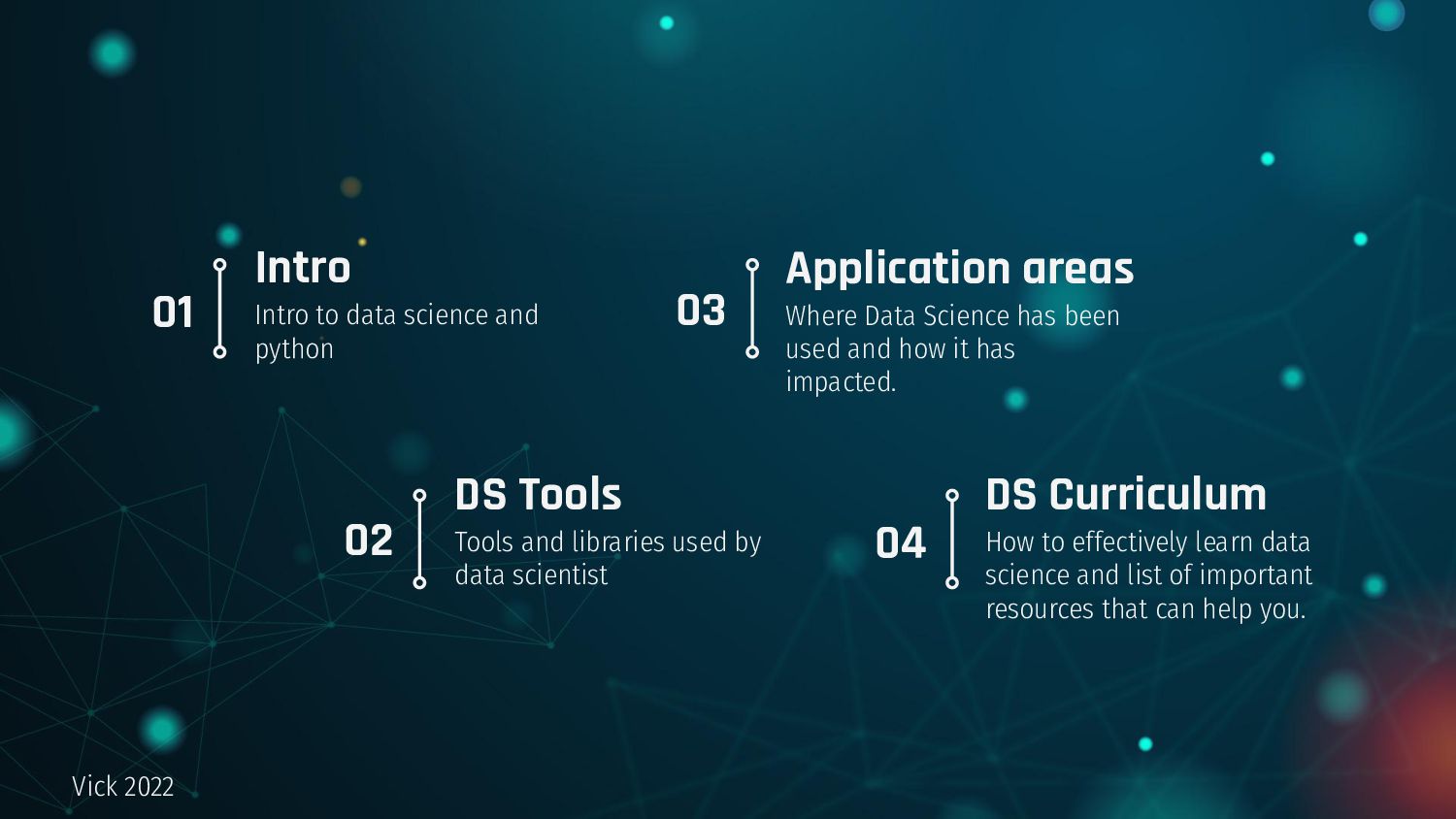
areas Where Data Science has been used and how it has impacted. DS Tools Tools and libraries used by data scientist DS Curriculum How to effectively learn data science and list of important resources that can help you. 02 01 04 03
scientific methods, processes, algorithms and systems to extract knowledge and insights from noisy, structured and unstructured data, and apply knowledge and actionable insights from data across a broad range of application domains
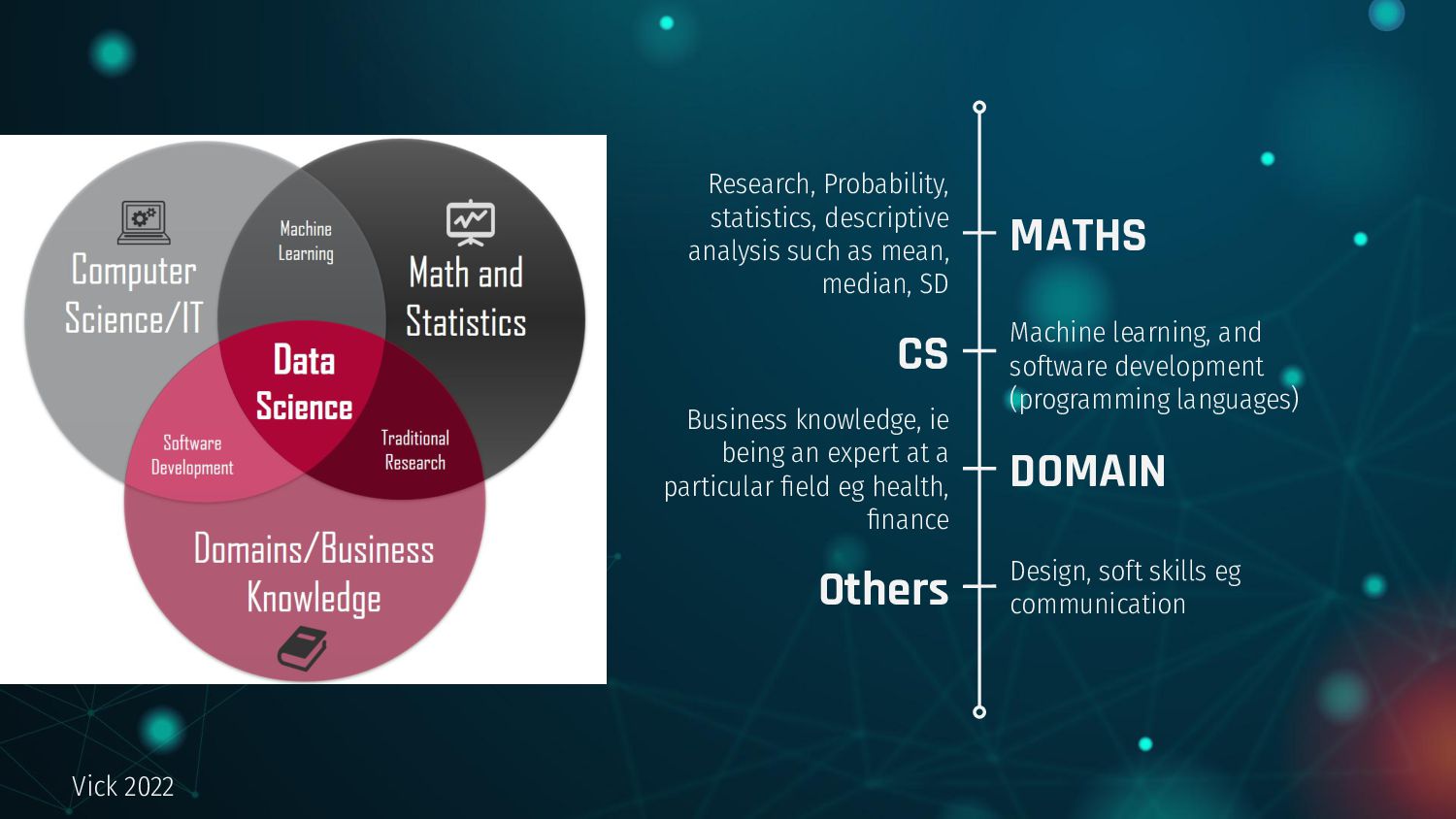
median, SD MATHS Machine learning, and software development (programming languages) Business knowledge, ie being an expert at a particular field eg health, finance Design, soft skills eg communication CS DOMAIN Others
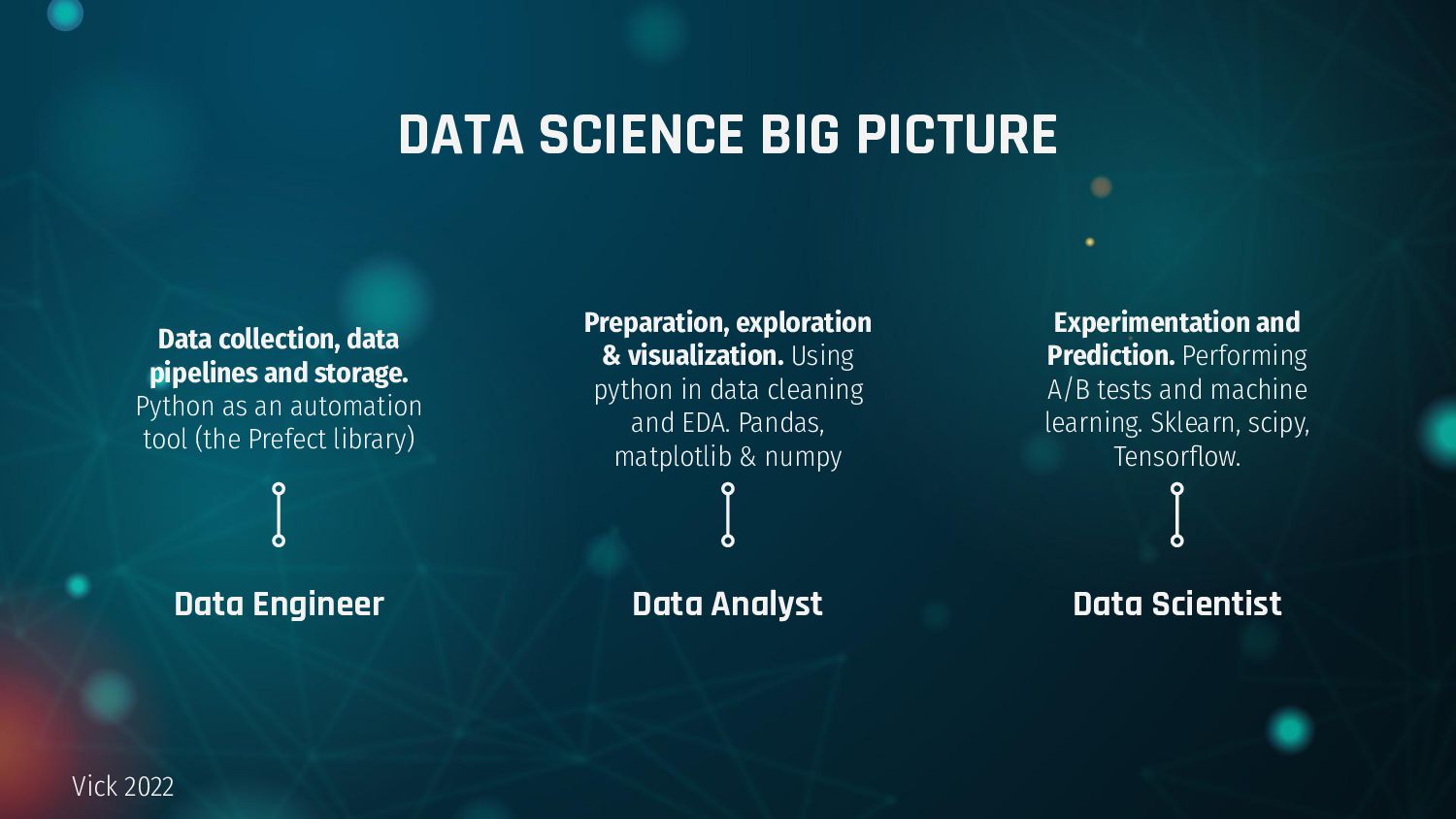
and storage. Python as an automation tool (the Prefect library) Experimentation and Prediction. Performing A/B tests and machine learning. Sklearn, scipy, Tensorflow. Preparation, exploration & visualization. Using python in data cleaning and EDA. Pandas, matplotlib & numpy Data Engineer Data Scientist Data Analyst
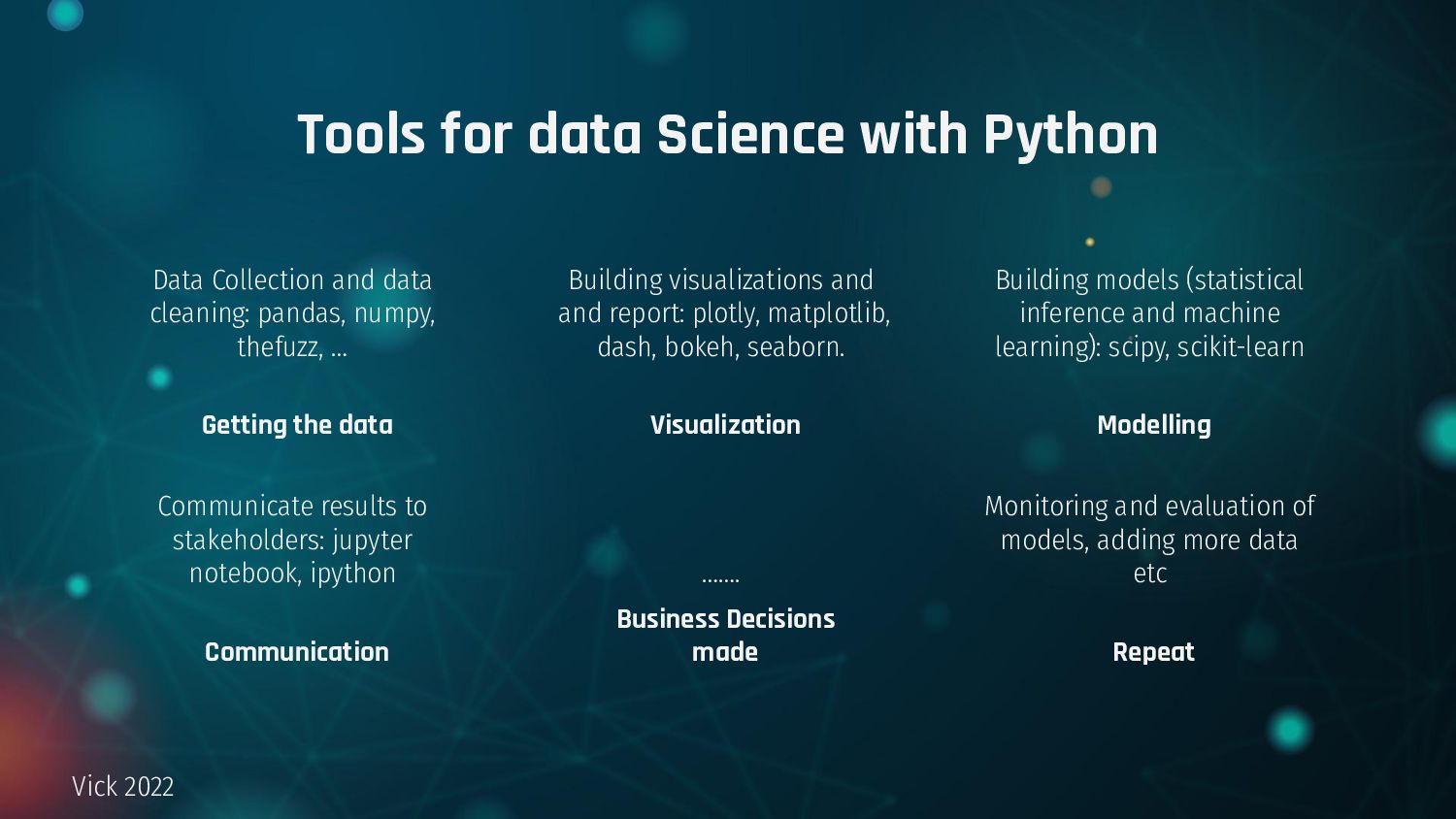
data Data Collection and data cleaning: pandas, numpy, thefuzz, … Modelling Building models (statistical inference and machine learning): scipy, scikit-learn Business Decisions made ……. Visualization Building visualizations and and report: plotly, matplotlib, dash, bokeh, seaborn. Communication Communicate results to stakeholders: jupyter notebook, ipython Repeat Monitoring and evaluation of models, adding more data etc
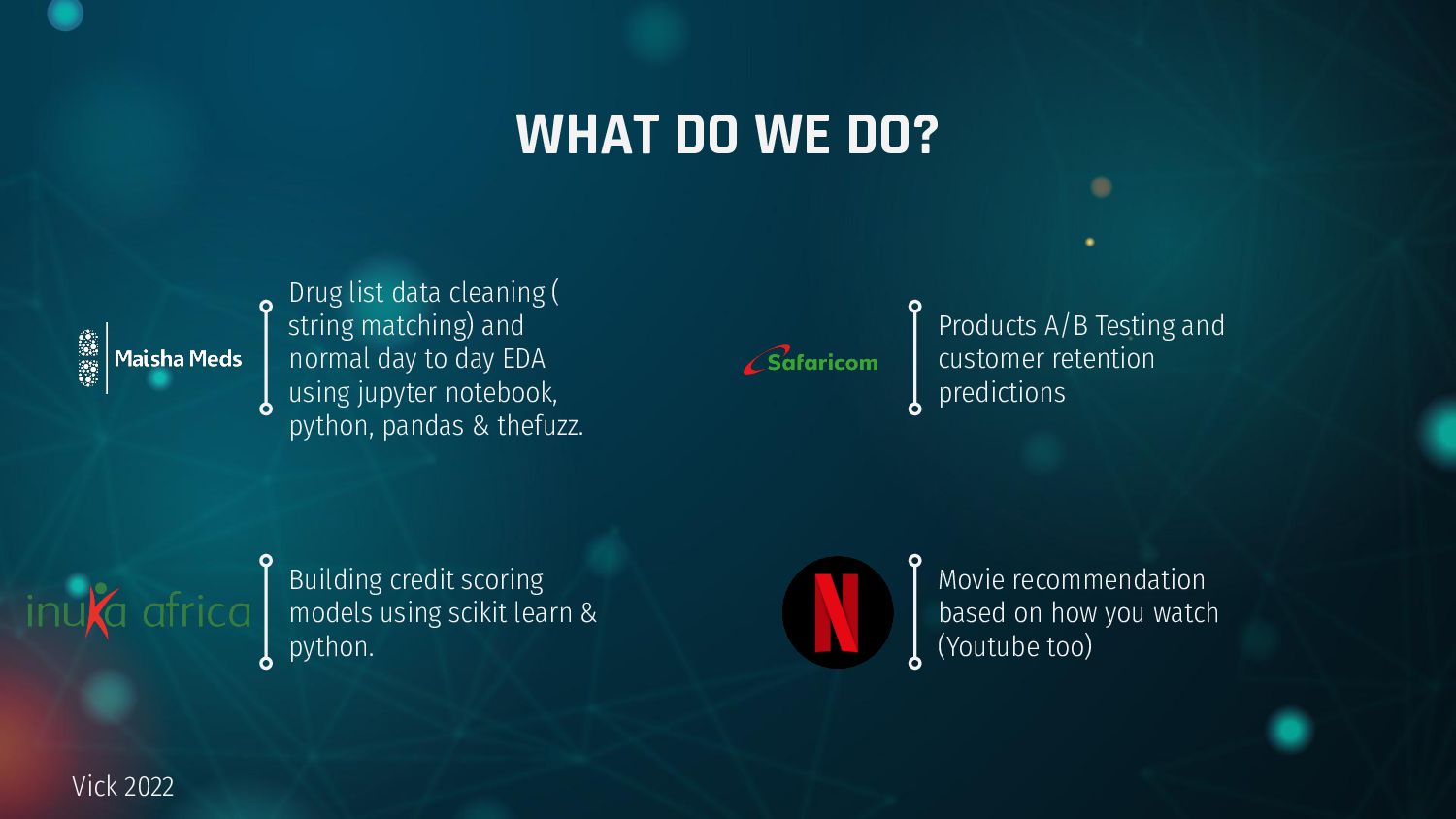
normal day to day EDA using jupyter notebook, python, pandas & thefuzz. Products A/B Testing and customer retention predictions Building credit scoring models using scikit learn & python. Movie recommendation based on how you watch (Youtube too) WHAT DO WE DO?
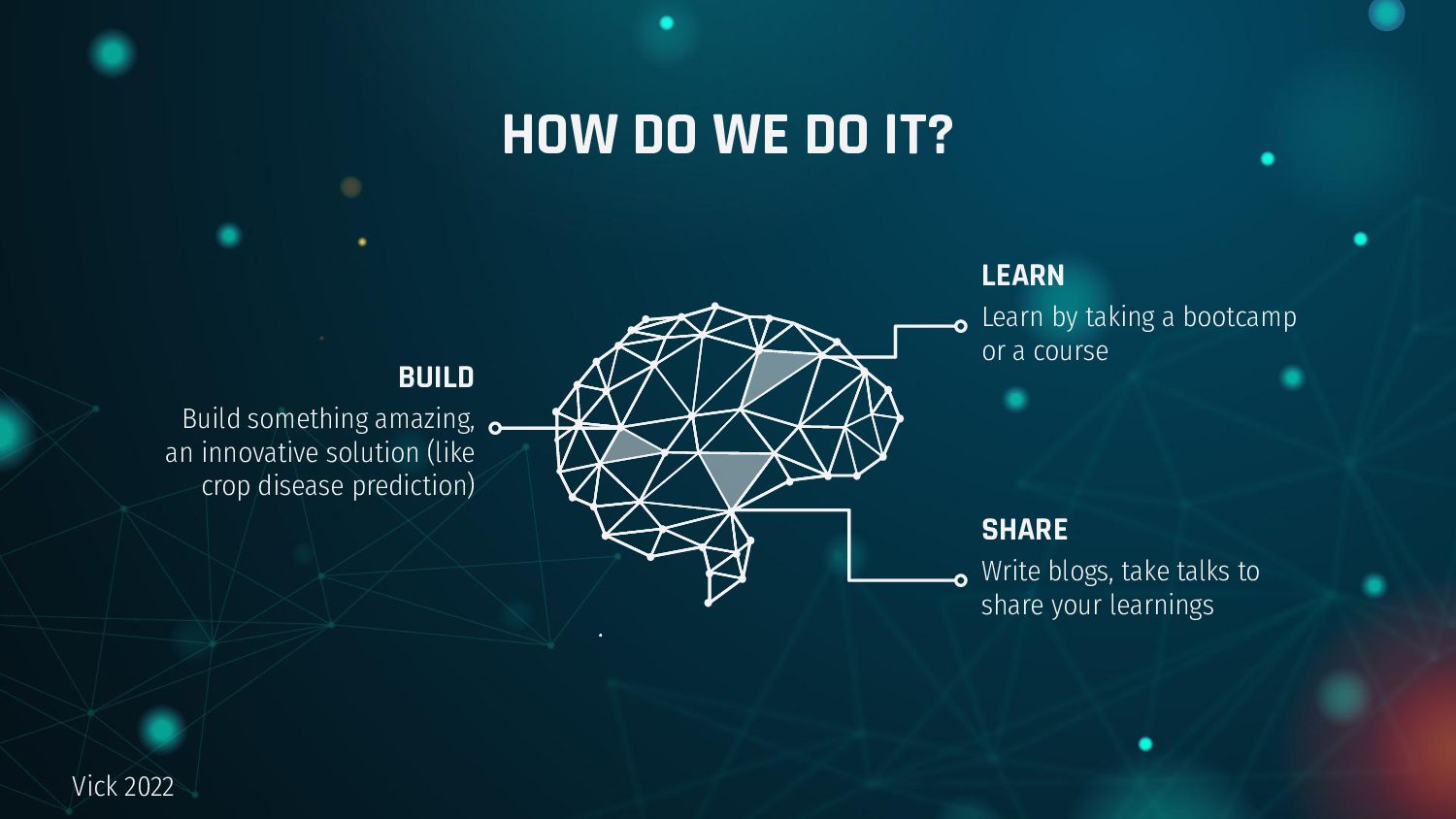
an innovative solution (like crop disease prediction) Learn by taking a bootcamp or a course Write blogs, take talks to share your learnings BUILD LEARN SHARE
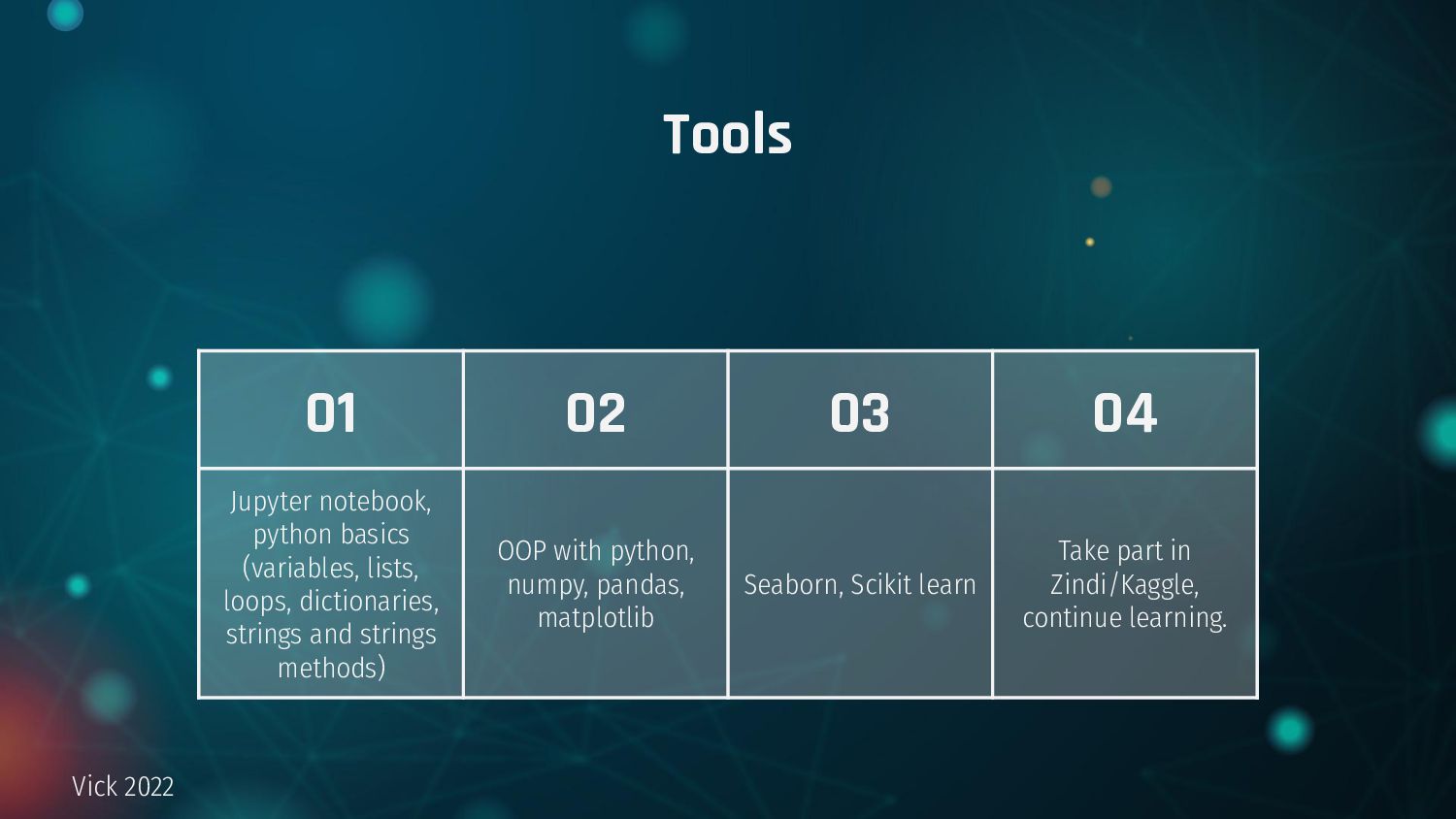
basics (variables, lists, loops, dictionaries, strings and strings methods) OOP with python, numpy, pandas, matplotlib Seaborn, Scikit learn Take part in Zindi/Kaggle, continue learning.
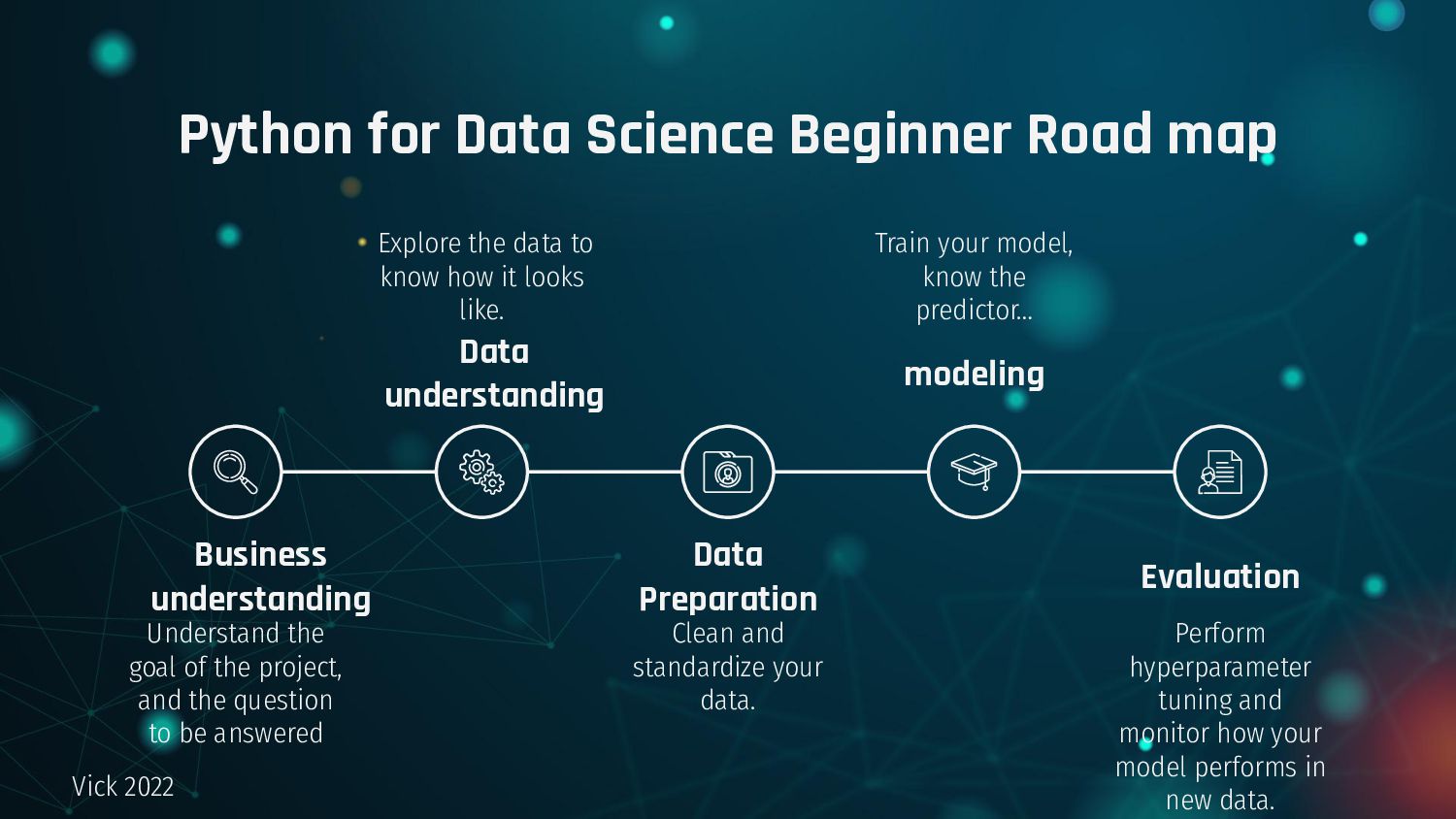
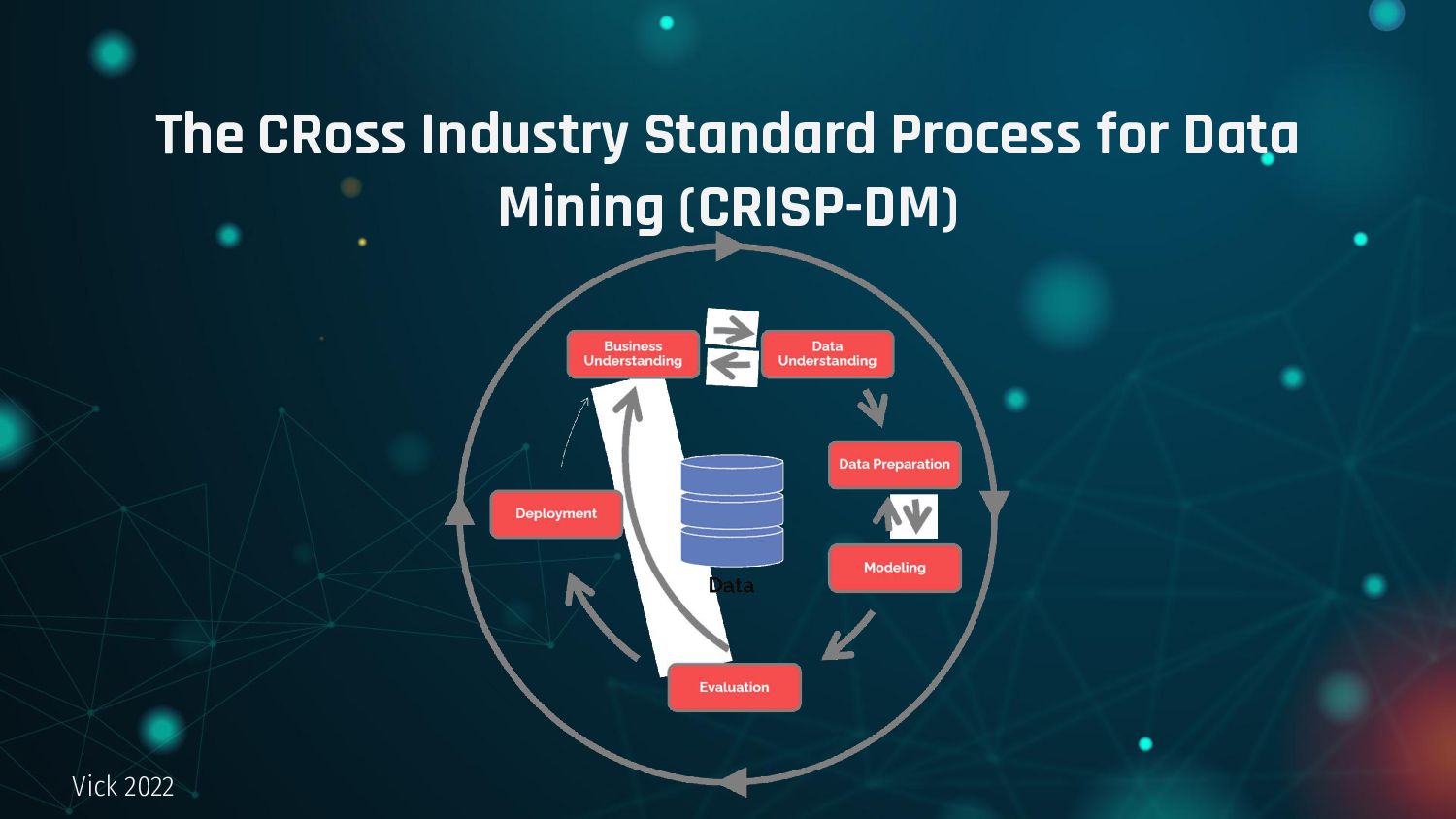
the goal of the project, and the question to be answered Clean and standardize your data. Explore the data to know how it looks like. Perform hyperparameter tuning and monitor how your model performs in new data. Train your model, know the predictor… Data understanding modeling Business understanding Evaluation Data Preparation


 victoromondi1997
 kaityo256
 robintux
 cbtlibrary
 akiraasano
 sciencetokyo
 frievea
 ainischool
 signer
 pawan_pharm
 masakiokuda
 aleyda
 tammyeverts
 nikkihalliwell
 rkendrick25
 auna
auna
 baasie
 cassininazir
 marktimemedia
 jct
jct
 lemiorhan
 skipperchong
![Vick 2022 THANKS! Do you have any questions? [email protected] +254](https://files.speakerdeck.com/presentations/0da140d4819f40909573688cad1d9ddf/slide_20.jpg)