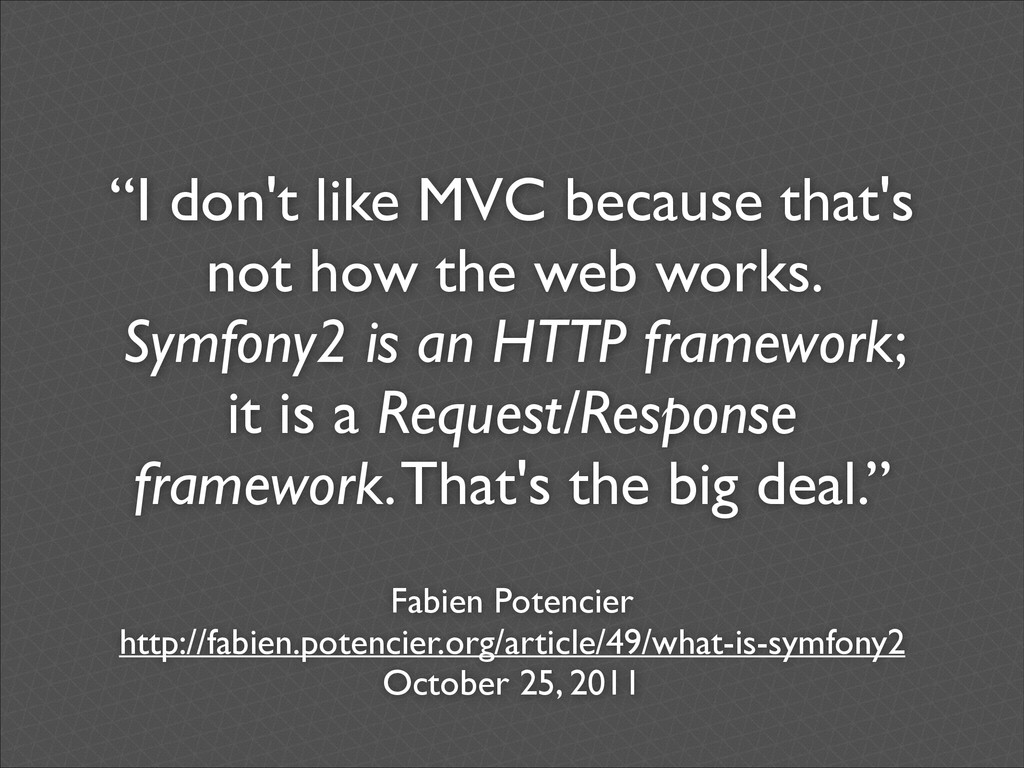
works. Symfony2 is an HTTP framework; it is a Request/Response framework. That's the big deal.” Fabien Potencier http://fabien.potencier.org/article/49/what-is-symfony2 October 25, 2011
overhead/complexity • Embrace HTTP • Leverage raw PHP without introducing too many “framework concepts” • Only PHP knowledge should be enough • Shouldn’t have to “fight the framework” • “Micro” != No Structure
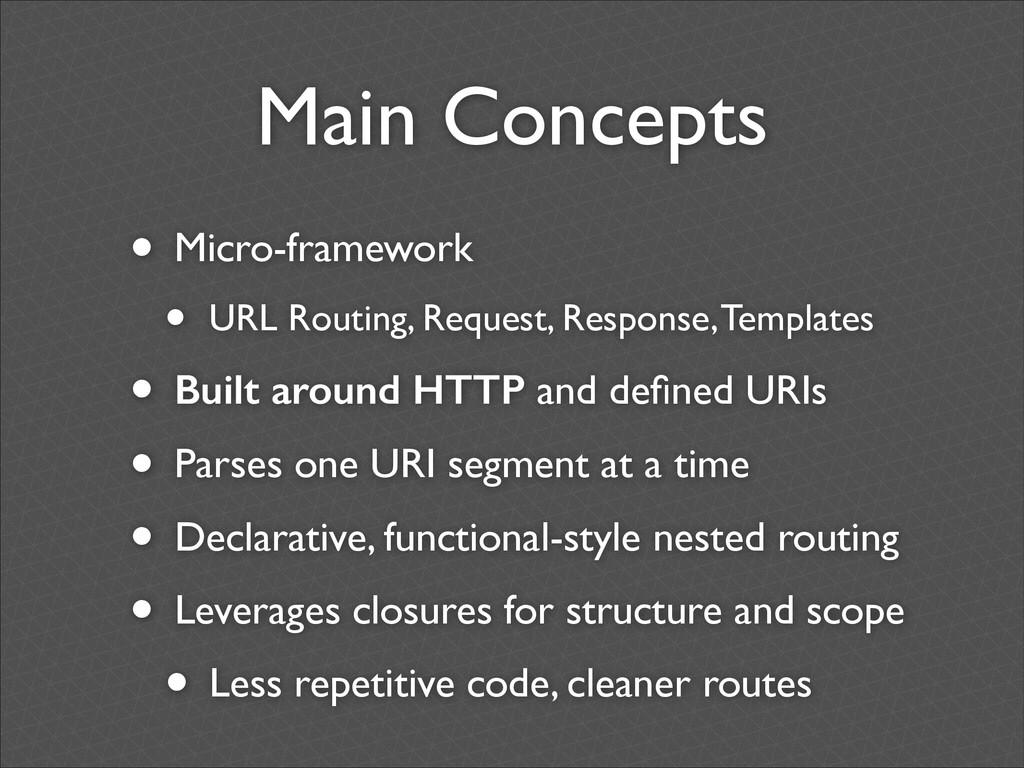
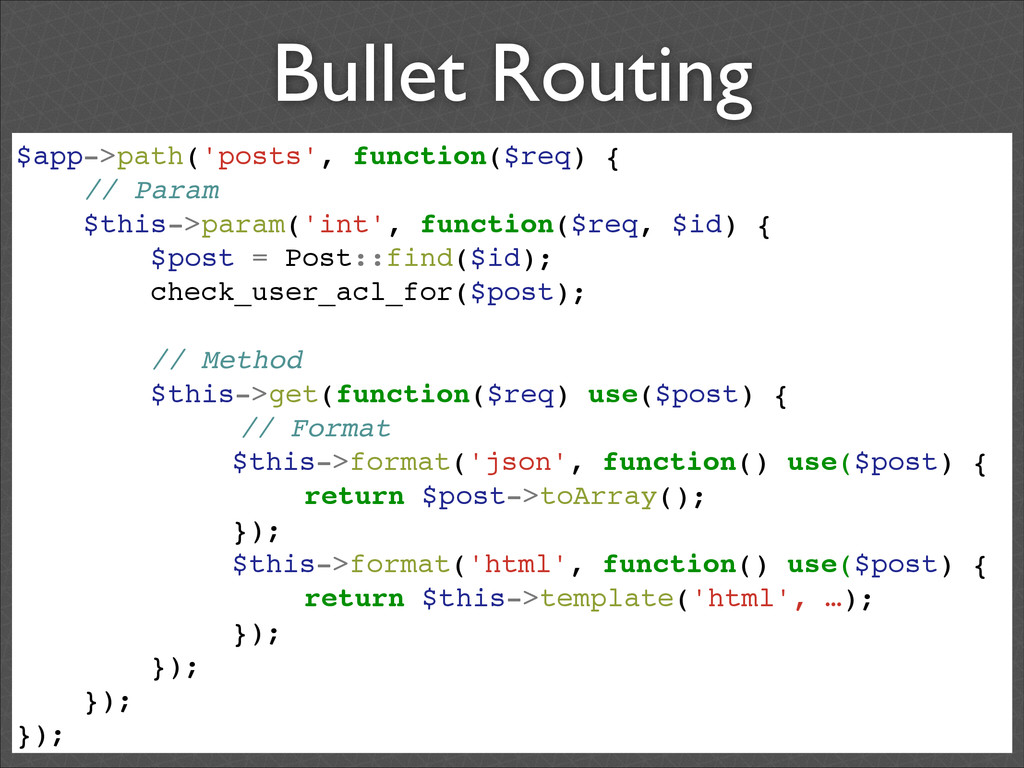
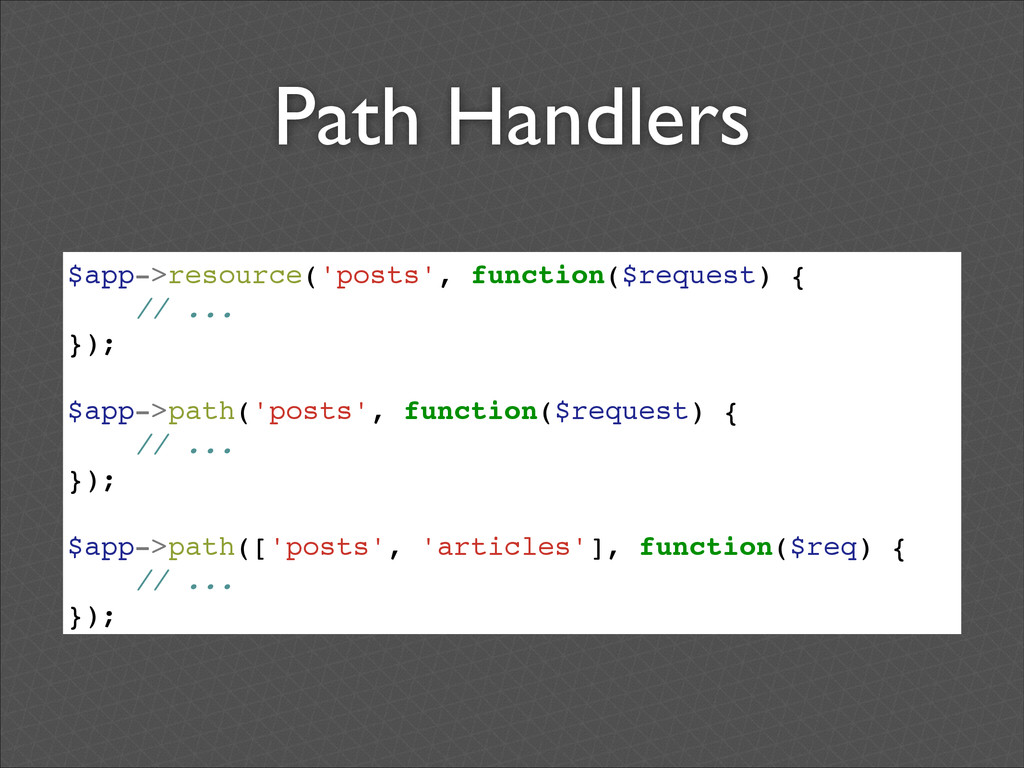
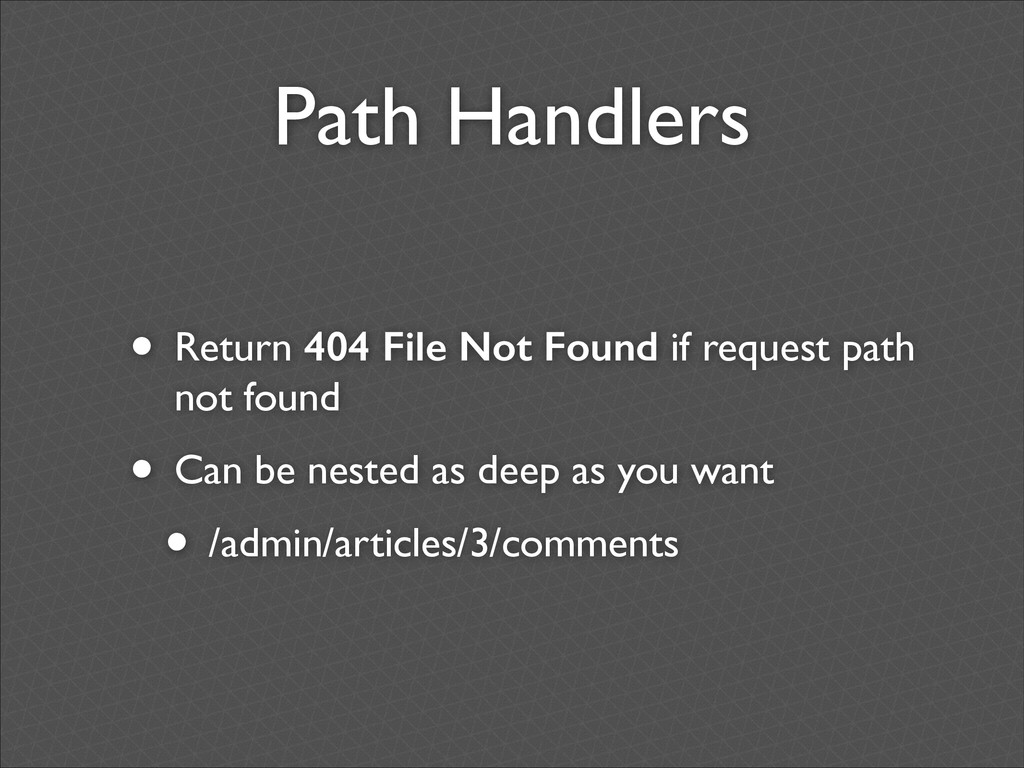
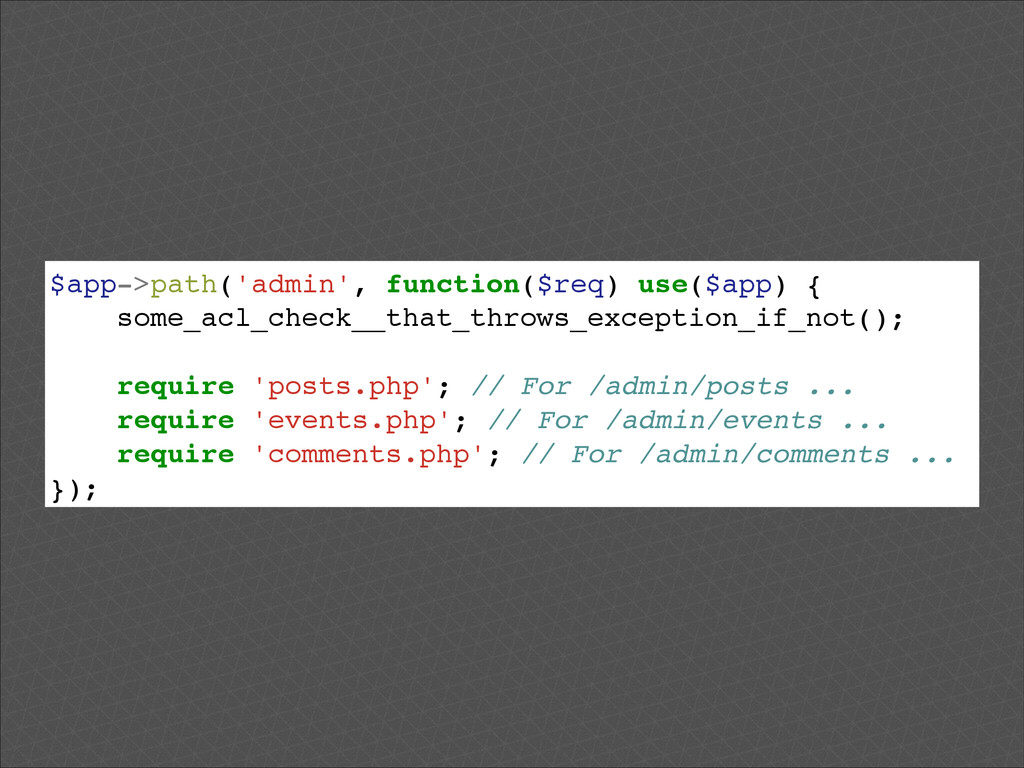
• Built around HTTP and defined URIs • Parses one URI segment at a time • Declarative, functional-style nested routing • Leverages closures for structure and scope • Less repetitive code, cleaner routes
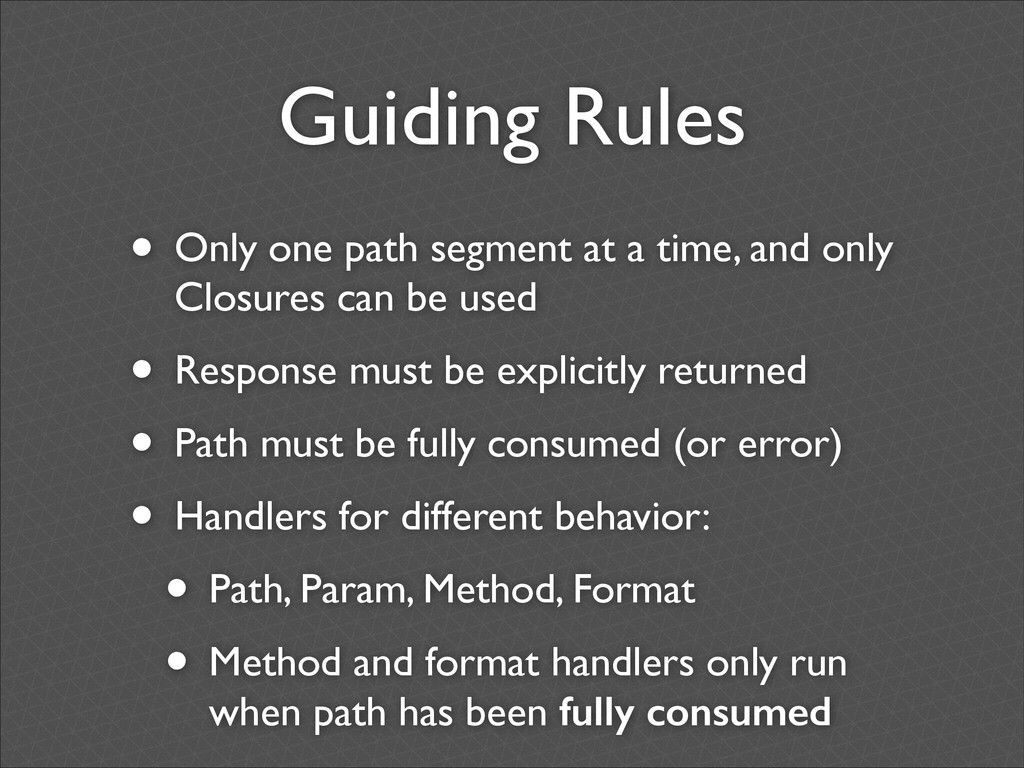
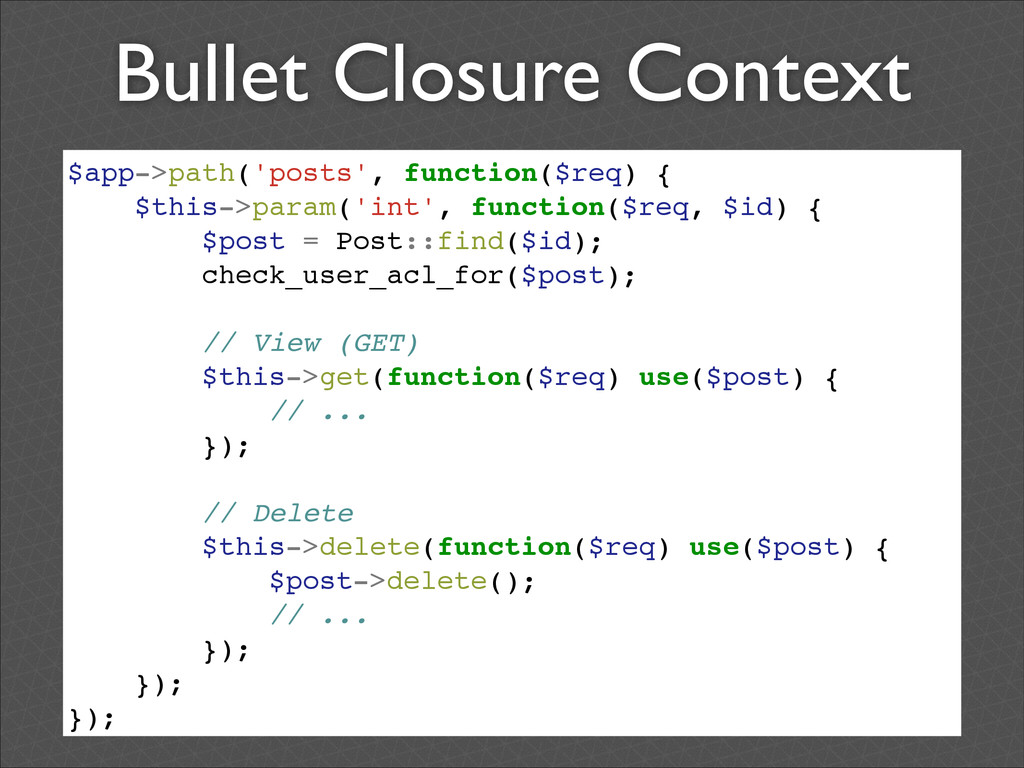
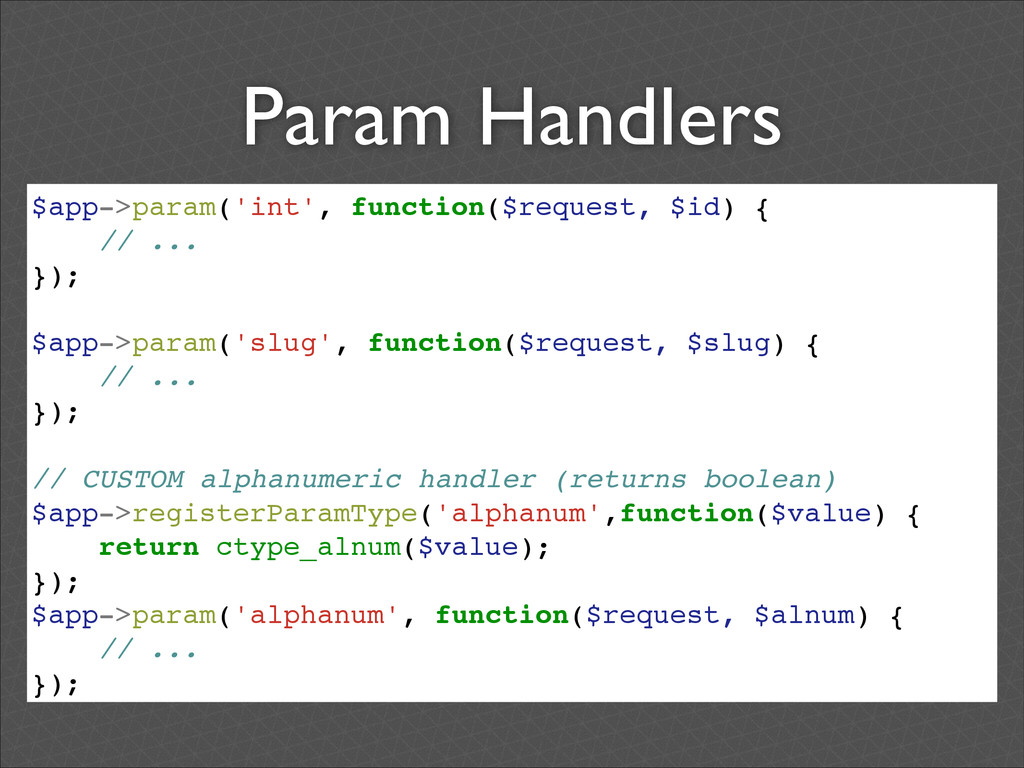
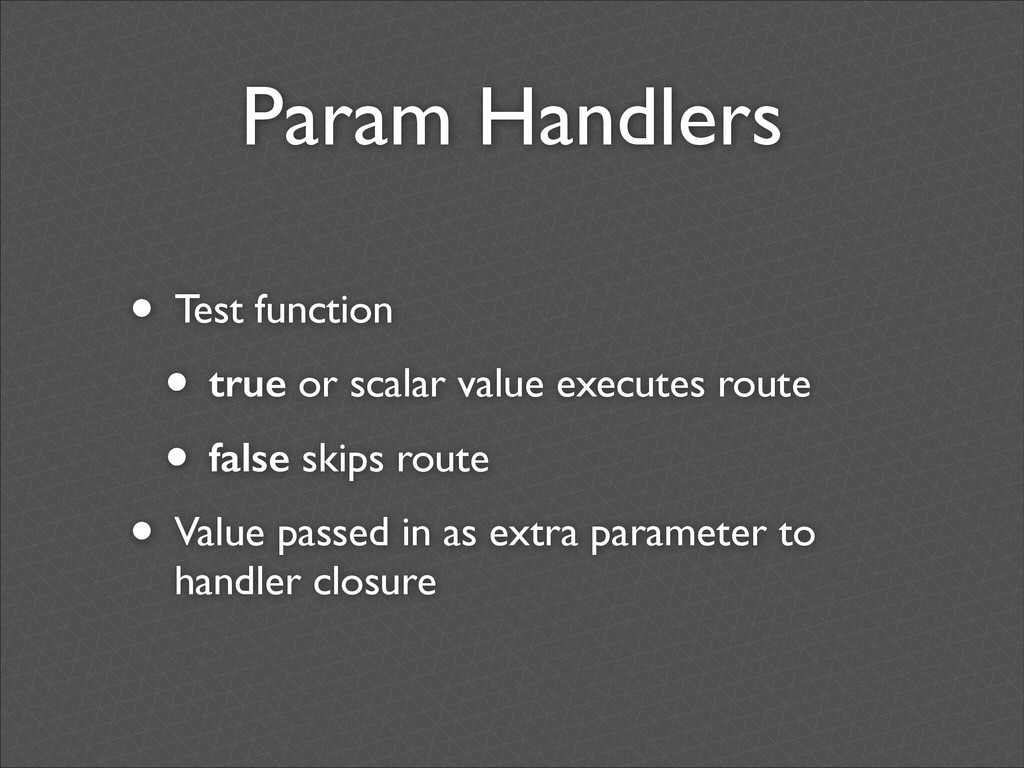
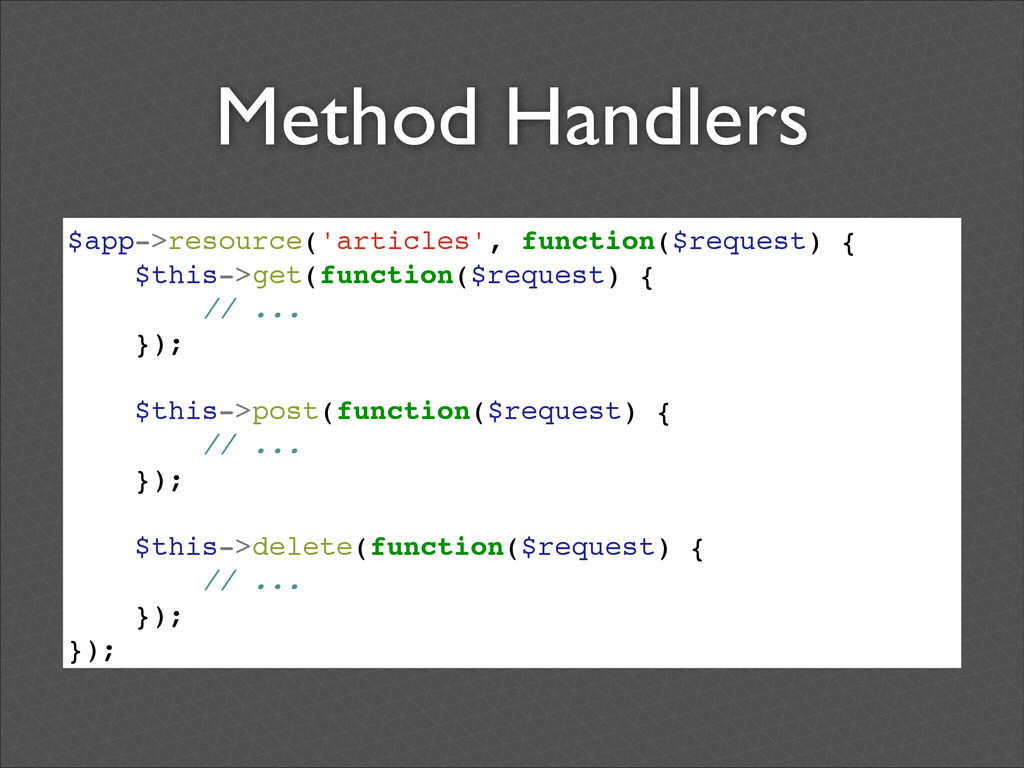
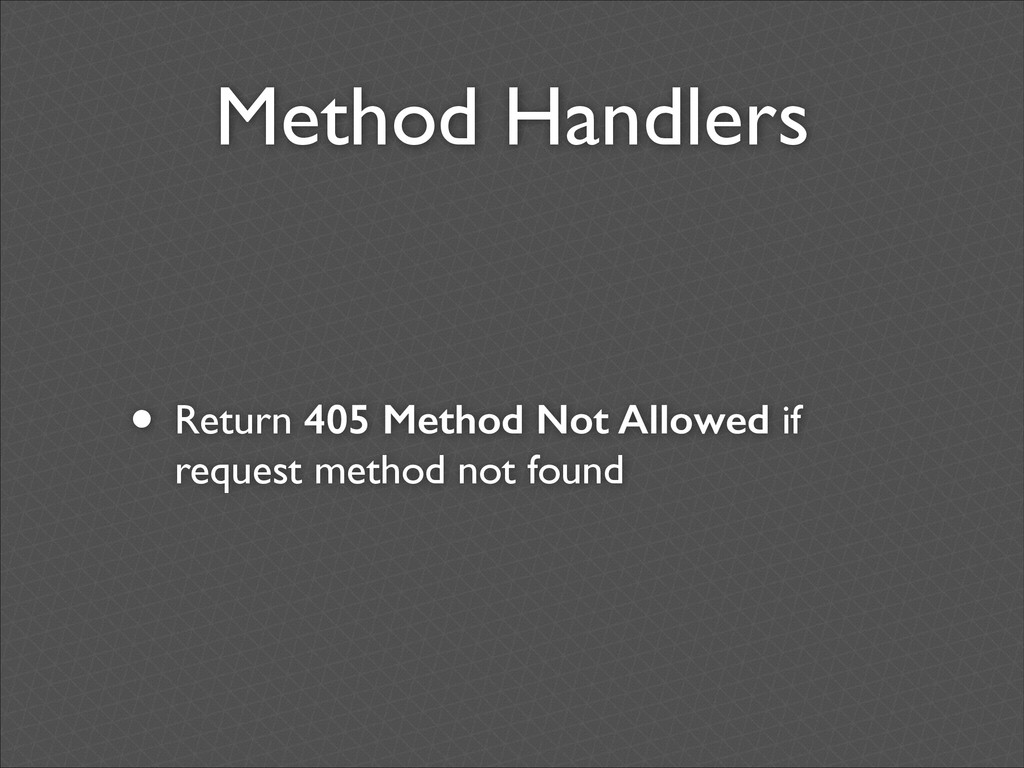
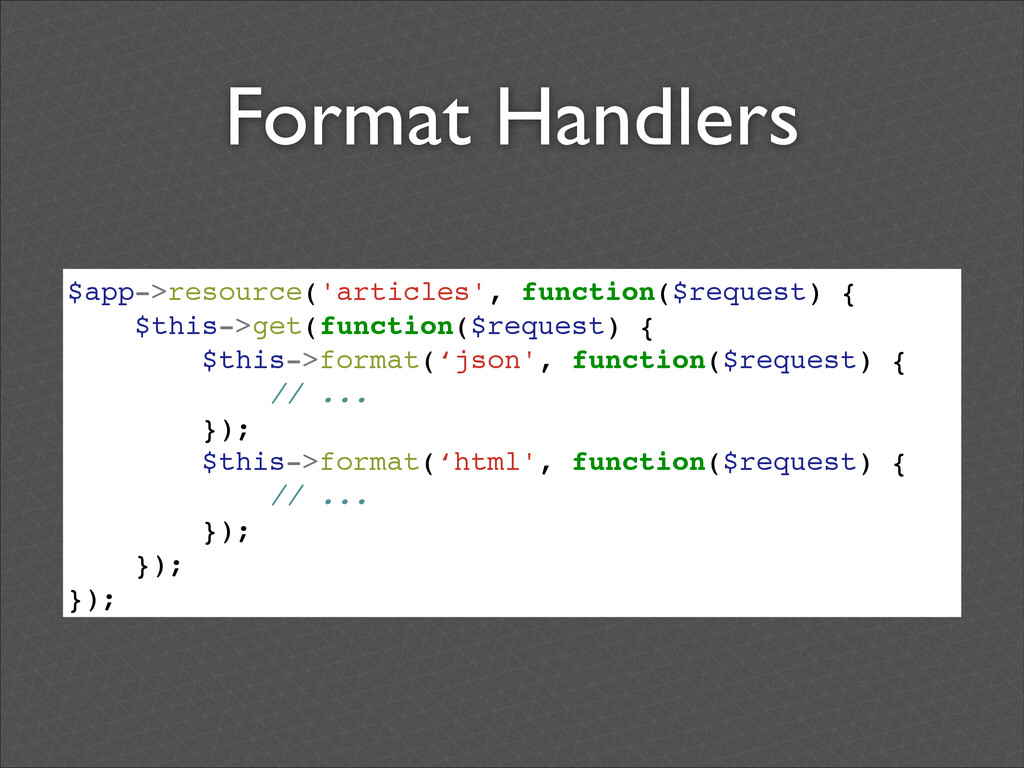
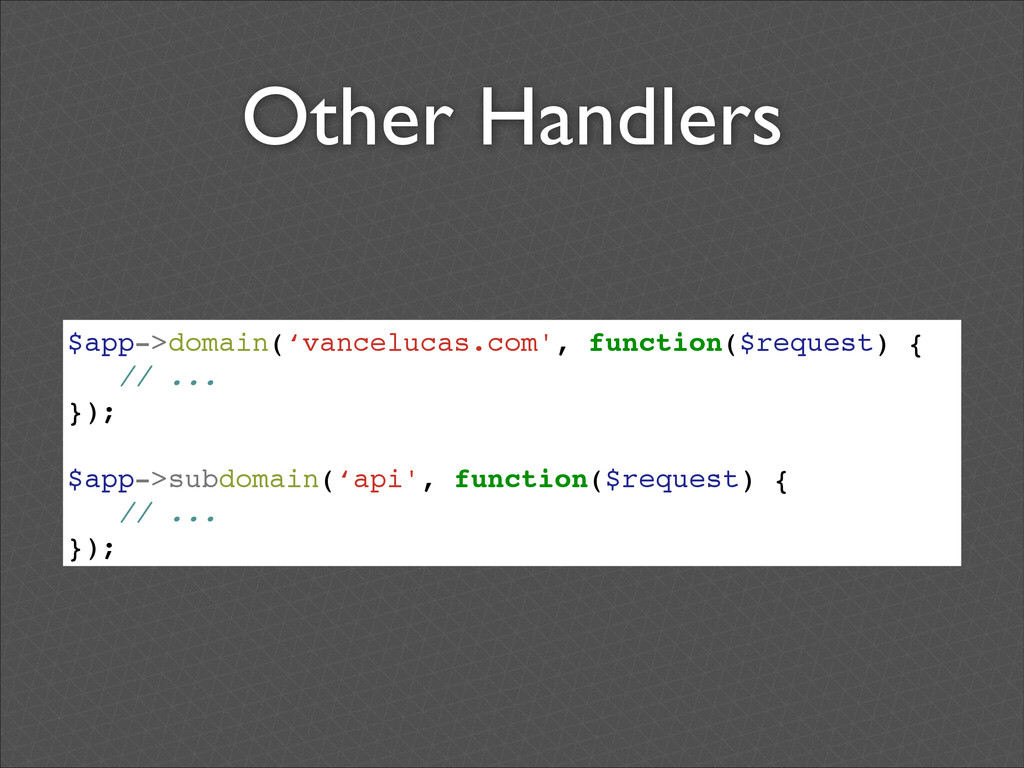
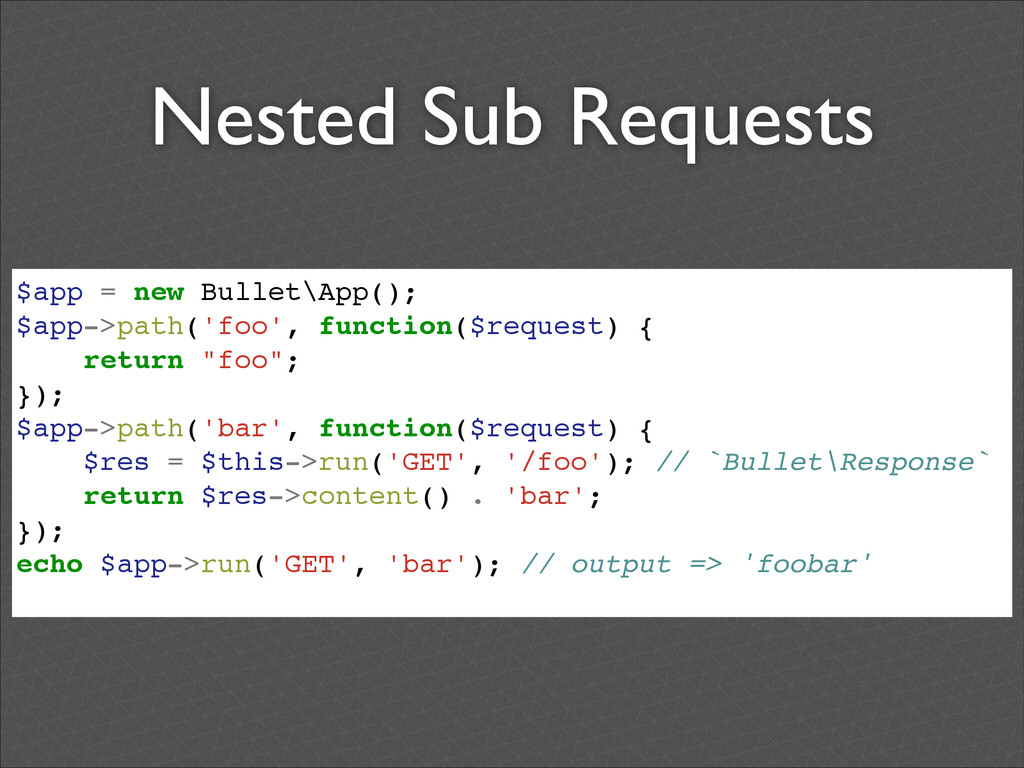
and only Closures can be used • Response must be explicitly returned • Path must be fully consumed (or error) • Handlers for different behavior: • Path, Param, Method, Format • Method and format handlers only run when path has been fully consumed
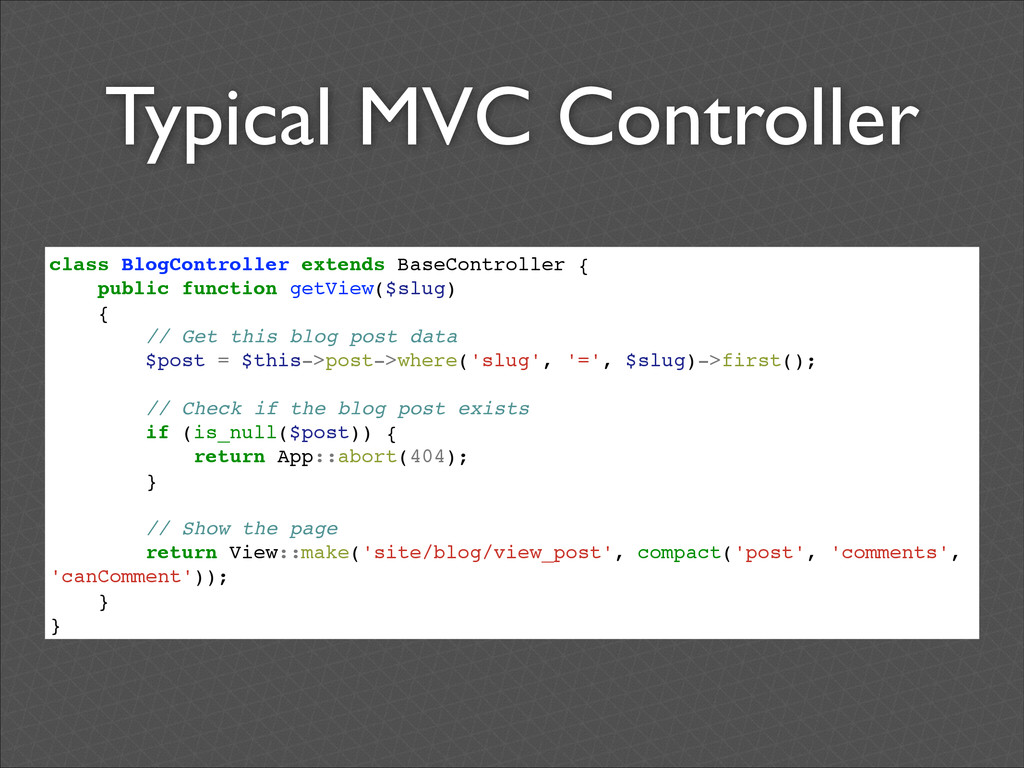
getView($slug)! {! // Get this blog post data! $post = $this->post->where('slug', '=', $slug)->first();! ! // Check if the blog post exists! if (is_null($post)) {! return App::abort(404);! }! ! // Show the page! return View::make('site/blog/view_post', compact('post', 'comments', 'canComment'));! }! }
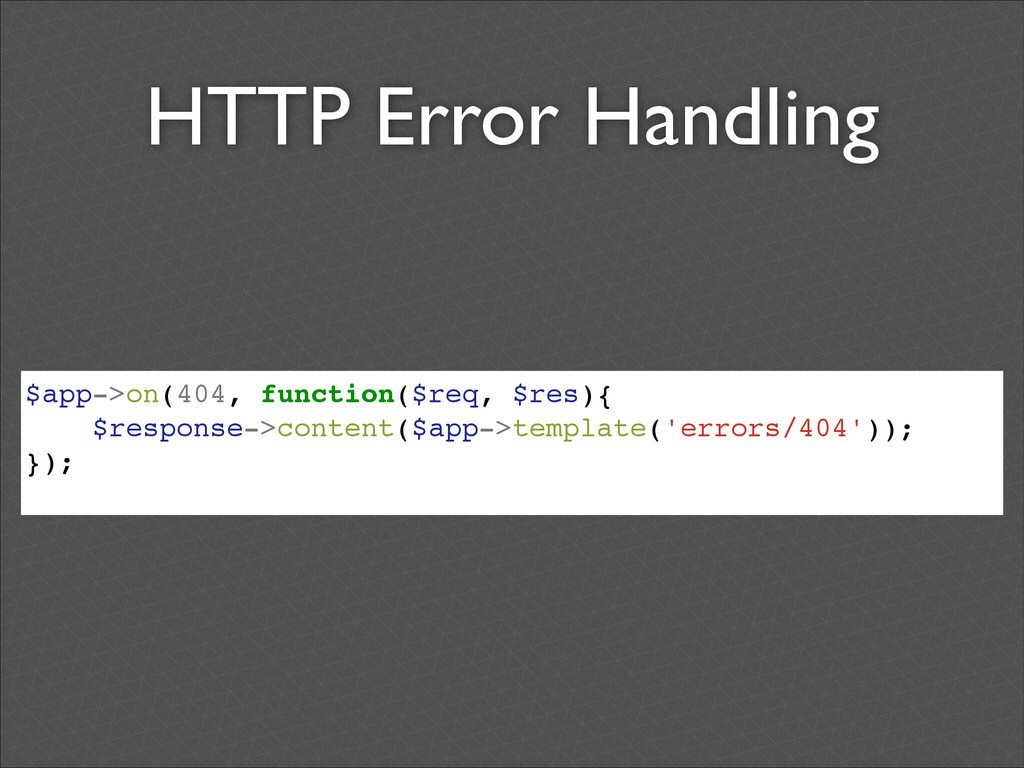
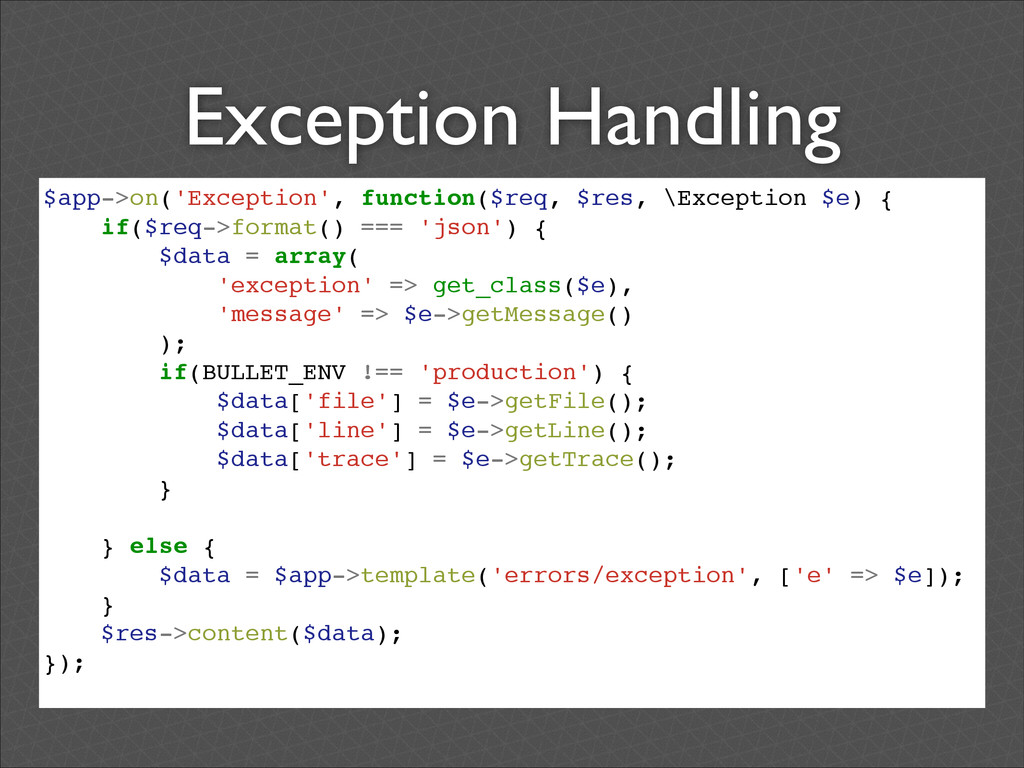
- 404, 500, etc. • [response_format] - json, html, etc. • [exception_class] - exception class name like “InvalidArgumentException” or just “Exception” to catch all exceptions


 vlucas
 tomokon
 hamayokokuririn
 teyamagu
 touyou
 lx_t
lx_t
 petamoriken
 steliosf
 panda728
 satoshi256kbyte
 bash0c7
 kenkino
 kaityo256
 axbom
axbom
.png) helenjbeal
helenjbeal
 mojombo
 baasie
 michielstock
 honzajavorek
 lara
lara
 rmw
rmw
 matthewcrist
 lauravandoore
 jonrohan
 tmiket




![Events • Global: ‘before’, and ‘after’ • Dynamic • [http_status_code]](https://files.speakerdeck.com/presentations/26c5642026600132f6ff42a09a3cc4e8/slide_36.jpg)
![Questions? @vlucas | [email protected] ! ! Rate this talk! https://joind.in/10434](https://files.speakerdeck.com/presentations/26c5642026600132f6ff42a09a3cc4e8/slide_50.jpg)