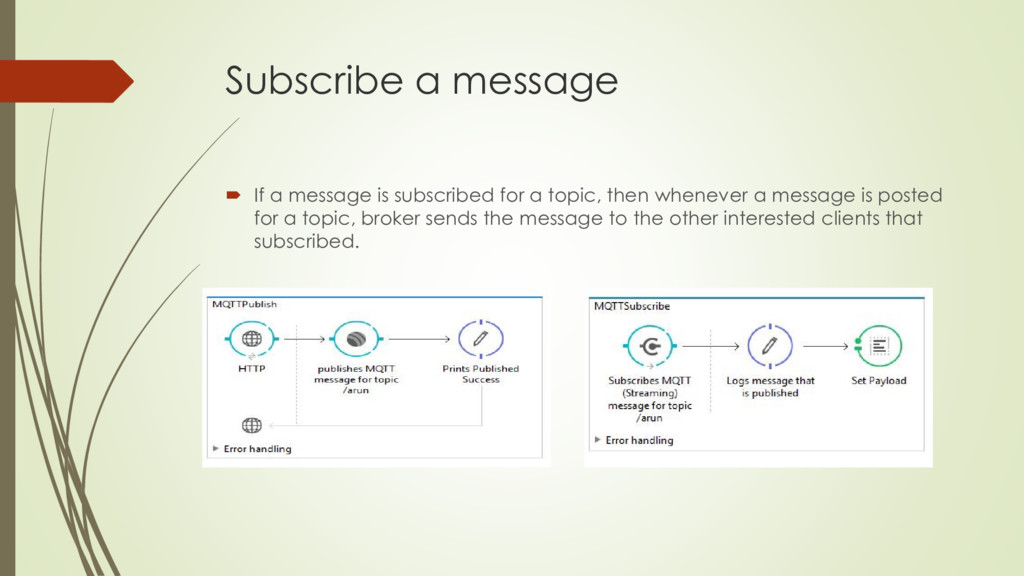
suits for low power IoT Devices Features of MQTT includes Light weight and bandwidth efficient and suitable for low power devices Simple QoS Data Delivery (At most once, At least once and Exactly once Qos Data Delivery) Continuous Session Awareness
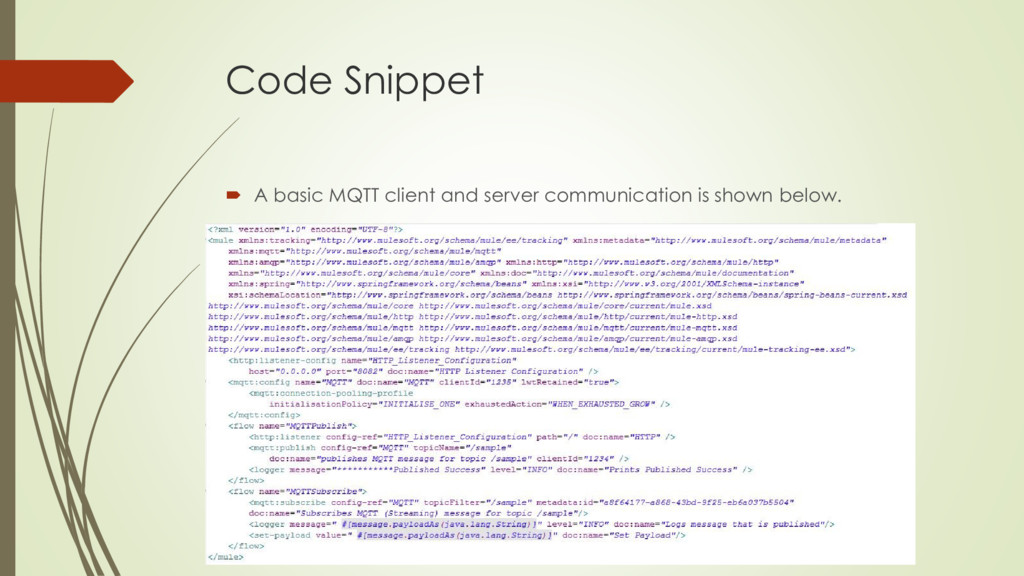
to identify its client. Broker Server Uri is mentioned as "tcp://localhost:1883". Before deploying the application, start the Mosquitto server that resides in a machine.(MQTT broker). To start a MQTT broker, Open Services in Windows (In Start screen, search for "Services") Locate the installed server "Mosquitto Broker" and change the status to "Running"


 vsarun
 ssmedikasda
 frievea
 ishii_mit
 pawan_pharm
 ytapples613
 masakiokuda
 uranoken
 akiraasano
 signer
 cbtlibrary
 bunnchinn3
 doratex
 frankvandijk
 cassininazir
 coloredviolet
 maltzj
 holman
 brad_frost
 marcelosomers
 uxyall
 codingconduct
 asonas
 bcantrill
.png) helenjbeal
helenjbeal