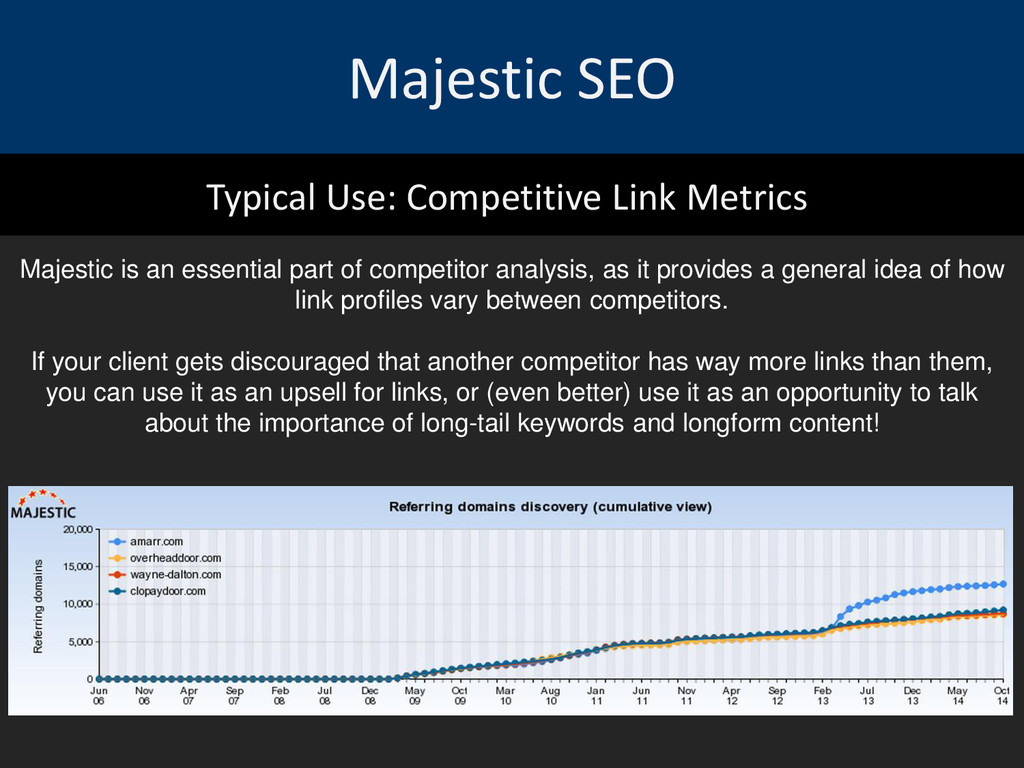
essential part of competitor analysis, as it provides a general idea of how link profiles vary between competitors. If your client gets discouraged that another competitor has way more links than them, you can use it as an upsell for links, or (even better) use it as an opportunity to talk about the importance of long-tail keywords and longform content!
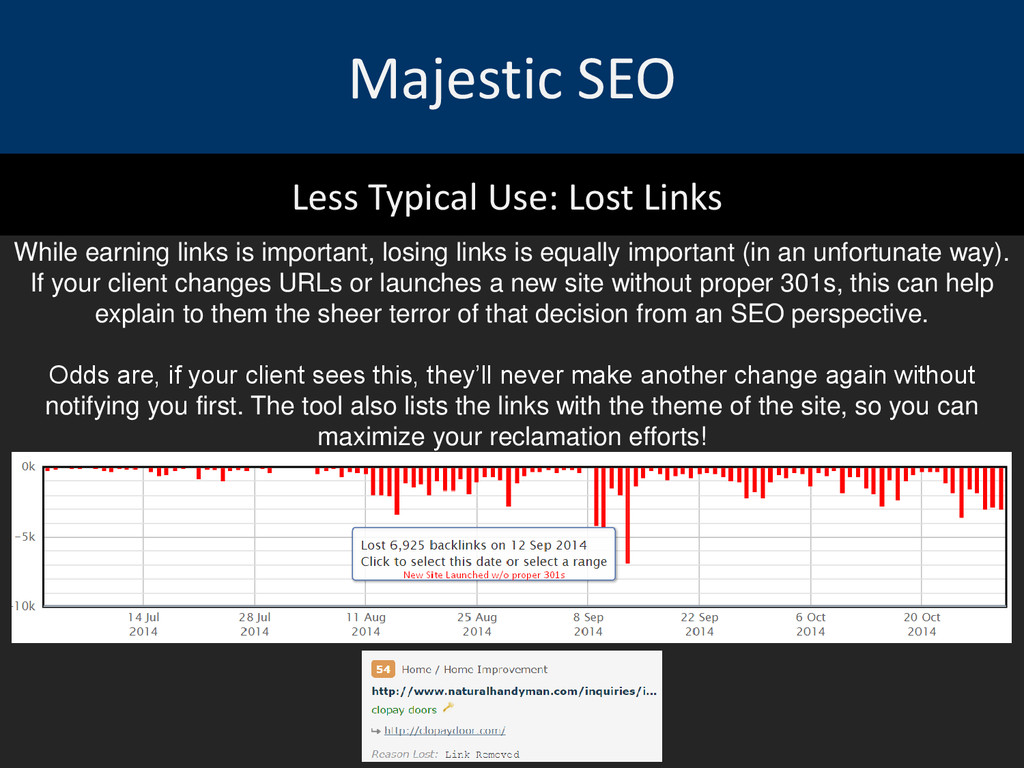
is important, losing links is equally important (in an unfortunate way). If your client changes URLs or launches a new site without proper 301s, this can help explain to them the sheer terror of that decision from an SEO perspective. Odds are, if your client sees this, they’ll never make another change again without notifying you first. The tool also lists the links with the theme of the site, so you can maximize your reclamation efforts!
Local SEO, BrightLocal allows us to get information on potential citations that competitors have, but your client does not. It can also be useful if your client moves to another physical location to help ensure that their NAP information is consistent across the web.
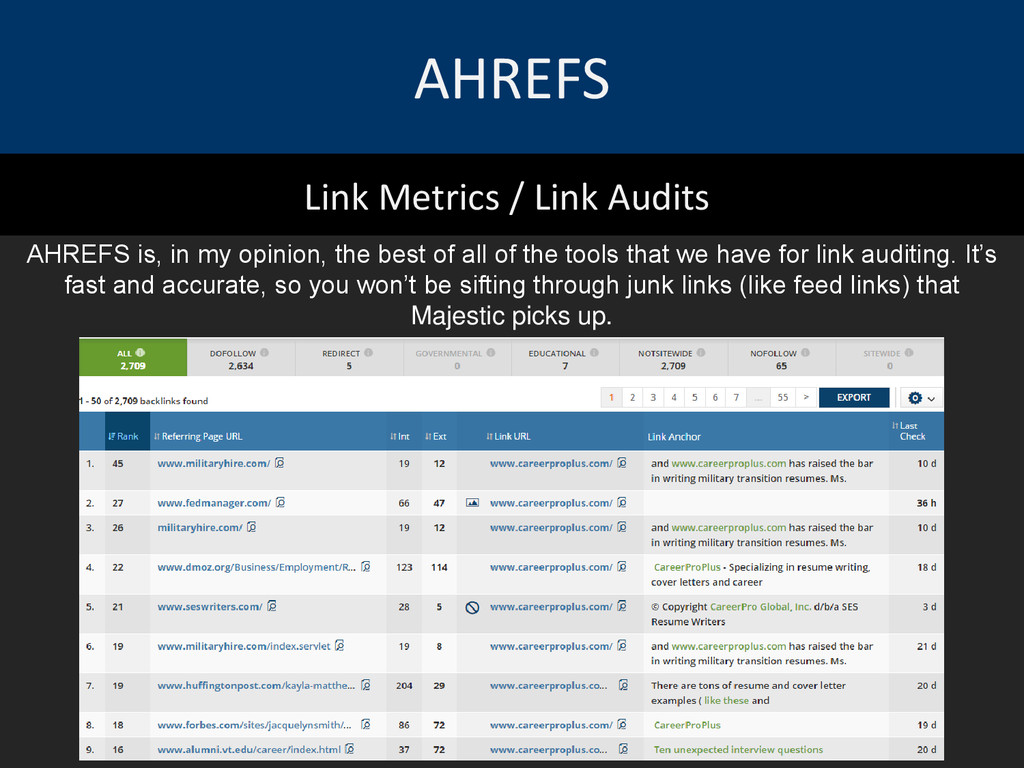
opinion, the best of all of the tools that we have for link auditing. It’s fast and accurate, so you won’t be sifting through junk links (like feed links) that Majestic picks up.
metrics for a site, but are tired of waiting (forever) for your browser to load the mozbar, check out the AHREFS toolbar. It’s a lean solution that provides some good metrics!
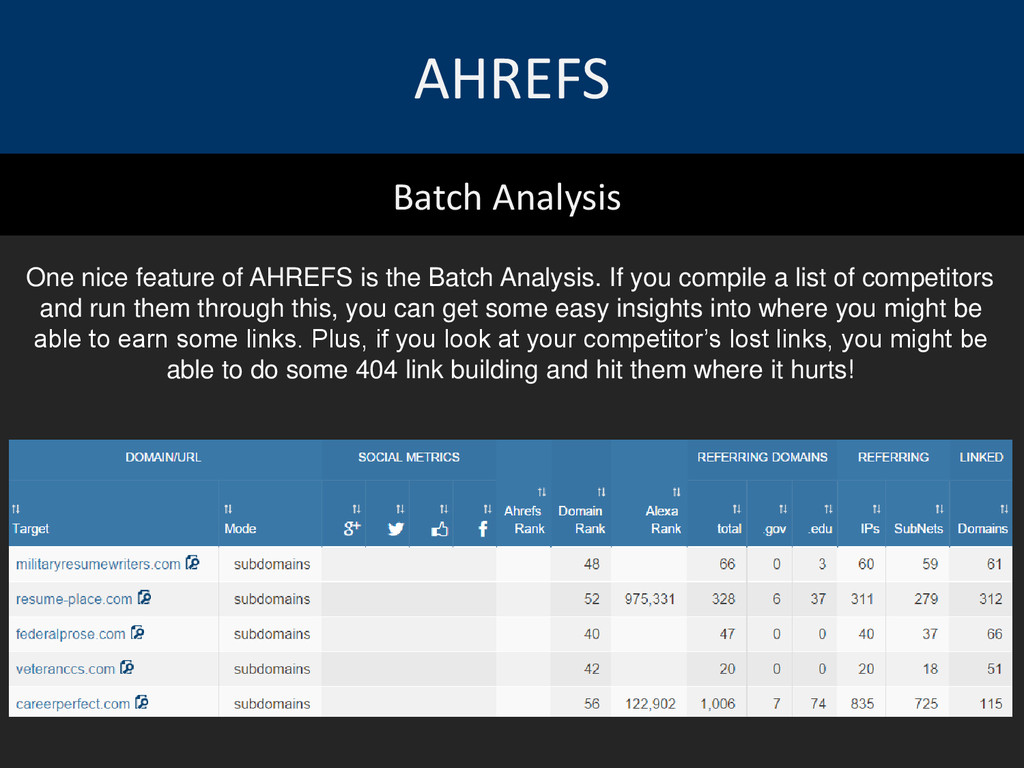
Batch Analysis. If you compile a list of competitors and run them through this, you can get some easy insights into where you might be able to earn some links. Plus, if you look at your competitor’s lost links, you might be able to do some 404 link building and hit them where it hurts!
likely know, we typically run the Design Analyzer, Quality Analyzer, and Site Auditor as part of the website analysis. But how often do we revisit after that?
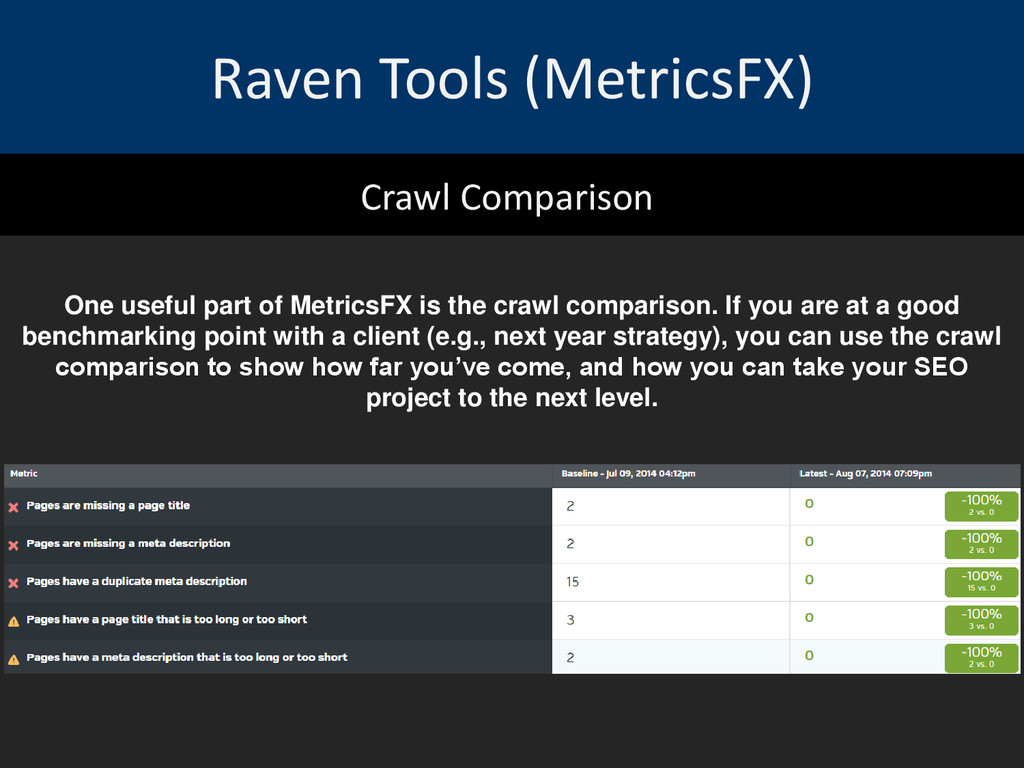
is the crawl comparison. If you are at a good benchmarking point with a client (e.g., next year strategy), you can use the crawl comparison to show how far you’ve come, and how you can take your SEO project to the next level.
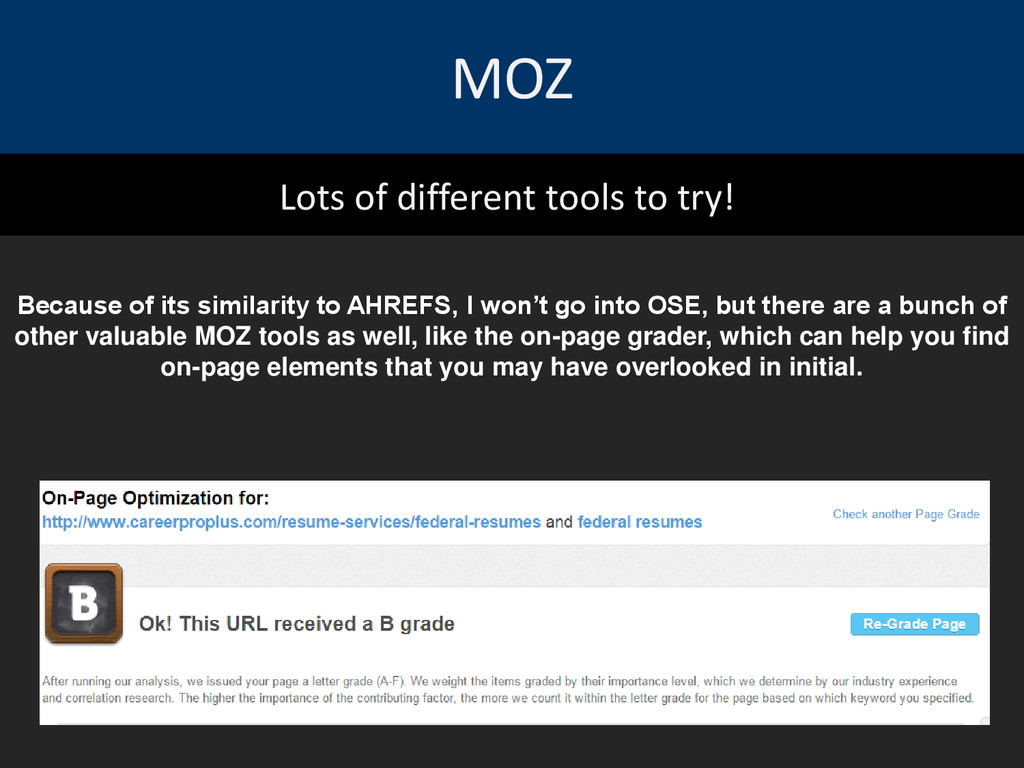
similarity to AHREFS, I won’t go into OSE, but there are a bunch of other valuable MOZ tools as well, like the on-page grader, which can help you find on-page elements that you may have overlooked in initial.
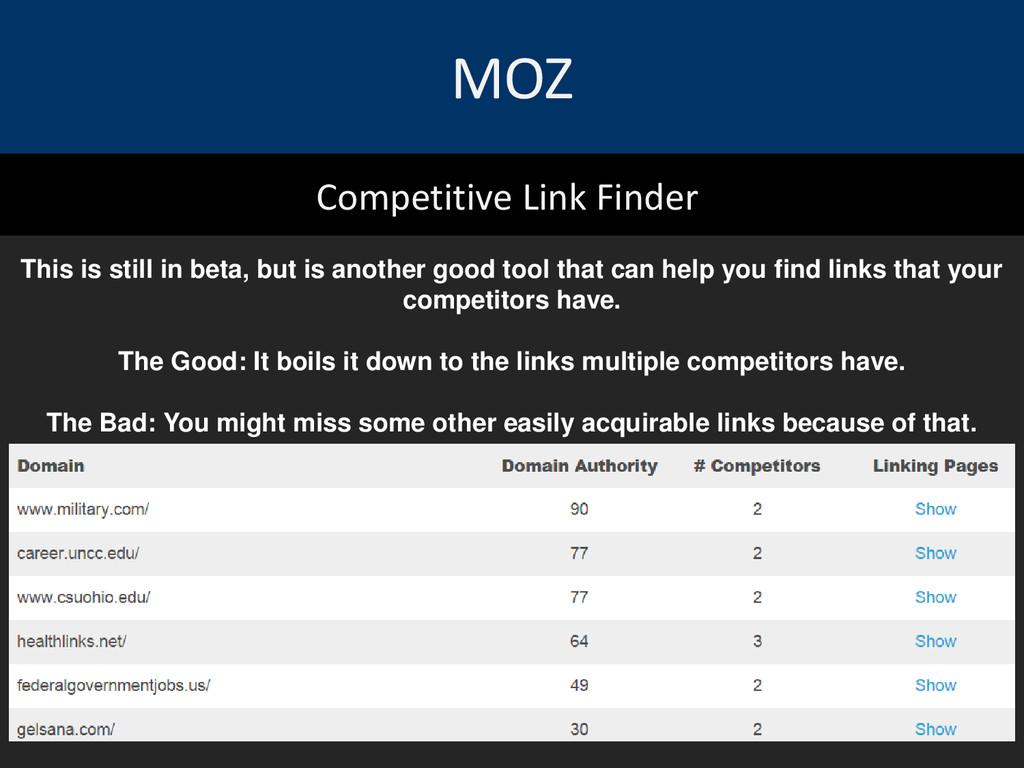
is another good tool that can help you find links that your competitors have. The Good: It boils it down to the links multiple competitors have. The Bad: You might miss some other easily acquirable links because of that.
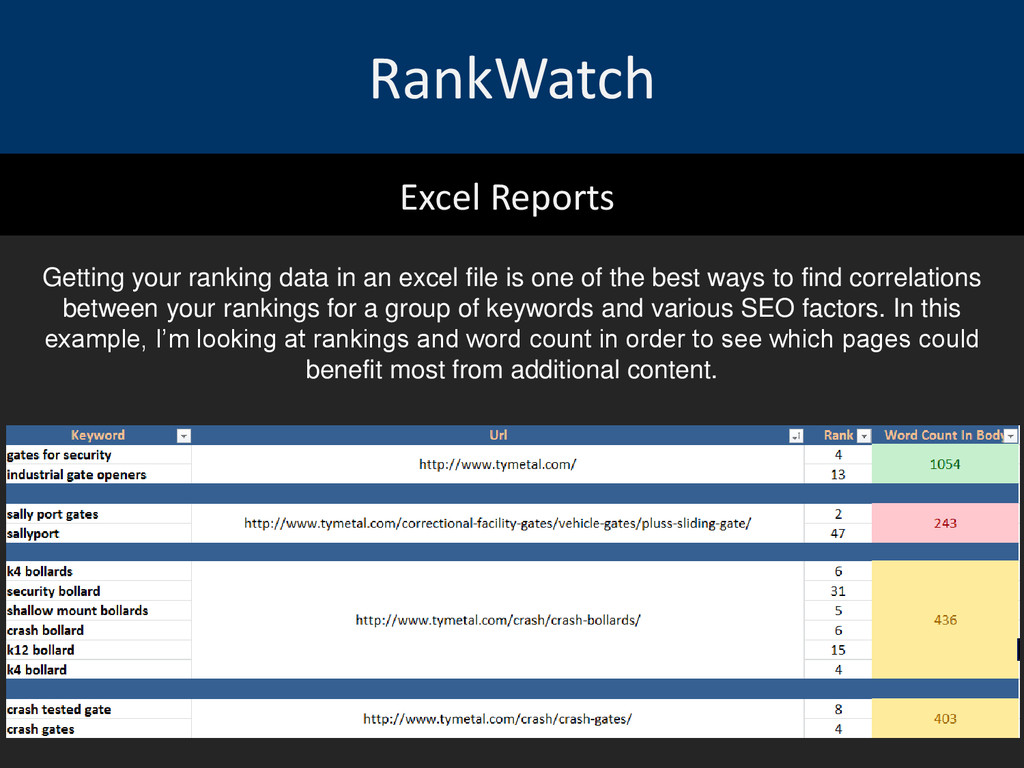
file is one of the best ways to find correlations between your rankings for a group of keywords and various SEO factors. In this example, I’m looking at rankings and word count in order to see which pages could benefit most from additional content.
one of the best tools out there with regard to competitor research, and offers competitor keyword data, ad copy, link profiles, estimates for competitor search traffic, and estimates of the volume of keywords for which they are ranking.
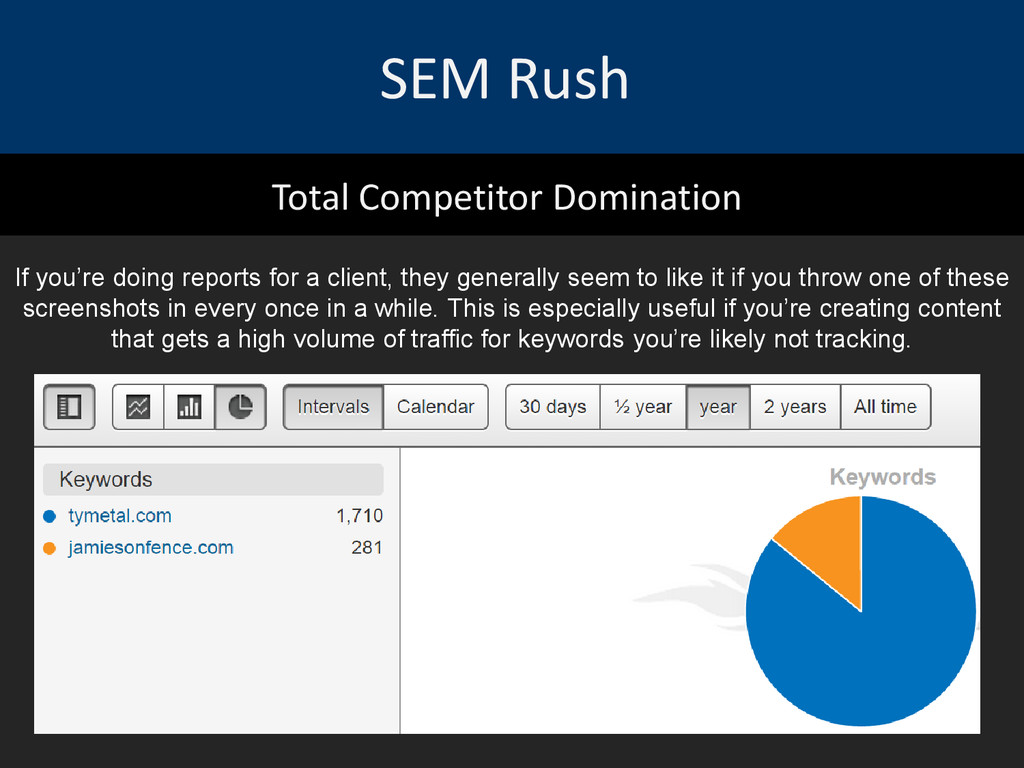
a client, they generally seem to like it if you throw one of these screenshots in every once in a while. This is especially useful if you’re creating content that gets a high volume of traffic for keywords you’re likely not tracking.
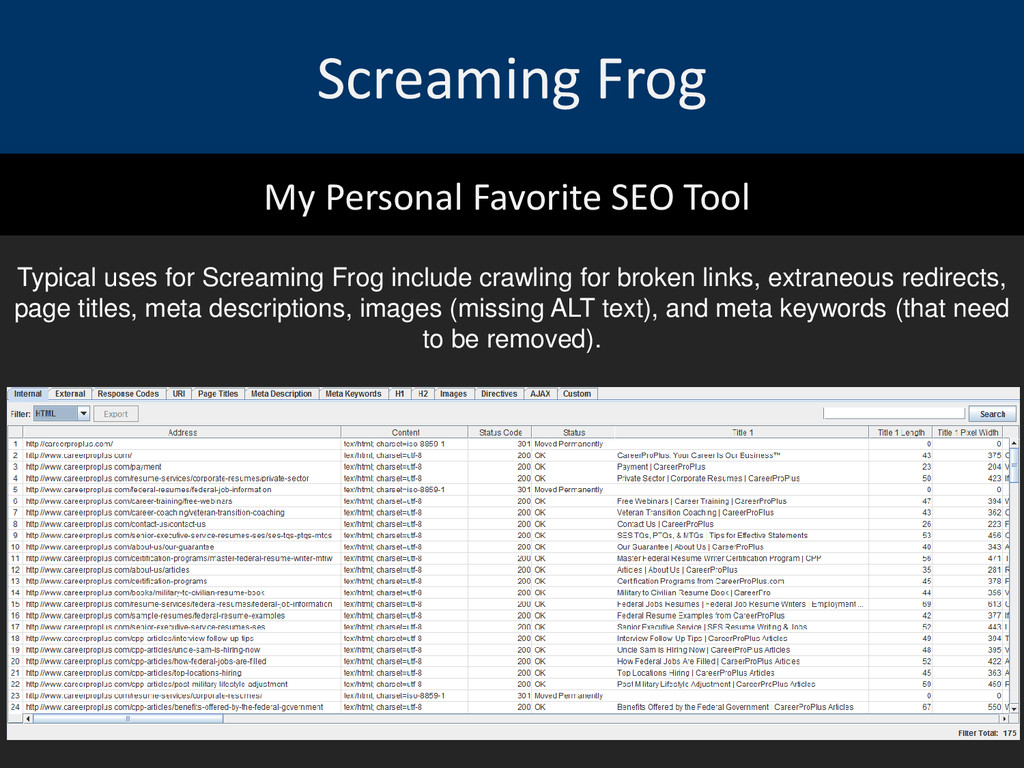
Screaming Frog include crawling for broken links, extraneous redirects, page titles, meta descriptions, images (missing ALT text), and meta keywords (that need to be removed).
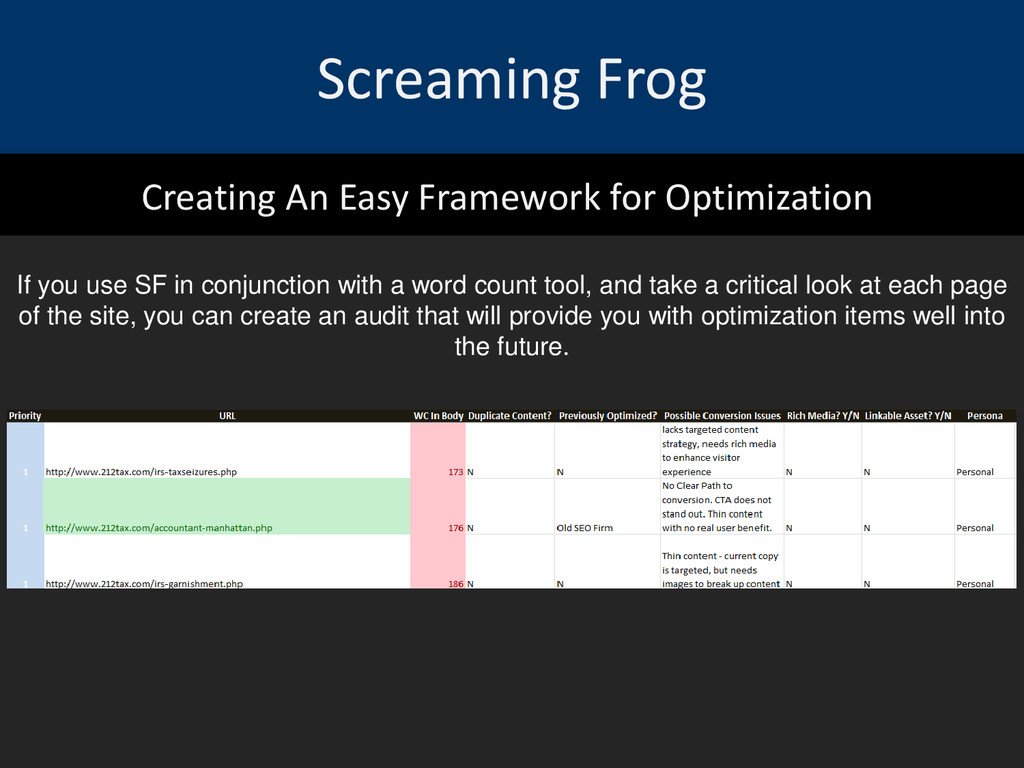
use SF in conjunction with a word count tool, and take a critical look at each page of the site, you can create an audit that will provide you with optimization items well into the future.
metrics on organic and paid search traffic, ad copy, and link profiles. The cool thing about SpyFu, however, is that all of the data is historic, which means we can see how competitors have progressively optimized their ad copy or adapted to algorithmic changes.
is that it shows historical ranking data and how they are affected by different algorithmic updates. As indicated by this data, Clopaydoor.com was affected negatively by Panda 4.1. but is on the rebound.


 webpagefx
 gonta
 eed3si9n
 jame2408
 taiseiue
 marcoroth
 rshindo
 minodriven
 skydoves
 iwatsukayura
 sylph01
 akihisaikeda
 ryanjones
 ianozsvald
 sergeychernyshev
 garrettdimon
 morganepeng
 reverentgeek
 baasie
 aleyda
 soudai
 addyosmani
 bkeepers
 lfama