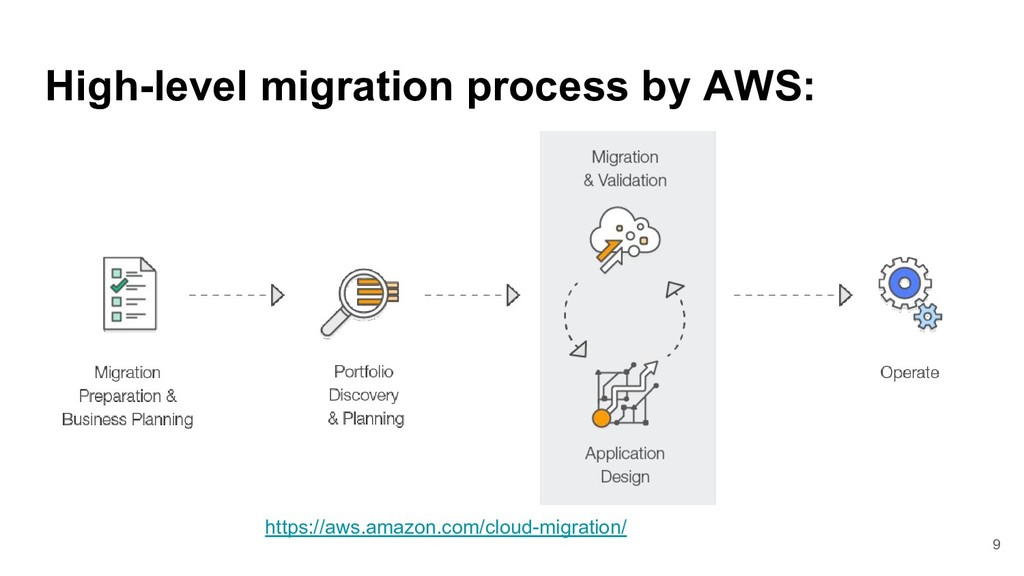
Upgrade to Pro — share decks privately, control downloads, hide ads and more …

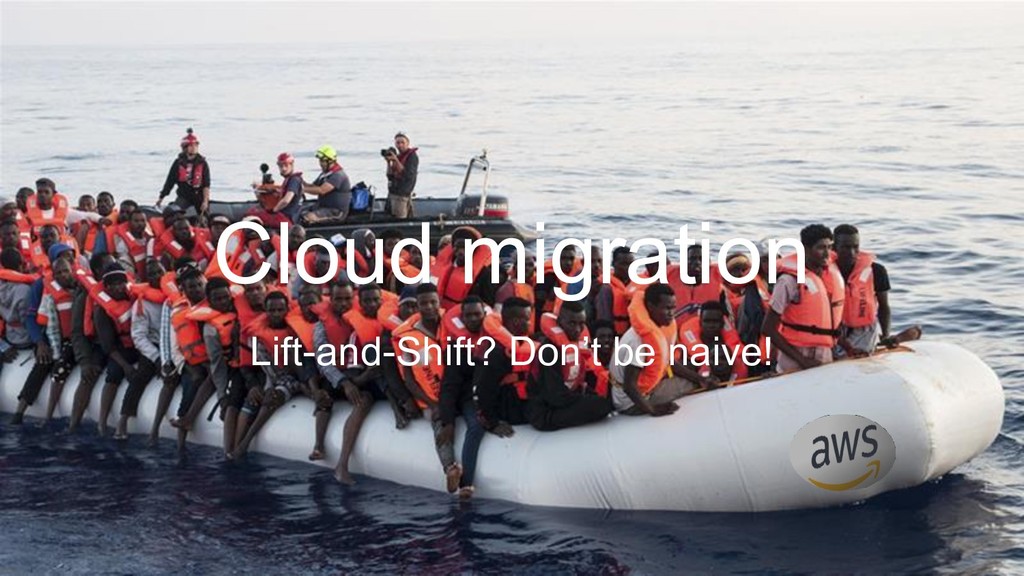
Cloud migration: Lift-and-Shift? Don’t be naive!

Avatar for Yura Nosenko Yura Nosenko
December 24, 2018

Cloud migration: Lift-and-Shift? Don’t be naive!

I will talk about how we tried to move our products from Rackspace Cloud to AWS in the least disruptive way and about the hindrances and disillusionment we experienced trying the lift-and-shift strategy.

Avatar for Yura Nosenko

Yura Nosenko

December 24, 2018

Other Decks in Programming

Transcript

  1. About me: • Tech lead @Attendify; • Worked on migration

    of one product from Rackspace to AWS, preparing to migrate another one; • Passionate about Cloud Native Apps based on various tech stack. 2
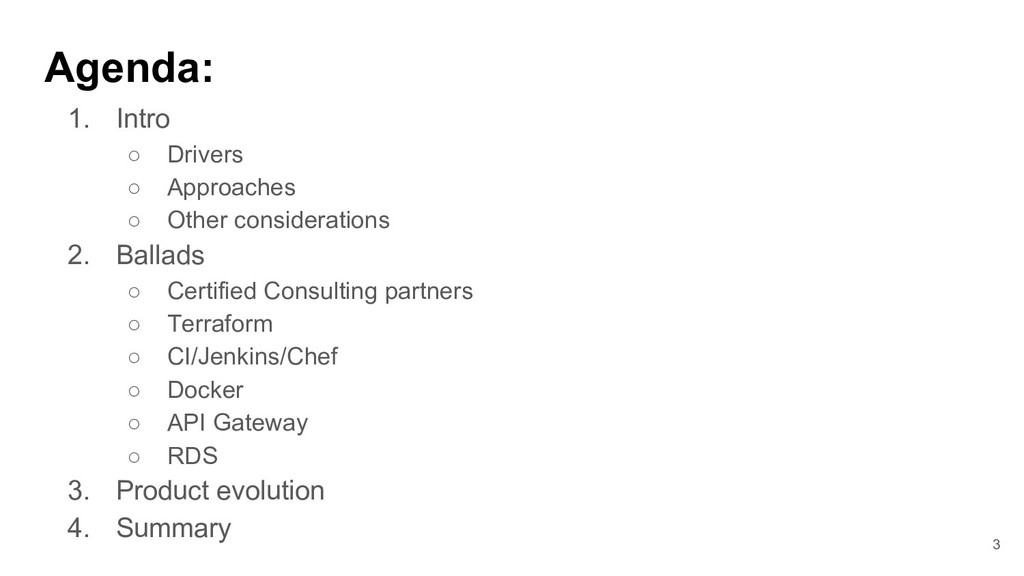
  2. Agenda: 1. Intro ◦ Drivers ◦ Approaches ◦ Other considerations

    2. Ballads ◦ Certified Consulting partners ◦ Terraform ◦ CI/Jenkins/Chef ◦ Docker ◦ API Gateway ◦ RDS 3. Product evolution 4. Summary 3
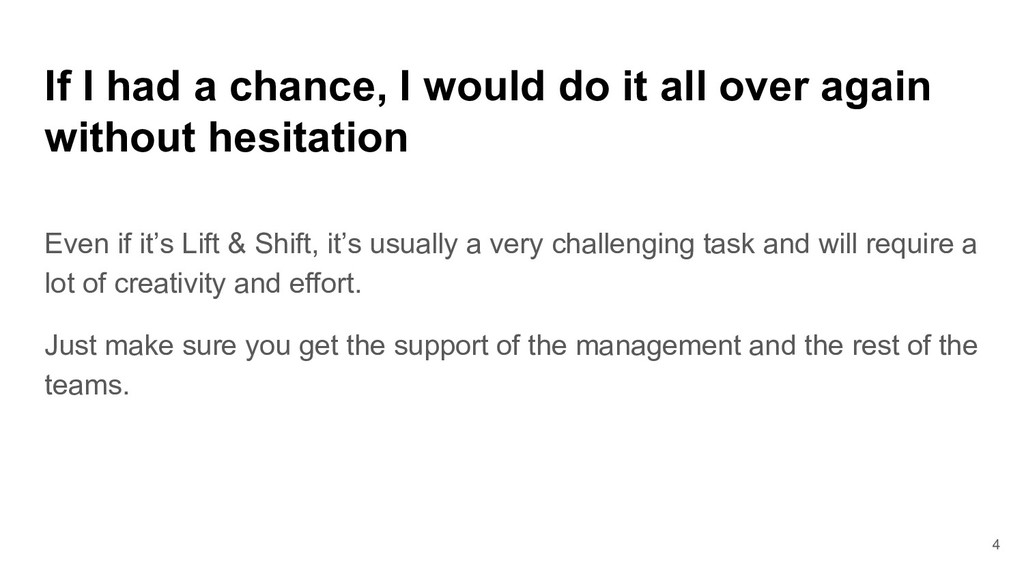
  3. If I had a chance, I would do it all

    over again without hesitation Even if it’s Lift & Shift, it’s usually a very challenging task and will require a lot of creativity and effort. Just make sure you get the support of the management and the rest of the teams. 4
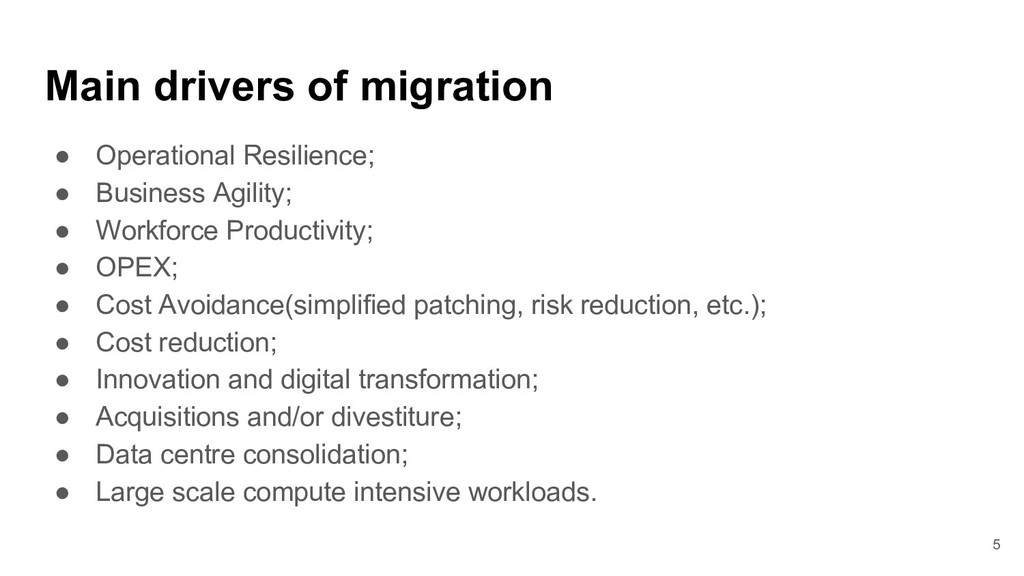
  4. Main drivers of migration • Operational Resilience; • Business Agility;

    • Workforce Productivity; • OPEX; • Cost Avoidance(simplified patching, risk reduction, etc.); • Cost reduction; • Innovation and digital transformation; • Acquisitions and/or divestiture; • Data centre consolidation; • Large scale compute intensive workloads. 5
  5. Main drivers of migration • Operational Resilience; • Business Agility;

    • Workforce Productivity; • OPEX; • Cost Avoidance(simplified patching, risk reduction, etc.); • Cost reduction; • Innovation and digital transformation; • Acquisitions and/or divestiture; • Data centre consolidation; • Large scale compute intensive workloads. 6
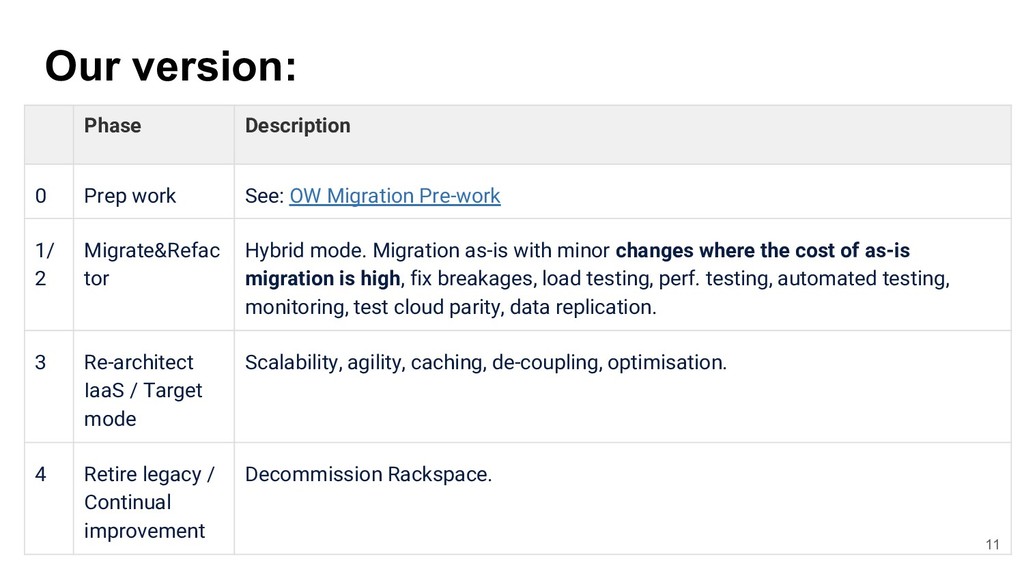
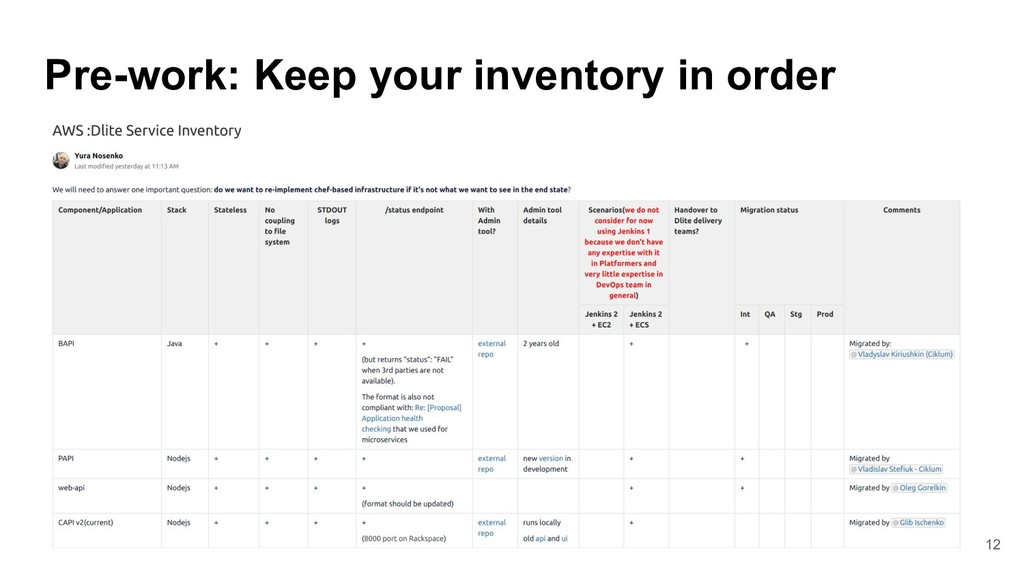
  6. Our version: Phase Description 0 Prep work See: OW Migration

    Pre-work 1/ 2 Migrate&Refac tor Hybrid mode. Migration as-is with minor changes where the cost of as-is migration is high, fix breakages, load testing, perf. testing, automated testing, monitoring, test cloud parity, data replication. 3 Re-architect IaaS / Target mode Scalability, agility, caching, de-coupling, optimisation. 4 Retire legacy / Continual improvement Decommission Rackspace. 11
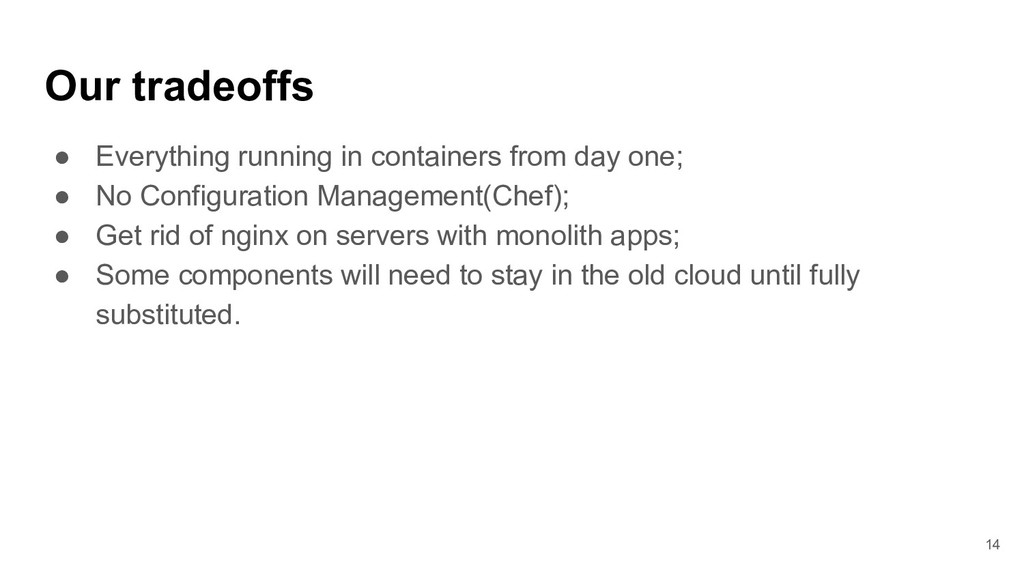
  7. Our tradeoffs • Everything running in containers from day one;

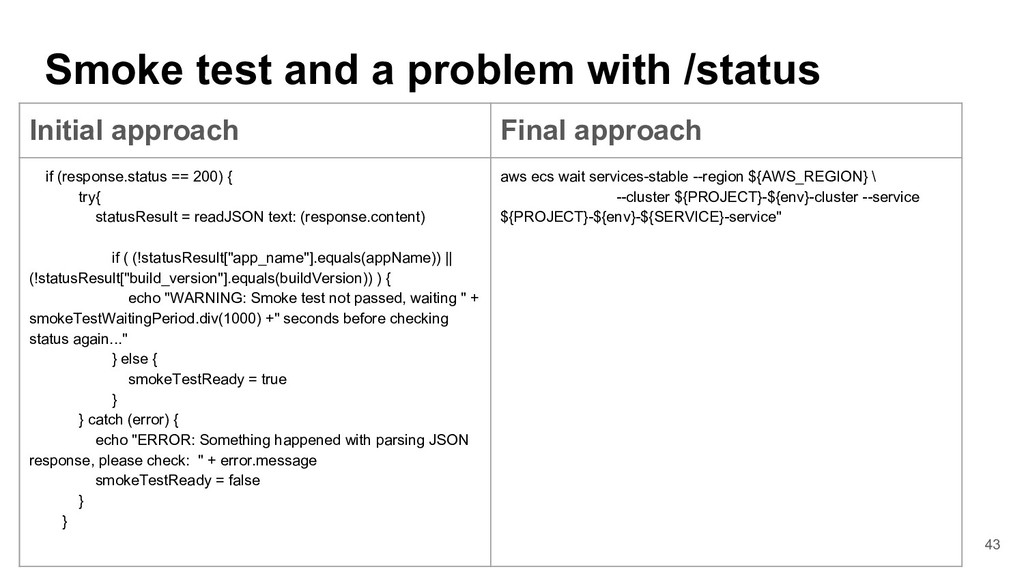
    • No Configuration Management(Chef); • Get rid of nginx on servers with monolith apps; • Some components will need to stay in the old cloud until fully substituted. 14
  8. Team setup options • Dedicated Infra team with help from

    Dev teams(“classic” DevOps); • Dedicated Dev team with help from Infra team. 16
  9. Team setup options • Dedicated Infra team with help from

    Dev teams; • Dedicated Dev team with help from Infra team. 17
  10. We researched different strategies for migration The Pre-work step is

    not any less important than migration itself because it’s quite likely that you won’t have time/budget for re-architecture right after the initial Lift&Shift. Make sure you are comfortable with all the tradeoffs and carefully weigh in all pros and cons comparing to the existing infra. 18
  11. Our core principle for migration(even lift-and-shift) • What we move

    into AWS should not require substantial non-functional changes/refactoring in AWS unless dictated by new business requirements; • We don’t use AWS-native technologies we are not comfortable with even if it provides a temporary benefit(no snake oil principle). 19
  12. Some start with Beanstalk first • It’s a SaaS wrapper

    on top of other wrappers/services(ELB, S3); • Can only be a problem in the future if more flexibility is required. 21
  13. Areas where the team had better spend extra time •

    IAM(resource-based policies, trust relationships, cross-organizations, cross-account access) • CloudWatch(if you need customization, percentiles, high resolution metrics) 22
  14. No matter how well you’ve done the Pre-work you won’t

    be able to predict all the hindrances, and here are some that me stumbled upon. 23
  15. Truth about AWS partners There’s not much to tell: get

    ready for serious engagement and investment if you want to get ANY help. 25
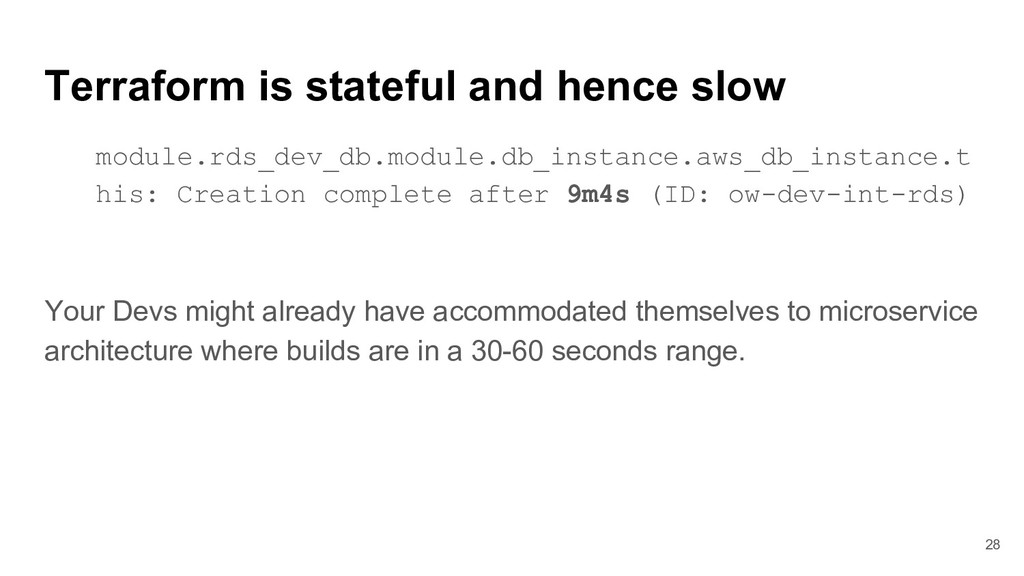
  16. Terraform is stateful and hence slow module.rds_dev_db.module.db_instance.aws_db_instance.t his: Creation complete

    after 9m4s (ID: ow-dev-int-rds) Your Devs might already have accommodated themselves to microservice architecture where builds are in a 30-60 seconds range. 28
  17. Terraform is stateful and hence non-idempotent If something changed on

    AWS side, re-applying an exact same code can have a different result. 29 You all know who this guy is if you worked with Terraform
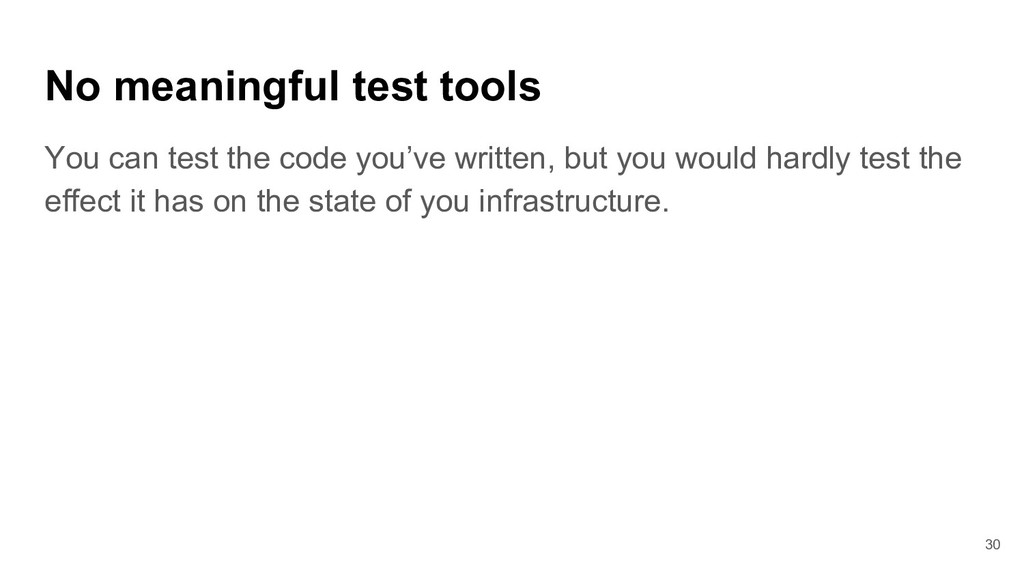
  18. No meaningful test tools You can test the code you’ve

    written, but you would hardly test the effect it has on the state of you infrastructure. 30
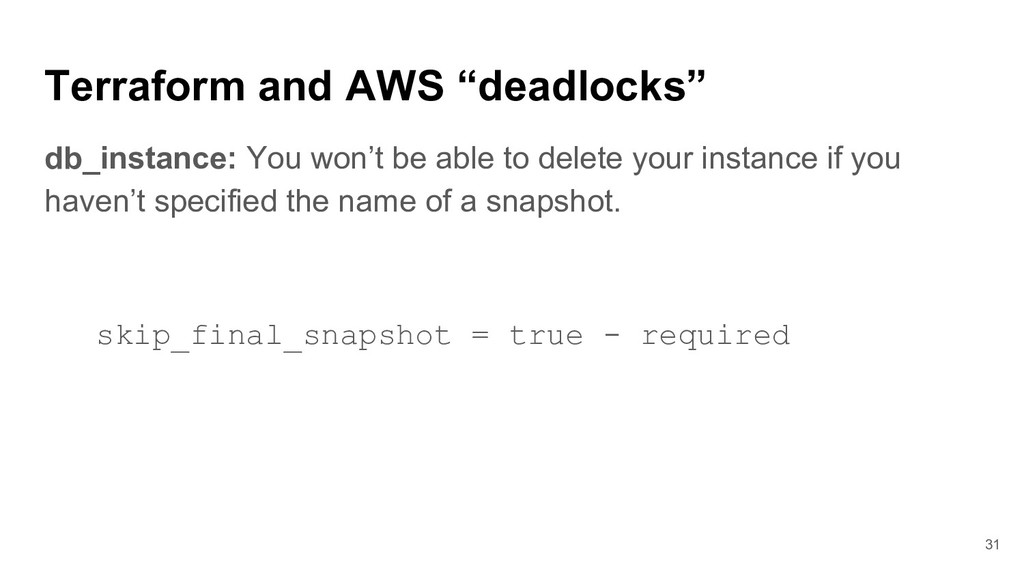
  19. Terraform and AWS “deadlocks” db_instance: You won’t be able to

    delete your instance if you haven’t specified the name of a snapshot. skip_final_snapshot = true - required 31
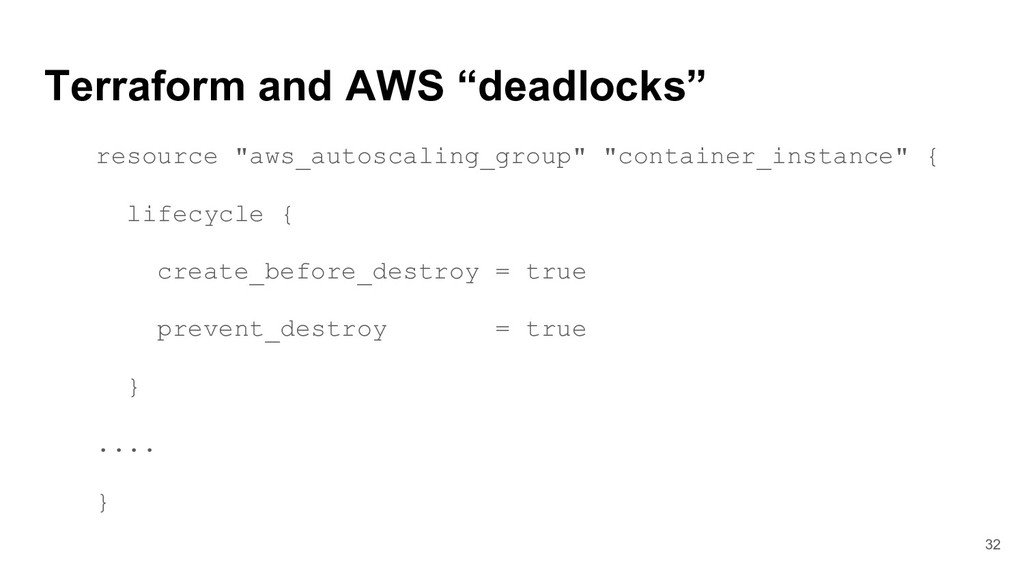
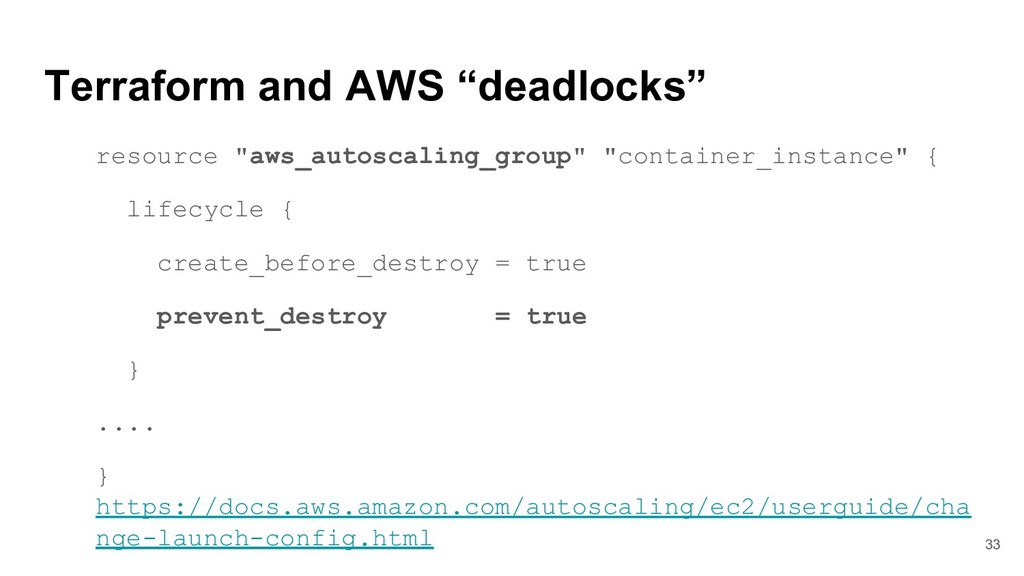
  20. Terraform and AWS “deadlocks” resource "aws_autoscaling_group" "container_instance" { lifecycle {

    create_before_destroy = true prevent_destroy = true } .... } https://docs.aws.amazon.com/autoscaling/ec2/userguide/cha nge-launch-config.html 33
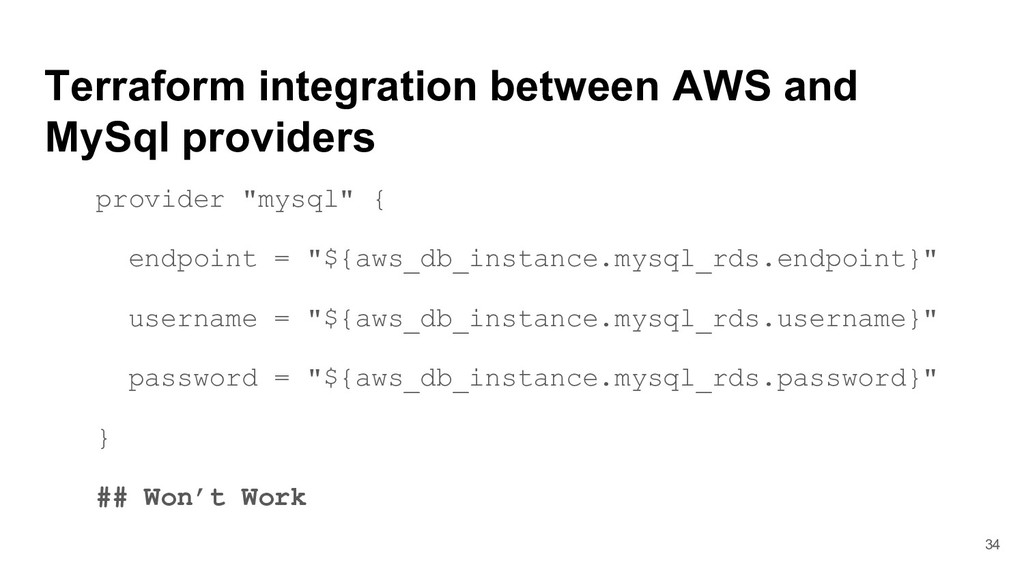
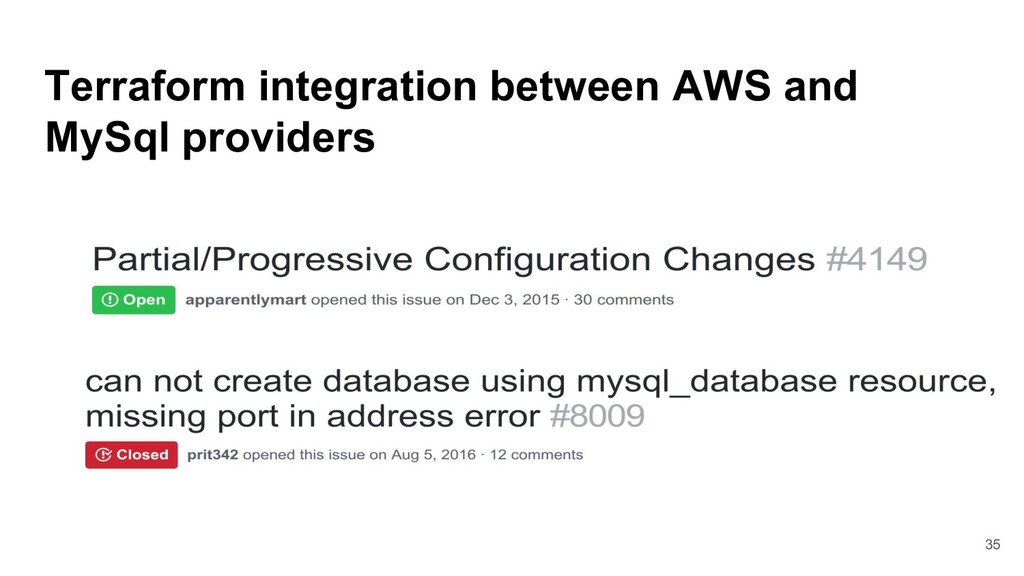
  21. Terraform integration between AWS and MySql providers provider "mysql" {

    endpoint = "${aws_db_instance.mysql_rds.endpoint}" username = "${aws_db_instance.mysql_rds.username}" password = "${aws_db_instance.mysql_rds.password}" } ## Won’t Work 34
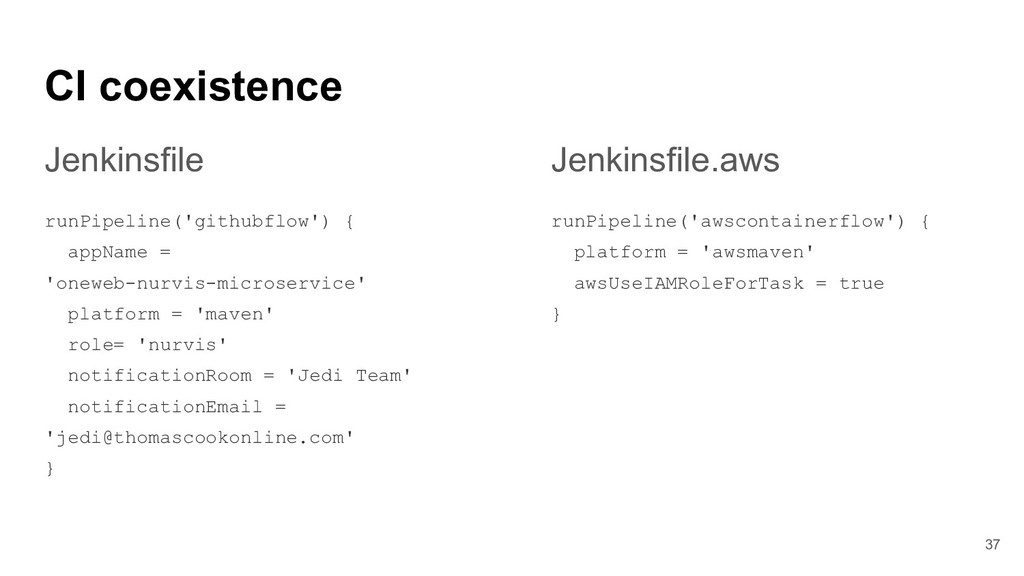
  22. CI coexistence Jenkinsfile runPipeline('githubflow') { appName = 'oneweb-nurvis-microservice' platform =

    'maven' role= 'nurvis' notificationRoom = 'Jedi Team' notificationEmail = '[email protected]' } Jenkinsfile.aws runPipeline('awscontainerflow') { platform = 'awsmaven' awsUseIAMRoleForTask = true } 37
  23. 2 types of artifacts: • Old - jar files or

    nodejs modules; • New - docker image agnostic of the underlying stack 38
  24. Initially we wanted to use HTTP /status endpoints for all

    our services and for all usecases: • Jenkins smoke tests • Load-balancing health checks Status endpoints 42
  25. Smoke test and a problem with /status Initial approach Final

    approach if (response.status == 200) { try{ statusResult = readJSON text: (response.content) if ( (!statusResult["app_name"].equals(appName)) || (!statusResult["build_version"].equals(buildVersion)) ) { echo "WARNING: Smoke test not passed, waiting " + smokeTestWaitingPeriod.div(1000) +" seconds before checking status again..." } else { smokeTestReady = true } } catch (error) { echo "ERROR: Something happened with parsing JSON response, please check: " + error.message smokeTestReady = false } } aws ecs wait services-stable --region ${AWS_REGION} \ --cluster ${PROJECT}-${env}-cluster --service ${PROJECT}-${env}-${SERVICE}-service" 43
  26. Lots and lots of parameters to move to Param store

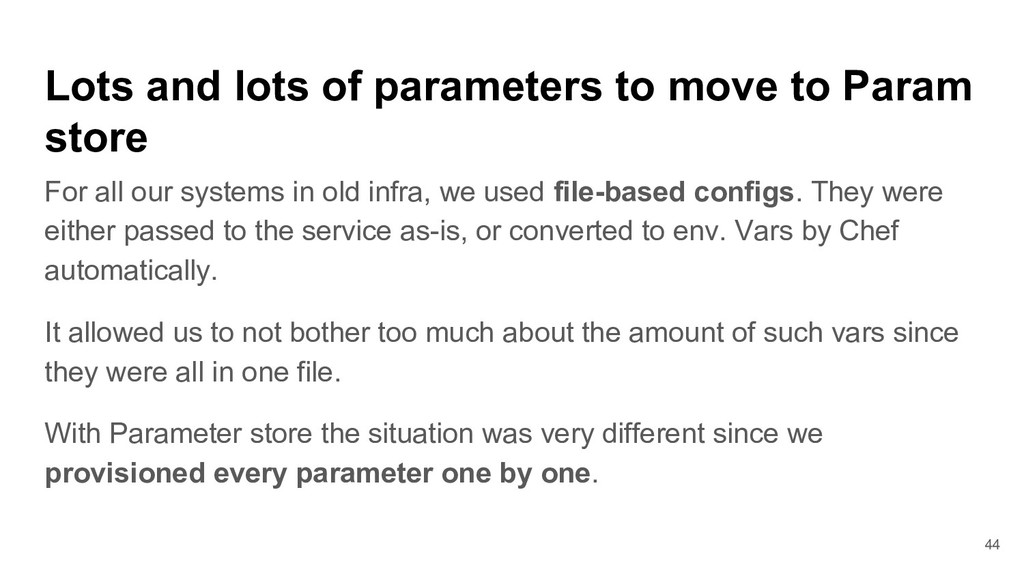
    For all our systems in old infra, we used file-based configs. They were either passed to the service as-is, or converted to env. Vars by Chef automatically. It allowed us to not bother too much about the amount of such vars since they were all in one file. With Parameter store the situation was very different since we provisioned every parameter one by one. 44
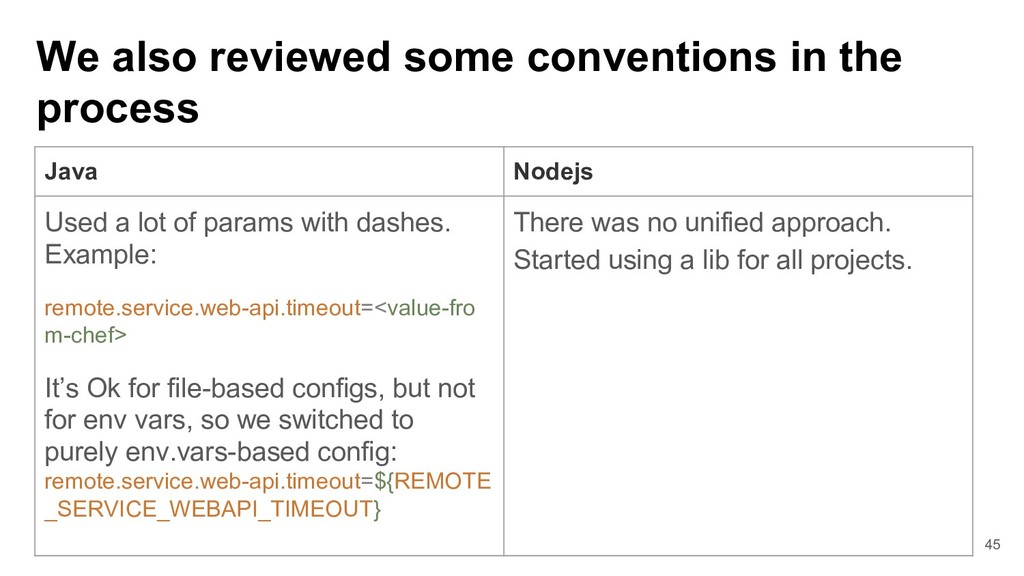
  27. We also reviewed some conventions in the process 45 Java

    Nodejs Used a lot of params with dashes. Example: remote.service.web-api.timeout=<value-fro m-chef> It’s Ok for file-based configs, but not for env vars, so we switched to purely env.vars-based config: remote.service.web-api.timeout=${REMOTE _SERVICE_WEBAPI_TIMEOUT} There was no unified approach. Started using a lib for all projects.
  28. Artifact size Some services had an admin panel attached to

    them(in the same repo) and the final artifact included a lot of libs(nodejs+angular) that were unnecessary in runtime. It was not so obvious and critical without Docker. With docker we started to pay attention to it and cleaned up the dependencies. 48
  29. Multi-stage Dockerfile: be ready for some challenges Maven/Npm dependencies: With

    current approach, we are mounting host ~/.m2 and ~/.npm folders into a container. With multi-stage Dockerfile we are not able to mount, because docker doesn't support mounts for docker build command. Maven/Npm repositories credentials: Folders ~/.m2 and ~/.npm contain credentials to Nexus/Sinopia. 49
  30. COPYing files Docker added a level of isolation we didn’t

    have before. As a result we initially missed a couple of things: • .npmrc with registry location was not present in many repos • .dockerignore was also missed - as a result local node_modules were copied into the image(but shrinkwrap wasn't) 50
  31. JVM below 9-10 • No support for cgroups memory limits

    • No support for CPU sets https://developers.redhat.com/blog/2017/03/14/java-inside-docker/ https://jaxenter.com/nobody-puts-java-container-139373.html 51
  32. API Gateway issue - access to private upstream While API

    Gateway was substantially improved over 2017 and it can now forward external traffic to internal services, it can only do so via NLB(TCP level) because it depends on VPC Link endpoints, which in turn depend on NLB. And our services are resolved via ALB and Route 53(HTTP/level 7). 53
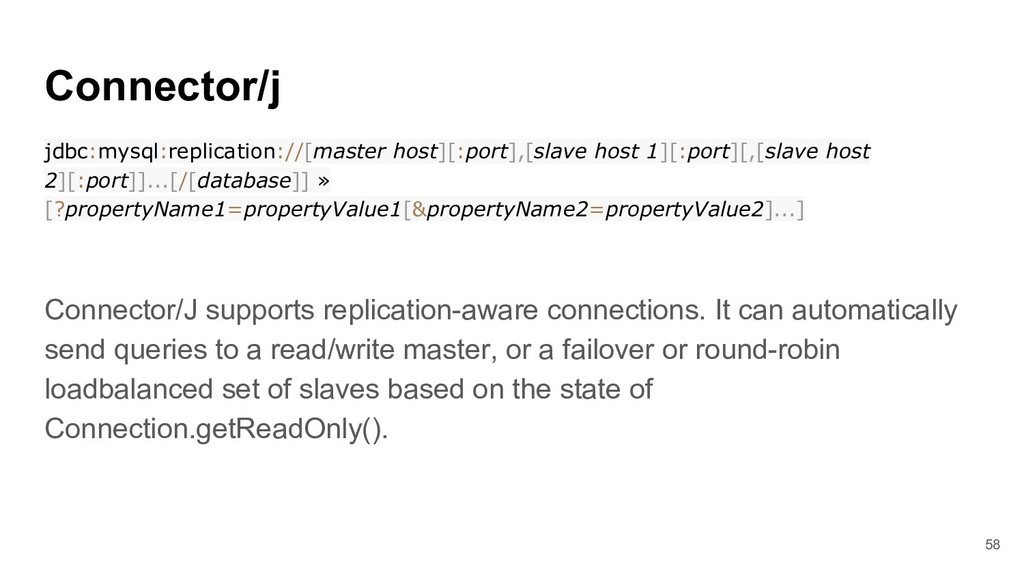
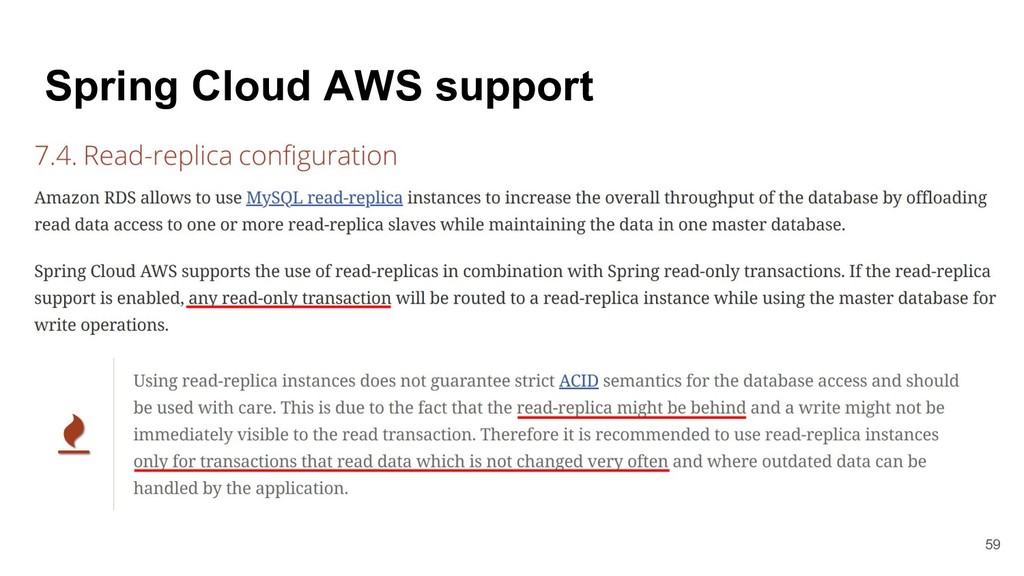
  33. Connector/j jdbc:mysql:replication://[master host][:port],[slave host 1][:port][,[slave host 2][:port]]...[/[database]] » [?propertyName1=propertyValue1[&propertyName2=propertyValue2]...] Connector/J

    supports replication-aware connections. It can automatically send queries to a read/write master, or a failover or round-robin loadbalanced set of slaves based on the state of Connection.getReadOnly(). 58
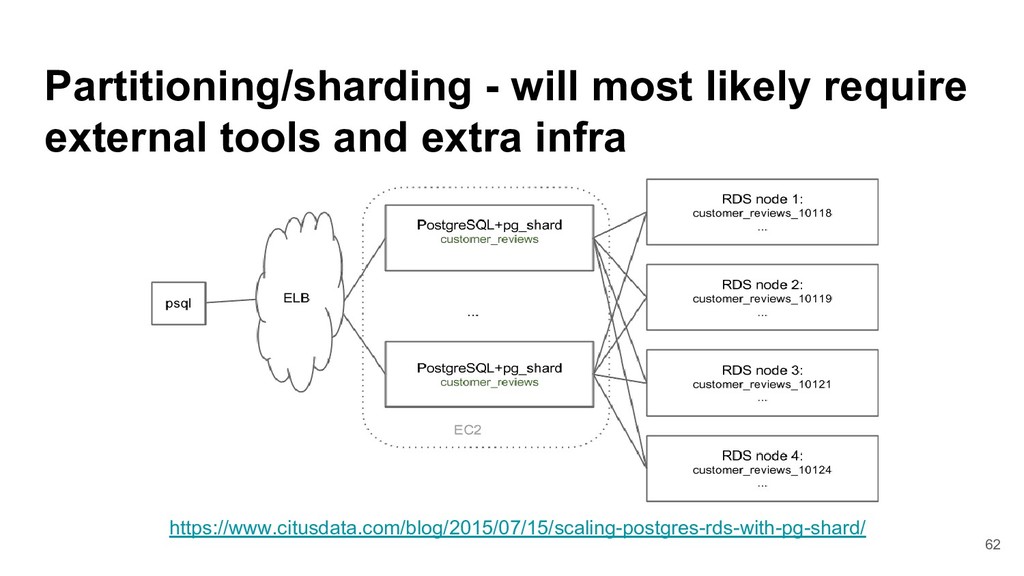
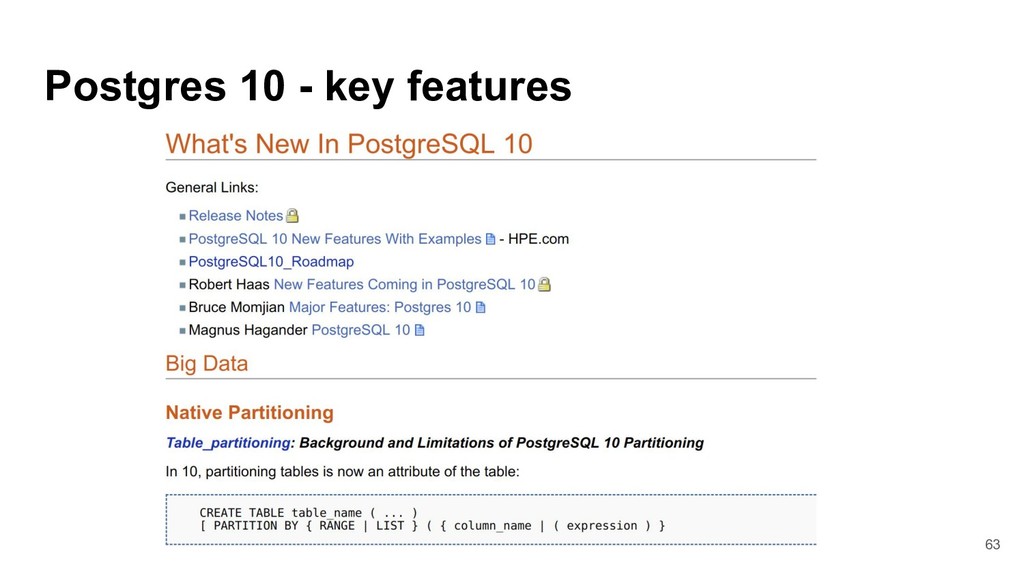
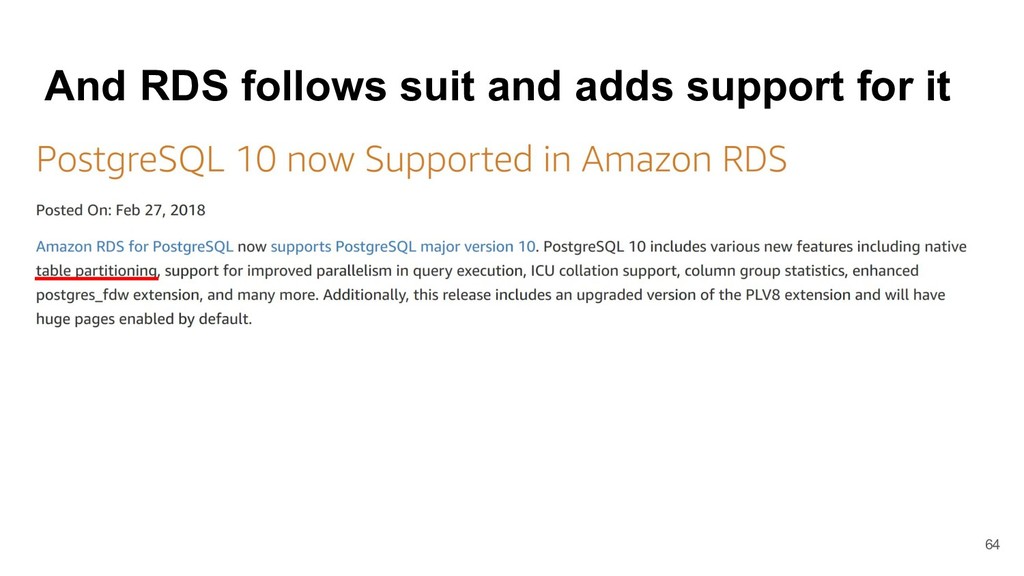
  34. Partitioning/sharding - will most likely require external tools and extra

    infra https://www.citusdata.com/blog/2015/07/15/scaling-postgres-rds-with-pg-shard/ 62
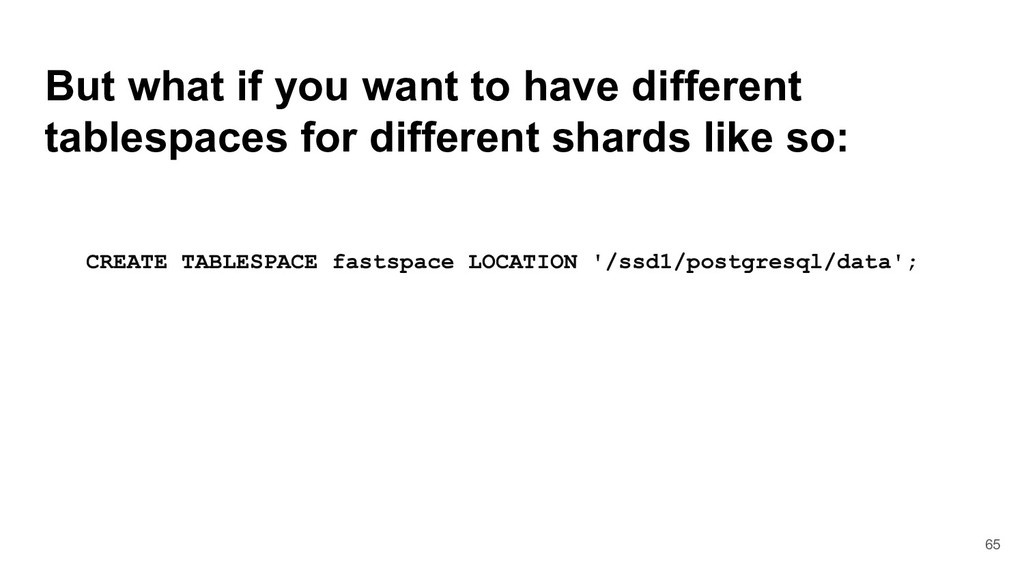
  35. But what if you want to have different tablespaces for

    different shards like so: CREATE TABLESPACE fastspace LOCATION '/ssd1/postgresql/data'; 65
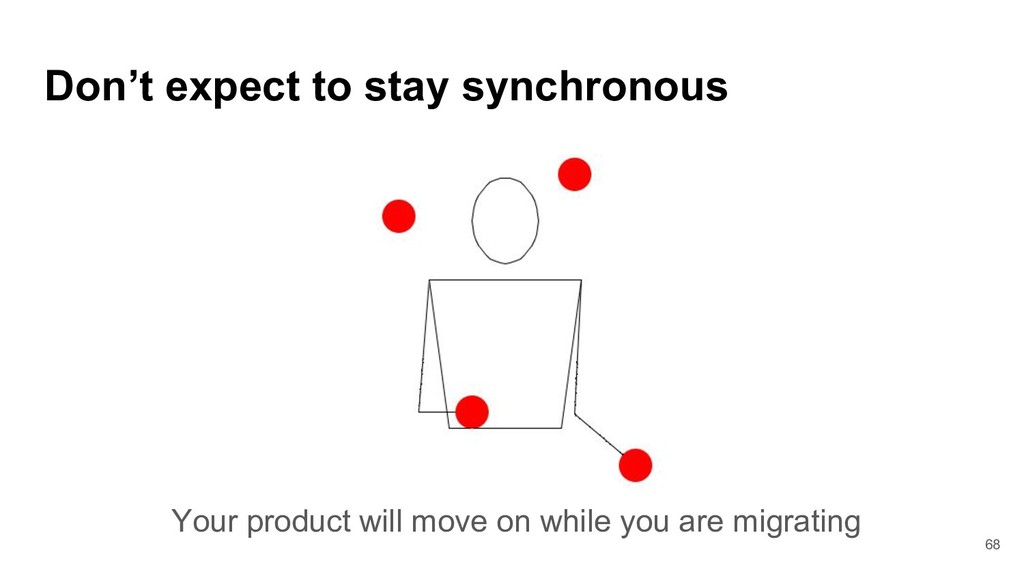
  36. Additional considerations 66 In our case, we were just one
    team that worked on migration itself, but there were 10 other teams which were actively adding up features to the product.
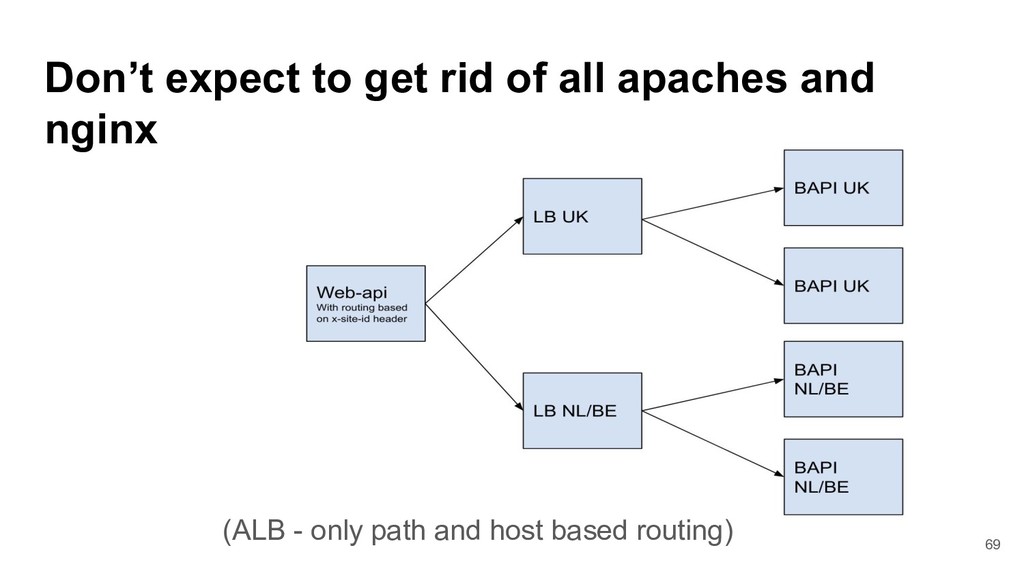
  37. Don’t expect to get rid of all apaches and nginx

    (ALB - only path and host based routing) 69