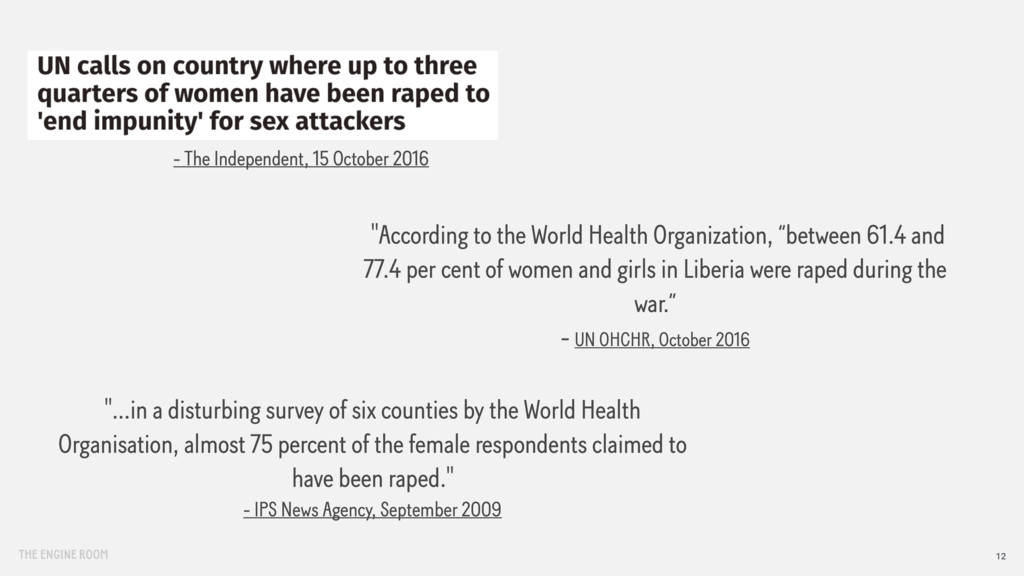
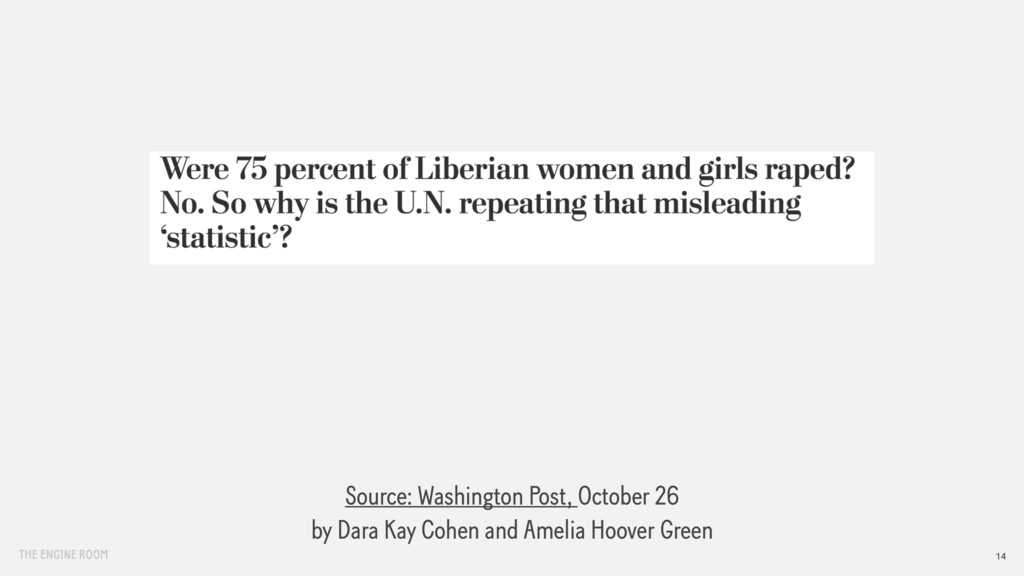
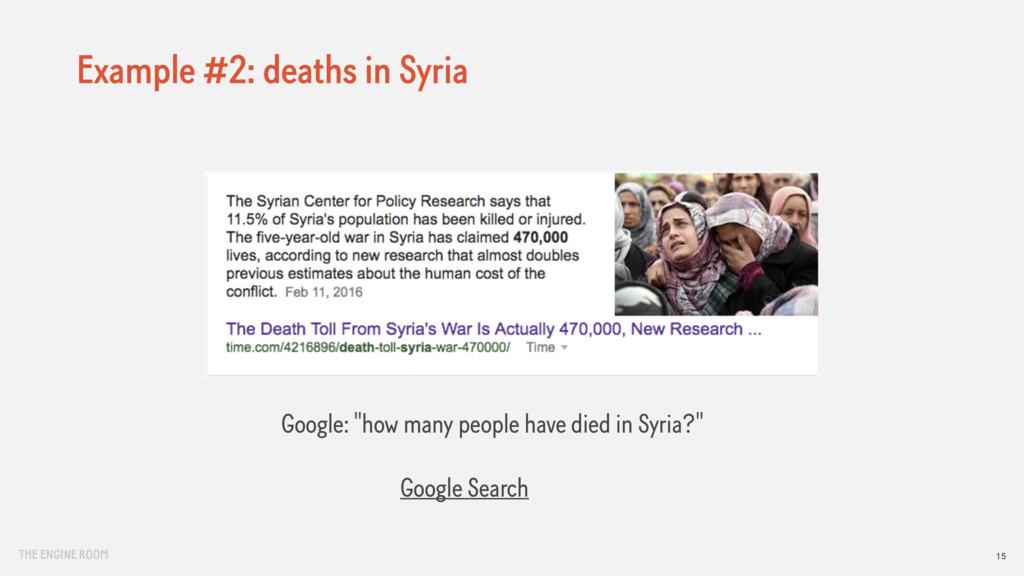
World Health Organization, “between 61.4 and 77.4 per cent of women and girls in Liberia were raped during the war.” - UN OHCHR, October 2016 "…in a disturbing survey of six counties by the World Health Organisation, almost 75 percent of the female respondents claimed to have been raped." - IPS News Agency, September 2009
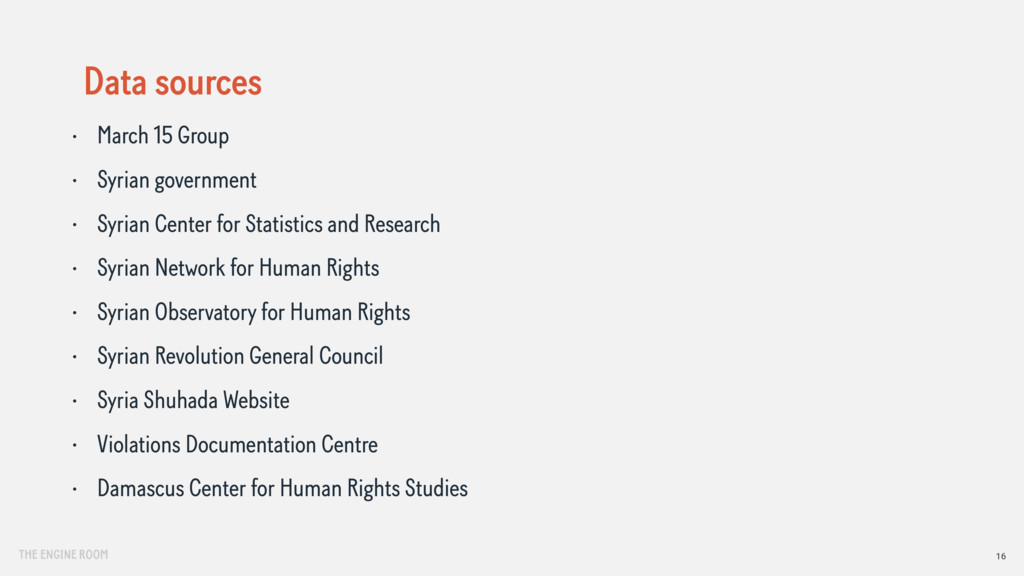
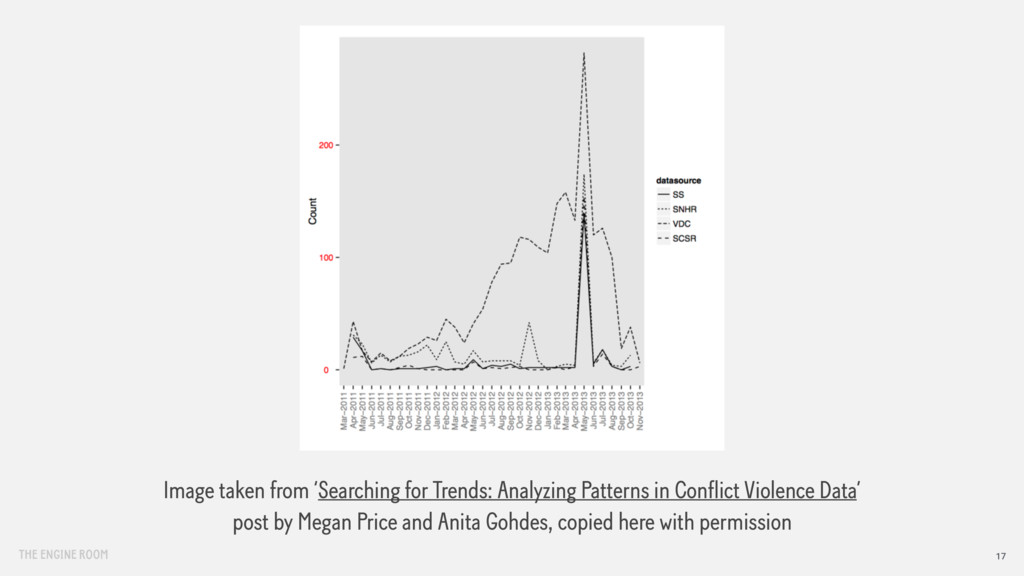
• Syrian Center for Statistics and Research • Syrian Network for Human Rights • Syrian Observatory for Human Rights • Syrian Revolution General Council • Syria Shuhada Website • Violations Documentation Centre • Damascus Center for Human Rights Studies
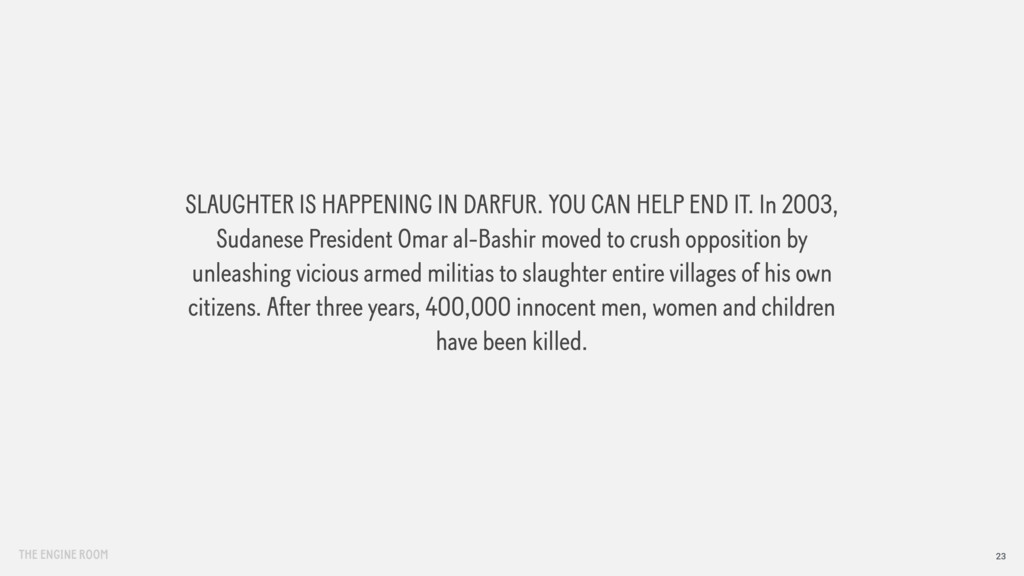
IT. In 2003, Sudanese President Omar al-Bashir moved to crush opposition by unleashing vicious armed militias to slaughter entire villages of his own citizens. After three years, 400,000 innocent men, women and children have been killed.
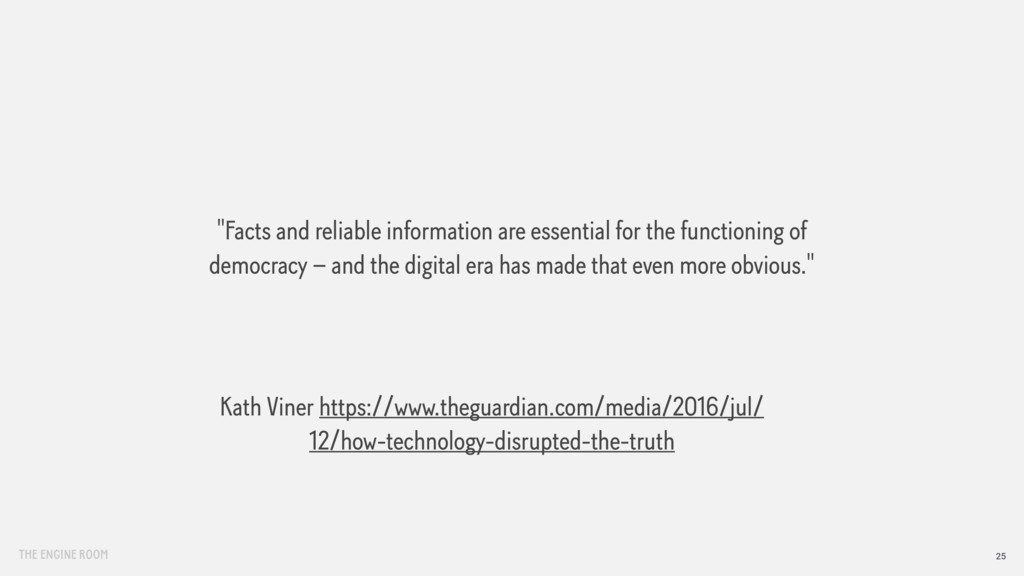
of democracy – and the digital era has made that even more obvious." Kath Viner https://www.theguardian.com/media/2016/jul/ 12/how-technology-disrupted-the-truth
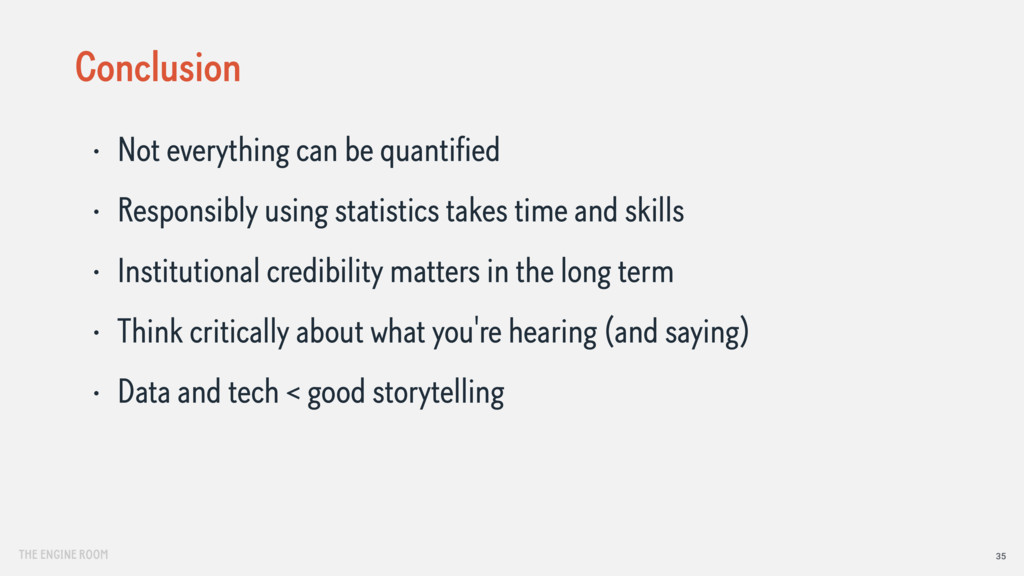
using statistics takes time and skills • Institutional credibility matters in the long term • Think critically about what you're hearing (and saying) • Data and tech < good storytelling
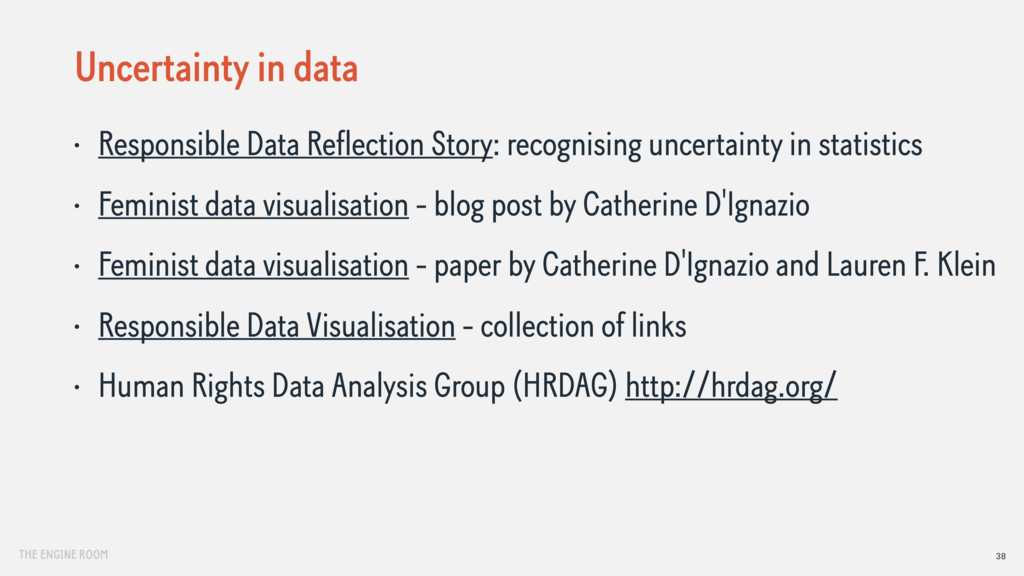
• Feminist data visualisation - blog post by Catherine D'Ignazio • Feminist data visualisation - paper by Catherine D'Ignazio and Lauren F. Klein • Responsible Data Visualisation - collection of links • Human Rights Data Analysis Group (HRDAG) http://hrdag.org/ Uncertainty in data
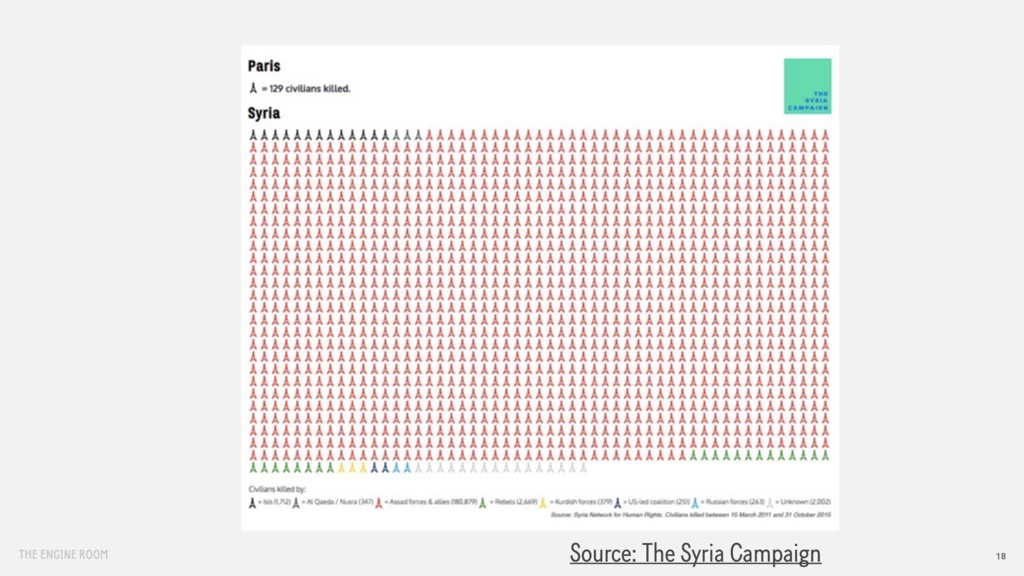
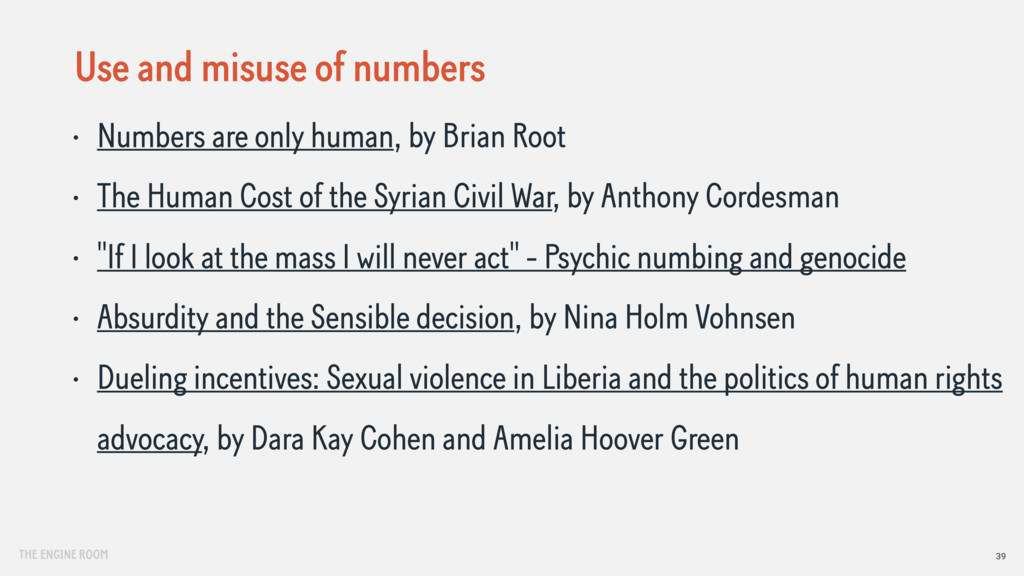
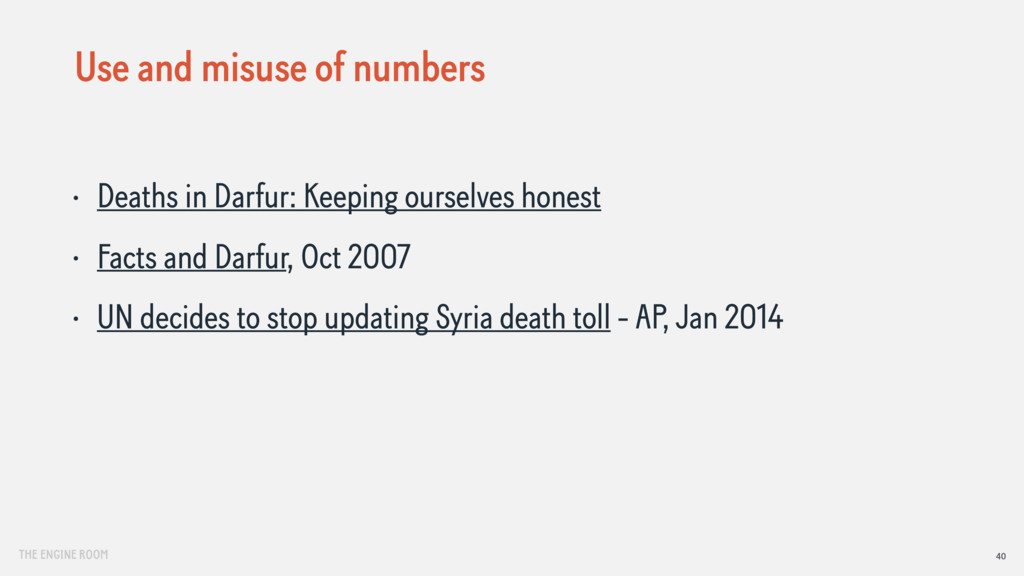
The Human Cost of the Syrian Civil War, by Anthony Cordesman • "If I look at the mass I will never act" - Psychic numbing and genocide • Absurdity and the Sensible decision, by Nina Holm Vohnsen • Dueling incentives: Sexual violence in Liberia and the politics of human rights advocacy, by Dara Kay Cohen and Amelia Hoover Green Use and misuse of numbers


 mohab1
 recruitengineers
 kenichiodo
 bgpat
 terurou
 takonda
 maimyyym
 tetsuya28
 kairim0
 kworkdev
 taketakekaho
 ivry_presentationmaterials
 codingconduct
 soysaucechin
 gr2m
 holman
 jacobtomlinson
 honzajavorek
 khoart
 notwaldorf
 aleyda
 kneath
 jct
 reverentgeek