TargetNXT Salesforce Email List SEO Roadmap: Keywords, Landing Pages & Buyer Acquisition
This presentation outlines a commercial SEO roadmap for TargetNXT's Salesforce technology-user landing pages, targeting B2B buyers actively searching for Salesforce users email lists, customer databases, and product-specific contact lists.
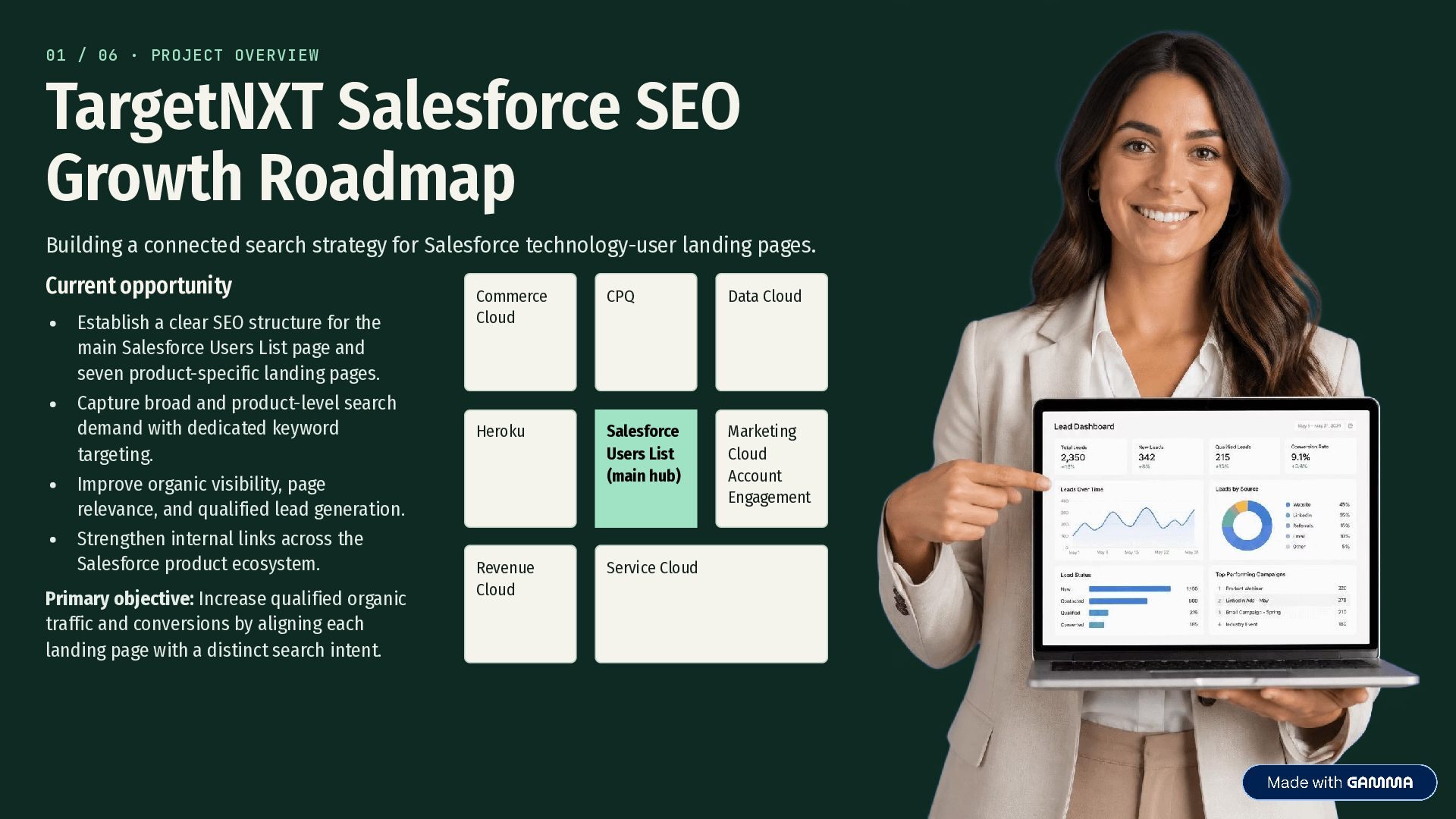
Roadmap Building a connected search strategy for Salesforce technology-user landing pages. Current opportunity Establish a clear SEO structure for the main Salesforce Users List page and seven product-specific landing pages. Capture broad and product-level search demand with dedicated keyword targeting. Commerce Cloud CPQ Data Cloud Heroku Salesforce Users List (main hub) Marketing Cloud Account Engagement Revenue Cloud Service Cloud Improve organic visibility, page relevance, and qualified lead generation. Strengthen internal links across the Salesforce product ecosystem. Primary objective: Increase qualified organic traffic and conversions by aligning each landing page with a distinct search intent.
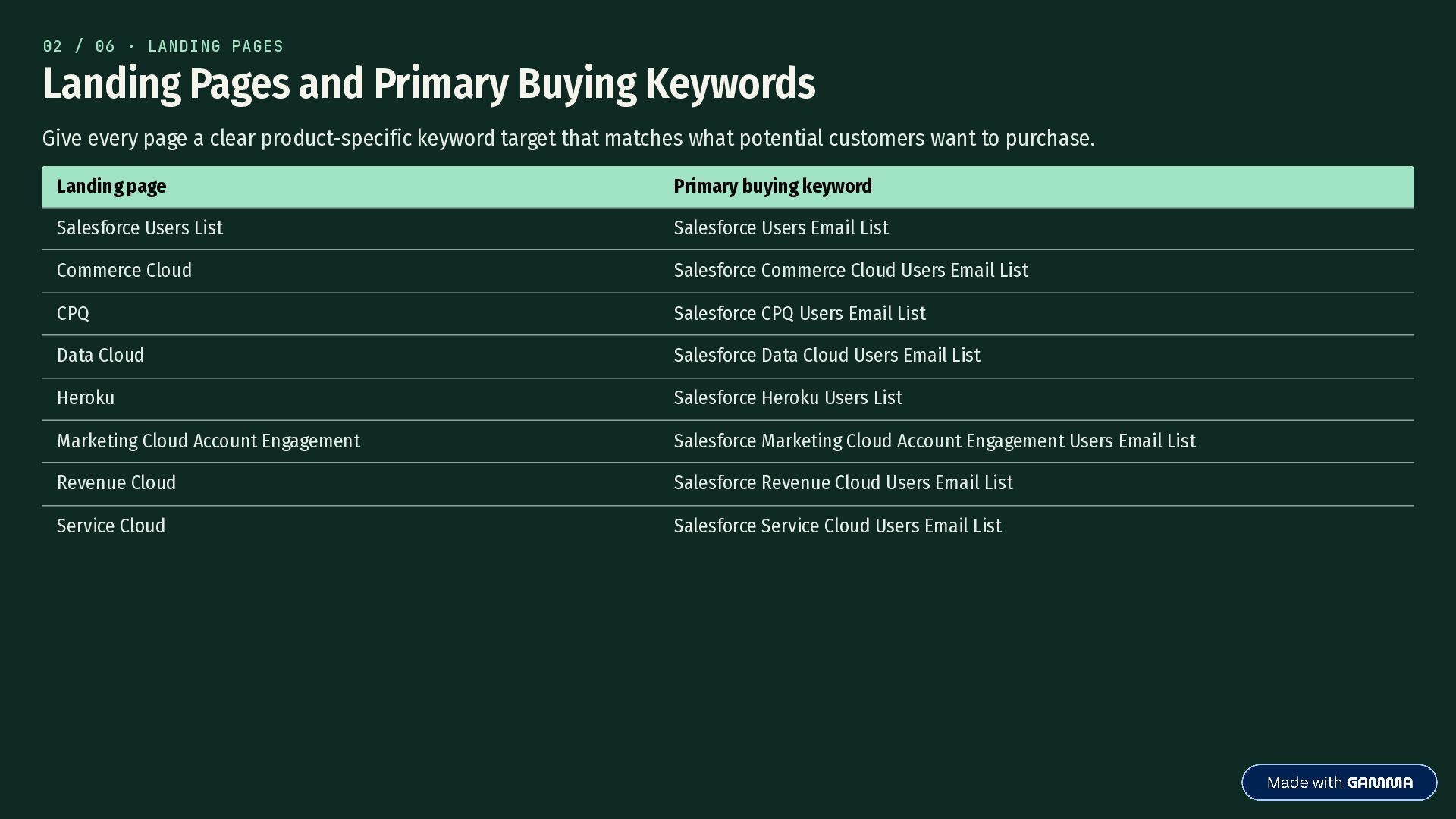
Buying Keywords Give every page a clear product-specific keyword target that matches what potential customers want to purchase. Landing page Primary buying keyword Salesforce Users List Salesforce Users Email List Commerce Cloud Salesforce Commerce Cloud Users Email List CPQ Salesforce CPQ Users Email List Data Cloud Salesforce Data Cloud Users Email List Heroku Salesforce Heroku Users List Marketing Cloud Account Engagement Salesforce Marketing Cloud Account Engagement Users Email List Revenue Cloud Salesforce Revenue Cloud Users Email List Service Cloud Salesforce Service Cloud Users Email List
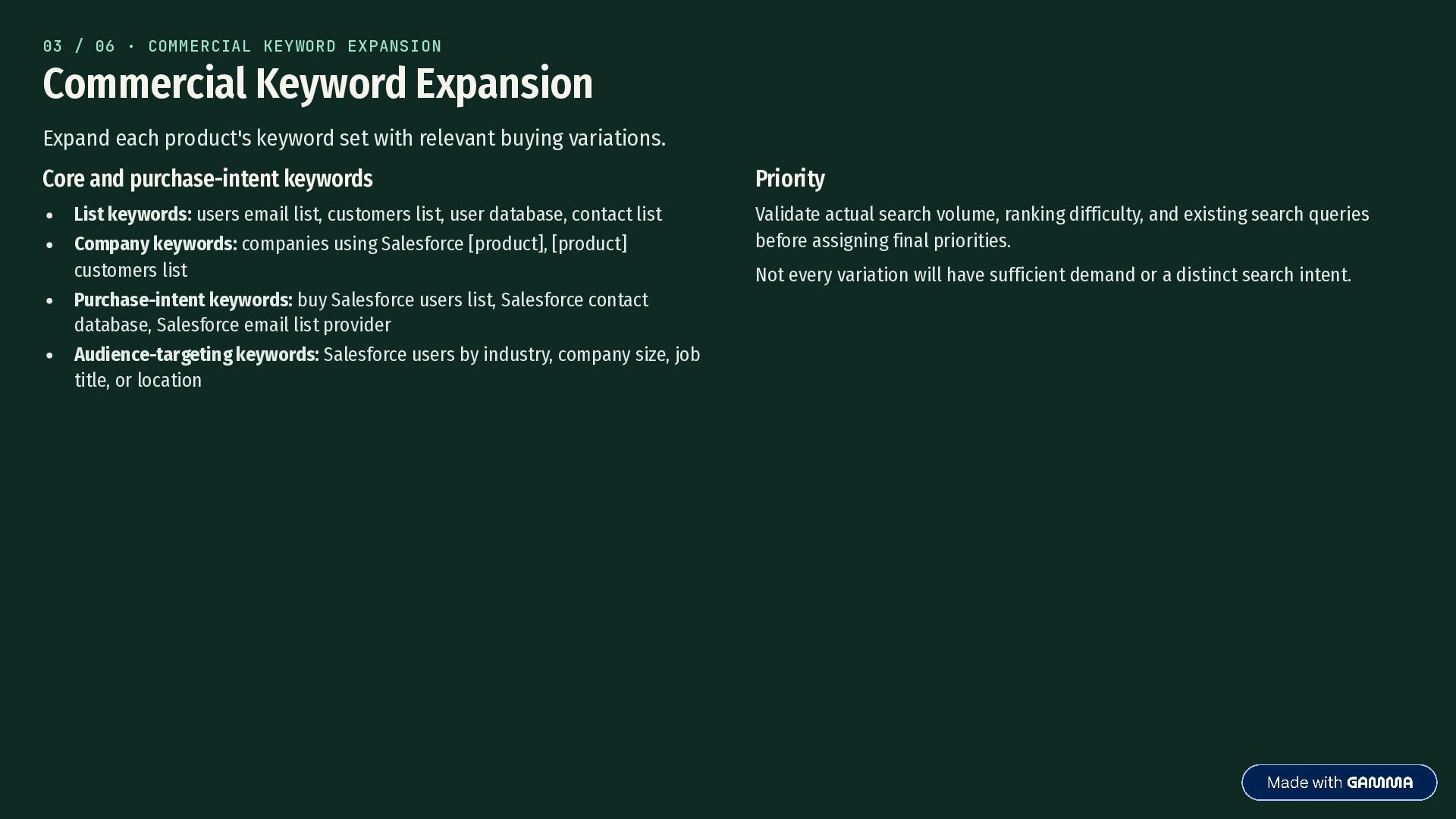
Expand each product's keyword set with relevant buying variations. Core and purchase-intent keywords List keywords: users email list, customers list, user database, contact list Company keywords: companies using Salesforce [product], [product] customers list Purchase-intent keywords: buy Salesforce users list, Salesforce contact database, Salesforce email list provider Audience-targeting keywords: Salesforce users by industry, company size, job title, or location Priority Validate actual search volume, ranking difficulty, and existing search queries before assigning final priorities. Not every variation will have sufficient demand or a distinct search intent.
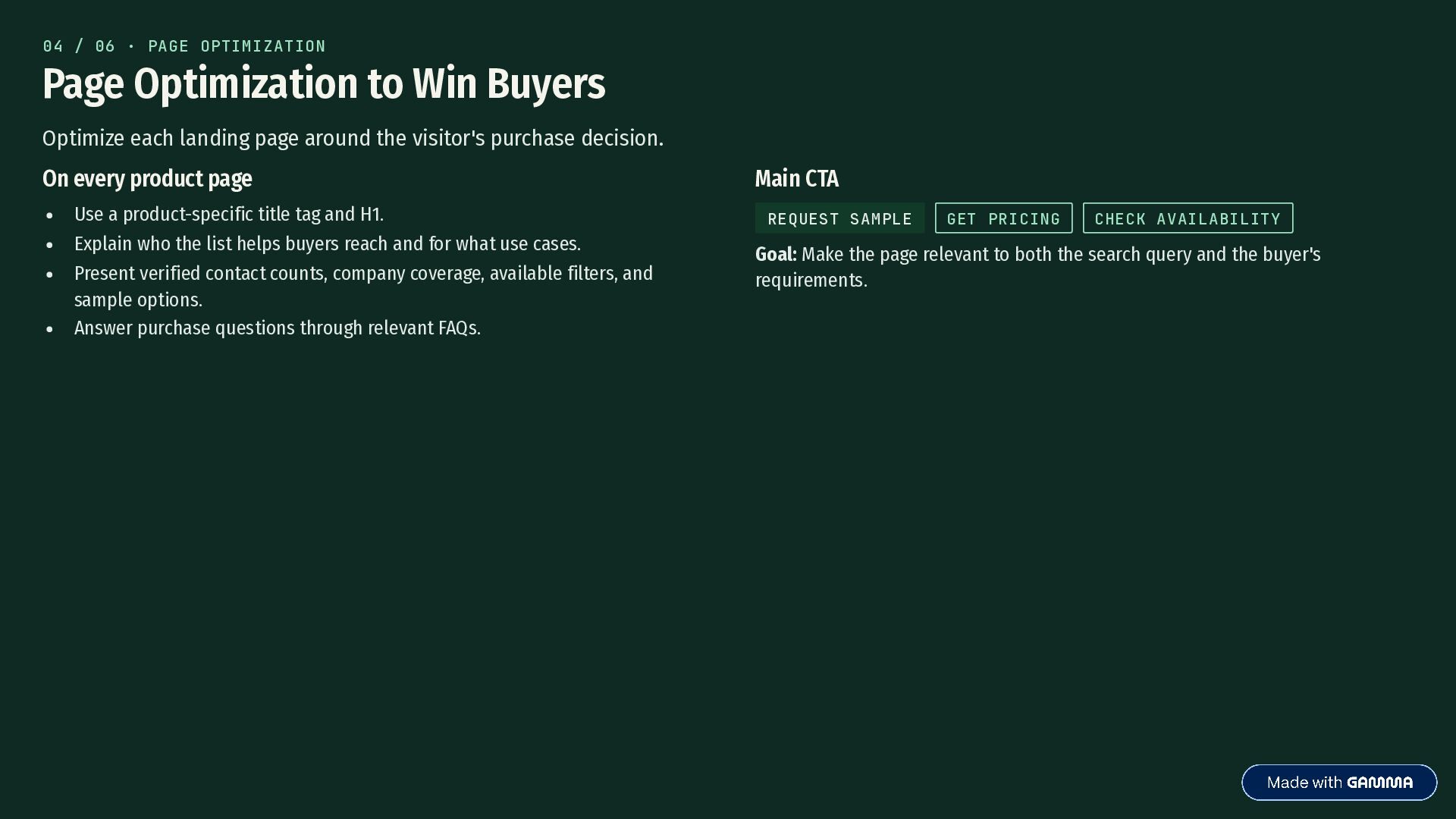
Buyers Optimize each landing page around the visitor's purchase decision. On every product page Use a product-specific title tag and H1. Explain who the list helps buyers reach and for what use cases. Present verified contact counts, company coverage, available filters, and sample options. Answer purchase questions through relevant FAQs. Main CTA REQUEST SAMPLE GET PRICING CHECK AVAILABILITY Goal: Make the page relevant to both the search query and the buyer's requirements.
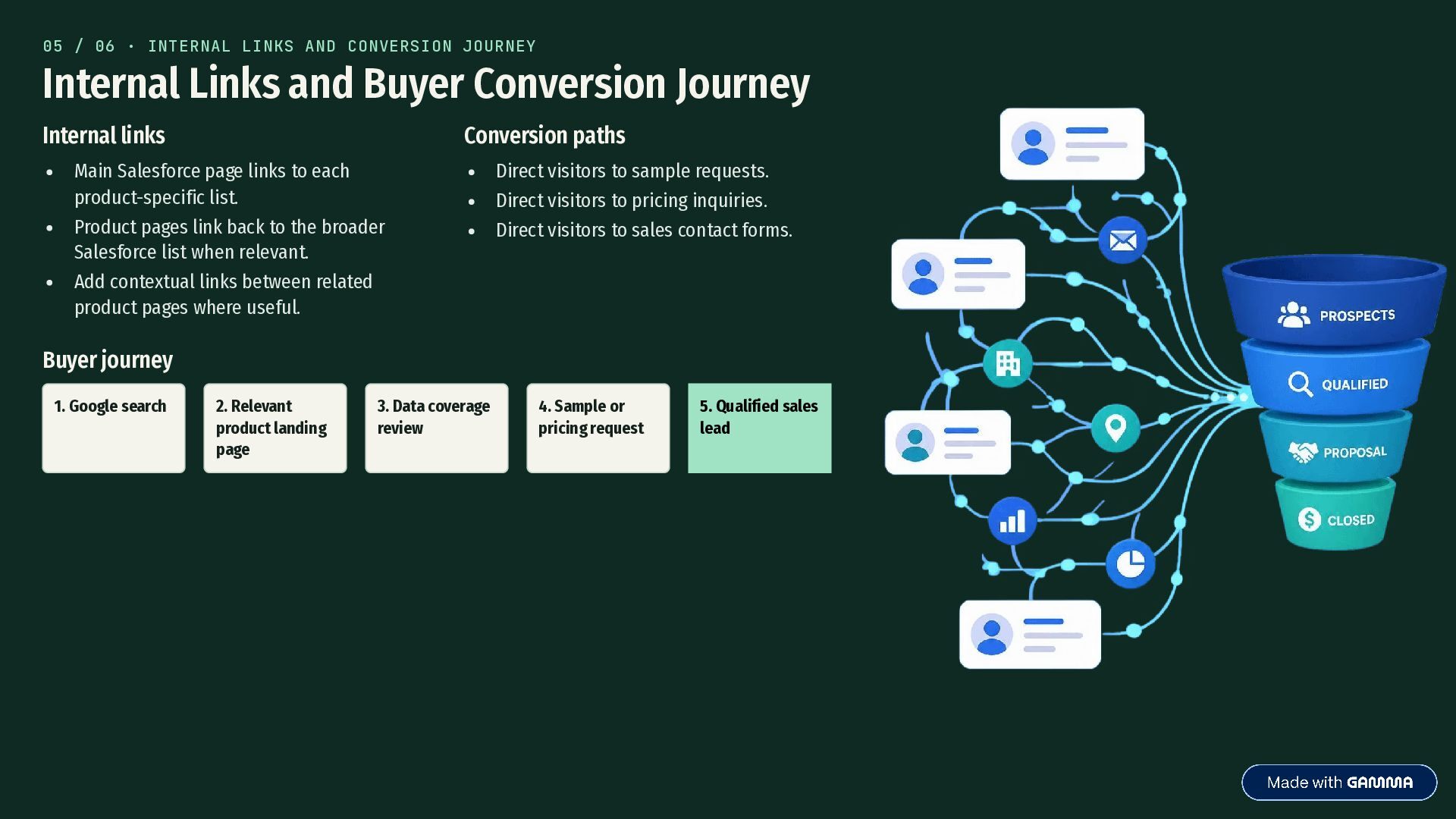
Links and Buyer Conversion Journey Internal links Conversion paths Main Salesforce page links to each product-specific list. Direct visitors to sample requests. Product pages link back to the broader Salesforce list when relevant. Direct visitors to sales contact forms. Direct visitors to pricing inquiries. Add contextual links between related product pages where useful. Buyer journey 1. Google search 2. Relevant product landing page 3. Data coverage review 4. Sample or pricing request 5. Qualified sales lead
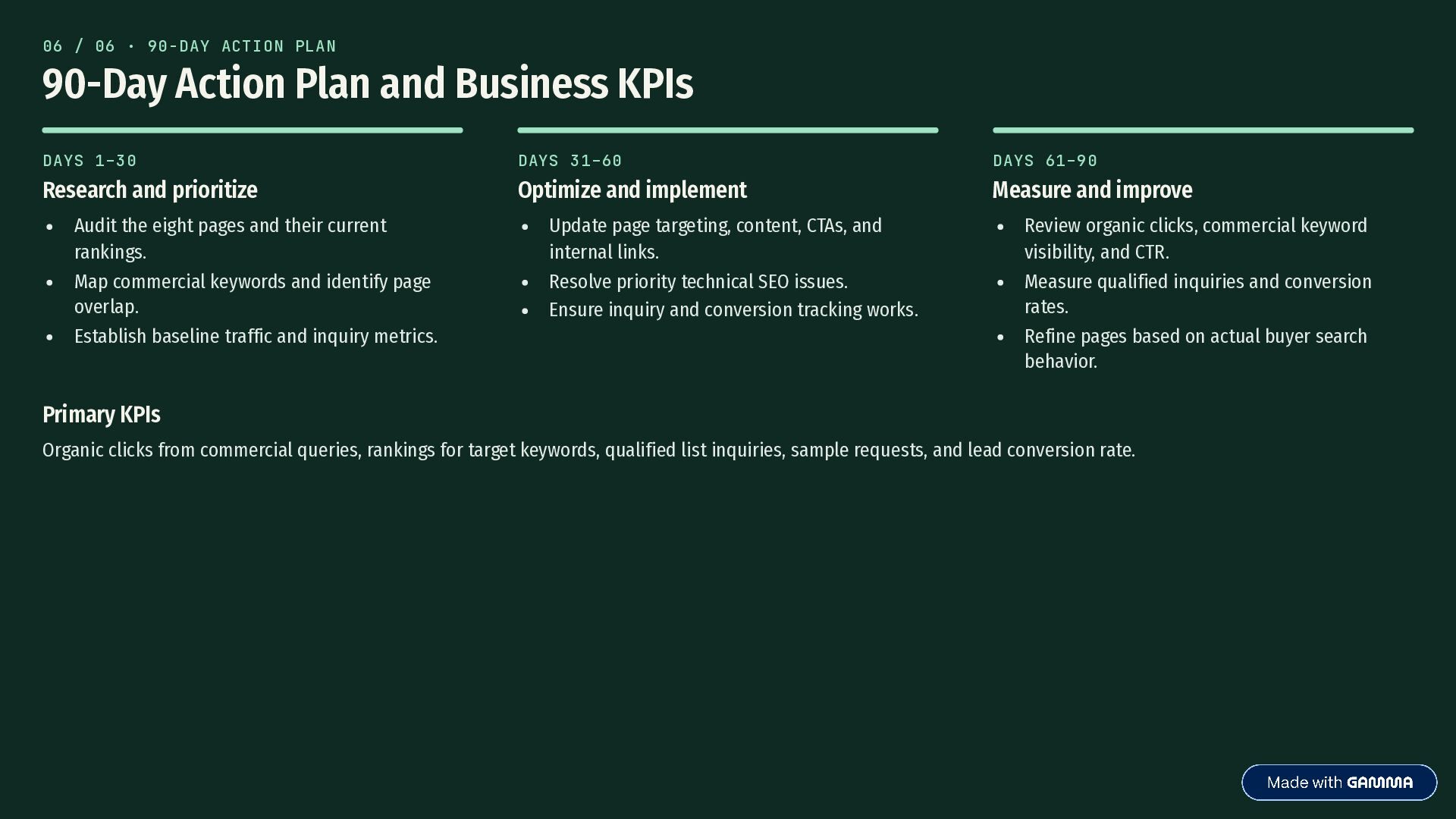
and Business KPIs DAYS 1–30 DAYS 31–60 DAYS 61–90 Research and prioritize Optimize and implement Measure and improve Audit the eight pages and their current rankings. Update page targeting, content, CTAs, and internal links. Review organic clicks, commercial keyword visibility, and CTR. Map commercial keywords and identify page overlap. Resolve priority technical SEO issues. Ensure inquiry and conversion tracking works. Measure qualified inquiries and conversion rates. Establish baseline traffic and inquiry metrics. Refine pages based on actual buyer search behavior. Primary KPIs Organic clicks from commercial queries, rankings for target keywords, qualified list inquiries, sample requests, and lead conversion rate.