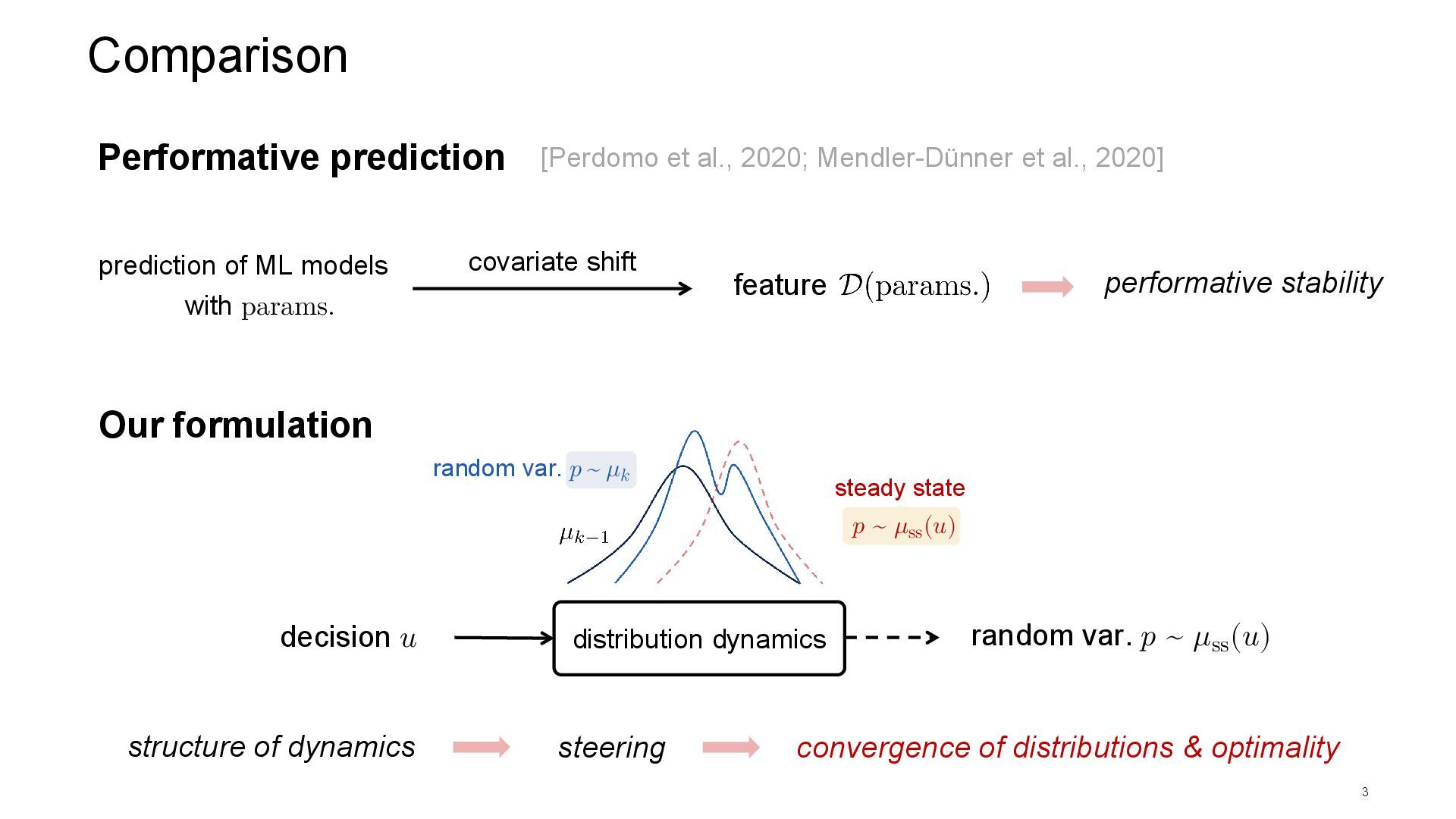
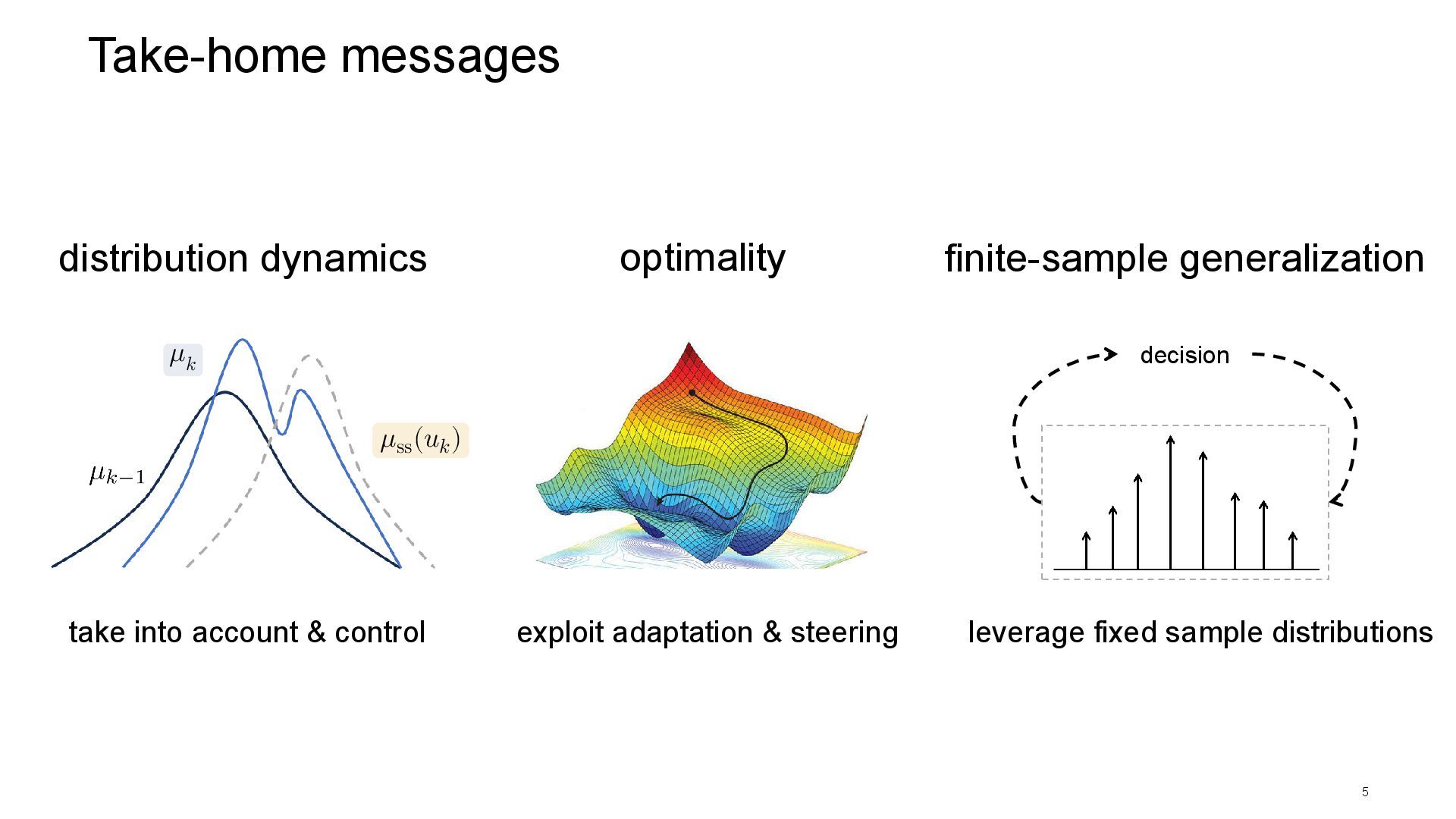
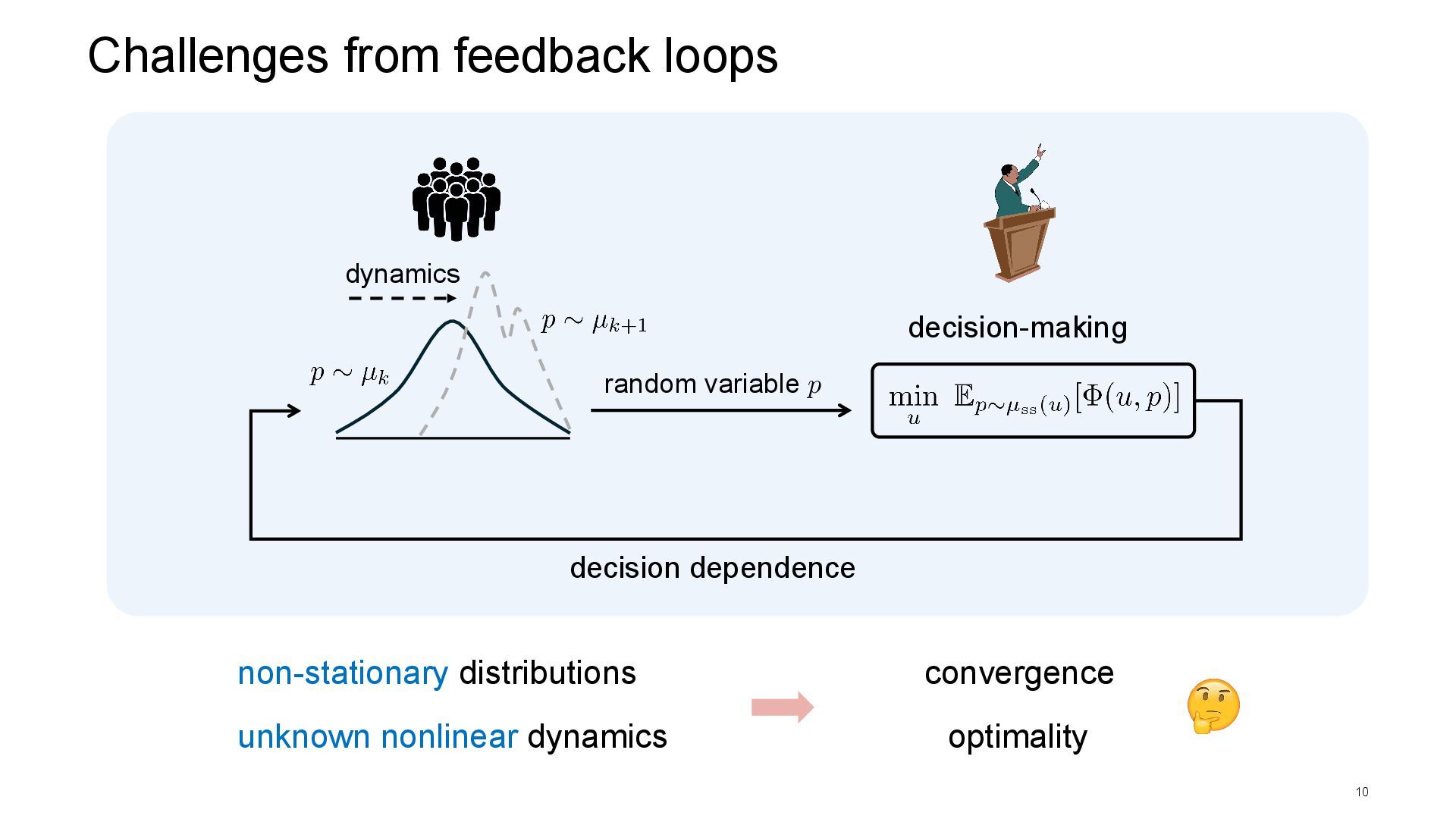
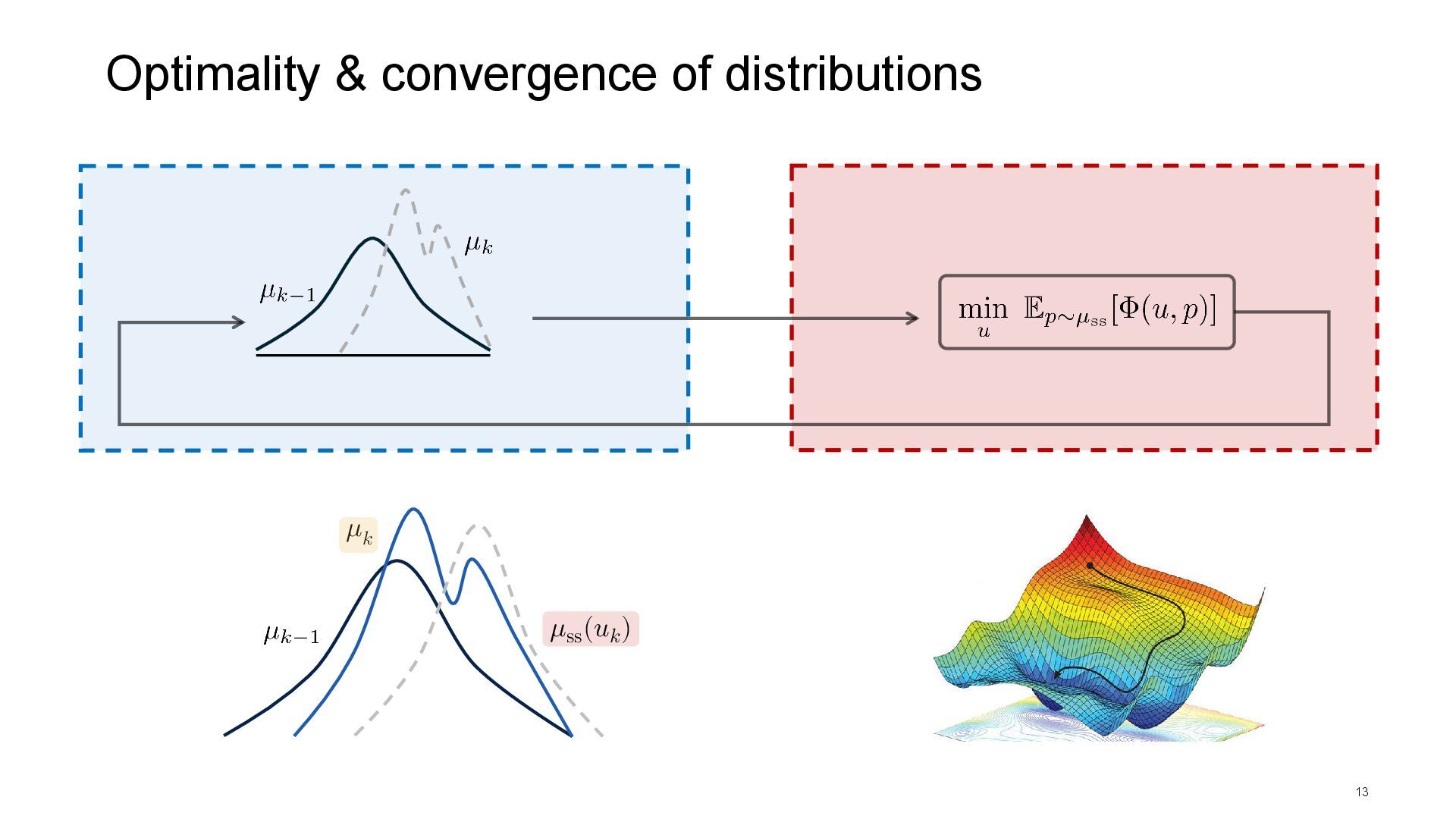
2020; Mendler-Dünner et al., 2020] prediction of ML models feature decision 𝑢𝑢 steady state distribution dynamics random var. 𝑝𝑝 ~ 𝜇𝜇ss (𝑢𝑢) steering convergence of distributions & optimality 3 with params. random var. 𝑝𝑝 ~ 𝜇𝜇𝑘𝑘 𝑝𝑝 ~ 𝜇𝜇ss (𝑢𝑢) performative stability structure of dynamics
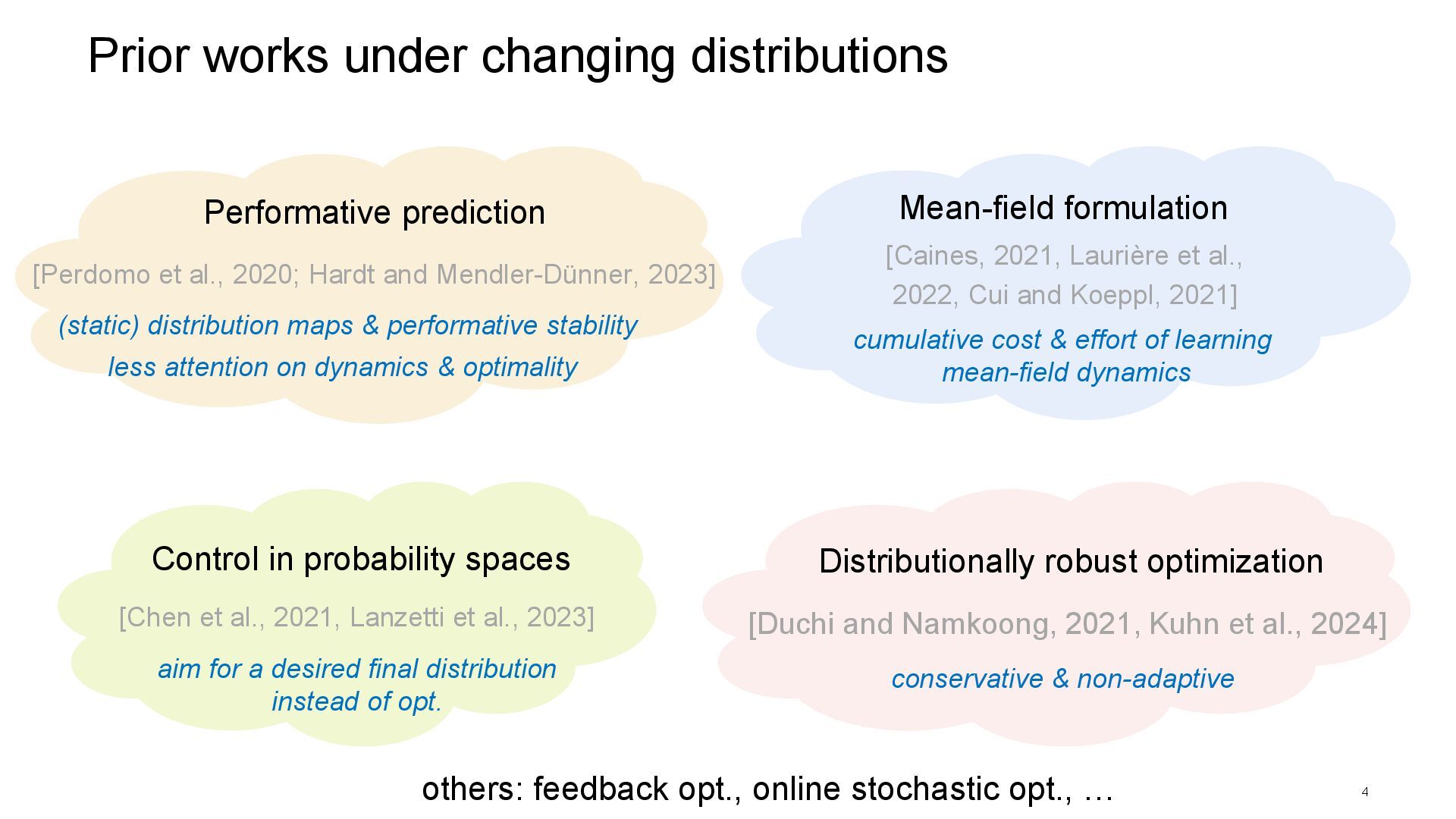
spaces Performative prediction Distributionally robust optimization [Duchi and Namkoong, 2021, Kuhn et al., 2024] conservative & non-adaptive [Perdomo et al., 2020; Hardt and Mendler-Dünner, 2023] (static) distribution maps & performative stability [Caines, 2021, Laurière et al., 2022, Cui and Koeppl, 2021] cumulative cost & effort of learning mean-field dynamics [Chen et al., 2021, Lanzetti et al., 2023] aim for a desired final distribution instead of opt. 4 others: feedback opt., online stochastic opt., … less attention on dynamics & optimality
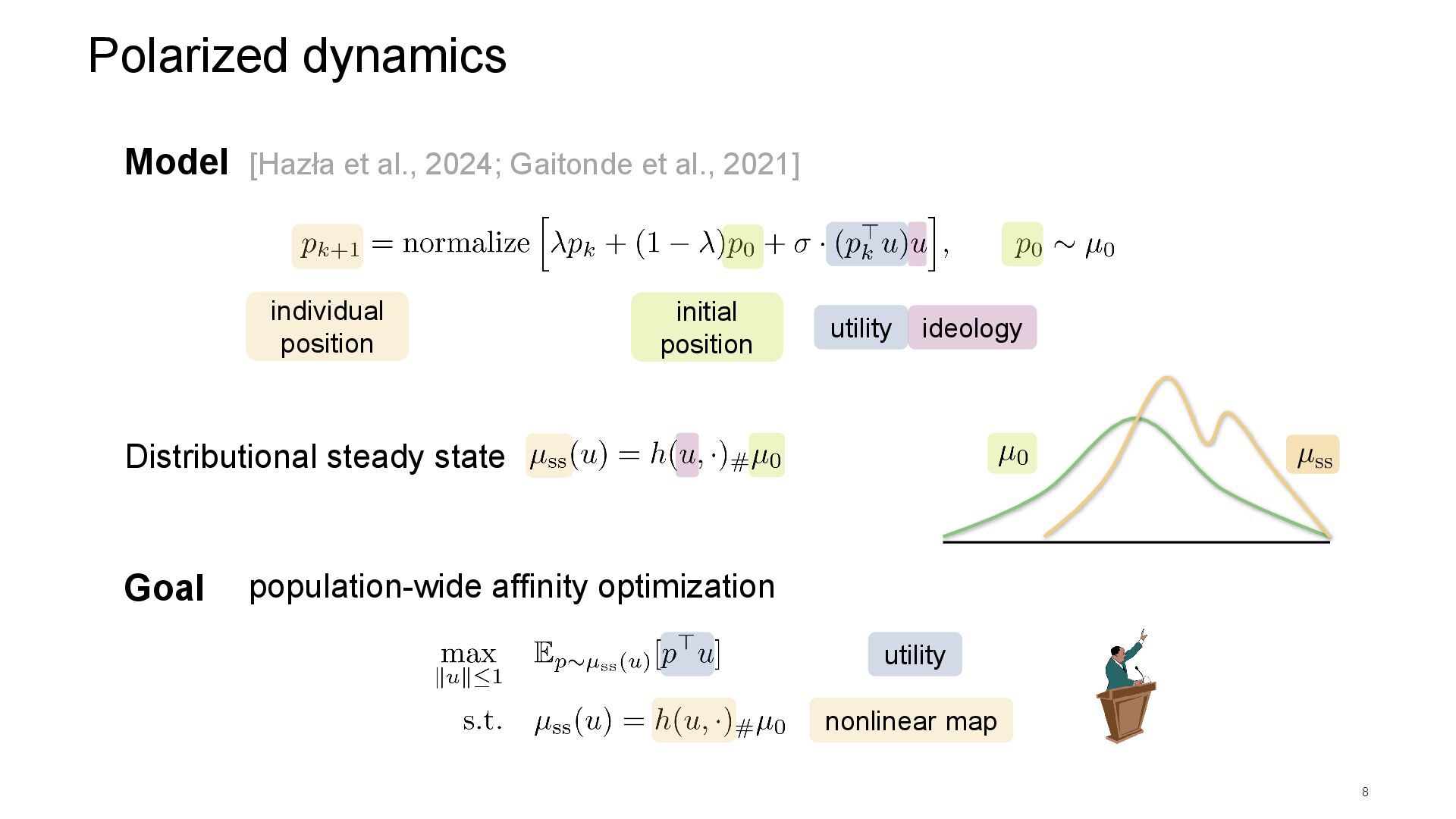
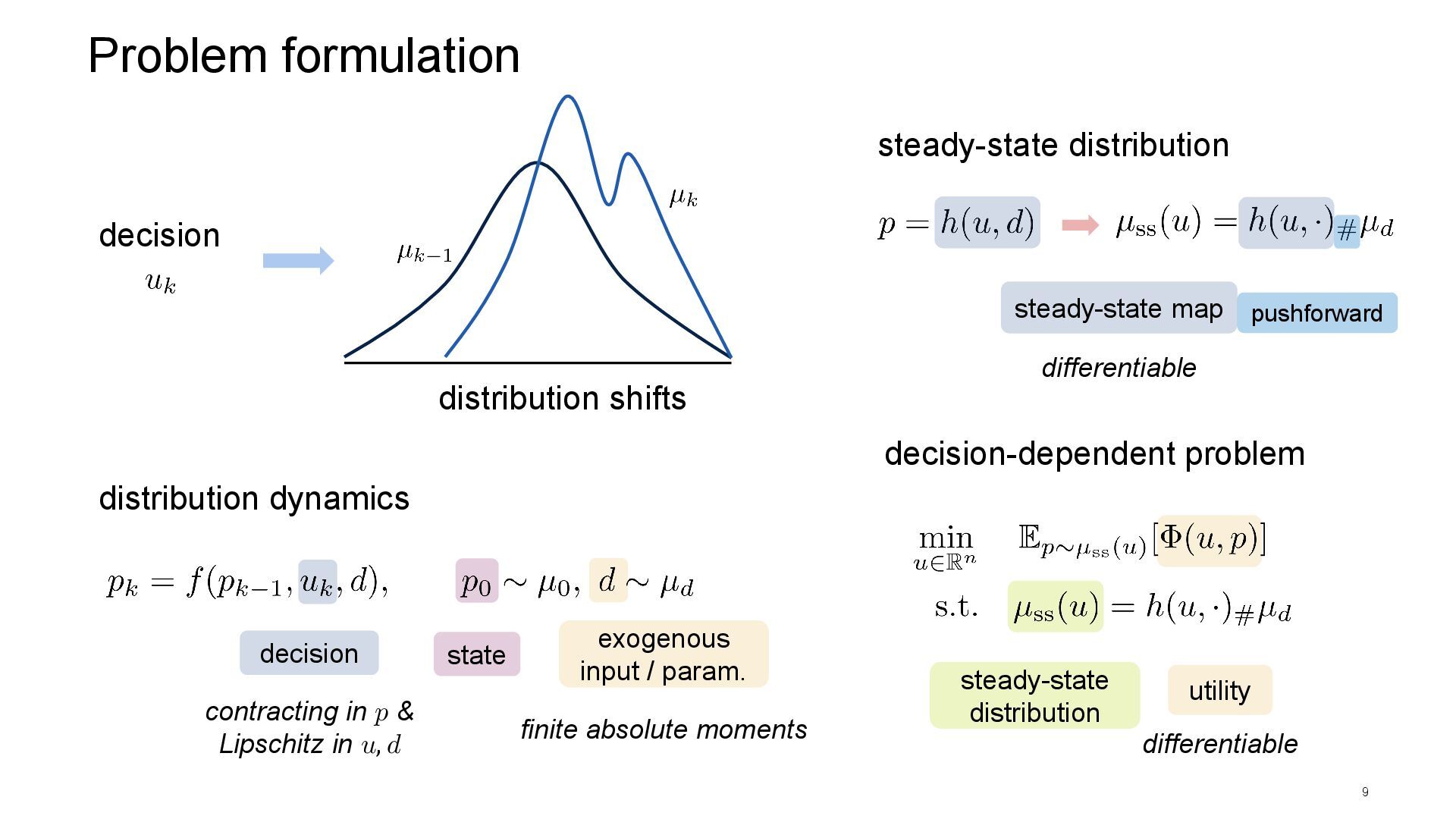
steady-state distribution steady-state map steady-state distribution utility decision-dependent problem pushforward contracting in 𝑝𝑝 & Lipschitz in 𝑢𝑢, 𝑑𝑑 finite absolute moments differentiable differentiable decision distribution shifts 9
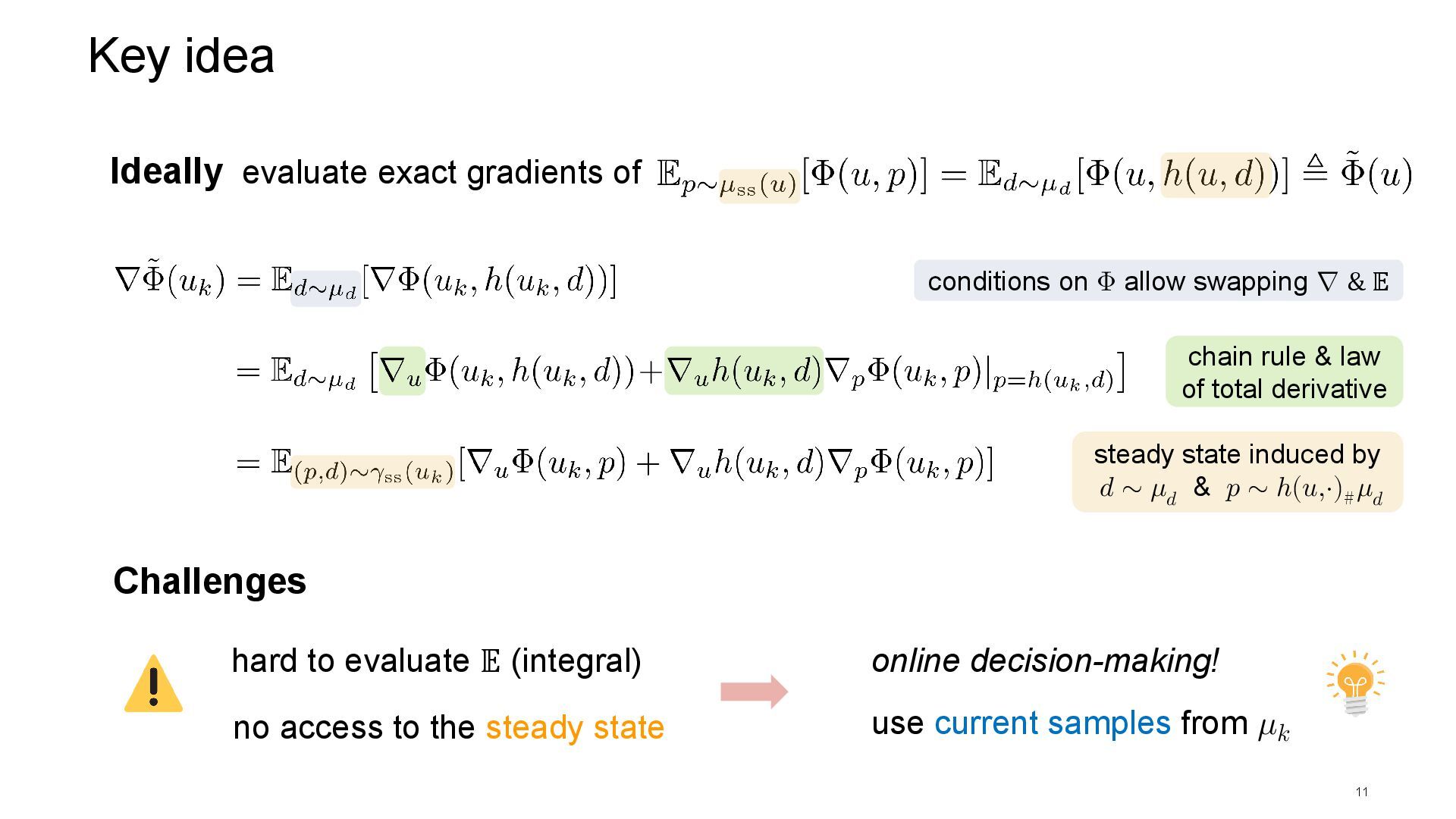
by 𝑑𝑑 ∼ 𝜇𝜇 𝑑𝑑 & 𝑝𝑝 ∼ ℎ(𝑢𝑢,⋅) # 𝜇𝜇 𝑑𝑑 chain rule & law of total derivative conditions on Φ allow swapping ∇ & 𝔼𝔼 Challenges hard to evaluate 𝔼𝔼 (integral) no access to the steady state online decision-making! use current samples from 𝜇𝜇𝑘𝑘 11
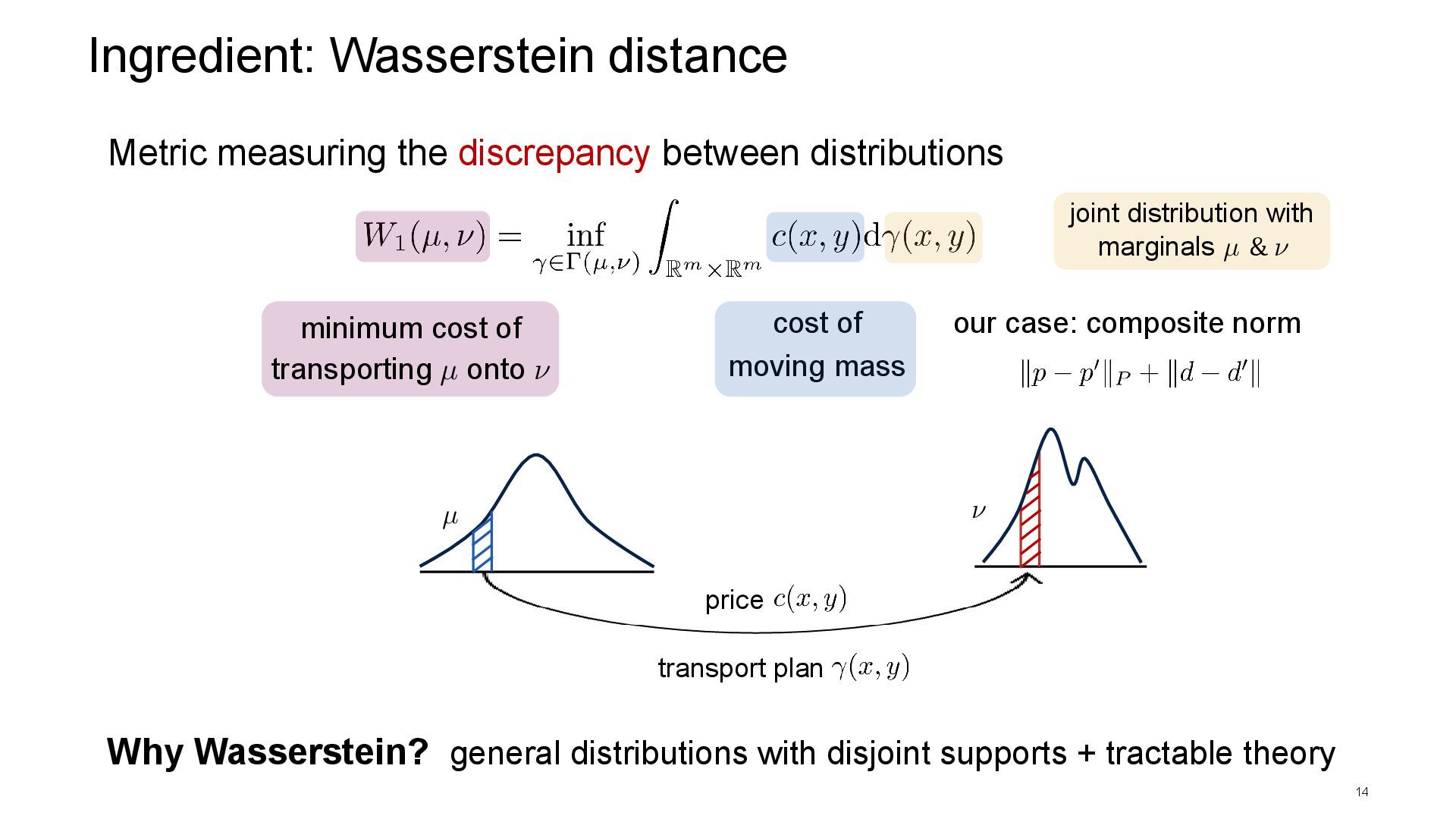
cost of moving mass 𝜈𝜈 transport plan minimum cost of transporting 𝜇𝜇 onto 𝜈𝜈 price our case: composite norm joint distribution with marginals 𝜇𝜇 & 𝜈𝜈 Why Wasserstein? general distributions with disjoint supports + tractable theory 14
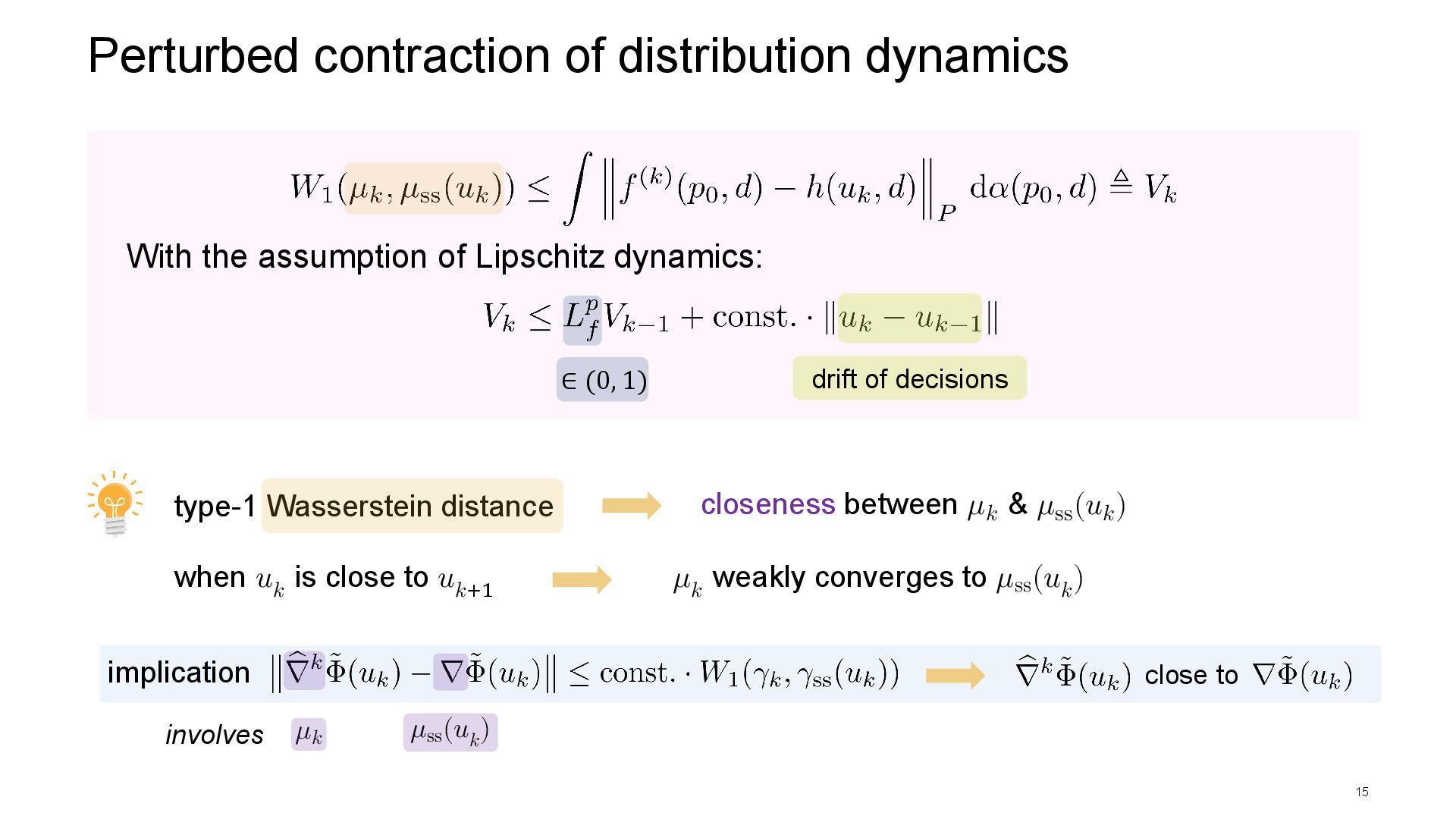
dynamics: closeness between 𝜇𝜇𝑘𝑘 & 𝜇𝜇ss (𝑢𝑢𝑘𝑘 ) when 𝑢𝑢 𝑘𝑘 is close to 𝑢𝑢 𝑘𝑘+1 𝜇𝜇 𝑘𝑘 weakly converges to 𝜇𝜇ss(𝑢𝑢 𝑘𝑘 ) type-1 Wasserstein distance ∈ (0, 1) drift of decisions implication close to 𝜇𝜇𝑘𝑘 𝜇𝜇ss (𝑢𝑢 𝑘𝑘 ) involves 15
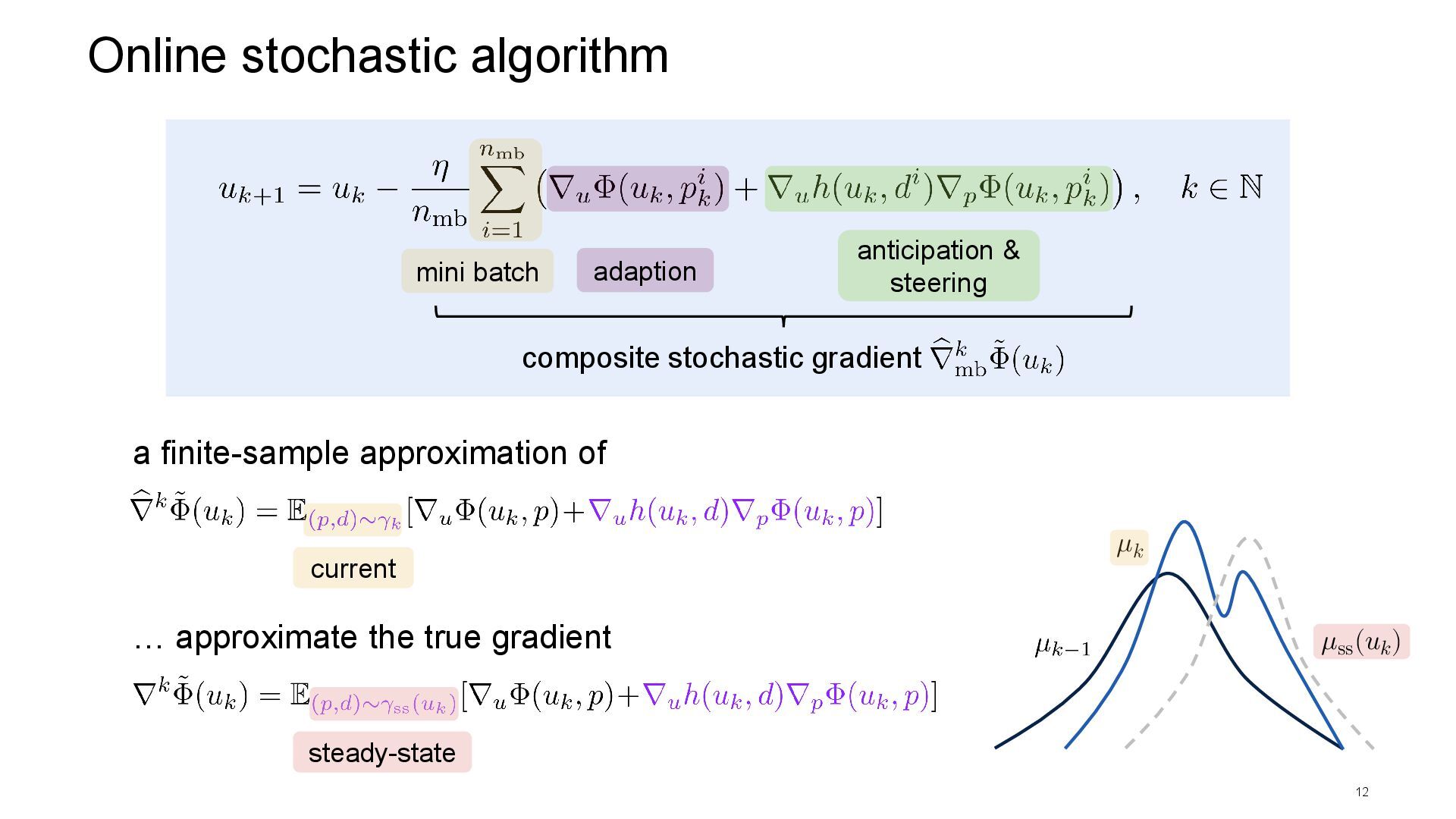
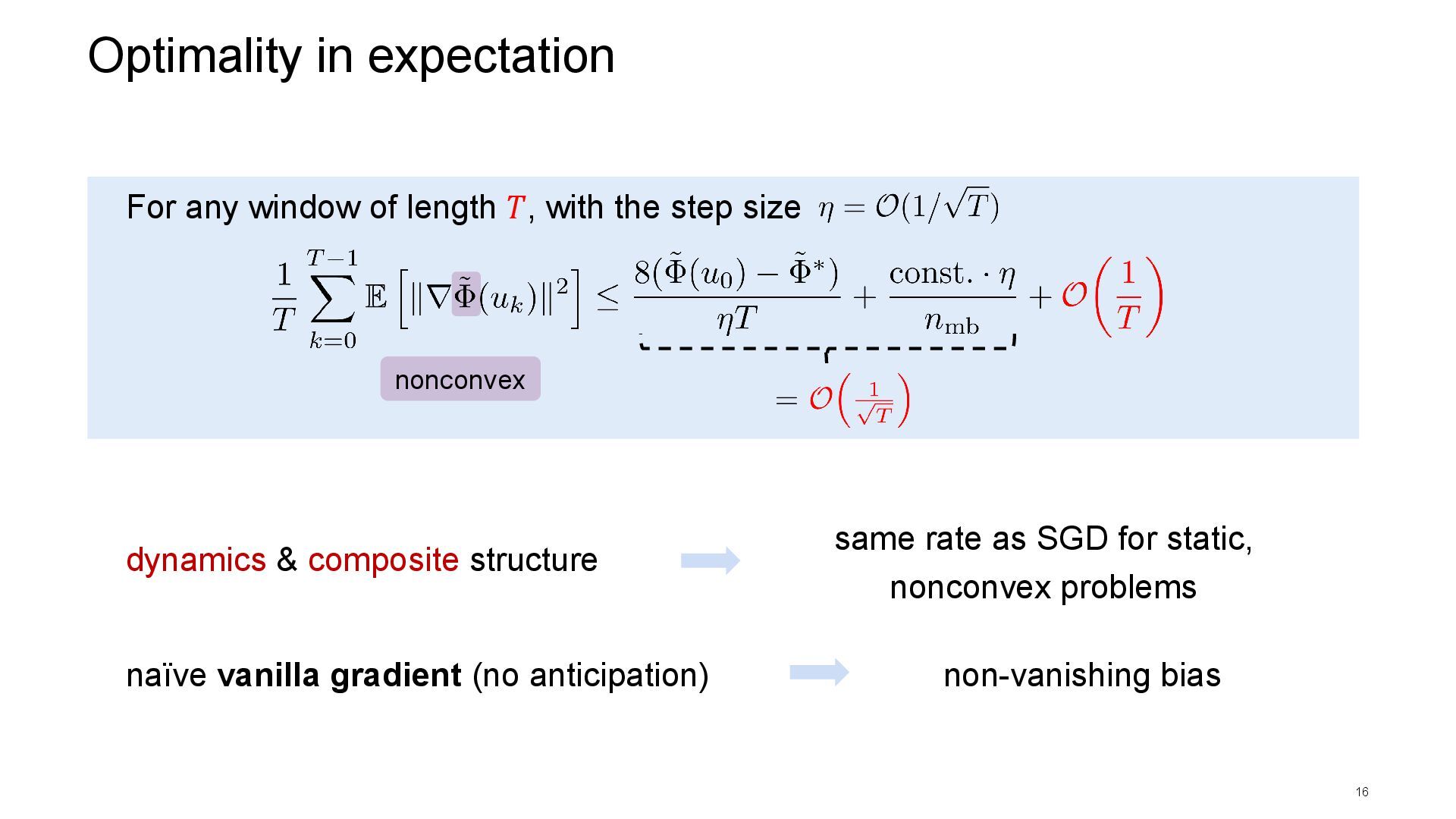
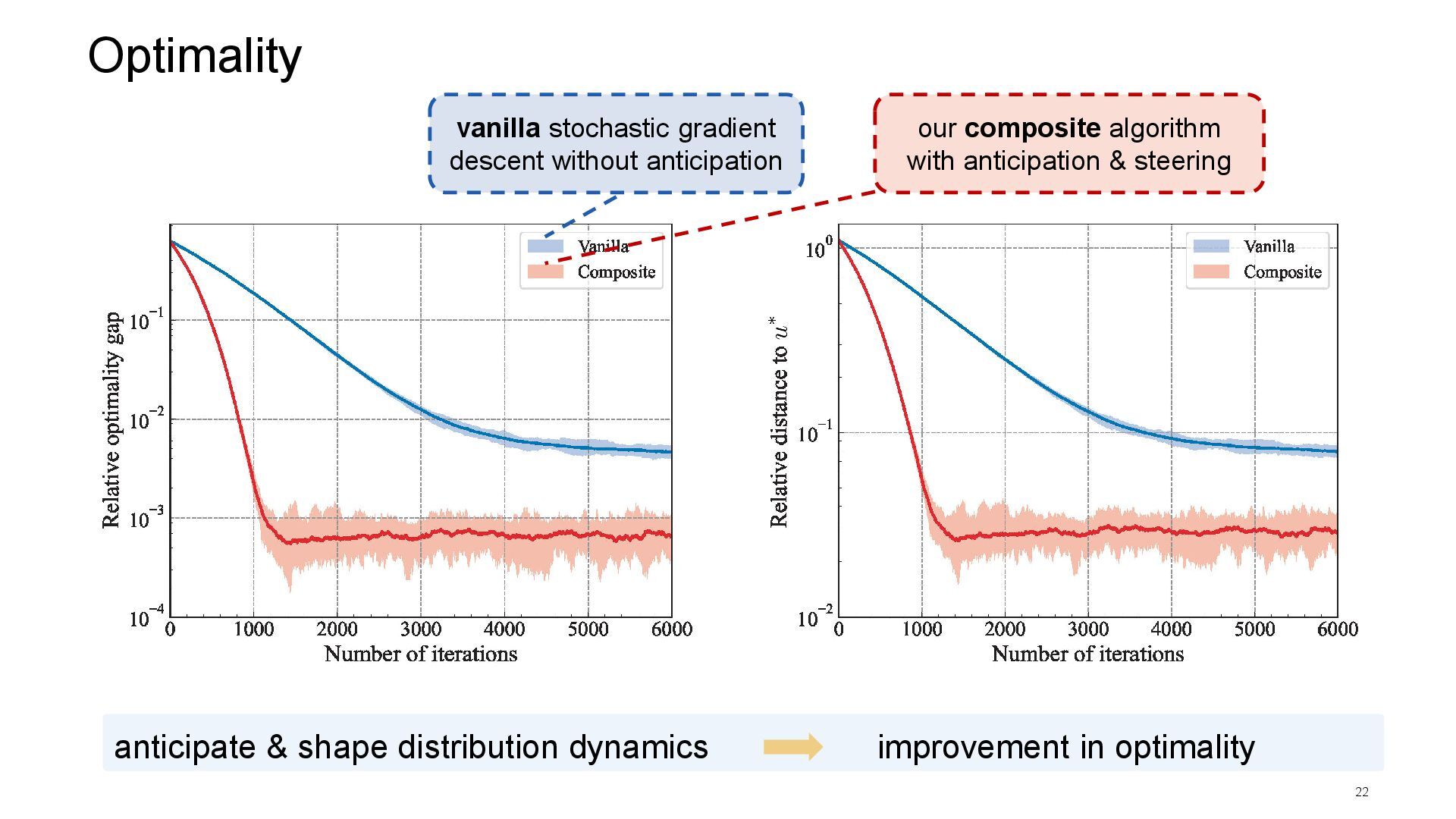
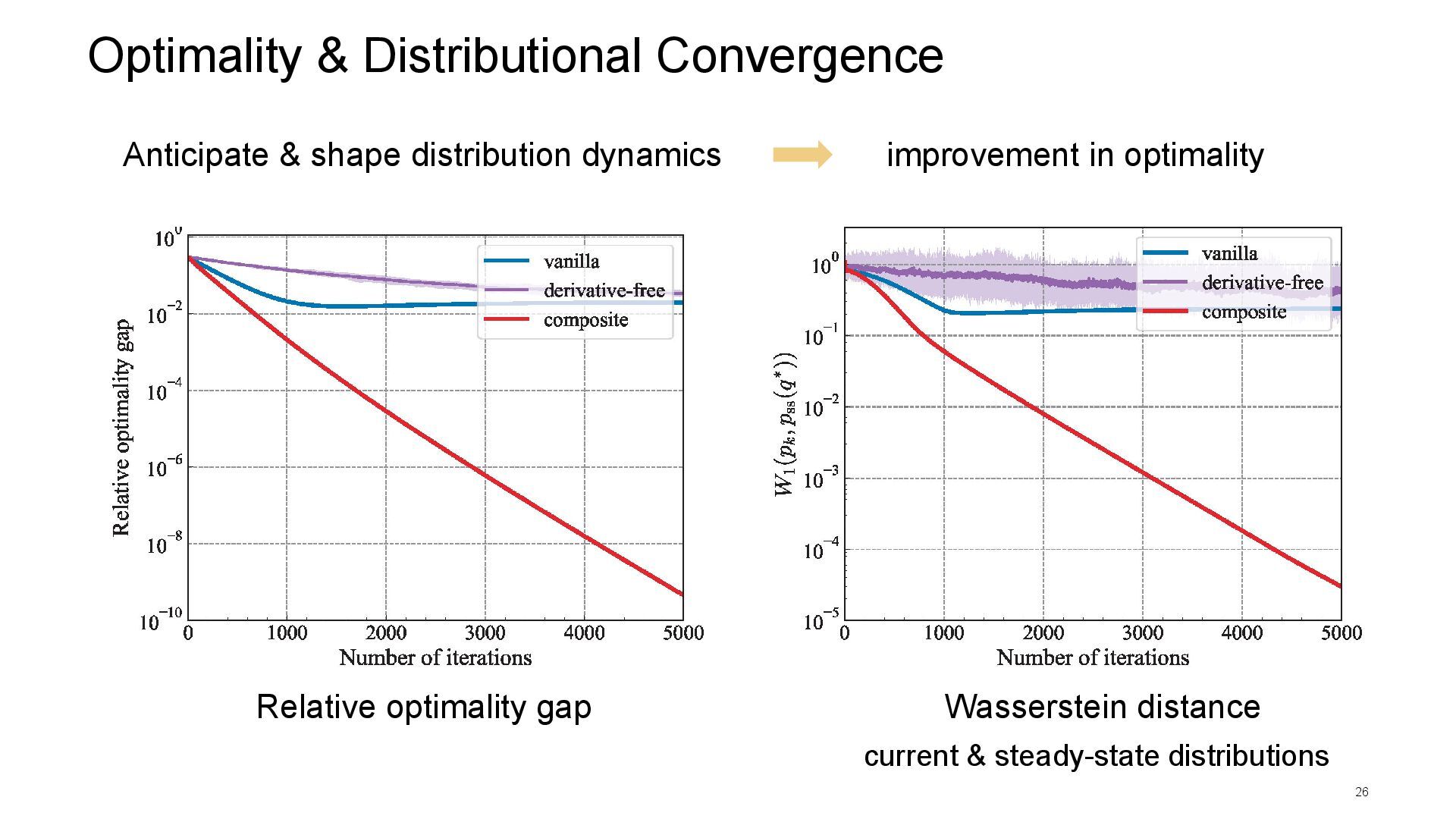
the step size dynamics & composite structure same rate as SGD for static, nonconvex problems nonconvex naïve vanilla gradient (no anticipation) non-vanishing bias 16
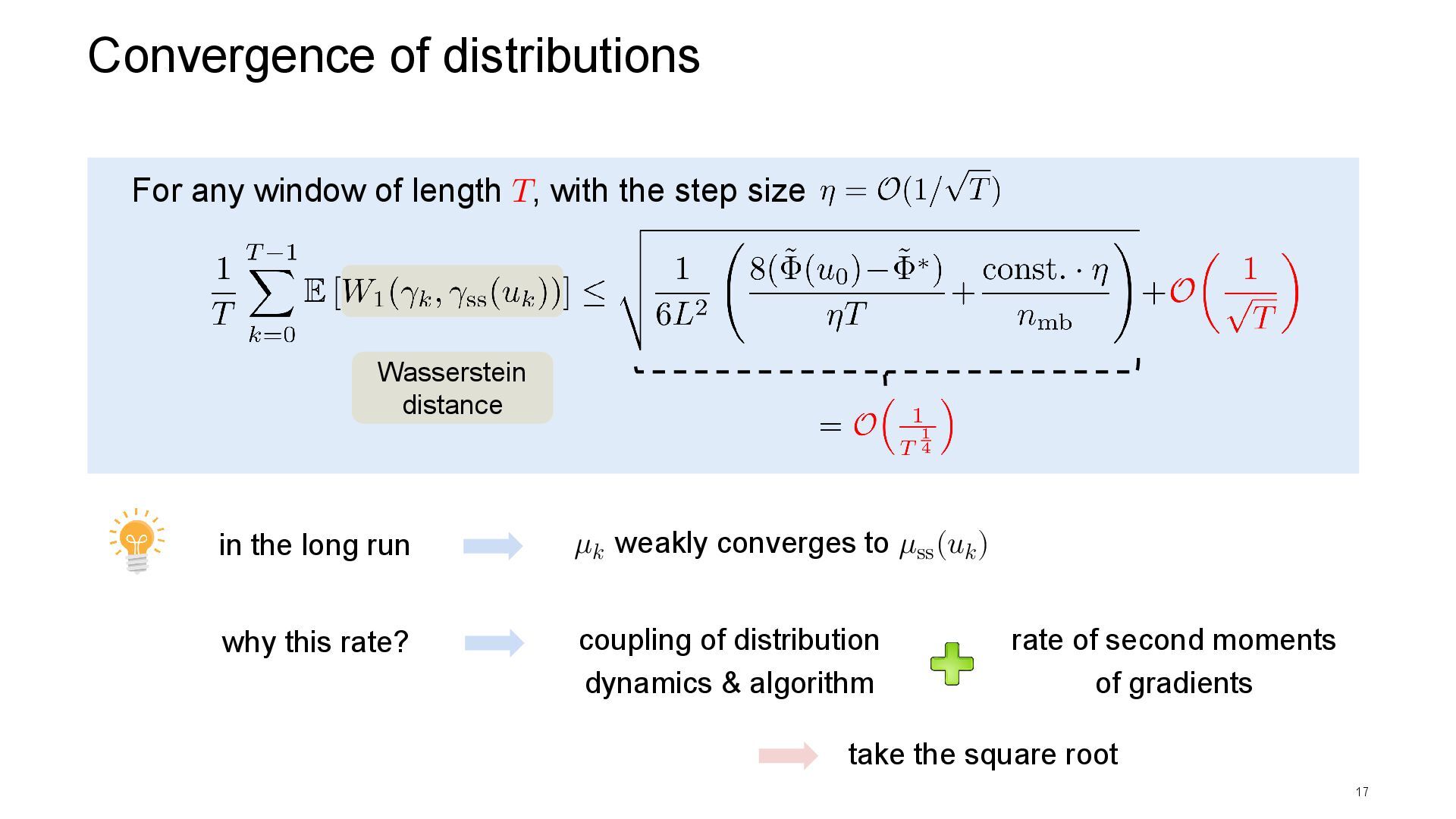
the step size 𝜇𝜇𝑘𝑘 weakly converges to 𝜇𝜇ss (𝑢𝑢𝑘𝑘 ) in the long run why this rate? Wasserstein distance coupling of distribution dynamics & algorithm rate of second moments of gradients 17 take the square root
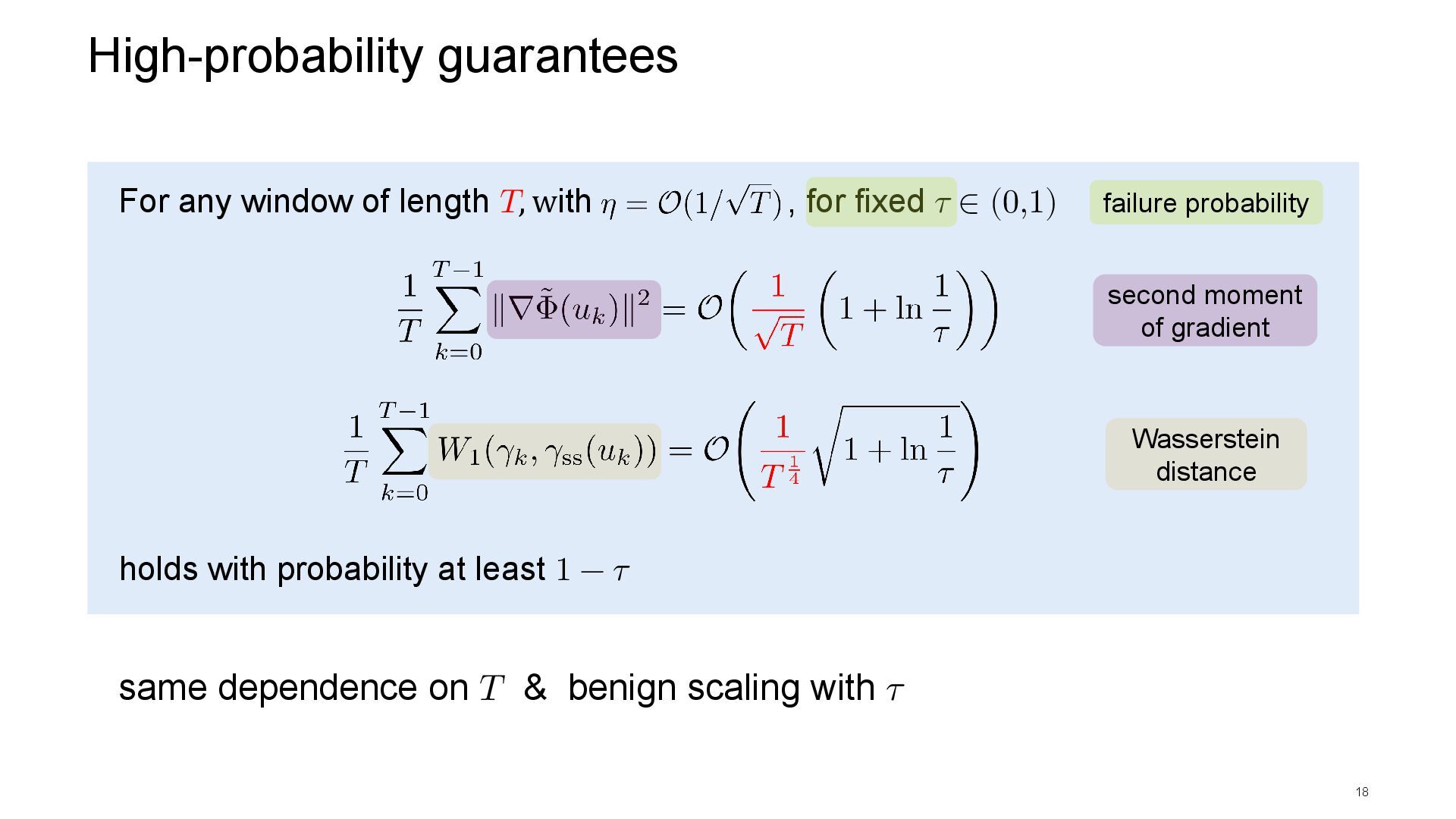
for fixed 𝜏𝜏 ∈ (0,1) holds with probability at least 1 − 𝜏𝜏 same dependence on 𝑇𝑇 & benign scaling with 𝜏𝜏 second moment of gradient Wasserstein distance failure probability 18
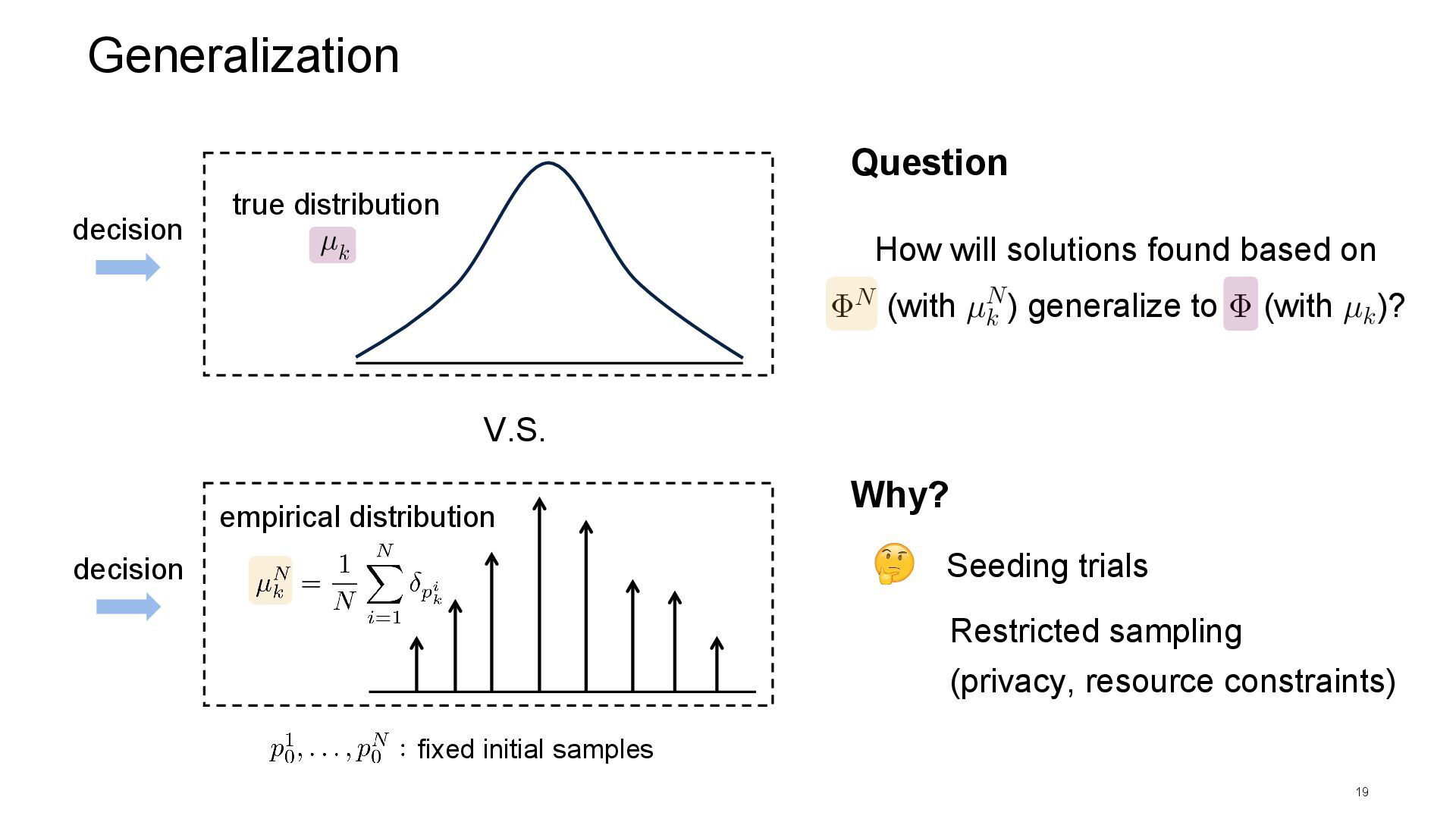
How will solutions found based on Generalization true distribution empirical distribution Why? Seeding trials Restricted sampling (privacy, resource constraints) decision decision Question V.S. 𝜇𝜇 𝑘𝑘 fixed initial samples 19
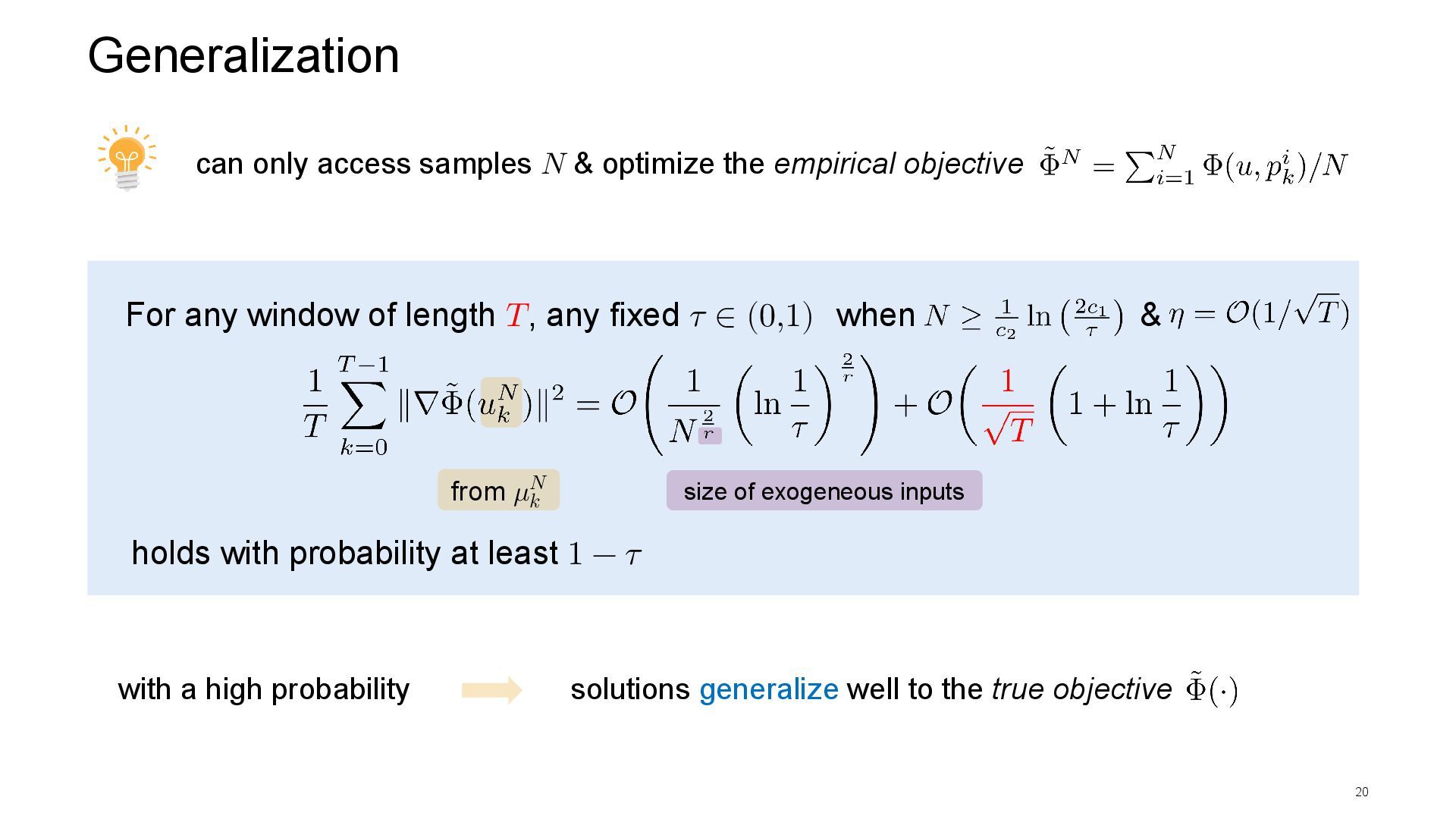
objective with a high probability solutions generalize well to the true objective For any window of length 𝑇𝑇, any fixed 𝜏𝜏 ∈ (0,1) when & holds with probability at least 1 − 𝜏𝜏 size of exogeneous inputs from 𝜇𝜇𝑘𝑘 𝑁𝑁 20
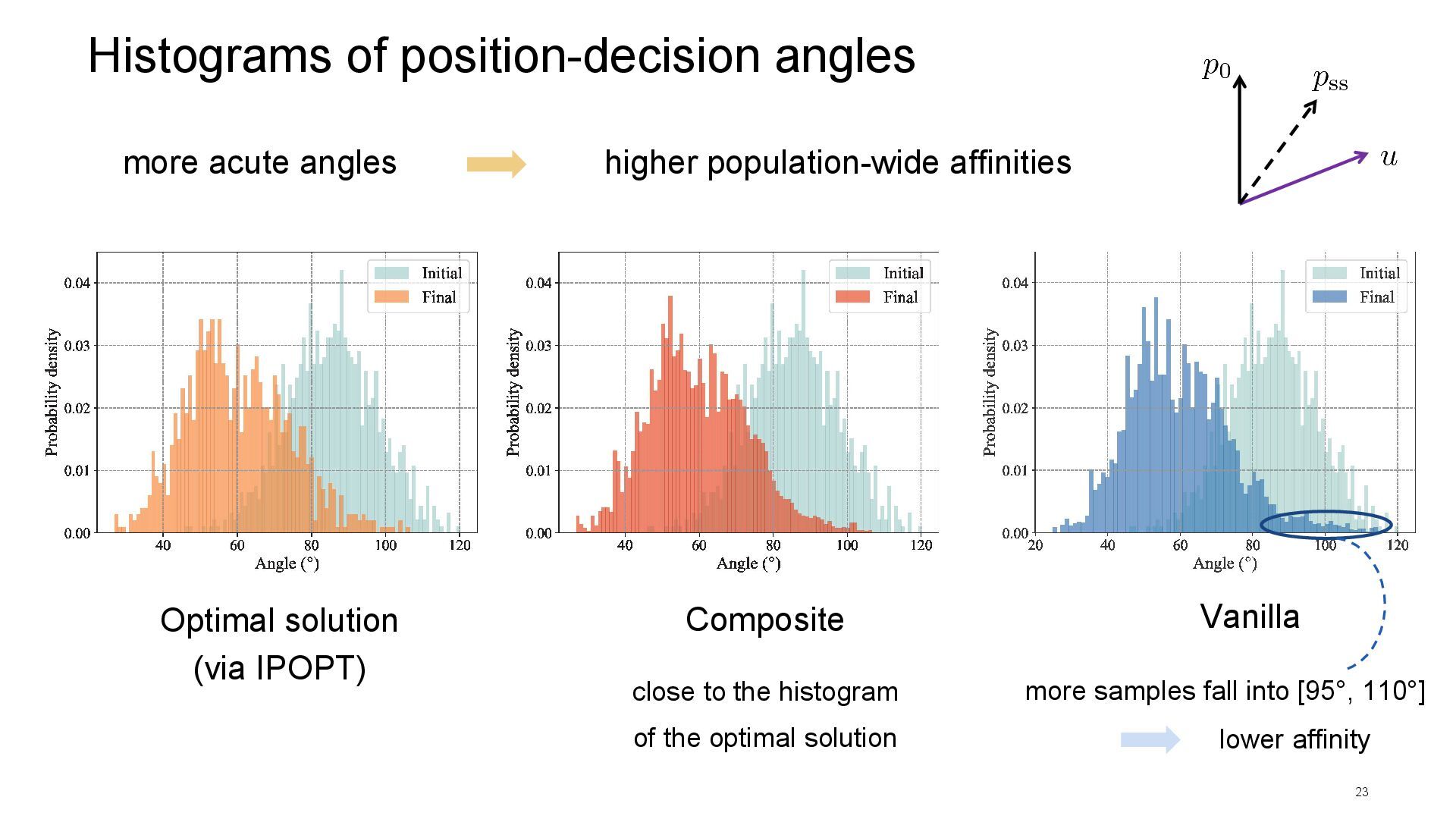
higher population-wide affinities more acute angles close to the histogram of the optimal solution more samples fall into [95°, 110°] lower affinity 23


 tkng
 yukako_nakano
 institutdelelevage
 rikkabotan7
 analokmaus
 tomonom
 takehaya
 pomcho555
 sokikatayama
 hisaokatsumi
 joshbly
 rkendrick25
 ammeep
 deanohume
 ks91
 sonatard
 letsgokoyo
 bermonpainter
 erikaheidi
 mclloyd
 nikkihalliwell