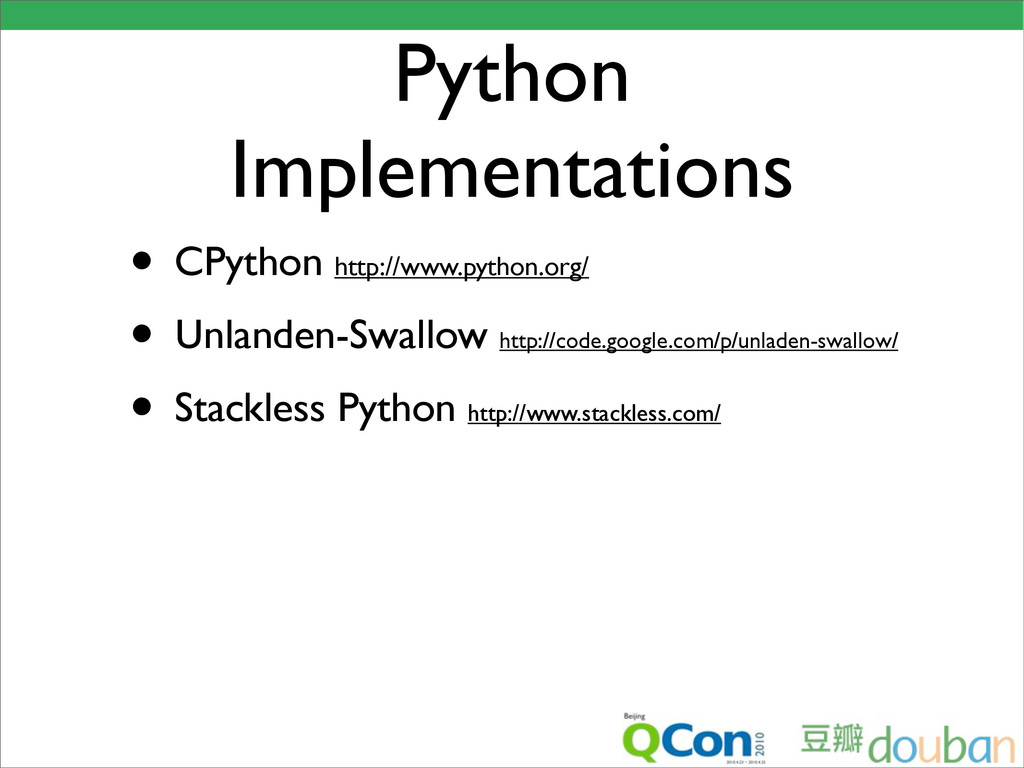
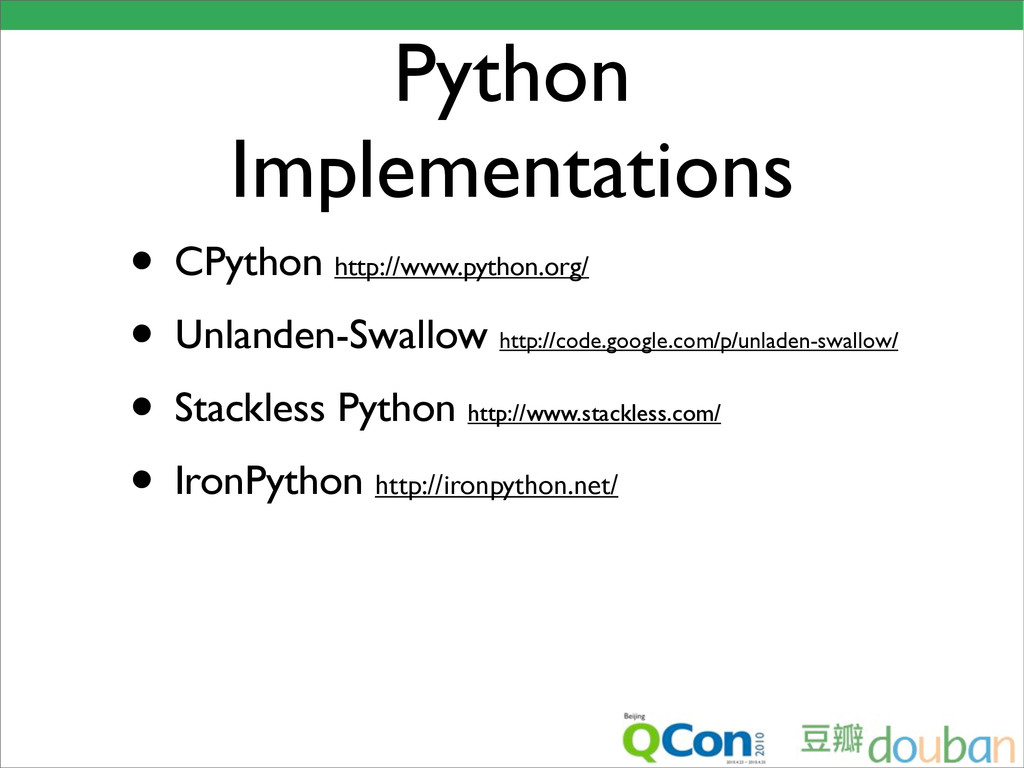
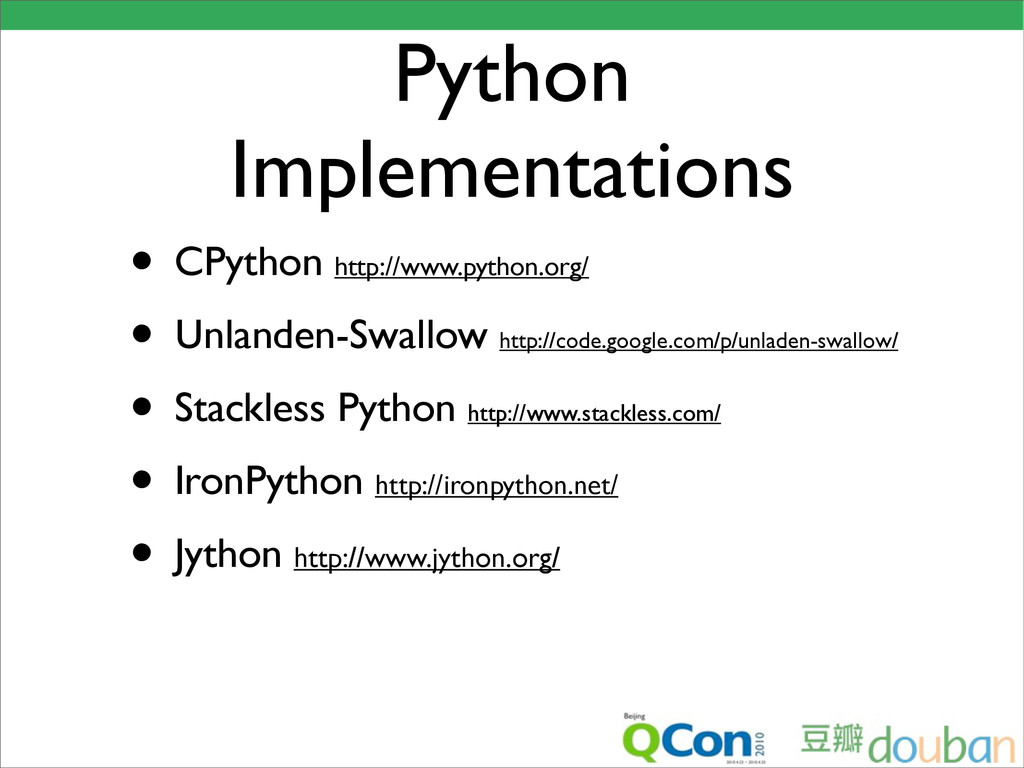
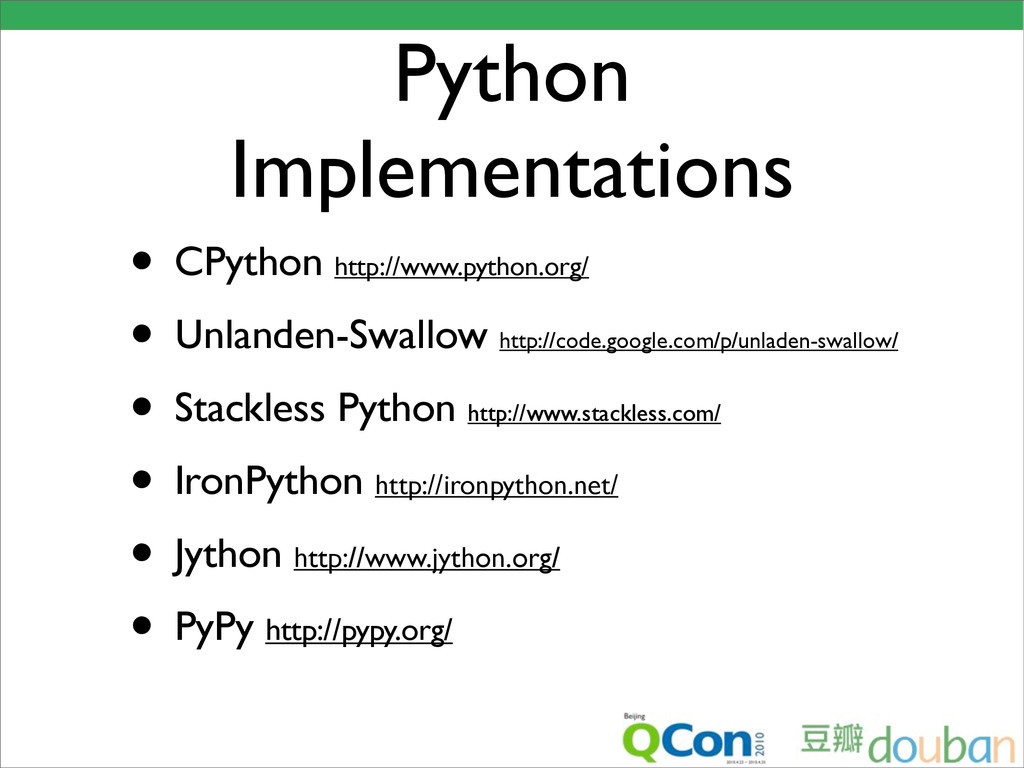
work more quickly and integrate your systems more effectively. You can learn to use Python and see almost immediate gains in productivity and lower maintenance costs. (via http://python.org/)
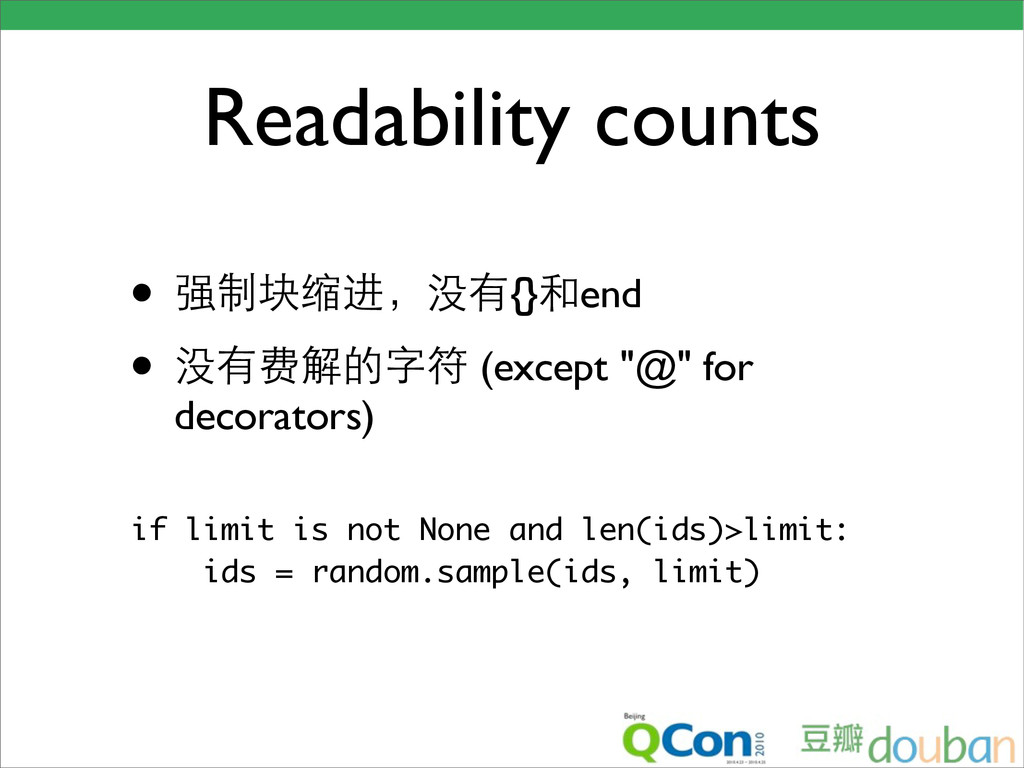
for dirpath, dirnames, filenames in os.walk('.'): for filename in filenames: path = os.path.join(dirpath, filename) ext = os.path.splitext(filename)[1] d[ext] += len(list(open(path))) for ext, n_lines in d.items(): print ext, n_lines ࠹۲ᇕე֥սྛඔ: 13ྛ
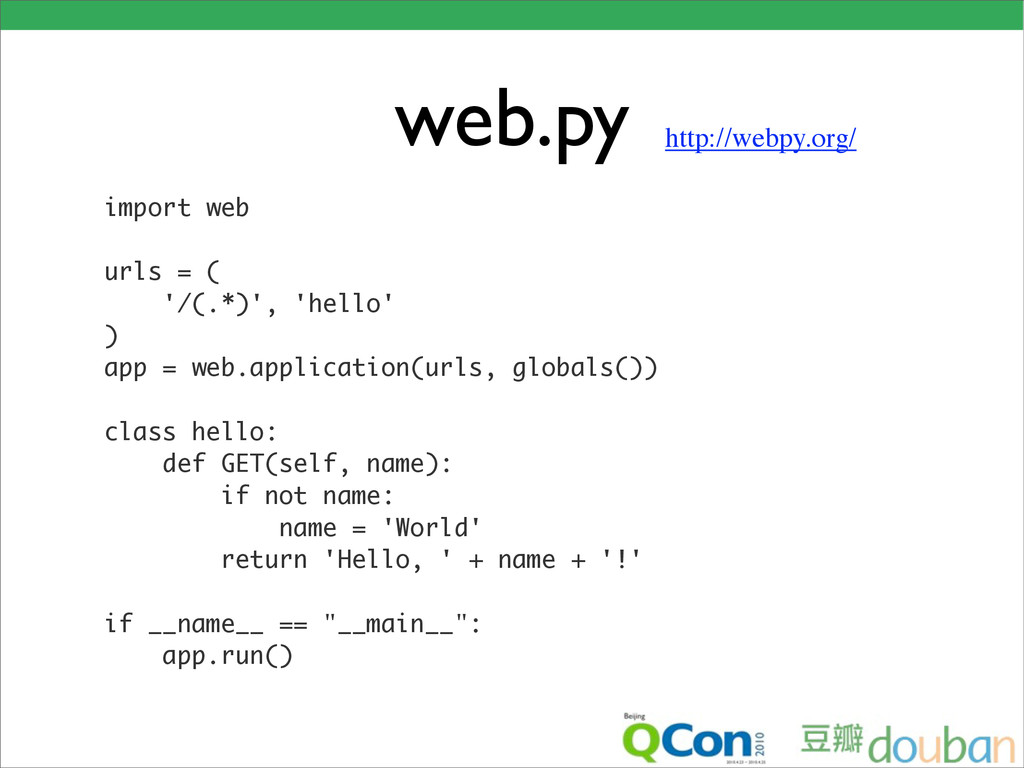
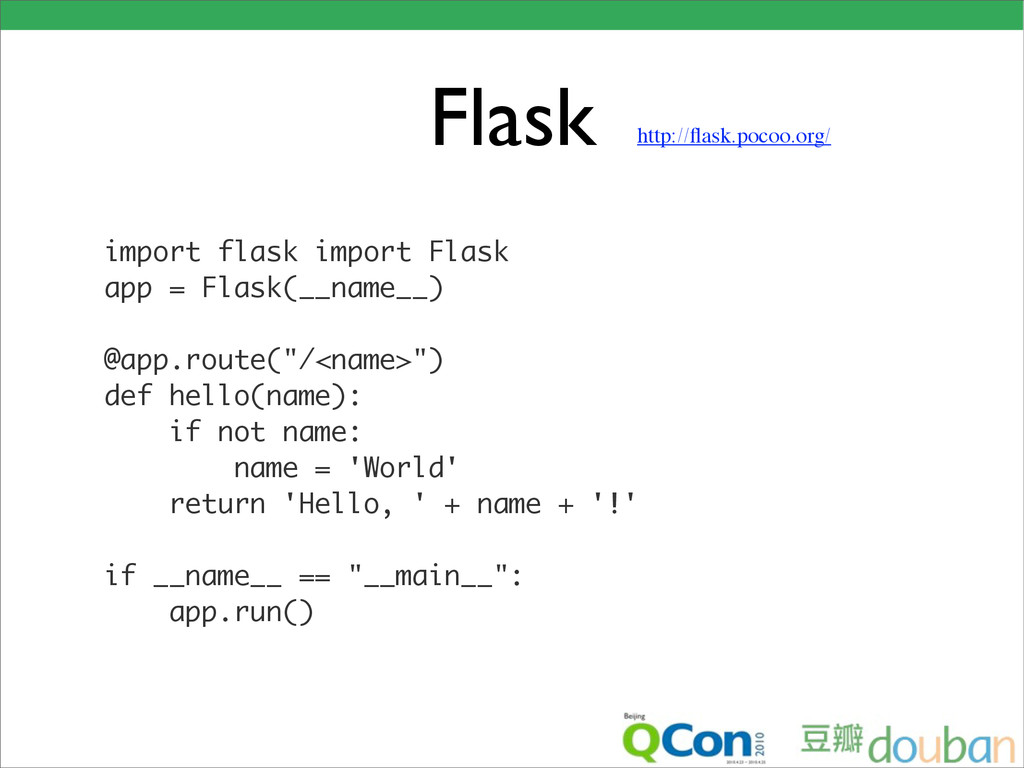
= web.application(urls, globals()) class hello: def GET(self, name): if not name: name = 'World' return 'Hello, ' + name + '!' if __name__ == "__main__": app.run() http://webpy.org/
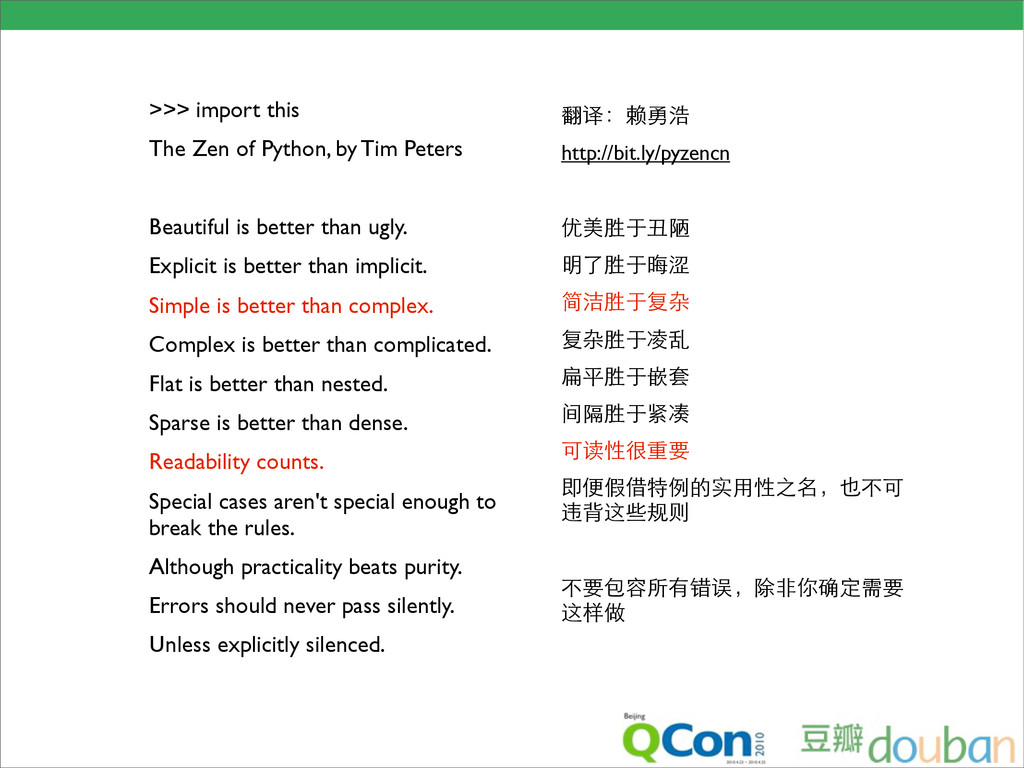
Beautiful is better than ugly. Explicit is better than implicit. Simple is better than complex. Complex is better than complicated. Flat is better than nested. Sparse is better than dense. Readability counts. Special cases aren't special enough to break the rules. Although practicality beats purity. Errors should never pass silently. Unless explicitly silenced. يၲğঠႧݽ http://bit.ly/pyzencn Ⴊૅ഻ႿԘੑ ૼਔ഻Ⴟ߳ ࡥࢱ഻Ⴟگᄖ گᄖ഻Ⴟ ы഻Ⴟళส ࡗۯ഻Ⴟࣅ ॖྟޓᇗေ ࠧьࡌࢹห২֥ൌႨྟᆭđ္҂ॖ ິМᆃུܿᄵ ҂ေЇಸ෮Ⴕհ༂đԢ٤ಒקླေ ᆃဢቓ
There should be one-- and preferably only one --obvious way to do it. Although that way may not be obvious at first unless you're Dutch. Now is better than never. Although never is often better than *right* now. If the implementation is hard to explain, it's a bad idea. If the implementation is easy to explain, it may be a good idea. Namespaces are one honking great idea -- let's do more of those! ֒թᄝ؟ᇕॖିđ҂ေӇ൫ಀ҉ҩ ط൞࣐ਈᅳ၂ᇕđቋݺ൞ື၂၂ᇕ ૼཁ֥ࢳथٚσ ෙಖᆃѩ҂ಸၞđၹູ҂൞ Python ᆭڳ ቓ္ྸݺݖ҂ቓđ҂ࡌන෬ࣼ ൭ߎ҂ೂ҂ቓ ೂݔمཟದ૭ඍ֥ٚσđପ ड़ק҂൞၂۱ݺٚσĠّᆭၧಖ ଁॢࡗ൞၂ᇕध֥đૌ ႋ֒؟ࡆ০Ⴈ
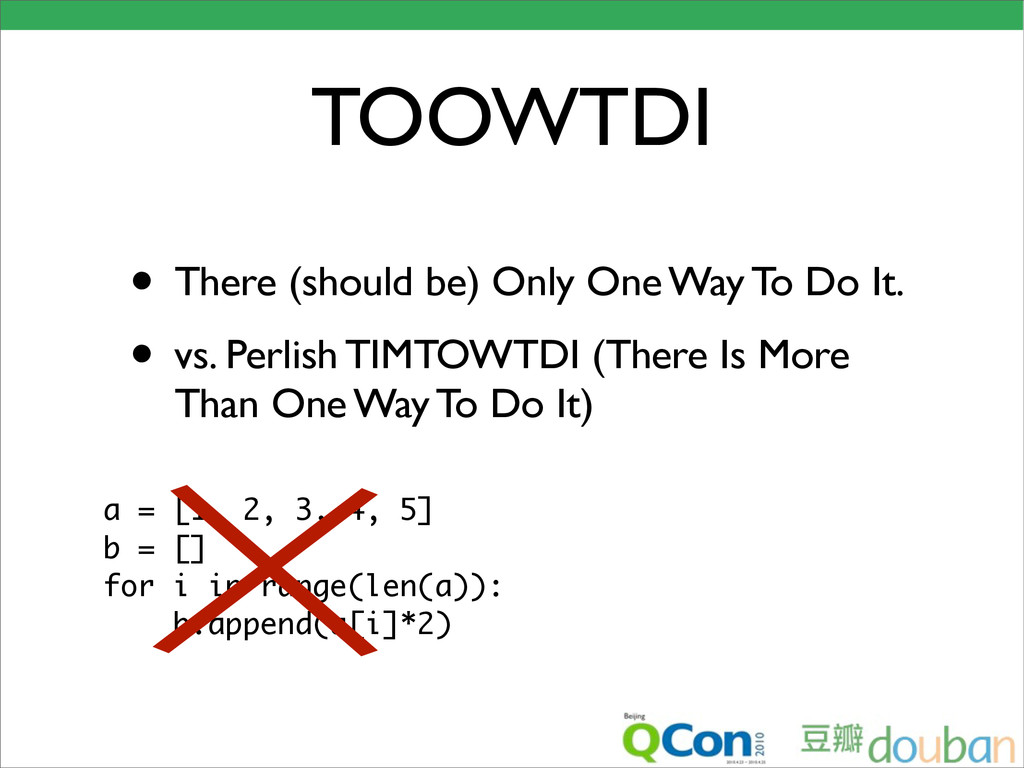
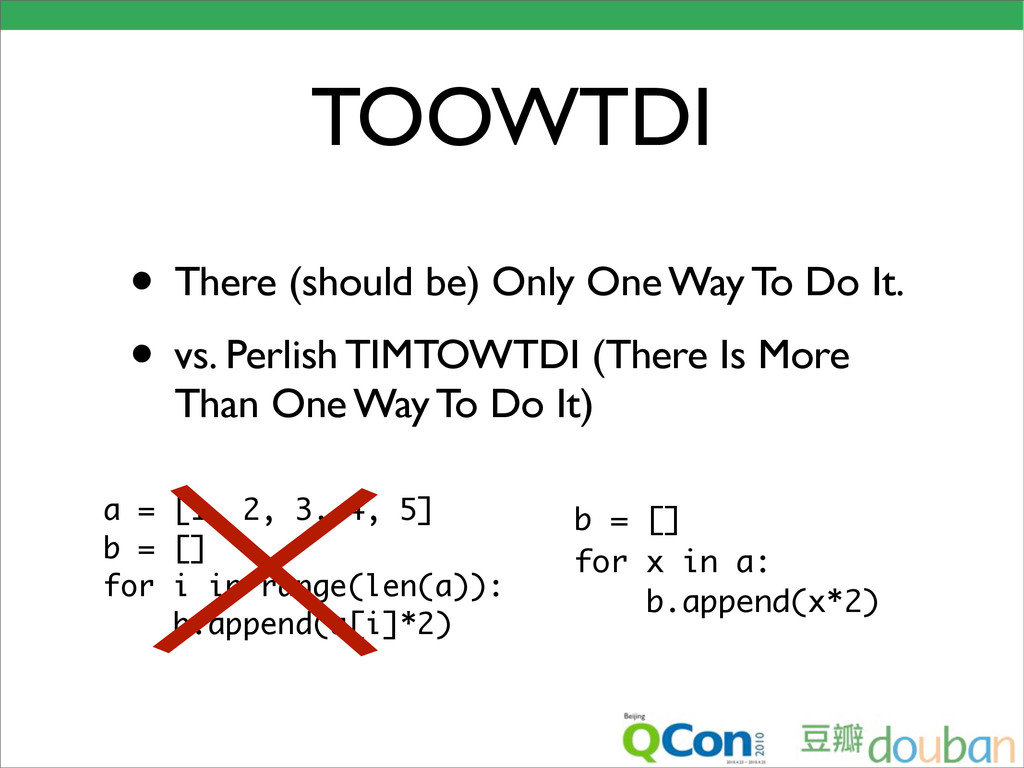
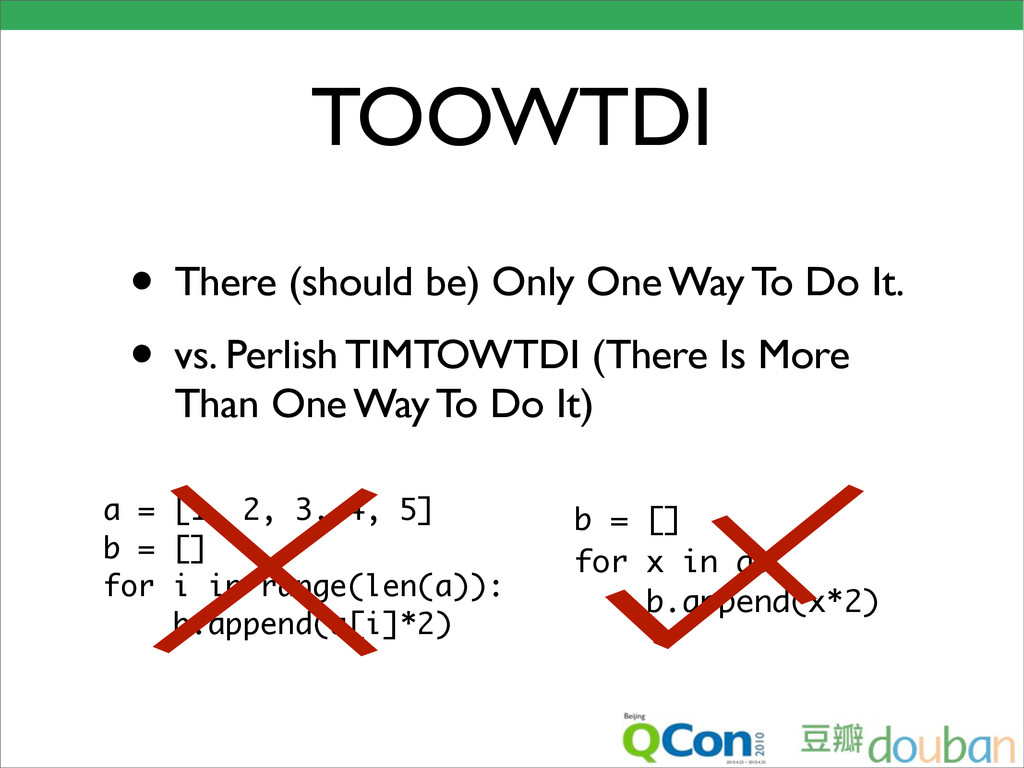
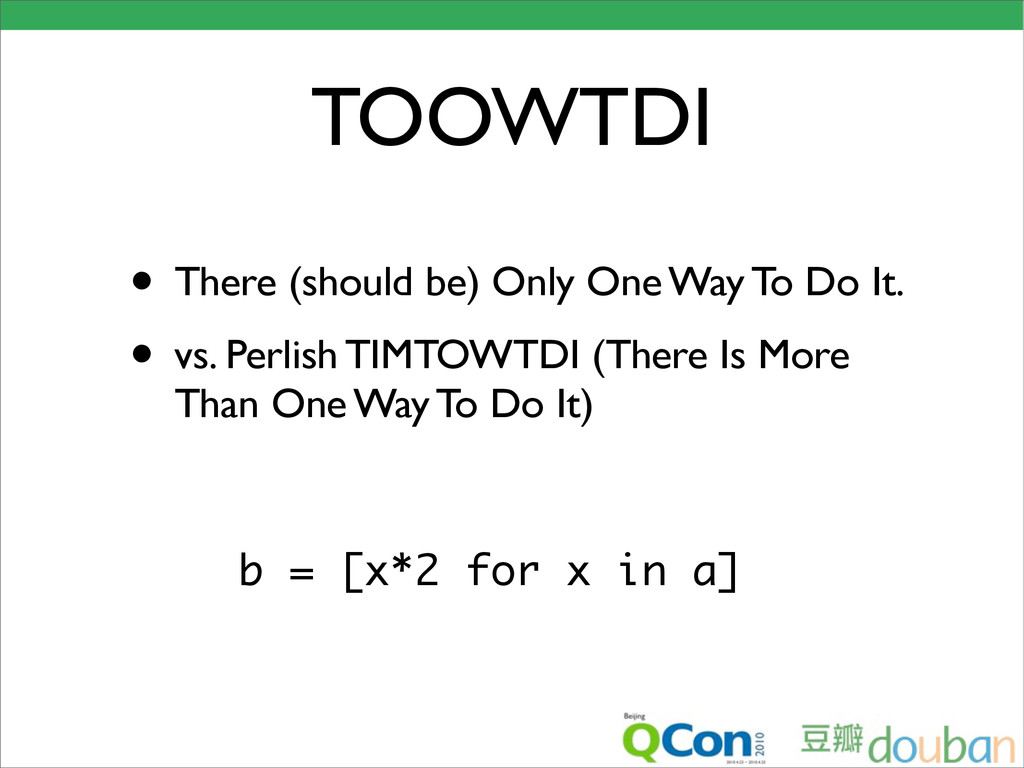
It. • vs. Perlish TIMTOWTDI (There Is More Than One Way To Do It) a = [1, 2, 3, 4, 5] b = [] for i in range(len(a)): b.append(a[i]*2) b = [] for x in a: b.append(x*2)
It. • vs. Perlish TIMTOWTDI (There Is More Than One Way To Do It) a = [1, 2, 3, 4, 5] b = [] for i in range(len(a)): b.append(a[i]*2) b = [] for x in a: b.append(x*2)
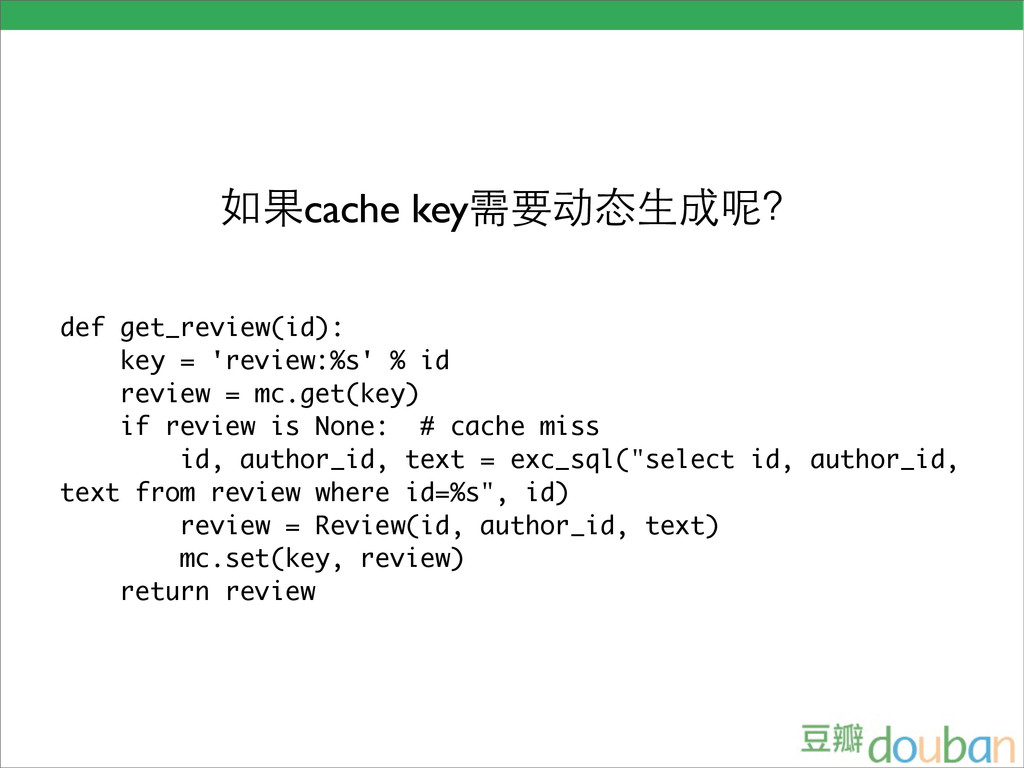
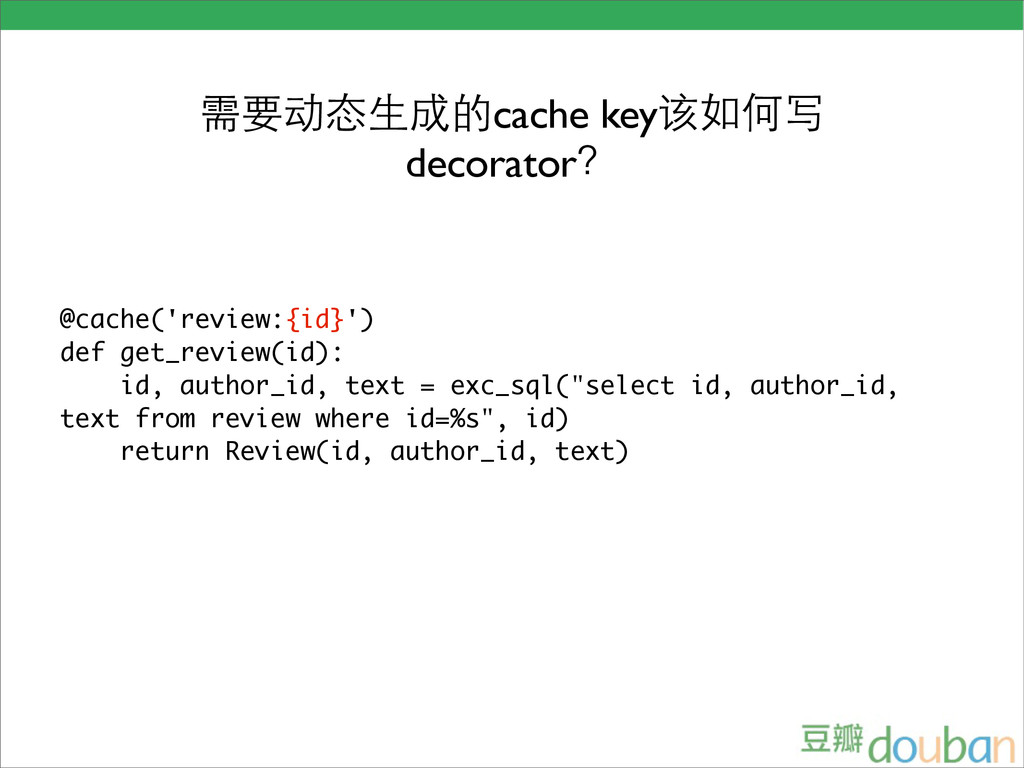
if review is None: # cache miss id, author_id, text = exc_sql("select id, author_id, text from review where id=%s", id) review = Review(id, author_id, text) mc.set(key, review) return review ೂݔcache keyླေളӮĤ
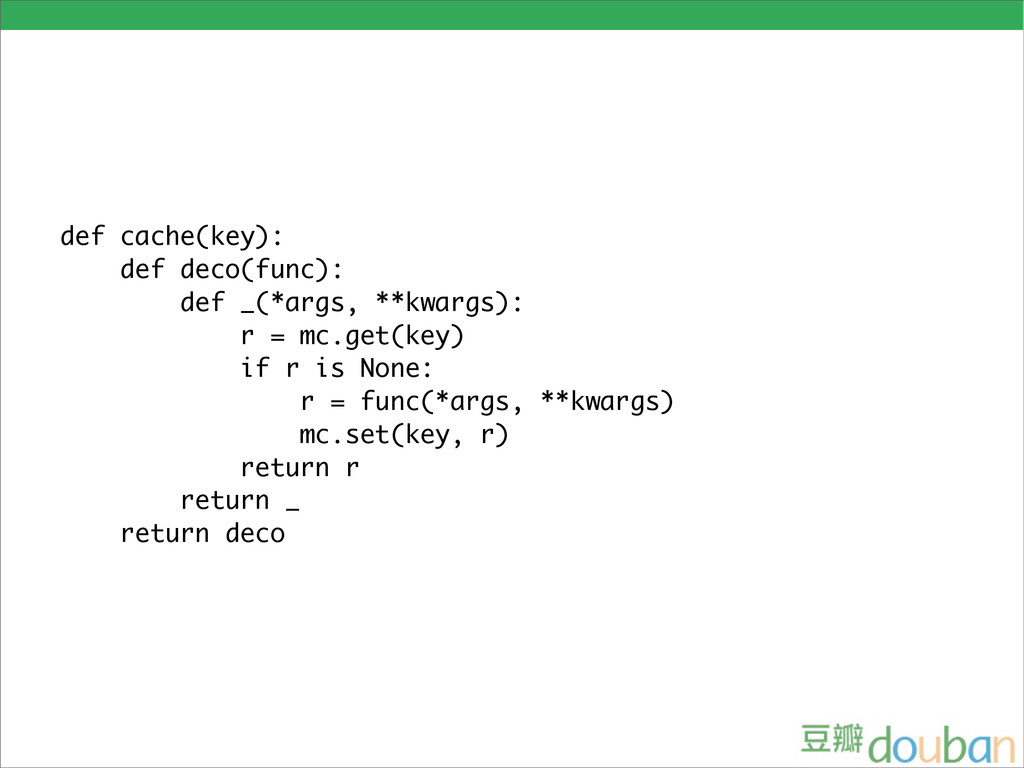
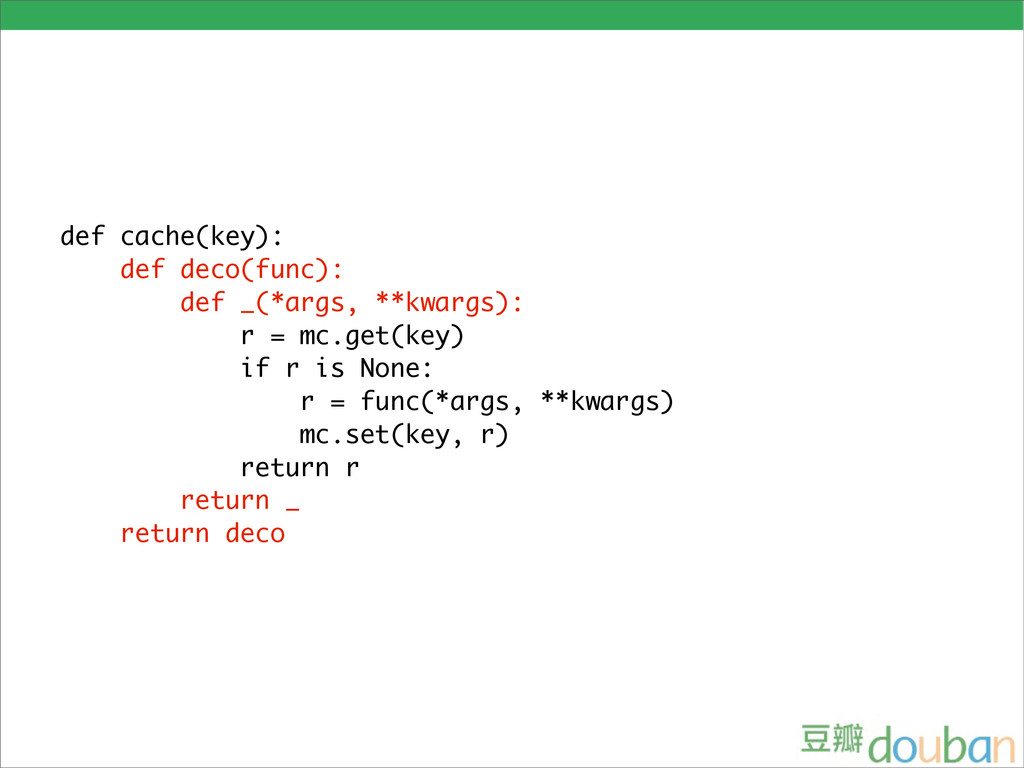
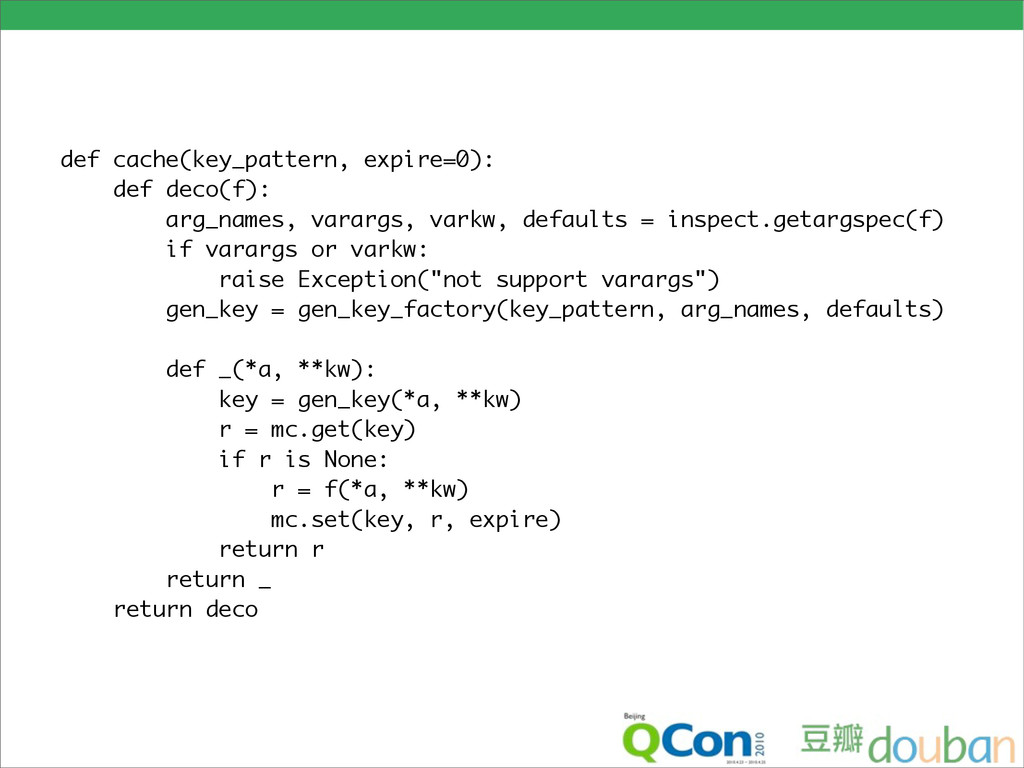
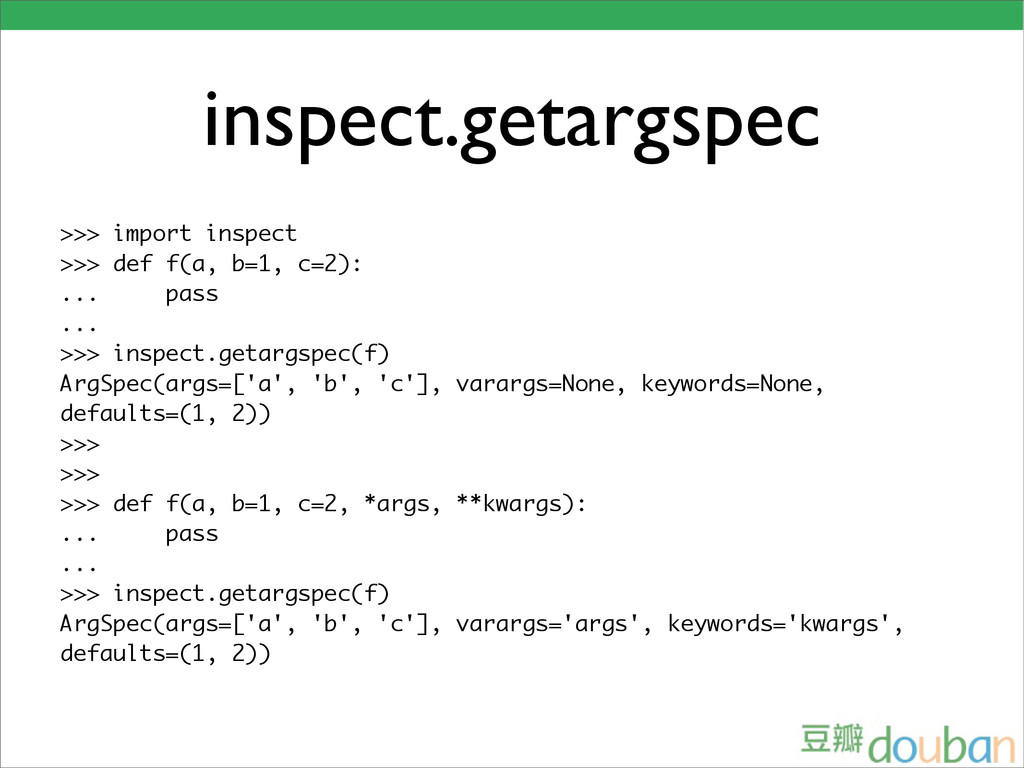
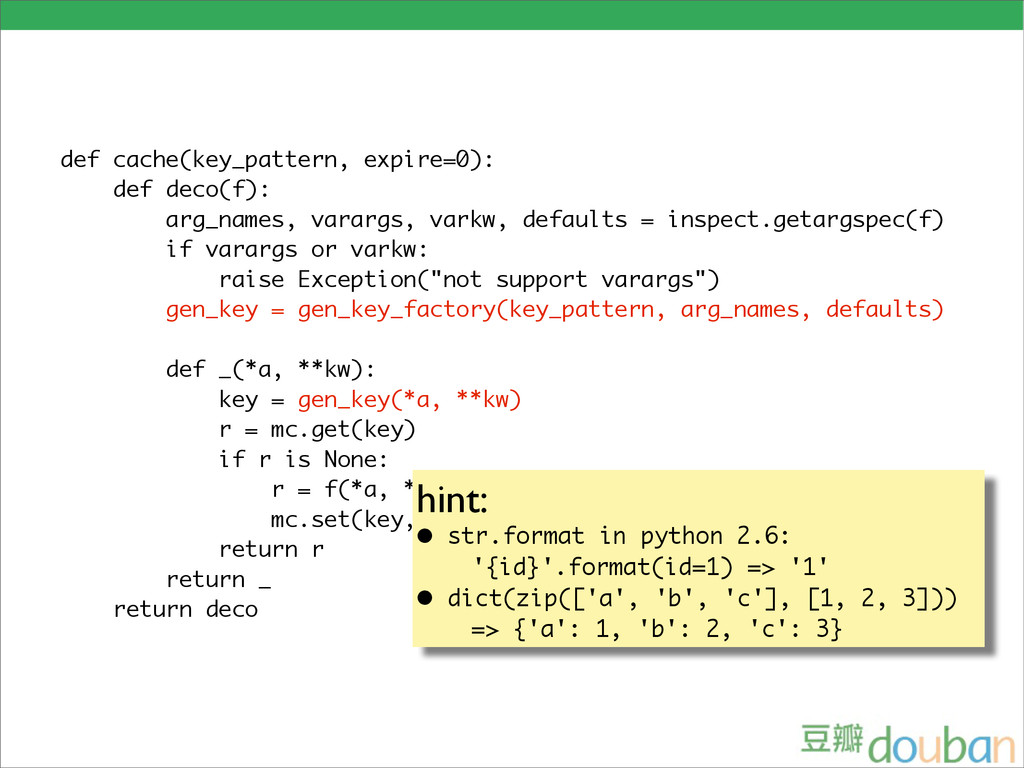
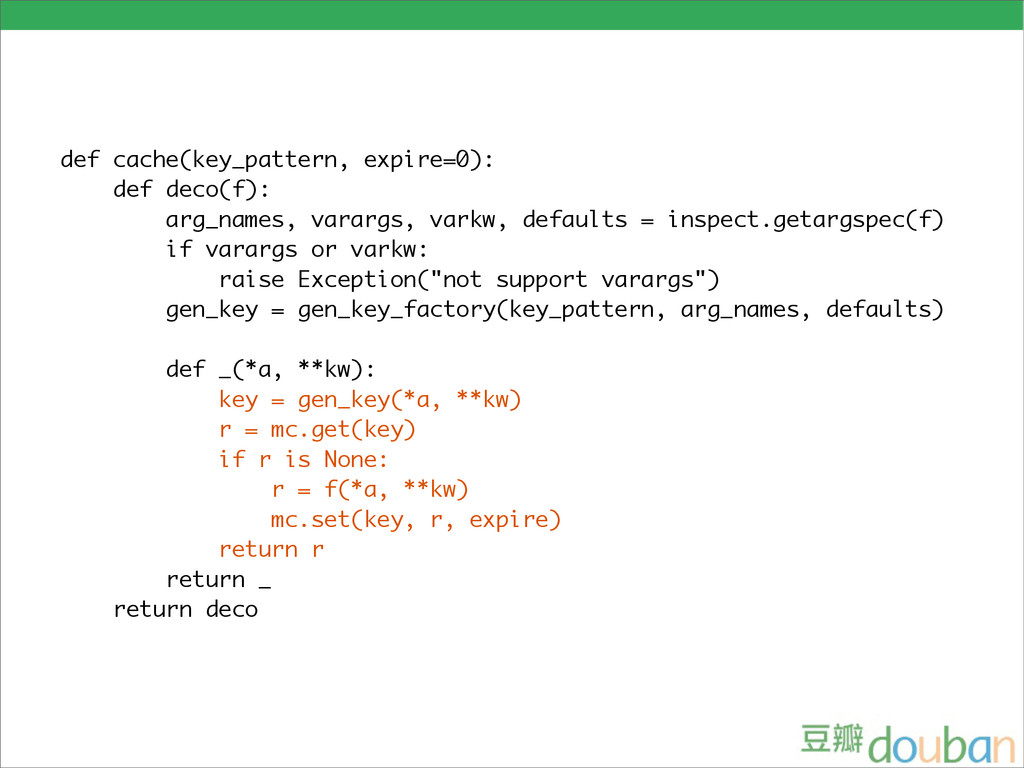
inspect.getargspec(f) if varargs or varkw: raise Exception("not support varargs") gen_key = gen_key_factory(key_pattern, arg_names, defaults) def _(*a, **kw): key = gen_key(*a, **kw) r = mc.get(key) if r is None: r = f(*a, **kw) mc.set(key, r, expire) return r return _ return deco
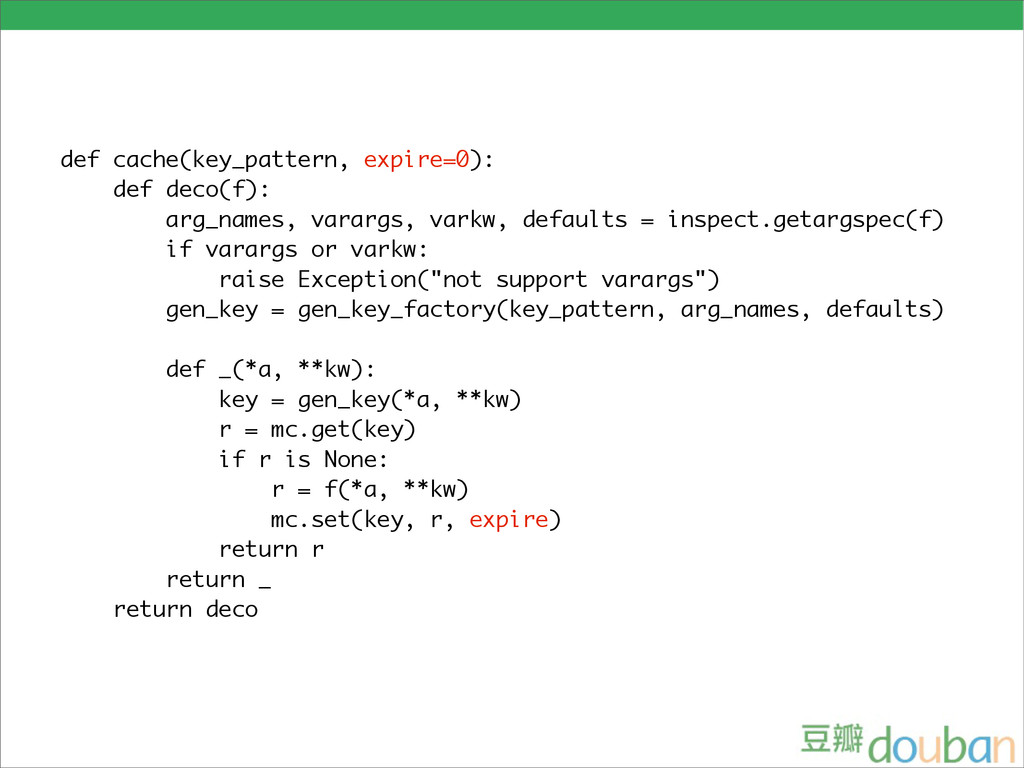
inspect.getargspec(f) if varargs or varkw: raise Exception("not support varargs") gen_key = gen_key_factory(key_pattern, arg_names, defaults) def _(*a, **kw): key = gen_key(*a, **kw) r = mc.get(key) if r is None: r = f(*a, **kw) mc.set(key, r, expire) return r return _ return deco
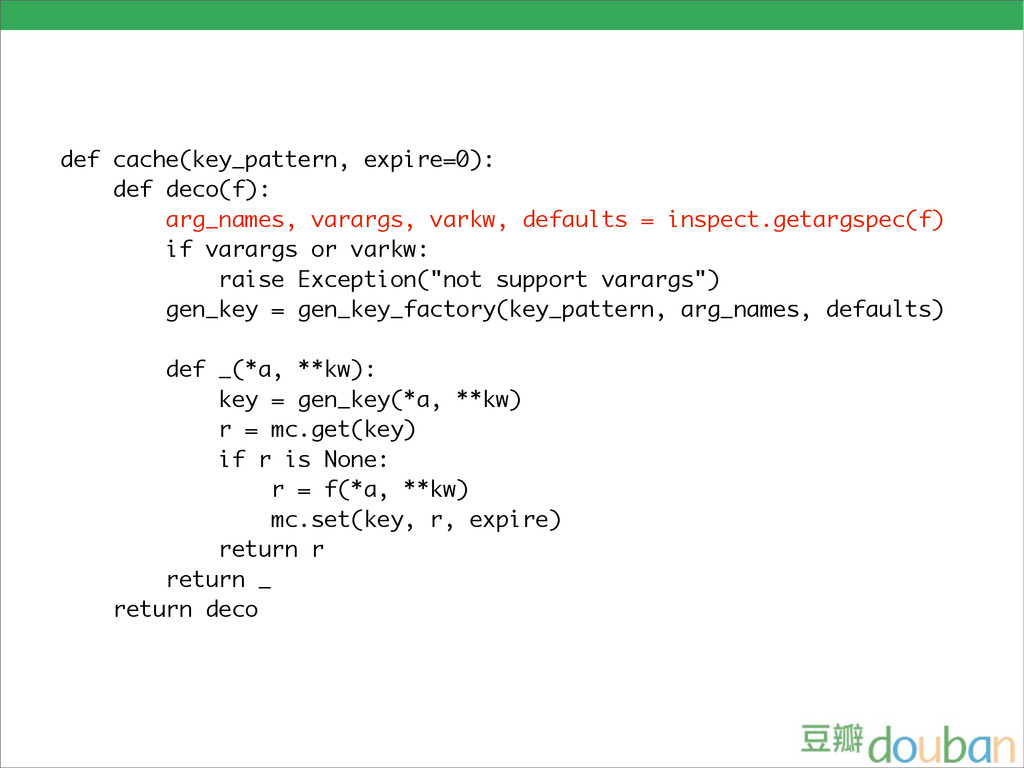
inspect.getargspec(f) if varargs or varkw: raise Exception("not support varargs") gen_key = gen_key_factory(key_pattern, arg_names, defaults) def _(*a, **kw): key = gen_key(*a, **kw) r = mc.get(key) if r is None: r = f(*a, **kw) mc.set(key, r, expire) return r return _ return deco
inspect.getargspec(f) if varargs or varkw: raise Exception("not support varargs") gen_key = gen_key_factory(key_pattern, arg_names, defaults) def _(*a, **kw): key = gen_key(*a, **kw) r = mc.get(key) if r is None: r = f(*a, **kw) mc.set(key, r, expire) return r return _ return deco
inspect.getargspec(f) if varargs or varkw: raise Exception("not support varargs") gen_key = gen_key_factory(key_pattern, arg_names, defaults) def _(*a, **kw): key = gen_key(*a, **kw) r = mc.get(key) if r is None: r = f(*a, **kw) mc.set(key, r, expire) return r return _ return deco
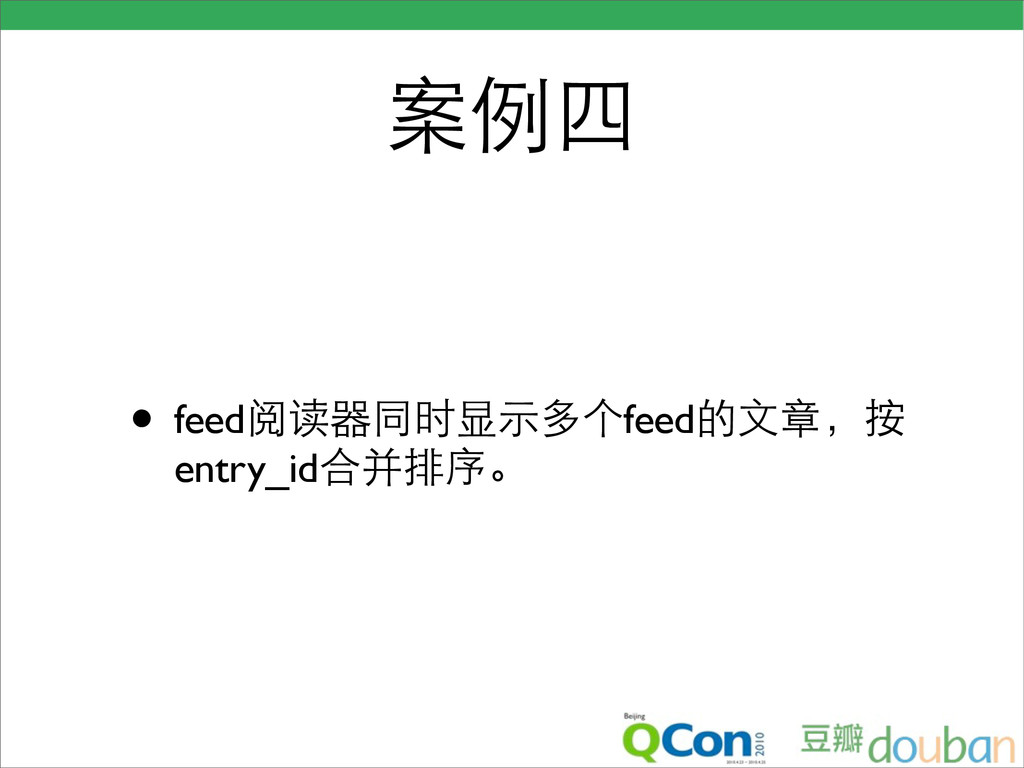
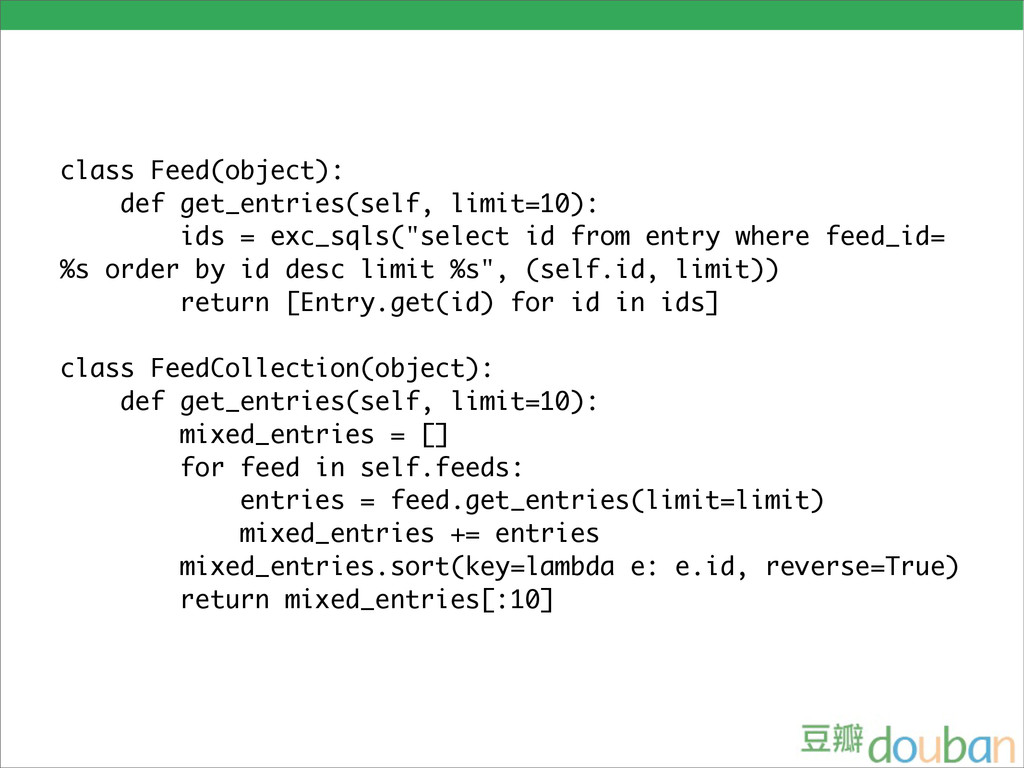
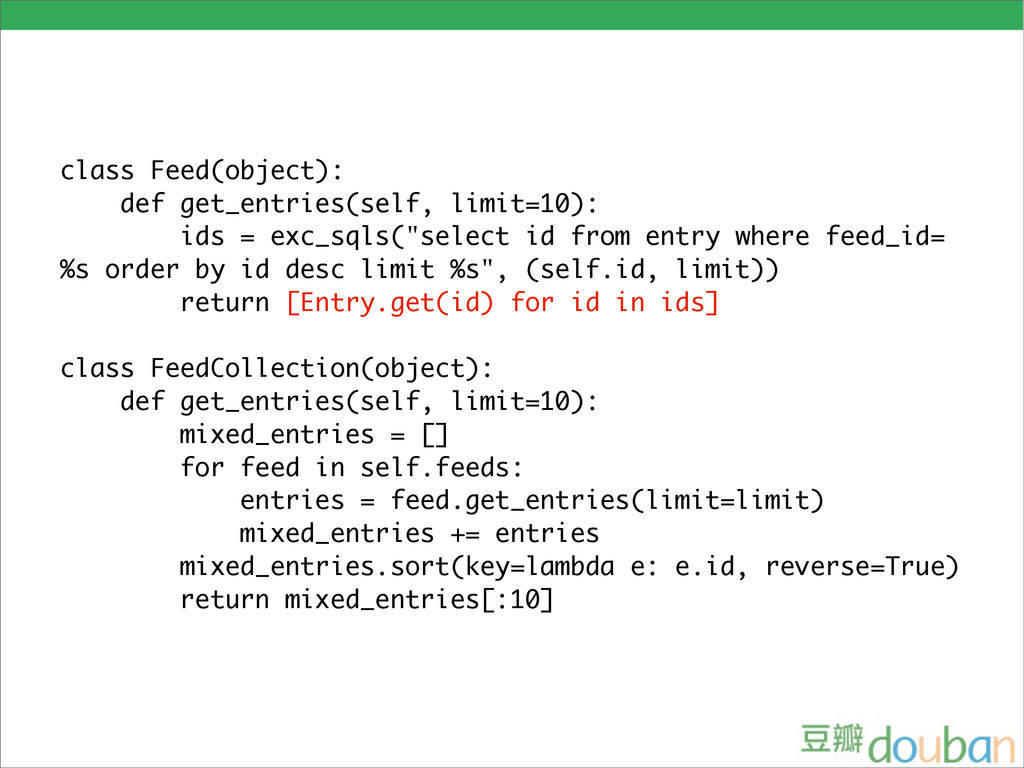
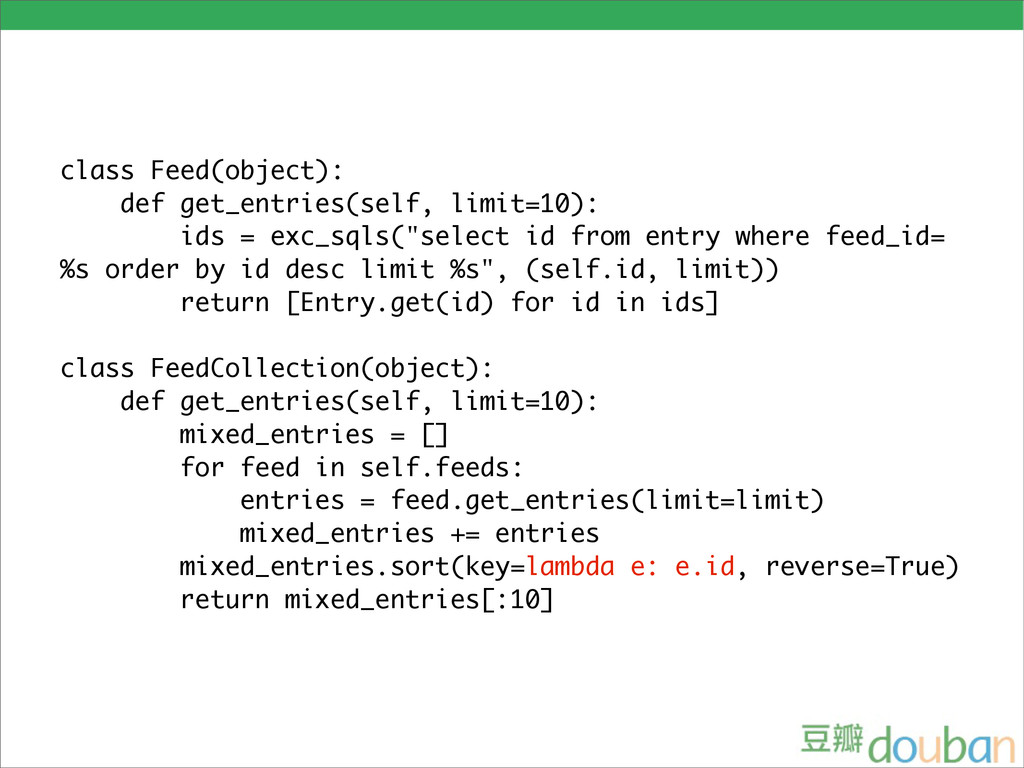
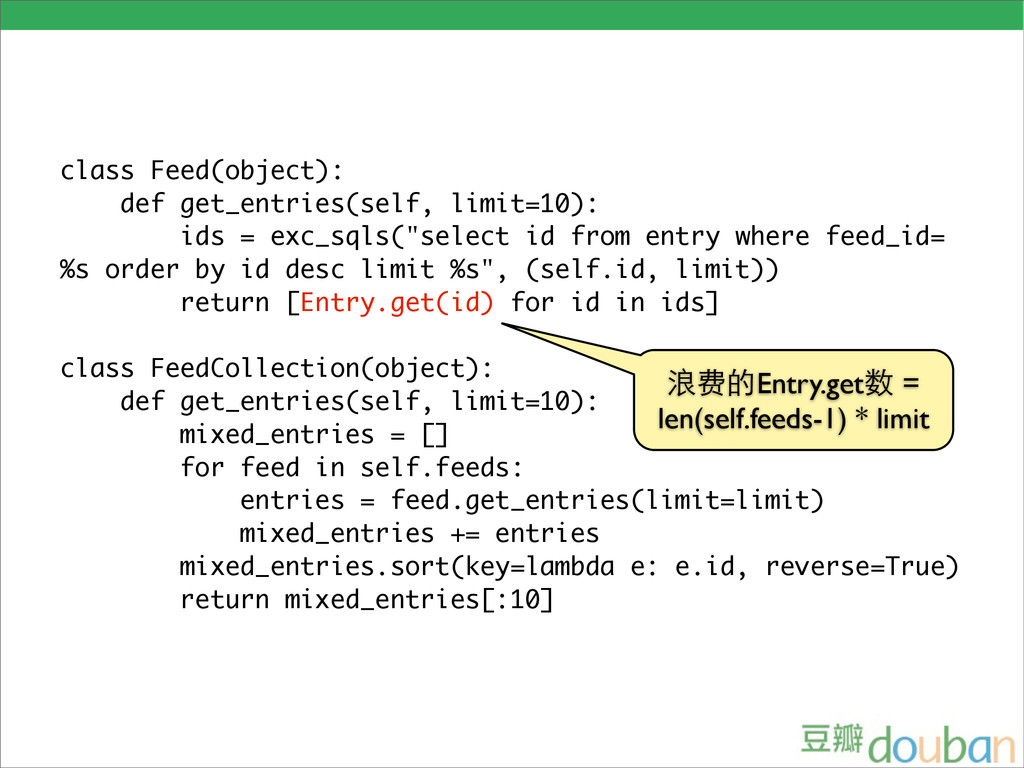
entry where feed_id= %s order by id desc limit %s", (self.id, limit)) return [Entry.get(id) for id in ids] class FeedCollection(object): def get_entries(self, limit=10): mixed_entries = [] for feed in self.feeds: entries = feed.get_entries(limit=limit) mixed_entries += entries mixed_entries.sort(key=lambda e: e.id, reverse=True) return mixed_entries[:10]
entry where feed_id= %s order by id desc limit %s", (self.id, limit)) return [Entry.get(id) for id in ids] class FeedCollection(object): def get_entries(self, limit=10): mixed_entries = [] for feed in self.feeds: entries = feed.get_entries(limit=limit) mixed_entries += entries mixed_entries.sort(key=lambda e: e.id, reverse=True) return mixed_entries[:10]
entry where feed_id= %s order by id desc limit %s", (self.id, limit)) return [Entry.get(id) for id in ids] class FeedCollection(object): def get_entries(self, limit=10): mixed_entries = [] for feed in self.feeds: entries = feed.get_entries(limit=limit) mixed_entries += entries mixed_entries.sort(key=lambda e: e.id, reverse=True) return mixed_entries[:10]
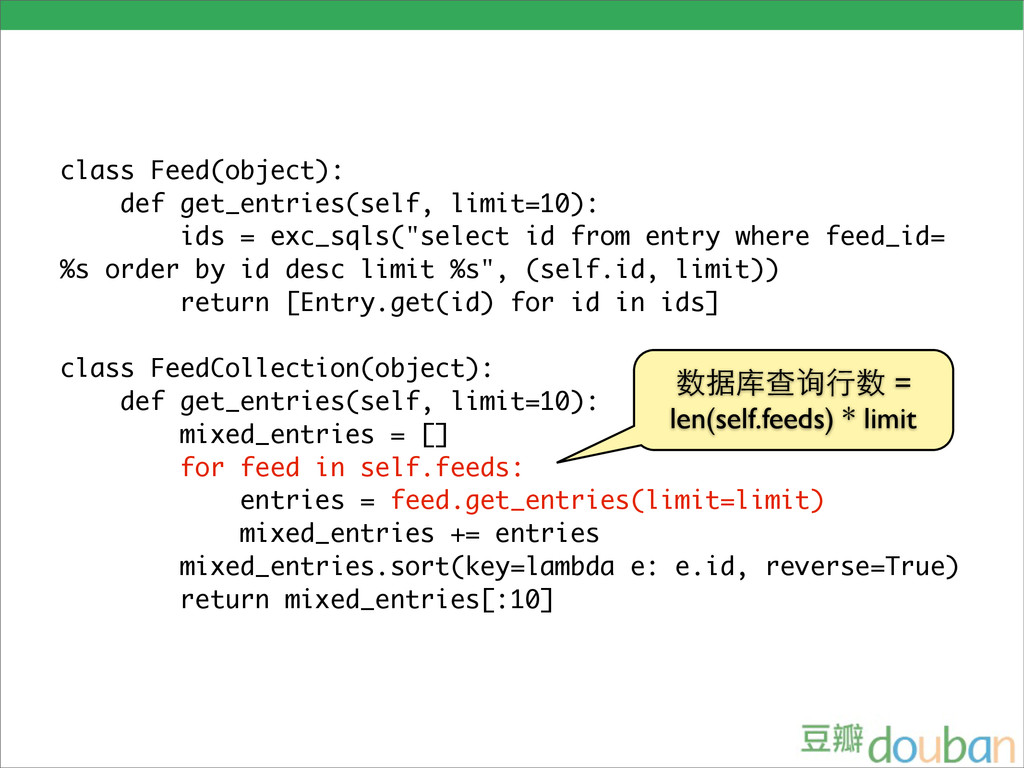
entry where feed_id= %s order by id desc limit %s", (self.id, limit)) return [Entry.get(id) for id in ids] class FeedCollection(object): def get_entries(self, limit=10): mixed_entries = [] for feed in self.feeds: entries = feed.get_entries(limit=limit) mixed_entries += entries mixed_entries.sort(key=lambda e: e.id, reverse=True) return mixed_entries[:10] ඔऌ९Ұ࿘ྛඔ = len(self.feeds) * limit
entry where feed_id= %s order by id desc limit %s", (self.id, limit)) return [Entry.get(id) for id in ids] class FeedCollection(object): def get_entries(self, limit=10): mixed_entries = [] for feed in self.feeds: entries = feed.get_entries(limit=limit) mixed_entries += entries mixed_entries.sort(key=lambda e: e.id, reverse=True) return mixed_entries[:10] শٮ֥Entry.getඔ = len(self.feeds-1) * limit
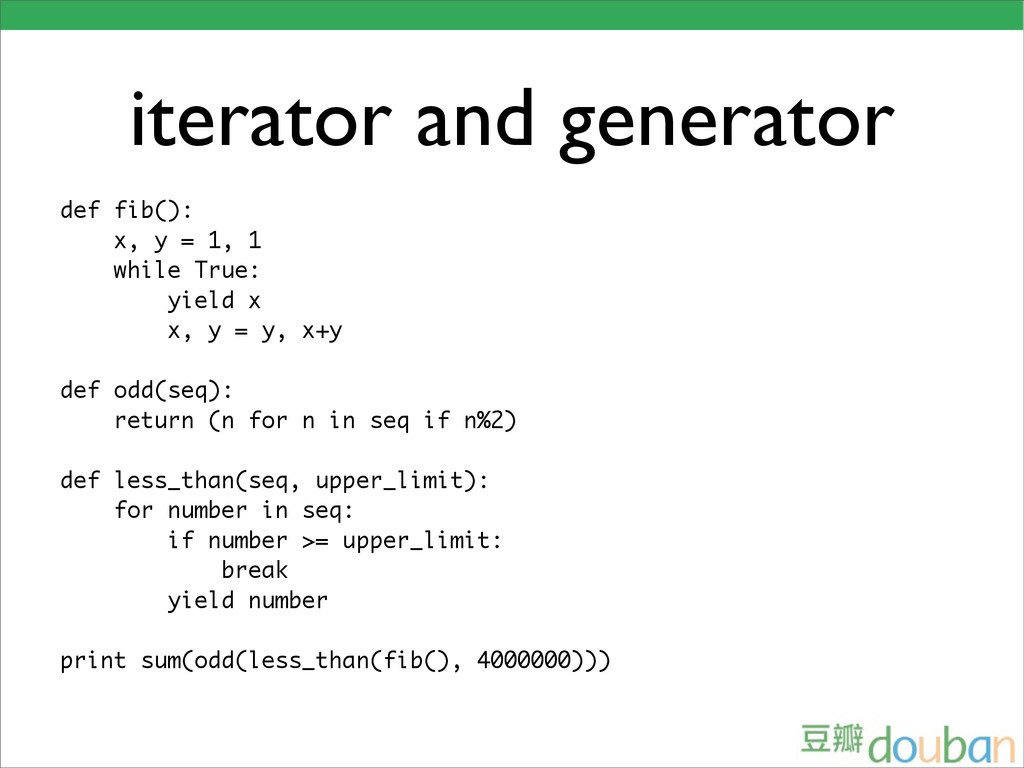
while True: yield x x, y = y, x+y def odd(seq): return (n for n in seq if n%2) def less_than(seq, upper_limit): for number in seq: if number >= upper_limit: break yield number print sum(odd(less_than(fib(), 4000000)))
p0, p1, ... plast, p0, p1, ... • repeat(elem [,n]) --> elem, elem, elem, ... endless or up to n times • izip(p, q, ...) --> (p[0], q[0]), (p[1], q[1]), ... • islice(seq, [start,] stop [, step]) --> elements from seq[start:stop:step] • ... and more ...
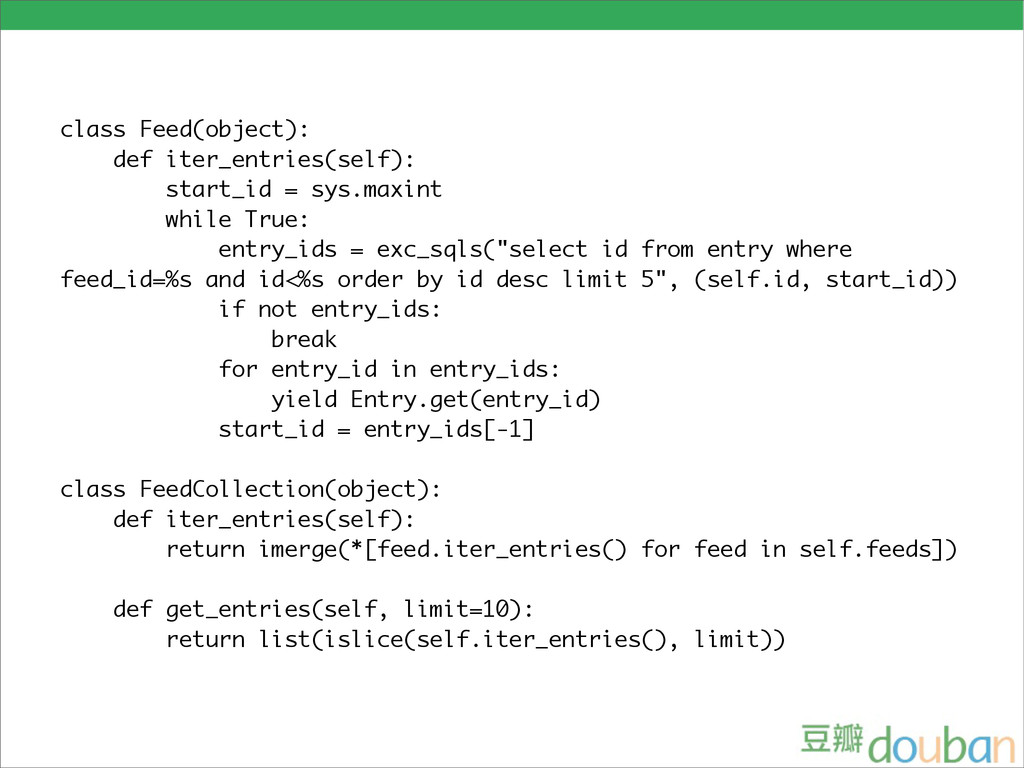
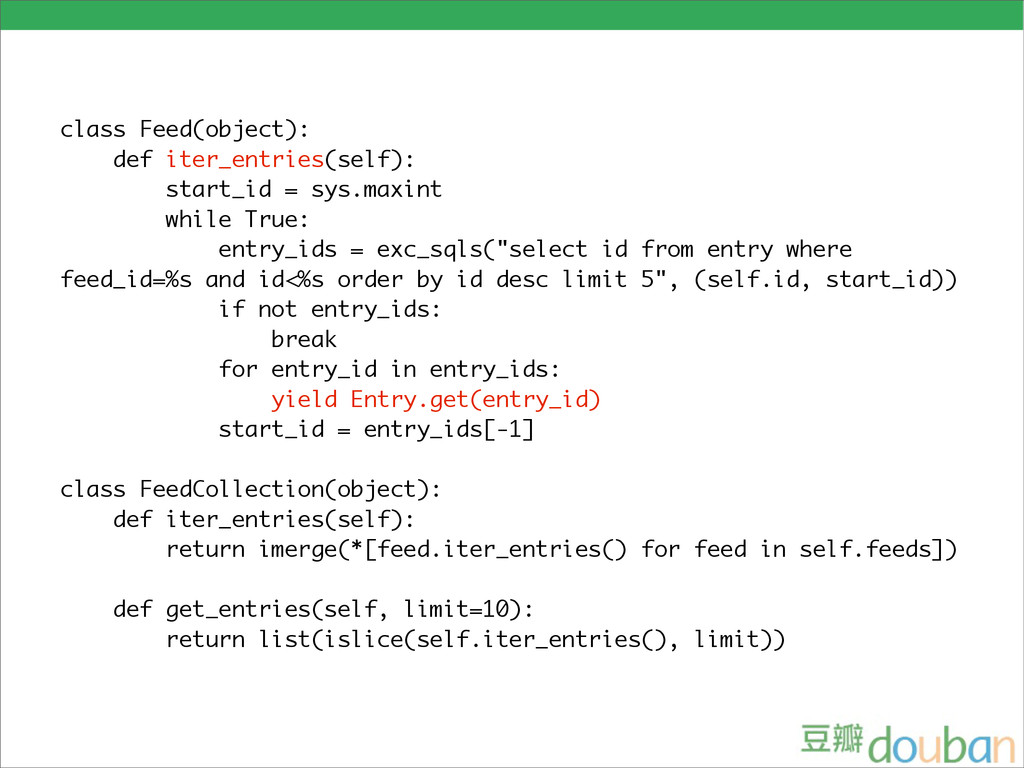
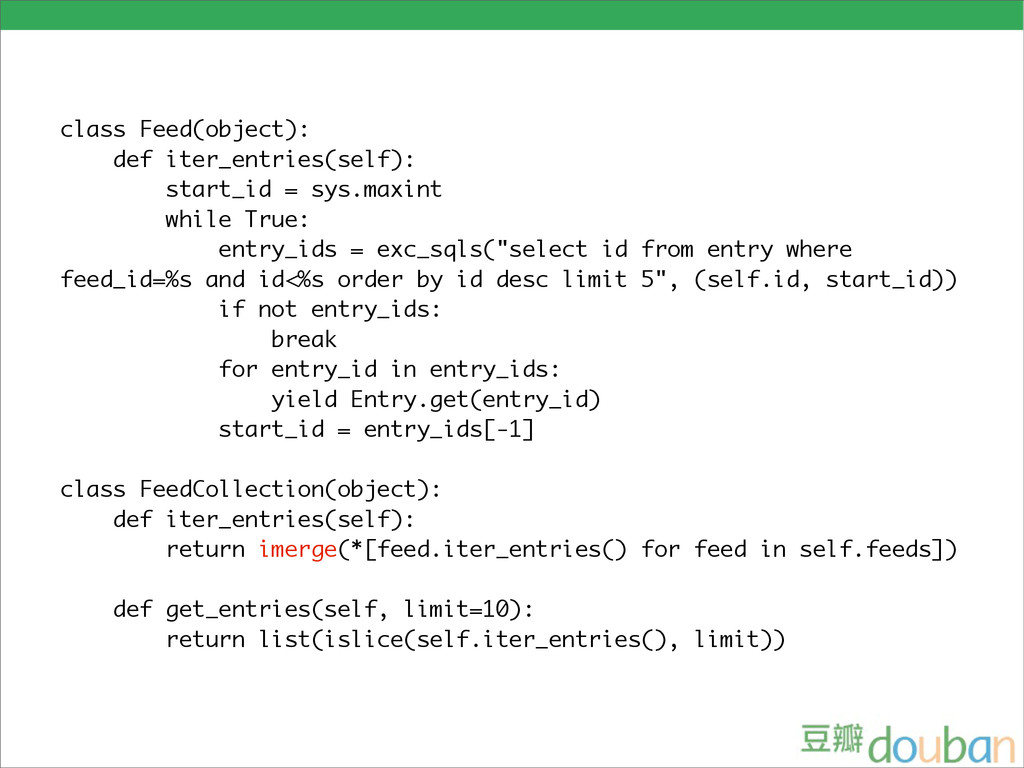
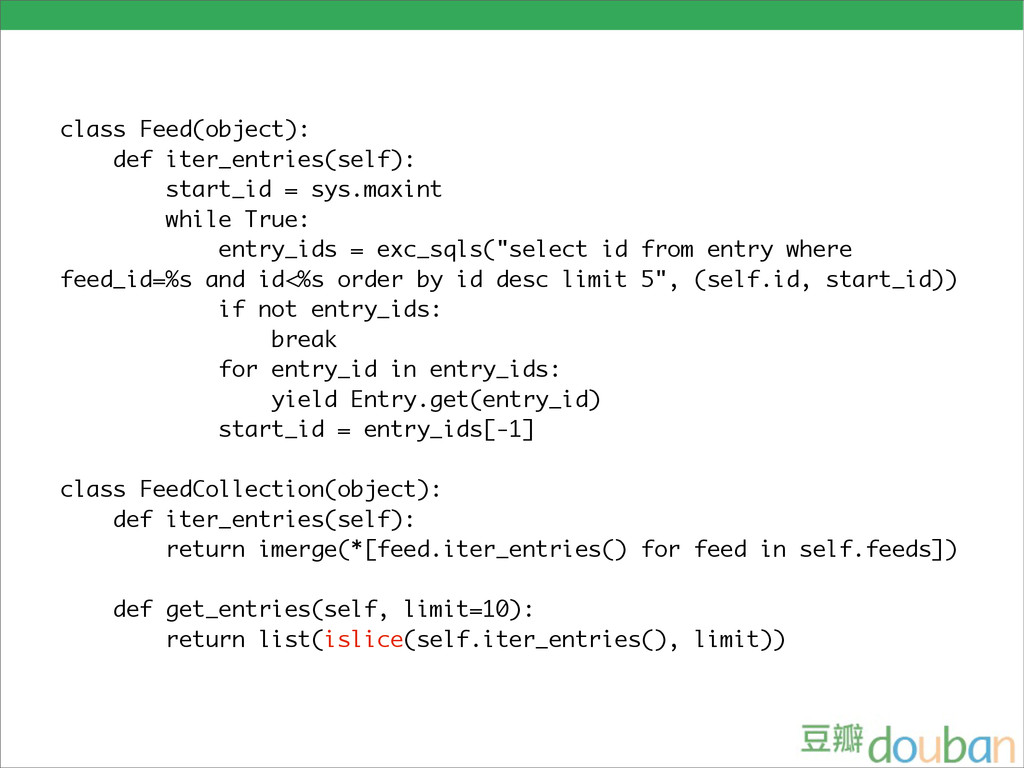
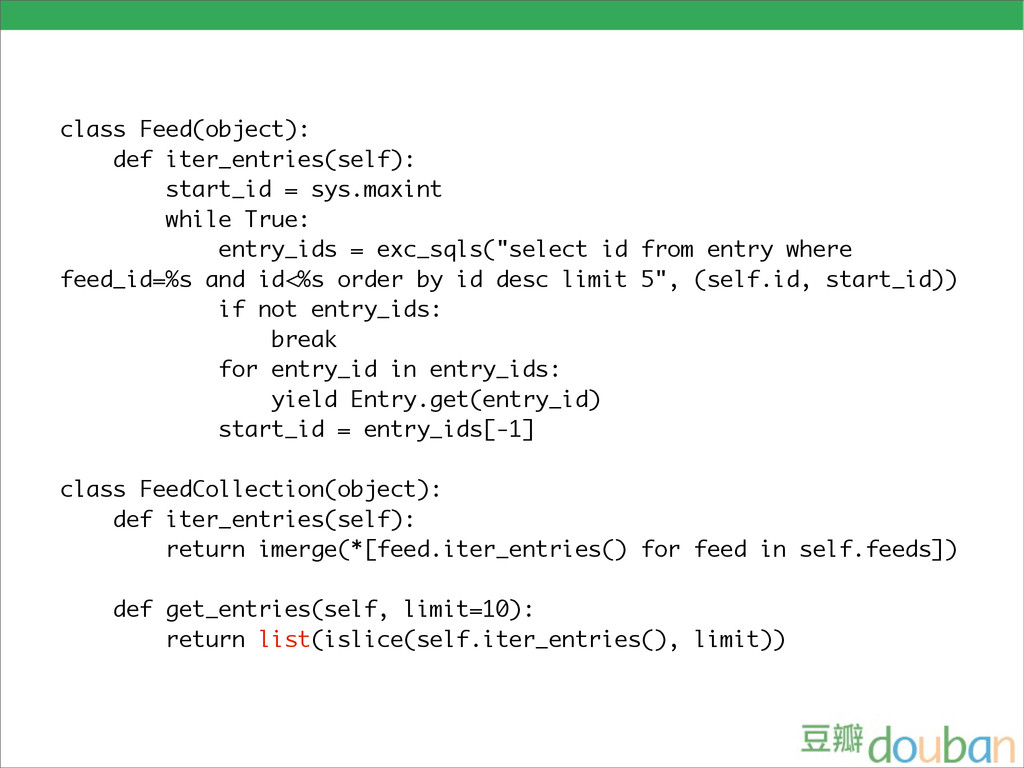
= exc_sqls("select id from entry where feed_id=%s and id<%s order by id desc limit 5", (self.id, start_id)) if not entry_ids: break for entry_id in entry_ids: yield Entry.get(entry_id) start_id = entry_ids[-1] class FeedCollection(object): def iter_entries(self): return imerge(*[feed.iter_entries() for feed in self.feeds]) def get_entries(self, limit=10): return list(islice(self.iter_entries(), limit))
= exc_sqls("select id from entry where feed_id=%s and id<%s order by id desc limit 5", (self.id, start_id)) if not entry_ids: break for entry_id in entry_ids: yield Entry.get(entry_id) start_id = entry_ids[-1] class FeedCollection(object): def iter_entries(self): return imerge(*[feed.iter_entries() for feed in self.feeds]) def get_entries(self, limit=10): return list(islice(self.iter_entries(), limit))
= exc_sqls("select id from entry where feed_id=%s and id<%s order by id desc limit 5", (self.id, start_id)) if not entry_ids: break for entry_id in entry_ids: yield Entry.get(entry_id) start_id = entry_ids[-1] class FeedCollection(object): def iter_entries(self): return imerge(*[feed.iter_entries() for feed in self.feeds]) def get_entries(self, limit=10): return list(islice(self.iter_entries(), limit))
= exc_sqls("select id from entry where feed_id=%s and id<%s order by id desc limit 5", (self.id, start_id)) if not entry_ids: break for entry_id in entry_ids: yield Entry.get(entry_id) start_id = entry_ids[-1] class FeedCollection(object): def iter_entries(self): return imerge(*[feed.iter_entries() for feed in self.feeds]) def get_entries(self, limit=10): return list(islice(self.iter_entries(), limit))
= exc_sqls("select id from entry where feed_id=%s and id<%s order by id desc limit 5", (self.id, start_id)) if not entry_ids: break for entry_id in entry_ids: yield Entry.get(entry_id) start_id = entry_ids[-1] class FeedCollection(object): def iter_entries(self): return imerge(*[feed.iter_entries() for feed in self.feeds]) def get_entries(self, limit=10): return list(islice(self.iter_entries(), limit))
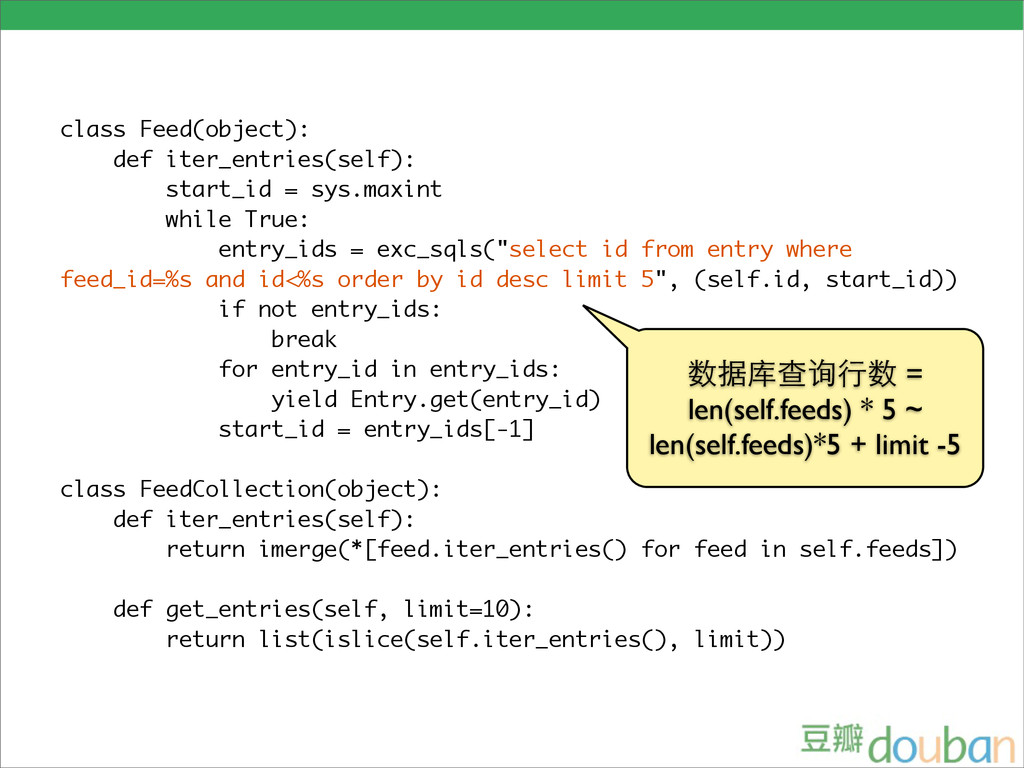
= exc_sqls("select id from entry where feed_id=%s and id<%s order by id desc limit 5", (self.id, start_id)) if not entry_ids: break for entry_id in entry_ids: yield Entry.get(entry_id) start_id = entry_ids[-1] class FeedCollection(object): def iter_entries(self): return imerge(*[feed.iter_entries() for feed in self.feeds]) def get_entries(self, limit=10): return list(islice(self.iter_entries(), limit)) ඔऌ९Ұ࿘ྛඔ = len(self.feeds) * 5 ~ len(self.feeds)*5 + limit -5
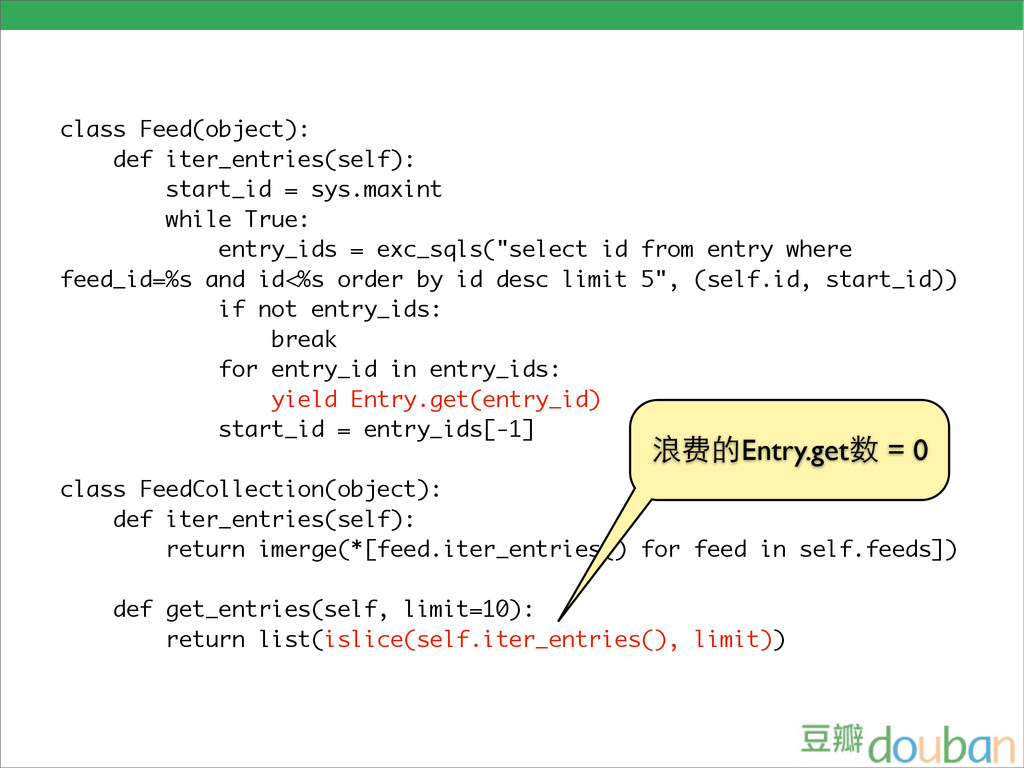
= exc_sqls("select id from entry where feed_id=%s and id<%s order by id desc limit 5", (self.id, start_id)) if not entry_ids: break for entry_id in entry_ids: yield Entry.get(entry_id) start_id = entry_ids[-1] class FeedCollection(object): def iter_entries(self): return imerge(*[feed.iter_entries() for feed in self.feeds]) def get_entries(self, limit=10): return list(islice(self.iter_entries(), limit)) শٮ֥Entry.getඔ = 0
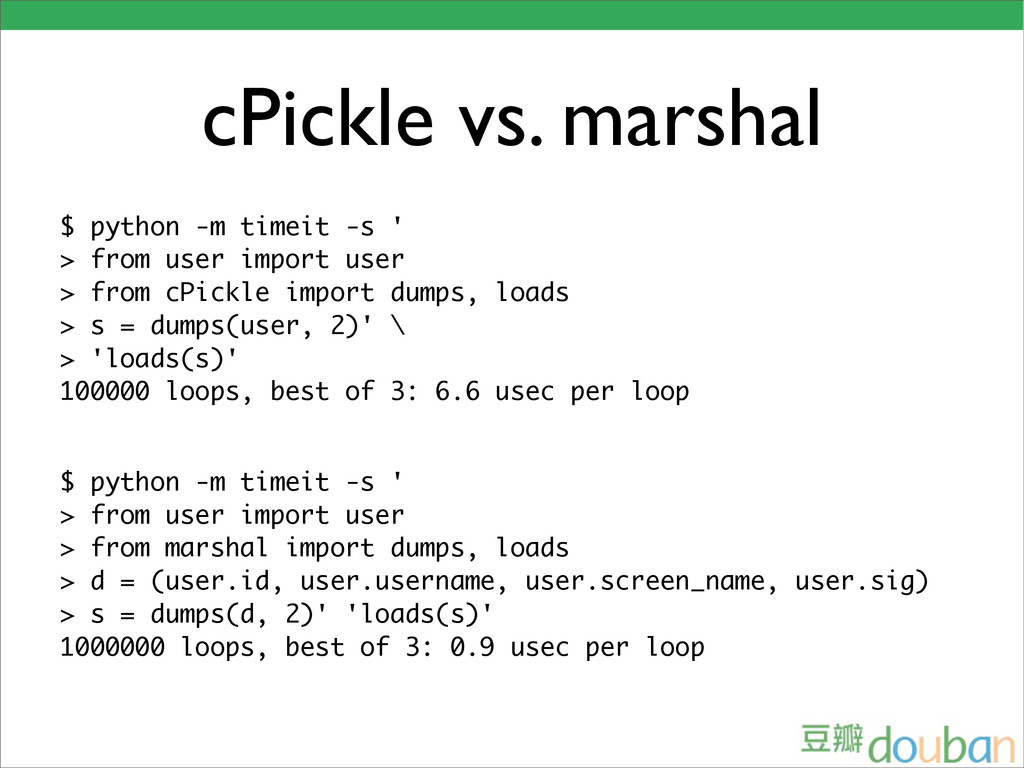
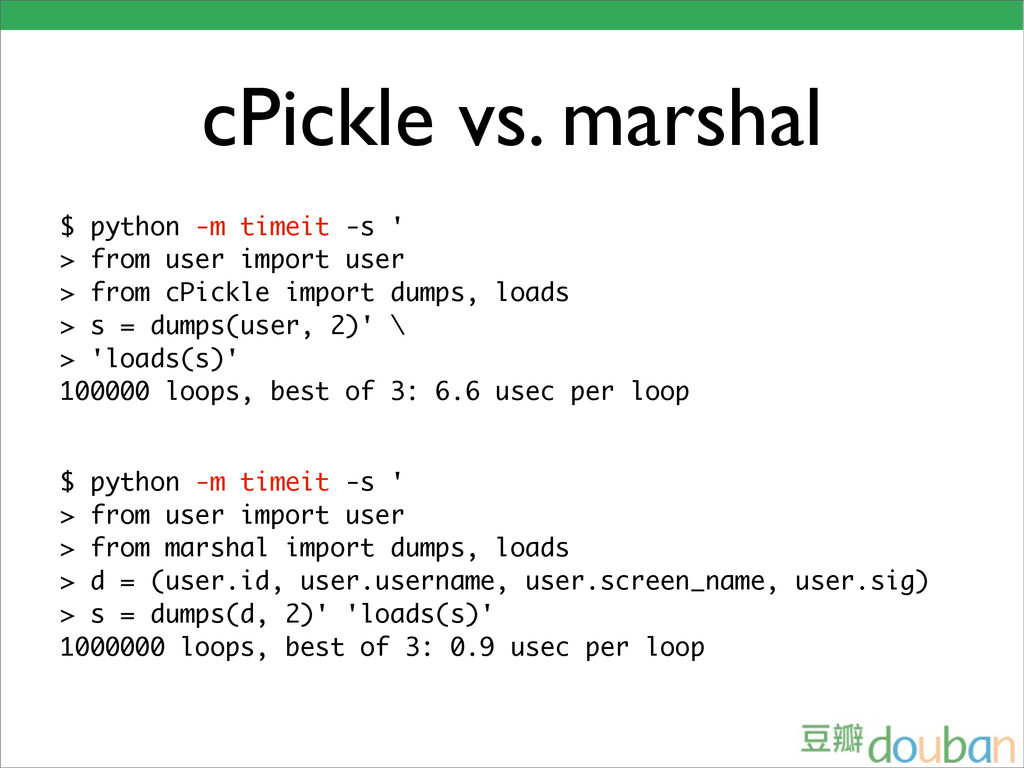
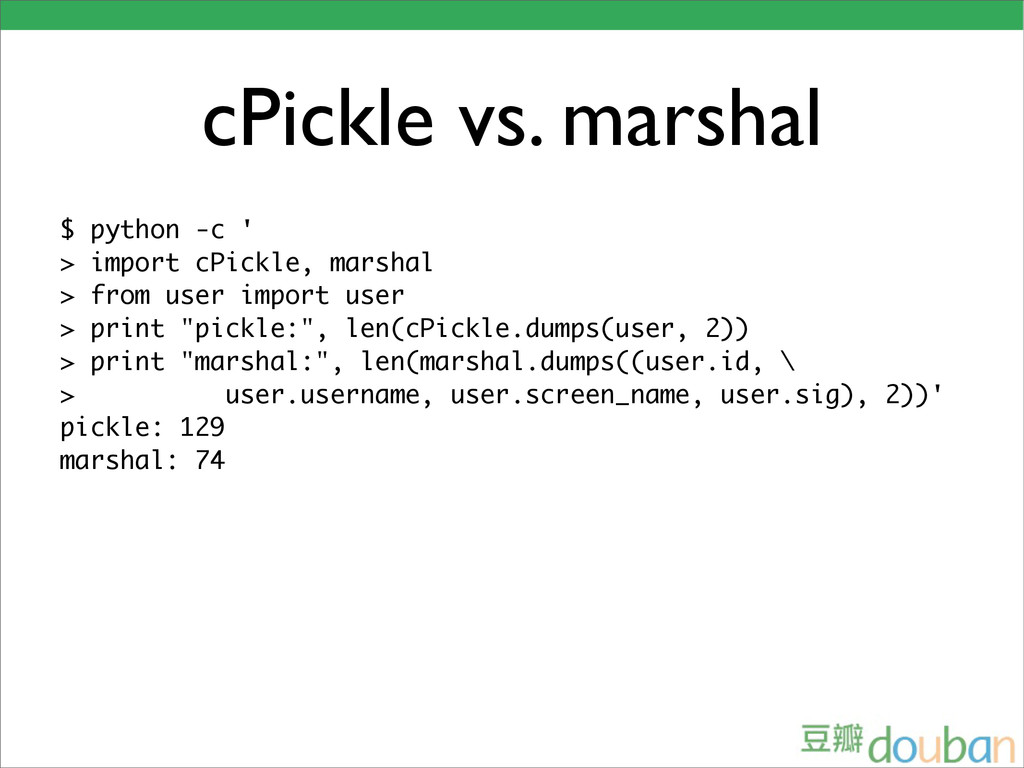
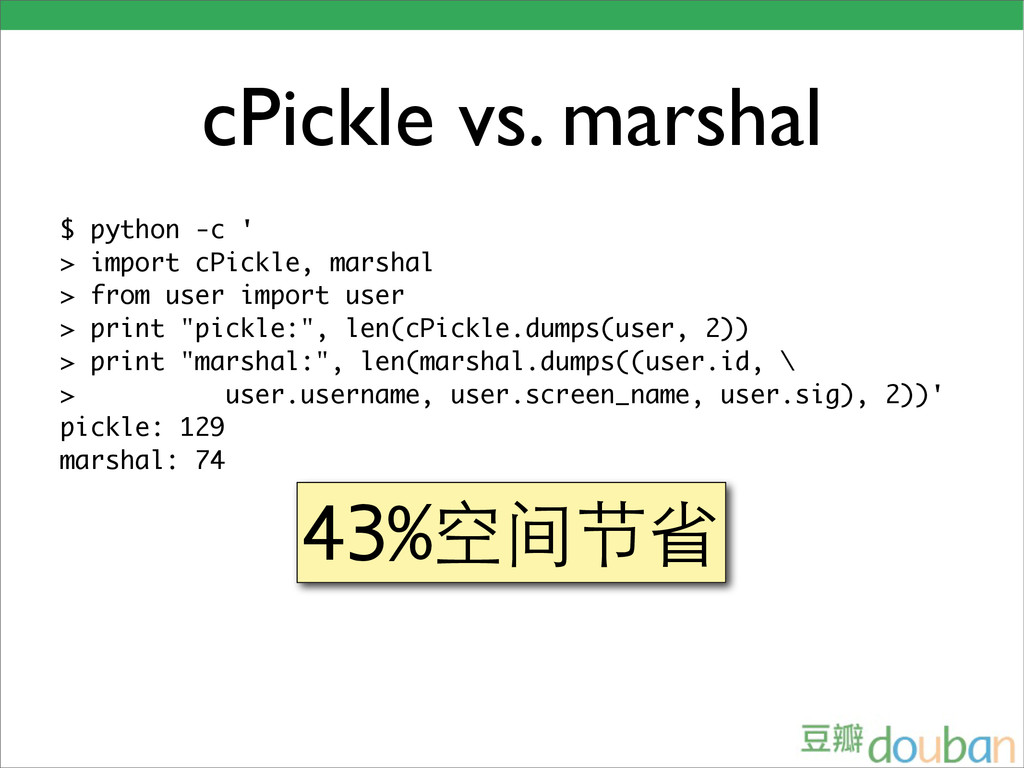
user > from cPickle import dumps, loads > s = dumps(user, 2)' \ > 'loads(s)' 100000 loops, best of 3: 6.6 usec per loop $ python -m timeit -s ' > from user import user > from marshal import dumps, loads > d = (user.id, user.username, user.screen_name, user.sig) > s = dumps(d, 2)' 'loads(s)' 1000000 loops, best of 3: 0.9 usec per loop cPickle vs. marshal
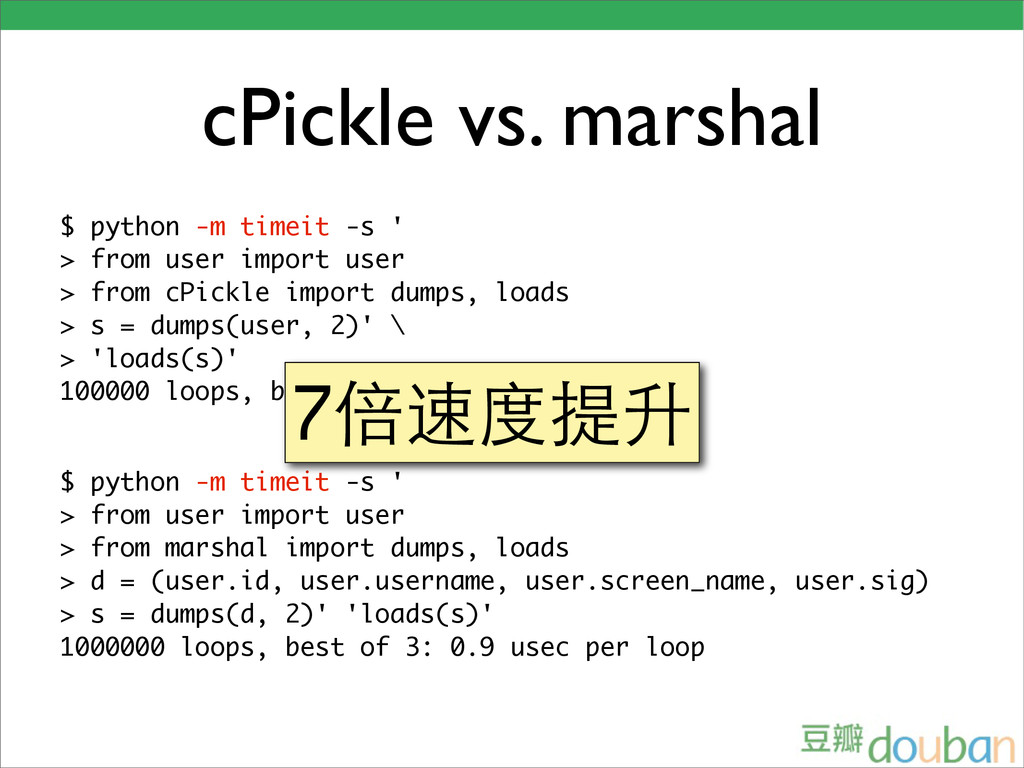
user > from cPickle import dumps, loads > s = dumps(user, 2)' \ > 'loads(s)' 100000 loops, best of 3: 6.6 usec per loop $ python -m timeit -s ' > from user import user > from marshal import dumps, loads > d = (user.id, user.username, user.screen_name, user.sig) > s = dumps(d, 2)' 'loads(s)' 1000000 loops, best of 3: 0.9 usec per loop cPickle vs. marshal 7П؇ิശ
user > from cPickle import dumps, loads > s = dumps(user, 2)' \ > 'loads(s)' 100000 loops, best of 3: 6.6 usec per loop $ python -m timeit -s ' > from user import user > from marshal import dumps, loads > d = (user.id, user.username, user.screen_name, user.sig) > s = dumps(d, 2)' 'loads(s)' 1000000 loops, best of 3: 0.9 usec per loop cPickle vs. marshal 7П؇ิശ
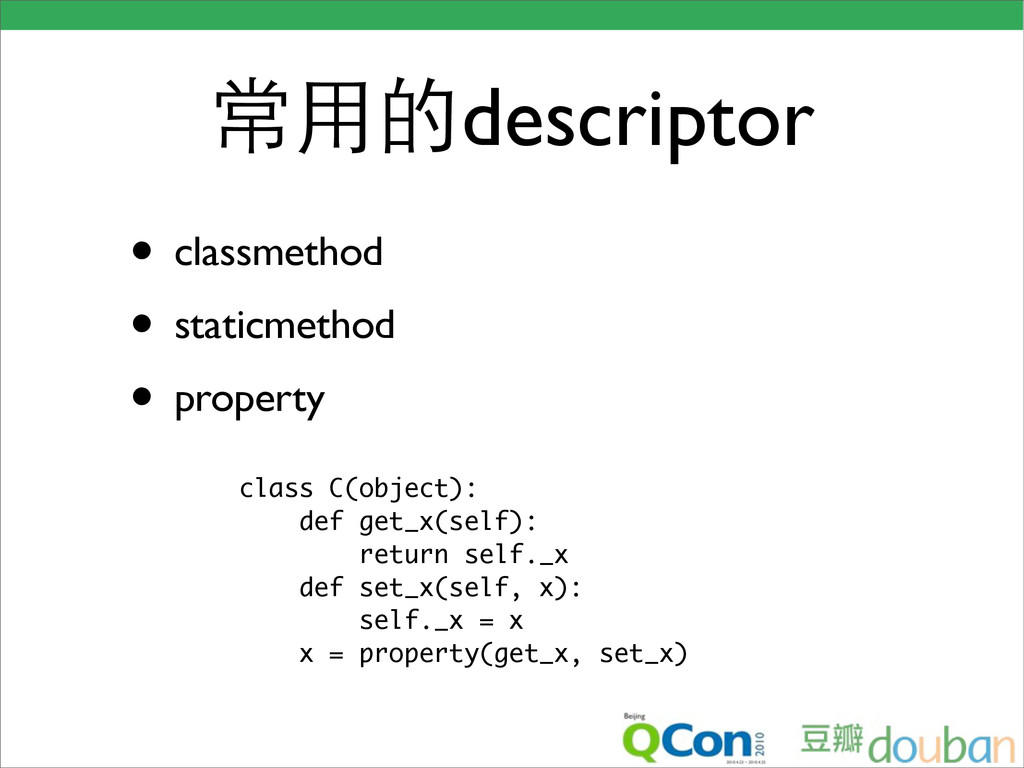
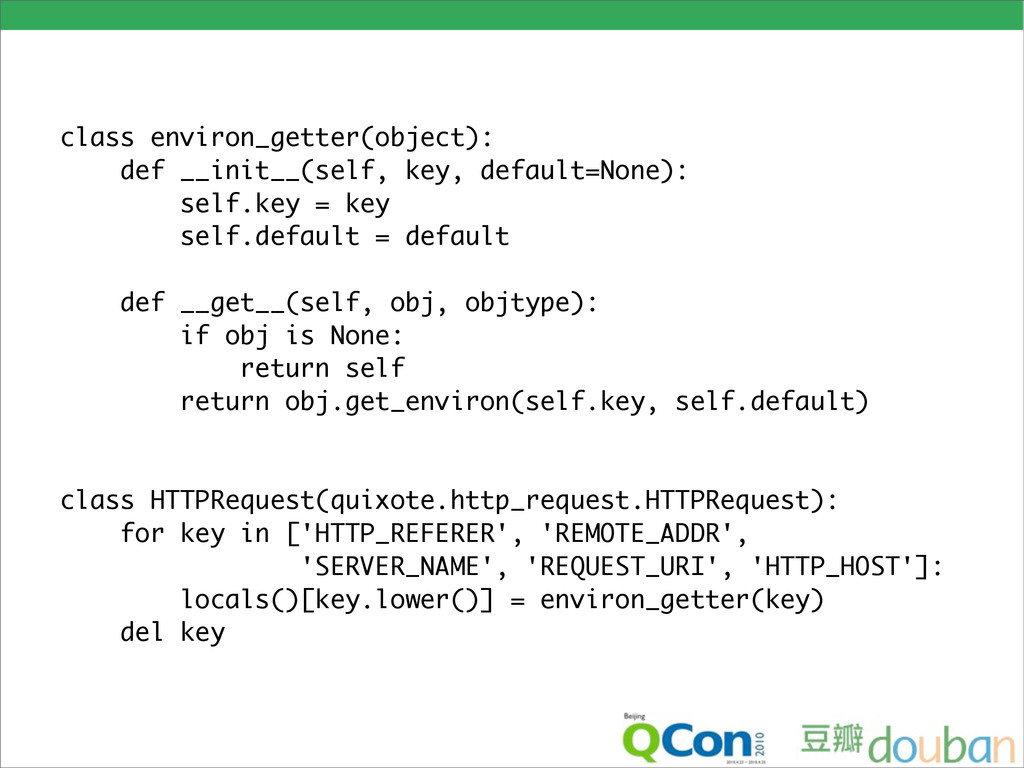
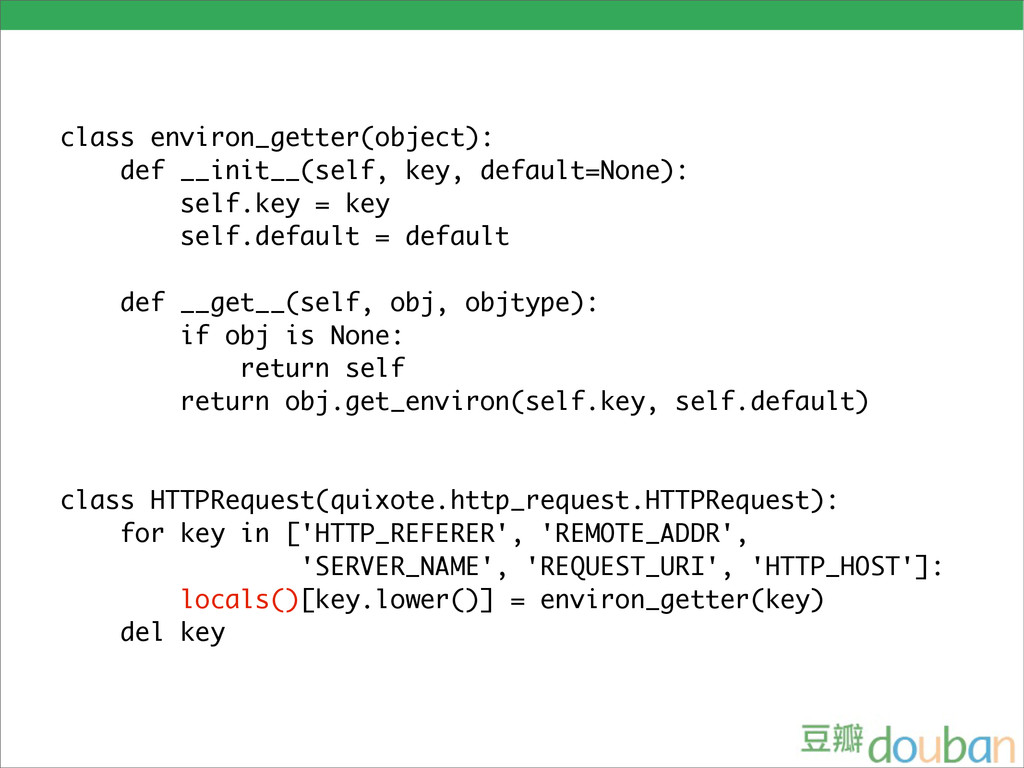
= default def __get__(self, obj, objtype): if obj is None: return self return obj.get_environ(self.key, self.default) class HTTPRequest(quixote.http_request.HTTPRequest): for key in ['HTTP_REFERER', 'REMOTE_ADDR', 'SERVER_NAME', 'REQUEST_URI', 'HTTP_HOST']: locals()[key.lower()] = environ_getter(key) del key


 zoomquiet
 kobakei
 ogom
ogom
 j341nono
 kawashimo0
 irinanazarova
 yusuga
 ken_tunc
 nokomoro3
 rkaga
rkaga
 willnet
 atsuki_seo
 dske104
 skipperchong
 denniskardys
 aemeredith
 geshan
 retrage
 keathley
 techseoconnect
 aleyda
 keavy
keavy
 uxyall
 honzajavorek
 akademiya2063


















![ipython $ ipython -pylab In [1]: X = frange(0, 10,](https://files.speakerdeck.com/presentations/d7fba8c0c86e0131ed131ef0c998e3ec/slide_31.jpg)
![ipython $ ipython -pylab In [1]: X = frange(0, 10,](https://files.speakerdeck.com/presentations/d7fba8c0c86e0131ed131ef0c998e3ec/slide_32.jpg)












![MEMCACHED_ADDR = ['localhost:11211'] from local_config import * config.py](https://files.speakerdeck.com/presentations/d7fba8c0c86e0131ed131ef0c998e3ec/slide_60.jpg)
![MEMCACHED_ADDR = ['localhost:11211'] from local_config import * config.py MEMCACHED_ADDR =](https://files.speakerdeck.com/presentations/d7fba8c0c86e0131ed131ef0c998e3ec/slide_61.jpg)
![MEMCACHED_ADDR = ['localhost:11211'] from local_config import * config.py MEMCACHED_ADDR =](https://files.speakerdeck.com/presentations/d7fba8c0c86e0131ed131ef0c998e3ec/slide_62.jpg)


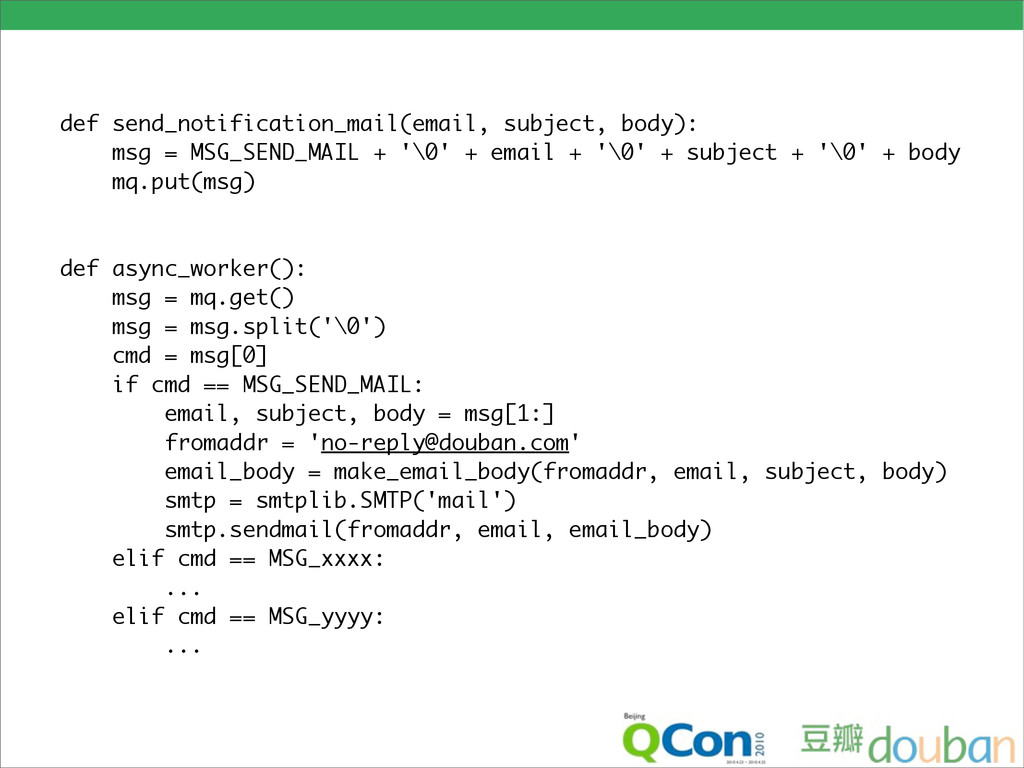
![@async def send_notification_mail(email, subject, body): fromaddr = '[email protected]' email_body =](https://files.speakerdeck.com/presentations/d7fba8c0c86e0131ed131ef0c998e3ec/slide_77.jpg)
![def async(func): mod = sys.modules[func.__module__] fname = 'origin_' + func.__name__](https://files.speakerdeck.com/presentations/d7fba8c0c86e0131ed131ef0c998e3ec/slide_78.jpg)
![def async(func): mod = sys.modules[func.__module__] fname = 'origin_' + func.__name__](https://files.speakerdeck.com/presentations/d7fba8c0c86e0131ed131ef0c998e3ec/slide_79.jpg)
![def async(func): mod = sys.modules[func.__module__] fname = 'origin_' + func.__name__](https://files.speakerdeck.com/presentations/d7fba8c0c86e0131ed131ef0c998e3ec/slide_80.jpg)
![def async(func): mod = sys.modules[func.__module__] fname = 'origin_' + func.__name__](https://files.speakerdeck.com/presentations/d7fba8c0c86e0131ed131ef0c998e3ec/slide_81.jpg)
![def async(func): mod = sys.modules[func.__module__] fname = 'origin_' + func.__name__](https://files.speakerdeck.com/presentations/d7fba8c0c86e0131ed131ef0c998e3ec/slide_82.jpg)
![def async(func): mod = sys.modules[func.__module__] fname = 'origin_' + func.__name__](https://files.speakerdeck.com/presentations/d7fba8c0c86e0131ed131ef0c998e3ec/slide_83.jpg)
![def async(func): mod = sys.modules[func.__module__] fname = 'origin_' + func.__name__](https://files.speakerdeck.com/presentations/d7fba8c0c86e0131ed131ef0c998e3ec/slide_84.jpg)
![def async(func): mod = sys.modules[func.__module__] fname = 'origin_' + func.__name__](https://files.speakerdeck.com/presentations/d7fba8c0c86e0131ed131ef0c998e3ec/slide_85.jpg)




![itertools • count([n]) --> n, n+1, n+2 • cycle(p) -->](https://files.speakerdeck.com/presentations/d7fba8c0c86e0131ed131ef0c998e3ec/slide_108.jpg)