Upgrade to Pro — share decks privately, control downloads, hide ads and more …

Zuri Ozeomachukwu Njoku Explains 6 Consensus Al...

Avatar for Zuri Njoku Zuri Njoku
December 23, 2025

Zuri Ozeomachukwu Njoku Explains 6 Consensus Algorithms That Power Blockchain Networks

In this presentation, Zuri Ozeomachukwu Njoku explains six key consensus algorithms that make blockchain networks secure and reliable. Using simple language, the session breaks down how different blockchain systems agree on transactions without a central authority. It’s an easy guide for beginners and tech enthusiasts looking to understand how blockchain truly works.

Avatar for Zuri Njoku

Zuri Njoku

December 23, 2025

More Decks by Zuri Njoku

Other Decks in Technology

Transcript

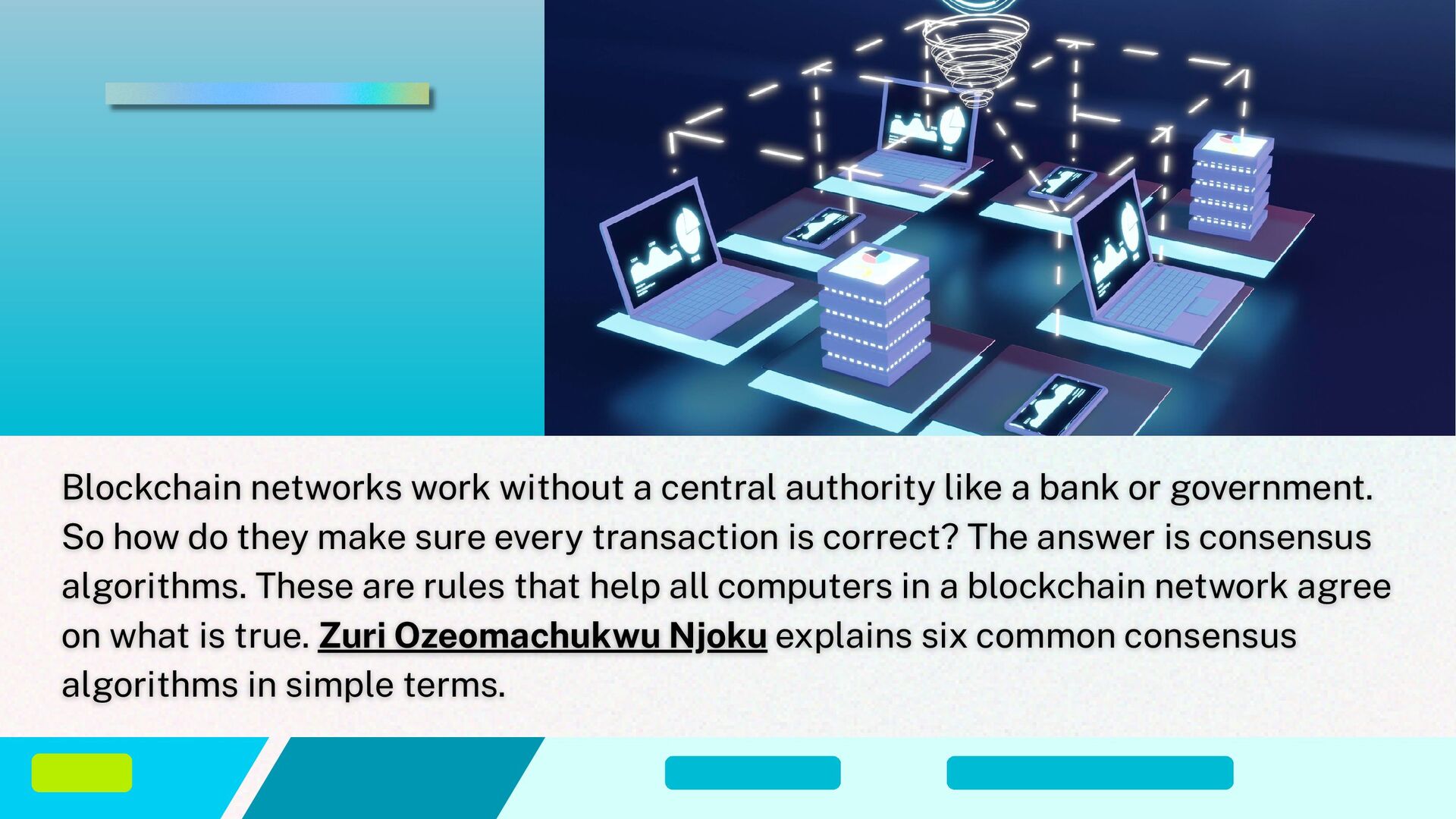
  1. Blockchain networks work without a central authority like a bank

    or government. So how do they make sure every transaction is correct? The answer is consensus algorithms. These are rules that help all computers in a blockchain network agree on what is true. Zuri Ozeomachukwu Njoku explains six common consensus algorithms in simple terms.
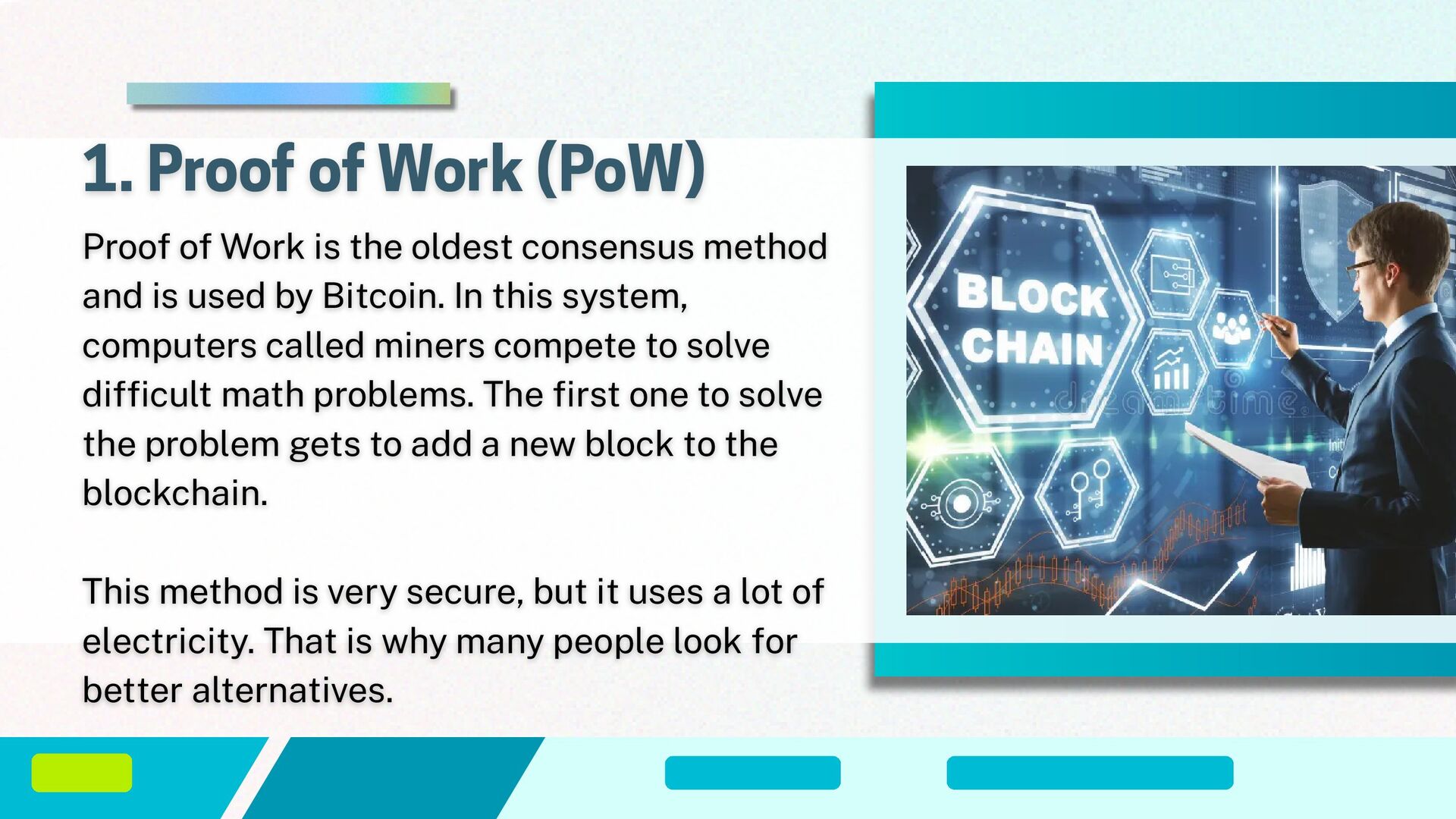
  2. 1. Proof of Work (PoW) Proof of Work is the

    oldest consensus method and is used by Bitcoin. In this system, computers called miners compete to solve difficult math problems. The first one to solve the problem gets to add a new block to the blockchain. This method is very secure, but it uses a lot of electricity. That is why many people look for better alternatives.
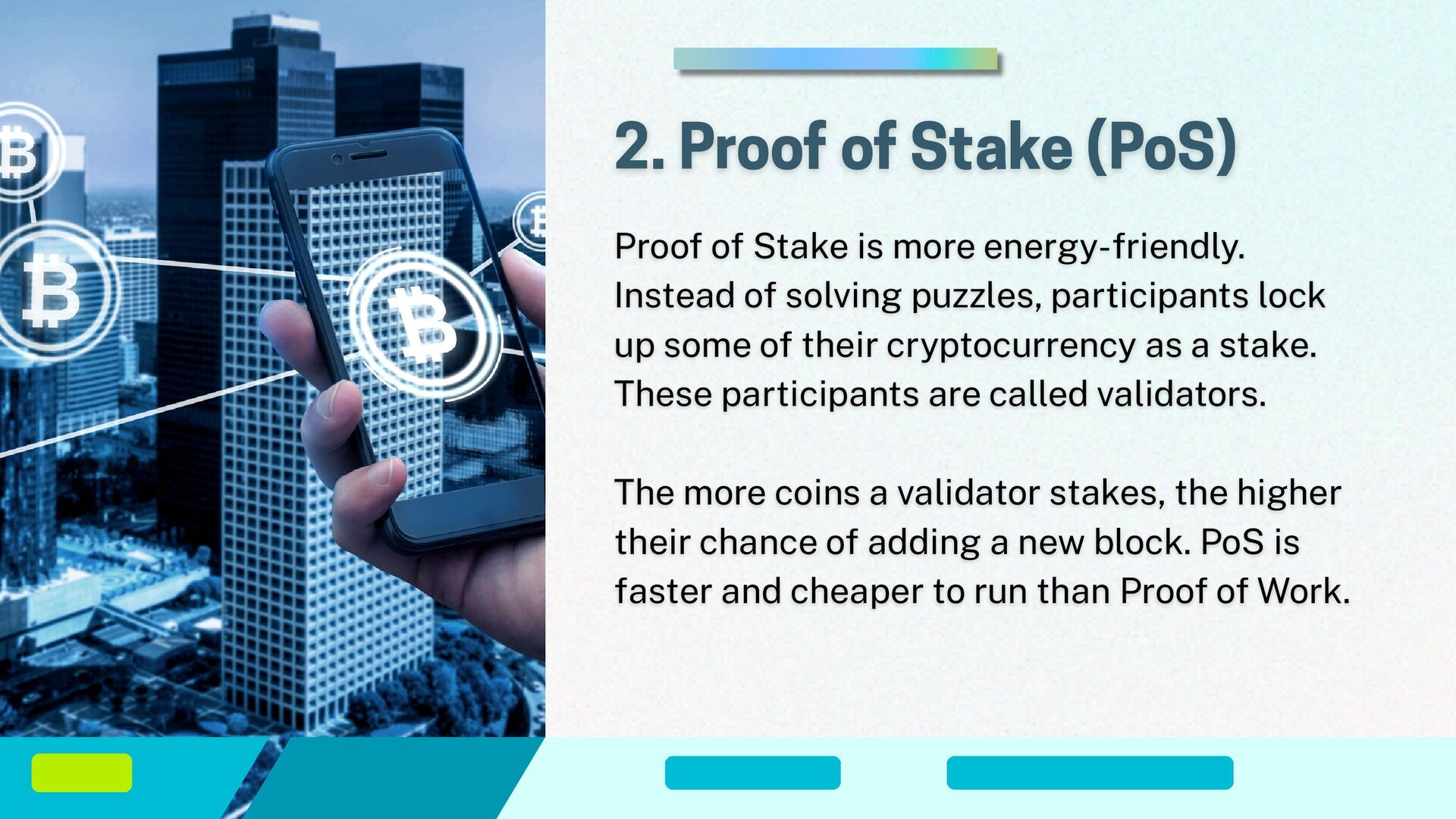
  3. 2. Proof of Stake (PoS) Proof of Stake is more

    energy-friendly. Instead of solving puzzles, participants lock up some of their cryptocurrency as a stake. These participants are called validators. The more coins a validator stakes, the higher their chance of adding a new block. PoS is faster and cheaper to run than Proof of Work.
  4. 3. Delegated Proof of Stake (DPoS) Delegated Proof of Stake

    adds voting to the process. Token holders vote for a small group of trusted representatives called delegates. These delegates handle transaction validation on behalf of everyone. This system is very fast and efficient, but it gives more power to a smaller group of people.
  5. 4. Proof of Authority (PoA) Proof of Authority depends on

    trust. Only approved and known validators can add new blocks to the blockchain. Their real-world identity and reputation are at stake. This method is mostly used in private or business blockchains where participants already trust each other. It is fast, but not very decentralized.
  6. 5. Practical Byzantine Fault Tolerance (PBFT) PBFT is designed to

    keep the network running even if some participants act dishonestly. Nodes communicate with each other to agree before accepting transactions. This system works well for smaller, private blockchains but can become slow if too many nodes are involved.
  7. 6. Proof of Elapsed Time (PoET) Proof of Elapsed Time

    uses a fair waiting system. Each participant waits for a randomly chosen amount of time. The one whose wait time ends first gets to create the next block. PoET saves energy, but it often needs special hardware, which limits where it can be used.