Upgrade to Pro — share decks privately, control downloads, hide ads and more …

Zuri Njoku Explains 6 Essential IoT Protocols Y...

Avatar for Zuri Njoku Zuri Njoku
December 31, 2025

Zuri Njoku Explains 6 Essential IoT Protocols You Should Understand

In this episode, Zuri Njoku breaks down six essential IoT protocols in a simple and easy-to-understand way. Learn how devices communicate, why different protocols are used, and where each one fits best in real-world IoT systems. This podcast is ideal for beginners, students, and professionals exploring IoT fundamentals.

Avatar for Zuri Njoku

Zuri Njoku

December 31, 2025

More Decks by Zuri Njoku

Other Decks in Technology

Transcript

  1. The Internet of Things (IoT) allows devices like sensors, machines,

    and smart appliances to communicate with each other. For this communication to work properly, IoT systems rely on protocols. Protocols are sets of rules that tell devices how to send and receive data. Zuri Njoku explains six important IoT protocols that help make IoT systems reliable, efficient, and easy to manage.
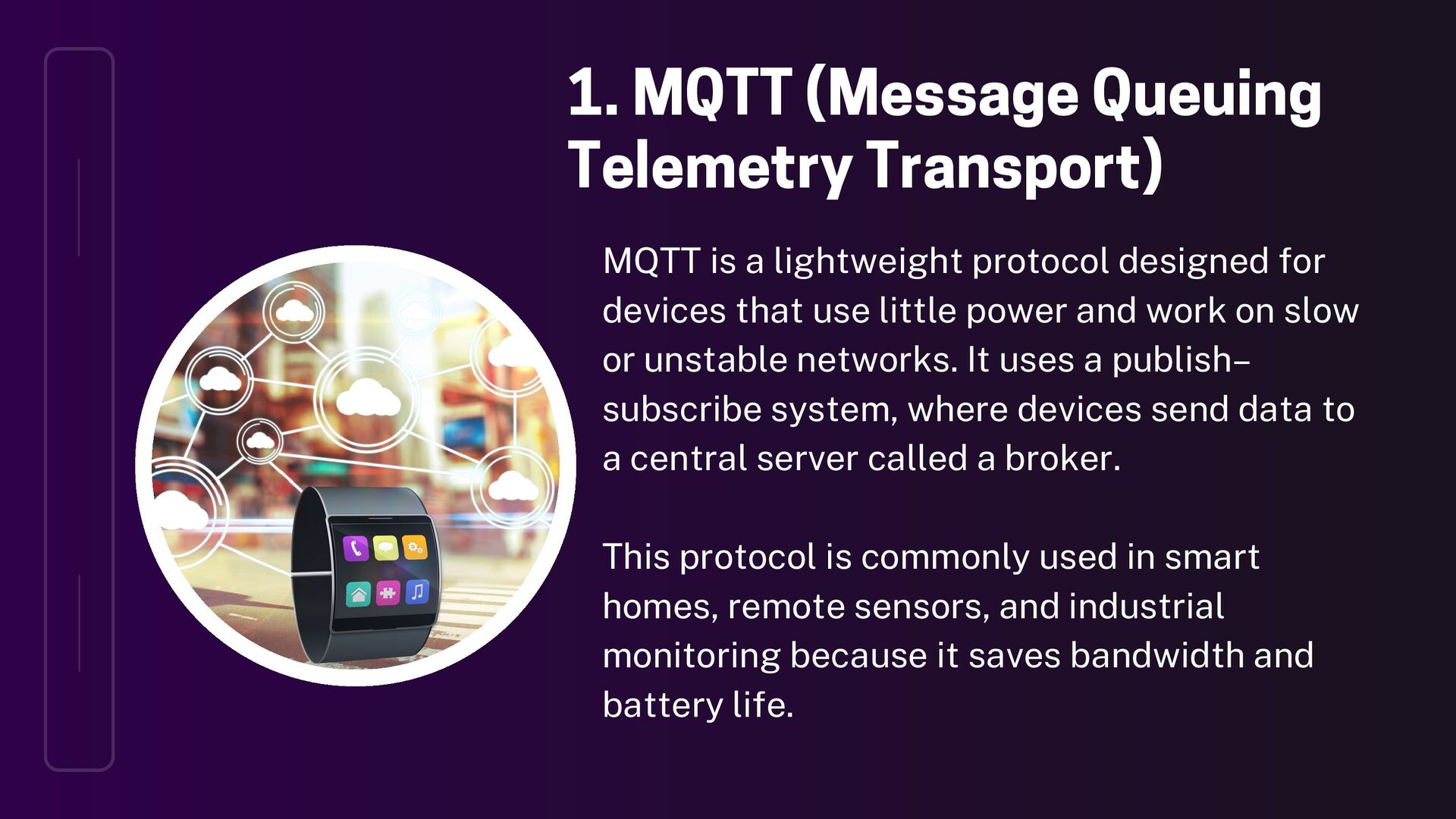
  2. 1. MQTT (Message Queuing Telemetry Transport) MQTT is a lightweight

    protocol designed for devices that use little power and work on slow or unstable networks. It uses a publish– subscribe system, where devices send data to a central server called a broker. This protocol is commonly used in smart homes, remote sensors, and industrial monitoring because it saves bandwidth and battery life.
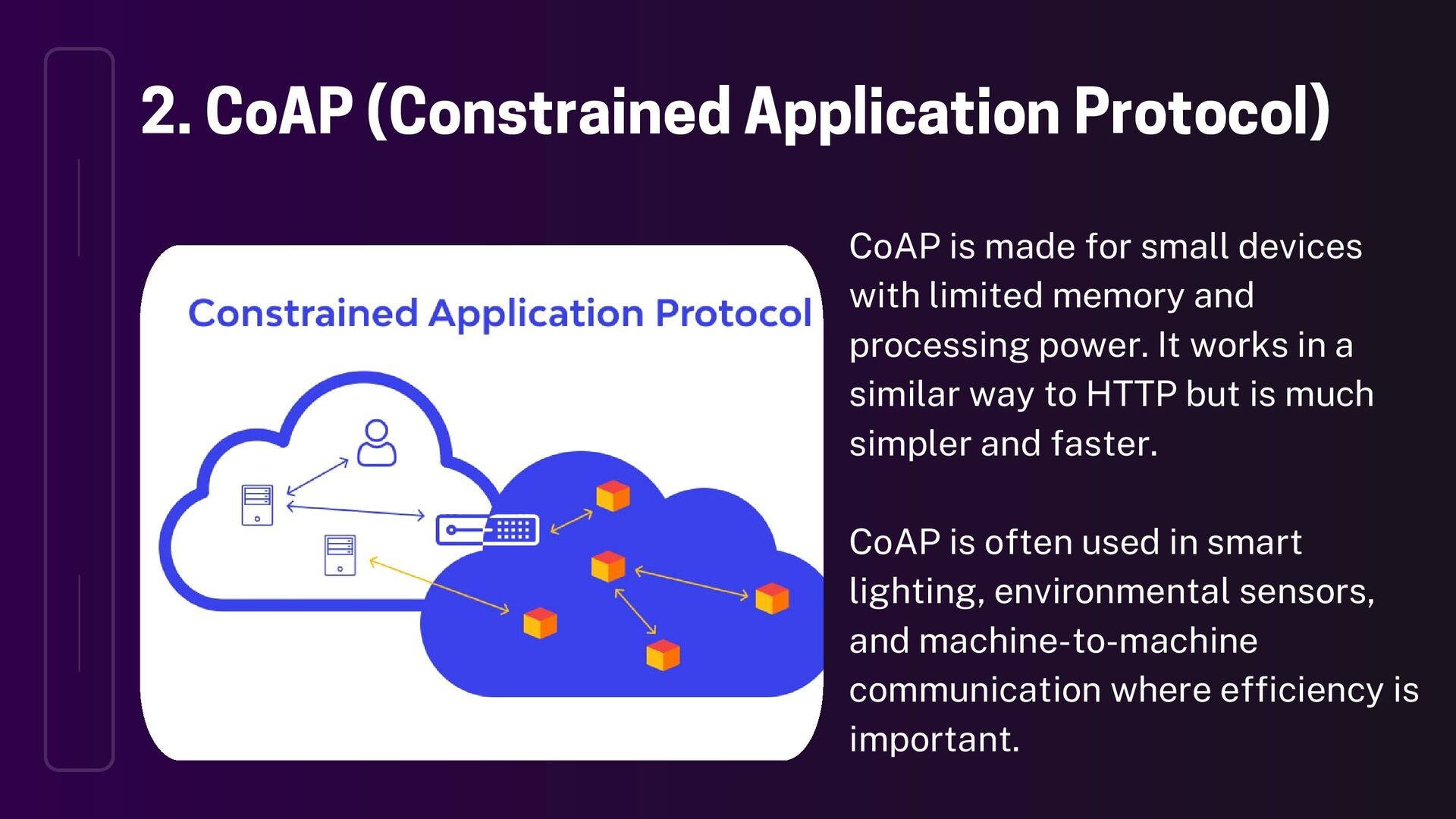
  3. 2. CoAP (Constrained Application Protocol) CoAP is made for small

    devices with limited memory and processing power. It works in a similar way to HTTP but is much simpler and faster. CoAP is often used in smart lighting, environmental sensors, and machine-to-machine communication where efficiency is important.
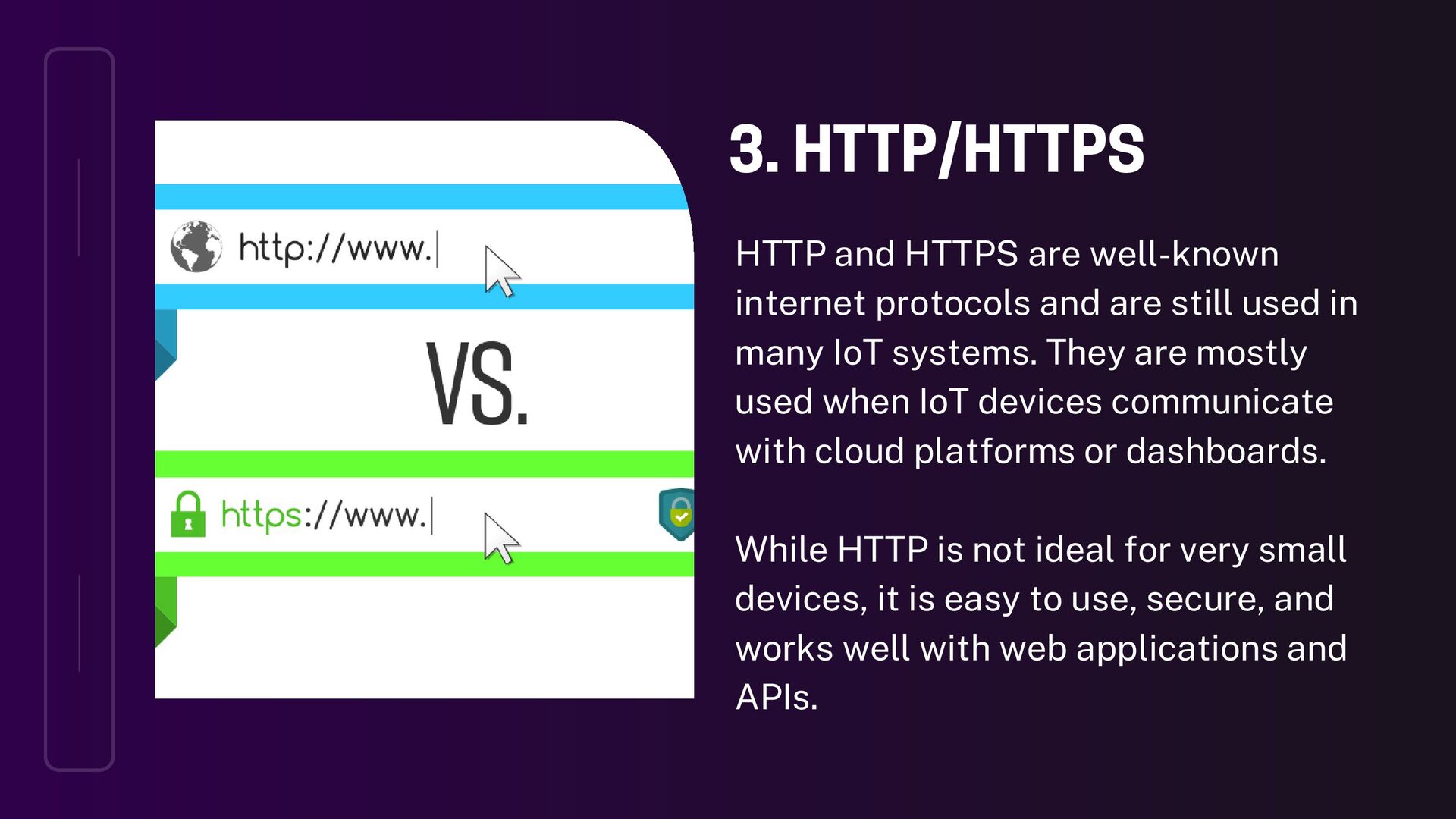
  4. 3. HTTP/HTTPS HTTP and HTTPS are well-known internet protocols and

    are still used in many IoT systems. They are mostly used when IoT devices communicate with cloud platforms or dashboards. While HTTP is not ideal for very small devices, it is easy to use, secure, and works well with web applications and APIs.
  5. 4. AMQP (Advanced Message Queuing Protocol) AMQP is a reliable

    messaging protocol that ensures data is delivered correctly. It supports message storage, routing, and confirmation that messages have been received. This protocol is often used in enterprise and industrial IoT systems where losing data is not acceptable.
  6. DDS is designed for real-time communication. It allows devices to

    share data directly with very low delay and high reliability. DDS is used in systems like robotics, autonomous vehicles, and industrial automation where fast and accurate data delivery is critical. 5. DDS (Data Distribution Service)
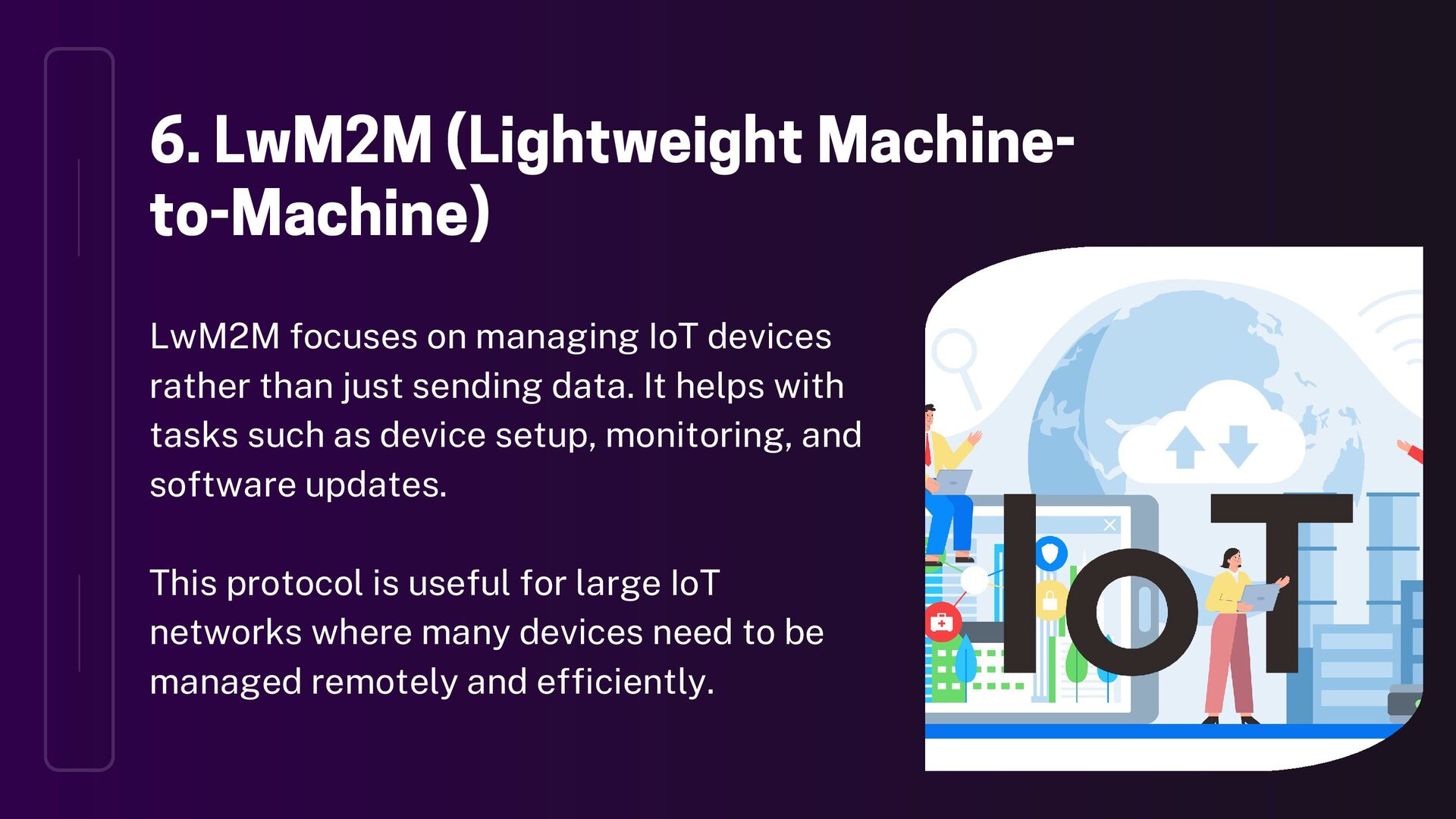
  7. 6. LwM2M (Lightweight Machine- to-Machine) LwM2M focuses on managing IoT

    devices rather than just sending data. It helps with tasks such as device setup, monitoring, and software updates. This protocol is useful for large IoT networks where many devices need to be managed remotely and efficiently.