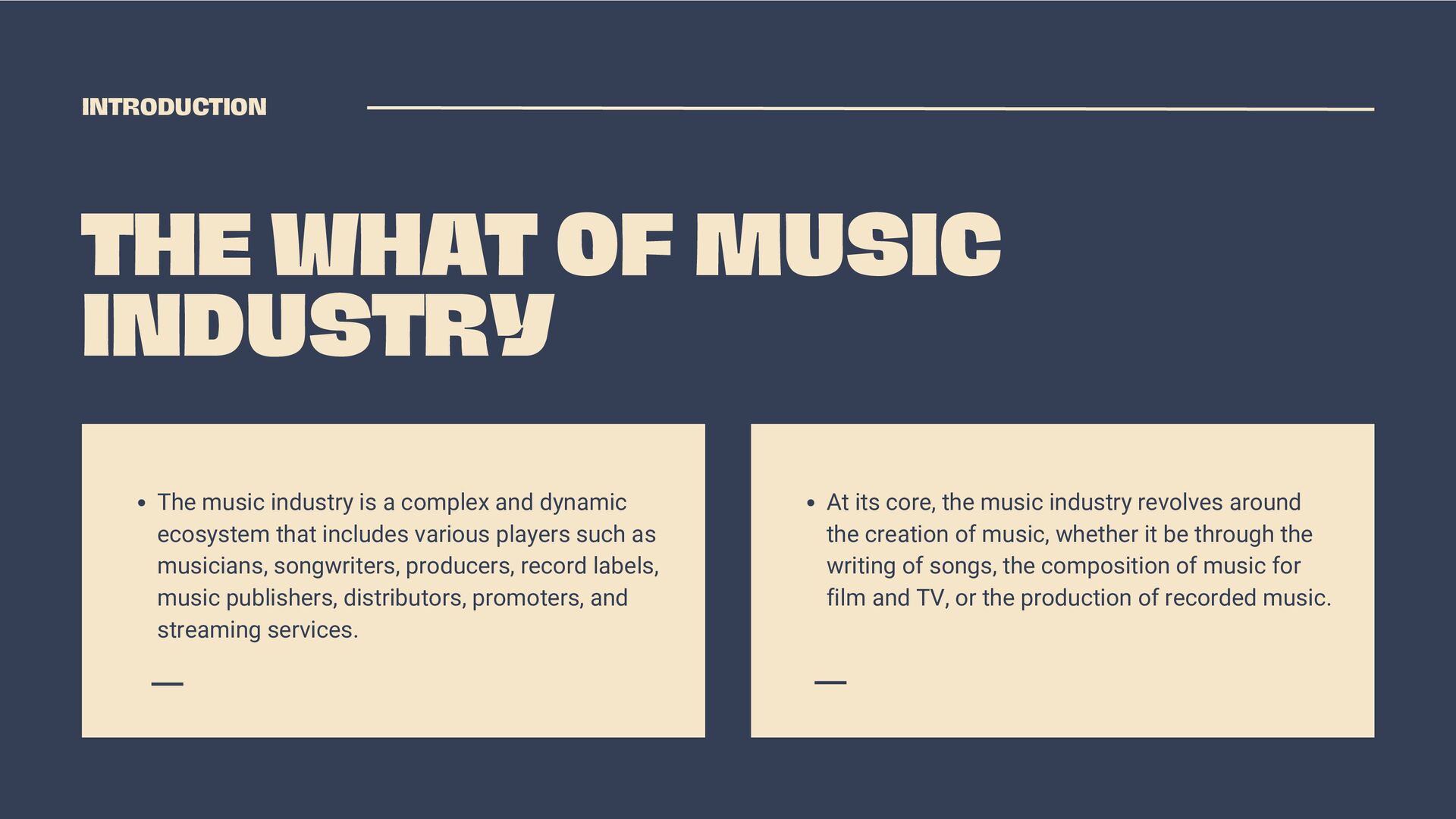
music industry revolves around the creation of music, whether it be through the writing of songs, the composition of music for film and TV, or the production of recorded music. The music industry is a complex and dynamic ecosystem that includes various players such as musicians, songwriters, producers, record labels, music publishers, distributors, promoters, and streaming services.
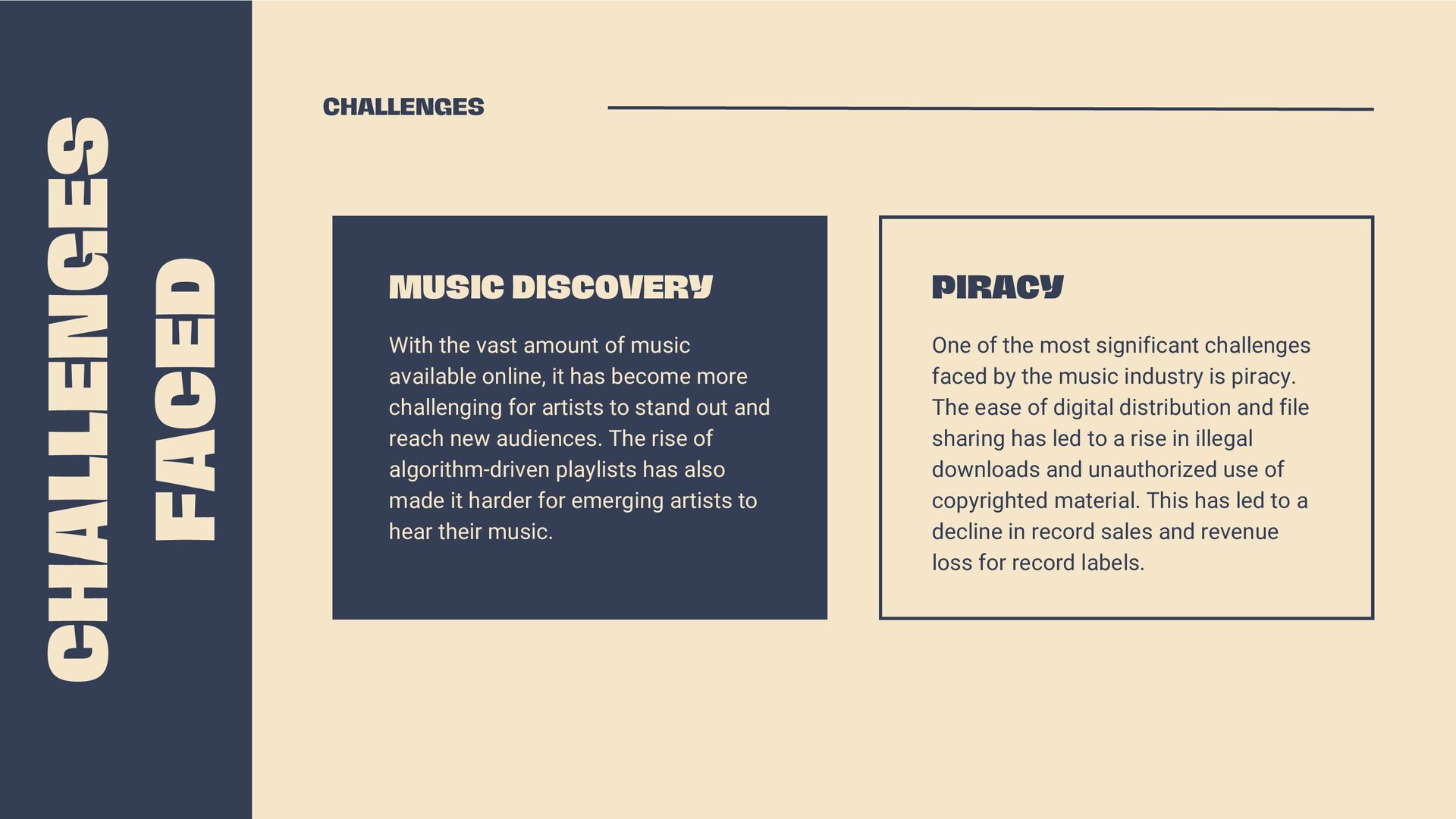
of music available online, it has become more challenging for artists to stand out and reach new audiences. The rise of algorithm-driven playlists has also made it harder for emerging artists to hear their music. One of the most significant challenges faced by the music industry is piracy. The ease of digital distribution and file sharing has led to a rise in illegal downloads and unauthorized use of copyrighted material. This has led to a decline in record sales and revenue loss for record labels.
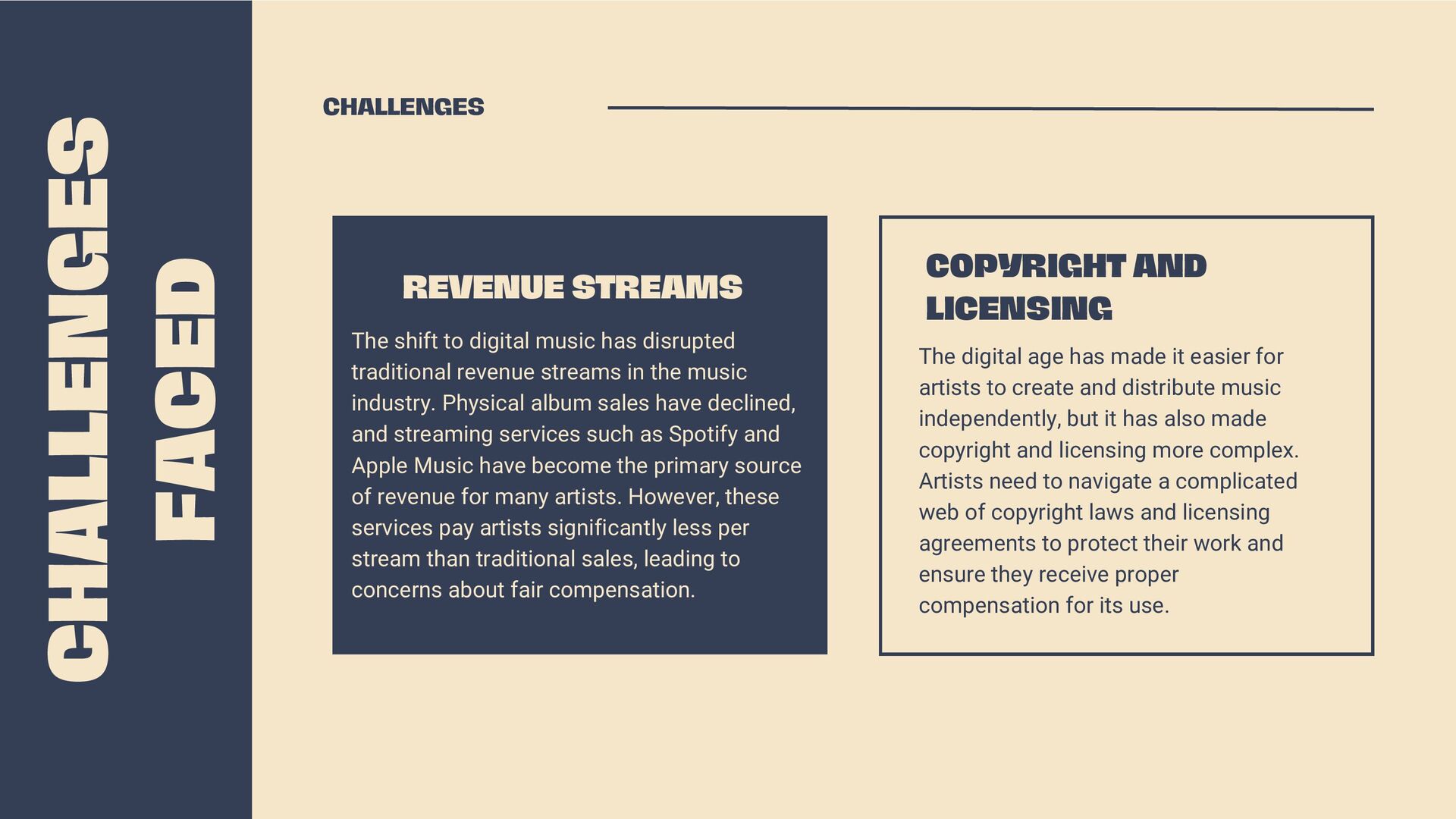
to digital music has disrupted traditional revenue streams in the music industry. Physical album sales have declined, and streaming services such as Spotify and Apple Music have become the primary source of revenue for many artists. However, these services pay artists significantly less per stream than traditional sales, leading to concerns about fair compensation. The digital age has made it easier for artists to create and distribute music independently, but it has also made copyright and licensing more complex. Artists need to navigate a complicated web of copyright laws and licensing agreements to protect their work and ensure they receive proper compensation for its use.
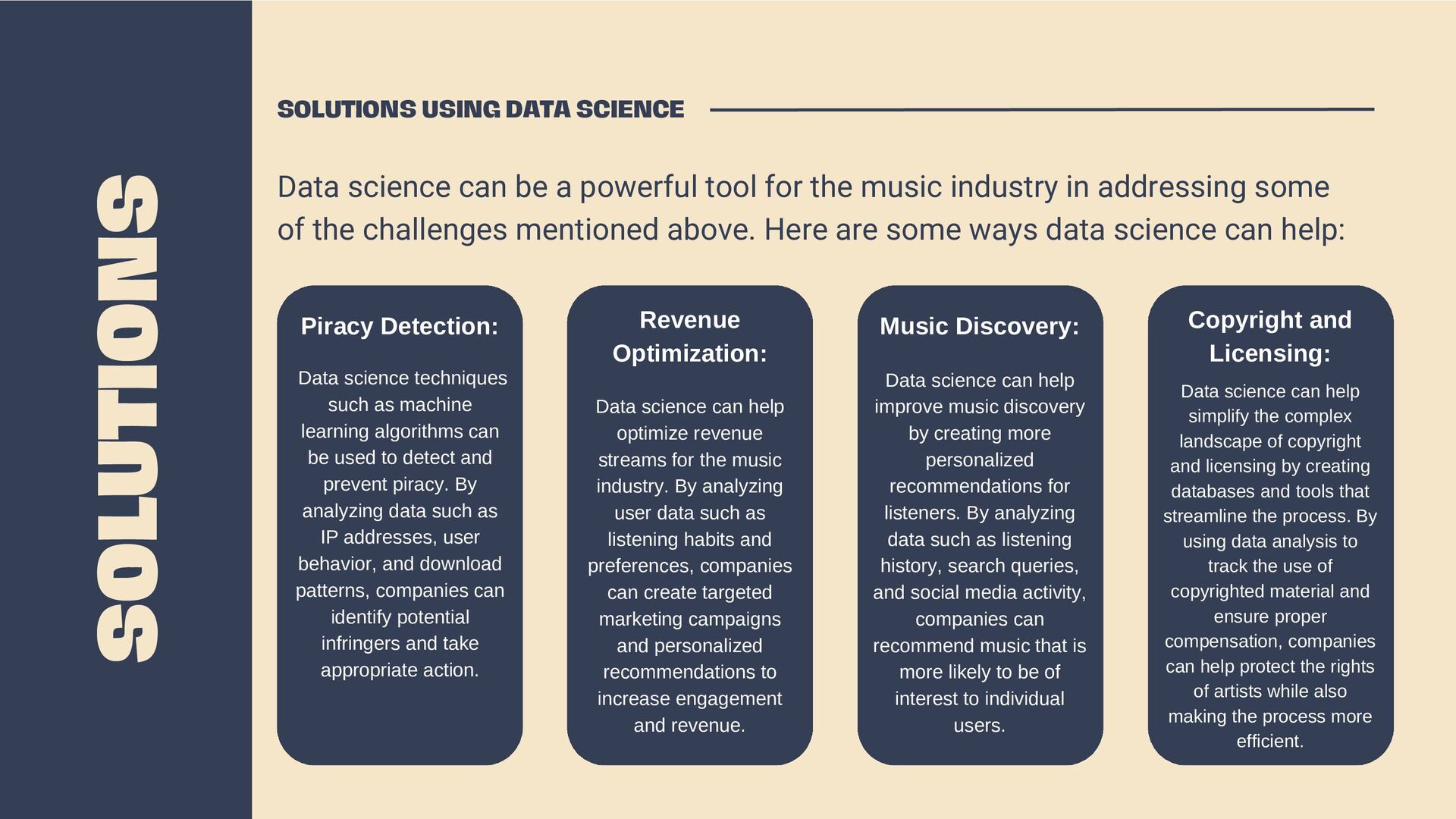
powerful tool for the music industry in addressing some of the challenges mentioned above. Here are some ways data science can help: Data science techniques such as machine learning algorithms can be used to detect and prevent piracy. By analyzing data such as IP addresses, user behavior, and download patterns, companies can identify potential infringers and take appropriate action. Piracy Detection: Data science can help optimize revenue streams for the music industry. By analyzing user data such as listening habits and preferences, companies can create targeted marketing campaigns and personalized recommendations to increase engagement and revenue. Data science can help improve music discovery by creating more personalized recommendations for listeners. By analyzing data such as listening history, search queries, and social media activity, companies can recommend music that is more likely to be of interest to individual users. Data science can help simplify the complex landscape of copyright and licensing by creating databases and tools that streamline the process. By using data analysis to track the use of copyrighted material and ensure proper compensation, companies can help protect the rights of artists while also making the process more efficient. Revenue Optimization: Music Discovery: Copyright and Licensing:

 Your Podcast. Everywhere. Effortlessly.


 mariooc
 moriyuya
 arnoknobbe
 akiraasano
 juanmartin2026
 pawan_pharm
 kentaroy47
 bvr7352
 tasusu
 rashwhitman
 irinanazarova
 schroneko
 honnibal
 apolaine
 aleyda
 cassininazir
 popppiees
 raygrieselhuber
 portentint
 elsirapls
 maltzj
 marktimemedia