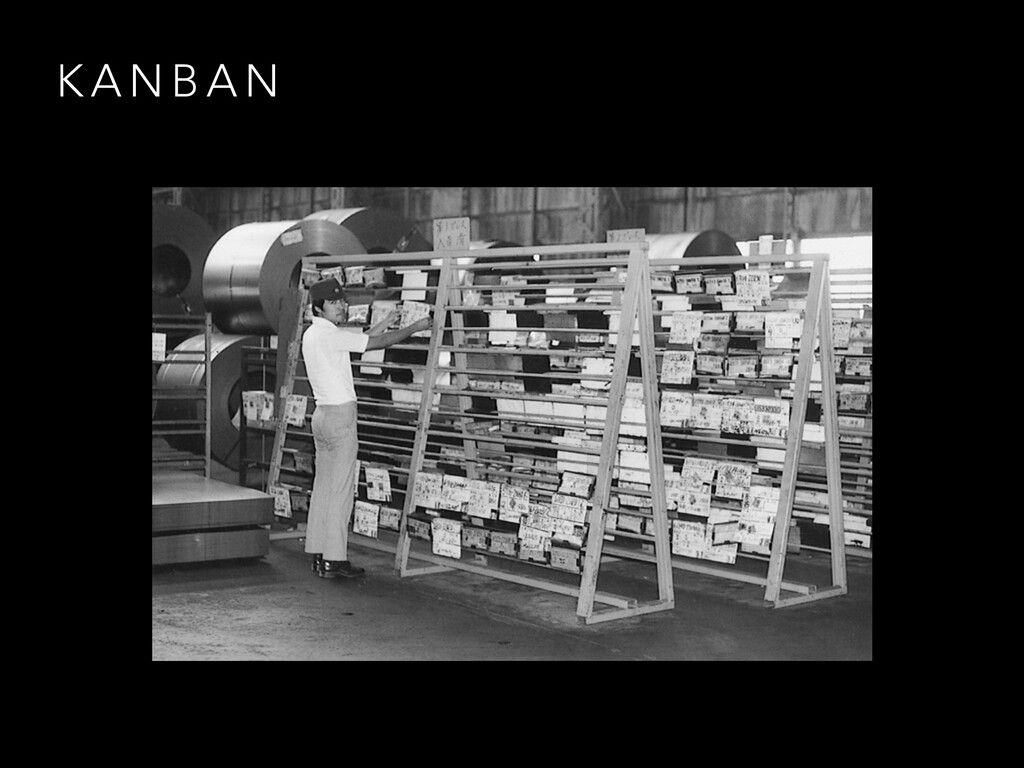
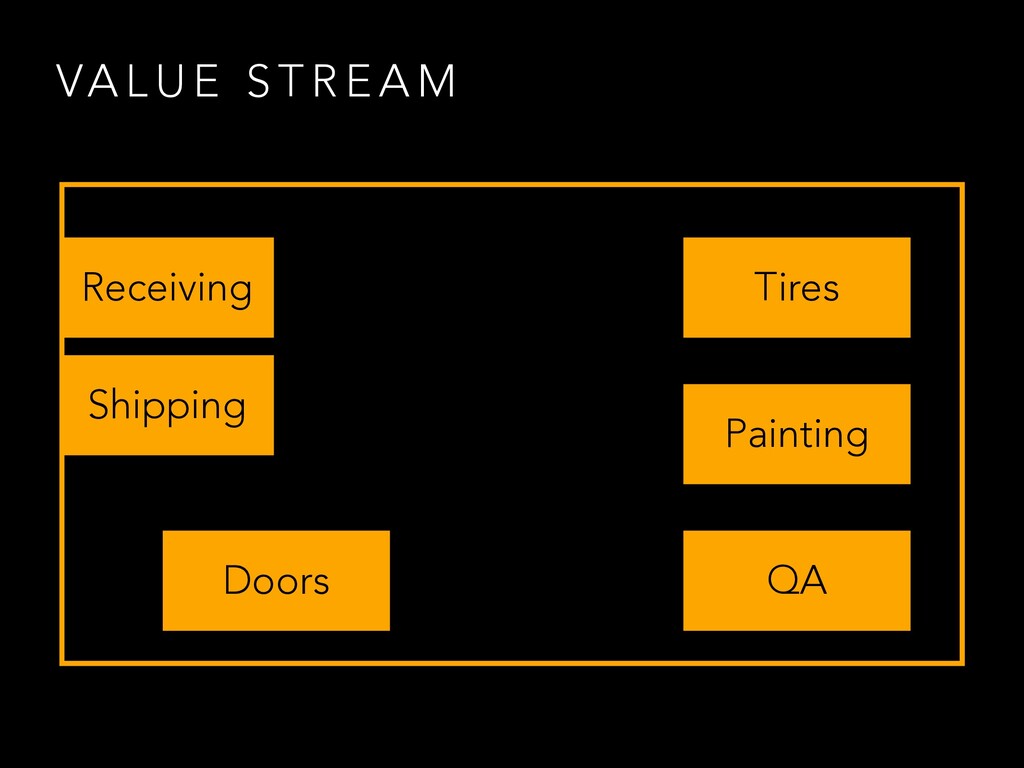
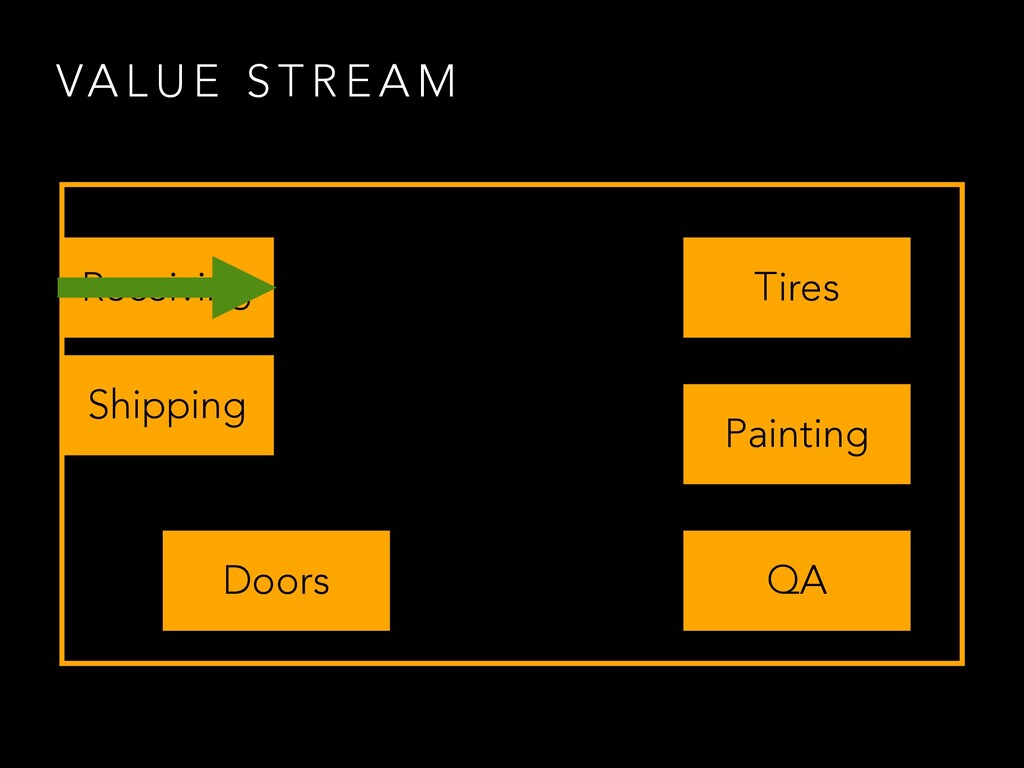
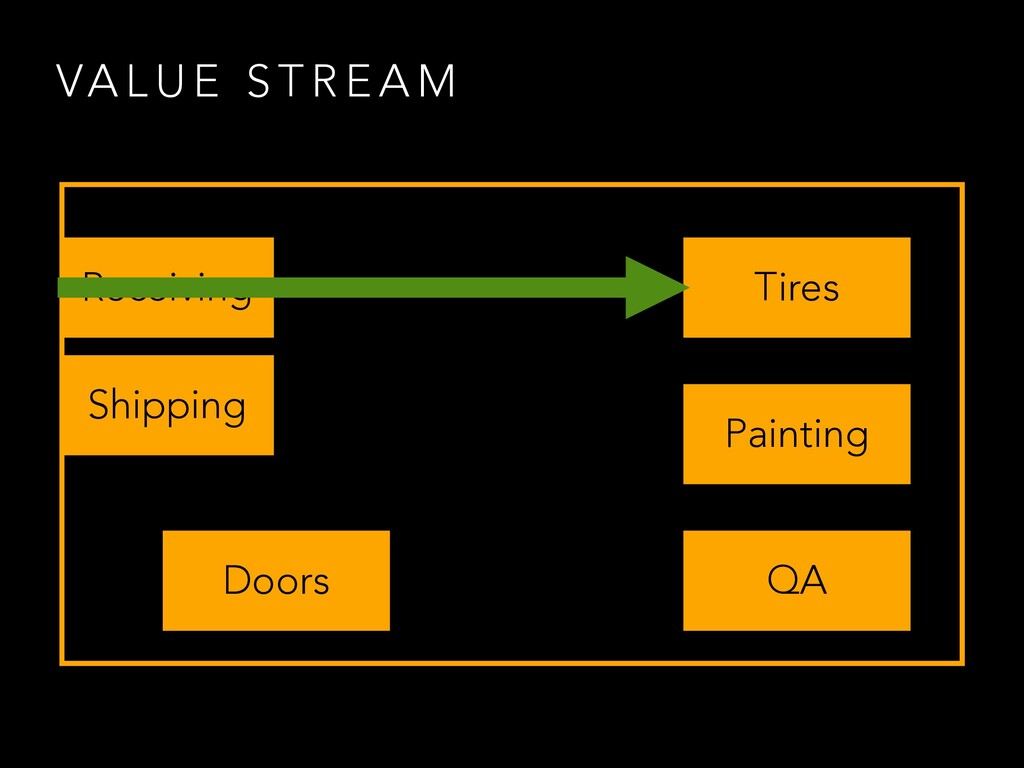
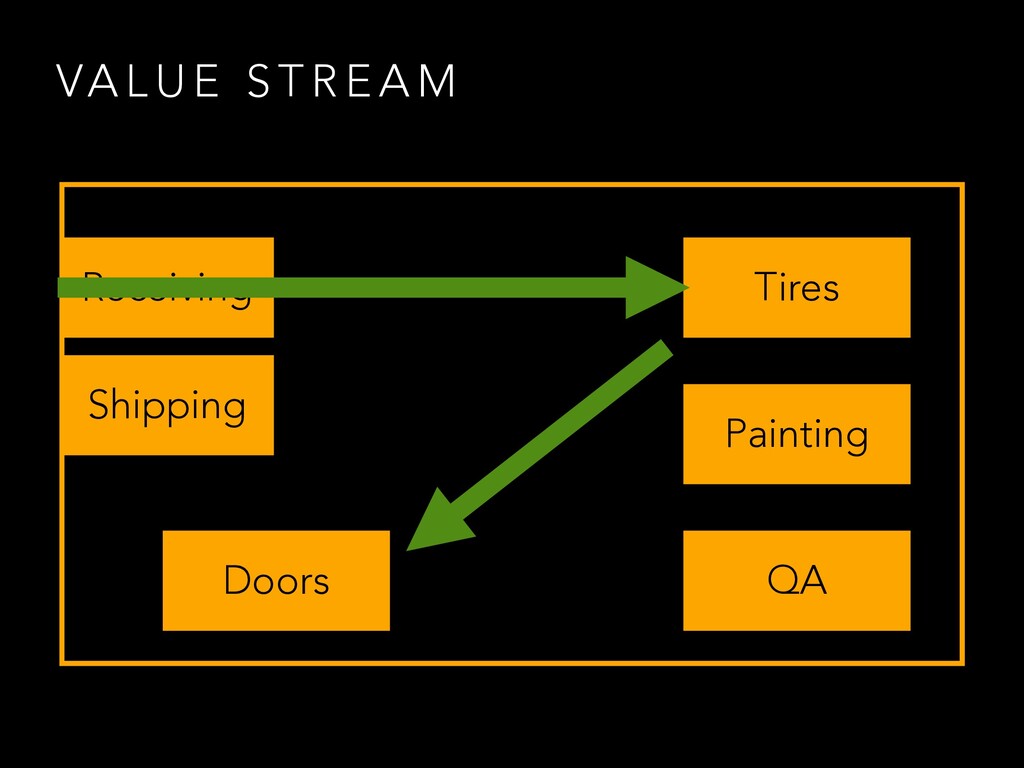
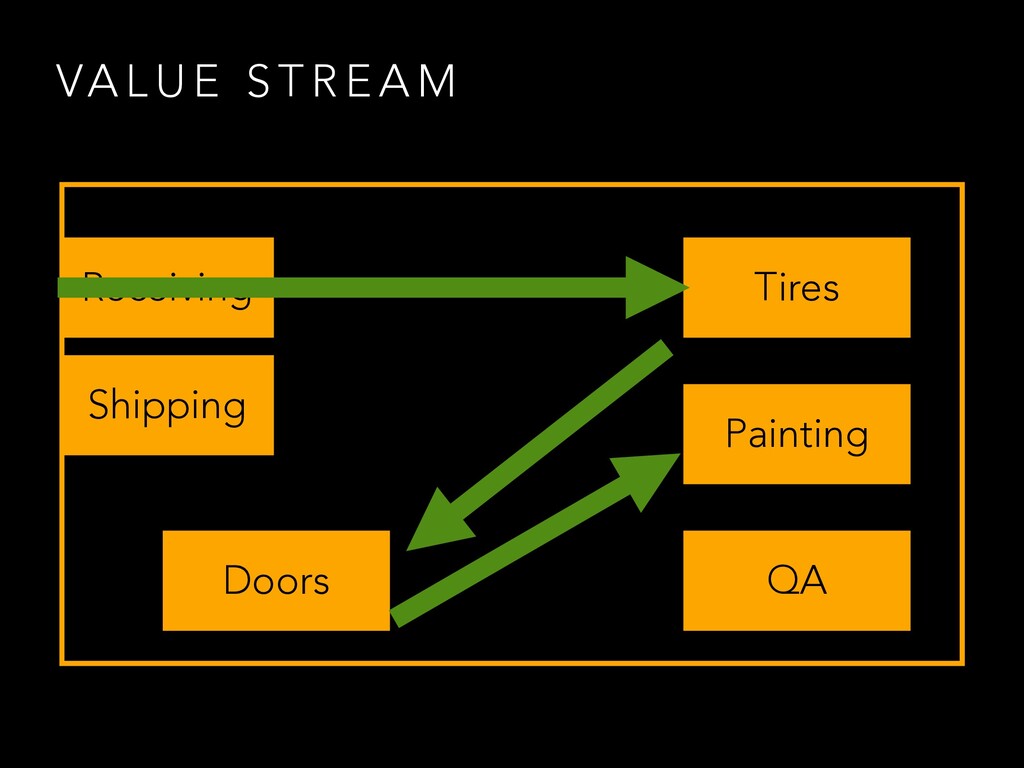
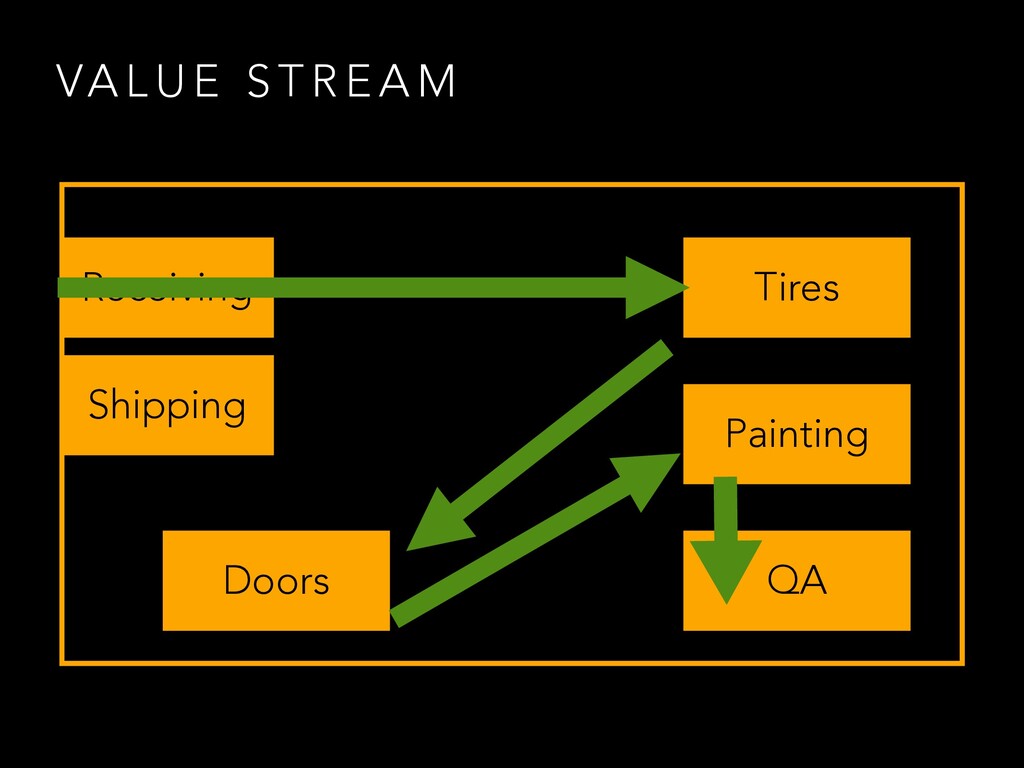
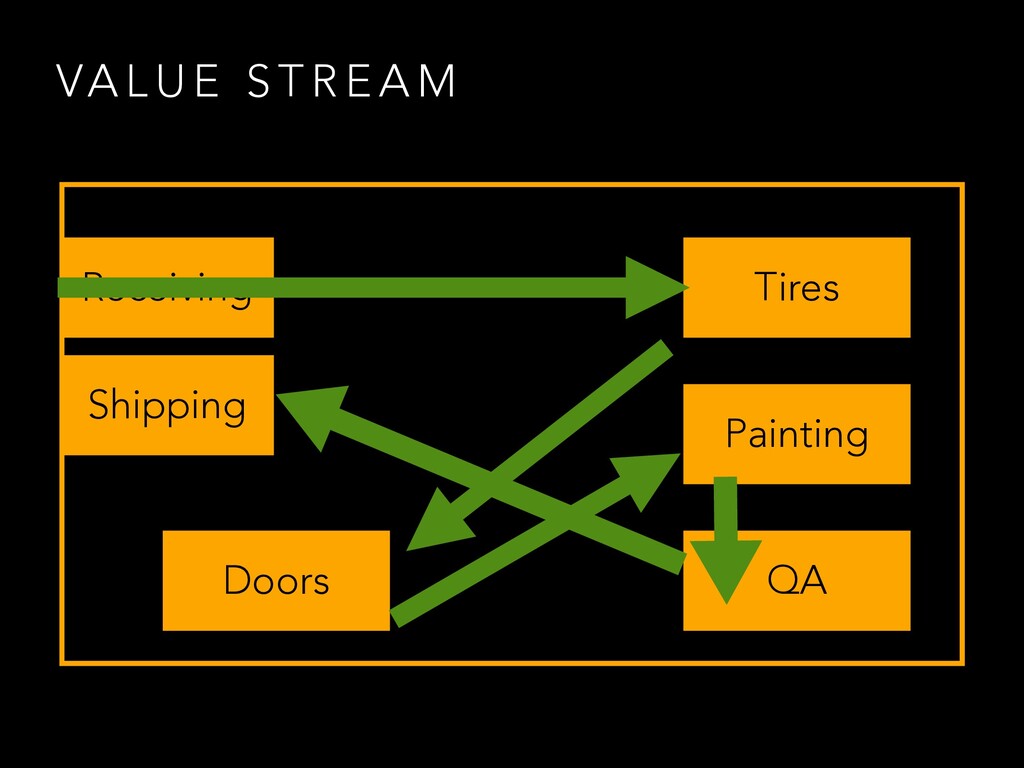
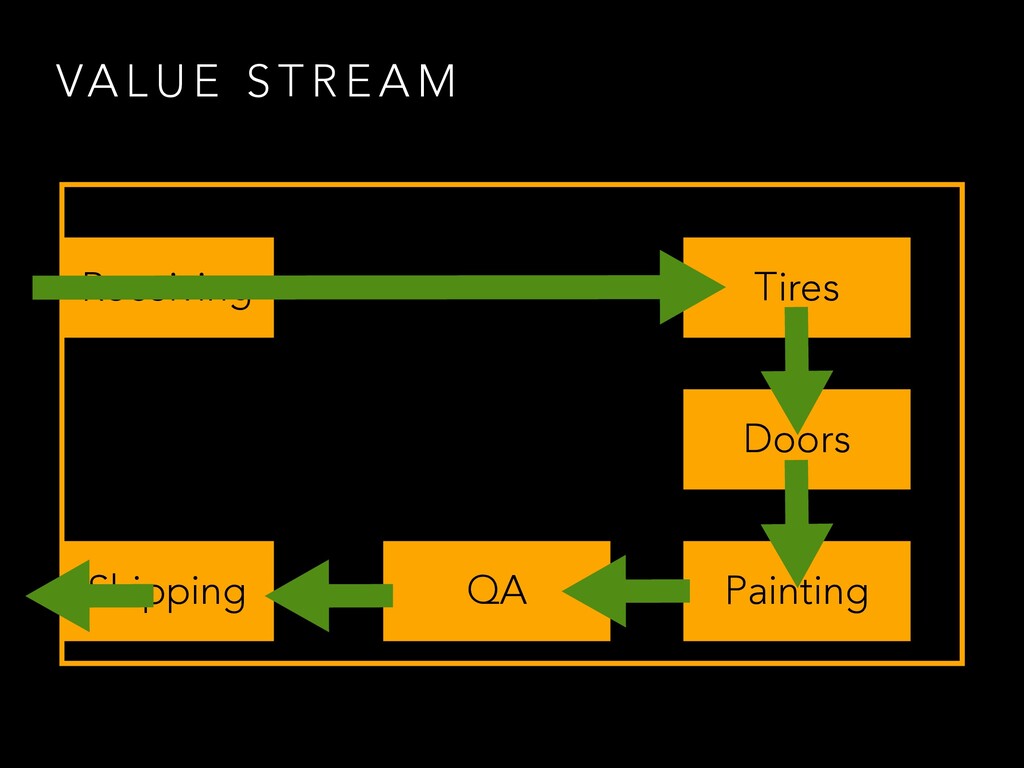
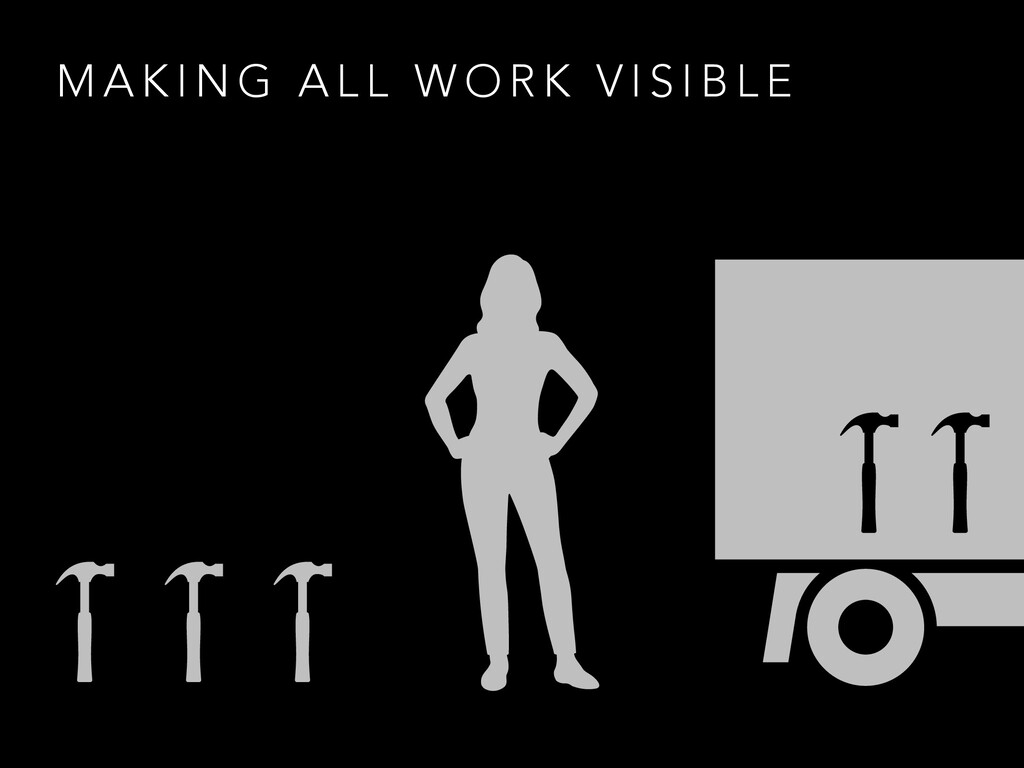
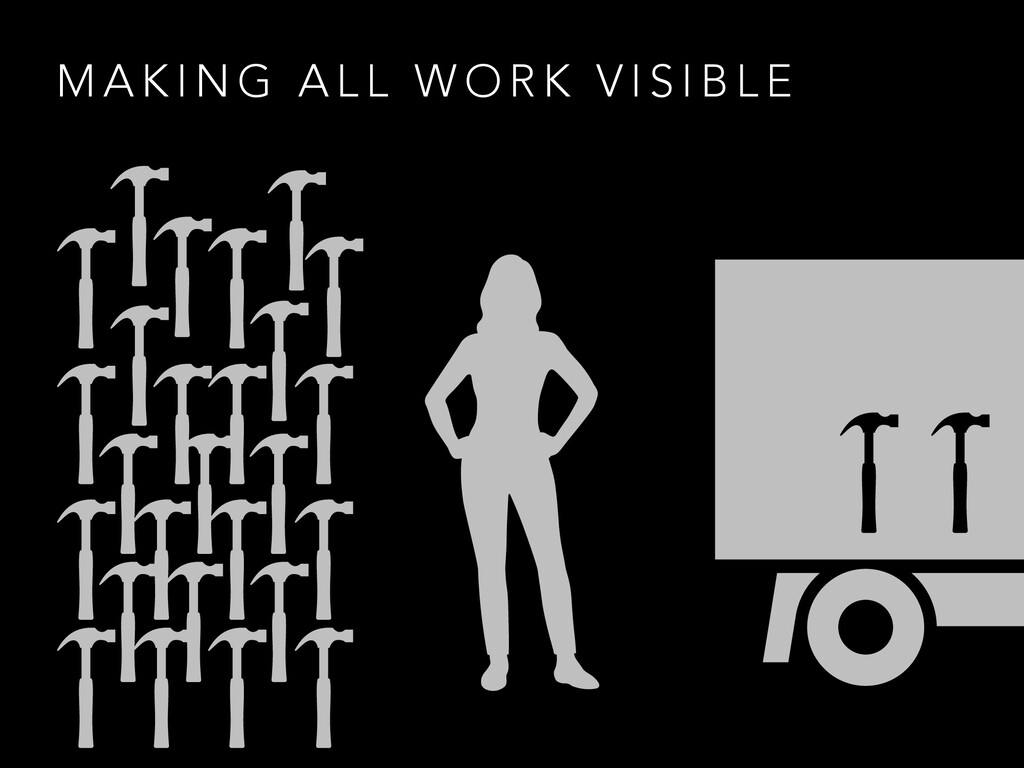
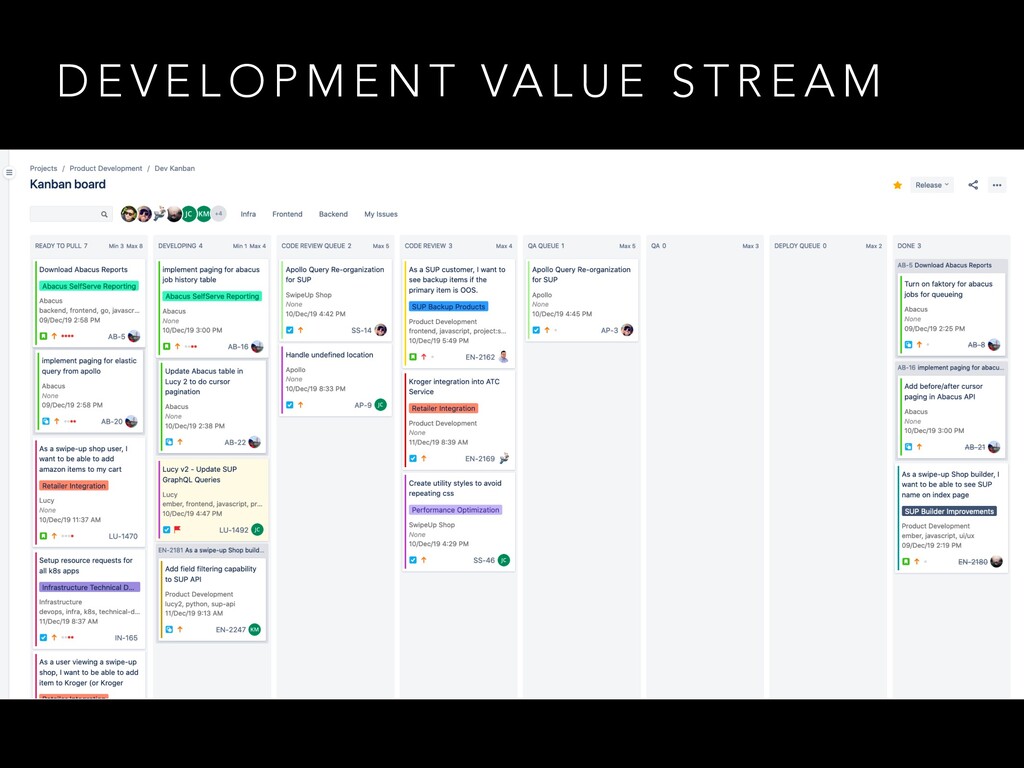
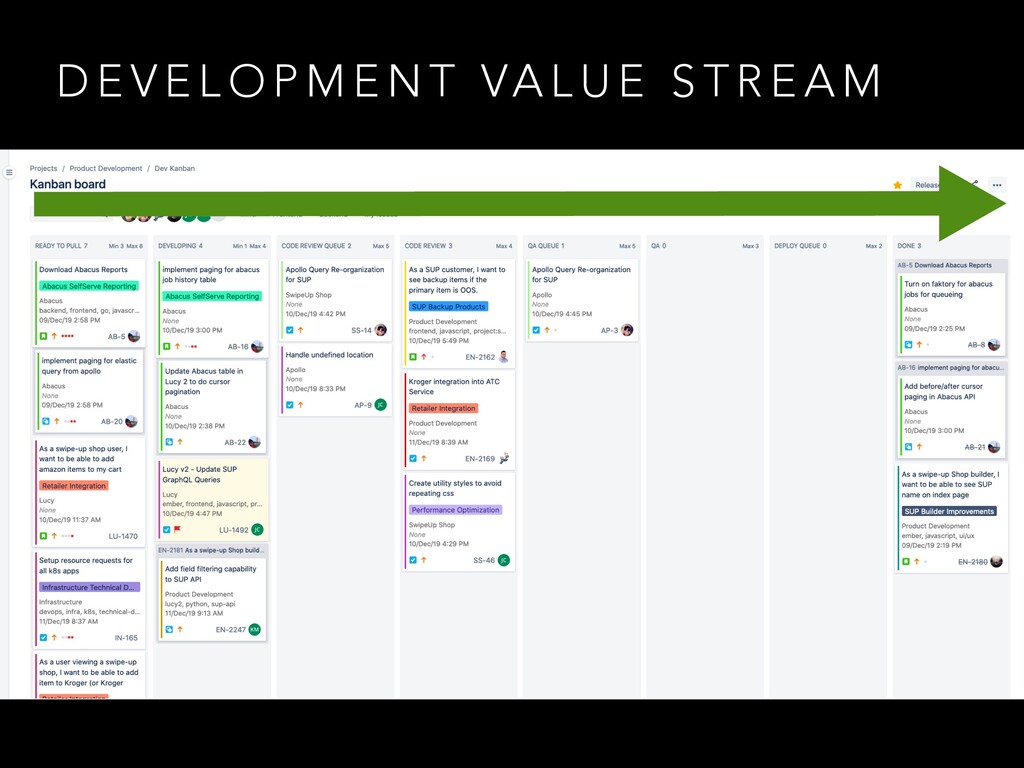
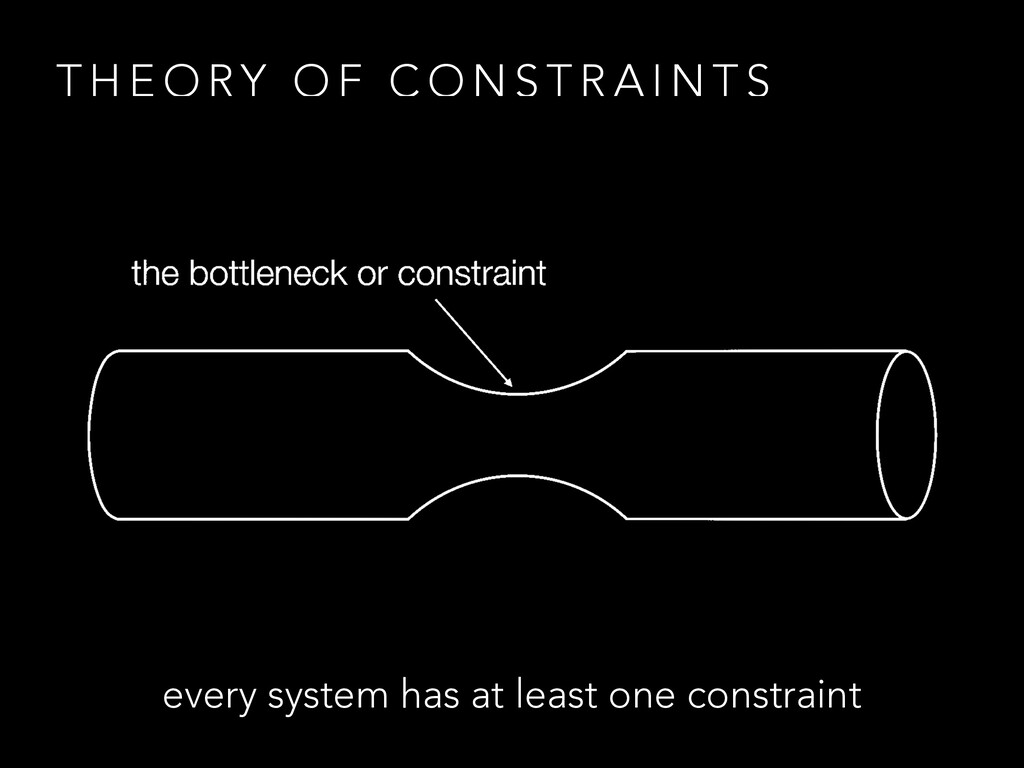
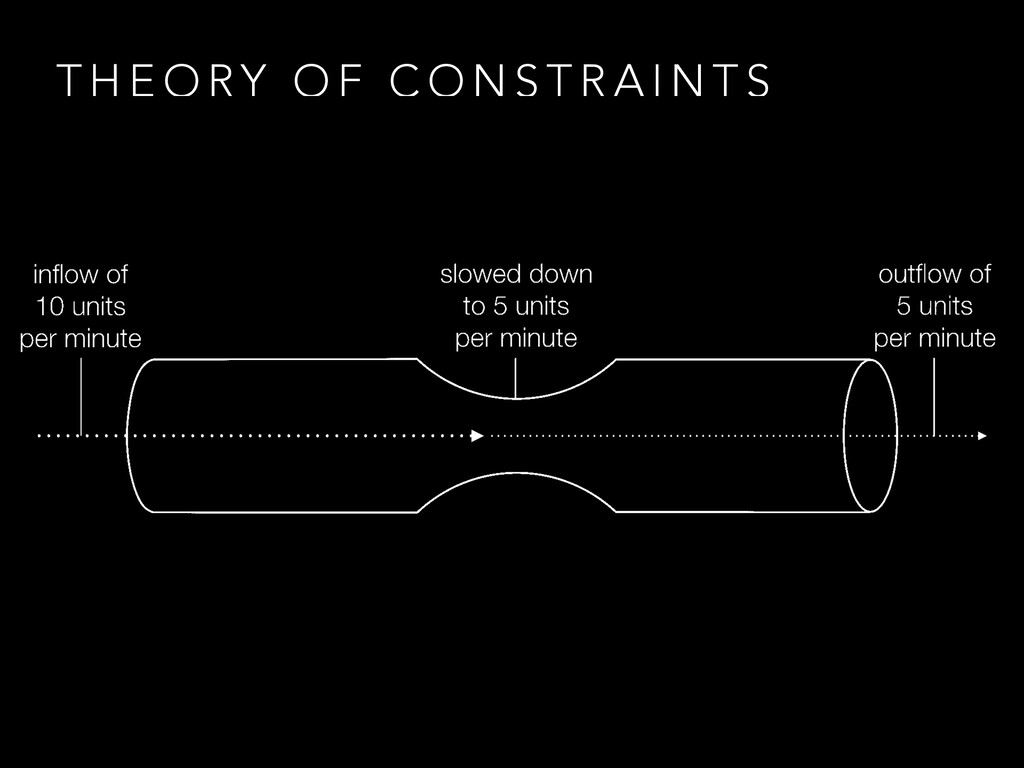
in manufacturing, the process of a customer order being received, raw materials being released onto the plant floor, and those raw materials being processed into the final product the customer ordered. this process is referred to as the value stream.
O R K V I S I B L E in manufacturing you move inventory from work center to work center in the factory until it is a final product. a work center backing up and being a bottle neck is obvious in manufacturing. you can see a stack of tires building up waiting to be placed on cars.
O R K V I S I B L E visibly seeing a column stacking up tells us there is a problem that needs to be solved. red columns tell us a particular process step is allocated beyond our capacity.
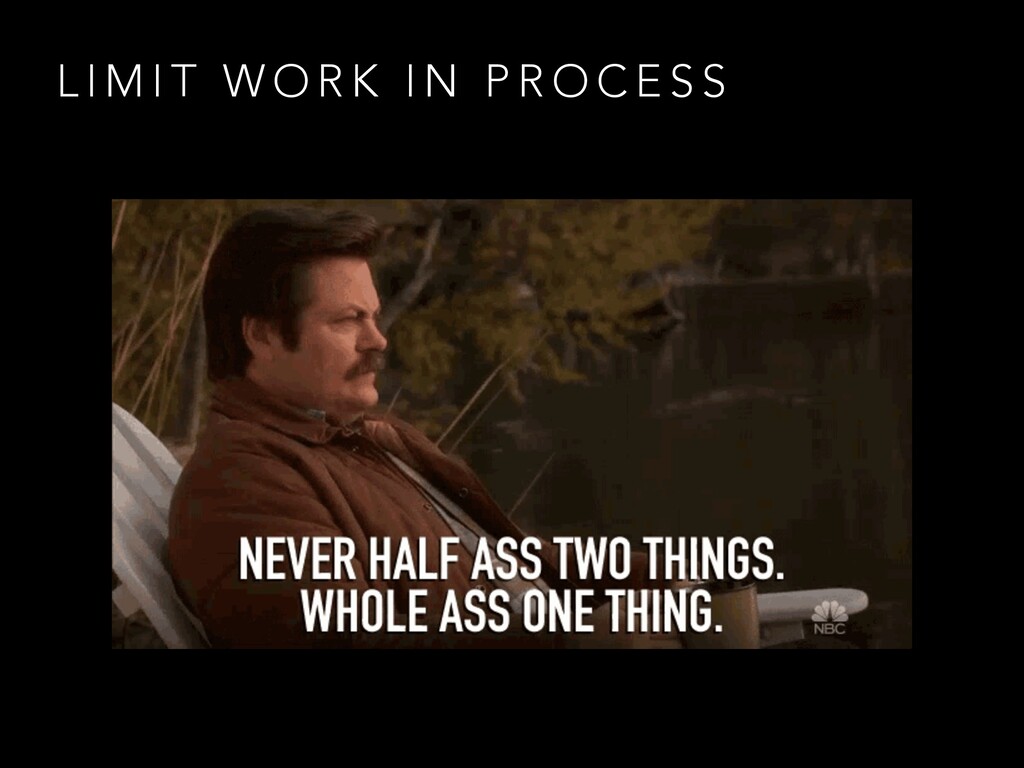
N P R O C E S S not limiting WIP encourages a culture of starting work. we need a culture of fi nishing work. S T O P S TA RT I N G . S TA RT F I N I S H I N G .
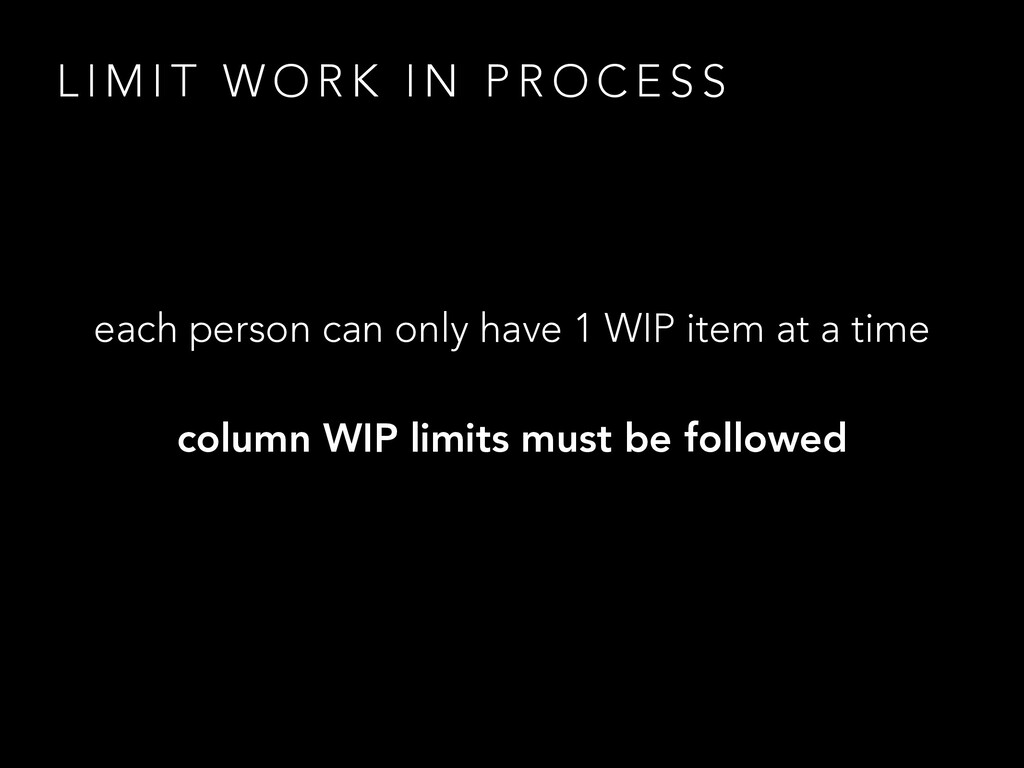
N P R O C E S S we are going to set WIP for “In development” and “code review” to half the size of the team. “QA” WIP limit is 3 and “Deployment Queue” WIP limit is 2
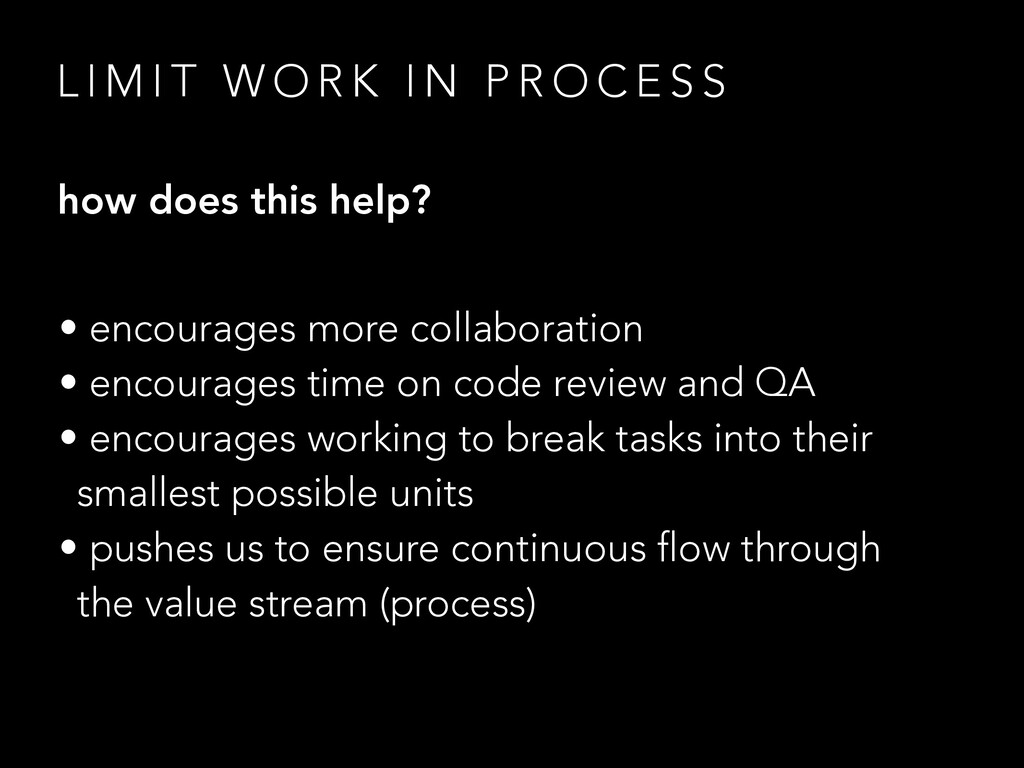
N P R O C E S S how does this help? • encourages more collaboration • encourages time on code review and QA • encourages working to break tasks into their smallest possible units • pushes us to ensure continuous flow through the value stream (process)
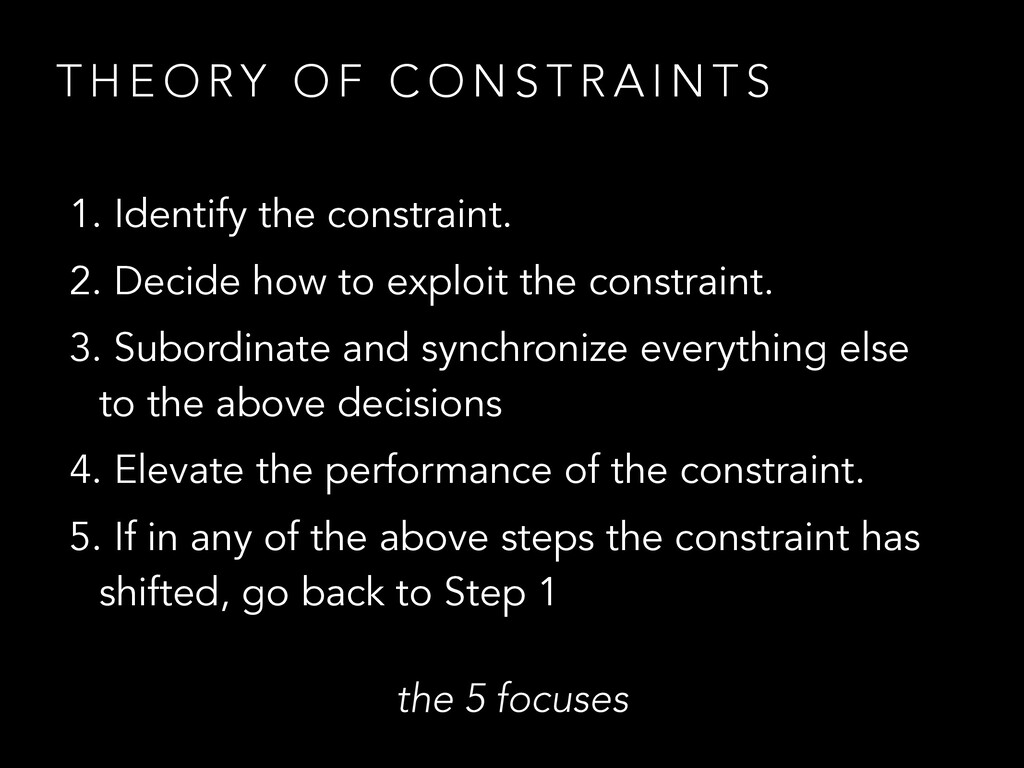
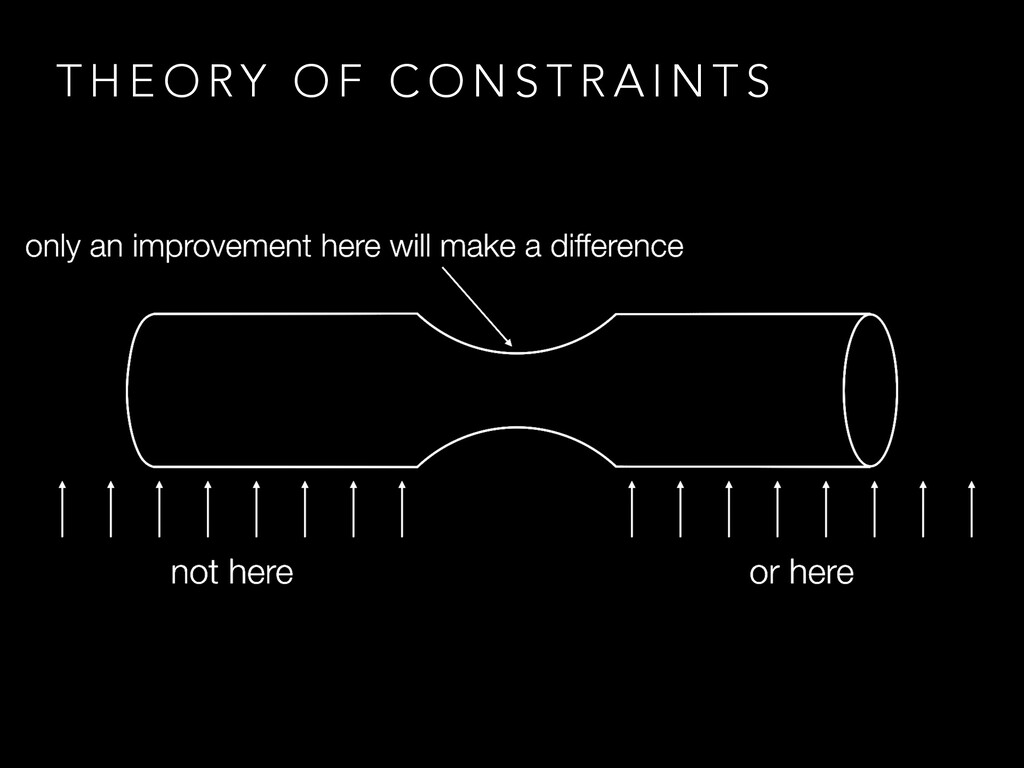
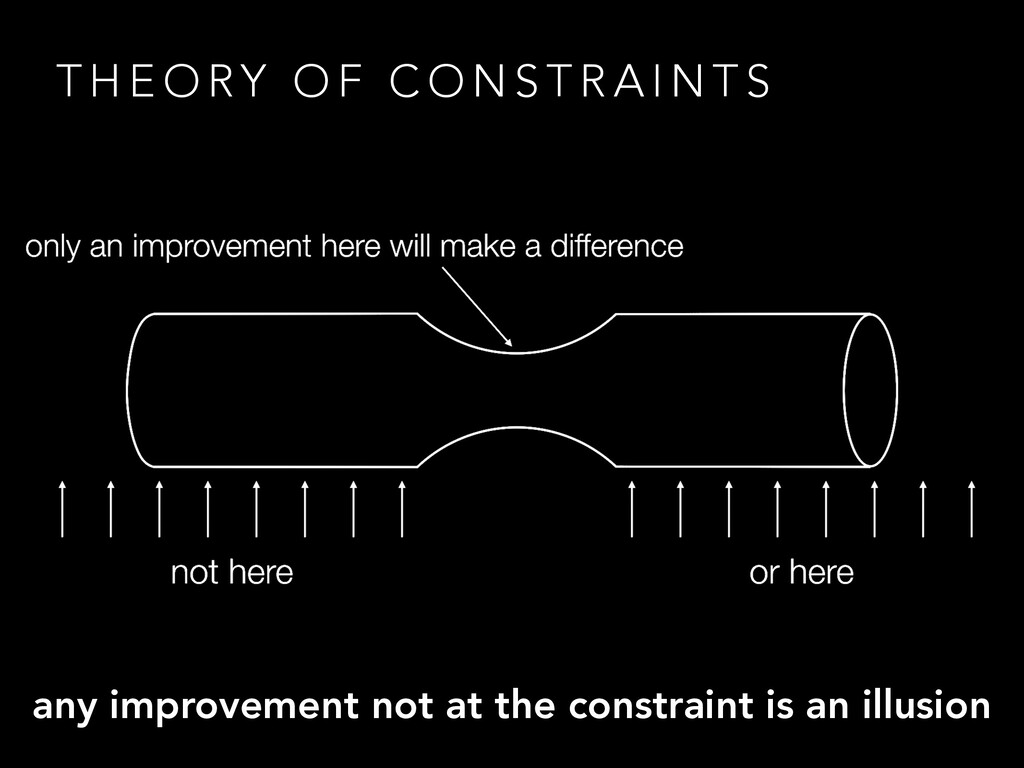
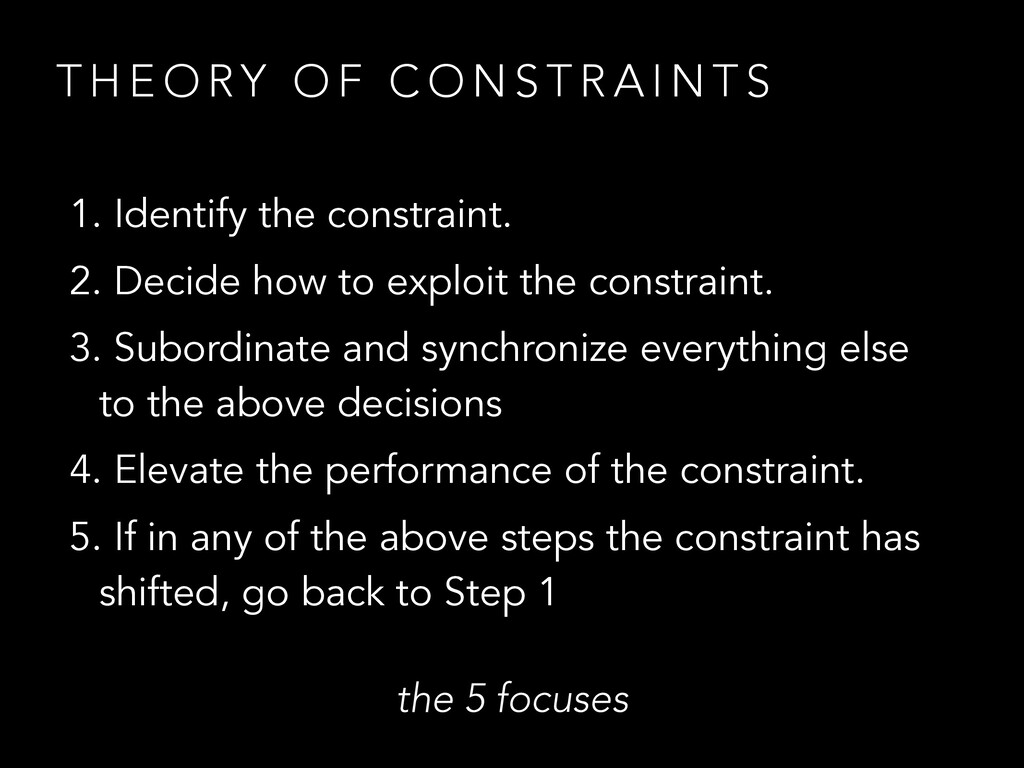
S T R A I N T S 1. Identify the constraint. 2. Decide how to exploit the constraint. 3. Subordinate and synchronize everything else to the above decisions 4. Elevate the performance of the constraint. 5. If in any of the above steps the constraint has shifted, go back to Step 1 the 5 focuses
S T R A I N T S 1. Identify the constraint. 2. Decide how to exploit the constraint. 3. Subordinate and synchronize everything else to the above decisions 4. Elevate the performance of the constraint. 5. If in any of the above steps the constraint has shifted, go back to Step 1 the 5 focuses
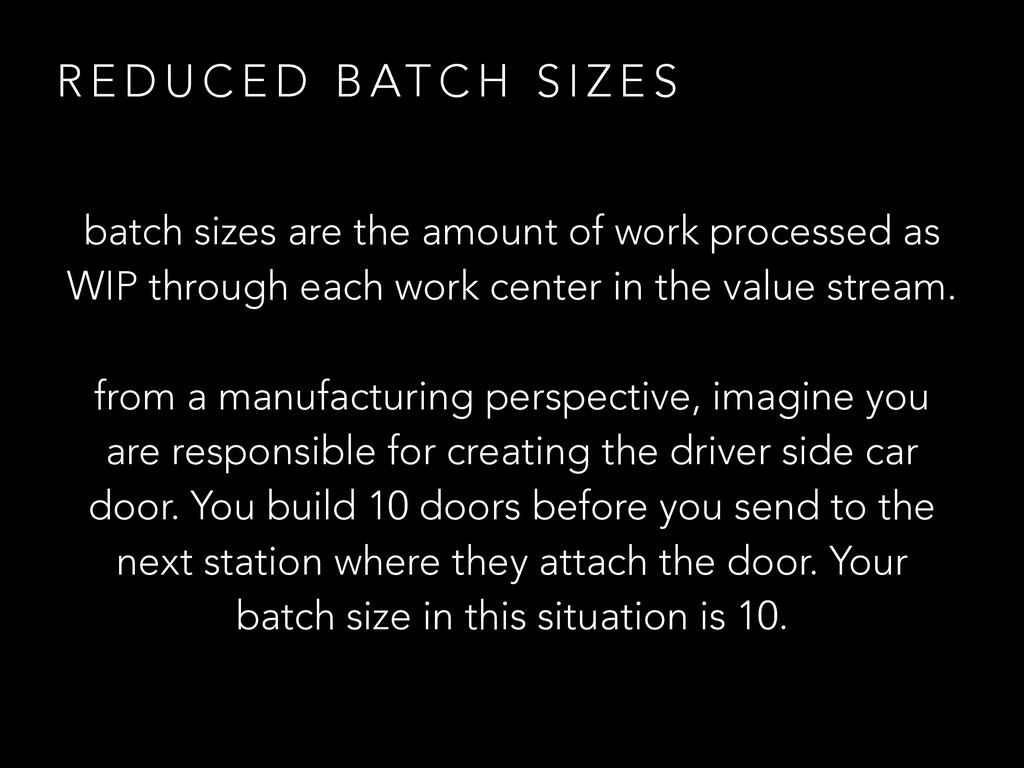
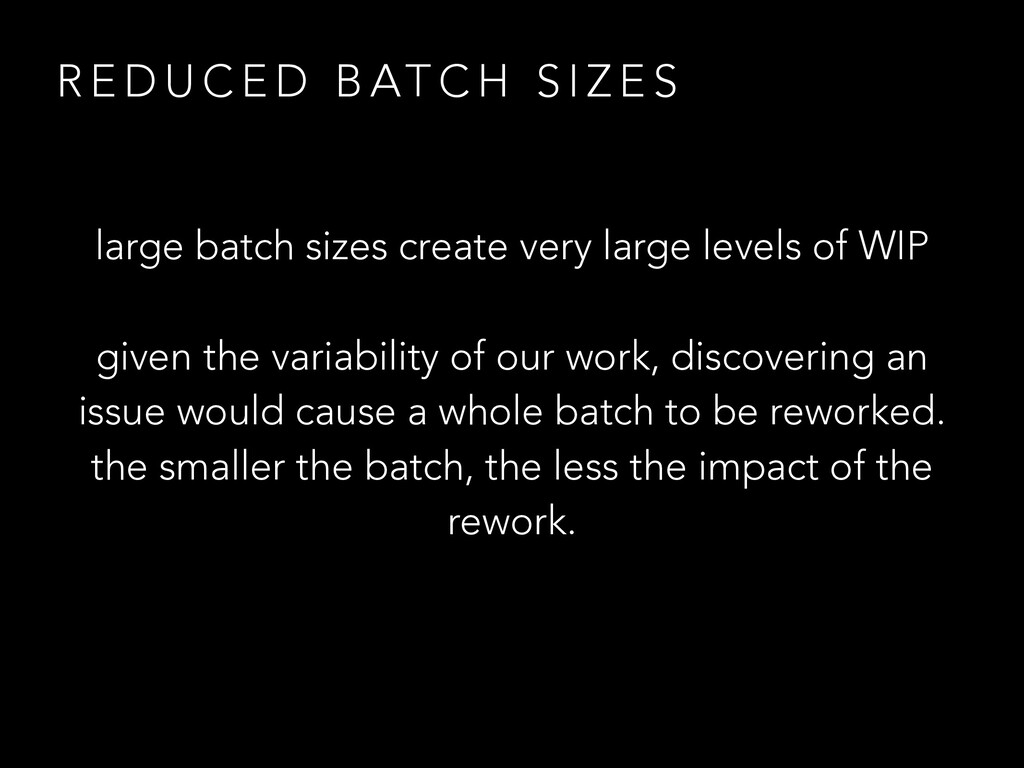
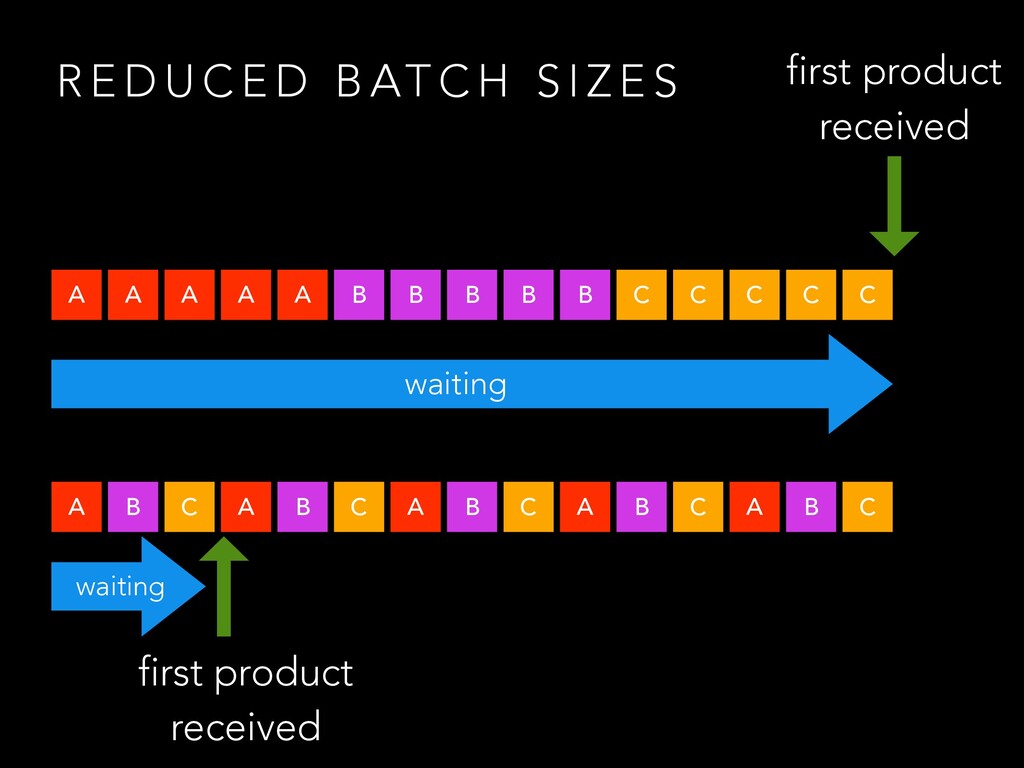
H S I Z E S batch sizes are the amount of work processed as WIP through each work center in the value stream. from a manufacturing perspective, imagine you are responsible for creating the driver side car door. You build 10 doors before you send to the next station where they attach the door. Your batch size in this situation is 10.
H S I Z E S large batch sizes create very large levels of WIP given the variability of our work, discovering an issue would cause a whole batch to be reworked. the smaller the batch, the less the impact of the rework.
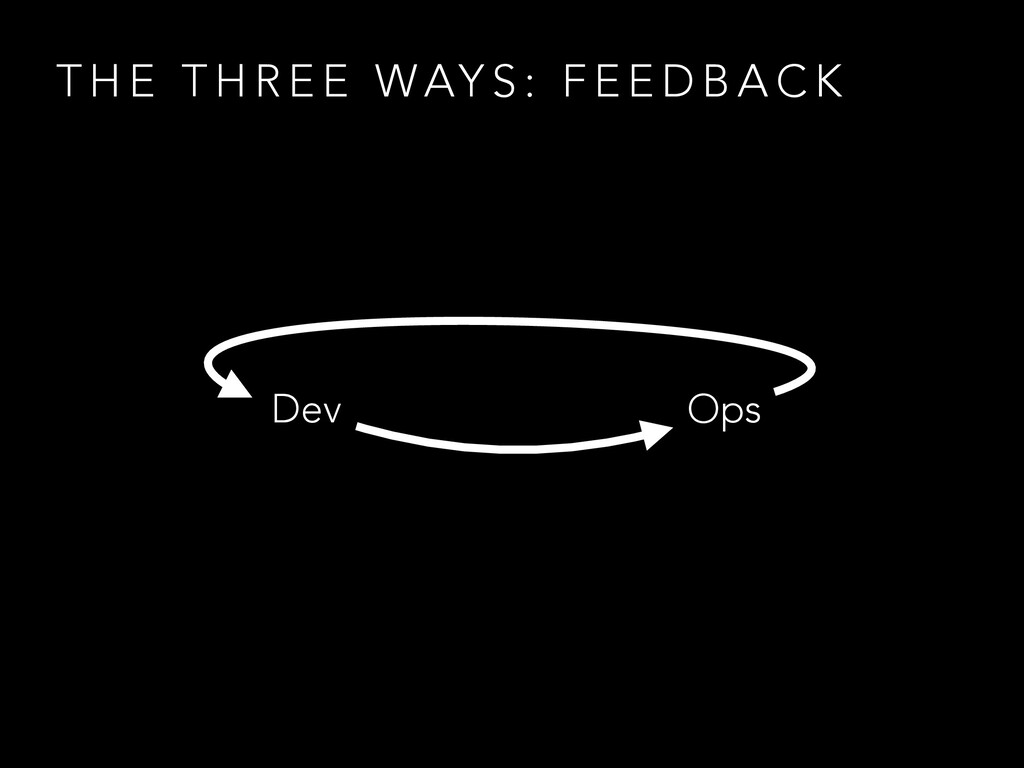
: F E E D B A C K proactive monitoring and alerting rapidly flowing items to QA in small batches allow rapid feedback on results code reviews a safe environment to ‘pull the cord’ and swarm
: F E E D B A C K Andon cord When a defect was suspected, a sign board would light up signaling the specific workstation having a problem. The signal event would also indicate that the system was stopped due to the defect and was waiting for the problem to be resolved. The process of stopping a system when a defect was suspected originates back to the original Toyota System Corporation to something called Jidoka.
: F E E D B A C K Andon cord when you need help, pull the cord. when something feels wrong, pull the cord. when you’re not sure what to do, pull the cord. don’t wait. do it early and often.
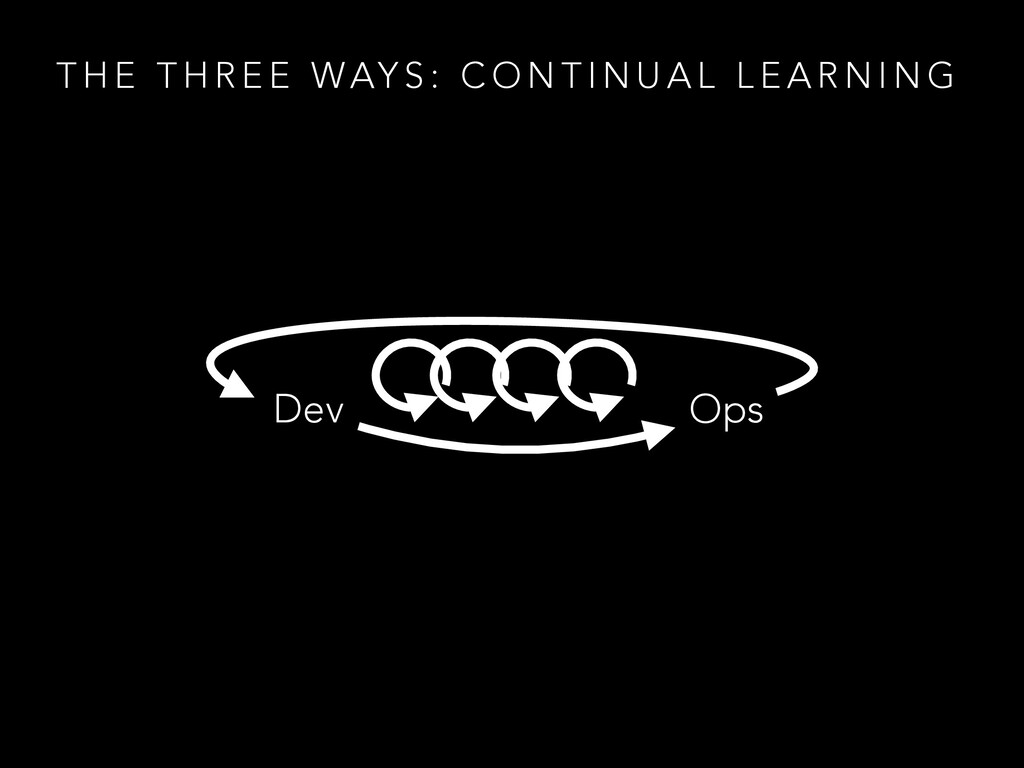
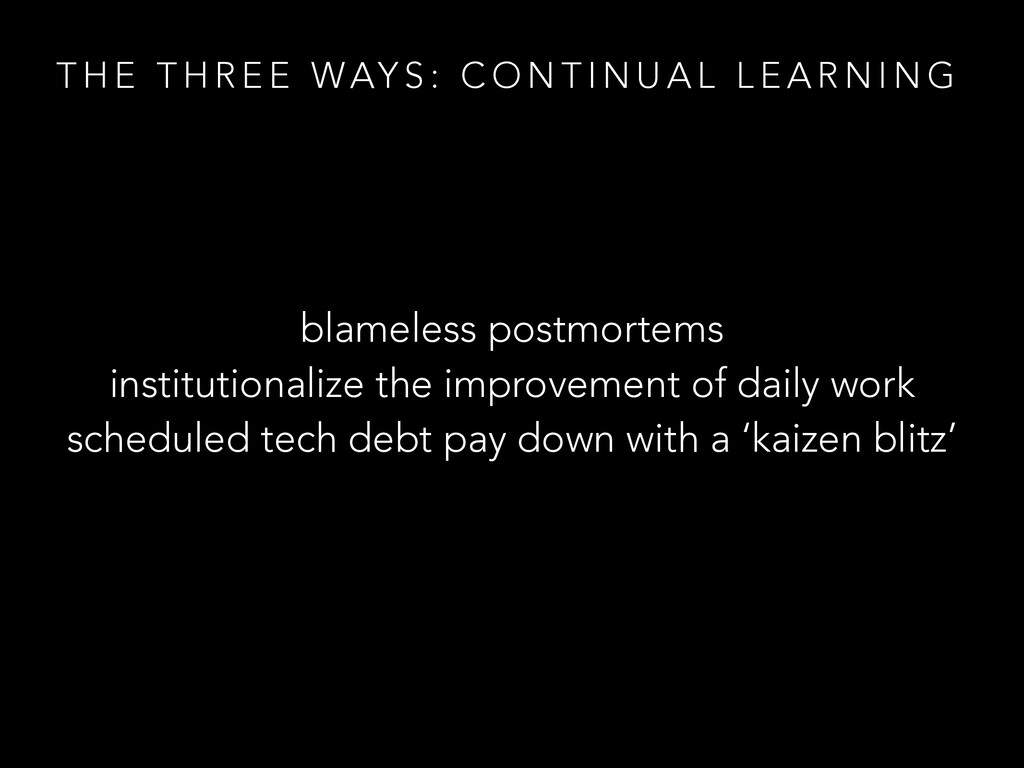
: C O N T I N U A L L E A R N I N G blameless postmortems institutionalize the improvement of daily work scheduled tech debt pay down with a ‘kaizen blitz’
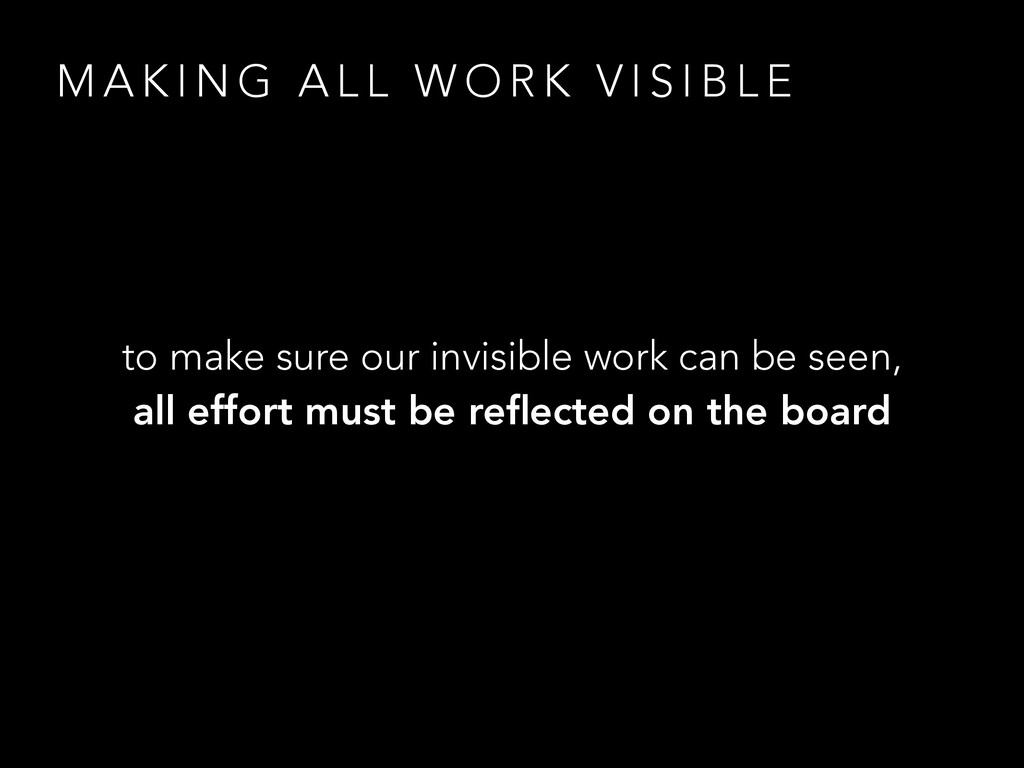
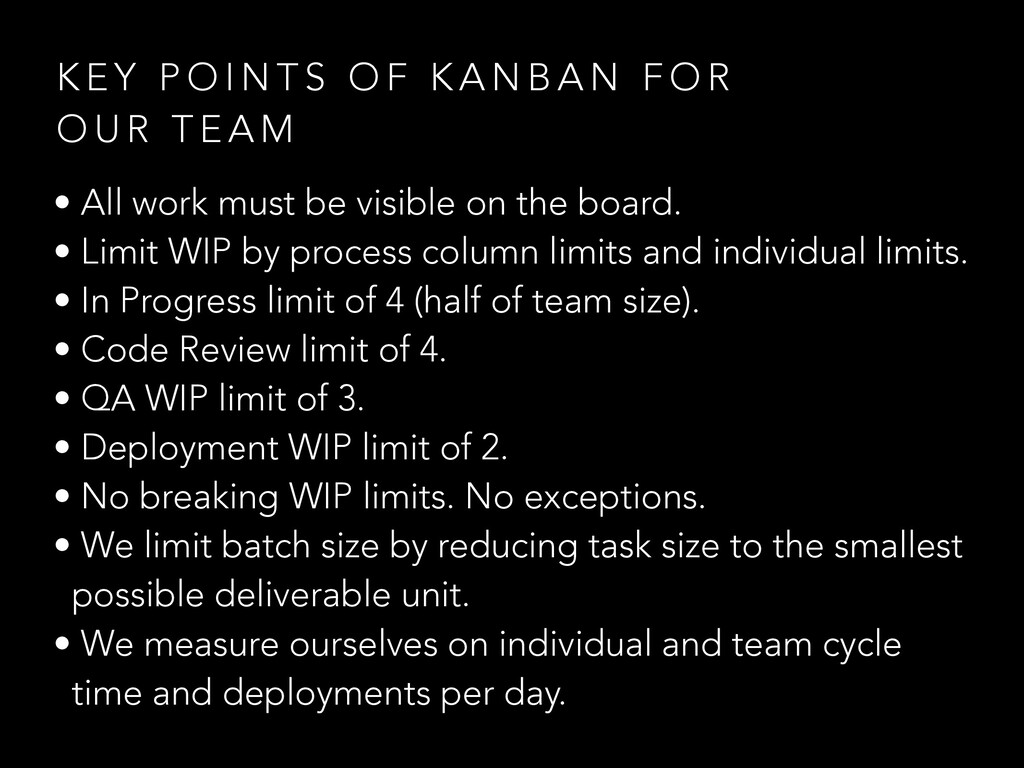
F K A N B A N F O R O U R T E A M • All work must be visible on the board. • Limit WIP by process column limits and individual limits. • In Progress limit of 4 (half of team size). • Code Review limit of 4. • QA WIP limit of 3. • Deployment WIP limit of 2. • No breaking WIP limits. No exceptions. • We limit batch size by reducing task size to the smallest possible deliverable unit. • We measure ourselves on individual and team cycle time and deployments per day.


 addamh
 kairim0
 ludicmind
 syuchimu
 mhrtech
 bgpat
bgpat
 pfn
pfn
 takahashim
 willnet
.png) codatum
codatum
 shugo
shugo
 endonanana
 geshan
 ianozsvald
 codingconduct
 lynnandtonic
 csswizardry
 keavy
keavy
 skoyamalab
 marktimemedia
 speakerdeck
 schroneko
 lara
lara
 katiecoart