Upgrade to Pro — share decks privately, control downloads, hide ads and more …

Study in UK: Complete Guide 2026

Sponsored · Your Podcast. Everywhere. Effortlessly. Share. Educate. Inspire. Entertain. You do you. We'll handle the rest. →
Avatar for Adam Idress Adam Idress
September 25, 2026

Study in UK: Complete Guide 2026

Everything you need to know about studying in the UK in 2026, from choosing universities and courses to visas, tuition fees, scholarships, and life as an international student. Whether you're planning your application or still exploring options, this guide breaks it all down step by step.
Start your journey here: Study in UK: Complete Guide 2026
Looking for work opportunities alongside your studies? Explore UK jobs here: UK Jobs

Avatar for Adam Idress

Adam Idress

September 25, 2026

Other Decks in Education

Transcript

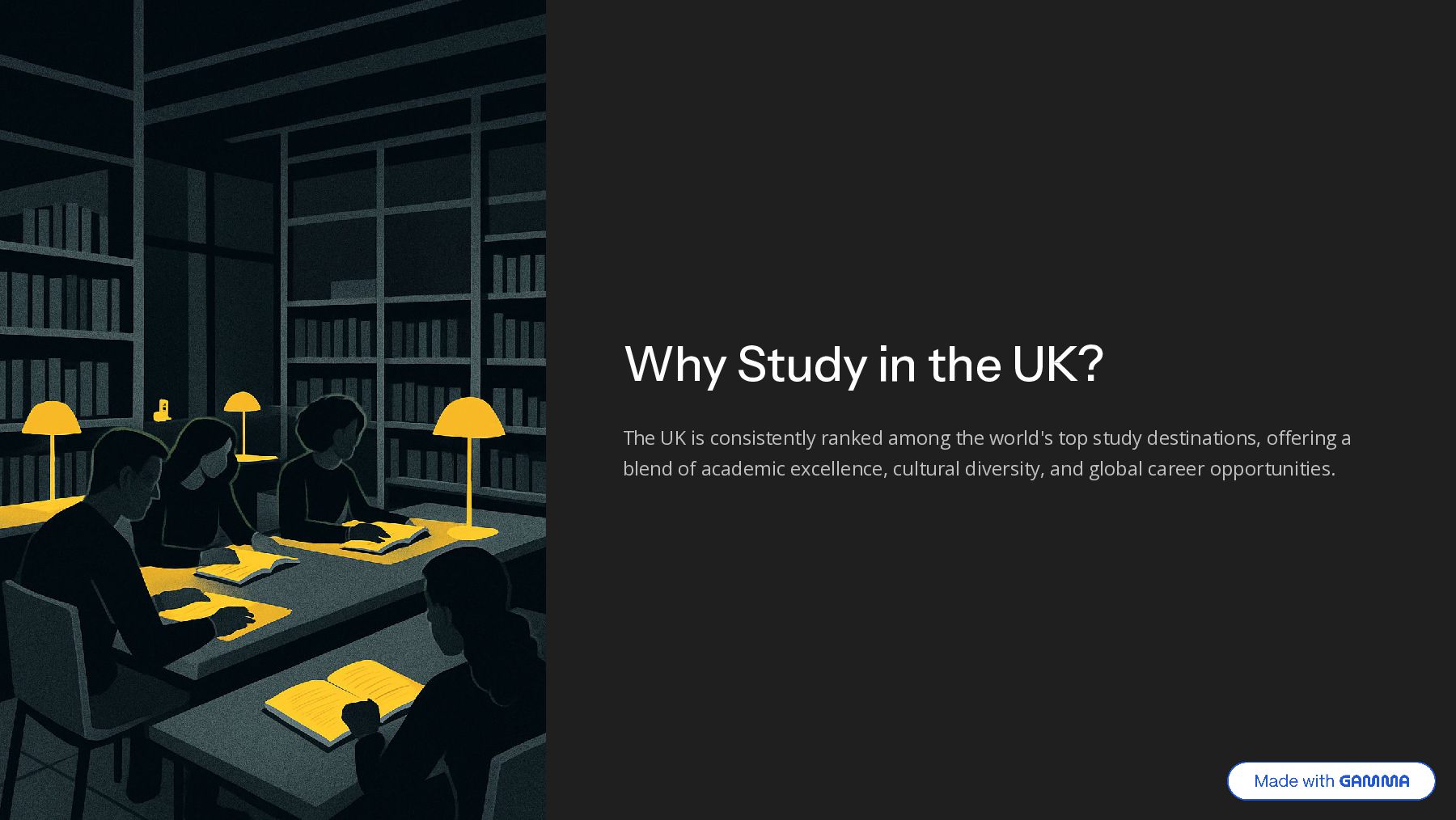
  1. Why Study in the UK? The UK is consistently ranked

    among the world's top study destinations, offering a blend of academic excellence, cultural diversity, and global career opportunities.
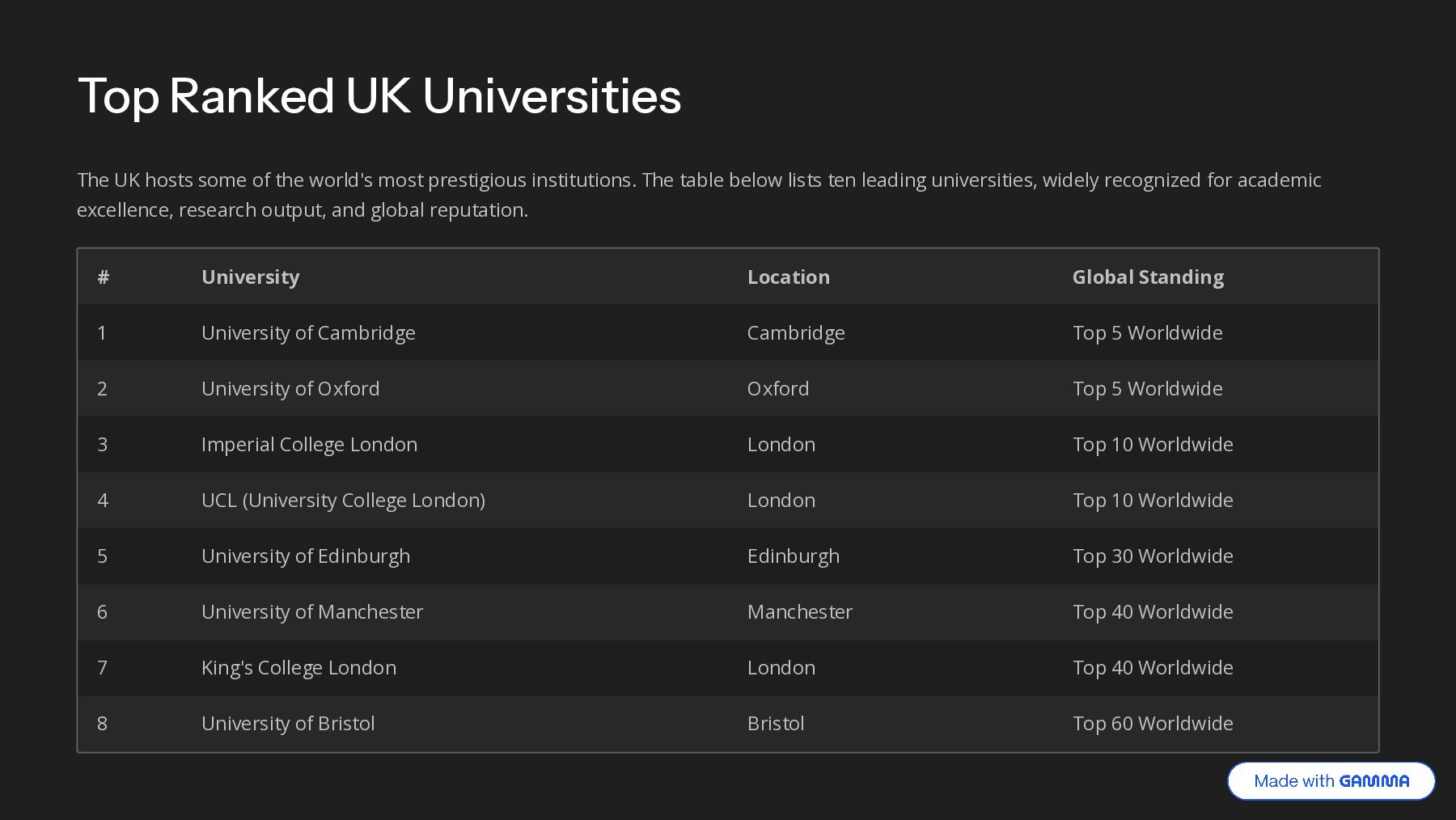
  2. Top Ranked UK Universities The UK hosts some of the

    world's most prestigious institutions. The table below lists ten leading universities, widely recognized for academic excellence, research output, and global reputation. # University Location Global Standing 1 University of Cambridge Cambridge Top 5 Worldwide 2 University of Oxford Oxford Top 5 Worldwide 3 Imperial College London London Top 10 Worldwide 4 UCL (University College London) London Top 10 Worldwide 5 University of Edinburgh Edinburgh Top 30 Worldwide 6 University of Manchester Manchester Top 40 Worldwide 7 King's College London London Top 40 Worldwide 8 University of Bristol Bristol Top 60 Worldwide
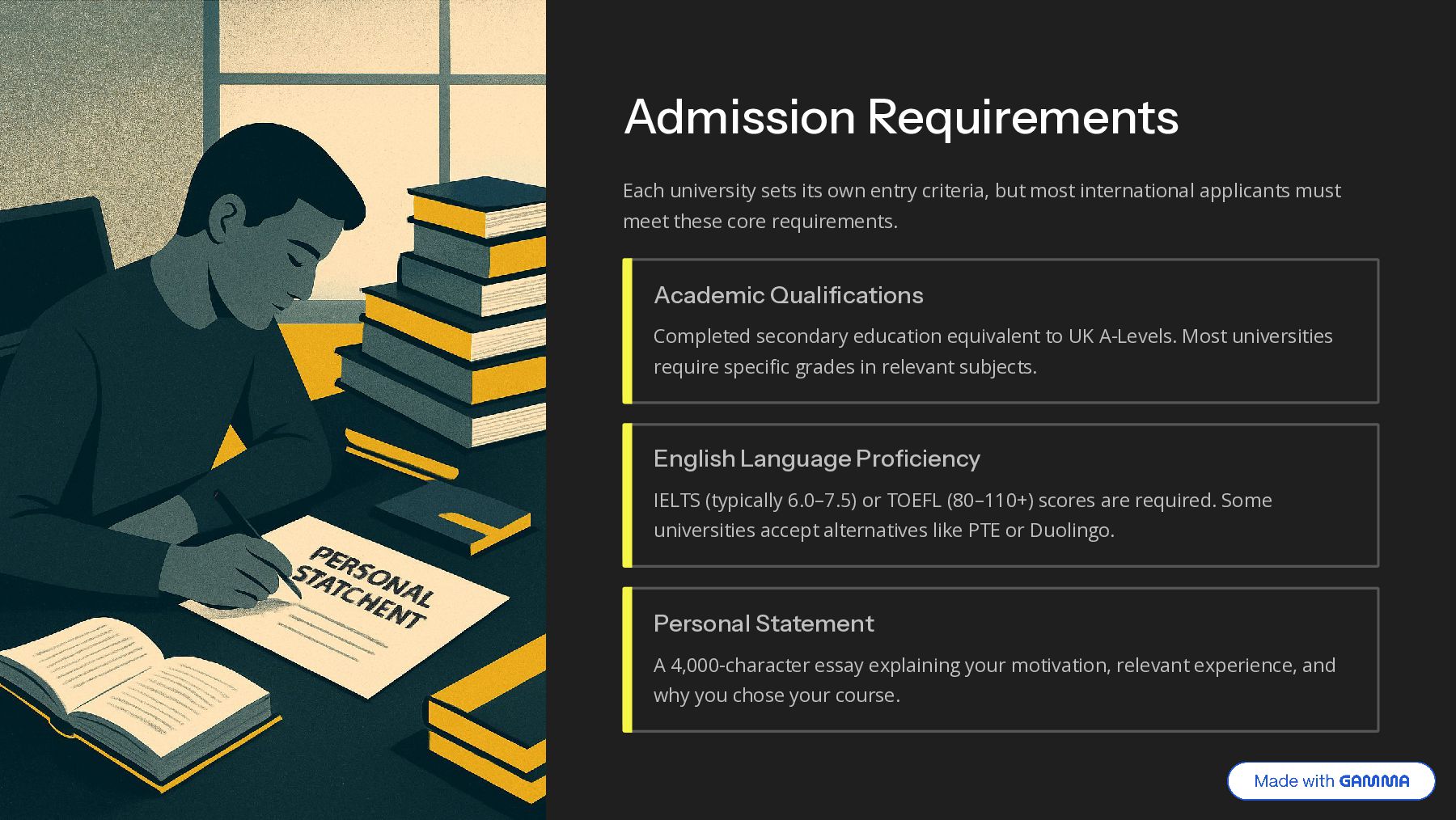
  3. Admission Requirements Each university sets its own entry criteria, but

    most international applicants must meet these core requirements. Academic Qualifications Completed secondary education equivalent to UK A-Levels. Most universities require specific grades in relevant subjects. English Language Proficiency IELTS (typically 6.0–7.5) or TOEFL (80–110+) scores are required. Some universities accept alternatives like PTE or Duolingo. Personal Statement A 4,000-character essay explaining your motivation, relevant experience, and why you chose your course.
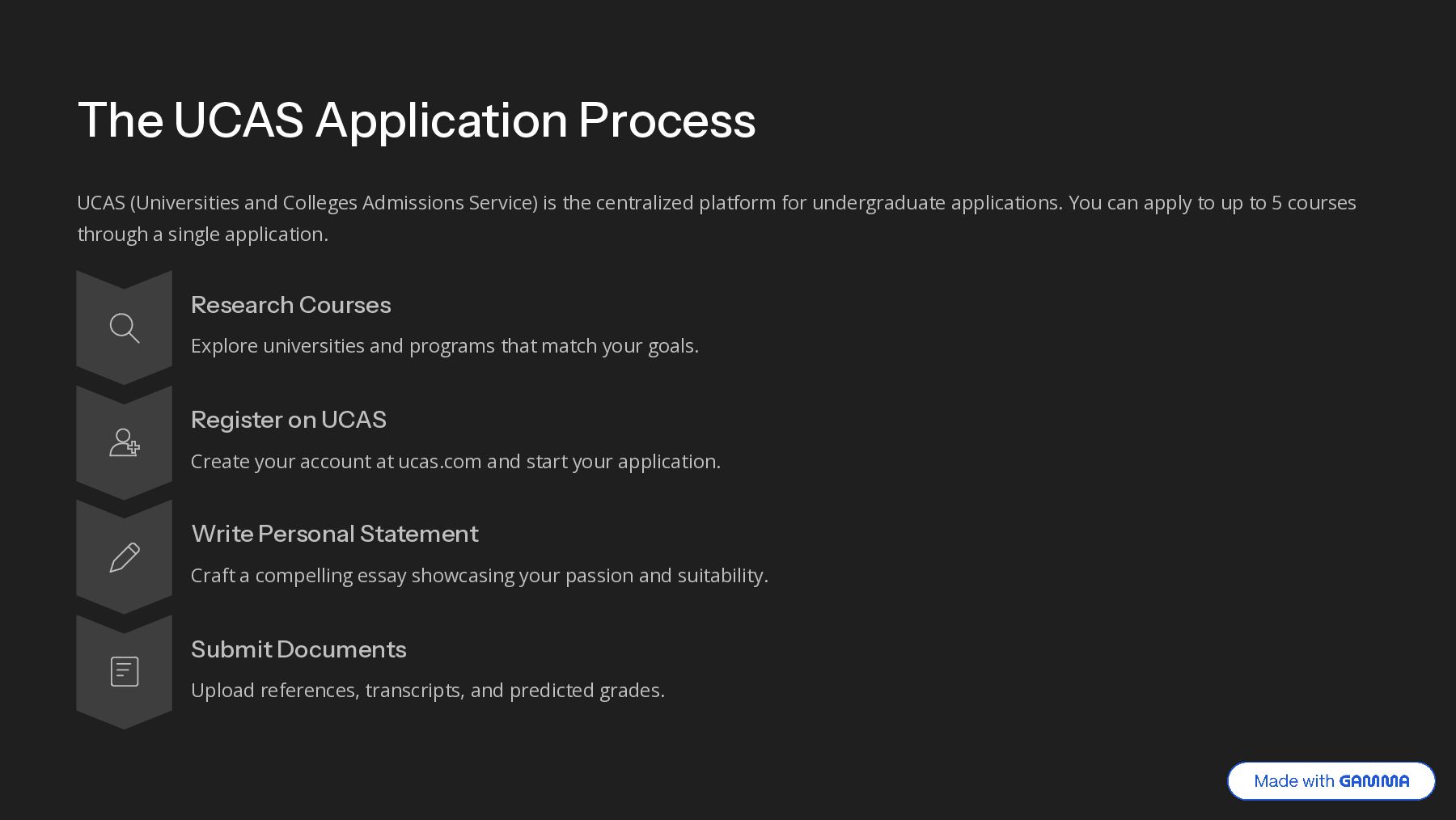
  4. The UCAS Application Process UCAS (Universities and Colleges Admissions Service)

    is the centralized platform for undergraduate applications. You can apply to up to 5 courses through a single application. Research Courses Explore universities and programs that match your goals. Register on UCAS Create your account at ucas.com and start your application. Write Personal Statement Craft a compelling essay showcasing your passion and suitability. Submit Documents Upload references, transcripts, and predicted grades.
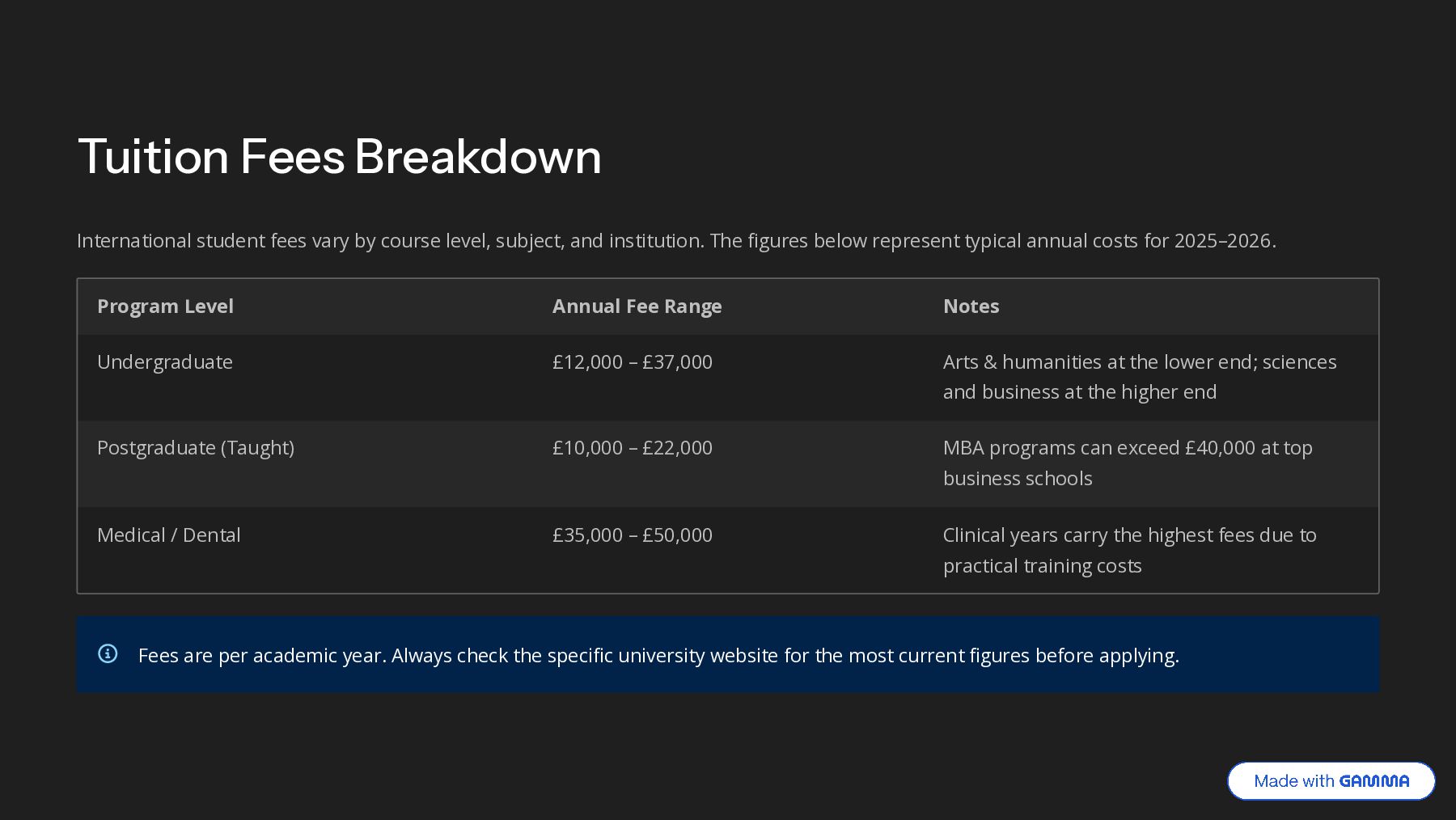
  5. Tuition Fees Breakdown International student fees vary by course level,

    subject, and institution. The figures below represent typical annual costs for 2025–2026. Program Level Annual Fee Range Notes Undergraduate £12,000 – £37,000 Arts & humanities at the lower end; sciences and business at the higher end Postgraduate (Taught) £10,000 – £22,000 MBA programs can exceed £40,000 at top business schools Medical / Dental £35,000 – £50,000 Clinical years carry the highest fees due to practical training costs Fees are per academic year. Always check the specific university website for the most current figures before applying.
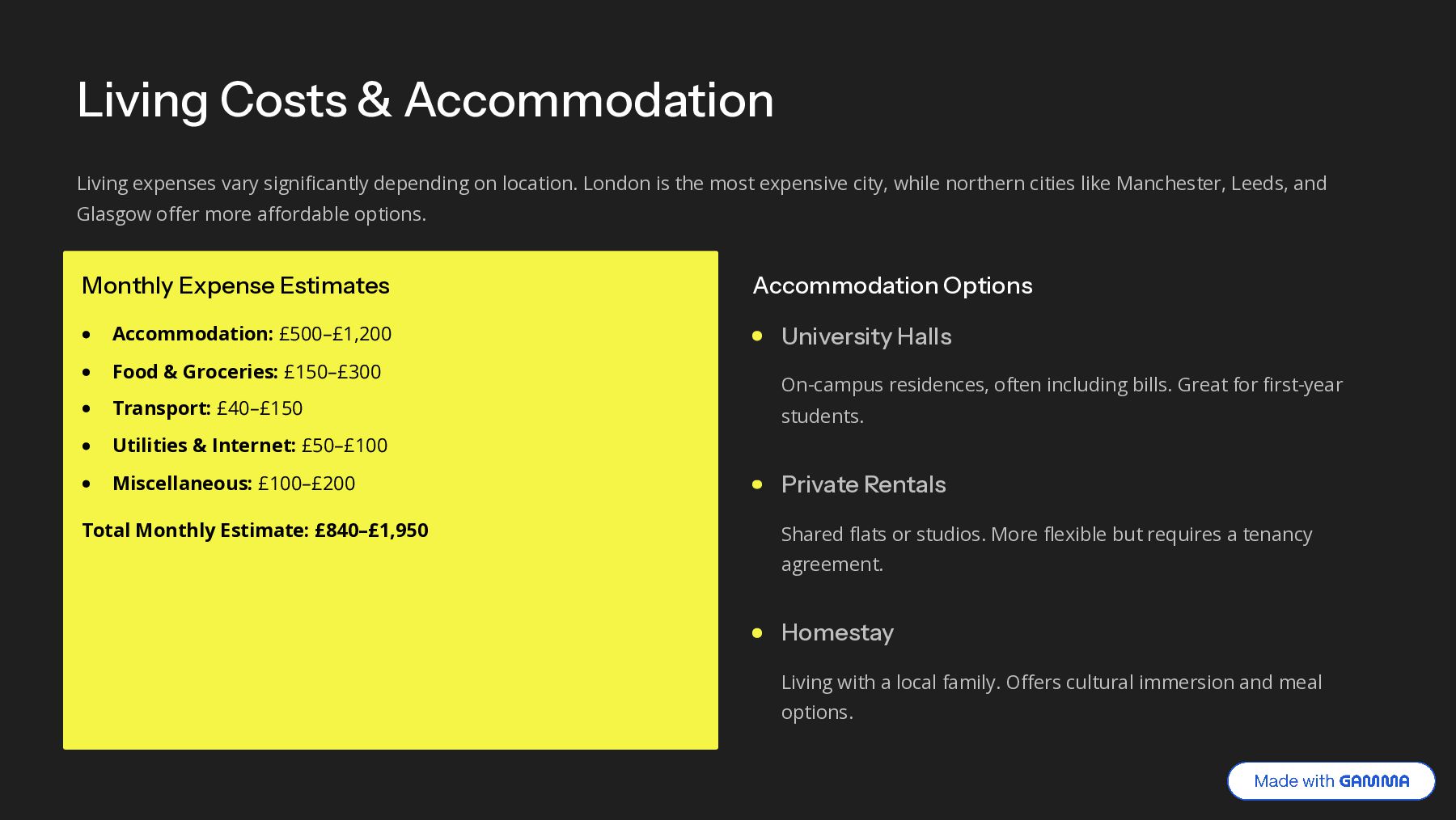
  6. Living Costs & Accommodation Living expenses vary significantly depending on

    location. London is the most expensive city, while northern cities like Manchester, Leeds, and Glasgow offer more affordable options. Monthly Expense Estimates Accommodation: £500–£1,200 Food & Groceries: £150–£300 Transport: £40–£150 Accommodation Options University Halls On-campus residences, often including bills. Great for first-year students. Utilities & Internet: £50–£100 Miscellaneous: £100–£200 Total Monthly Estimate: £840–£1,950 Private Rentals Shared flats or studios. More flexible but requires a tenancy agreement. Homestay Living with a local family. Offers cultural immersion and meal options.
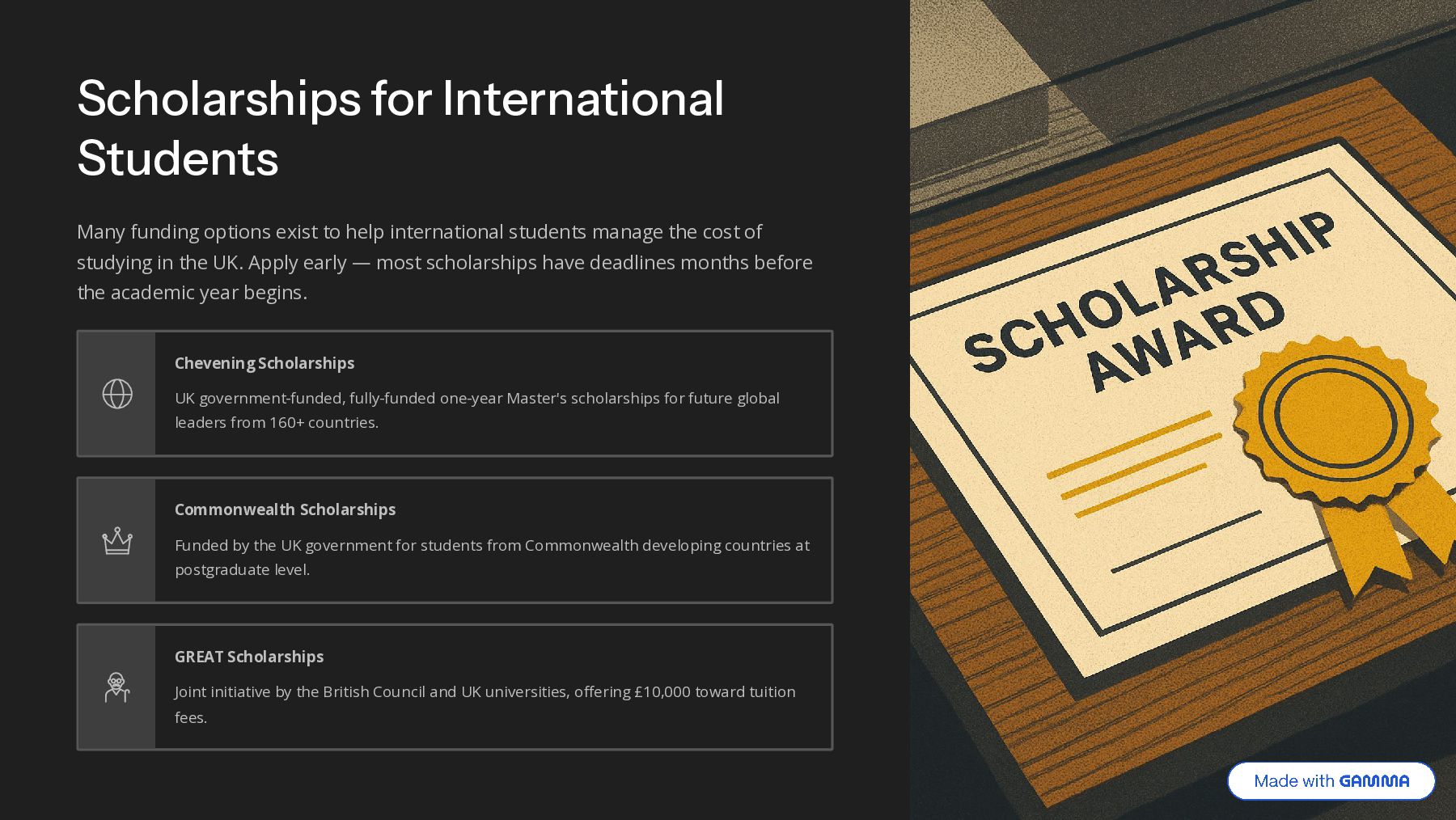
  7. Scholarships for International Students Many funding options exist to help

    international students manage the cost of studying in the UK. Apply early — most scholarships have deadlines months before the academic year begins. Chevening Scholarships UK government-funded, fully-funded one-year Master's scholarships for future global leaders from 160+ countries. Commonwealth Scholarships Funded by the UK government for students from Commonwealth developing countries at postgraduate level. GREAT Scholarships Joint initiative by the British Council and UK universities, offering £10,000 toward tuition fees.
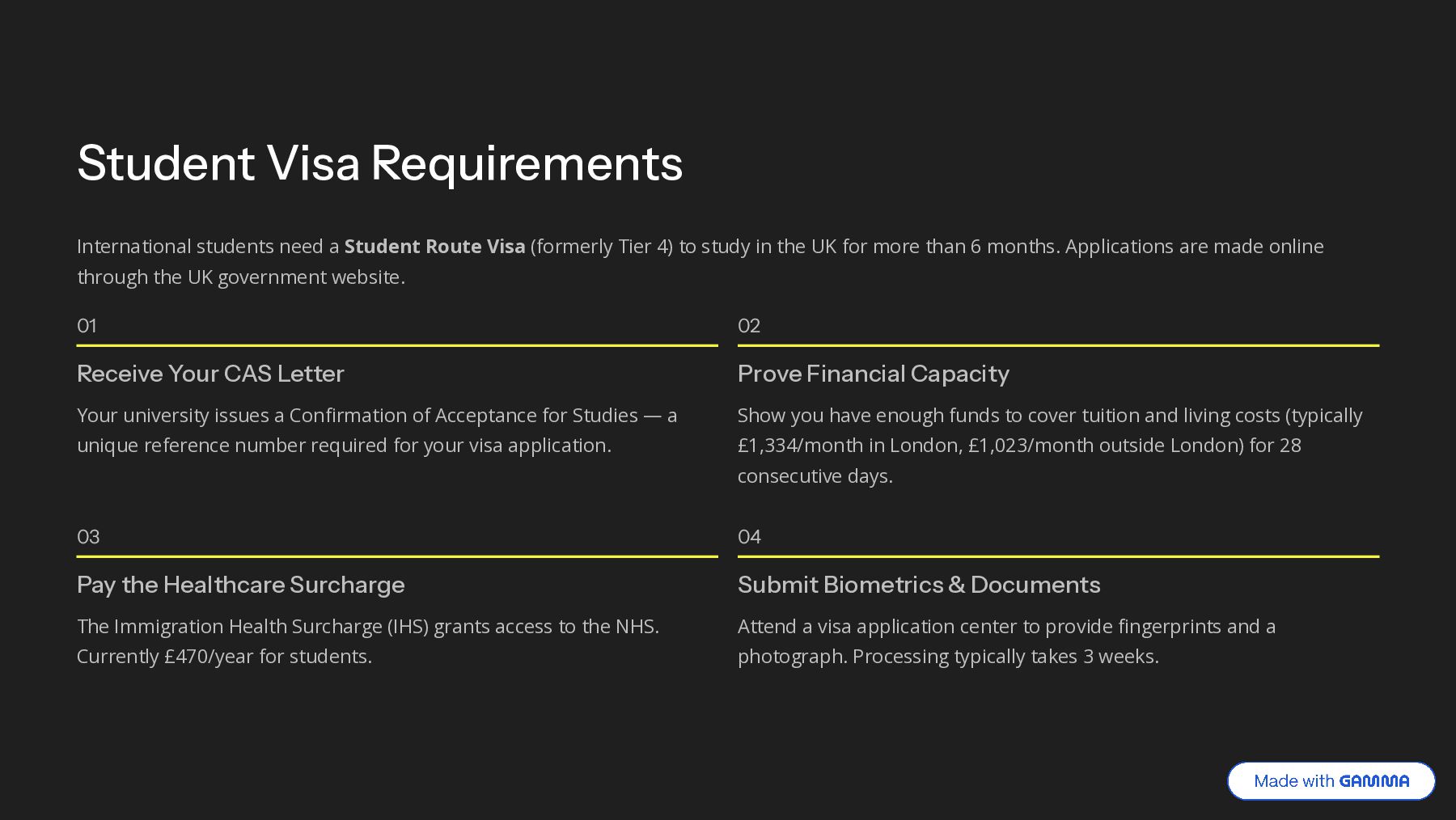
  8. Student Visa Requirements International students need a Student Route Visa

    (formerly Tier 4) to study in the UK for more than 6 months. Applications are made online through the UK government website. 01 02 Receive Your CAS Letter Prove Financial Capacity Your university issues a Confirmation of Acceptance for Studies — a Show you have enough funds to cover tuition and living costs (typically unique reference number required for your visa application. £1,334/month in London, £1,023/month outside London) for 28 consecutive days. 03 04 Pay the Healthcare Surcharge Submit Biometrics & Documents The Immigration Health Surcharge (IHS) grants access to the NHS. Attend a visa application center to provide fingerprints and a Currently £470/year for students. photograph. Processing typically takes 3 weeks.
  9. Your Next Steps ✅ Research Identify your course, shortlist universities,

    and check entry requirements.Take your English test, draft your personal statement, and gather references. 📤 Apply Submit your UCAS application before the deadline and apply for scholarships. 🛂 Visa Once you receive your CAS, apply for your Student Route Visa promptly.