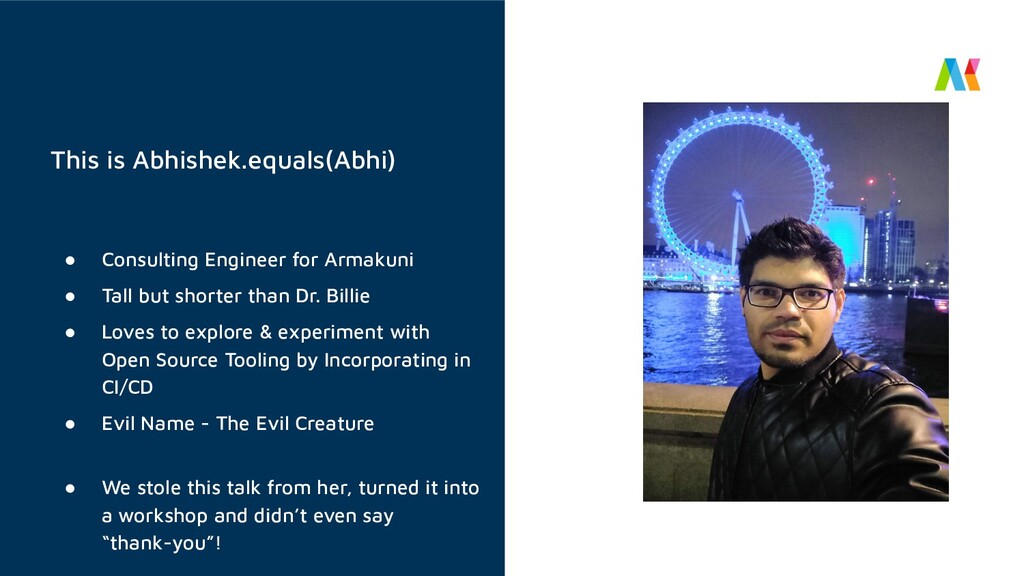
but shorter than Dr. Billie • Loves to explore & experiment with Open Source Tooling by Incorporating in CI/CD • Evil Name - The Evil Creature • We stole this talk from her, turned it into a workshop and didn’t even say “thank-you”!
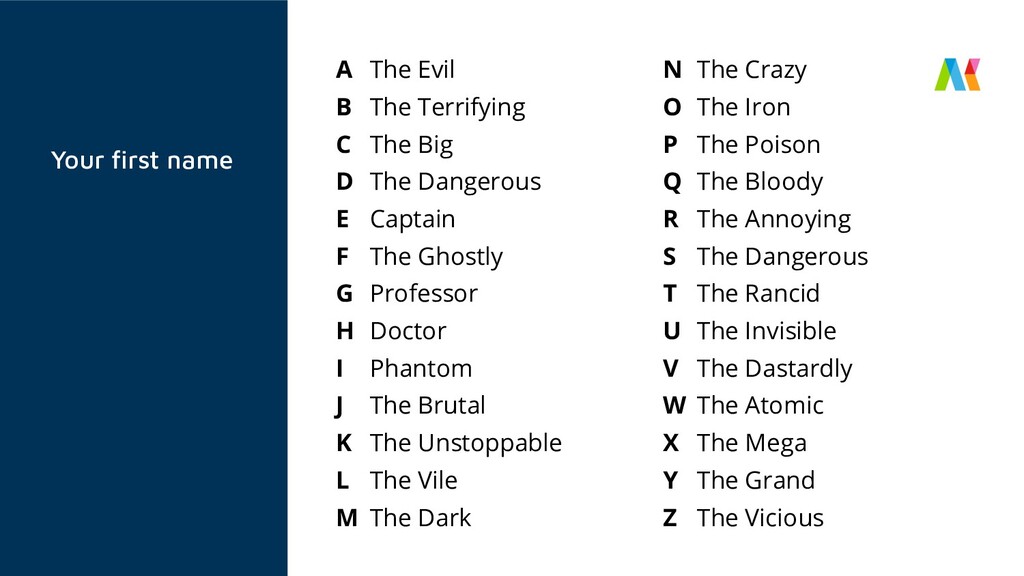
The Terrifying O The Iron C The Big P The Poison D The Dangerous Q The Bloody E Captain R The Annoying F The Ghostly S The Dangerous G Professor T The Rancid H Doctor U The Invisible I Phantom V The Dastardly J The Brutal W The Atomic K The Unstoppable X The Mega L The Vile Y The Grand M The Dark Z The Vicious
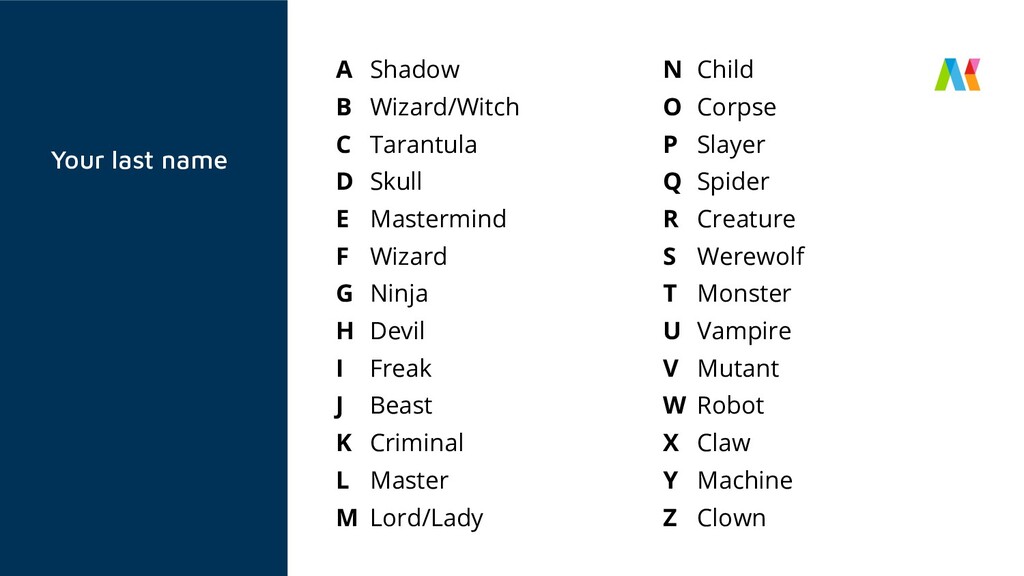
Corpse C Tarantula P Slayer D Skull Q Spider E Mastermind R Creature F Wizard S Werewolf G Ninja T Monster H Devil U Vampire I Freak V Mutant J Beast W Robot K Criminal X Claw L Master Y Machine M Lord/Lady Z Clown
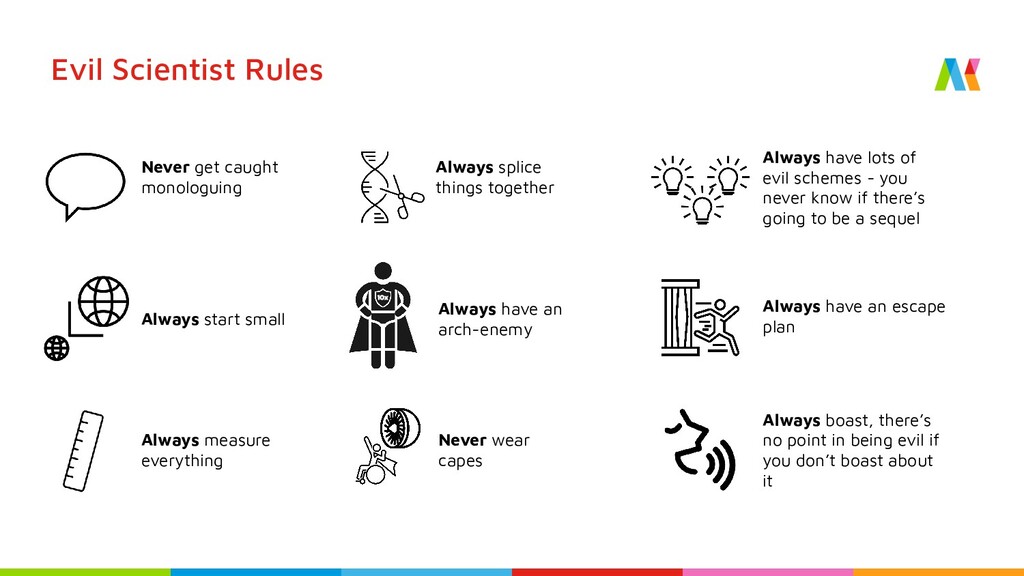
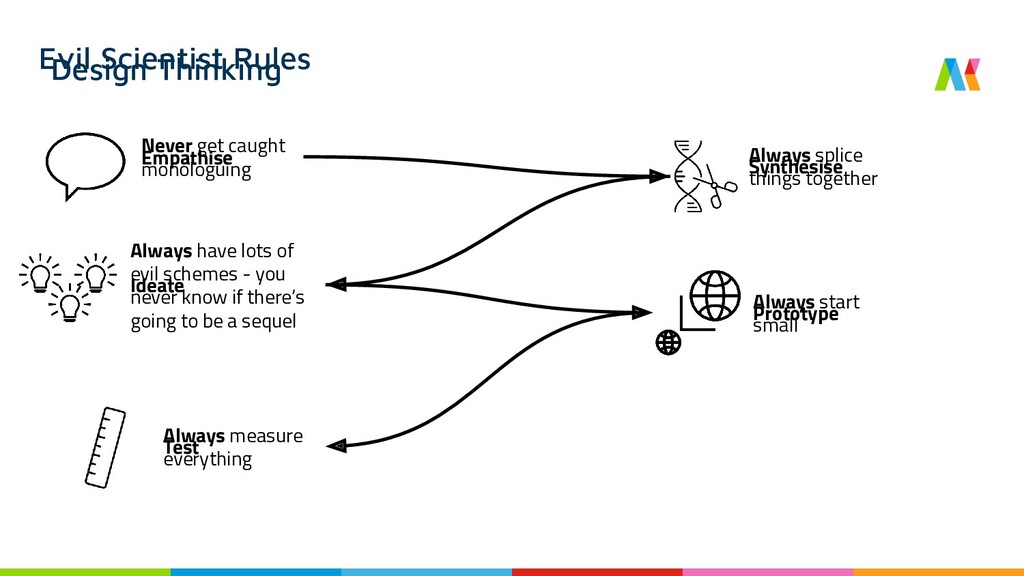
you never know if there’s going to be a sequel Always start small Always have an arch-enemy Always have an escape plan Always boast, there’s no point in being evil if you don’t boast about it Never wear capes Never get caught monologuing Always measure everything Always splice things together
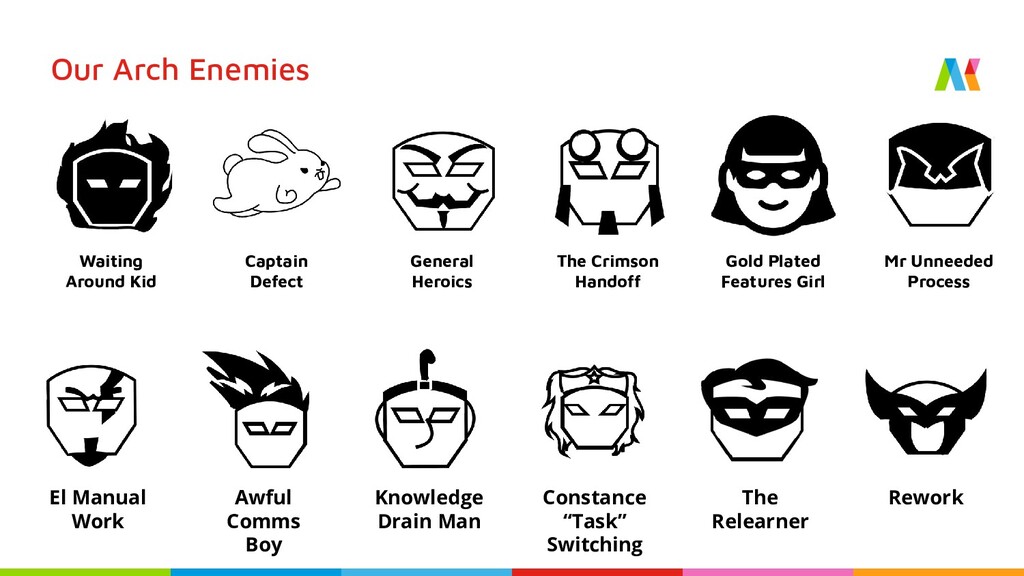
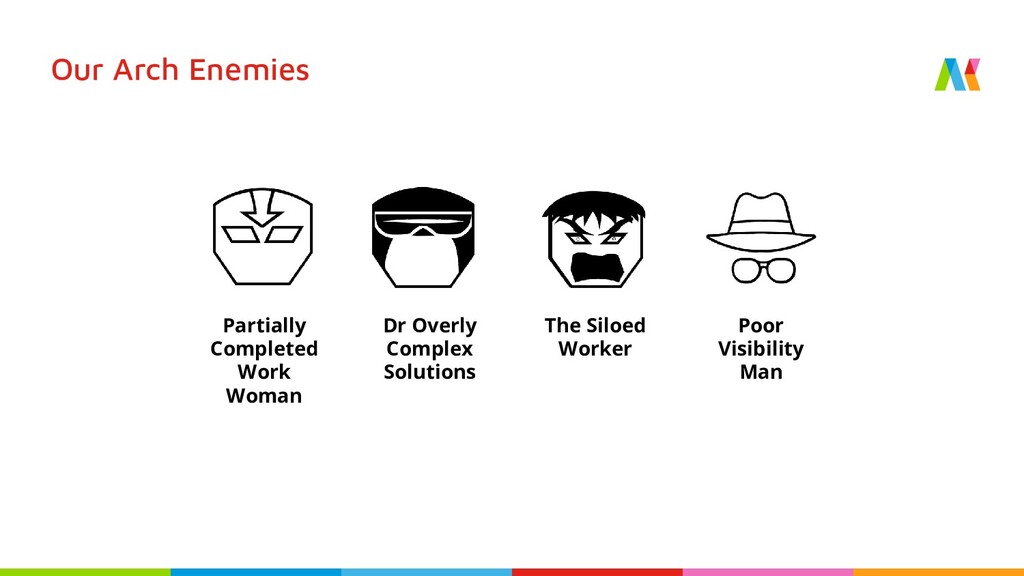
The Crimson Handoff Gold Plated Features Girl Mr Unneeded Process El Manual Work Awful Comms Boy Knowledge Drain Man Constance “Task” Switching The Relearner Rework
evil schemes - you never know if there’s going to be a sequel Always start small Never get caught monologuing Always measure everything Always splice things together Ideate Prototype Test Synthesise
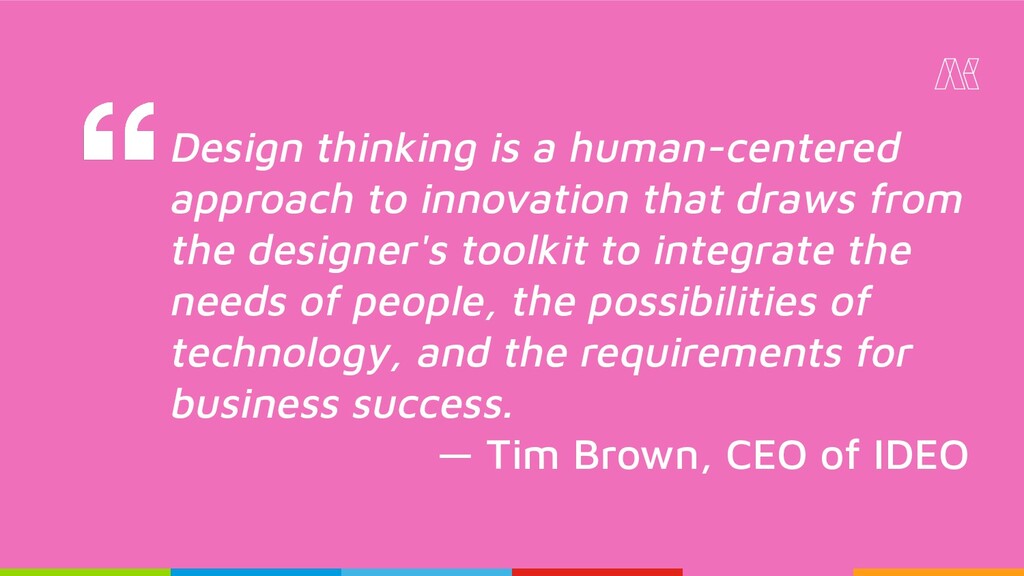
from the designer's toolkit to integrate the needs of people, the possibilities of technology, and the requirements for business success. — Tim Brown, CEO of IDEO
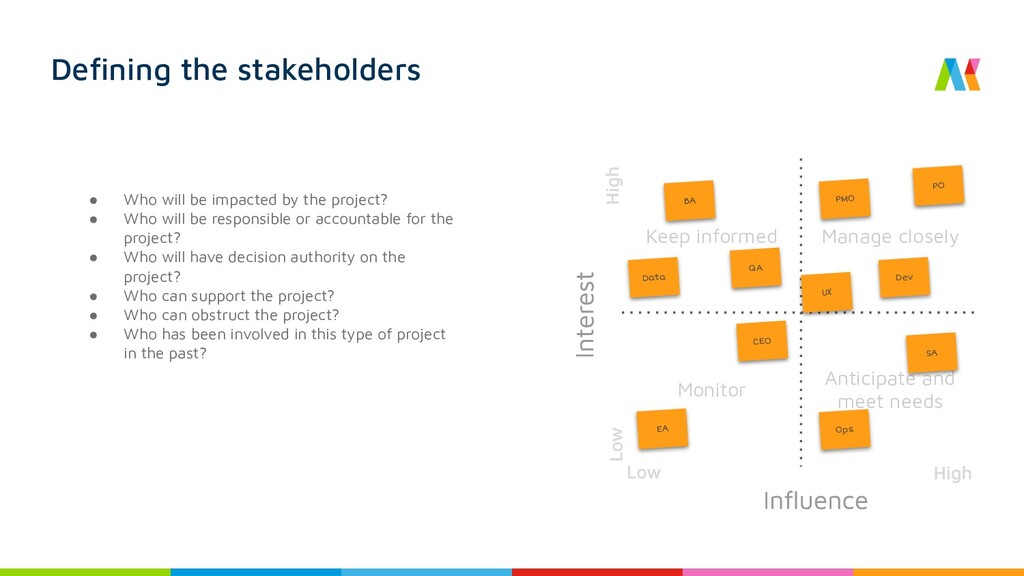
project? • Who will be responsible or accountable for the project? • Who will have decision authority on the project? • Who can support the project? • Who can obstruct the project? • Who has been involved in this type of project in the past? Keep informed Manage closely Monitor Anticipate and meet needs PMO CEO SA Ops Data PO BA UX EA Dev QA
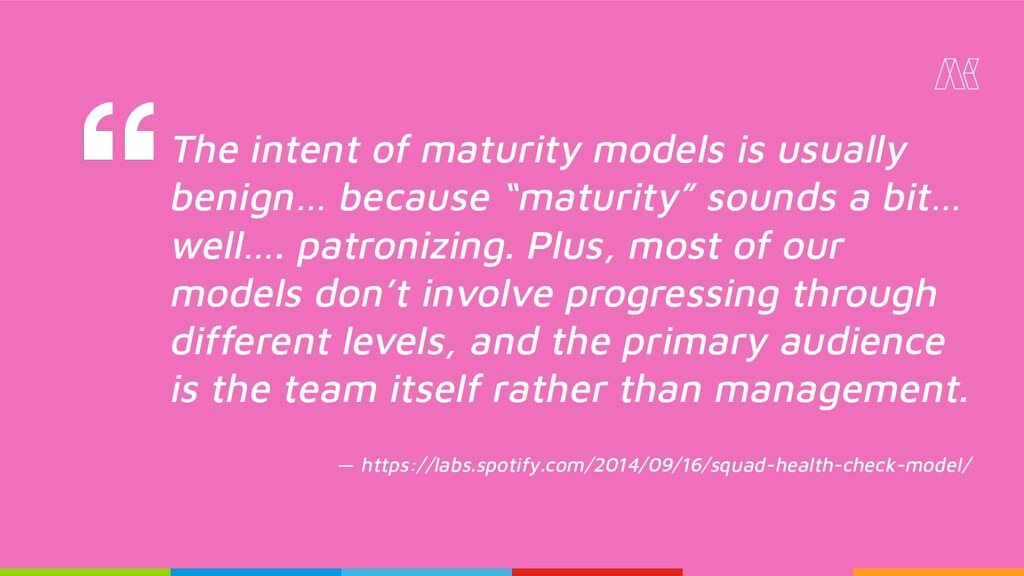
sounds a bit… well…. patronizing. Plus, most of our models don’t involve progressing through different levels, and the primary audience is the team itself rather than management. — https://labs.spotify.com/2014/09/16/squad-health-check-model/
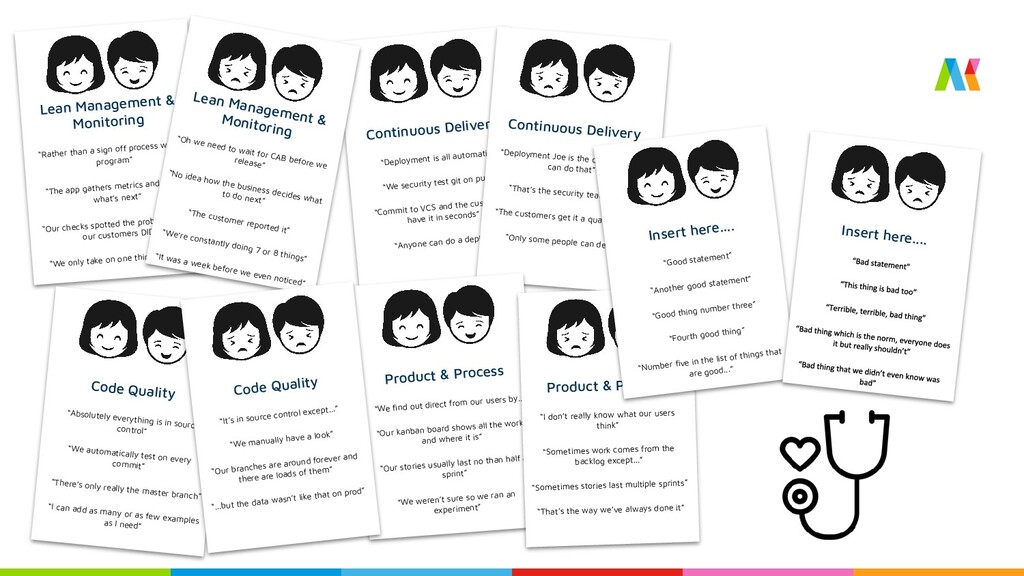
“Commit to VCS and the customers have it in seconds” “Anyone can do a deploy!” Continuous Delivery Continuous Delivery “Deployment Joe is the only one who can do that” “That’s the security team’s job” “The customers get it a quarter later” “Only some people can deploy” “We find out direct from our users by... “Our kanban board shows all the work, and where it is” “Our stories usually last no than half a sprint” "We weren’t sure so we ran an experiment” Product & Process Product & Process “I don’t really know what our users think” “Sometimes work comes from the backlog except...” “Sometimes stories last multiple sprints” “That’s the way we’ve always done it” Insert here.... “Good statement” “Another good statement” “Good thing number three” “Fourth good thing” “Number five in the list of things that are good...” Insert here.... “Rather than a sign off process we pair program” “The app gathers metrics and decide what’s next” “Our checks spotted the problem before our customers DID” “We only take on one thing at a time” Lean Management & Monitoring Lean Management & Monitoring “Oh we need to wait for CAB before we release” “No idea how the business decides what to do next” “The customer reported it” “We’re constantly doing 7 or 8 things” “It was a week before we even noticed” Code Quality “Absolutely everything is in source control” “We automatically test on every commit” “There’s only really the master branch” “I can add as many or as few examples as I need” Code Quality “It’s in source control except...” “We manually have a look” “Our branches are around forever and there are loads of them” “...but the data wasn’t like that on prod”
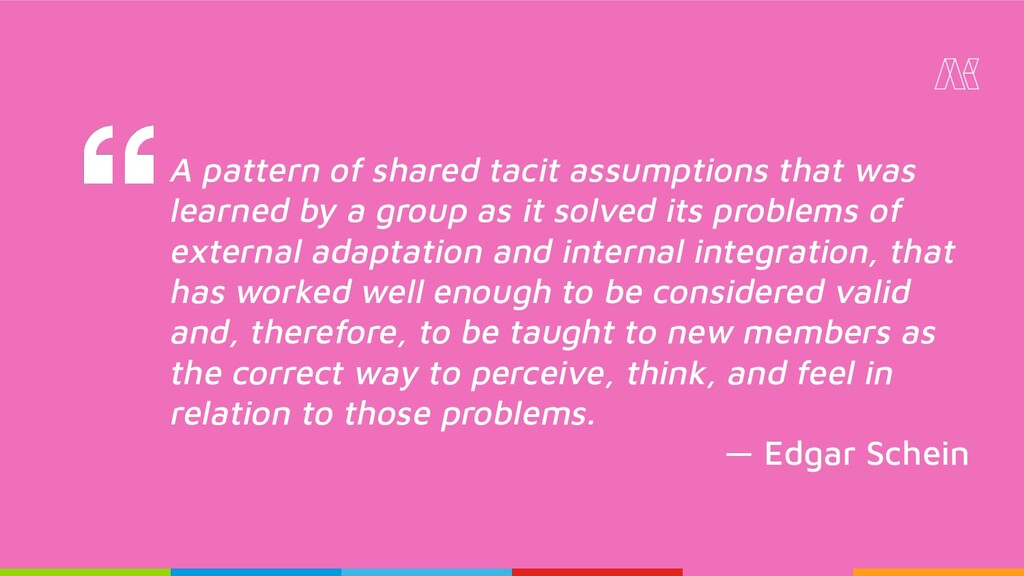
a group as it solved its problems of external adaptation and internal integration, that has worked well enough to be considered valid and, therefore, to be taught to new members as the correct way to perceive, think, and feel in relation to those problems. — Edgar Schein
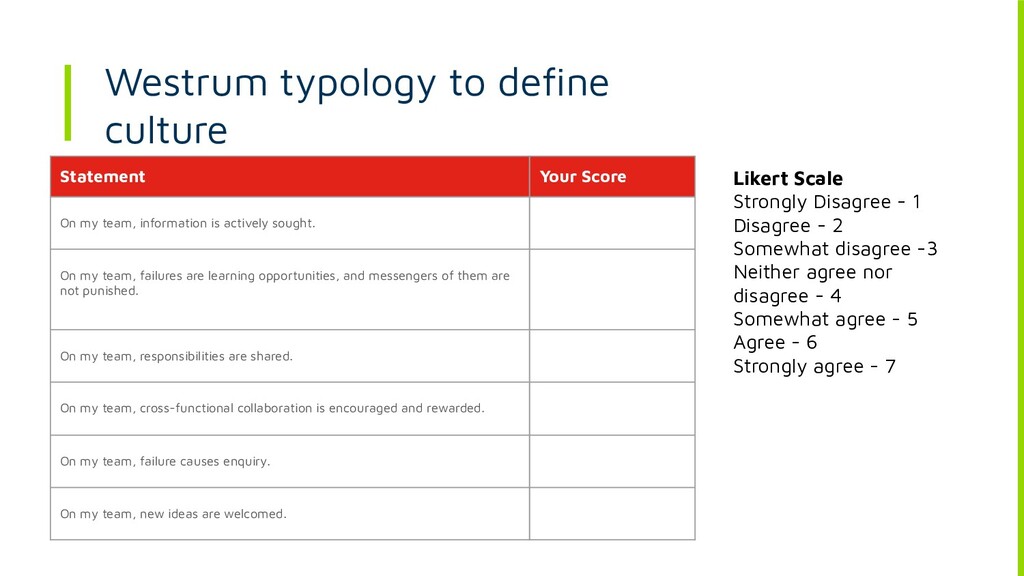
team, information is actively sought. On my team, failures are learning opportunities, and messengers of them are not punished. On my team, responsibilities are shared. On my team, cross-functional collaboration is encouraged and rewarded. On my team, failure causes enquiry. On my team, new ideas are welcomed. Likert Scale Strongly Disagree - 1 Disagree - 2 Somewhat disagree -3 Neither agree nor disagree - 4 Somewhat agree - 5 Agree - 6 Strongly agree - 7
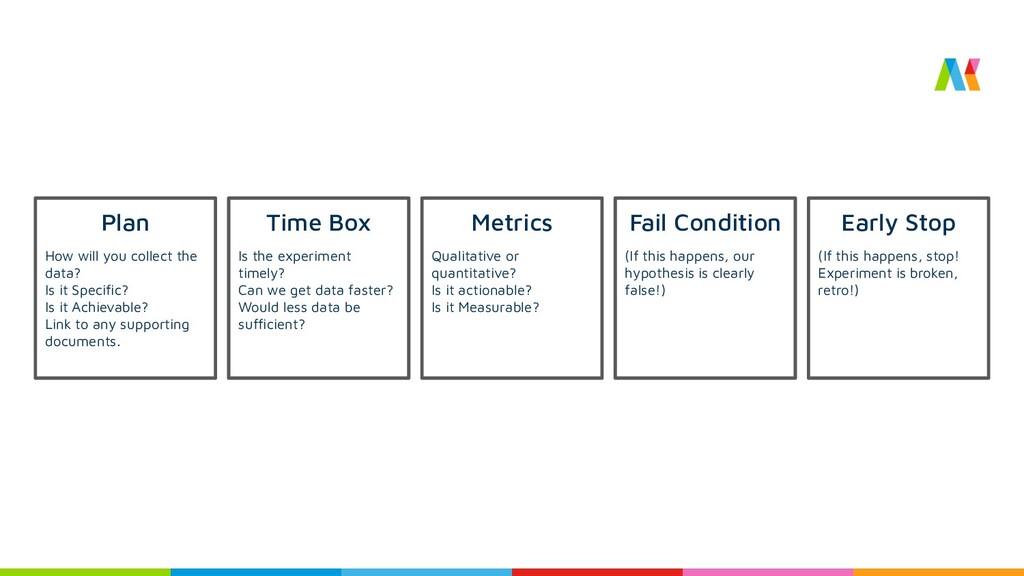
faster? Would less data be sufficient? Metrics Qualitative or quantitative? Is it actionable? Is it Measurable? Fail Condition (If this happens, our hypothesis is clearly false!) Early Stop (If this happens, stop! Experiment is broken, retro!) Plan How will you collect the data? Is it Specific? Is it Achievable? Link to any supporting documents.


 agilescotland
 tomokusaba
 riyaamemiya
 makocchi
.png) codatum
codatum
 taketakekaho
 onk
onk
 hiracky16
 koukihosaka
 codmoninc
 ueponx
 pfn
pfn
 shogo4131
 maggiecrowley
 techseoconnect
 danielanewman
 rasagy
 sergeychernyshev
 gurzu
gurzu
 inesmontani
 jnunemaker
 hatefulcrawdad
 427marketing
 mkilby