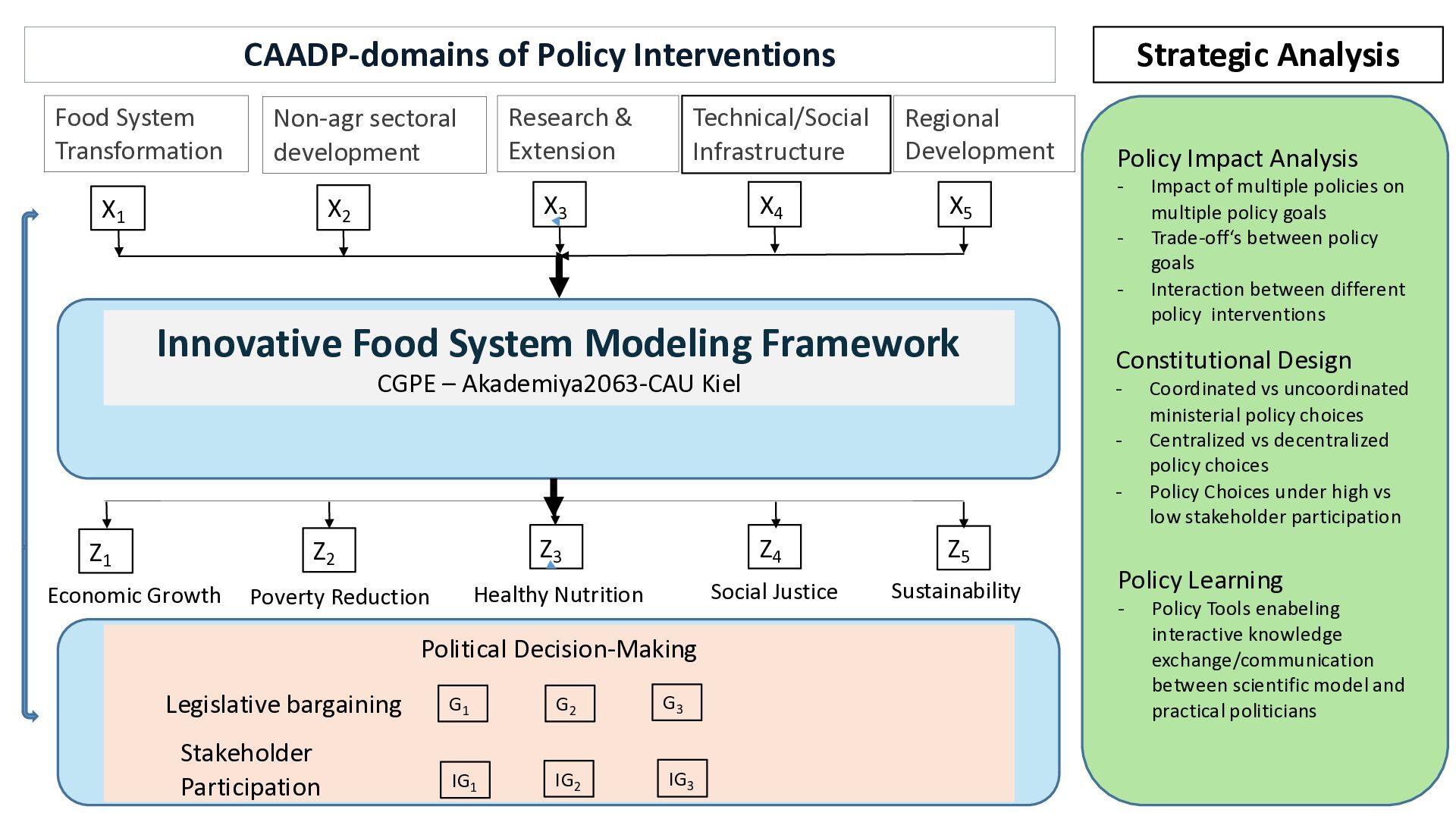
work best to solve sustainable development problems in specific countries is nowadays still both challenging and crucial. ➢ Beyond generating scientific knowledge on policy impact a second and may be even bigger challenge is to integrate this knowledge into real world politics. ➢ A crucial role in understanding the impact of polcies plays economic modeling.
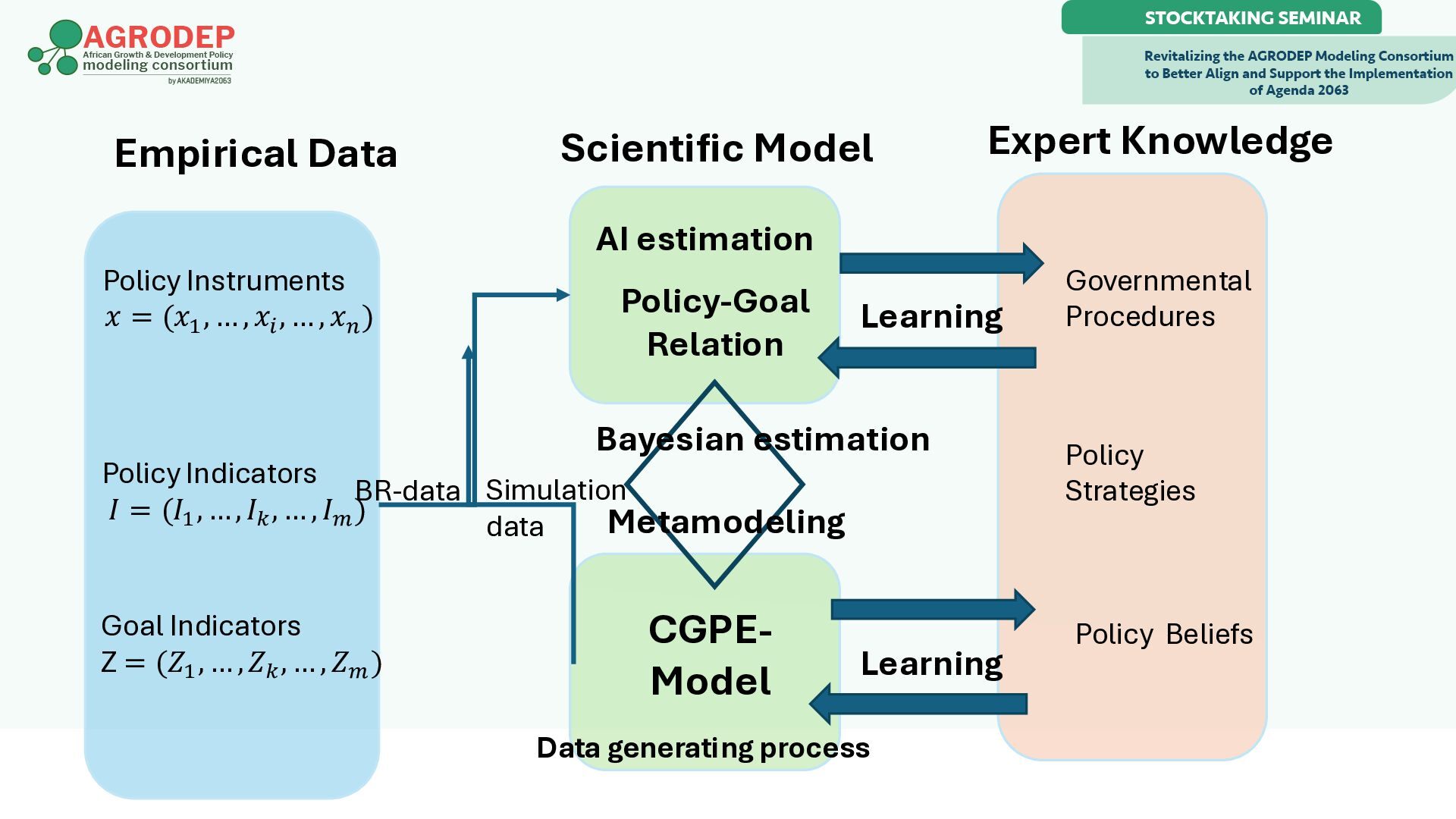
and tools. The latter require innovative computational model techniques: ➢Computational simulation ➢Metamodelling ➢Bayesian model averaging /model selection
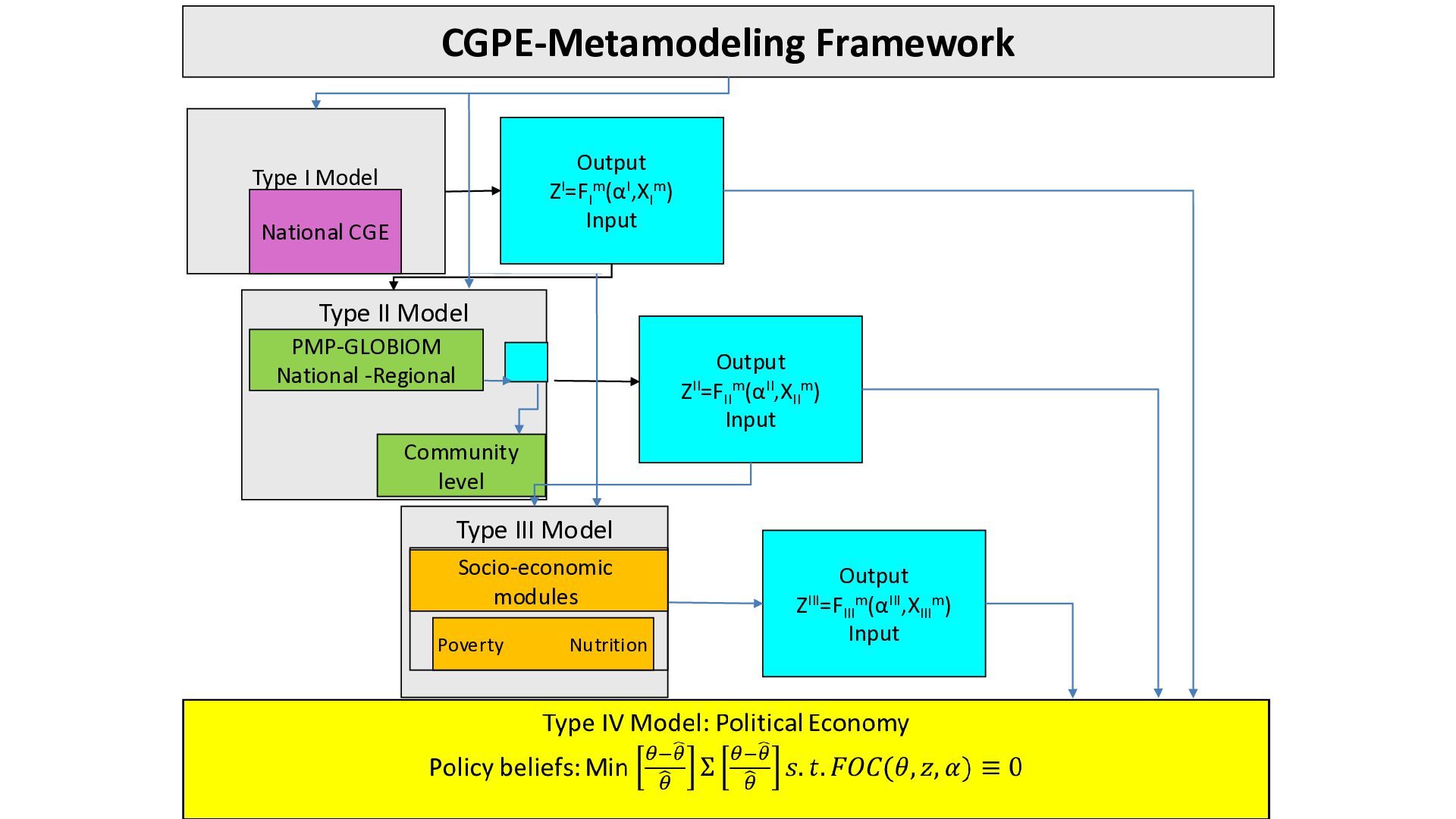
Model PMP-GLOBIOM National -Regional CGPE-Metamodeling Framework Community level Output ZII=FII m(αII,XII m) Input Type III Model Output ZIII=FIII m(αIII,XIII m) Input National CGE Socio-economic modules Poverty Nutrition
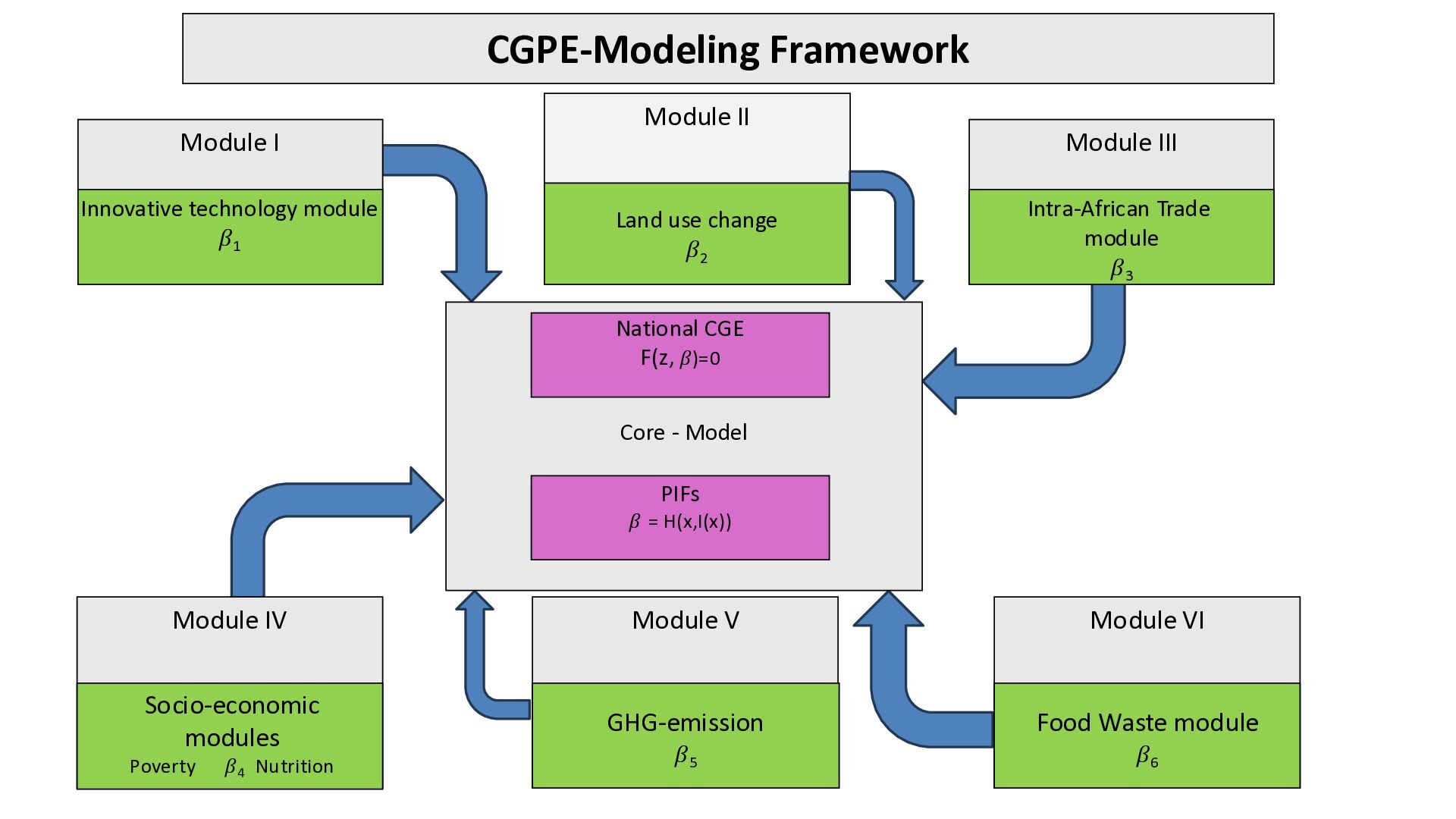
Framework Module VI National CGE F(z, 𝛽)=0 Food Waste module 𝛽6 Module IV Module III Intra-African Trade module 𝛽3 PIFs 𝛽 = H(x,I(x)) Module II Land use change 𝛽2 Module V GHG-emission 𝛽5 Socio-economic modules Poverty 𝛽4 Nutrition
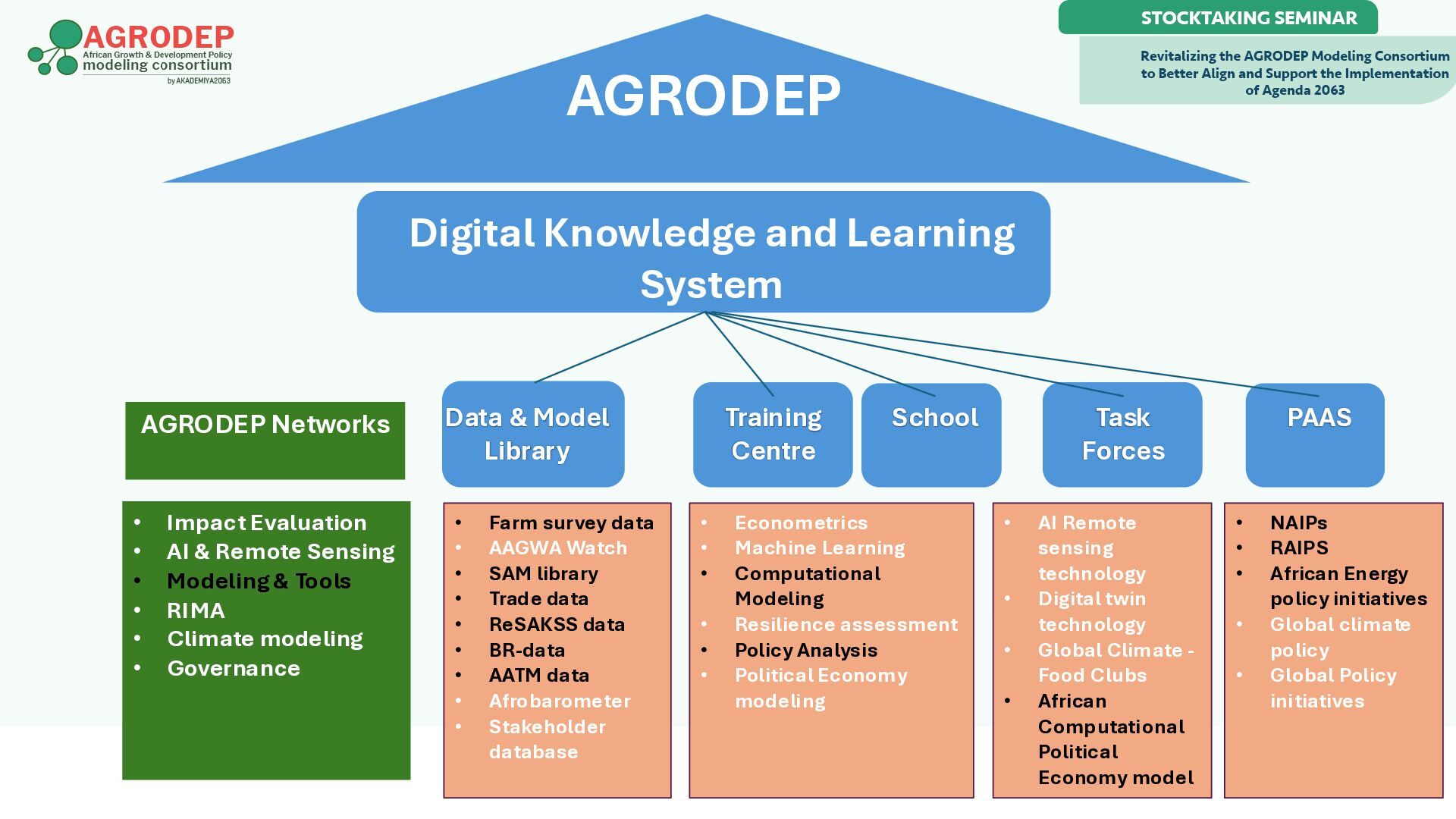
Sensing • Modeling & Tools • RIMA • Climate modeling • Governance Data & Model Library Training Centre School • Farm survey data • AAGWA Watch • SAM library • Trade data • ReSAKSS data • BR-data • AATM data • Afrobarometer • Stakeholder database Digital Knowledge and Learning System Task Forces • Econometrics • Machine Learning • Computational Modeling • Resilience assessment • Policy Analysis • Political Economy modeling • AI Remote sensing technology • Digital twin technology • Global Climate - Food Clubs • African Computational Political Economy model PAAS • NAIPs • RAIPS • African Energy policy initiatives • Global climate policy • Global Policy initiatives


 akademiya2063
 danielanewman
 ianozsvald
 rkendrick25
 skipperchong
 inesmontani
 tmiket
 signer
 andyhume
 khoart
 takai
takai
 swwweet
 helmedeiros