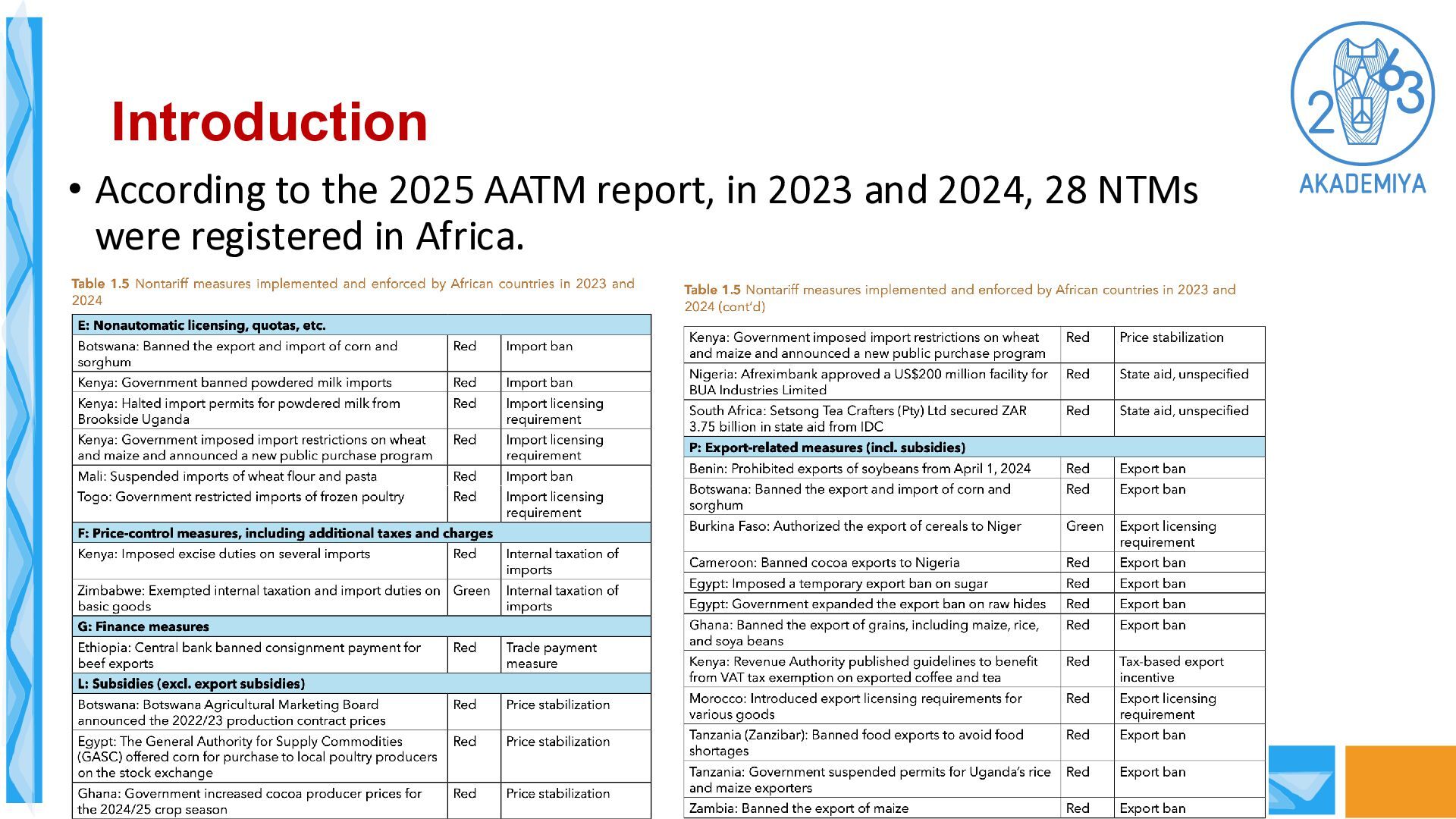
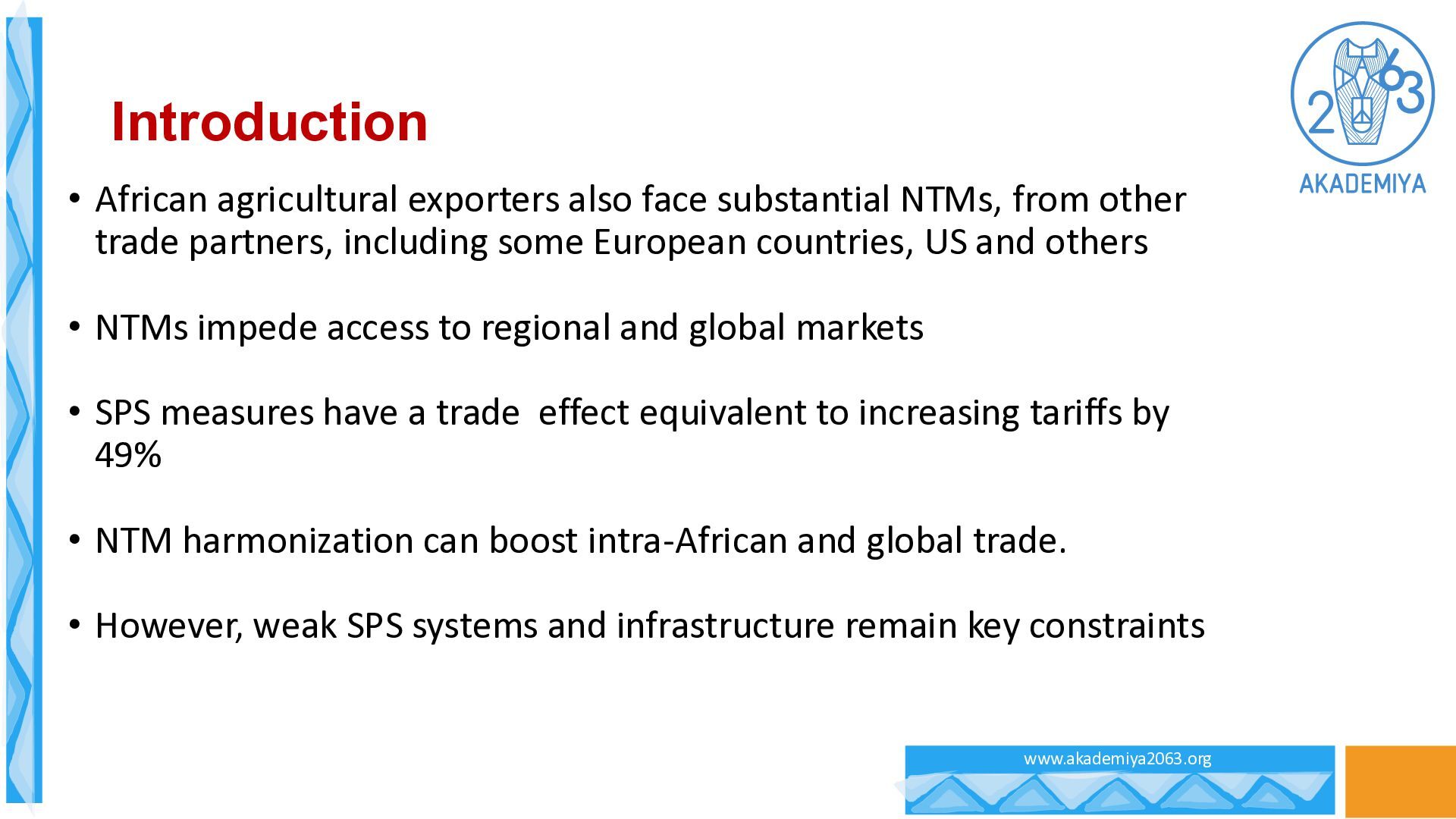
from other trade partners, including some European countries, US and others • NTMs impede access to regional and global markets • SPS measures have a trade effect equivalent to increasing tariffs by 49% • NTM harmonization can boost intra-African and global trade. • However, weak SPS systems and infrastructure remain key constraints
food, animal and plant health, and safe trade • Not to restrict trade • Becomes a barrier, when countries fail to comply • Compliance with SPS measures helps to • Facilitate trade across borders • Reduce trade rejection • Ensure consumption of safe food • Building compliance capacity entails • Understanding the costs of compliance • Exploring the priority investment needs at country levels
and Rwanda • The objectives were • Examine the cost of compliance for private actors • Estimate the costs of compliance by private operators • Identify drivers and compositions of cost of compliance • Investment priorities for public institutions • Identify priority areas of investment • Estimate the amount of investment needed • The study uses descriptive and qualitative analysis
as as high as 7.7% of the sales (Maskus et al. 2005) • Our study indicates lower than this but still significant, more than 1% • Morocco had the highest estimated compliance costs among the countries studied. • Internationally traded products have higher compliance cost than regionaly traded products 1. Compliance costs remain high, varying across countries and commodities
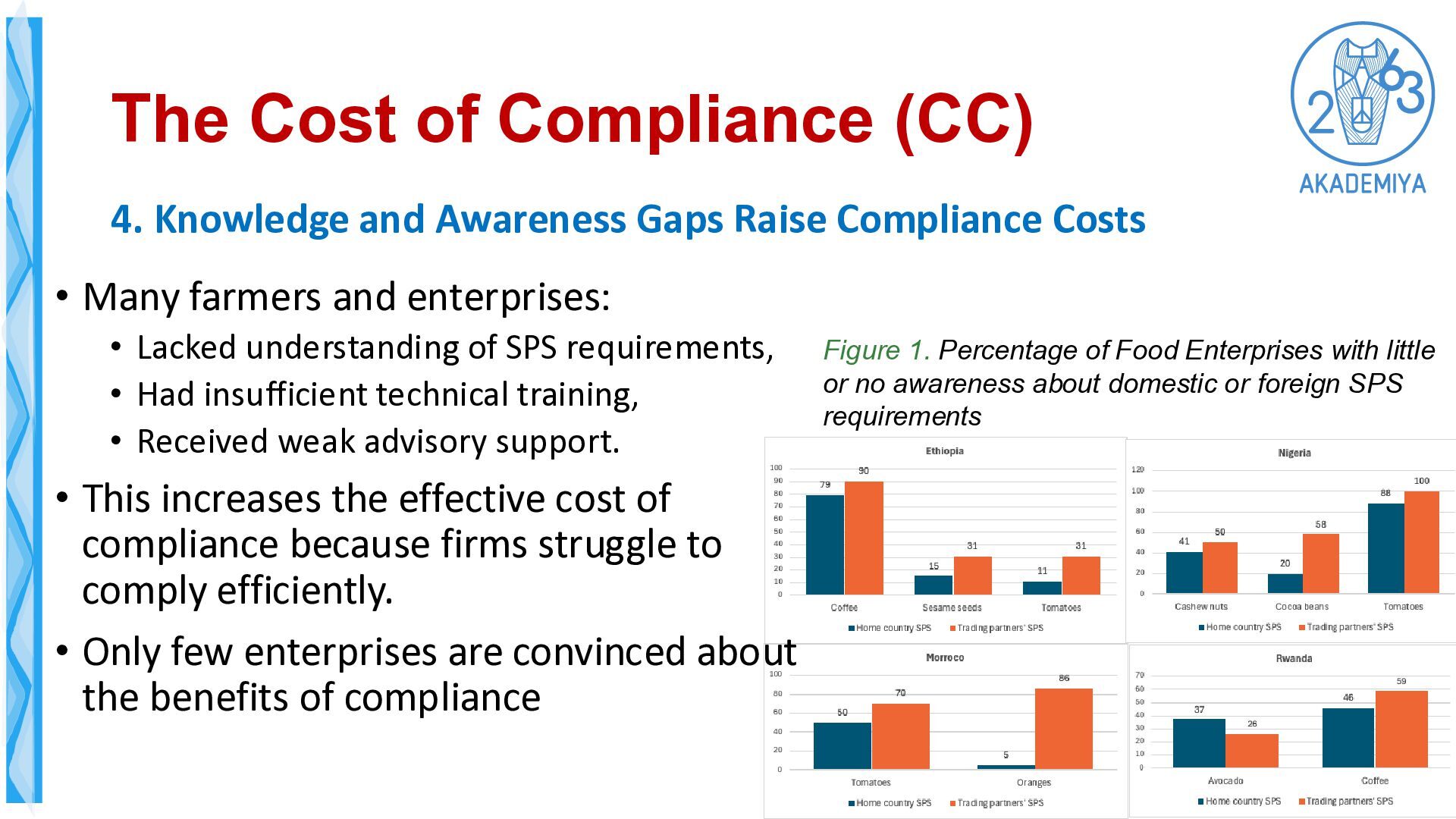
Food Enterprises with little or no awareness about domestic or foreign SPS requirements 4. Knowledge and Awareness Gaps Raise Compliance Costs • Many farmers and enterprises: • Lacked understanding of SPS requirements, • Had insufficient technical training, • Received weak advisory support. • This increases the effective cost of compliance because firms struggle to comply efficiently. • Only few enterprises are convinced about the benefits of compliance
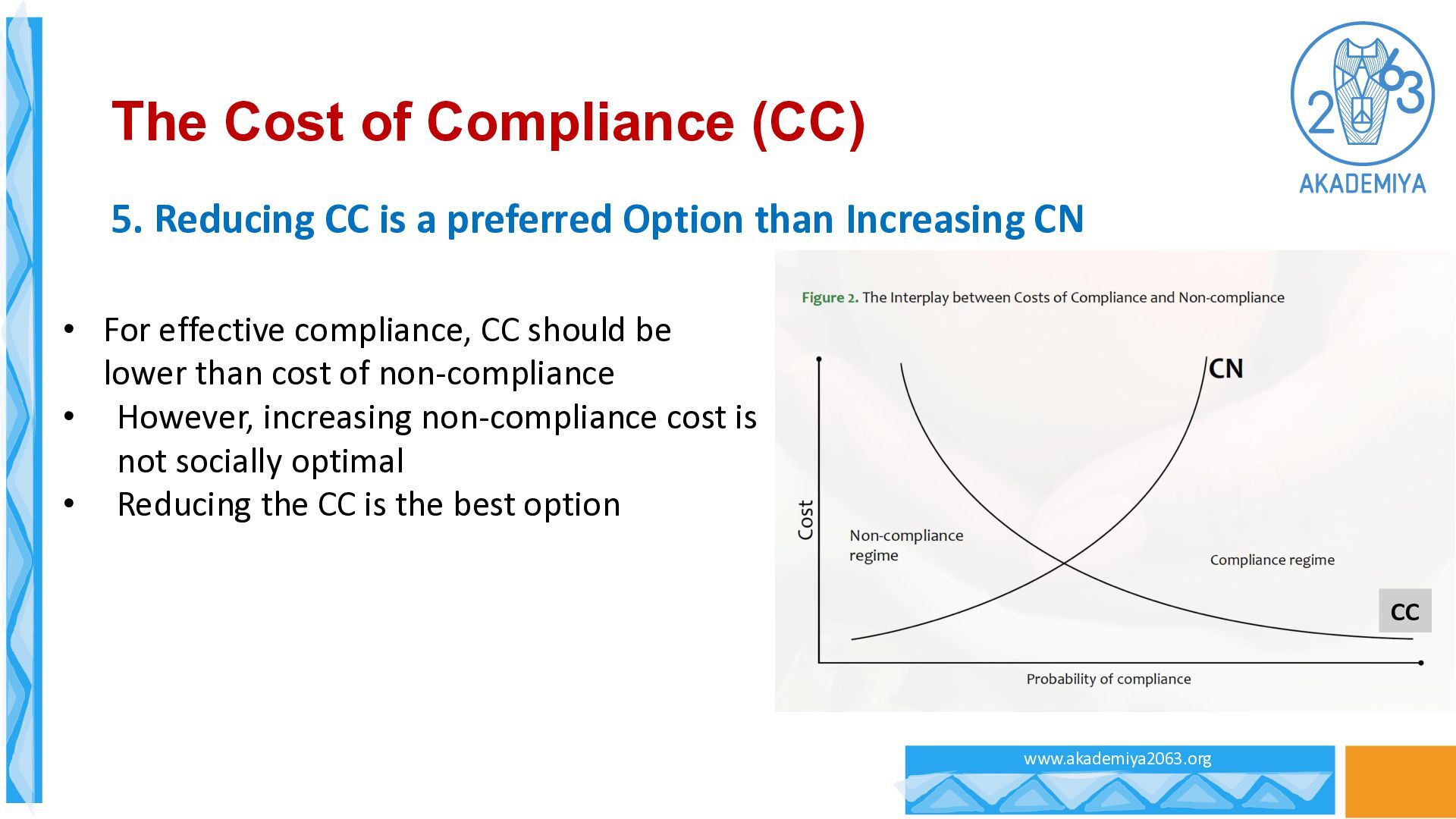
CC should be lower than cost of non-compliance • However, increasing non-compliance cost is not socially optimal • Reducing the CC is the best option 5. Reducing CC is a preferred Option than Increasing CN CC
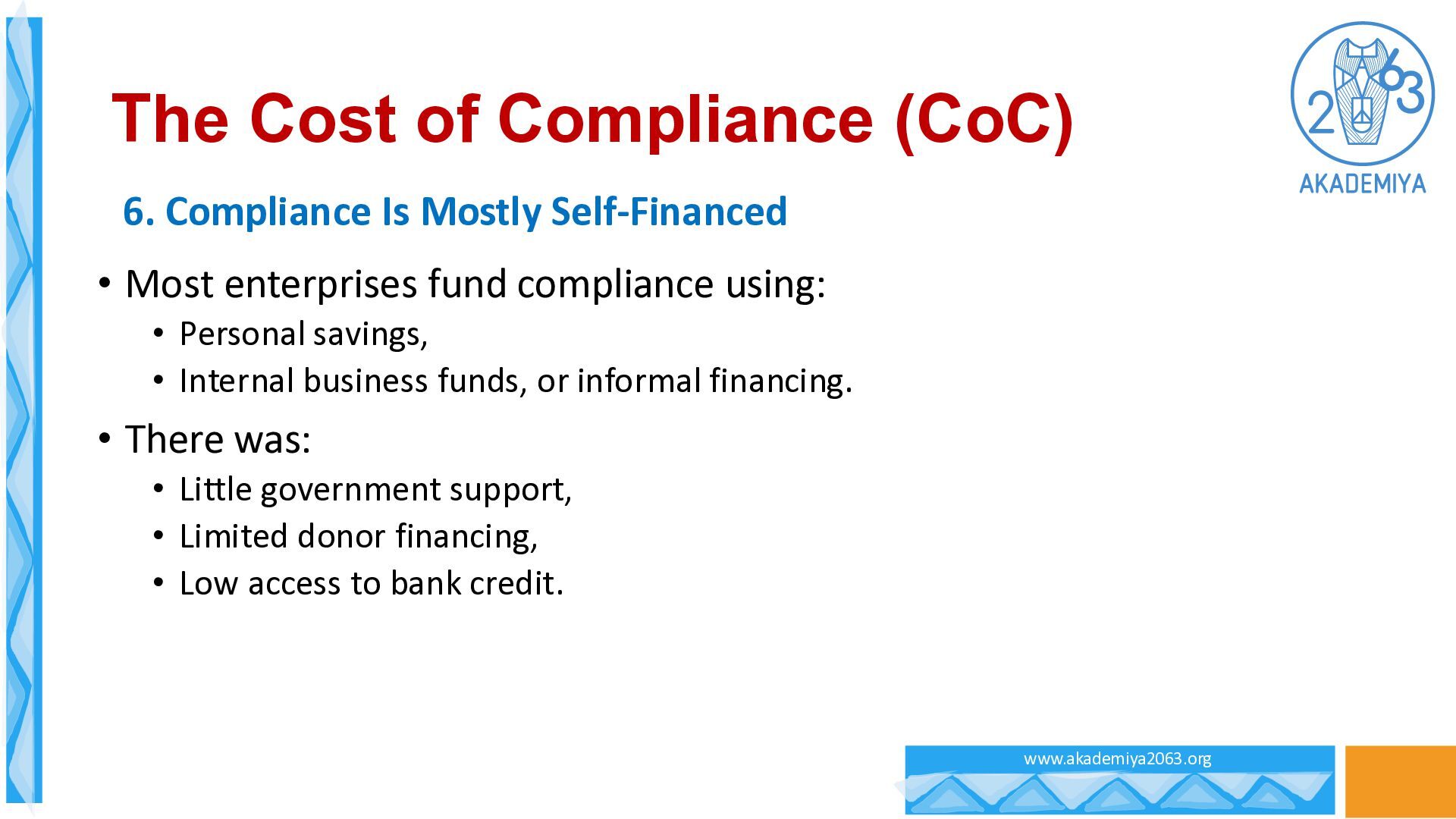
compliance using: • Personal savings, • Internal business funds, or informal financing. • There was: • Little government support, • Limited donor financing, • Low access to bank credit. 6. Compliance Is Mostly Self-Financed
a major constraint to the development and expansion of SPS systems and services. • Public budget allocations for SPS investments are consistently low, • Development partners and donors have shown limited interest in financing foundational SPS infrastructure, 1. The high CC and weak SPS systems in Africa are strongly linked to underinvestment,
• Capacity building and training targeted to technical personnel, and increasing awareness of SPS issues • Traceability and Digital Systems • Regular supply of electricity , mainly in Ethiopia and Nigeria 2. Cross-cutting Investment Needs, Across the Four Countries
frameworks and standards • Establishing research centers that provide SPS support • Morocco, • Reducing the cost of engaging in risk analysis which are estimated as expensive • Nigeria • Qualified extension workers • Microbiological analysis and metal detector • Rwanda • Strengthening the surveillance programme, • Ffinancial support of SPS committees’ activities • investment in food safety policy, data acquisition, SPS/Food safety research 3. Country specific priority needs
areas under Kampala • 1.8: Strengthen market access and trade facilitation • 3.2: Strengthen SPS standards and One Health approach • 3.3: Improve animal health and welfare to ensure food safety and security, and contribute to public health • The AUC Kampala implementation guidelines • Building a strong governance • Diagnostics and analytics • Investment planning • Mutual accountability (BR system) • The issue • What specific actions are needed to integrate SPS/food safety in all these components?


 akademiya2063
 takehaya
 institutdelelevage
 yumaichikawa
 de9uch1
 takasehideki
 wataruuuuu
 rfujii
.png) satai
satai
 ept
ept
 eileencodes
 inesmontani
.png) helenjbeal
helenjbeal
 axbom
axbom
 smashingmag
 jnunemaker
 morganepeng
 palkan
 cassininazir
 jdejongh
 mfonobong
 trallard