Presented at Secure Software by Design 2026, hosted by Carnegie Mellon University's Software Engineering Institute.
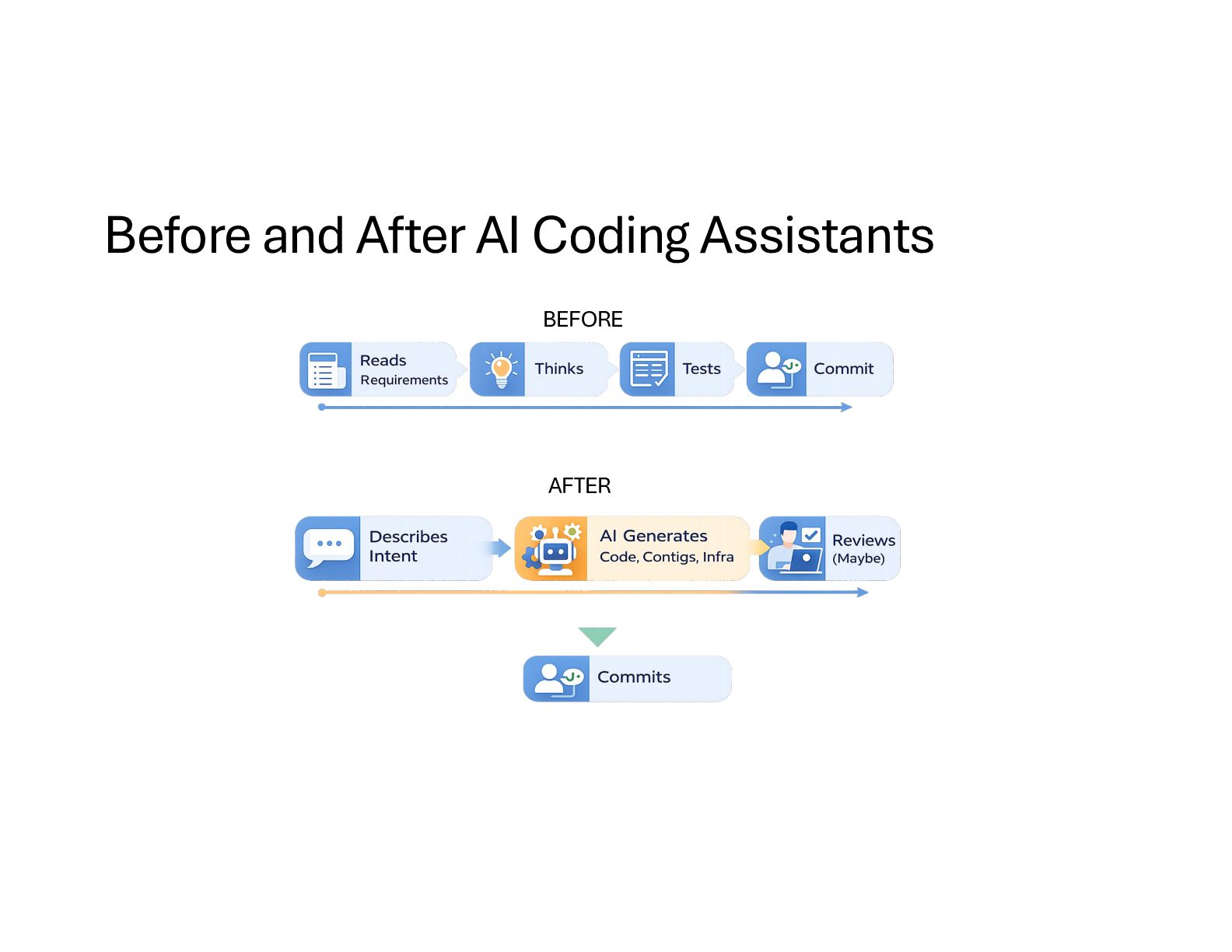
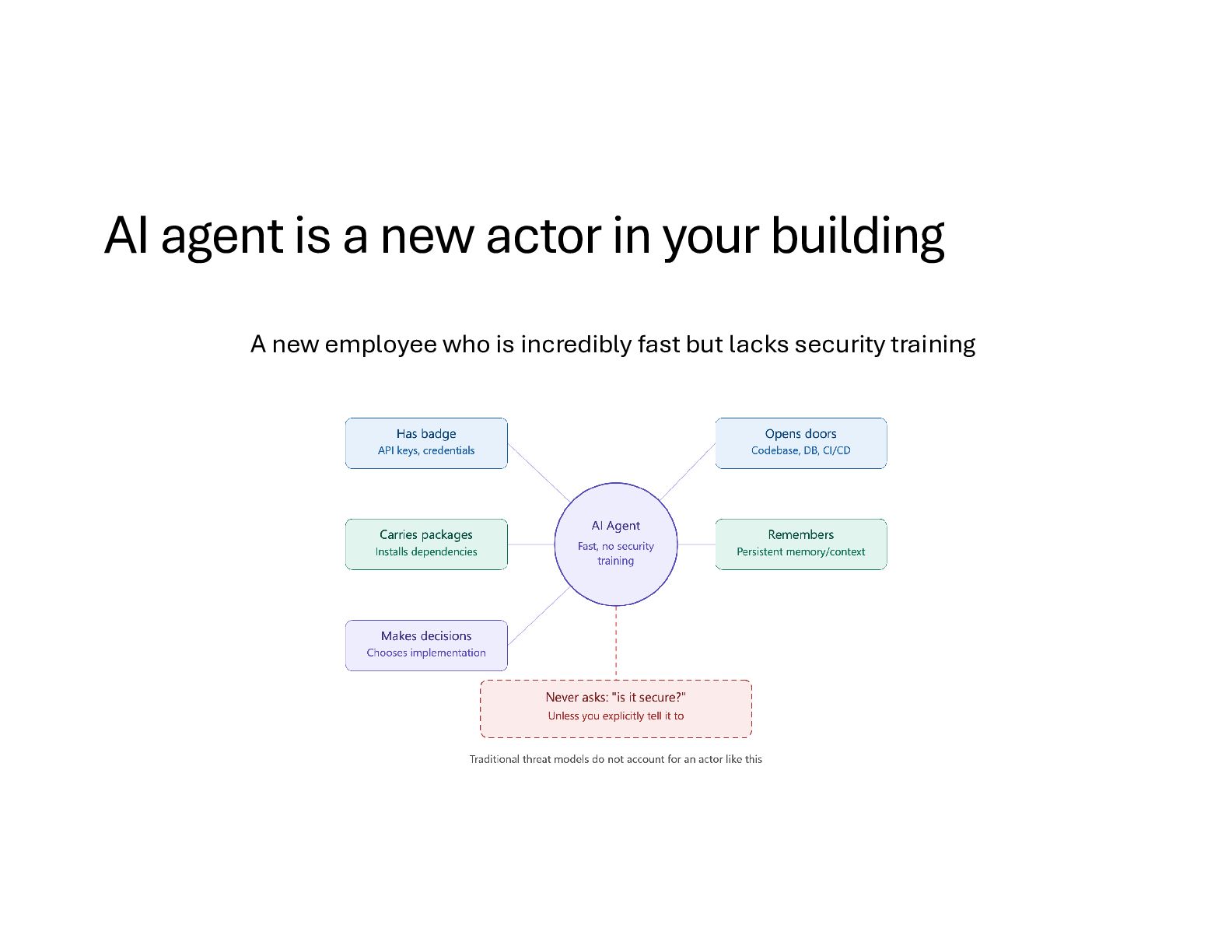
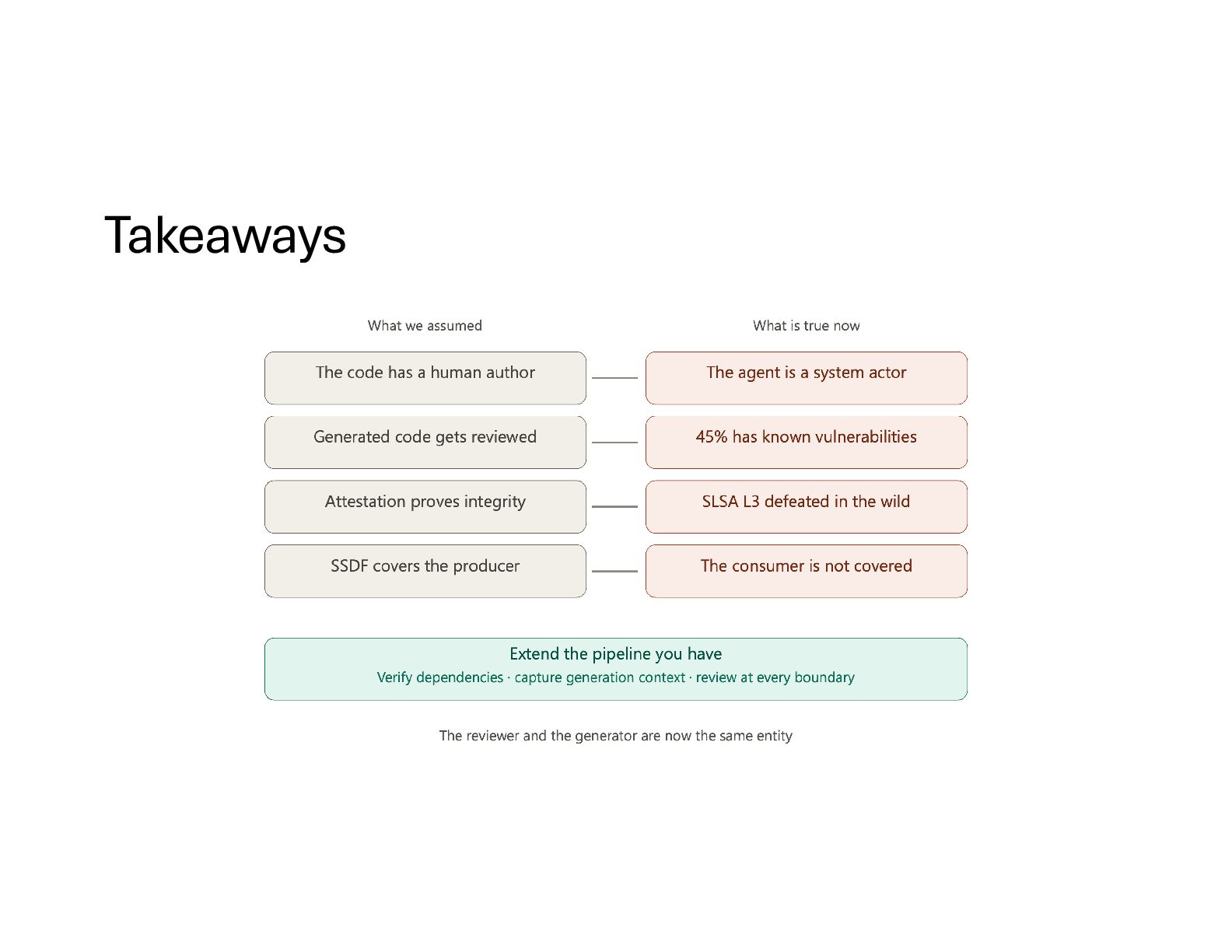
AI coding agents have crossed from tools that assist developers into autonomous participants that generate source code, infrastructure, and build scripts with decreasing human review. That breaks a foundational assumption of secure software design: that every artifact entering a pipeline has a human author who understands its security implications. When the code generator and the code reviewer are the same entity, the trust boundaries our threat models were built on no longer hold.
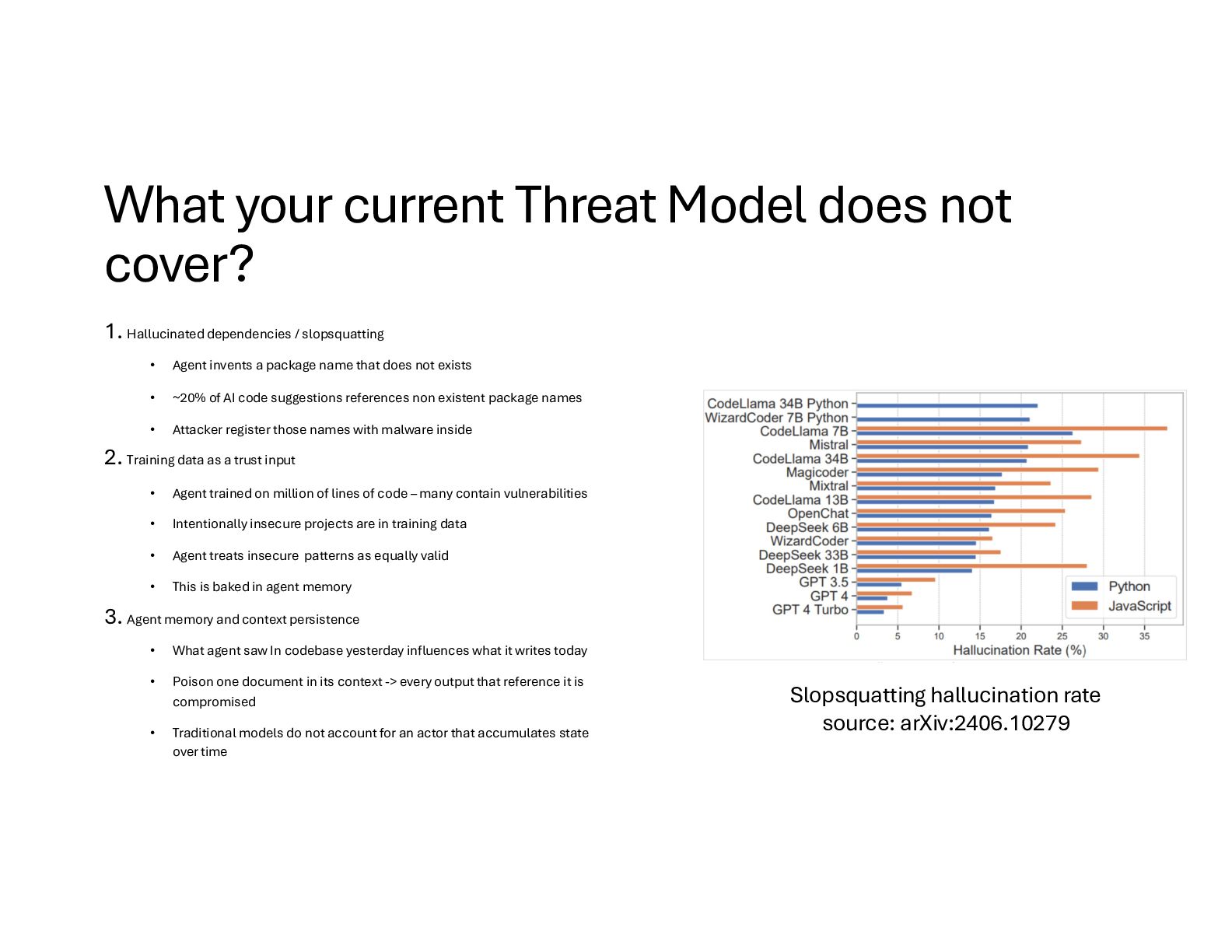
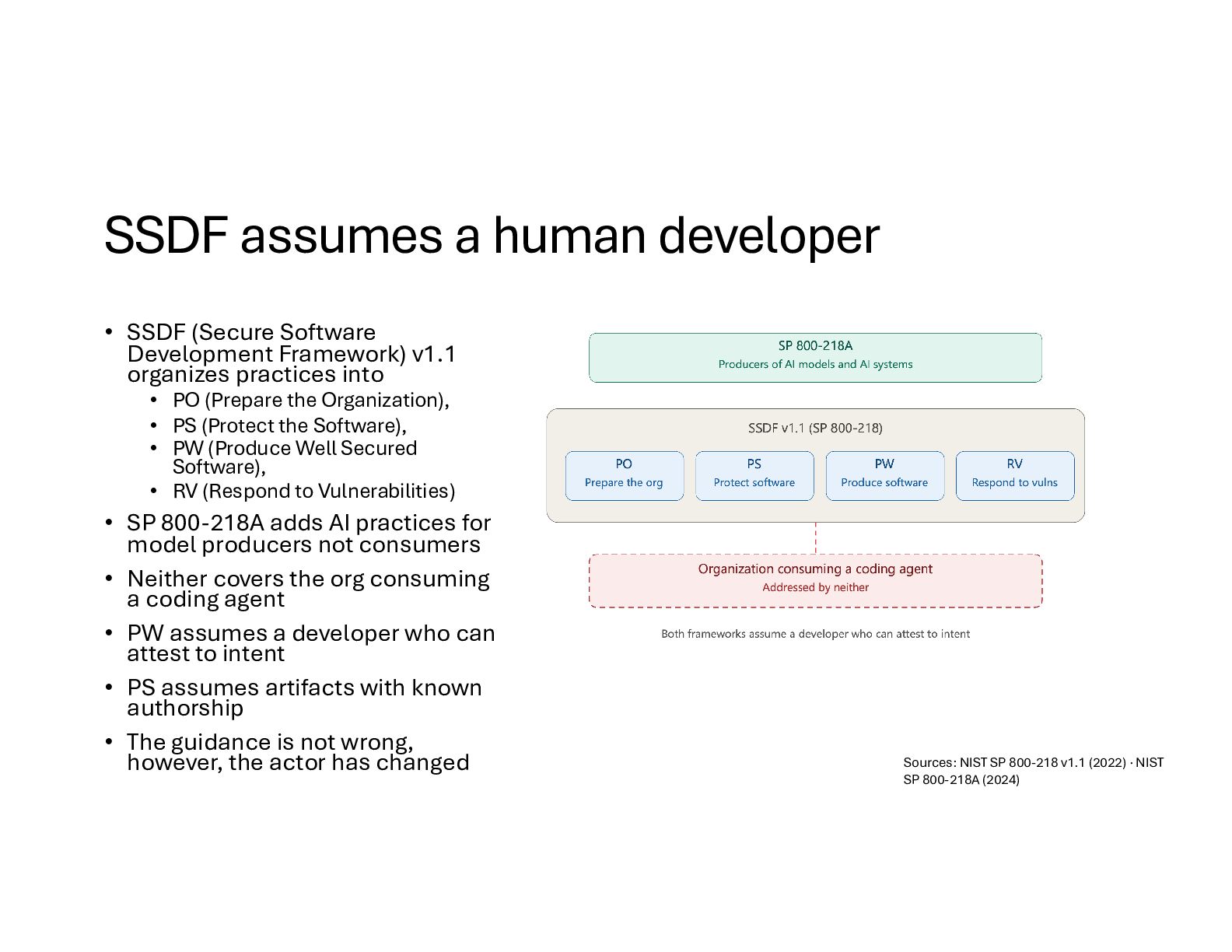
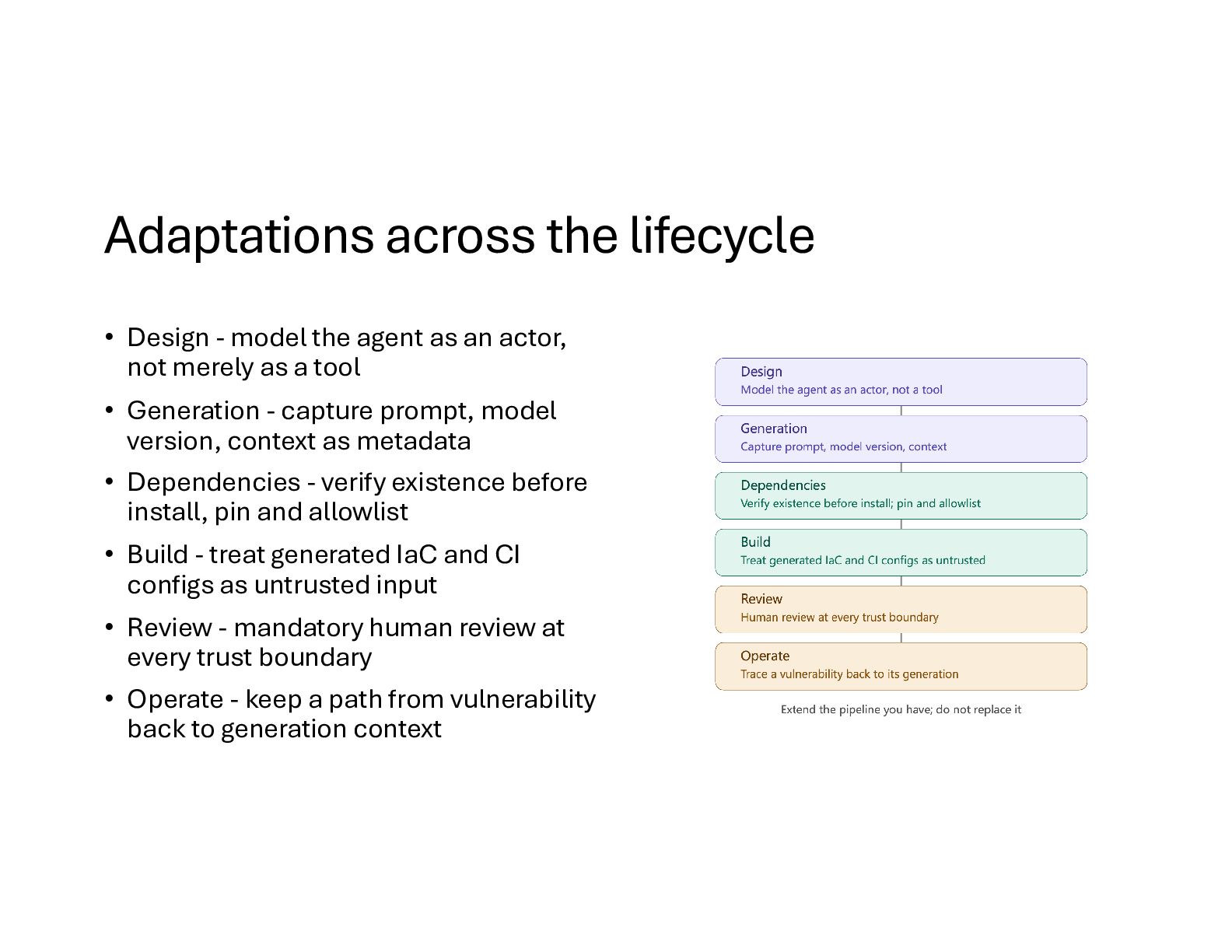
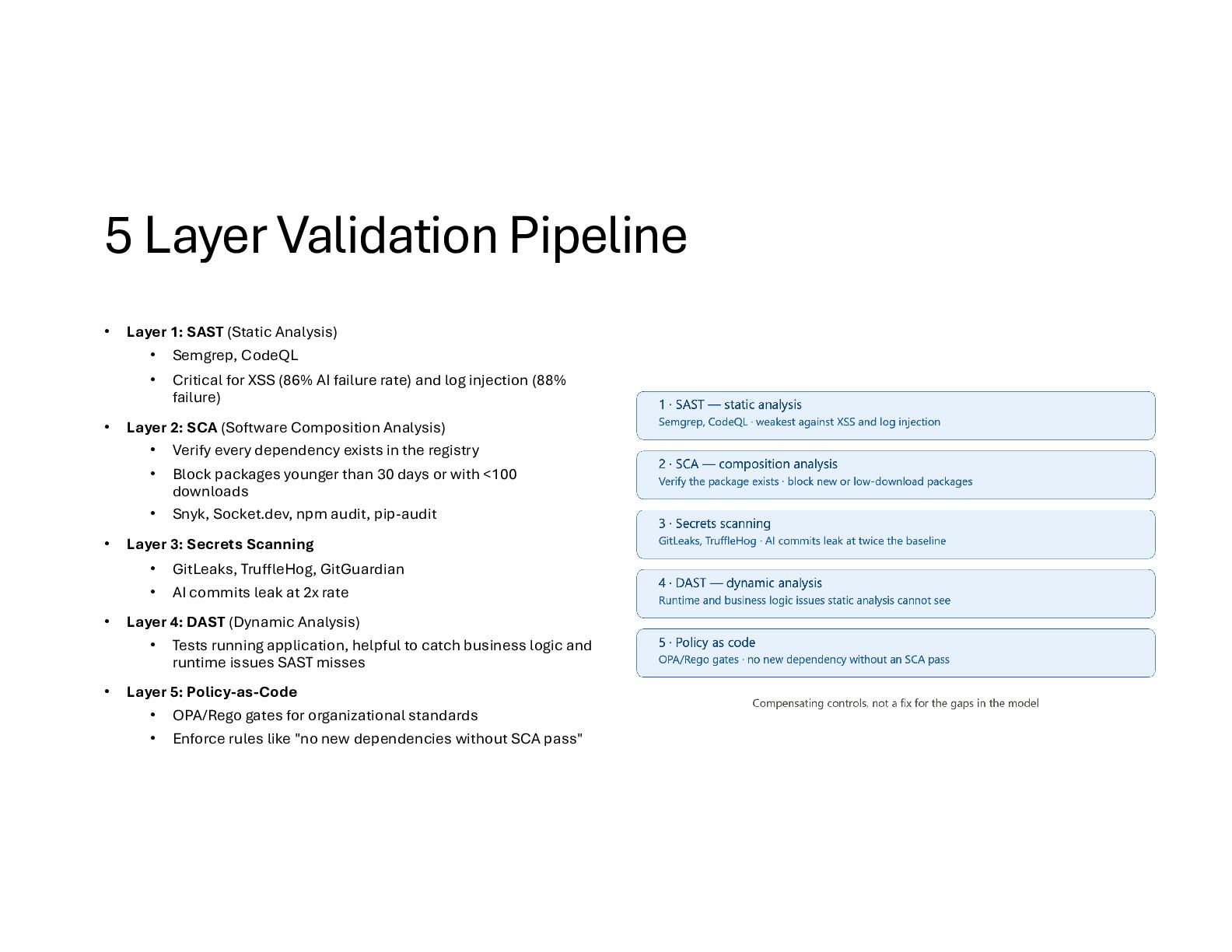
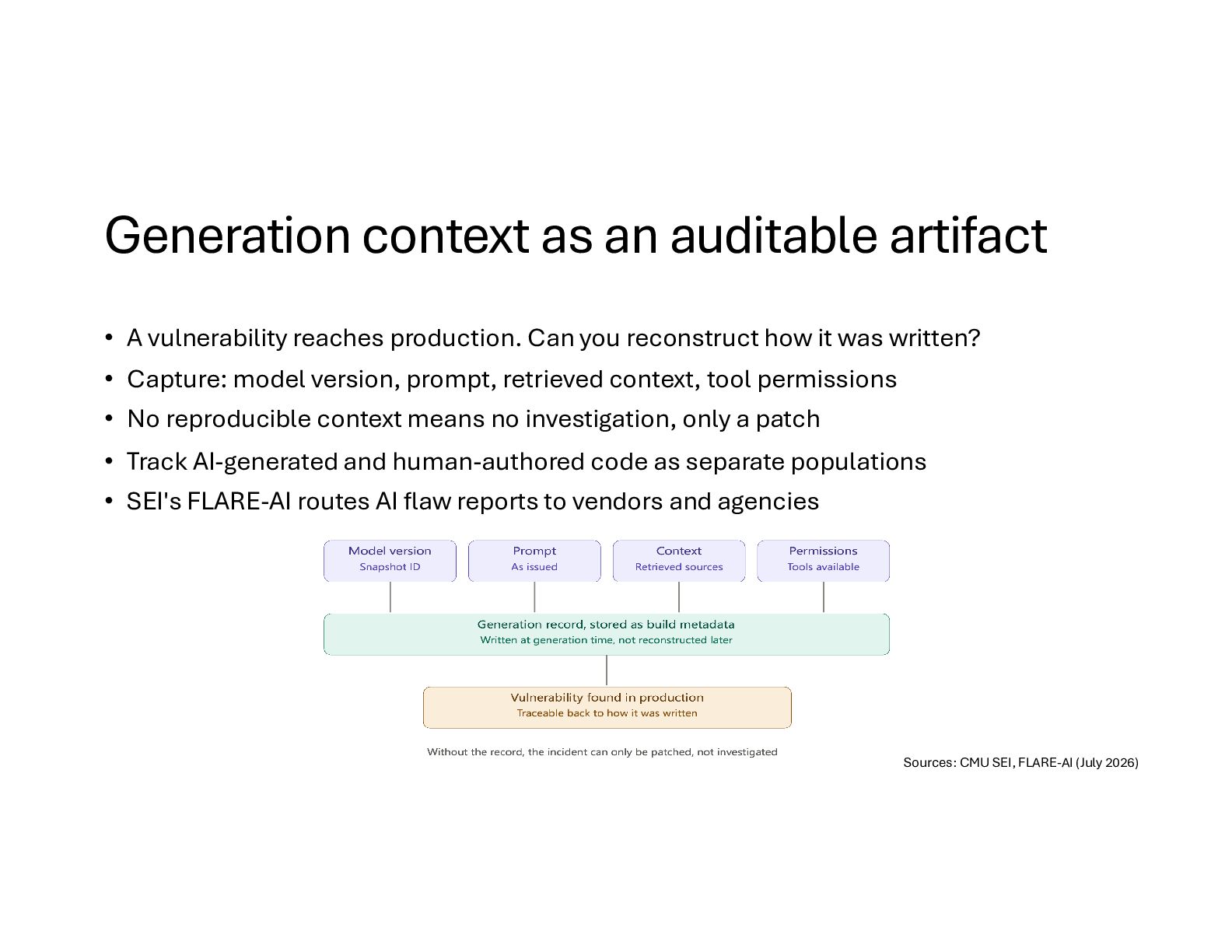
This talk examines what breaks when AI coding agents enter the pipeline: where the attack surface expands, why controls built for human-authored code fail silently at the boundaries, and how established frameworks like NIST SSDF assume a human developer that no longer exists. It closes with concrete, per-stage adaptations across the development lifecycle.
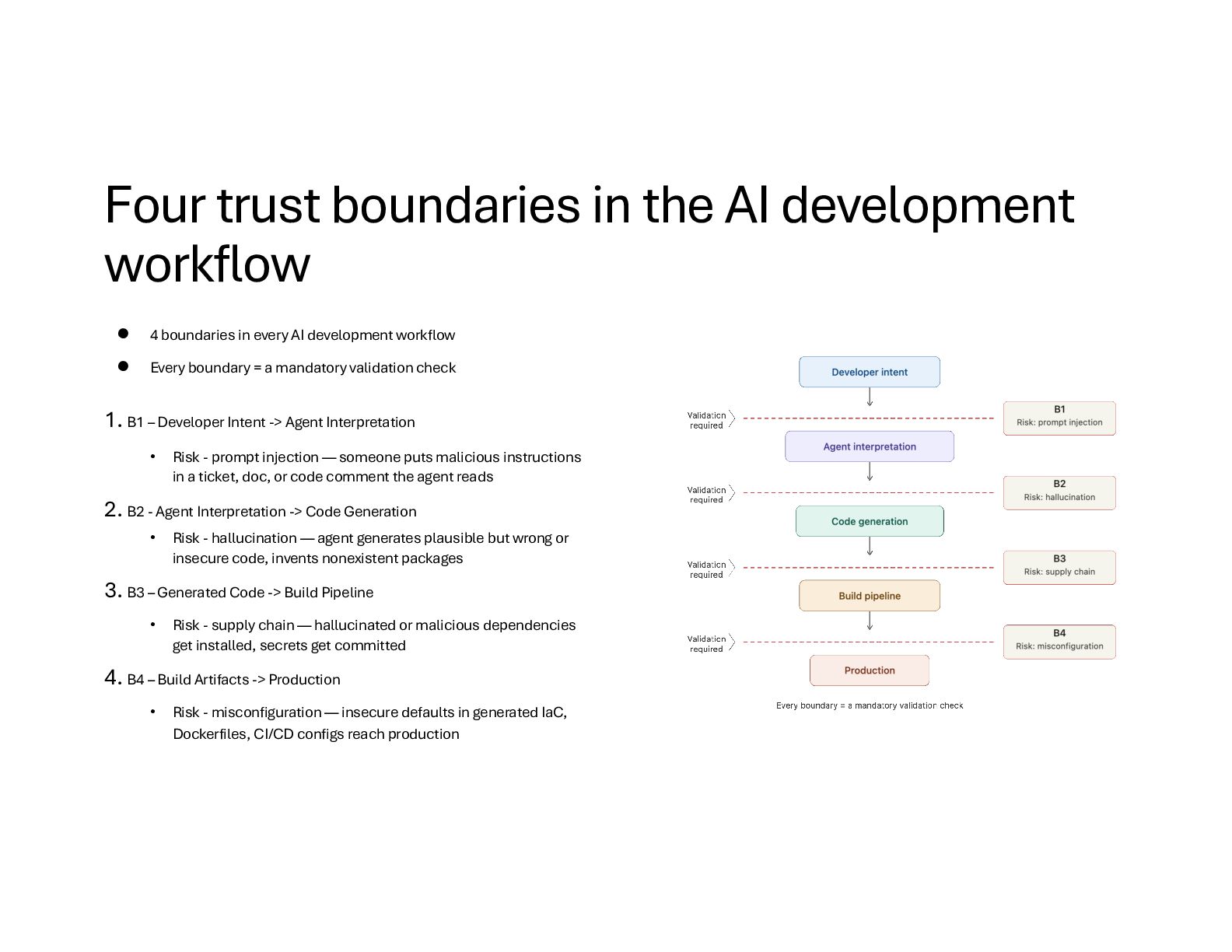
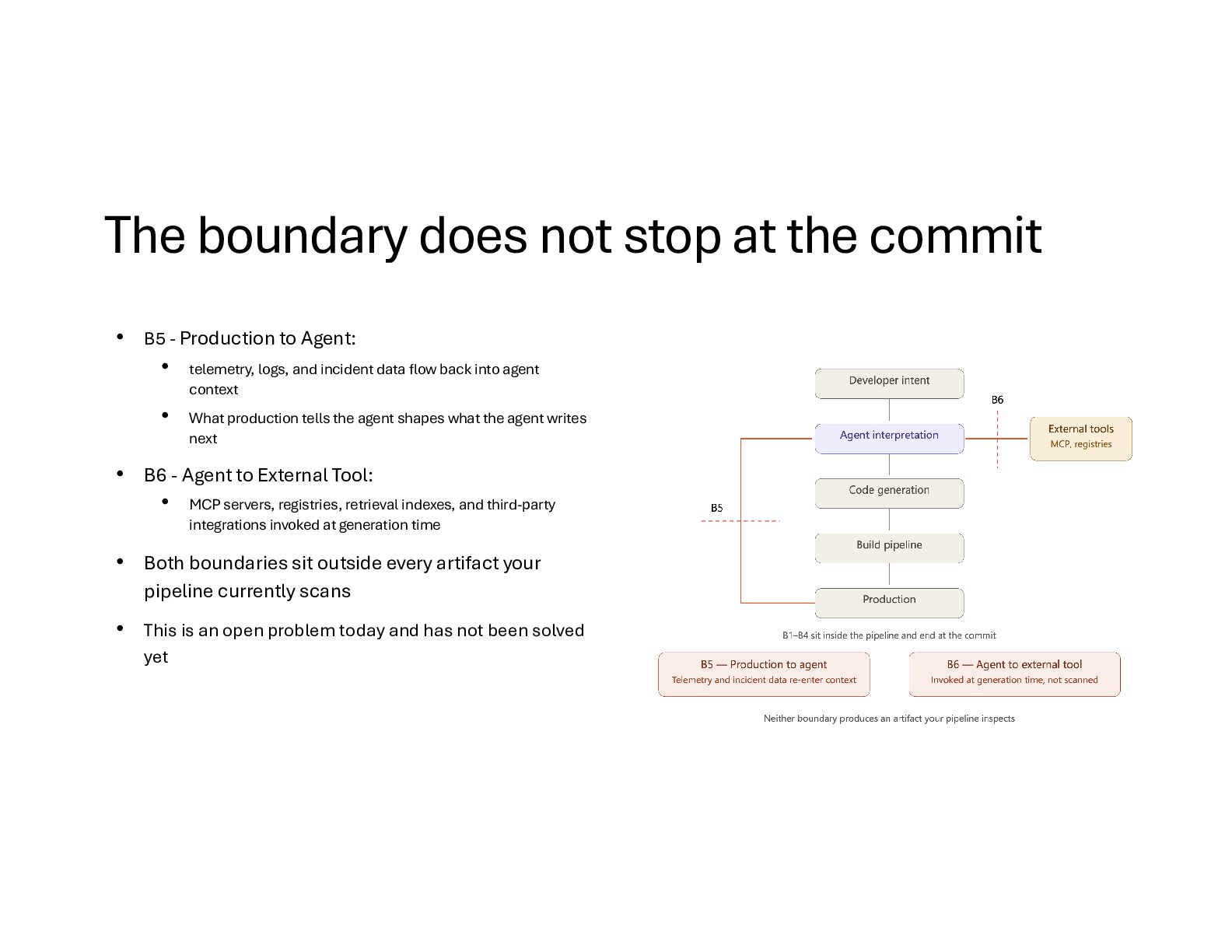
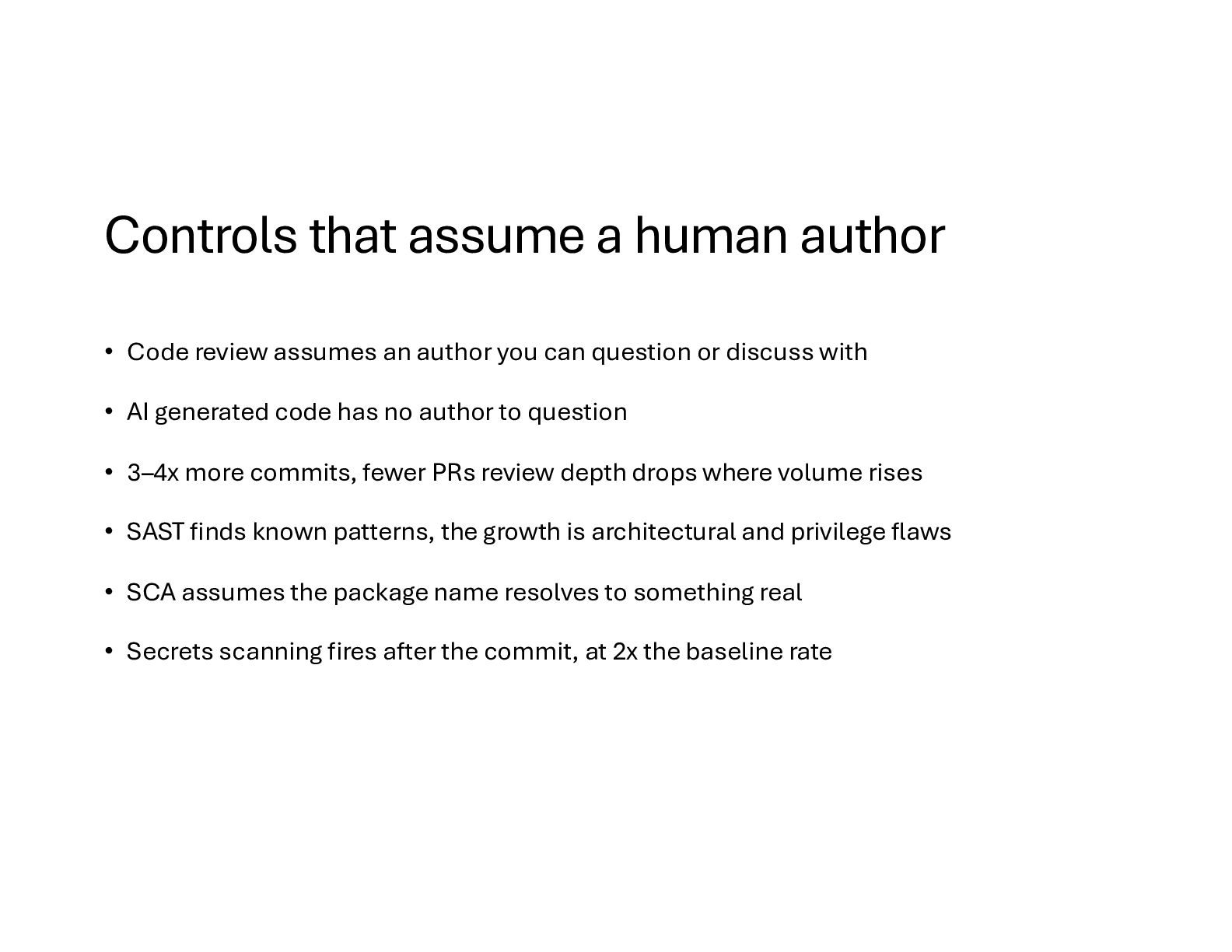
Covers: trust-boundary analysis for AI-generated artifacts, a gap analysis of existing secure-by-design controls (SAST, SCA, provenance, code review), and adaptations from design through deployment.


 aloktibrewala
 jozono
 onk
onk
 ueponx
 kash1064
 ezaki
ezaki
 syuchimu
 moznion
 jyouryuusui
 namiki64
 shuta13
 maimyyym
 riyaamemiya
 aemeredith
 rkendrick25
 helmedeiros
 thoeni
 mfonobong
 lara
lara
 keithpitt
 palkan
 sferik
 tammyeverts
 jcasabona
 tanoku