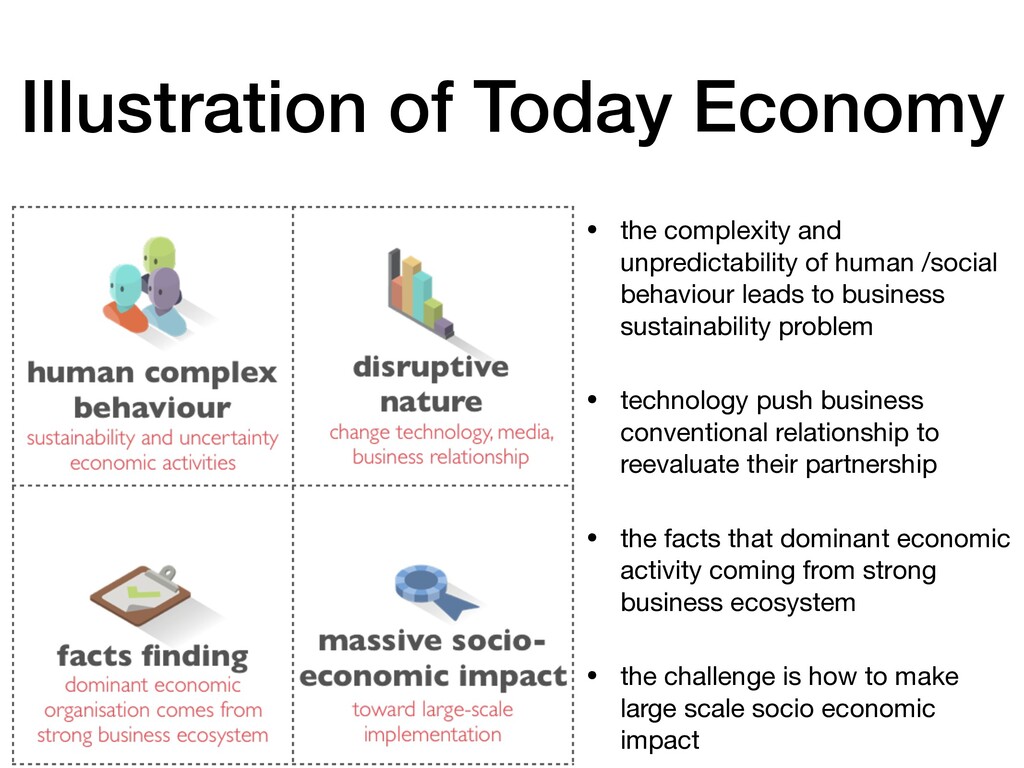
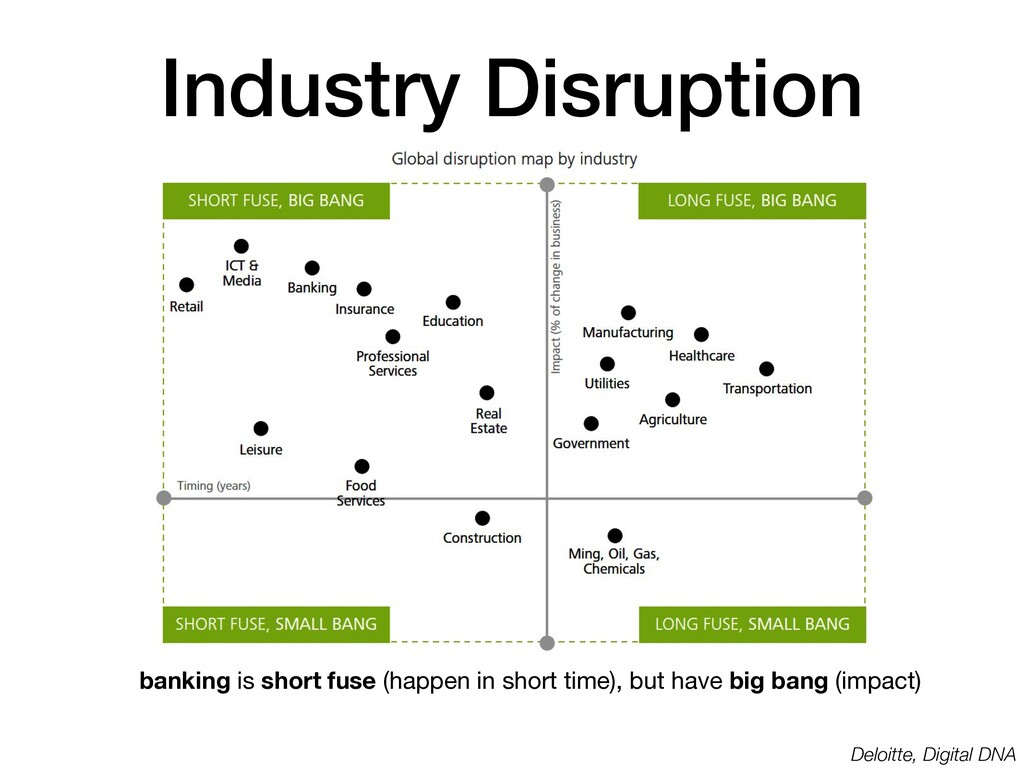
human /social behaviour leads to business sustainability problem • technology push business conventional relationship to reevaluate their partnership • the facts that dominant economic activity coming from strong business ecosystem • the challenge is how to make large scale socio economic impact
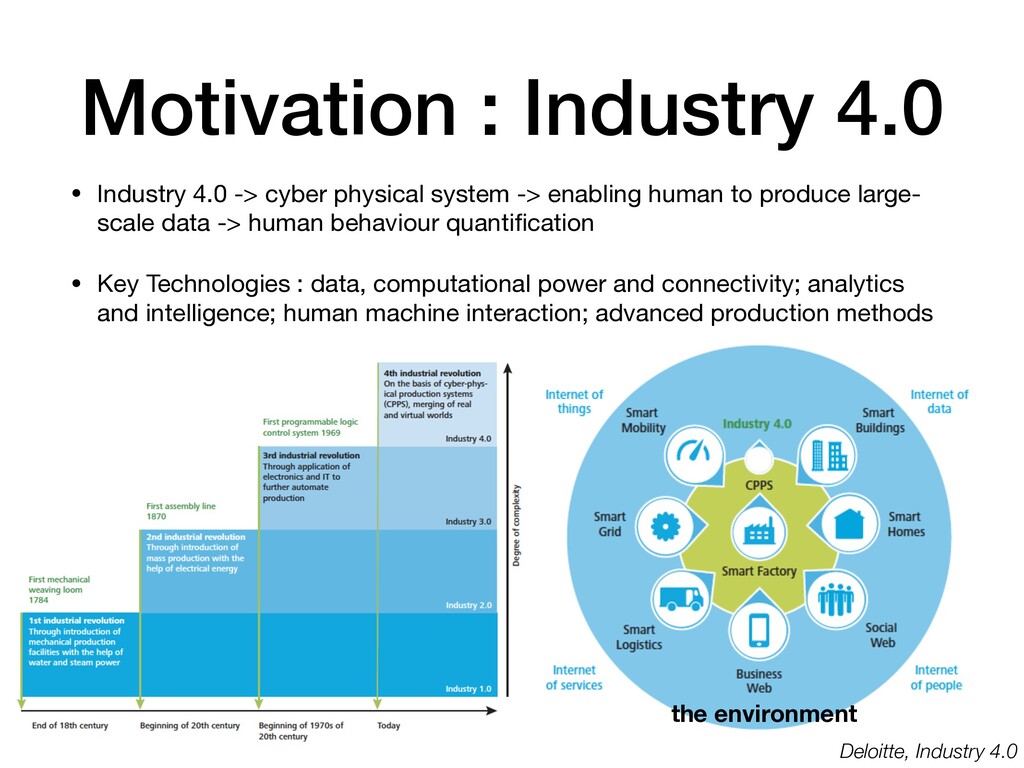
system -> enabling human to produce large- scale data -> human behaviour quantification • Key Technologies : data, computational power and connectivity; analytics and intelligence; human machine interaction; advanced production methods the environment Deloitte, Industry 4.0
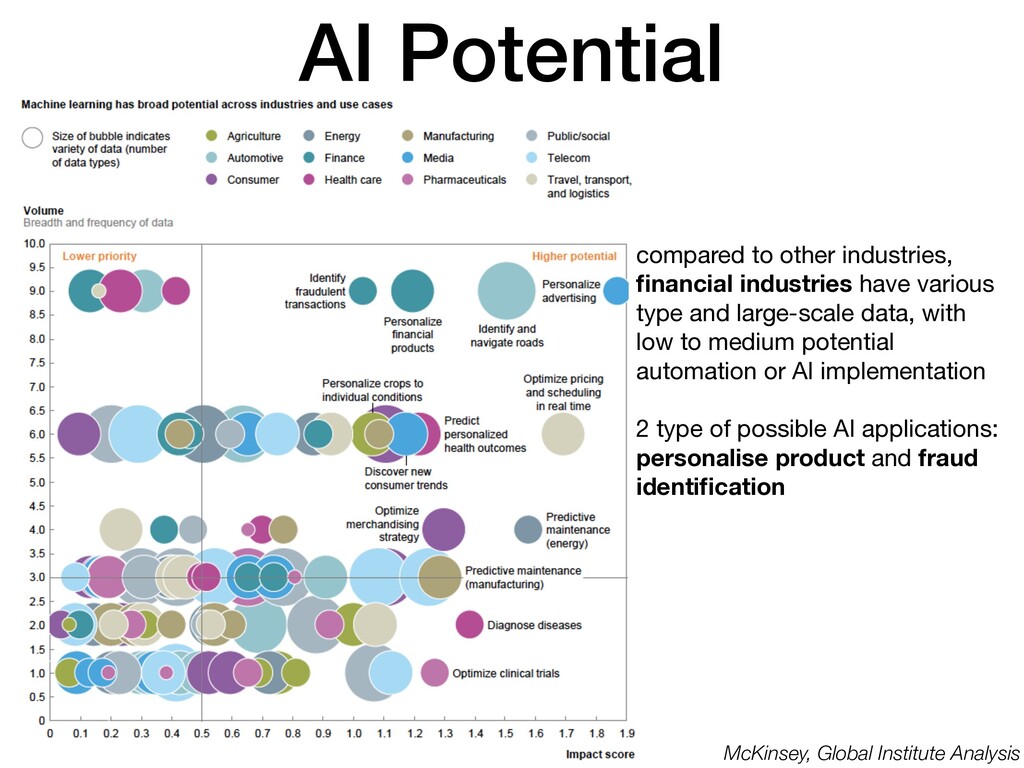
financial industries have various type and large-scale data, with low to medium potential automation or AI implementation 2 type of possible AI applications: personalise product and fraud identification
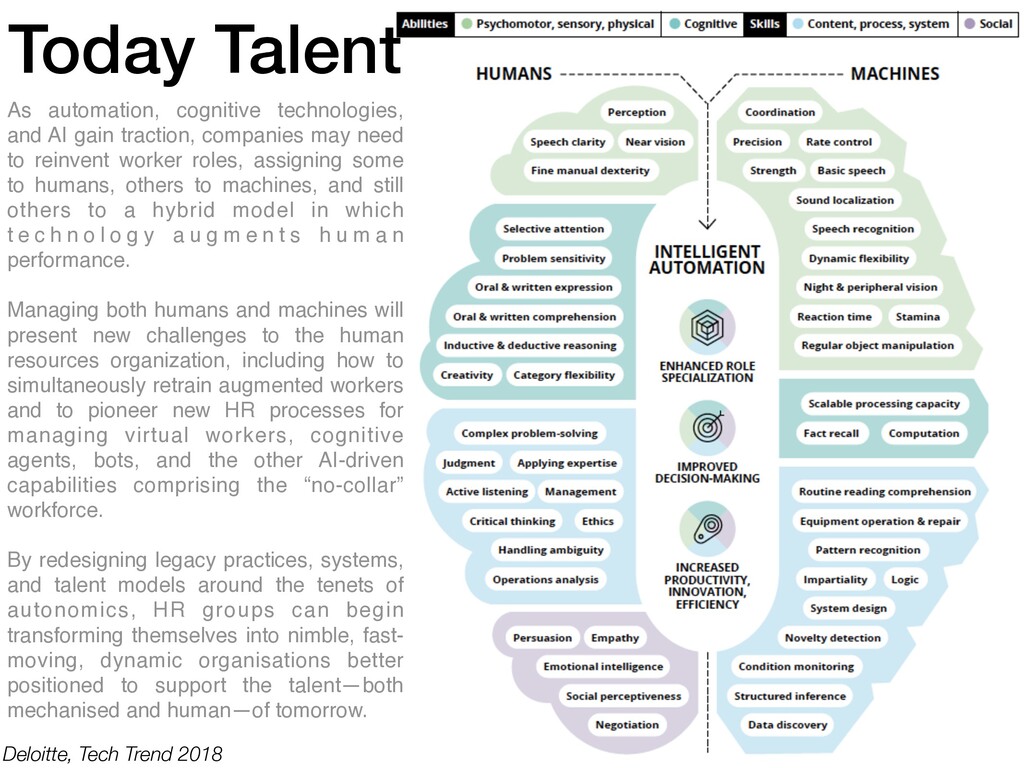
and AI gain traction, companies may need to reinvent worker roles, assigning some to humans, others to machines, and still others to a hybrid model in which t e c h n o l o g y a u g m e n t s h u m a n performance. Managing both humans and machines will present new challenges to the human resources organization, including how to simultaneously retrain augmented workers and to pioneer new HR processes for managing virtual workers, cognitive agents, bots, and the other AI-driven capabilities comprising the “no-collar” workforce. By redesigning legacy practices, systems, and talent models around the tenets of autonomics, HR groups can begin transforming themselves into nimble, fast- moving, dynamic organisations better positioned to support the talent—both mechanised and human—of tomorrow.
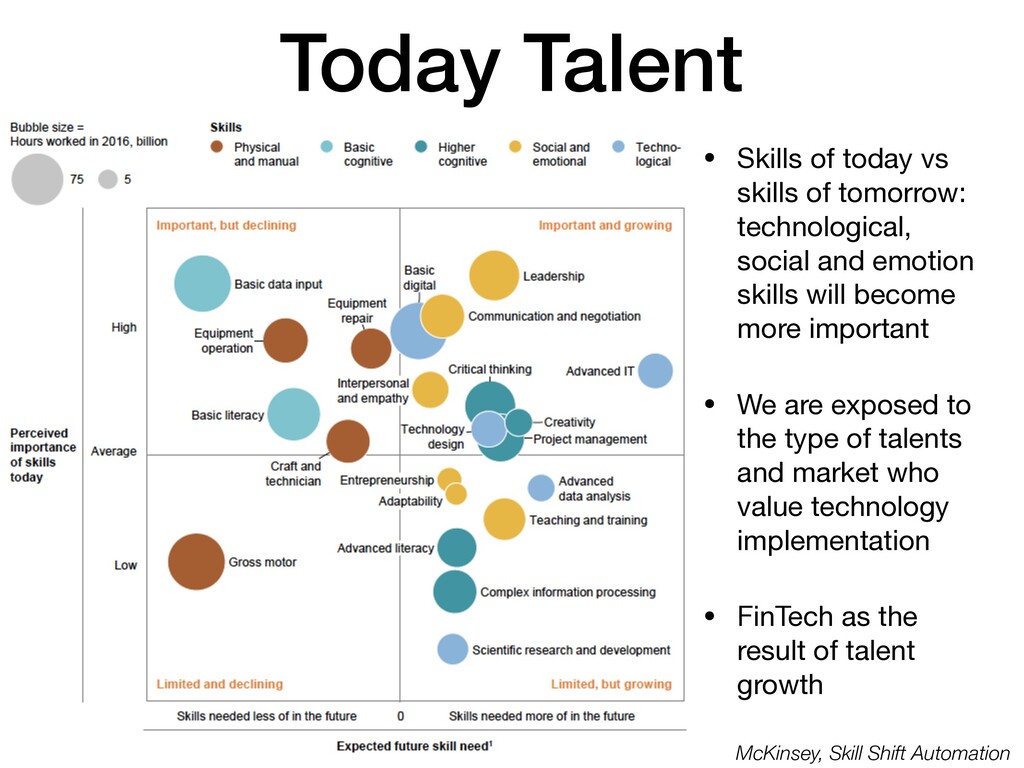
technological, social and emotion skills will become more important • We are exposed to the type of talents and market who value technology implementation • FinTech as the result of talent growth McKinsey, Skill Shift Automation
digital adoption, and are leading in the adoption of AI and robotic process automation as well. Data processing and collection, underwriting, and actuarial activities are all highly susceptible to automation, and AI can also improve quality in areas such as risk assessment, predicting customer demand and next product to buy, and personalising products. Banking and insurance will face one of the most pervasive workforce transitions in the years to come. Jobs such as tellers, financial analysts, and brokerage clerks will decline substantially, while the number of technology professionals and customer interfacing roles will grow. The need for workers who use mainly basic cognitive skills, such as data input and processing and basic literacy and numeracy, will likely decline, while the need for workers with advanced technology skills, and those with social and emotional skills, will grow.


 sukatsu1222
 ikmwatanabe
 m3c
 reiwatravel_0405
 forest8810
 kaonavi
 layerx
 tamagakiyuya
 flux
 ikuodanaka
 behealthy
 irinanazarova
 tmiket
 swwweet
 inesmontani
 cassininazir
 vanstee
 popppiees
 bermonpainter
 tammyeverts
 auna
 hatefulcrawdad
 trishagee