emergency that we are facing Begin the process of co create a coherent response across a large number of organisation to the issue of climate change There will be a commitment to working together There will be a commitment to take specific action within each organisation
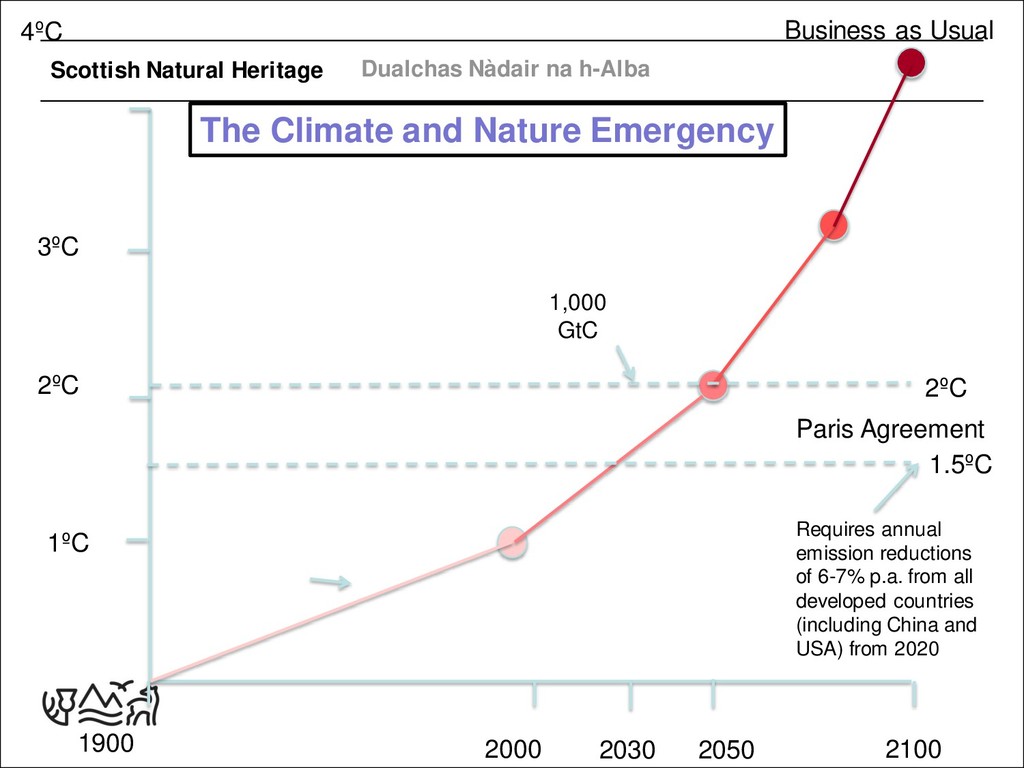
2ºC 2100 2000 1900 1.5ºC 2ºC Paris Agreement Business as Usual Requires annual emission reductions of 6-7% p.a. from all developed countries (including China and USA) from 2020 1,000 GtC 2030 2050 The Climate and Nature Emergency
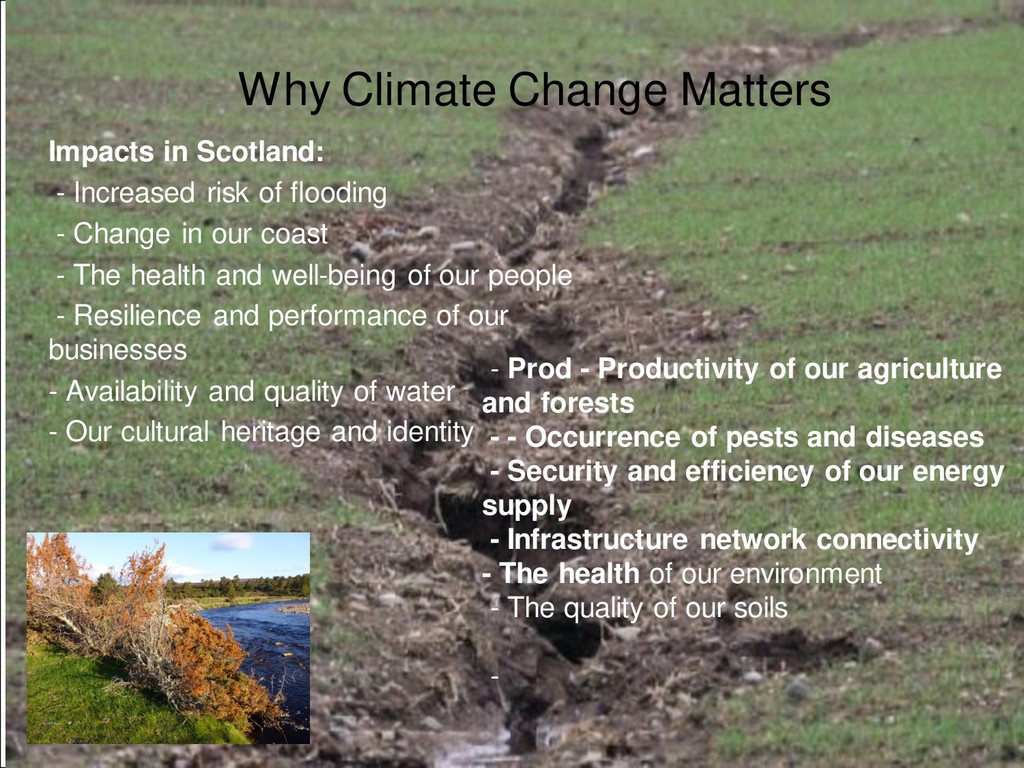
Matters Impacts in Scotland: - Increased risk of flooding - Change in our coast - The health and well-being of our people - Resilience and performance of our businesses - Availability and quality of water - Our cultural heritage and identity - Prod - Productivity of our agriculture and forests - - Occurrence of pests and diseases - Security and efficiency of our energy supply - Infrastructure network connectivity - The health of our environment - The quality of our soils -
SG climate change bill passed • The Scottish Parliament has voted to pass the Climate Change Bill after MSPs backed a Scottish Labour amendment aimed at strengthening targets for a 75% cut in emissions by 2030. • A 75% reduction by 2030 translates as ~7% reductions each year from 2020, more than twice Scotland’s overall effort to date.
emissions Published: 11 Sep 2019 Consultation: All public bodies will need to set a date for reaching zero greenhouse gas emissions and publish annual updates on their progress under plans to put the public sector at the heart of Scotland’s transition to a net-zero society.
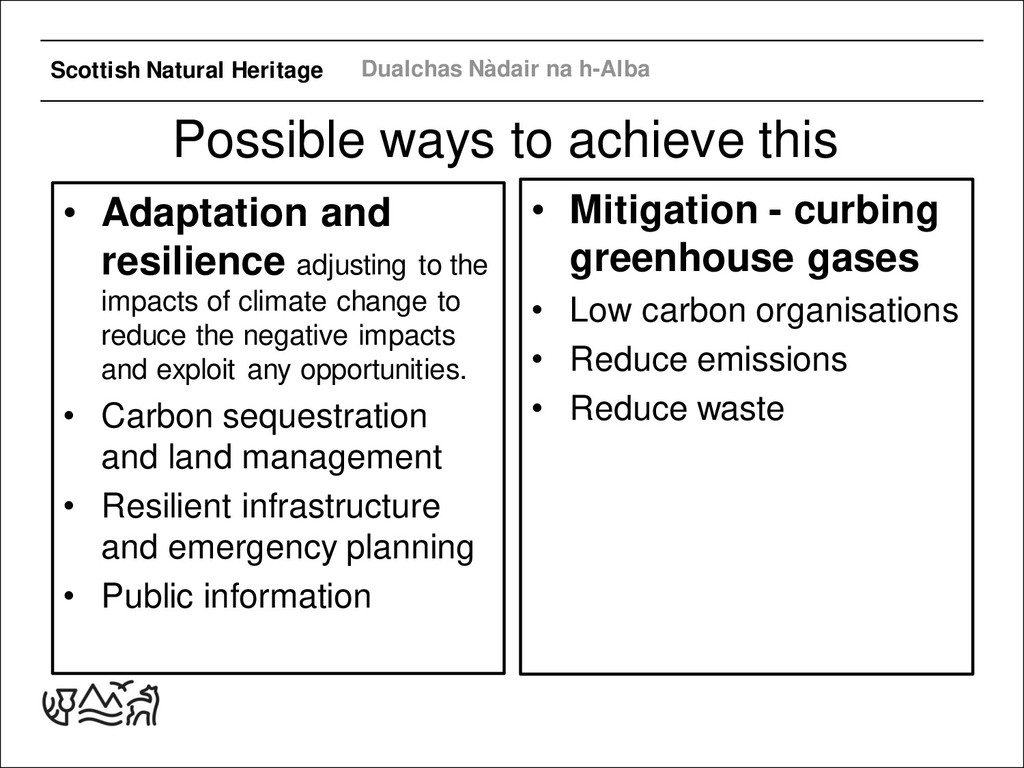
achieve this • Adaptation and resilience adjusting to the impacts of climate change to reduce the negative impacts and exploit any opportunities. • Carbon sequestration and land management • Resilient infrastructure and emergency planning • Public information • Mitigation - curbing greenhouse gases • Low carbon organisations • Reduce emissions • Reduce waste
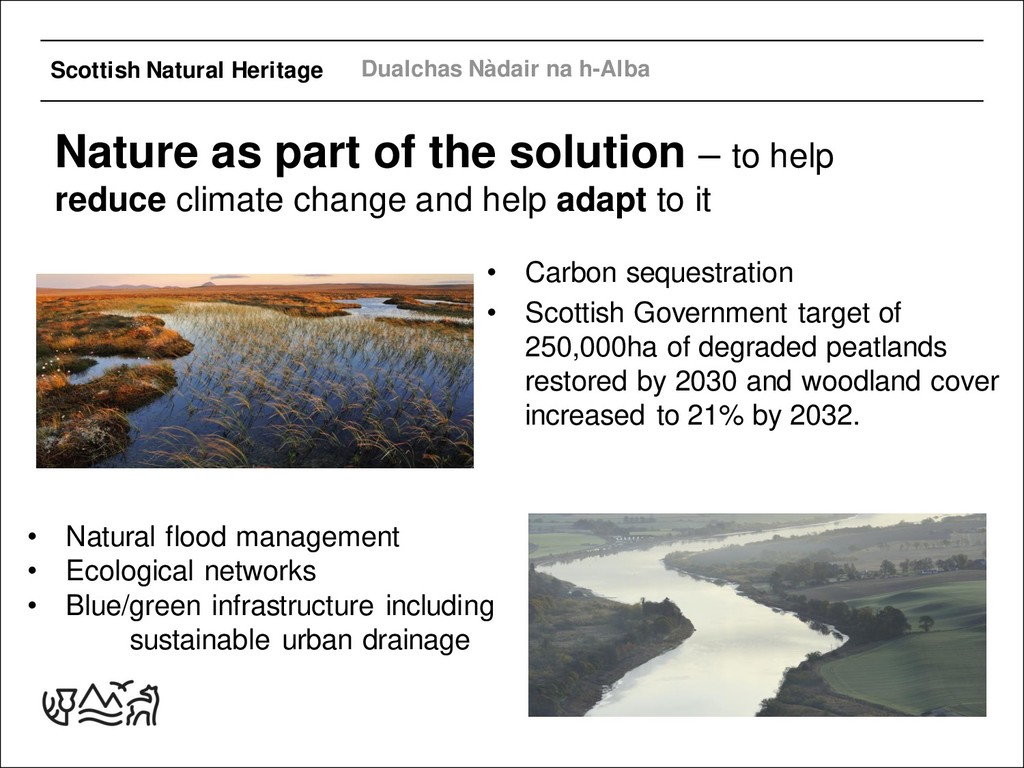
of the solution – to help reduce climate change and help adapt to it • Carbon sequestration • Scottish Government target of 250,000ha of degraded peatlands restored by 2030 and woodland cover increased to 21% by 2032. • Natural flood management • Ecological networks • Blue/green infrastructure including sustainable urban drainage
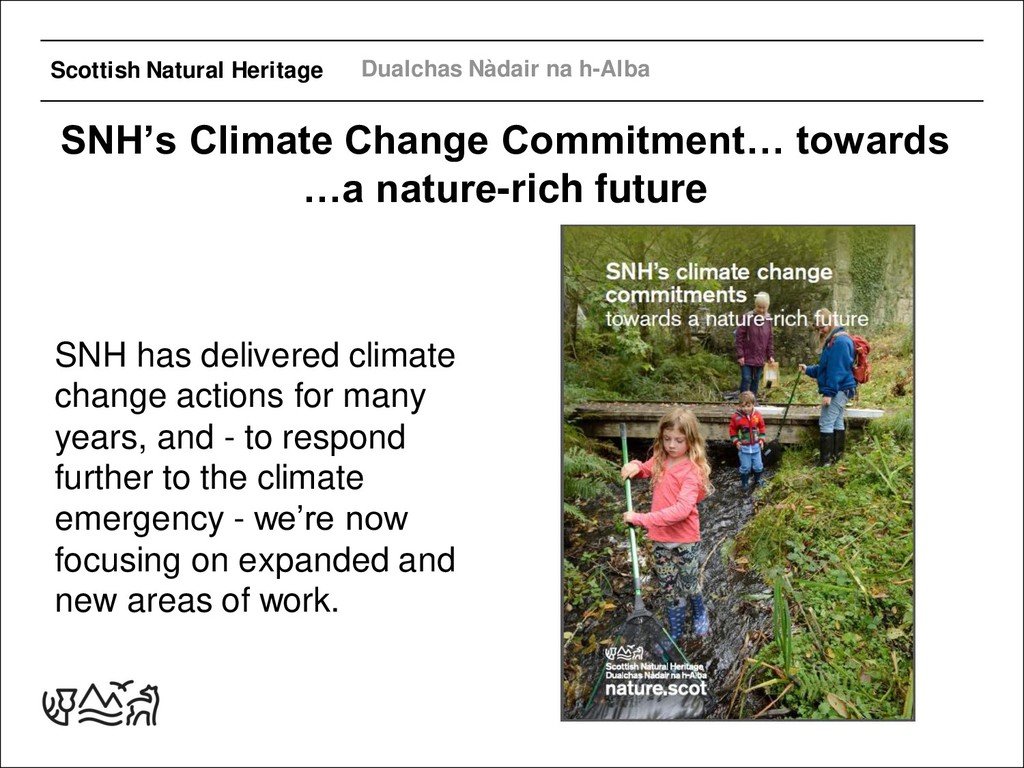
Commitment… towards …a nature-rich future SNH has delivered climate change actions for many years, and - to respond further to the climate emergency - we’re now focusing on expanded and new areas of work.
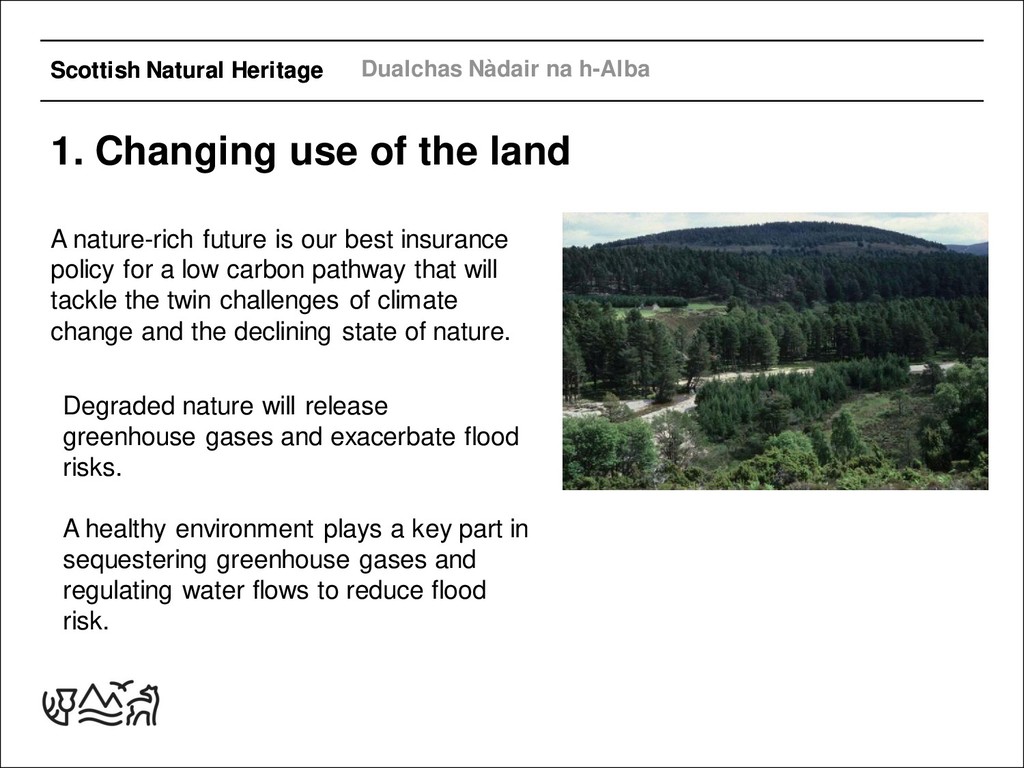
of the land Scottish Natural Heritage Degraded nature will release greenhouse gases and exacerbate flood risks. A healthy environment plays a key part in sequestering greenhouse gases and regulating water flows to reduce flood risk. A nature-rich future is our best insurance policy for a low carbon pathway that will tackle the twin challenges of climate change and the declining state of nature.
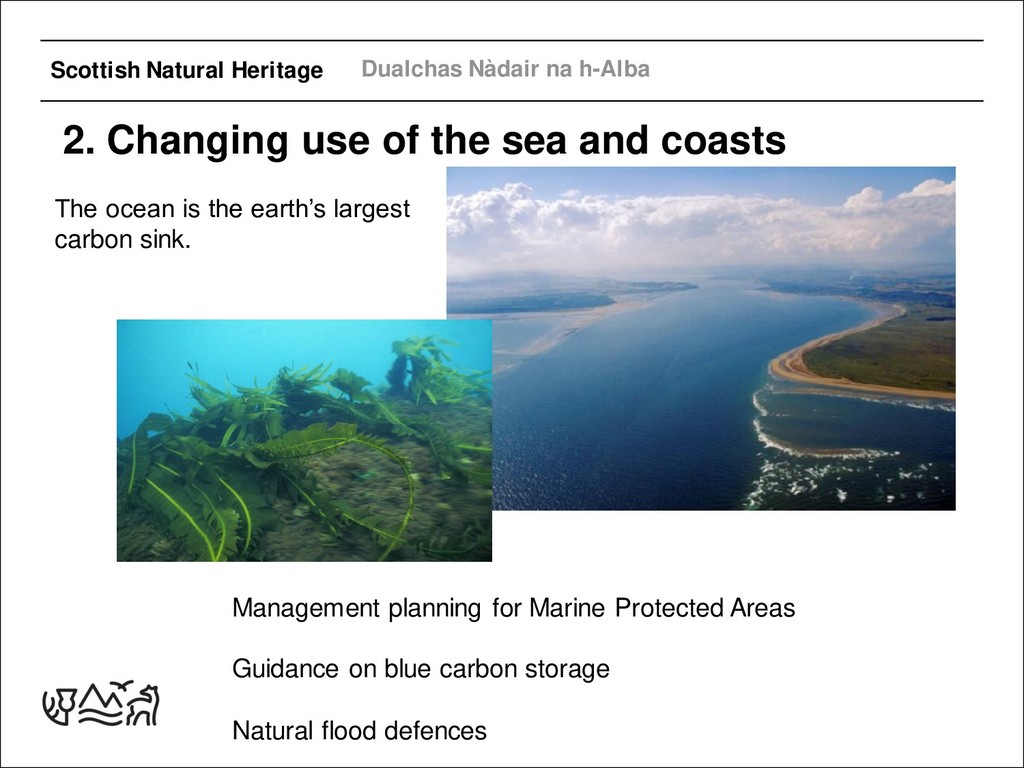
of the sea and coasts The ocean is the earth’s largest carbon sink. Management planning for Marine Protected Areas Guidance on blue carbon storage Natural flood defences
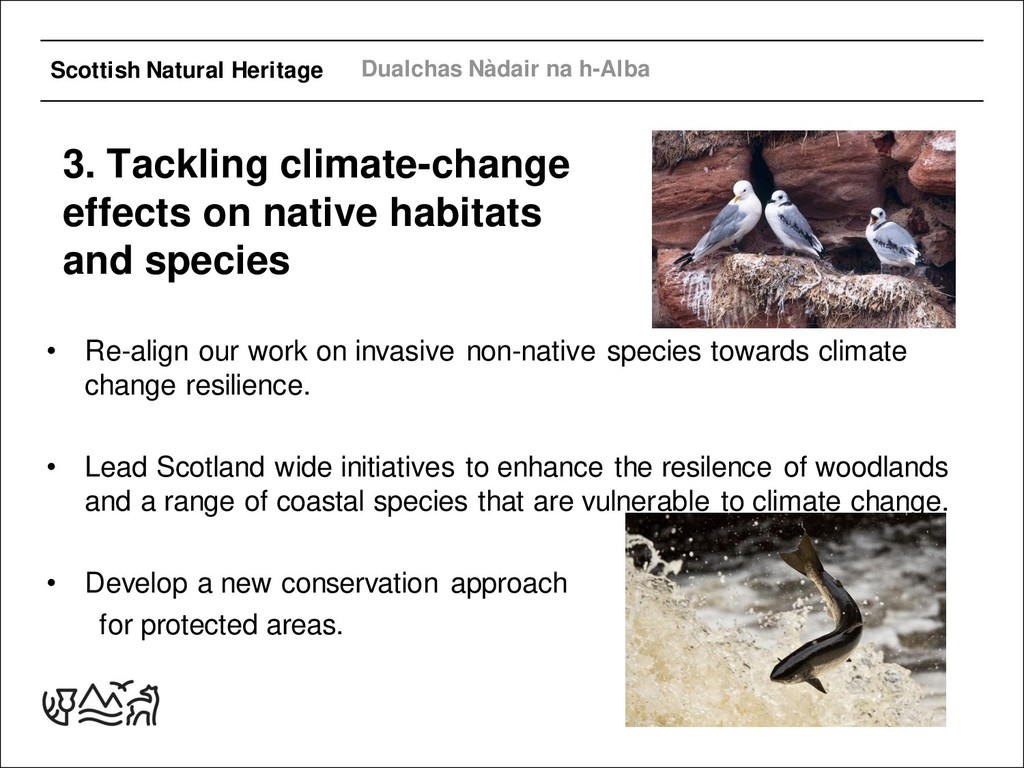
effects on native habitats and species • Re-align our work on invasive non-native species towards climate change resilience. • Lead Scotland wide initiatives to enhance the resilence of woodlands and a range of coastal species that are vulnerable to climate change. • Develop a new conservation approach for protected areas.
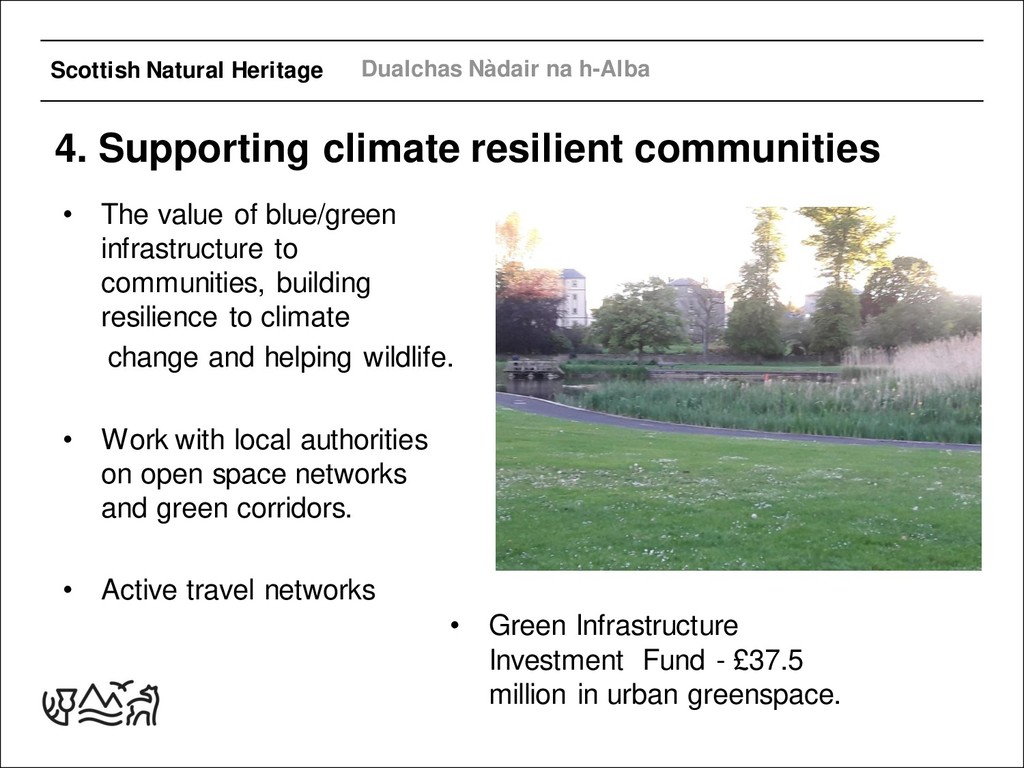
resilient communities • The value of blue/green infrastructure to communities, building resilience to climate change and helping wildlife. • Work with local authorities on open space networks and green corridors. • Active travel networks • Green Infrastructure Investment Fund - £37.5 million in urban greenspace.
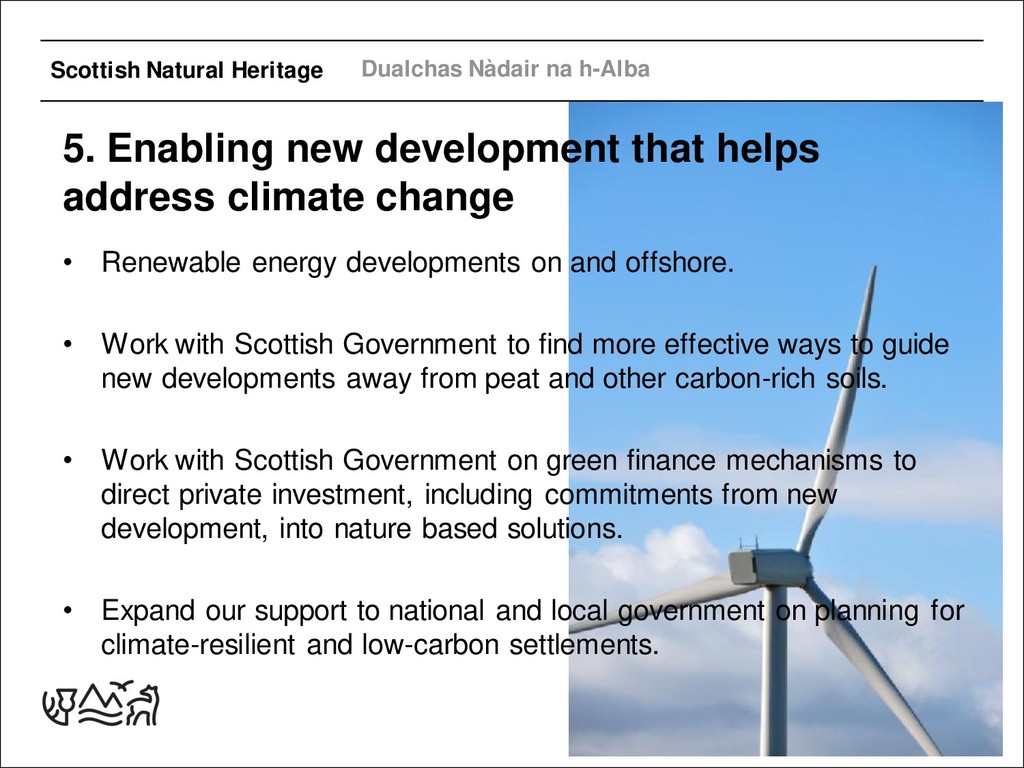
development that helps address climate change • Renewable energy developments on and offshore. • Work with Scottish Government to find more effective ways to guide new developments away from peat and other carbon-rich soils. • Work with Scottish Government on green finance mechanisms to direct private investment, including commitments from new development, into nature based solutions. • Expand our support to national and local government on planning for climate-resilient and low-carbon settlements.
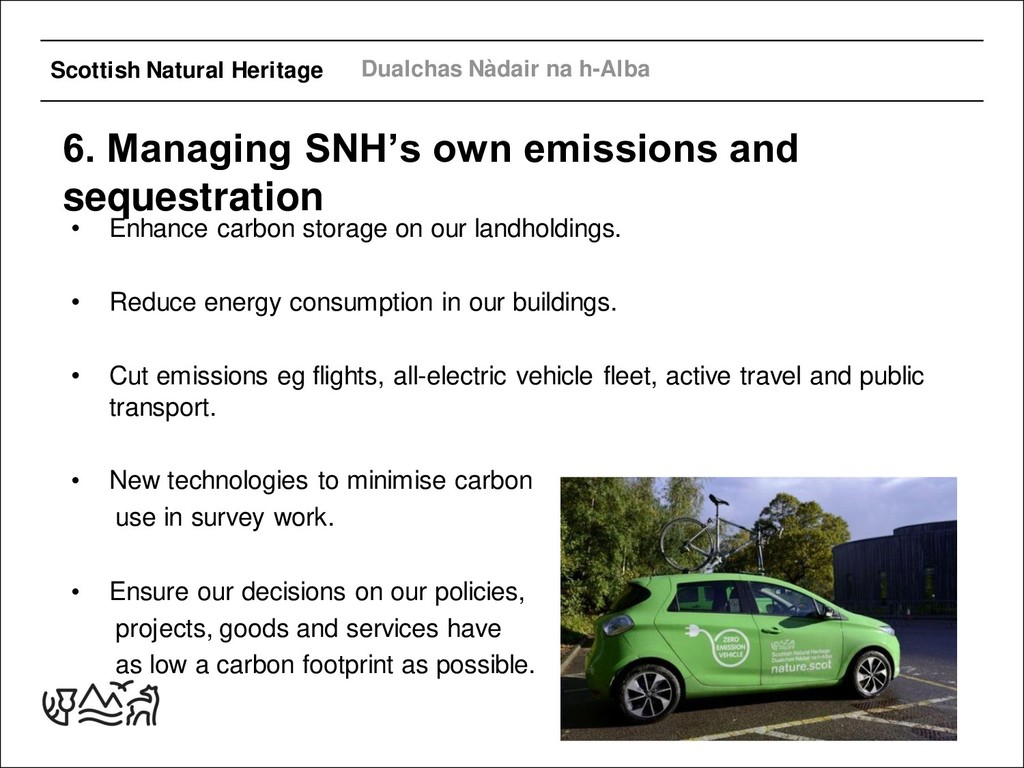
own emissions and sequestration • Enhance carbon storage on our landholdings. • Reduce energy consumption in our buildings. • Cut emissions eg flights, all-electric vehicle fleet, active travel and public transport. • New technologies to minimise carbon use in survey work. • Ensure our decisions on our policies, projects, goods and services have as low a carbon footprint as possible.
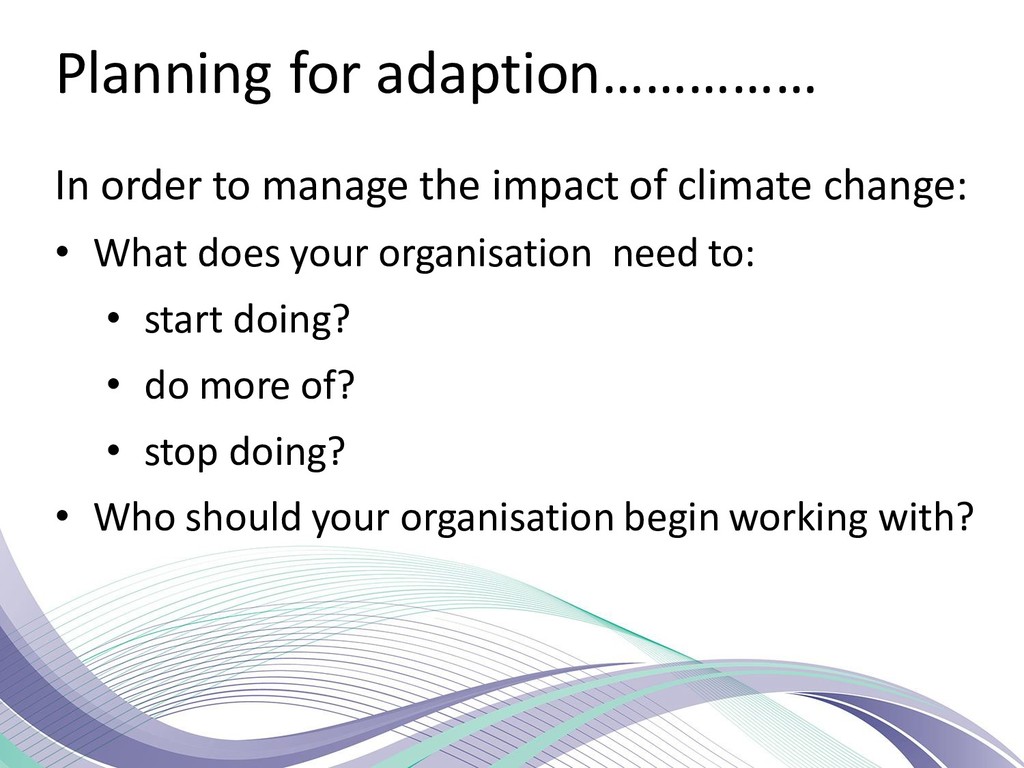
of in relation to your service or organisation? What else do you need to start considering given what you have heard this afternoons so far? (Think worse case scenarios) What are you currently doing to mitigate and manage the risk posed? Discuss the following questions
What does your organisation need to: • start doing? • do more of? • stop doing? • Who should your organisation begin working with? Planning for adaption……………


 anguscouncil
 trycycle
 institutdelelevage
 estie
estie
.jpg) lychee1223
lychee1223
 peterdesmet
 mickey_0226
 x_ttyszk
 brainpadpr
 xspa2012
 sshimizu2006
 jonoalderson
 auna
auna
 nwiizo
 michaelherold
 greggifford
 madoxten
 addyosmani
 akademiya2063
 frankvandijk
 chrislema
 aleyda
 bethany








![Keep in Touch… @AngusCPP [email protected]](https://files.speakerdeck.com/presentations/385a70f9503b461c90497553a065bbd1/slide_41.jpg)