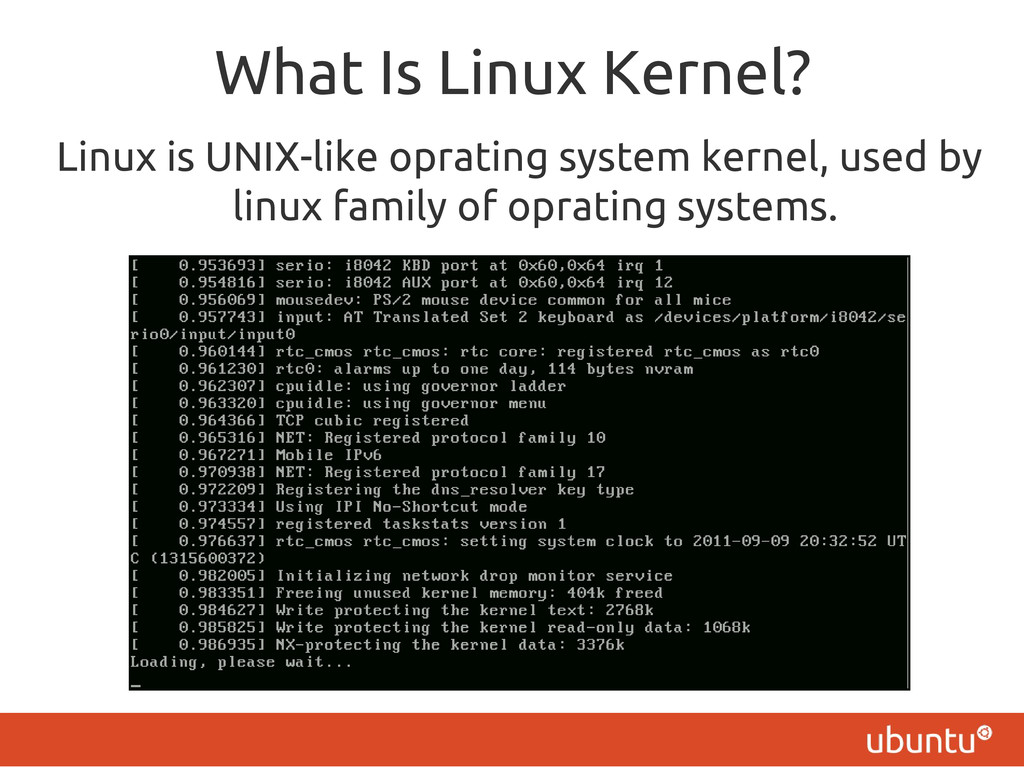
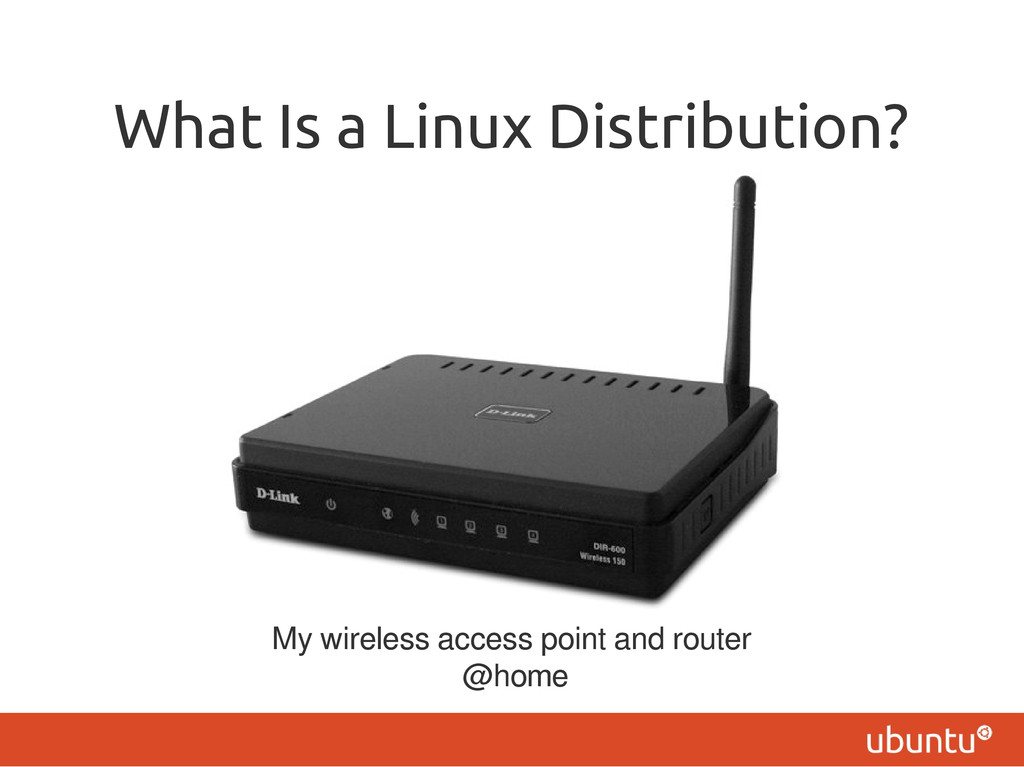
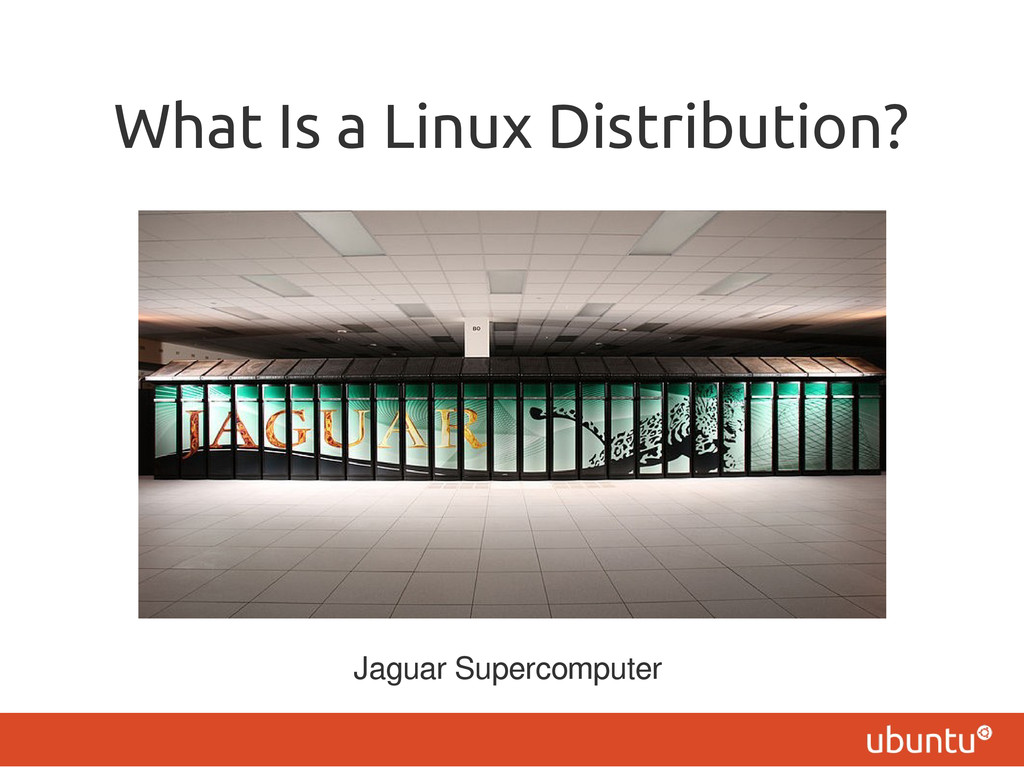
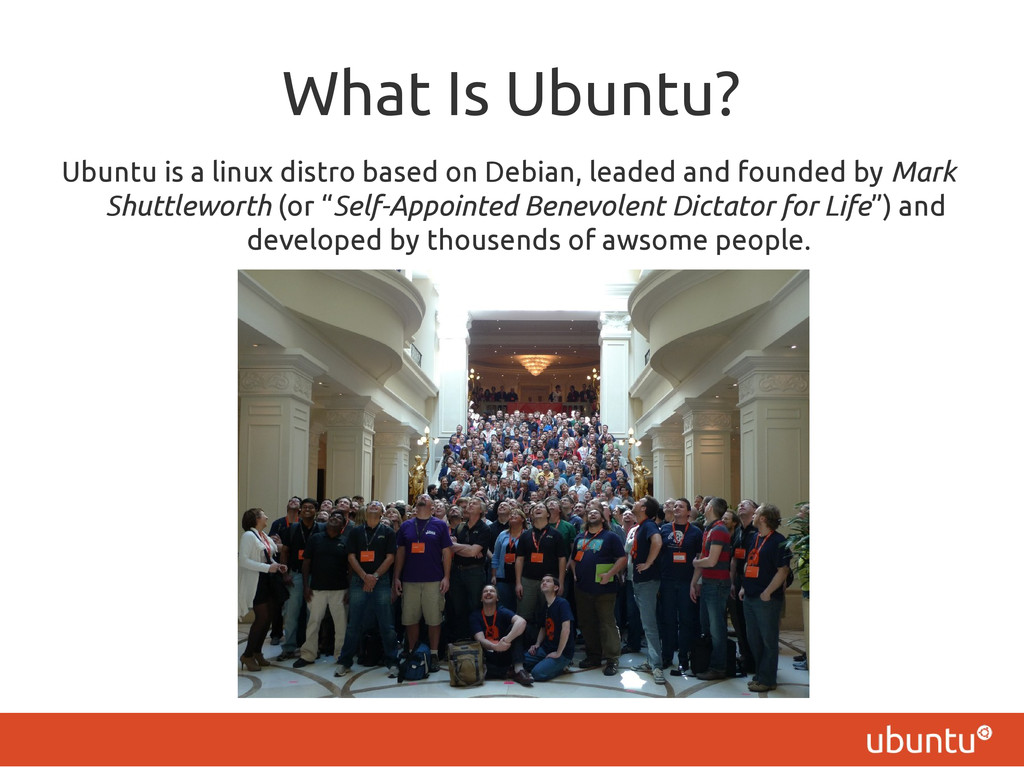
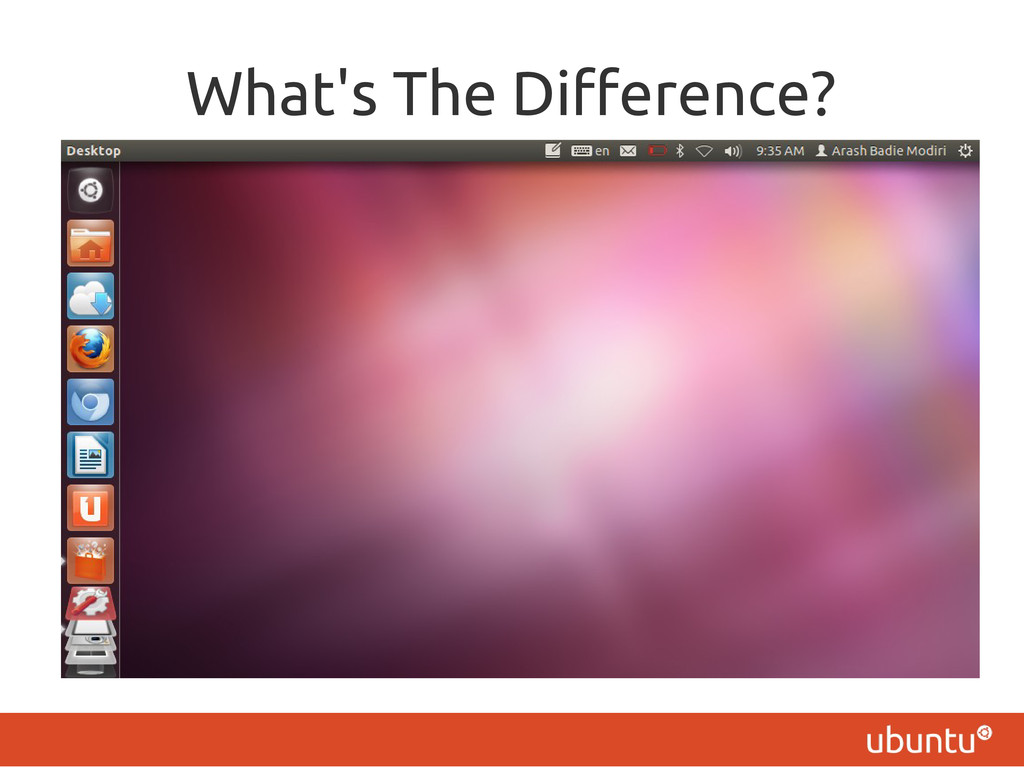
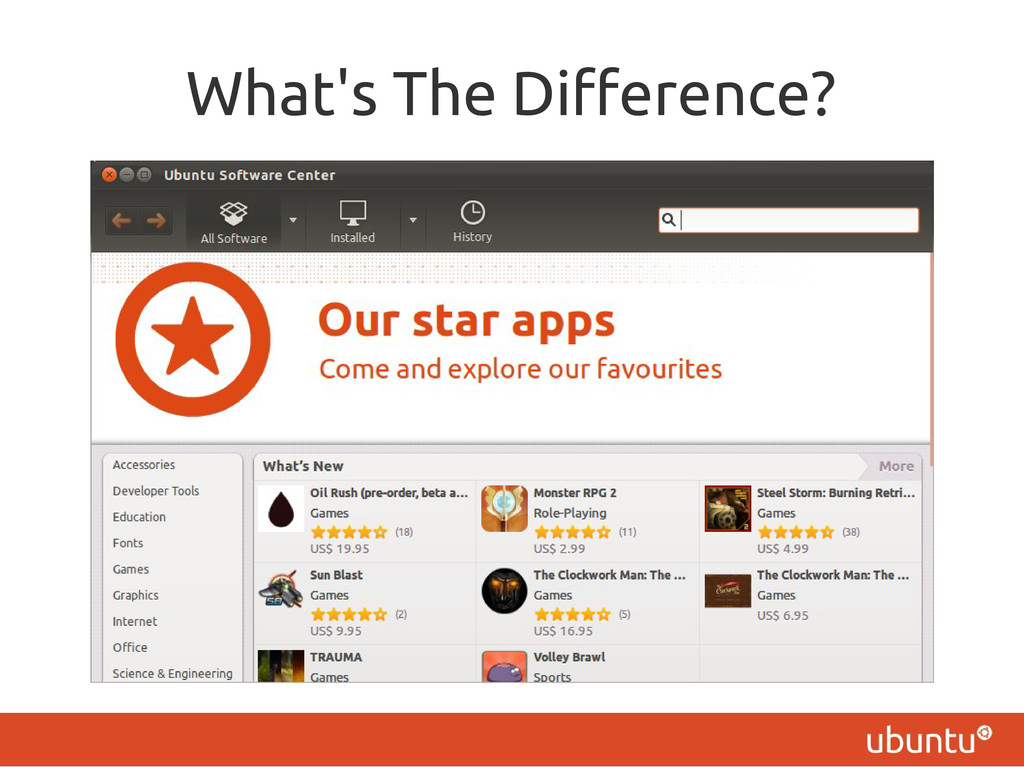
as “linux” or “distro”) is a complete OS built on top of linux kernel. Ubuntu as well as Debian, Fedora, openSUSE, Gentoo (and 600 more) are examples of linux distros.
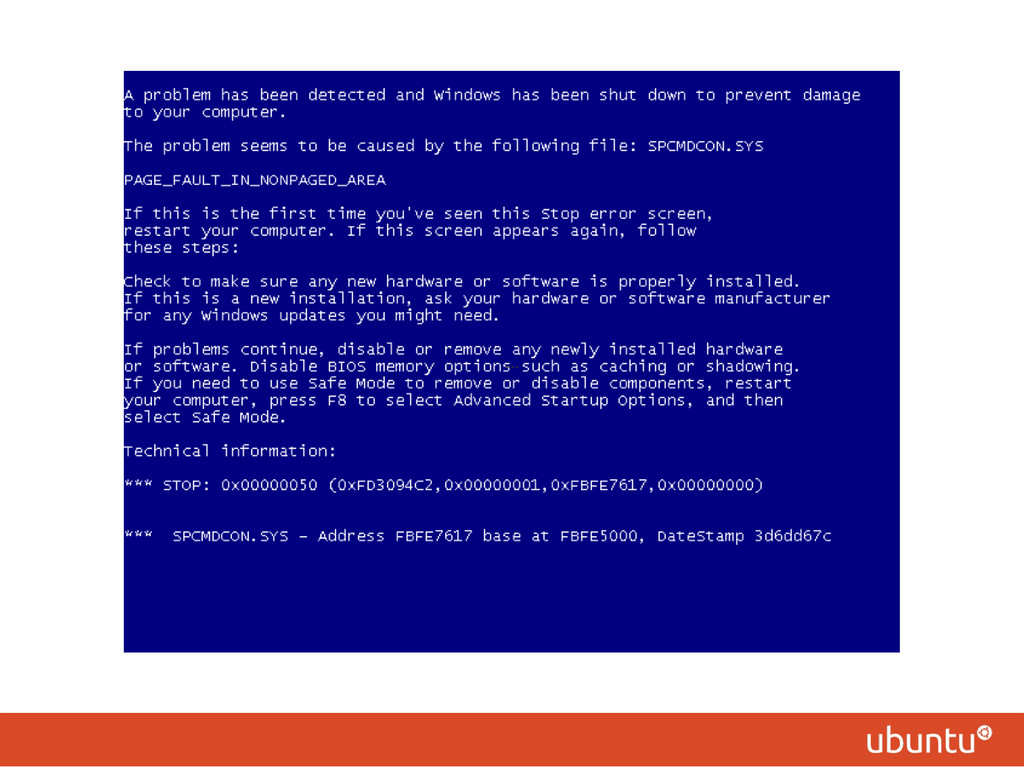
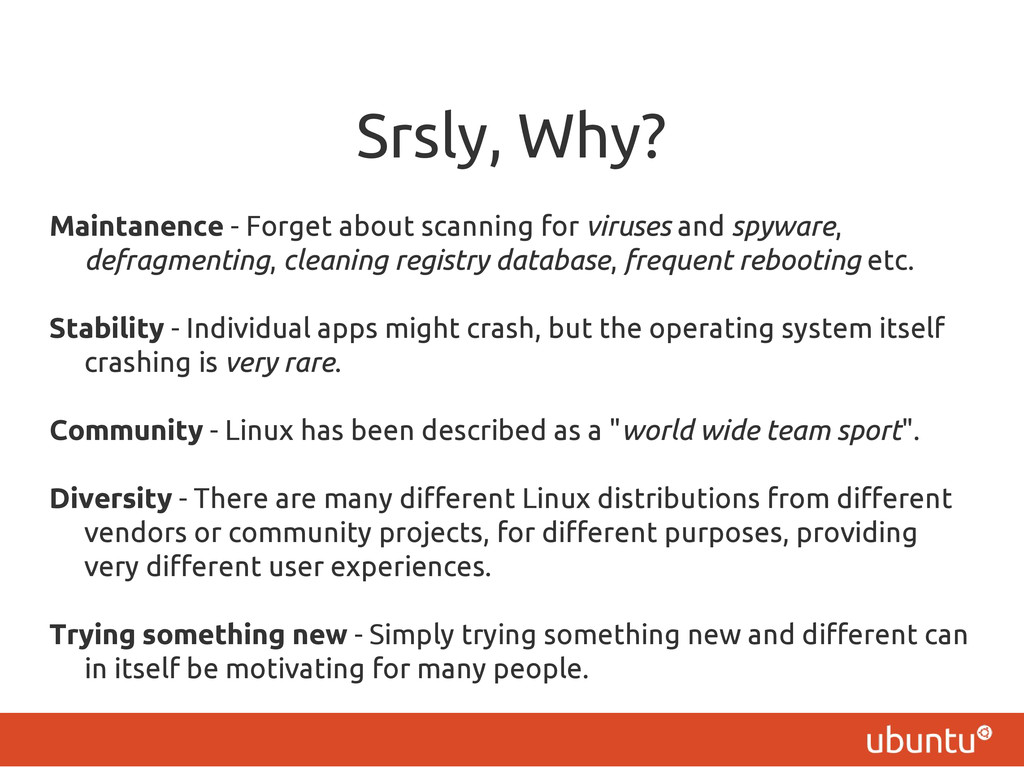
spyware, defragmenting, cleaning registry database, frequent rebooting etc. Stability - Individual apps might crash, but the operating system itself crashing is very rare. Community - Linux has been described as a "world wide team sport". Diversity - There are many different Linux distributions from different vendors or community projects, for different purposes, providing very different user experiences. Trying something new - Simply trying something new and different can in itself be motivating for many people.
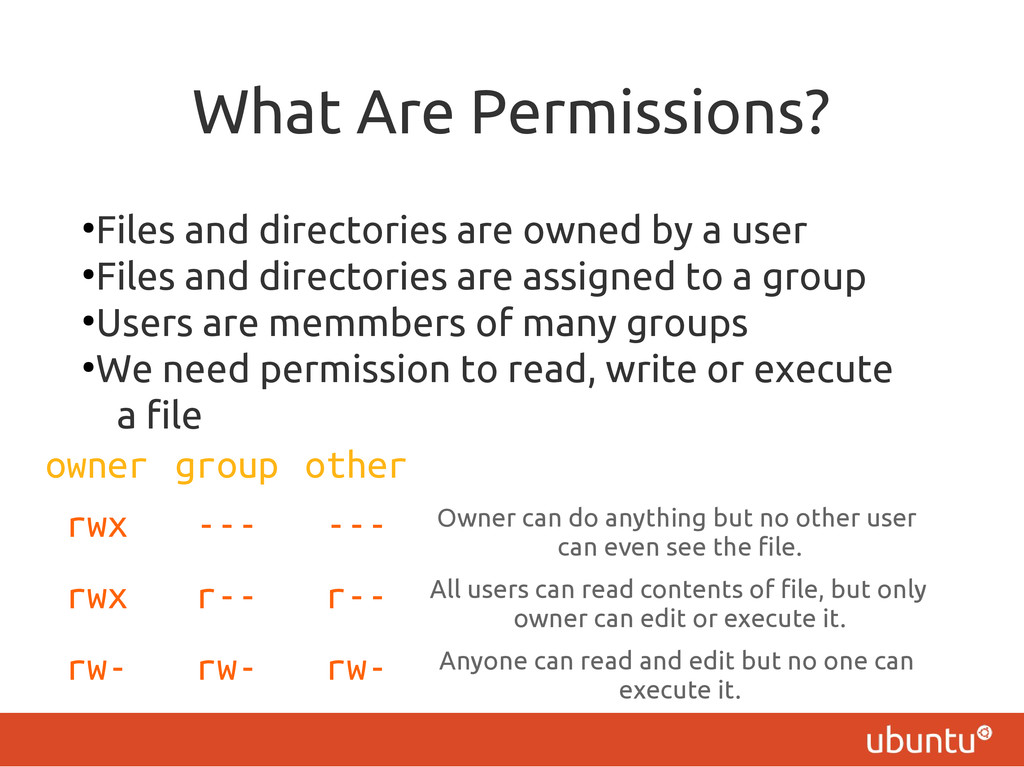
a user • Files and directories are assigned to a group • Users are memmbers of many groups • We need permission to read, write or execute a file owner group other rwx --- --- Owner can do anything but no other user can even see the file. rwx r-- r-- All users can read contents of file, but only owner can edit or execute it. rw- rw- rw- Anyone can read and edit but no one can execute it.
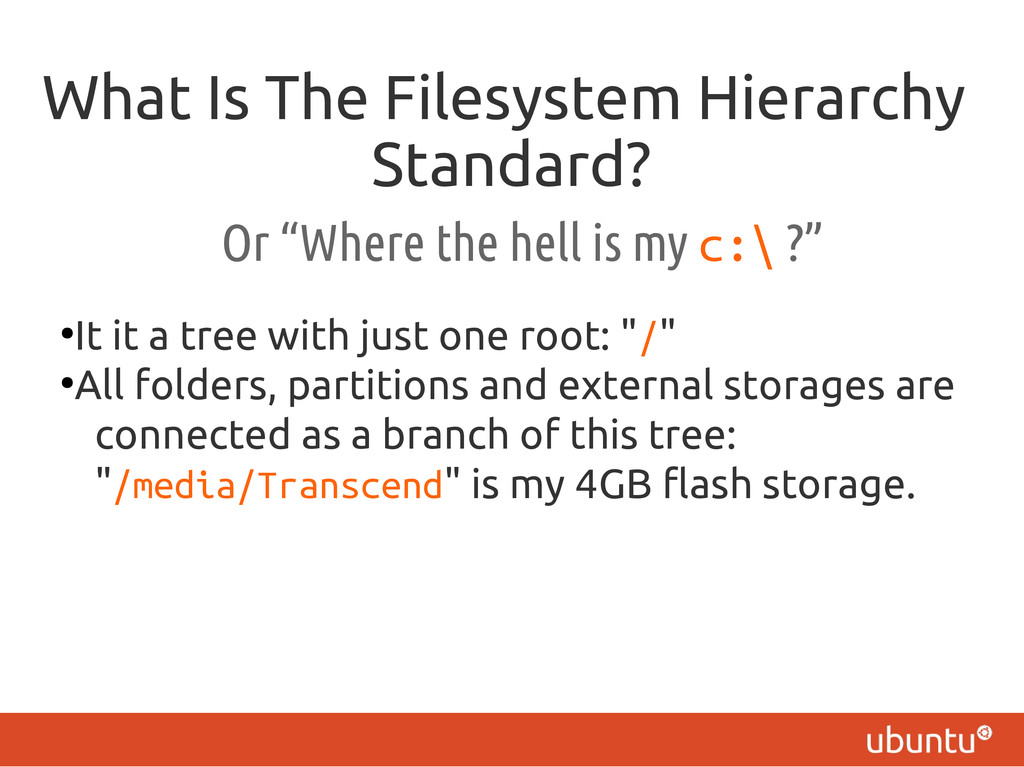
tree with just one root: "/" • All folders, partitions and external storages are connected as a branch of this tree: "/media/Transcend" is my 4GB flash storage. Or “Where the hell is my c:\ ?”
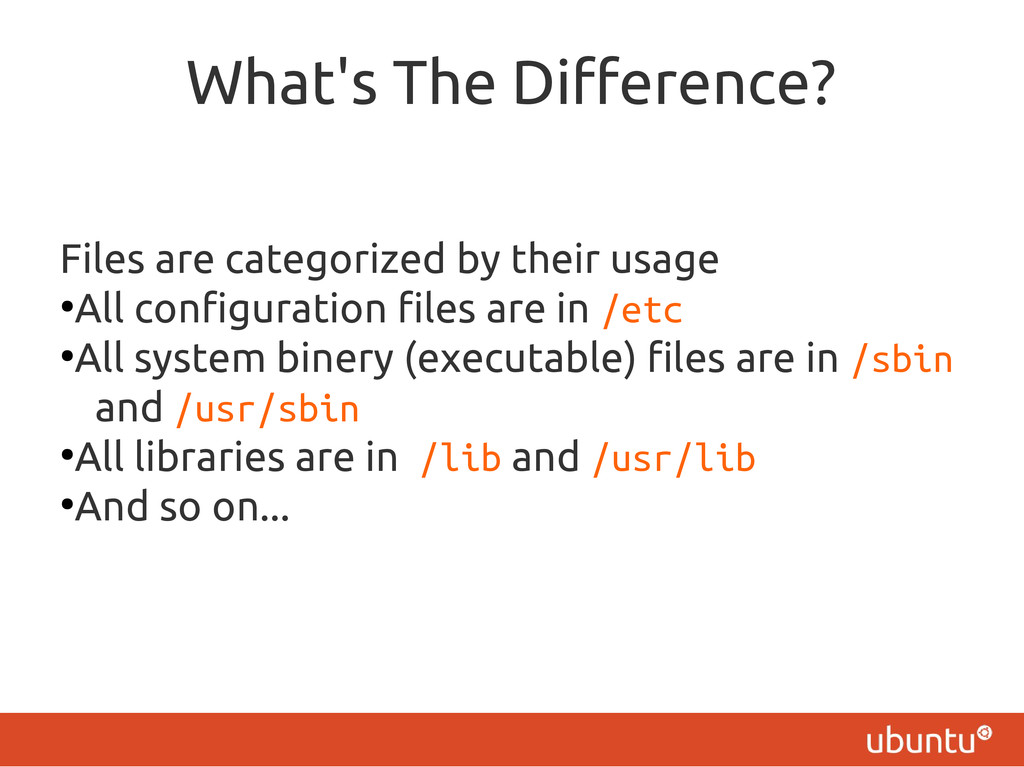
All configuration files are in /etc • All system binery (executable) files are in /sbin and /usr/sbin • All libraries are in /lib and /usr/lib • And so on...
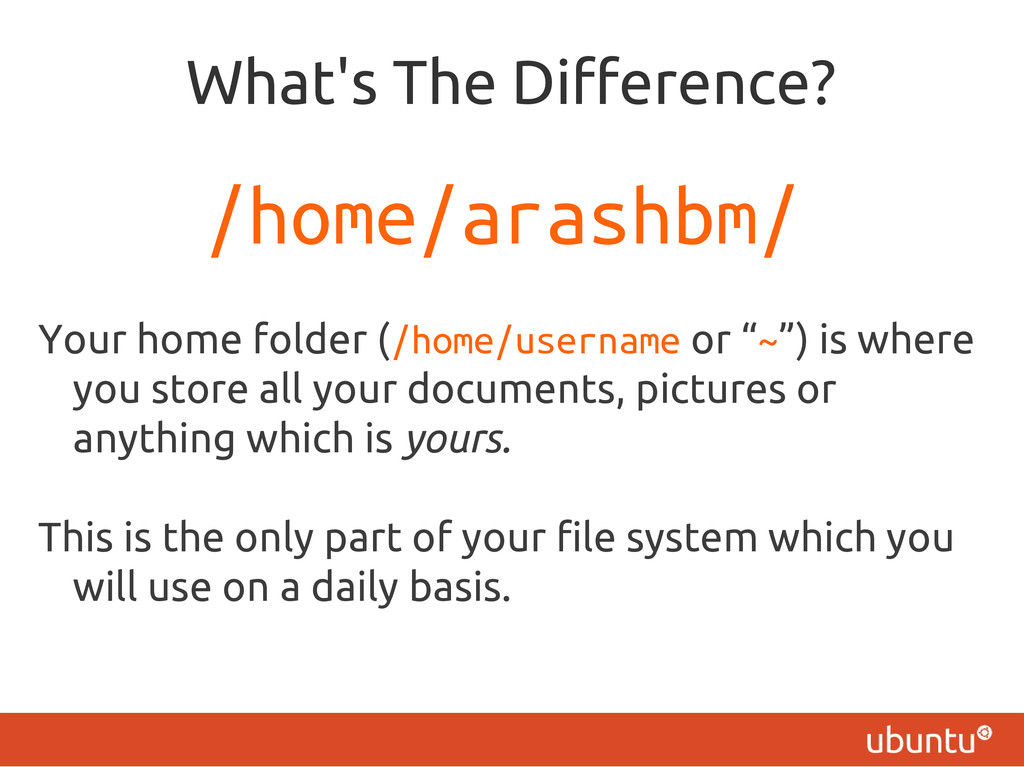
is where you store all your documents, pictures or anything which is yours. This is the only part of your file system which you will use on a daily basis.

 SiteGround - Reliable hosting with speed, security, and support you can count on.


 arashbm
 torumakabe
 codmoninc
 oikon48
 camiha
 ivry_presentationmaterials
 470715
 sansantech
 fespinoza
 takanorip
 kairim0
 sudoakiy
 glaforge
 jonyablonski
 jeffersonlam
 techseoconnect
 schlessera
 chikuwait
 reverentgeek
 tonyrice
 frankvandijk
 smashingmag
 aleyda
 marketingsoph
 akihiro_kokubo