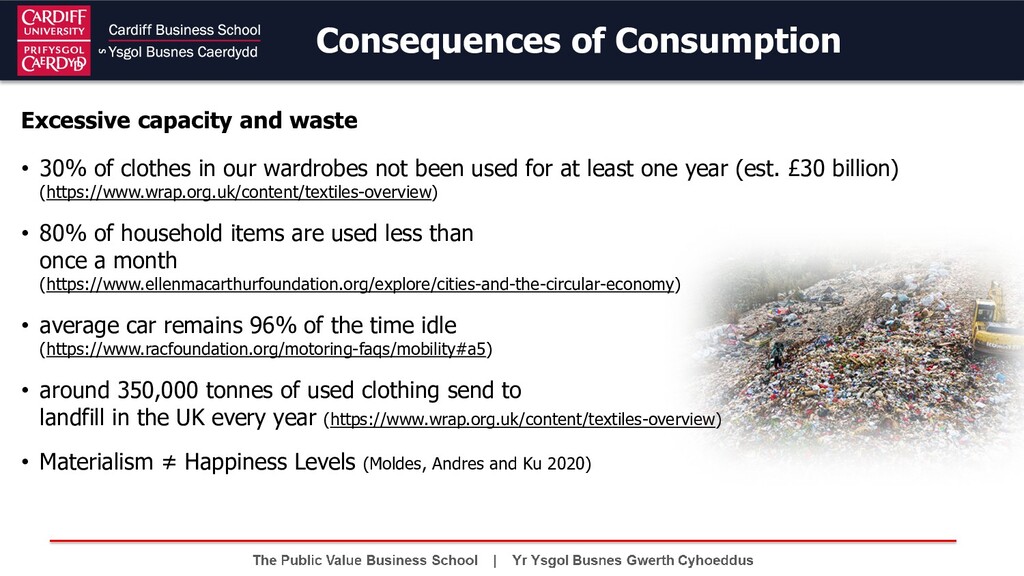
clothes in our wardrobes not been used for at least one year (est. £30 billion) (https://www.wrap.org.uk/content/textiles-overview) • 80% of household items are used less than once a month (https://www.ellenmacarthurfoundation.org/explore/cities-and-the-circular-economy) • average car remains 96% of the time idle (https://www.racfoundation.org/motoring-faqs/mobility#a5) • around 350,000 tonnes of used clothing send to landfill in the UK every year (https://www.wrap.org.uk/content/textiles-overview) • Materialism ≠ Happiness Levels (Moldes, Andres and Ku 2020)
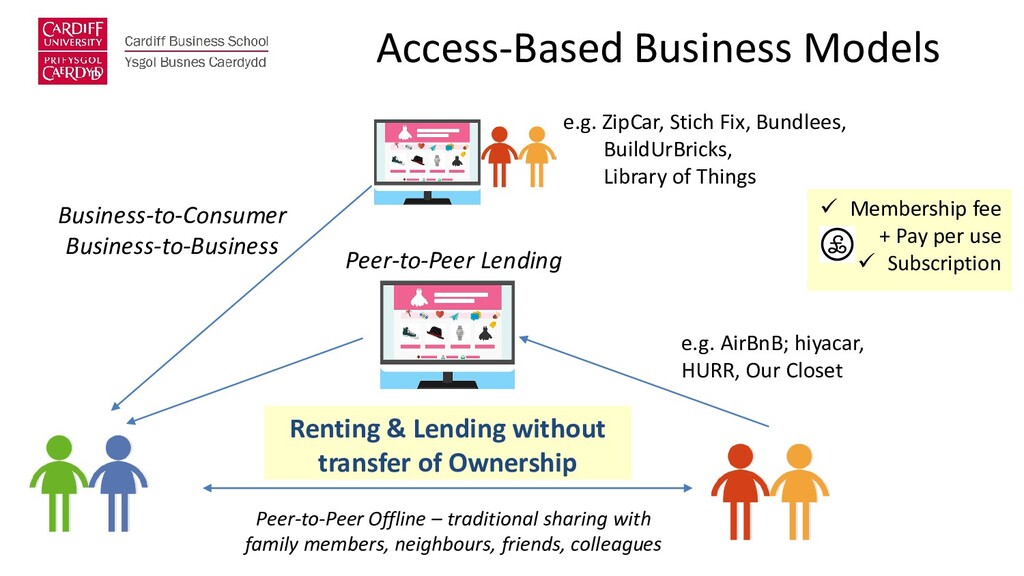
e.g. AirBnB; hiyacar, HURR, Our Closet e.g. ZipCar, Stich Fix, Bundlees, BuildUrBricks, Library of Things Peer-to-Peer Lending Business-to-Consumer Business-to-Business Peer-to-Peer Offline – traditional sharing with family members, neighbours, friends, colleagues Membership fee + Pay per use Subscription
• Could access-based consumption models for every-day consumer goods become mainstream? • To what extent could manufacturers and traditional retailers leverage the growth of the sharing economy and generate revenue by renting items? • Relatively little knowledge on how consumers perceive alternative consumption models (Edbring, Lehner, & Mont, 2016) – specifically underlying motivations and barriers to renting every-day consumer goods • a general gap in knowledge about the social-psychological effects of shared consumption on the individual (Roos & Hahn, 2017) Study Rationale Academic Research
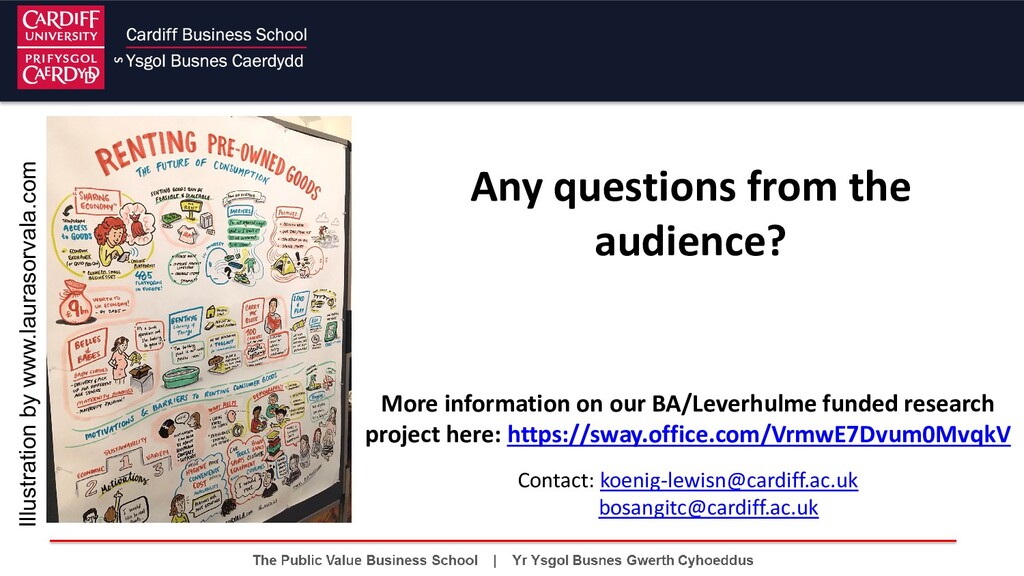
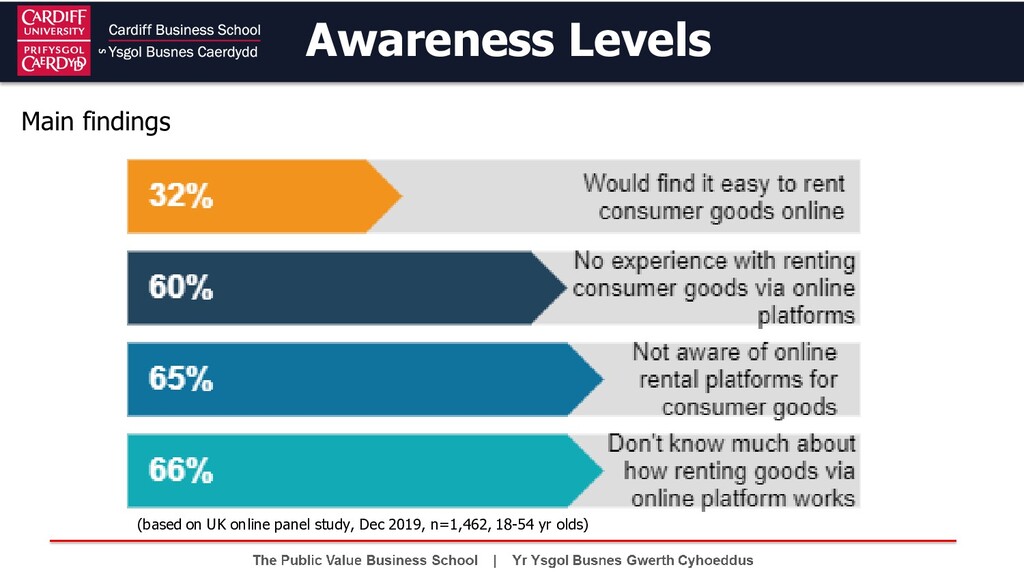
could help to conserve natural resources, contribute to reducing waste and a better living environment • 41% of respondents felt that renting from an online rental company for a fee is a good alternative to ownership Main Findings (based on UK online panel study, Dec 2019, n=1,402, 18-54 yr olds)
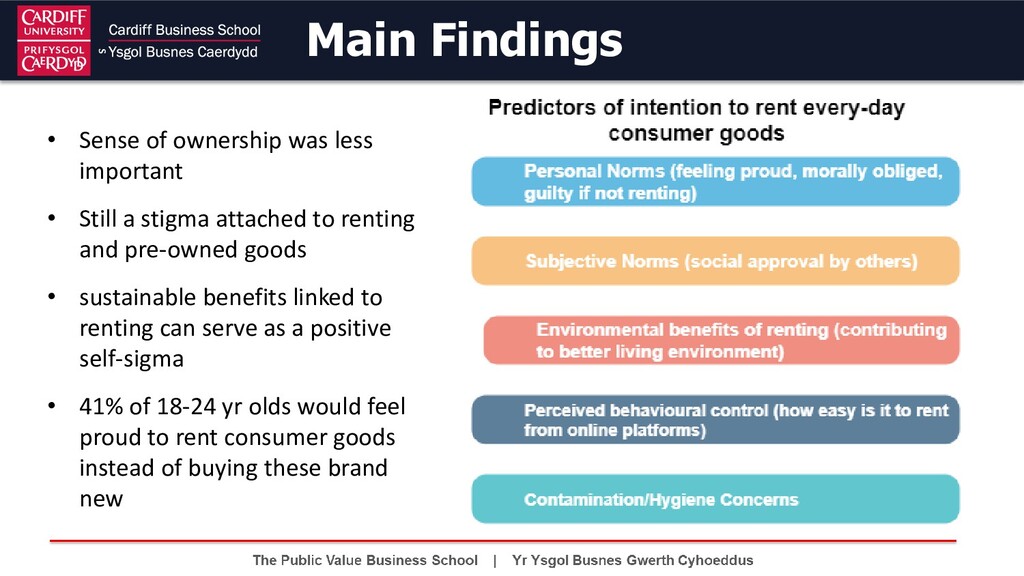
Still a stigma attached to renting and pre-owned goods • sustainable benefits linked to renting can serve as a positive self-sigma • 41% of 18-24 yr olds would feel proud to rent consumer goods instead of buying these brand new


 aspectnetwork
 thekraken
 jmmastey
 joshbly
 rmw
rmw
 eileencodes
 aleyda
 tomoyanonymous
 mayatellez
 frankvandijk
 kimpetersen
 addyosmani
 tammyeverts
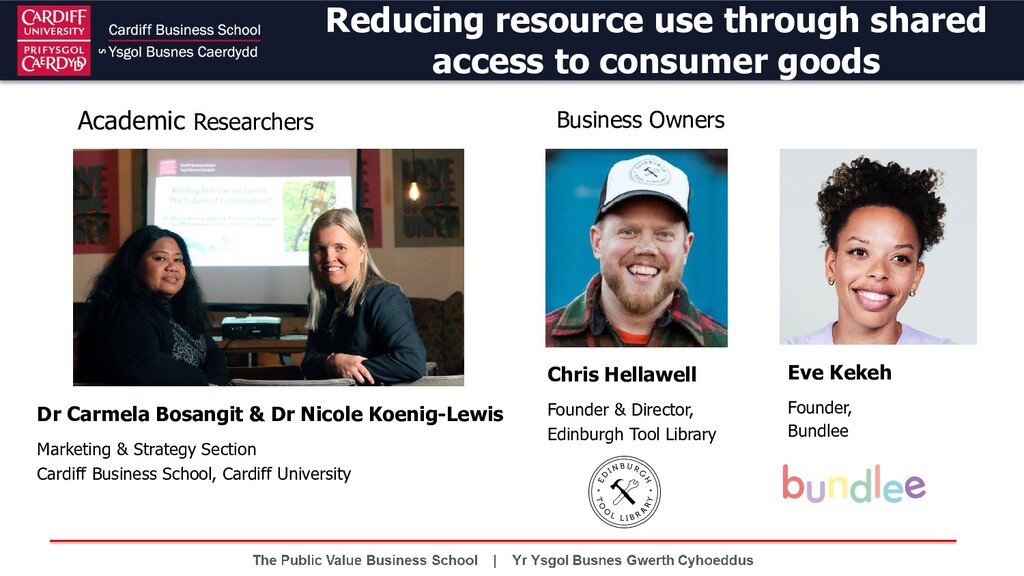

![the baby clothing rental service bundlee.co.uk, @bundleebaby Eve Kekeh, [email protected]](https://files.speakerdeck.com/presentations/910af6f6e54b4a97acfa25fadc8551a5/slide_10.jpg)