Upgrade to Pro — share decks privately, control downloads, hide ads and more …

March 2025 - From Reactive to Proactive: Is Age...

March 2025 - From Reactive to Proactive: Is Agentic AI the Future of Decision-Making?

Agentic AI systems are emerging as powerful tools that can anticipate needs and make autonomous decisions. In this session, Atita Arora Independent Solution Architect, ex-Qdrant explores the practical applications and implications of these proactive AI agents across industries.
We'll examine:

Core principles of agentic AI and how it differs from traditional reactive systems
Real-world case studies in healthcare, finance, and customer service
Potential benefits, including improved efficiency and decision-making accuracy
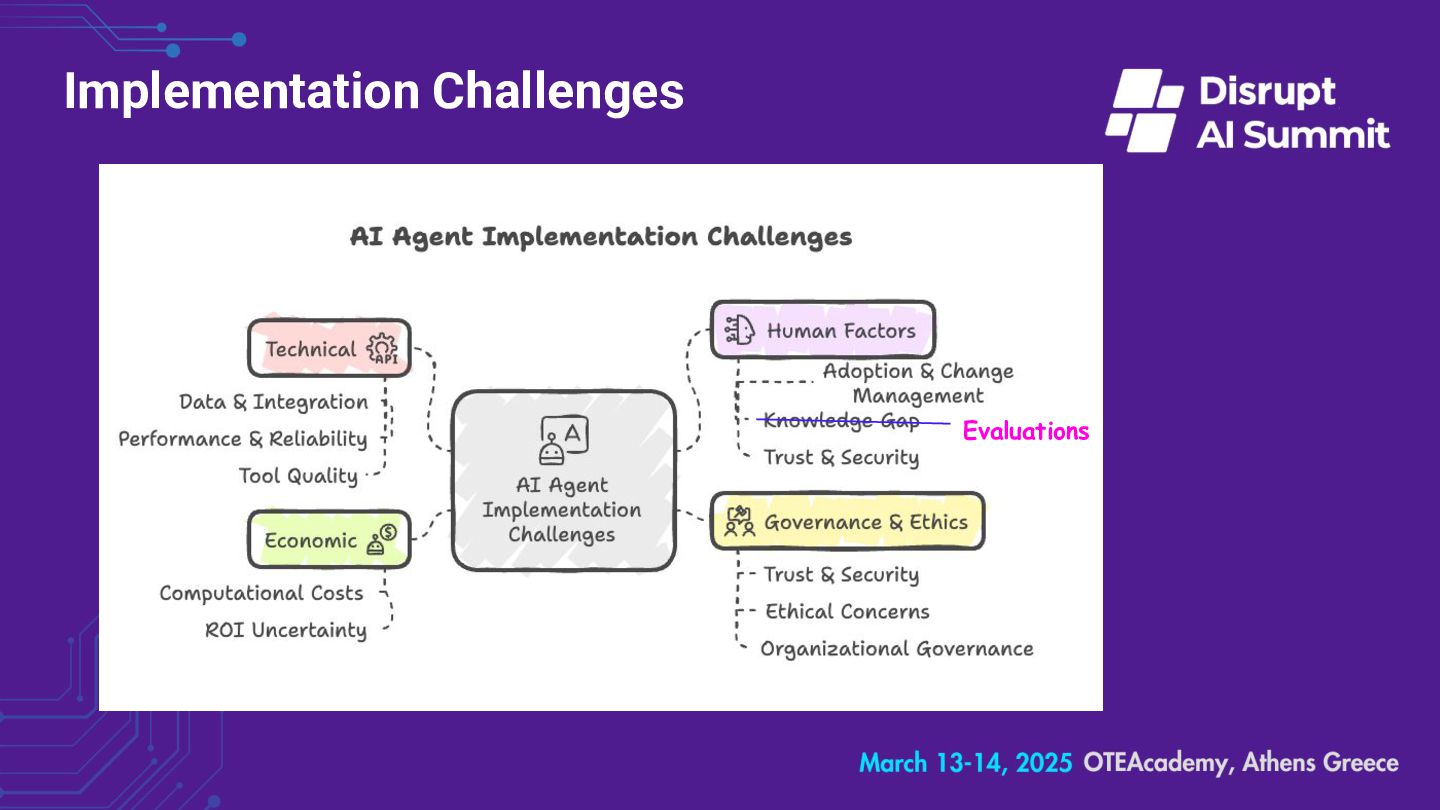
Challenges in implementation, including integration with existing systems and processes
Ethical considerations and the need for human oversight

Through concrete examples and critical analysis, we'll assess whether agentic AI represents a genuine leap forward in decision-making or if it's an overhyped trend. Attendees will gain insights into the current state of agentic AI and its potential impact on their industries.

Video here : https://www.youtube.com/watch?v=TXYHwmKT7mw

Avatar for Atita Arora

Atita Arora

June 26, 2026

More Decks by Atita Arora

Other Decks in Technology

Transcript

  1. Reactive to Proactive: Is Agentic AI the Future of Decision-Making?

    Atita Arora Independent AI Solution Architect
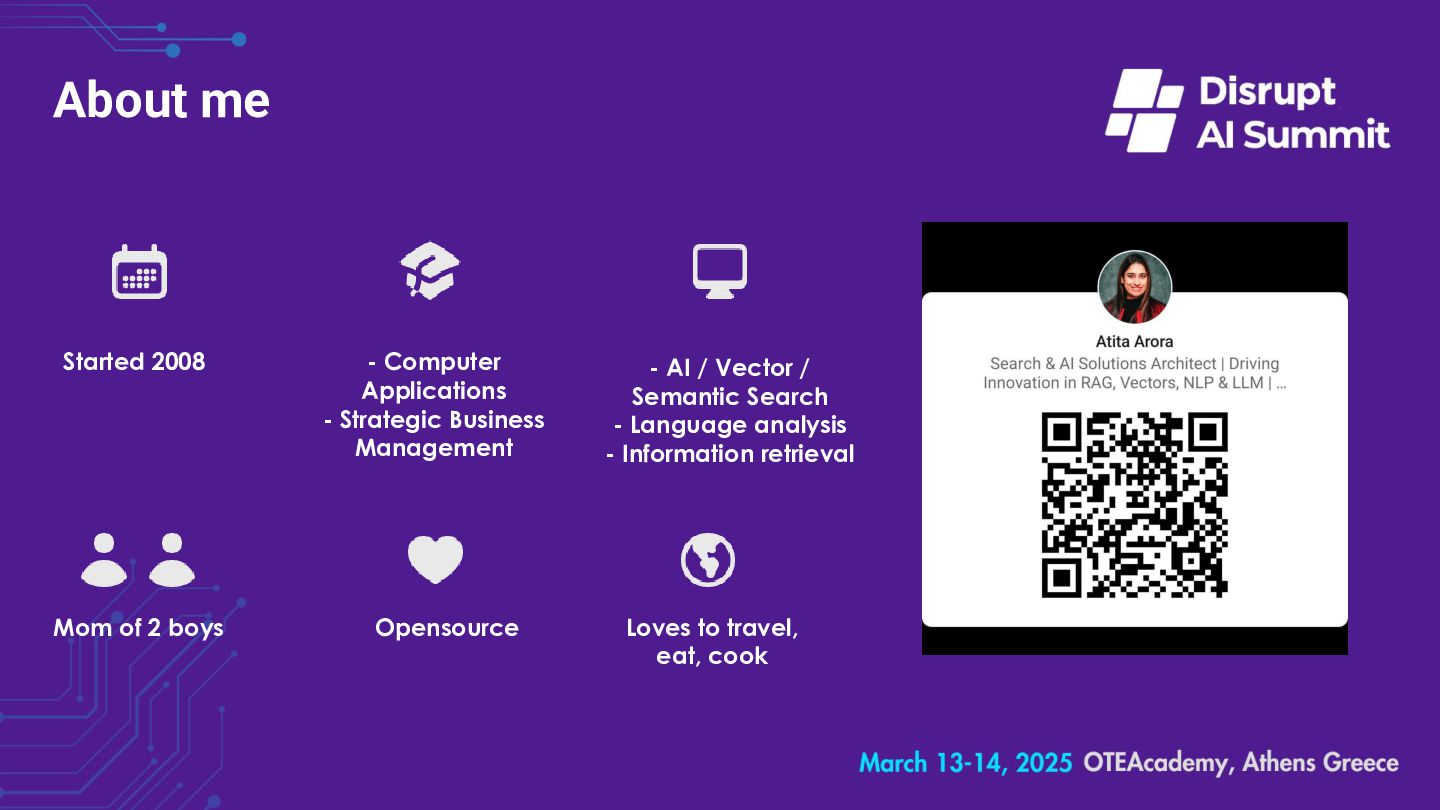
  2. About me Started 2008 - Computer Applications - Strategic Business

    Management - AI / Vector / Semantic Search - Language analysis - Information retrieval Opensource Loves to travel, eat, cook Mom of 2 boys
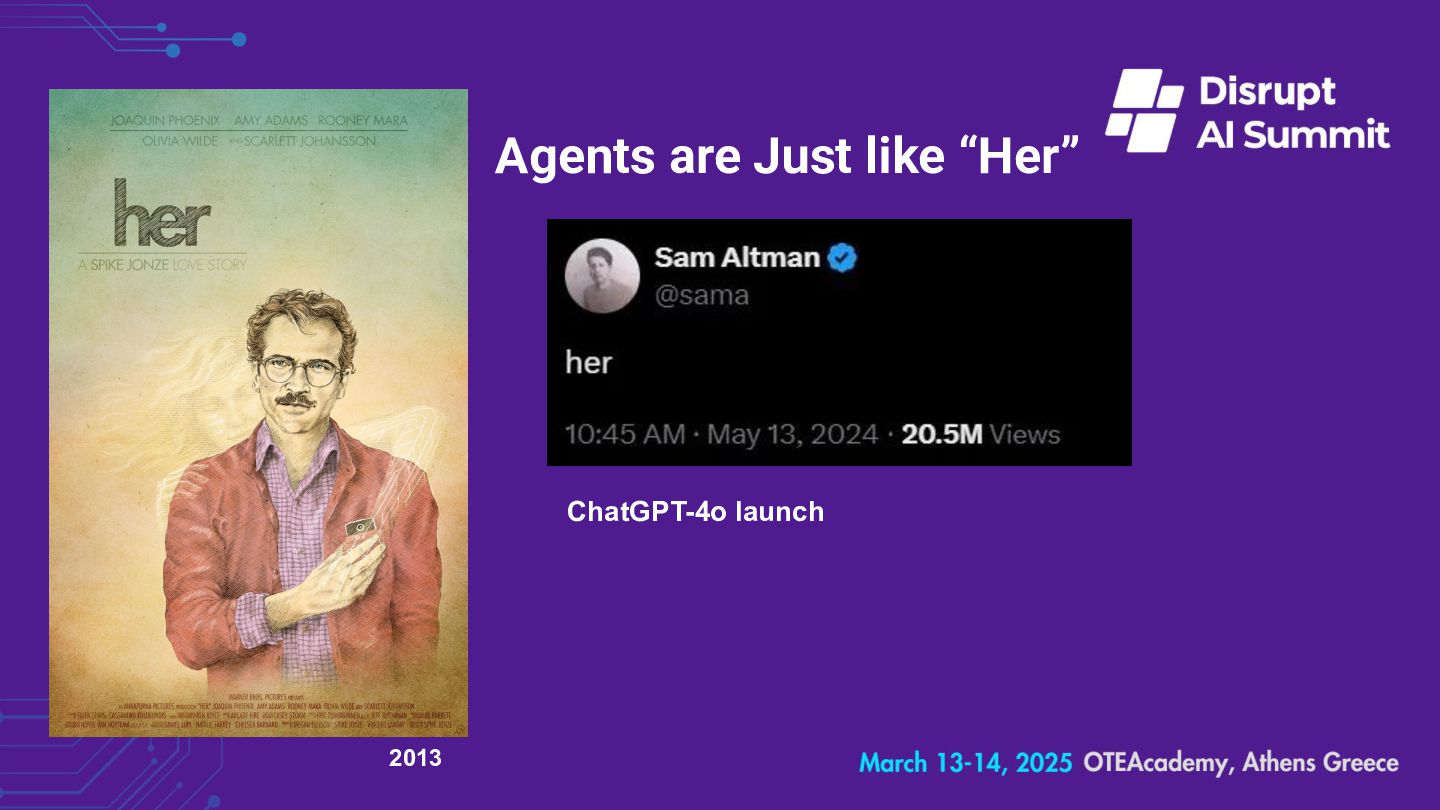
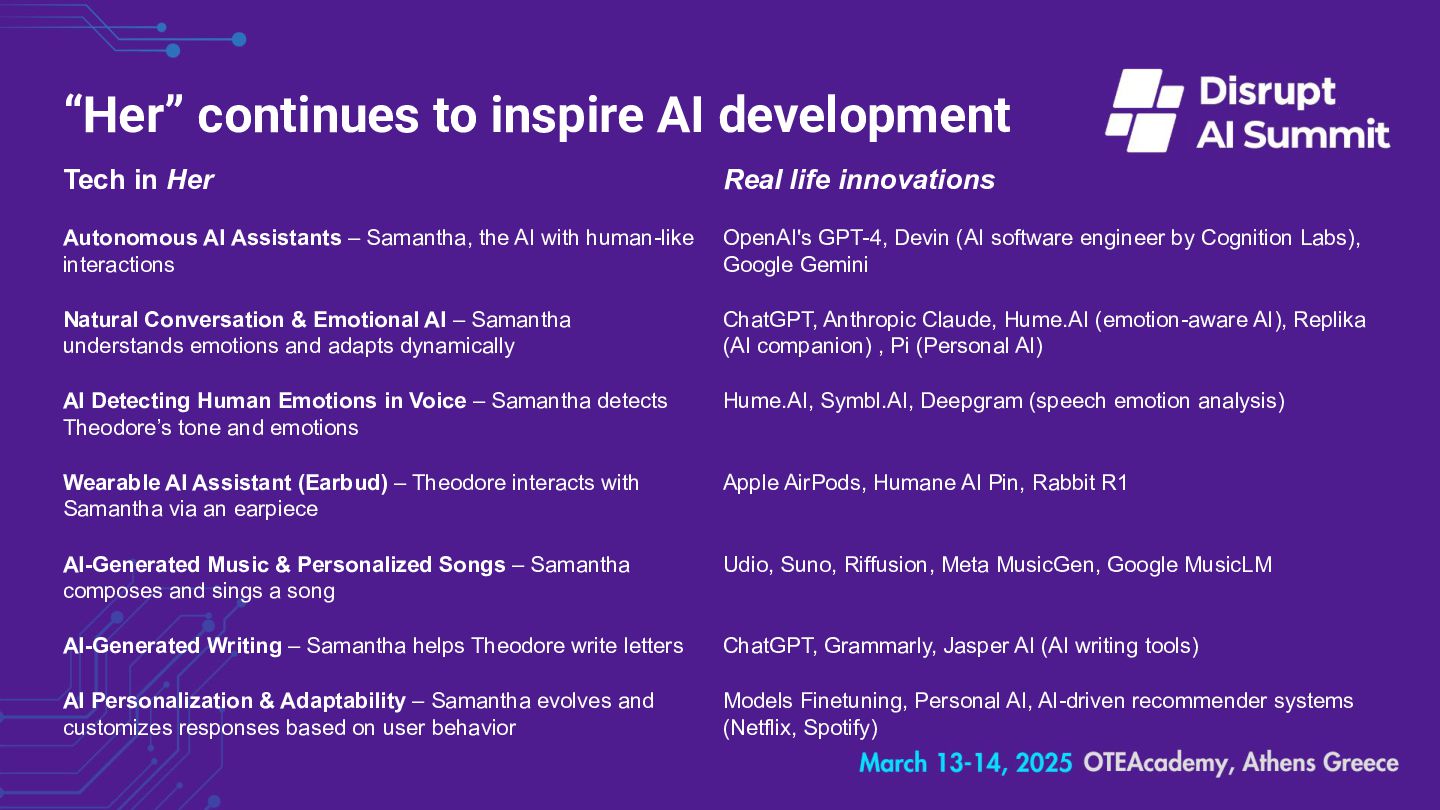
  3. “Her” continues to inspire AI development Tech in Her Real

    life innovations Autonomous AI Assistants – Samantha, the AI with human-like interactions OpenAI's GPT-4, Devin (AI software engineer by Cognition Labs), Google Gemini Natural Conversation & Emotional AI – Samantha understands emotions and adapts dynamically ChatGPT, Anthropic Claude, Hume.AI (emotion-aware AI), Replika (AI companion) , Pi (Personal AI) AI Detecting Human Emotions in Voice – Samantha detects Theodore’s tone and emotions Hume.AI, Symbl.AI, Deepgram (speech emotion analysis) Wearable AI Assistant (Earbud) – Theodore interacts with Samantha via an earpiece Apple AirPods, Humane AI Pin, Rabbit R1 AI-Generated Music & Personalized Songs – Samantha composes and sings a song Udio, Suno, Riffusion, Meta MusicGen, Google MusicLM AI-Generated Writing – Samantha helps Theodore write letters ChatGPT, Grammarly, Jasper AI (AI writing tools) AI Personalization & Adaptability – Samantha evolves and customizes responses based on user behavior Models Finetuning, Personal AI, AI-driven recommender systems (Netflix, Spotify)
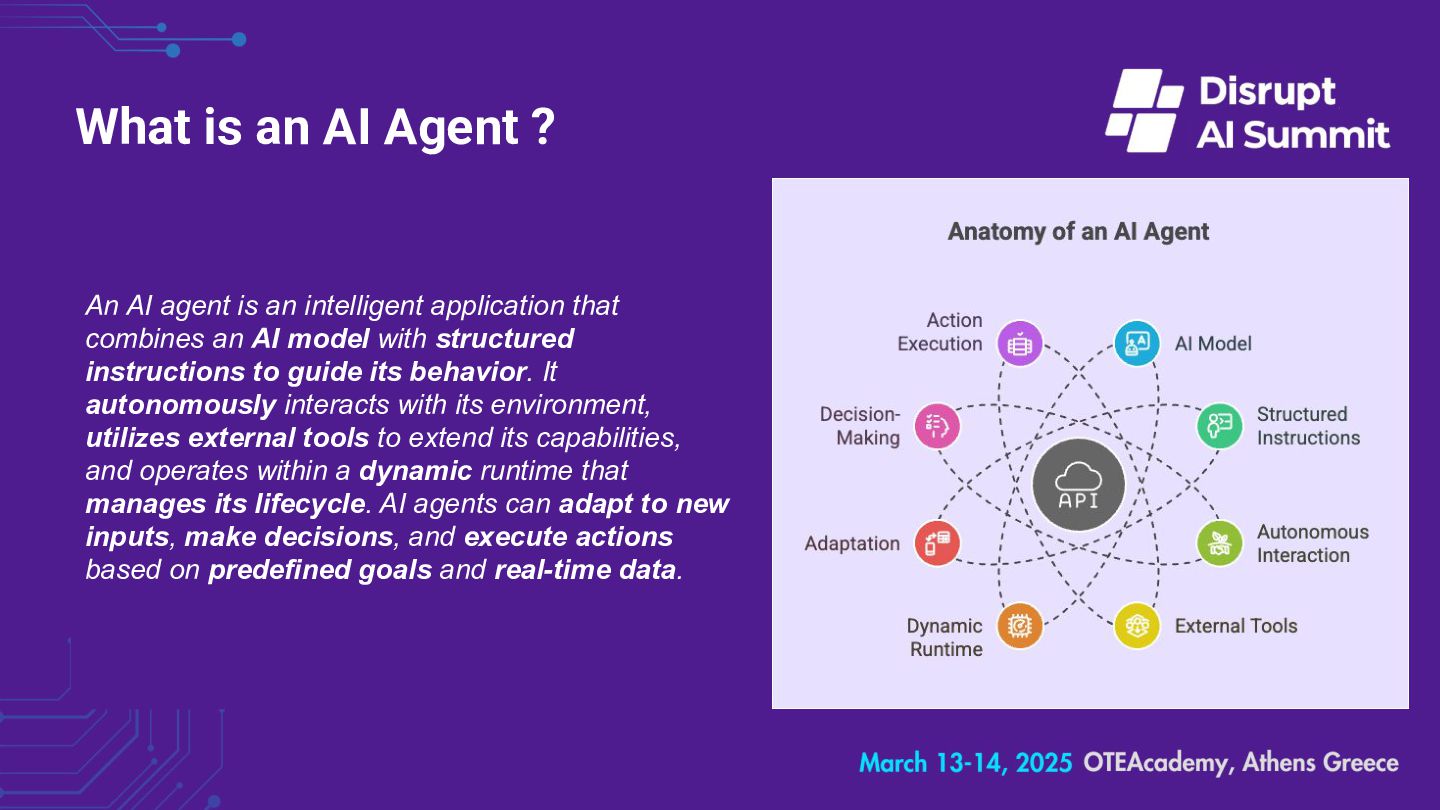
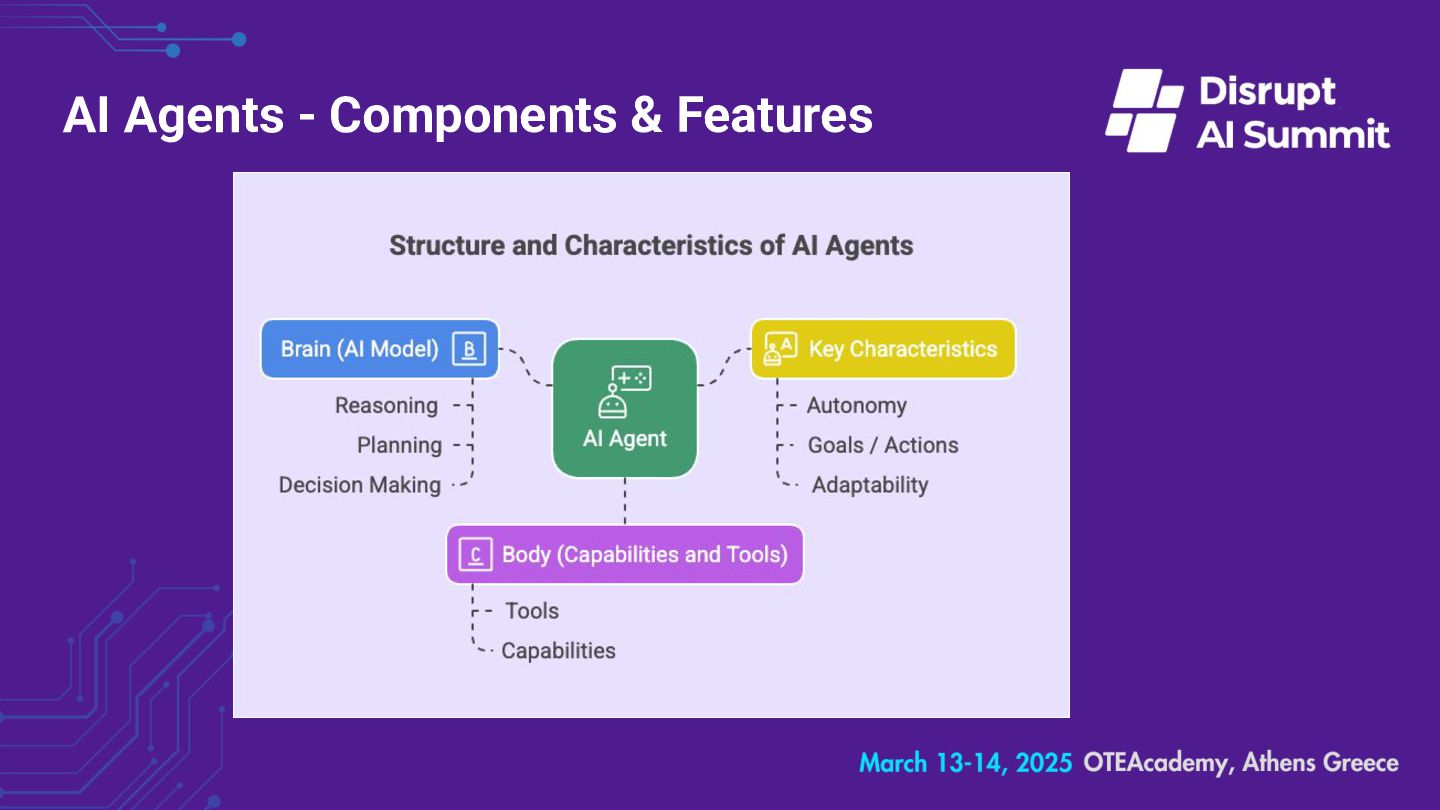
  4. What is an AI Agent ? An AI agent is

    an intelligent application that combines an AI model with structured instructions to guide its behavior. It autonomously interacts with its environment, utilizes external tools to extend its capabilities, and operates within a dynamic runtime that manages its lifecycle. AI agents can adapt to new inputs, make decisions, and execute actions based on predefined goals and real-time data.
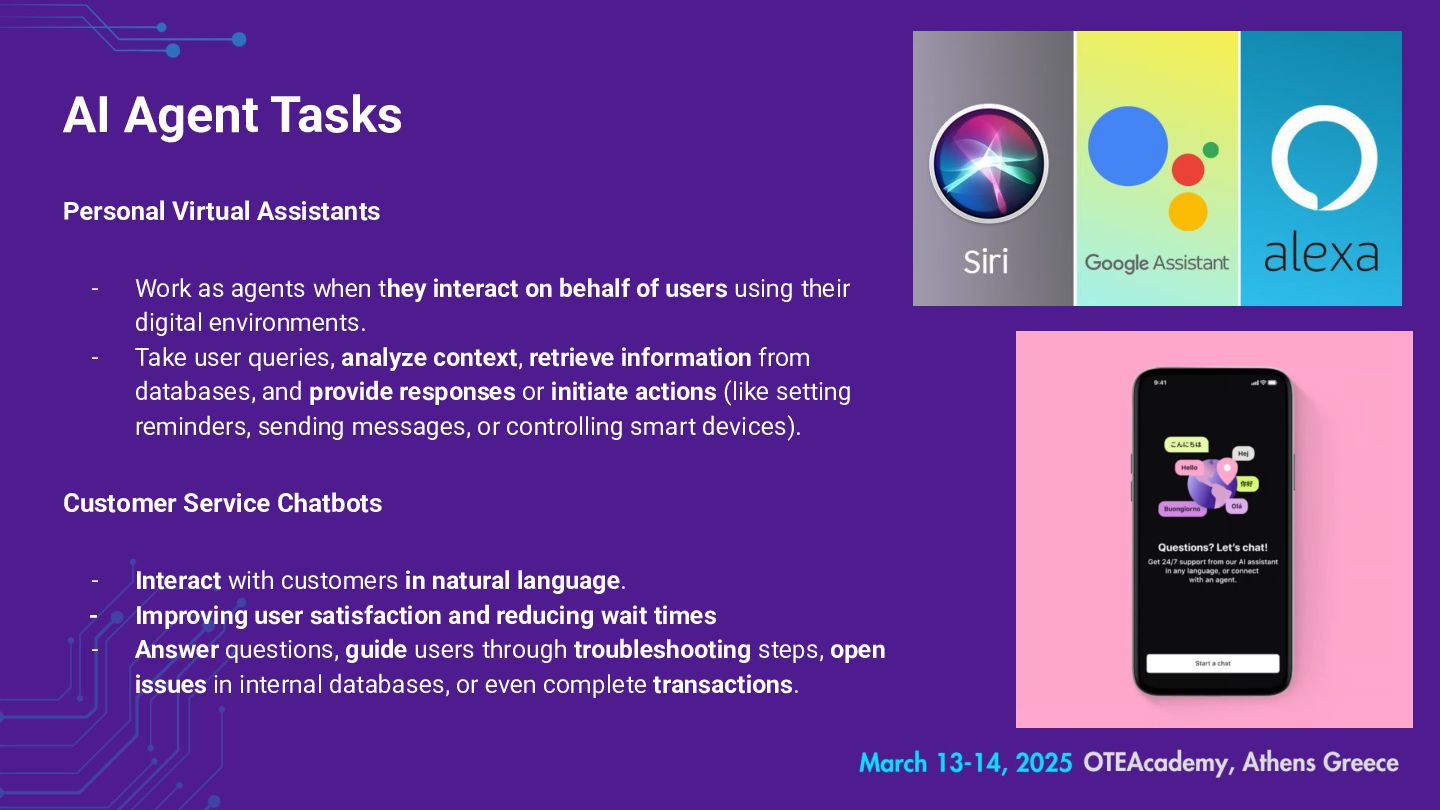
  5. AI Agent Tasks Personal Virtual Assistants - Work as agents

    when they interact on behalf of users using their digital environments. - Take user queries, analyze context, retrieve information from databases, and provide responses or initiate actions (like setting reminders, sending messages, or controlling smart devices). Customer Service Chatbots - Interact with customers in natural language. - Improving user satisfaction and reducing wait times - Answer questions, guide users through troubleshooting steps, open issues in internal databases, or even complete transactions.
  6. Potential Benefits of using AI Agents Improved Efficiency Agentic AI

    significantly enhances operational efficiency by: • Automating routine tasks, freeing up human capital for strategic work • Processing vast amounts of real-time data for quick, dynamic decision-making • Providing data-driven insights that eliminate human biases and fatigue-related errors Enhanced Adaptability and Continuous Improvement Agentic AI systems excel at: • Evolving and enhancing decision-making processes over time through machine learning • Adjusting strategies based on feedback loops • Adapting to dynamic conditions
  7. Potential Benefits of using AI Agents Scalability and Resource Optimization

    Agentic AI offers: • Effortless scaling of operations without extensive manual intervention • Significant cost reduction (compared to traditional staffing models) Proactive Problem-Solving Agentic AI demonstrates: • Ability to anticipate potential risks and take preventive actions • Early identification of issues in areas like equipment maintenance, market shifts, and cybersecurity • Reduction of downtime and financial losses through proactive measures
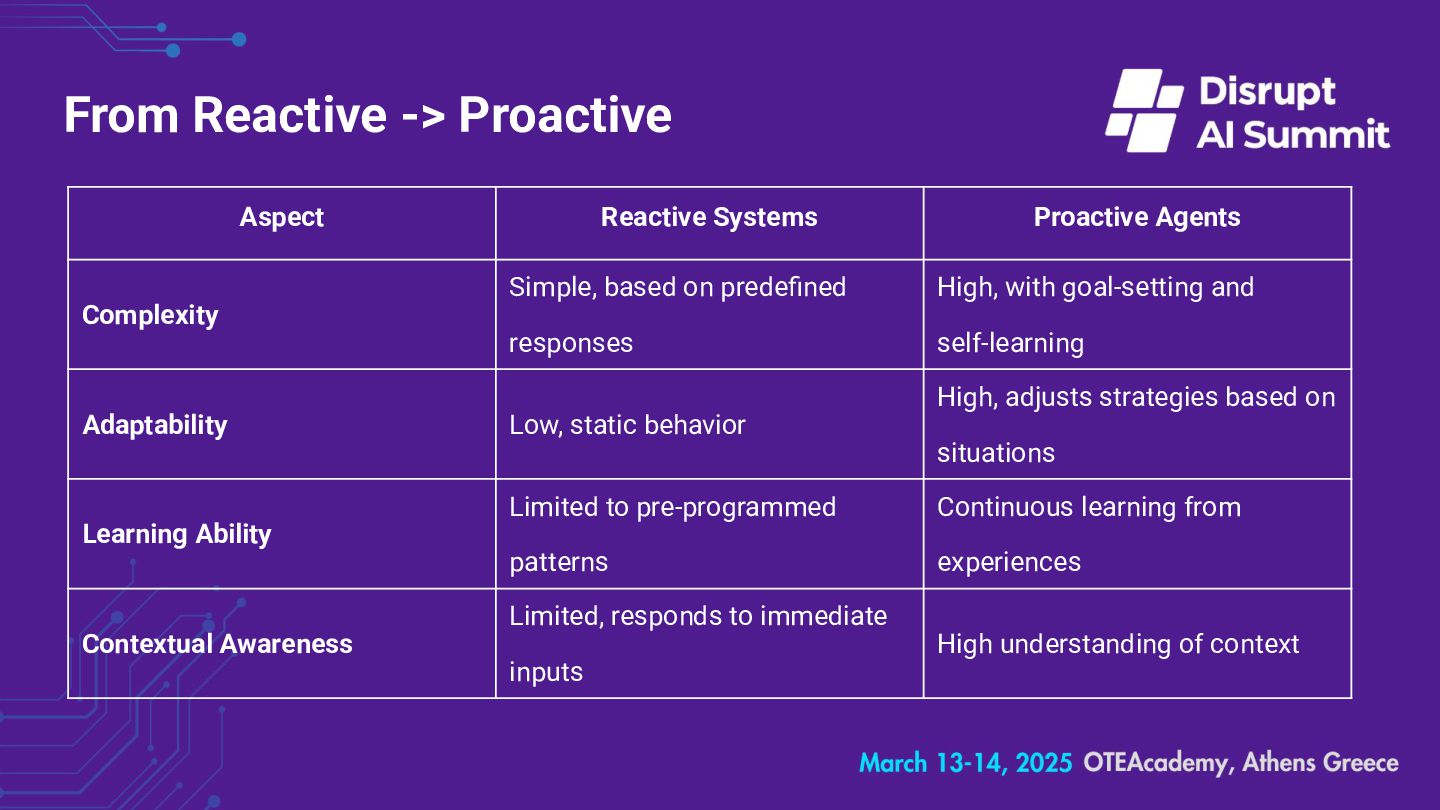
  8. From Reactive -> Proactive Aspect Reactive Systems Proactive Agents Complexity

    Simple, based on predefined responses High, with goal-setting and self-learning Adaptability Low, static behavior High, adjusts strategies based on situations Learning Ability Limited to pre-programmed patterns Continuous learning from experiences Contextual Awareness Limited, responds to immediate inputs High understanding of context
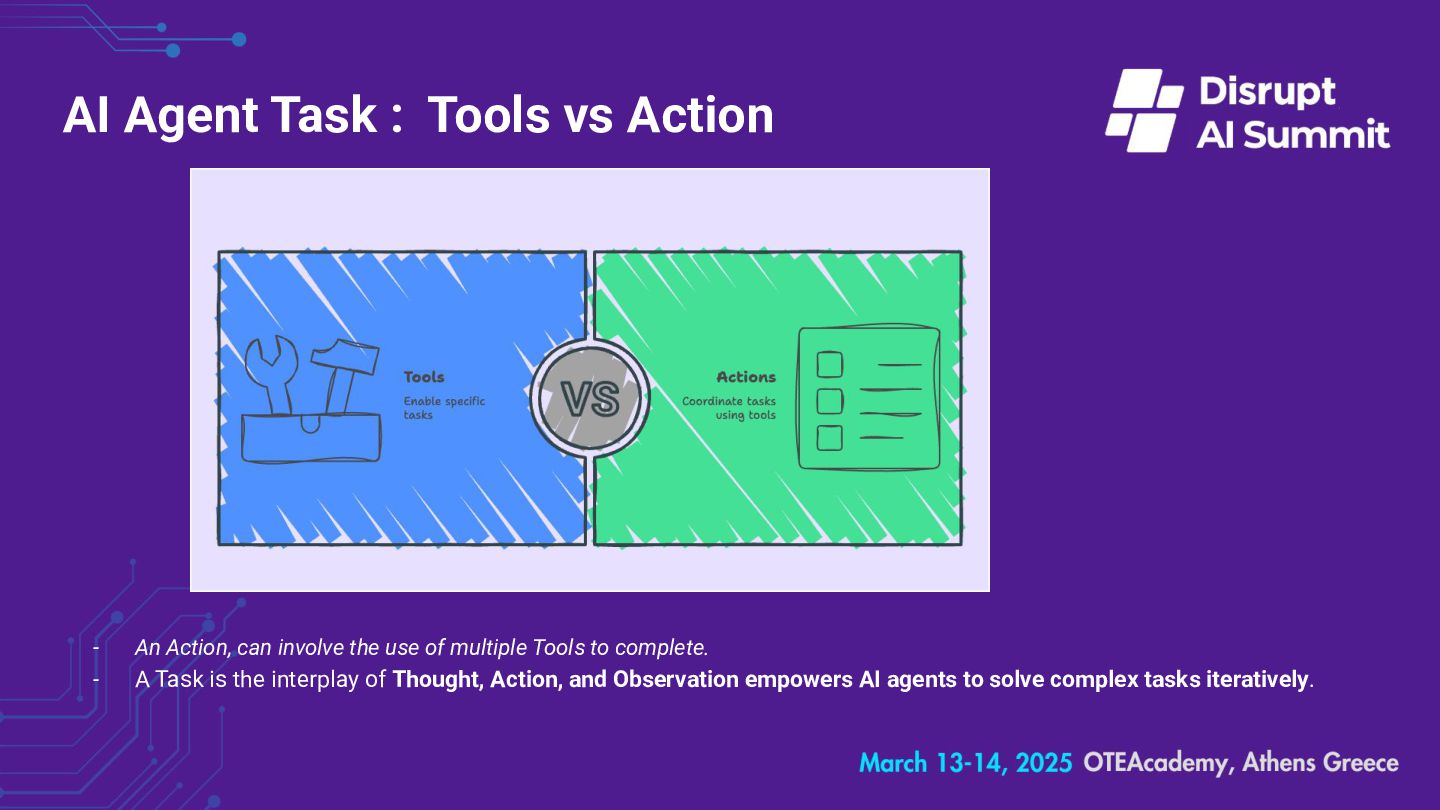
  9. AI Agent Task : Tools vs Action - An Action,

    can involve the use of multiple Tools to complete. - A Task is the interplay of Thought, Action, and Observation empowers AI agents to solve complex tasks iteratively.
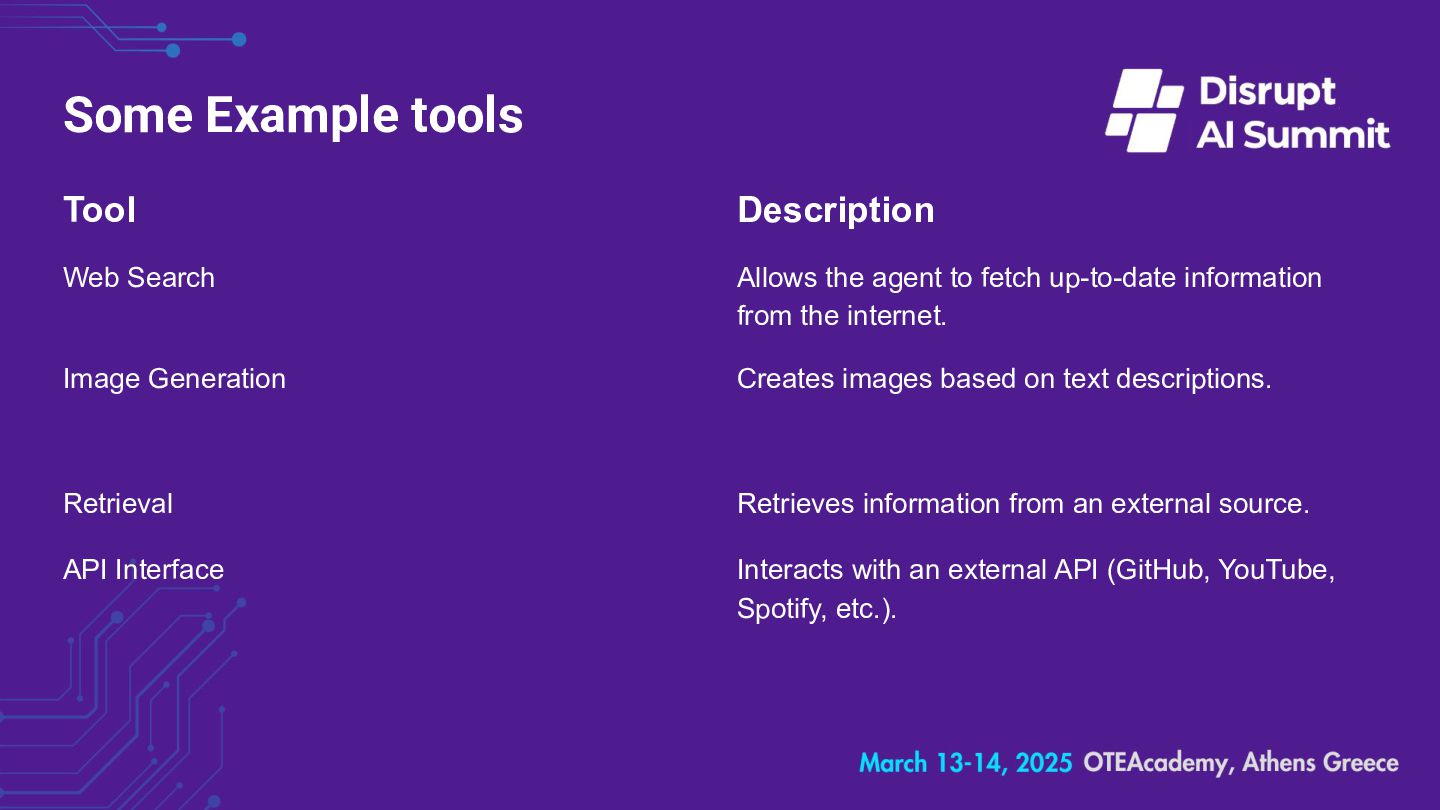
  10. Some Example tools Tool Description Web Search Allows the agent

    to fetch up-to-date information from the internet. Image Generation Creates images based on text descriptions. Retrieval Retrieves information from an external source. API Interface Interacts with an external API (GitHub, YouTube, Spotify, etc.).
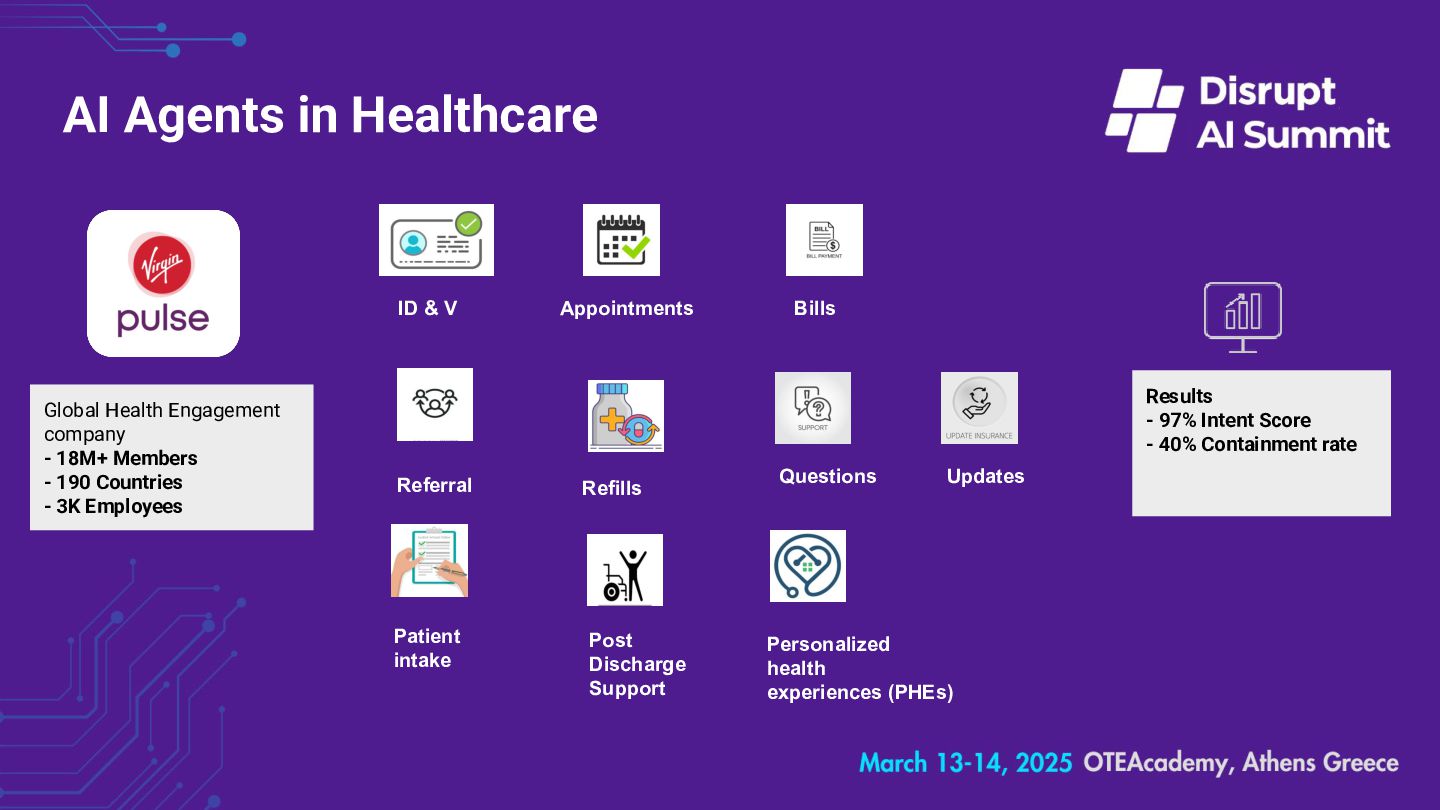
  11. AI Agents in Healthcare Personalized health experiences (PHEs) ID &

    V Appointments Bills Updates Questions Patient intake Referral Refills Post Discharge Support Global Health Engagement company - 18M+ Members - 190 Countries - 3K Employees Results - 97% Intent Score - 40% Containment rate
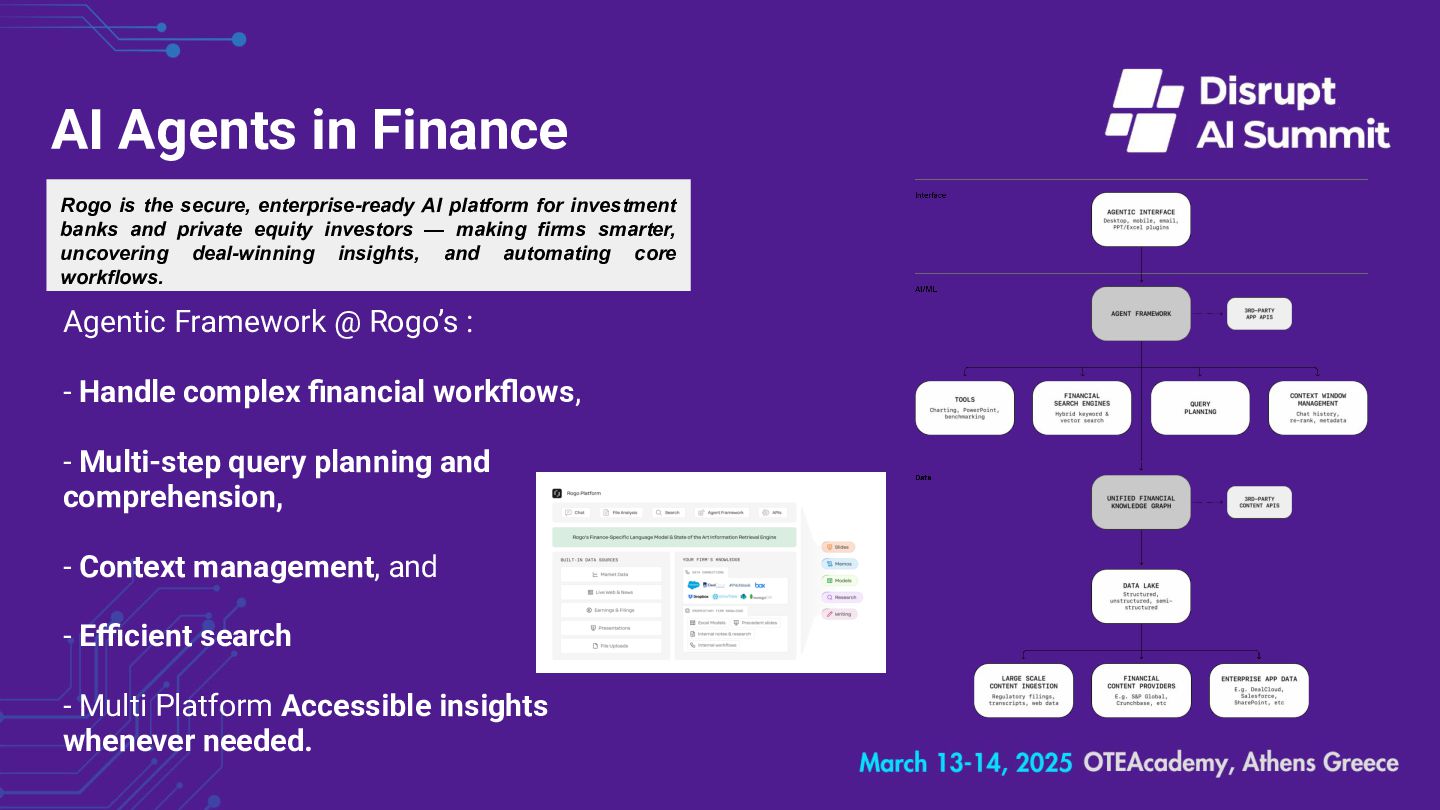
  12. AI Agents in Finance Agentic Framework @ Rogo’s : -

    Handle complex financial workflows, - Multi-step query planning and comprehension, - Context management, and - Efficient search - Multi Platform Accessible insights whenever needed. Rogo is the secure, enterprise-ready AI platform for investment banks and private equity investors — making firms smarter, uncovering deal-winning insights, and automating core workflows.
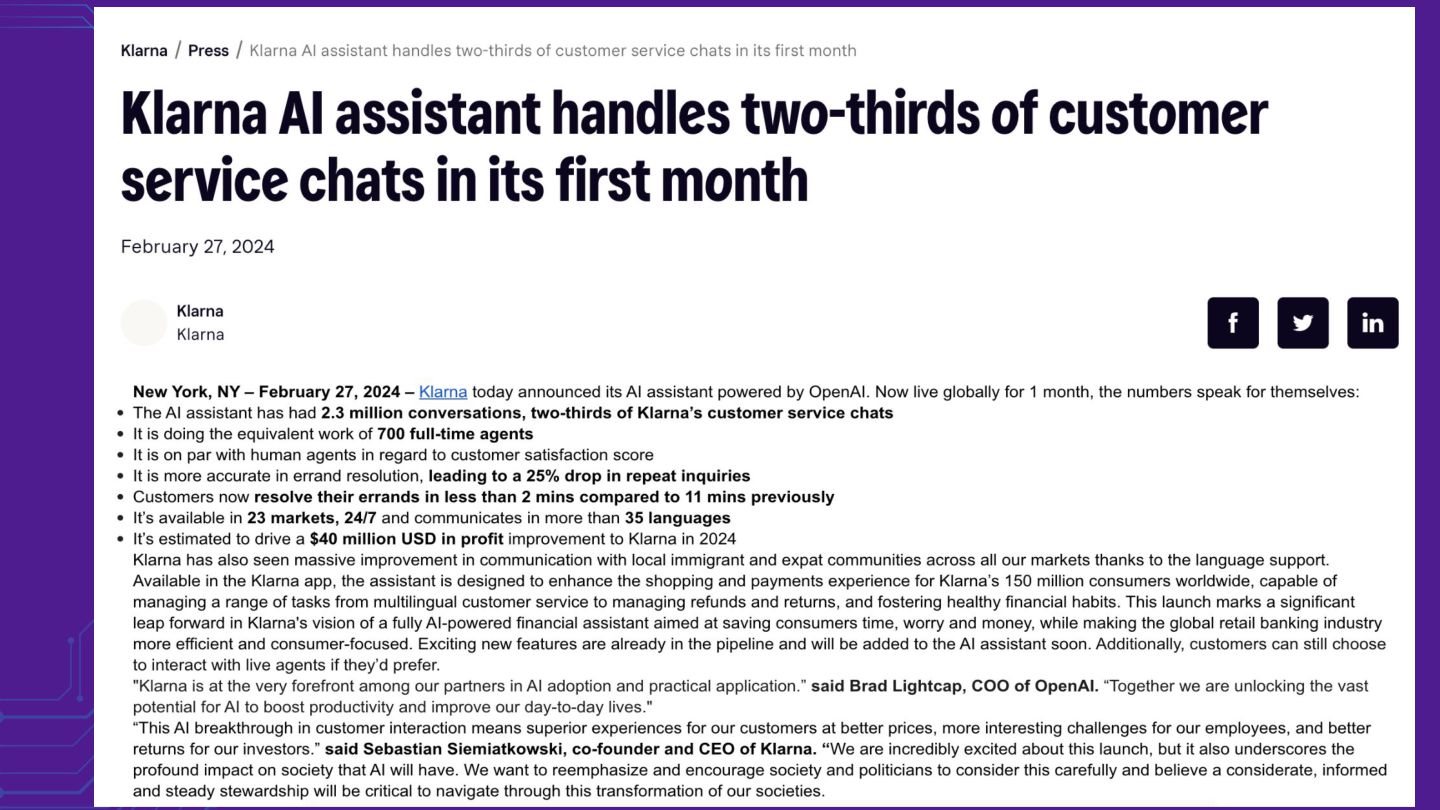
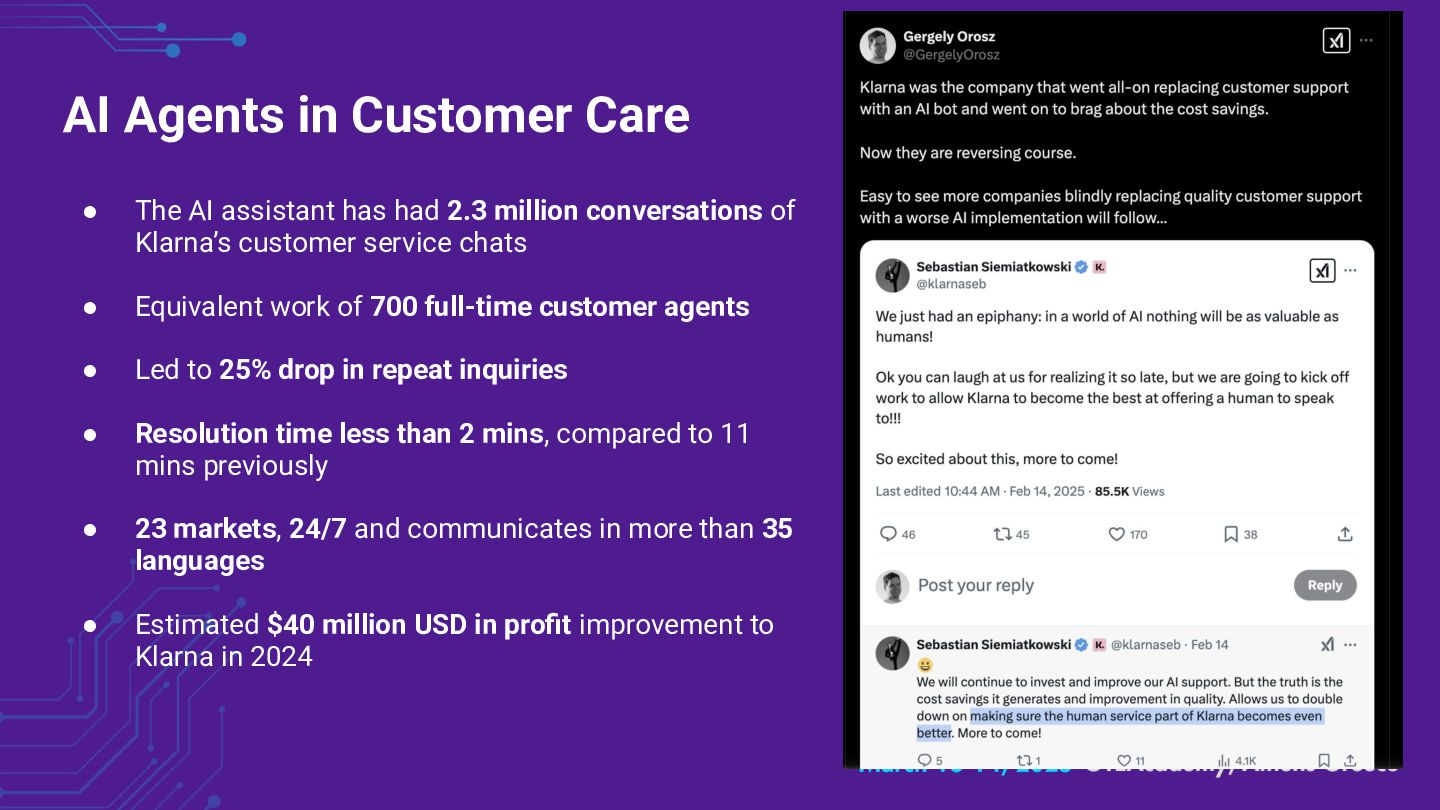
  13. AI Agents in Customer Care • The AI assistant has

    had 2.3 million conversations of Klarna’s customer service chats • Equivalent work of 700 full-time customer agents • Led to 25% drop in repeat inquiries • Resolution time less than 2 mins, compared to 11 mins previously • 23 markets, 24/7 and communicates in more than 35 languages • Estimated $40 million USD in profit improvement to Klarna in 2024
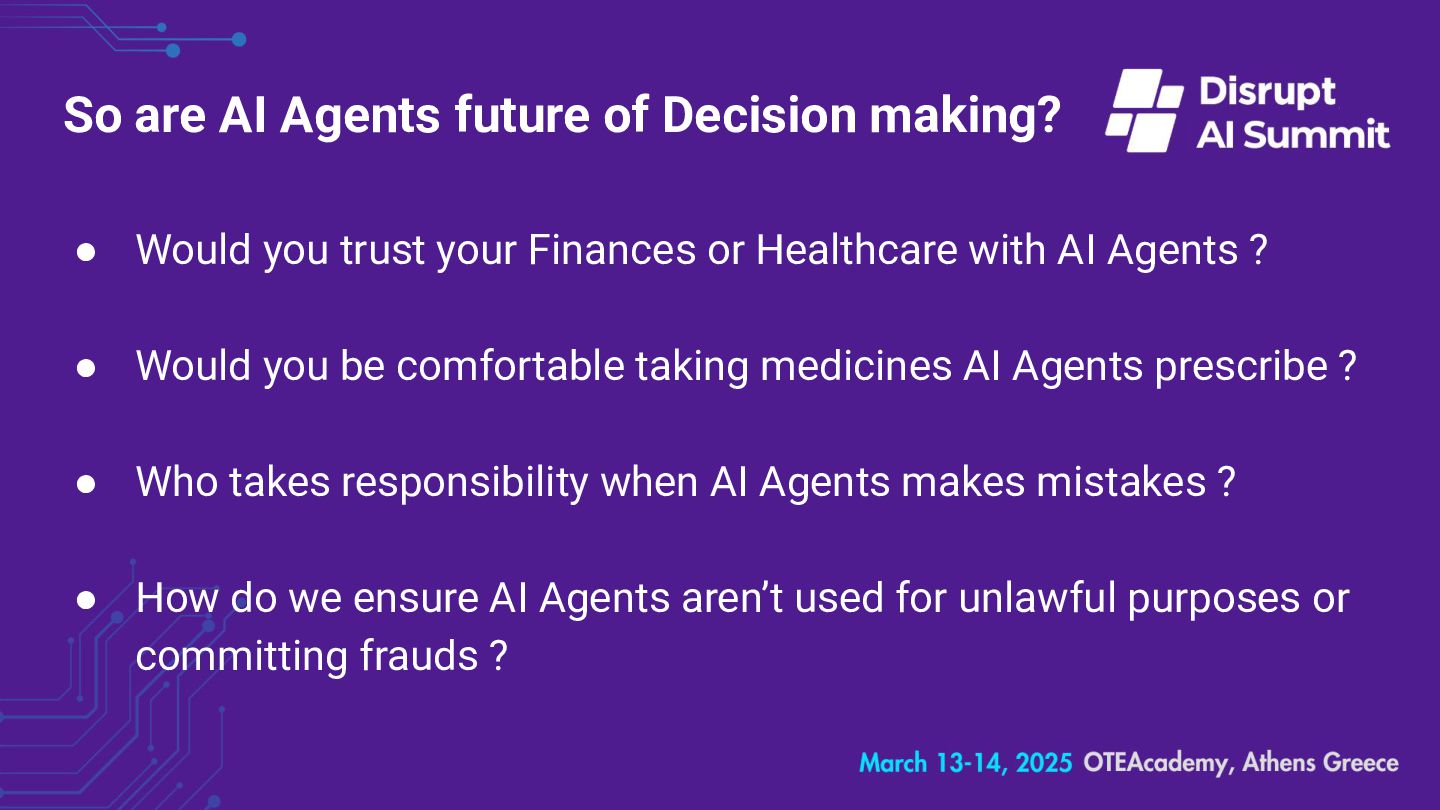
  14. • Would you trust your Finances or Healthcare with AI

    Agents ? • Would you be comfortable taking medicines AI Agents prescribe ? • Who takes responsibility when AI Agents makes mistakes ? • How do we ensure AI Agents aren’t used for unlawful purposes or committing frauds ? So are AI Agents future of Decision making?
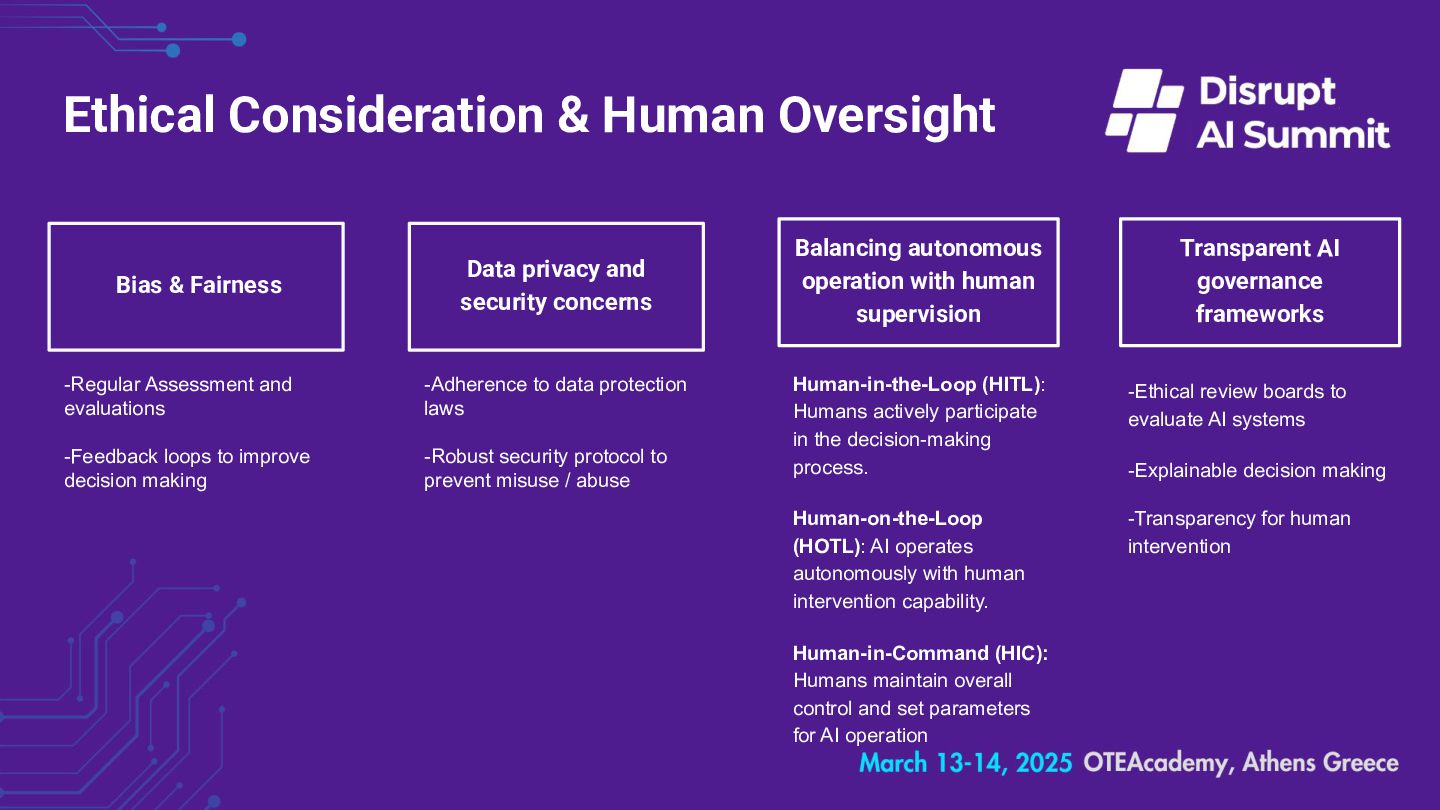
  15. Ethical Consideration & Human Oversight Bias & Fairness Balancing autonomous

    operation with human supervision Transparent AI governance frameworks Data privacy and security concerns -Regular Assessment and evaluations -Feedback loops to improve decision making -Adherence to data protection laws -Robust security protocol to prevent misuse / abuse Human-in-the-Loop (HITL): Humans actively participate in the decision-making process. Human-on-the-Loop (HOTL): AI operates autonomously with human intervention capability. Human-in-Command (HIC): Humans maintain overall control and set parameters for AI operation -Ethical review boards to evaluate AI systems -Explainable decision making -Transparency for human intervention
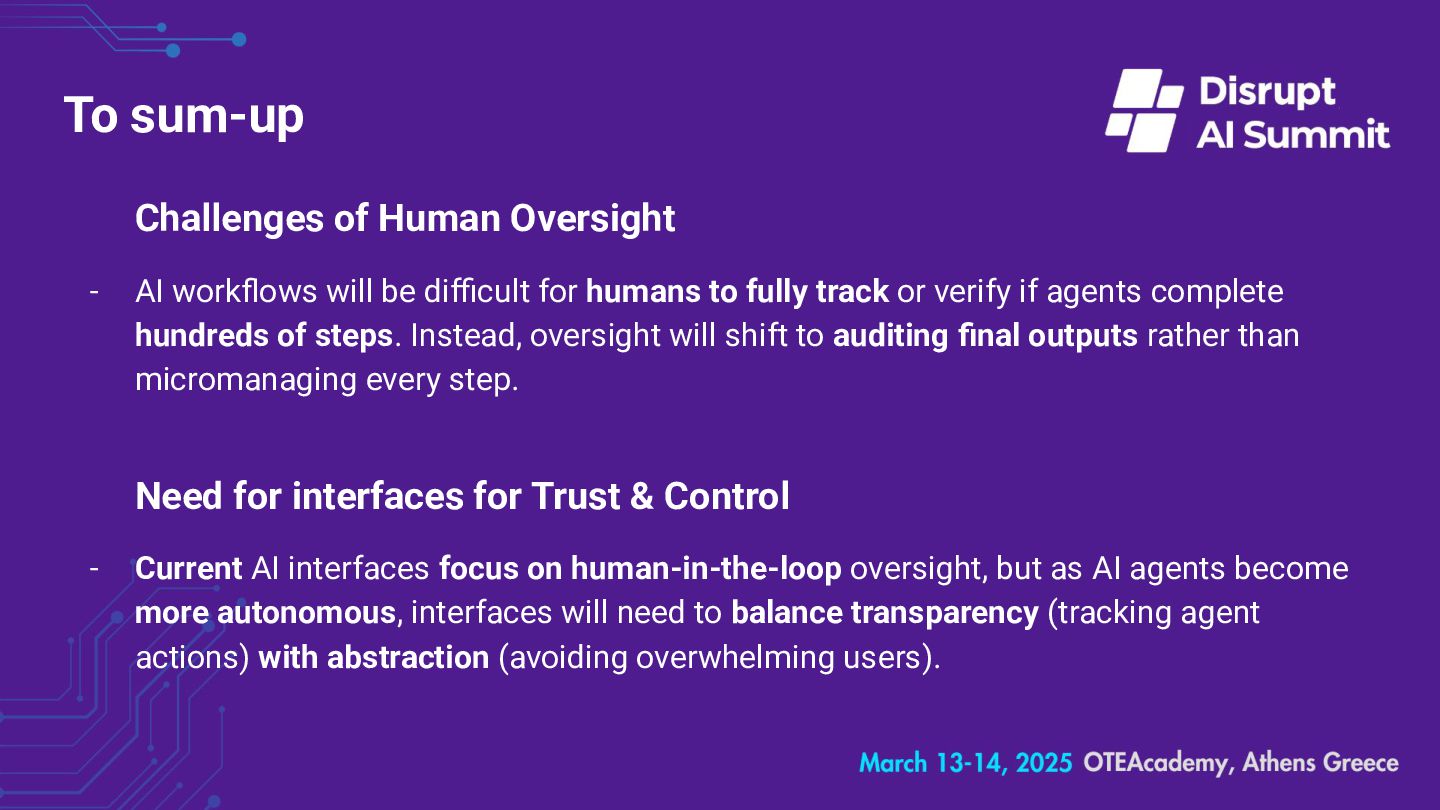
  16. To sum-up Challenges of Human Oversight - AI workflows will

    be difficult for humans to fully track or verify if agents complete hundreds of steps. Instead, oversight will shift to auditing final outputs rather than micromanaging every step. Need for interfaces for Trust & Control - Current AI interfaces focus on human-in-the-loop oversight, but as AI agents become more autonomous, interfaces will need to balance transparency (tracking agent actions) with abstraction (avoiding overwhelming users).