Upgrade to Pro — share decks privately, control downloads, hide ads and more …

Darjeeling Tea: Origin, Flavour, and the Art of...

Anamika Bal
October 22, 2026

Darjeeling Tea: Origin, Flavour, and the Art of Tea Making

Discover the unique heritage of Darjeeling Tea, one of India's most celebrated teas, known for its distinctive aroma, delicate flavour, and muscatel notes. This presentation explores the origins of Darjeeling tea in the Himalayan foothills of West Bengal, its colonial history, seasonal flushes, traditional hand-plucking methods, tea processing, and the importance of authenticity and quality. Learn how climate, altitude, and skilled craftsmanship shape the signature taste of Darjeeling tea, often called the “Champagne of teas.”
source: https://en.wikipedia.org/wiki/Darjeeling_tea

Anamika Bal

October 22, 2026

Transcript

10 slides
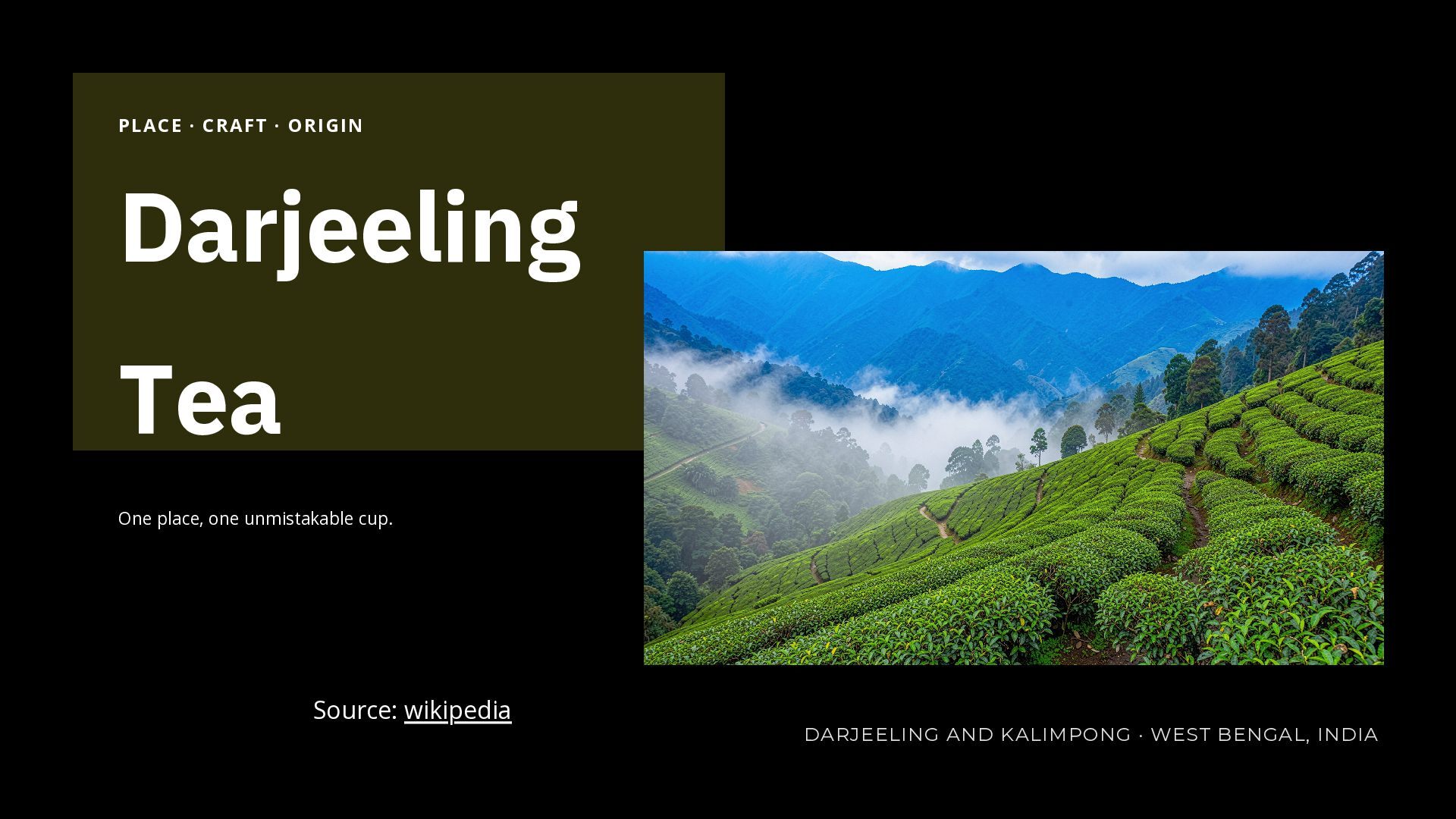
  1. PLACE · CRAFT · ORIGIN Darjeeling Tea One place, one

    unmistakable cup. Source: wikipedia DARJEELING AND KALIMPONG · WEST BENGAL, INDIA
  2. THE NAME IN ONE LINE One place, one unmistakable cup

    Defined gardens Floral and fruity “Champagne of teas” Grown and processed in defined tea gardens across Darjeeling and Kalimpong in West Bengal, India. Known for floral, fruity aromas and its distinctive muscatel character. Often called the “Champagne of teas”.
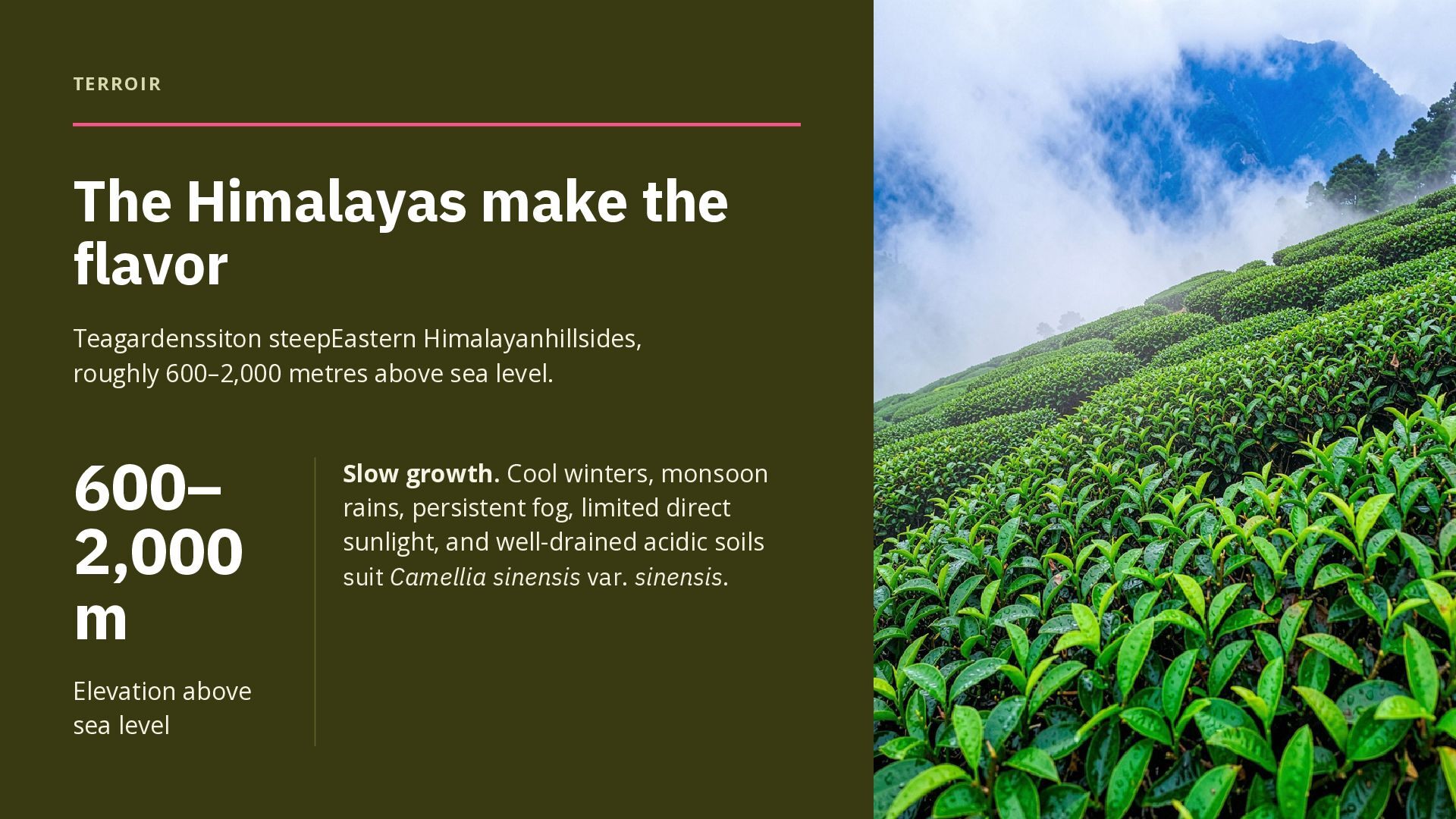
  3. TERROIR The Himalayas make the flavor Teagardenssiton steepEastern Himalayanhillsides, roughly

    600–2,000 metres above sea level. 600– 2,000 m Elevation above sea level Slow growth. Cool winters, monsoon rains, persistent fog, limited direct sunlight, and well-drained acidic soils suit Camellia sinensis var. sinensis.
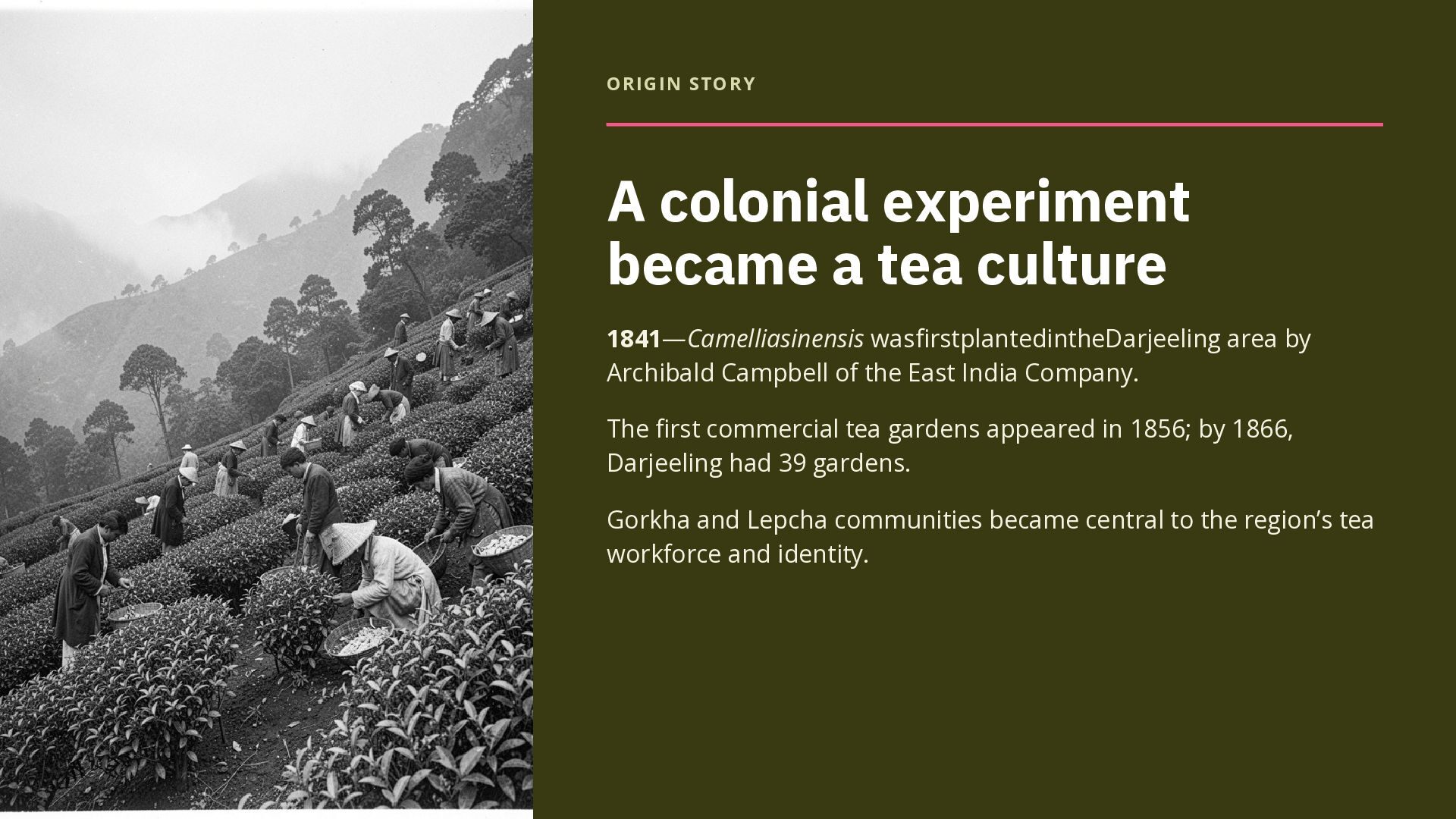
  4. ORIGIN STORY A colonial experiment became a tea culture 1841—Camelliasinensis

    wasfirstplantedintheDarjeeling area by Archibald Campbell of the East India Company. The first commercial tea gardens appeared in 1856; by 1866, Darjeeling had 39 gardens. Gorkha and Lepcha communities became central to the region’s tea workforce and identity.
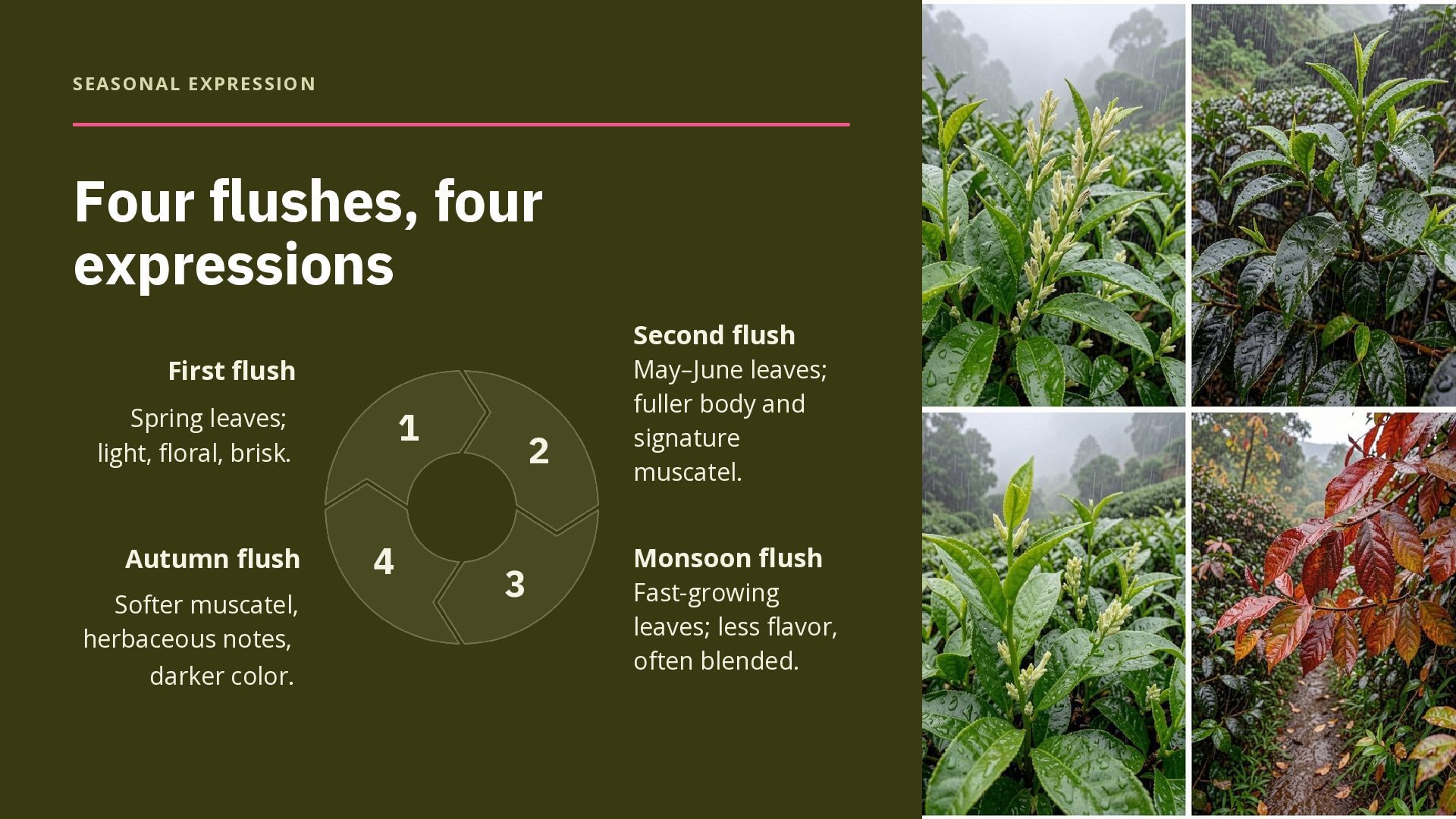
  5. SEASONAL EXPRESSION Four flushes, four expressions Second flush First flush

    Spring leaves; light, floral, brisk. Autumn flush Softer muscatel, herbaceous notes, darker color. 1 4 2 3 May–June leaves; fuller body and signature muscatel. Monsoon flush Fast-growing leaves; less flavor, often blended.
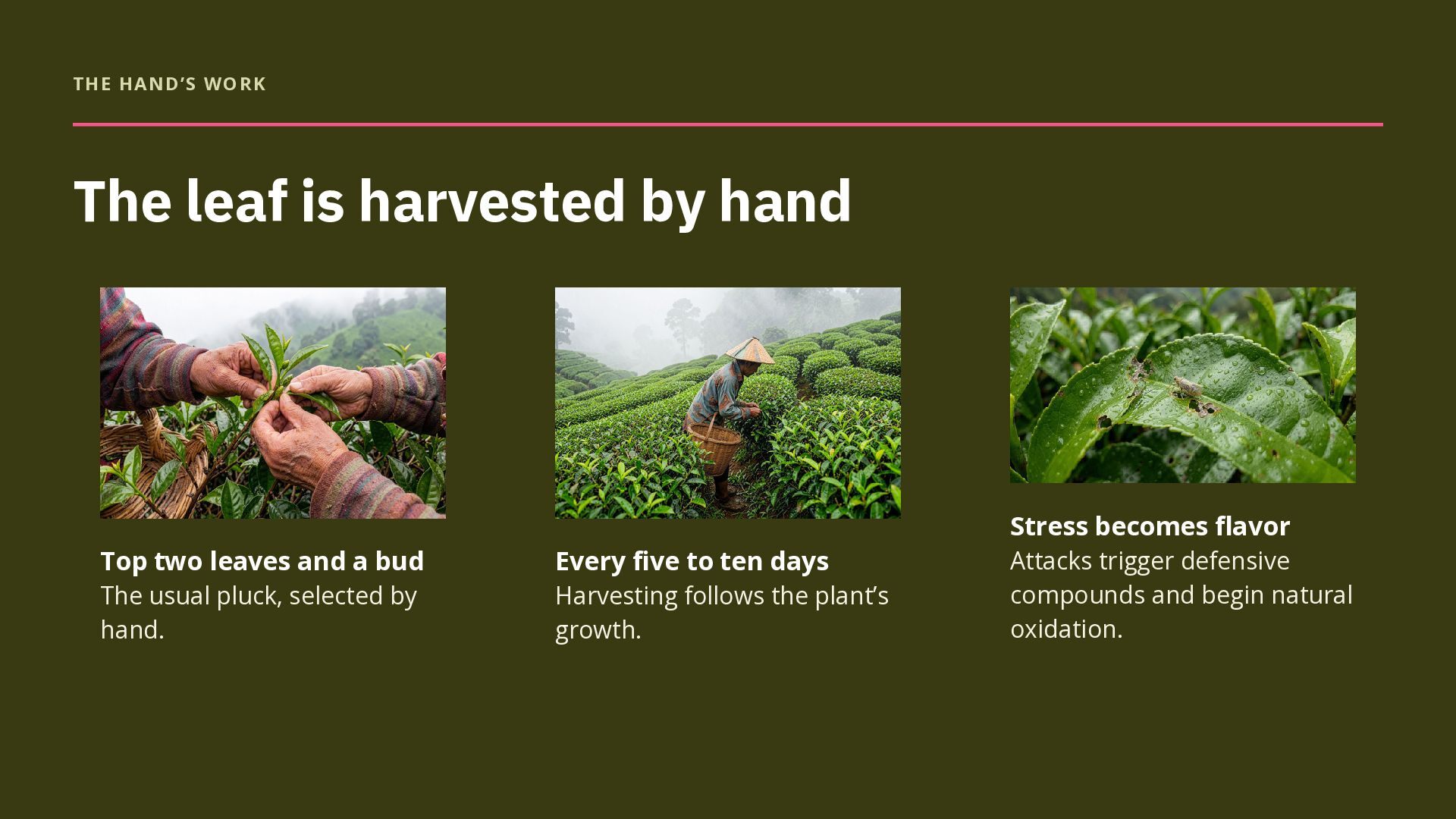
  6. THE HAND’S WORK The leaf is harvested by hand Stress

    becomes flavor Top two leaves and a bud Every five to ten days The usual pluck, selected by hand. Harvesting follows the plant’s growth. Attacks trigger defensive compounds and begin natural oxidation.
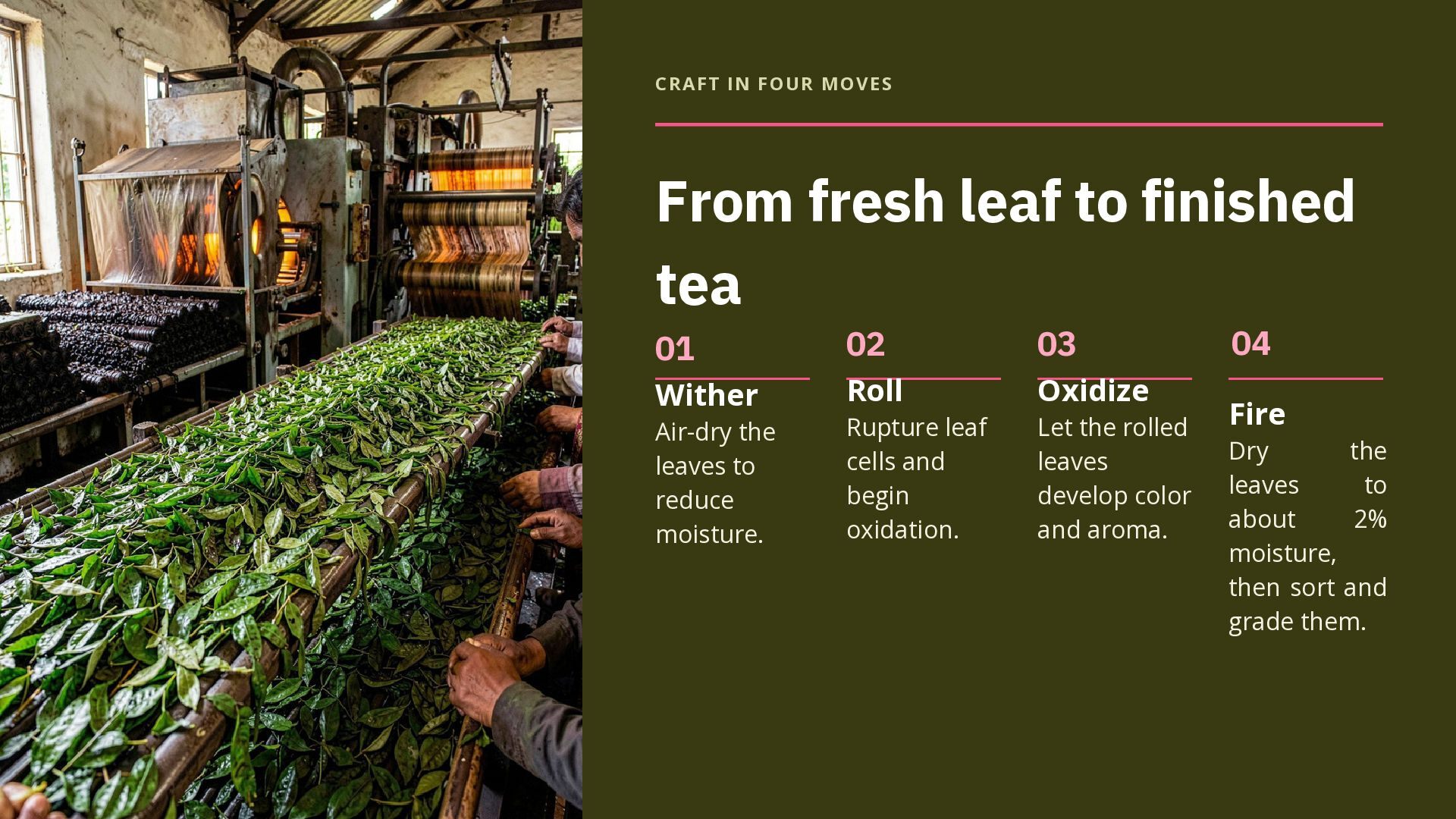
  7. CRAFT IN FOUR MOVES From fresh leaf to finished tea

    01 Wither Air-dry the leaves to reduce moisture. 02 03 Roll Oxidize Rupture leaf cells and begin oxidation. Let the rolled leaves develop color and aroma. 04 Fire Dry the leaves to about 2% moisture, then sort and grade them.
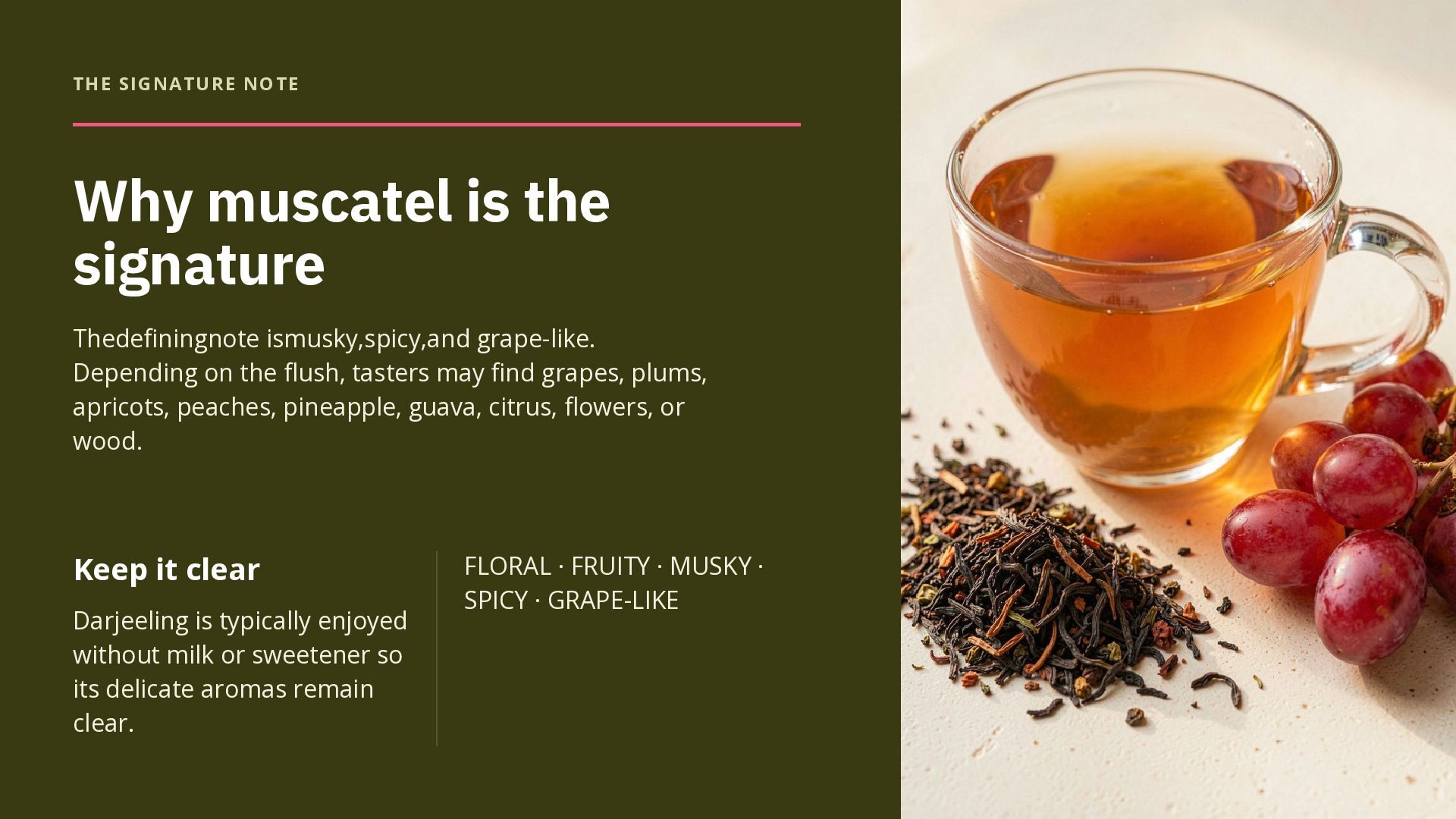
  8. THE SIGNATURE NOTE Why muscatel is the signature Thedefiningnote ismusky,spicy,and

    grape-like. Depending on the flush, tasters may find grapes, plums, apricots, peaches, pineapple, guava, citrus, flowers, or wood. Keep it clear Darjeeling is typically enjoyed without milk or sweetener so its delicate aromas remain clear. FLORAL · FRUITY · MUSKY · SPICY · GRAPE-LIKE
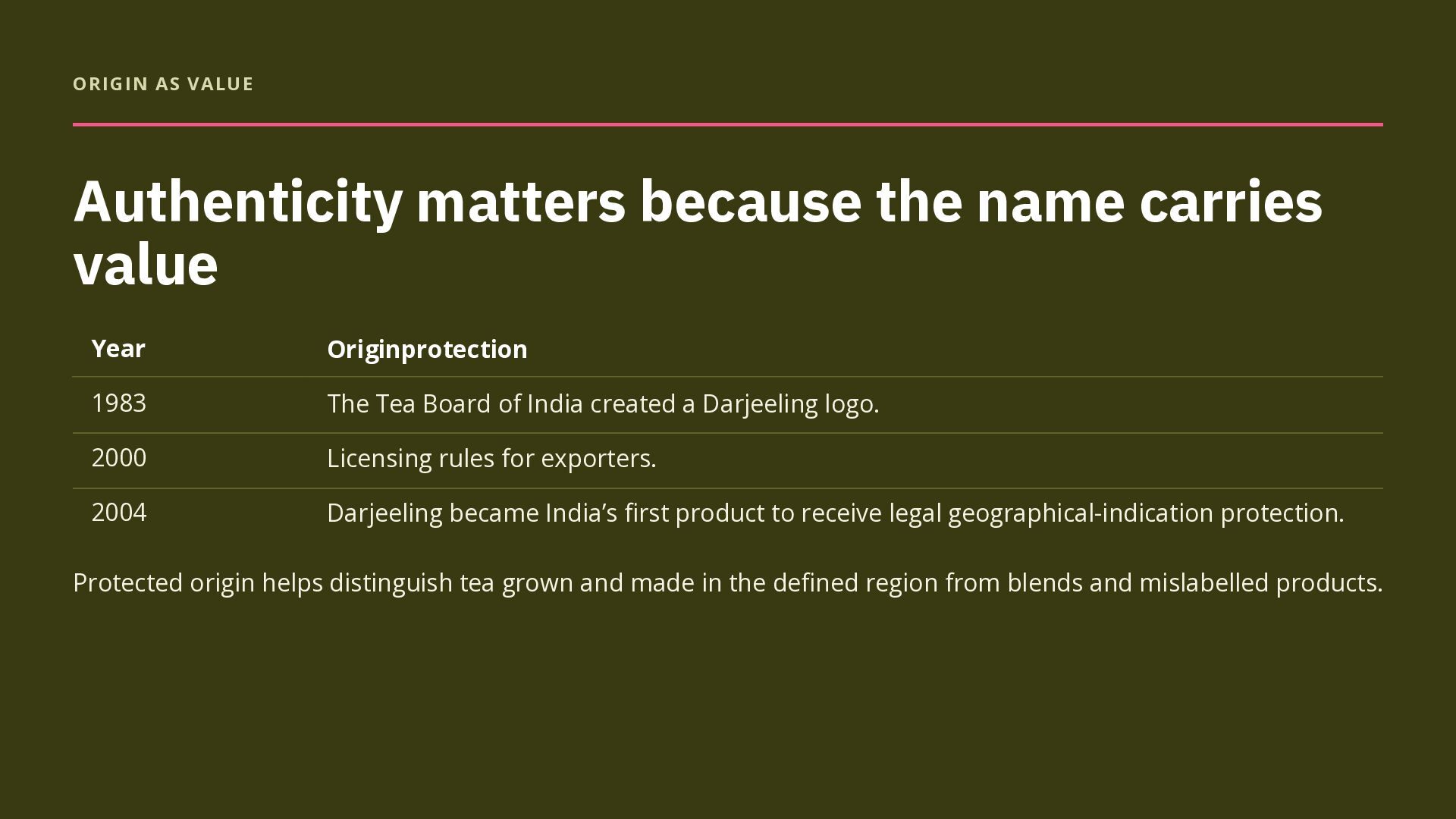
  9. ORIGIN AS VALUE Authenticity matters because the name carries value

    Year Originprotection 1983 The Tea Board of India created a Darjeeling logo. 2000 Licensing rules for exporters. 2004 Darjeeling became India’s first product to receive legal geographical-indication protection. Protected origin helps distinguish tea grown and made in the defined region from blends and mislabelled products.
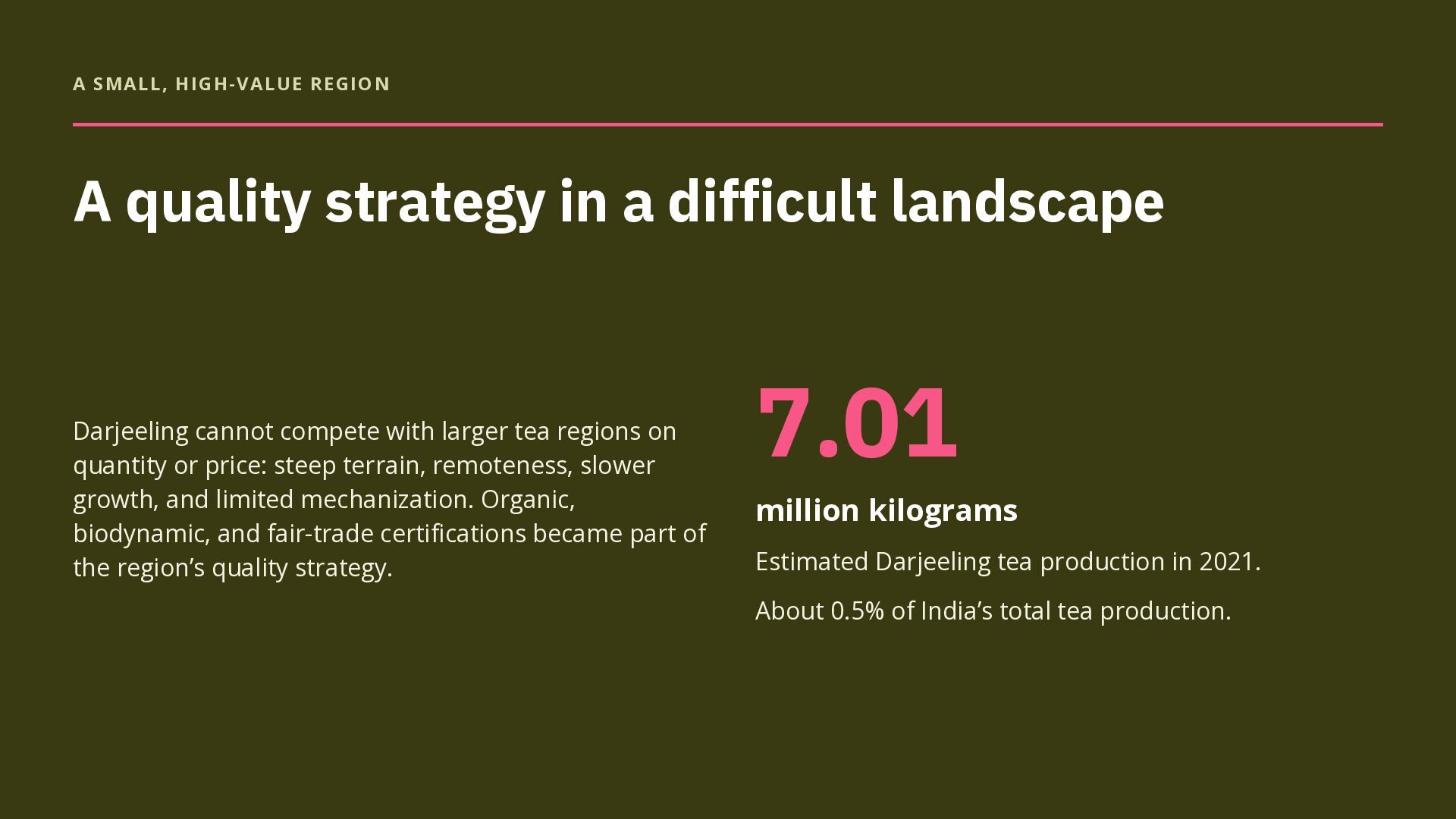
  10. A SMALL, HIGH-VALUE REGION A quality strategy in a difficult

    landscape Darjeeling cannot compete with larger tea regions on quantity or price: steep terrain, remoteness, slower growth, and limited mechanization. Organic, biodynamic, and fair-trade certifications became part of the region’s quality strategy. 7.01 million kilograms Estimated Darjeeling tea production in 2021. About 0.5% of India’s total tea production.

More Decks by Anamika Bal

Other Decks in Business