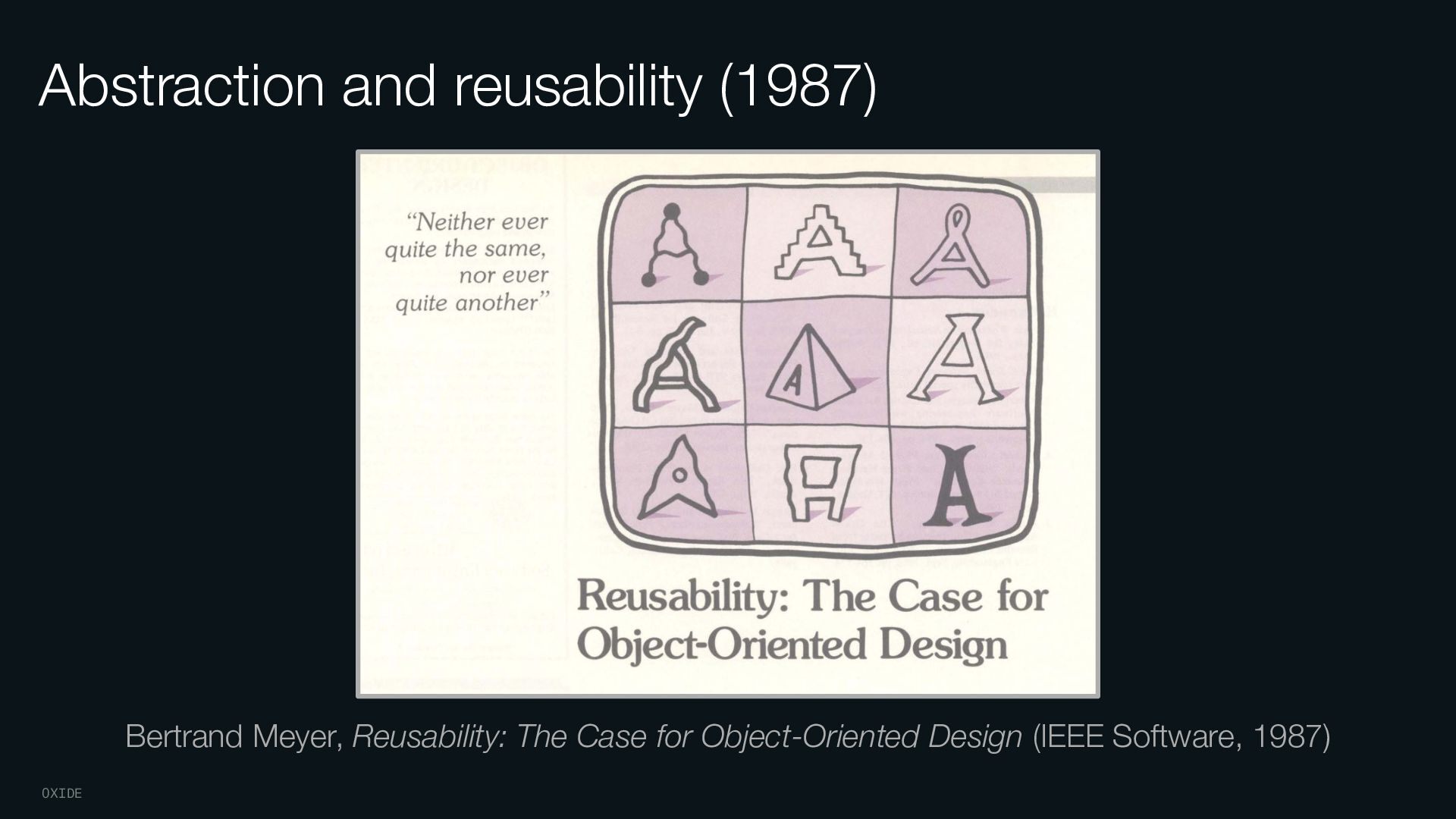
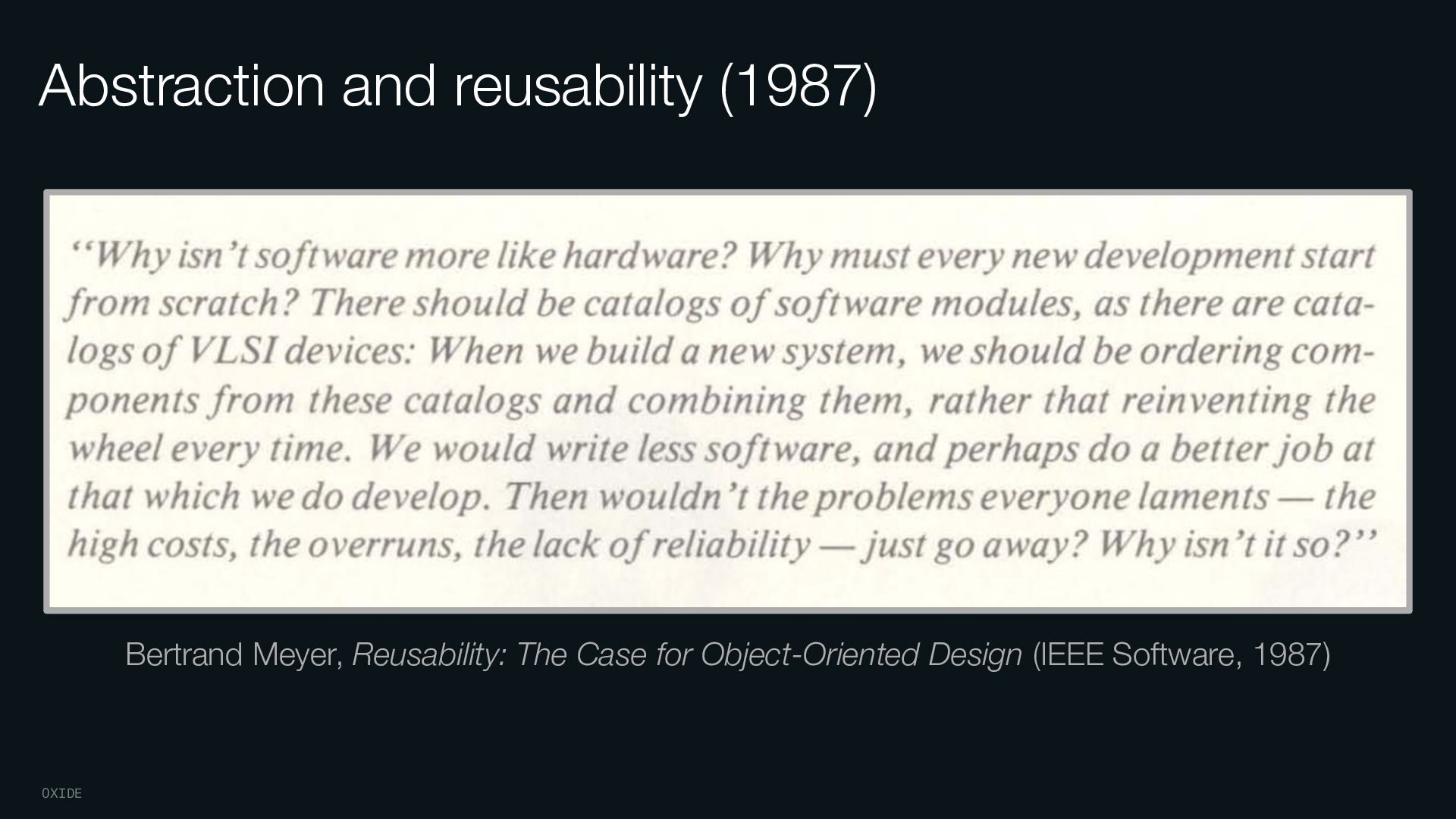
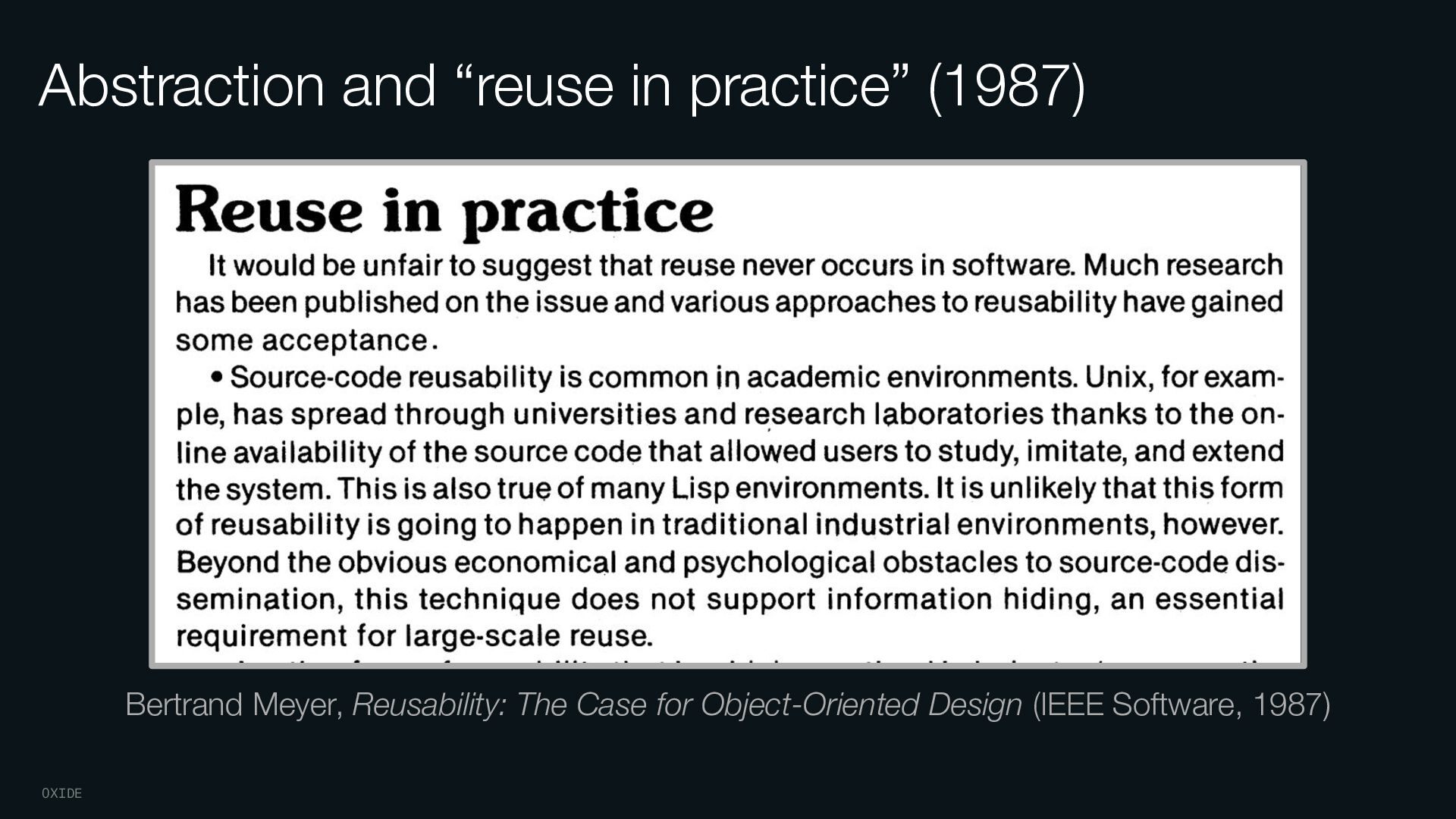
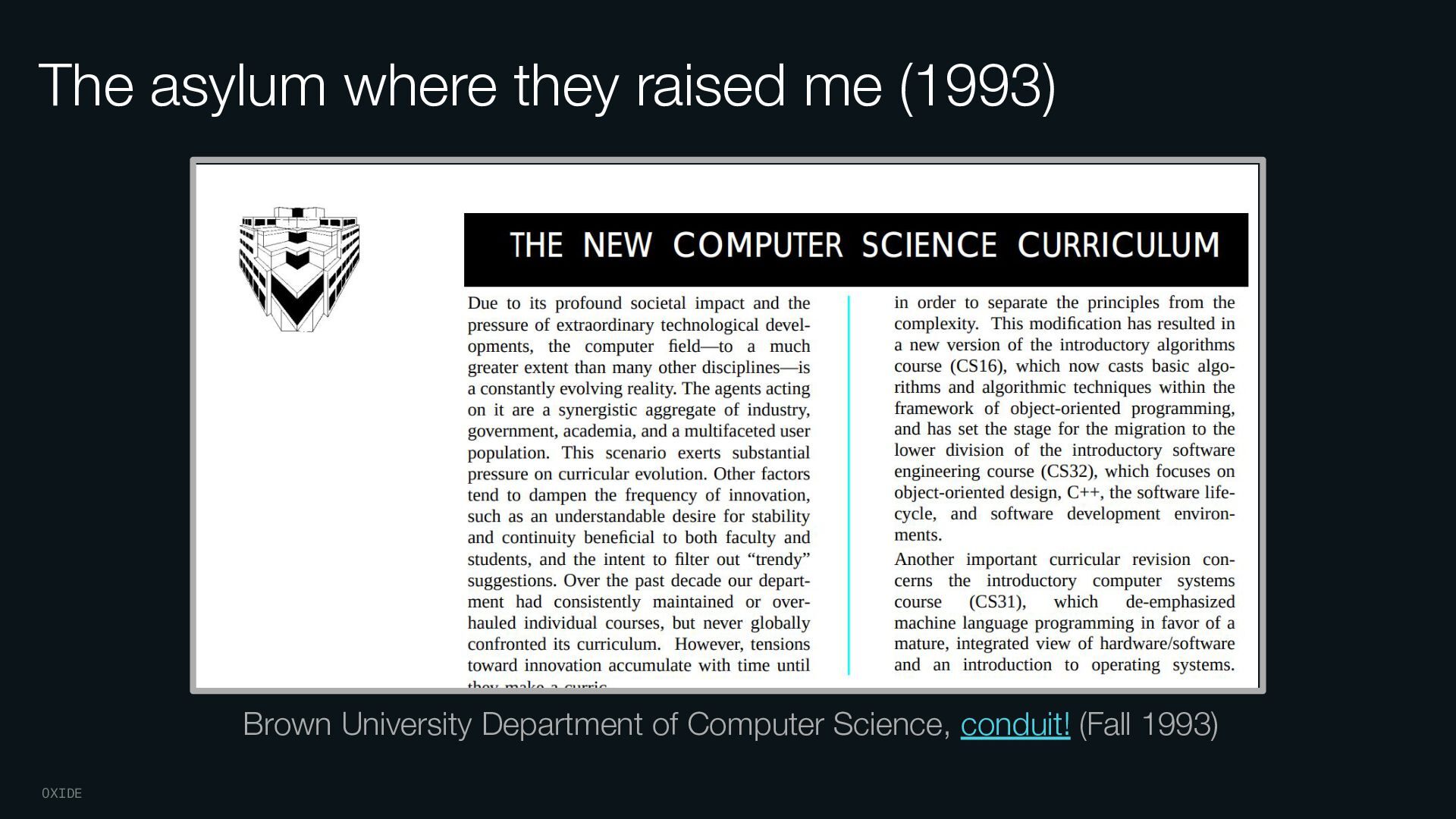
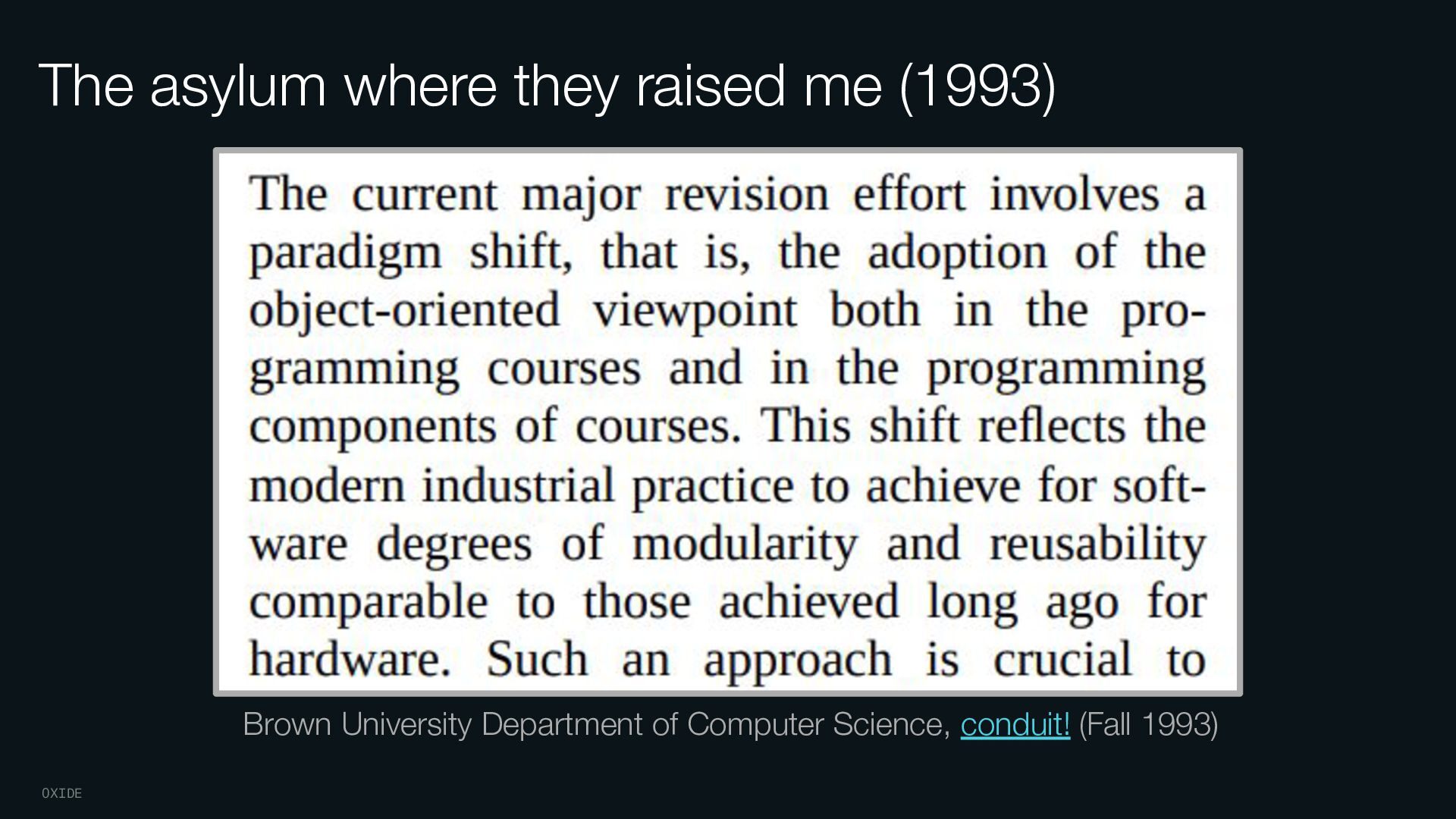
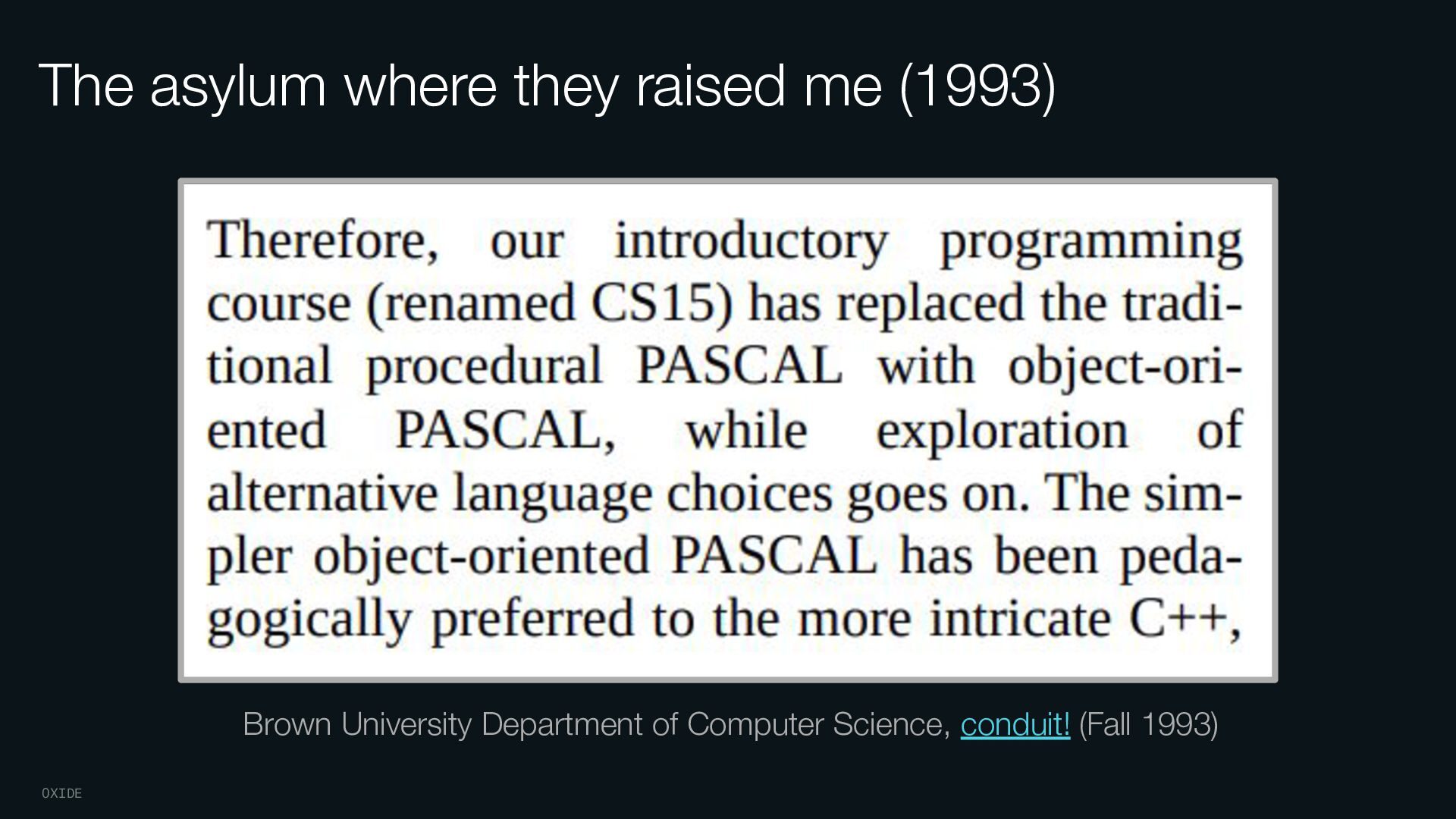
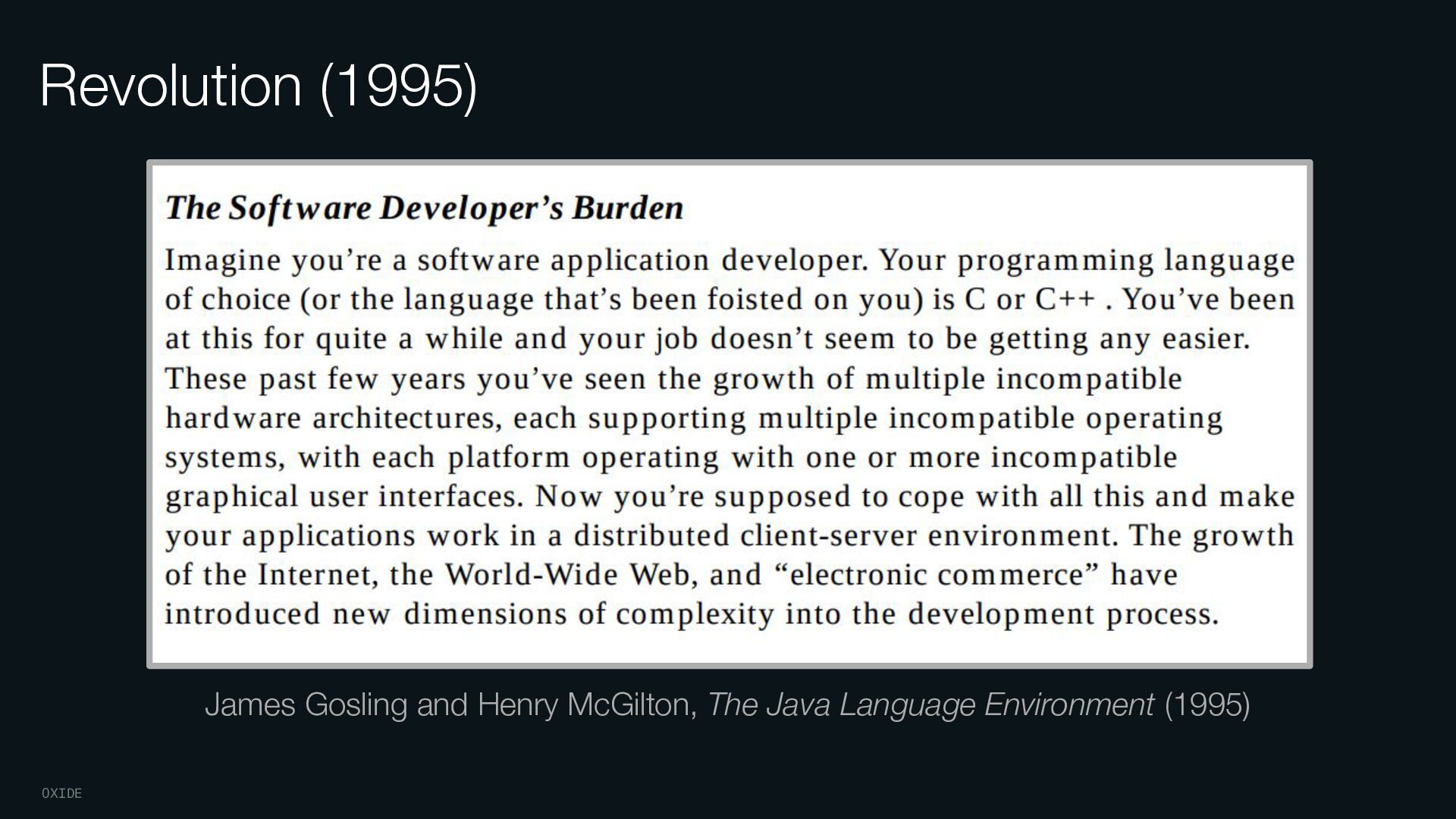
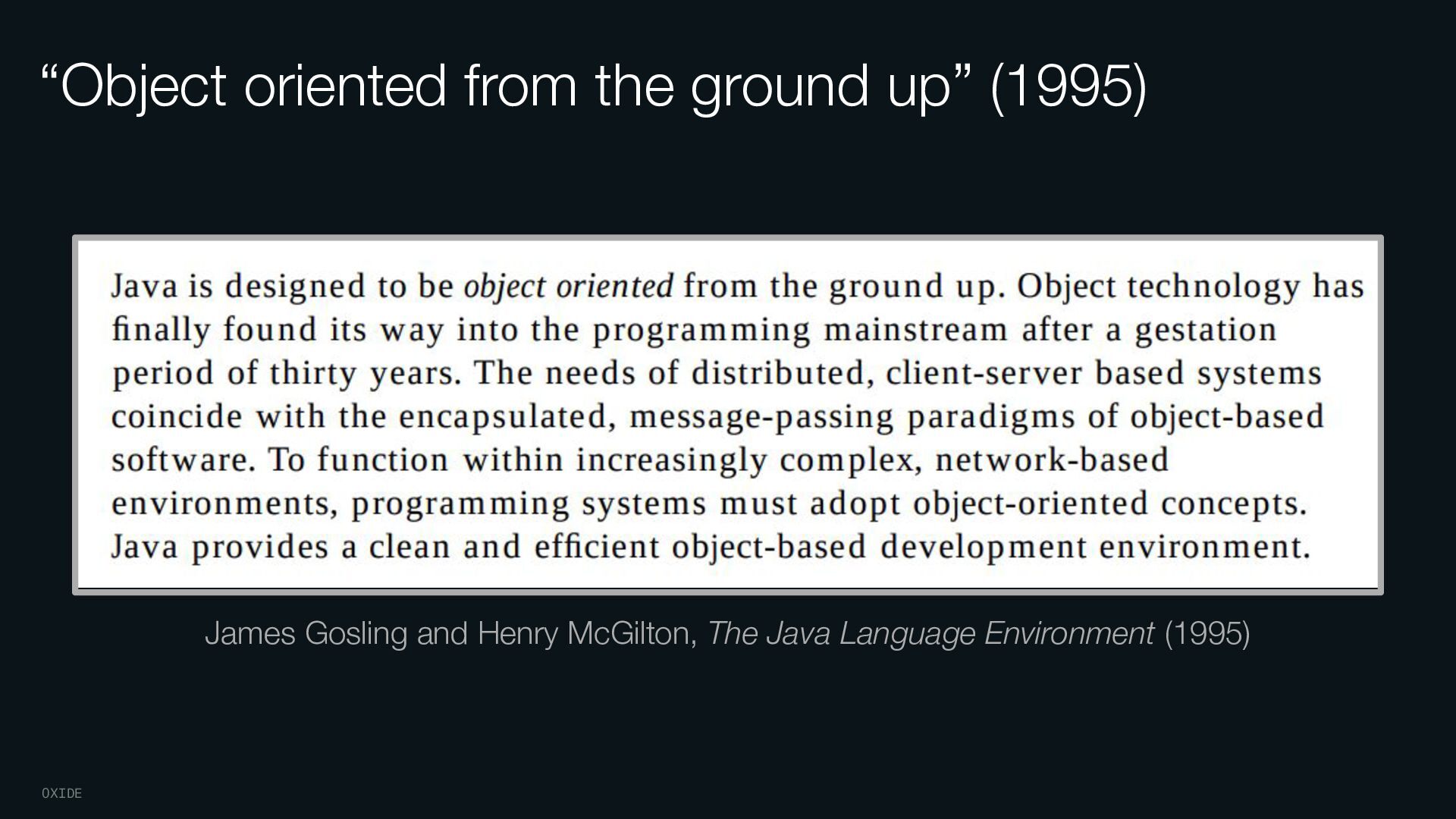
of abstraction • Abstractions allow us to build software systems that do sophisticated things; they are the shoulders we stand upon – and provide to others • Abstractions are qualitative; good ones allow us to hide gory implementation details – to build castles atop them and tunnels beneath • Bad ones, however, leak: instead of sealing implementation details, they seep them – yielding systems that are unwieldy and brittle • In the 1980s, one particular aspect of abstraction was top of mind… OXIDE
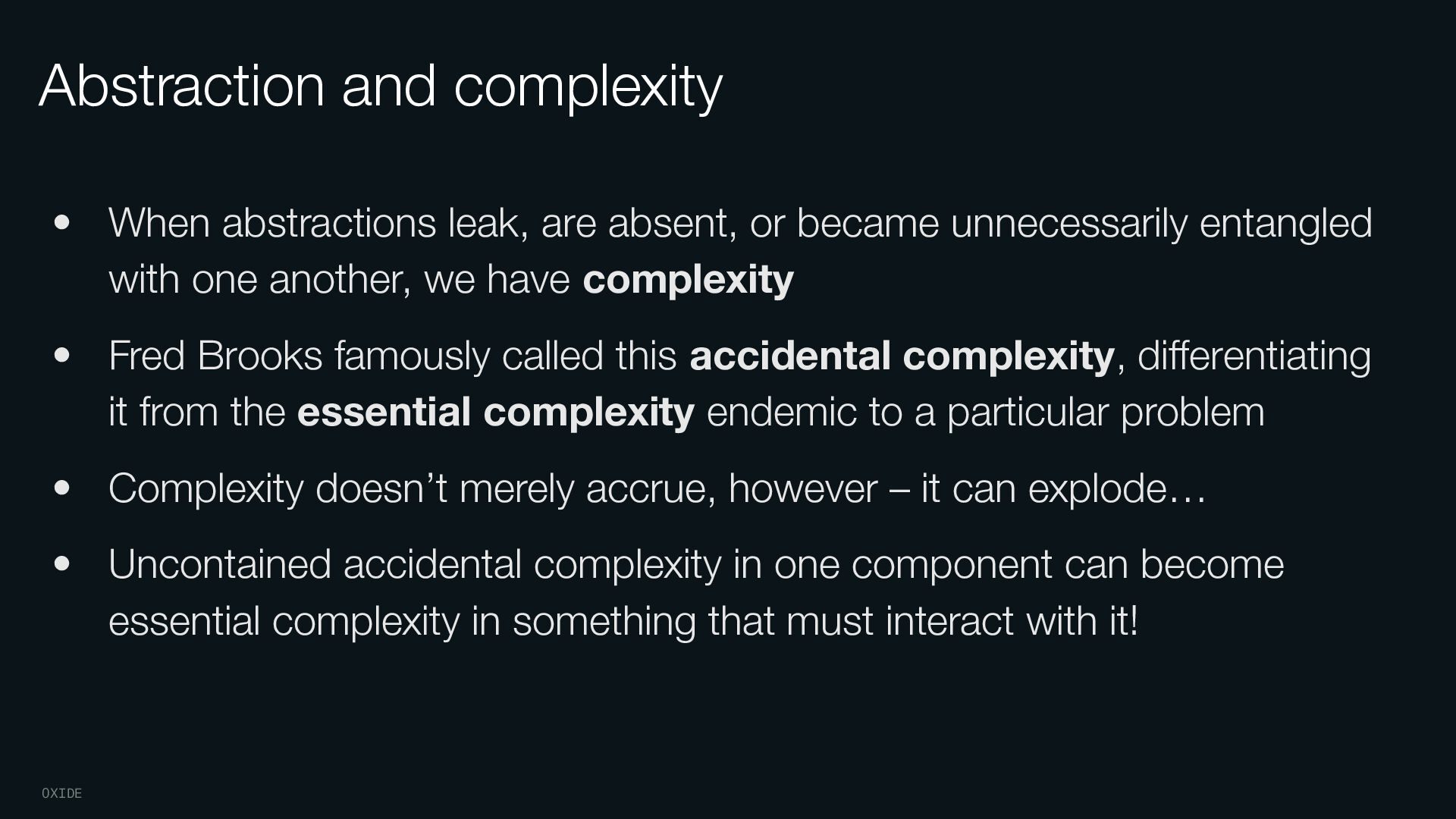
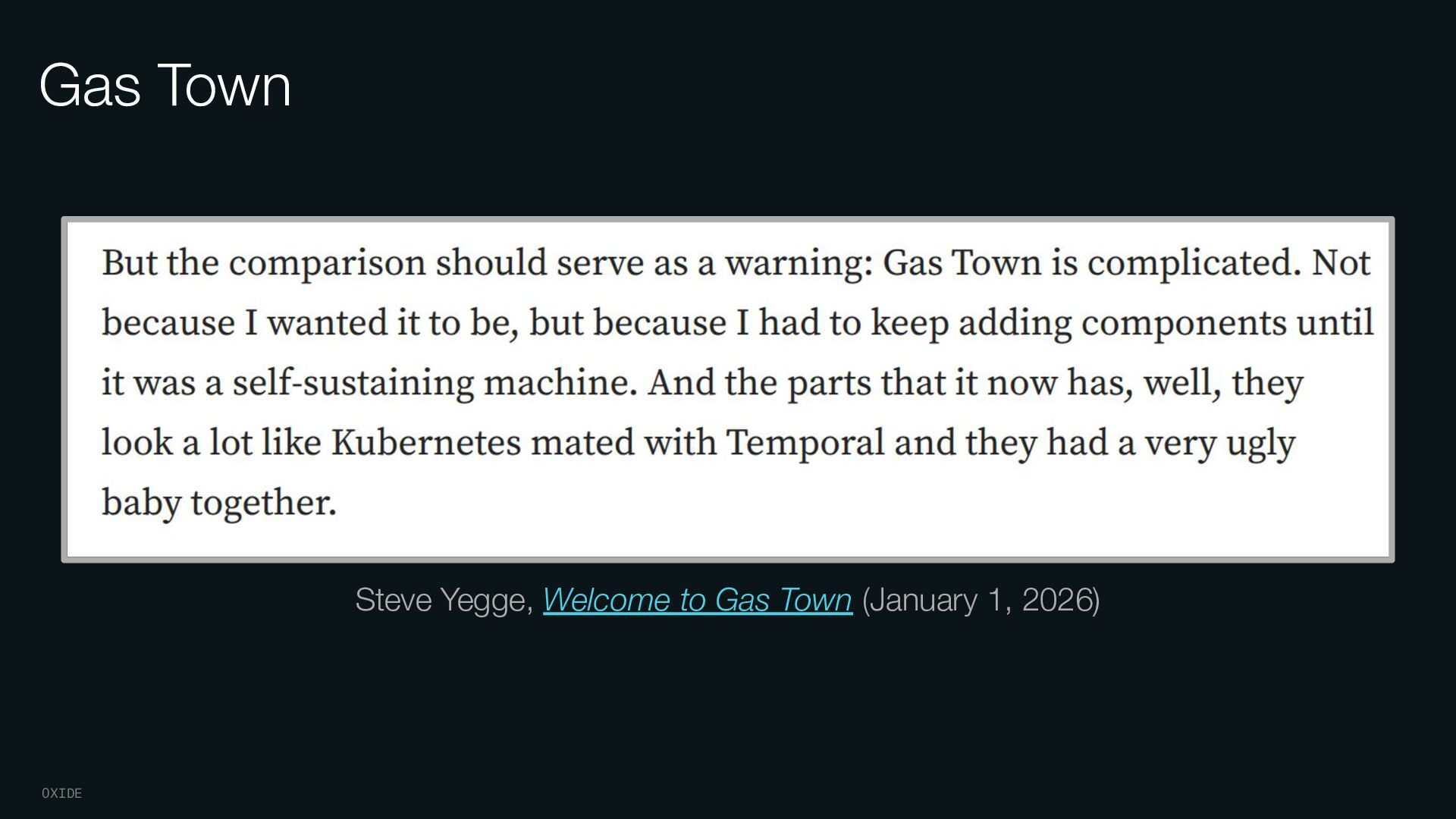
became unnecessarily entangled with one another, we have complexity • Fred Brooks famously called this accidental complexity, differentiating it from the essential complexity endemic to a particular problem • Complexity doesn’t merely accrue, however – it can explode… • Uncontained accidental complexity in one component can become essential complexity in something that must interact with it! OXIDE
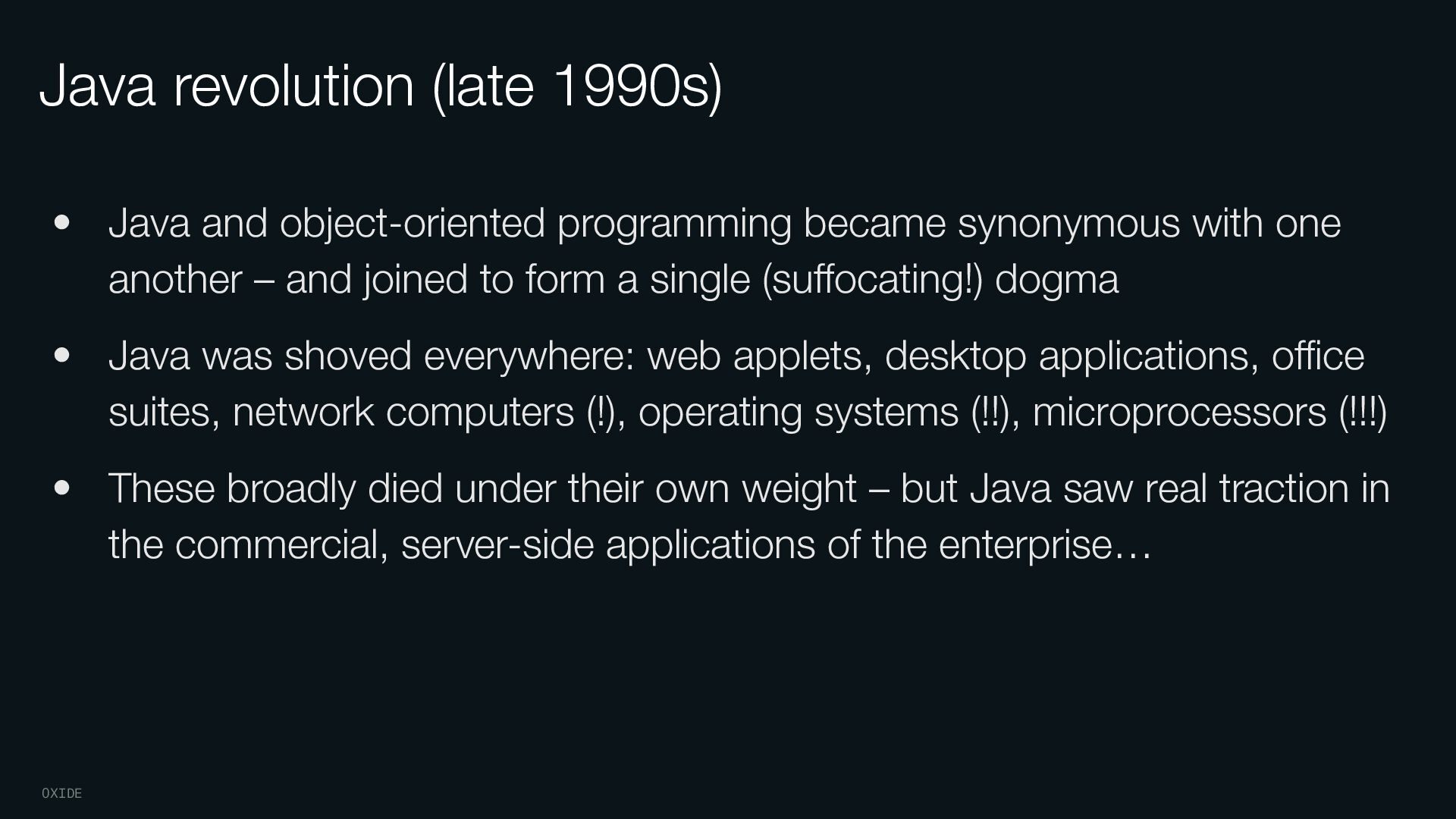
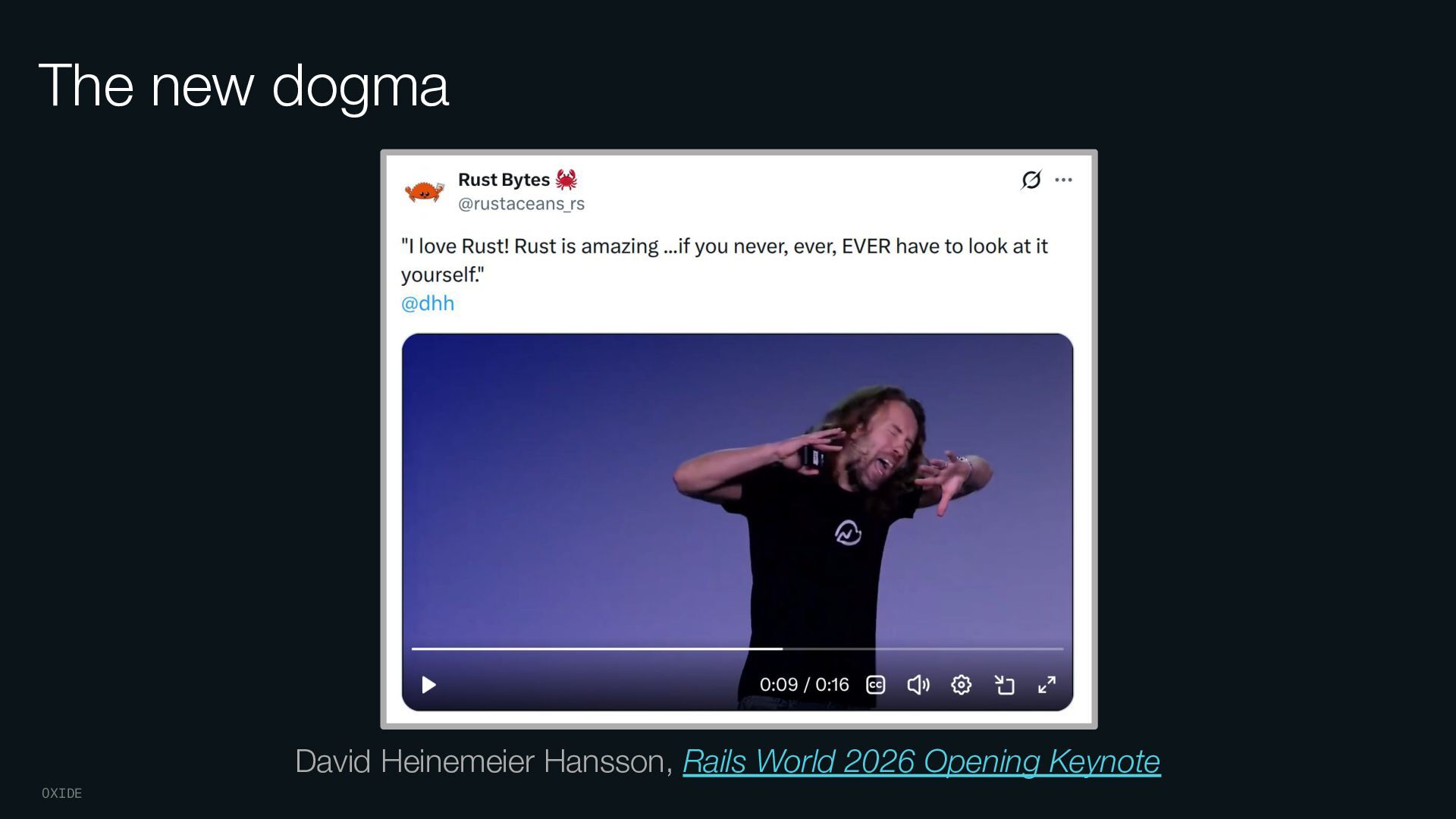
synonymous with one another – and joined to form a single (suffocating!) dogma • Java was shoved everywhere: web applets, desktop applications, office suites, network computers (!), operating systems (!!), microprocessors (!!!) • These broadly died under their own weight – but Java saw real traction in the commercial, server-side applications of the enterprise… OXIDE
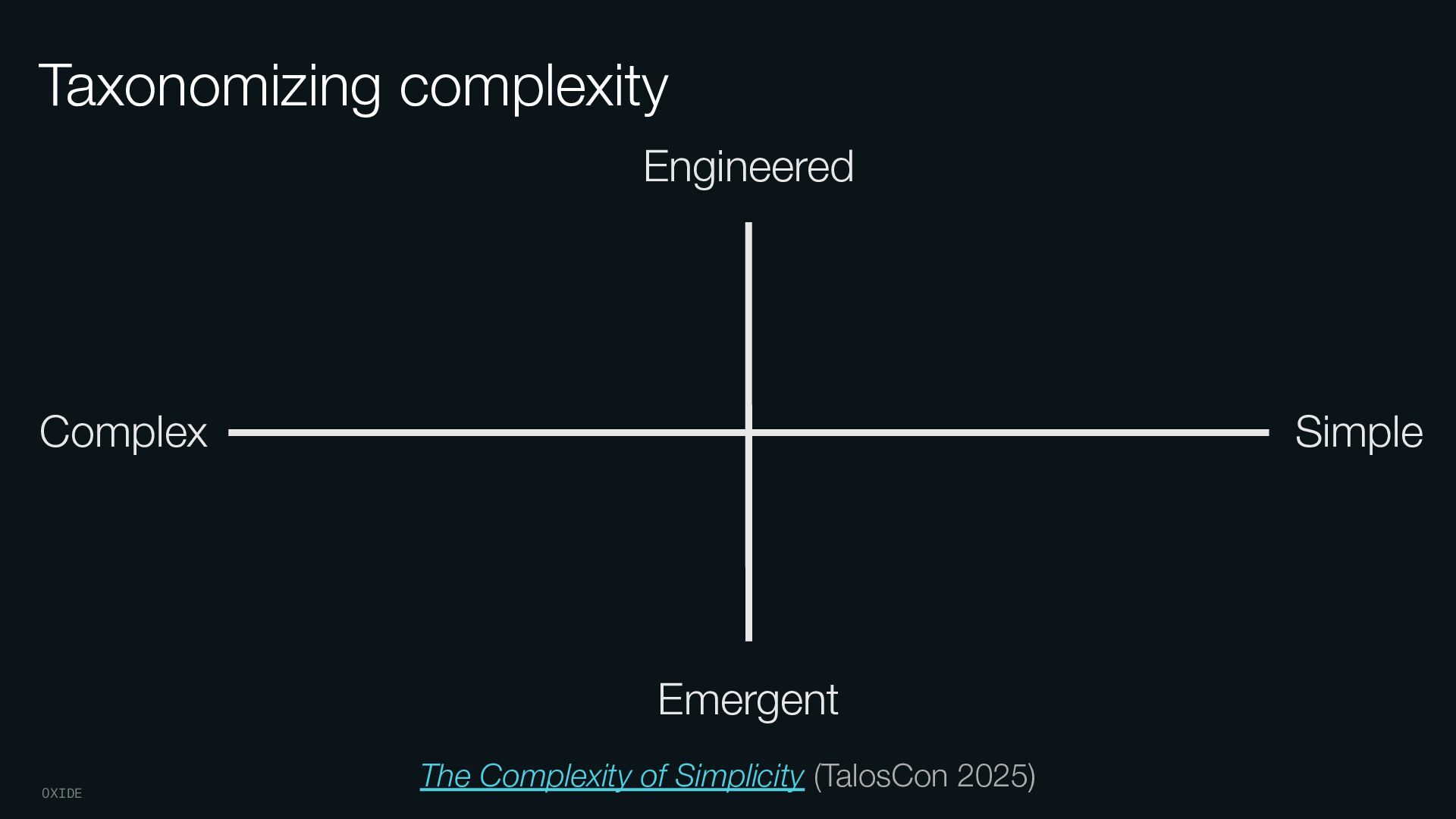
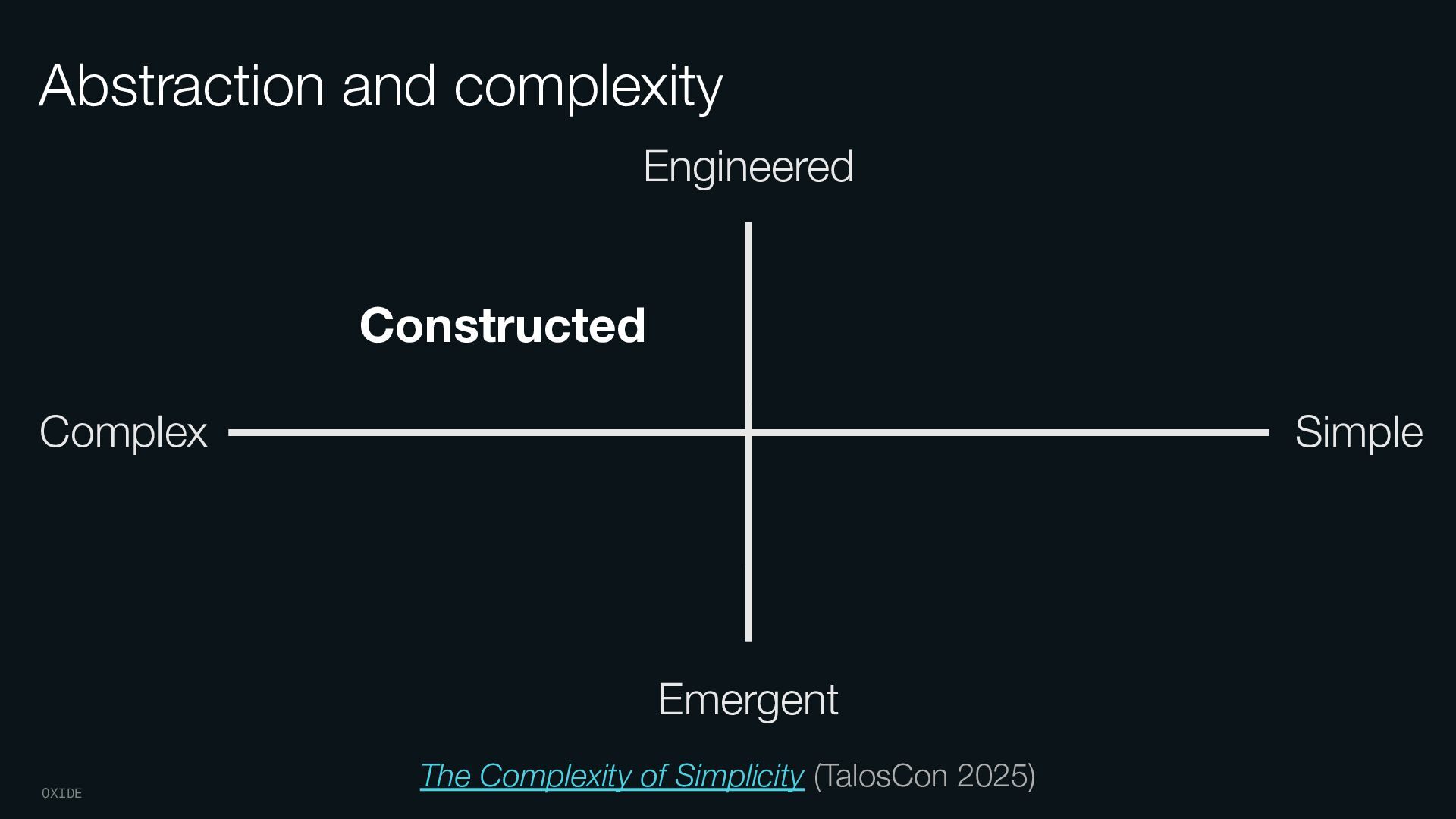
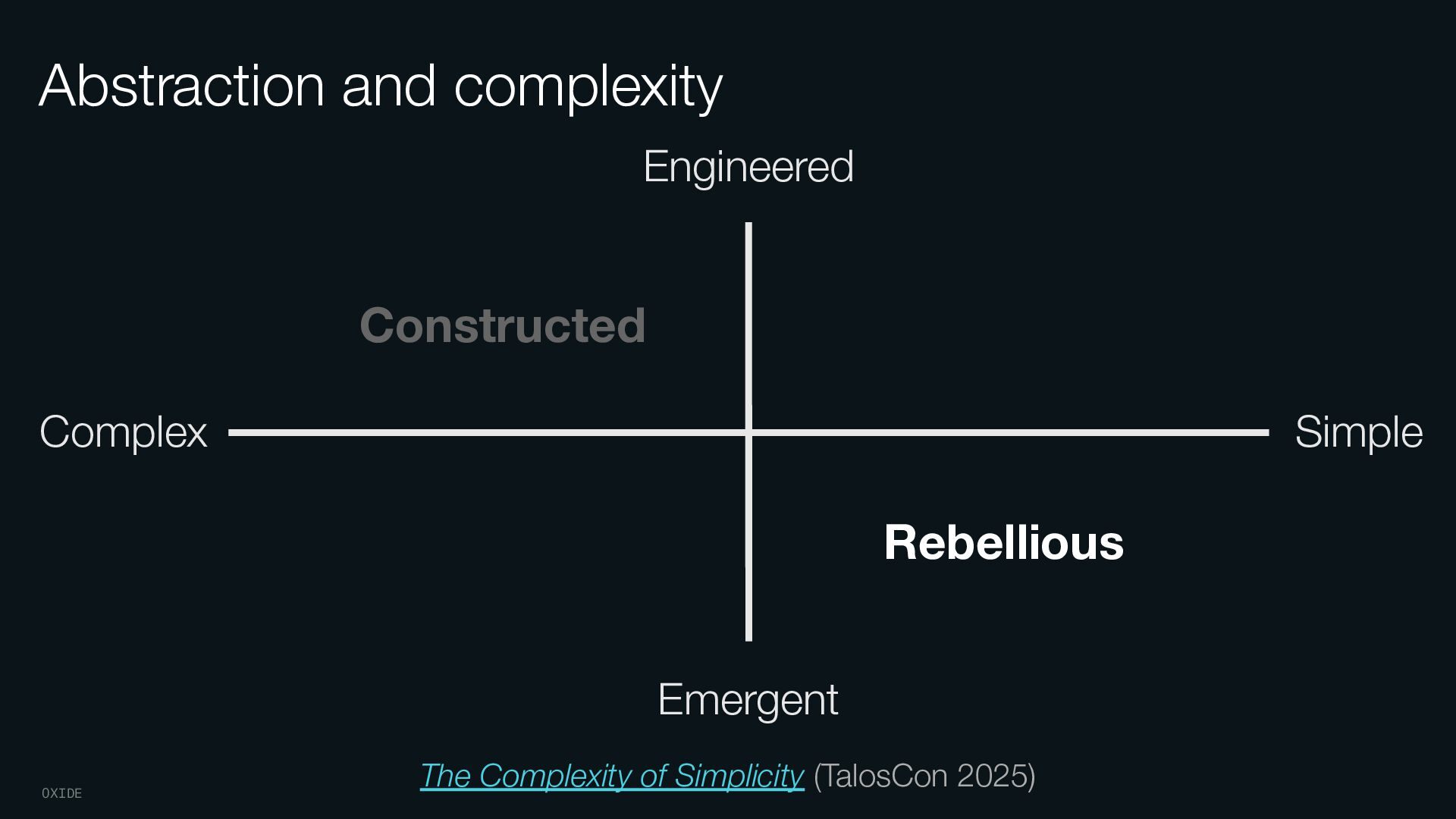
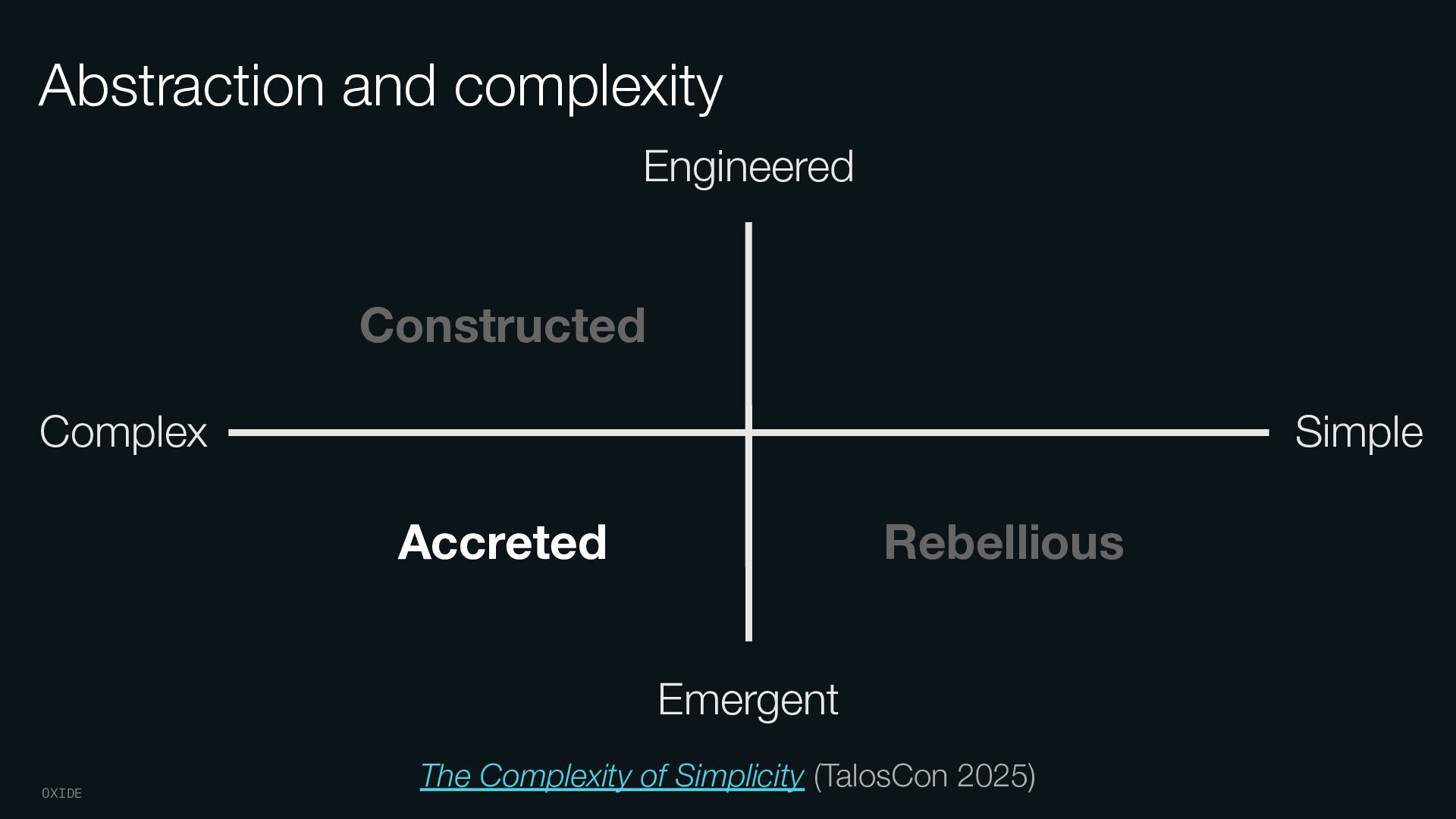
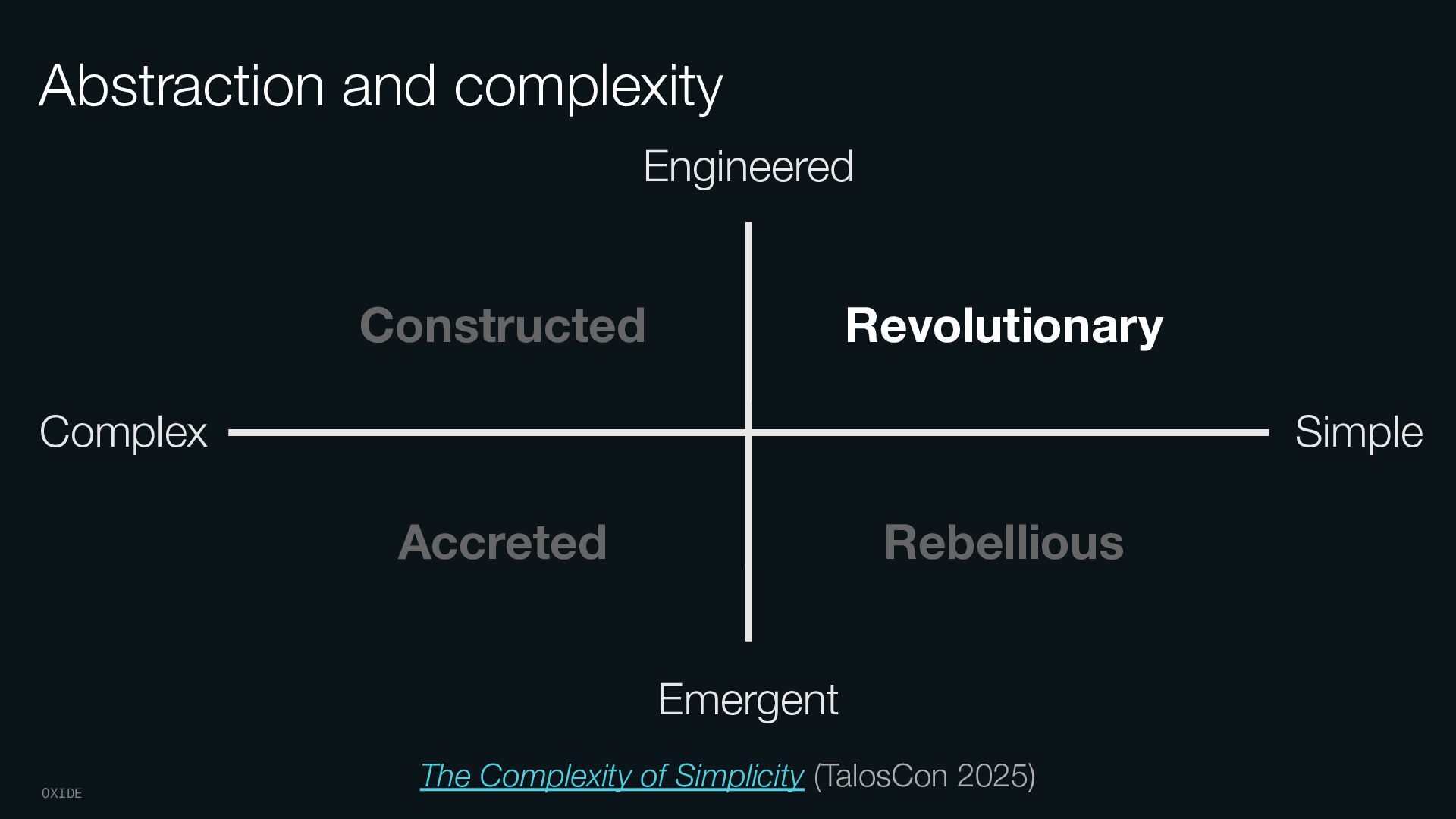
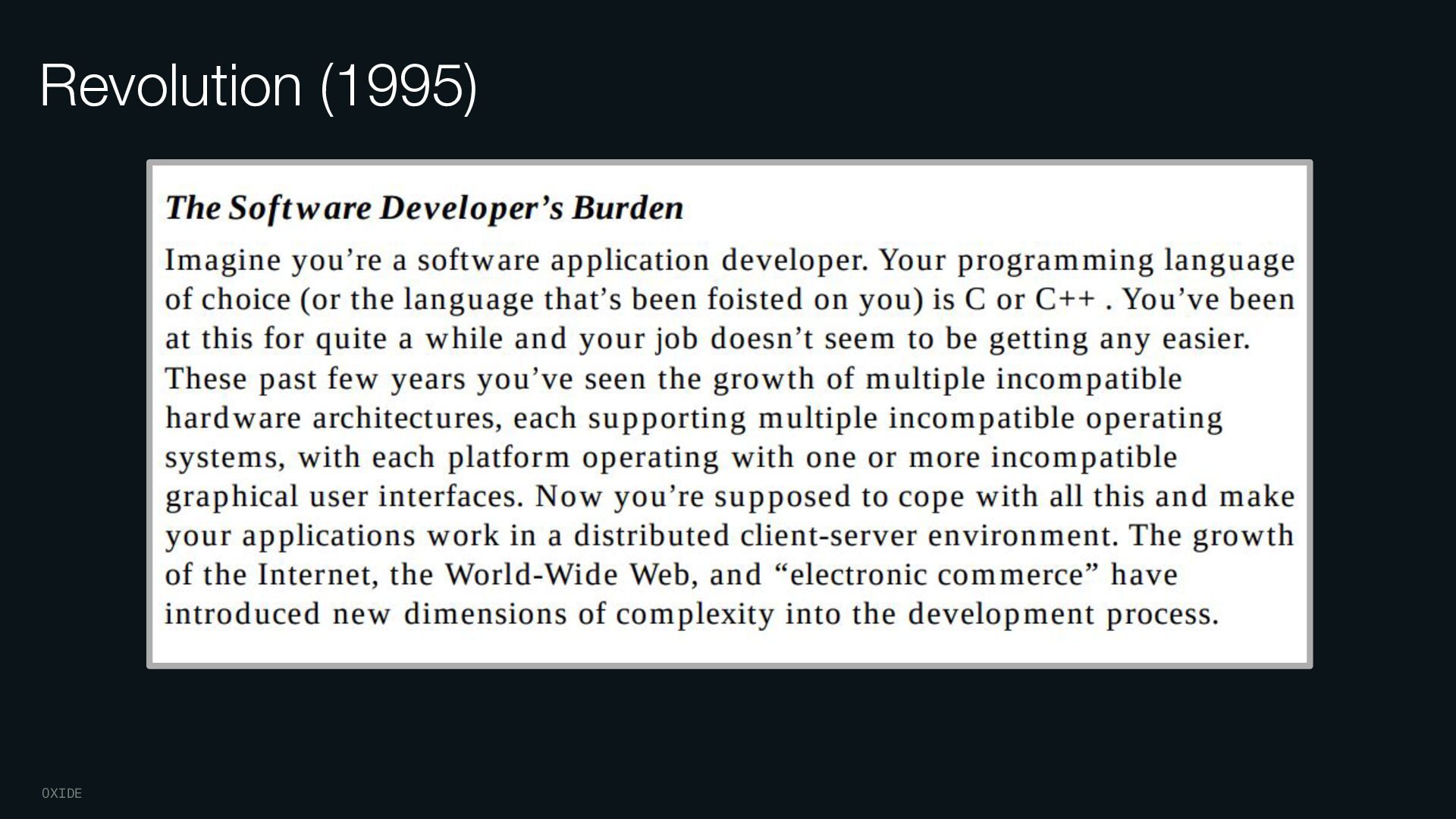
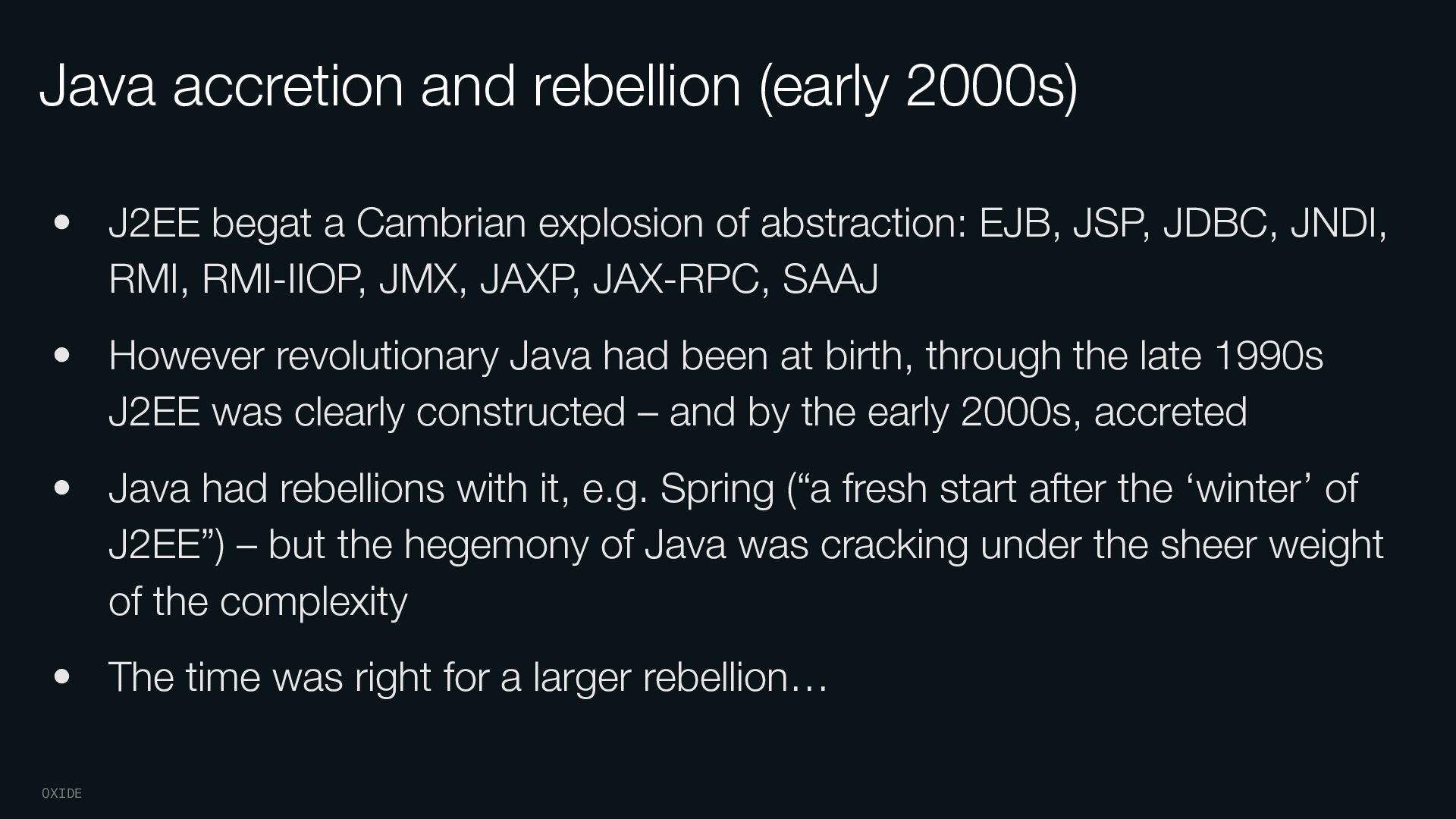
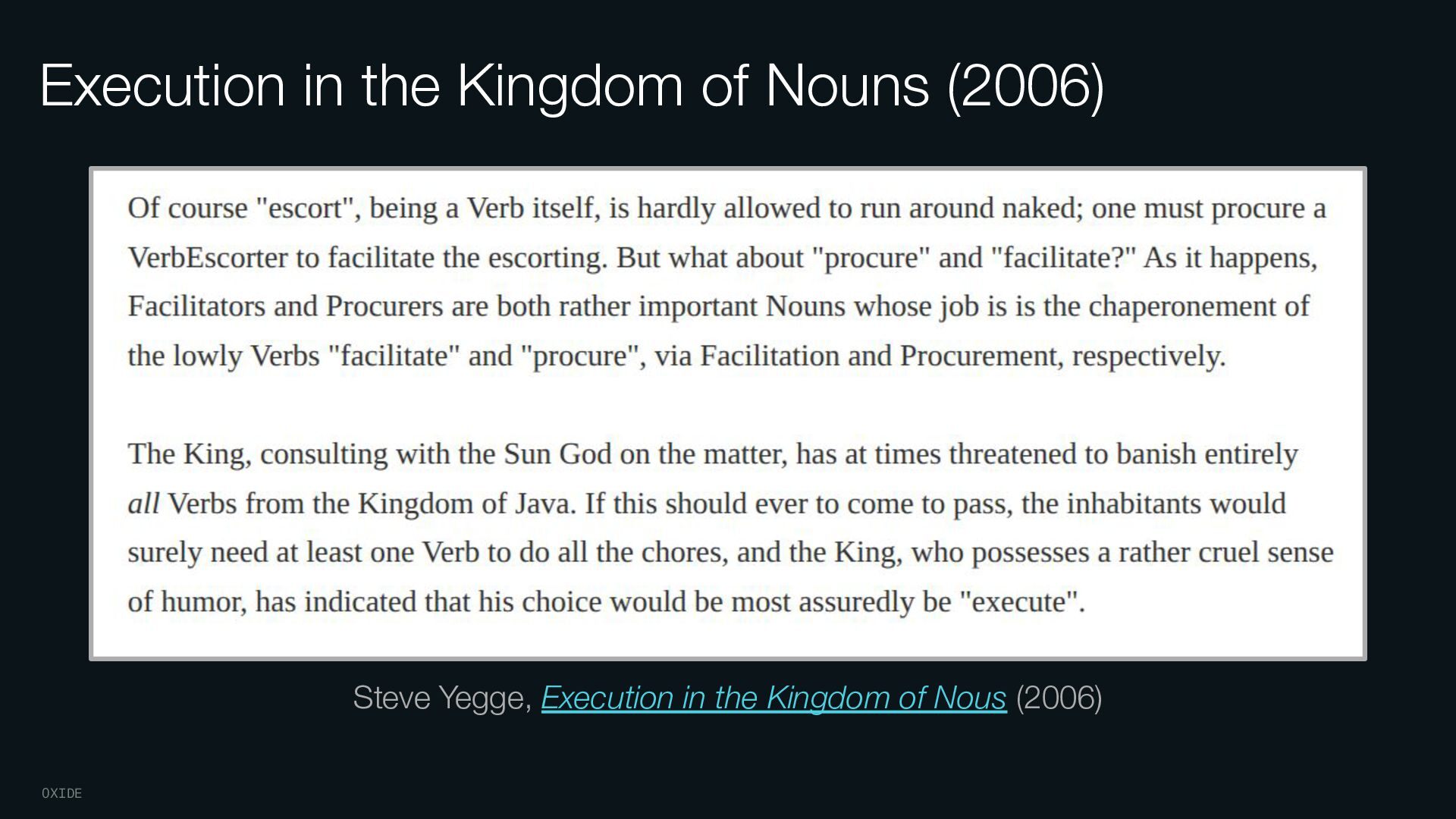
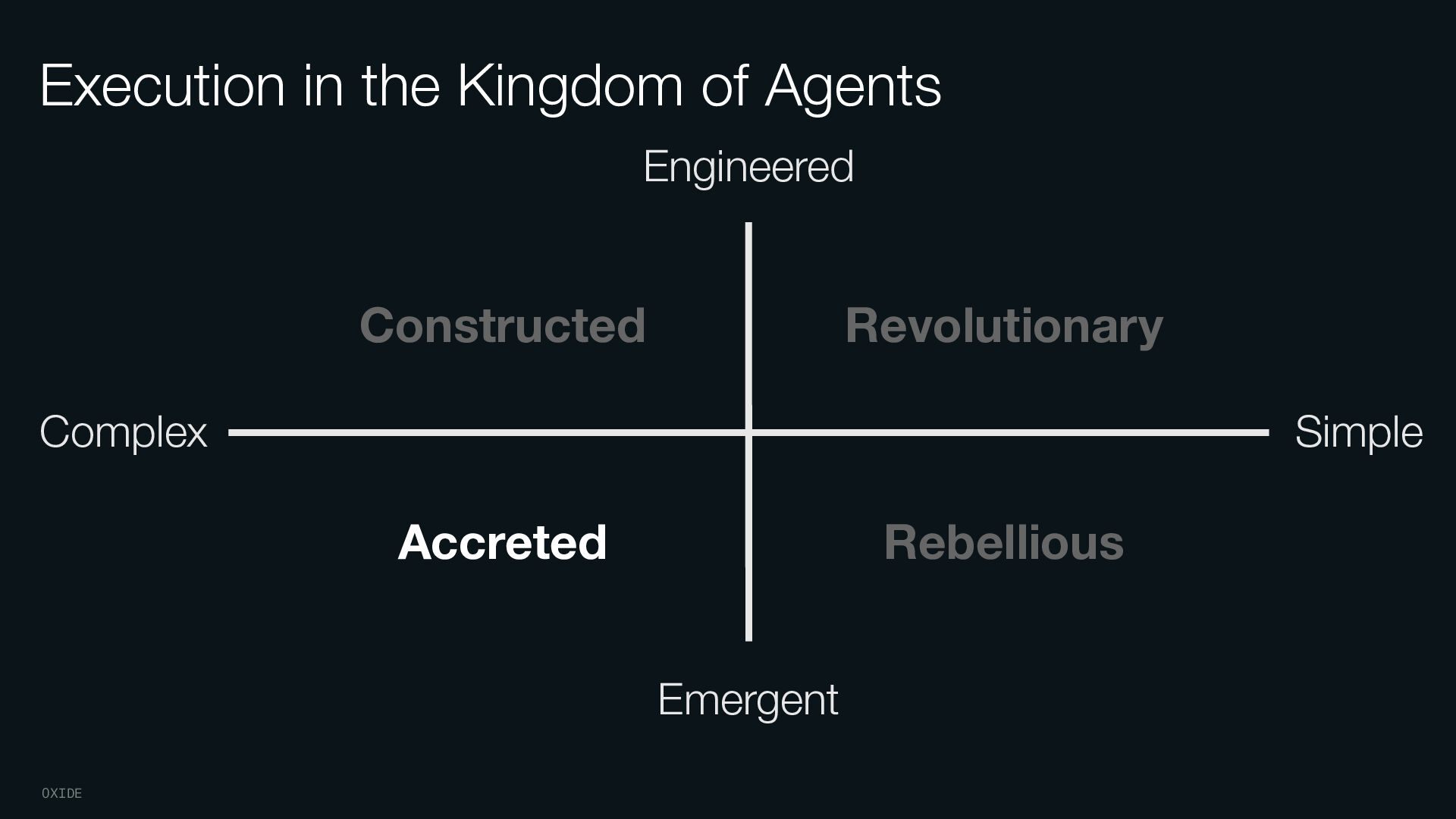
Cambrian explosion of abstraction: EJB, JSP, JDBC, JNDI, RMI, RMI-IIOP, JMX, JAXP, JAX-RPC, SAAJ • However revolutionary Java had been at birth, through the late 1990s J2EE was clearly constructed – and by the early 2000s, accreted • Java had rebellions with it, e.g. Spring (“a fresh start after the ‘winter’ of J2EE”) – but the hegemony of Java was cracking under the sheer weight of the complexity • The time was right for a larger rebellion… OXIDE
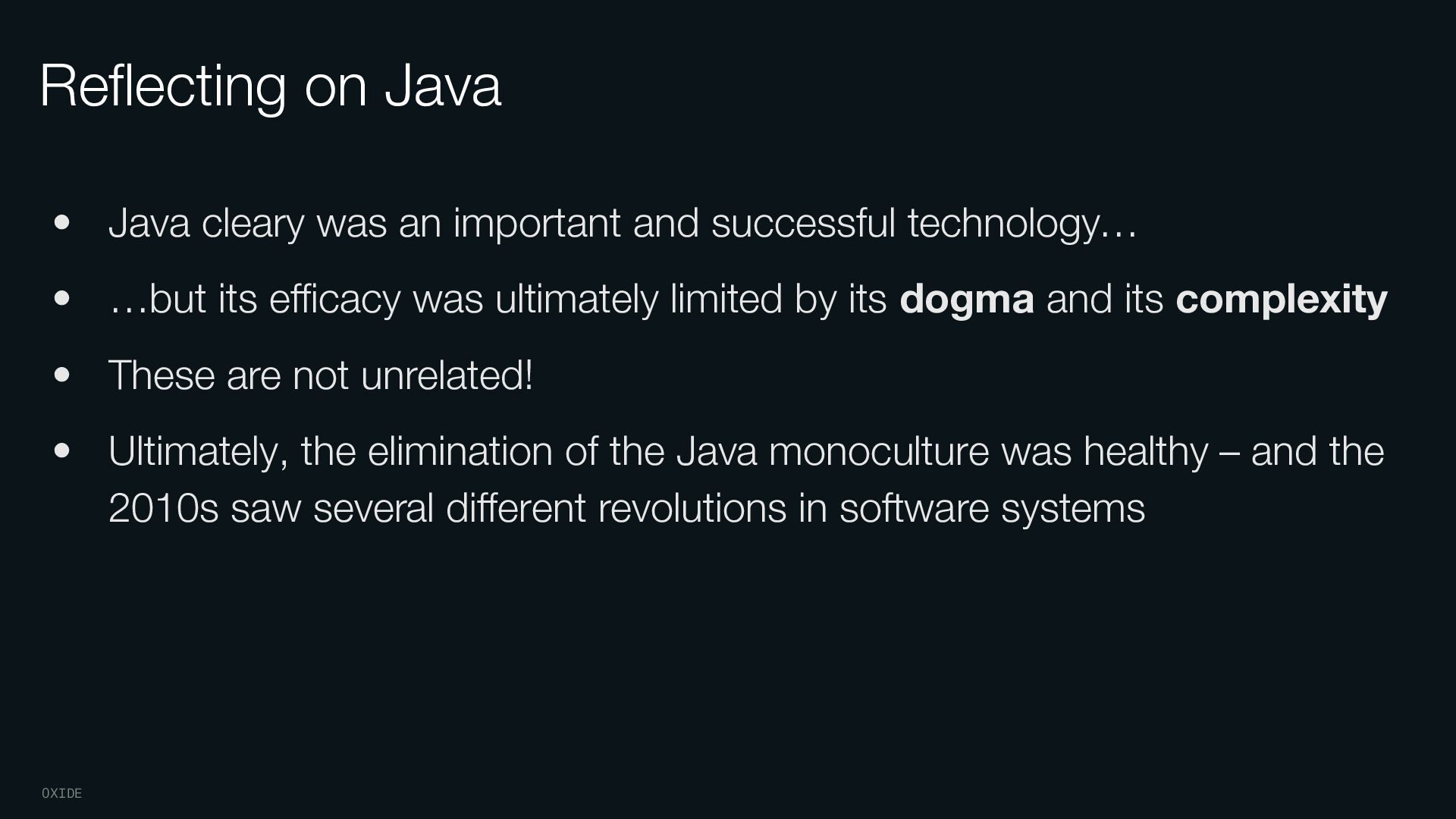
successful technology… • …but its efficacy was ultimately limited by its dogma and its complexity • These are not unrelated! • Ultimately, the elimination of the Java monoculture was healthy – and the 2010s saw several different revolutions in software systems OXIDE
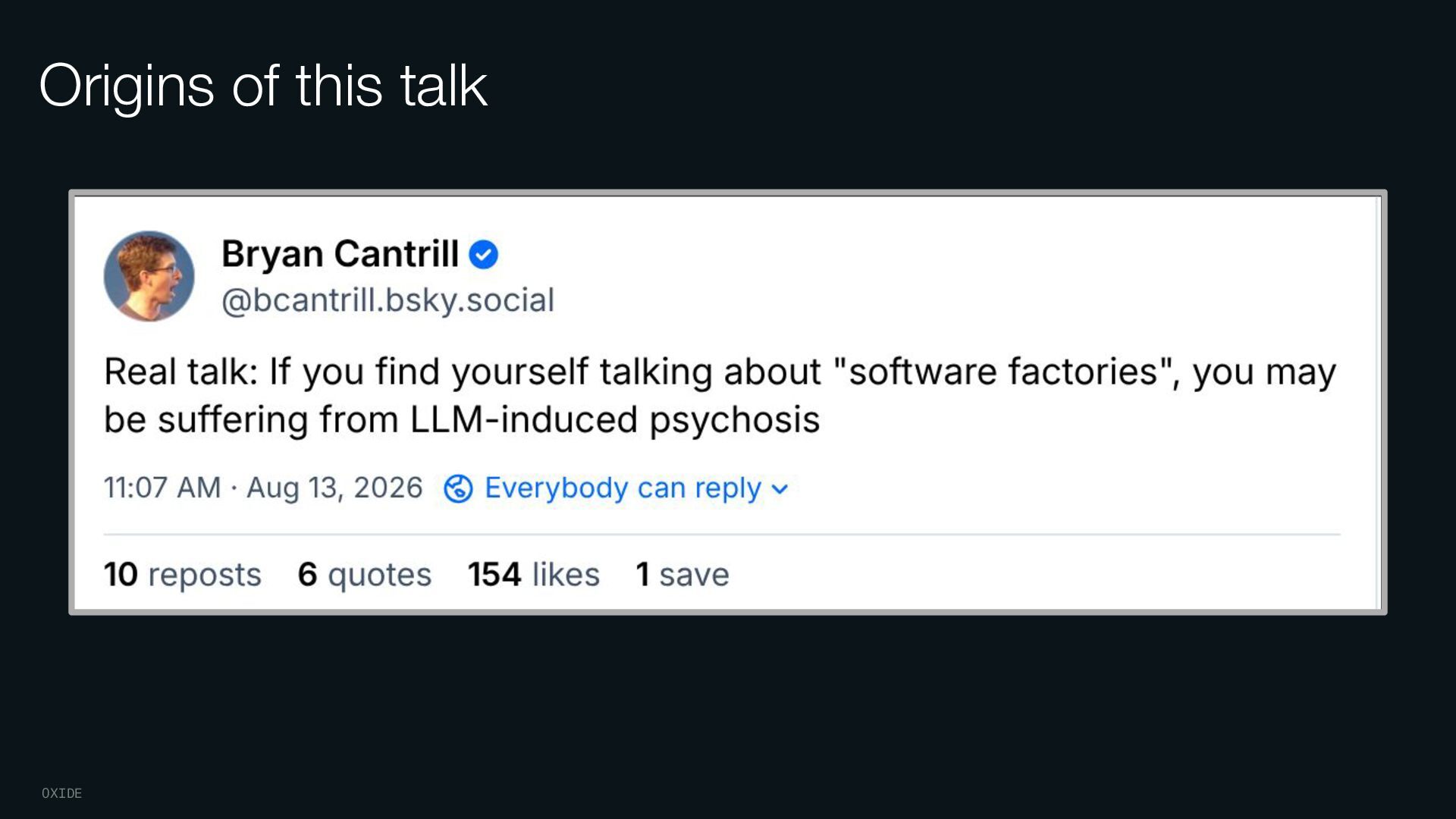
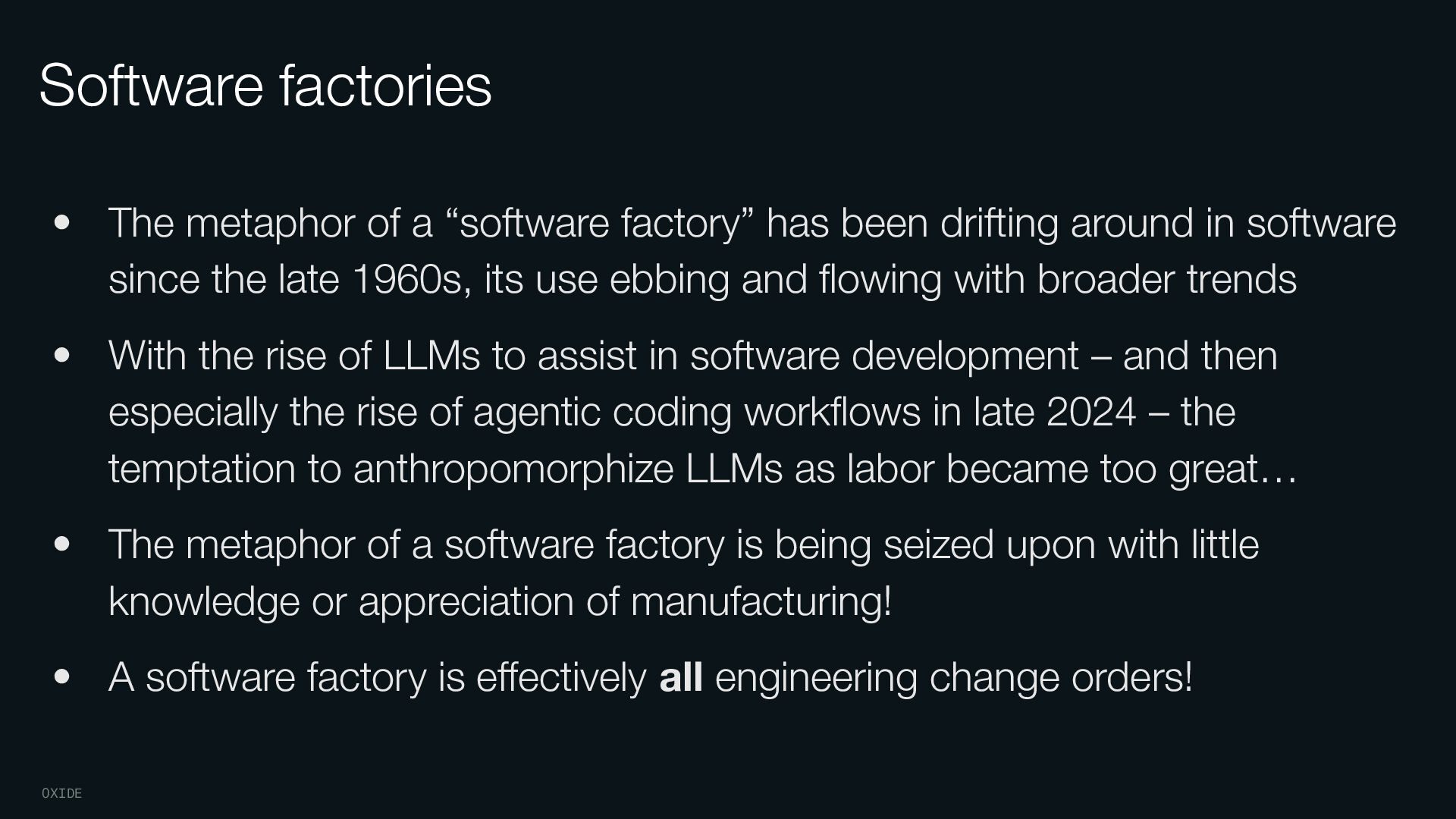
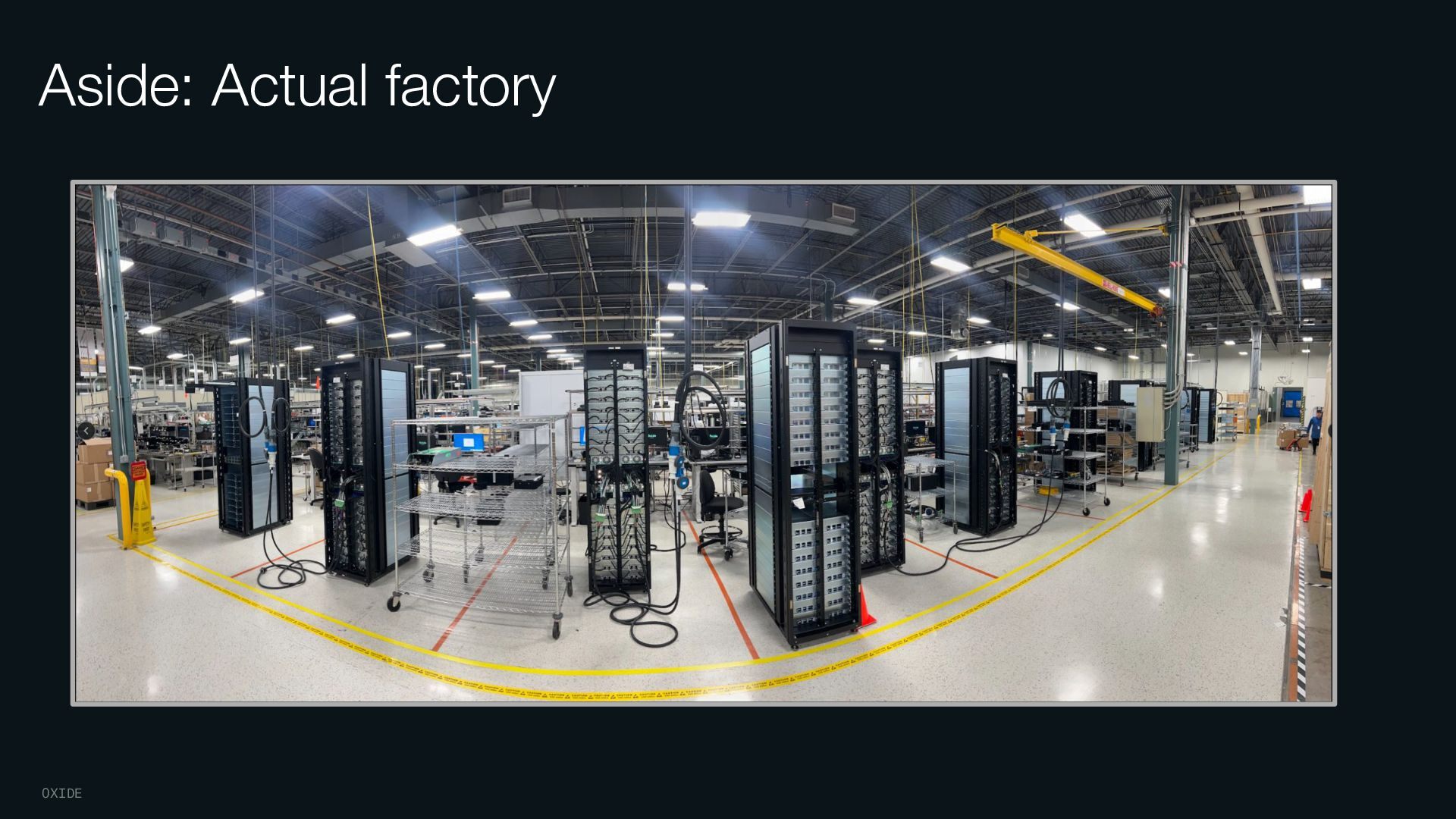
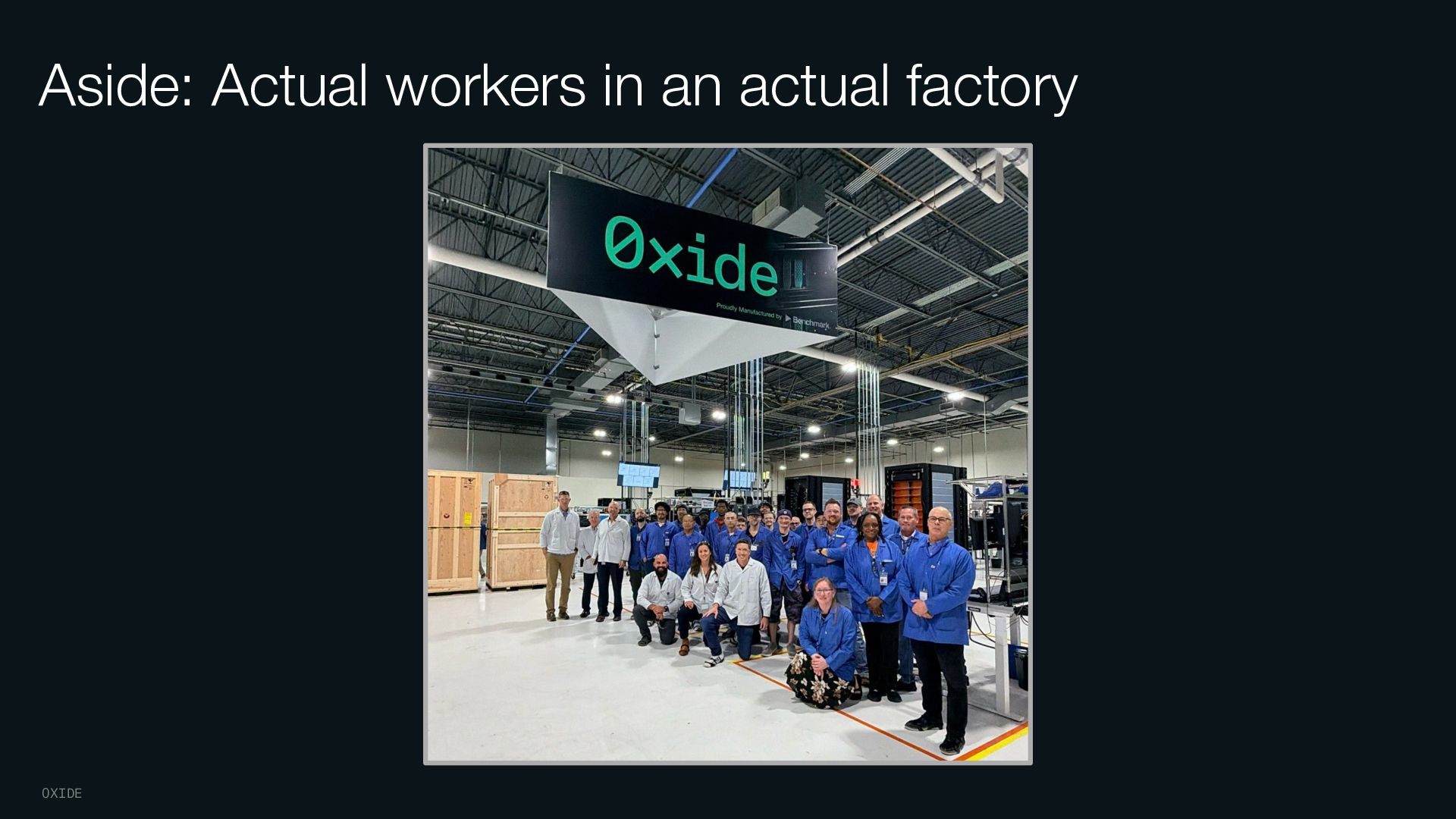
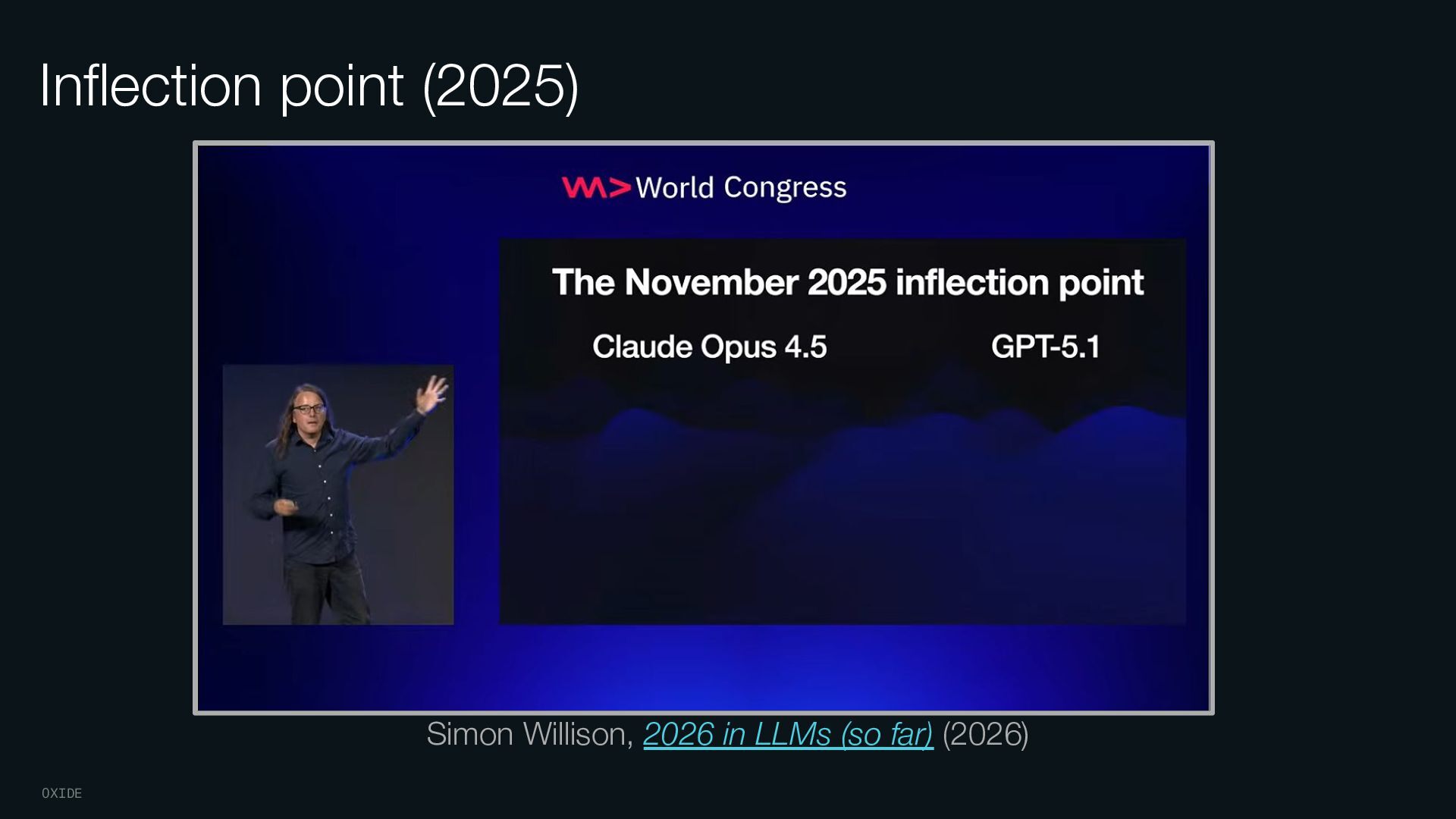
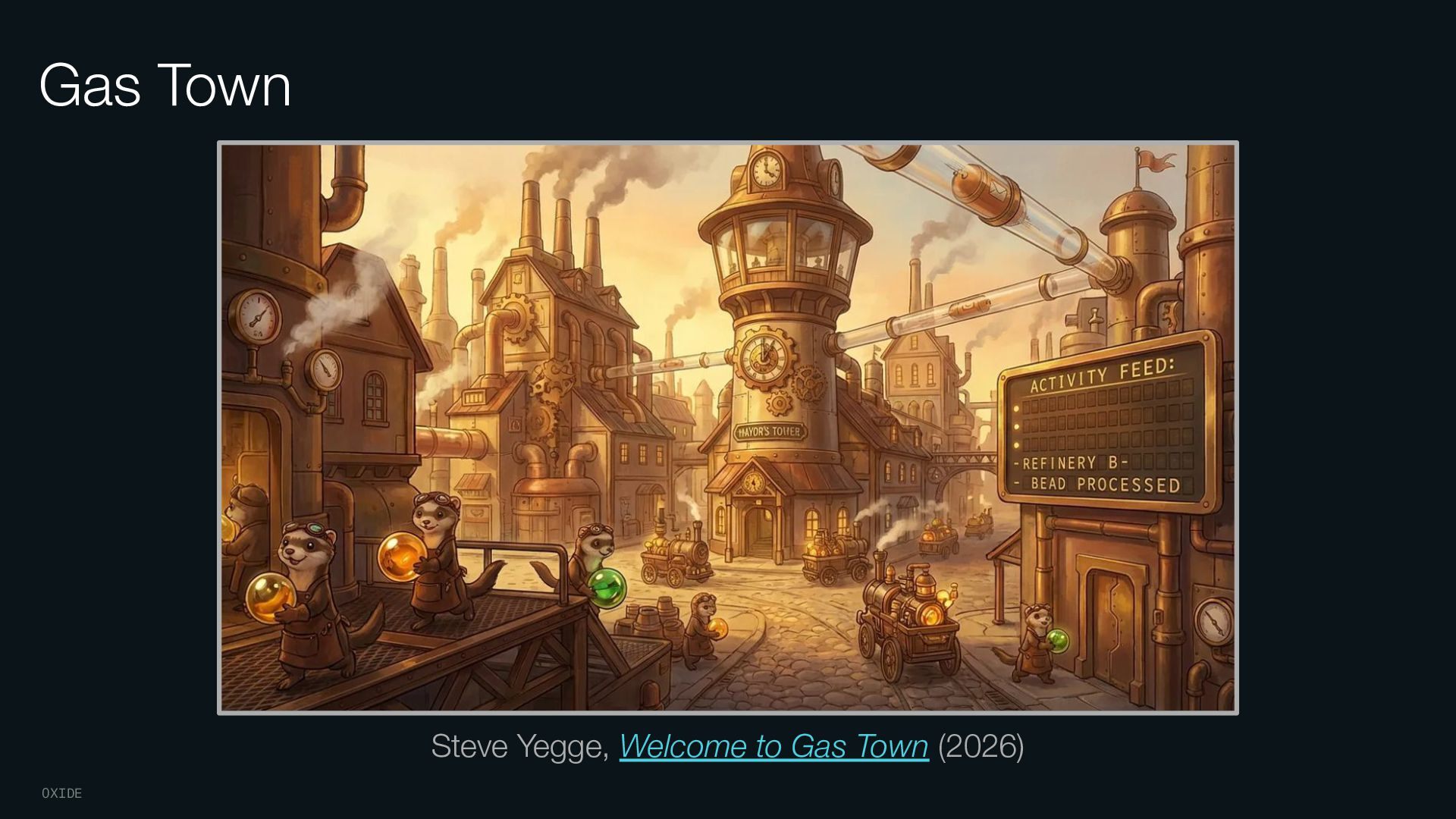
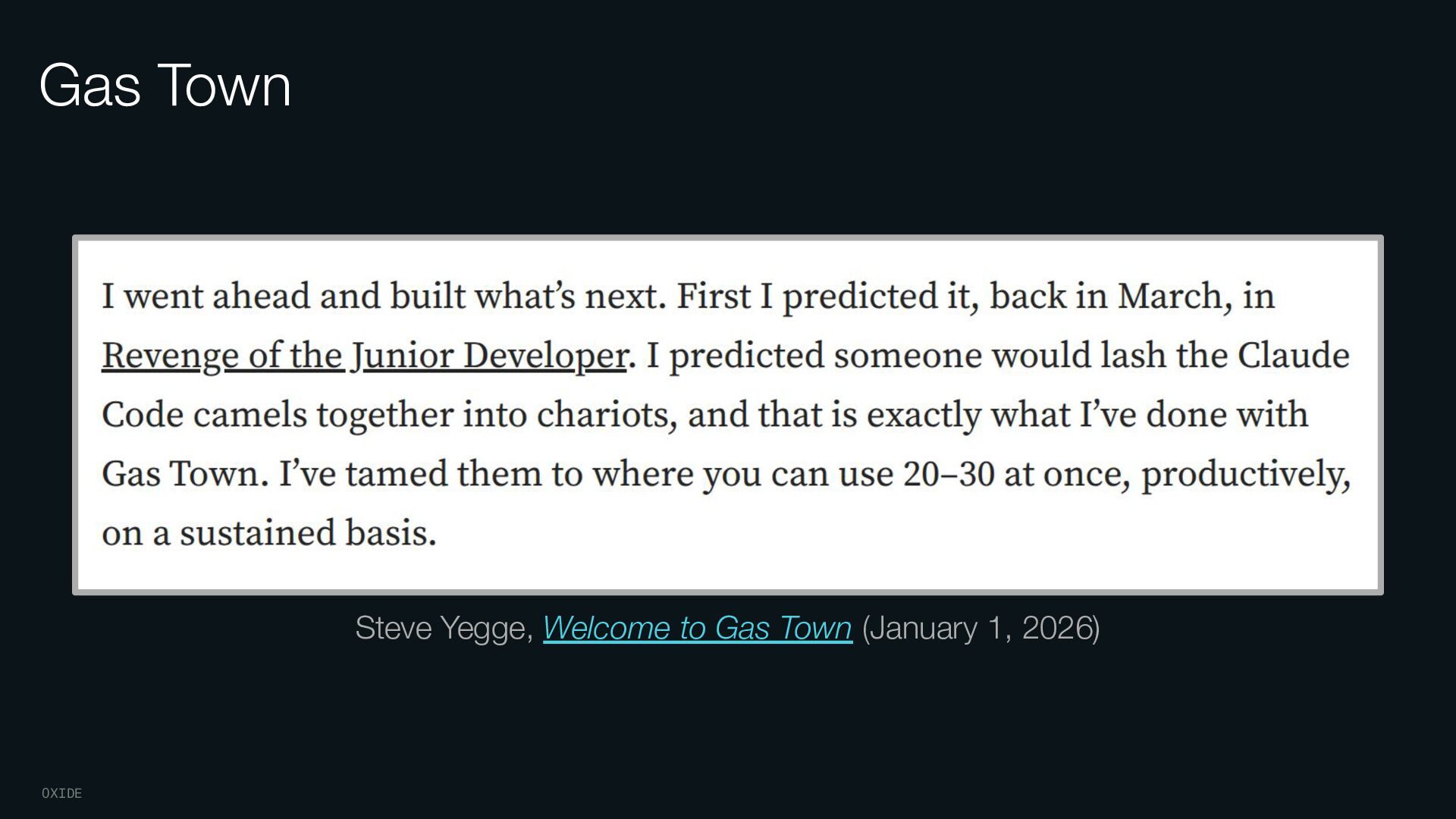
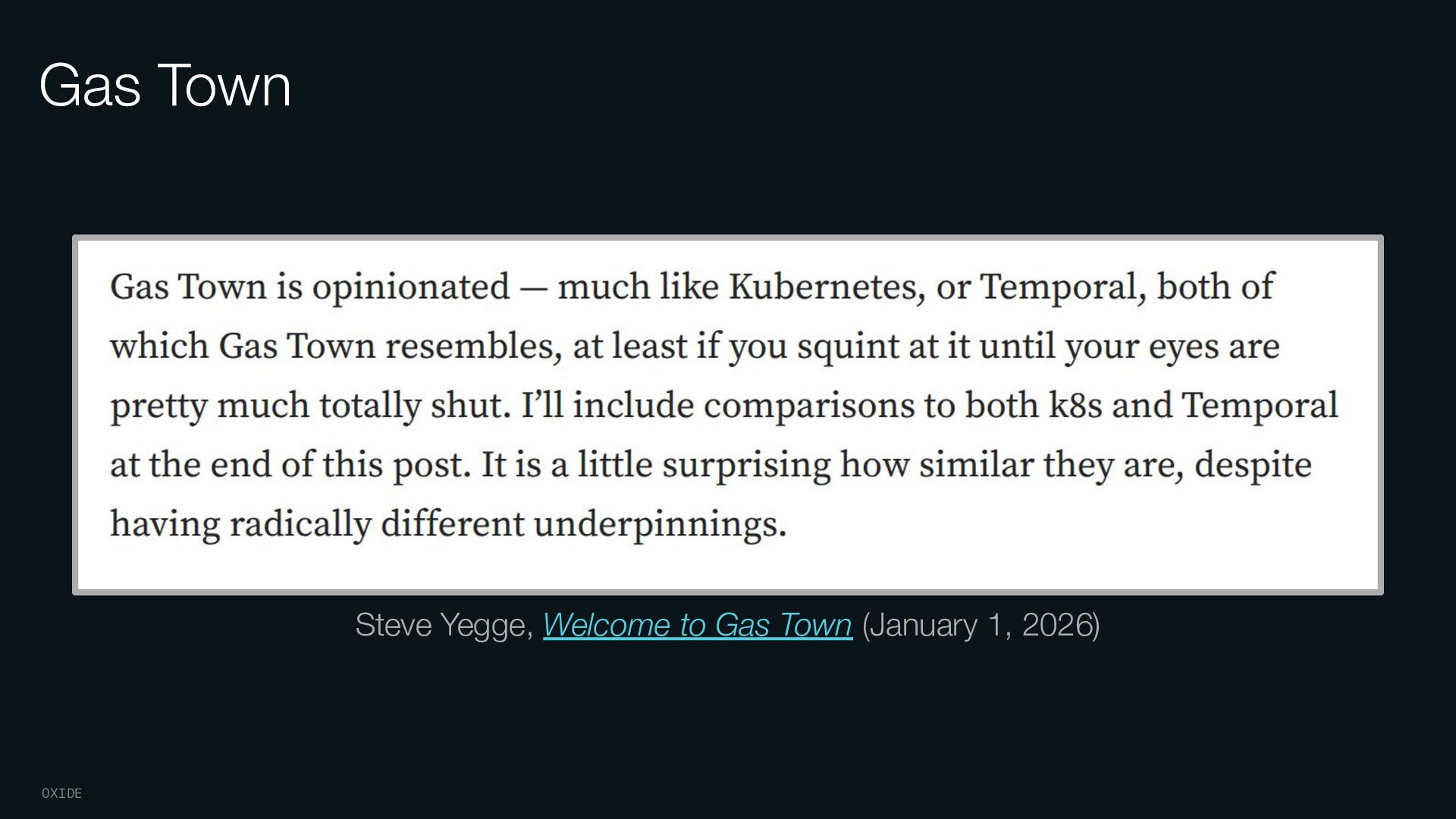
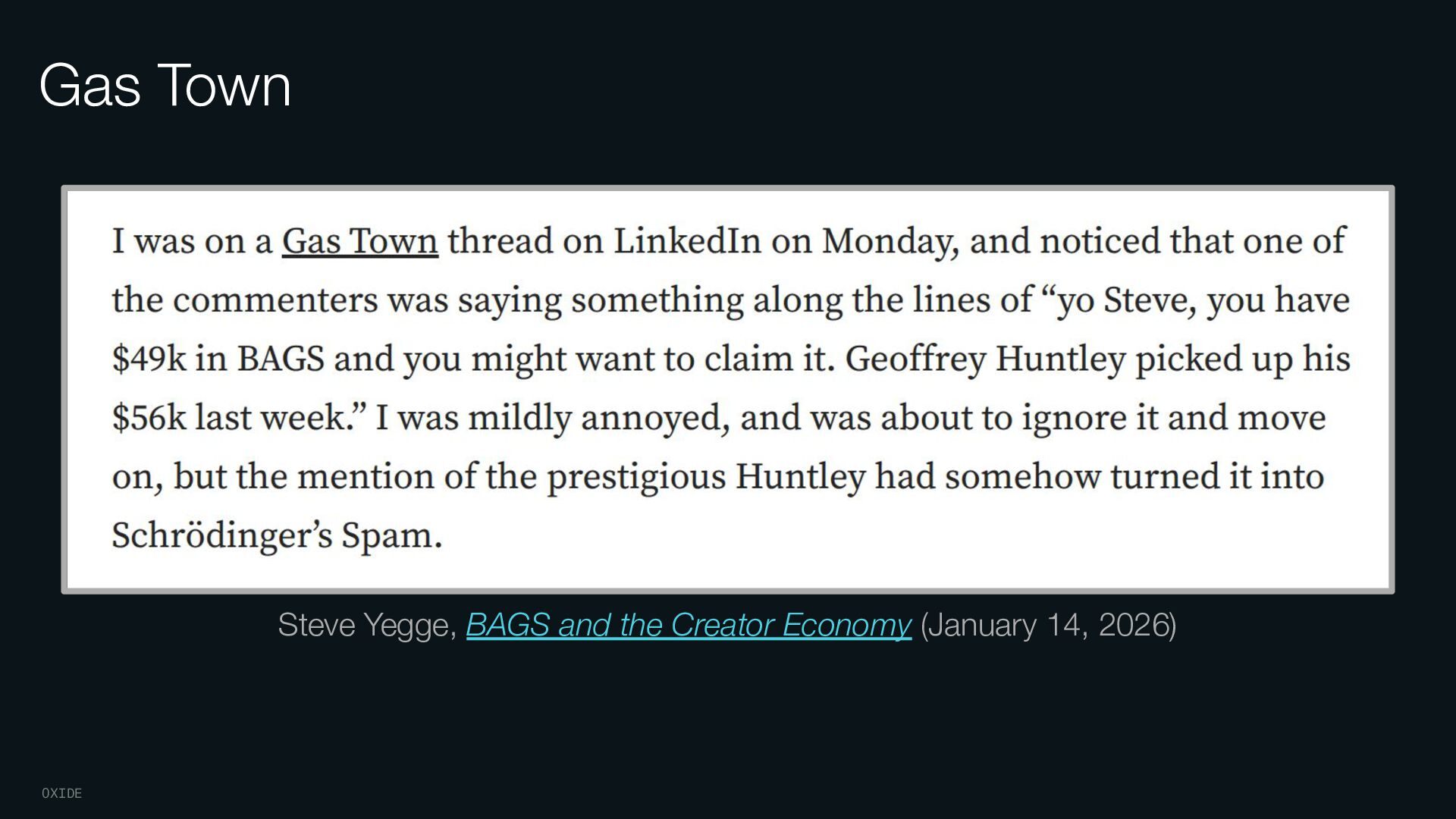
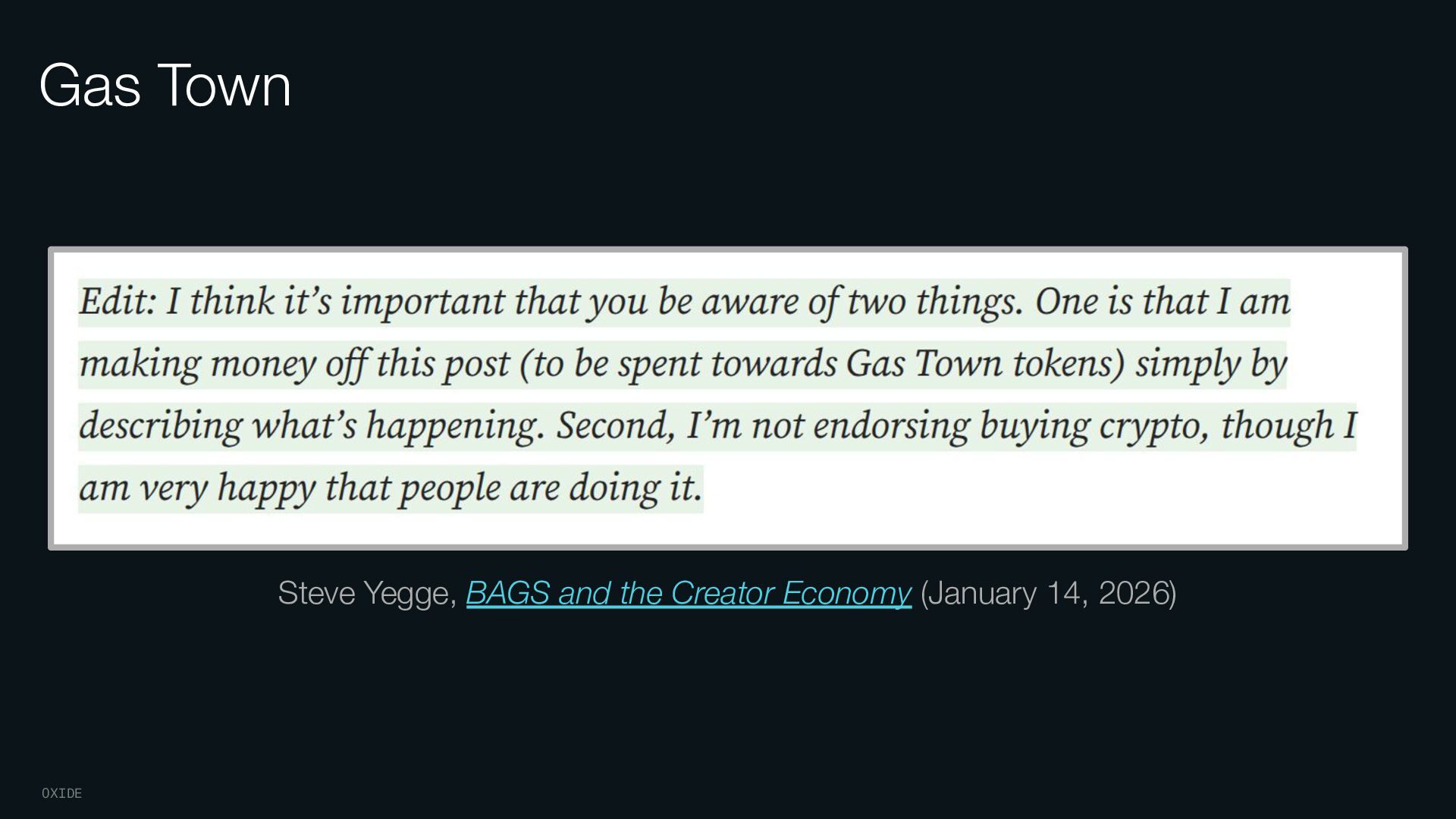
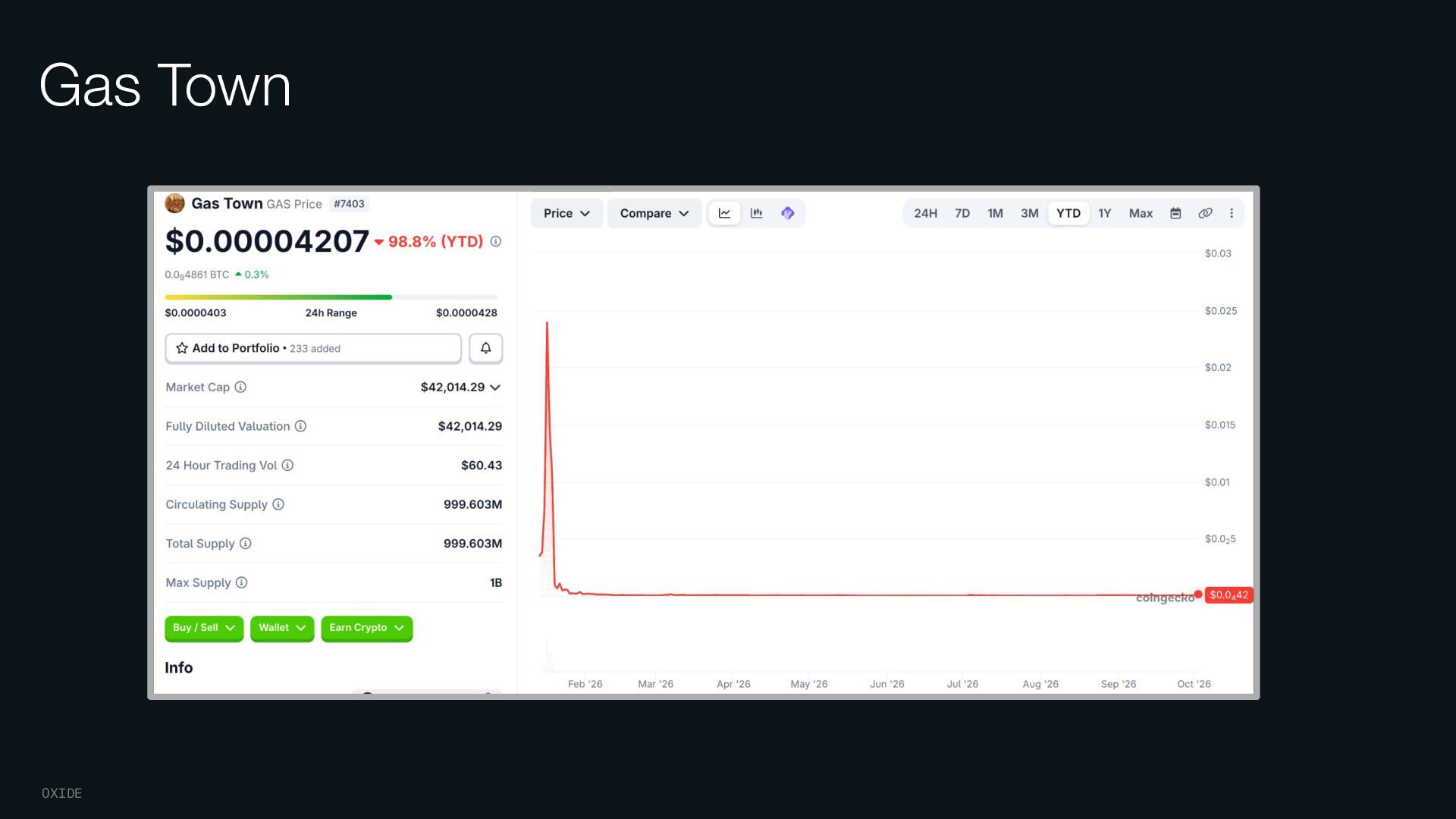
been drifting around in software since the late 1960s, its use ebbing and flowing with broader trends • With the rise of LLMs to assist in software development – and then especially the rise of agentic coding workflows in late 2024 – the temptation to anthropomorphize LLMs as labor became too great… • The metaphor of a software factory is being seized upon with little knowledge or appreciation of manufacturing! • A software factory is effectively all engineering change orders! OXIDE
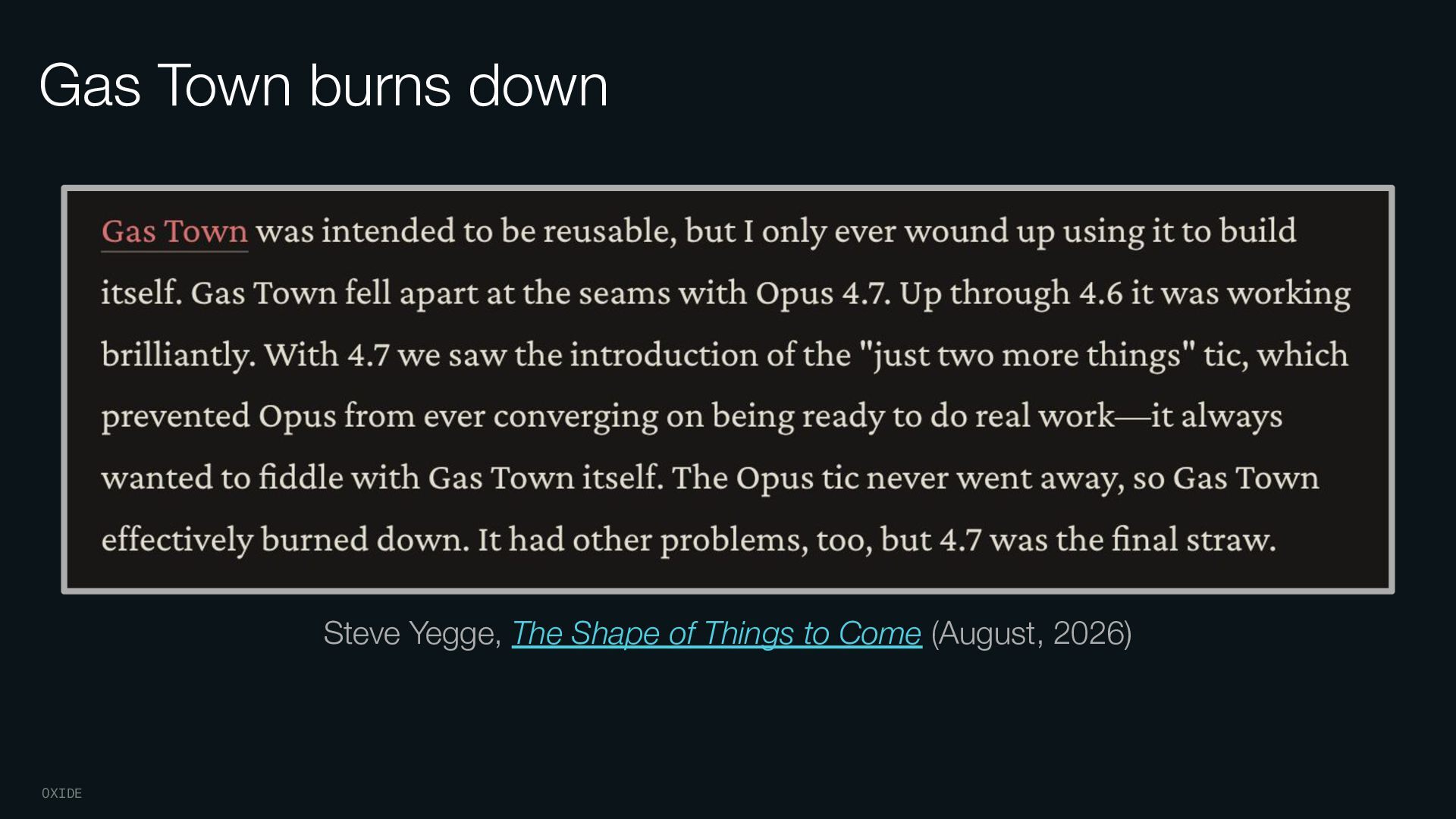
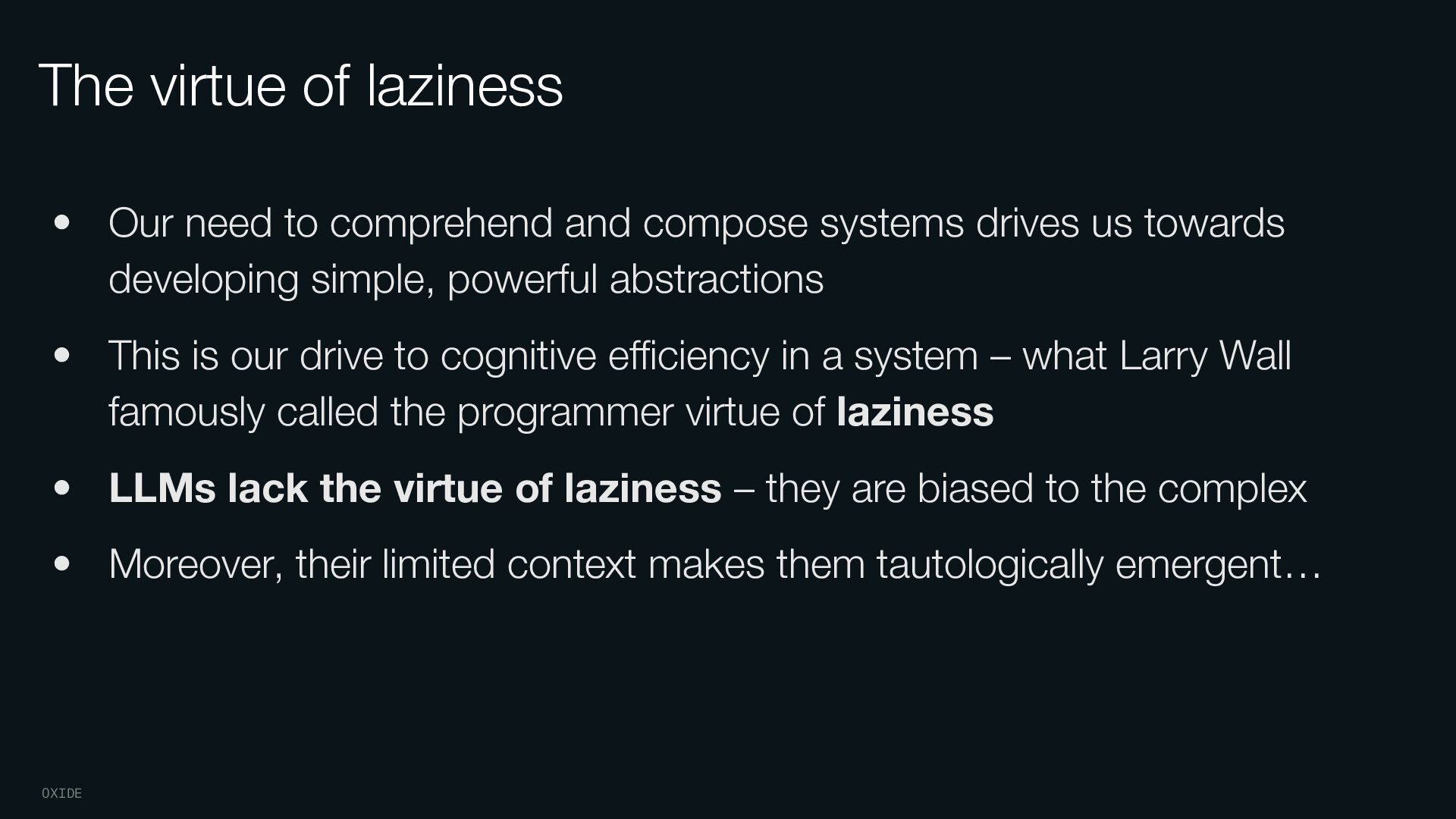
compose systems drives us towards developing simple, powerful abstractions • This is our drive to cognitive efficiency in a system – what Larry Wall famously called the programmer virtue of laziness • LLMs lack the virtue of laziness – they are biased to the complex • Moreover, their limited context makes them tautologically emergent… OXIDE
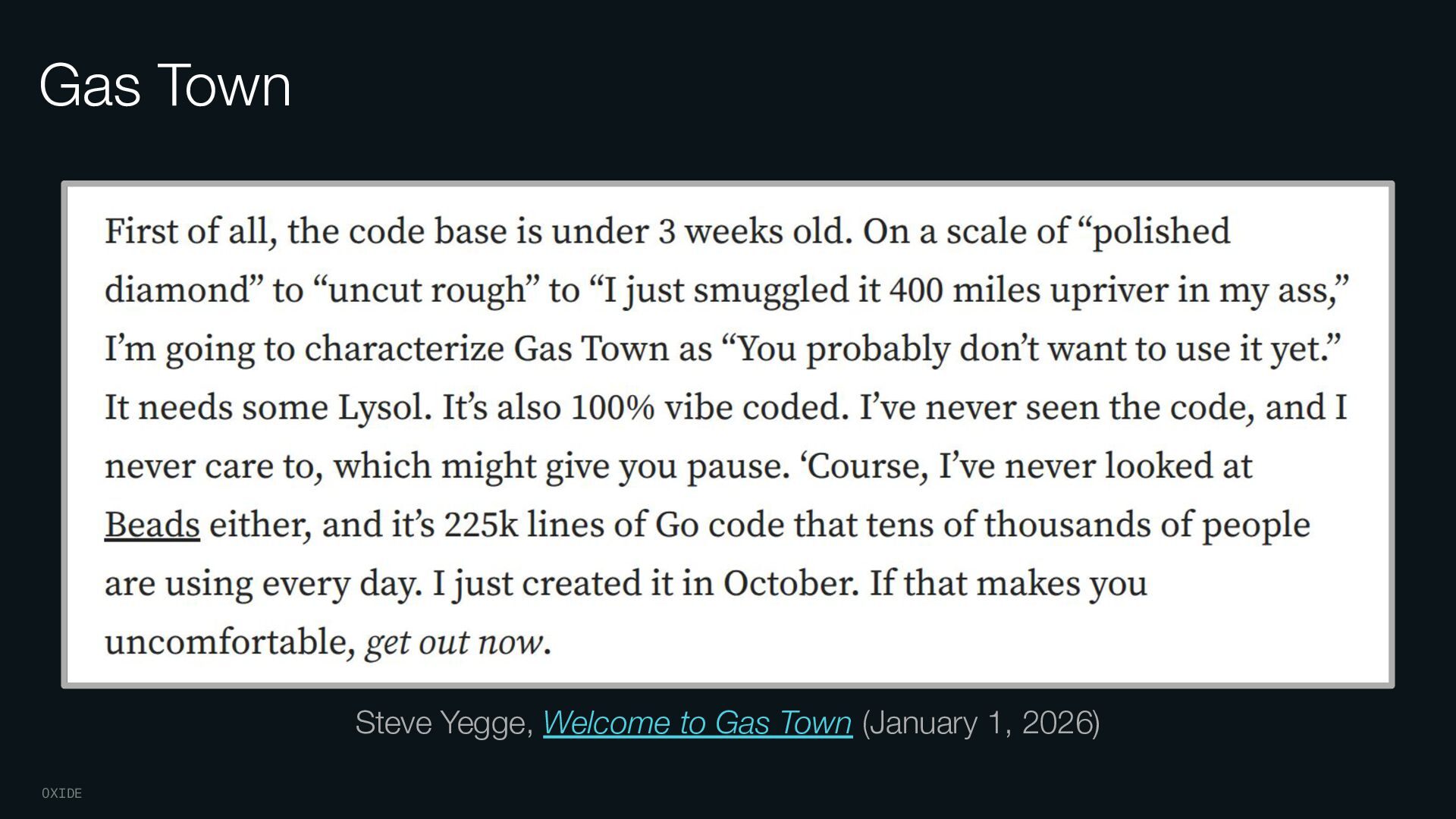
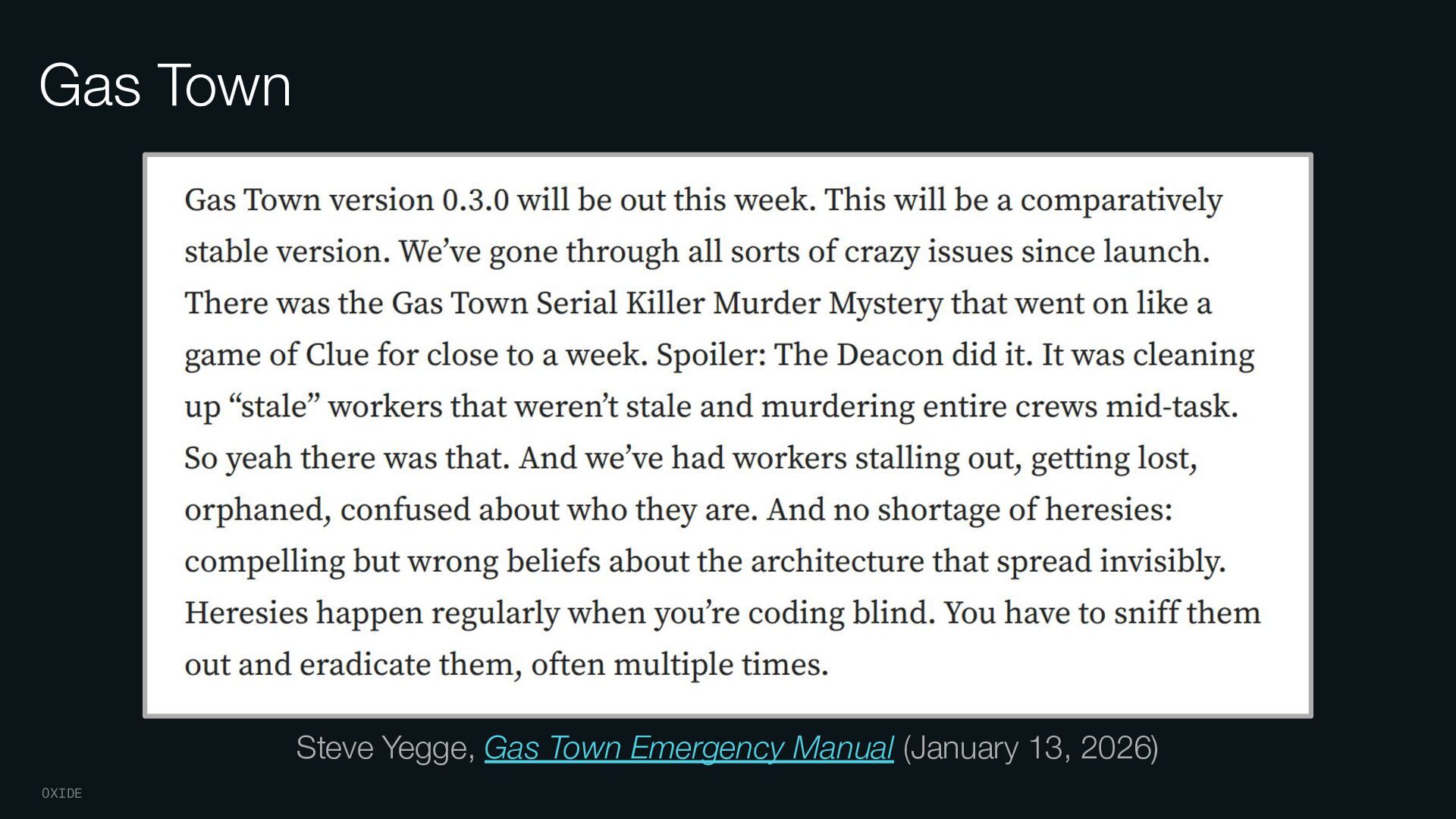
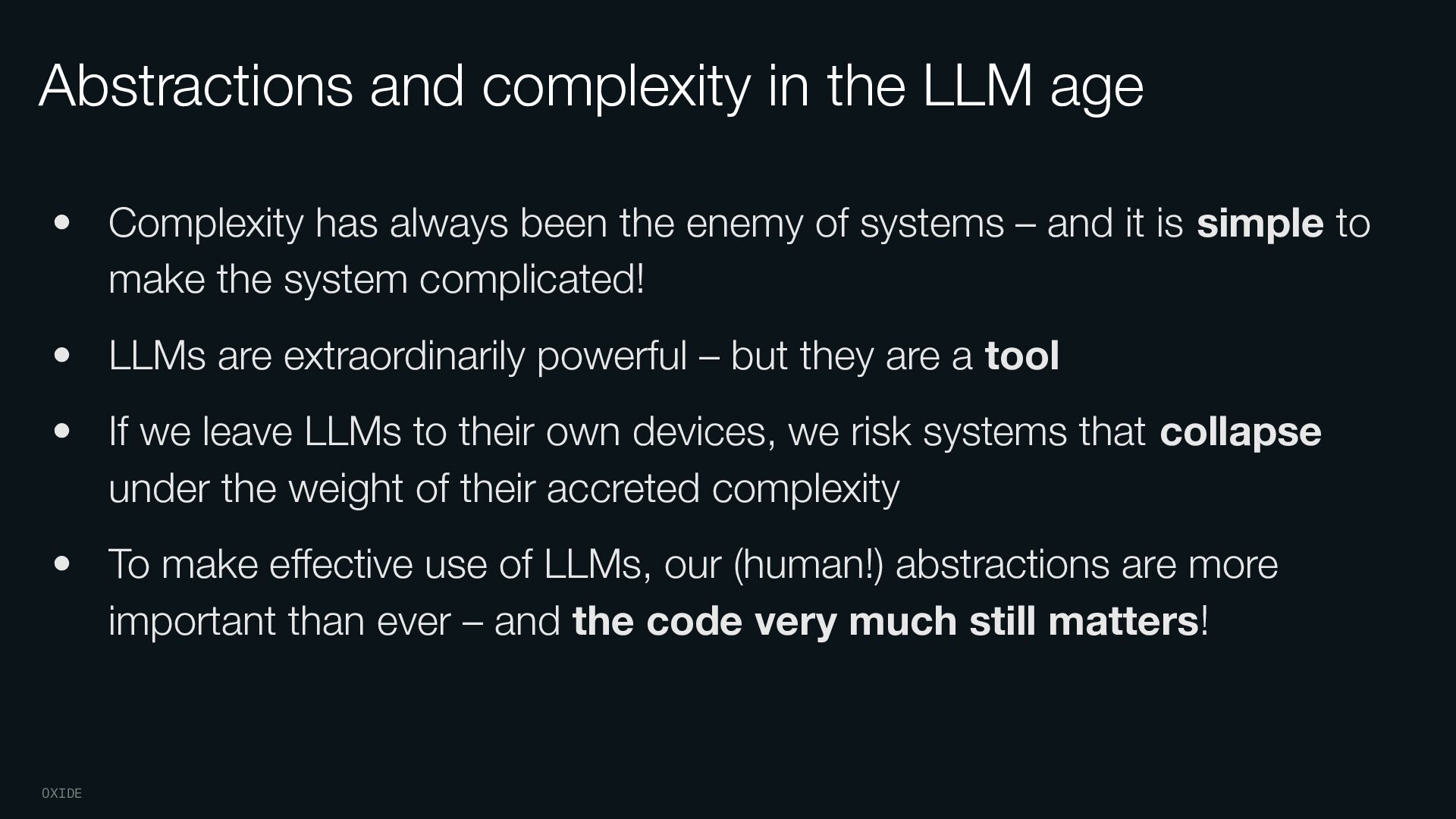
always been the enemy of systems – and it is simple to make the system complicated! • LLMs are extraordinarily powerful – but they are a tool • If we leave LLMs to their own devices, we risk systems that collapse under the weight of their accreted complexity • To make effective use of LLMs, our (human!) abstractions are more important than ever – and the code very much still matters! OXIDE
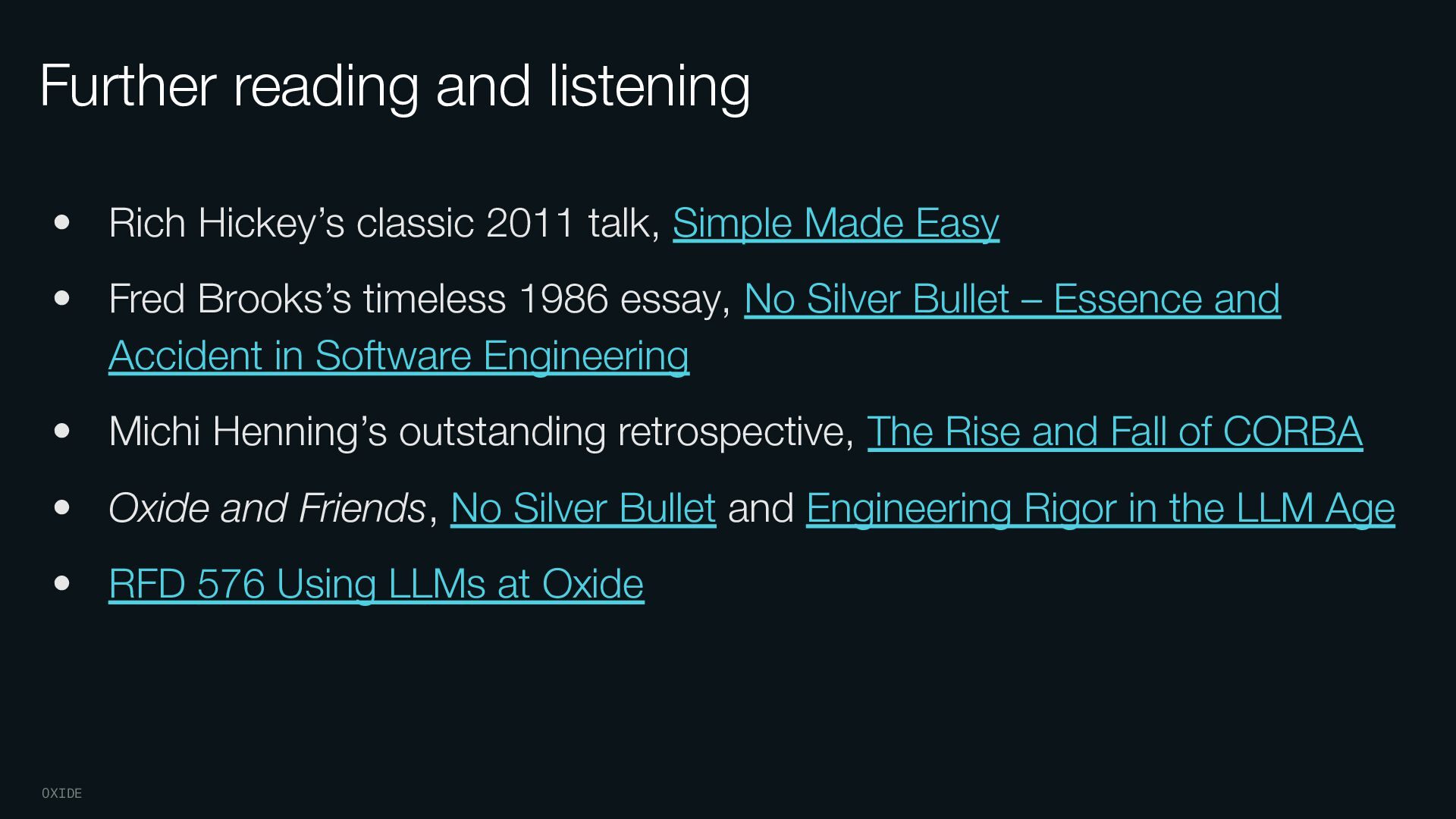
Simple Made Easy • Fred Brooks’s timeless 1986 essay, No Silver Bullet – Essence and Accident in Software Engineering • Michi Henning’s outstanding retrospective, The Rise and Fall of CORBA • Oxide and Friends, No Silver Bullet and Engineering Rigor in the LLM Age • RFD 576 Using LLMs at Oxide OXIDE


 bcantrill
 satomasahiro2005
 recruitengineers
 sansantech
 maroon1st
 kzkhykw1991
 riyaamemiya
 ykanoh
 occhi
occhi
 kaminashi
 tategami
 fufufukakaka
 shugo
shugo
 minecr
 aleyda
 popppiees
 axbom
axbom
 zakiyama
 gurzu
gurzu
 sugarenia
 3n
3n
 bermonpainter
 mlcsv
mlcsv
 reverentgeek
 mayatellez