Share
Embed
AI Needs Context It Can’t Build Alone
AI, Legacy Code, and the Messy Road to Domain Knowledge
Beija Nigl
October 26, 2026
Transcript
81 slides
-
AI Needs Context It Can’t Build Alone AI, Legacy Code,
and the Messy Road to Domain Knowledge -
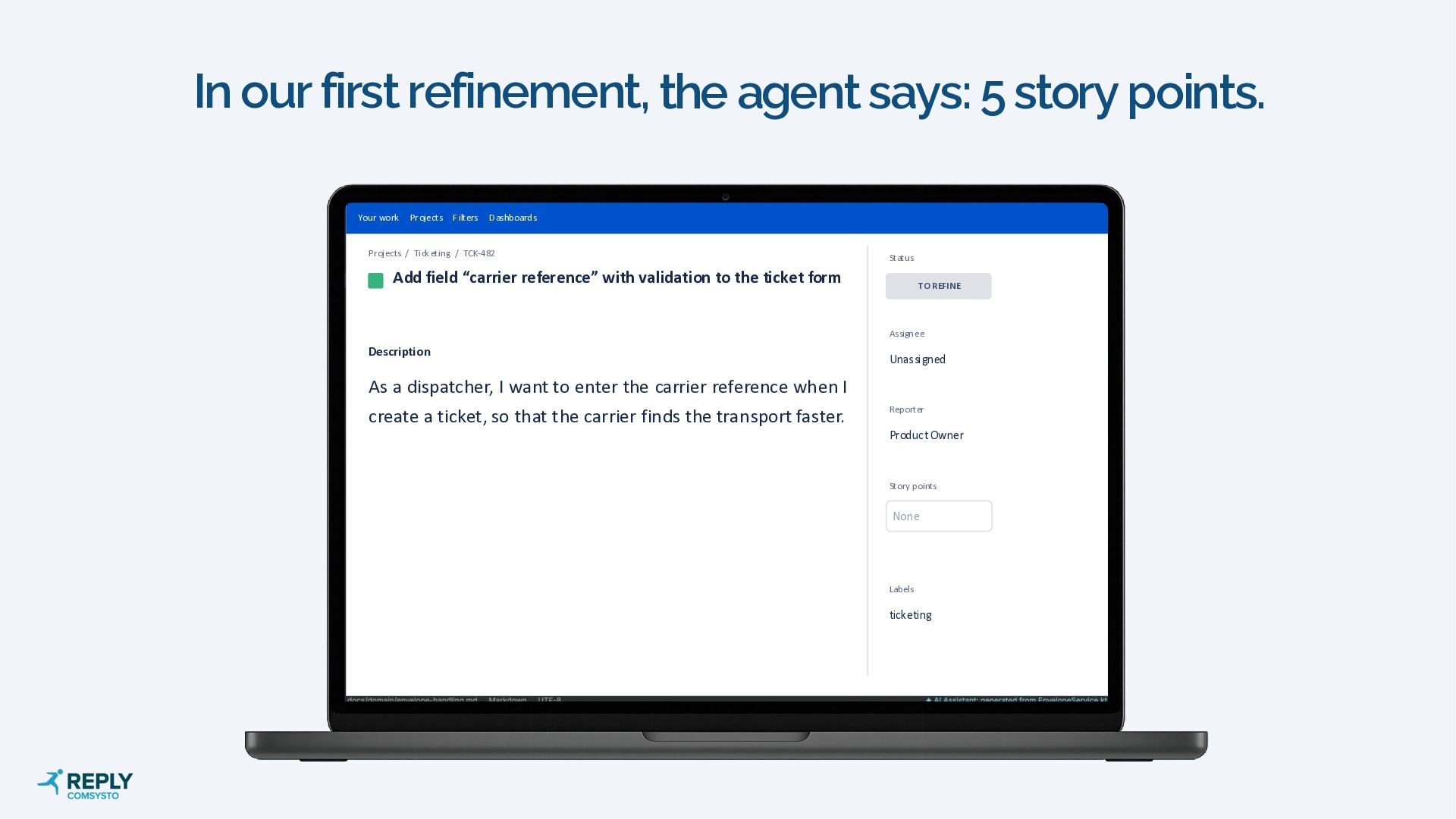
In our first refinement, the agent says: 5 story points.
Your work Projects Filters Dashboards Projects / Ti ck eting / TCK-482 Status Add field “carrier reference” with validation to the ticket form TO REFINE Assignee Description As a dispatcher, I want to enter the carrier reference when I create a ticket, so that the carrier finds the transport faster. Unassigned Reporter Product Owner Story points None Labels ticketing -
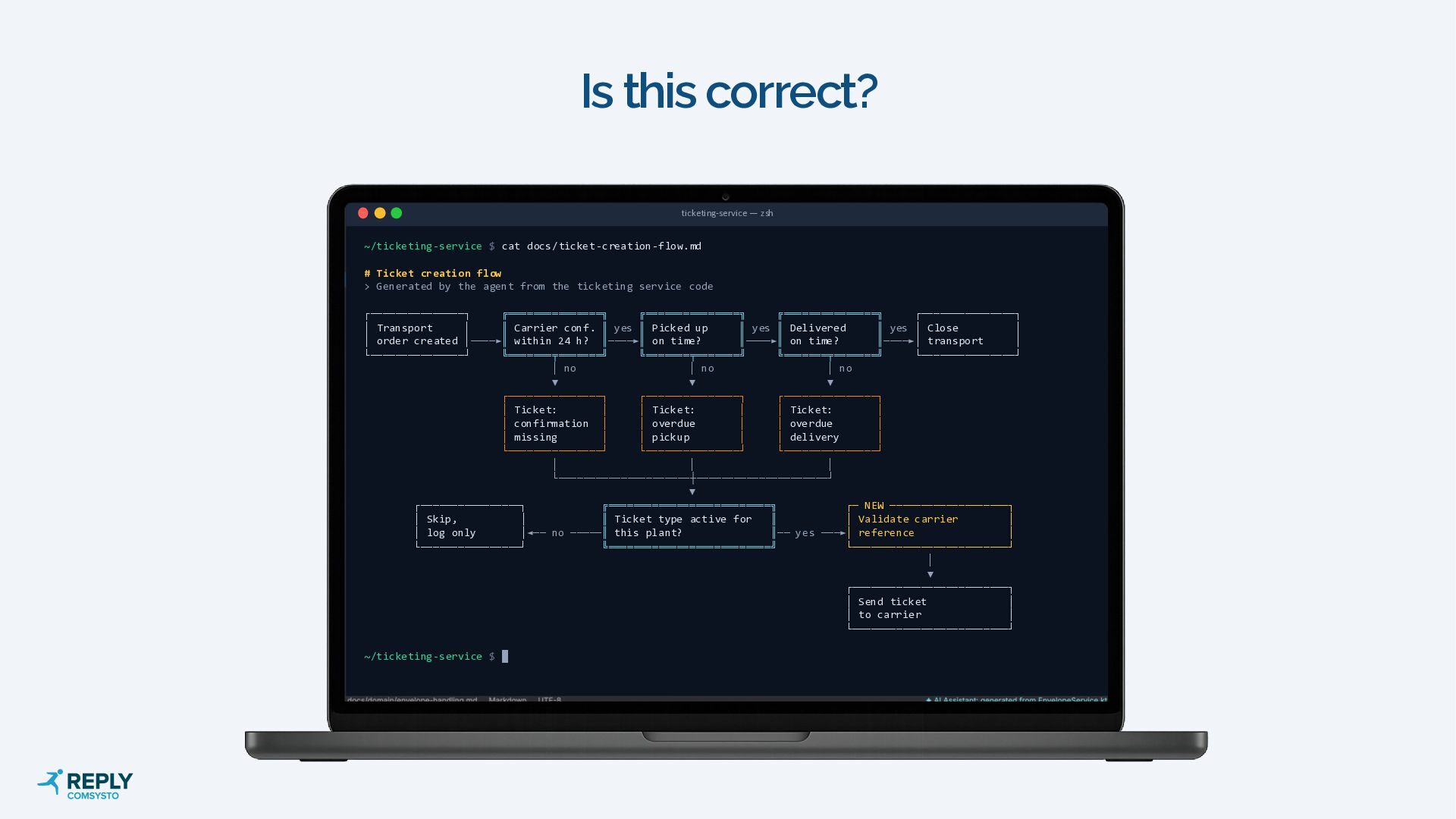
Is this correct? ticketi ng-service — zsh ~/ticketing-service $ cat
docs/ticket-creation-flow.md # Ticket creation flow > Generated by the agent from the ticketing service code ┌───────────────┐ ╔═══════════════╗ ╔═══════════════╗ ╔═══════════════╗ ┌───────────────┐ │ Transport │ ║ Carrier conf. ║ yes ║ Picked up ║ yes ║ Delivered ║ yes │ Close │ │ order created │────►║ within 24 h? ║────►║ on time? ║────►║ on time? ║────►│ transport │ └───────────────┘ ╚═══════╤═══════╝ ╚═══════╤═══════╝ ╚═══════╤═══════╝ └───────────────┘ │ no │ no │ no ▼ ▼ ▼ ┌───────────────┐ ┌───────────────┐ ┌───────────────┐ │ Ticket: │ │ Ticket: │ │ Ticket: │ │ confirmation │ │ overdue │ │ overdue │ │ missing │ │ pickup │ │ delivery │ └───────────────┘ └───────────────┘ └───────────────┘ │ │ │ └─────────────────────┼─────────────────────┘ ▼ ┌────────────────┐ ╔══════════════════════════╗ ┌─ NEW ───────────────────┐ │ Skip, │ ║ Ticket type active for ║ │ Validate carrier │ │ log only │◄── no ─────║ this plant? ║── yes ───►│ reference │ └────────────────┘ ╚══════════════════════════╝ └─────────────────────────┘ │ ▼ ┌─────────────────────────┐ │ Send ticket │ │ to carrier │ └─────────────────────────┘ ~/ticketing-service $ █ -
Beija Nigl Senior Software Engineer Product Owner | Agile Coach
CoMo Workshop Facilitator Comsysto Reply | comsystoreply.de linkedin.com/in/beija-nigl -
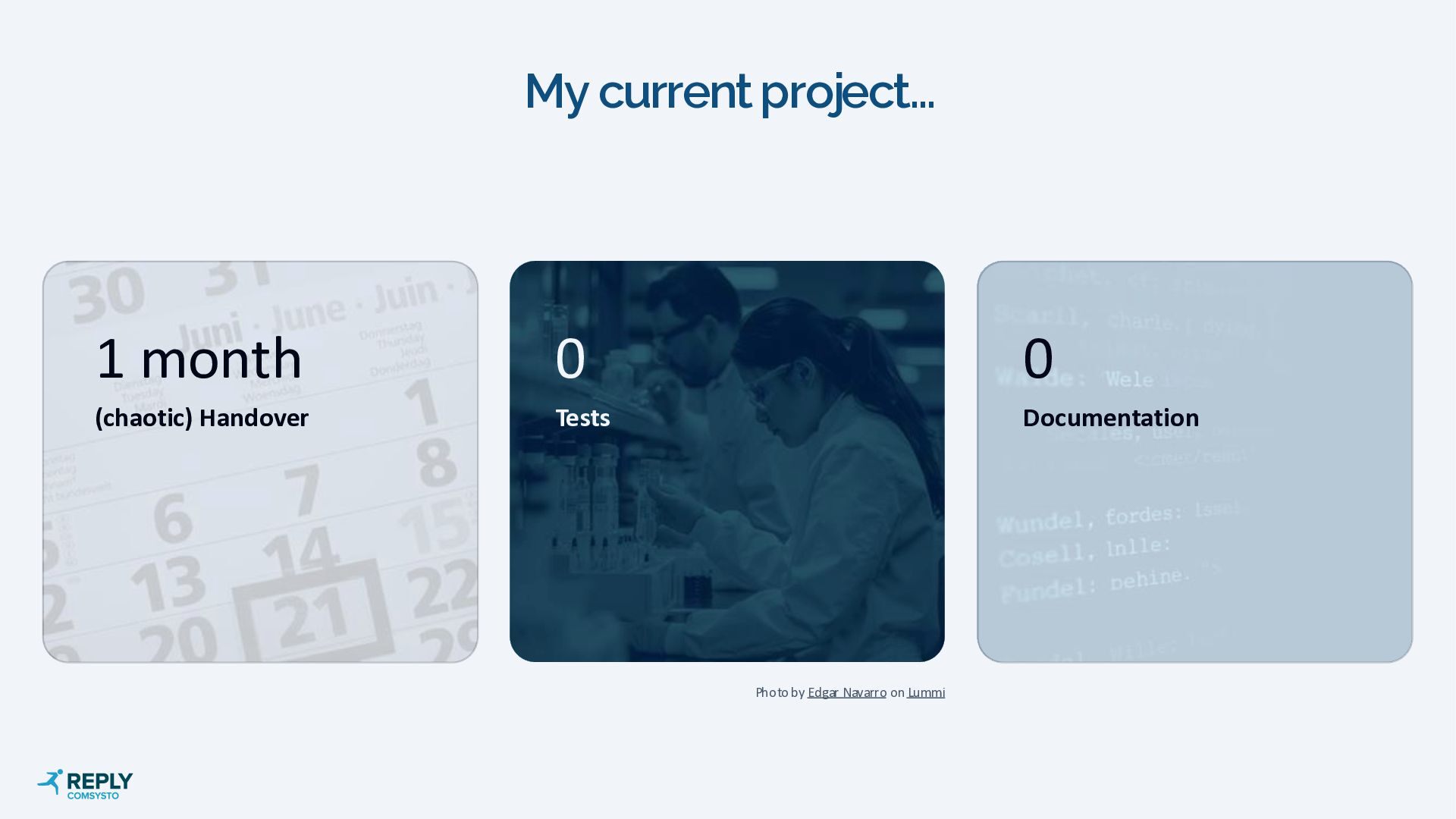
My current project… 1 month 0 0 (chaotic) Handover Tests
Documentation Photo by Edgar Navarro on Lummi -
“Is this a bug?” “That’s how it’s implemented.” “Then it’s
probably not a bug.” Photo by Néstor Díaz on Lummi -
“We cannot release the Node update, we have 10 errors
we need to fix first.” “The errors are not related to the Node update. They have been here before, just no one noticed them so far as we don’t have automated tests.” Photo by Néstor Díaz on Lummi -
“Why is this implemented twice?” “Oh, we already started with
the implementation of a feature, but the decision was still outstanding.” Photo by Néstor Díaz on Lummi -
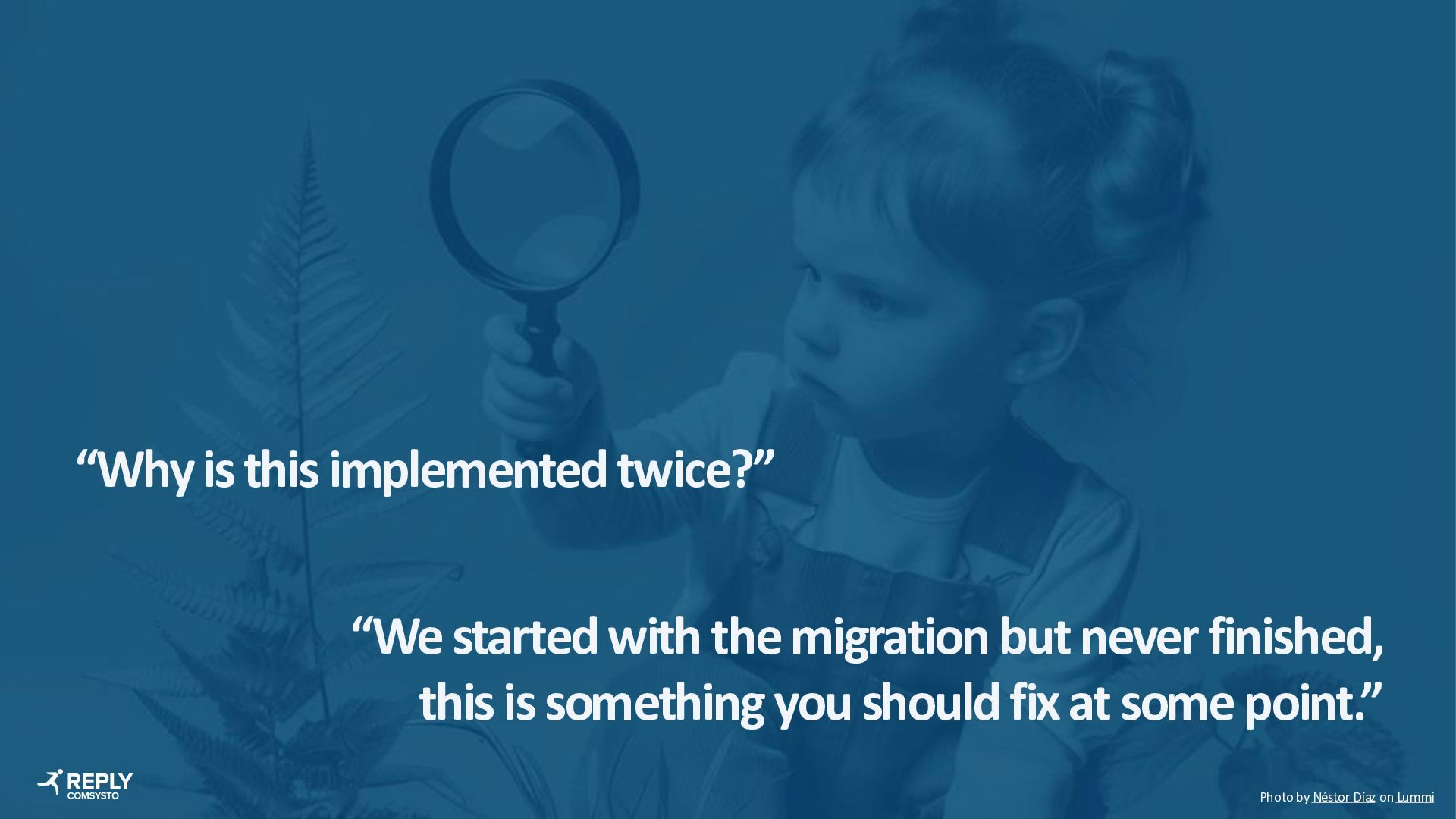
“Why is this implemented twice?” “We started with the migration
but never finished, this is something you should fix at some point.” Photo by Néstor Díaz on Lummi -
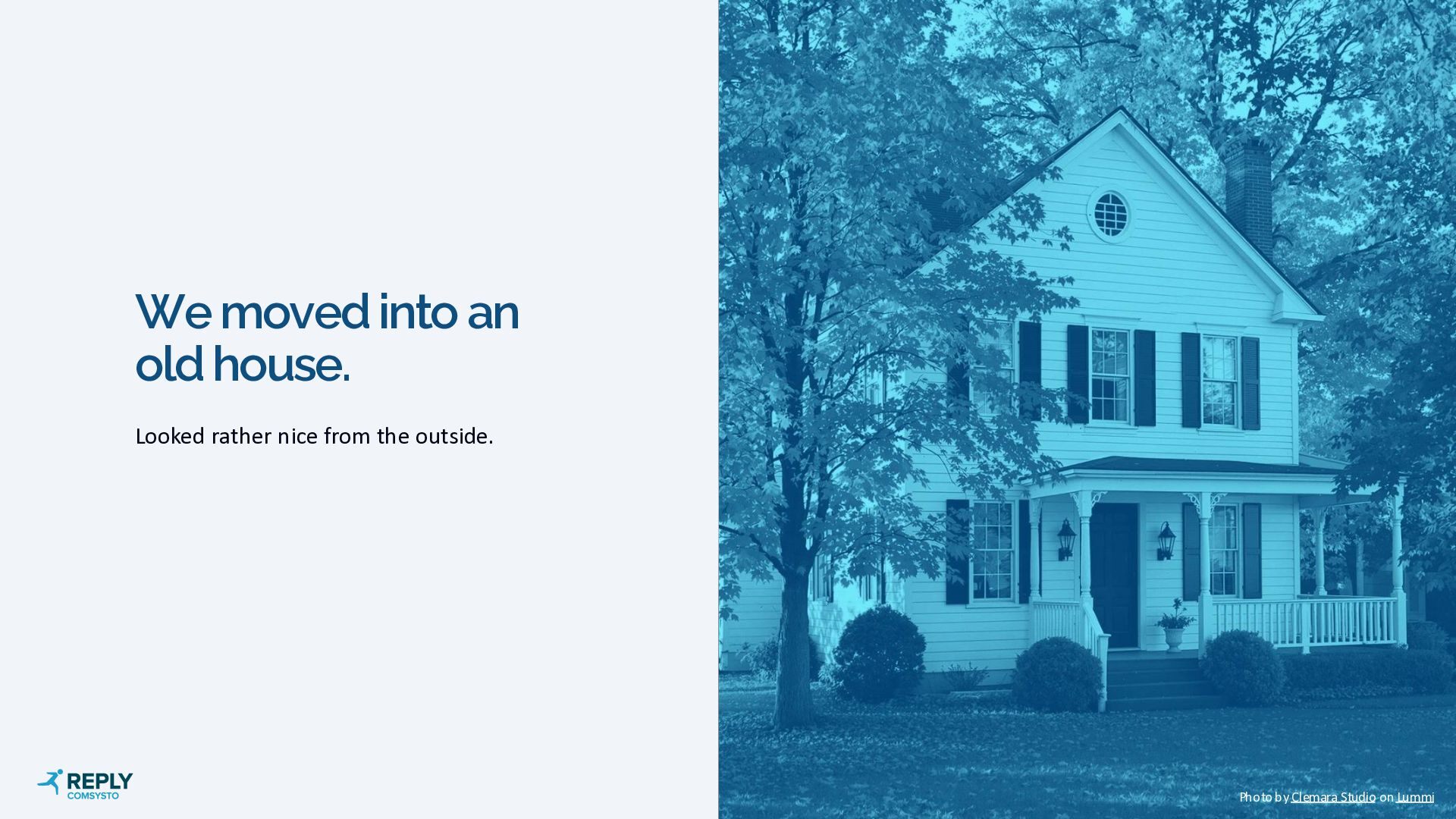
We moved into an old house. Looked rather nice from
the outside. Photo by Clemara Studio on Lummi -
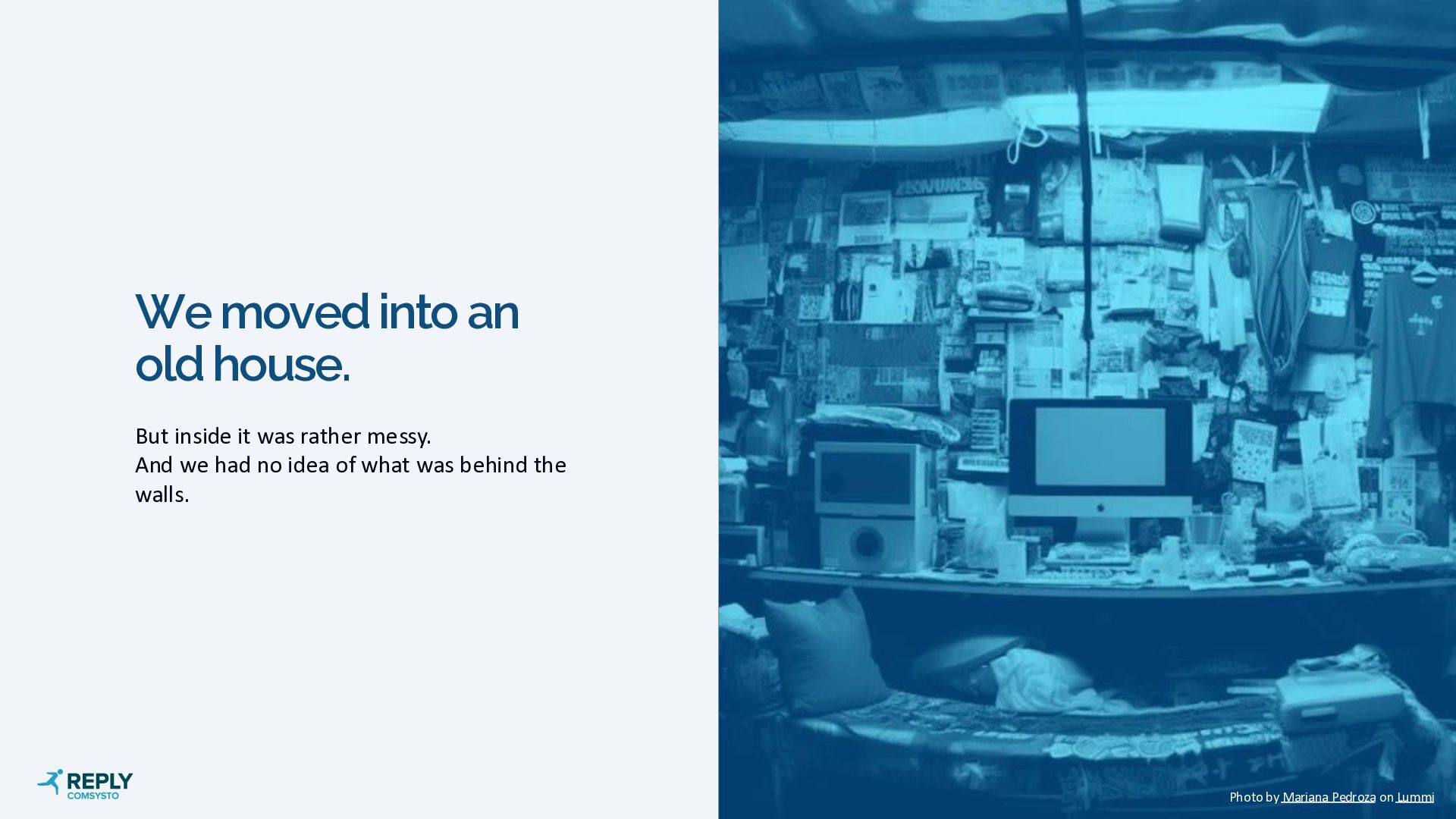
We moved into an old house. But inside it was
rather messy. And we had no idea of what was behind the walls. Photo by Mariana Pedroza on Lummi -
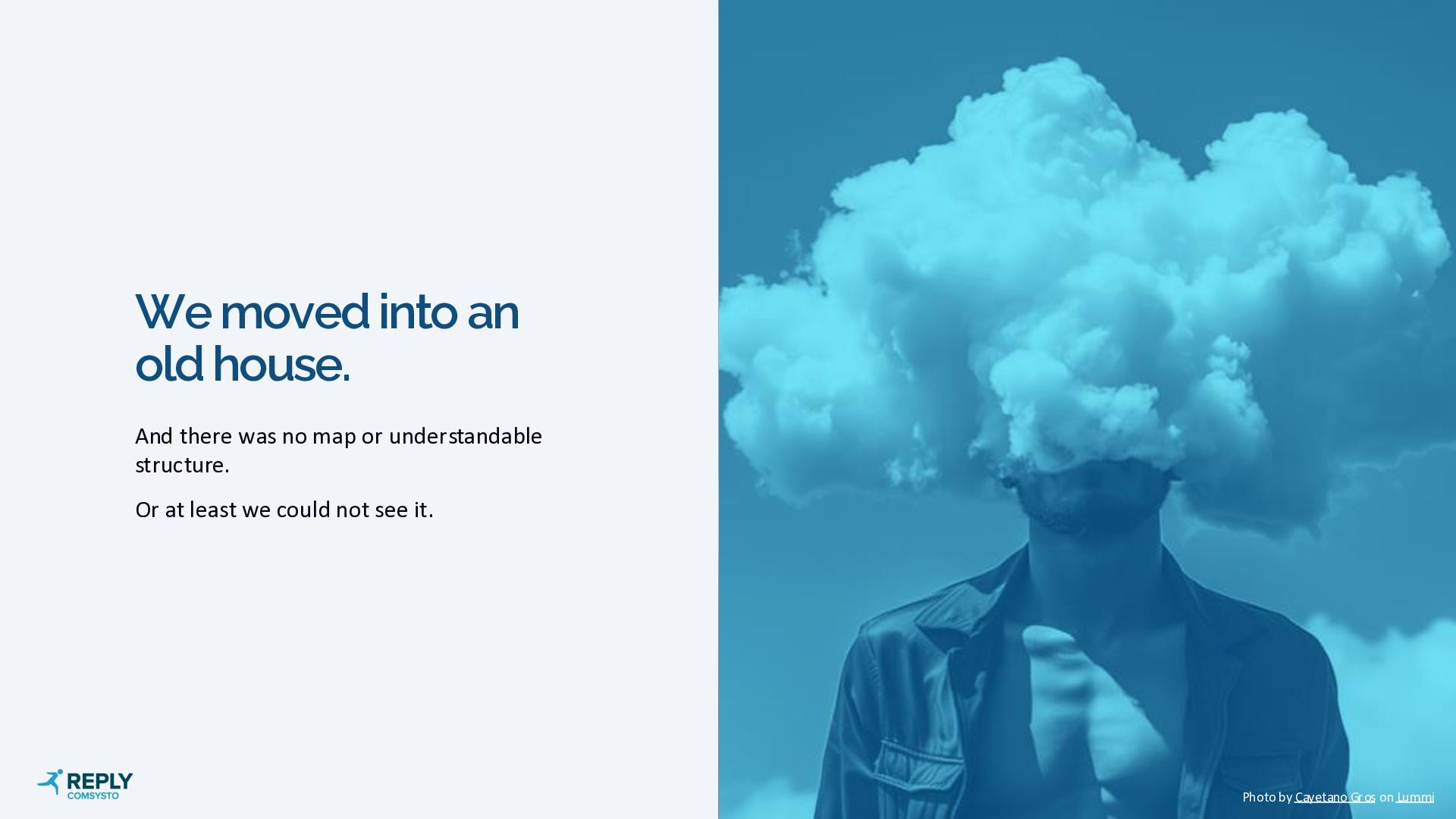
We moved into an old house. And there was no
map or understandable structure. Or at least we could not see it. Photo by Cayetano Gros on Lummi -
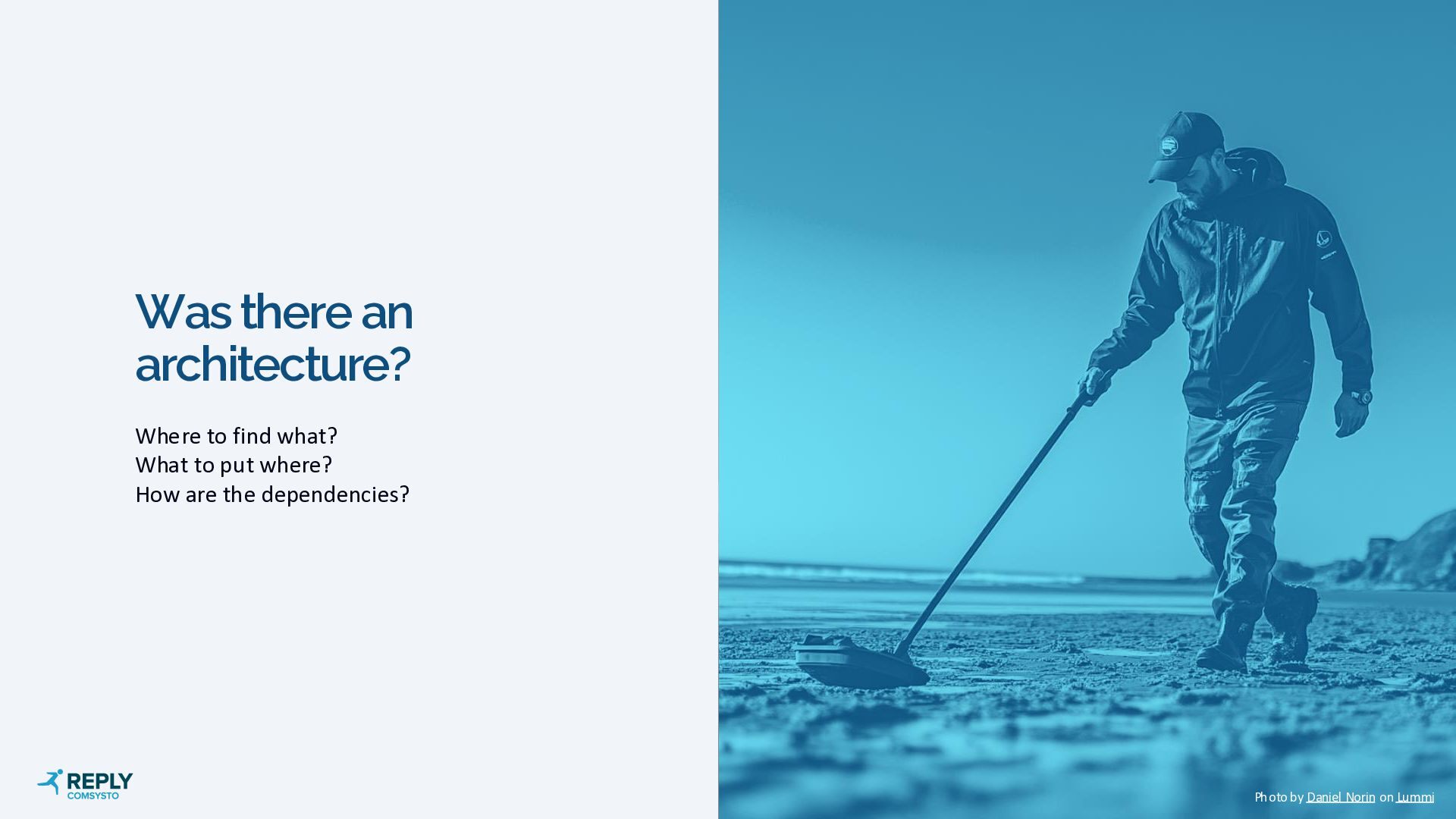
Was there an architecture? Where to find what? What to
put where? How are the dependencies? Photo by Daniel Norin on Lummi -
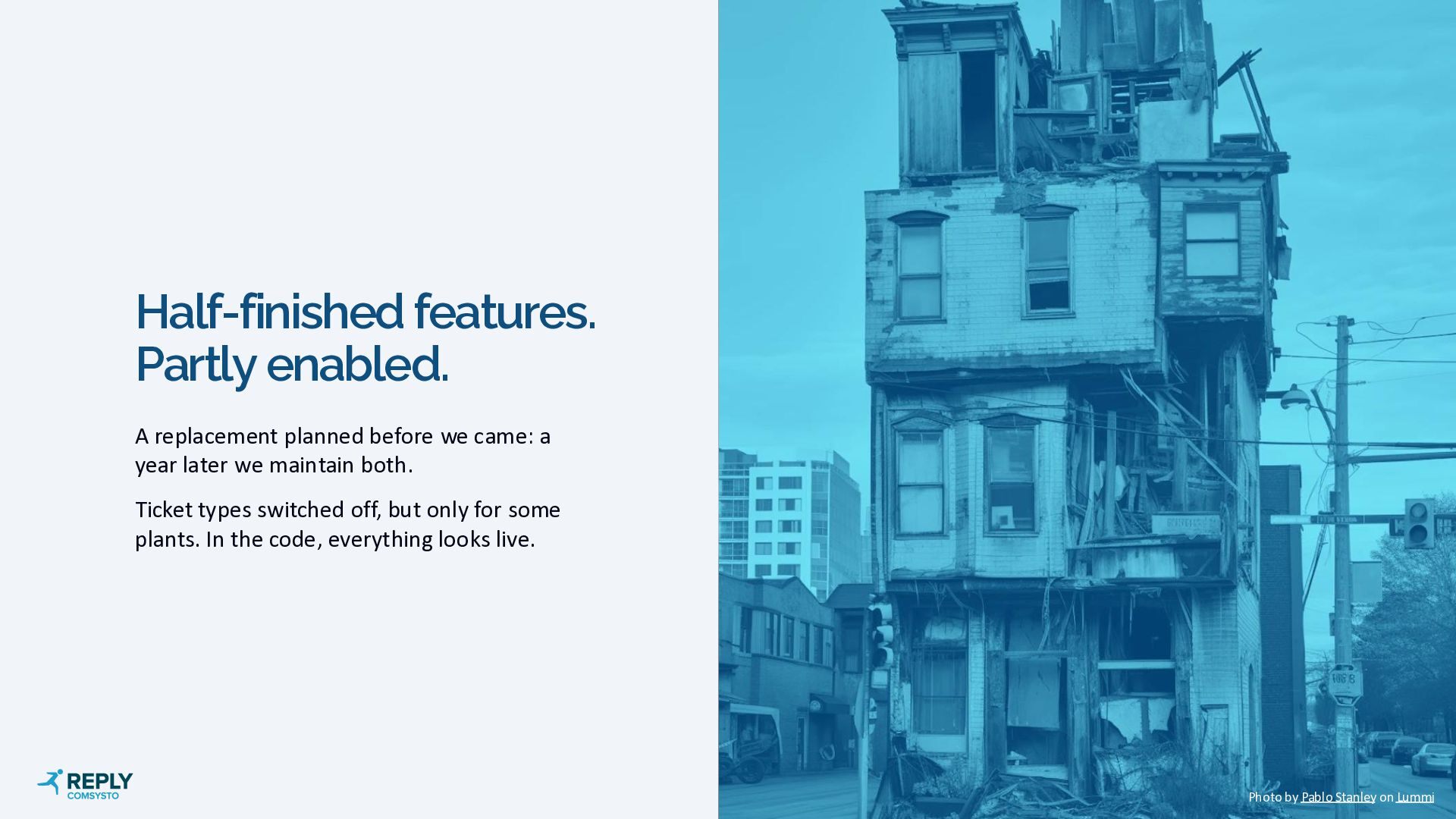
Half-finished features. Partly enabled. A replacement planned before we came:
a year later we maintain both. Ticket types switched off, but only for some plants. In the code, everything looks live. Photo by Pablo Stanley on Lummi -
Technical debt, or a decision we don’t know about (yet)?
Did this just grow, or did someone decide it for a reason nobody told us? The agent can’t tell the difference either. Photo by Clemara Studio on Lummi -
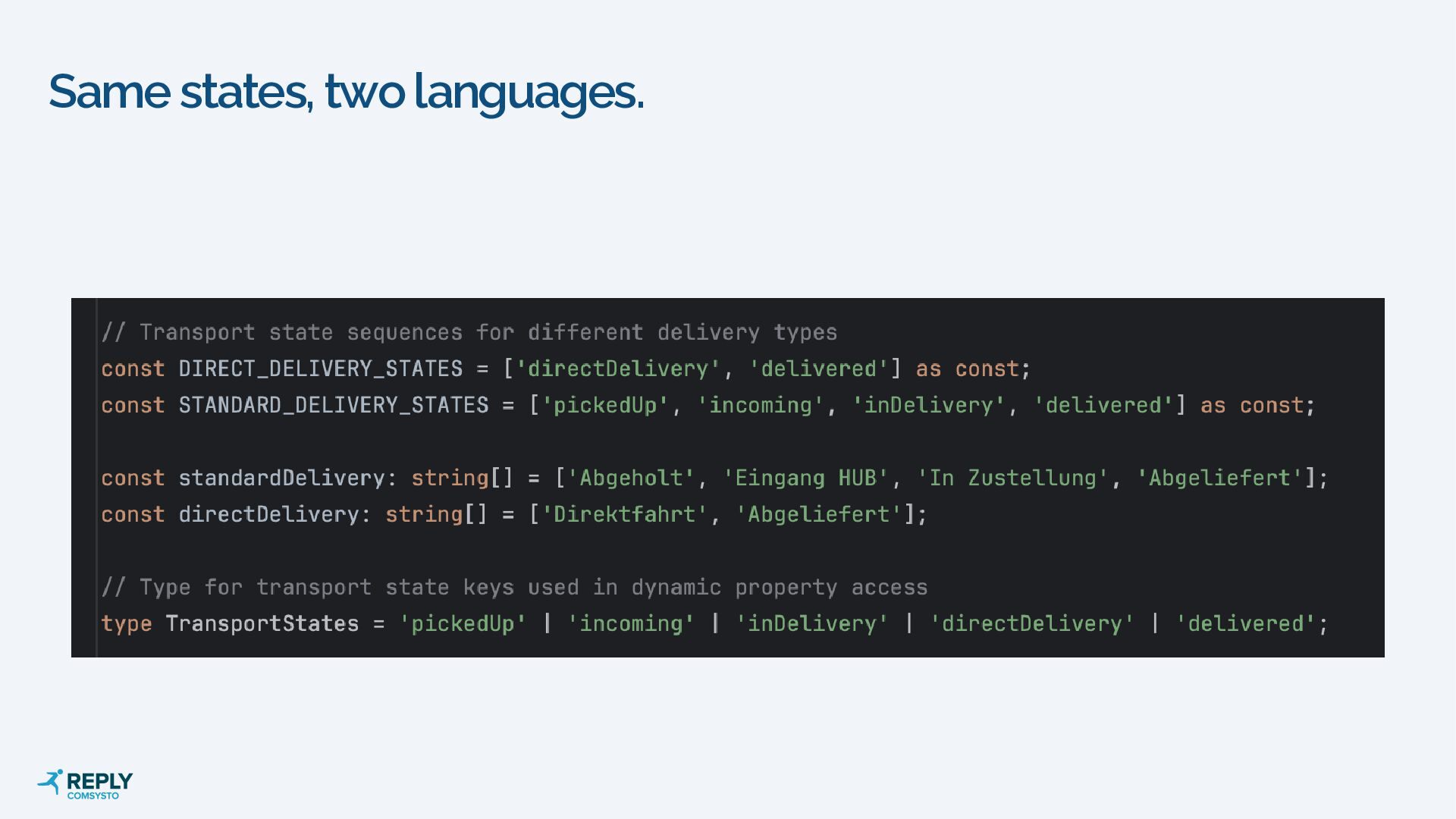
Two languages, many abbreviations. German and English mixed in the
code. And colleagues who don’t speak German. Bad translations of the stories. Client-internal abbreviations the agent confidently guesses. Photo by Pablo Stanley on Lummi -
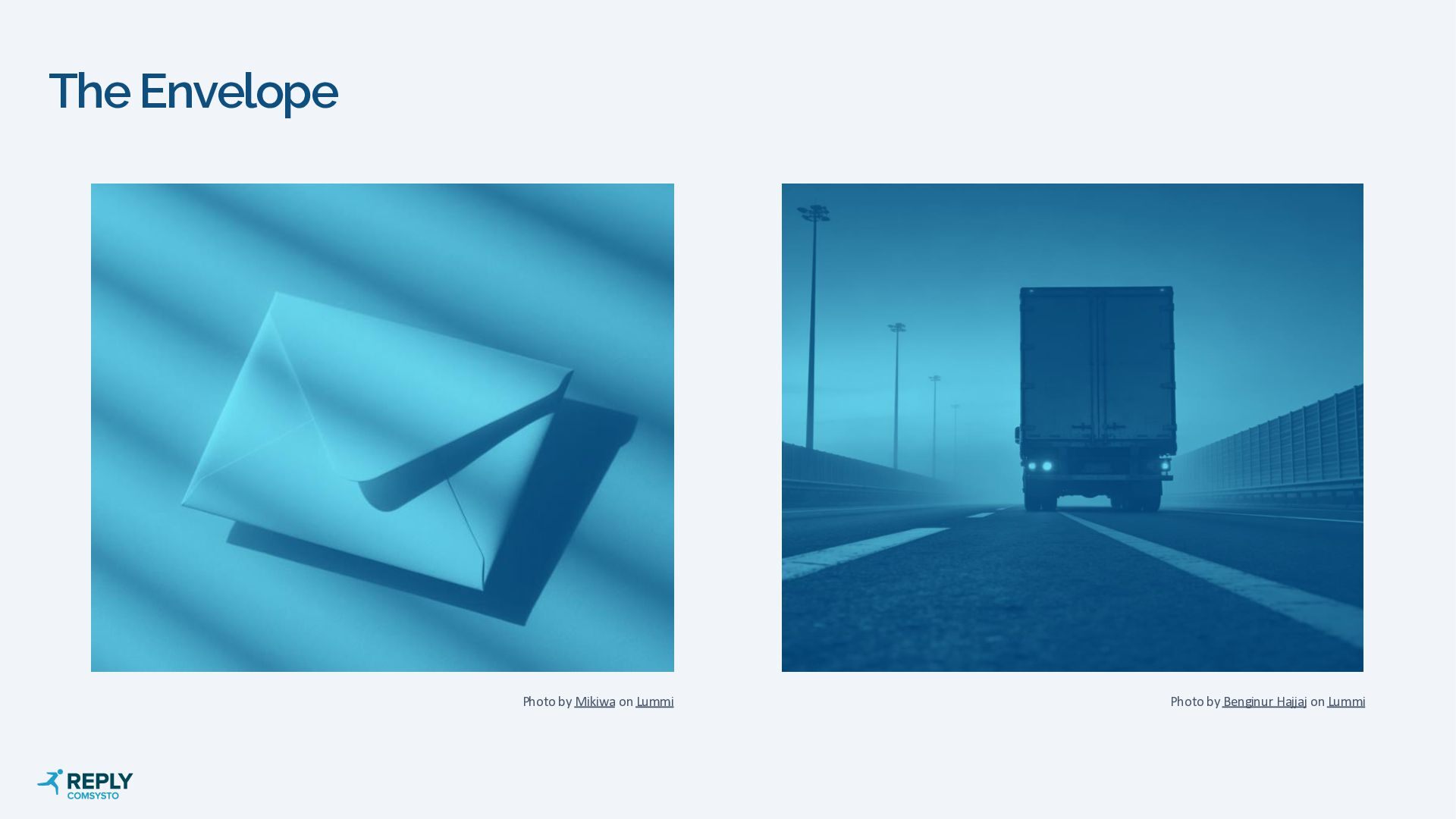
The Envelope Photo by Mikiwa on Lummi Photo by Benginur
Hajjaj on Lummi -
Is it a bug or intended? Is this logic actually
correct (bug or intended)? Why isn’t this live or only partly live? Do we still need it? Does it still need to be that complex? Photo by Shahar Srebrenik on Lummi -
We didn’t know how we’d work together. Photo by Ananncee
Stock on Lummi -
New team, new processes. A whole new team setup, no
processes yet. Refinement only between PO and tech lead. Photo by Mariana Pedroza on Lummi -
Differing expectations towards AI “Just do it with AI.” vs.
“I don’t trust any agents, just my devs.” Photo by Sofía on Lummi -
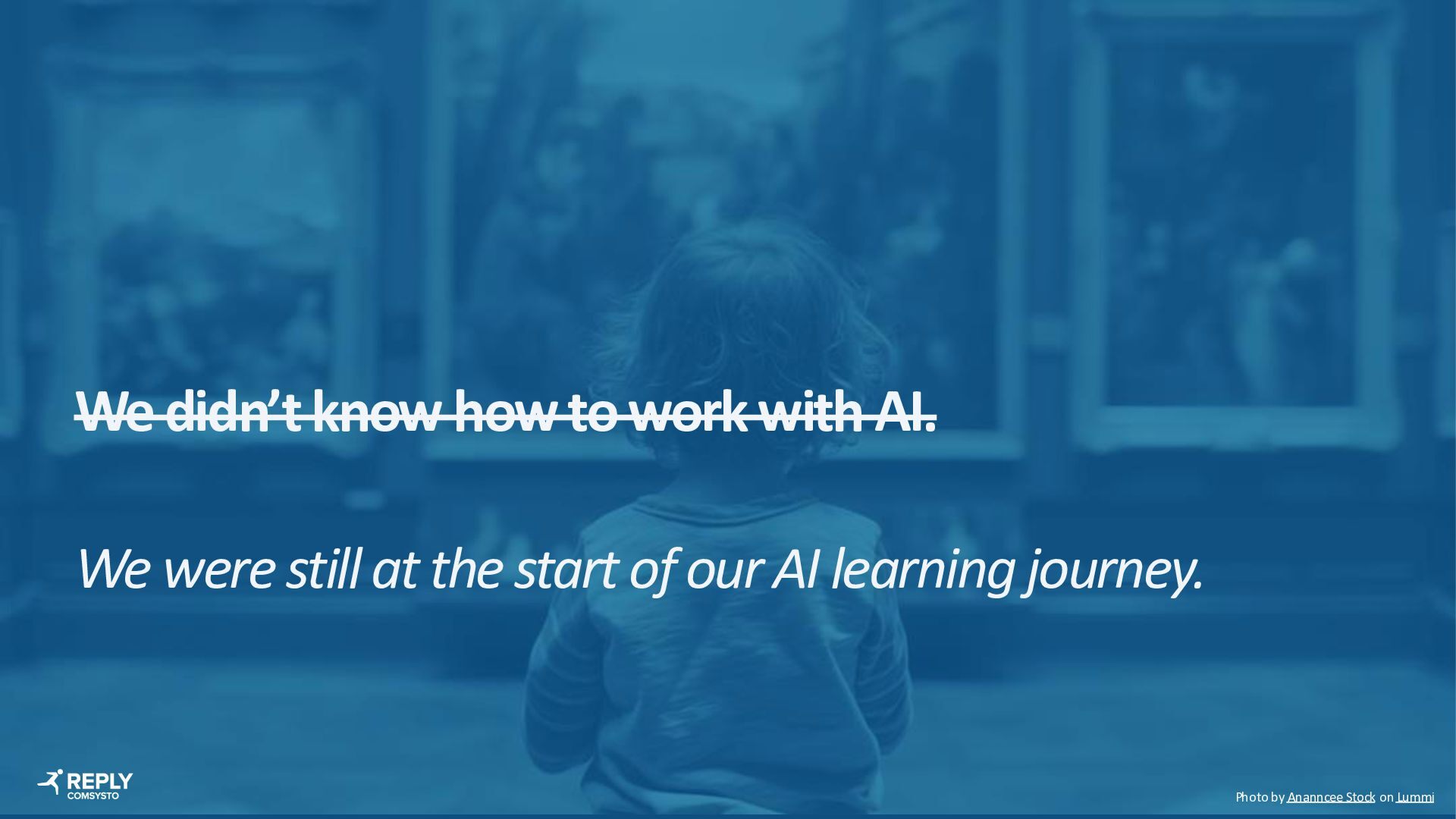
We didn’t know how to work with AI. Photo by
Ananncee Stock on Lummi -
We didn’t know how to work with AI. We were
still at the start of our AI learning journey. Photo by Ananncee Stock on Lummi -
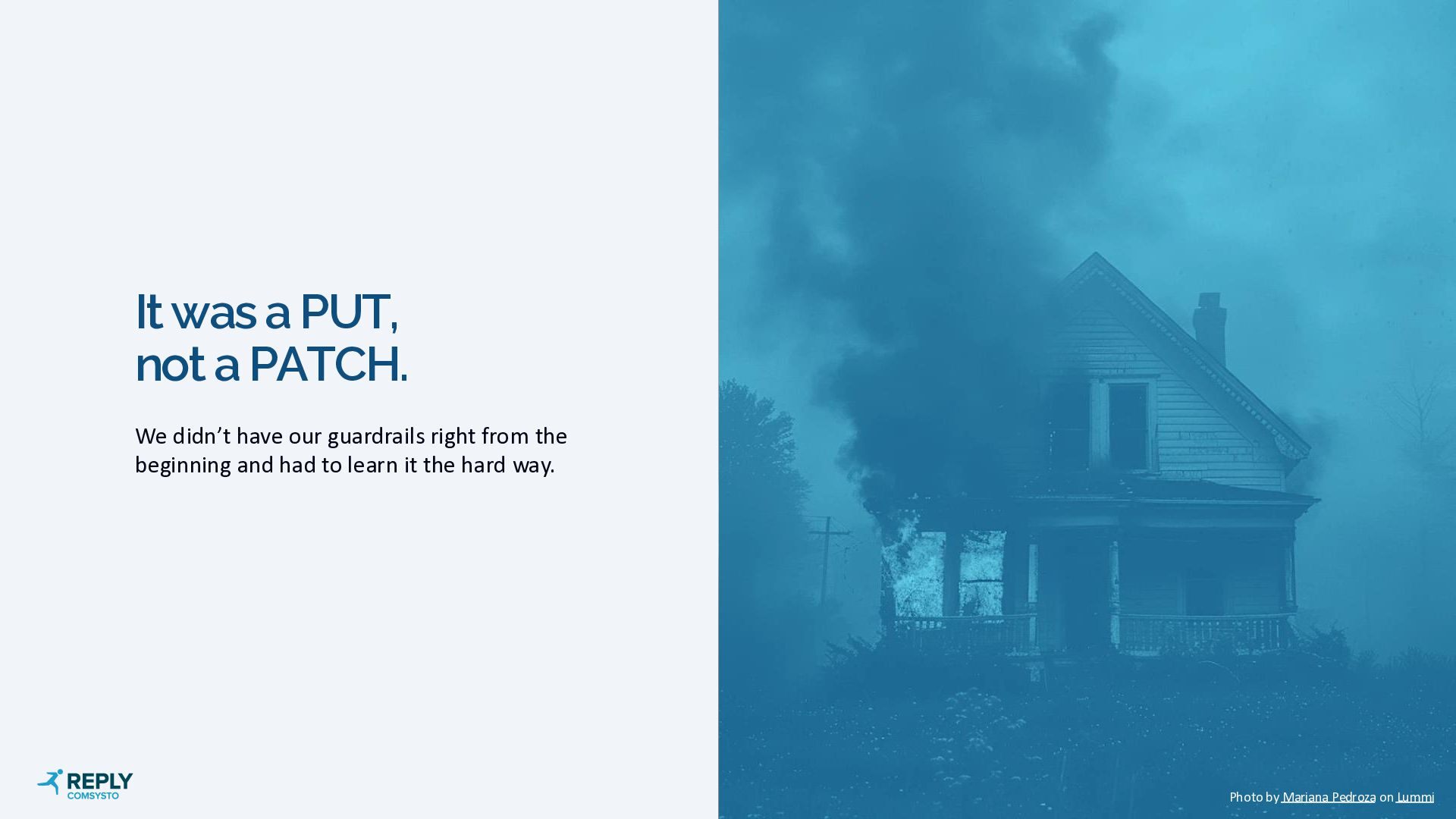
It was a PUT, not a PATCH. We didn’t have
our guardrails right from the beginning and had to learn it the hard way. Photo by Mariana Pedroza on Lummi -
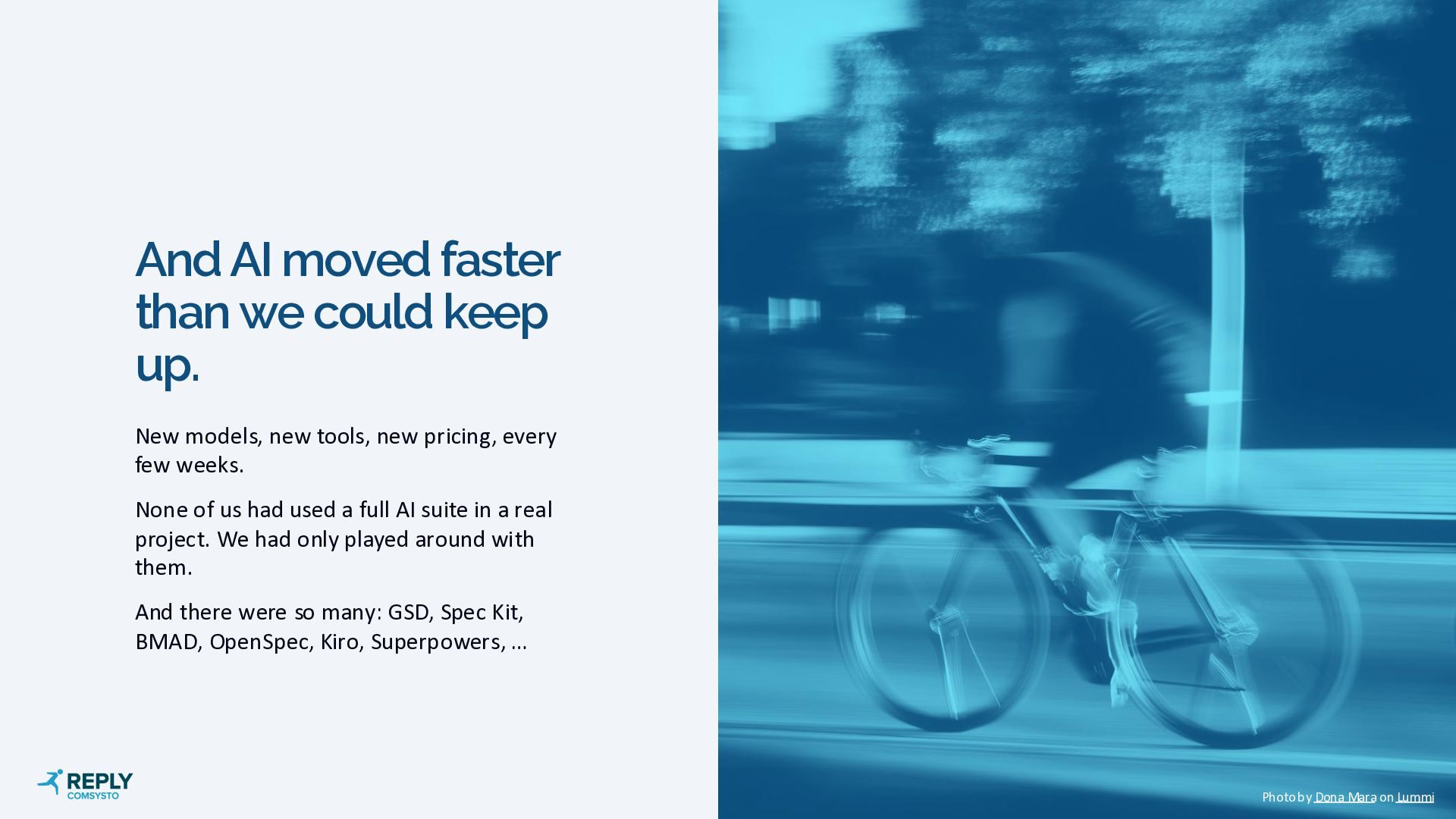
And AI moved faster than we could keep up. New
models, new tools, new pricing, every few weeks. None of us had used a full AI suite in a real project. We had only played around with them. And there were so many: GSD, Spec Kit, BMAD, OpenSpec, Kiro, Superpowers, … Photo by Dona Mara on Lummi -
AI Needs Context It Can’t Build Alone AI, Legacy Code,
and the Messy Road to Domain Knowledge -
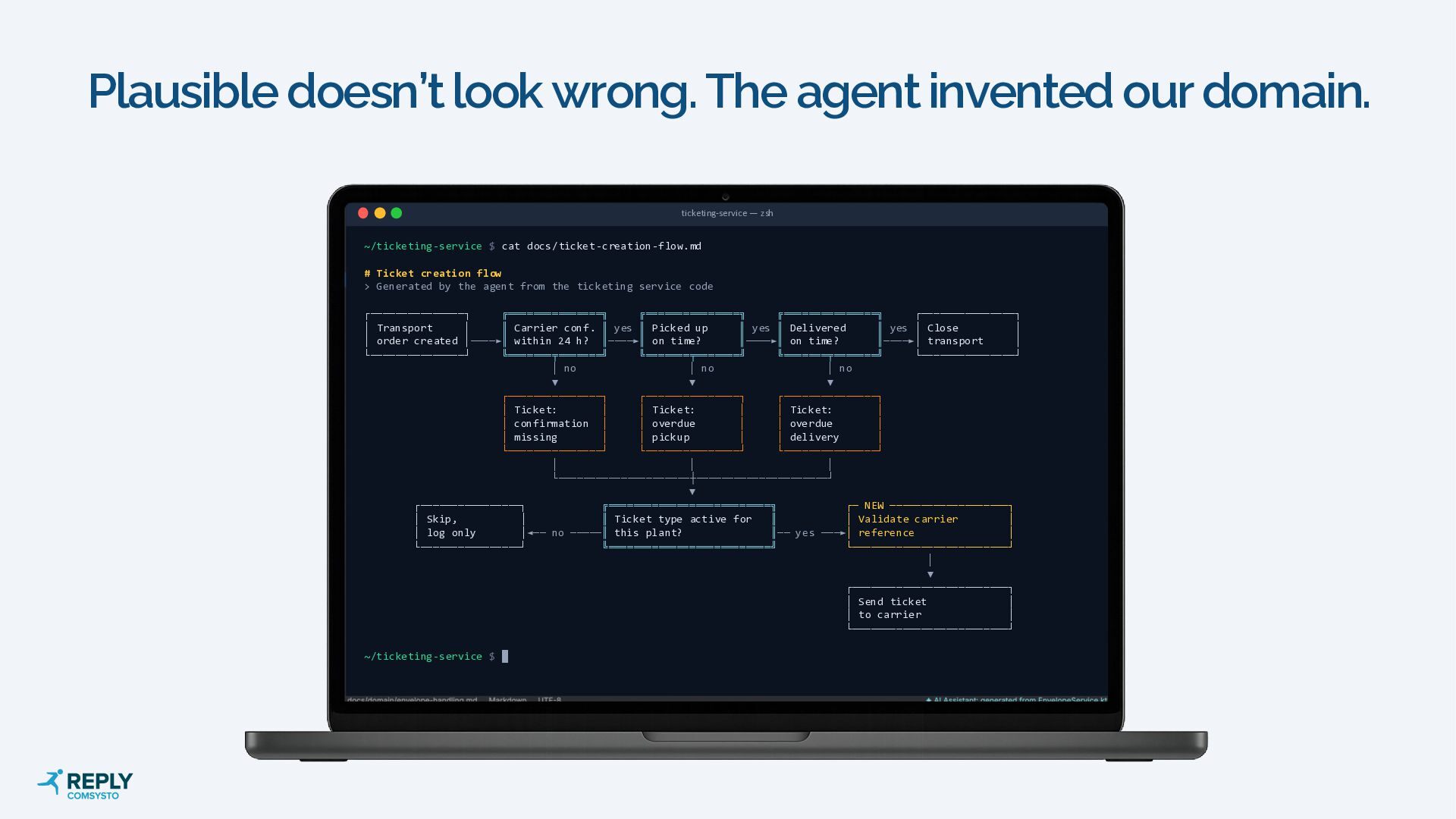
Plausible doesn’t look wrong. The agent invented our domain. ticketi
ng-service — zsh ~/ticketing-service $ cat docs/ticket-creation-flow.md # Ticket creation flow > Generated by the agent from the ticketing service code ┌───────────────┐ ╔═══════════════╗ ╔═══════════════╗ ╔═══════════════╗ ┌───────────────┐ │ Transport │ ║ Carrier conf. ║ yes ║ Picked up ║ yes ║ Delivered ║ yes │ Close │ │ order created │────►║ within 24 h? ║────►║ on time? ║────►║ on time? ║────►│ transport │ └───────────────┘ ╚═══════╤═══════╝ ╚═══════╤═══════╝ ╚═══════╤═══════╝ └───────────────┘ │ no │ no │ no ▼ ▼ ▼ ┌───────────────┐ ┌───────────────┐ ┌───────────────┐ │ Ticket: │ │ Ticket: │ │ Ticket: │ │ confirmation │ │ overdue │ │ overdue │ │ missing │ │ pickup │ │ delivery │ └───────────────┘ └───────────────┘ └───────────────┘ │ │ │ └─────────────────────┼─────────────────────┘ ▼ ┌────────────────┐ ╔══════════════════════════╗ ┌─ NEW ───────────────────┐ │ Skip, │ ║ Ticket type active for ║ │ Validate carrier │ │ log only │◄── no ─────║ this plant? ║── yes ───►│ reference │ └────────────────┘ ╚══════════════════════════╝ └─────────────────────────┘ │ ▼ ┌─────────────────────────┐ │ Send ticket │ │ to carrier │ └─────────────────────────┘ ~/ticketing-service $ █ -
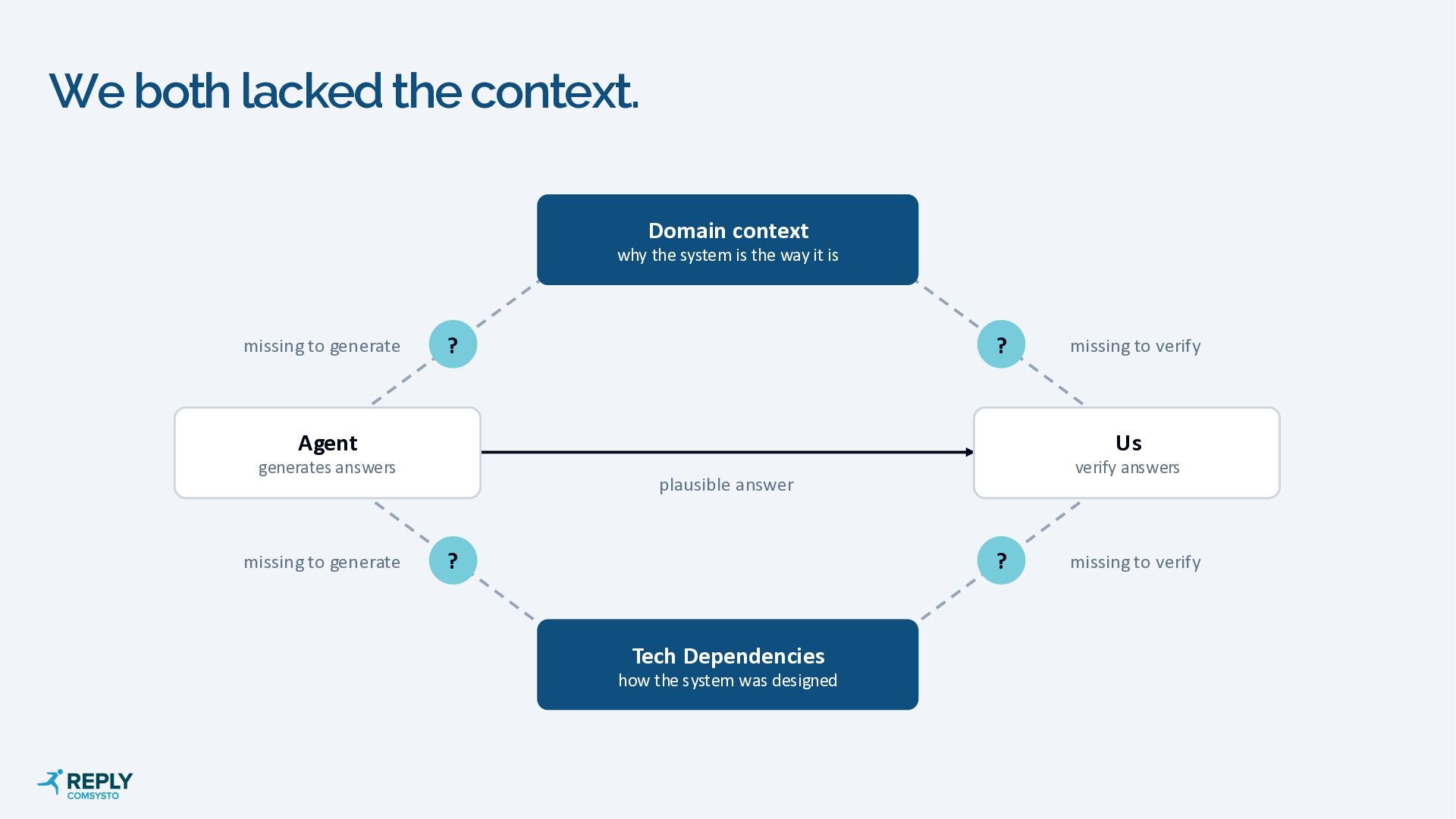
We both lacked the context. Domain context why the system
is the way it is missing to generate ? ? Agent Us generates answers missing to generate missing to verify verify answers plausible answer ? ? Tech Dependencies how the system was designed missing to verify -
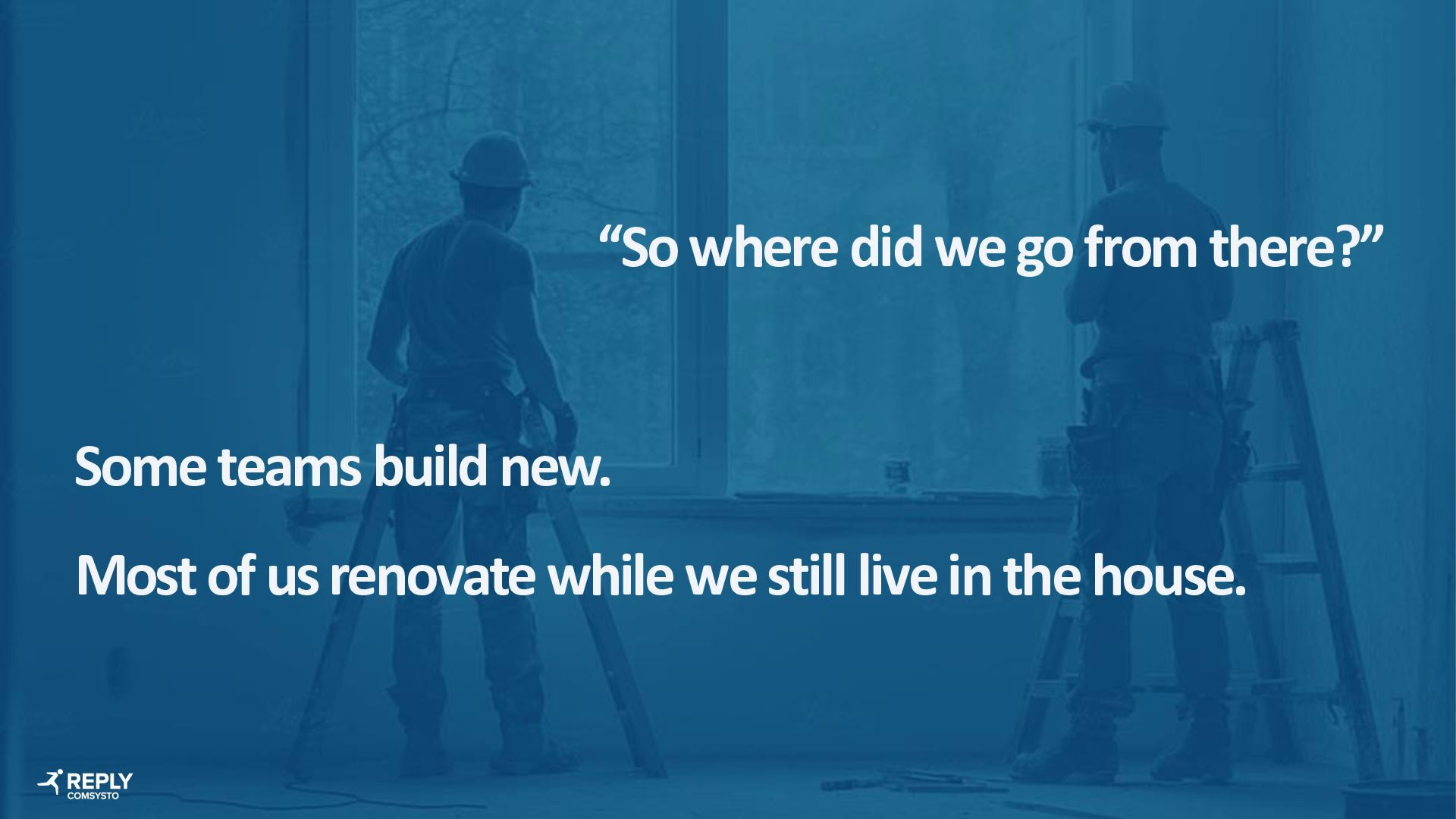
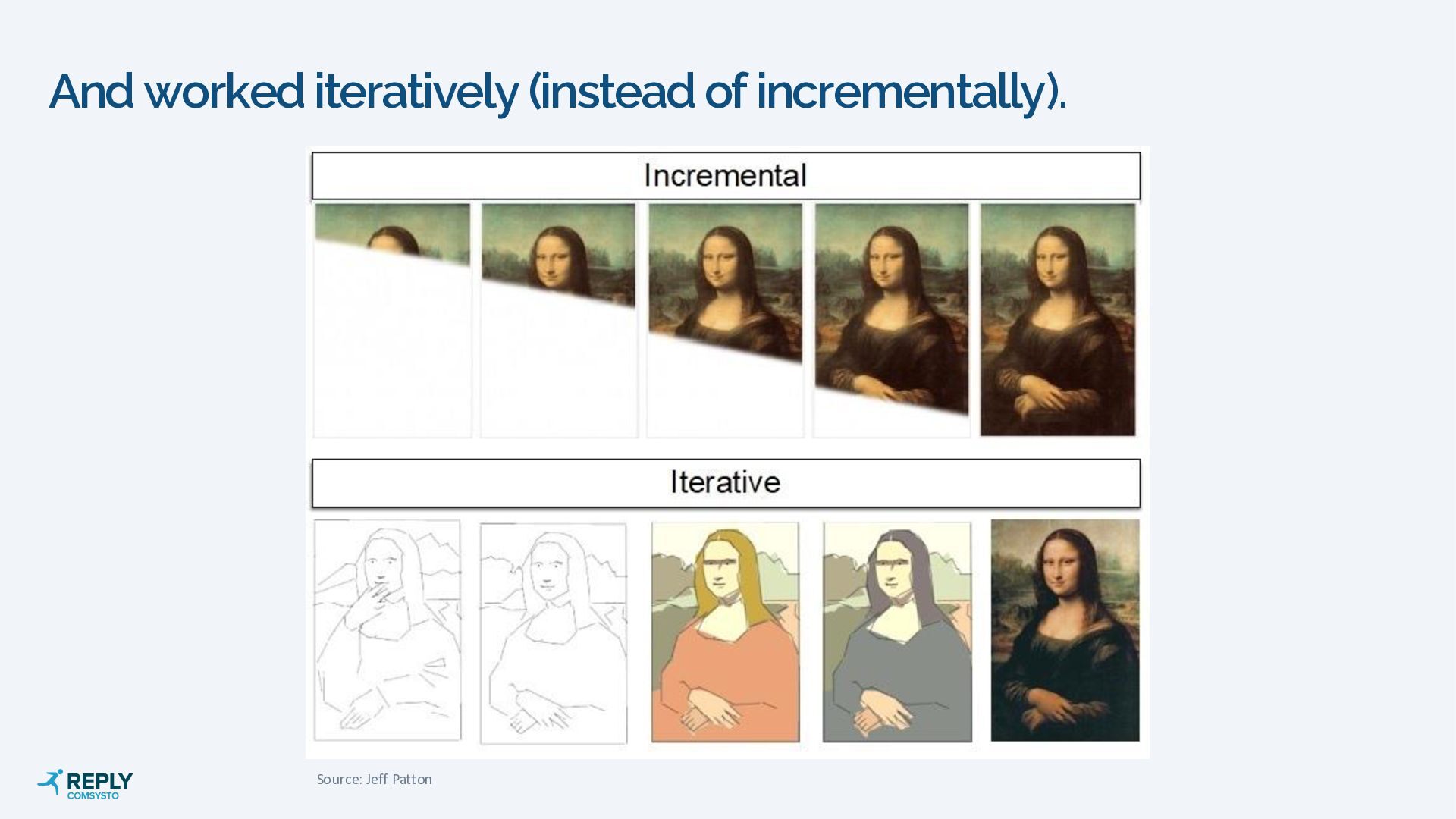
“So where did we go from there?” Some teams build
new. Most of us renovate while we still live in the house. -
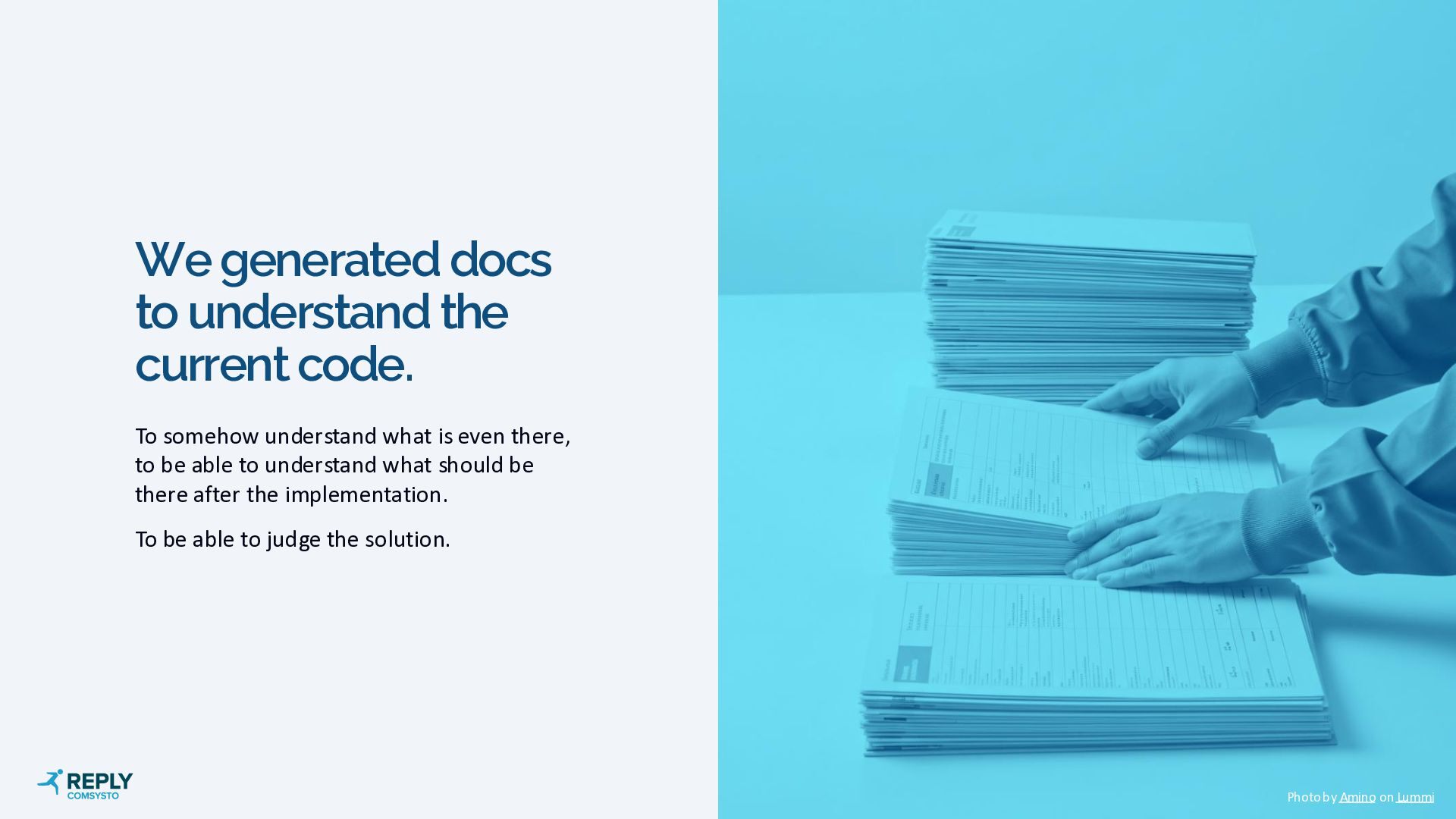
We generated docs to understand the current code. To somehow
understand what is even there, to be able to understand what should be there after the implementation. To be able to judge the solution. Photo by Amino on Lummi -
We wrote tests to make our assumptions visible. Characterisation tests:
what we thought we knew, and what was true. Photo by Shaun Duval on Lummi -
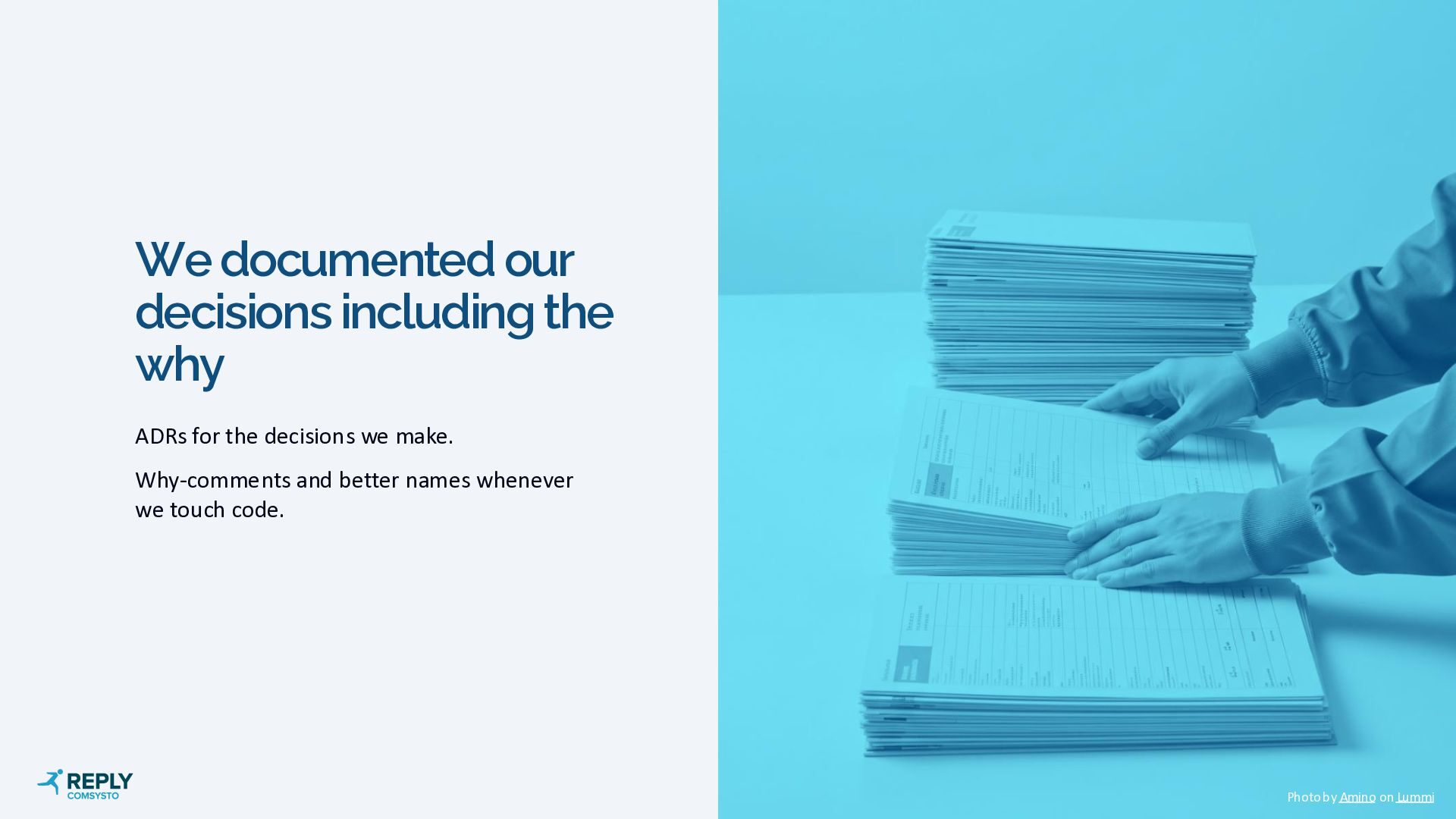
We documented our decisions including the why ADRs for the
decisions we make. Why-comments and better names whenever we touch code. Photo by Amino on Lummi -
And yes, we sometimes found the why in an old
ticket. Opening the ticket behind a change helps, if the commit references one. Our agents read Jira and Confluence via MCP. But Confluence is messy, and the agent doesn’t always look. Photo by Pablo Stanley on Lummi -
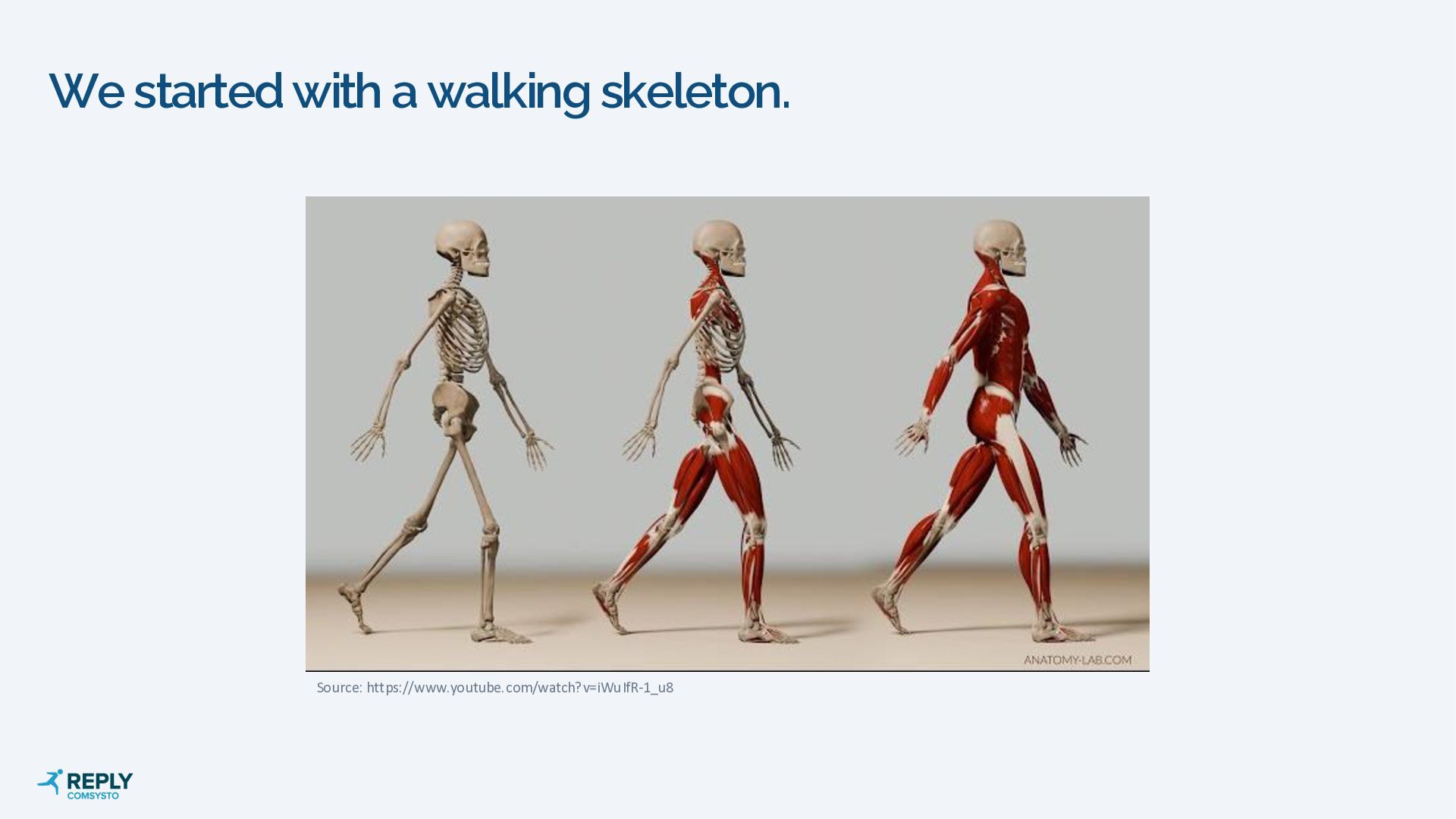
We started to build up our agent harness. Refinement, Coding,
Review, Architecture, Testing, Task break down, … Photo by Mariana Pedroza on Lummi -
This is what a story looked like. Im Rahmen der
Umstellung auf das neue Ticketportal kommt von einem Carrier die Anforderung, dass Lieferantennummer, Namen und PLZ sehr hilfreich wären, um die Tickets schneller zu beantworten. Diese sollten den Ticketusern angezeigt werden in der Ansicht (TA Bestätigung fehlt und Status fehlt). Photo by Clemara Studio on Lummi -
So we built a pre-refinement skill. 1. Read the story,
comments and attachments, and flag contradictions. 2. Explain the current implementation, and the gap to the story. 3. Build concrete examples first: happy path, edge cases, errors. 4. Surface and verify assumptions and collect open questions. 5. Translate into ubiquitous language. 6. Build the story piece by piece: why, scope, criteria, out of scope. 7. Pause after every step, so the developer can challenge and correct. -
And over time, we got better at judging the answers
and outcomes. Photo by Amino on Lummi -
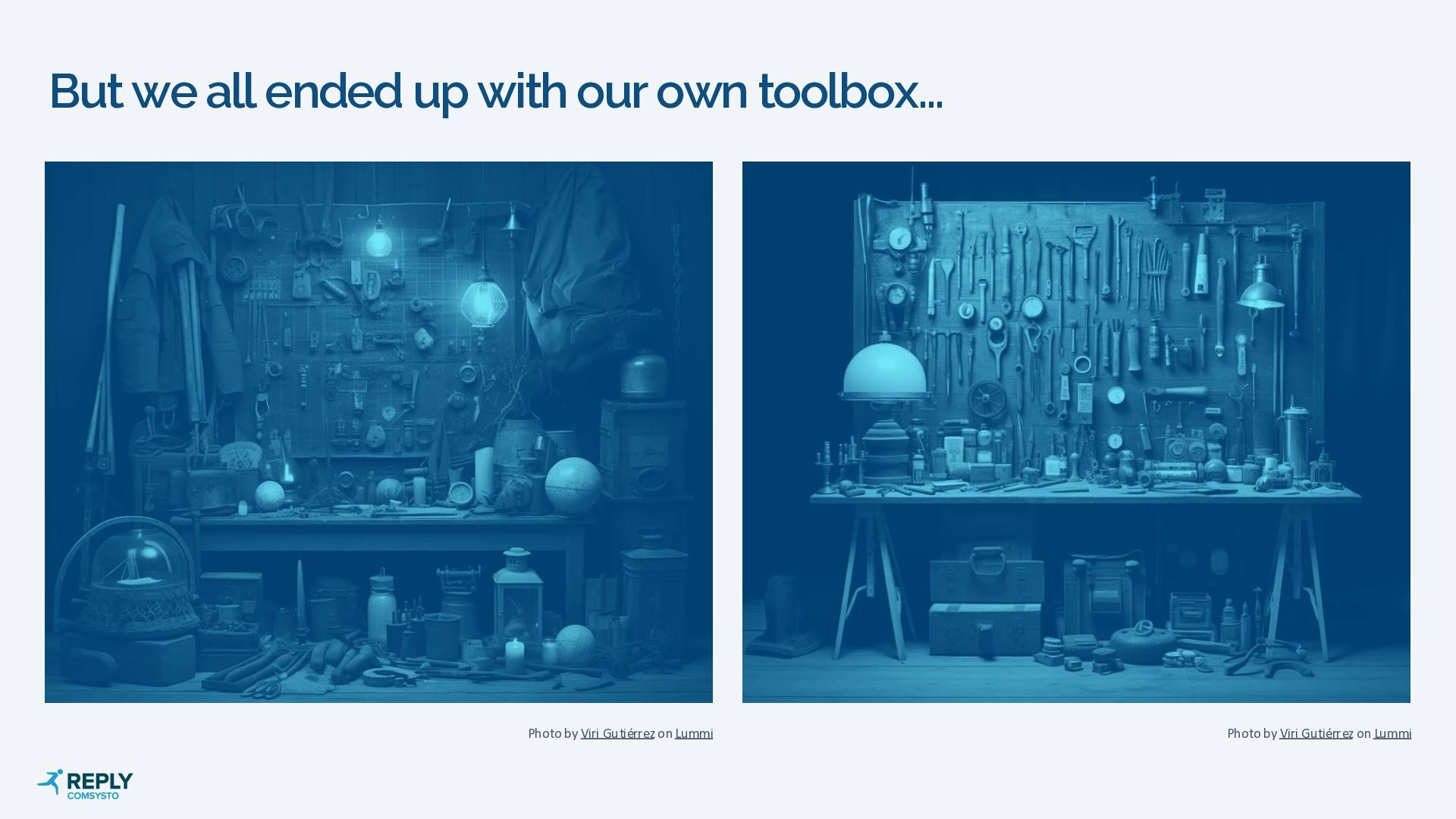
But we all ended up with our own toolbox… Photo
by Viri Gutiérrez on Lummi Photo by Viri Gutiérrez on Lummi -
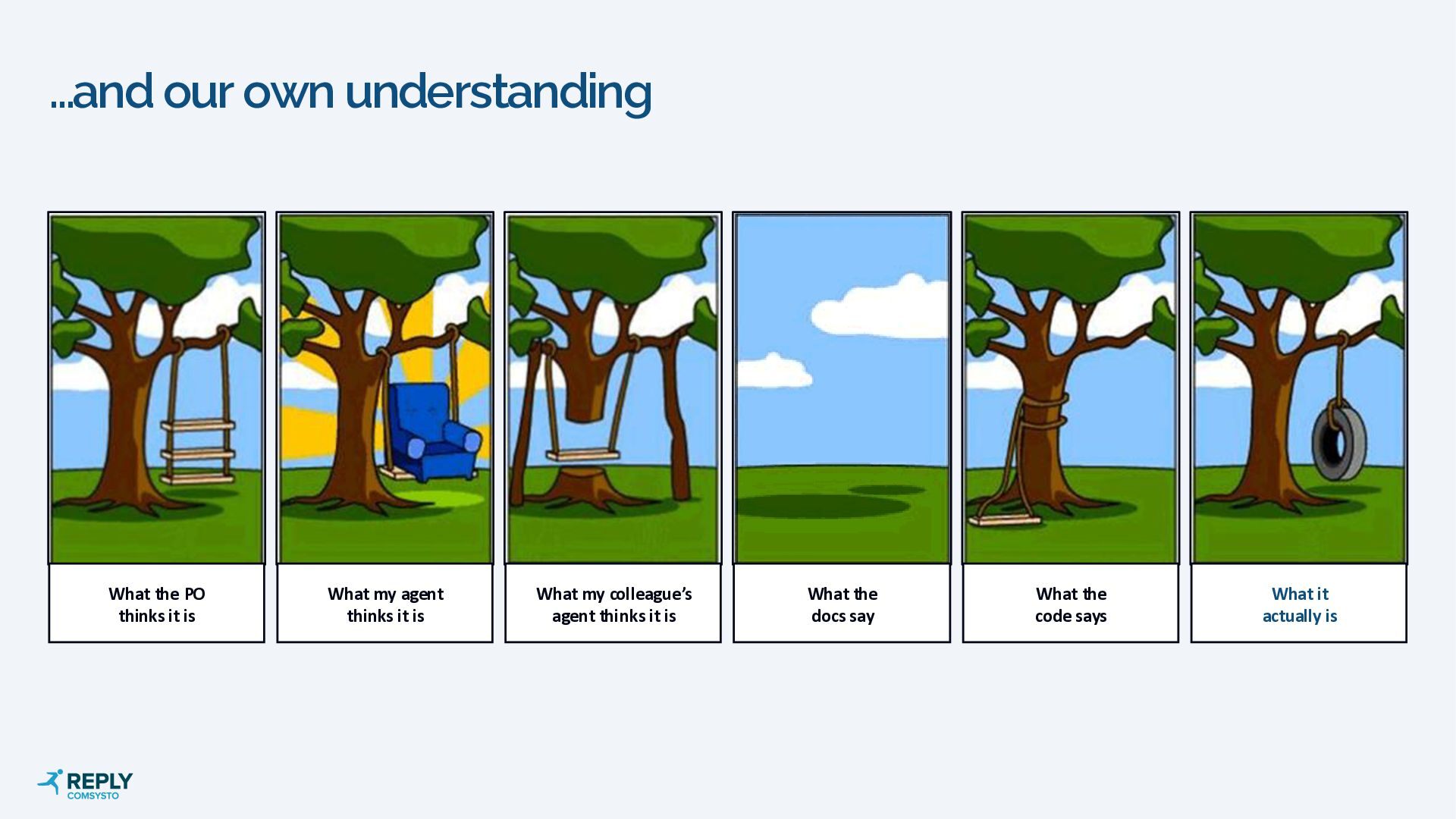
…and our own understanding What the PO thinks it is
What my agent thinks it is What my colleague’s agent thinks it is What the docs say What the code says What it actually is -
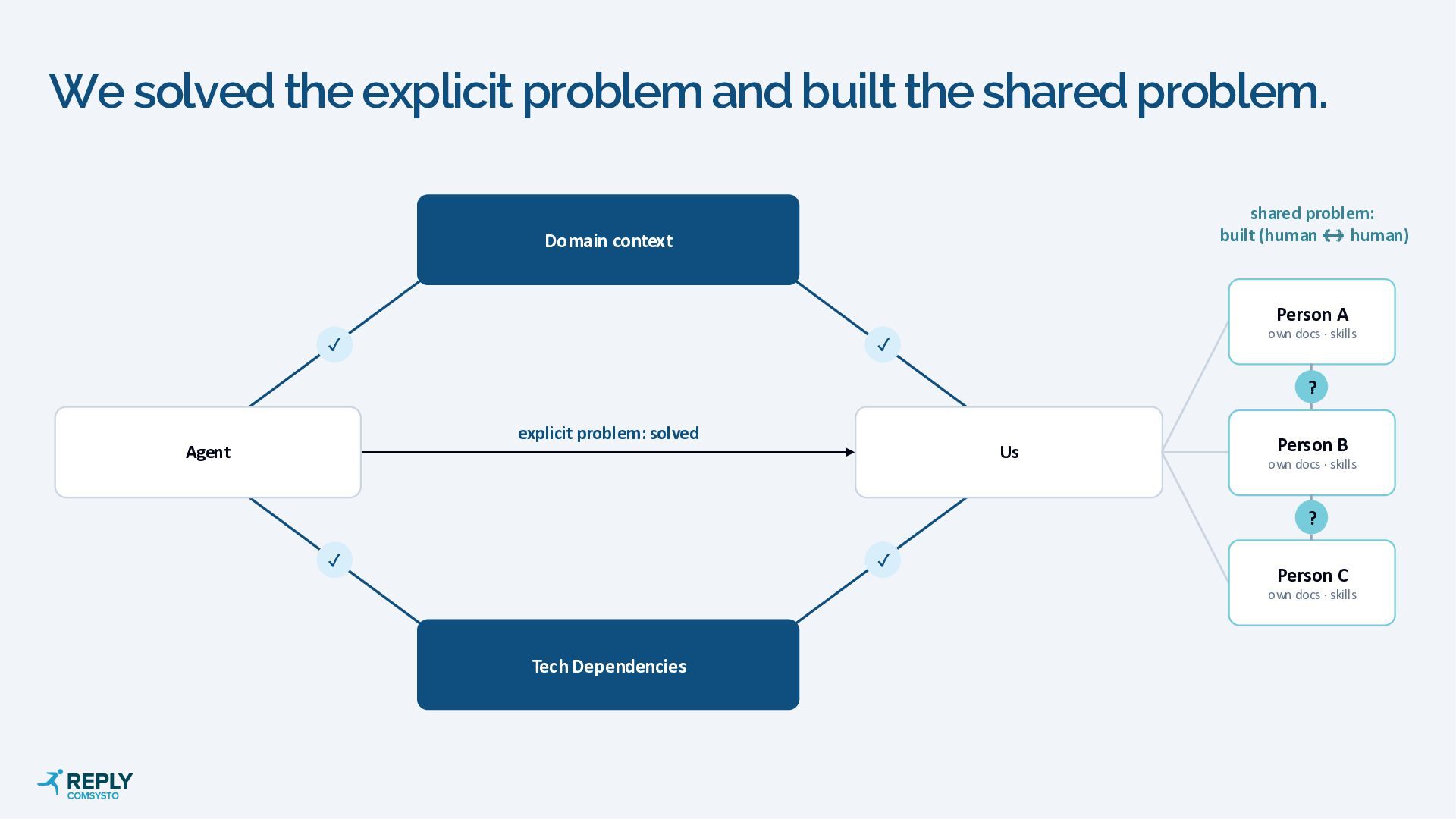
We solved the explicit problem and built the shared problem.
shared problem: built (human human) Domain context Person A ✓ own docs · skills ✓ ? explicit problem: solved Agent Us Person B own docs · skills ? ✓ ✓ Person C own docs · skills Tech Dependencies -
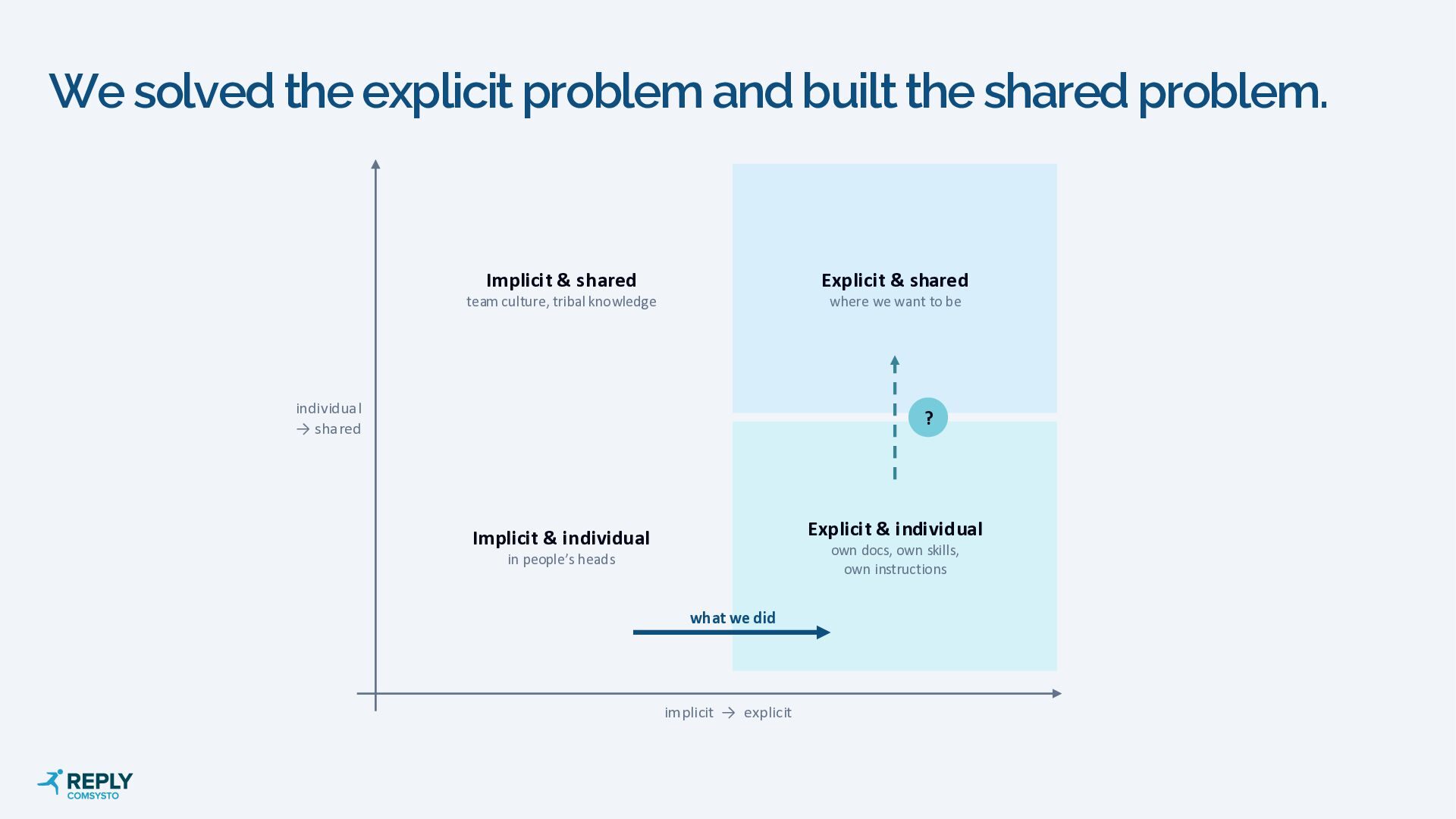
We solved the explicit problem and built the shared problem.
Implicit & shared Explicit & shared team culture, tribal knowledge where we want to be individual → shared ? Explicit & individual Implicit & individual own docs, own skills, own instructions in people’s heads what we did implicit → explicit -
Too busy chopping wood to sharpen the axe. We didn’t
have the mandate & trust (yet). -
What I would have done in an ideal world. Photo
by Viri Gutiérrez on Lummi -
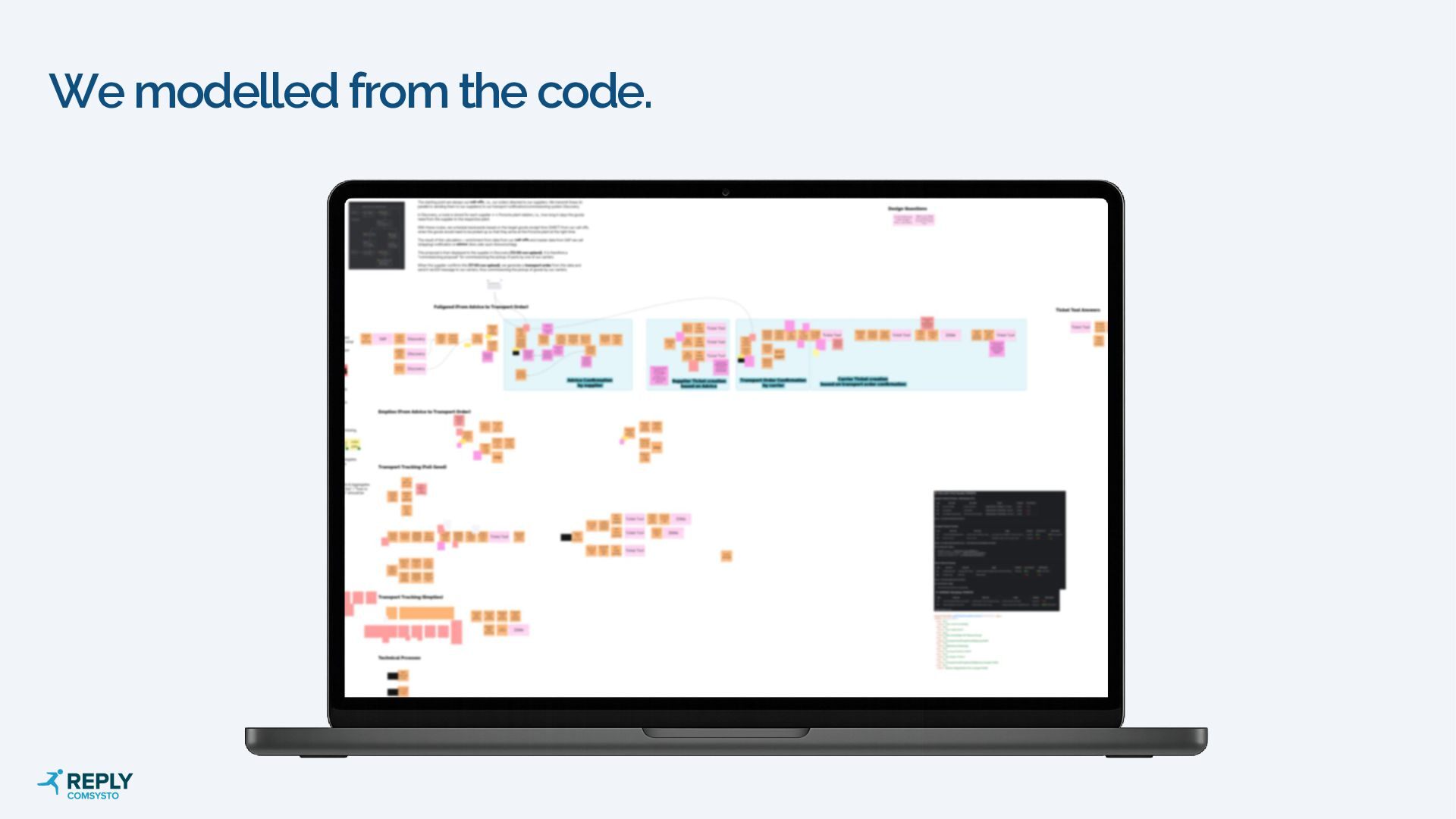
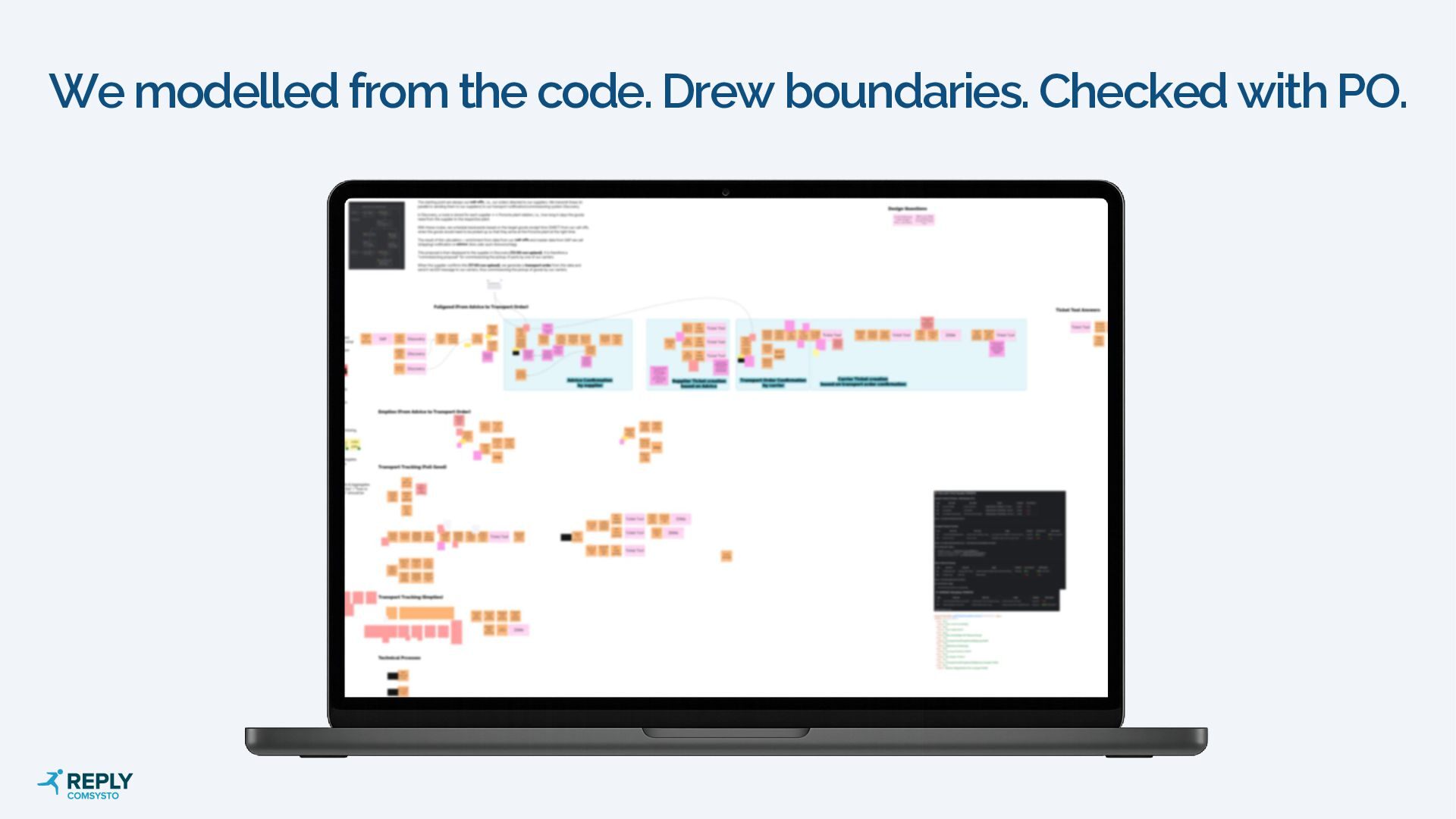
EventStorming in the first month. With actual stakeholders & users.
Model the domain together first, then check against the code. In reality: refinement with the whole team and a highly available PO. Photo by Viri Gutiérrez on Lummi -
Example Mapping for the core logic. Model the core rules
with examples, together with the PO. In reality: we wrote the examples & test cases ourselves and checked them with the PO. Photo by Viri Gutiérrez on Lummi -
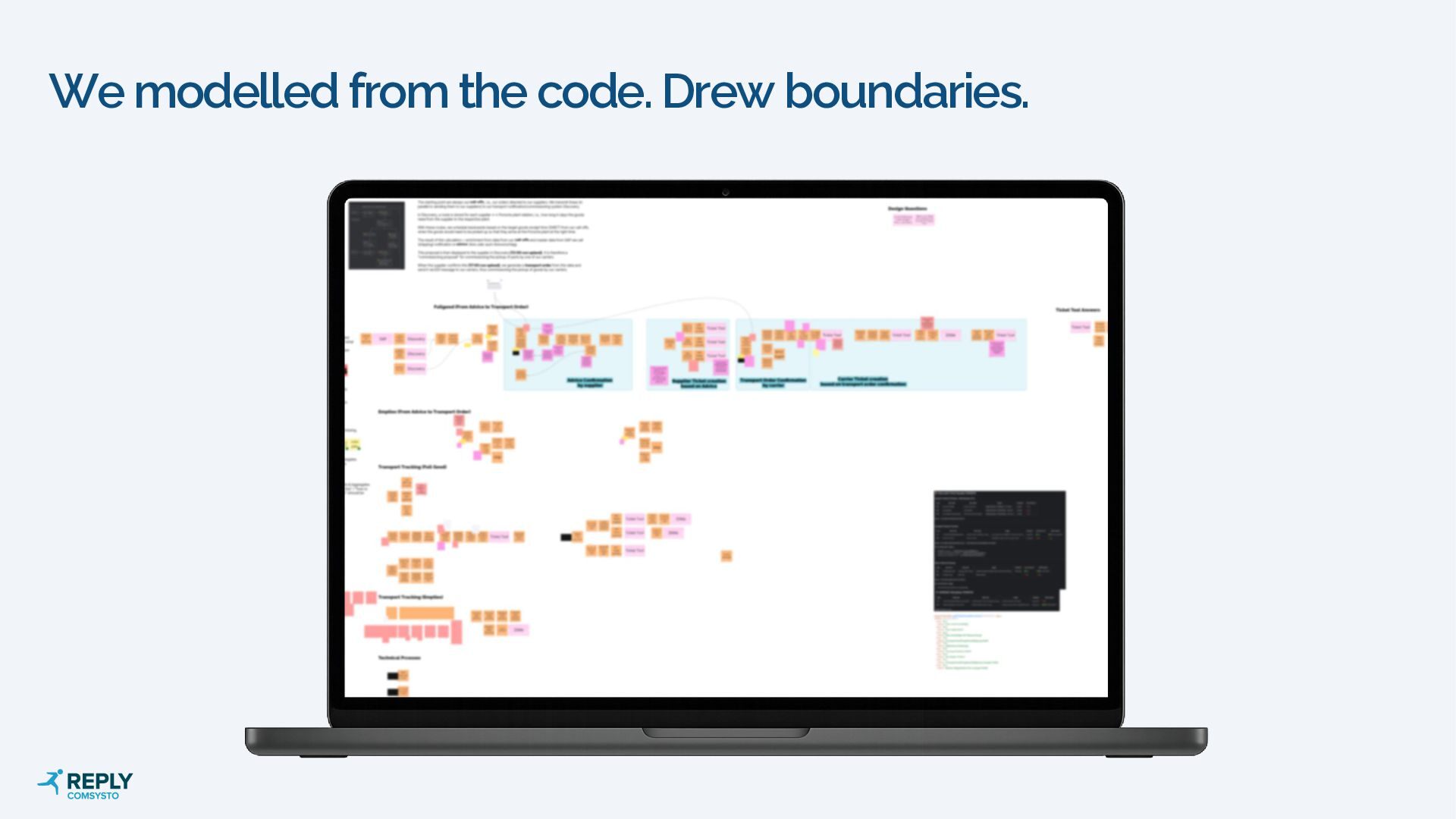
Enforce architecture & visualise it. Agree on boundaries and where
things belong and make them visible: a context map that people and agents can read. In reality: no visible architecture. We drew the boundaries we’d like to have but haven’t implemented them yet. Photo by Viri Gutiérrez on Lummi -
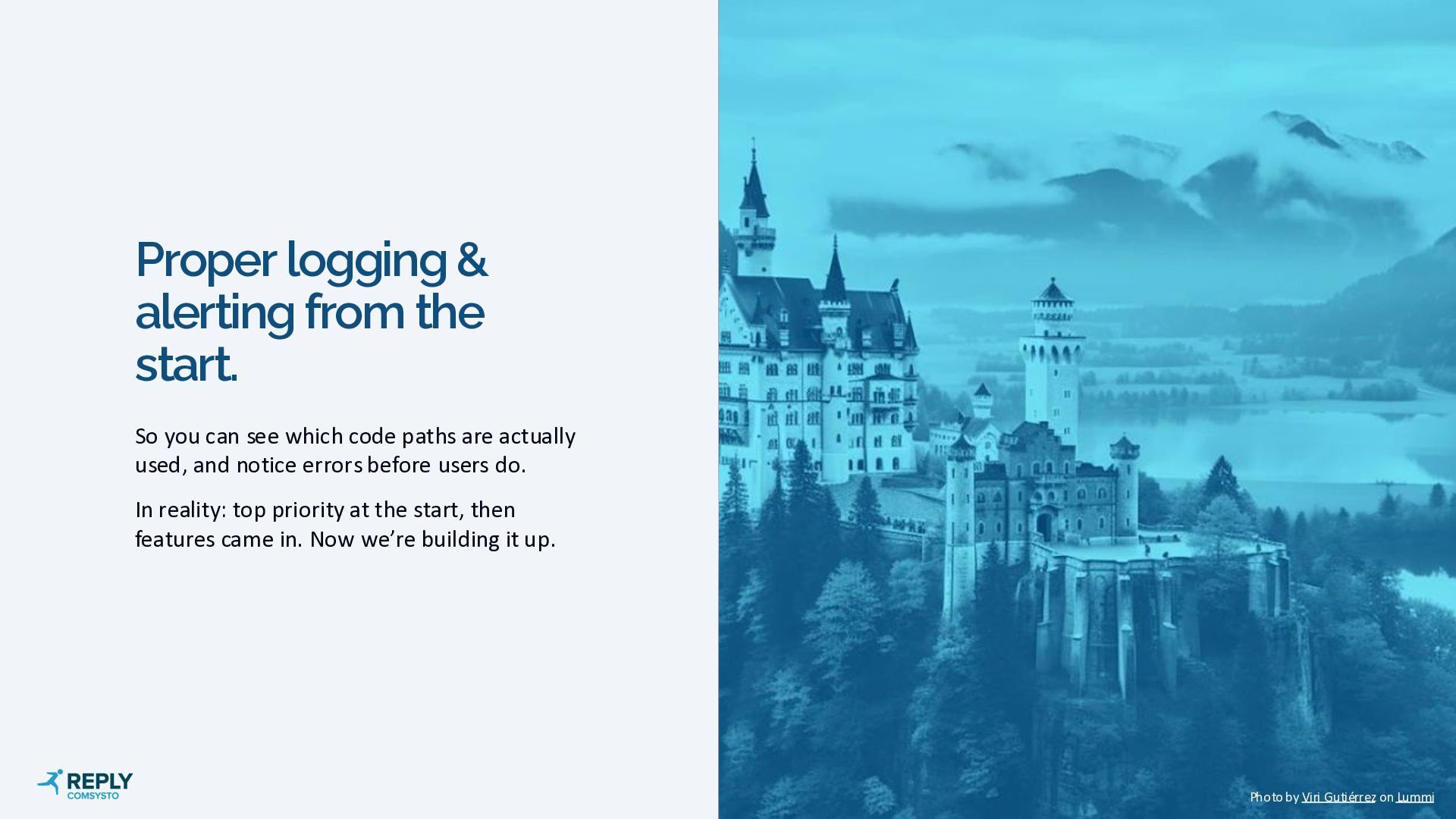
Proper logging & alerting from the start. So you can
see which code paths are actually used, and notice errors before users do. In reality: top priority at the start, then features came in. Now we’re building it up. Photo by Viri Gutiérrez on Lummi -
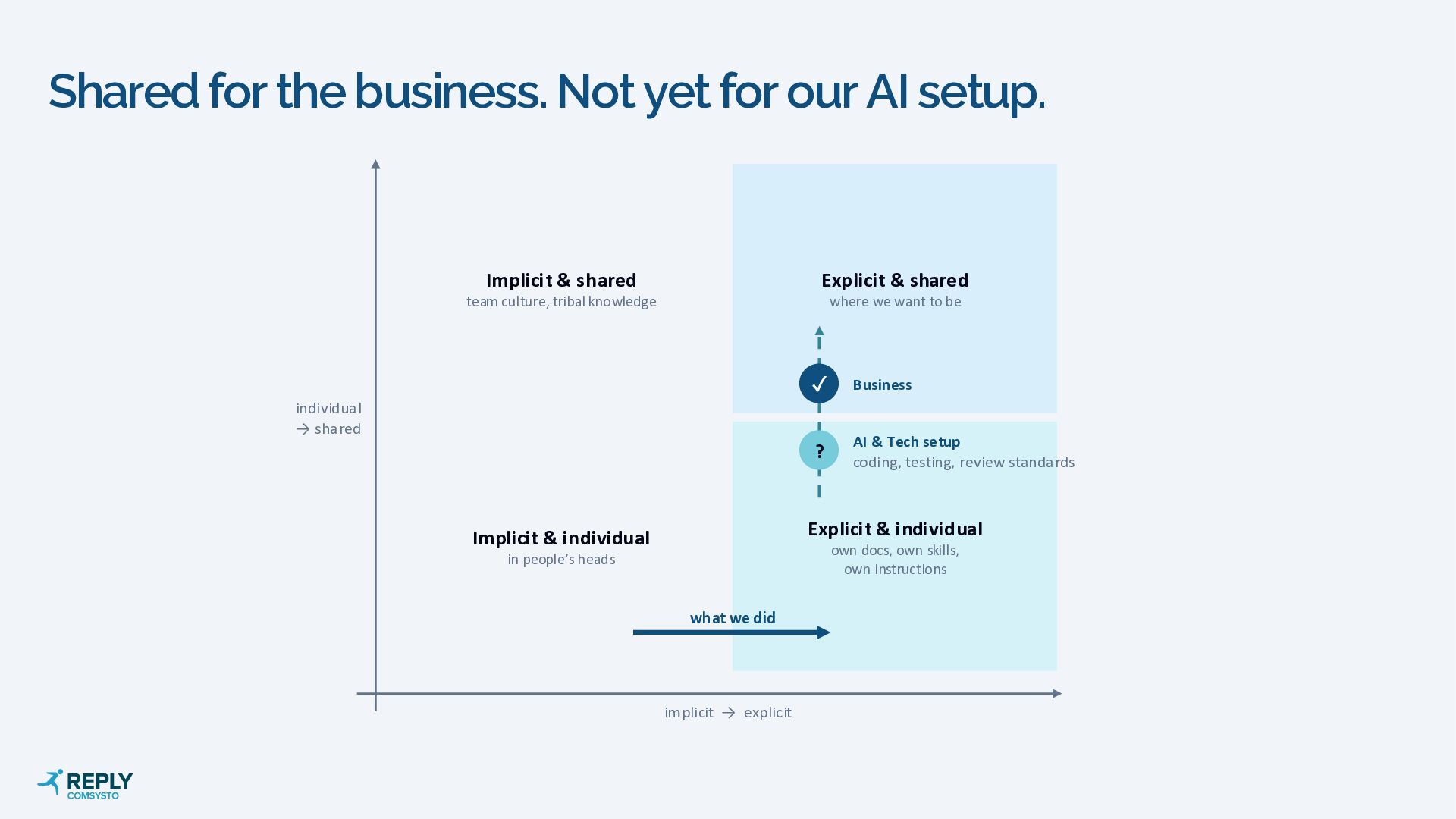
Shared for the business. Not yet for our AI setup.
Implicit & shared Explicit & shared team culture, tribal knowledge where we want to be ✓ Business ? AI & Tech setup coding, testing, review standards individual → shared Explicit & individual Implicit & individual own docs, own skills, own instructions in people’s heads what we did implicit → explicit -
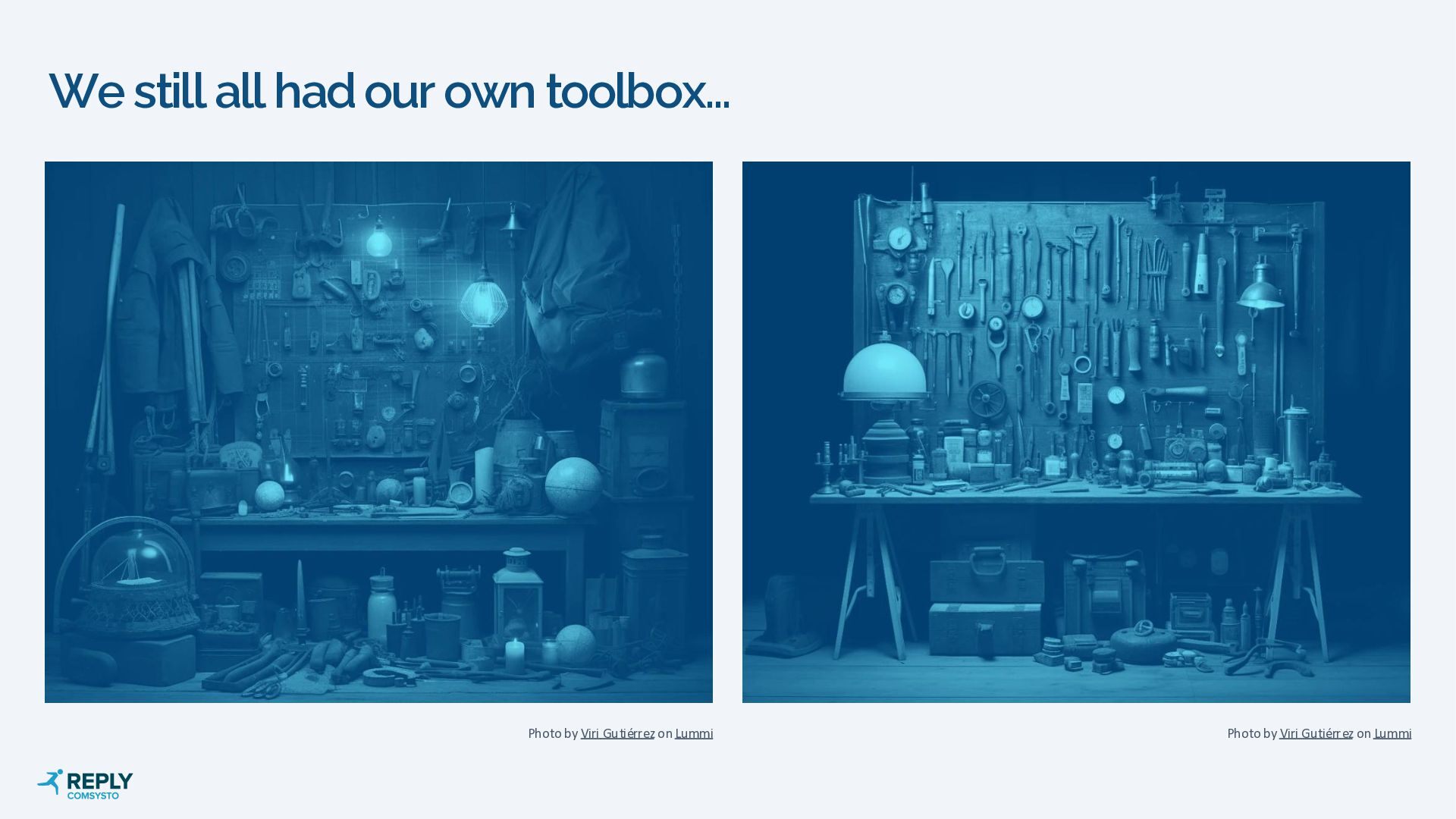
We still all had our own toolbox… Photo by Viri
Gutiérrez on Lummi Photo by Viri Gutiérrez on Lummi -
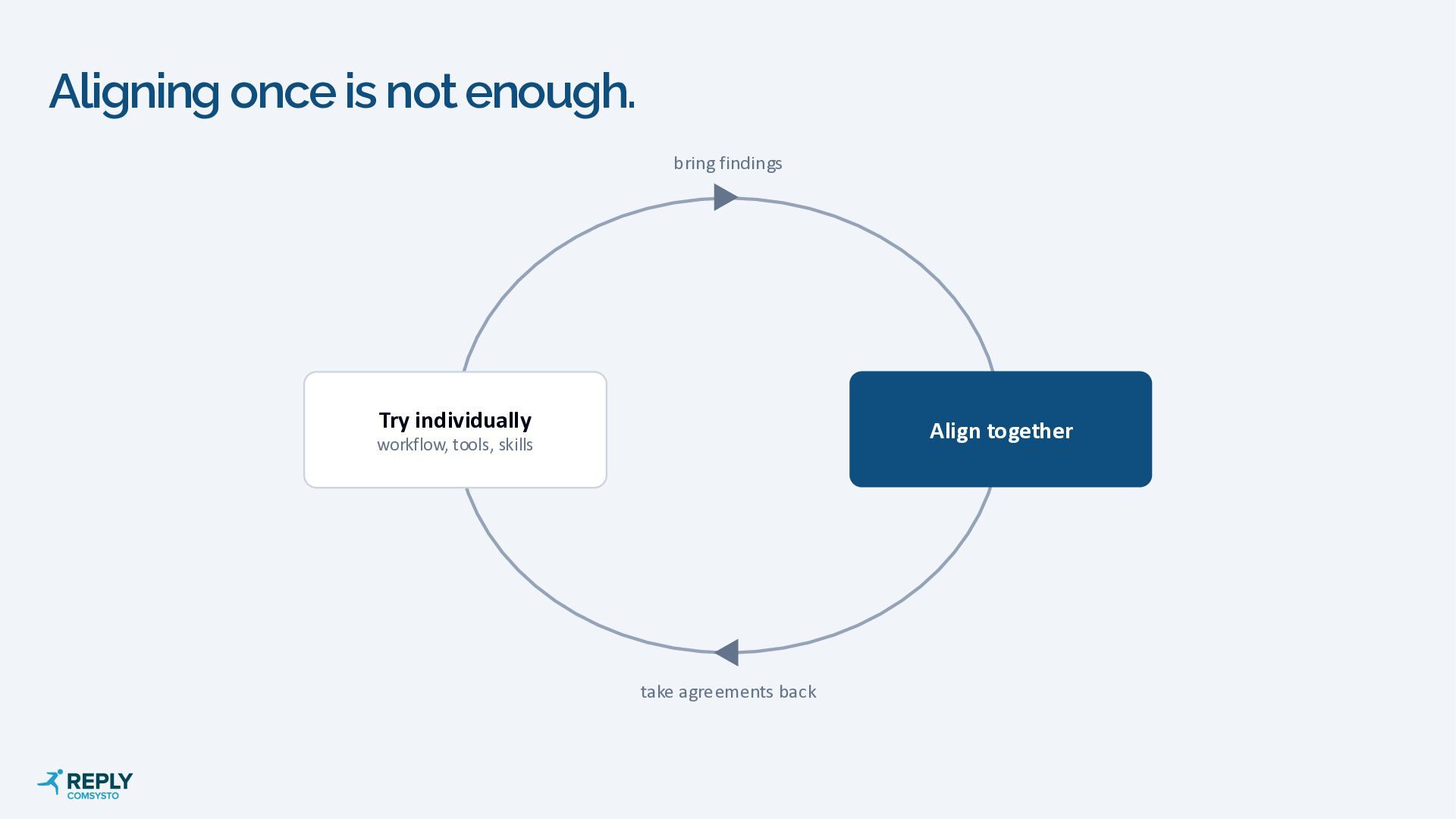
Aligning once is not enough. bring findings Try individually Align
together workflow, tools, skills take agreements back -
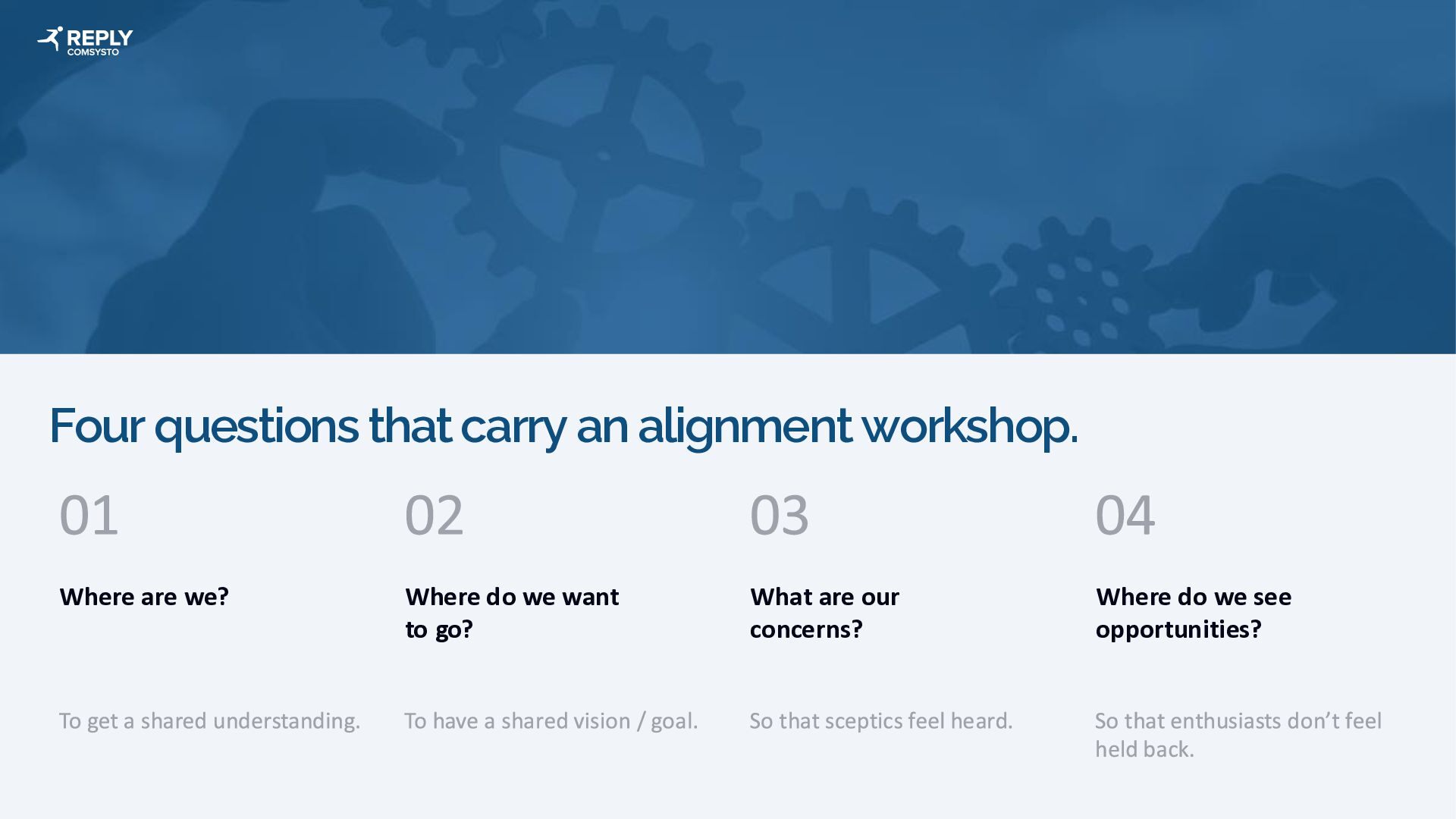
Four questions that carry an alignment workshop. Where are we?
Where do we want to go? What are our concerns? Where do we see opportunities? -
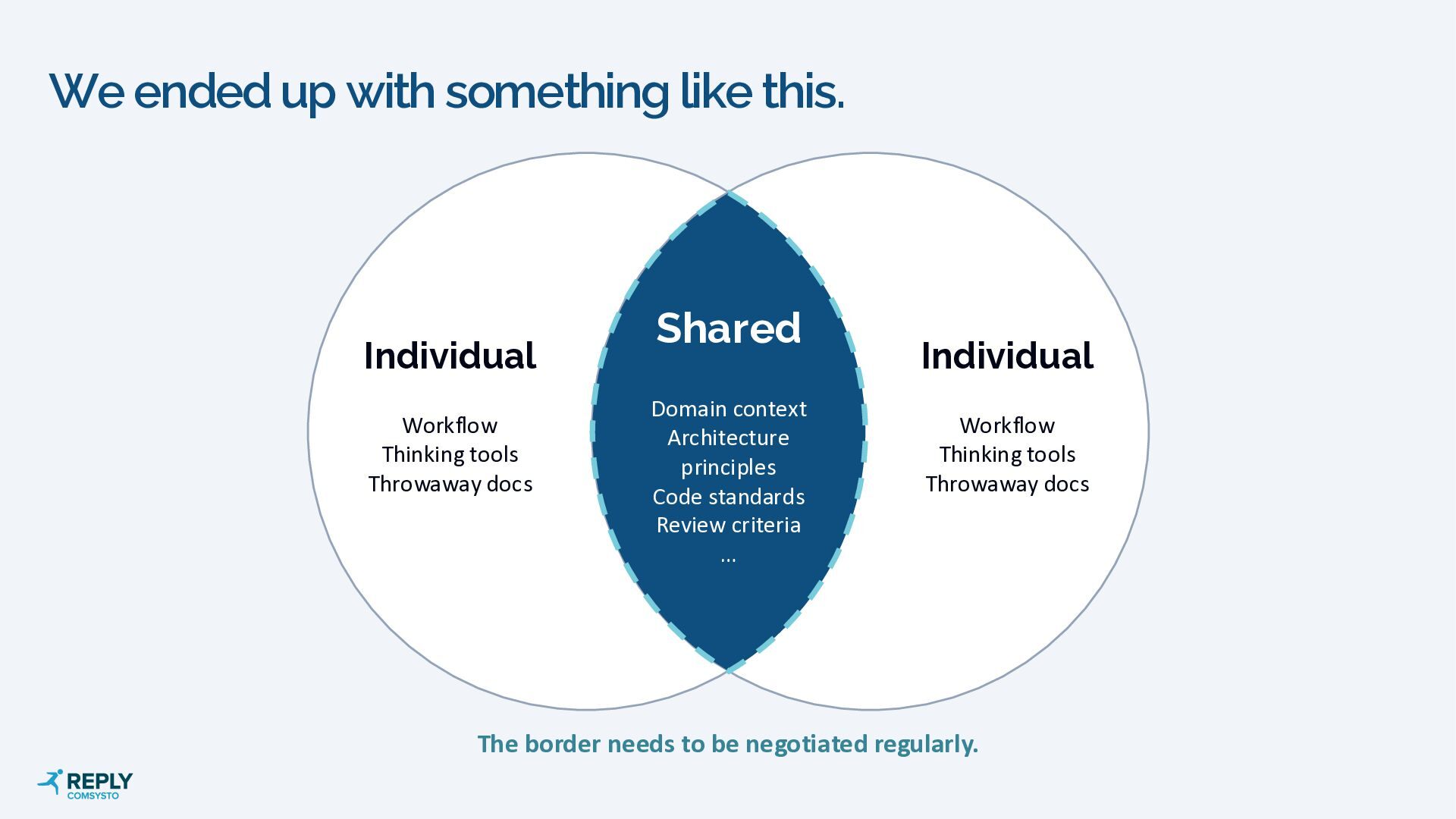
We ended up with something like this. Individual Workflow Thinking
tools Throwaway docs Shared Domain context Architecture principles Code standards Review criteria … Individual Workflow Thinking tools Throwaway docs The border needs to be negotiated regularly. -
Some think AI is magic. Some think it’s crap. Photo
by Sofía on Lummi -
The business lacked context too. So we showed them what’s
behind the wall. Photo by Amino on Lummi -
And then there was this one moment… Photo by Steph
Meade on Lummi -
“Can you make this production-ready?” A technical PO had vibe-coded
an application. We were hired to assess it. It couldn’t go live. So we rebuilt it. Photo by Patrick Venegas on Lummi -
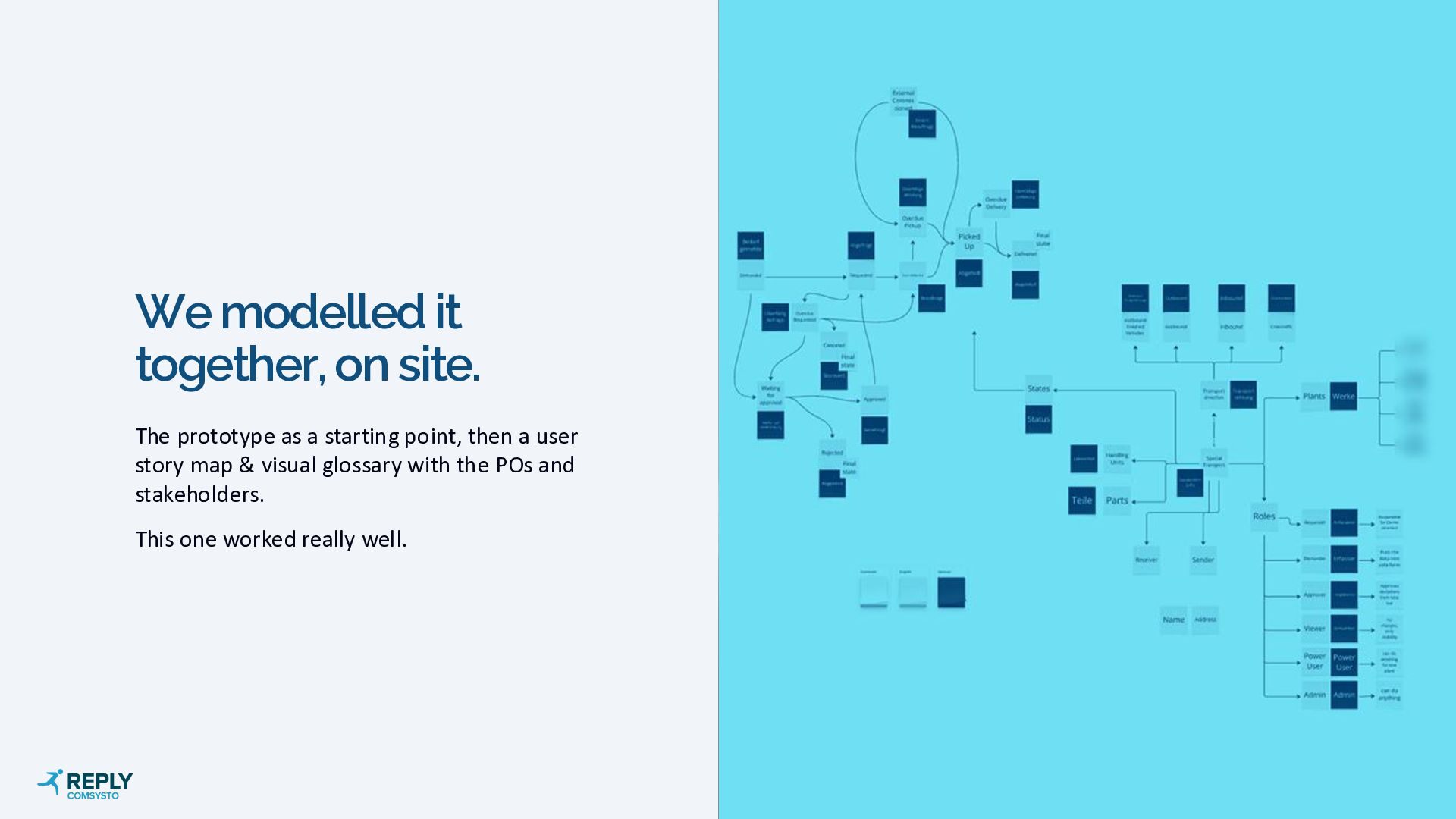
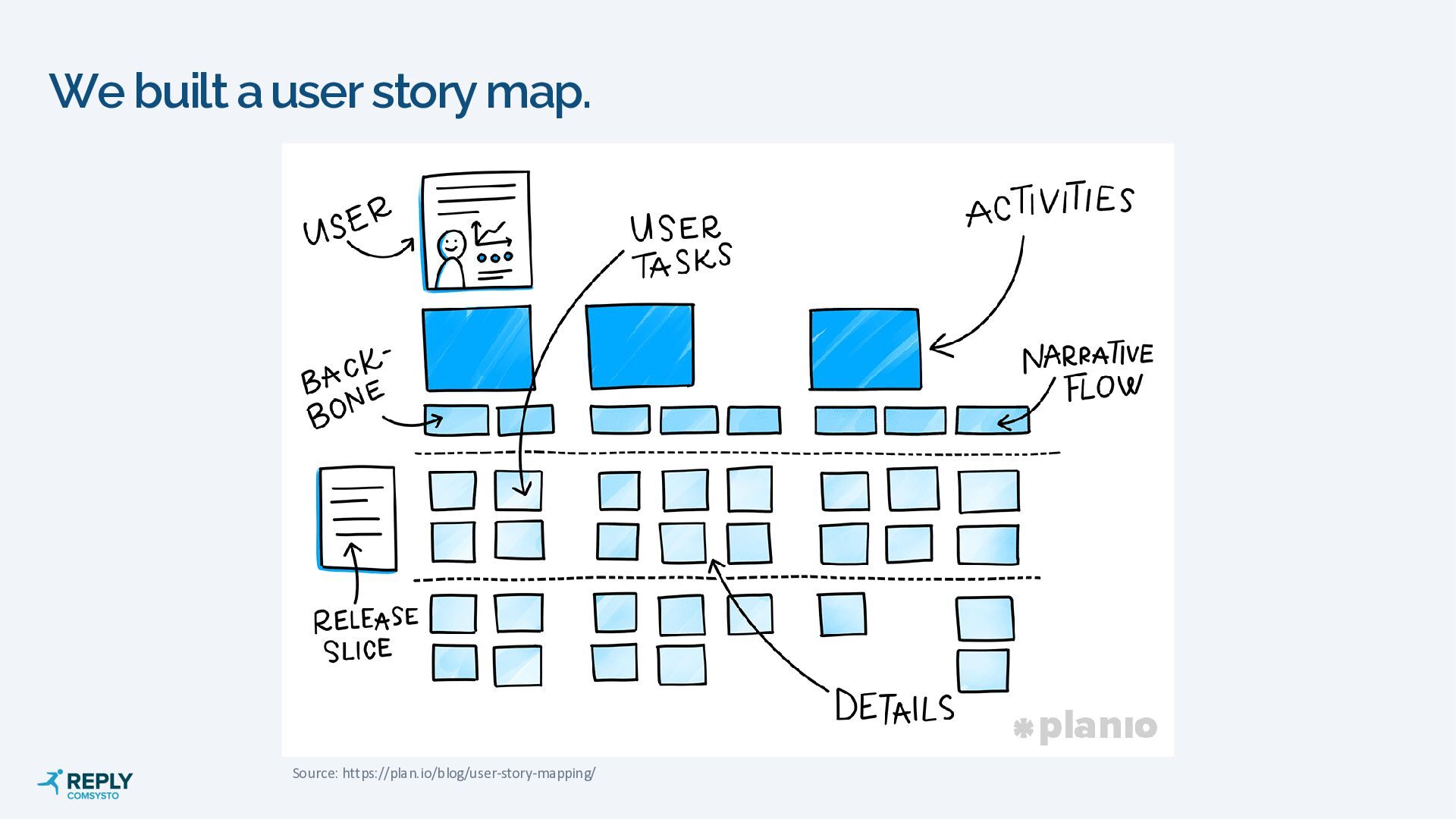
We modelled it together, on site. The prototype as a
starting point, then a user story map & visual glossary with the POs and stakeholders. This one worked really well. -
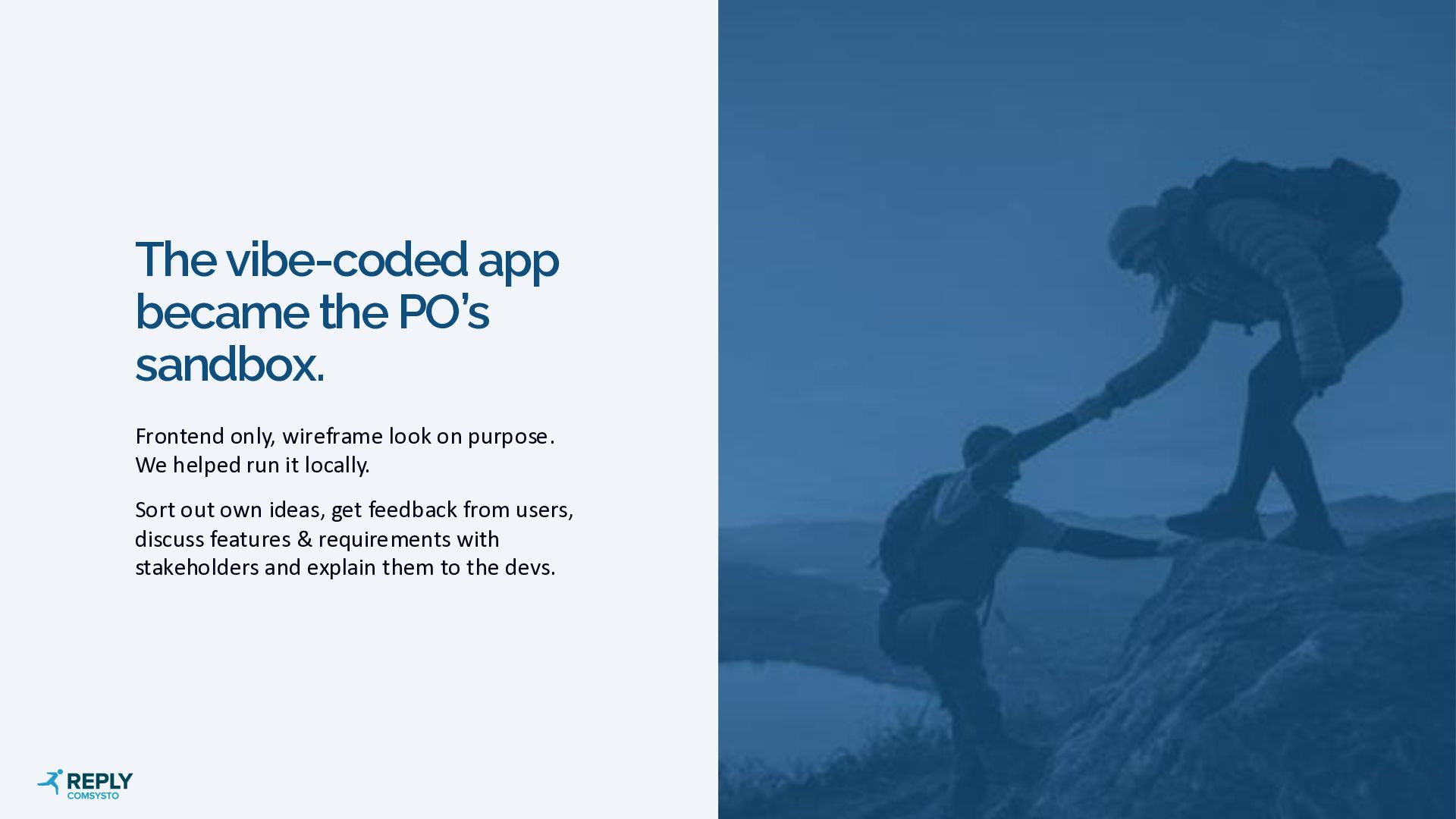
The vibe-coded app became the PO’s sandbox. Frontend only, wireframe
look on purpose. We helped run it locally. Sort out own ideas, get feedback from users, discuss features & requirements with stakeholders and explain them to the devs. -
Nobody has all the context. Start building it, one small
step at a time. -
AI Needs Context It Can’t Build Alone AI, Legacy Code,
and the Messy Road to Domain Knowledge Beija Nigl Senior Software Engineer Product Owner | Agile Coach CoMo Workshop Facilitator Comsysto Reply | comsystoreply.de linkedin.com/in/beija-nigl -
What would I have done in an ideal world? Photo
by Viri Gutiérrez on Lummi -
After breaking production, we set up some guardrails. Read-only by
default for anything that touches infrastructure. Photo by Benginur Hajjaj on Lummi -
We got a knowledge graph of our code base. Integrated
via MCP, about half a year in. Our agents invented a lot less of our domain. And our POs and their agents use it too. Photo by PZF on Lummi -
Build up a shared spec-driven AI setup. A team I
talked to refines the spec carefully, lets the agents implement, reviews at the end. Their agent even shows how a change moves the context map. In reality: we have our individual skills, plus some shared ones that are valuable for the whole team. Photo by Viri Gutiérrez on Lummi