Upgrade to Pro — share decks privately, control downloads, hide ads and more …

Creating a Culture of Learning

Sponsored · Your Podcast. Everywhere. Effortlessly. Share. Educate. Inspire. Entertain. You do you. We'll handle the rest. →
Avatar for benfinkel benfinkel
August 02, 2018

Creating a Culture of Learning

What are the rules, boundaries, principles, and plans you need to focus on in order to succeed in IT education?

Avatar for benfinkel

benfinkel

August 02, 2018

Other Decks in Technology

Transcript

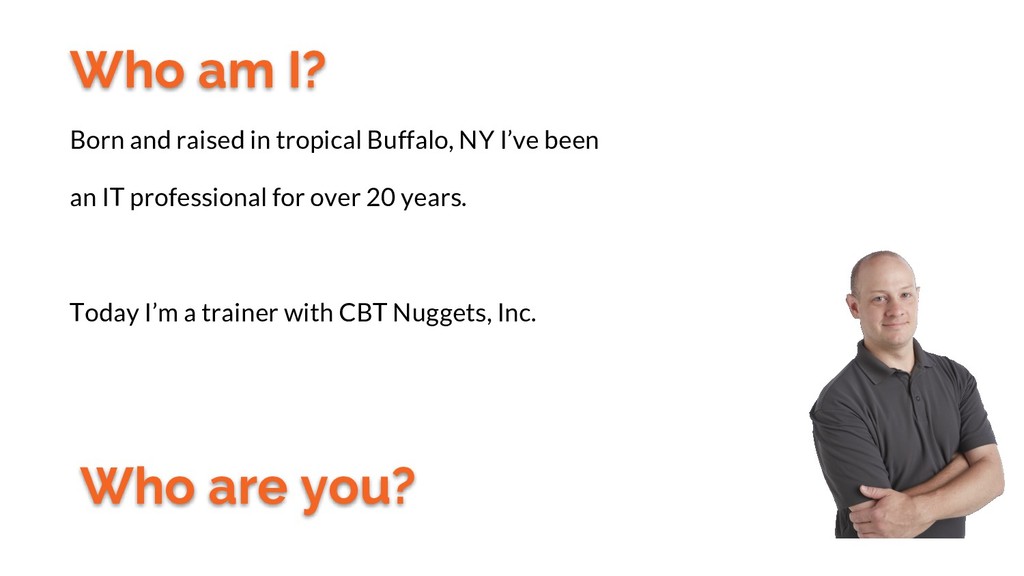
  1. Who am I? Born and raised in tropical Buffalo, NY

    I’ve been an IT professional for over 20 years. Today I’m a trainer with CBT Nuggets, Inc. Who are you?
  2. How much of your time do you spend learning and

    improving your personal skill-set?
  3. All of it! You are never not learning. (You want

    to learn the right things though!) Tip Don’t worry, that’s why we’re here. We’ll *learn* some tips and tricks on how to learn… ...and how to get your employer to buy in :)
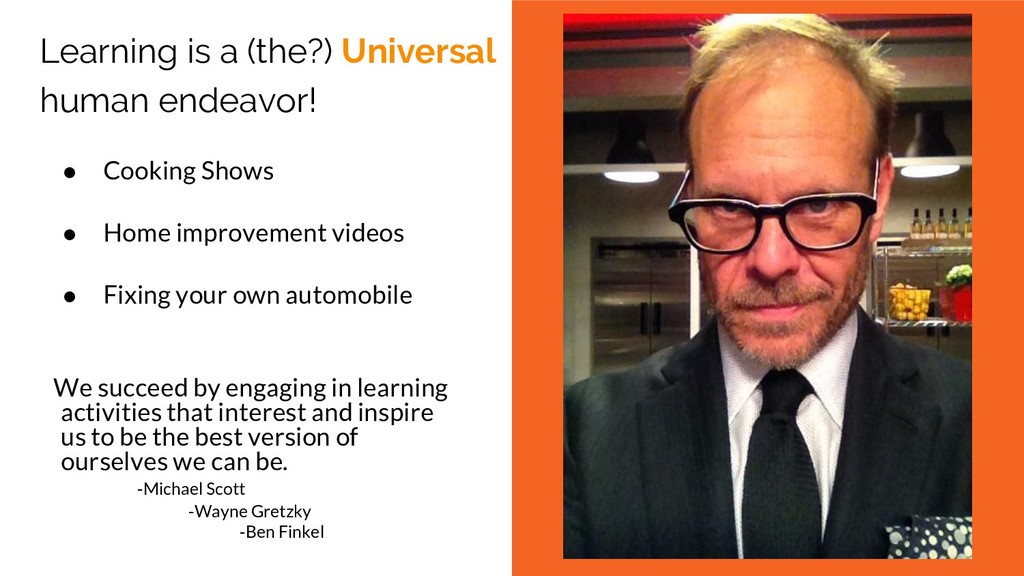
  4. Learning is a (the?) Universal human endeavor! We succeed by

    engaging in learning activities that interest and inspire us to be the best version of ourselves we can be. -Michael Scott -Wayne Gretzky -Ben Finkel • Cooking Shows • Home improvement videos • Fixing your own automobile
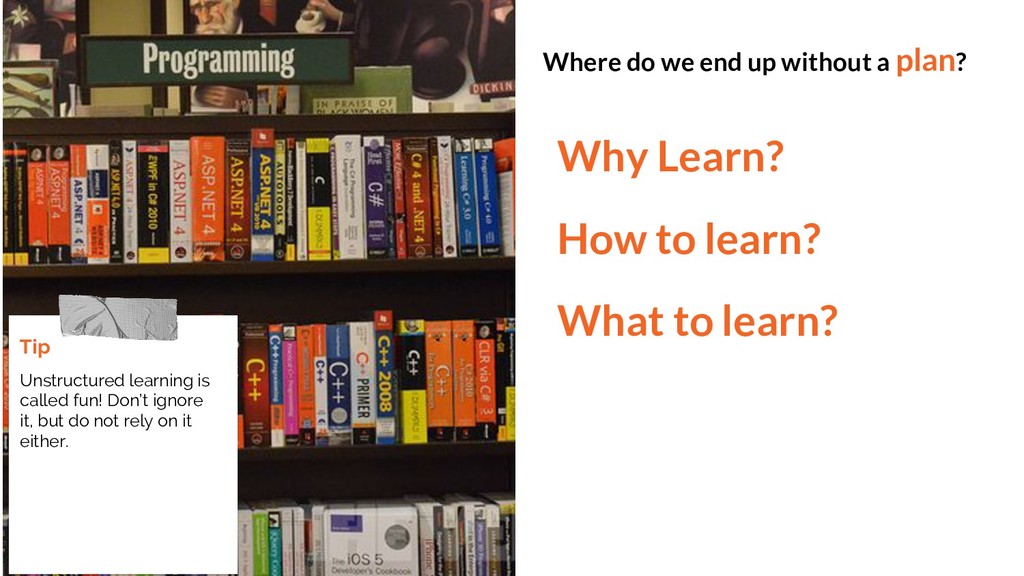
  5. Where do we end up without a plan? Why Learn?

    How to learn? What to learn? Tip Unstructured learning is called fun! Don’t ignore it, but do not rely on it either.
  6. Career Progression Why Learn? Justify a promotion! Change employer… or

    career! Improve the quality of your workday Learning IS your job!
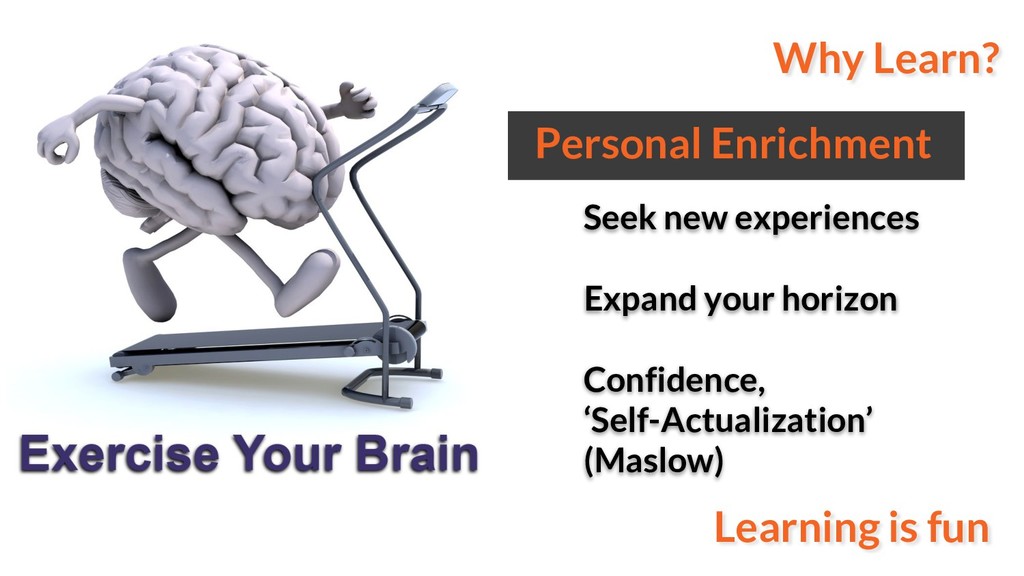
  7. Personal Enrichment Why Learn? Learning is fun Seek new experiences

    Expand your horizon Confidence, ‘Self-Actualization’ (Maslow)
  8. Deliver a better ‘product’ Why Learn? It’s okay to have

    pride in our work Meet the customer’s needs Impress our colleagues Efficiency in our workday
  9. Create a learing ‘space’ How to Learn? Noise levels Food/Drink

    Comfort seating (...or standing!) Mix it up Learn on your terms
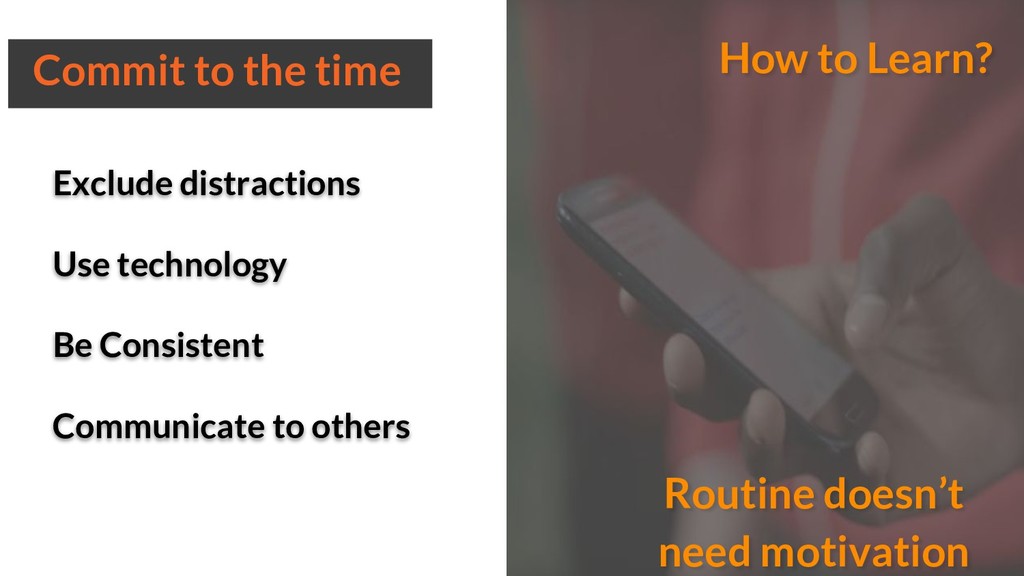
  10. Commit to the time Exclude distractions Use technology Be Consistent

    Communicate to others Routine doesn’t need motivation How to Learn?
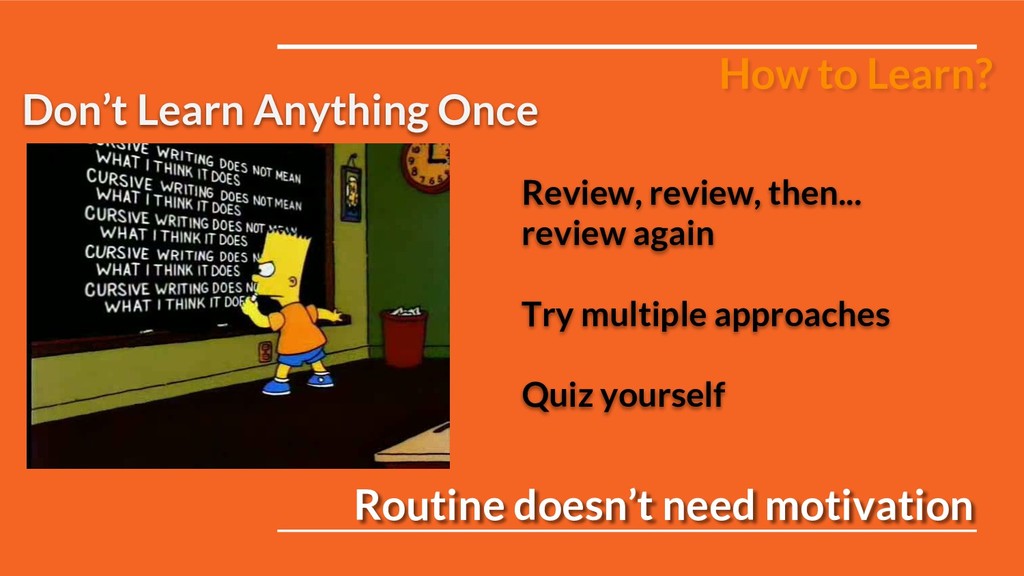
  11. Don’t Learn Anything Once Review, review, then... review again Try

    multiple approaches Quiz yourself Routine doesn’t need motivation How to Learn?
  12. Learn for the job What to learn? Identify your specific

    needs “Train upward” The cert is only a bonus Don’t learn anything learn something
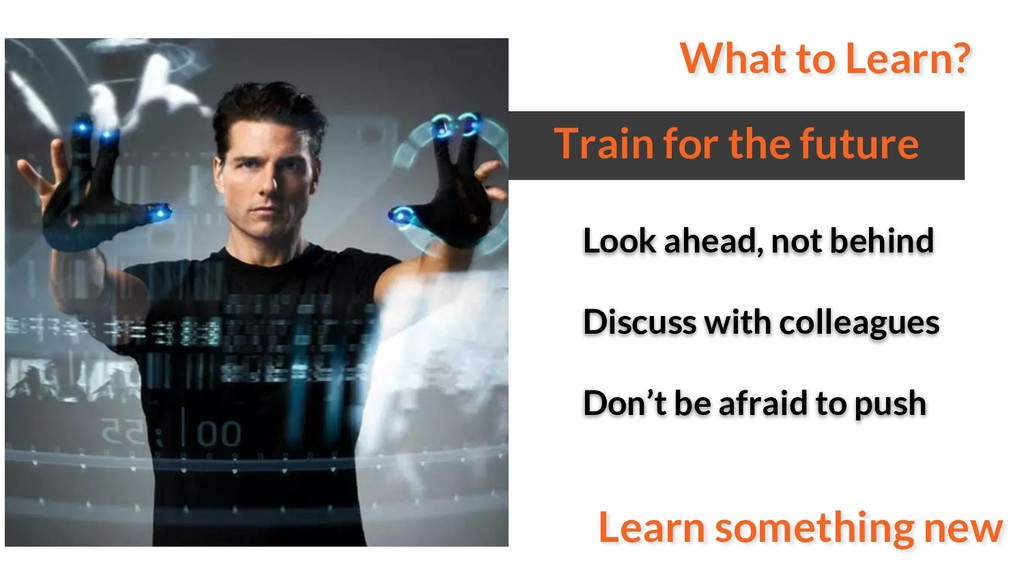
  13. Train for the future What to Learn? Learn something new

    Look ahead, not behind Discuss with colleagues Don’t be afraid to push
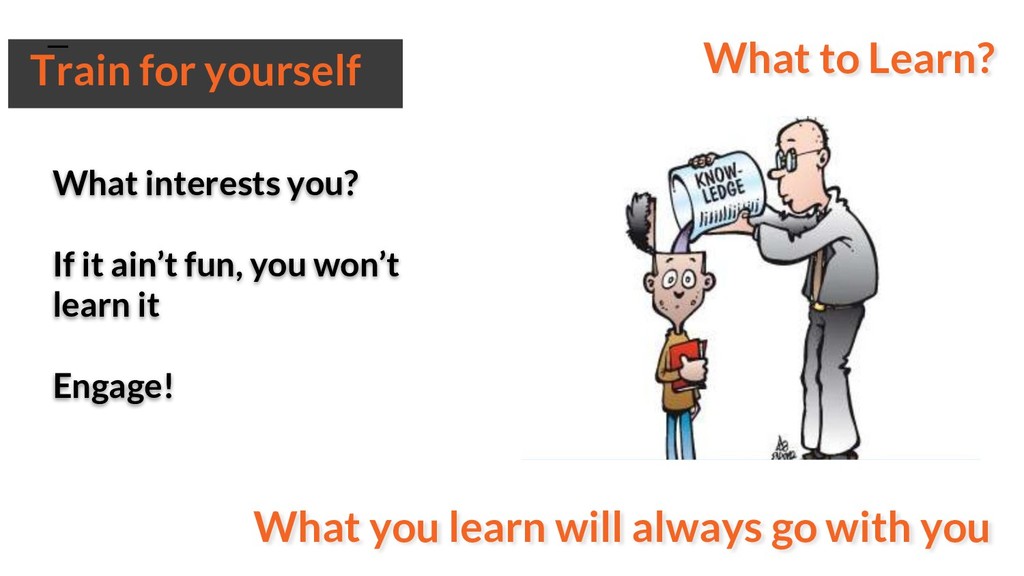
  14. Train for yourself What to Learn? What you learn will

    always go with you What interests you? If it ain’t fun, you won’t learn it Engage!
  15. In summary ➔ Learning is fun! ➔ It still requires

    a practiced and disciplined approach ➔ Set yourself up for success
  16. Improve Team Efficiency IT Moves Fast i.e. AWS 1 million

    active customers in 10 years 1 Training investment predicts success Measurable performance degradation of 25% over 4 years2 Improved productivity 10% >> in education led to 8.6% >> productivity 3
  17. Training saves money Increased spending on training correlates directly to4

    Increased gross profit margins Increased income per employee Increased price-to-book ratios
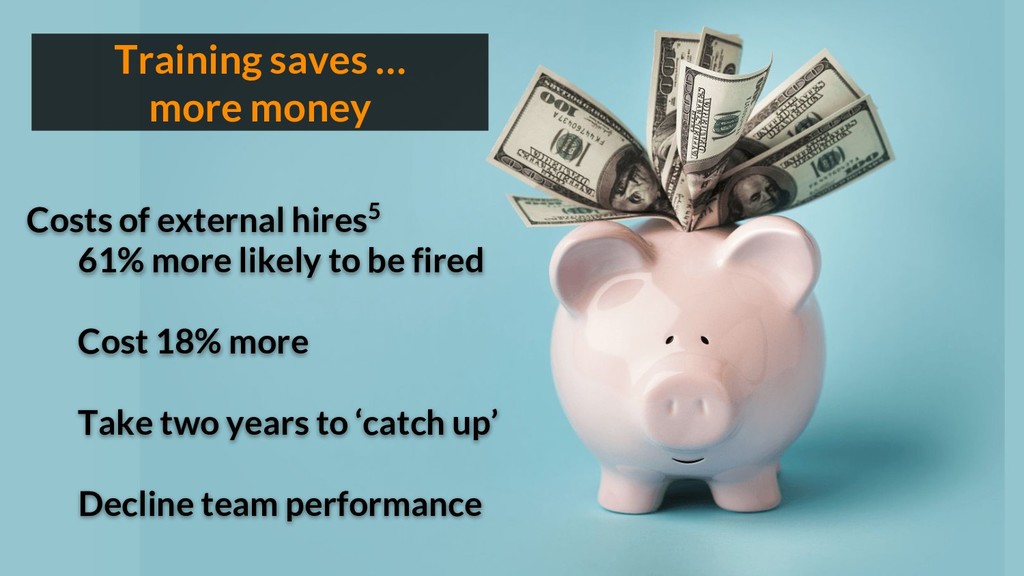
  18. Training saves … more money Costs of external hires5 61%

    more likely to be fired Cost 18% more Take two years to ‘catch up’ Decline team performance
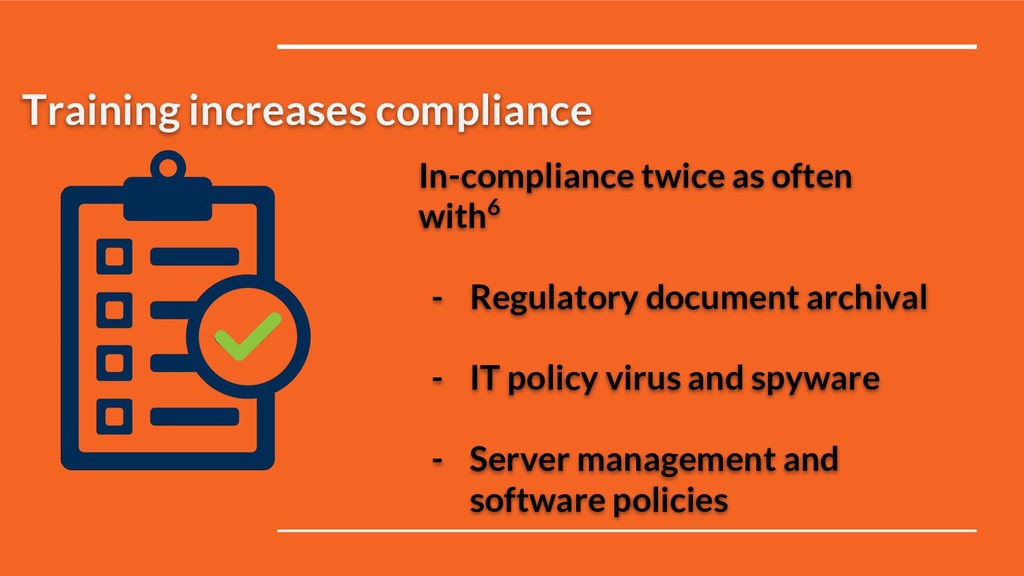
  19. Training increases compliance In-compliance twice as often with6 - Regulatory

    document archival - IT policy virus and spyware - Server management and software policies
  20. We like it! 30% of millennials consider comprehensive training a

    top benefit7 62% of new hires intend to stay at organizations that offer training...versus 21% for orgs that do not8 Employees who do not feel their career goals are achievable are 12x more likely to leave8
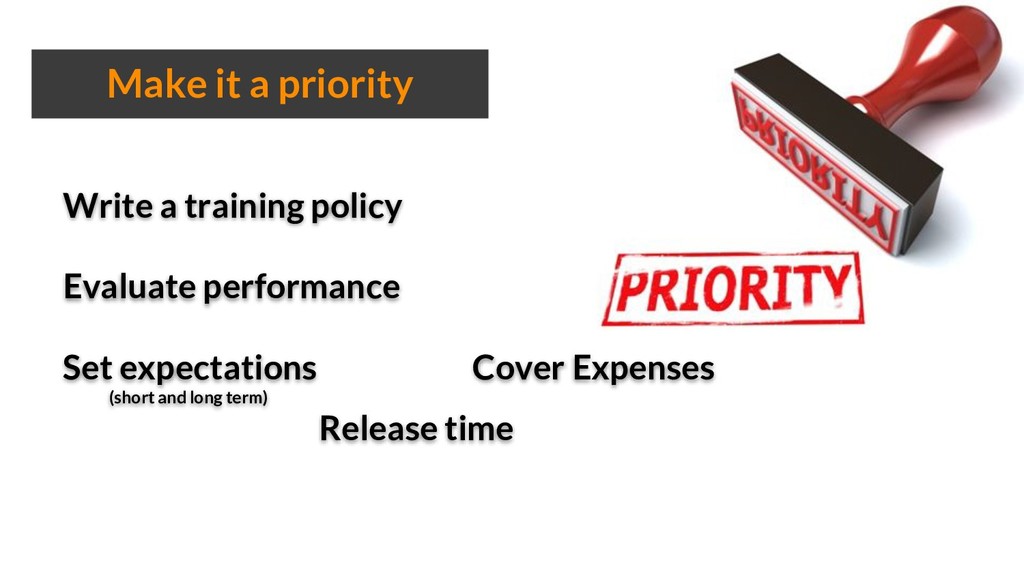
  21. Make it a priority Write a training policy Evaluate performance

    Set expectations Cover Expenses (short and long term) Release time
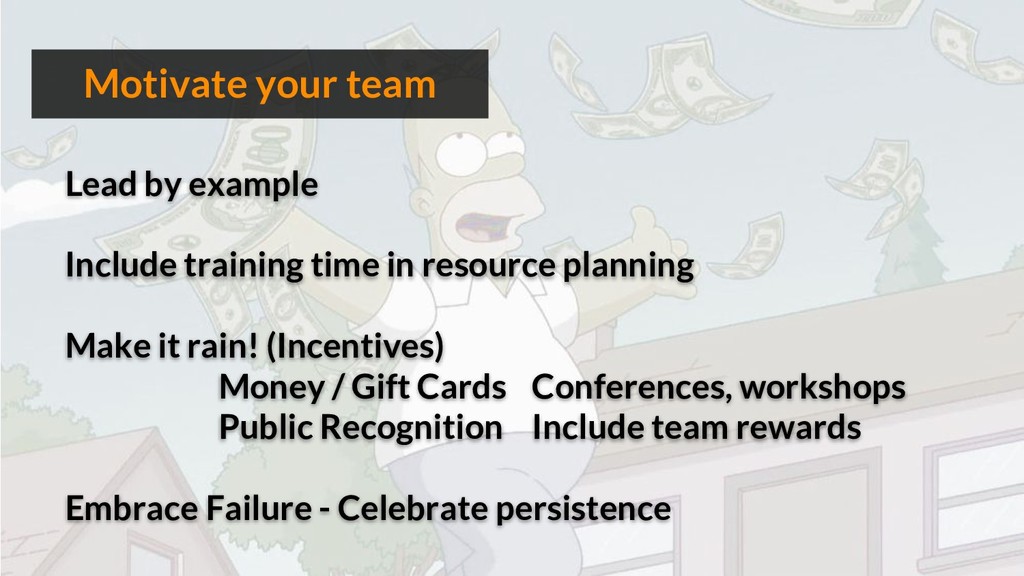
  22. Motivate your team Lead by example Include training time in

    resource planning Make it rain! (Incentives) Money / Gift Cards Conferences, workshops Public Recognition Include team rewards Embrace Failure - Celebrate persistence
  23. Diversify skills Focus on “soft skills” as well as technical

    Find the right places for depth Identify organizational needs Certifications are important, but skills are more so!
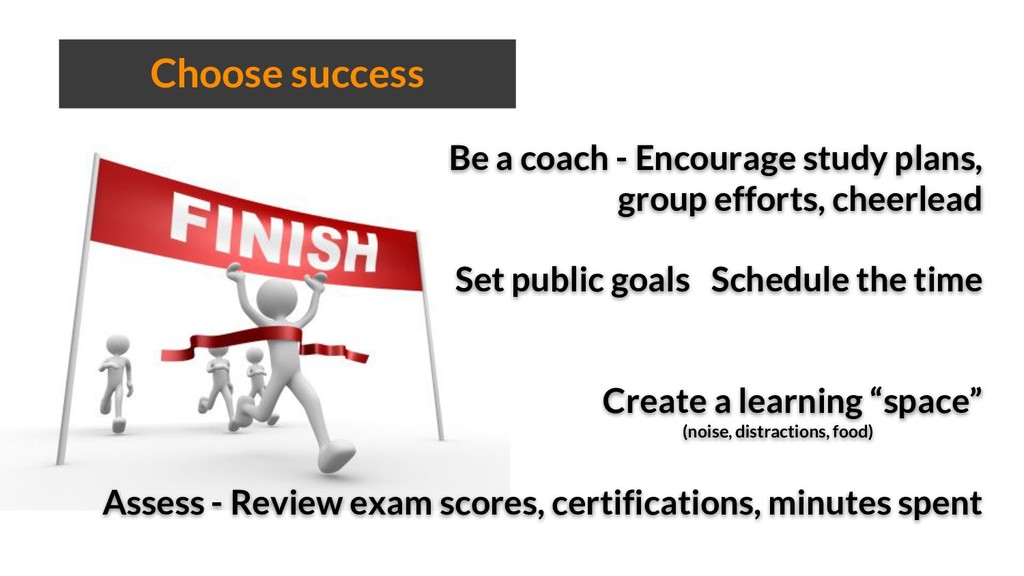
  24. Choose success Be a coach - Encourage study plans, group

    efforts, cheerlead Set public goals Schedule the time Create a learning “space” (noise, distractions, food) Assess - Review exam scores, certifications, minutes spent
  25. In summary ➔ Training is important ➔ Create a plan,

    make it a priority, stick to it, and hold each other accountable ➔ Set your organization up for success
  26. 1 - https://en.wikipedia.org/wiki/Amazon_Web_Services#Customer_base 2 - https://certification.comptia.org/docs/default-source/downloadablefiles/impact-of-comptia-certifications-on-performance.pdf 3 - https://www.businessknowhow.com/manage/higherprod.htm 4

    - https://www.shrm.org/hr-today/news/hr-magazine/pages/0101wells.aspx 5 - https://www.forbes.com/sites/susanadams/2012/04/05/why-promoting-from-within-usually-beats-hiring-from-outside/#6a6f841b36ce 6 - http://eval.symantec.com/downloads/edu/Impact_of_Training_on_Organizational_Performance.pdf 7 - https://www.pwc.com/gx/en/financial-services/publications/assets/pwc-millenials-at-work.pdf 8 - https://www-03.ibm.com/services/learning/pdfs/IBMTraining-TheValueofTraining.pdf