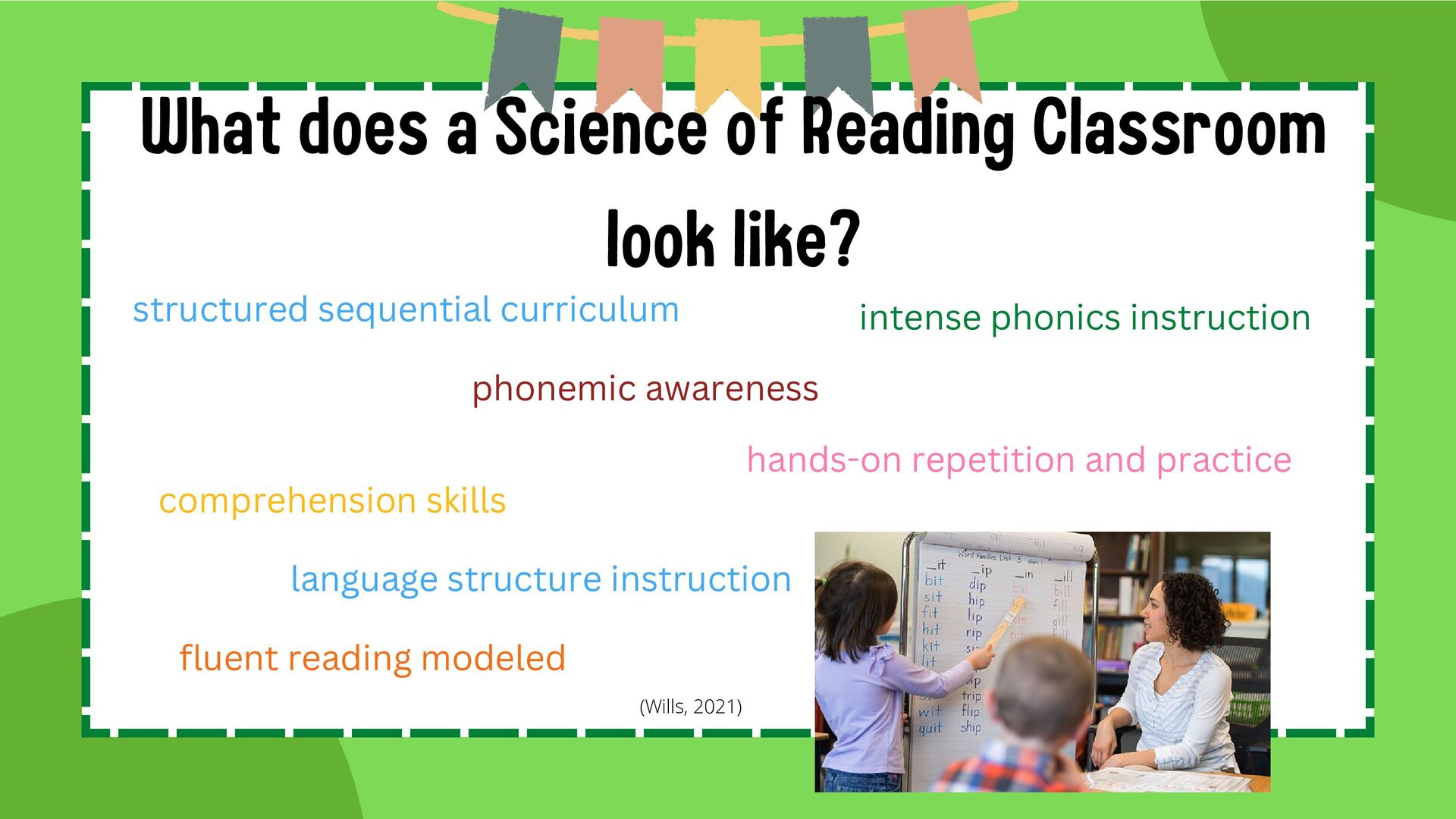
but not to read. Only 20%-30% of children learn to read without explicit instruction. 70%-80% need an implicit curriculum and structured instruction to attain the literacy skills needed to stay on track with learning progress. (King & Davis, 2022)
years makes an impact on the child’s lifelong academic success. Teachers can give students a powerful start by staying knowledgeable of literacy trends and research and using this information to inform instruction. (Waterford, 2023)
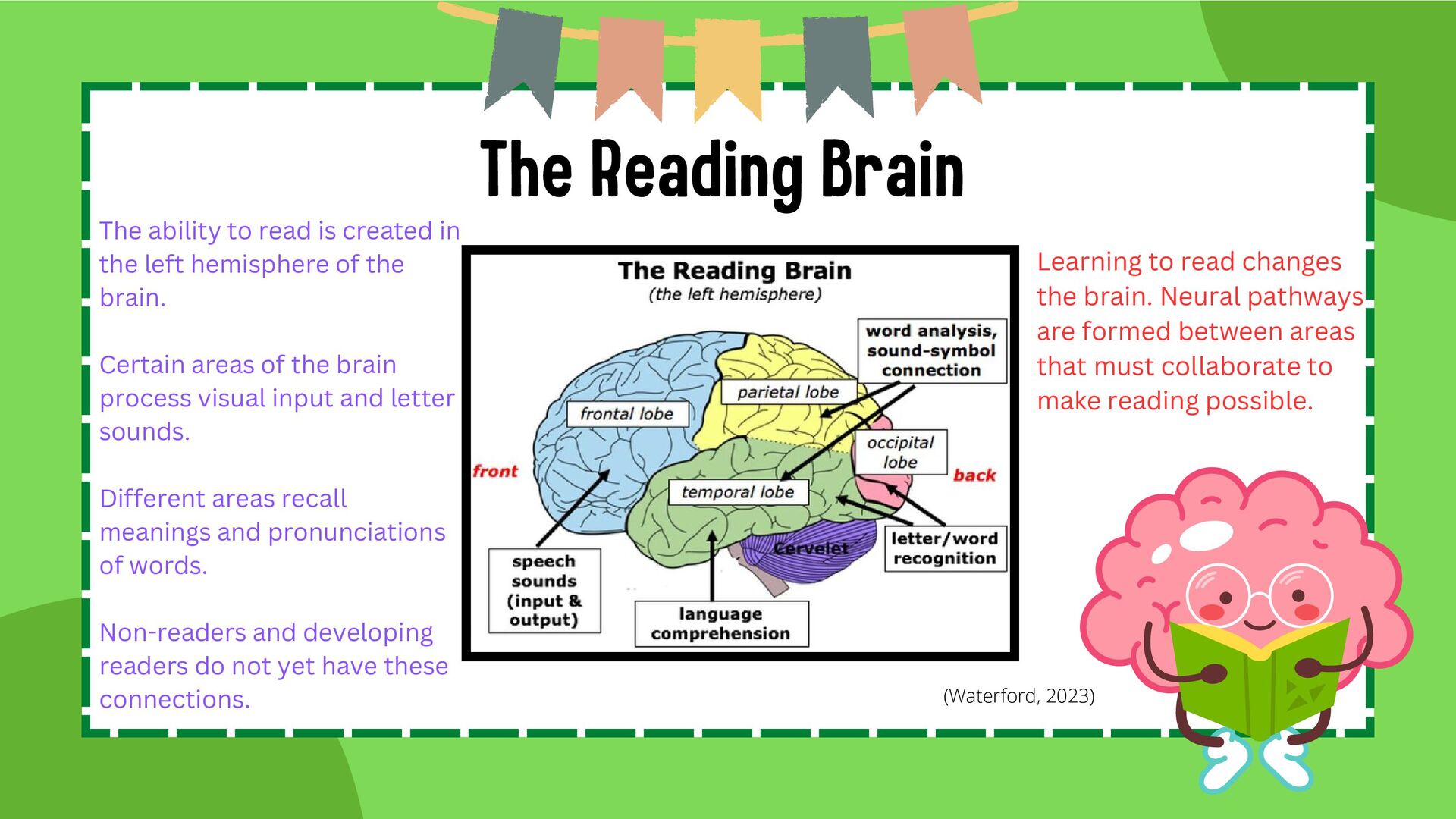
the left hemisphere of the brain. Certain areas of the brain process visual input and letter sounds. Different areas recall meanings and pronunciations of words. Non-readers and developing readers do not yet have these connections. Learning to read changes the brain. Neural pathways are formed between areas that must collaborate to make reading possible. (Waterford, 2023)
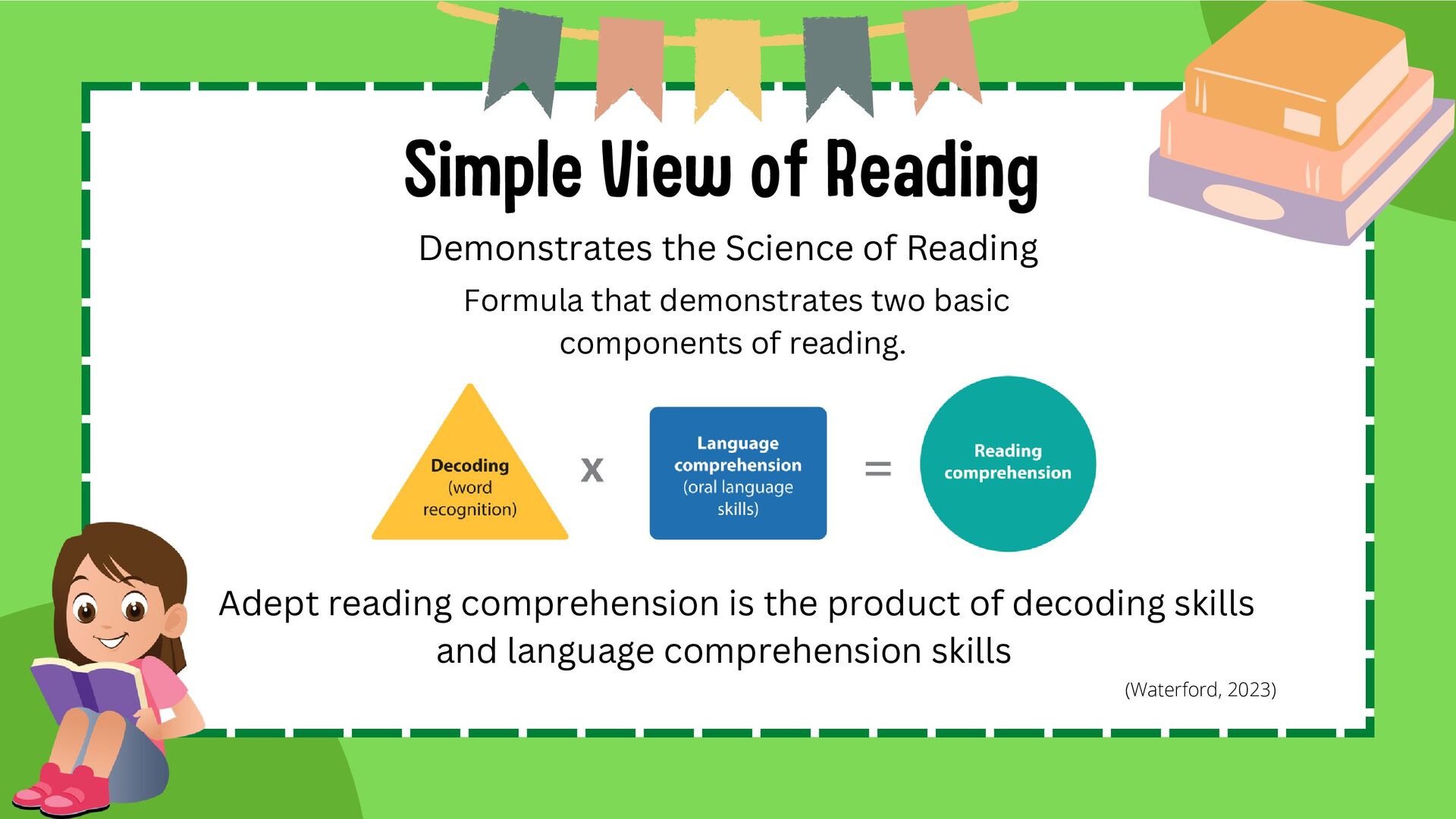
that demonstrates two basic components of reading. Adept reading comprehension is the product of decoding skills and language comprehension skills (Waterford, 2023)
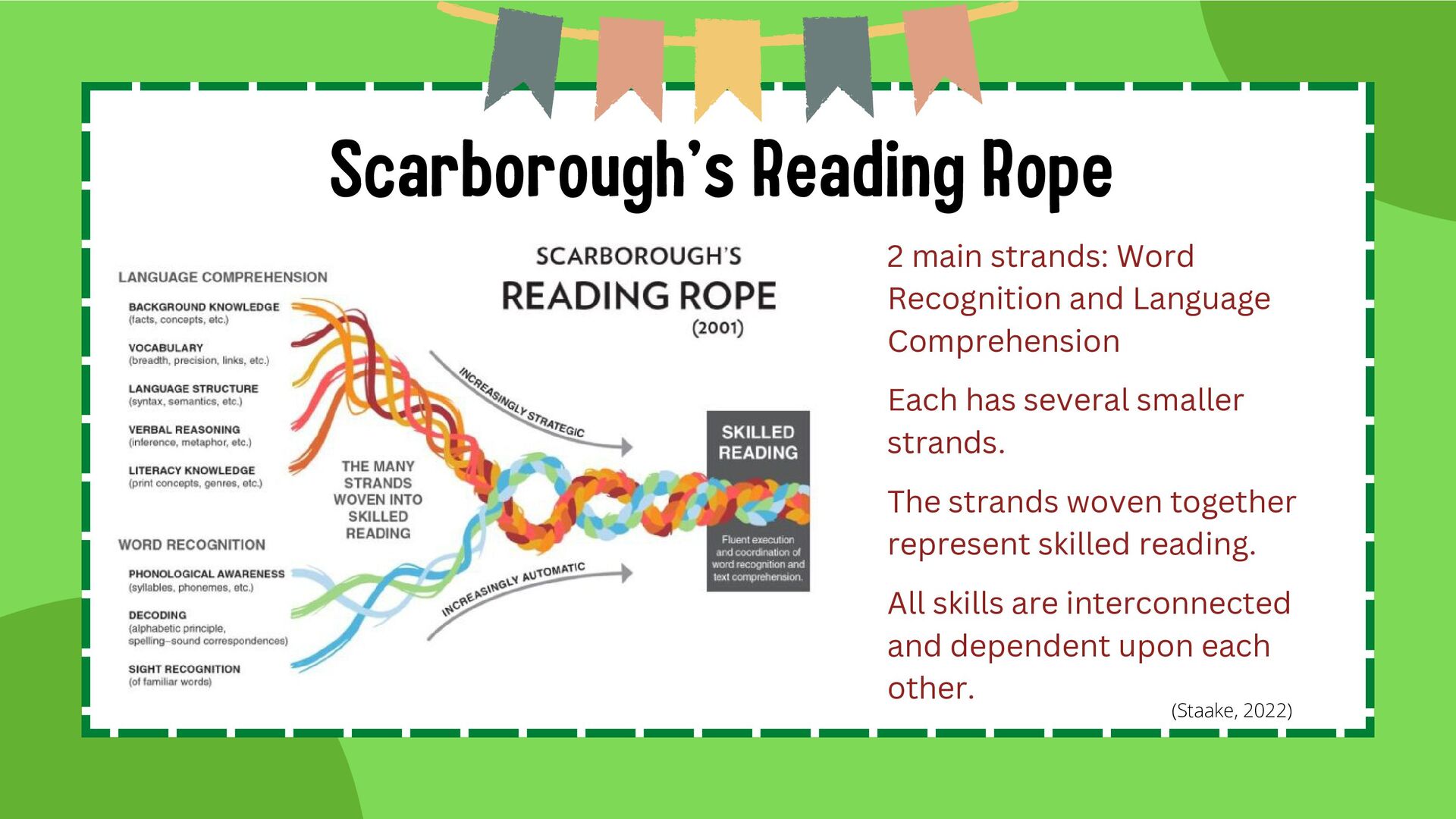
Comprehension Each has several smaller strands. The strands woven together represent skilled reading. All skills are interconnected and dependent upon each other. (Staake, 2022)
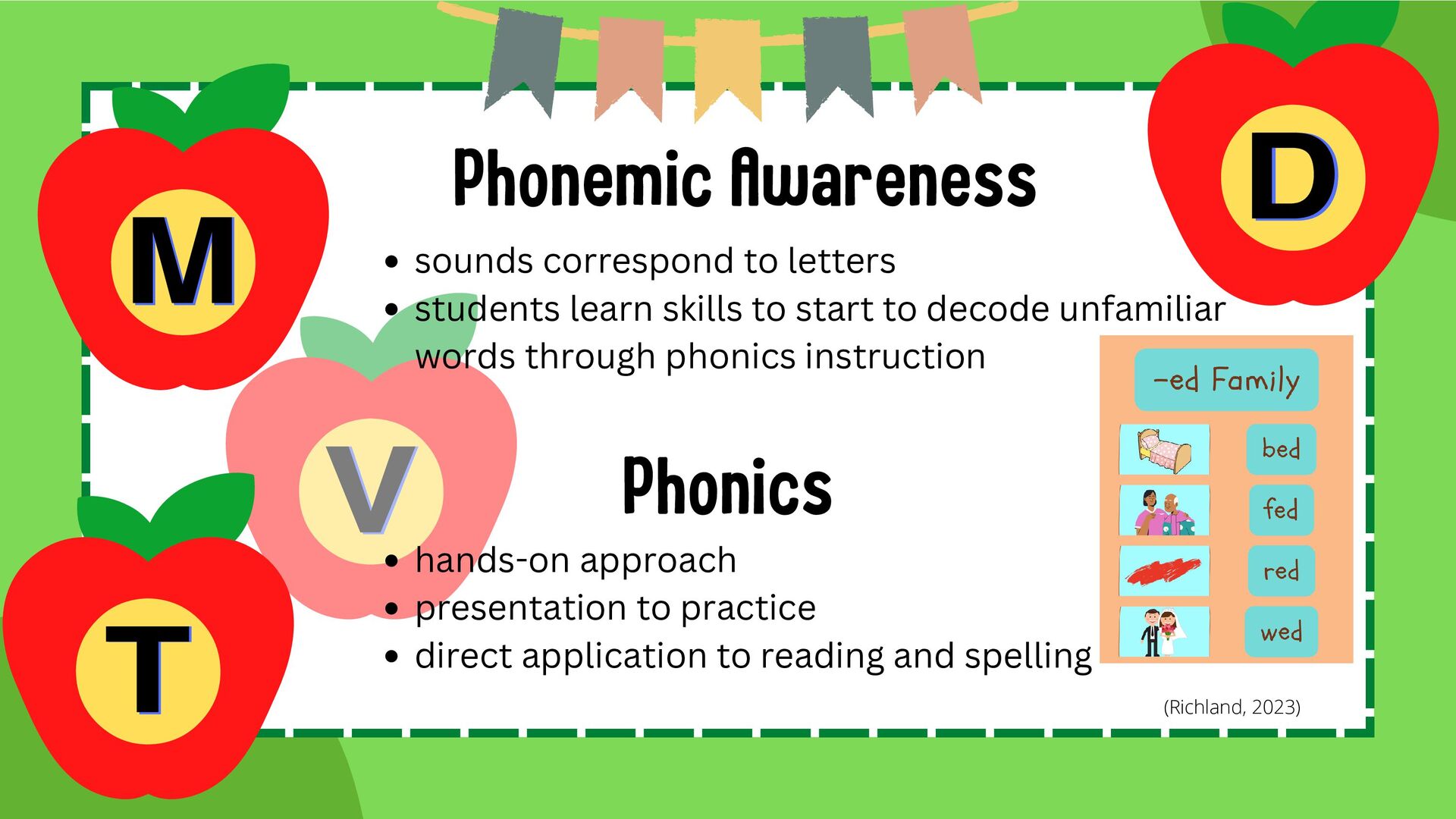
to start to decode unfamiliar words through phonics instruction hands-on approach presentation to practice direct application to reading and spelling (Richland, 2023)
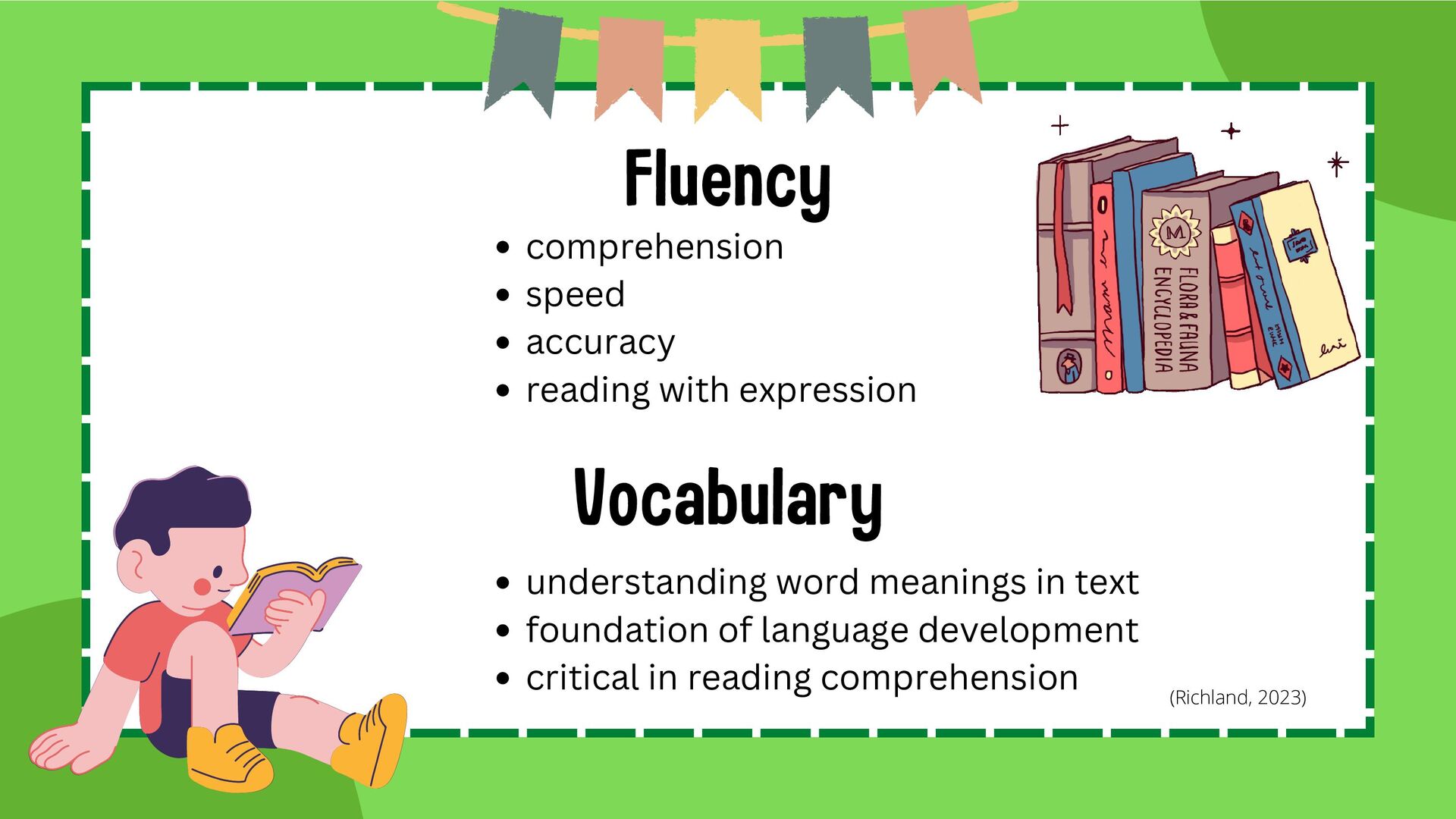
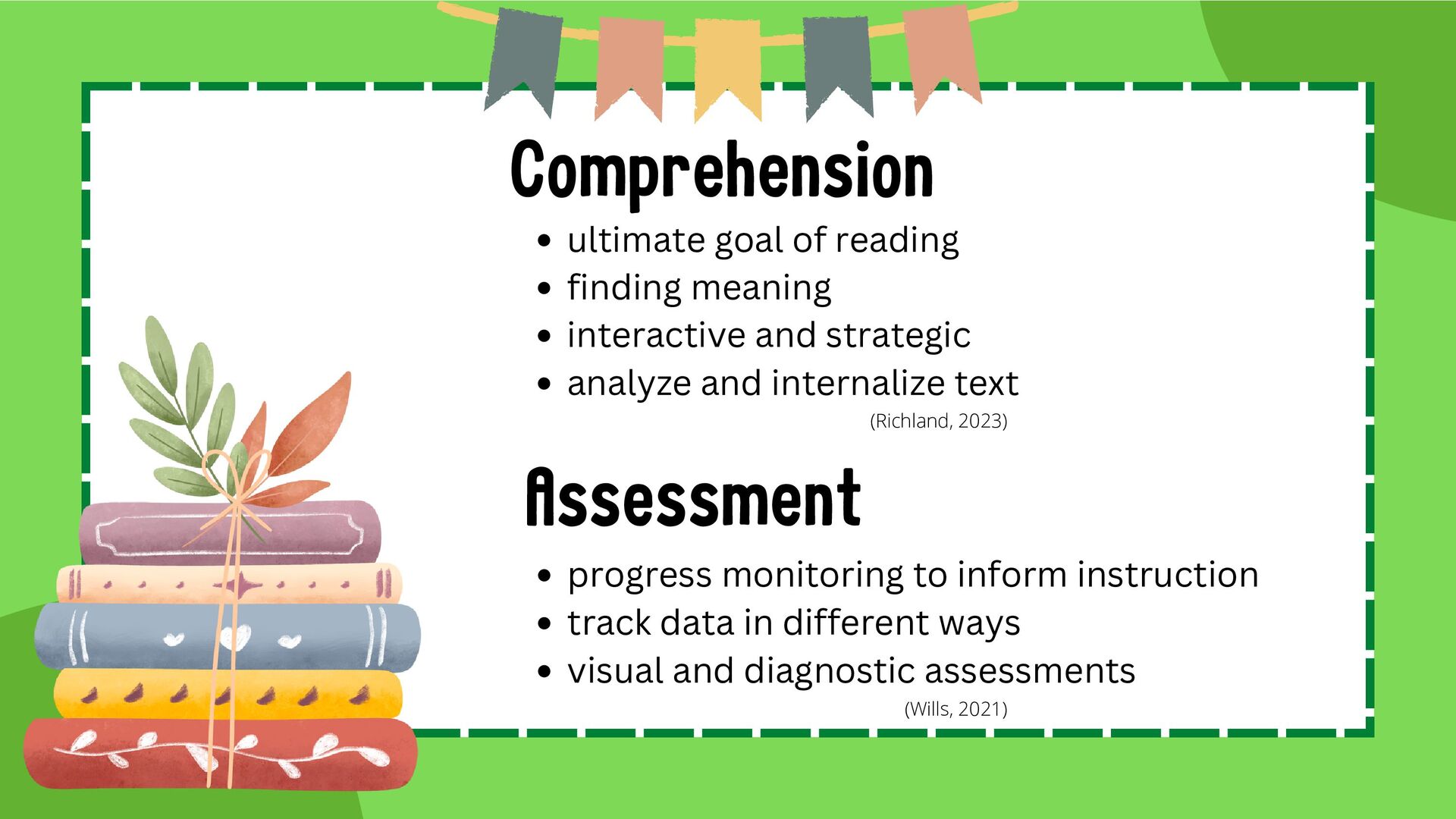
analyze and internalize text Assessment progress monitoring to inform instruction track data in different ways visual and diagnostic assessments (Wills, 2021) (Richland, 2023)
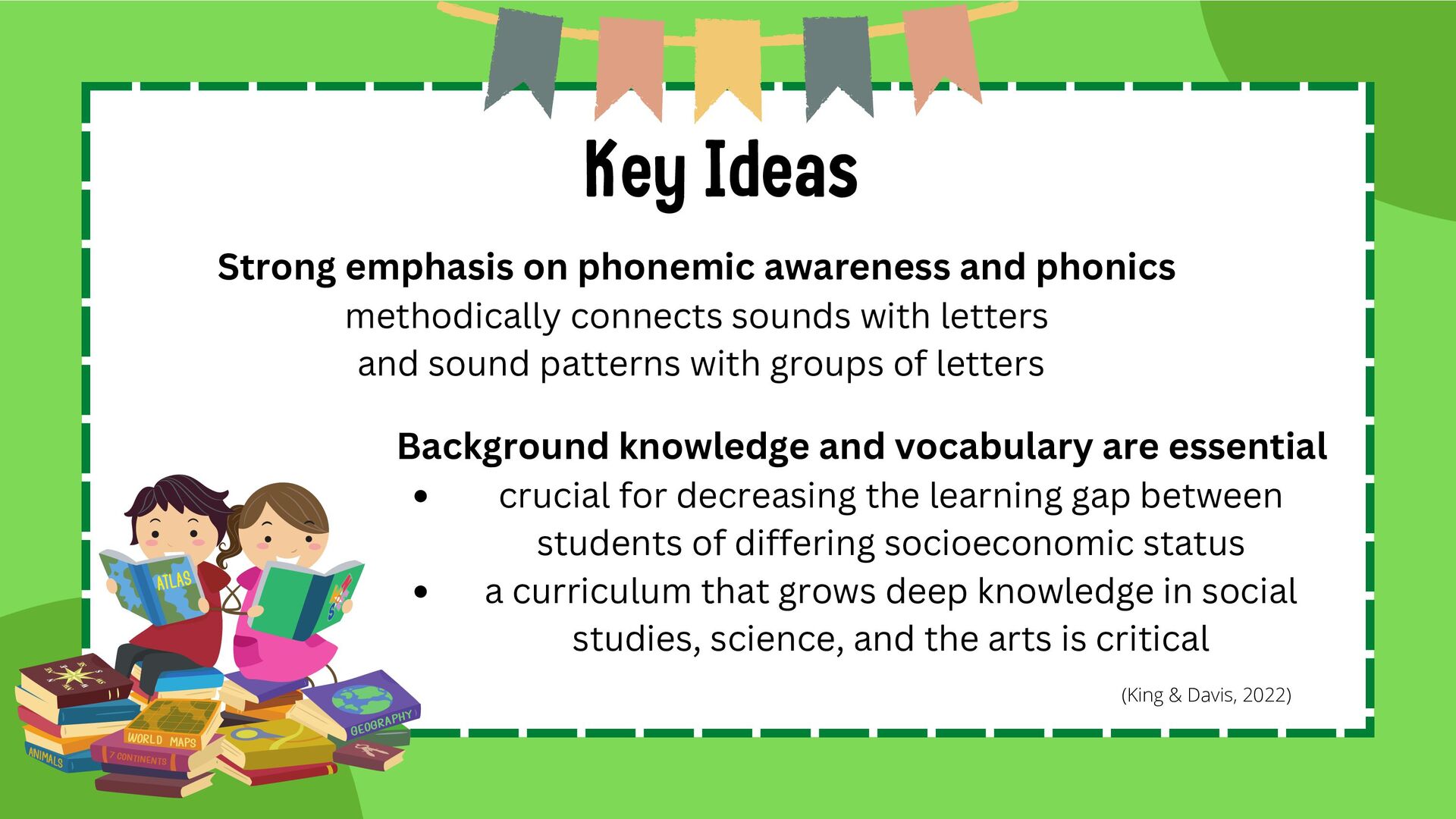
connects sounds with letters and sound patterns with groups of letters crucial for decreasing the learning gap between students of differing socioeconomic status a curriculum that grows deep knowledge in social studies, science, and the arts is critical Background knowledge and vocabulary are essential (King & Davis, 2022)
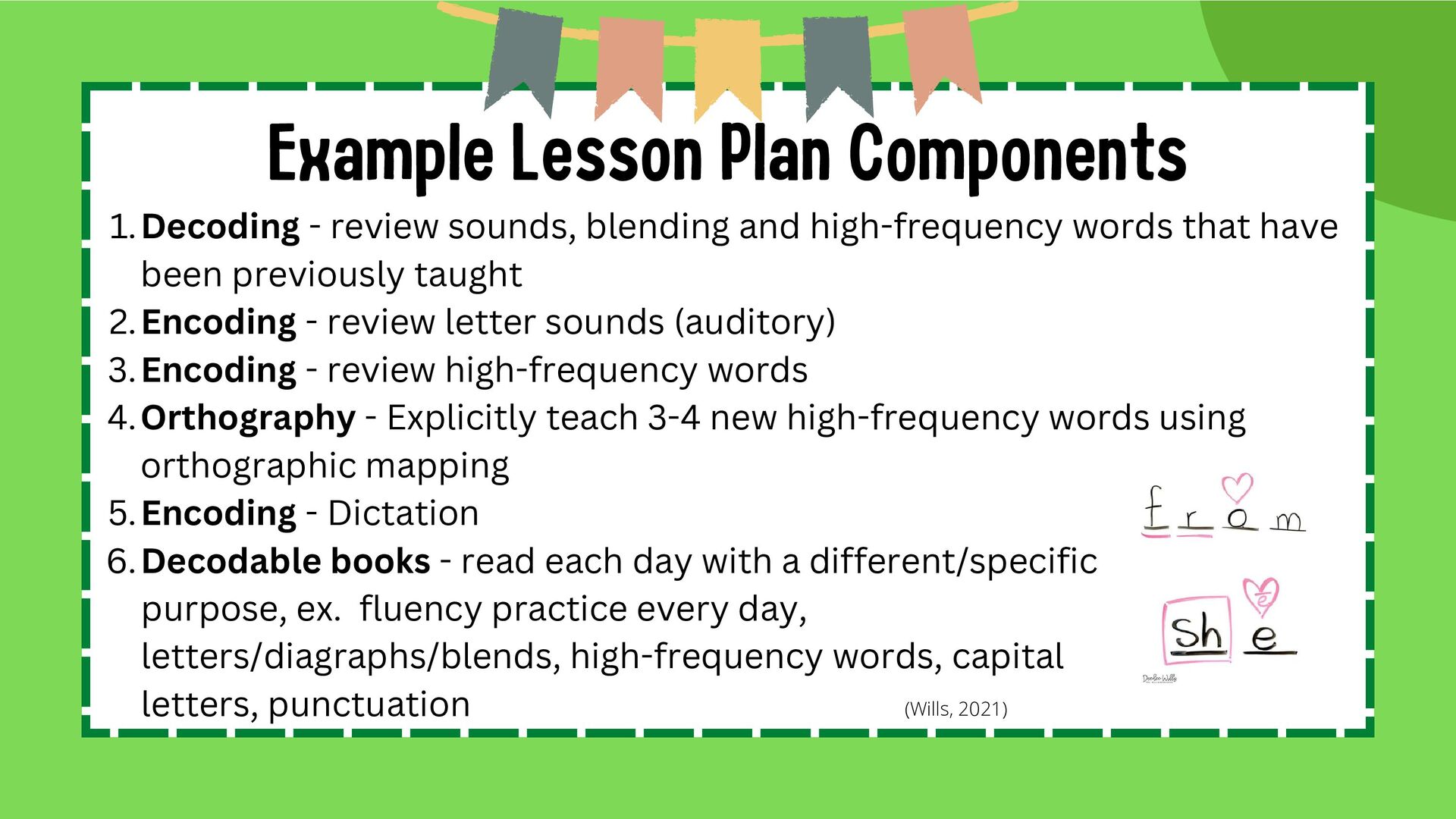
high-frequency words that have been previously taught Encoding - review letter sounds (auditory) Encoding - review high-frequency words Orthography - Explicitly teach 3-4 new high-frequency words using orthographic mapping Encoding - Dictation Decodable books - read each day with a different/specific 1. 2. 3. 4. 5. 6. purpose, ex. fluency practice every day, letters/diagraphs/blends, high-frequency words, capital letters, punctuation (Wills, 2021)
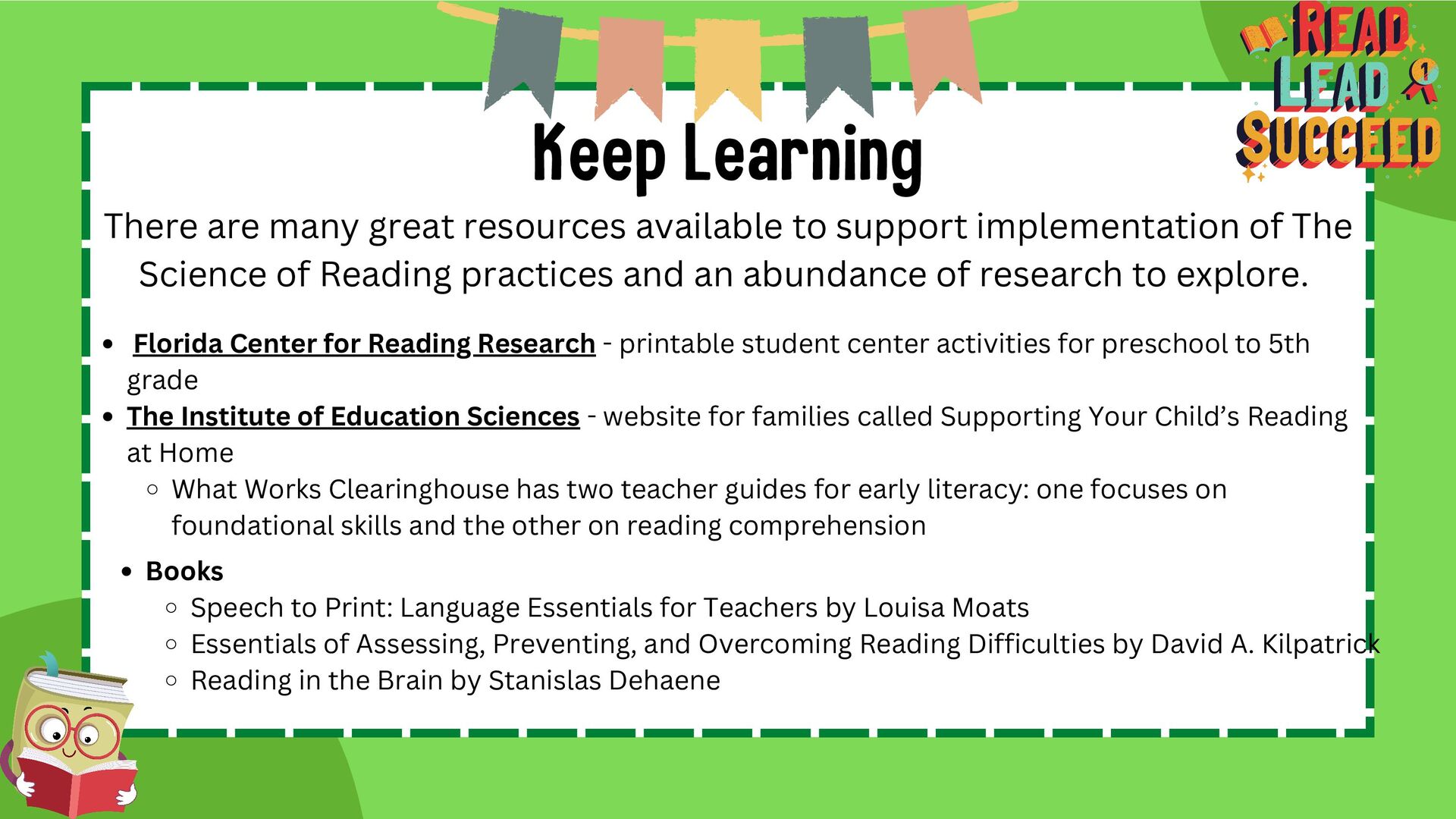
for preschool to 5th grade The Institute of Education Sciences - website for families called Supporting Your Child’s Reading at Home What Works Clearinghouse has two teacher guides for early literacy: one focuses on foundational skills and the other on reading comprehension There are many great resources available to support implementation of The Science of Reading practices and an abundance of research to explore. Keep Learning Books Speech to Print: Language Essentials for Teachers by Louisa Moats Essentials of Assessing, Preventing, and Overcoming Reading Difficulties by David A. Kilpatrick Reading in the Brain by Stanislas Dehaene
NWEA. https://www.nwea.org/blog/2022/the-science-of- reading-explained/ King, J.B. & Davis, J. (2022, November 16). Science of reading gives kids the best chance to close the literacy gap. The 74. https://www.the74million.org/article/science-of-reading-john-king-close-literacy-gap/ Richland, K. (2023, September 12). The science of reading: What all teachers should know. Pride Reading Program. https://pridereadingprogram.com/the-science-of-reading-what-all-teachers-should-know/ Staake, J. (2022, June 17). What is the science of reading? We Are Teachers. https://www.weareteachers.com/what-is-the- science-of-reading/#:~:text=A%20science%20of%20reading%20classroom,practice%20and%20repetition%20are%20key. Wills, D. (2021, December 18). What does a science of reading lesson plan look like? Free file too. Mrs. Wills Kindergarten. https://mrswillskindergarten.com/science-of-reading-lesson- plan/#:~:text=The%20science%20of%20reading%20provides,students%20to%20become%20fluent%20readers. Waterford. (2023, September 27). The science of reading: How to understand and apply the basics. Waterford. https://www.waterford.org/education/teaching-with-science-of-reading/ References


 yoshimura_datam
 3l4l5
3l4l5
 hiola
hiola
 soudai
 matleenalaakso
 mariooc
 doratex
 suisan
 ainischool
 robintux
 naoji_taniguchi_ksk_0827
 fmarot
 tonyrice
 palkan
 addyosmani
 reverentgeek
 aleyda
 wjessup
 sarafernandez
 ipullrank
 skipperchong
 mclloyd