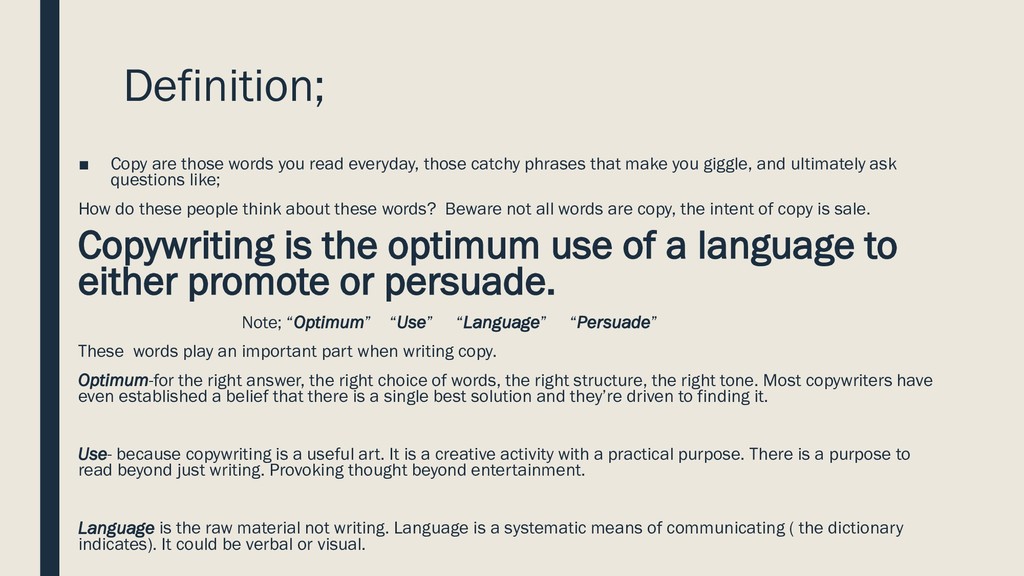
catchy phrases that make you giggle, and ultimately ask questions like; How do these people think about these words? Beware not all words are copy, the intent of copy is sale. Copywriting is the optimum use of a language to either promote or persuade. Note; “Optimum” “Use” “Language” “Persuade” These words play an important part when writing copy. Optimum-for the right answer, the right choice of words, the right structure, the right tone. Most copywriters have even established a belief that there is a single best solution and they’re driven to finding it. Use- because copywriting is a useful art. It is a creative activity with a practical purpose. There is a purpose to read beyond just writing. Provoking thought beyond entertainment. Language is the raw material not writing. Language is a systematic means of communicating ( the dictionary indicates). It could be verbal or visual.
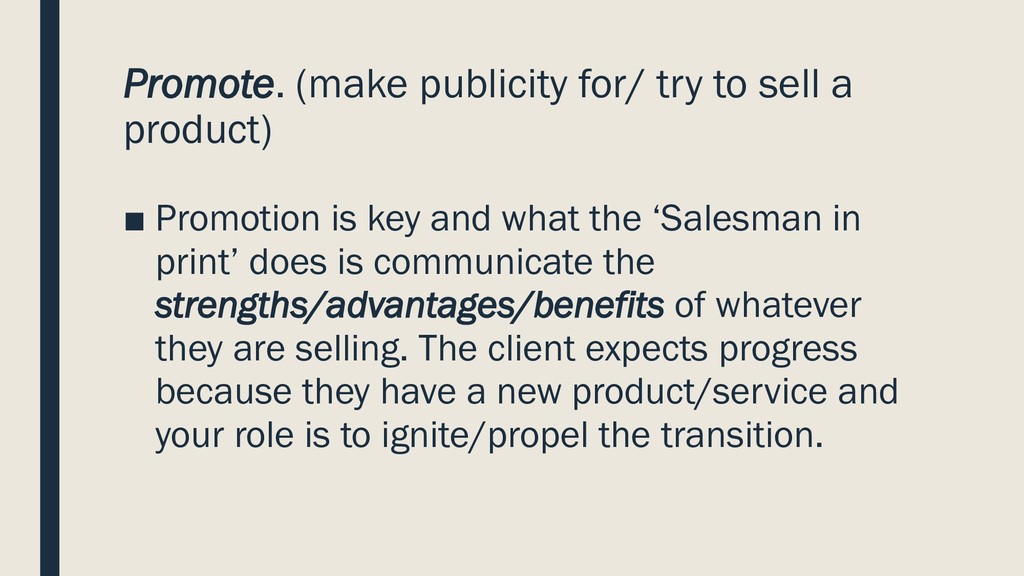
Promotion is key and what the ‘Salesman in print’ does is communicate the strengths/advantages/benefits of whatever they are selling. The client expects progress because they have a new product/service and your role is to ignite/propel the transition.
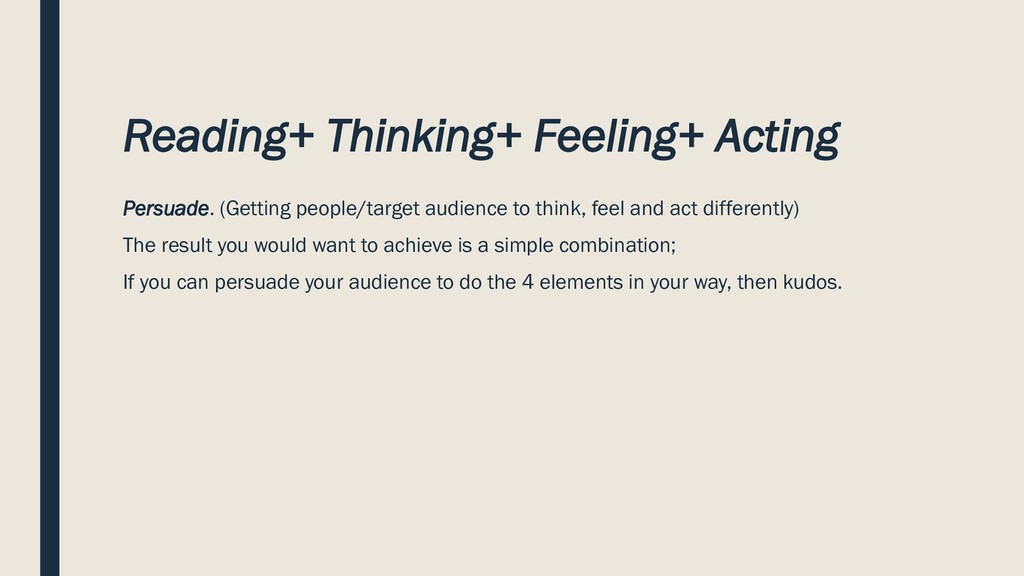
feel and act differently) The result you would want to achieve is a simple combination; If you can persuade your audience to do the 4 elements in your way, then kudos.
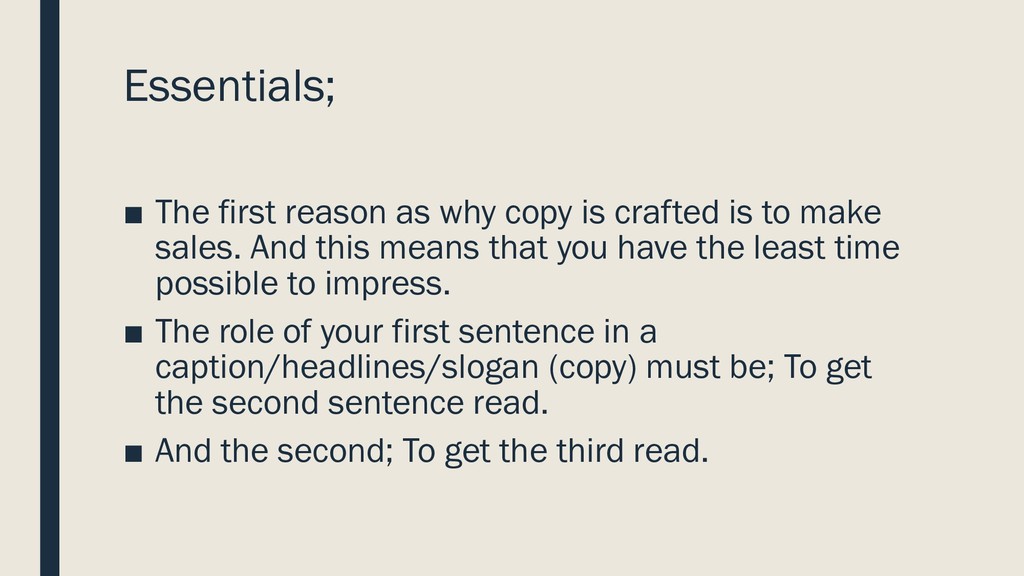
is to make sales. And this means that you have the least time possible to impress. ▪ The role of your first sentence in a caption/headlines/slogan (copy) must be; To get the second sentence read. ▪ And the second; To get the third read.
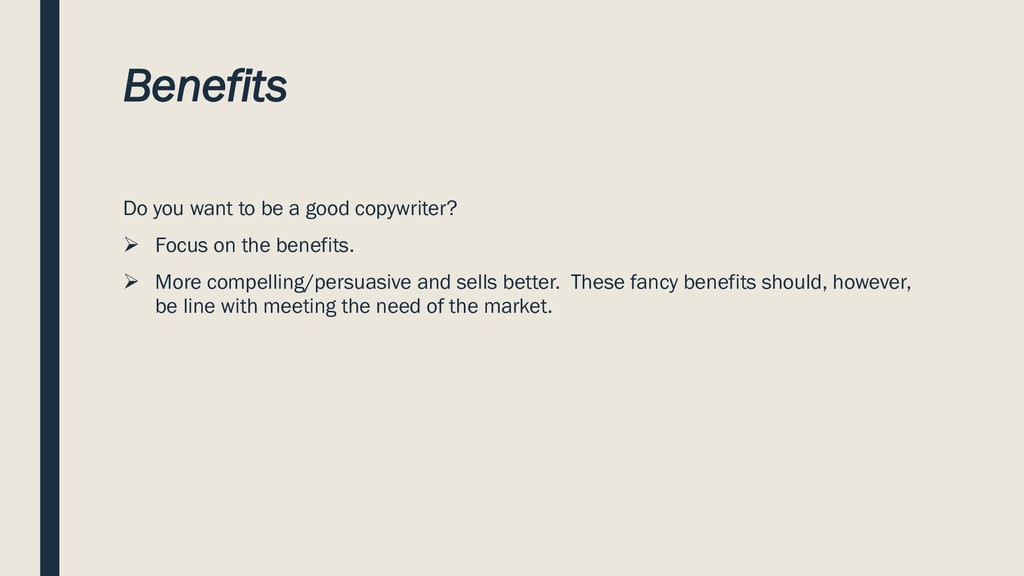
Focus on the benefits. ➢ More compelling/persuasive and sells better. These fancy benefits should, however, be line with meeting the need of the market.
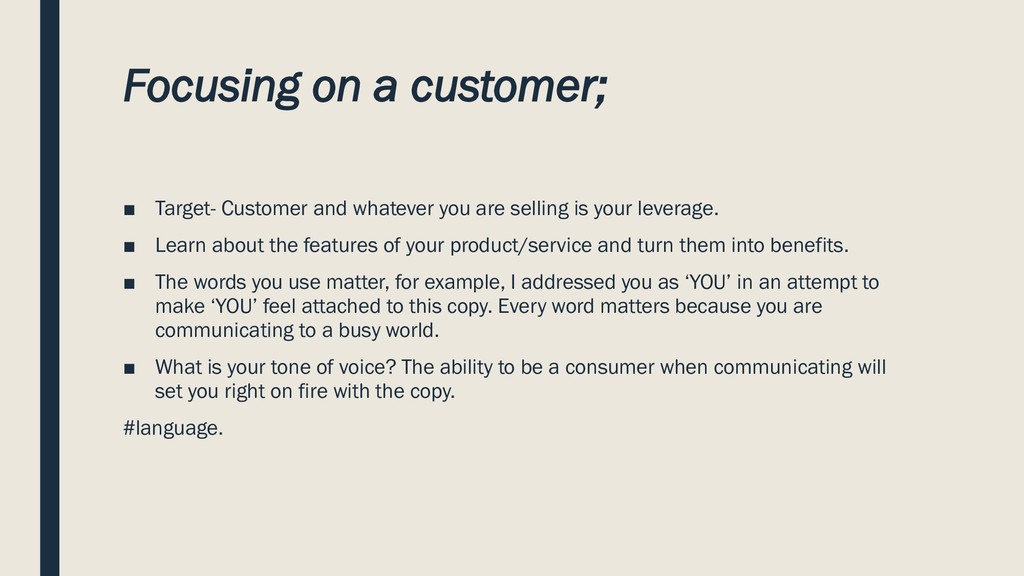
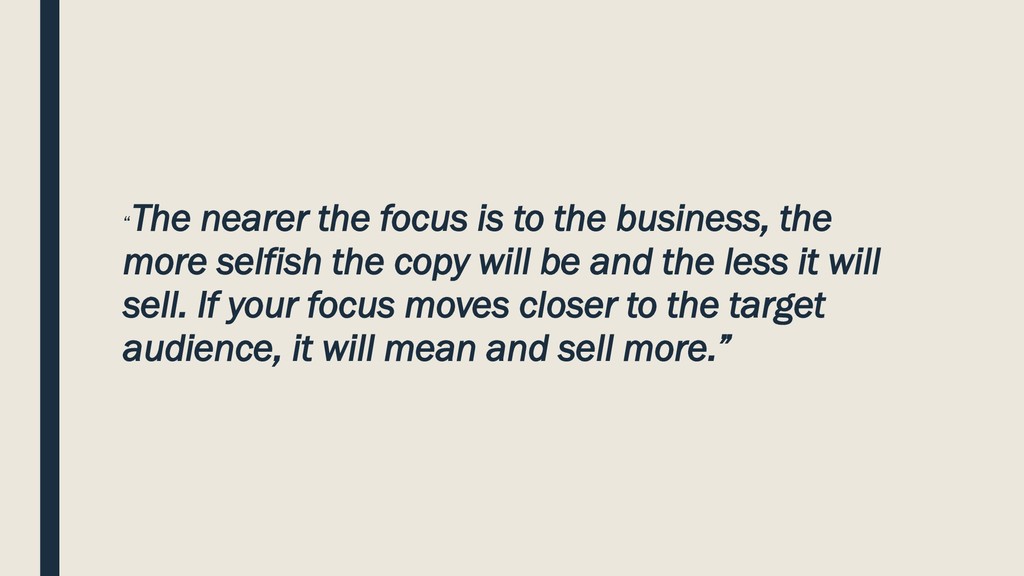
are selling is your leverage. ▪ Learn about the features of your product/service and turn them into benefits. ▪ The words you use matter, for example, I addressed you as ‘YOU’ in an attempt to make ‘YOU’ feel attached to this copy. Every word matters because you are communicating to a busy world. ▪ What is your tone of voice? The ability to be a consumer when communicating will set you right on fire with the copy. #language.
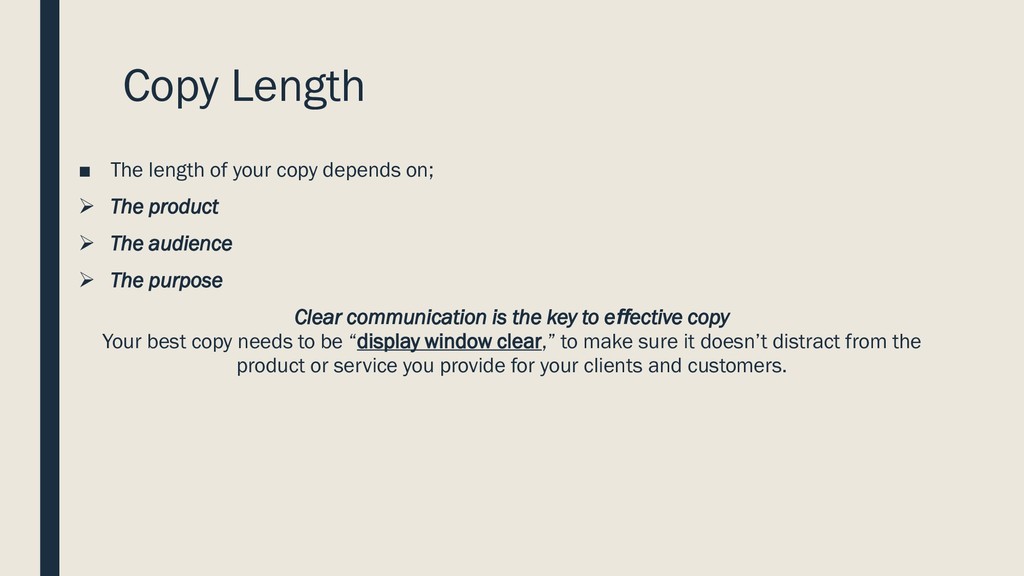
➢ The product ➢ The audience ➢ The purpose Clear communication is the key to effective copy Your best copy needs to be “display window clear,” to make sure it doesn’t distract from the product or service you provide for your clients and customers.
by writers, but it’s a misnomer for copywriters because “style” doesn’t work in the extremely short attention economy of the internet. Good copy isn’t necessarily “stylish,” but copy that establishes trust, authority, builds relationships, and gets people talking, sharing, and buying is in high demand. A lack of style is what makes it work, so writers who master this “style” are on the wanted-list.
rules and guidelines, you will google and find them somewhat but, Style results more from what a person is than from what he knows. Every writer can memorize rules — but how you get people’s attention requires some creativity.
complexities for the enemy, you have the entire year to confuse them. ❑ Connecting to your audience will be your soul sole purpose but avoid distractions.
attributes of a product/service that customers cannot get from anywhere. ▪These are most times very clear, compelling and translate into a benefit to the customer. Let us take a look at some taglines;
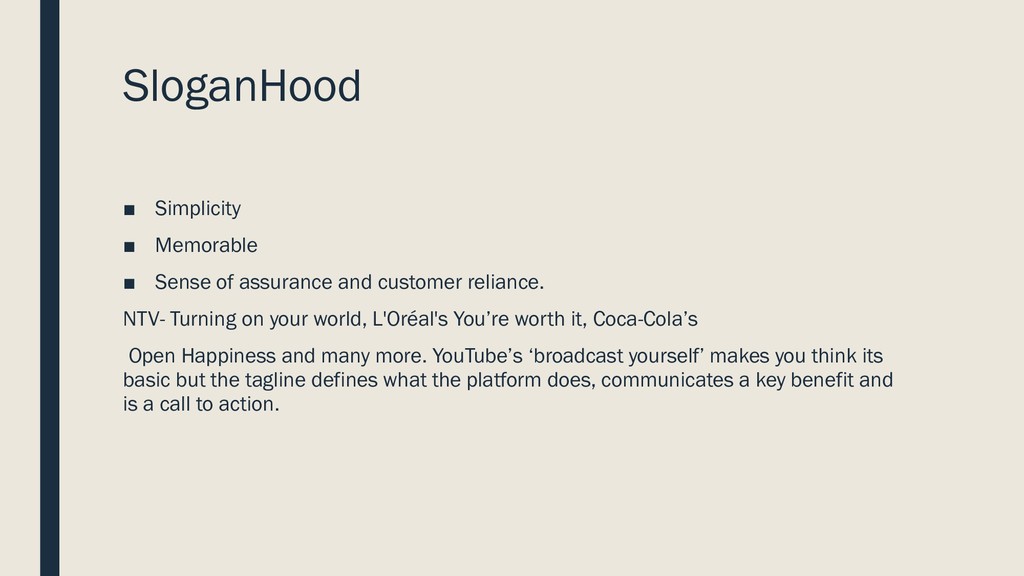
customer reliance. NTV- Turning on your world, L'Oréal's You’re worth it, Coca-Cola’s Open Happiness and many more. YouTube’s ‘broadcast yourself’ makes you think its basic but the tagline defines what the platform does, communicates a key benefit and is a call to action.
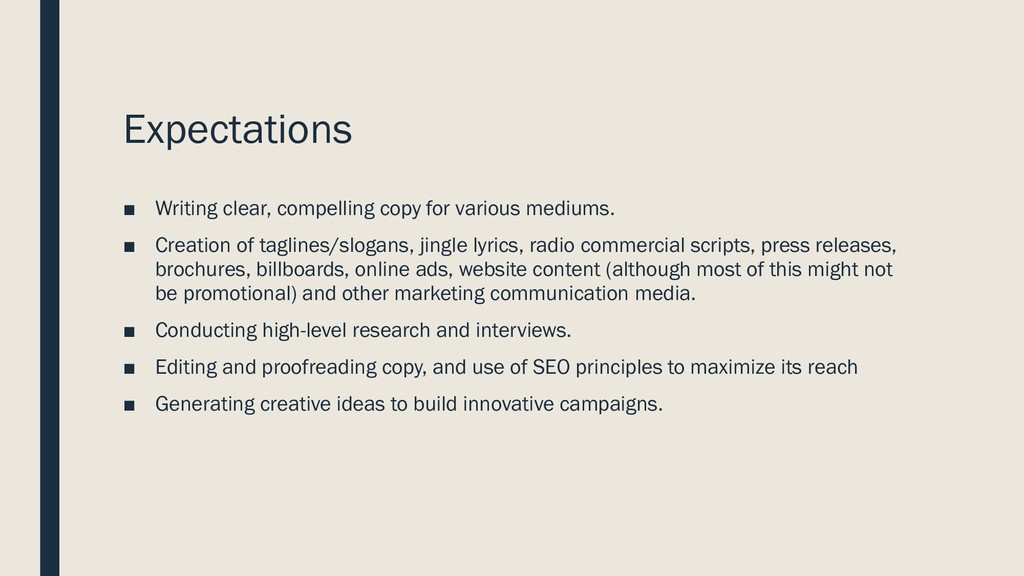
Creation of taglines/slogans, jingle lyrics, radio commercial scripts, press releases, brochures, billboards, online ads, website content (although most of this might not be promotional) and other marketing communication media. ▪ Conducting high-level research and interviews. ▪ Editing and proofreading copy, and use of SEO principles to maximize its reach ▪ Generating creative ideas to build innovative campaigns.


 ryu1013
 mhand01
 garyuten
 findyinc
 fumink7
 sugiyama_sukedachi
 keita_yoshikawa
 wjw100788
 baku89
 terencebasart
 chiemitaki
 h0sa
 csswizardry
 tmiket
 swwweet
 garrettdimon
 chriscoyier
 kristinabergwall1
 ryanjones
 katiecoart
 emna__ayadi
 soudai
 afnizarnur
 427marketing