Upgrade to Pro — share decks privately, control downloads, hide ads and more …

What Happens When Guests Find Hair or Stains Af...

Sponsored · Your Podcast. Everywhere. Effortlessly. Share. Educate. Inspire. Entertain. You do you. We'll handle the rest. →

What Happens When Guests Find Hair or Stains After Check-In?

Discover what really happens when guests find hair or stains after check-in—and why it can destroy your Airbnb business overnight. This comprehensive guide explores the immediate psychological impact on guests, from the visceral "contamination response" to the instant erosion of trust that occurs within the first 60 seconds of arrival. Learn which areas guests scrutinize most ruthlessly, including bathrooms, bedrooms, and kitchens, and why a single overlooked detail can trigger a cascade of negative consequences. We break down the real financial fallout: partial refunds, full chargebacks, emergency re-cleaning costs, and the hidden revenue loss from plummeting search rankings on Airbnb and VRBO. Understand how platform algorithms punish cleanliness complaints and why one bad review can cost thousands in foregone bookings before your listing recovers. The article exposes the root causes behind these failures, including the turnover time crunch that forces impossible trade-offs, inconsistent cleaning standards that rely on subjective judgment, and the dangerous gap between DIY cleaning and professional-grade protocols. For hosts ready to protect their reputation, we detail how to build bulletproof checklists, implement multi-layer quality assurance systems, and invest in HEPA vacuums, color-coded microfiber systems, and black-light inspection tools that catch what the naked eye misses. When prevention fails, our recovery playbook shows you exactly how to respond within 15 minutes, document everything for platform protection, and turn angry guests into loyal advocates through grace and follow-through. Ultimately, the hosts who thrive are those who stop treating cleanliness as a chore and start treating it as a competitive advantage. For property managers and Airbnb hosts across New Jersey seeking reliability, speed, and accountability in every changeover, partnering with a dedicated airbnb turnover service, rms cleaning( https://rms-cleaning.com/airbnb-cleaning-services-nj/ ) provides the systematic quality assurance that transforms guest-ready standards from a daily stress into a sustainable business foundation. Cleanliness is not an expense—it is the foundation upon which every five-star review, every repeat booking, and every thriving short-term rental business is built.

Avatar for Isen Redgrave

Isen Redgrave

July 02, 2026

Other Decks in Business

Transcript

  1. What Happens When Guests Find Hair or Stains After Check-In?

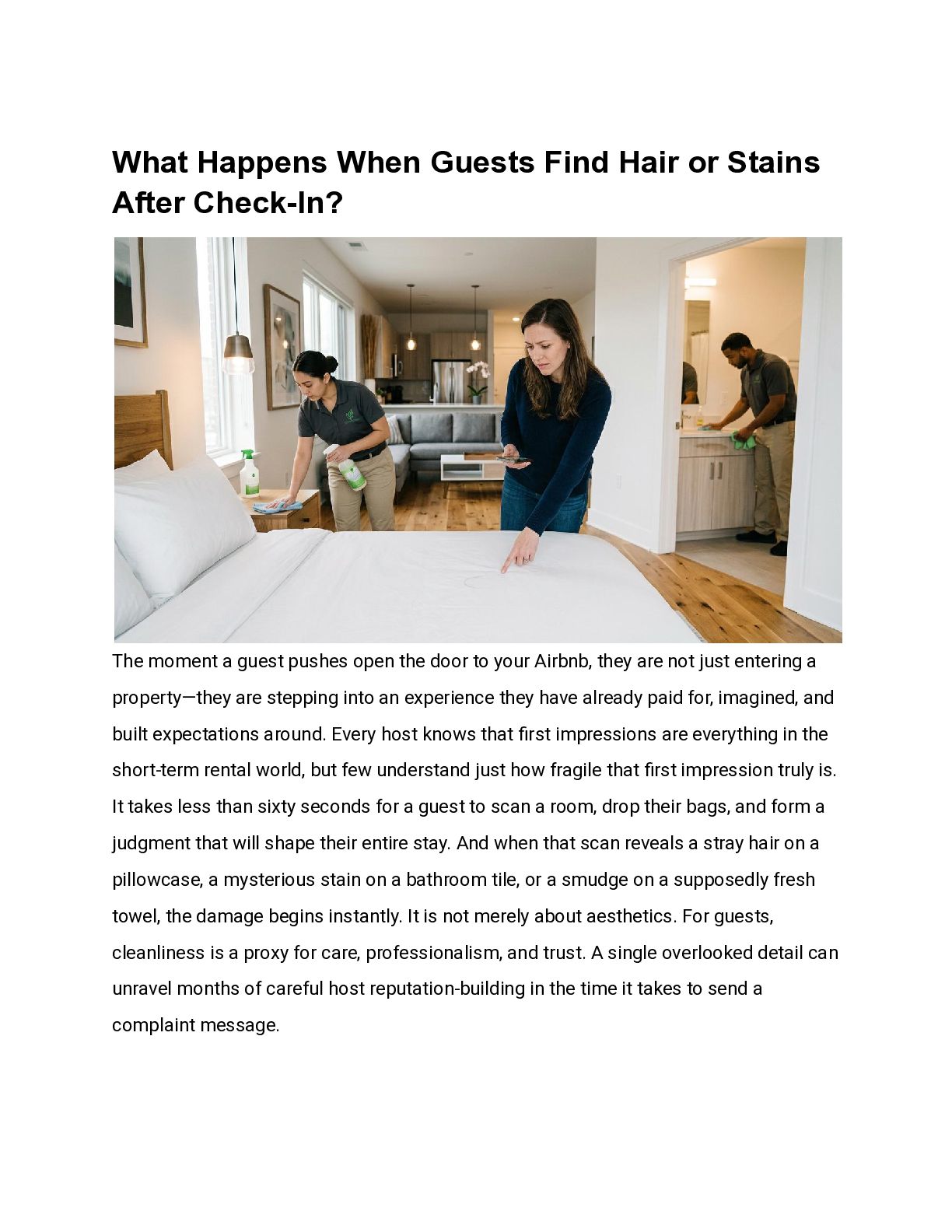
    The moment a guest pushes open the door to your Airbnb, they are not just entering a property—they are stepping into an experience they have already paid for, imagined, and built expectations around. Every host knows that first impressions are everything in the short-term rental world, but few understand just how fragile that first impression truly is. It takes less than sixty seconds for a guest to scan a room, drop their bags, and form a judgment that will shape their entire stay. And when that scan reveals a stray hair on a pillowcase, a mysterious stain on a bathroom tile, or a smudge on a supposedly fresh towel, the damage begins instantly. It is not merely about aesthetics. For guests, cleanliness is a proxy for care, professionalism, and trust. A single overlooked detail can unravel months of careful host reputation-building in the time it takes to send a complaint message.
  2. This article explores the full cascade of consequences that unfold

    when guests discover hair, stains, or other cleaning oversights after check-in. We will examine the psychological impact on guests, the tangible financial and reputational costs to hosts, the root causes that allow these mistakes to happen, and—most importantly—the prevention strategies and recovery protocols that separate thriving hosts from those constantly fighting uphill against negative reviews. Whether you manage one property or twenty, understanding what truly happens in these moments is the first step toward ensuring they never happen at all. The Immediate Guest Reaction: What Goes Through a Guest's Mind The Psychological Impact of Discovering Hair or Stains There is a reason hospitality experts call cleanliness the "non-negotiable" of guest satisfaction. When a traveler arrives after a long flight or a cramped car ride, they are seeking sanctuary. They want to exhale, kick off their shoes, and feel that the space is theirs for the duration of their stay. Finding a hair on a bedsheet or a stain in the shower stall does not just disappoint—it triggers a visceral reaction. Psychologists refer to this as the "contamination response," a deep-seated discomfort with bodily residues in spaces where we expect sterility. A guest does not rationalize that the hair might be from a previous cleaner or even their own. Instead, they assume the worst: that the space was not properly cleaned, that other areas are equally suspect, and that the host does not prioritize their wellbeing. This emotional shift from excitement to unease is immediate and powerful. Within minutes, a guest who was ready to leave a glowing review is now photographing evidence, drafting a complaint, and mentally downgrading their rating. The trust is
  3. broken, and trust is the currency of the short-term rental

    economy. Once lost, it is extraordinarily difficult to rebuild. Common Areas Where Guests Notice Problems First Not all oversights are equal in the eyes of a guest. Certain areas carry disproportionate weight because they are associated with personal hygiene and intimacy. Bathrooms are the most scrutinized spaces in any rental. Guests will inspect shower drains, sink basins, toilet rims, and towel folds with forensic attention. A single hair on a bar of soap or a water stain on a mirror can overshadow an otherwise immaculate space. Bedrooms rank a close second. Pillows, fitted sheets, mattress corners, and carpet edges are where guests expect absolute freshness. A stray hair on a pillow feels like a personal violation because it suggests the linens were not changed or were changed carelessly. Kitchens follow, with guests checking inside microwaves, under coffee makers, and along countertop grout lines. Living areas matter too, but guests tend to be slightly more forgiving of a dust speck on a bookshelf than a stain on a sofa cushion where they plan to relax. Understanding these priority zones is critical for any host building a cleaning protocol that actually protects their reputation. The Real Consequences for Airbnb Hosts and Property Managers Review Damage and Reputation Erosion In the algorithm-driven world of Airbnb and VRBO, your cleanliness rating is not just a vanity metric—it is a search ranking factor, a booking conversion driver, and a trust signal all rolled into one. When a guest discovers hair or stains and mentions it in a review, the language they use is often devastatingly specific. Future guests do not gloss
  4. over phrases like "hair in the bed," "stained towels," or

    "bathroom wasn't properly cleaned." These are red flags that trigger immediate scrolling to the next listing. Worse, platform algorithms weight recent reviews heavily. A single 3-star cleanliness rating can drop your overall score enough to push you down in search results for weeks. In competitive markets like New Jersey's short-term rental landscape, that drop can mean the difference between a fully booked month and a calendar full of gaps. The compounding effect is real: lower visibility leads to fewer bookings, which leads to desperation pricing, which leads to lower margins and more stress. One overlooked hair can start a downward spiral that takes months to reverse. Financial Fallout: Refunds, Cancellations, and Lost Revenue The financial consequences extend far beyond a bruised ego. Guests who discover cleanliness issues are increasingly empowered by platform policies to demand—and receive—partial or full refunds. Airbnb's Guest Refund Policy explicitly covers situations where a listing is not clean upon arrival. Depending on the severity and the guest's persistence, hosts may find themselves refunding a night's stay, a cleaning fee, or even the entire booking amount. Beyond refunds, there is the cost of emergency re-cleaning. If a guest is willing to stay but demands immediate remediation, hosts often pay premium rates for same-day cleaning services, sometimes at double or triple standard turnover costs. Then there is the hidden cost of lost future revenue. A property with a recent cleanliness complaint will see its booking conversion rate drop measurably. Hosts who rely on consistent occupancy to cover mortgages or management costs feel this pain acutely. In some cases, a single bad review cycle can cost thousands in foregone bookings before the listing recovers its standing.
  5. Guest Communication Breakdowns Perhaps the most exhausting consequence is the

    communication avalanche. A guest who finds a stain does not send one polite message and move on. They send photos. They ask questions. They demand explanations. For hosts managing multiple properties, this can consume hours of time that should be spent on growth, marketing, or guest experience design. The emotional labor is real too—defending your standards while acknowledging a failure is a tightrope walk that drains even seasoned hosts. If the situation escalates to platform mediation, the time investment multiplies. Hosts must compile evidence, respond to case managers, and navigate policies that often favor guests in cleanliness disputes. Even when a host "wins" a mediation case, the process is grueling and the relationship with the guest is irreparably damaged. For property managers overseeing dozens of units, these breakdowns can become a full-time crisis management job that distracts from scaling the business. Why Hair and Stains Slip Through: Root Causes The Turnover Time Crunch The most common culprit behind cleaning oversights is not negligence—it is time pressure. In high-demand markets, back-to-back bookings leave narrow windows between checkout and check-in. A cleaner who has two hours to flip a three-bedroom property is forced to make impossible trade-offs. Do they spend extra minutes scrubbing the shower grout, or do they ensure the beds are made and the towels are restocked? Under pressure, corners get cut. Hair gets missed. Stains get a quick wipe instead of proper treatment. The problem is structural, not personal, but guests do not
  6. care about your scheduling constraints. They care about what they

    see when they walk in. Inconsistent Cleaning Standards Many hosts operate without a written, room-by-room checklist. They rely on memory, intuition, or verbal instructions to cleaners. This approach fails because "clean" is subjective. What looks acceptable to a tired host at 10 PM may look unacceptable to a guest arriving at 2 PM with fresh eyes. Invisible spots—under furniture, behind toilets, inside refrigerator drawers, along baseboard edges—are exactly where hair and grime accumulate and exactly where rushed cleaning misses. Cross-contamination is another invisible failure: using the same cloth on a bathroom sink and a kitchen counter spreads bacteria and residue in ways that guests can smell or sense even if they cannot see. DIY Cleaning vs. Professional Gaps Hosts who clean their own properties often fall victim to familiarity blindness. You have looked at the same shower tile a hundred times; you stop noticing the faint discoloration in the grout. You have folded the same towels the same way; you miss the stray thread or faint stain. Professional cleaners, by contrast, bring fresh eyes and systematic approaches. They also bring equipment that most hosts do not own: HEPA-filtered vacuums that capture hair instead of redistributing it, steam cleaners that lift stains without harsh chemicals, and black-light inspection tools that reveal what the naked eye cannot. The gap between DIY cleaning and professional standards is often the gap between a 4-star and a 5-star review. How to Prevent Hair and Stains from Reaching Your Guests
  7. Build a Bulletproof Turnover Checklist Prevention starts with documentation. Every

    property needs a detailed, room-by-room checklist that leaves nothing to chance. In bedrooms, the checklist should include mattress inspection, pillowcase flipping, fitted sheet tension checks, and carpet edge vacuuming. In bathrooms, it should cover drain hair removal, mirror streak inspection, toilet rim wiping, and towel fold freshness. Kitchens require inside-appliance checks, countertop sanitization, and sink strainer cleaning. Living areas need upholstery inspection, remote control wiping, and light switch sanitization. Laundry protocols deserve special attention. Linens should be inspected before folding, not after. Black-light inspection of white sheets can reveal stains invisible in normal lighting. Towels should be stored in sealed packaging or folded in a way that signals they have never been used. These details feel excessive until you consider the alternative: a guest finding a hair and questioning every surface in your property. Implement a Multi-Layer Quality Assurance System Even the best checklist fails if the same person who cleaned also inspects. The "fresh eyes" principle is non-negotiable in hospitality. Ideally, a second team member or the host themselves performs a walkthrough before guest arrival. Photo documentation of key areas—beds, bathrooms, kitchen counters—creates a timestamped record that protects against false claims and reinforces accountability. Staging standards matter too. A property that looks intentionally prepared signals cleanliness before a guest touches a single surface. Neatly folded towels, sealed toiletries, aligned furniture, and fresh scents all contribute to a perception of care that pre-empts scrutiny. When a space feels deliberately arranged, guests are more likely to assume diligence rather than doubt it.
  8. Invest in Professional-Grade Tools and Products The tools of prevention

    are as important as the people using them. HEPA vacuums capture microscopic particles and hair that standard vacuums simply redistribute. Color-coded microfiber cloths prevent cross-contamination between bathroom and kitchen surfaces. Professional-grade disinfectants eliminate bacteria without leaving sticky residues or overpowering chemical odors that guests associate with masking rather than cleaning. For hosts managing multiple properties or operating in competitive markets, these investments pay for themselves quickly. The cost of a commercial-grade vacuum is less than the revenue lost from a single cleanliness complaint. The cost of professional cleaning products is negligible compared to the price of an emergency re-clean or refund. When It Happens Anyway: A Host's Recovery Playbook Respond Within the First 15 Minutes Despite every precaution, mistakes happen. The difference between a recoverable situation and a reputation disaster often comes down to response speed. Guests who receive an acknowledgment within fifteen minutes feel heard. Guests who wait hours feel ignored. Your first message should not make excuses. It should acknowledge the issue, apologize sincerely, and offer an immediate remedy. Options include scheduling an emergency re-clean, offering a partial refund, or providing a credit toward a future stay. The goal is to shift the guest from complaint mode to resolution mode before they escalate to the platform.
  9. Document Everything for Platform Protection From the moment a complaint

    arrives, start building a paper trail. Save the guest's messages. Photograph the area in question. Maintain records of your cleaning schedule, receipts, and any communications with your cleaning team. If the guest leaves an unfair or exaggerated review, this documentation is your only path to a successful platform appeal. Hosts who operate without records have no defense when a guest claims a property was "filthy" when the reality was a single overlooked spot. Turn a Negative Into a Reputation Win The most successful hosts treat cleanliness complaints as operational intelligence, not personal attacks. They analyze where the failure occurred, tighten their protocols, and sometimes follow up with guests after resolution with a small gesture of goodwill—a handwritten note, a local treat, or a sincere message about improvements made. Public responses to negative reviews should be professional, brief, and focused on the steps taken to prevent recurrence. Future guests reading your response will judge your character as much as the complaint itself. Grace under pressure converts skeptics into bookers. The Long-Term Solution: Partnering for Consistency At a certain scale, preventing hair and stains is no longer about working harder—it is about building systems that work smarter. Individual hosts can maintain high standards for one or two properties through sheer diligence, but growth demands delegation, and delegation demands trust. The hosts who sleep soundly are the ones who have partnered with cleaning professionals who treat turnover quality as a science, not an afterthought.
  10. RMS Cleaning( https://rms-cleaning.com/airbnb-cleaning-services-nj/ ) has built its reputation in New

    Jersey's short-term rental market on exactly this principle: that every guest deserves to walk into a space that feels brand new, and every host deserves the peace of mind that comes from knowing the details are handled. The investment in professional turnover support is not an expense—it is insurance against the cascading costs of complaints, refunds, and reputation damage. In an industry where a single star on a review can translate to thousands of dollars in annual revenue, the math is simple. Cleanliness is not a line item. It is the foundation upon which every five-star stay, every glowing review, and every repeat booking is built. And that foundation is worth protecting with everything you have.