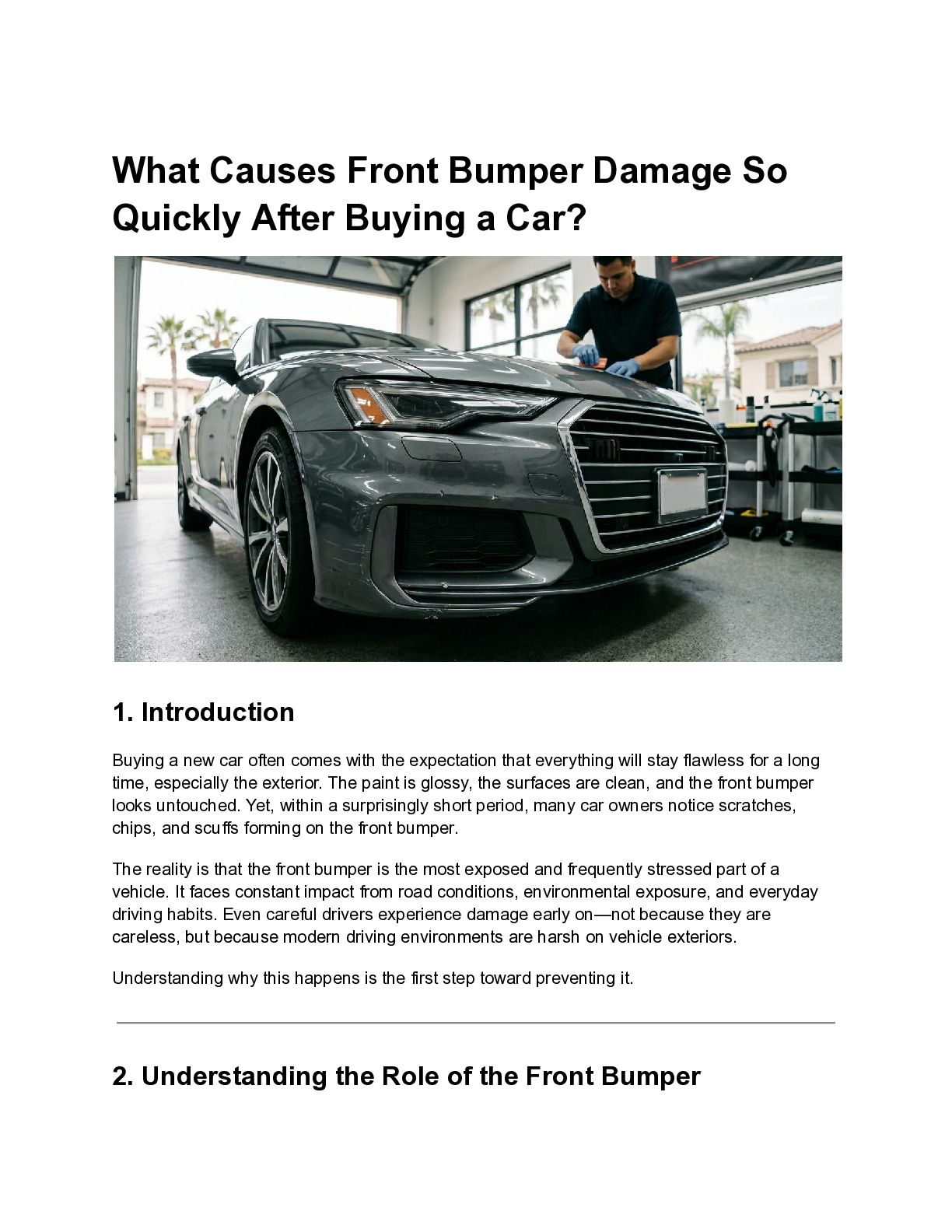
Front bumper damage occurs surprisingly quickly after buying a new car because it is the most exposed and frequently impacted part of the vehicle during daily driving. Even when drivers are careful, the bumper constantly faces road debris, gravel, and tiny stones that are kicked up by other vehicles, especially on highways and rough roads. Urban driving further increases the risk due to tight parking spaces, curbs, and unexpected low-speed contact that can easily leave scratches or scuffs on the surface. Weather conditions such as strong sunlight, heavy rain, dust storms, and temperature changes gradually weaken the protective paint layer, making the bumper more vulnerable over time. Many drivers also underestimate how quickly small abrasions build up into visible damage because modern car paint systems are relatively thin compared to older vehicles. This is where understanding protective solutions becomes important, and it is helpful to learn more information about how preventive care can reduce long-term repair costs. Even minor driving habits, like following too closely behind other vehicles, can increase exposure to flying debris that chips the bumper paint. Construction zones and poorly maintained roads further accelerate wear due to loose materials and sharp particles. In addition, modern bumper designs often include sensors and lightweight materials that prioritize safety and efficiency but offer less resistance to cosmetic damage. As a result, even new vehicles begin showing early wear sooner than expected under real-world conditions. Many owners are now turning to protective options such as films and coatings to maintain the original factory finish for longer. The front bumper also suffers from repeated exposure during washing and cleaning, where improper techniques can cause micro-scratches. Over time, these small imperfections accumulate and become noticeable blemishes on the surface. Parking in crowded areas or near high-traffic zones significantly increases the chances of accidental contact with other objects or vehicles. Environmental pollutants and road chemicals can also degrade the clear coat, reducing its protective strength. Ultimately, consistent exposure to these everyday hazards explains why bumper damage appears so quickly after purchase.


 progmat
 forest8810
 synergymarketing
 sasukefinanciallab
 hr1nursing
 fullerene_inc
 shunsuke_takeuchi
 tsogo817421
 neuroenergia
 mj6237
 iwashi86
 hirohasuyoutube
 destraynor
 iamctodd
 tessaabrams
 scottboms
 addyosmani
 tmiket
 kristinabergwall1
 aleyda
 keavy
 ipullrank
 stephaniewalter
 reverentgeek