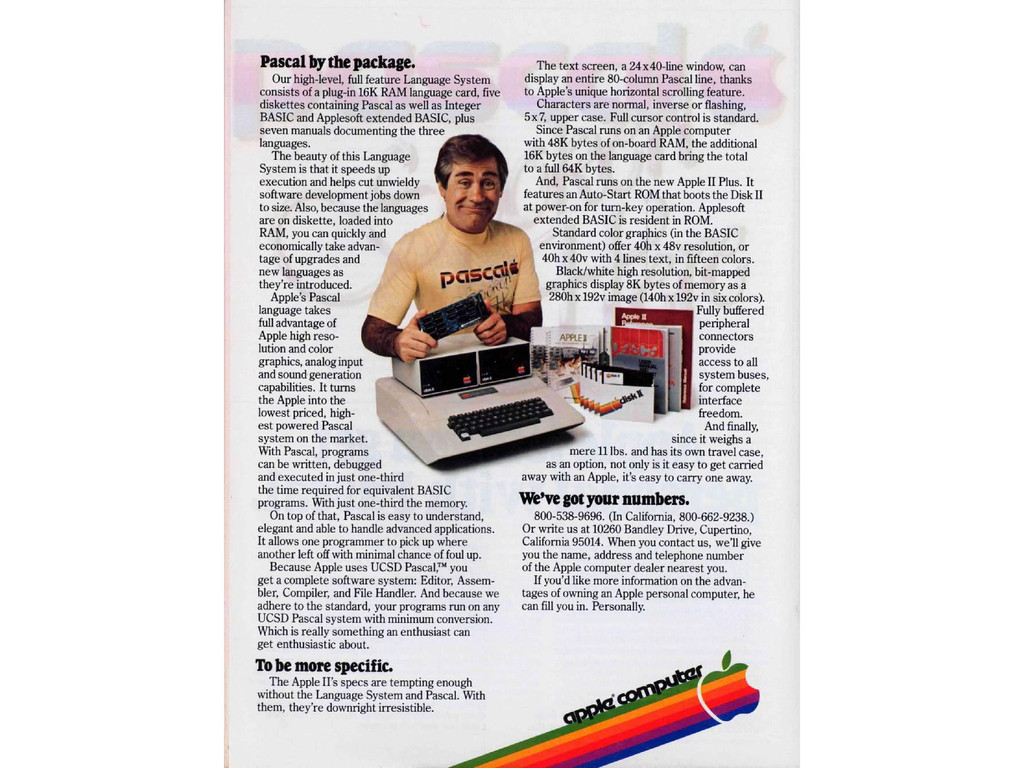
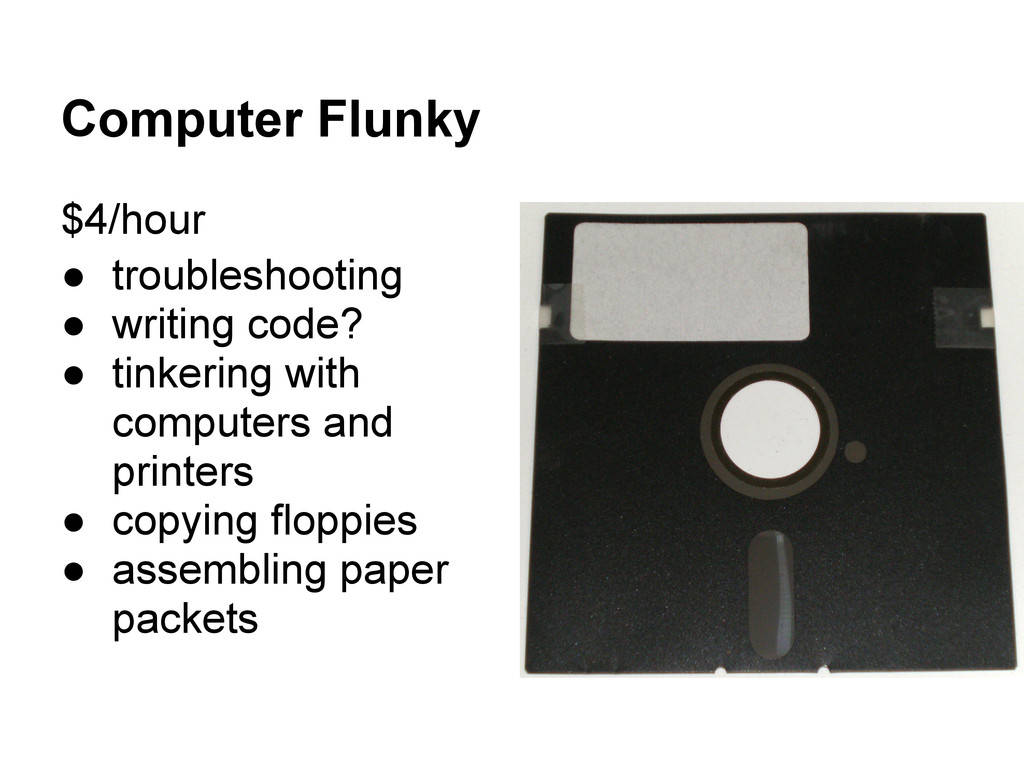
received an Apple ][ for a week for our class to use. 30 of us shared 1 machine. A program called "Lemonade Stand" was available on 5 ¼ inch floppy disks. The game: maximize your profits on selling lemonade by responding to weather forecasts.
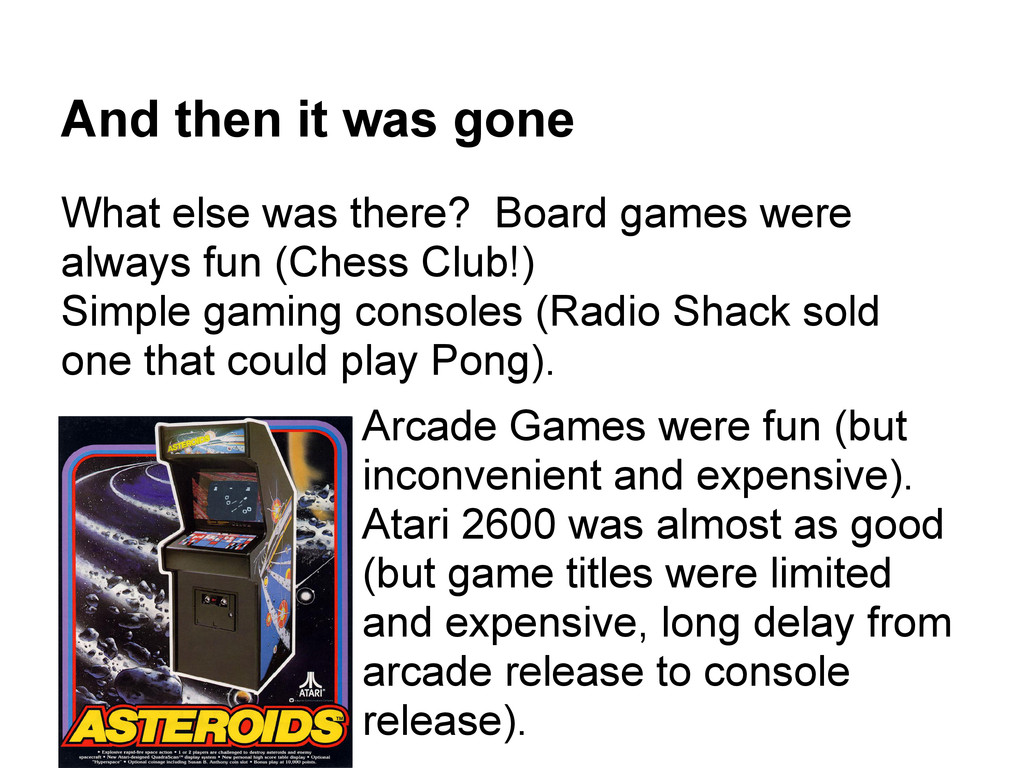
games were always fun (Chess Club!) Simple gaming consoles (Radio Shack sold one that could play Pong). Arcade Games were fun (but inconvenient and expensive). Atari 2600 was almost as good (but game titles were limited and expensive, long delay from arcade release to console release).
very few occasions). Commodore VIC-20 (cassette tape based storage is very inconvenient). Timex Sinclair (looked cool, but one of my high school teachers dissuaded me from buying it - too much of a toy).
Unbelievably, 4 staff members at my high school were capable of teaching programming to us (i.e. every math teacher). If you liked Chess Club, you'll love Computer Club (thank you Craig Riecke). You know where we'll be from 3PM until 5PM when the teachers kick us out for the day.
number of them, but still lagging way behind what was in the arcade. Math games are fine, text adventures are good, but arcade style games are the most fun.
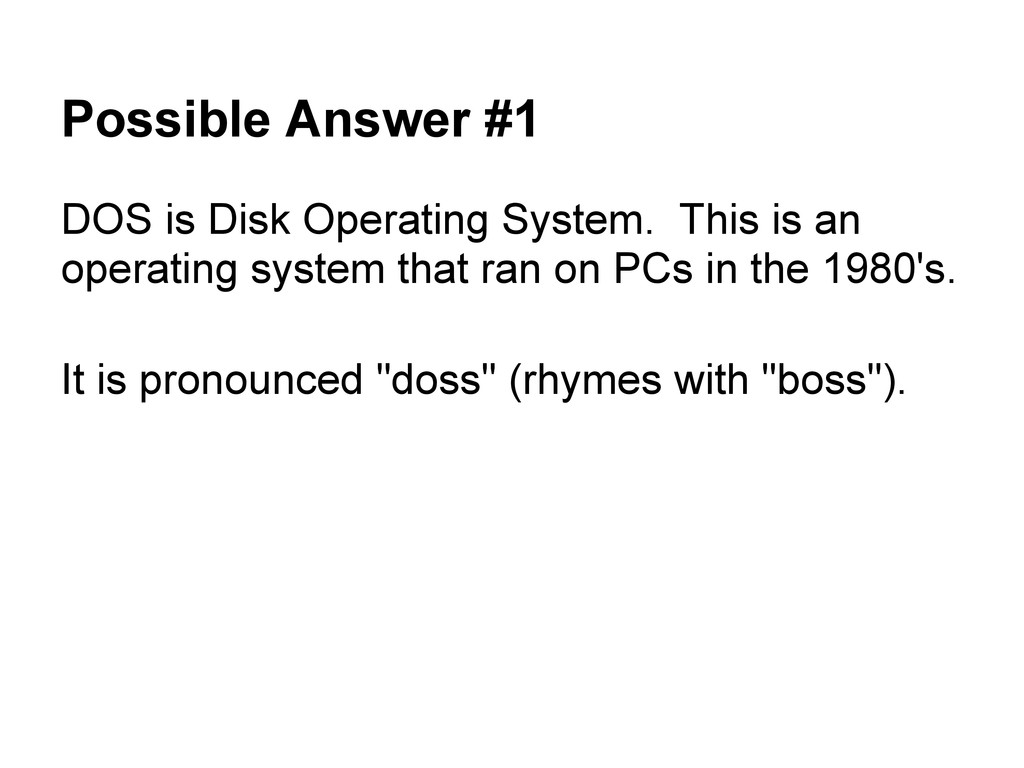
working on the head secretary's computer. She gets paid the then current minimum wage of $3.55/hour, so you are earning more than she is. You've been here a few weeks, she's been here 25 years, so be sure not to tell her how much you make. And fix her computer right away. It is pronounced like the Spanish word for "2".
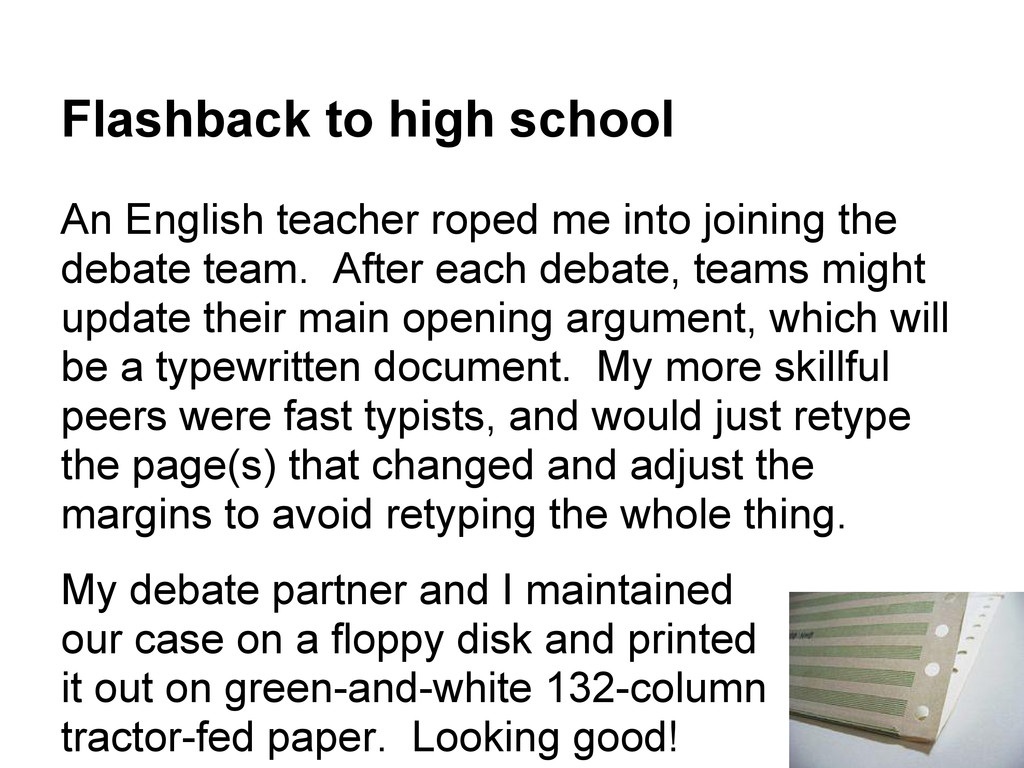
joining the debate team. After each debate, teams might update their main opening argument, which will be a typewritten document. My more skillful peers were fast typists, and would just retype the page(s) that changed and adjust the margins to avoid retyping the whole thing. My debate partner and I maintained our case on a floppy disk and printed it out on green-and-white 132-column tractor-fed paper. Looking good!
that students did not have root access. One of my friends was a geology major, and when his department got a new computer, he was made responsible for it. He had root access and set it up, and thus knew things about the computer that I wouldn't learn until I started working. Of course, these days your laptop is more powerful than that computer . . .
know it? Why study Math, it's unlikely you'll need to know much beyond what you learn in high school? Why study Computers, you already know how to use one?
to do a task. You can write a program to write a program. You can write a program that can modify itself. You can't write a book that can write a book (although you could write a book that says how to write a book).


 davejagoda
 iwatsukayura
 optim
 uyuki234
 jame2408
 akase244
 htkym
 ivargrimstad
 yukiny
 yub0n
 chobishiba
 a_matsuda
 dske104
 427marketing
 jdejongh
 bethany
 brettharned
 trallard
 jnunemaker
 rabernat
 sonatard
 ryanjones
 jonoalderson
 marcelosomers
 katarinadahlin
![High School A computer lab, with a dozen Apple ]['s!](https://files.speakerdeck.com/presentations/d9bc53f0e8fb01300150764d99f510d6/slide_4.jpg)