Upgrade to Pro — share decks privately, control downloads, hide ads and more …

E-Commerce Marketing: A Practical Guide for Onl...

E-Commerce Marketing: A Practical Guide for Online Stores

This presentation covers the basics of e-commerce marketing, including product page optimisation, SEO, customer acquisition, digital marketing channels, and key performance metrics. Created by Reena Thakur for learners interested in understanding how online stores attract and convert customers.

Explore Shanu Quraishi's E-Commerce Marketing Course

Avatar for Reena Thakur

Reena Thakur

October 18, 2026

Other Decks in Marketing & SEO

Transcript

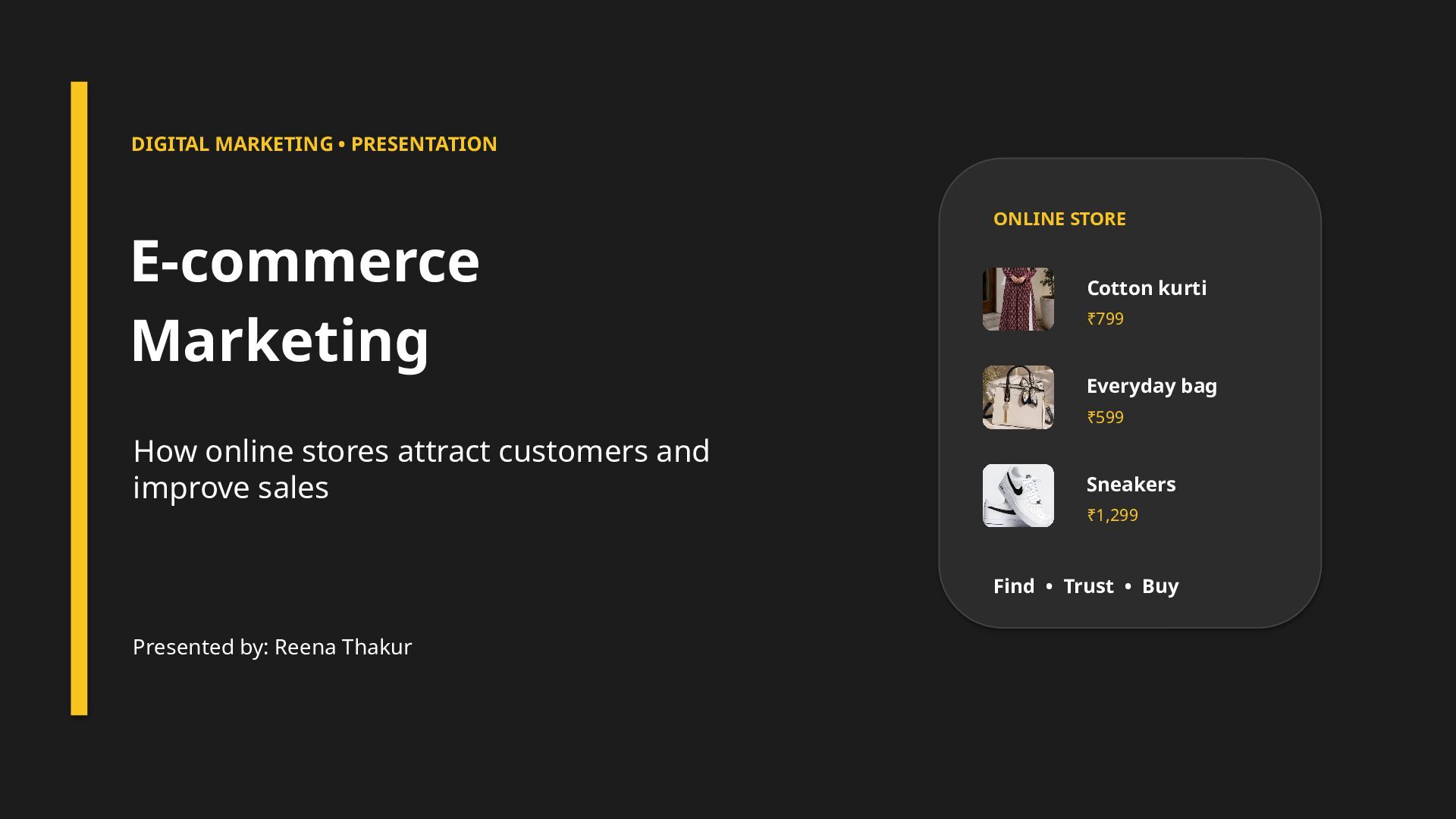
  1. DIGITAL MARKETING • PRESENTATION E-commerce Marketing ONLINE STORE Cotton kurti

    ₹799 Everyday bag ₹599 How online stores attract customers and improve sales Sneakers ₹1,299 Find • Trust • Buy Presented by: Reena Thakur
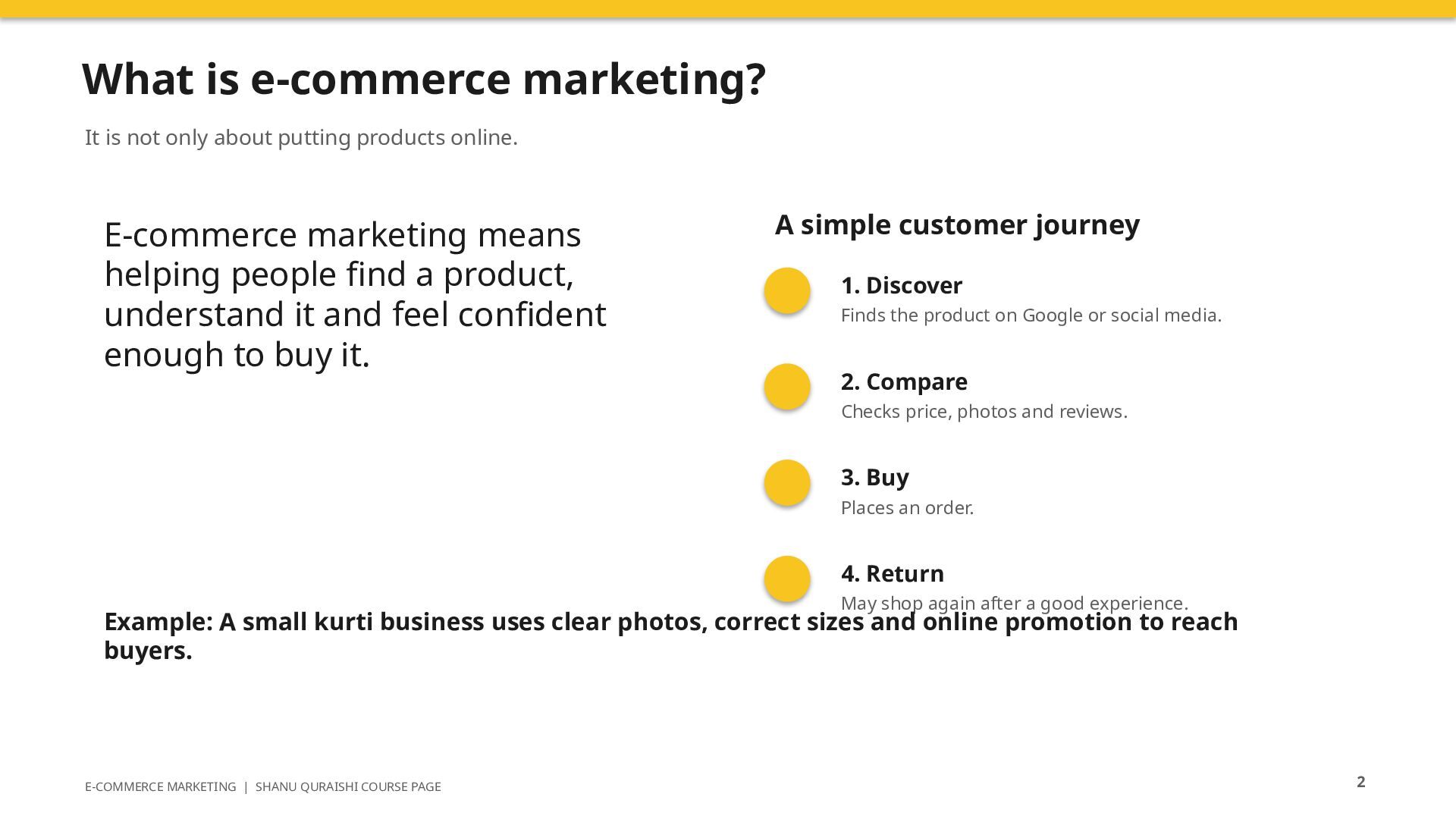
  2. What is e-commerce marketing? It is not only about putting

    products online. E-commerce marketing means helping people find a product, understand it and feel confident enough to buy it. A simple customer journey 1. Discover Finds the product on Google or social media. 2. Compare Checks price, photos and reviews. 3. Buy Places an order. 4. Return May shop again after a good experience. Example: A small kurti business uses clear photos, correct sizes and online promotion to reach buyers. E-COMMERCE MARKETING | SHANU QURAISHI COURSE PAGE 2
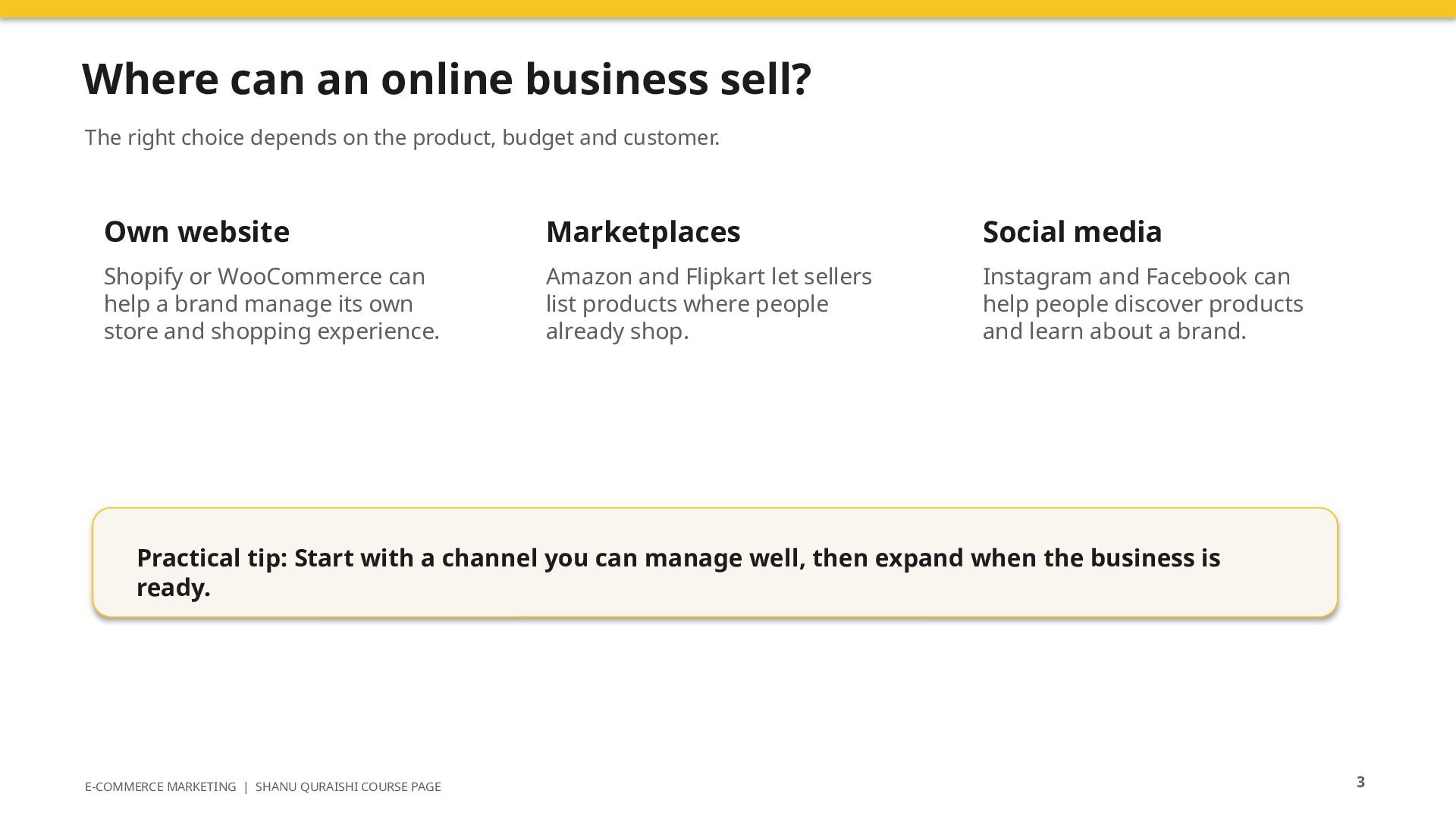
  3. Where can an online business sell? The right choice depends

    on the product, budget and customer. Own website Marketplaces Social media Shopify or WooCommerce can help a brand manage its own store and shopping experience. Amazon and Flipkart let sellers list products where people already shop. Instagram and Facebook can help people discover products and learn about a brand. Practical tip: Start with a channel you can manage well, then expand when the business is ready. E-COMMERCE MARKETING | SHANU QURAISHI COURSE PAGE 3
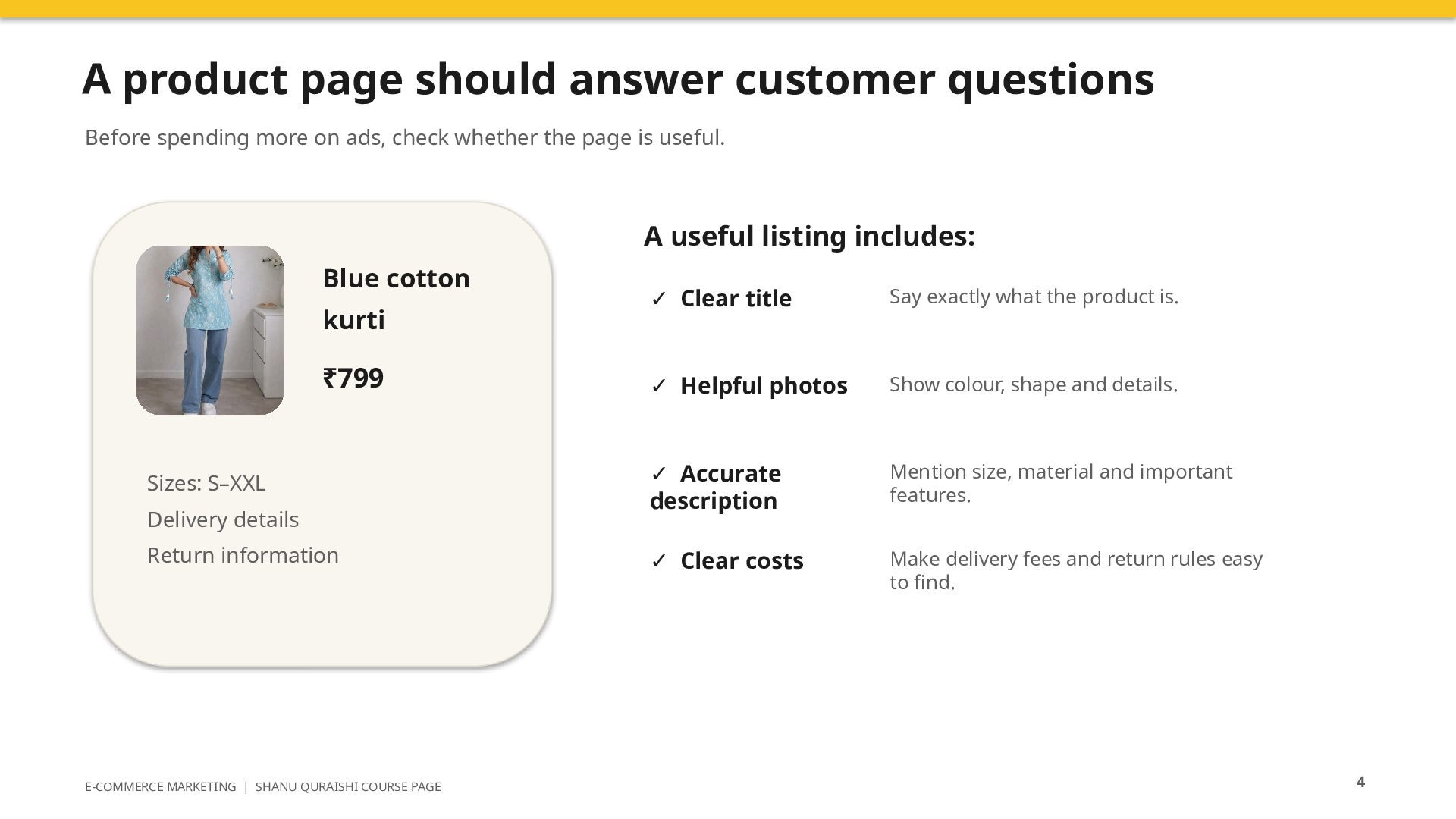
  4. A product page should answer customer questions Before spending more

    on ads, check whether the page is useful. A useful listing includes: Blue cotton kurti ₹799 Sizes: S–XXL Delivery details Return information E-COMMERCE MARKETING | SHANU QURAISHI COURSE PAGE ✓ Clear title Say exactly what the product is. ✓ Helpful photos Show colour, shape and details. ✓ Accurate description Mention size, material and important features. ✓ Clear costs Make delivery fees and return rules easy to find. 4
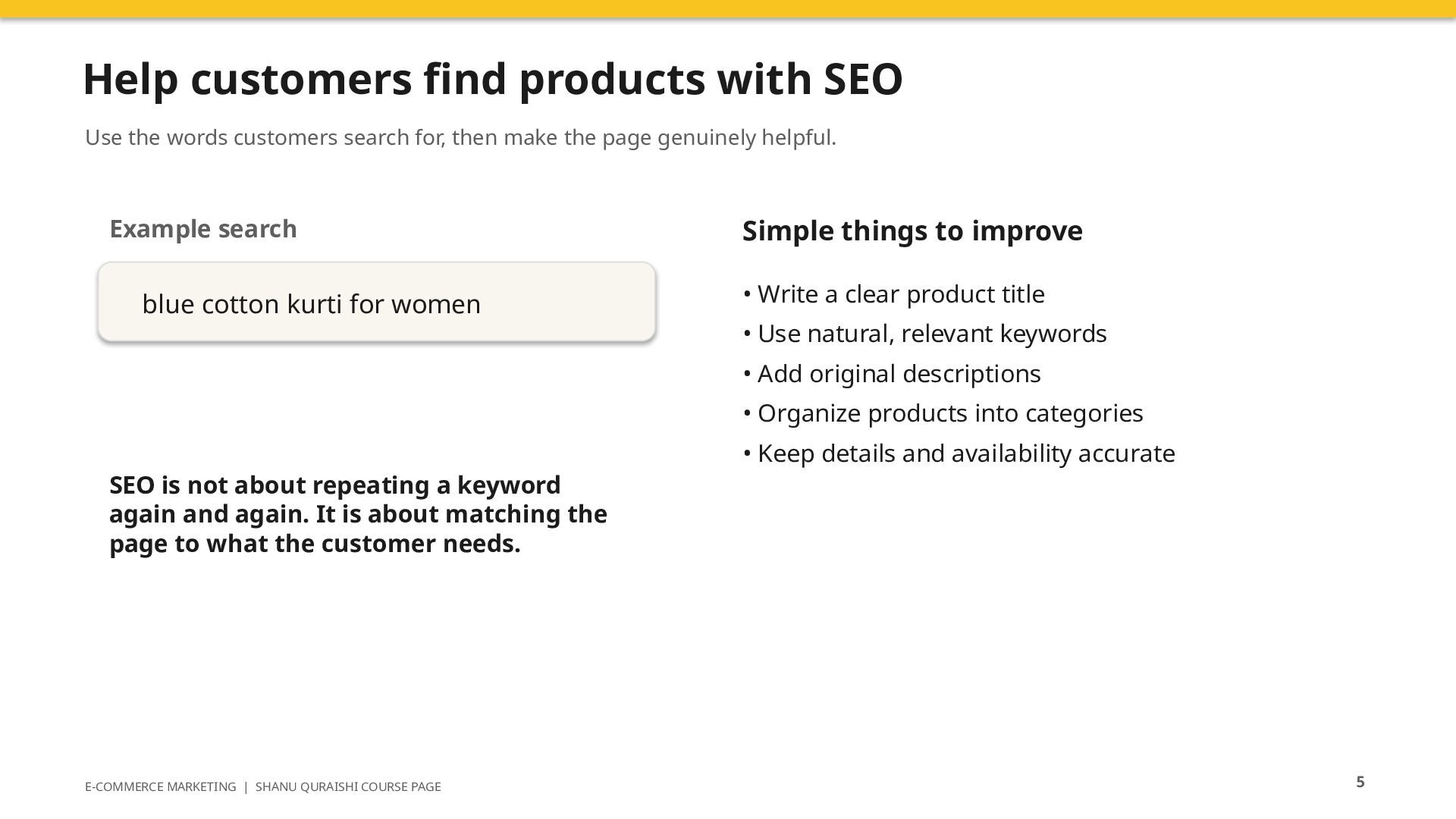
  5. Help customers find products with SEO Use the words customers

    search for, then make the page genuinely helpful. Example search blue cotton kurti for women Simple things to improve • Write a clear product title • Use natural, relevant keywords • Add original descriptions • Organize products into categories SEO is not about repeating a keyword again and again. It is about matching the page to what the customer needs. E-COMMERCE MARKETING | SHANU QURAISHI COURSE PAGE • Keep details and availability accurate 5
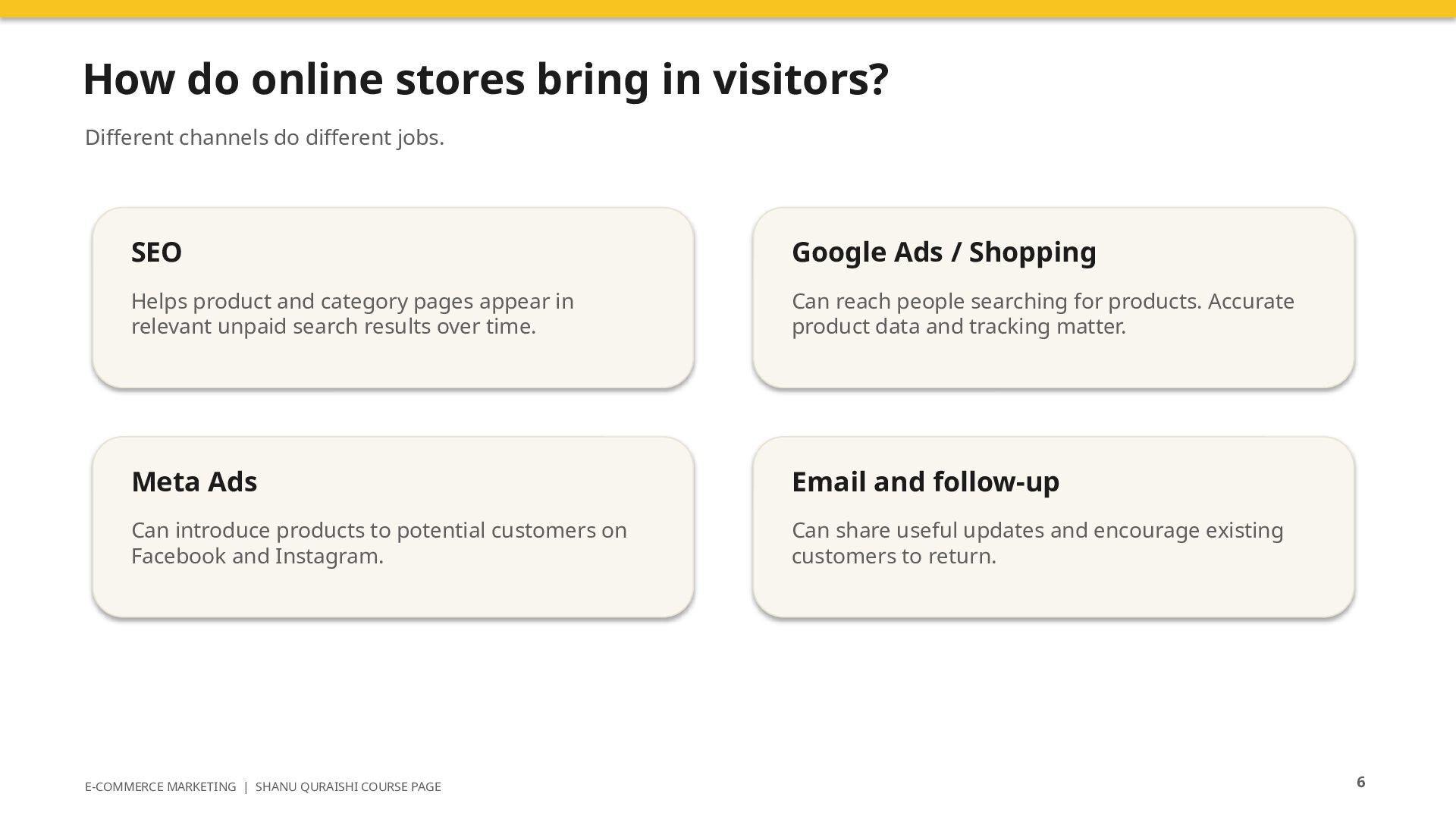
  6. How do online stores bring in visitors? Different channels do

    different jobs. SEO Google Ads / Shopping Helps product and category pages appear in relevant unpaid search results over time. Can reach people searching for products. Accurate product data and tracking matter. Meta Ads Email and follow-up Can introduce products to potential customers on Facebook and Instagram. Can share useful updates and encourage existing customers to return. E-COMMERCE MARKETING | SHANU QURAISHI COURSE PAGE 6
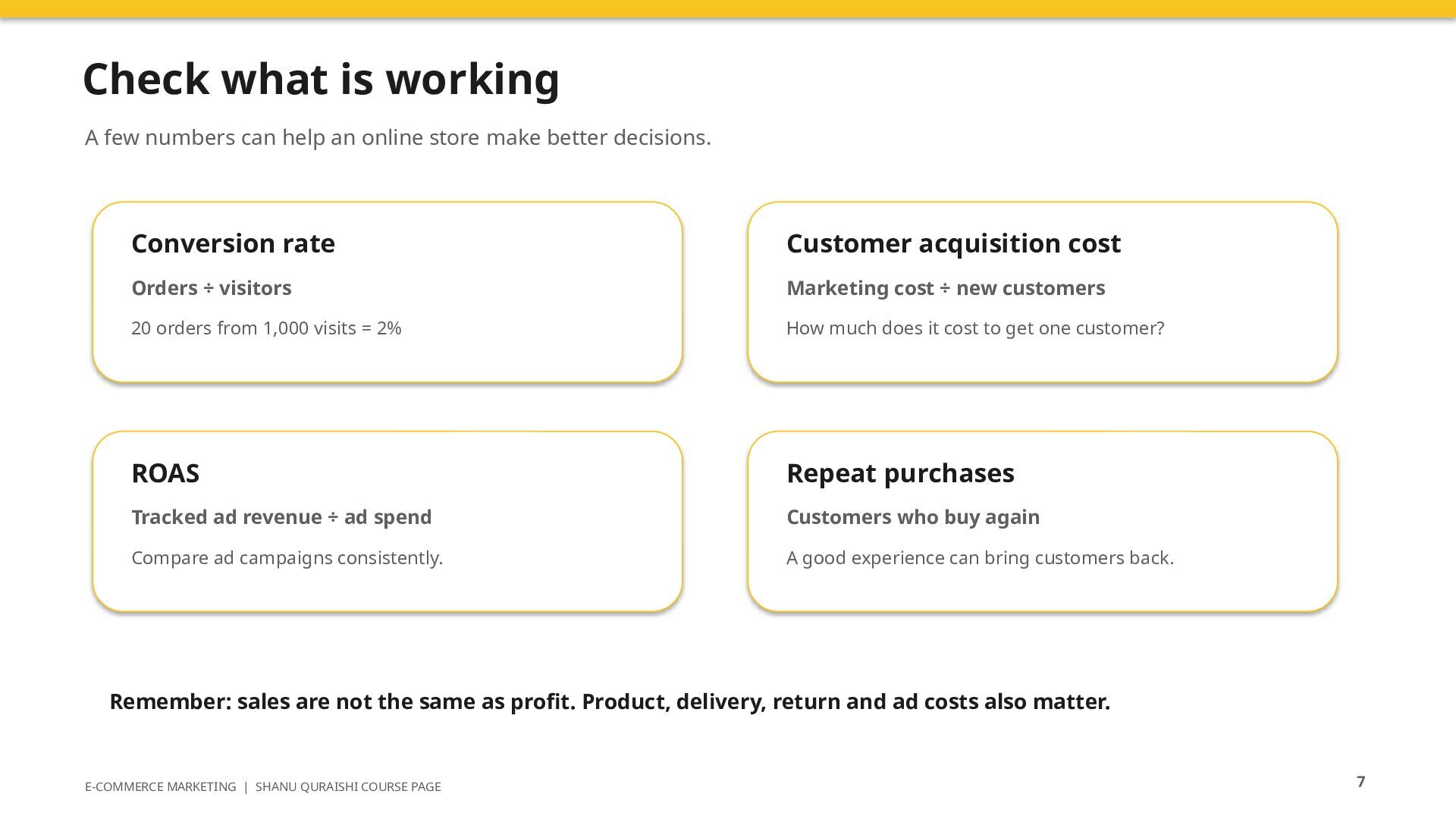
  7. Check what is working A few numbers can help an

    online store make better decisions. Conversion rate Customer acquisition cost Orders ÷ visitors Marketing cost ÷ new customers 20 orders from 1,000 visits = 2% How much does it cost to get one customer? ROAS Repeat purchases Tracked ad revenue ÷ ad spend Customers who buy again Compare ad campaigns consistently. A good experience can bring customers back. Remember: sales are not the same as profit. Product, delivery, return and ad costs also matter. E-COMMERCE MARKETING | SHANU QURAISHI COURSE PAGE 7
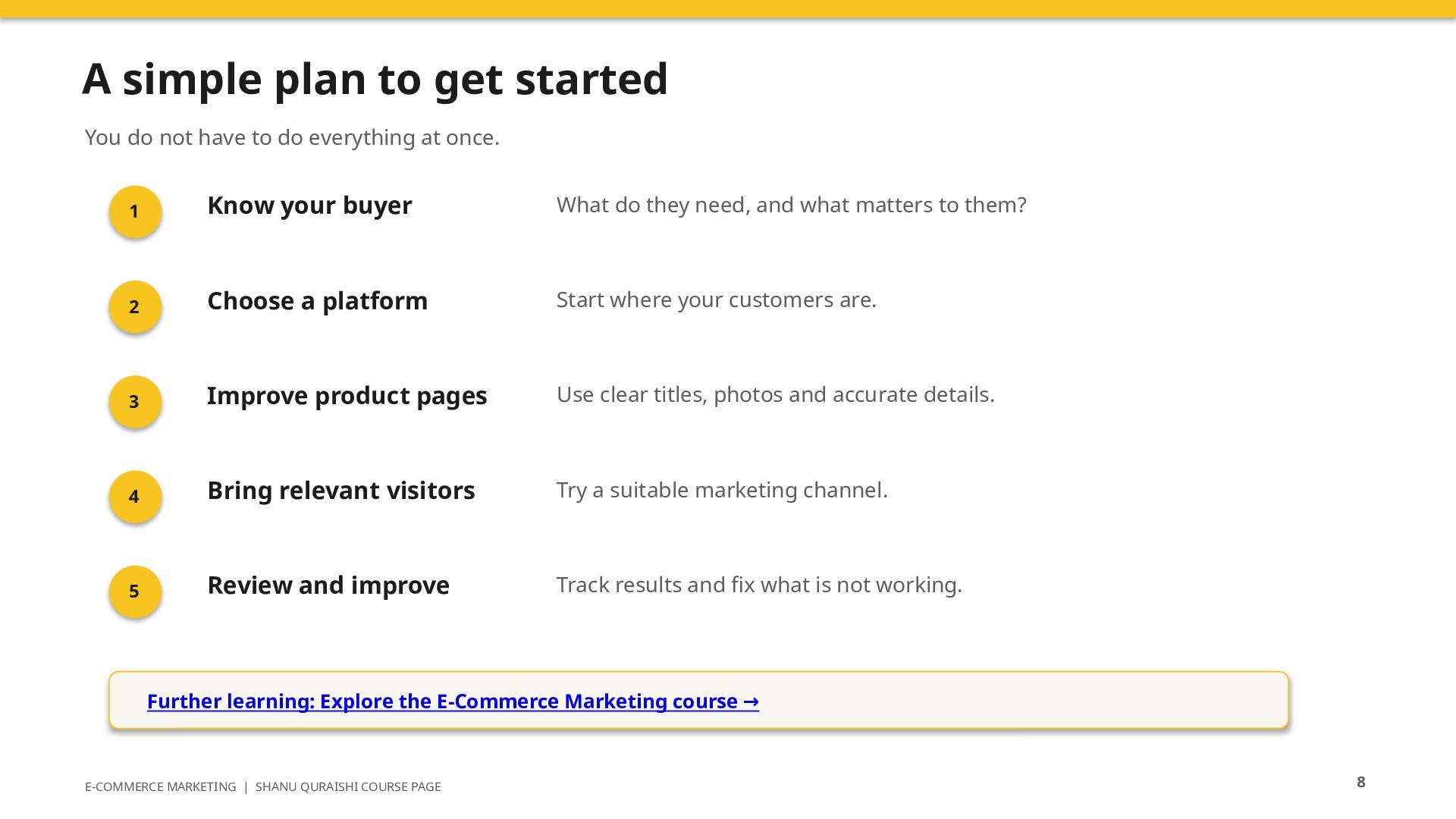
  8. A simple plan to get started You do not have

    to do everything at once. 1 Know your buyer What do they need, and what matters to them? 2 Choose a platform Start where your customers are. 3 Improve product pages Use clear titles, photos and accurate details. 4 Bring relevant visitors Try a suitable marketing channel. 5 Review and improve Track results and fix what is not working. Further learning: Explore the E-Commerce Marketing course → E-COMMERCE MARKETING | SHANU QURAISHI COURSE PAGE 8
  9. Thank you! Keep learning. Keep improving. Good e-commerce marketing starts

    with understanding customers and making shopping easier for them. Presented by: Reena Thakur Course details: https://www.shanuquraishi.com/e-commerce-course