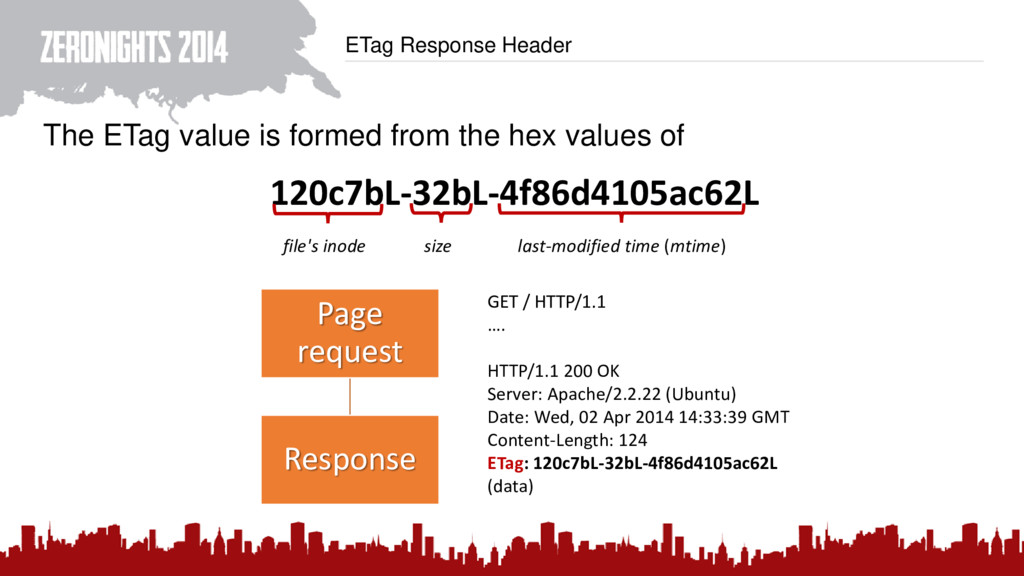
receiving information between hosts without alerting any firewalls and IDSs HTTP is one of the most used Internet protocol so detections of the covert channels over the HTTP is an important research area
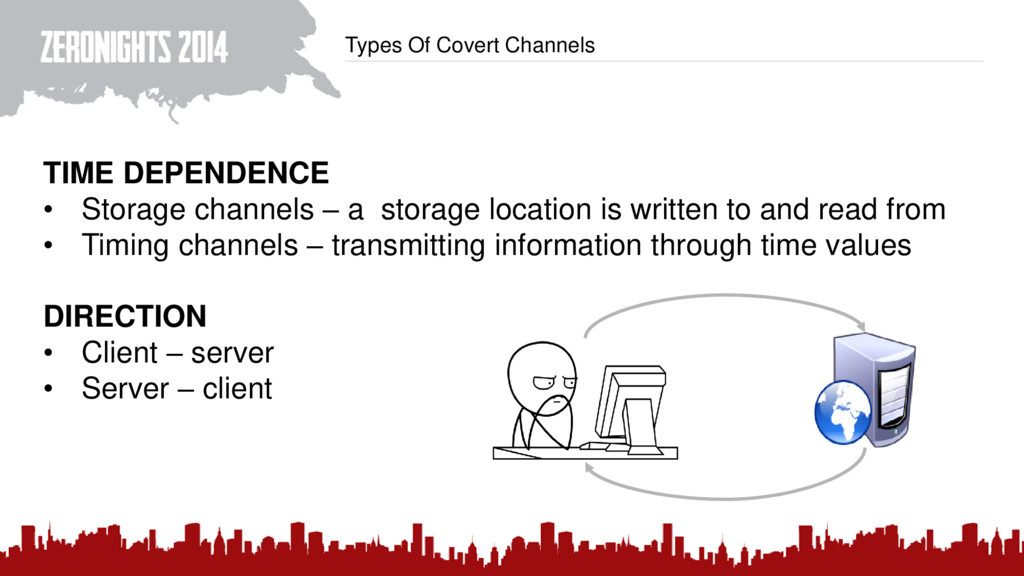
a storage location is written to and read from • Timing channels – transmitting information through time values DIRECTION • Client – server • Server – client
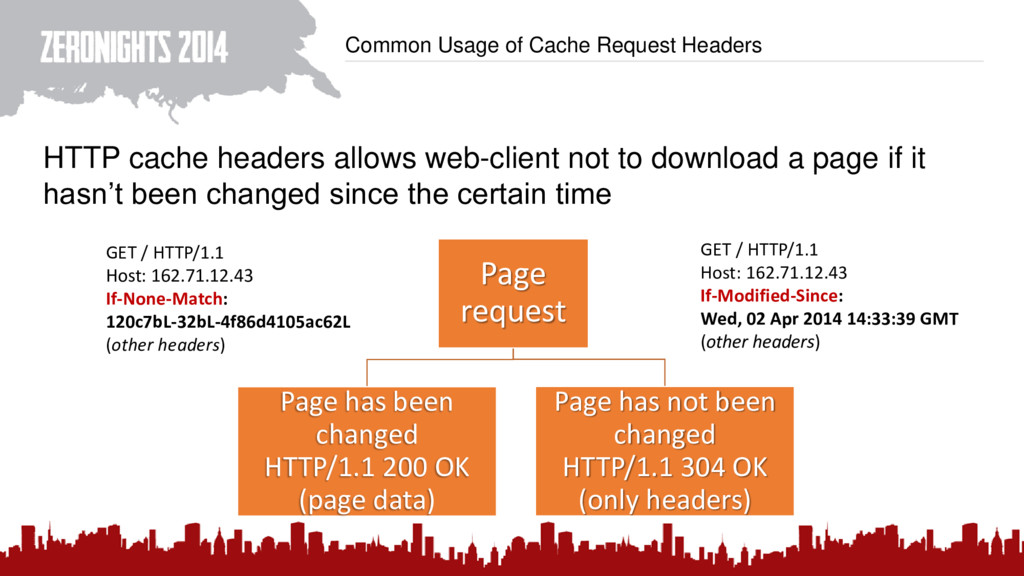
web-client not to download a page if it hasn’t been changed since the certain time Page request Page has been changed HTTP/1.1 200 OK (page data) Page has not been changed HTTP/1.1 304 OK (only headers) GET / HTTP/1.1 Host: 162.71.12.43 If-Modified-Since: Wed, 02 Apr 2014 14:33:39 GMT (other headers) GET / HTTP/1.1 Host: 162.71.12.43 If-None-Match: 120c7bL-32bL-4f86d4105ac62L (other headers)
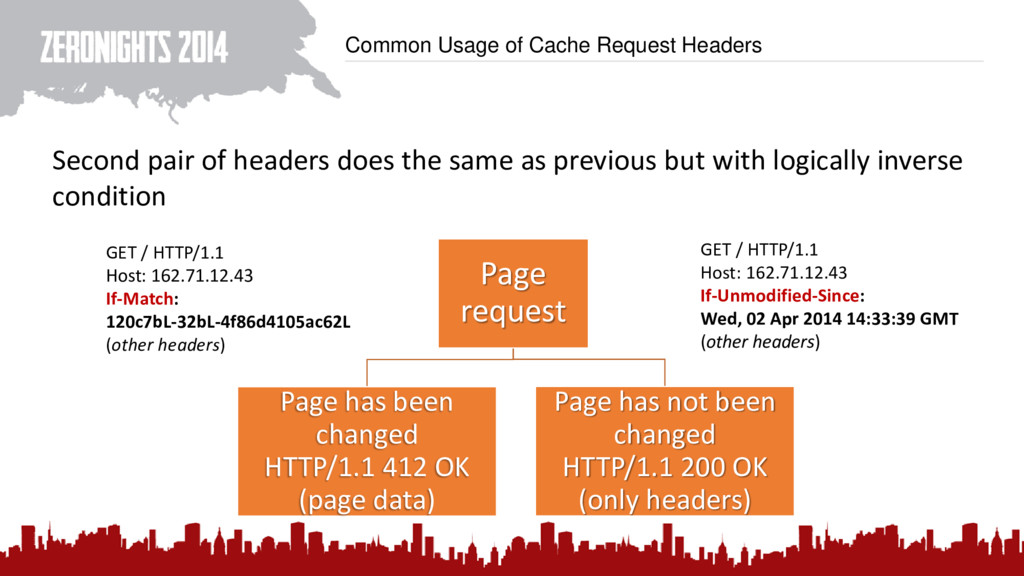
does the same as previous but with logically inverse condition Page request Page has been changed HTTP/1.1 412 OK (page data) Page has not been changed HTTP/1.1 200 OK (only headers) GET / HTTP/1.1 Host: 162.71.12.43 If-Unmodified-Since: Wed, 02 Apr 2014 14:33:39 GMT (other headers) GET / HTTP/1.1 Host: 162.71.12.43 If-Match: 120c7bL-32bL-4f86d4105ac62L (other headers)
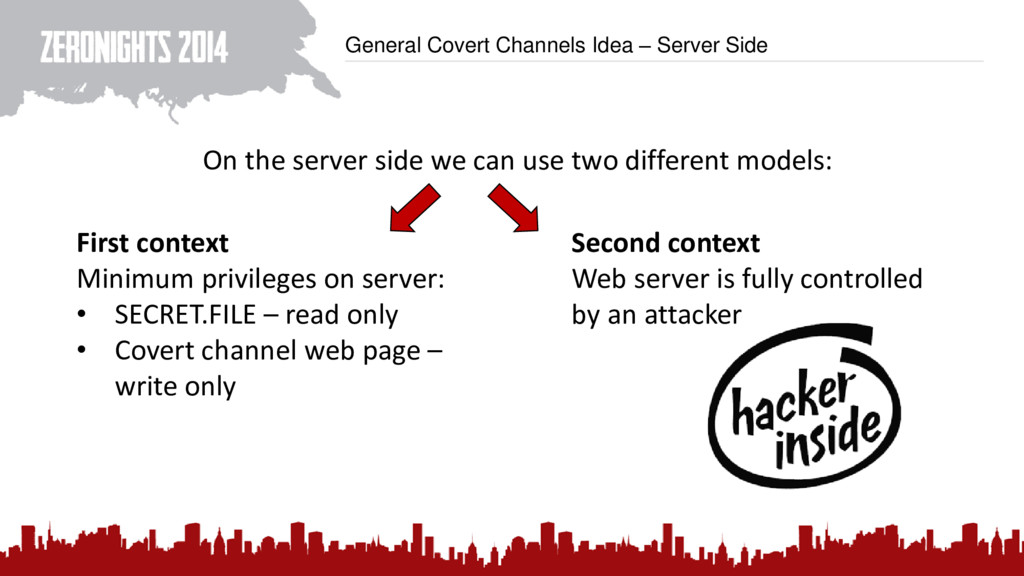
side we can use two different models: First context Minimum privileges on server: • SECRET.FILE – read only • Covert channel web page – write only Second context Web server is fully controlled by an attacker
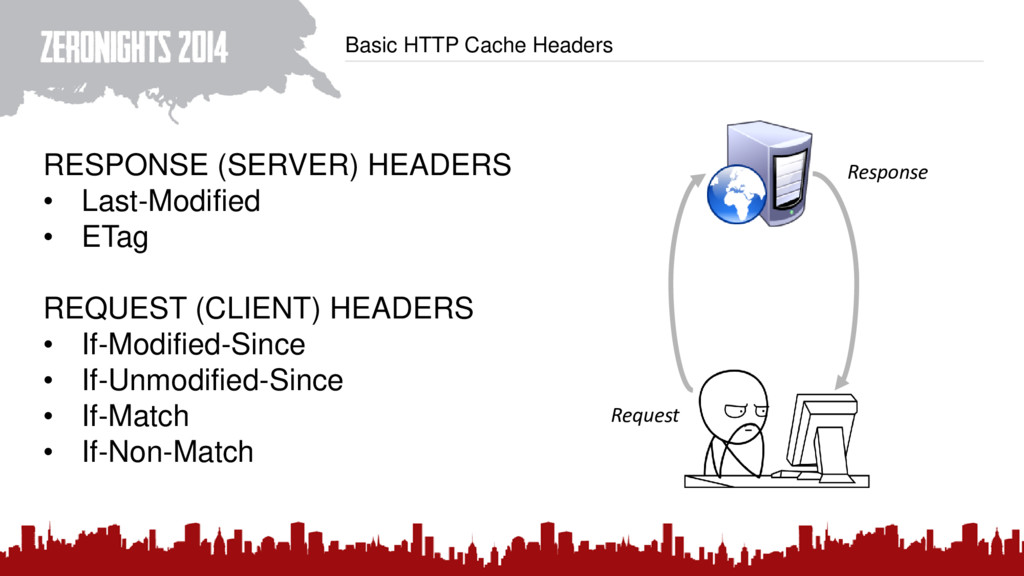
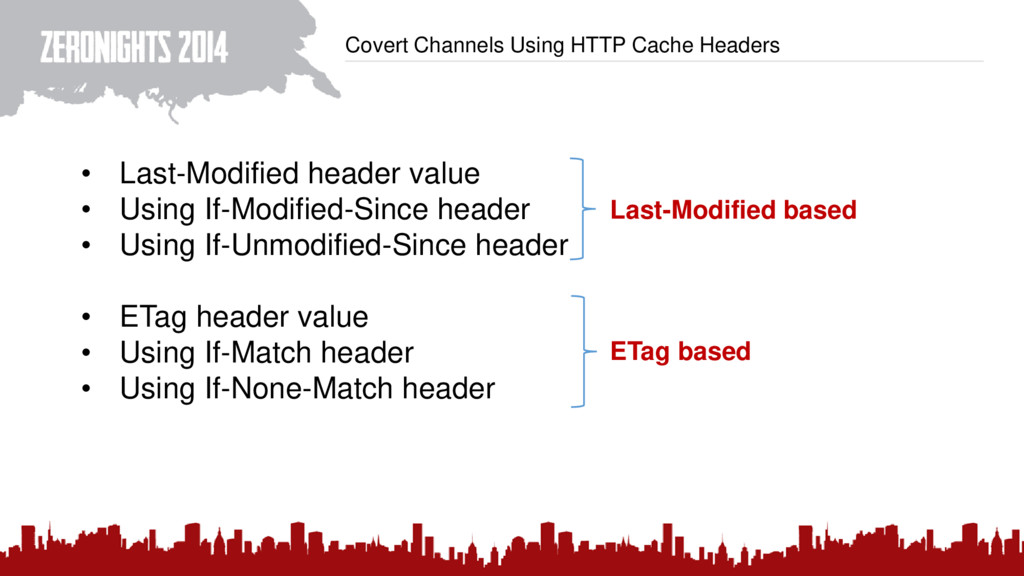
• Using If-Modified-Since header • Using If-Unmodified-Since header • ETag header value • Using If-Match header • Using If-None-Match header Last-Modified based ETag based
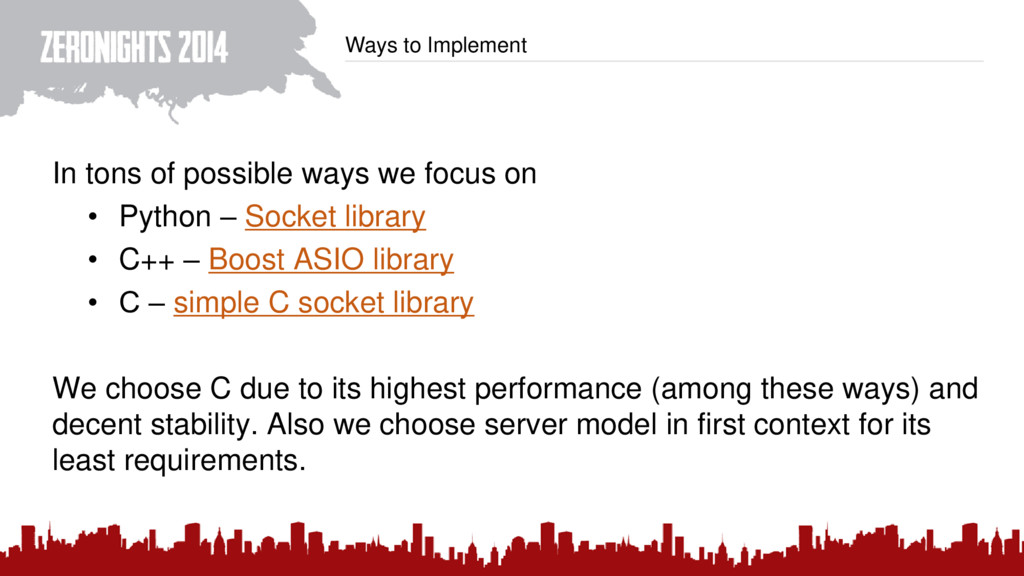
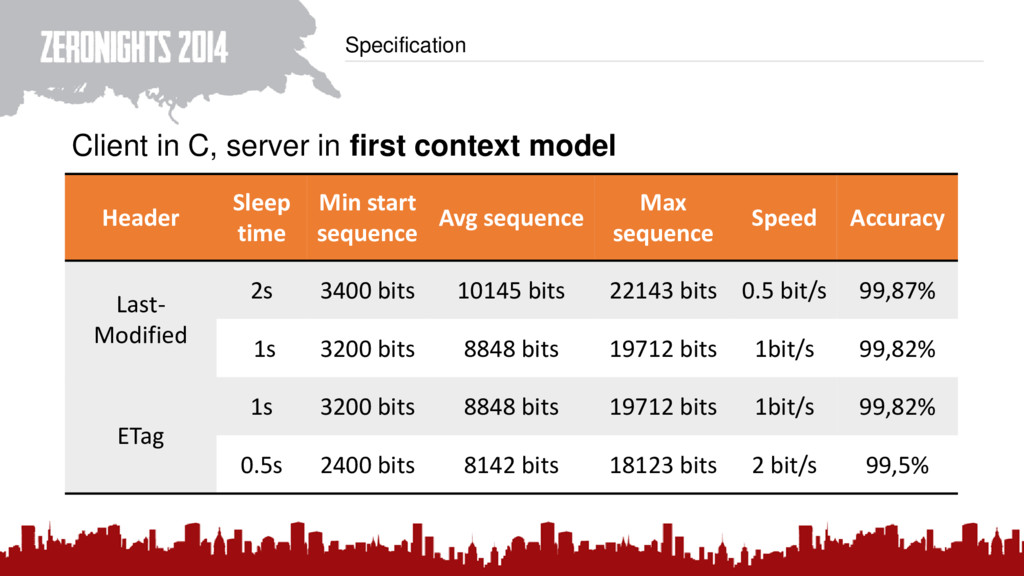
on • Python – Socket library • C++ – Boost ASIO library • С – simple C socket library We choose C due to its highest performance (among these ways) and decent stability. Also we choose server model in first context for its least requirements.
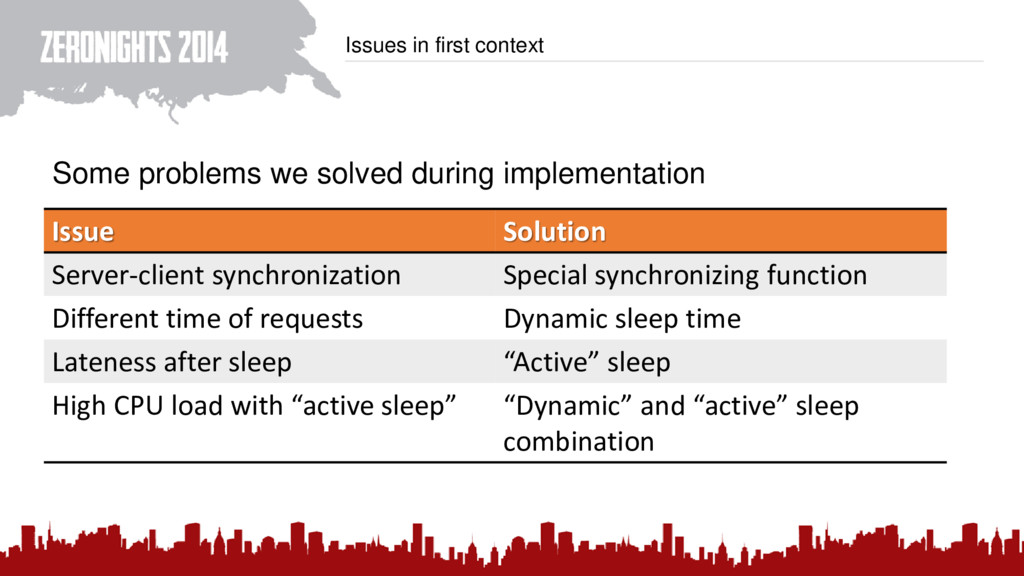
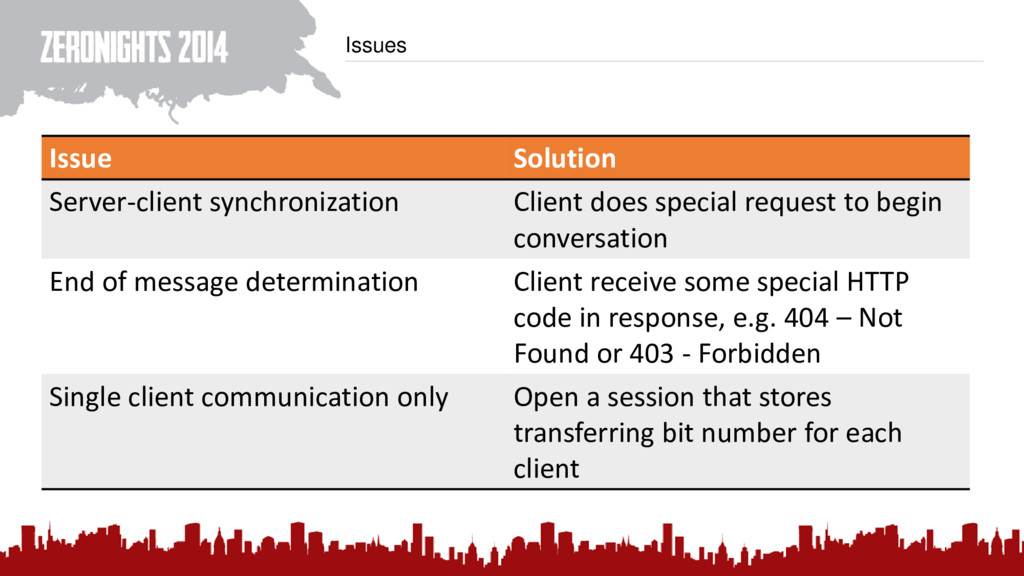
Issue Solution Server-client synchronization Special synchronizing function Different time of requests Dynamic sleep time Lateness after sleep “Active” sleep High CPU load with “active sleep” “Dynamic” and “active” sleep combination
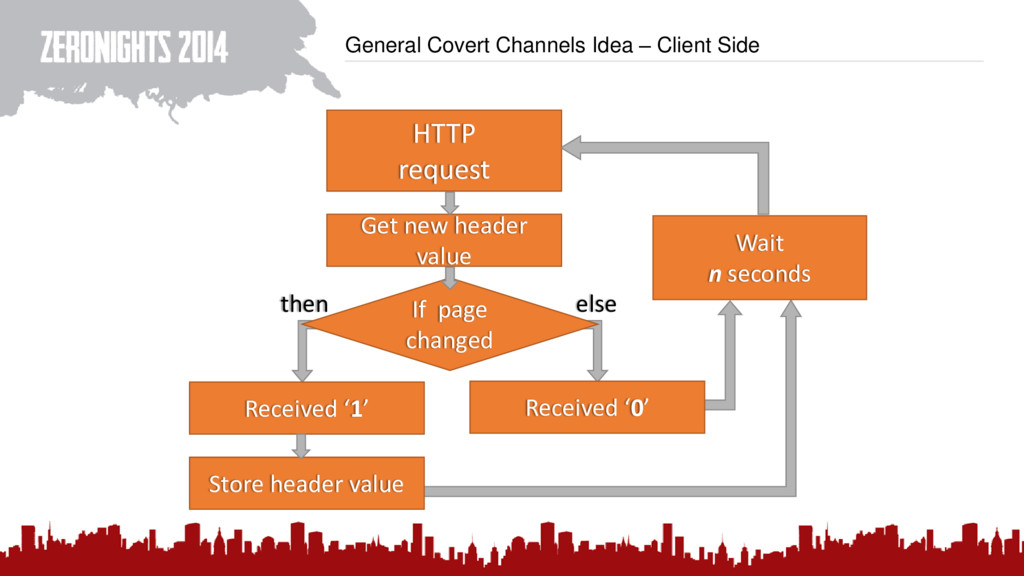
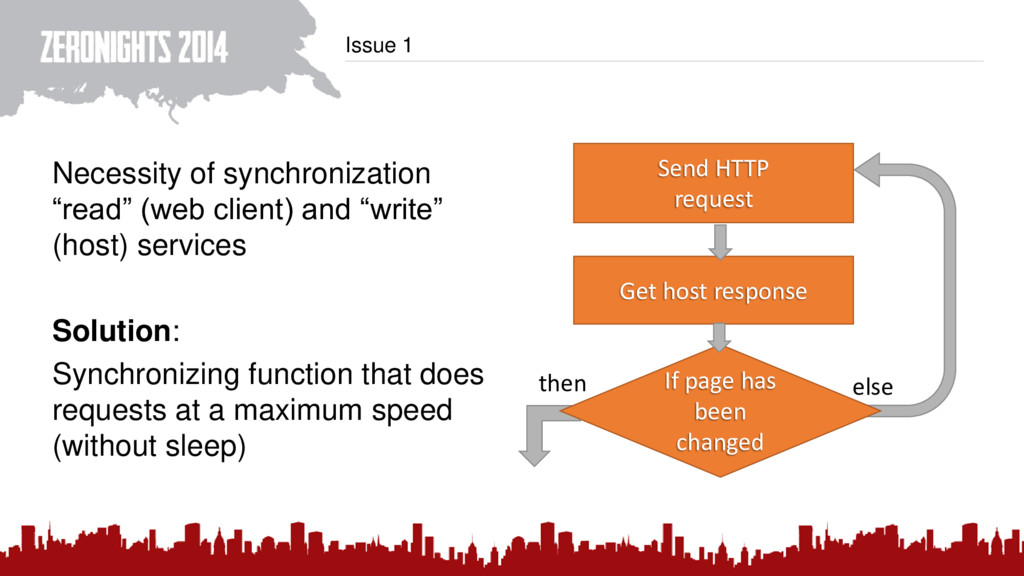
(host) services Solution: Synchronizing function that does requests at a maximum speed (without sleep) Send HTTP request Get host response If page has been changed then else
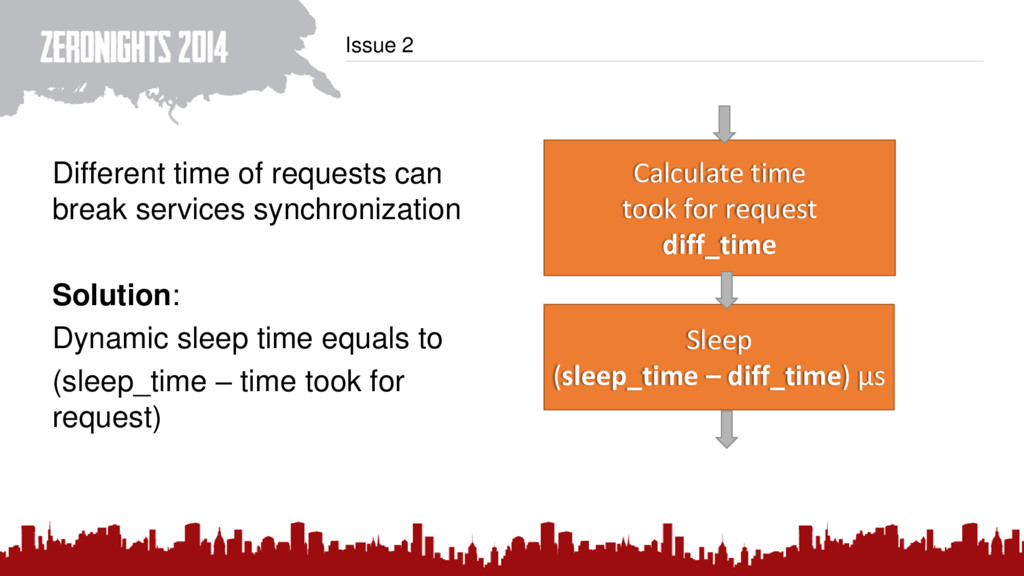
Solution: Dynamic sleep time equals to (sleep_time – time took for request) Calculate time took for request diff_time Sleep (sleep_time – diff_time) µs
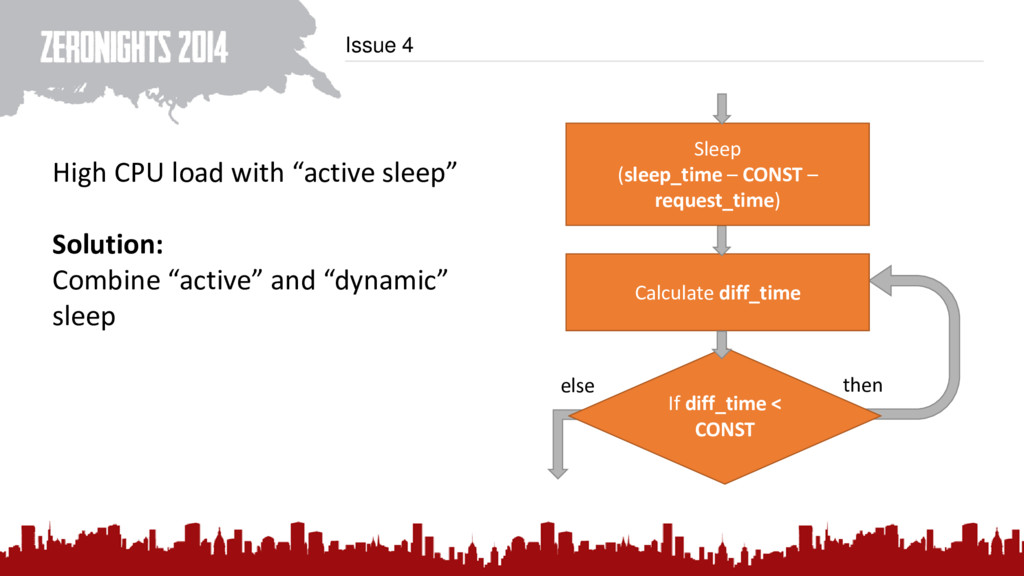
the program can awake with 10-200μs lateness Solution: Use “active sleep” - calculation time difference between last request and current moment while it is less than sleep_time Calc diff_time then else If diff_time < sleep_time
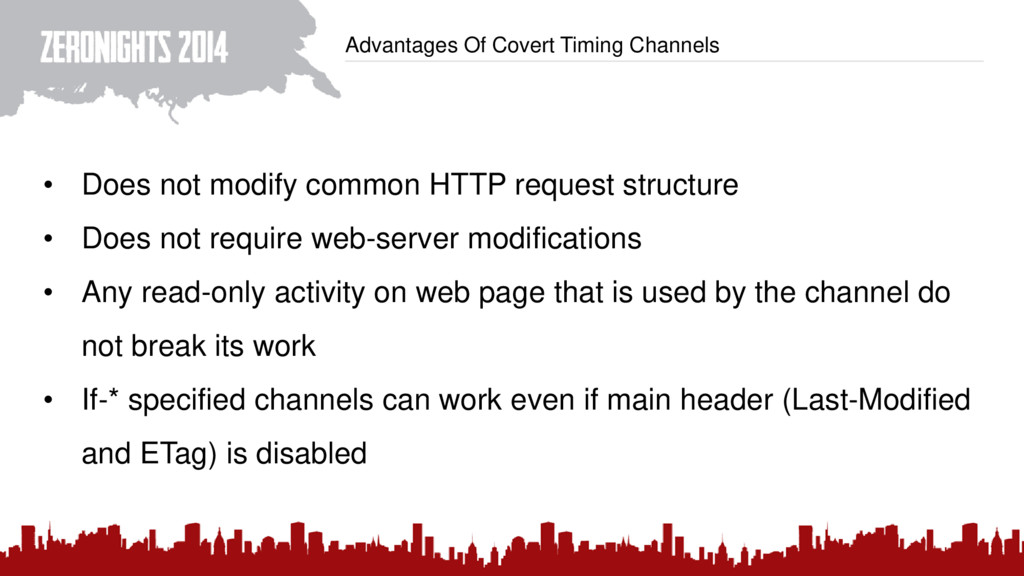
HTTP request structure • Does not require web-server modifications • Any read-only activity on web page that is used by the channel do not break its work • If-* specified channels can work even if main header (Last-Modified and ETag) is disabled
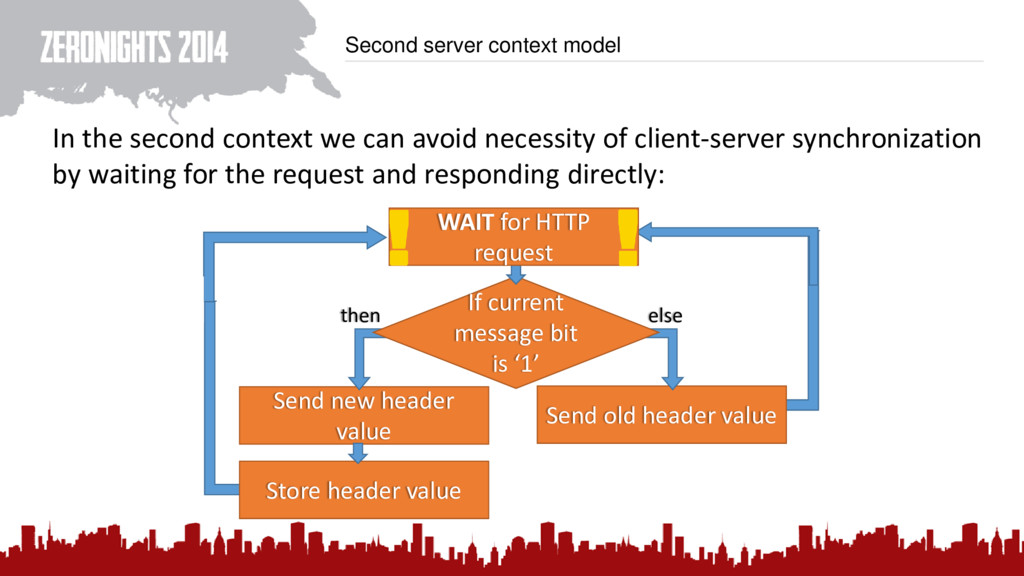
avoid necessity of client-server synchronization by waiting for the request and responding directly: Send new header value Send old header value If current message bit is ‘1’ Store header value then else WAIT for HTTP request
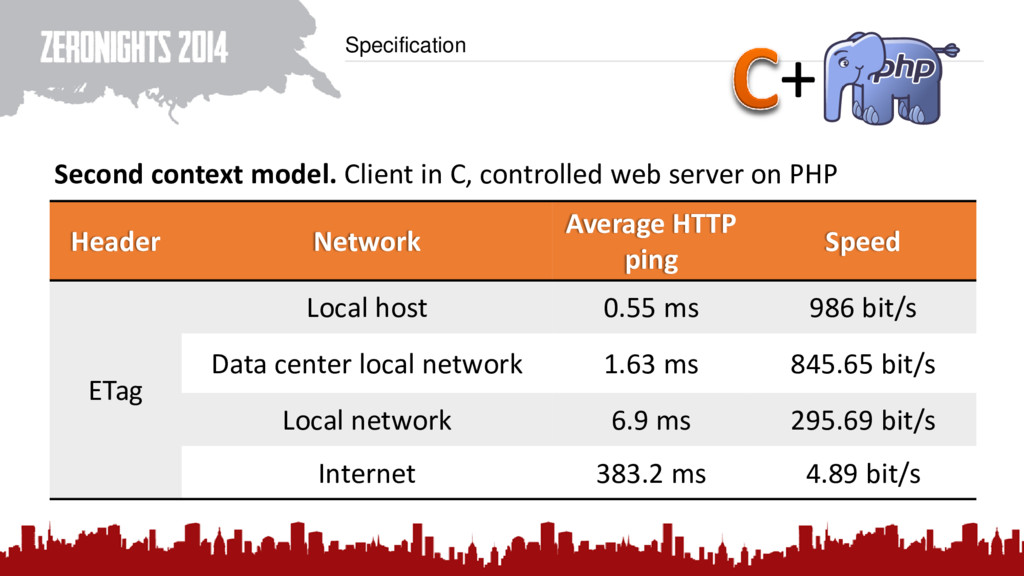
on PHP + Header Network Average HTTP ping Speed ETag Local host 0.55 ms 986 bit/s Data center local network 1.63 ms 845.65 bit/s Local network 6.9 ms 295.69 bit/s Internet 383.2 ms 4.89 bit/s
W. Alcorn, C. Frichot, M. Orru. «The Browser Hacker’s Handbook» DOMAIN NAME SYSTEM (DNS) Query: “Where is some.domain.example.com?” Response: “It is at 88.0.13.37!” some.domain.example.com Subdomain Domain bigbrother.watchingme.evil.com Information Domain IT’S CLIENT-SERVER CHANNEL
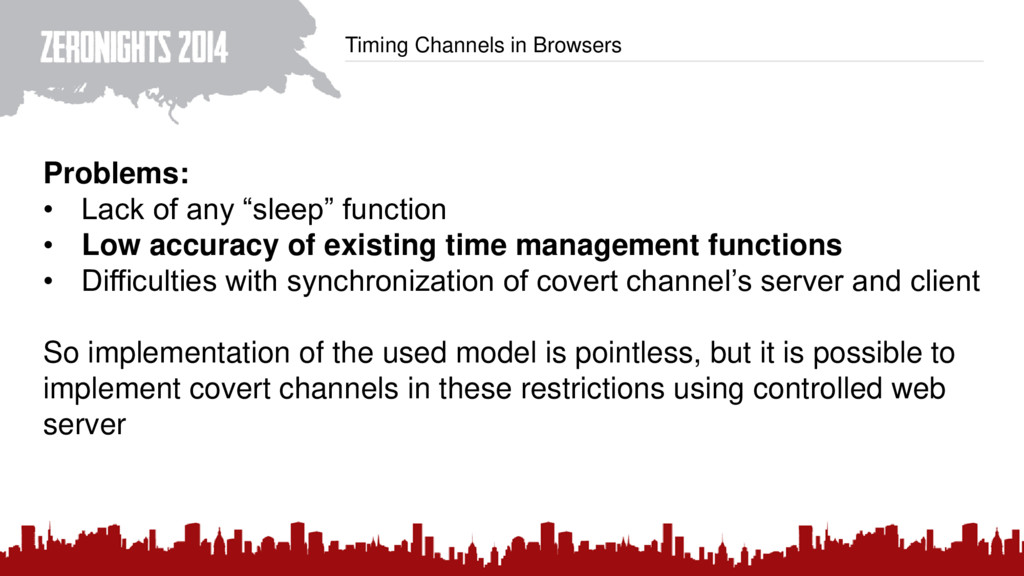
function • Low accuracy of existing time management functions • Difficulties with synchronization of covert channel’s server and client So implementation of the used model is pointless, but it is possible to implement covert channels in these restrictions using controlled web server
begin conversation End of message determination Client receive some special HTTP code in response, e.g. 404 – Not Found or 403 - Forbidden Single client communication only Open a session that stores transferring bit number for each client
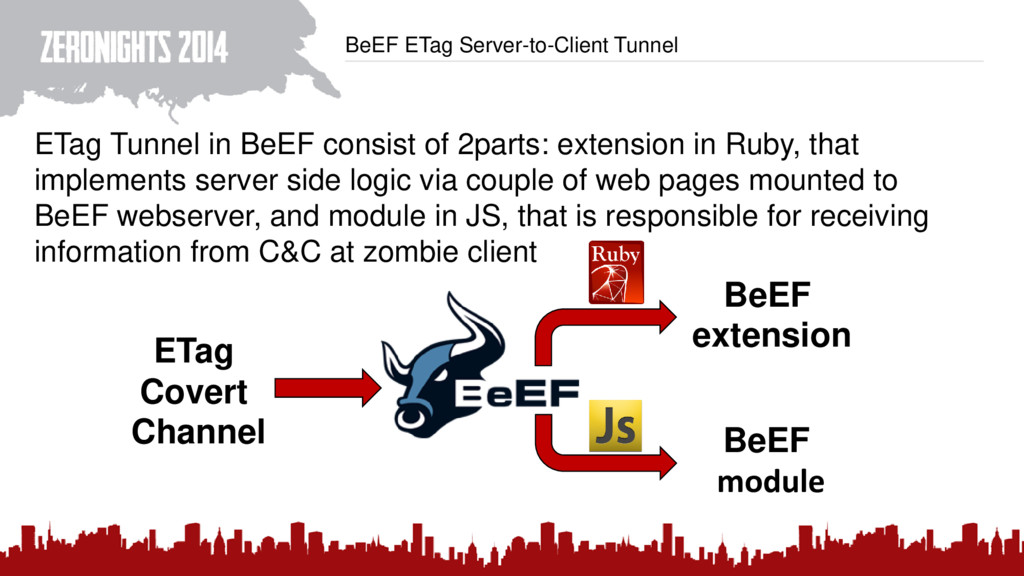
2parts: extension in Ruby, that implements server side logic via couple of web pages mounted to BeEF webserver, and module in JS, that is responsible for receiving information from C&C at zombie client ETag Covert Channel BeEF extension BeEF module
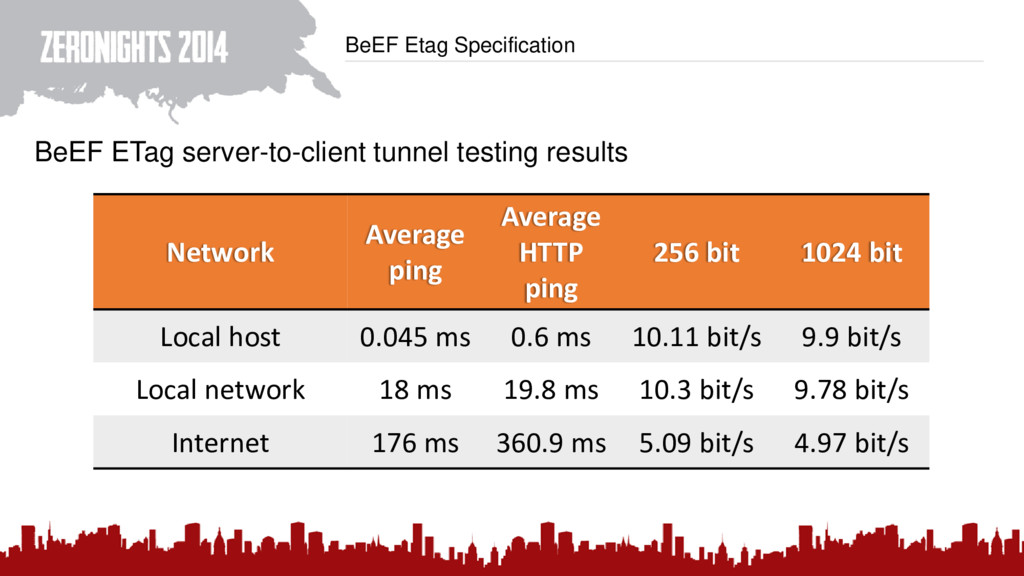
Average ping Average HTTP ping 256 bit 1024 bit Local host 0.045 ms 0.6 ms 10.11 bit/s 9.9 bit/s Local network 18 ms 19.8 ms 10.3 bit/s 9.78 bit/s Internet 176 ms 360.9 ms 5.09 bit/s 4.97 bit/s


 dnkolegov
 ayatokanada
 nnchiba
 shibuiwilliam
 sishi2026
 kanojikajino
 satai
 shunk031
 recsyslab
 xspa2012
 wataruuuuu
 mickey_0226
 takaomurakami
 sstephenson
 bermonpainter
 tapps
 akademiya2063
 inesmontani
 deanohume
 thirion
 aleyda
 rkaga
 seathinner
 swwweet
 uxyall