Upgrade to Pro — share decks privately, control downloads, hide ads and more …

Biologicals & Herbals, and Food & Nutraceuticals

Biologicals & Herbals, and Food & Nutraceuticals

1. Biologicals & Herbals, and Food & Nutraceuticals (12 Hrs)
Acts and Rules (with latest amendments):
• Drugs and Cosmetics Act, 1940 and Rules, 1945
• DPCO and NPPA
• Other relevant provisions (Rules, Schedules and Guidelines) for approval of Drugs & Cosmetics, Medical Devices, Biologicals & Herbals, and Food & Nutraceuticals in India
Other Relevant Acts
• Narcotic Drugs and Psychotropic Substances Act
• Medicinal and Toilet Preparations (Excise Duties) Act, 1955
• Pharmacy Act, 1948
• Drugs and Magic Remedies (Objectionable Advertisements) Act, 1955
• Prevention of Cruelty to Animals Act

Avatar for Dr Poonam Chougule

Dr Poonam Chougule

September 20, 2026

More Decks by Dr Poonam Chougule

Other Decks in Education

Transcript

  1. M. Pharm: Regulatory Affairs Regulations and Legislation Presented By Prof.

    Dr. Poonam Nilesh Chougule D. Y. Patil College of Pharmacy, Kolhapur.
  2. Unit 1. Biologicals & Herbals, Food & Nutraceuticals Their Acts

    & Rules. Introduction What are Biologicals, Herbals, Food, and Nutraceuticals? Biologicals, herbal medicines, food products, and nutraceuticals are important components of the healthcare system that contribute to disease prevention, treatment, and overall well-being. • Biologicals are medicinal products derived from living organisms or their components, including vaccines, blood products, monoclonal antibodies, recombinant proteins, and cell-based therapies. • Herbal medicines are products prepared from medicinal plants or plant extracts and have been traditionally used in systems such as Ayurveda, Siddha, Unani, and Homeopathy. • Food products are substances consumed primarily to provide nutrition and maintain health. • Nutraceuticals are food-derived products that offer additional health benefits beyond basic nutrition, including dietary supplements, functional foods, probiotics, prebiotics, antioxidants, and herbal supplements.
  3. Definitions of Biologicals, Herbals, Food, and Nutraceuticals 1. Biologicals (Biological

    Products) Definition Biologicals are medicinal products that are derived from living organisms or their cells, tissues, or biological processes and are used for the prevention, diagnosis, or treatment of diseases. According to the Drugs and Cosmetics Act, 1940, biological products include products such as vaccines, sera, toxins, antitoxins, blood products, recombinant DNA products, monoclonal antibodies, and other biotechnology-derived medicines. Characteristics Derived from living organisms (human, animal, or microorganisms) Complex molecular structures Produced using biotechnology Highly sensitive to storage and handling conditions Require stringent quality control and regulatory approval Examples Vaccines (COVID-19 vaccine, Hepatitis B vaccine) Insulin (Recombinant Human Insulin) Monoclonal antibodies (Trastuzumab, Rituximab) Blood and plasma products Gene and cell therapies
  4. 2. Herbals (Herbal Medicines) Definition Herbal medicines are finished medicinal

    products whose active ingredients consist exclusively of plant materials, herbal preparations, or combinations of both, used for the prevention, diagnosis, or treatment of diseases. According to the World Health Organization (WHO), herbal medicines include herbs, herbal materials, herbal preparations, and finished herbal products containing plant parts or plant extracts as active ingredients. Characteristics Obtained from medicinal plants Contain one or more phytoconstituents Used in traditional and modern medicine Can be in the form of powders, extracts, tablets, capsules, syrups, oils, or ointments Regulated under the Ministry of AYUSH in India Examples Ashwagandha (Withania somnifera) Turmeric (Curcuma longa) Tulsi (Ocimum sanctum) Aloe vera Neem (Azadirachta indica)
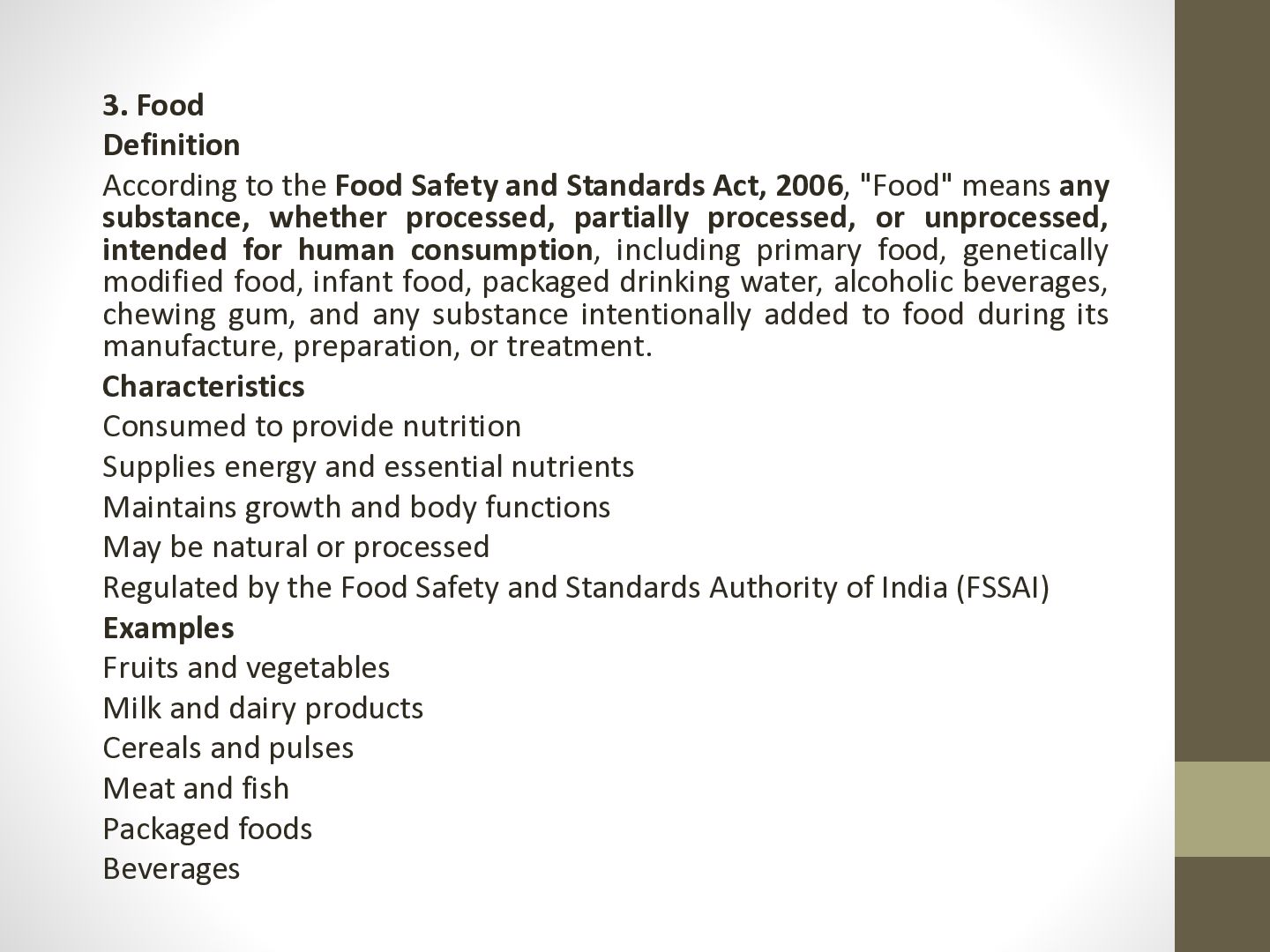
  5. 3. Food Definition According to the Food Safety and Standards

    Act, 2006, "Food" means any substance, whether processed, partially processed, or unprocessed, intended for human consumption, including primary food, genetically modified food, infant food, packaged drinking water, alcoholic beverages, chewing gum, and any substance intentionally added to food during its manufacture, preparation, or treatment. Characteristics Consumed to provide nutrition Supplies energy and essential nutrients Maintains growth and body functions May be natural or processed Regulated by the Food Safety and Standards Authority of India (FSSAI) Examples Fruits and vegetables Milk and dairy products Cereals and pulses Meat and fish Packaged foods Beverages
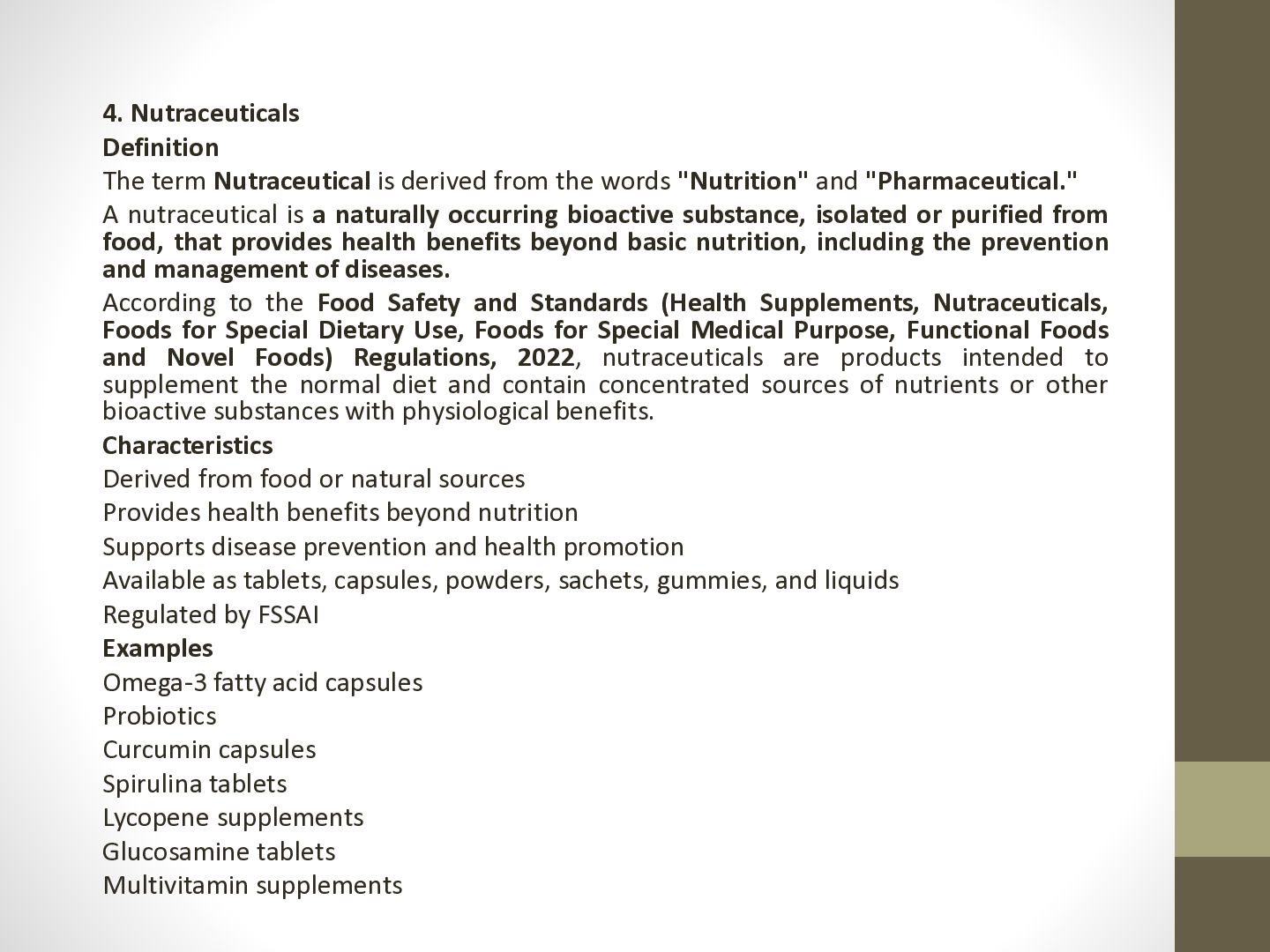
  6. 4. Nutraceuticals Definition The term Nutraceutical is derived from the

    words "Nutrition" and "Pharmaceutical." A nutraceutical is a naturally occurring bioactive substance, isolated or purified from food, that provides health benefits beyond basic nutrition, including the prevention and management of diseases. According to the Food Safety and Standards (Health Supplements, Nutraceuticals, Foods for Special Dietary Use, Foods for Special Medical Purpose, Functional Foods and Novel Foods) Regulations, 2022, nutraceuticals are products intended to supplement the normal diet and contain concentrated sources of nutrients or other bioactive substances with physiological benefits. Characteristics Derived from food or natural sources Provides health benefits beyond nutrition Supports disease prevention and health promotion Available as tablets, capsules, powders, sachets, gummies, and liquids Regulated by FSSAI Examples Omega-3 fatty acid capsules Probiotics Curcumin capsules Spirulina tablets Lycopene supplements Glucosamine tablets Multivitamin supplements
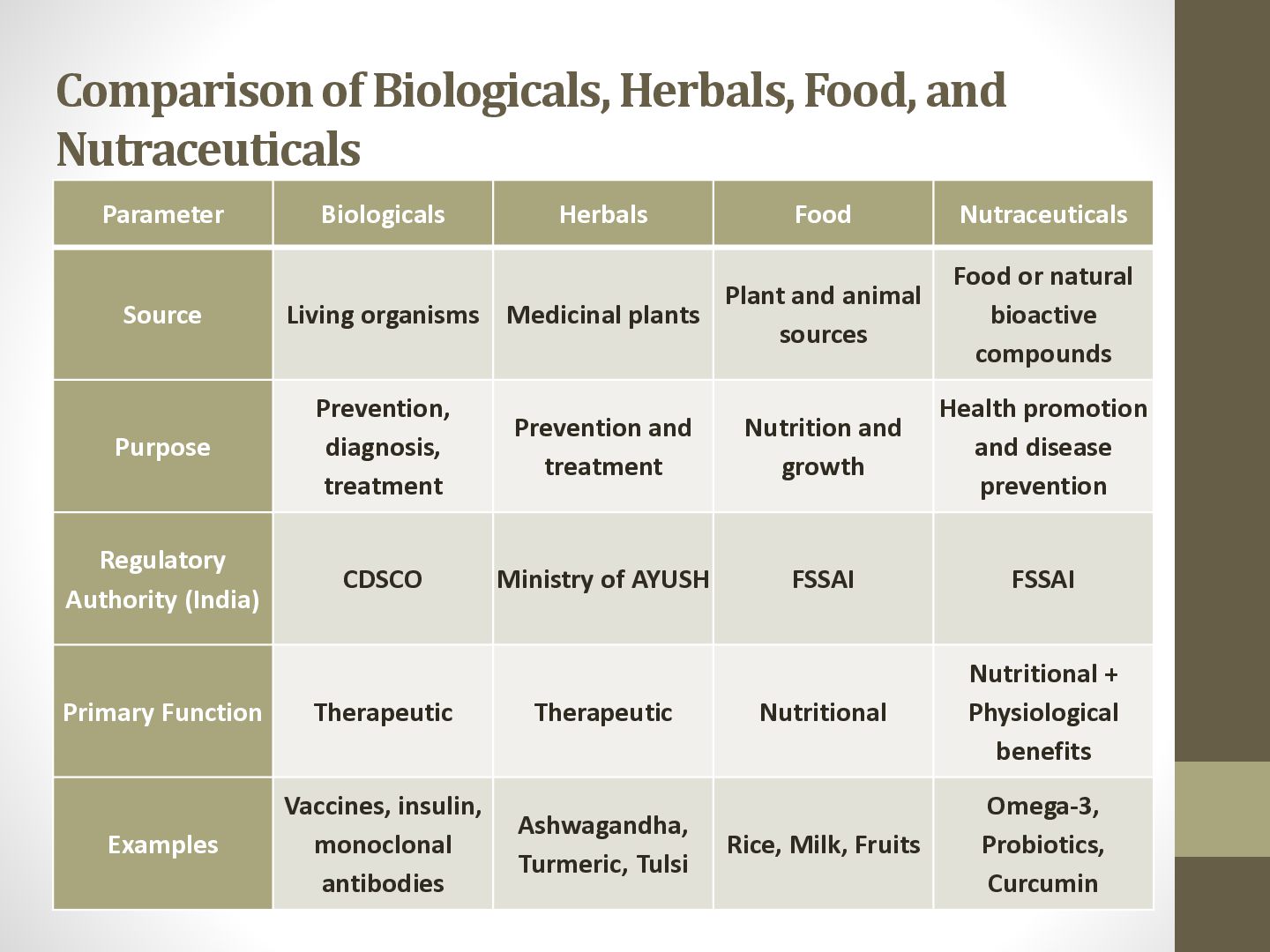
  7. Comparison of Biologicals, Herbals, Food, and Nutraceuticals Parameter Source Biologicals

    Herbals Food Plant and animal Living organisms Medicinal plants sources Nutraceuticals Food or natural bioactive compounds Purpose Prevention, diagnosis, treatment Prevention and treatment Nutrition and growth Health promotion and disease prevention Regulatory Authority (India) CDSCO Ministry of AYUSH FSSAI FSSAI Nutritional Nutritional + Physiological benefits Rice, Milk, Fruits Omega-3, Probiotics, Curcumin Primary Function Therapeutic Therapeutic Examples Vaccines, insulin, monoclonal antibodies Ashwagandha, Turmeric, Tulsi
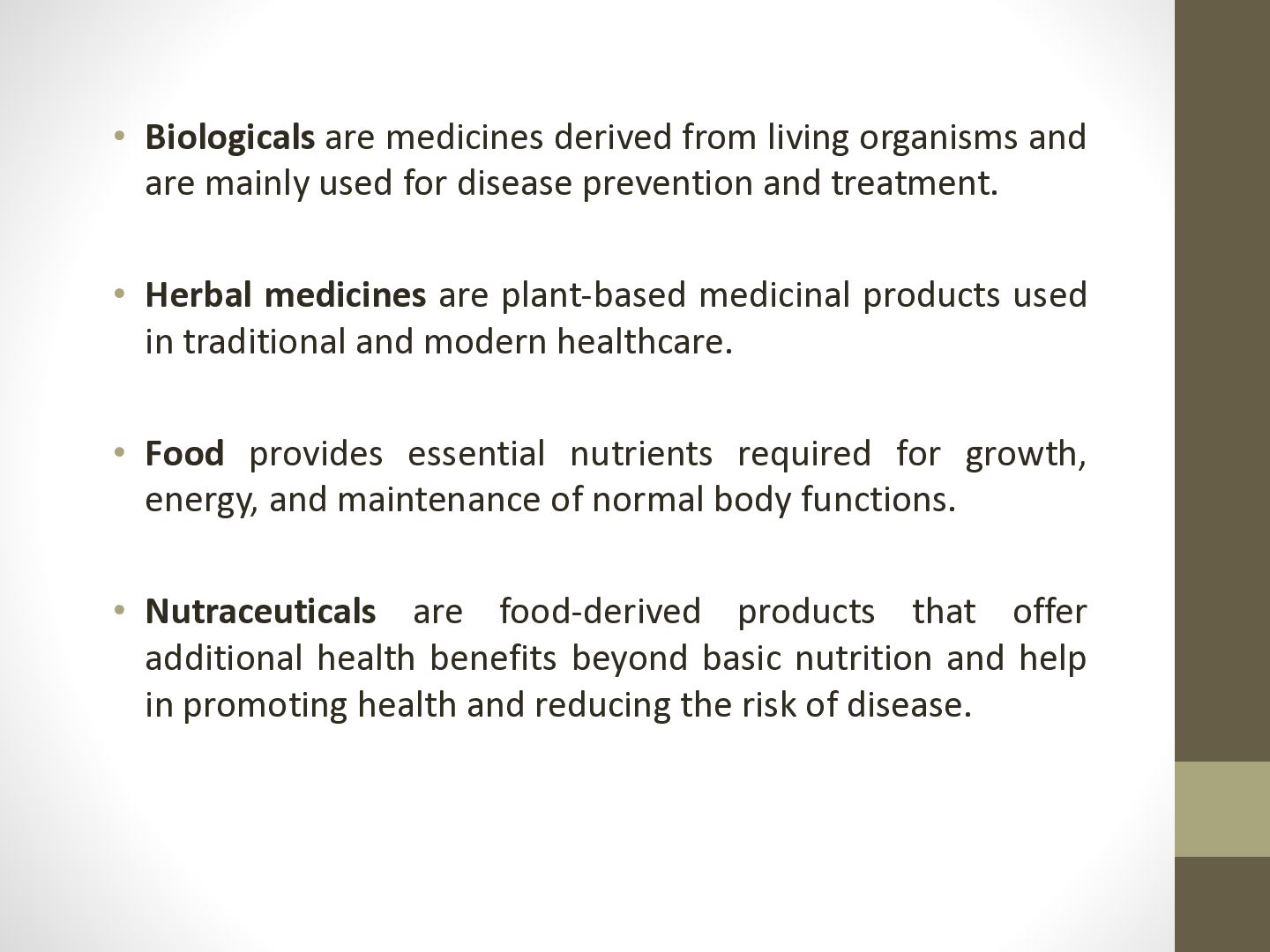
  8. • Biologicals are medicines derived from living organisms and are

    mainly used for disease prevention and treatment. • Herbal medicines are plant-based medicinal products used in traditional and modern healthcare. • Food provides essential nutrients required for growth, energy, and maintenance of normal body functions. • Nutraceuticals are food-derived products that offer additional health benefits beyond basic nutrition and help in promoting health and reducing the risk of disease.
  9. Drugs and Cosmetics Act, 1940 and Drugs & Cosmetics Rules,

    1945 • Drugs and Cosmetics Act, 1940 Introduction • The Drugs and Cosmetics Act, 1940 is the principal legislation governing the import, manufacture, distribution, sale, and quality control of drugs and cosmetics in India. The Act was enacted to ensure that drugs and cosmetics available in the country are safe, effective, and of standard quality, thereby protecting public health. • The Act came into force on 10 April 1940, while the Drugs and Cosmetics Rules, 1945 were framed to provide detailed procedures for implementing the provisions of the Act.
  10. Objectives of the Act The major objectives are: • To

    regulate the import, manufacture, sale, and distribution of drugs and cosmetics. • To ensure the safety, efficacy, and quality of drugs. • To prevent the manufacture and sale of adulterated, spurious, and misbranded drugs. • To prescribe standards for drugs and cosmetics. • To establish regulatory authorities and drug testing laboratories. • To regulate biological products, vaccines, blood products, and herbal medicines. • To protect public health through effective regulatory control.
  11. Scope of the Act The Act applies to: • Pharmaceutical

    drugs • Biological products • Vaccines • Blood and blood products • Medical devices (notified devices) • Cosmetics • Ayurvedic, Siddha, and Unani (ASU) drugs • Homoeopathic medicines
  12. Important Definitions Drug Under Section 3(b) of the Act, "Drug"

    includes: Medicines intended for internal or external use in humans or animals. Substances intended for diagnosis, treatment, mitigation, or prevention of disease. Vaccines and biological products. Medical devices notified by the Government. Components of drugs. Cosmetic A cosmetic means any article intended to be rubbed, poured, sprinkled, sprayed, or applied to the human body for cleansing, beautifying, promoting attractiveness, or altering appearance.
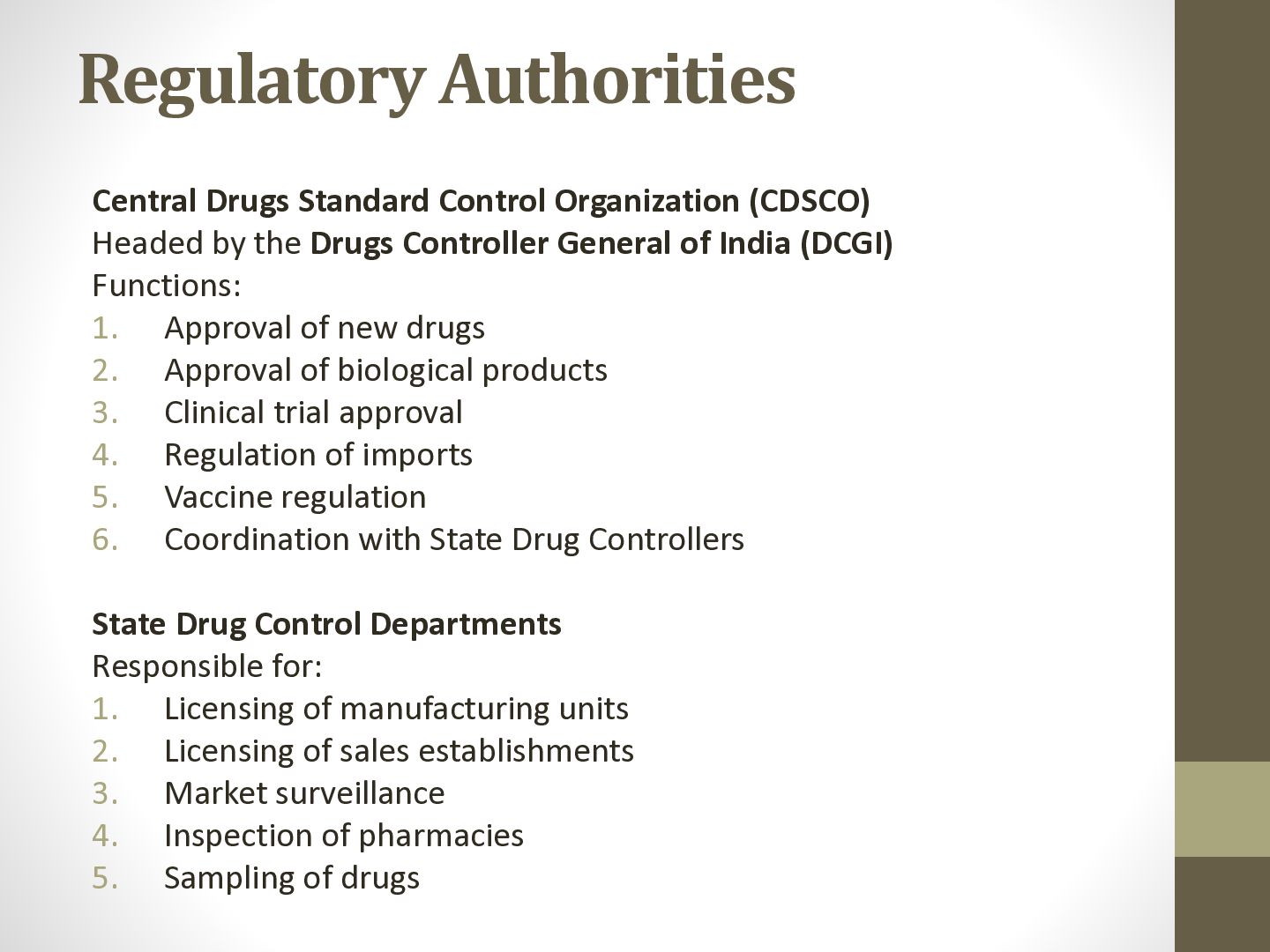
  13. Regulatory Authorities Central Drugs Standard Control Organization (CDSCO) Headed by

    the Drugs Controller General of India (DCGI) Functions: 1. Approval of new drugs 2. Approval of biological products 3. Clinical trial approval 4. Regulation of imports 5. Vaccine regulation 6. Coordination with State Drug Controllers State Drug Control Departments Responsible for: 1. Licensing of manufacturing units 2. Licensing of sales establishments 3. Market surveillance 4. Inspection of pharmacies 5. Sampling of drugs
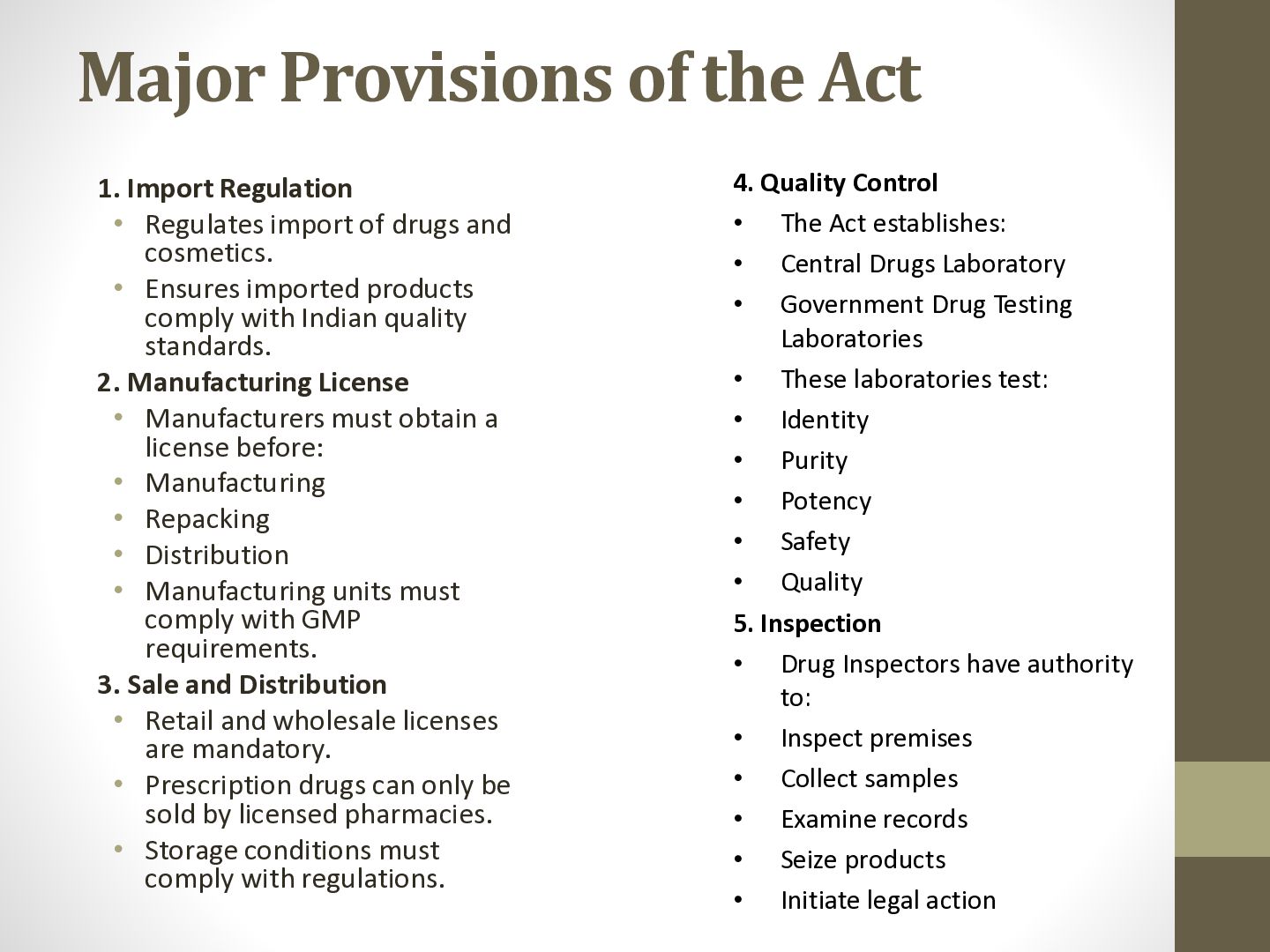
  14. Major Provisions of the Act 1. Import Regulation • Regulates

    import of drugs and cosmetics. • Ensures imported products comply with Indian quality standards. 2. Manufacturing License • Manufacturers must obtain a license before: • Manufacturing • Repacking • Distribution • Manufacturing units must comply with GMP requirements. 3. Sale and Distribution • Retail and wholesale licenses are mandatory. • Prescription drugs can only be sold by licensed pharmacies. • Storage conditions must comply with regulations. 4. Quality Control • The Act establishes: • Central Drugs Laboratory • Government Drug Testing Laboratories • These laboratories test: • Identity • Purity • Potency • Safety • Quality 5. Inspection • Drug Inspectors have authority to: • Inspect premises • Collect samples • Examine records • Seize products • Initiate legal action
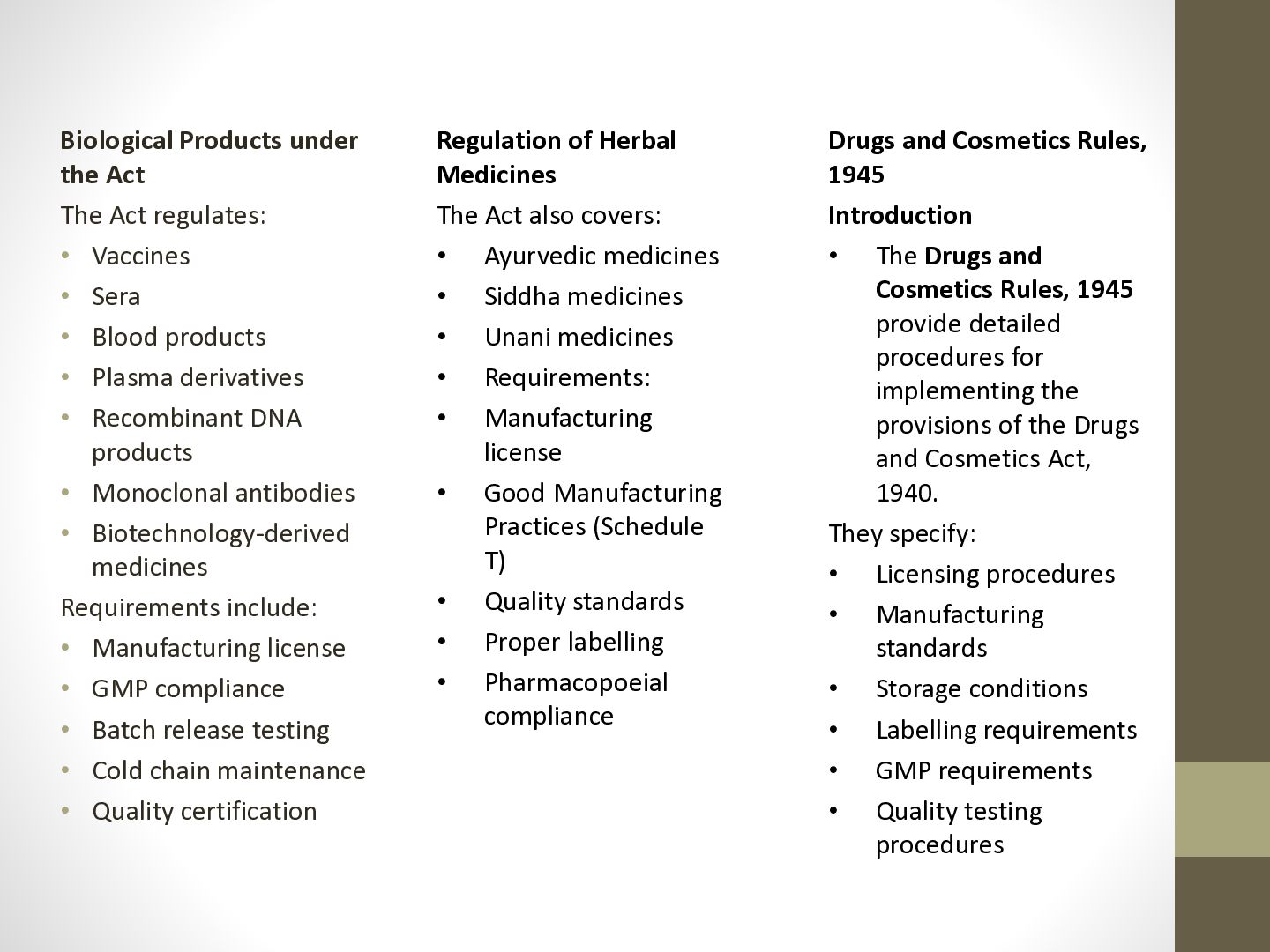
  15. Biological Products under the Act The Act regulates: • Vaccines

    • Sera • Blood products • Plasma derivatives • Recombinant DNA products • Monoclonal antibodies • Biotechnology-derived medicines Requirements include: • Manufacturing license • GMP compliance • Batch release testing • Cold chain maintenance • Quality certification Regulation of Herbal Medicines The Act also covers: • Ayurvedic medicines • Siddha medicines • Unani medicines • Requirements: • Manufacturing license • Good Manufacturing Practices (Schedule T) • Quality standards • Proper labelling • Pharmacopoeial compliance Drugs and Cosmetics Rules, 1945 Introduction • The Drugs and Cosmetics Rules, 1945 provide detailed procedures for implementing the provisions of the Drugs and Cosmetics Act, 1940. They specify: • Licensing procedures • Manufacturing standards • Storage conditions • Labelling requirements • GMP requirements • Quality testing procedures
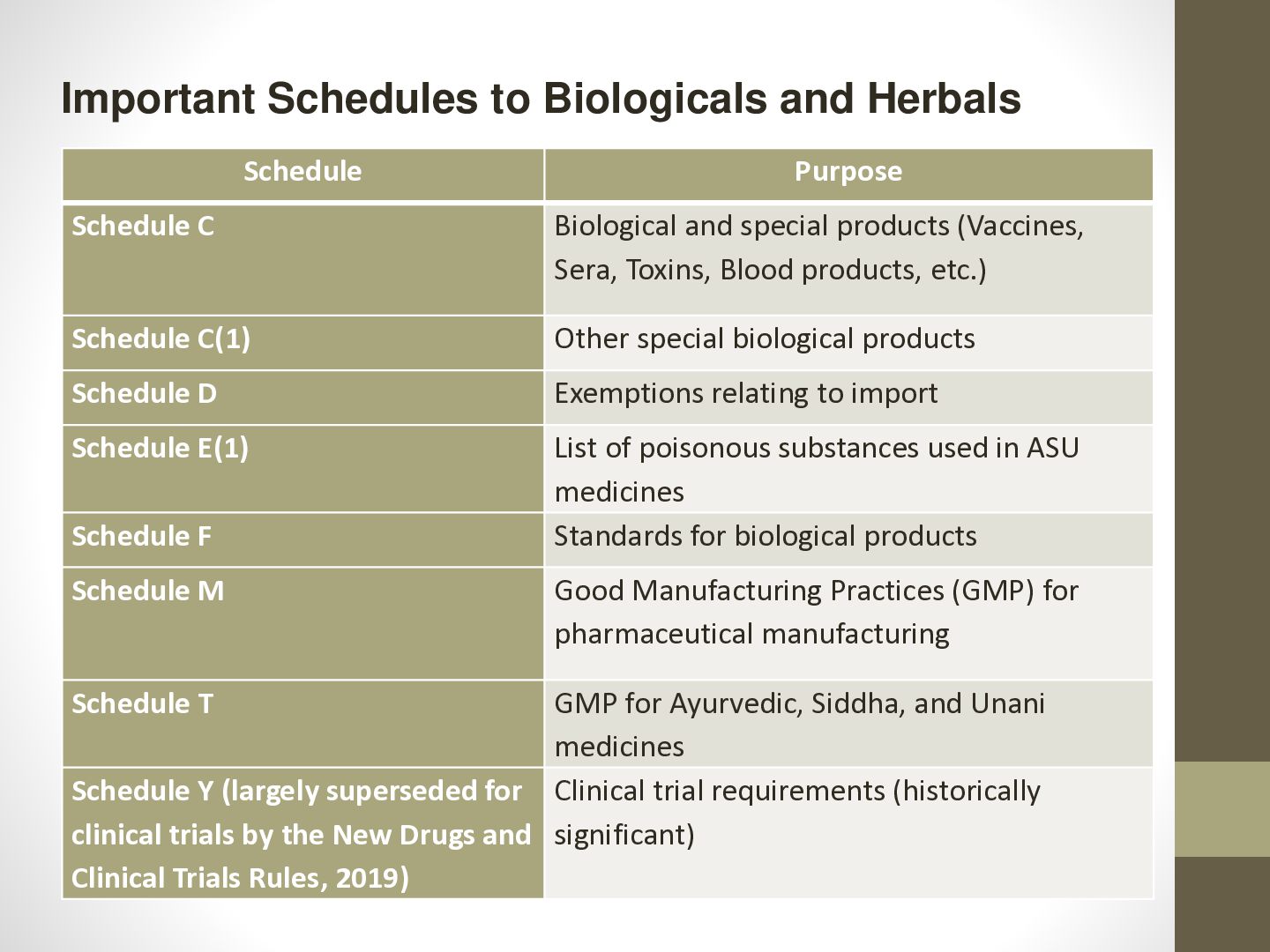
  16. Important Schedules to Biologicals and Herbals Schedule Purpose Schedule C

    Biological and special products (Vaccines, Sera, Toxins, Blood products, etc.) Schedule C(1) Other special biological products Schedule D Exemptions relating to import Schedule E(1) List of poisonous substances used in ASU medicines Standards for biological products Schedule F Schedule M Schedule T Good Manufacturing Practices (GMP) for pharmaceutical manufacturing GMP for Ayurvedic, Siddha, and Unani medicines Schedule Y (largely superseded for Clinical trial requirements (historically clinical trials by the New Drugs and significant) Clinical Trials Rules, 2019)
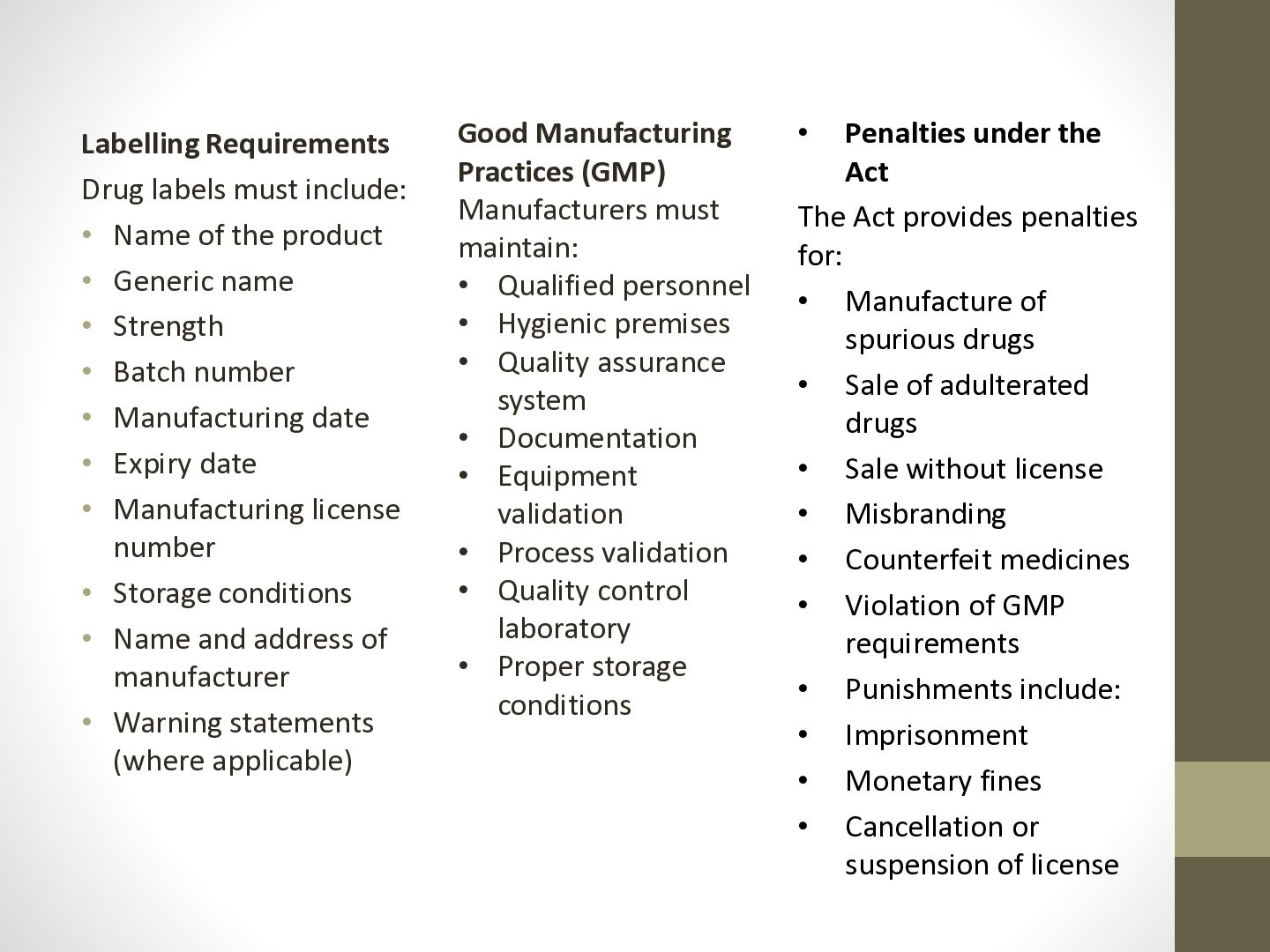
  17. Labelling Requirements Drug labels must include: • Name of the

    product • Generic name • Strength • Batch number • Manufacturing date • Expiry date • Manufacturing license number • Storage conditions • Name and address of manufacturer • Warning statements (where applicable) Good Manufacturing Practices (GMP) Manufacturers must maintain: • Qualified personnel • Hygienic premises • Quality assurance system • Documentation • Equipment validation • Process validation • Quality control laboratory • Proper storage conditions • Penalties under the Act The Act provides penalties for: • Manufacture of spurious drugs • Sale of adulterated drugs • Sale without license • Misbranding • Counterfeit medicines • Violation of GMP requirements • Punishments include: • Imprisonment • Monetary fines • Cancellation or suspension of license
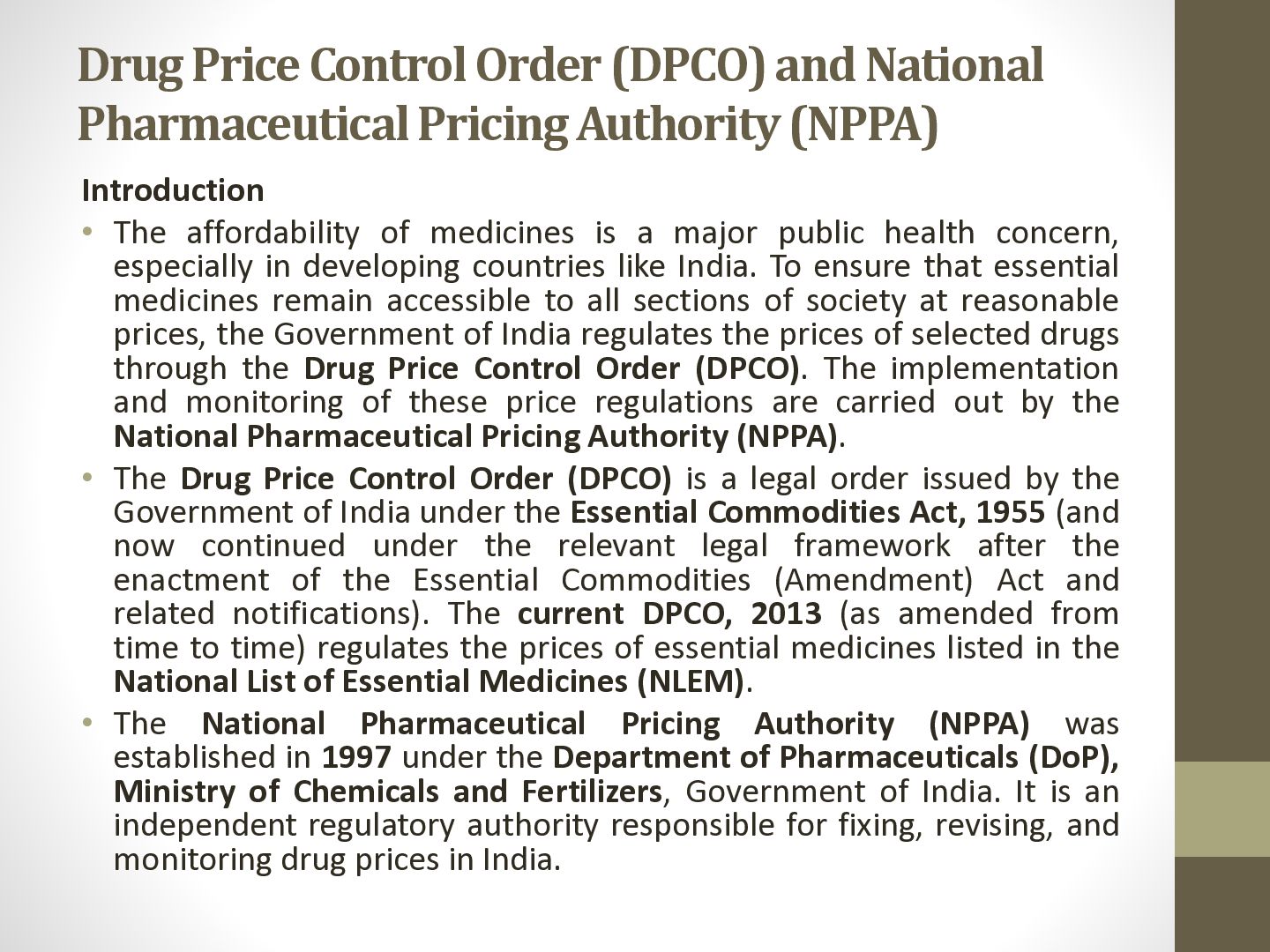
  18. Drug Price Control Order (DPCO) and National Pharmaceutical Pricing Authority

    (NPPA) Introduction • The affordability of medicines is a major public health concern, especially in developing countries like India. To ensure that essential medicines remain accessible to all sections of society at reasonable prices, the Government of India regulates the prices of selected drugs through the Drug Price Control Order (DPCO). The implementation and monitoring of these price regulations are carried out by the National Pharmaceutical Pricing Authority (NPPA). • The Drug Price Control Order (DPCO) is a legal order issued by the Government of India under the Essential Commodities Act, 1955 (and now continued under the relevant legal framework after the enactment of the Essential Commodities (Amendment) Act and related notifications). The current DPCO, 2013 (as amended from time to time) regulates the prices of essential medicines listed in the National List of Essential Medicines (NLEM). • The National Pharmaceutical Pricing Authority (NPPA) was established in 1997 under the Department of Pharmaceuticals (DoP), Ministry of Chemicals and Fertilizers, Government of India. It is an independent regulatory authority responsible for fixing, revising, and monitoring drug prices in India.
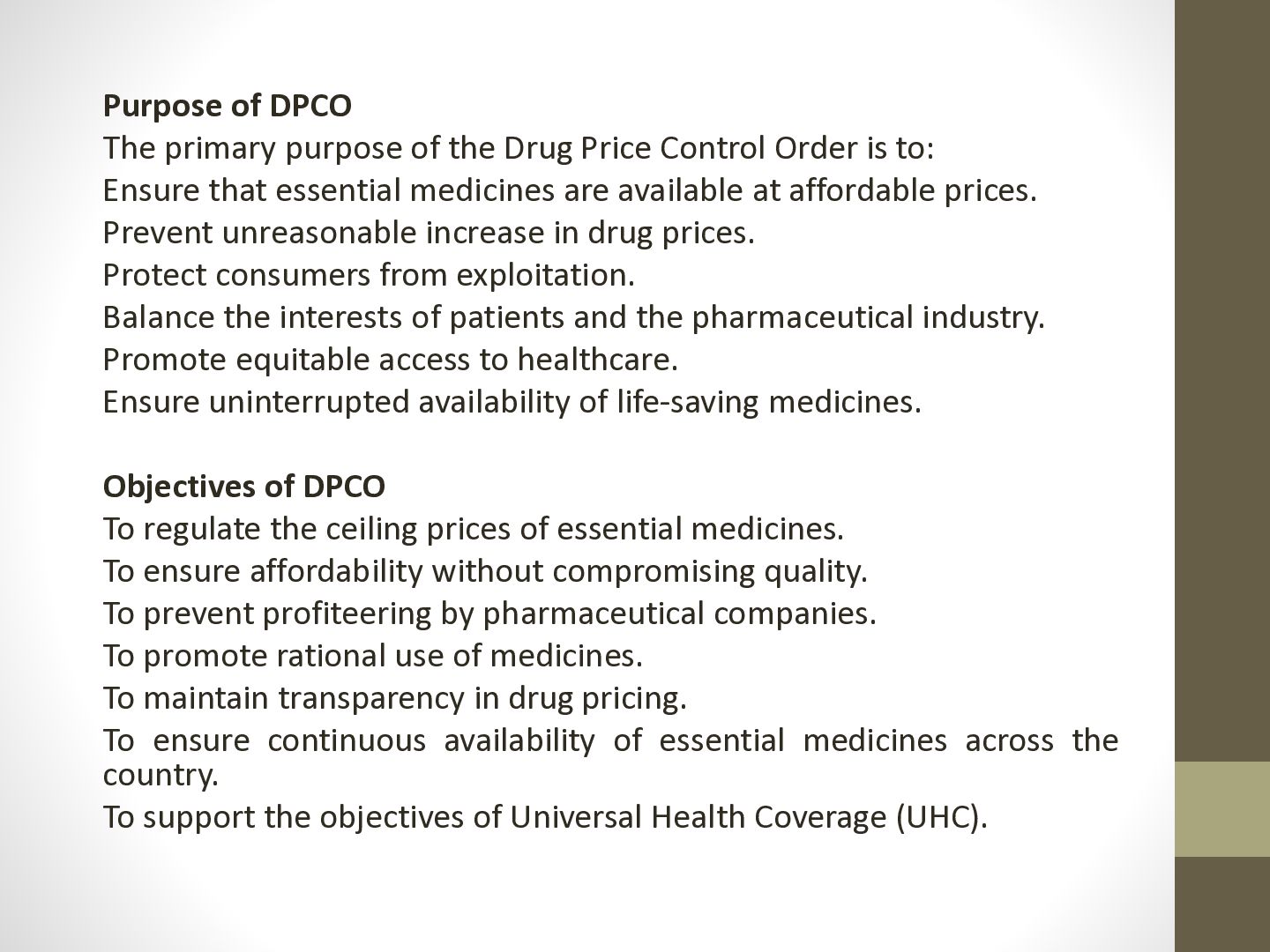
  19. Purpose of DPCO The primary purpose of the Drug Price

    Control Order is to: Ensure that essential medicines are available at affordable prices. Prevent unreasonable increase in drug prices. Protect consumers from exploitation. Balance the interests of patients and the pharmaceutical industry. Promote equitable access to healthcare. Ensure uninterrupted availability of life-saving medicines. Objectives of DPCO To regulate the ceiling prices of essential medicines. To ensure affordability without compromising quality. To prevent profiteering by pharmaceutical companies. To promote rational use of medicines. To maintain transparency in drug pricing. To ensure continuous availability of essential medicines across the country. To support the objectives of Universal Health Coverage (UHC).
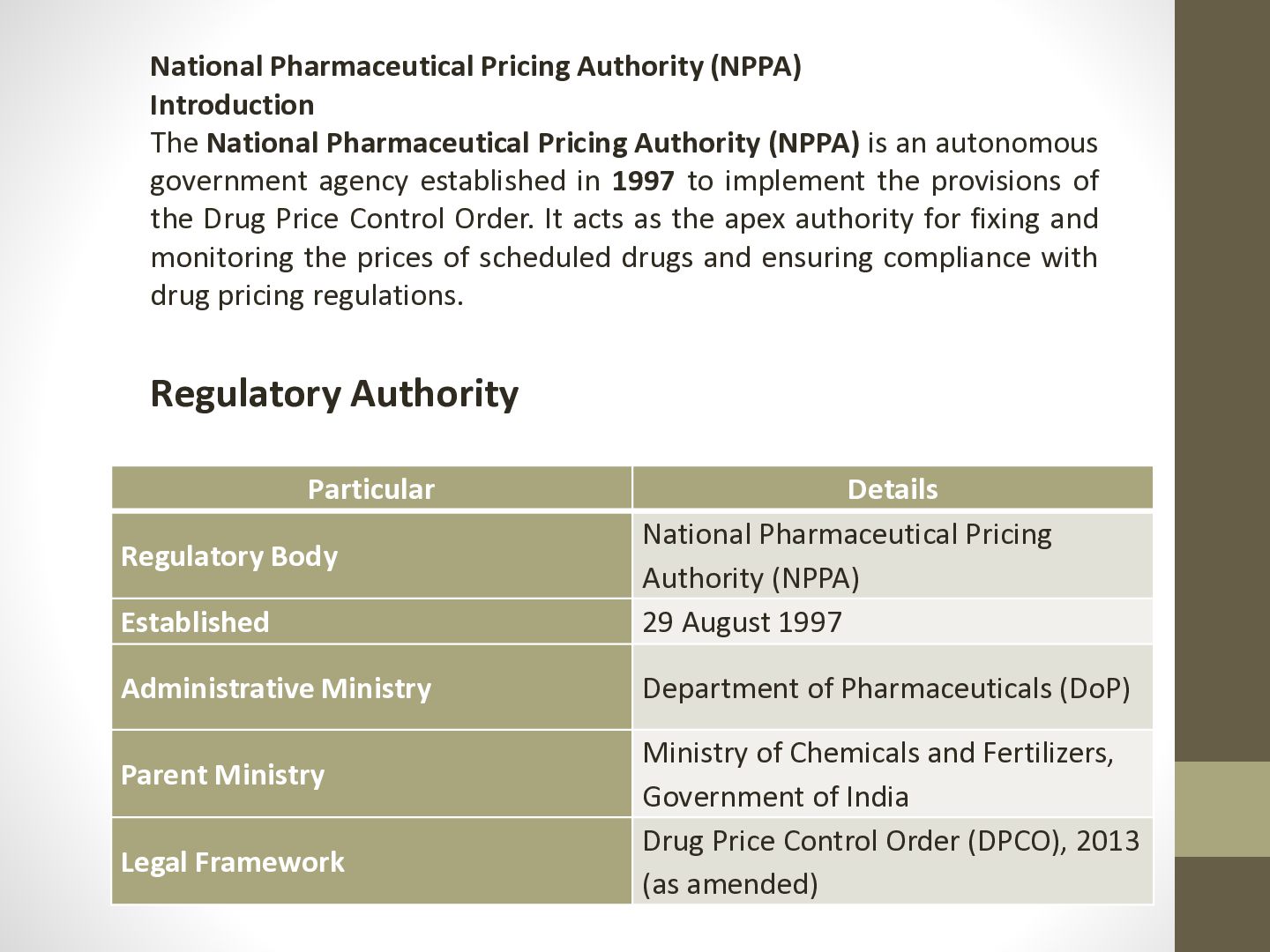
  20. National Pharmaceutical Pricing Authority (NPPA) Introduction The National Pharmaceutical Pricing

    Authority (NPPA) is an autonomous government agency established in 1997 to implement the provisions of the Drug Price Control Order. It acts as the apex authority for fixing and monitoring the prices of scheduled drugs and ensuring compliance with drug pricing regulations. Regulatory Authority Particular Established Details National Pharmaceutical Pricing Authority (NPPA) 29 August 1997 Administrative Ministry Department of Pharmaceuticals (DoP) Regulatory Body Parent Ministry Legal Framework Ministry of Chemicals and Fertilizers, Government of India Drug Price Control Order (DPCO), 2013 (as amended)
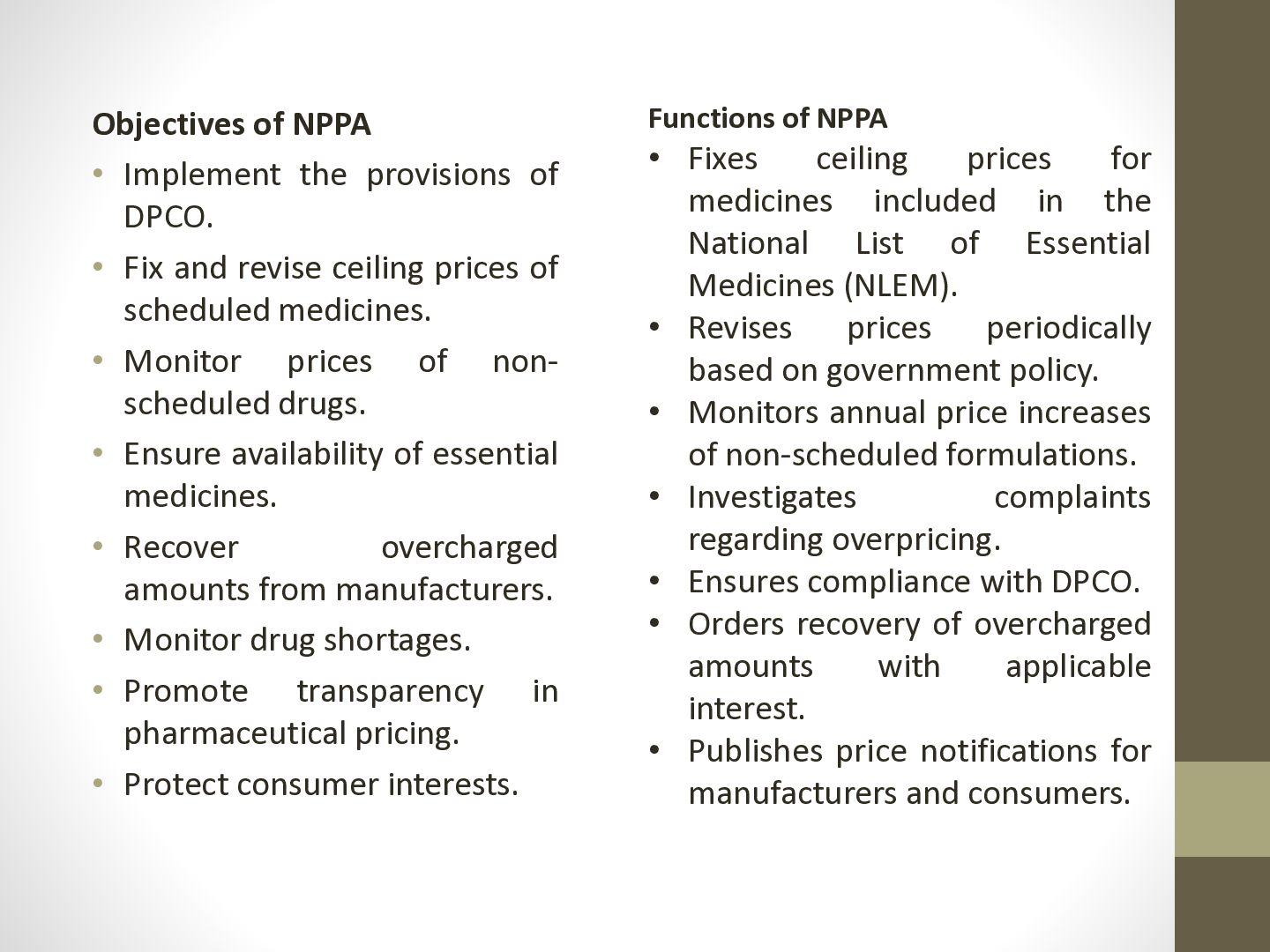
  21. Objectives of NPPA • Implement the provisions of DPCO. •

    Fix and revise ceiling prices of scheduled medicines. • Monitor prices of nonscheduled drugs. • Ensure availability of essential medicines. • Recover overcharged amounts from manufacturers. • Monitor drug shortages. • Promote transparency in pharmaceutical pricing. • Protect consumer interests. Functions of NPPA • Fixes ceiling prices for medicines included in the National List of Essential Medicines (NLEM). • Revises prices periodically based on government policy. • Monitors annual price increases of non-scheduled formulations. • Investigates complaints regarding overpricing. • Ensures compliance with DPCO. • Orders recovery of overcharged amounts with applicable interest. • Publishes price notifications for manufacturers and consumers.
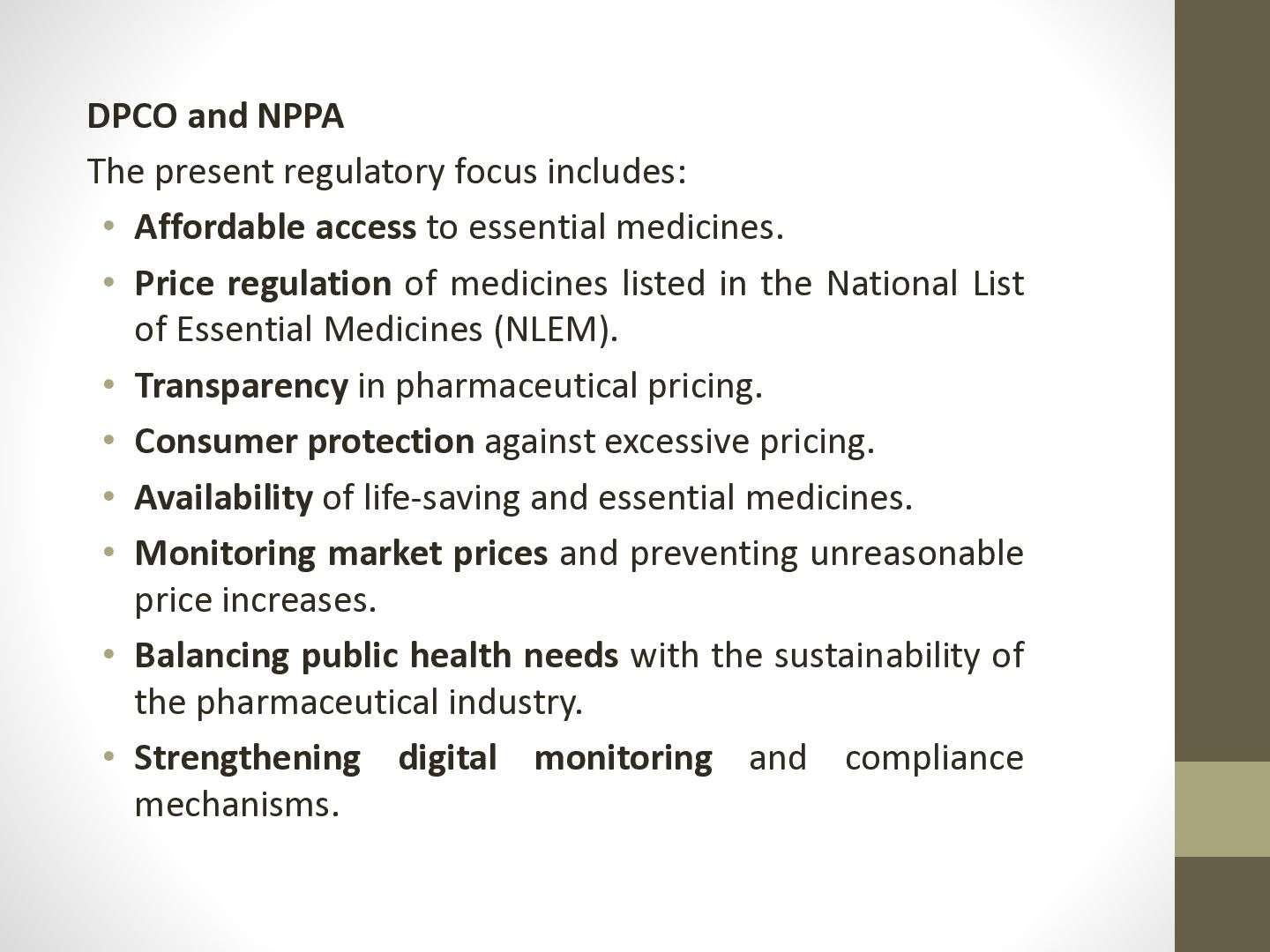
  22. DPCO and NPPA The present regulatory focus includes: • Affordable

    access to essential medicines. • Price regulation of medicines listed in the National List of Essential Medicines (NLEM). • Transparency in pharmaceutical pricing. • Consumer protection against excessive pricing. • Availability of life-saving and essential medicines. • Monitoring market prices and preventing unreasonable price increases. • Balancing public health needs with the sustainability of the pharmaceutical industry. • Strengthening digital monitoring and compliance mechanisms.
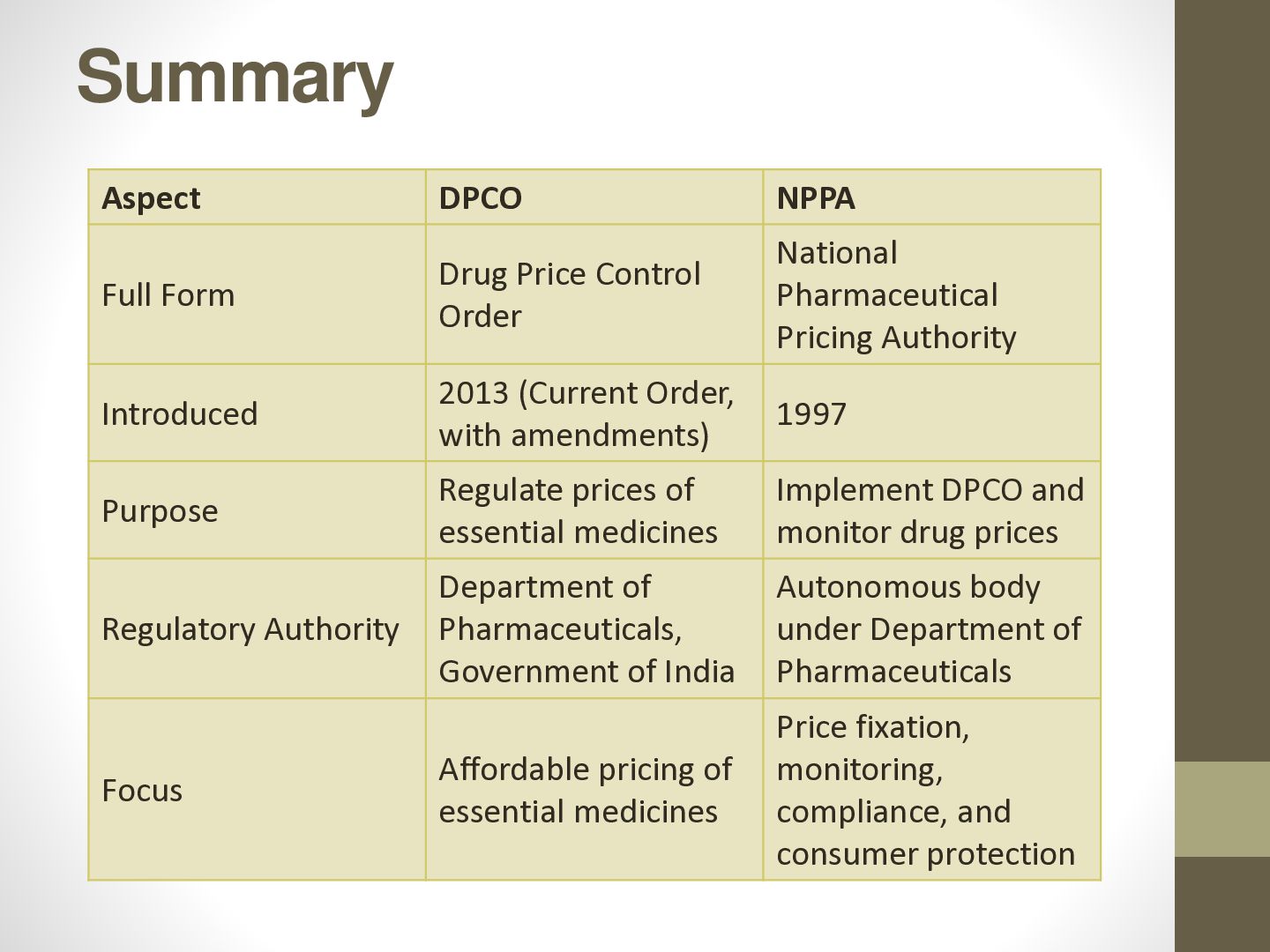
  23. Summary Aspect DPCO NPPA Full Form Drug Price Control Order

    National Pharmaceutical Pricing Authority Introduced 2013 (Current Order, with amendments) 1997 Purpose Regulate prices of essential medicines Implement DPCO and monitor drug prices Regulatory Authority Department of Pharmaceuticals, Government of India Autonomous body under Department of Pharmaceuticals Affordable pricing of essential medicines Price fixation, monitoring, compliance, and consumer protection Focus
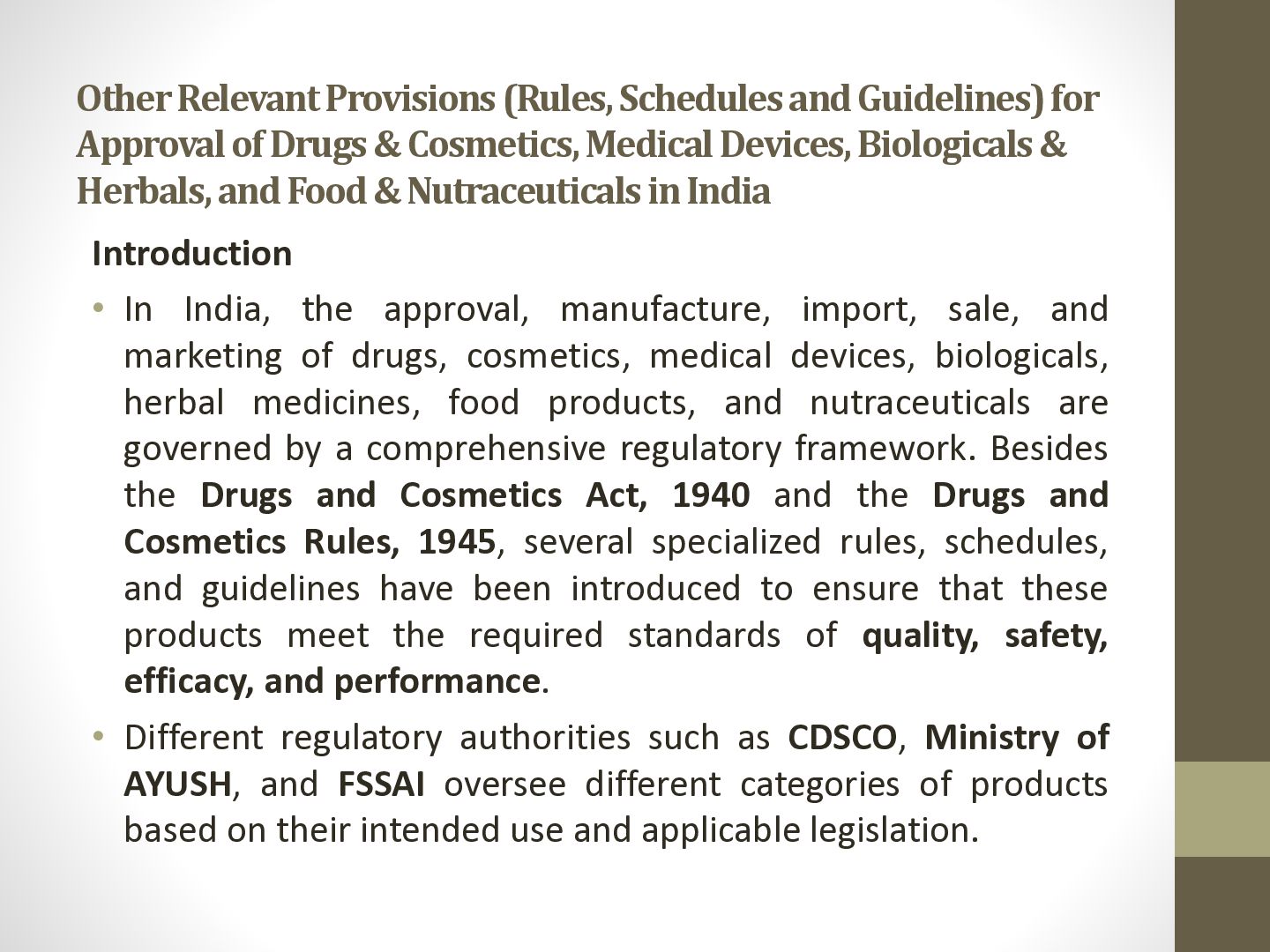
  24. Other Relevant Provisions (Rules, Schedules and Guidelines) for Approval of

    Drugs & Cosmetics, Medical Devices, Biologicals & Herbals, and Food & Nutraceuticals in India Introduction • In India, the approval, manufacture, import, sale, and marketing of drugs, cosmetics, medical devices, biologicals, herbal medicines, food products, and nutraceuticals are governed by a comprehensive regulatory framework. Besides the Drugs and Cosmetics Act, 1940 and the Drugs and Cosmetics Rules, 1945, several specialized rules, schedules, and guidelines have been introduced to ensure that these products meet the required standards of quality, safety, efficacy, and performance. • Different regulatory authorities such as CDSCO, Ministry of AYUSH, and FSSAI oversee different categories of products based on their intended use and applicable legislation.
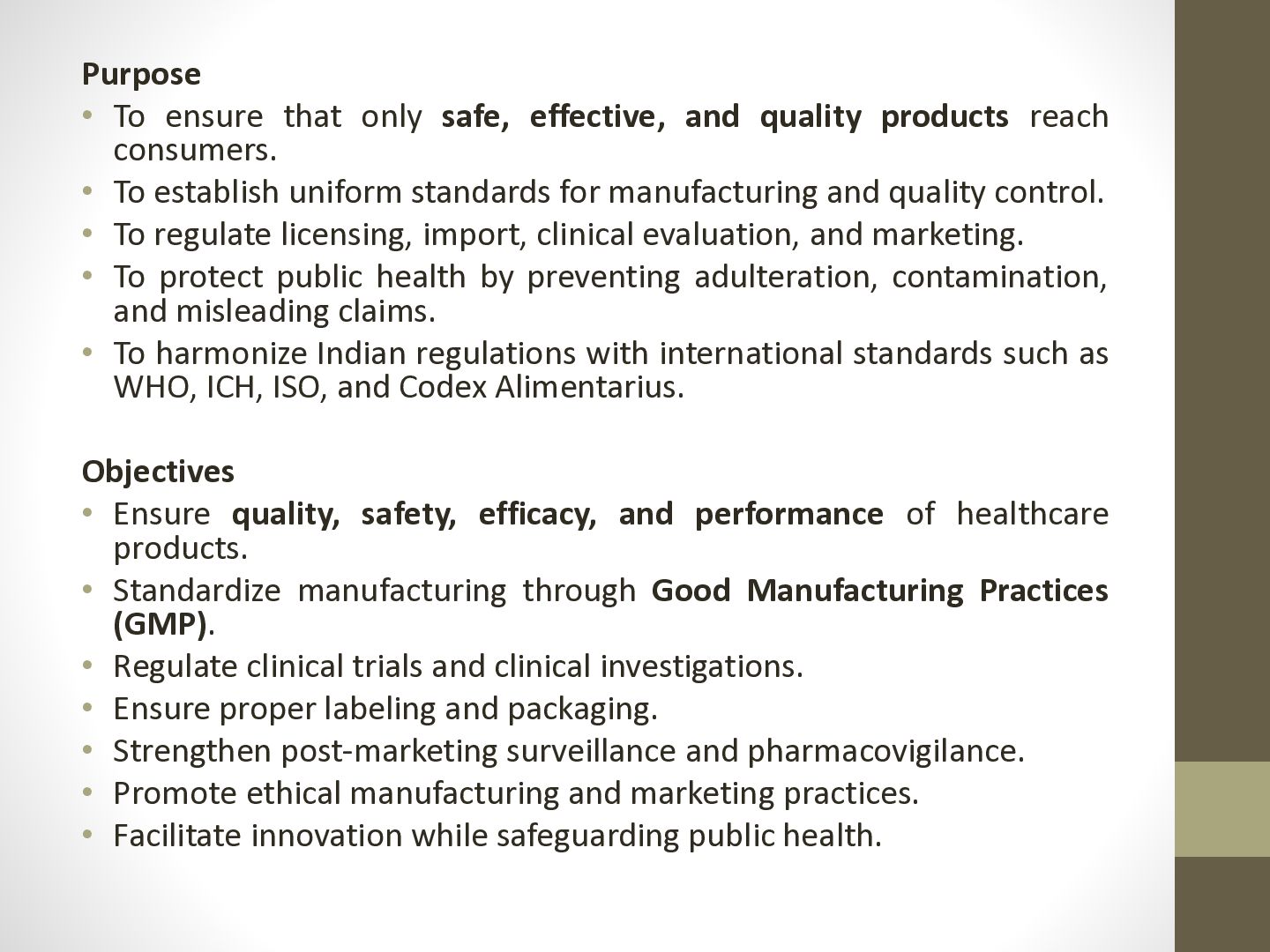
  25. Purpose • To ensure that only safe, effective, and quality

    products reach consumers. • To establish uniform standards for manufacturing and quality control. • To regulate licensing, import, clinical evaluation, and marketing. • To protect public health by preventing adulteration, contamination, and misleading claims. • To harmonize Indian regulations with international standards such as WHO, ICH, ISO, and Codex Alimentarius. Objectives • Ensure quality, safety, efficacy, and performance of healthcare products. • Standardize manufacturing through Good Manufacturing Practices (GMP). • Regulate clinical trials and clinical investigations. • Ensure proper labeling and packaging. • Strengthen post-marketing surveillance and pharmacovigilance. • Promote ethical manufacturing and marketing practices. • Facilitate innovation while safeguarding public health.
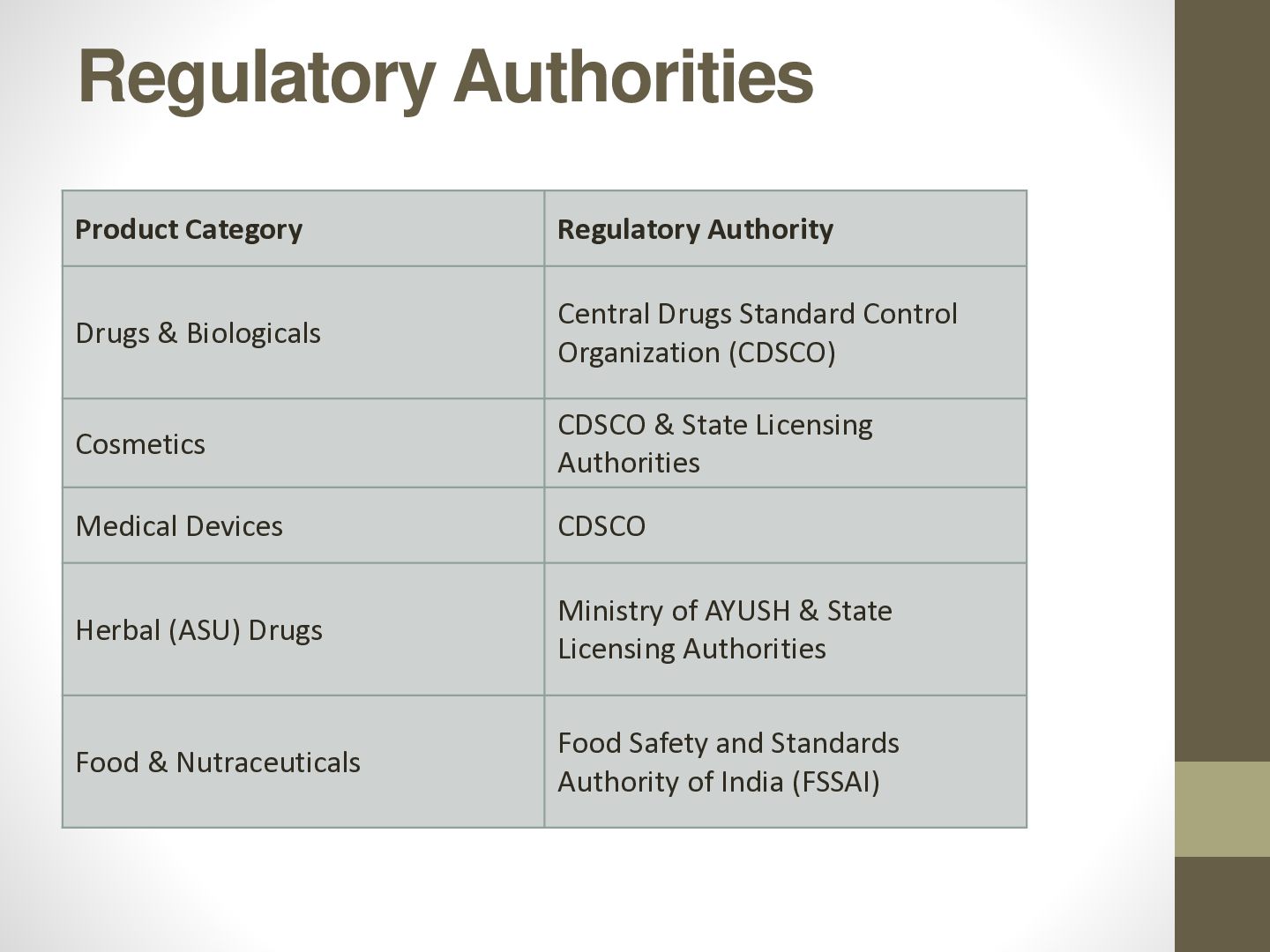
  26. Regulatory Authorities Product Category Regulatory Authority Drugs & Biologicals Central

    Drugs Standard Control Organization (CDSCO) Cosmetics CDSCO & State Licensing Authorities Medical Devices CDSCO Herbal (ASU) Drugs Ministry of AYUSH & State Licensing Authorities Food & Nutraceuticals Food Safety and Standards Authority of India (FSSAI)
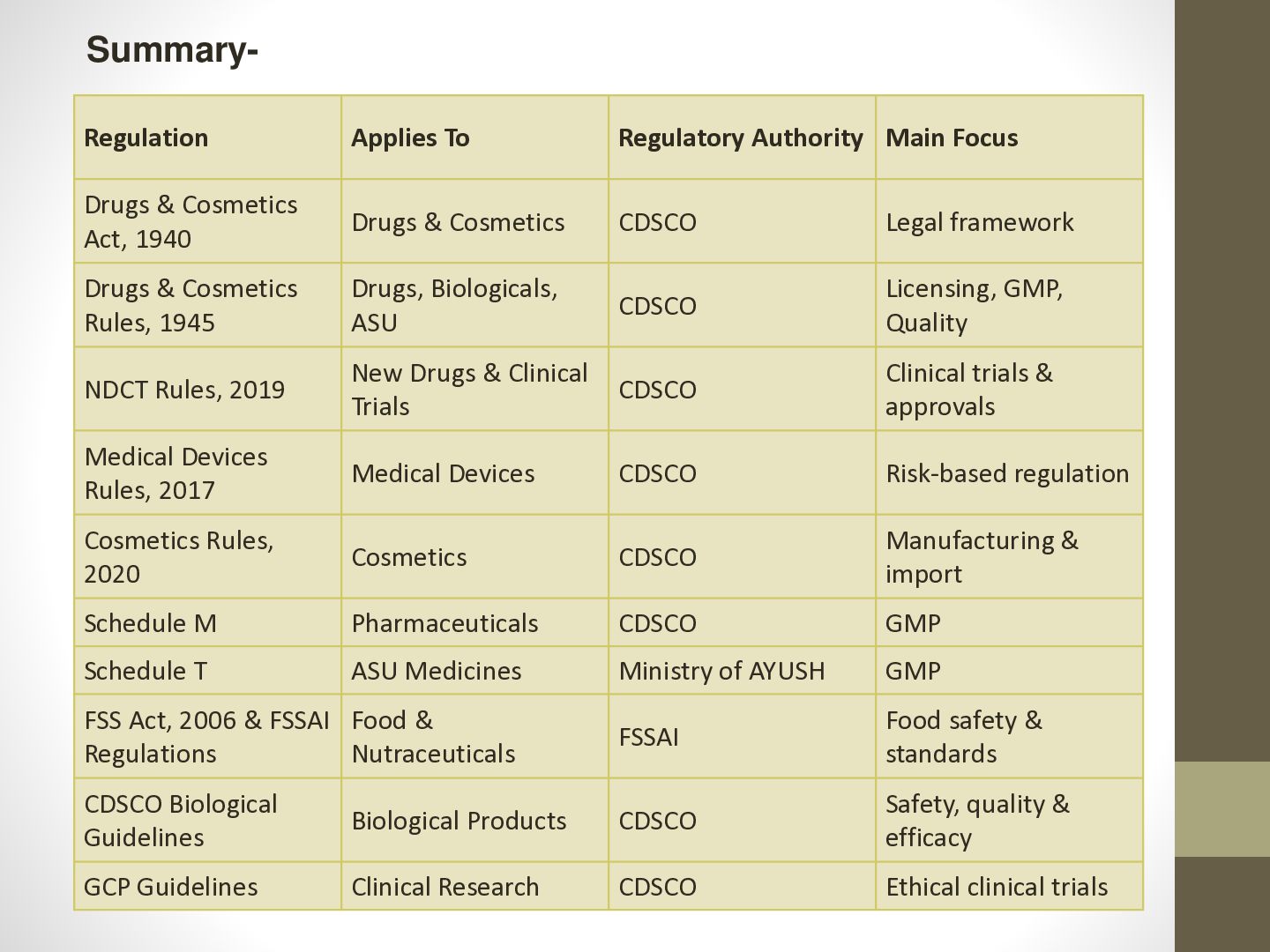
  27. SummaryRegulation Applies To Regulatory Authority Main Focus Drugs & Cosmetics

    Act, 1940 Drugs & Cosmetics CDSCO Legal framework Drugs & Cosmetics Rules, 1945 Drugs, Biologicals, ASU CDSCO Licensing, GMP, Quality NDCT Rules, 2019 New Drugs & Clinical Trials CDSCO Clinical trials & approvals Medical Devices Rules, 2017 Medical Devices CDSCO Risk-based regulation Cosmetics Rules, 2020 Cosmetics CDSCO Manufacturing & import Schedule M Pharmaceuticals CDSCO GMP Schedule T ASU Medicines Ministry of AYUSH GMP FSS Act, 2006 & FSSAI Food & Regulations Nutraceuticals FSSAI Food safety & standards CDSCO Biological Guidelines Biological Products CDSCO Safety, quality & efficacy GCP Guidelines Clinical Research CDSCO Ethical clinical trials
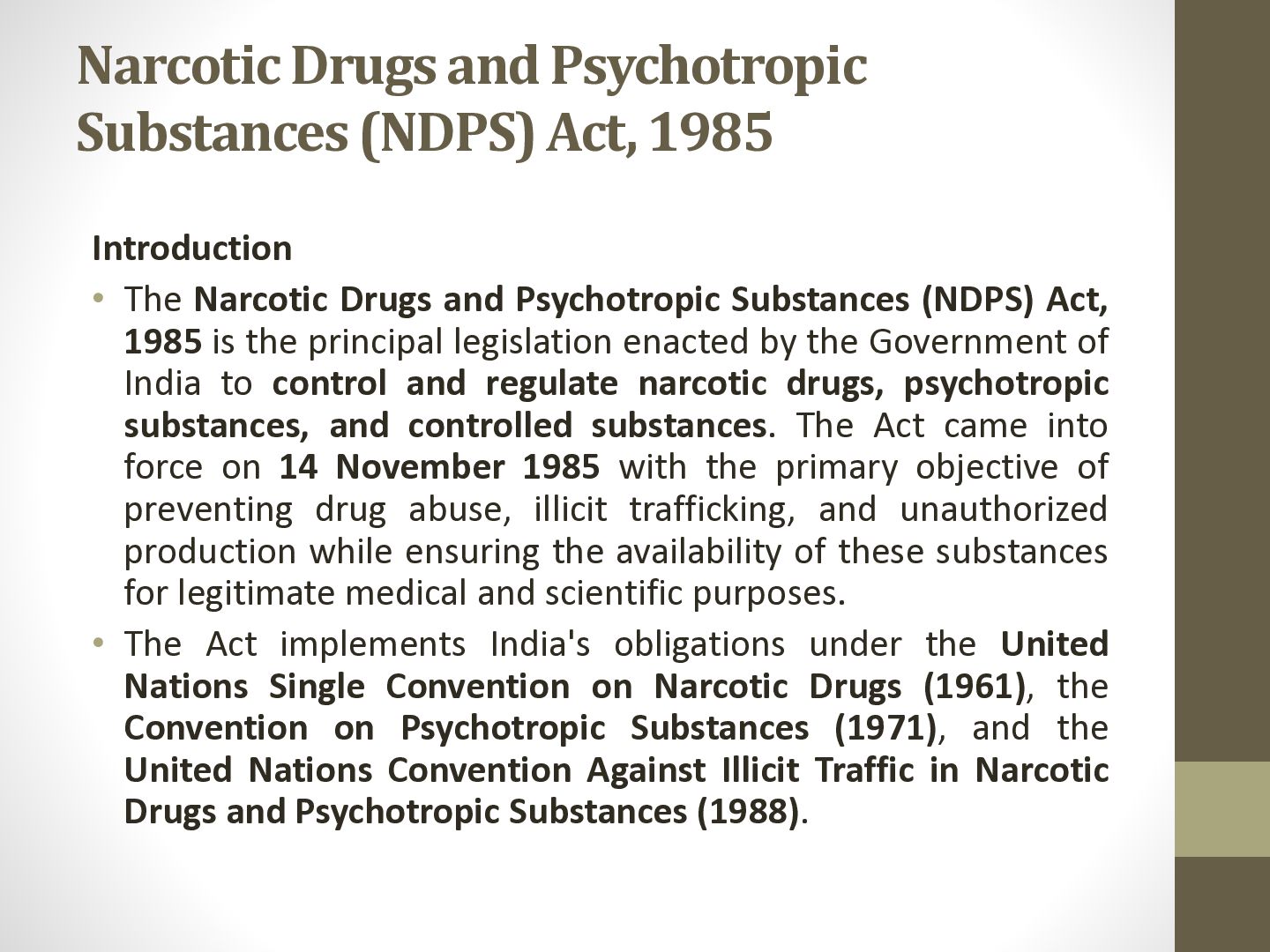
  28. Narcotic Drugs and Psychotropic Substances (NDPS) Act, 1985 Introduction •

    The Narcotic Drugs and Psychotropic Substances (NDPS) Act, 1985 is the principal legislation enacted by the Government of India to control and regulate narcotic drugs, psychotropic substances, and controlled substances. The Act came into force on 14 November 1985 with the primary objective of preventing drug abuse, illicit trafficking, and unauthorized production while ensuring the availability of these substances for legitimate medical and scientific purposes. • The Act implements India's obligations under the United Nations Single Convention on Narcotic Drugs (1961), the Convention on Psychotropic Substances (1971), and the United Nations Convention Against Illicit Traffic in Narcotic Drugs and Psychotropic Substances (1988).
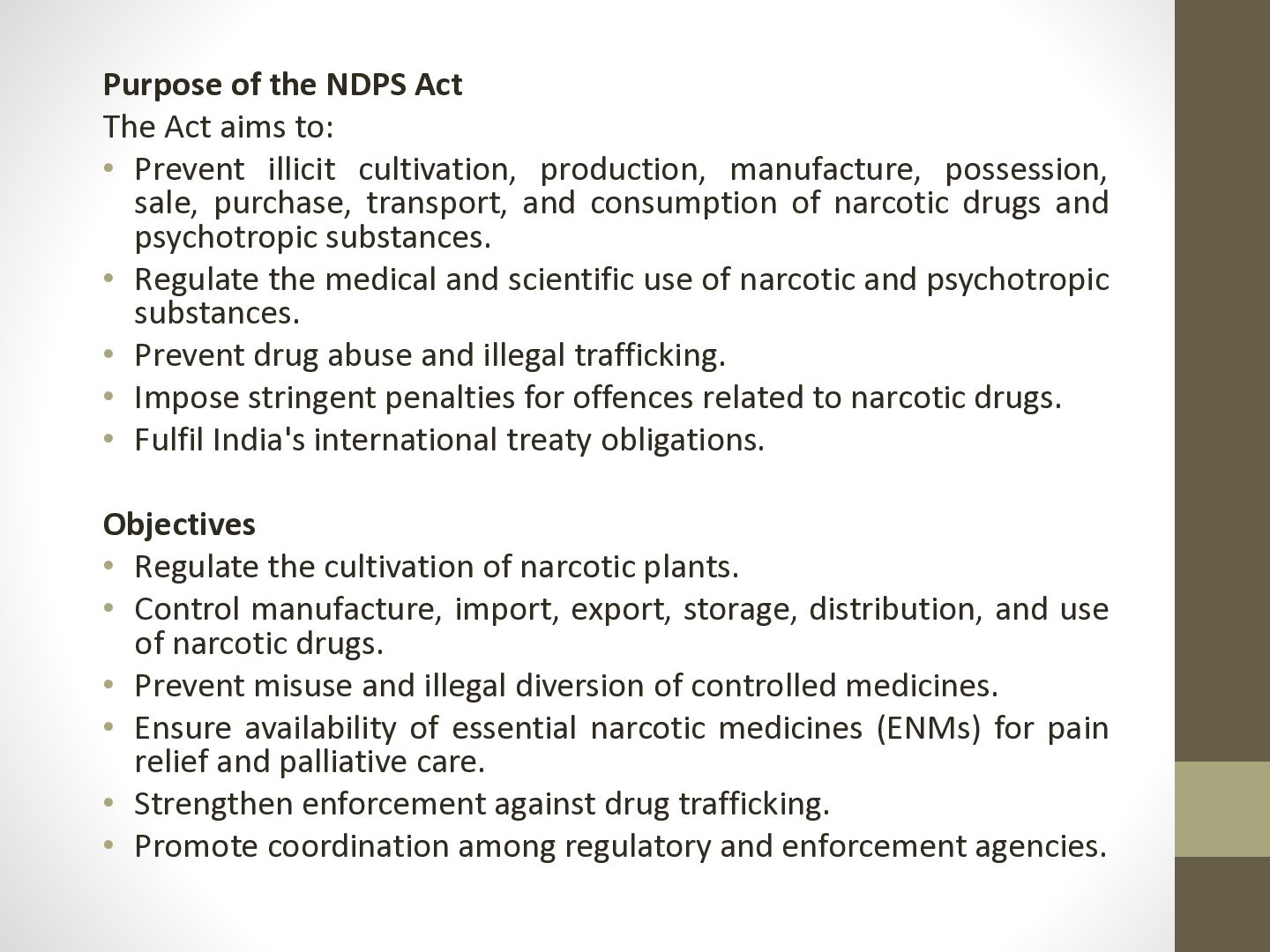
  29. Purpose of the NDPS Act The Act aims to: •

    Prevent illicit cultivation, production, manufacture, possession, sale, purchase, transport, and consumption of narcotic drugs and psychotropic substances. • Regulate the medical and scientific use of narcotic and psychotropic substances. • Prevent drug abuse and illegal trafficking. • Impose stringent penalties for offences related to narcotic drugs. • Fulfil India's international treaty obligations. Objectives • Regulate the cultivation of narcotic plants. • Control manufacture, import, export, storage, distribution, and use of narcotic drugs. • Prevent misuse and illegal diversion of controlled medicines. • Ensure availability of essential narcotic medicines (ENMs) for pain relief and palliative care. • Strengthen enforcement against drug trafficking. • Promote coordination among regulatory and enforcement agencies.
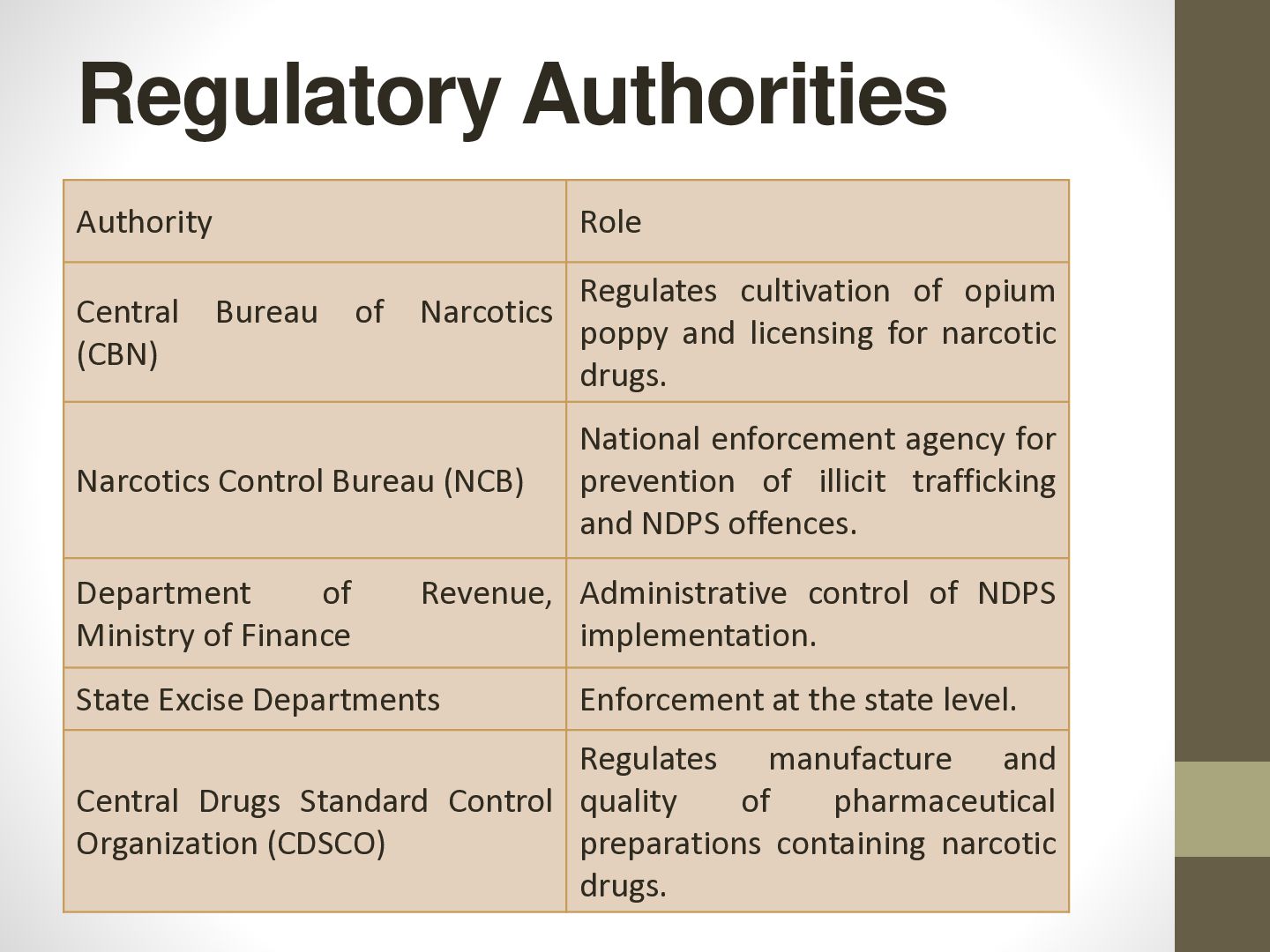
  30. Regulatory Authorities Authority Central (CBN) Role Bureau of Narcotics Narcotics

    Control Bureau (NCB) Department of Ministry of Finance Regulates cultivation of opium poppy and licensing for narcotic drugs. National enforcement agency for prevention of illicit trafficking and NDPS offences. Revenue, Administrative control of NDPS implementation. State Excise Departments Enforcement at the state level. Regulates manufacture and Central Drugs Standard Control quality of pharmaceutical Organization (CDSCO) preparations containing narcotic drugs.
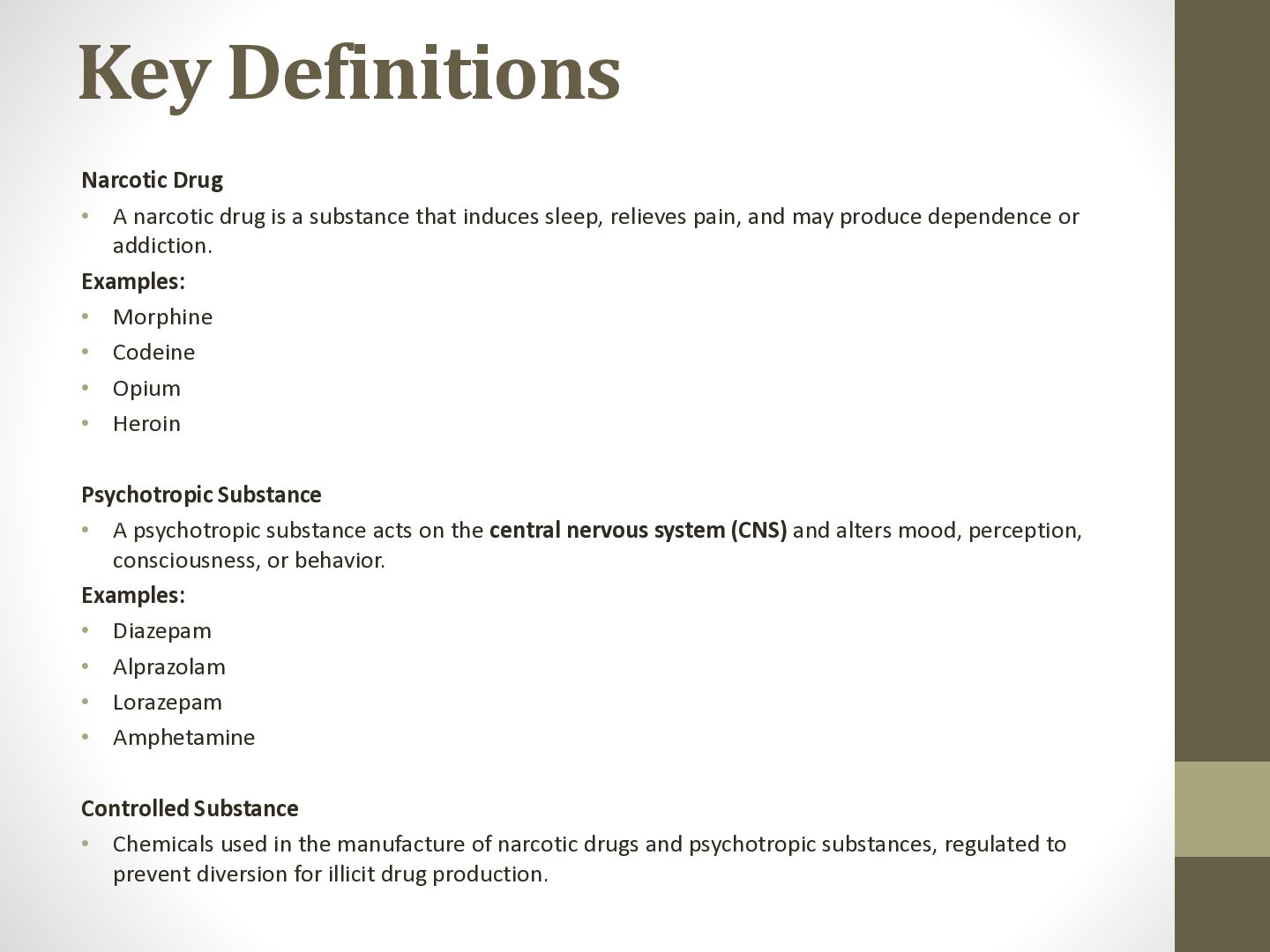
  31. Key Definitions Narcotic Drug • A narcotic drug is a

    substance that induces sleep, relieves pain, and may produce dependence or addiction. Examples: • Morphine • Codeine • Opium • Heroin Psychotropic Substance • A psychotropic substance acts on the central nervous system (CNS) and alters mood, perception, consciousness, or behavior. Examples: • Diazepam • Alprazolam • Lorazepam • Amphetamine Controlled Substance • Chemicals used in the manufacture of narcotic drugs and psychotropic substances, regulated to prevent diversion for illicit drug production.
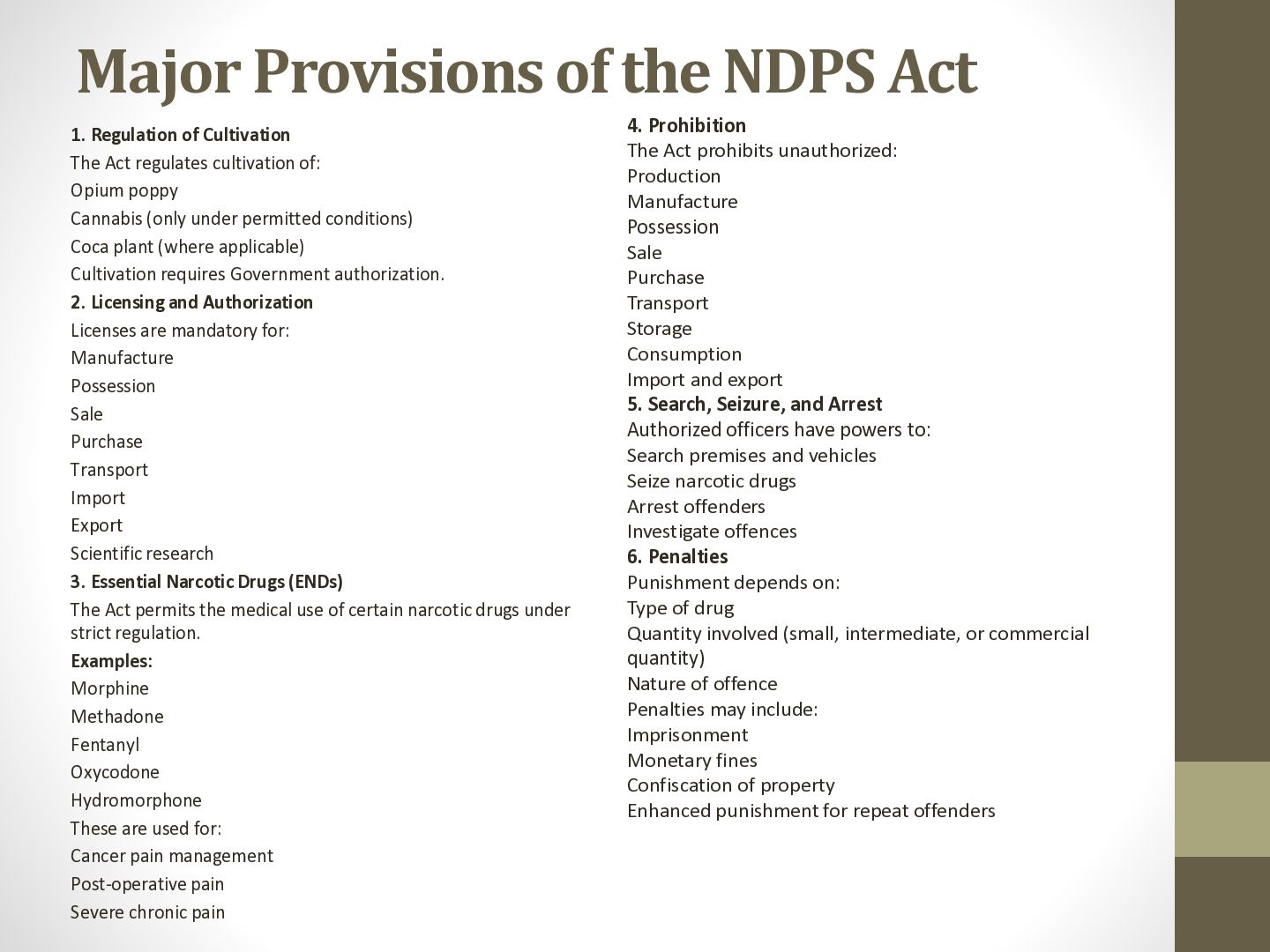
  32. Major Provisions of the NDPS Act 1. Regulation of Cultivation

    The Act regulates cultivation of: Opium poppy Cannabis (only under permitted conditions) Coca plant (where applicable) Cultivation requires Government authorization. 2. Licensing and Authorization Licenses are mandatory for: Manufacture Possession Sale Purchase Transport Import Export Scientific research 3. Essential Narcotic Drugs (ENDs) The Act permits the medical use of certain narcotic drugs under strict regulation. Examples: Morphine Methadone Fentanyl Oxycodone Hydromorphone These are used for: Cancer pain management Post-operative pain Severe chronic pain 4. Prohibition The Act prohibits unauthorized: Production Manufacture Possession Sale Purchase Transport Storage Consumption Import and export 5. Search, Seizure, and Arrest Authorized officers have powers to: Search premises and vehicles Seize narcotic drugs Arrest offenders Investigate offences 6. Penalties Punishment depends on: Type of drug Quantity involved (small, intermediate, or commercial quantity) Nature of offence Penalties may include: Imprisonment Monetary fines Confiscation of property Enhanced punishment for repeat offenders
  33. Medical and Scientific Use The NDPS Act recognizes that narcotic

    drugs are indispensable for medical care and scientific research. They are permitted for: • Pain management • Anaesthesia • Cancer treatment • Research • Medical education • Access is allowed only through authorized institutions and licensed professionals. Recent Amendments and Regulatory Focus • Simplified regulations for Essential Narcotic Drugs (ENDs) to improve availability for palliative care and cancer patients. • Strengthened monitoring of pharmaceutical opioids to prevent misuse. • Enhanced coordination between regulatory and enforcement agencies. • Promotion of digital record-keeping and supply chain monitoring. • Increased surveillance to curb illicit trafficking while ensuring legitimate medical access. Importance for Pharmacy Professionals Pharmacists play a vital role by: • Ensuring safe storage and dispensing of narcotic medicines. • Maintaining statutory records and documentation. • Complying with licensing requirements. • Preventing diversion and misuse. • Educating patients on the safe use of controlled medicines. • Reporting any discrepancies or suspected abuse.
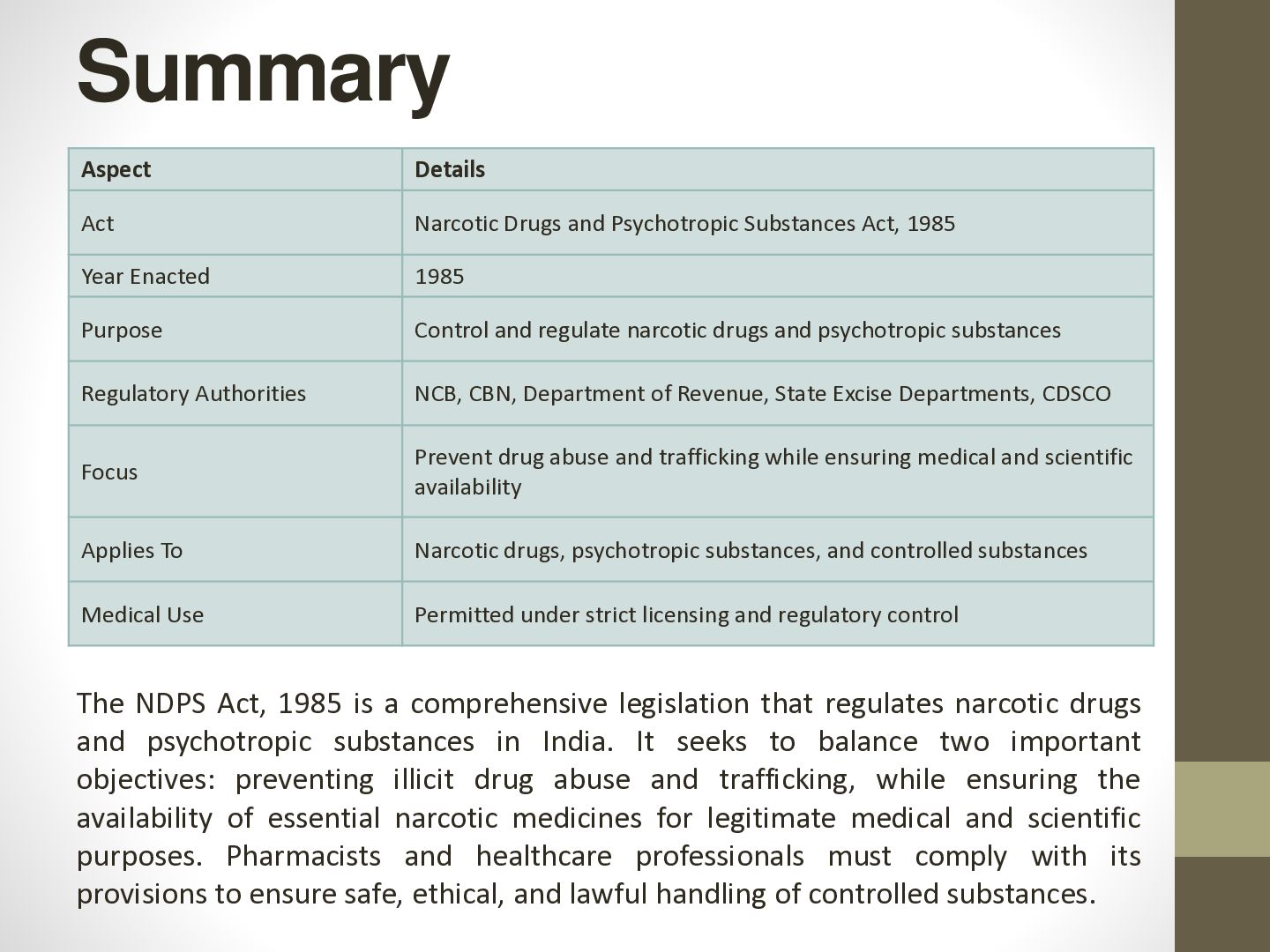
  34. Summary Aspect Details Act Narcotic Drugs and Psychotropic Substances Act,

    1985 Year Enacted 1985 Purpose Control and regulate narcotic drugs and psychotropic substances Regulatory Authorities NCB, CBN, Department of Revenue, State Excise Departments, CDSCO Focus Prevent drug abuse and trafficking while ensuring medical and scientific availability Applies To Narcotic drugs, psychotropic substances, and controlled substances Medical Use Permitted under strict licensing and regulatory control The NDPS Act, 1985 is a comprehensive legislation that regulates narcotic drugs and psychotropic substances in India. It seeks to balance two important objectives: preventing illicit drug abuse and trafficking, while ensuring the availability of essential narcotic medicines for legitimate medical and scientific purposes. Pharmacists and healthcare professionals must comply with its provisions to ensure safe, ethical, and lawful handling of controlled substances.
  35. Medicinal and Toilet Preparations (Excise Duties) Act, 1955 1. Introduction

    • The Medicinal and Toilet Preparations (Excise Duties) Act, 1955 was an important Indian legislation that provided for the levy and collection of excise duty on medicinal and toilet preparations containing alcohol, narcotic drugs, or narcotics. • The Act was particularly relevant to pharmaceutical and cosmetic preparations containing alcohol or narcotic substances, where there was a need to regulate manufacture and ensure proper accounting of excisable ingredients. 2. Purpose of the Act The principal purpose was to: • Levy and collect excise duty on specified medicinal and toilet preparations. • Regulate manufacture of preparations containing alcohol or narcotic substances. • Prevent misuse/diversion of alcohol and narcotic ingredients. • Establish procedures for manufacture, storage, accounting, and removal of excisable preparations. • Ensure proper payment of government duties
  36. 3. Objectives The major objectives were: 1.Revenue Generation 1. Collection

    of excise duty on specified preparations. 2.Control of Alcohol 1. Regulation of alcohol used in medicinal and toilet preparations. 3.Control of Narcotic Ingredients 1. Prevent unauthorized use or diversion of narcotic substances. 4.Regulation of Manufacturing 1. Establish controls over manufacturing premises and processes. 5.Prevention of Misuse 1. Reduce the possibility of diversion of alcohol-containing preparations for non-medical use. 6.Proper Documentation 1. Maintain records of raw materials, production, storage, and removal of finished products.
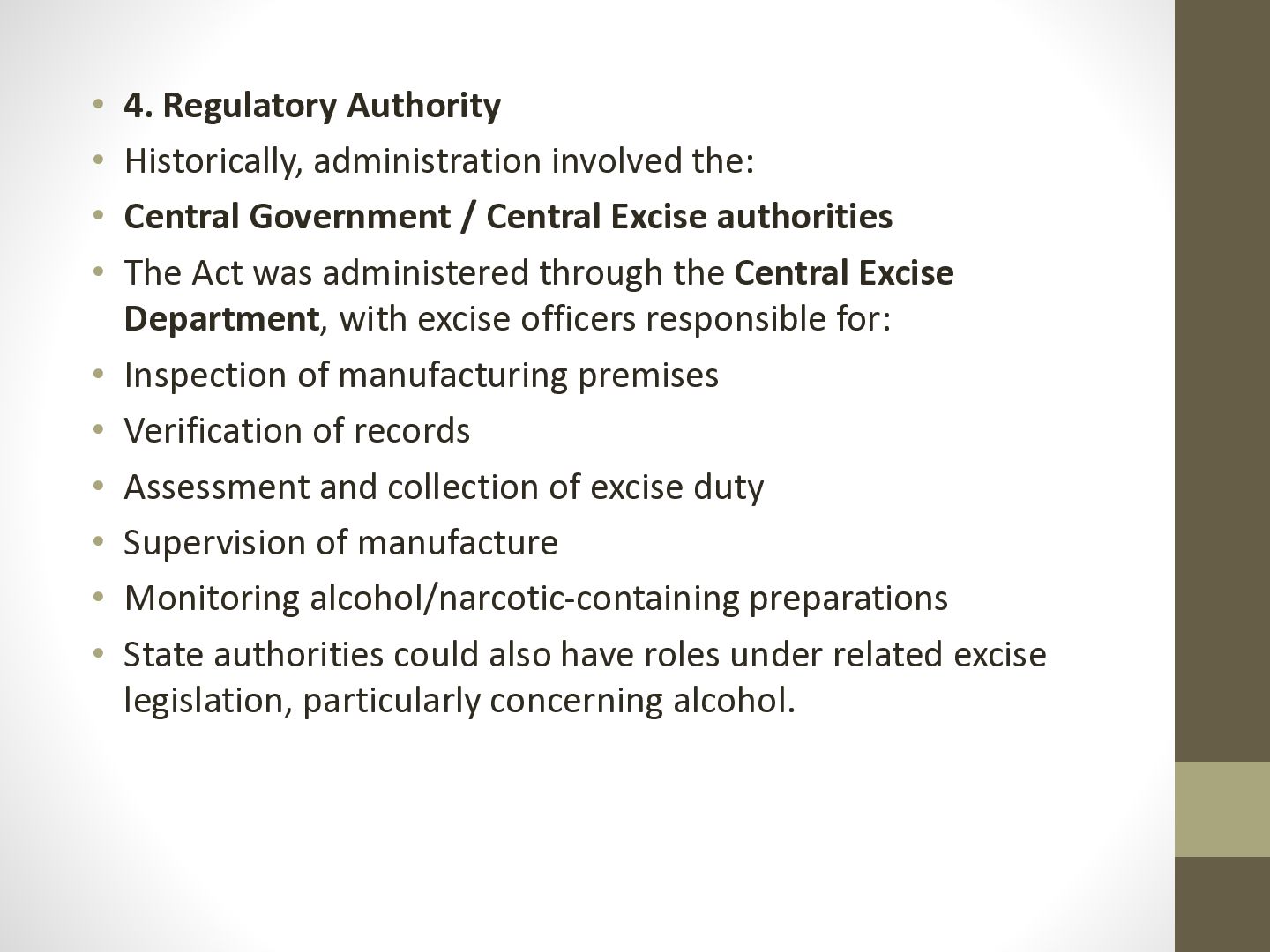
  37. • 4. Regulatory Authority • Historically, administration involved the: •

    Central Government / Central Excise authorities • The Act was administered through the Central Excise Department, with excise officers responsible for: • Inspection of manufacturing premises • Verification of records • Assessment and collection of excise duty • Supervision of manufacture • Monitoring alcohol/narcotic-containing preparations • State authorities could also have roles under related excise legislation, particularly concerning alcohol.
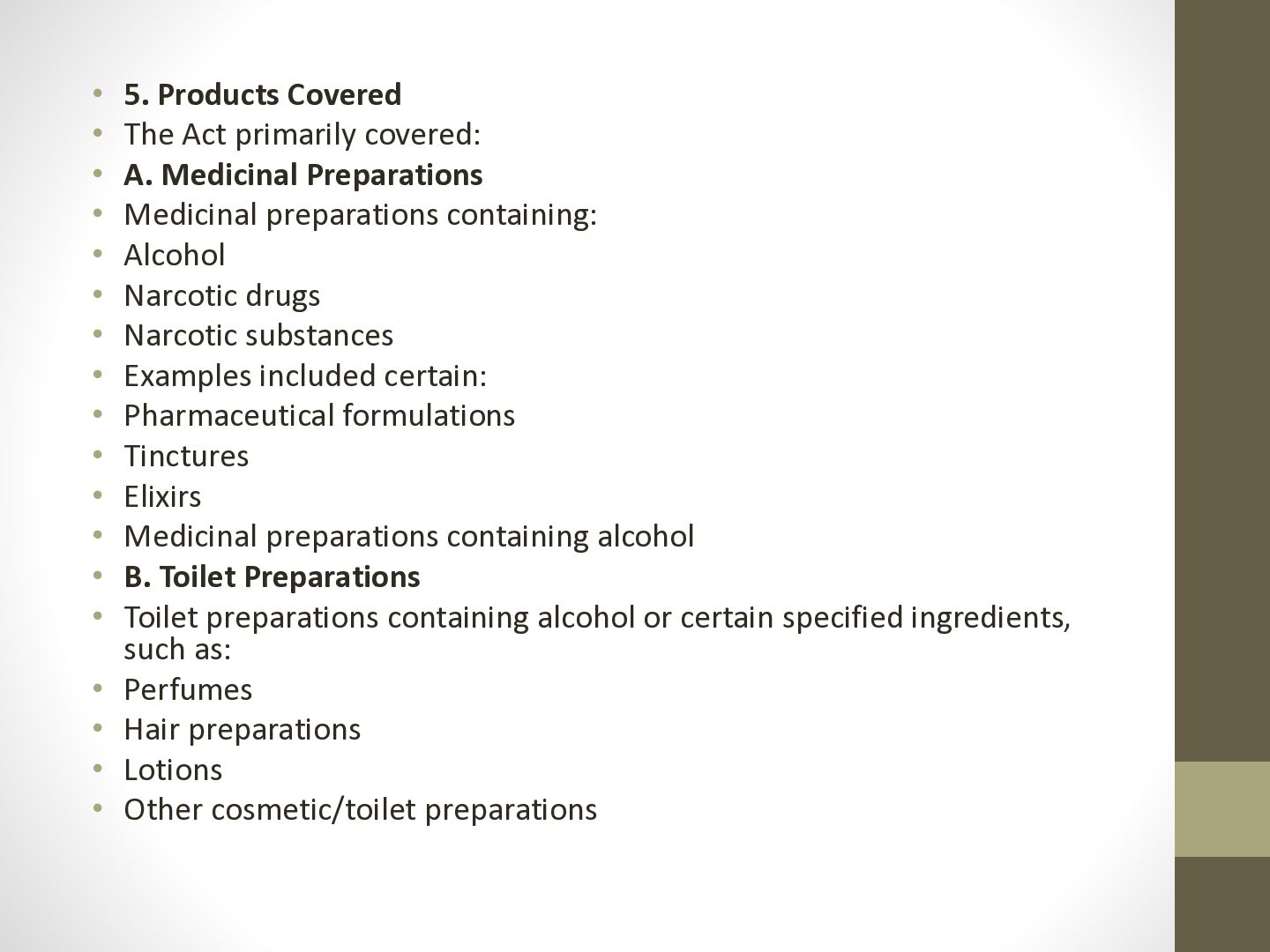
  38. • 5. Products Covered • The Act primarily covered: •

    A. Medicinal Preparations • Medicinal preparations containing: • Alcohol • Narcotic drugs • Narcotic substances • Examples included certain: • Pharmaceutical formulations • Tinctures • Elixirs • Medicinal preparations containing alcohol • B. Toilet Preparations • Toilet preparations containing alcohol or certain specified ingredients, such as: • Perfumes • Hair preparations • Lotions • Other cosmetic/toilet preparations
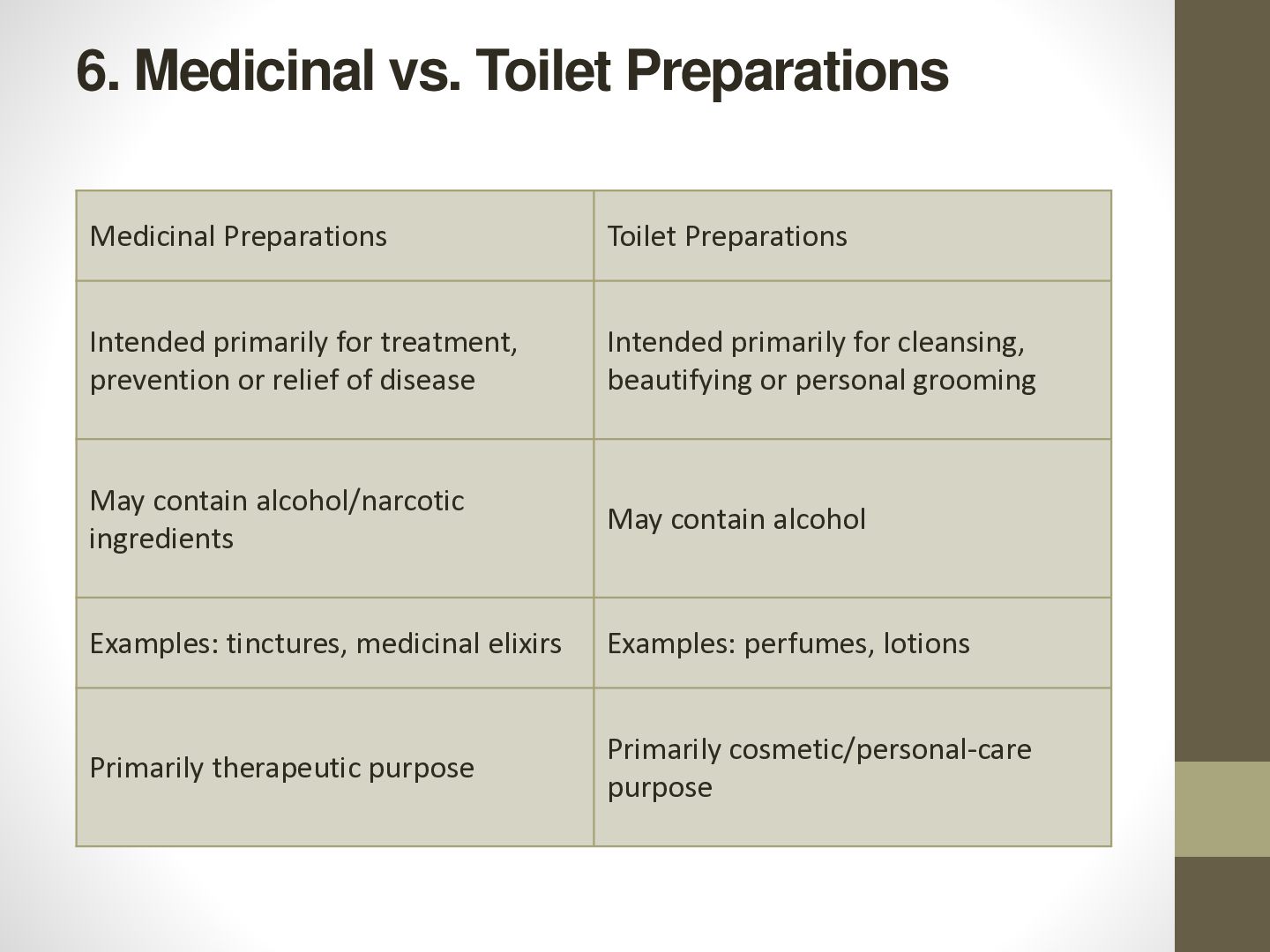
  39. 6. Medicinal vs. Toilet Preparations Medicinal Preparations Toilet Preparations Intended

    primarily for treatment, prevention or relief of disease Intended primarily for cleansing, beautifying or personal grooming May contain alcohol/narcotic ingredients May contain alcohol Examples: tinctures, medicinal elixirs Examples: perfumes, lotions Primarily therapeutic purpose Primarily cosmetic/personal-care purpose
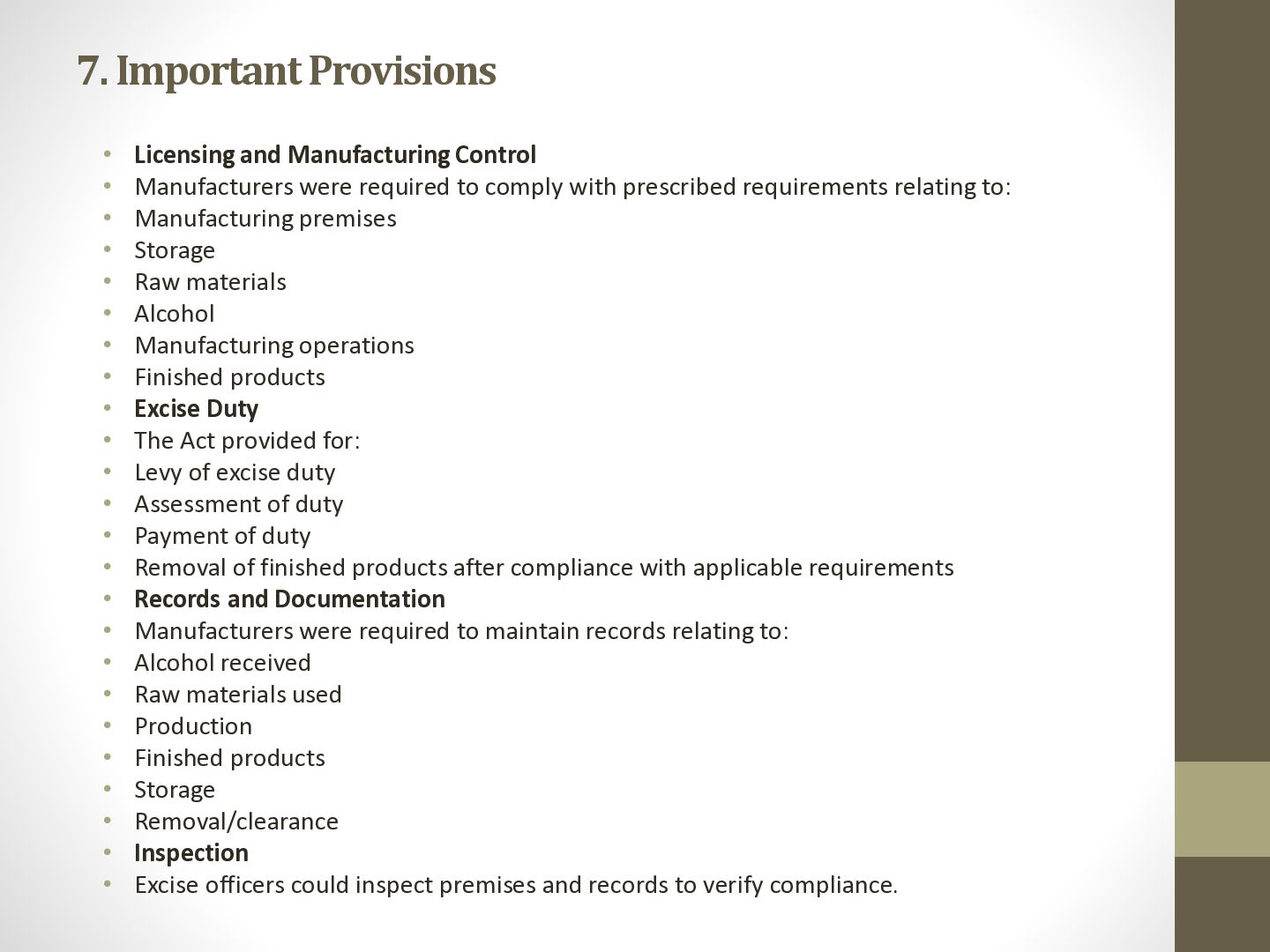
  40. 7. Important Provisions • • • • • • •

    • • • • • • • • • • • • • • • • • Licensing and Manufacturing Control Manufacturers were required to comply with prescribed requirements relating to: Manufacturing premises Storage Raw materials Alcohol Manufacturing operations Finished products Excise Duty The Act provided for: Levy of excise duty Assessment of duty Payment of duty Removal of finished products after compliance with applicable requirements Records and Documentation Manufacturers were required to maintain records relating to: Alcohol received Raw materials used Production Finished products Storage Removal/clearance Inspection Excise officers could inspect premises and records to verify compliance.
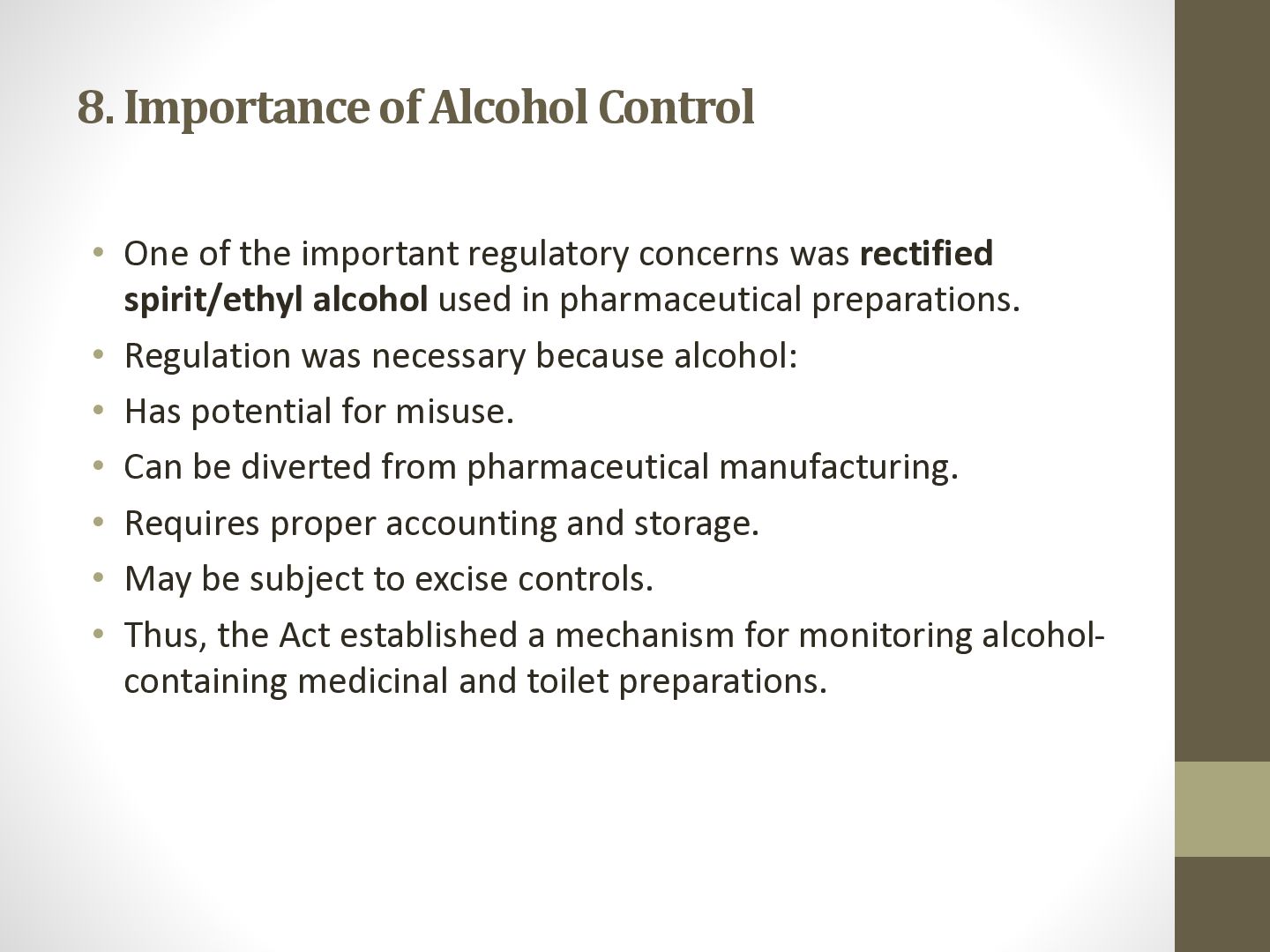
  41. 8. Importance of Alcohol Control • One of the important

    regulatory concerns was rectified spirit/ethyl alcohol used in pharmaceutical preparations. • Regulation was necessary because alcohol: • Has potential for misuse. • Can be diverted from pharmaceutical manufacturing. • Requires proper accounting and storage. • May be subject to excise controls. • Thus, the Act established a mechanism for monitoring alcoholcontaining medicinal and toilet preparations.
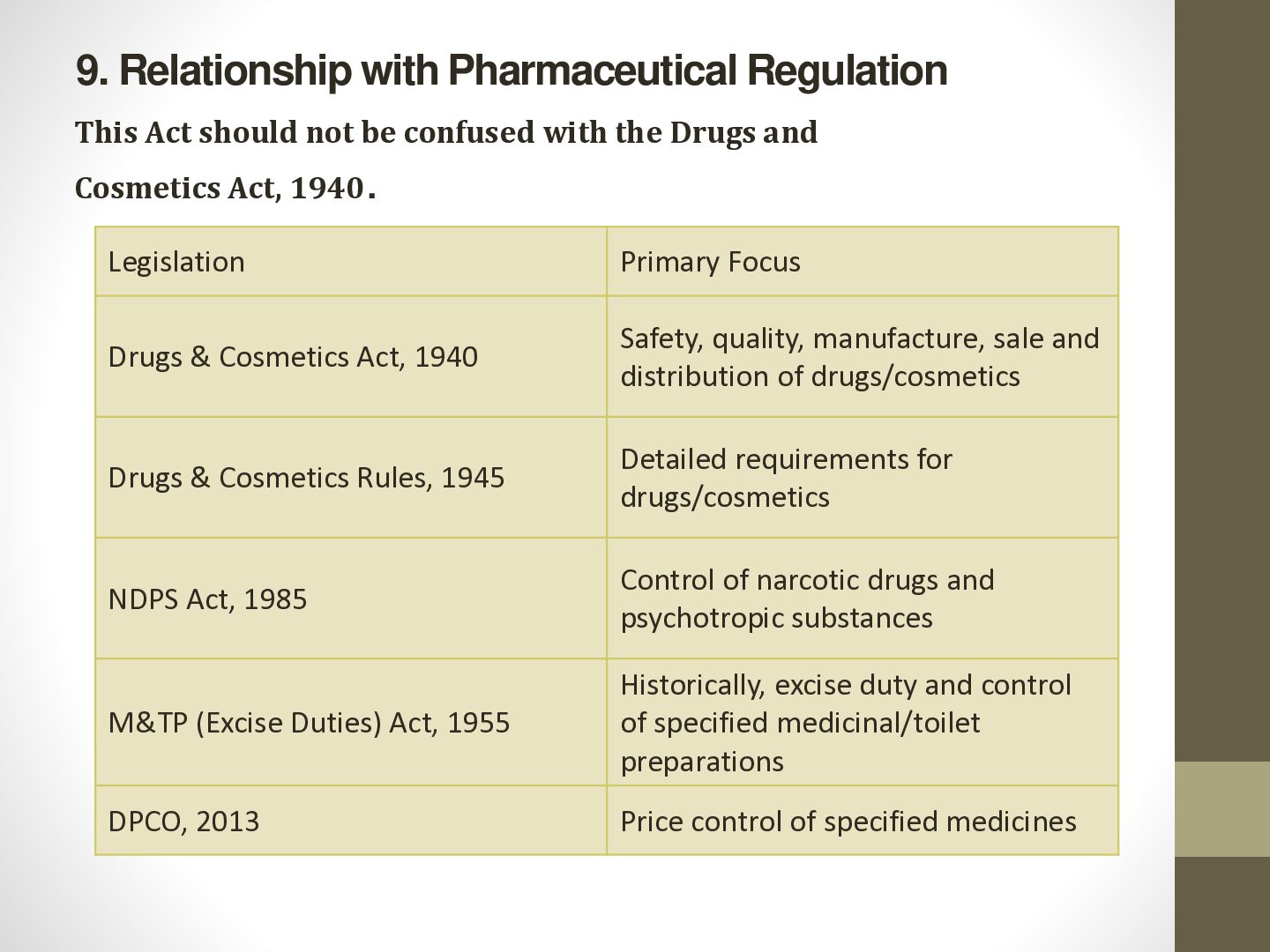
  42. 9. Relationship with Pharmaceutical Regulation This Act should not be

    confused with the Drugs and Cosmetics Act, 1940. Legislation Primary Focus Drugs & Cosmetics Act, 1940 Safety, quality, manufacture, sale and distribution of drugs/cosmetics Drugs & Cosmetics Rules, 1945 Detailed requirements for drugs/cosmetics NDPS Act, 1985 Control of narcotic drugs and psychotropic substances M&TP (Excise Duties) Act, 1955 Historically, excise duty and control of specified medicinal/toilet preparations DPCO, 2013 Price control of specified medicines
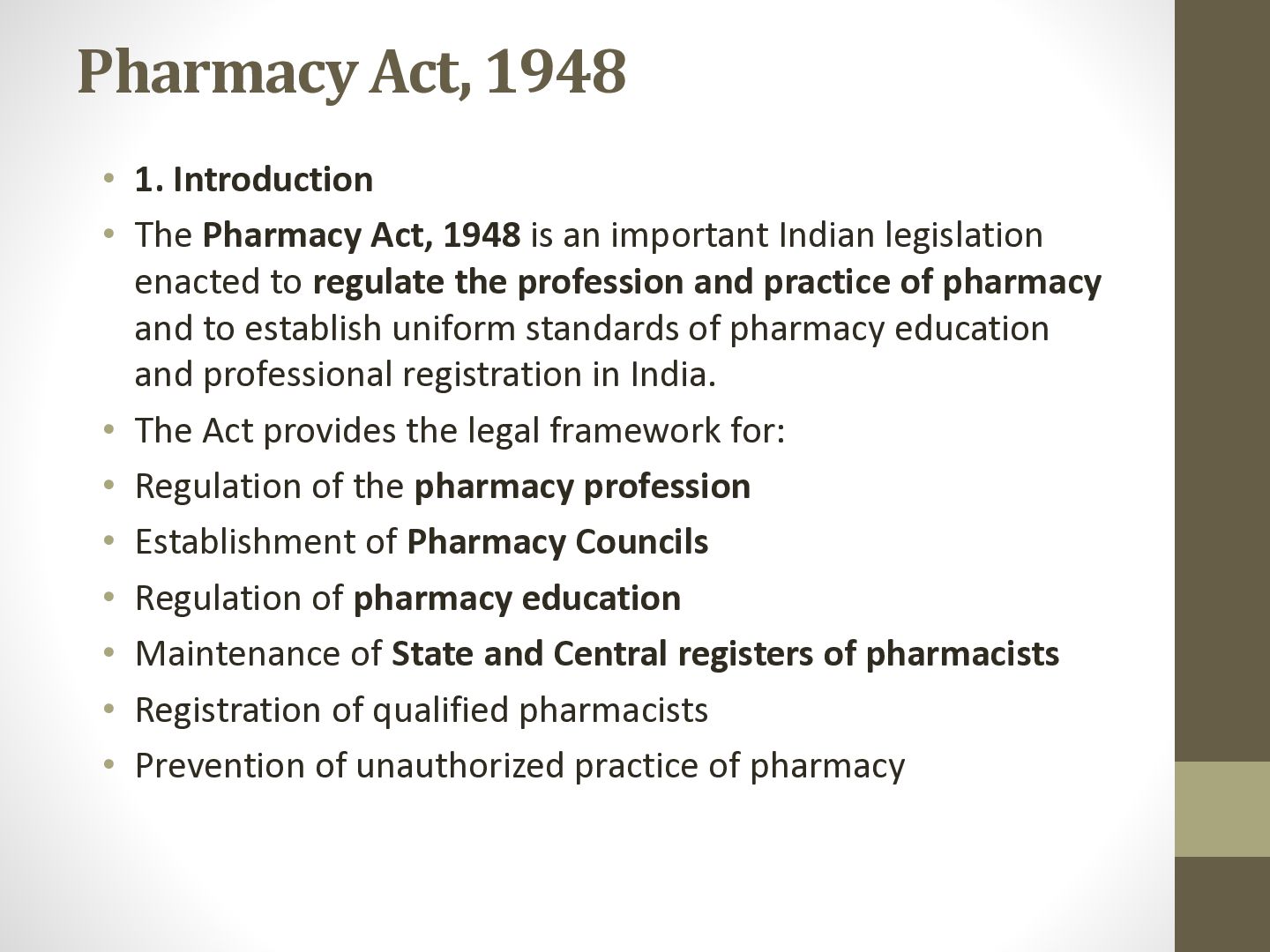
  43. Pharmacy Act, 1948 • 1. Introduction • The Pharmacy Act,

    1948 is an important Indian legislation enacted to regulate the profession and practice of pharmacy and to establish uniform standards of pharmacy education and professional registration in India. • The Act provides the legal framework for: • Regulation of the pharmacy profession • Establishment of Pharmacy Councils • Regulation of pharmacy education • Maintenance of State and Central registers of pharmacists • Registration of qualified pharmacists • Prevention of unauthorized practice of pharmacy
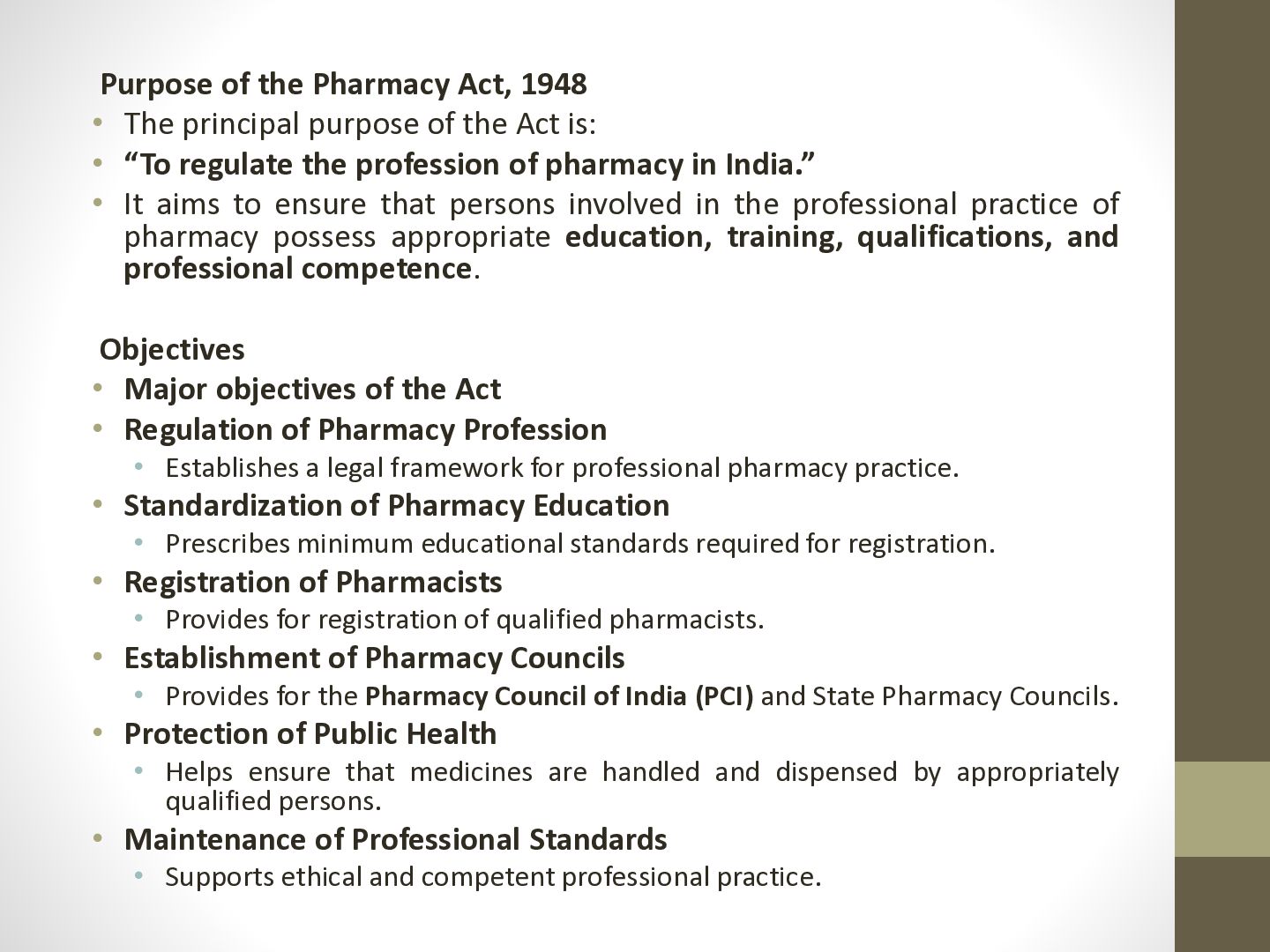
  44. Purpose of the Pharmacy Act, 1948 • The principal purpose

    of the Act is: • “To regulate the profession of pharmacy in India.” • It aims to ensure that persons involved in the professional practice of pharmacy possess appropriate education, training, qualifications, and professional competence. Objectives • Major objectives of the Act • Regulation of Pharmacy Profession • Establishes a legal framework for professional pharmacy practice. • Standardization of Pharmacy Education • Prescribes minimum educational standards required for registration. • Registration of Pharmacists • Provides for registration of qualified pharmacists. • Establishment of Pharmacy Councils • Provides for the Pharmacy Council of India (PCI) and State Pharmacy Councils. • Protection of Public Health • Helps ensure that medicines are handled and dispensed by appropriately qualified persons. • Maintenance of Professional Standards • Supports ethical and competent professional practice.
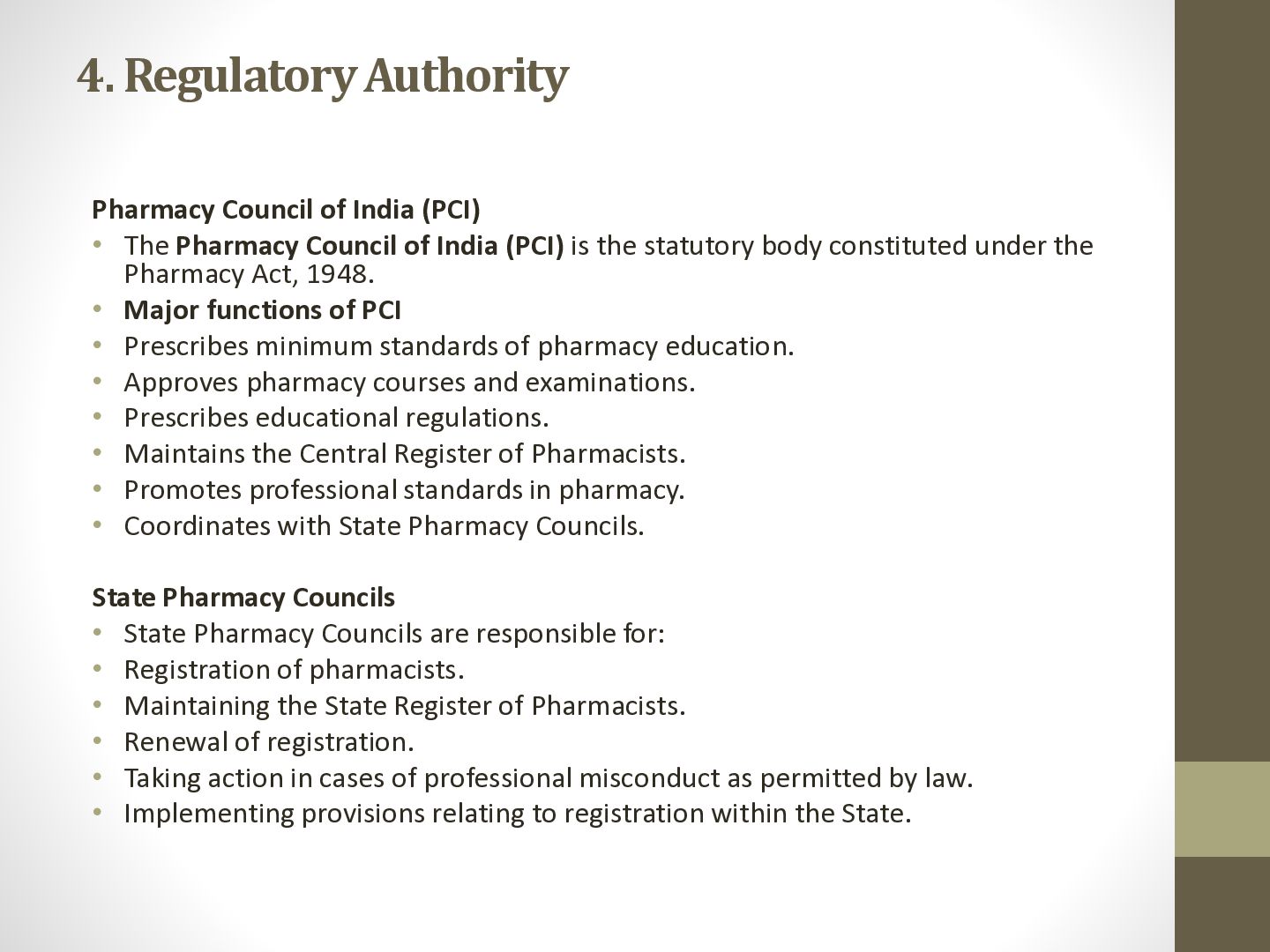
  45. 4. Regulatory Authority Pharmacy Council of India (PCI) • The

    Pharmacy Council of India (PCI) is the statutory body constituted under the Pharmacy Act, 1948. • Major functions of PCI • Prescribes minimum standards of pharmacy education. • Approves pharmacy courses and examinations. • Prescribes educational regulations. • Maintains the Central Register of Pharmacists. • Promotes professional standards in pharmacy. • Coordinates with State Pharmacy Councils. State Pharmacy Councils • State Pharmacy Councils are responsible for: • Registration of pharmacists. • Maintaining the State Register of Pharmacists. • Renewal of registration. • Taking action in cases of professional misconduct as permitted by law. • Implementing provisions relating to registration within the State.
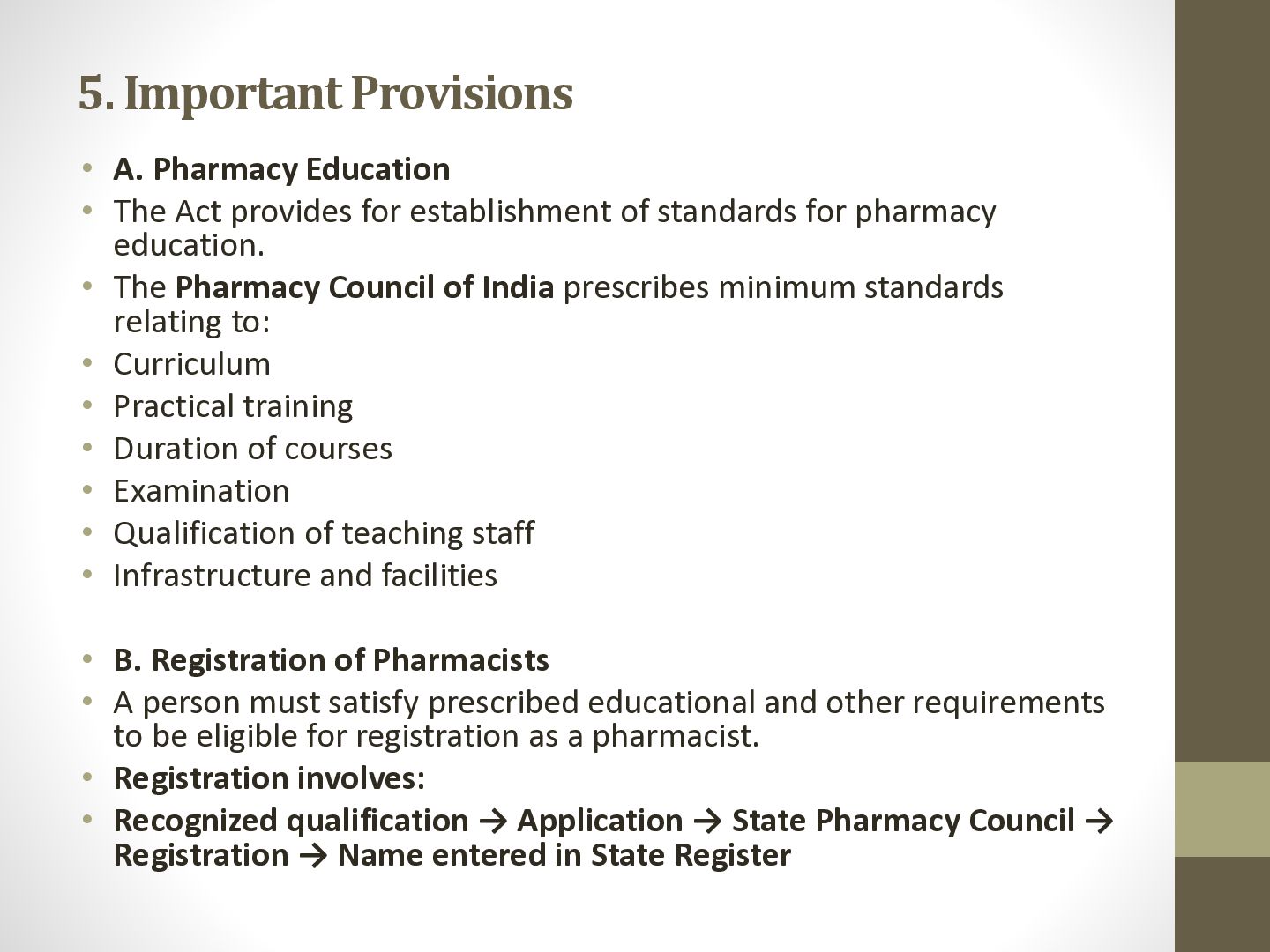
  46. 5. Important Provisions • A. Pharmacy Education • The Act

    provides for establishment of standards for pharmacy education. • The Pharmacy Council of India prescribes minimum standards relating to: • Curriculum • Practical training • Duration of courses • Examination • Qualification of teaching staff • Infrastructure and facilities • B. Registration of Pharmacists • A person must satisfy prescribed educational and other requirements to be eligible for registration as a pharmacist. • Registration involves: • Recognized qualification → Application → State Pharmacy Council → Registration → Name entered in State Register
  47. Central Register of Pharmacists • The Act provides for a

    Central Register of Pharmacists containing details of pharmacists registered under State Pharmacy Councils. • Purpose • Maintains national-level professional records. • Facilitates identification of registered pharmacists. • Supports regulation of the profession. Prohibition of Certain Practices • The Act restricts certain activities by persons who are not appropriately registered. • A key objective is to prevent unqualified persons from practicing pharmacy or undertaking activities reserved for registered pharmacists, subject to the applicable provisions and exemptions. Professional Conduct • Registered pharmacists are expected to maintain: • Professional competence • Ethical conduct • Patient safety • Confidentiality • Proper handling and dispensing of medicines • Compliance with applicable laws and professional standards
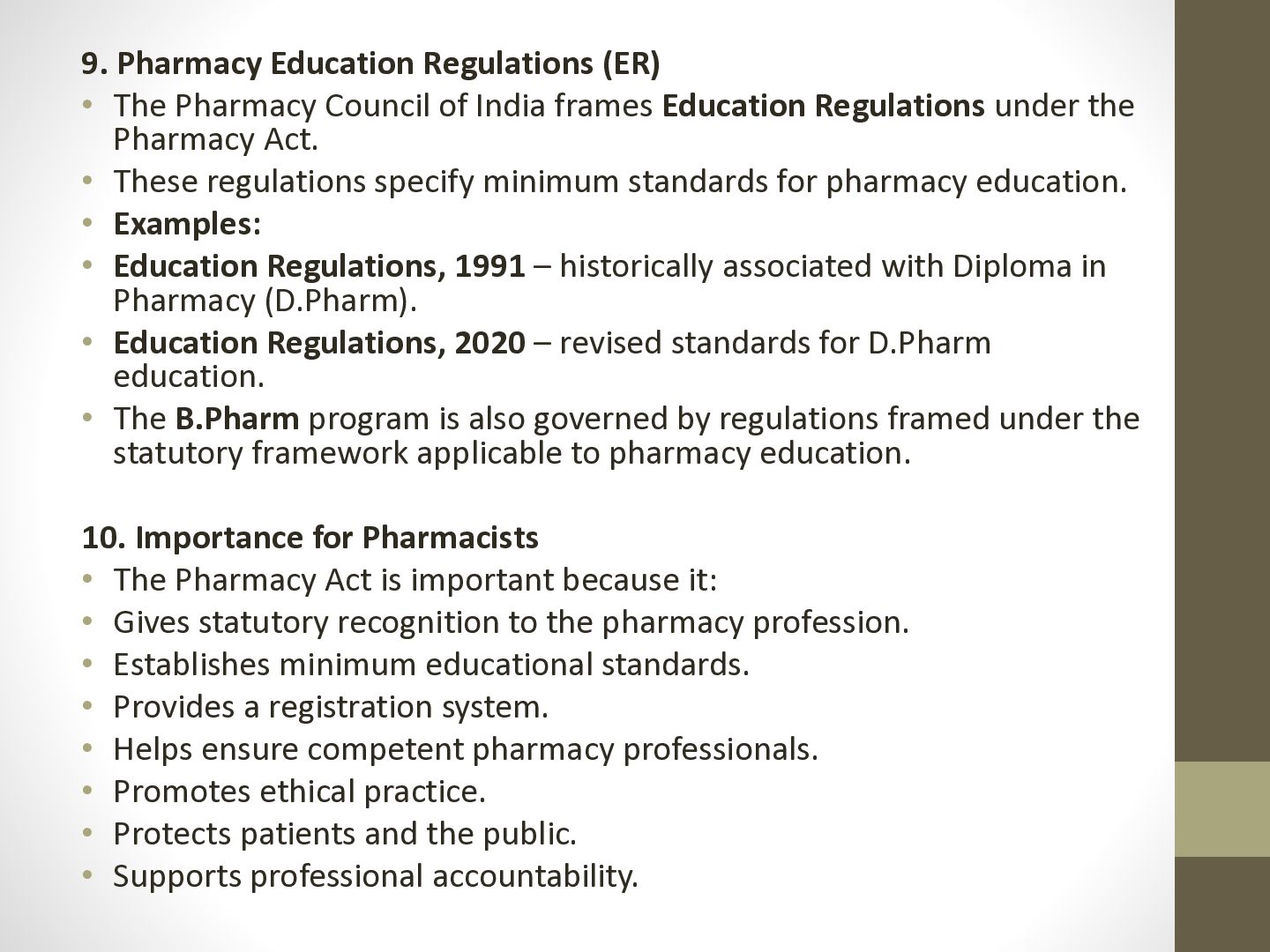
  48. 9. Pharmacy Education Regulations (ER) • The Pharmacy Council of

    India frames Education Regulations under the Pharmacy Act. • These regulations specify minimum standards for pharmacy education. • Examples: • Education Regulations, 1991 – historically associated with Diploma in Pharmacy (D.Pharm). • Education Regulations, 2020 – revised standards for D.Pharm education. • The B.Pharm program is also governed by regulations framed under the statutory framework applicable to pharmacy education. 10. Importance for Pharmacists • The Pharmacy Act is important because it: • Gives statutory recognition to the pharmacy profession. • Establishes minimum educational standards. • Provides a registration system. • Helps ensure competent pharmacy professionals. • Promotes ethical practice. • Protects patients and the public. • Supports professional accountability.
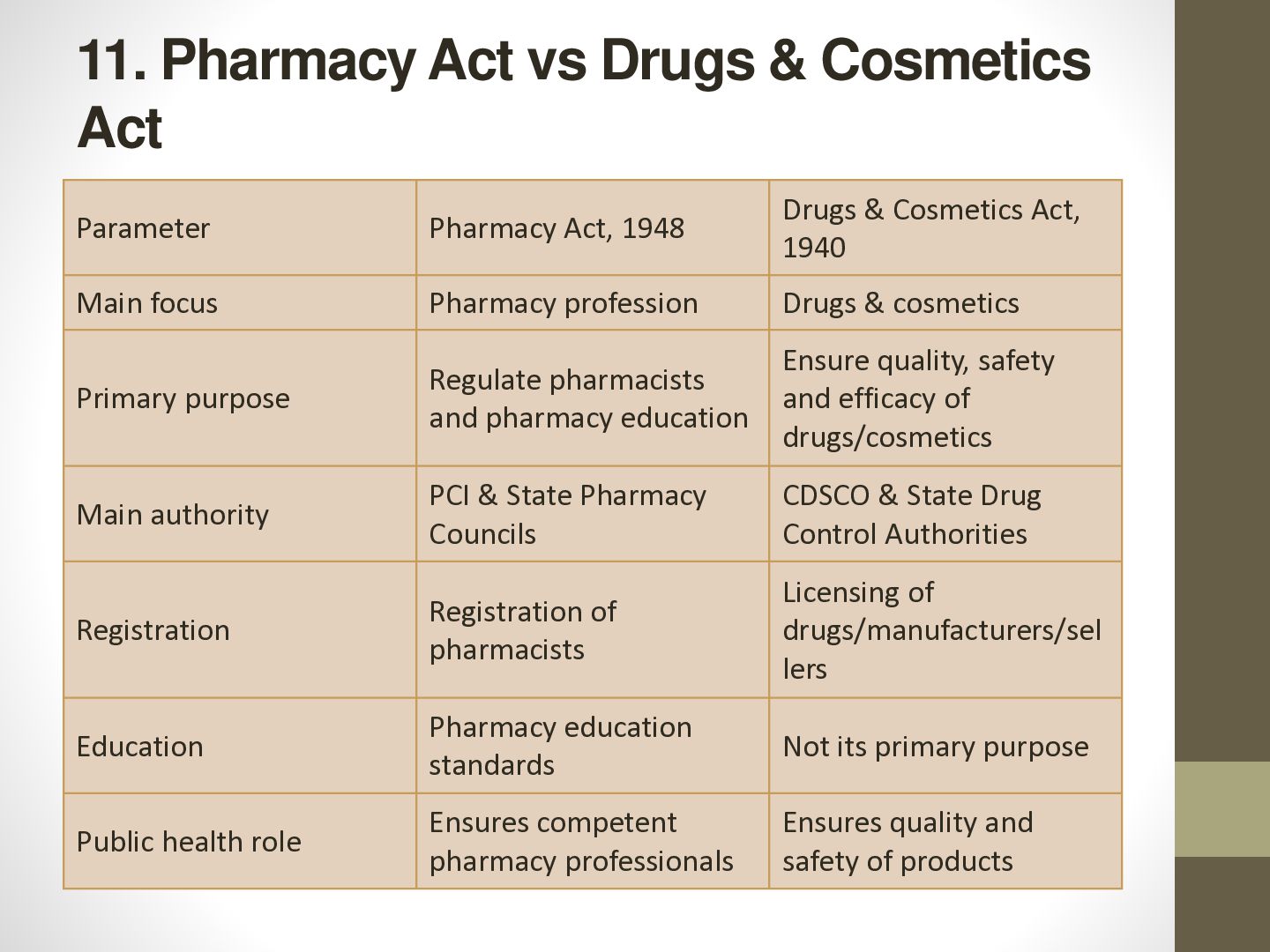
  49. 11. Pharmacy Act vs Drugs & Cosmetics Act Parameter Pharmacy

    Act, 1948 Drugs & Cosmetics Act, 1940 Main focus Pharmacy profession Drugs & cosmetics Primary purpose Regulate pharmacists and pharmacy education Ensure quality, safety and efficacy of drugs/cosmetics Main authority PCI & State Pharmacy Councils CDSCO & State Drug Control Authorities Registration Registration of pharmacists Licensing of drugs/manufacturers/sel lers Education Pharmacy education standards Not its primary purpose Public health role Ensures competent pharmacy professionals Ensures quality and safety of products
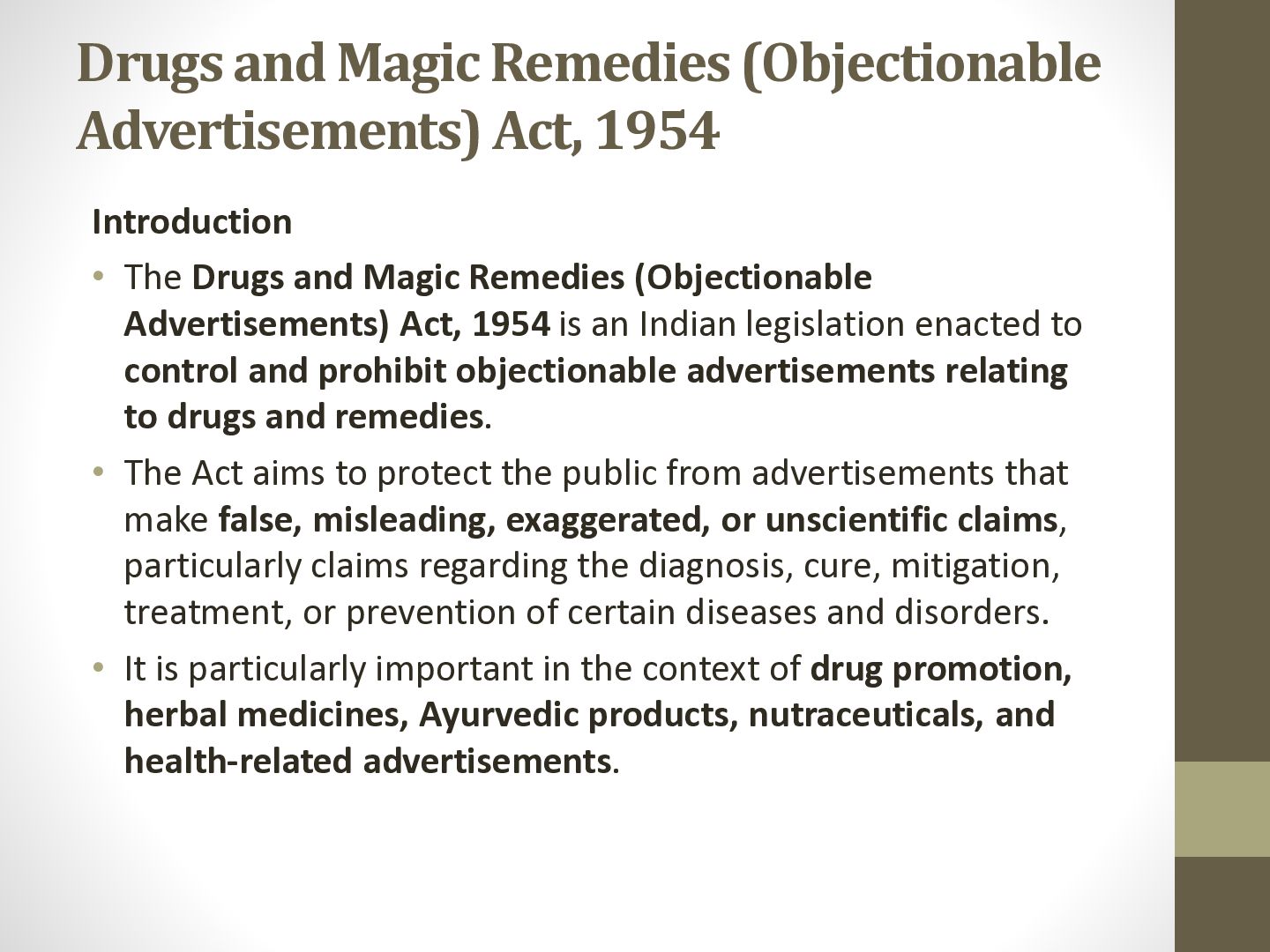
  50. Drugs and Magic Remedies (Objectionable Advertisements) Act, 1954 Introduction •

    The Drugs and Magic Remedies (Objectionable Advertisements) Act, 1954 is an Indian legislation enacted to control and prohibit objectionable advertisements relating to drugs and remedies. • The Act aims to protect the public from advertisements that make false, misleading, exaggerated, or unscientific claims, particularly claims regarding the diagnosis, cure, mitigation, treatment, or prevention of certain diseases and disorders. • It is particularly important in the context of drug promotion, herbal medicines, Ayurvedic products, nutraceuticals, and health-related advertisements.
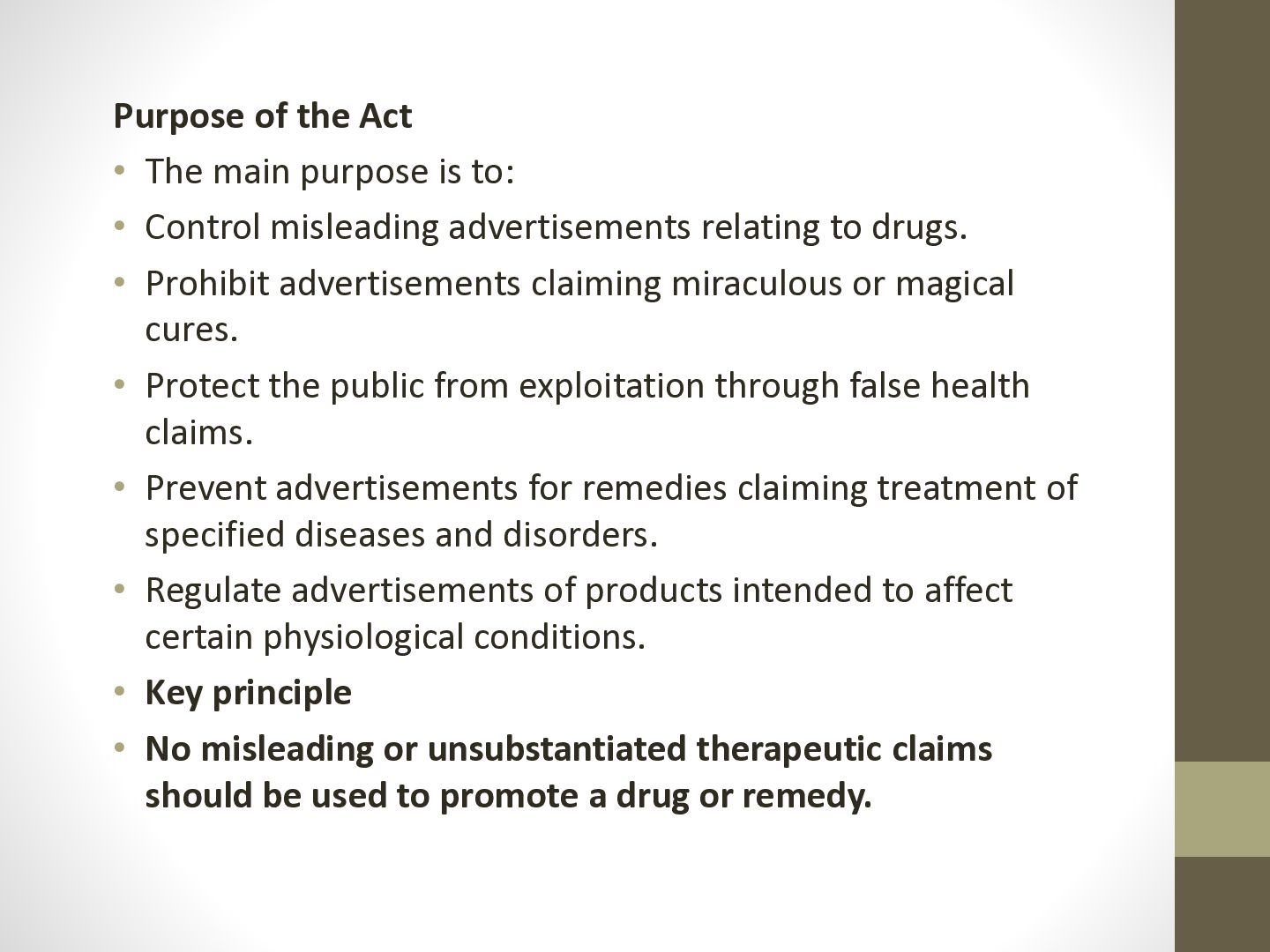
  51. Purpose of the Act • The main purpose is to:

    • Control misleading advertisements relating to drugs. • Prohibit advertisements claiming miraculous or magical cures. • Protect the public from exploitation through false health claims. • Prevent advertisements for remedies claiming treatment of specified diseases and disorders. • Regulate advertisements of products intended to affect certain physiological conditions. • Key principle • No misleading or unsubstantiated therapeutic claims should be used to promote a drug or remedy.
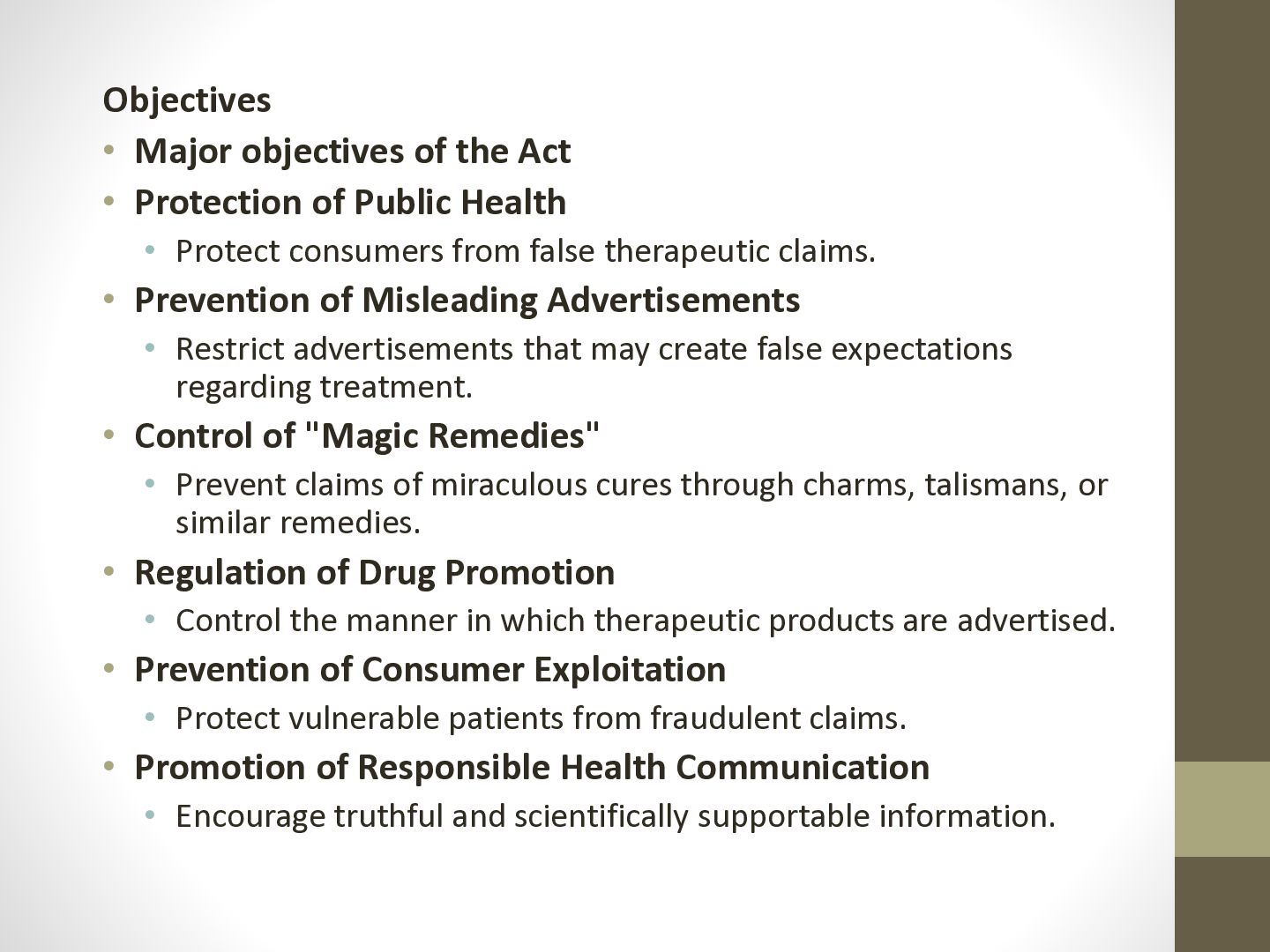
  52. Objectives • Major objectives of the Act • Protection of

    Public Health • Protect consumers from false therapeutic claims. • Prevention of Misleading Advertisements • Restrict advertisements that may create false expectations regarding treatment. • Control of "Magic Remedies" • Prevent claims of miraculous cures through charms, talismans, or similar remedies. • Regulation of Drug Promotion • Control the manner in which therapeutic products are advertised. • Prevention of Consumer Exploitation • Protect vulnerable patients from fraudulent claims. • Promotion of Responsible Health Communication • Encourage truthful and scientifically supportable information.
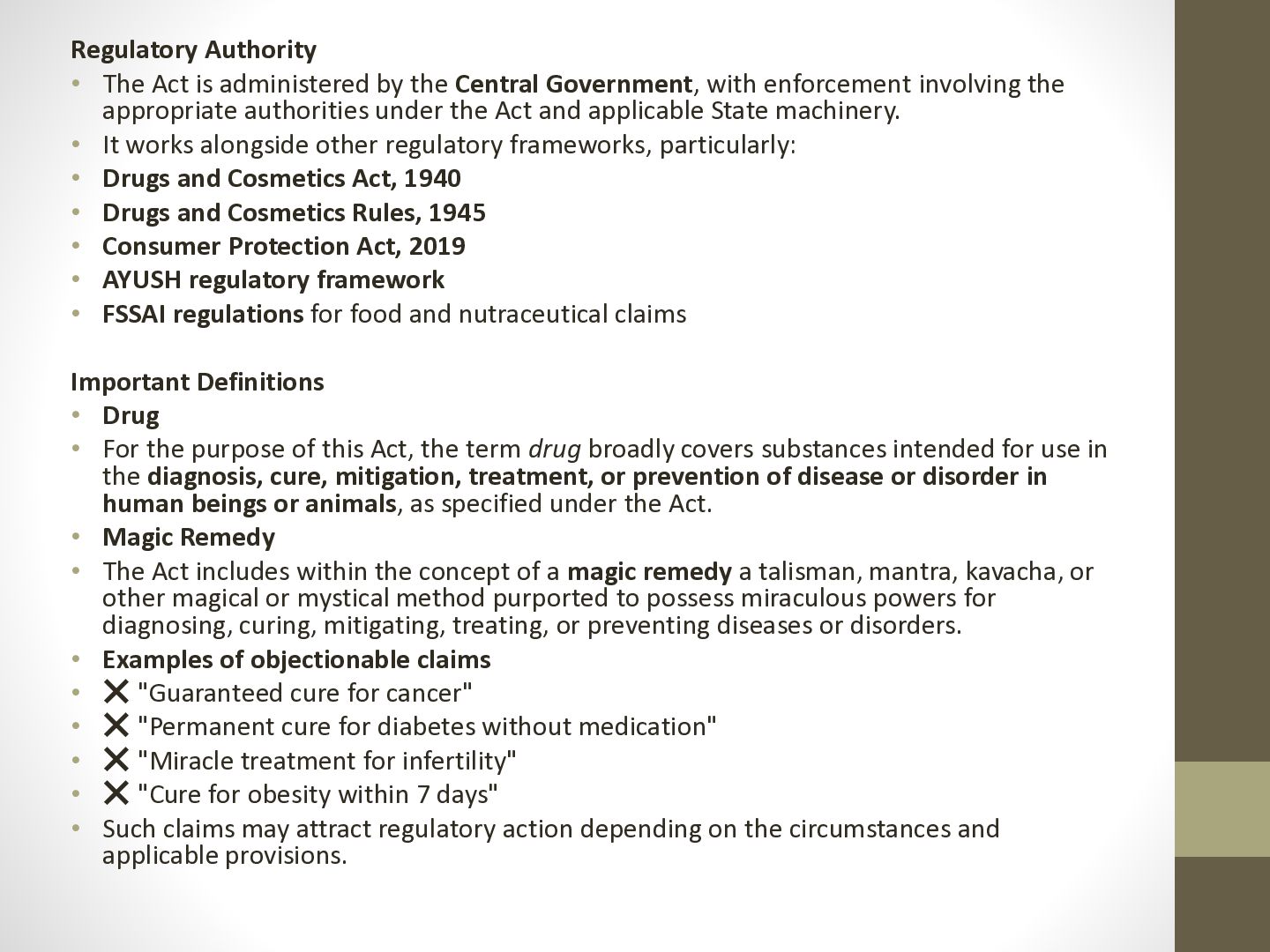
  53. Regulatory Authority • The Act is administered by the Central

    Government, with enforcement involving the appropriate authorities under the Act and applicable State machinery. • It works alongside other regulatory frameworks, particularly: • Drugs and Cosmetics Act, 1940 • Drugs and Cosmetics Rules, 1945 • Consumer Protection Act, 2019 • AYUSH regulatory framework • FSSAI regulations for food and nutraceutical claims Important Definitions • Drug • For the purpose of this Act, the term drug broadly covers substances intended for use in the diagnosis, cure, mitigation, treatment, or prevention of disease or disorder in human beings or animals, as specified under the Act. • Magic Remedy • The Act includes within the concept of a magic remedy a talisman, mantra, kavacha, or other magical or mystical method purported to possess miraculous powers for diagnosing, curing, mitigating, treating, or preventing diseases or disorders. • Examples of objectionable claims • ❌ "Guaranteed cure for cancer" • ❌ "Permanent cure for diabetes without medication" • ❌ "Miracle treatment for infertility" • ❌ "Cure for obesity within 7 days" • Such claims may attract regulatory action depending on the circumstances and applicable provisions.
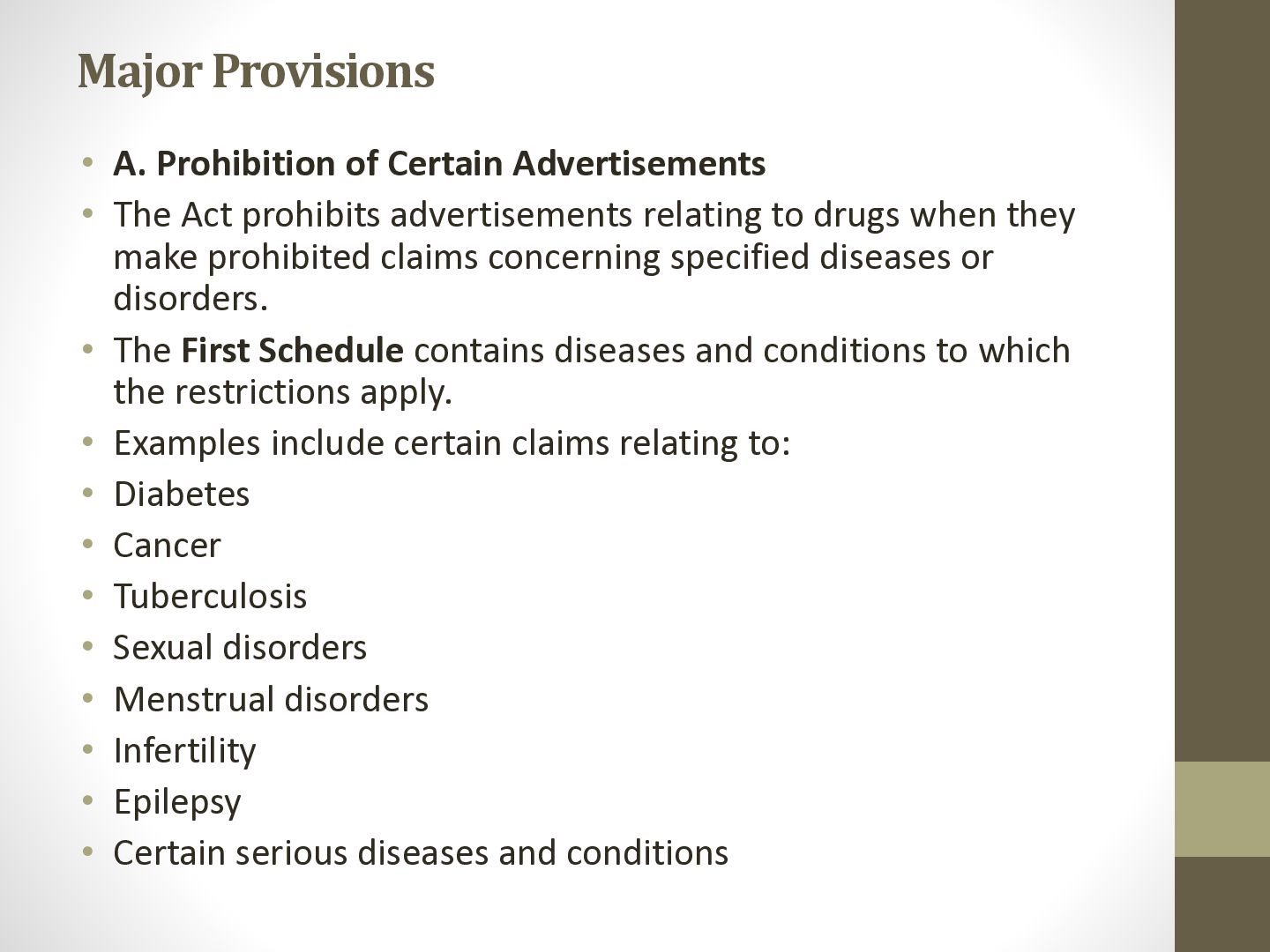
  54. Major Provisions • A. Prohibition of Certain Advertisements • The

    Act prohibits advertisements relating to drugs when they make prohibited claims concerning specified diseases or disorders. • The First Schedule contains diseases and conditions to which the restrictions apply. • Examples include certain claims relating to: • Diabetes • Cancer • Tuberculosis • Sexual disorders • Menstrual disorders • Infertility • Epilepsy • Certain serious diseases and conditions
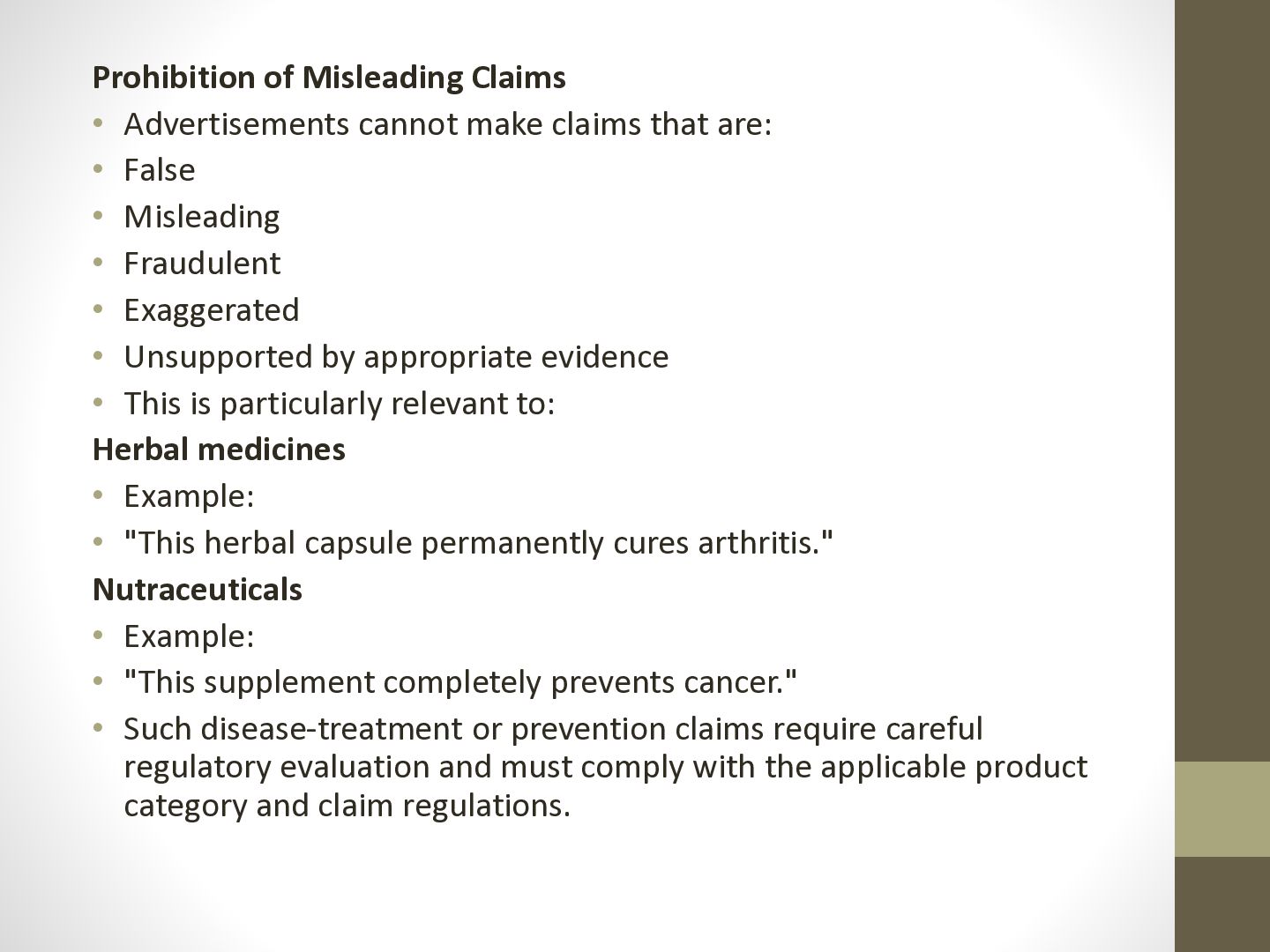
  55. Prohibition of Misleading Claims • Advertisements cannot make claims that

    are: • False • Misleading • Fraudulent • Exaggerated • Unsupported by appropriate evidence • This is particularly relevant to: Herbal medicines • Example: • "This herbal capsule permanently cures arthritis." Nutraceuticals • Example: • "This supplement completely prevents cancer." • Such disease-treatment or prevention claims require careful regulatory evaluation and must comply with the applicable product category and claim regulations.
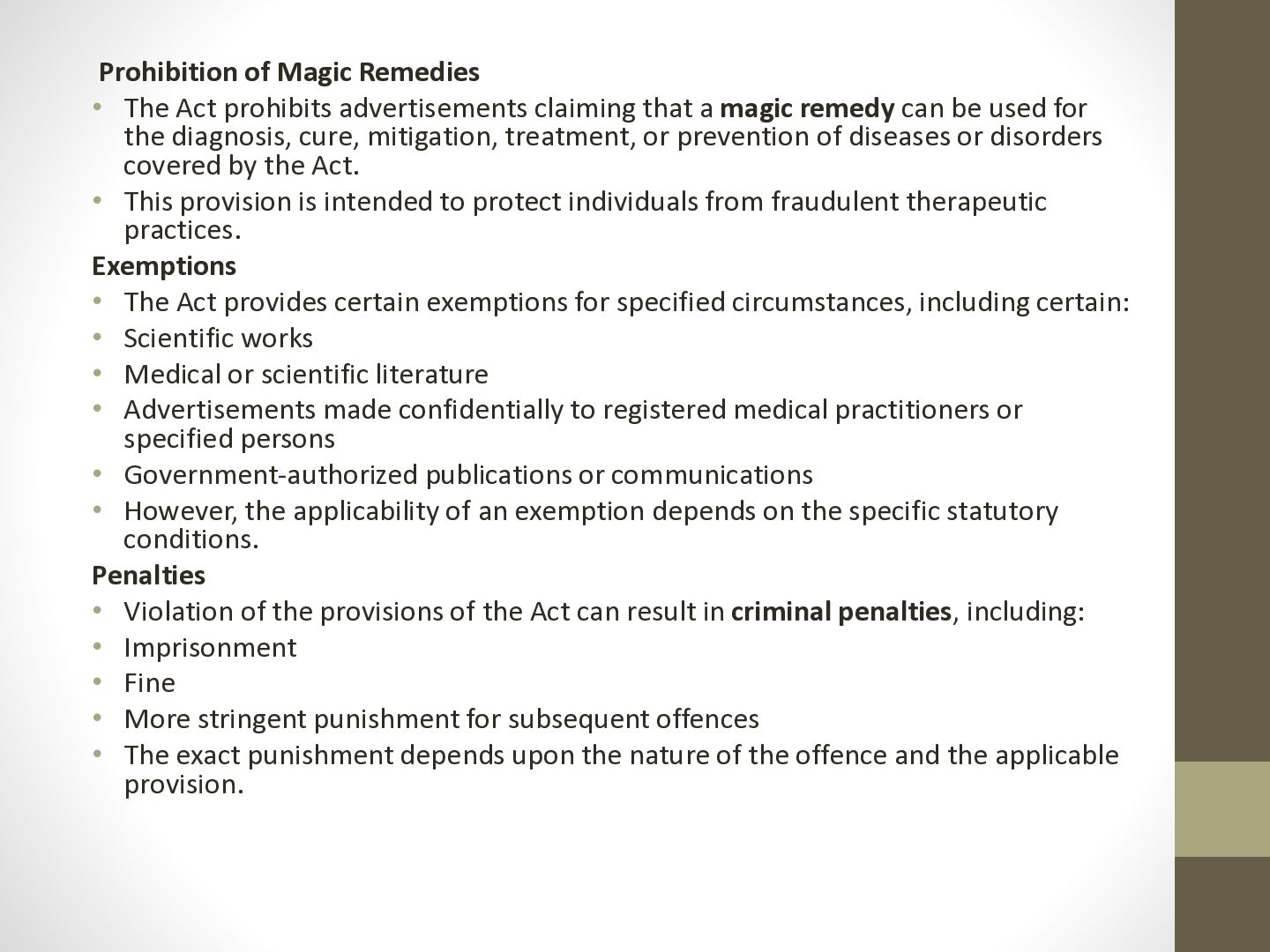
  56. Prohibition of Magic Remedies • The Act prohibits advertisements claiming

    that a magic remedy can be used for the diagnosis, cure, mitigation, treatment, or prevention of diseases or disorders covered by the Act. • This provision is intended to protect individuals from fraudulent therapeutic practices. Exemptions • The Act provides certain exemptions for specified circumstances, including certain: • Scientific works • Medical or scientific literature • Advertisements made confidentially to registered medical practitioners or specified persons • Government-authorized publications or communications • However, the applicability of an exemption depends on the specific statutory conditions. Penalties • Violation of the provisions of the Act can result in criminal penalties, including: • Imprisonment • Fine • More stringent punishment for subsequent offences • The exact punishment depends upon the nature of the offence and the applicable provision.
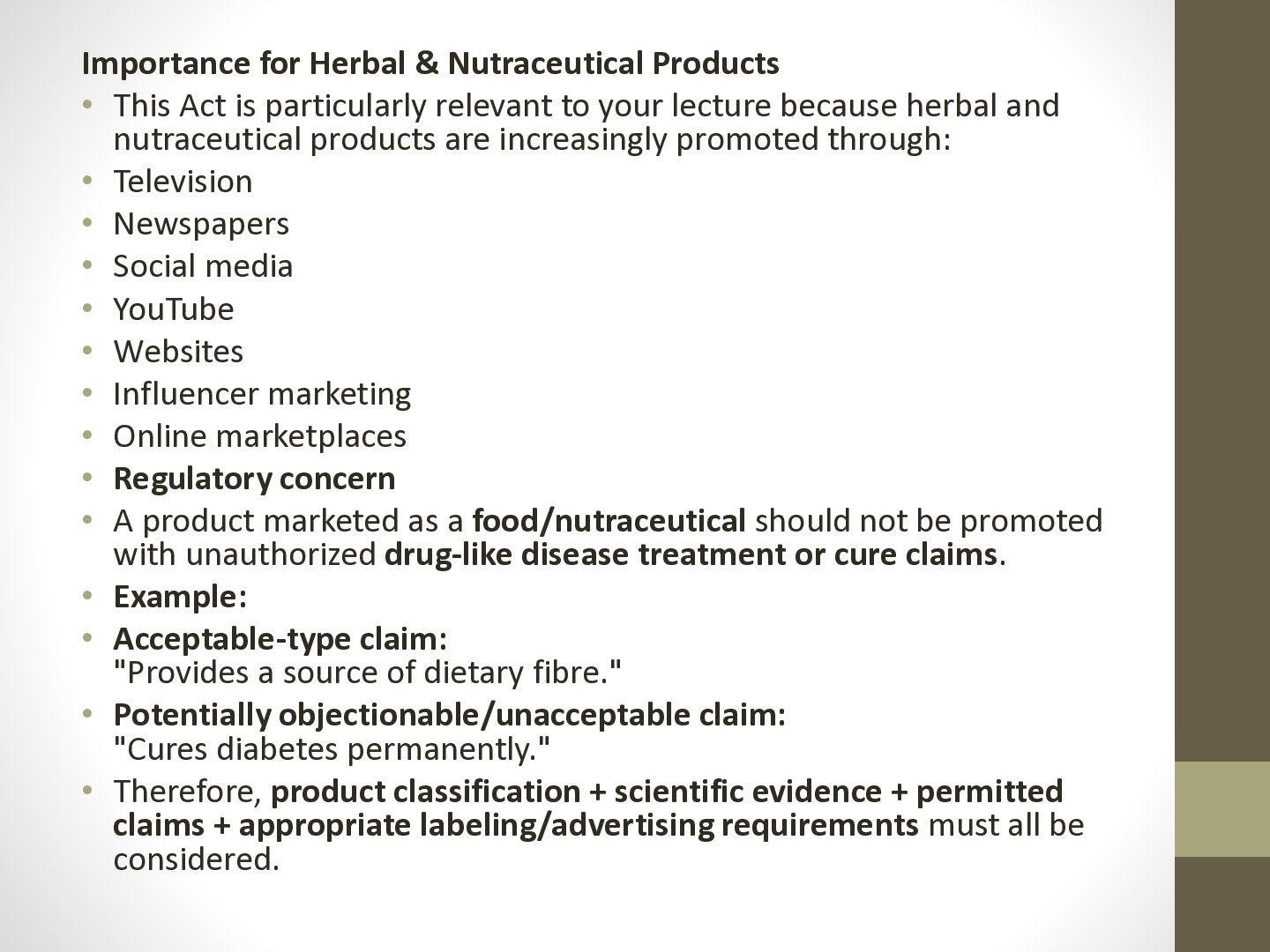
  57. Importance for Herbal & Nutraceutical Products • This Act is

    particularly relevant to your lecture because herbal and nutraceutical products are increasingly promoted through: • Television • Newspapers • Social media • YouTube • Websites • Influencer marketing • Online marketplaces • Regulatory concern • A product marketed as a food/nutraceutical should not be promoted with unauthorized drug-like disease treatment or cure claims. • Example: • Acceptable-type claim: "Provides a source of dietary fibre." • Potentially objectionable/unacceptable claim: "Cures diabetes permanently." • Therefore, product classification + scientific evidence + permitted claims + appropriate labeling/advertising requirements must all be considered.
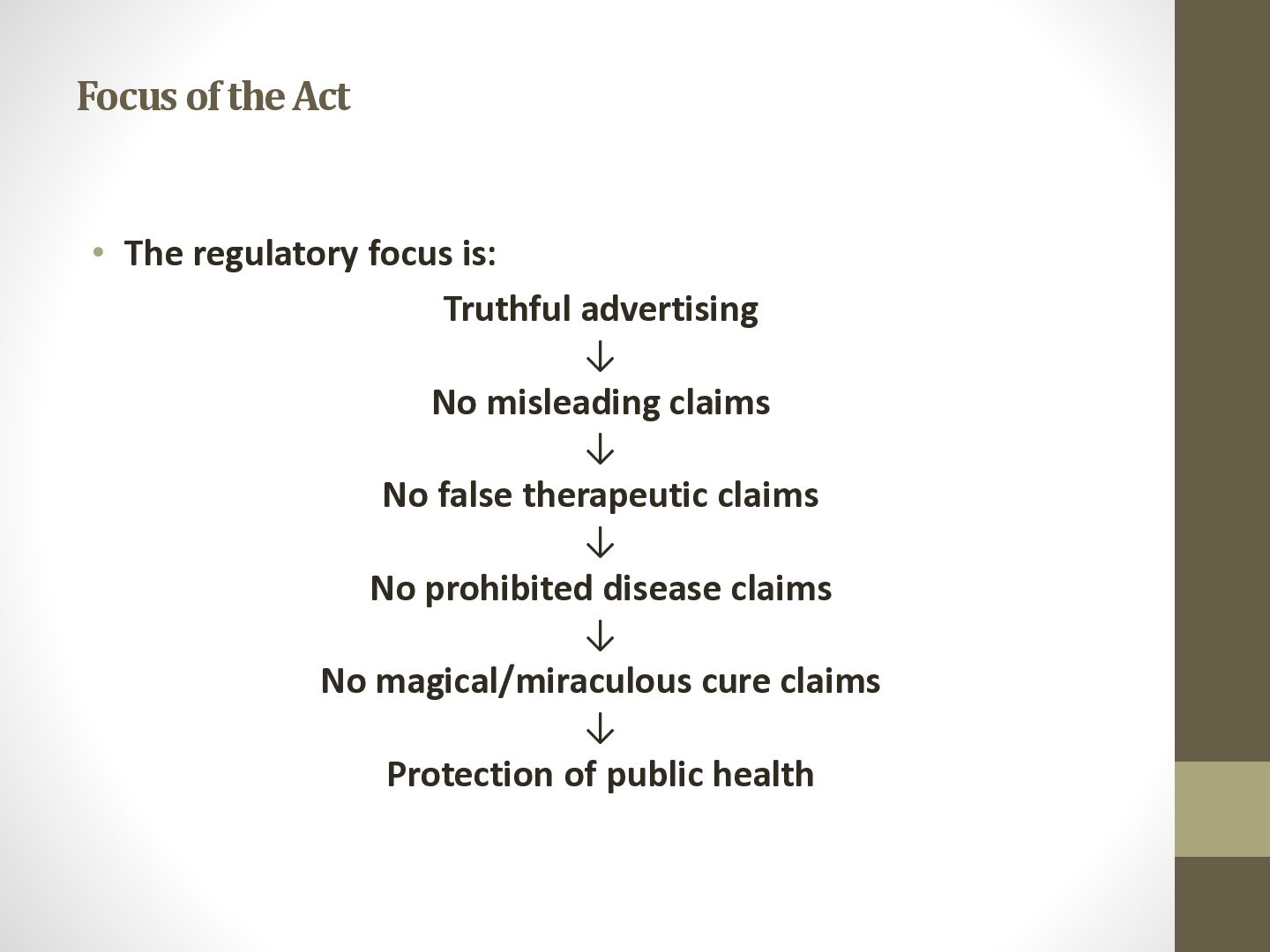
  58. Focus of the Act • The regulatory focus is: Truthful

    advertising ↓ No misleading claims ↓ No false therapeutic claims ↓ No prohibited disease claims ↓ No magical/miraculous cure claims ↓ Protection of public health
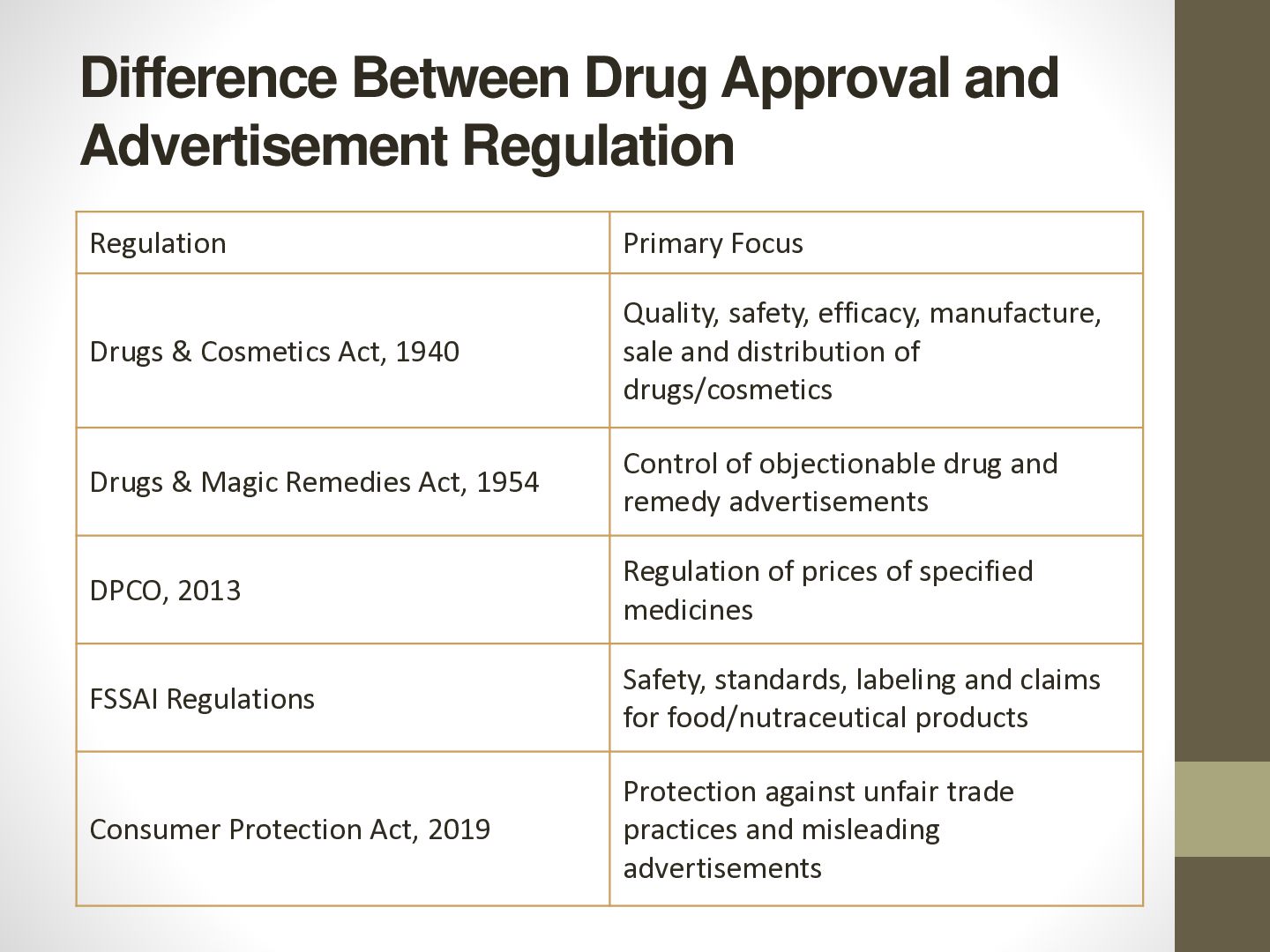
  59. Difference Between Drug Approval and Advertisement Regulation Regulation Primary Focus

    Drugs & Cosmetics Act, 1940 Quality, safety, efficacy, manufacture, sale and distribution of drugs/cosmetics Drugs & Magic Remedies Act, 1954 Control of objectionable drug and remedy advertisements DPCO, 2013 Regulation of prices of specified medicines FSSAI Regulations Safety, standards, labeling and claims for food/nutraceutical products Consumer Protection Act, 2019 Protection against unfair trade practices and misleading advertisements
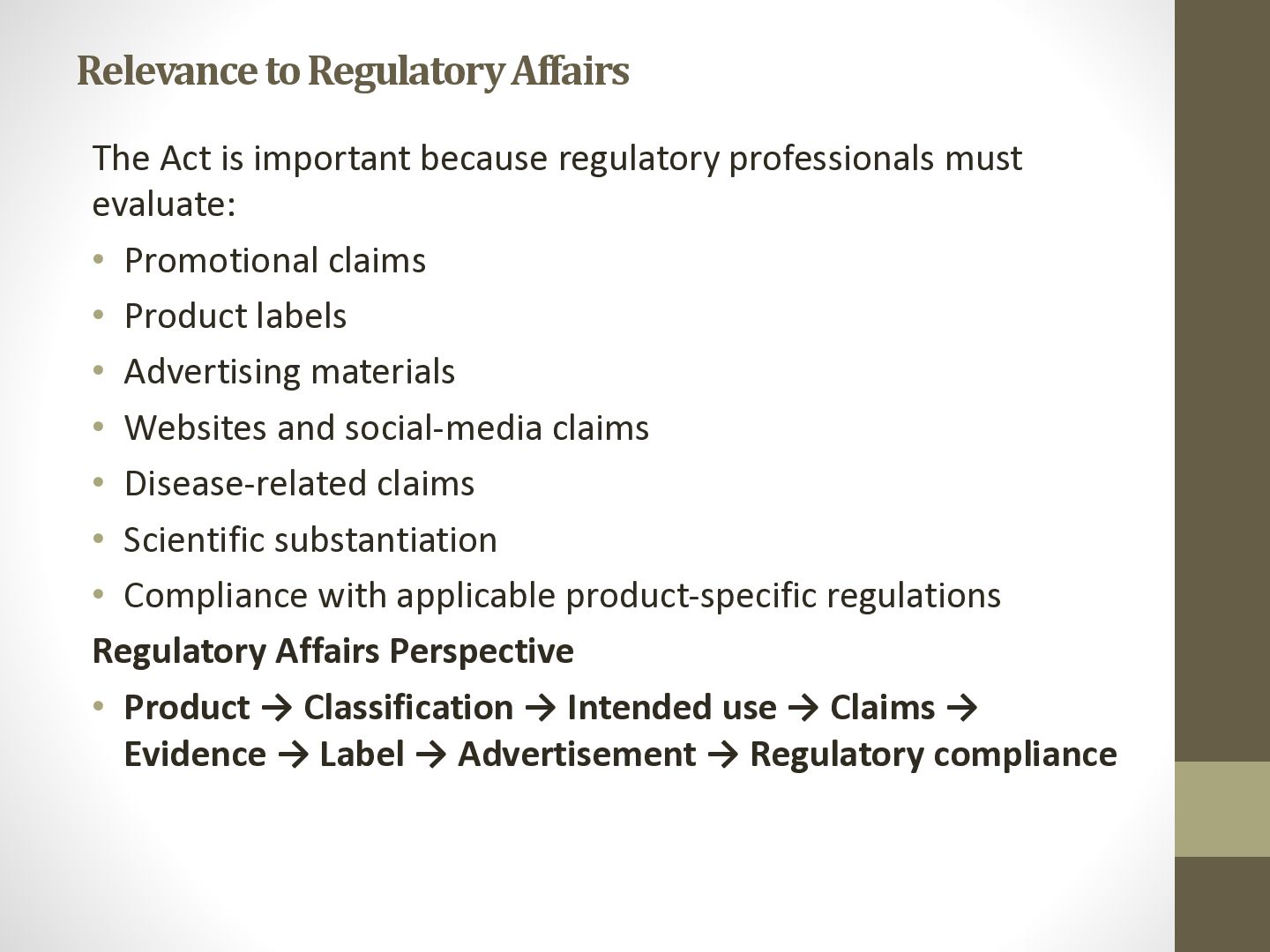
  60. Relevance to Regulatory Affairs The Act is important because regulatory

    professionals must evaluate: • Promotional claims • Product labels • Advertising materials • Websites and social-media claims • Disease-related claims • Scientific substantiation • Compliance with applicable product-specific regulations Regulatory Affairs Perspective • Product → Classification → Intended use → Claims → Evidence → Label → Advertisement → Regulatory compliance
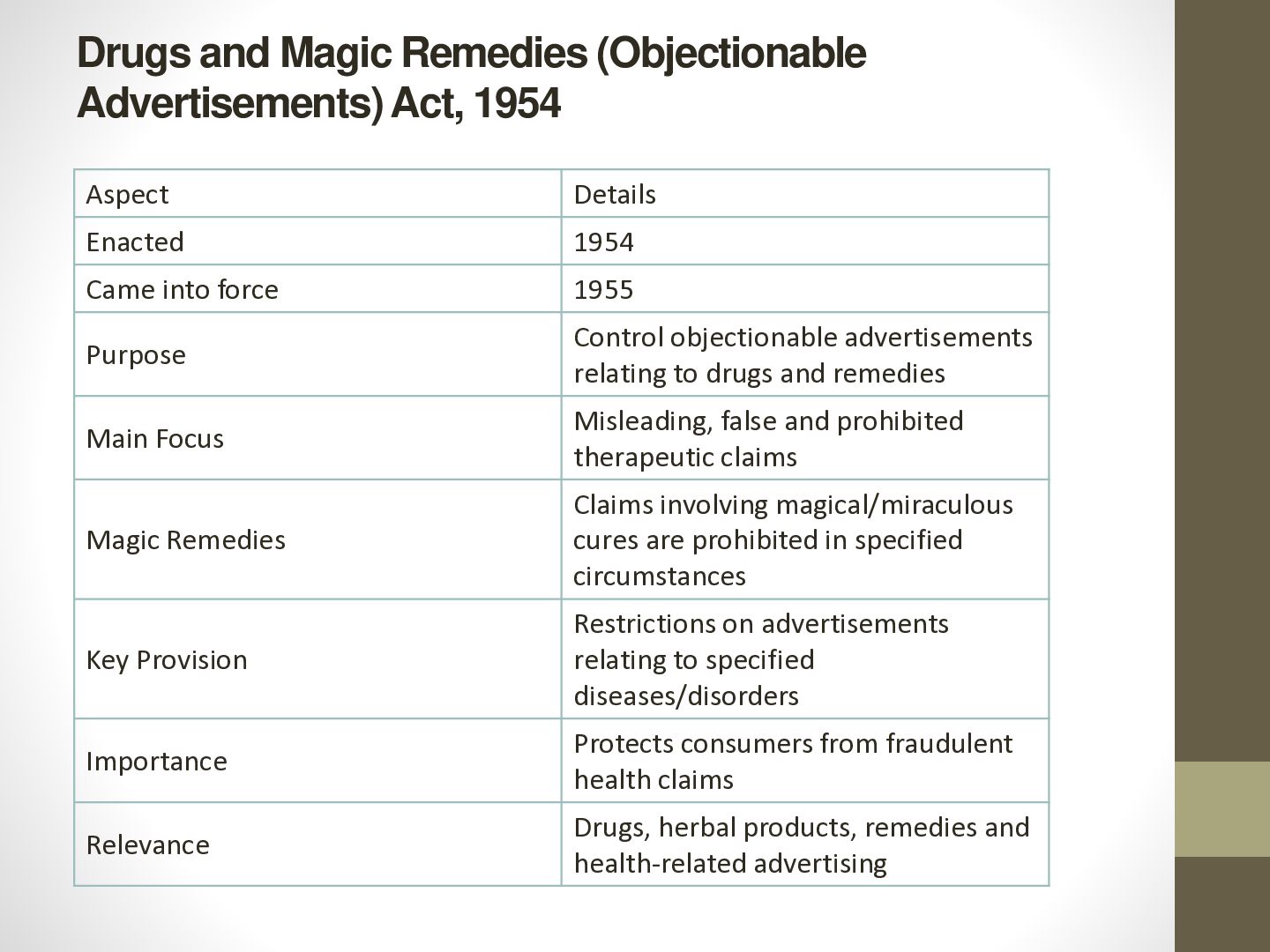
  61. Drugs and Magic Remedies (Objectionable Advertisements) Act, 1954 Aspect Details

    Enacted 1954 Came into force 1955 Purpose Control objectionable advertisements relating to drugs and remedies Main Focus Misleading, false and prohibited therapeutic claims Magic Remedies Claims involving magical/miraculous cures are prohibited in specified circumstances Key Provision Restrictions on advertisements relating to specified diseases/disorders Importance Protects consumers from fraudulent health claims Relevance Drugs, herbal products, remedies and health-related advertising
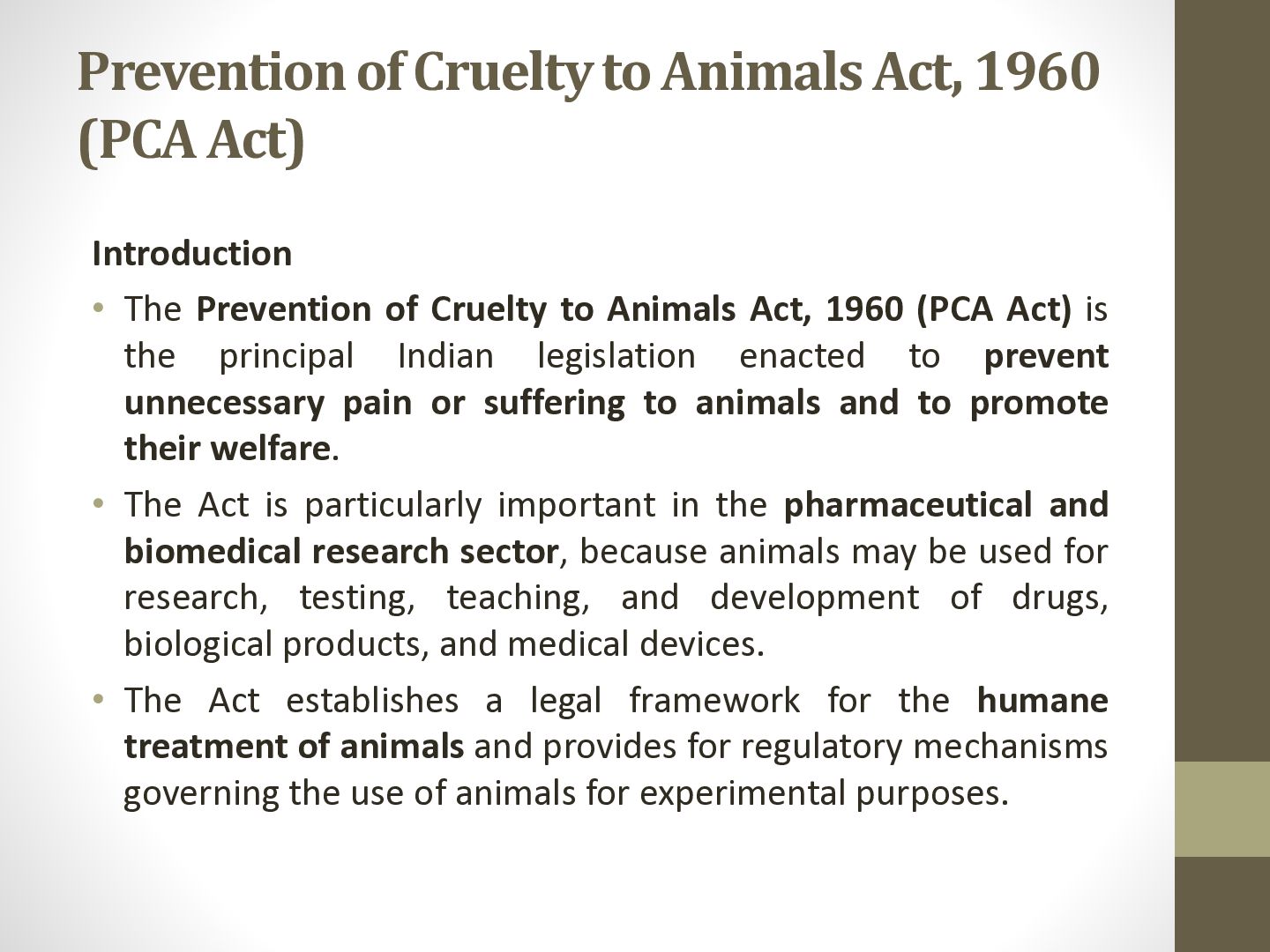
  62. Prevention of Cruelty to Animals Act, 1960 (PCA Act) Introduction

    • The Prevention of Cruelty to Animals Act, 1960 (PCA Act) is the principal Indian legislation enacted to prevent unnecessary pain or suffering to animals and to promote their welfare. • The Act is particularly important in the pharmaceutical and biomedical research sector, because animals may be used for research, testing, teaching, and development of drugs, biological products, and medical devices. • The Act establishes a legal framework for the humane treatment of animals and provides for regulatory mechanisms governing the use of animals for experimental purposes.
  63. Purpose of the Act • The primary purpose of the

    PCA Act is: • To prevent the infliction of unnecessary pain or suffering on animals and to regulate the use of animals in a humane manner. • In pharmaceutical research, the Act helps ensure that animals are used only when scientifically justified and that appropriate welfare measures are followed.
  64. Objectives • Major objectives • Prevention of Cruelty • Prevent

    unnecessary pain, suffering, injury, or distress to animals. • Animal Welfare • Promote humane treatment and proper care of animals. • Regulation of Animal Experimentation • Control the use of animals for experimental and research purposes. • Ethical Research • Ensure that animal experiments are scientifically and ethically justified. • Protection of Research Animals • Establish standards for housing, feeding, handling, and experimentation. • Regulatory Oversight • Establish authorities and committees to monitor animal experimentation.
  65. Regulatory Authority Animal Welfare Board of India (AWBI) • The

    Act provides for the establishment of the Animal Welfare Board of India (AWBI). • Functions of AWBI • Advise the Government on animal welfare. • Promote animal welfare awareness. • Support measures for prevention of cruelty. • Encourage humane treatment of animals. • Provide guidance relating to animal welfare.
  66. Regulation of Animal Experiments • For pharmaceutical and biomedical research,

    an important provision is the regulation of experiments on animals. • The Act provides for the establishment of: • Committee for the Control and Supervision of Experiments on Animals (CPCSEA) • CPCSEA is the regulatory committee responsible for overseeing animal experimentation in India. • Current name • The committee is now officially referred to as the: • Committee for Control and Supervision of Experiments on Animals (CCSEA) • It functions under the Department of Animal Husbandry & Dairying, Ministry of Fisheries, Animal Husbandry & Dairying, Government of India.
  67. Institutional Animal Ethics Committee (IAEC) Research institutions using laboratory animals

    must have an appropriately constituted: Institutional Animal Ethics Committee (IAEC) • The IAEC reviews and oversees animal experimentation at the institutional level. Major functions • Review animal research protocols. • Evaluate scientific justification for animal use. • Examine proposed animal numbers. • Ensure appropriate anesthesia and analgesia where required. • Review humane endpoints. • Ensure appropriate housing and care. • Monitor compliance with applicable animal welfare requirements. • Approve protocols within its delegated authority; protocols outside that authority require submission to the competent regulatory mechanism.
  68. The 3Rs Principle A very important concept in animal research

    is the 3Rs principle: Replacement • Use alternatives to animals wherever scientifically possible. Examples: • Cell culture • Computer simulations • Organ-on-chip models • In-vitro assays Reduction • Use the minimum number of animals required to obtain scientifically valid results. Refinement • Modify procedures to minimize pain, suffering, distress, and lasting harm. • REPLACEMENT → REDUCTION → REFINEMENT Goal: Scientifically valid research with minimum animal suffering.
  69. Important Rules Breeding of and Experiments on Animals (Control and

    Supervision) Rules, 1998 • These Rules provide detailed requirements concerning: • Registration of establishments • Constitution and functioning of IAECs • Animal housing and care • Conduct of experiments • Records and documentation • Inspection and monitoring • Standards for laboratory animals • The Rules have been amended from time to time.
  70. Good Laboratory Animal Practices • Research institutions are expected to

    ensure: Housing • Appropriate cages • Adequate space • Proper ventilation • Suitable temperature and humidity • Appropriate lighting Nutrition • Appropriate feed • Clean drinking water Health • Veterinary care • Disease monitoring • Quarantine/acclimatization where appropriate Experimental Procedures • Scientific justification • Appropriate anesthesia/analgesia • Humane endpoints • Appropriate euthanasia methods • Trained personnel
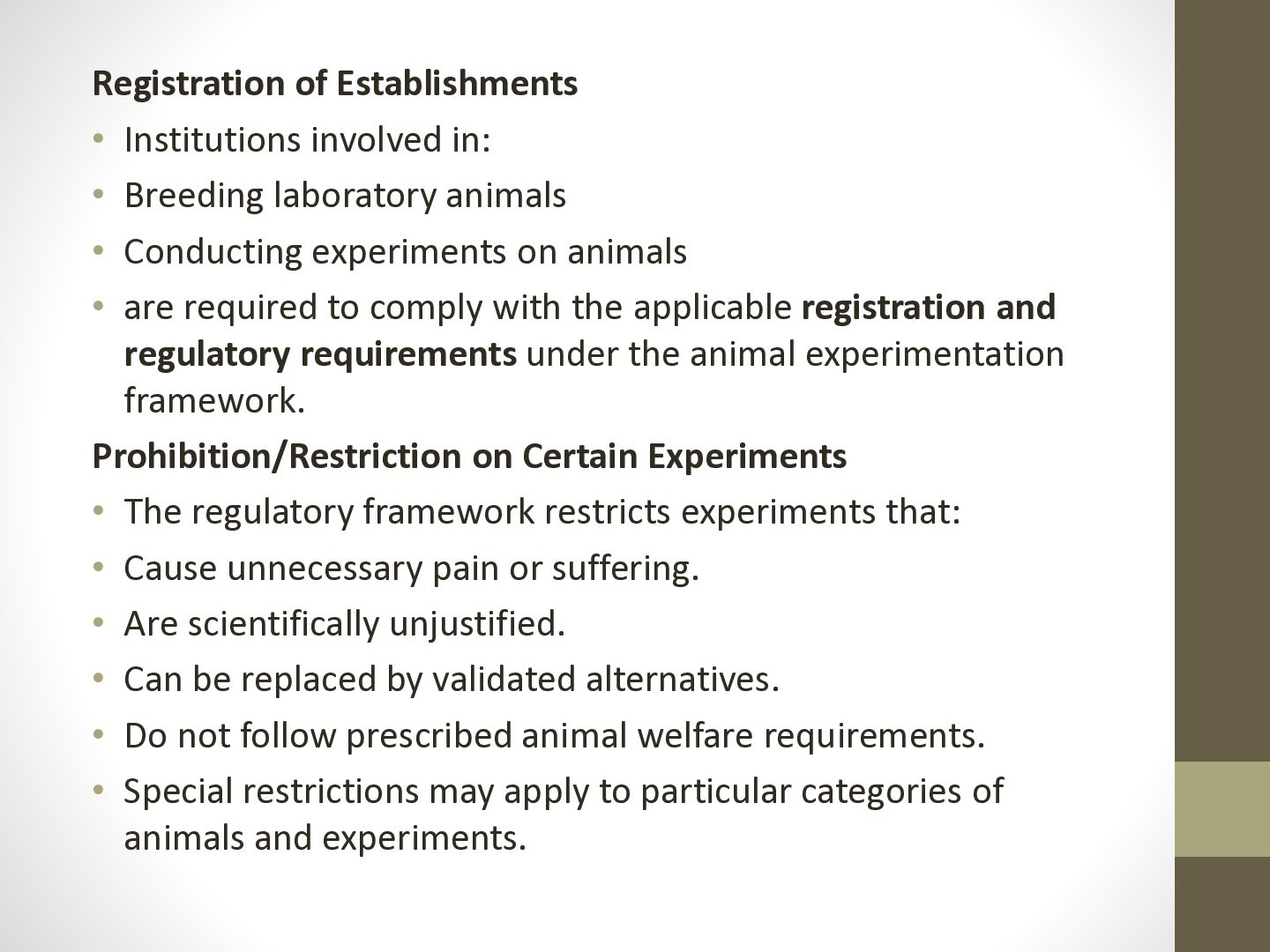
  71. Registration of Establishments • Institutions involved in: • Breeding laboratory

    animals • Conducting experiments on animals • are required to comply with the applicable registration and regulatory requirements under the animal experimentation framework. Prohibition/Restriction on Certain Experiments • The regulatory framework restricts experiments that: • Cause unnecessary pain or suffering. • Are scientifically unjustified. • Can be replaced by validated alternatives. • Do not follow prescribed animal welfare requirements. • Special restrictions may apply to particular categories of animals and experiments.
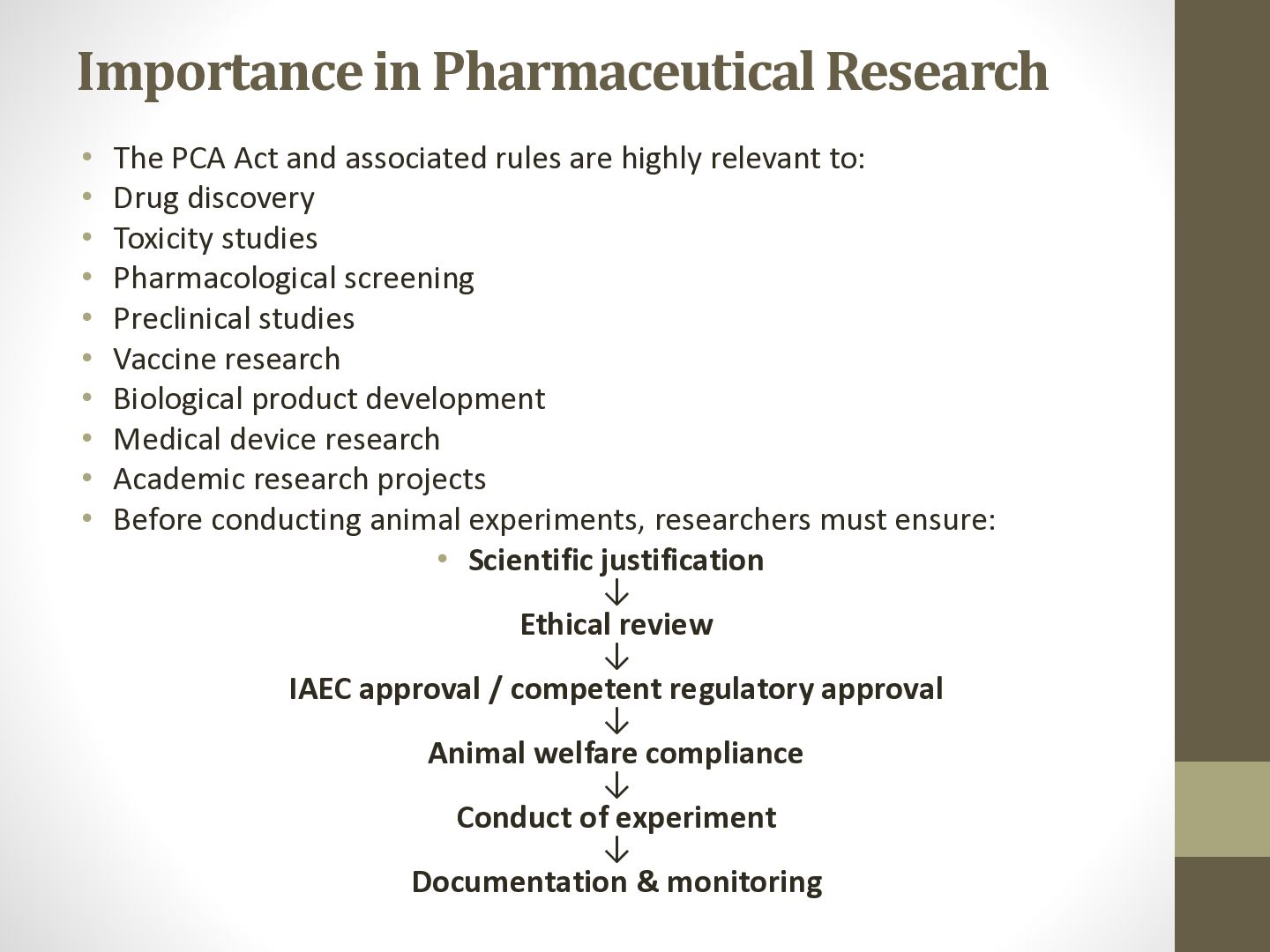
  72. Importance in Pharmaceutical Research • The PCA Act and associated

    rules are highly relevant to: • Drug discovery • Toxicity studies • Pharmacological screening • Preclinical studies • Vaccine research • Biological product development • Medical device research • Academic research projects • Before conducting animal experiments, researchers must ensure: • Scientific justification ↓ Ethical review ↓ IAEC approval / competent regulatory approval ↓ Animal welfare compliance ↓ Conduct of experiment ↓ Documentation & monitoring
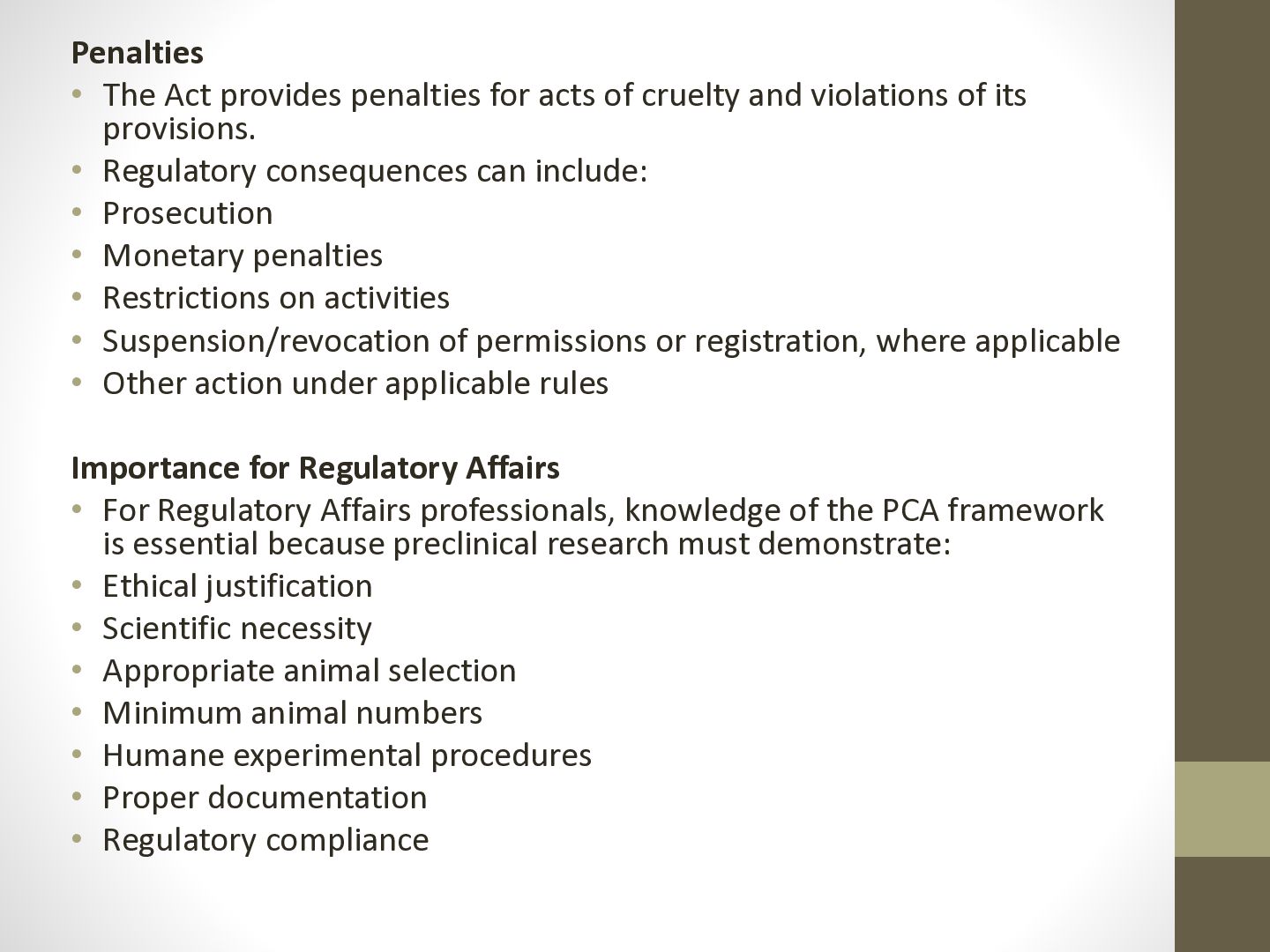
  73. Penalties • The Act provides penalties for acts of cruelty

    and violations of its provisions. • Regulatory consequences can include: • Prosecution • Monetary penalties • Restrictions on activities • Suspension/revocation of permissions or registration, where applicable • Other action under applicable rules Importance for Regulatory Affairs • For Regulatory Affairs professionals, knowledge of the PCA framework is essential because preclinical research must demonstrate: • Ethical justification • Scientific necessity • Appropriate animal selection • Minimum animal numbers • Humane experimental procedures • Proper documentation • Regulatory compliance
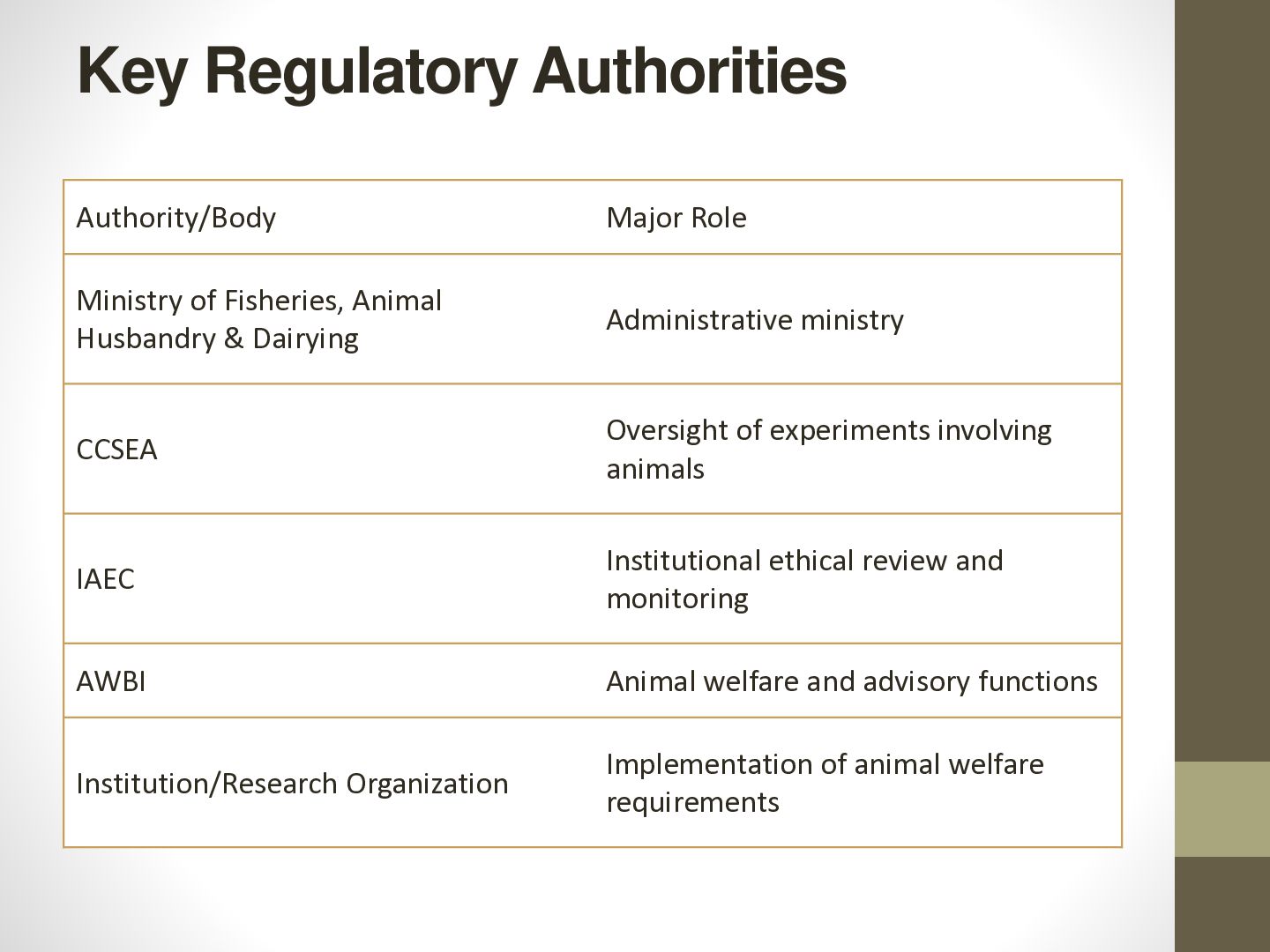
  74. Key Regulatory Authorities Authority/Body Major Role Ministry of Fisheries, Animal

    Husbandry & Dairying Administrative ministry CCSEA Oversight of experiments involving animals IAEC Institutional ethical review and monitoring AWBI Animal welfare and advisory functions Institution/Research Organization Implementation of animal welfare requirements
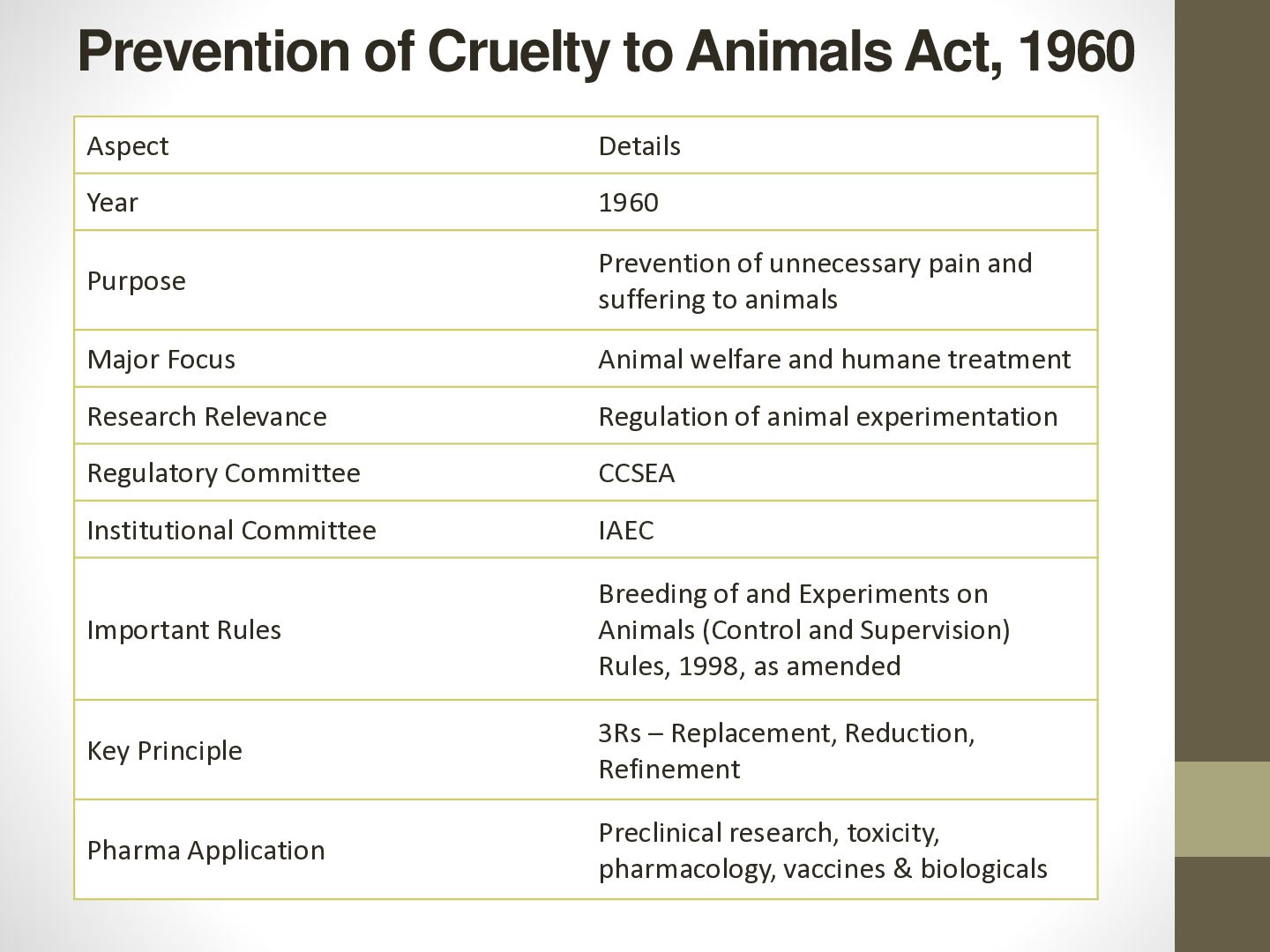
  75. Prevention of Cruelty to Animals Act, 1960 Aspect Details Year

    1960 Purpose Prevention of unnecessary pain and suffering to animals Major Focus Animal welfare and humane treatment Research Relevance Regulation of animal experimentation Regulatory Committee CCSEA Institutional Committee IAEC Important Rules Breeding of and Experiments on Animals (Control and Supervision) Rules, 1998, as amended Key Principle 3Rs – Replacement, Reduction, Refinement Pharma Application Preclinical research, toxicity, pharmacology, vaccines & biologicals
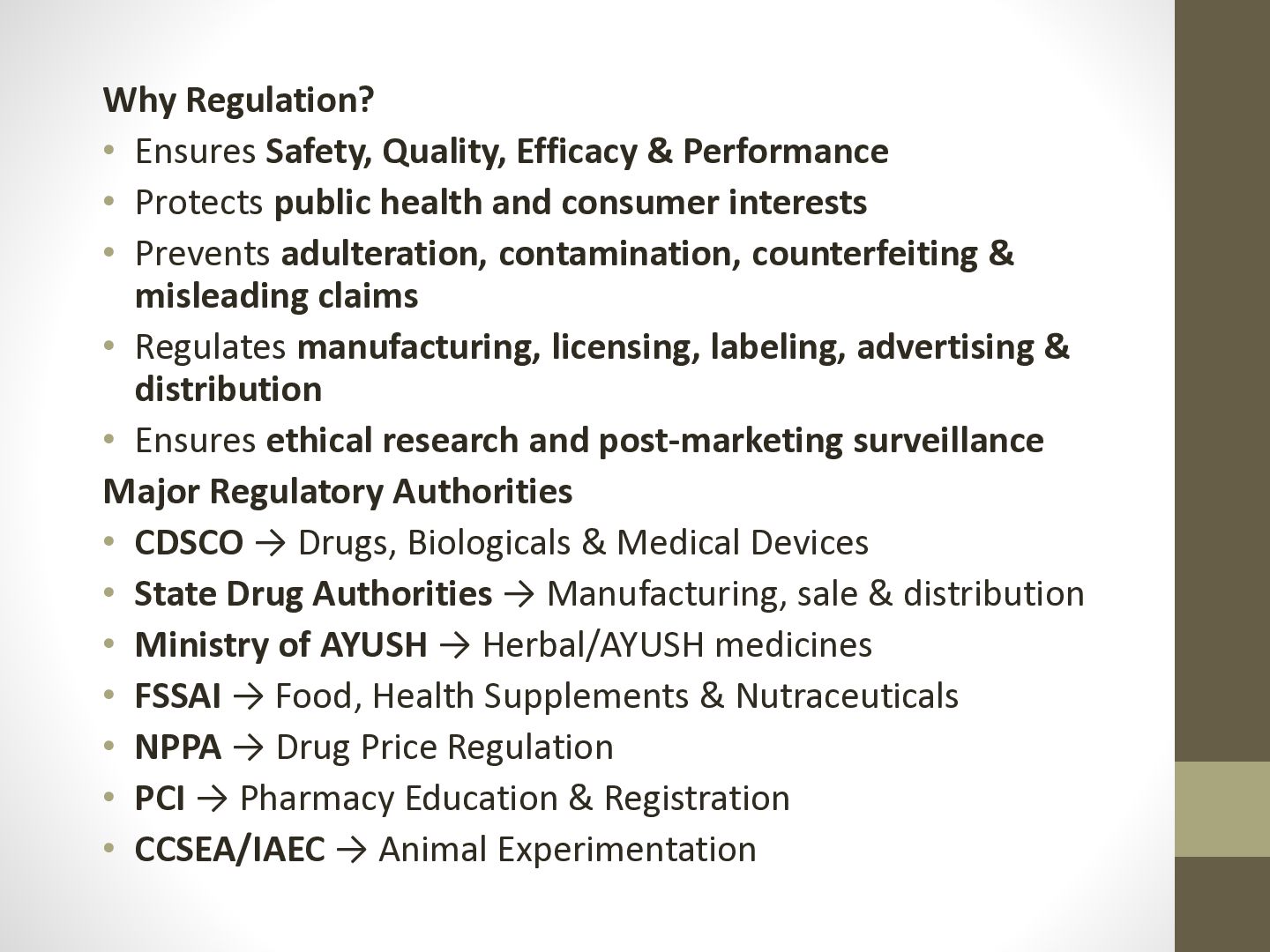
  76. Why Regulation? • Ensures Safety, Quality, Efficacy & Performance •

    Protects public health and consumer interests • Prevents adulteration, contamination, counterfeiting & misleading claims • Regulates manufacturing, licensing, labeling, advertising & distribution • Ensures ethical research and post-marketing surveillance Major Regulatory Authorities • CDSCO → Drugs, Biologicals & Medical Devices • State Drug Authorities → Manufacturing, sale & distribution • Ministry of AYUSH → Herbal/AYUSH medicines • FSSAI → Food, Health Supplements & Nutraceuticals • NPPA → Drug Price Regulation • PCI → Pharmacy Education & Registration • CCSEA/IAEC → Animal Experimentation
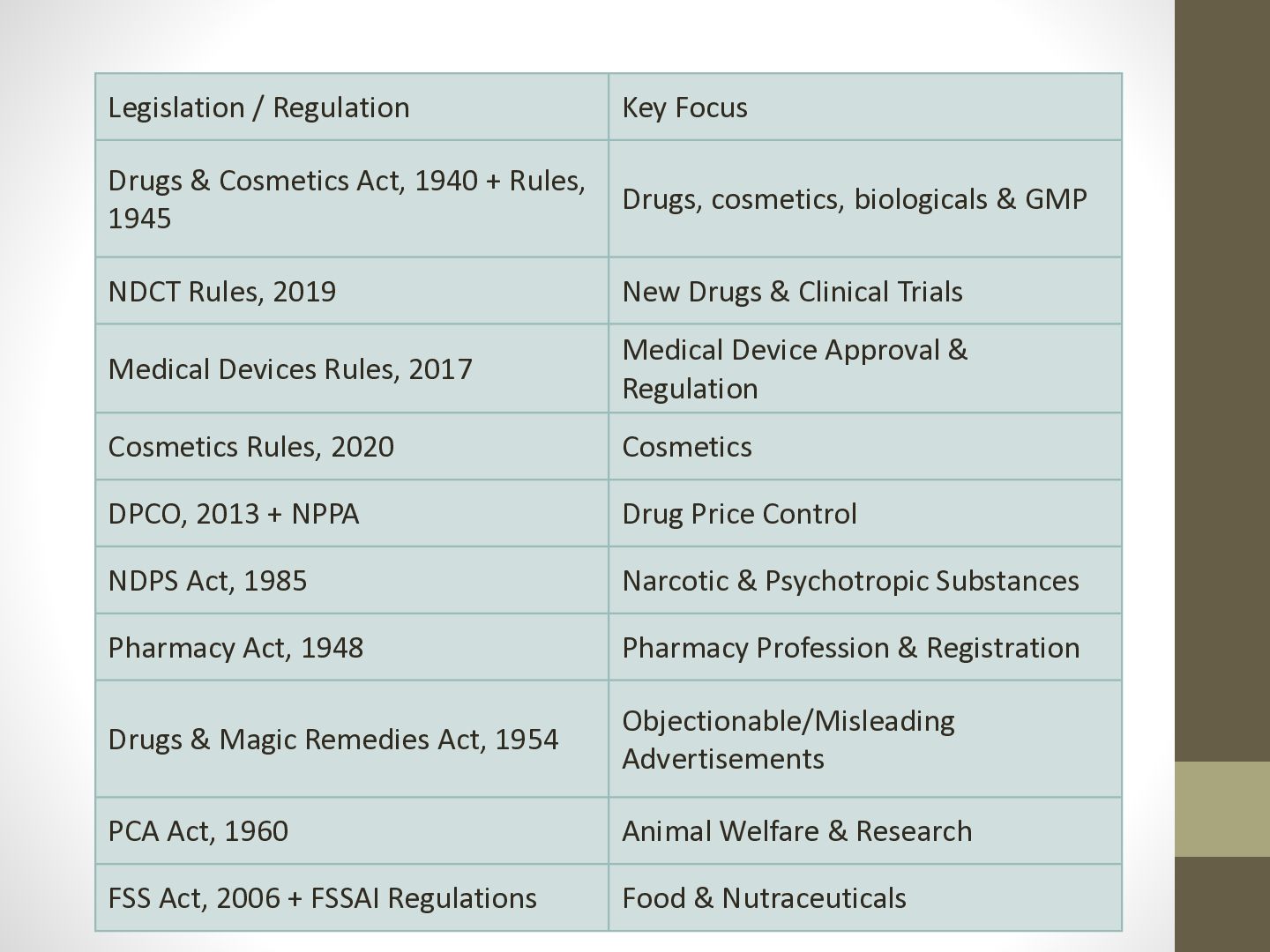
  77. Legislation / Regulation Key Focus Drugs & Cosmetics Act, 1940

    + Rules, 1945 Drugs, cosmetics, biologicals & GMP NDCT Rules, 2019 New Drugs & Clinical Trials Medical Devices Rules, 2017 Medical Device Approval & Regulation Cosmetics Rules, 2020 Cosmetics DPCO, 2013 + NPPA Drug Price Control NDPS Act, 1985 Narcotic & Psychotropic Substances Pharmacy Act, 1948 Pharmacy Profession & Registration Drugs & Magic Remedies Act, 1954 Objectionable/Misleading Advertisements PCA Act, 1960 Animal Welfare & Research FSS Act, 2006 + FSSAI Regulations Food & Nutraceuticals