Lock in $30 Savings on PRO—Offer Ends Soon! ⏳

FY 2024: MDC 15 - Newborns and other Neonate Co...

Avatar for e4health e4health PRO
April 04, 2024
180

FY 2024: MDC 15 - Newborns and other Neonate Conditions

Avatar for e4health

e4health PRO

April 04, 2024
Tweet

More Decks by e4health

Transcript

  1. H I M | C O D I N G

    & C D I | H E A LT H I T | R E V C Y C L E Empowering Better Health e4health tackles healthcare’s data, quality and revenue challenges empowering your providers to focus on better care.
  2. OBJECTIVES • Review MDC 15- Newborns and other Neonatal Conditions

    • Learner will acquire a basic understanding of the diagnoses and procedures included in MDC-15 • Discuss Query opportunities in MDC-15 • Review coding clinics relevant to the chosen topics in each DRG.
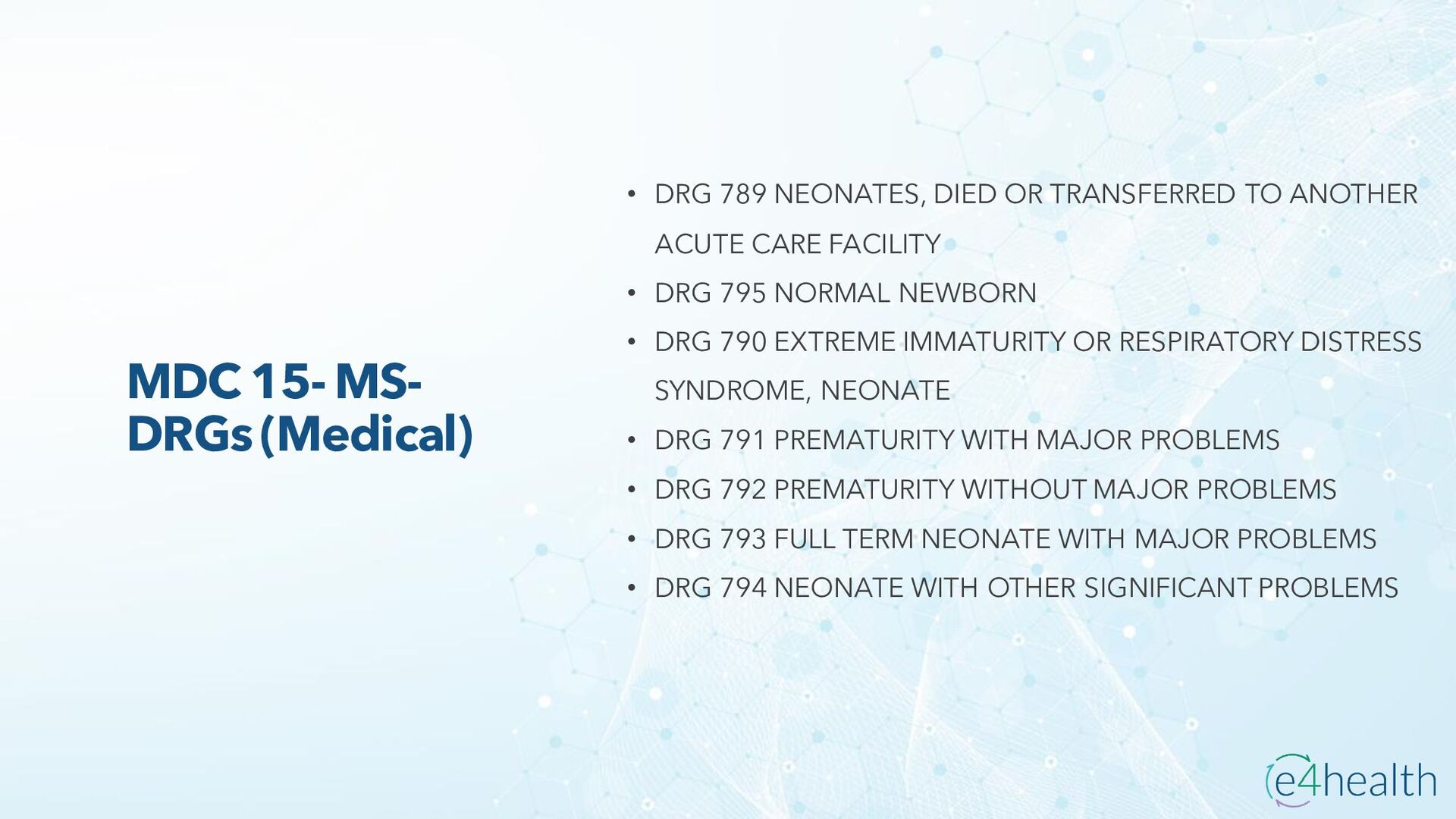
  3. MDC 15- MS- DRGs (Medical) • DRG 789 NEONATES, DIED

    OR TRANSFERRED TO ANOTHER ACUTE CARE FACILITY • DRG 795 NORMAL NEWBORN • DRG 790 EXTREME IMMATURITY OR RESPIRATORY DISTRESS SYNDROME, NEONATE • DRG 791 PREMATURITY WITH MAJOR PROBLEMS • DRG 792 PREMATURITY WITHOUT MAJOR PROBLEMS • DRG 793 FULL TERM NEONATE WITH MAJOR PROBLEMS • DRG 794 NEONATE WITH OTHER SIGNIFICANT PROBLEMS
  4. General Perinatal Rules Codes in Chapter 16 are never for

    use on the maternal record. 1 Codes from Chapter 15, the obstetric chapter, are never permitted on the newborn record. 2 Chapter 16 codes may be used throughout the life of the patient if the condition is still present. 3
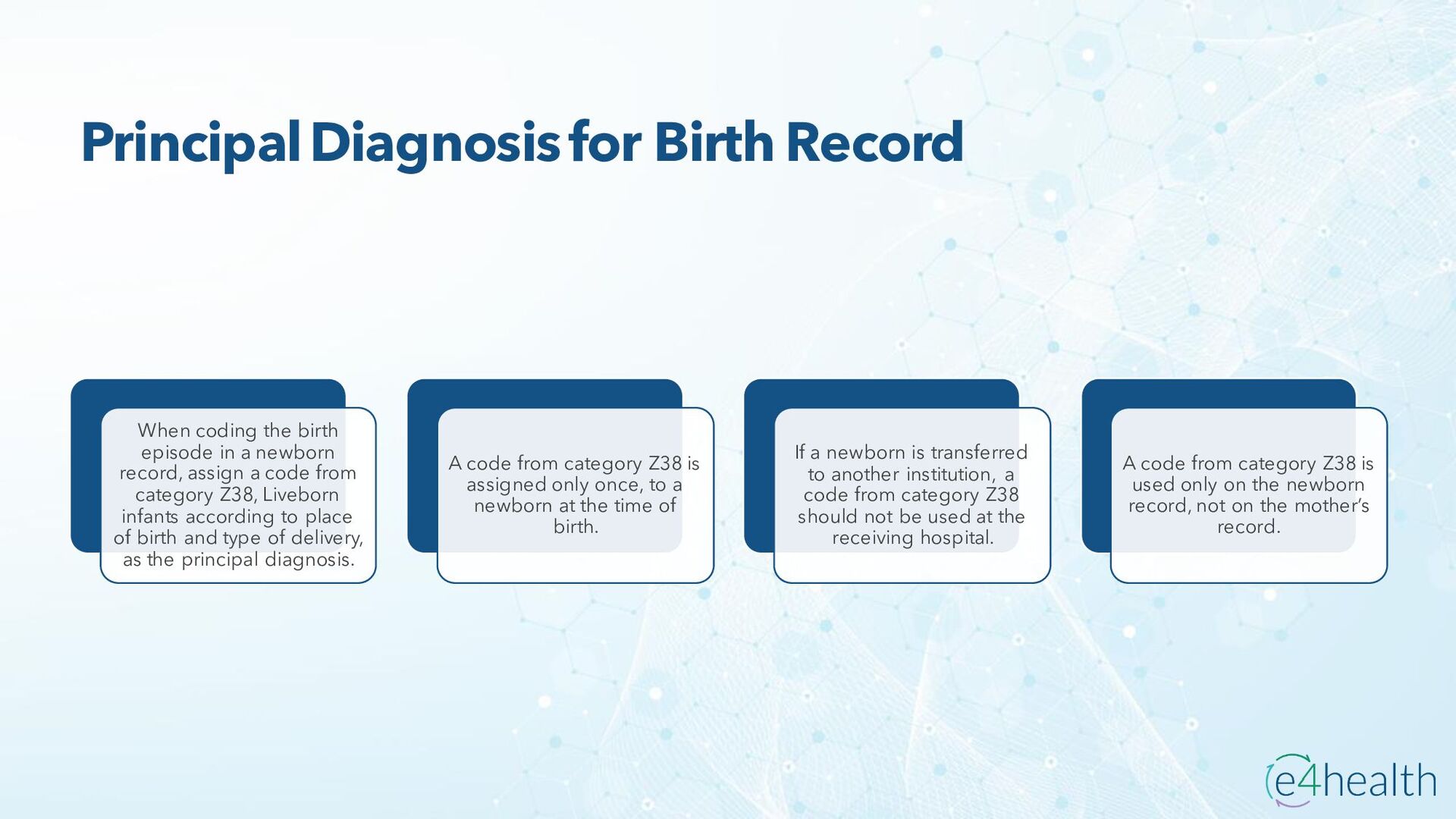
  5. Principal Diagnosis for Birth Record When coding the birth episode

    in a newborn record, assign a code from category Z38, Liveborn infants according to place of birth and type of delivery, as the principal diagnosis. A code from category Z38 is assigned only once, to a newborn at the time of birth. If a newborn is transferred to another institution, a code from category Z38 should not be used at the receiving hospital. A code from category Z38 is used only on the newborn record, not on the mother’s record.
  6. Clinically Significant Conditions for Newborns • All clinically significant conditions

    noted on routine newborn examination should be coded. • A condition is clinically significant if it requires: • clinical evaluation • therapeutic treatment • diagnostic procedures • extended length of hospital stay • increased nursing care and/or monitoring • has implications for future health care needs (this is for newborns only!)
  7. Coding Additional Perinatal Diagnoses • Assigning codes for conditions that

    require treatment • Assign codes for conditions that require treatment or further investigation, prolong the length of stay, or require resource utilization. • Codes for conditions specified as having implications for future health care needs • Assign codes for conditions that have been specified by the provider as having implications for future health care needs. • Note: This guideline should not be used for adult patients.
  8. Newborn Terminology • Newborn birth weight may impact the MS-DRG

    • Review the ‘labor and delivery’ record for documentation of the newborns weight at birth: • Newborn immaturity: Implies a birth of less than 37 completed weeks gestation • Newborn post maturity: A gestational period of more than 42 weeks • Newborn low birth weight: Implies a birth weight of 1,000-2,499 grams • Newborn extremely low birth weight: Implies a birth weight of less than 500-999 grams
  9. Prematurity Coding • Coding Clinic 2Q 1991: Prematurity Based on

    Birthweights • Can a diagnosis of prematurity be coded and reported on the basis of the birth weights noted in codes from category P07, Disorders relating to short gestation and low birthweight, NEC? • A diagnosis of prematurity should be based on the diagnostic statement of the attending pediatrician. Codes from P07 categories are not based on weight alone, but on the clinical assessment of the maturity of the infant. If the birthweight suggests that a code from categories P07 might be appropriate, check with the physician
  10. Prematurity Coding • Coding Clinic 1Q 2009: Prematurity • We

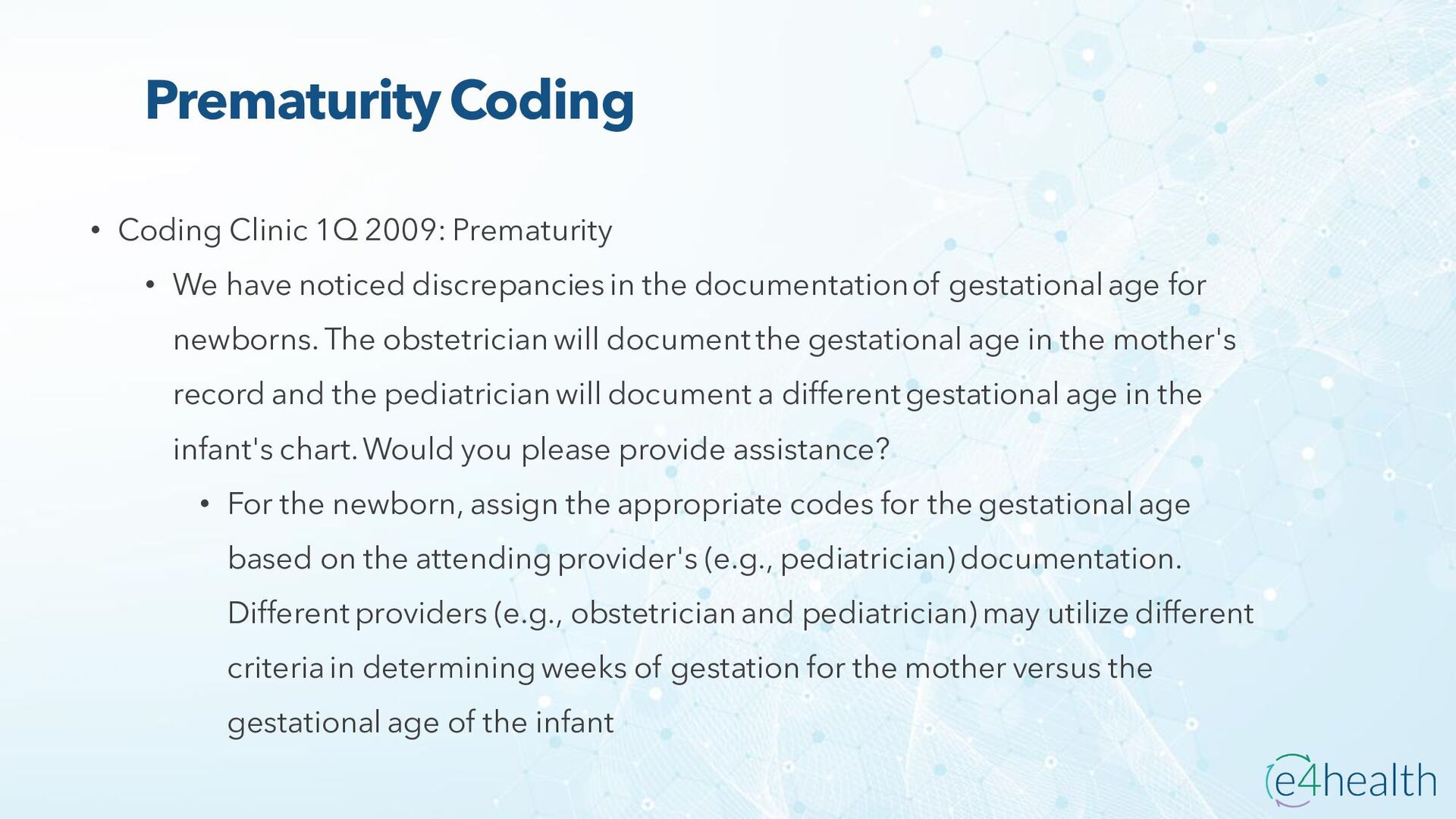
    have noticed discrepancies in the documentation of gestational age for newborns. The obstetrician will document the gestational age in the mother's record and the pediatrician will document a different gestational age in the infant's chart. Would you please provide assistance? • For the newborn, assign the appropriate codes for the gestational age based on the attending provider's (e.g., pediatrician) documentation. Different providers (e.g., obstetrician and pediatrician) may utilize different criteria in determining weeks of gestation for the mother versus the gestational age of the infant
  11. Prematurity Coding • Coding Clinic 1Q 2009: Prematurity • Term

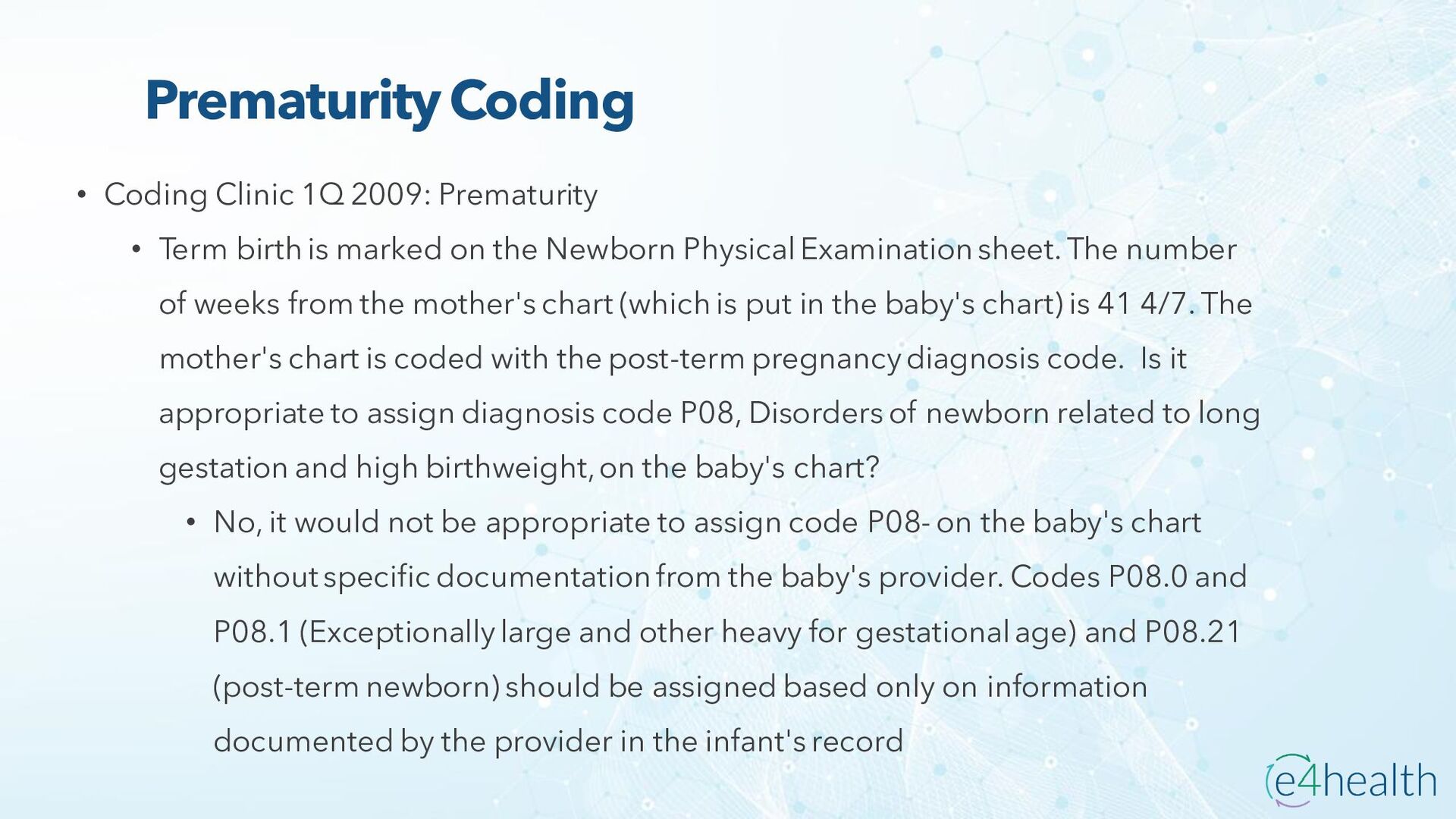
    birth is marked on the Newborn Physical Examination sheet. The number of weeks from the mother's chart (which is put in the baby's chart) is 41 4/7. The mother's chart is coded with the post-term pregnancy diagnosis code. Is it appropriate to assign diagnosis code P08, Disorders of newborn related to long gestation and high birthweight, on the baby's chart? • No, it would not be appropriate to assign code P08- on the baby's chart without specific documentation from the baby's provider. Codes P08.0 and P08.1 (Exceptionally large and other heavy for gestational age) and P08.21 (post-term newborn) should be assigned based only on information documented by the provider in the infant's record
  12. Prematurity Coding • Coding Clinic 1Q 2009: Prematurity • A

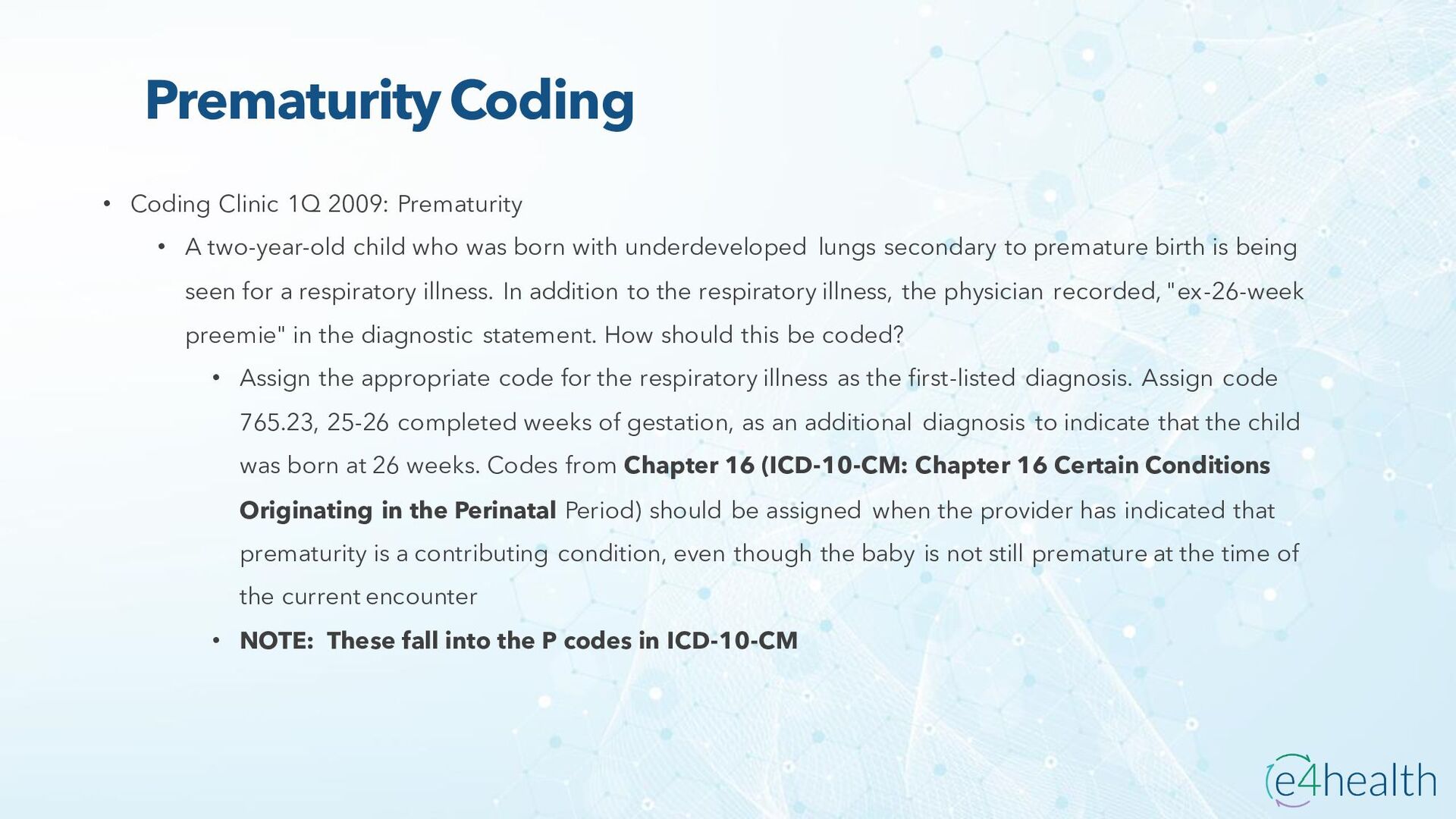
    two-year-old child who was born with underdeveloped lungs secondary to premature birth is being seen for a respiratory illness. In addition to the respiratory illness, the physician recorded, "ex-26-week preemie" in the diagnostic statement. How should this be coded? • Assign the appropriate code for the respiratory illness as the first-listed diagnosis. Assign code 765.23, 25-26 completed weeks of gestation, as an additional diagnosis to indicate that the child was born at 26 weeks. Codes from Chapter 16 (ICD-10-CM: Chapter 16 Certain Conditions Originating in the Perinatal Period) should be assigned when the provider has indicated that prematurity is a contributing condition, even though the baby is not still premature at the time of the current encounter • NOTE: These fall into the P codes in ICD-10-CM
  13. Mom vs Newborn Coding Mom Newborn Codes start with the

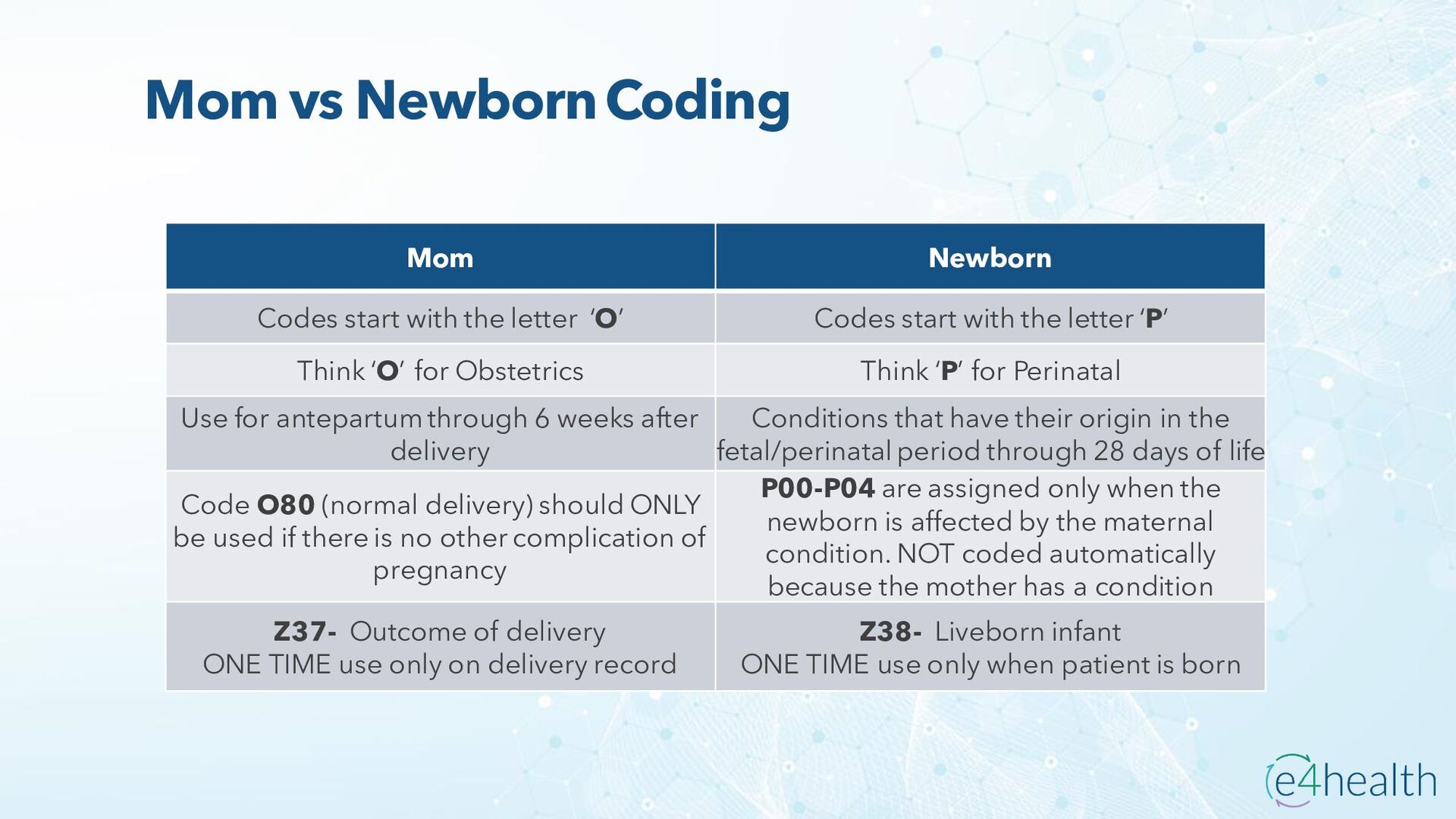
    letter ‘O’ Codes start with the letter ‘P’ Think ‘O’ for Obstetrics Think ‘P’ for Perinatal Use for antepartum through 6 weeks after delivery Conditions that have their origin in the fetal/perinatal period through 28 days of life Code O80 (normal delivery) should ONLY be used if there is no other complication of pregnancy P00-P04 are assigned only when the newborn is affected by the maternal condition. NOT coded automatically because the mother has a condition Z37- Outcome of delivery ONE TIME use only on delivery record Z38- Liveborn infant ONE TIME use only when patient is born
  14. Apnea of Newborn Coding Clinic Fourth Quarter 2022 Pages 38-39

    • Code P28.3, Primary sleep apnea of newborn, and code P28.4, Other apnea of newborn have been expanded with unique codes to describe the distinct types of primary sleep apnea of newborn, and specific types of apneas (of prematurity) that occur outside of sleep. The new codes follow: • P28.30, Primary sleep apnea of newborn, unspecified • P28.31, Primary central sleep apnea of newborn • P28.32, Primary obstructive sleep apnea of newborn • P28.33, Primary mixed sleep apnea of newborn • P28.39, Other primary sleep apnea of newborn • P28.40, Unspecified apnea of newborn • P28.41, Central neonatal apnea of newborn • P28.42, Obstructive apnea of newborn • P28.43, Mixed neonatal apnea of newborn • P28.49, Other apnea of newborn
  15. Apnea of Newborn Coding Clinic Fourth Quarter 2022 Pages 38-39,

    continued • An apneic spell refers to the interruption of breathing for 20 seconds or longer or a shorter pause accompanied by bradycardia (<100 beats per minute) cyanosis, and/or pallor. Apnea may be classified as central (cessation of breathing effort), obstructive (airflow obstruction usually at the pharyngeal level), or mixed. The condition can occur in any newborn, but apnea of prematurity is distinct from newborn sleep apnea. Apnea of prematurity is a developmental disorder caused by immaturity of neurologic and/or mechanical function of the respiratory system. While apnea of prematurity can be diagnosed based on clinical findings, sleep apnea is diagnosed based on polysomnography. • Central apnea is the most common type of apnea of prematurity and is caused by immature medullary respiratory control centers. • Obstructive apnea is caused by obstructed airflow, neck flexion causing opposition of hypopharyngeal soft tissues, nasal occlusion, or reflex laryngospasm. Mixed apnea is a combination of central and obstructive apnea. • All types of apneas can cause hypoxemia, cyanosis, and bradycardia when the spell is prolonged. Because bradycardia can also occur simultaneously with apnea, a central mechanism may be responsible for both. About 18% of infants who have died of sudden infant death syndrome (SIDS) had a history of prematurity, but apnea of prematurity is not a precursor to SIDS. • Typically, mixed and obstructive apnea is managed with supplemental oxygen and continuous positive airway pressure (CPAP) ventilation. Occasionally surgical intervention, such as palatoplasty or in extreme cases tracheostomy, may be required. In addition, central apnea may require medications to help stimulate the respiratory centers in the brain. • When assigning the new codes for apnea of newborn, code also, if applicable any congenital malformations of the respiratory system.
  16. Congenital ASD, AVSD, PFO Coding Clinic Fourth Quarter 2022 Pages

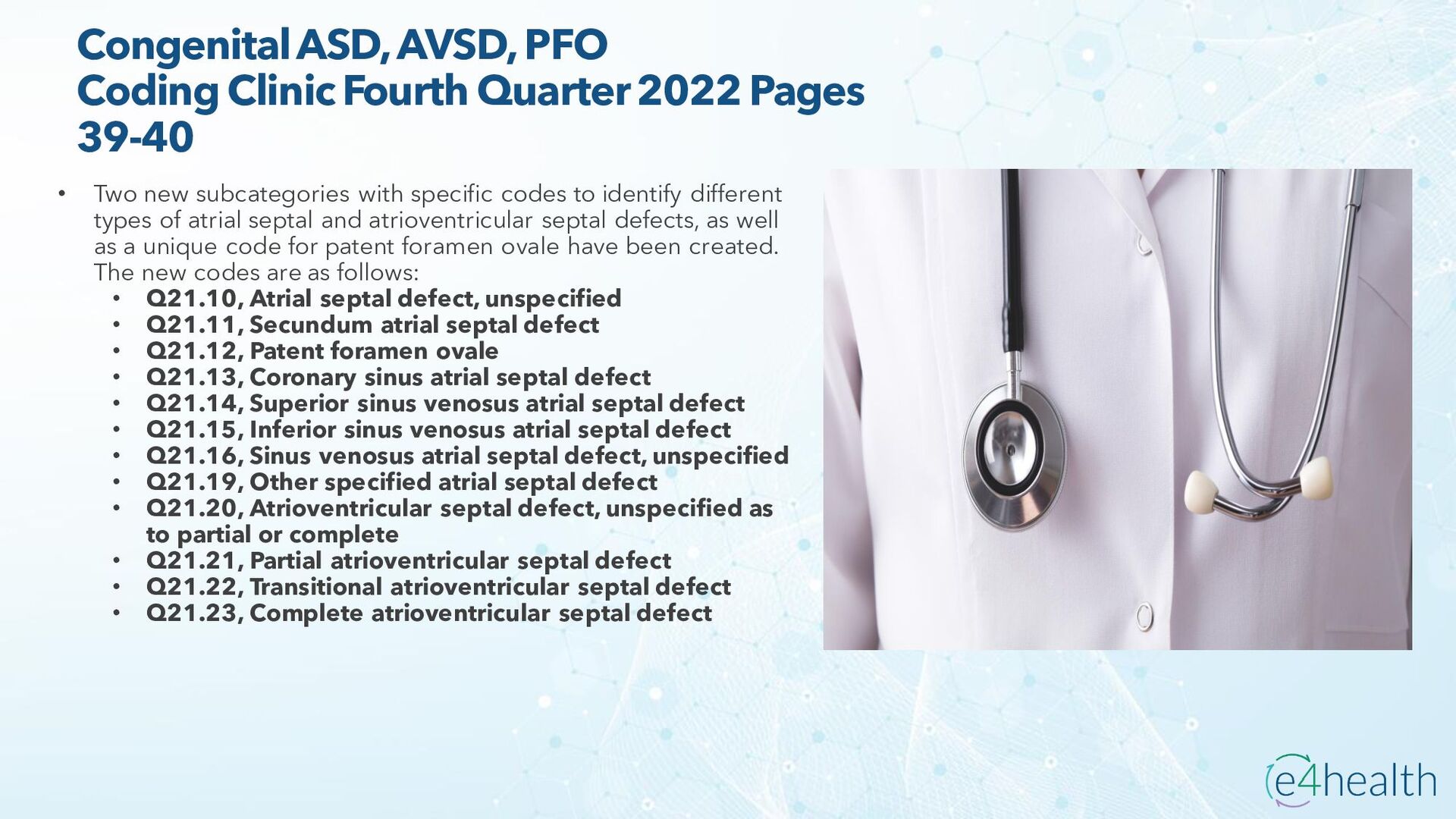
    39-40 • Two new subcategories with specific codes to identify different types of atrial septal and atrioventricular septal defects, as well as a unique code for patent foramen ovale have been created. The new codes are as follows: • Q21.10, Atrial septal defect, unspecified • Q21.11, Secundum atrial septal defect • Q21.12, Patent foramen ovale • Q21.13, Coronary sinus atrial septal defect • Q21.14, Superior sinus venosus atrial septal defect • Q21.15, Inferior sinus venosus atrial septal defect • Q21.16, Sinus venosus atrial septal defect, unspecified • Q21.19, Other specified atrial septal defect • Q21.20, Atrioventricular septal defect, unspecified as to partial or complete • Q21.21, Partial atrioventricular septal defect • Q21.22, Transitional atrioventricular septal defect • Q21.23, Complete atrioventricular septal defect
  17. Congenital ASD, AVSD, PFO Coding Clinic Fourth Quarter 2022 Pages

    39-40, continued • Atrial septal defect (ASD) and atrioventricular septal defect (AVSD) are common congenital heart anomalies. • An ASD is a hole in the wall (septum) that divides the upper chambers (atria) of the heart. • Conversely, an AVSD involves holes in the wall that divides the right and left chambers (ventricles) of the heart. The AVSD may be partial, involving only the atria or the ventricles, or complete, involving all four chambers. A complete AVSD may also involve incomplete closure of the mitral valve that allows blood to flow back from the left ventricle into the left atrium. An ostium primum atrial septal defect is a partial atrioventricular septal defect. • Previously, ASD and patent foramen ovale (PFO) were classified to the same code. However, classifying two different heart conditions to the same code was problematic. For surveillance purposes, an ASD is considered a major malformation, whereas a PFO is a normal variant in the newborn period, which typically closes during infancy. • These new codes will help to differentiate these heart anomalies, improve data quality for surveillance and research purposes, and possibly advance the care of these patients.
  18. Newborn Exposure to COVID-19 Coding Clinic Second Quarter 2022 Page

    28 • Question: A patient who had contracted COVID-19 infection during the second trimester of pregnancy delivered a healthy newborn at term. • Would code Z20.822, Contact with and (suspected) exposure to COVID-19, be assigned to identify the newborn's exposure to COVID-19? • Answer: Do not assign code Z20.822, Contact with and (suspected) exposure to COVID-19, since the provider's documentation does not indicate the infant was affected (e.g., small for gestational age) by the mother's COVID-19 infection and the criteria for secondary diagnosis has not been met. • The Official Guidelines for Coding and Reporting general perinatal rules (16.a.6.) state, "All clinically significant conditions noted on routine newborn examination should be coded. A condition is clinically significant if it requires: clinical evaluation, or therapeutic treatment, or diagnostic procedures, or extended length of hospital stay, or increased nursing care and/or monitoring, or has implications for future health care needs."
  19. Newborn Tight Nuchal Cord Coding Clinic First Quarter 2022 Page

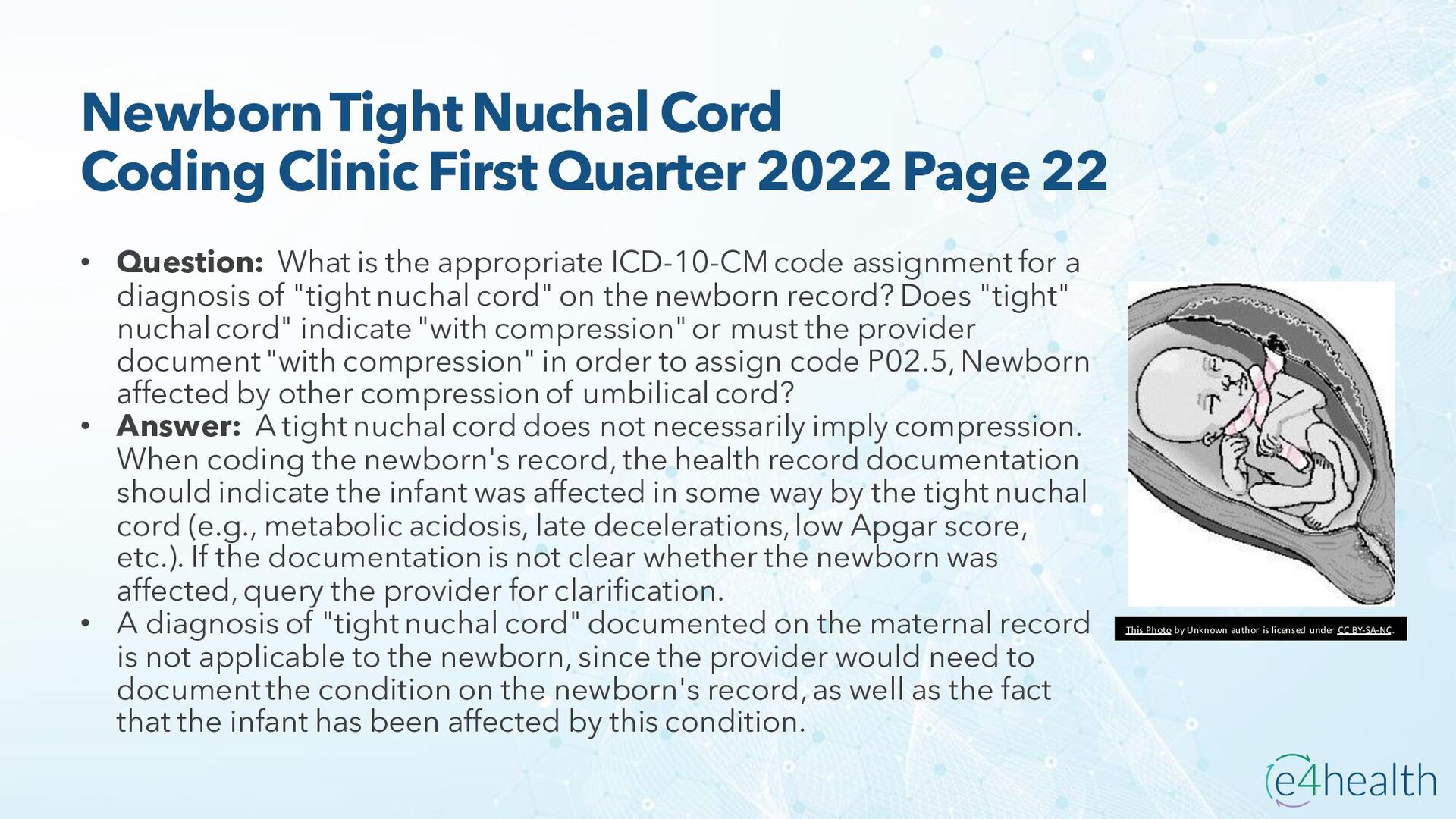
    22 • Question: What is the appropriate ICD-10-CM code assignment for a diagnosis of "tight nuchal cord" on the newborn record? Does "tight" nuchal cord" indicate "with compression" or must the provider document "with compression" in order to assign code P02.5, Newborn affected by other compression of umbilical cord? • Answer: A tight nuchal cord does not necessarily imply compression. When coding the newborn's record, the health record documentation should indicate the infant was affected in some way by the tight nuchal cord (e.g., metabolic acidosis, late decelerations, low Apgar score, etc.). If the documentation is not clear whether the newborn was affected, query the provider for clarification. • A diagnosis of "tight nuchal cord" documented on the maternal record is not applicable to the newborn, since the provider would need to document the condition on the newborn's record, as well as the fact that the infant has been affected by this condition. This Photo by Unknown author is licensed under CC BY-SA-NC.
  20. Newborn Affected by Maternal Group B Strep Coding Clinic Fourth

    Quarter 2021 Page 23 • A new code P00.82, Newborn affected by (positive) maternal group B streptococcus (GBS) colonization, has been created. • Group B streptococcus (GBS), also known as Group B Strep, is a type of bacterial infection that can be found in a pregnant patient's genital area. Typically, GBS infection does not cause problems in healthy patients before pregnancy. However, GBS can cause serious illness in the newborn, such as sepsis, pneumonia, meningitis, or seizures. Approximately one in four pregnant patients (25%) have GBS in their rectum or vagina. During pregnancy, the mother can pass GBS to the baby or the infant may be infected from the mother's genital tract during birth. • Providers routinely test the newborn for GBS as part of the infant's prenatal care. However, not every infant who is born to a mother who tests positive for GBS will become ill. • Newborns are at increased risk for GBS infection if their mother tests positive for the bacteria during pregnancy. GBS infection is a leading cause of meningitis and bloodstream infections in a newborn's first three months of life. Because of the high risk of morbidity and mortality for infants who are born to GBS positive mothers, the American Academy of Pediatrics (AAP) requested the creation of this code to capture important clinical information and to allow for adequate tracking and monitoring. • Question: A newborn, who had a normal vaginal delivery, is diagnosed with group B streptococcus colonization and is administered antibiotics prophylactically. What code should be assigned for this condition? • Answer: Assign code Z38.00, Single liveborn infant, delivered vaginally, as the principal diagnosis. Assign code P00.82 Newborn affected by (positive) maternal group B streptococcus (GBS) colonization, for GBS colonization.
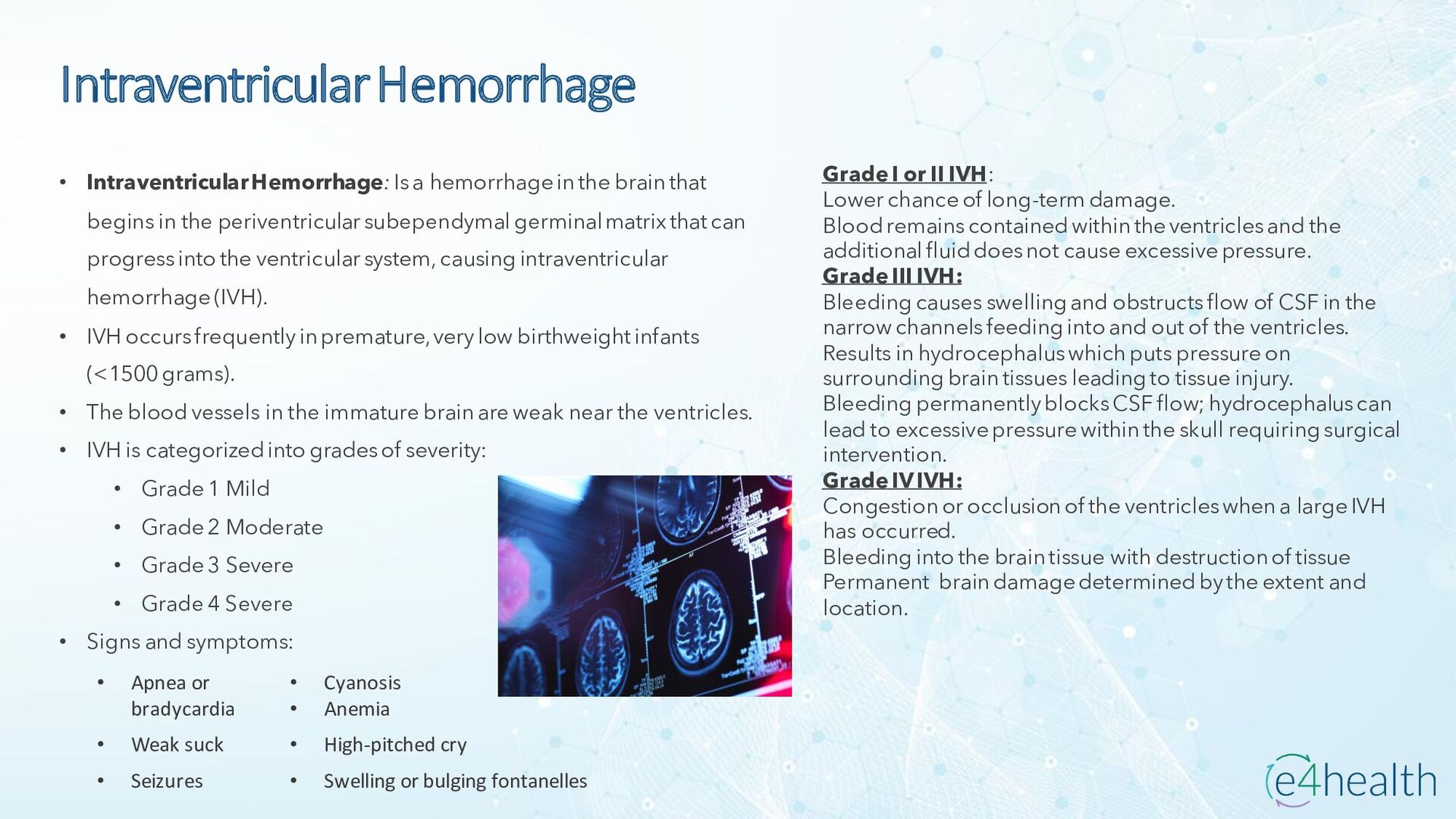
  21. Intraventricular Hemorrhage • Intraventricular Hemorrhage: Is a hemorrhage in the

    brain that begins in the periventricular subependymal germinal matrix that can progress into the ventricular system, causing intraventricular hemorrhage (IVH). • IVH occurs frequently in premature, very low birthweight infants (<1500 grams). • The blood vessels in the immature brain are weak near the ventricles. • IVH is categorized into grades of severity: • Grade 1 Mild • Grade 2 Moderate • Grade 3 Severe • Grade 4 Severe • Signs and symptoms: Grade I or II IVH: Lower chance of long-term damage. Blood remains contained within the ventricles and the additional fluid does not cause excessive pressure. Grade III IVH: Bleeding causes swelling and obstructs flow of CSF in the narrow channels feeding into and out of the ventricles. Results in hydrocephalus which puts pressure on surrounding brain tissues leading to tissue injury. Bleeding permanently blocks CSF flow; hydrocephalus can lead to excessive pressure within the skull requiring surgical intervention. Grade IV IVH: Congestion or occlusion of the ventricles when a large IVH has occurred. Bleeding into the brain tissue with destruction of tissue Permanent brain damage determined by the extent and location. • Apnea or bradycardia • Cyanosis • Anemia • Weak suck • High-pitched cry • Seizures • Swelling or bulging fontanelles
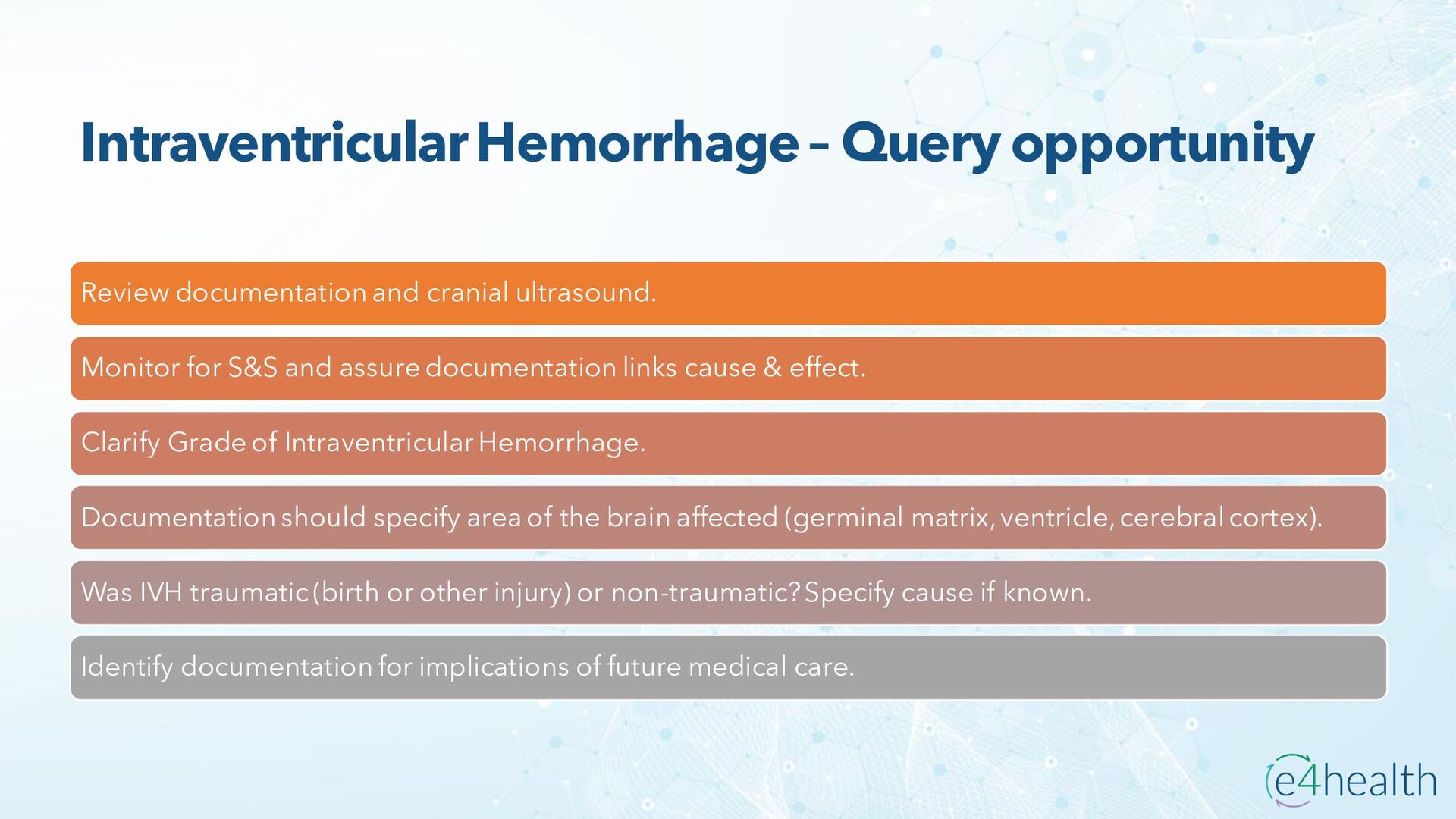
  22. Intraventricular Hemorrhage – Query opportunity Review documentation and cranial ultrasound.

    Monitor for S&S and assure documentation links cause & effect. Clarify Grade of Intraventricular Hemorrhage. Documentation should specify area of the brain affected (germinal matrix, ventricle, cerebral cortex). Was IVH traumatic (birth or other injury) or non-traumatic? Specify cause if known. Identify documentation for implications of future medical care.
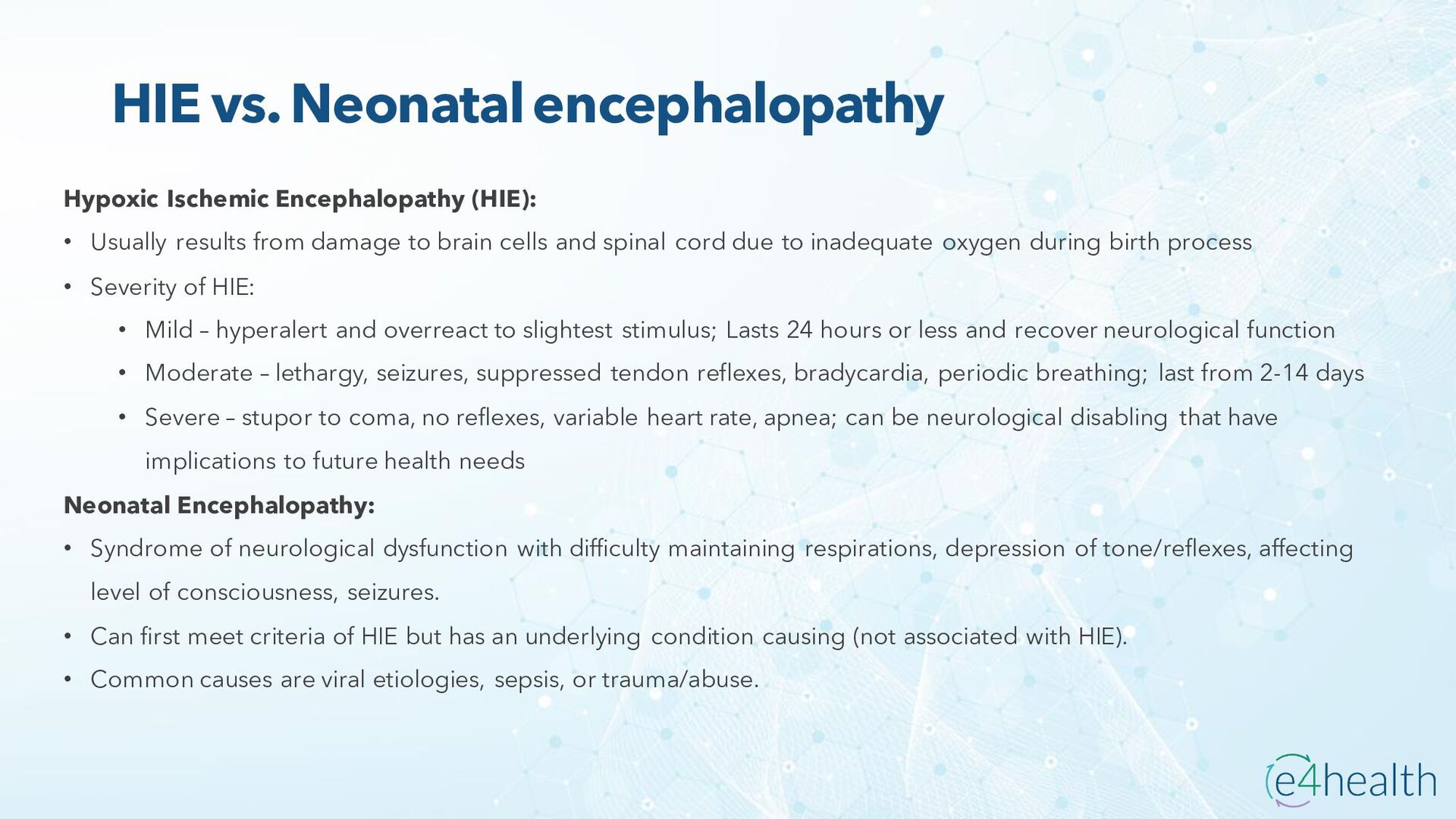
  23. HIE vs. Neonatal encephalopathy Hypoxic Ischemic Encephalopathy (HIE): • Usually

    results from damage to brain cells and spinal cord due to inadequate oxygen during birth process • Severity of HIE: • Mild – hyperalert and overreact to slightest stimulus; Lasts 24 hours or less and recover neurological function • Moderate – lethargy, seizures, suppressed tendon reflexes, bradycardia, periodic breathing; last from 2-14 days • Severe – stupor to coma, no reflexes, variable heart rate, apnea; can be neurological disabling that have implications to future health needs Neonatal Encephalopathy: • Syndrome of neurological dysfunction with difficulty maintaining respirations, depression of tone/reflexes, affecting level of consciousness, seizures. • Can first meet criteria of HIE but has an underlying condition causing (not associated with HIE). • Common causes are viral etiologies, sepsis, or trauma/abuse.
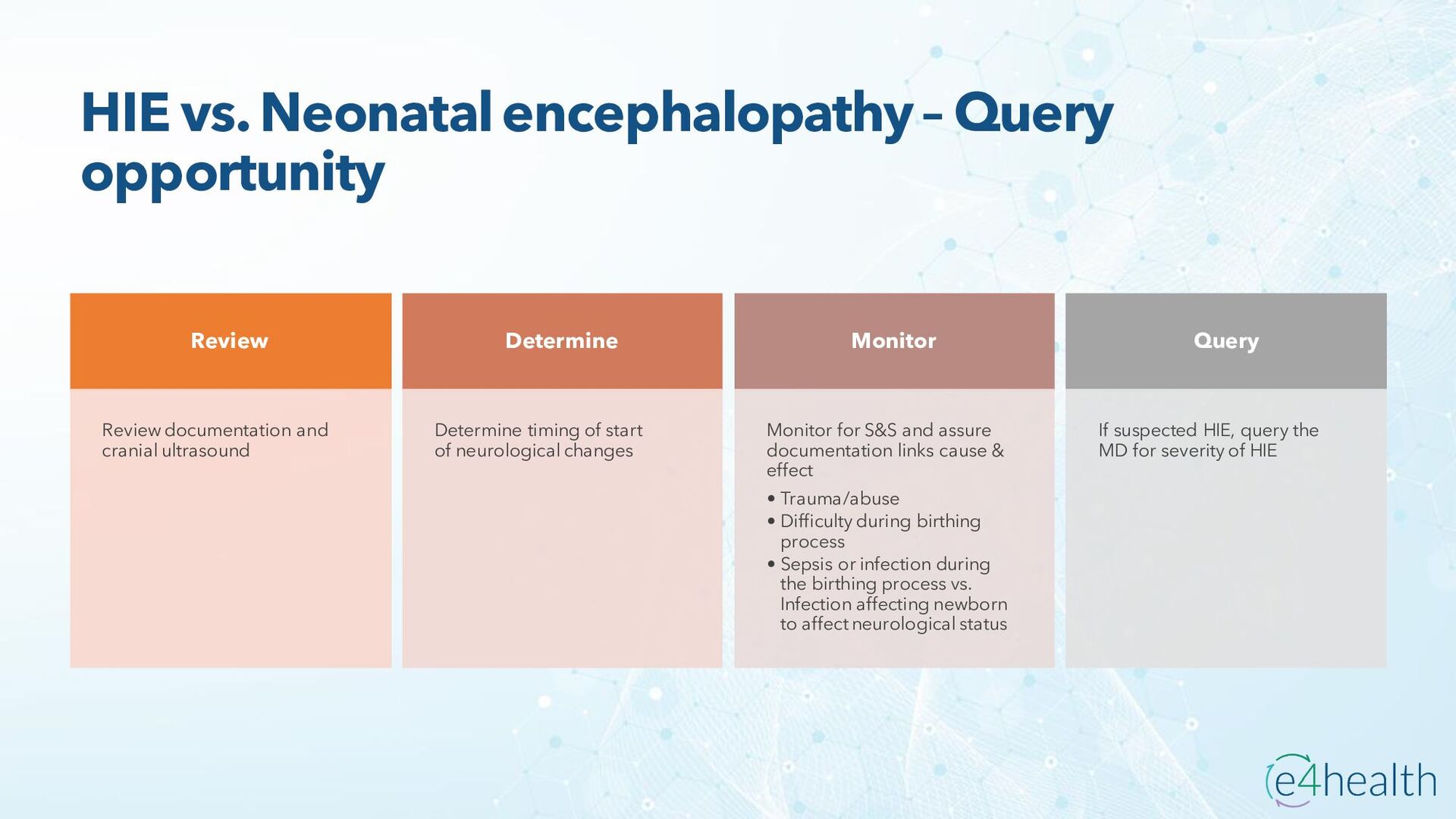
  24. HIE vs. Neonatal encephalopathy – Query opportunity Review Review documentation

    and cranial ultrasound Determine Determine timing of start of neurological changes Monitor Monitor for S&S and assure documentation links cause & effect • Trauma/abuse • Difficulty during birthing process • Sepsis or infection during the birthing process vs. Infection affecting newborn to affect neurological status Query If suspected HIE, query the MD for severity of HIE
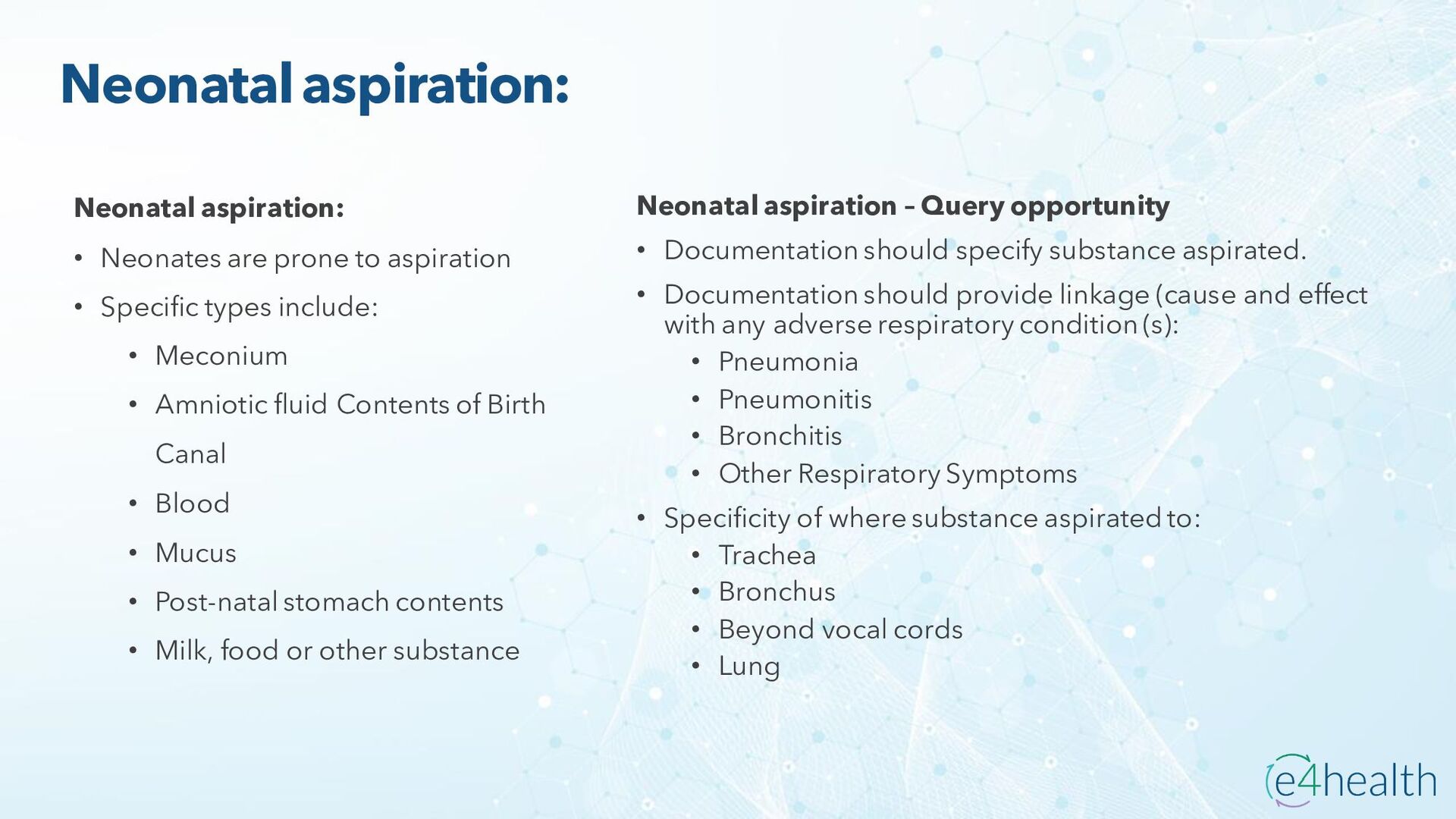
  25. Neonatal aspiration: Neonatal aspiration: • Neonates are prone to aspiration

    • Specific types include: • Meconium • Amniotic fluid Contents of Birth Canal • Blood • Mucus • Post-natal stomach contents • Milk, food or other substance Neonatal aspiration – Query opportunity • Documentation should specify substance aspirated. • Documentation should provide linkage (cause and effect with any adverse respiratory condition (s): • Pneumonia • Pneumonitis • Bronchitis • Other Respiratory Symptoms • Specificity of where substance aspirated to: • Trachea • Bronchus • Beyond vocal cords • Lung
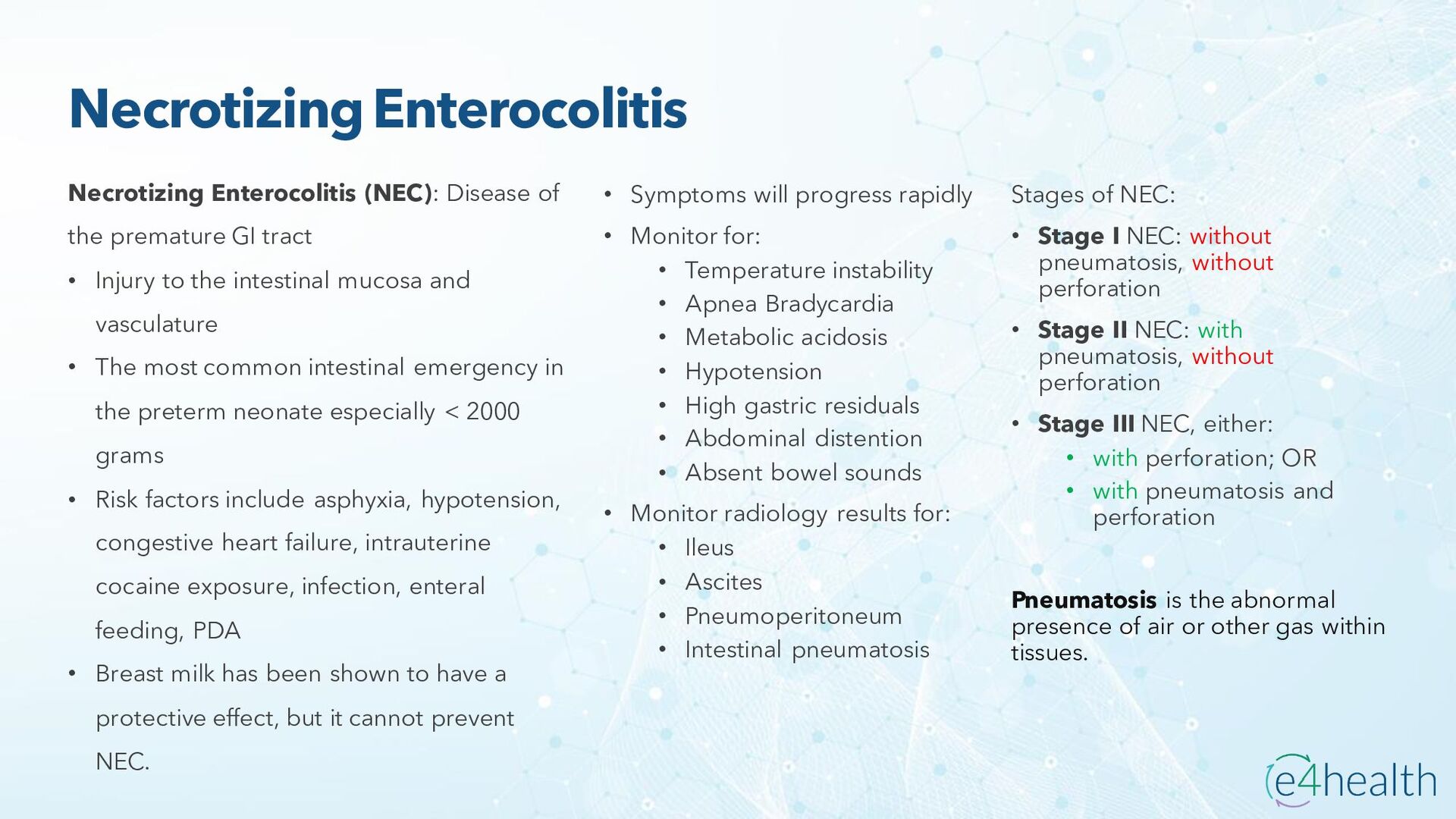
  26. Necrotizing Enterocolitis Necrotizing Enterocolitis (NEC): Disease of the premature GI

    tract • Injury to the intestinal mucosa and vasculature • The most common intestinal emergency in the preterm neonate especially < 2000 grams • Risk factors include asphyxia, hypotension, congestive heart failure, intrauterine cocaine exposure, infection, enteral feeding, PDA • Breast milk has been shown to have a protective effect, but it cannot prevent NEC. • Symptoms will progress rapidly • Monitor for: • Temperature instability • Apnea Bradycardia • Metabolic acidosis • Hypotension • High gastric residuals • Abdominal distention • Absent bowel sounds • Monitor radiology results for: • Ileus • Ascites • Pneumoperitoneum • Intestinal pneumatosis Stages of NEC: • Stage I NEC: without pneumatosis, without perforation • Stage II NEC: with pneumatosis, without perforation • Stage III NEC, either: • with perforation; OR • with pneumatosis and perforation Pneumatosis is the abnormal presence of air or other gas within tissues.
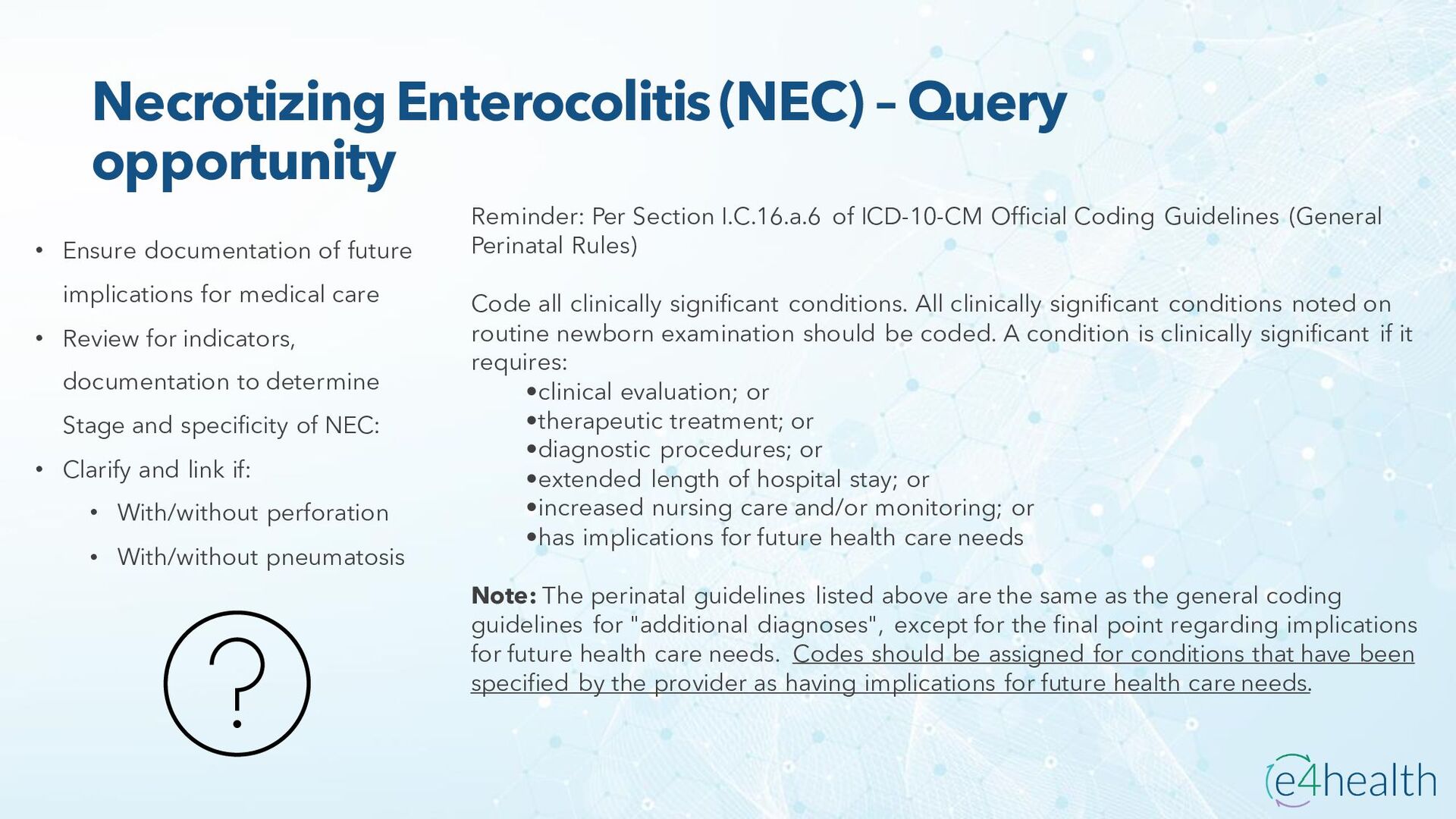
  27. Necrotizing Enterocolitis (NEC) – Query opportunity • Ensure documentation of

    future implications for medical care • Review for indicators, documentation to determine Stage and specificity of NEC: • Clarify and link if: • With/without perforation • With/without pneumatosis Reminder: Per Section I.C.16.a.6 of ICD-10-CM Official Coding Guidelines (General Perinatal Rules) Code all clinically significant conditions. All clinically significant conditions noted on routine newborn examination should be coded. A condition is clinically significant if it requires: •clinical evaluation; or •therapeutic treatment; or •diagnostic procedures; or •extended length of hospital stay; or •increased nursing care and/or monitoring; or •has implications for future health care needs Note: The perinatal guidelines listed above are the same as the general coding guidelines for "additional diagnoses", except for the final point regarding implications for future health care needs. Codes should be assigned for conditions that have been specified by the provider as having implications for future health care needs.
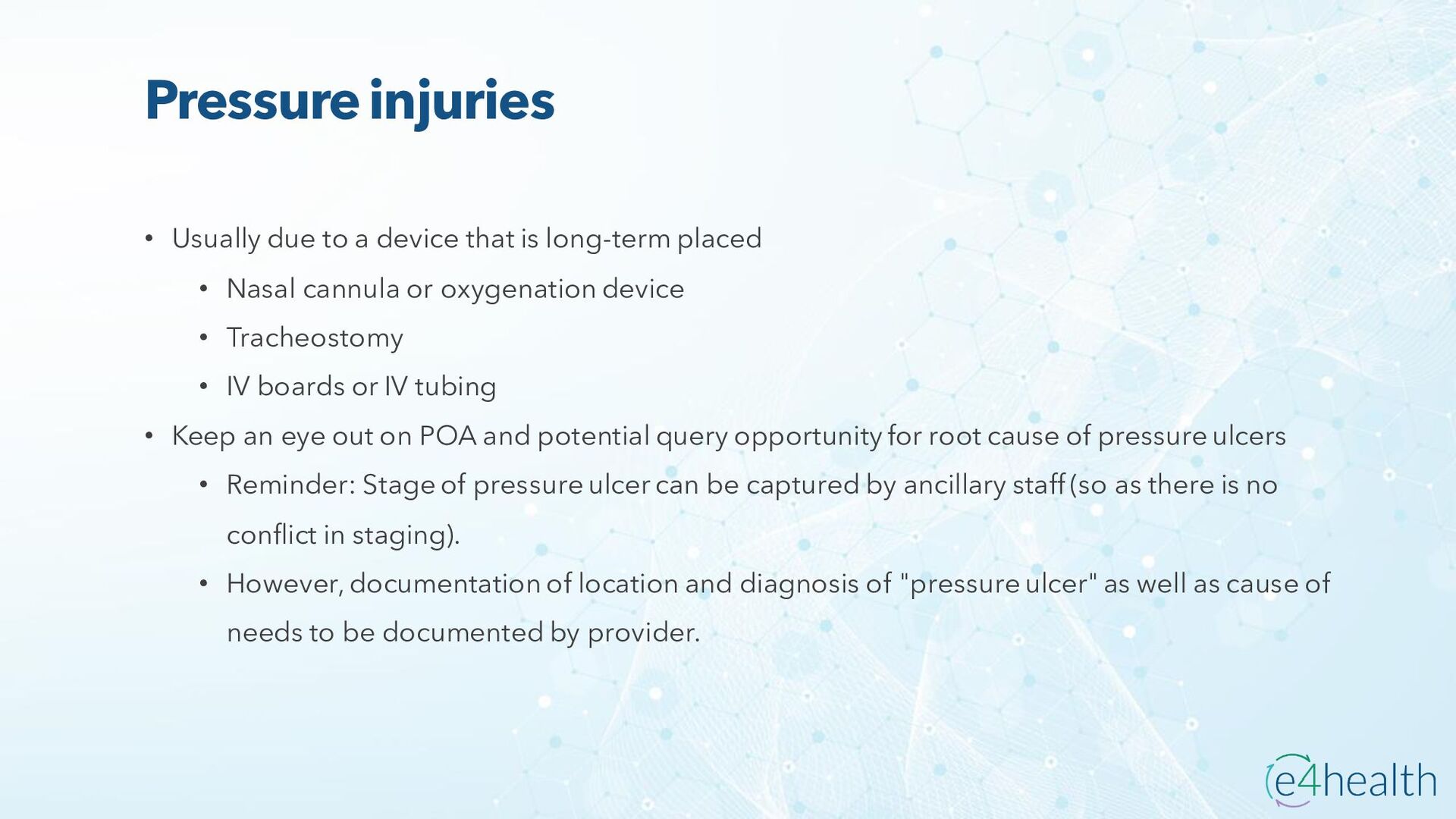
  28. Pressure injuries • Usually due to a device that is

    long-term placed • Nasal cannula or oxygenation device • Tracheostomy • IV boards or IV tubing • Keep an eye out on POA and potential query opportunity for root cause of pressure ulcers • Reminder: Stage of pressure ulcer can be captured by ancillary staff (so as there is no conflict in staging). • However, documentation of location and diagnosis of "pressure ulcer" as well as cause of needs to be documented by provider.
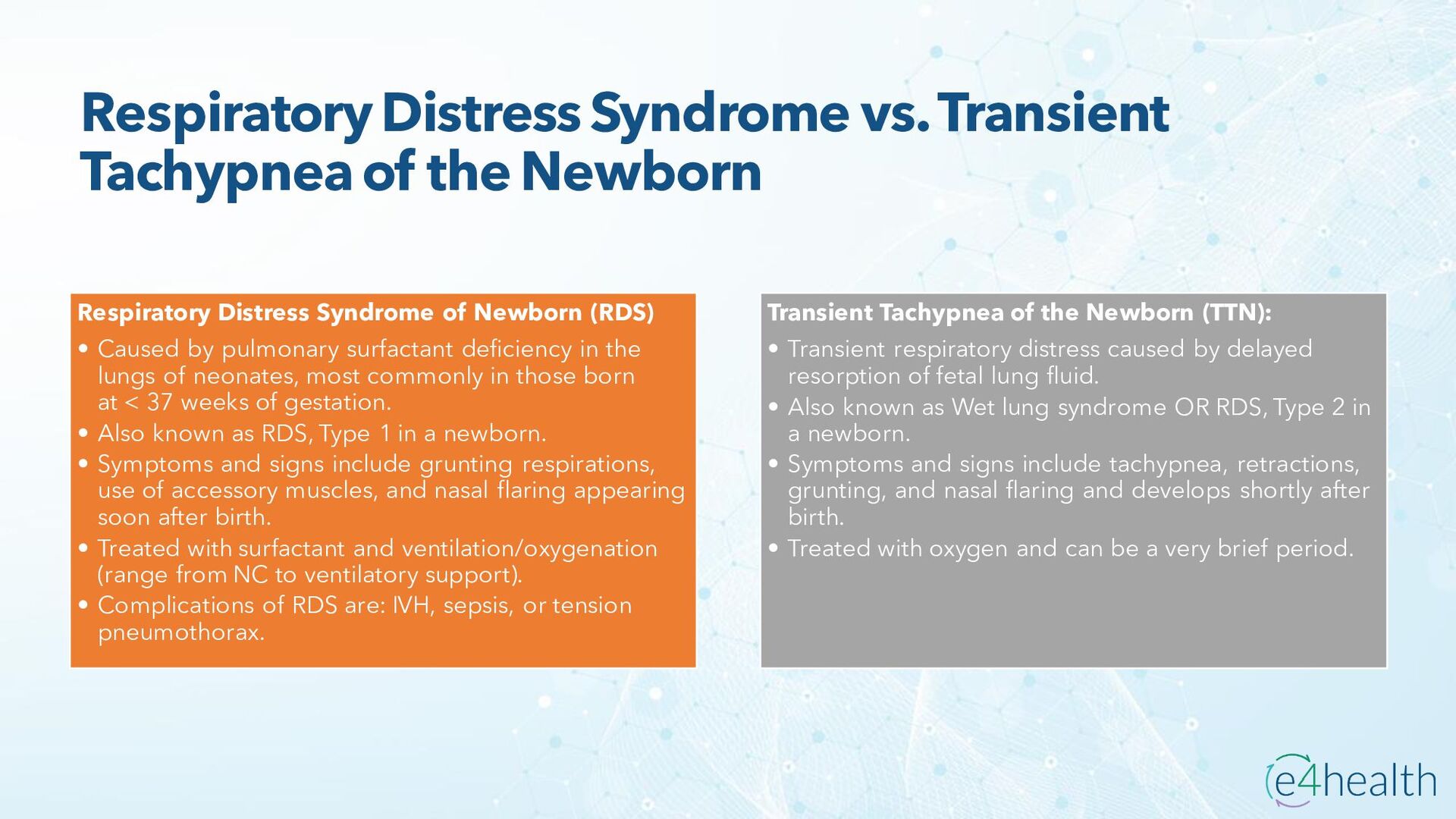
  29. Respiratory Distress Syndrome vs. Transient Tachypnea of the Newborn Respiratory

    Distress Syndrome of Newborn (RDS) • Caused by pulmonary surfactant deficiency in the lungs of neonates, most commonly in those born at < 37 weeks of gestation. • Also known as RDS, Type 1 in a newborn. • Symptoms and signs include grunting respirations, use of accessory muscles, and nasal flaring appearing soon after birth. • Treated with surfactant and ventilation/oxygenation (range from NC to ventilatory support). • Complications of RDS are: IVH, sepsis, or tension pneumothorax. Transient Tachypnea of the Newborn (TTN): • Transient respiratory distress caused by delayed resorption of fetal lung fluid. • Also known as Wet lung syndrome OR RDS, Type 2 in a newborn. • Symptoms and signs include tachypnea, retractions, grunting, and nasal flaring and develops shortly after birth. • Treated with oxygen and can be a very brief period.
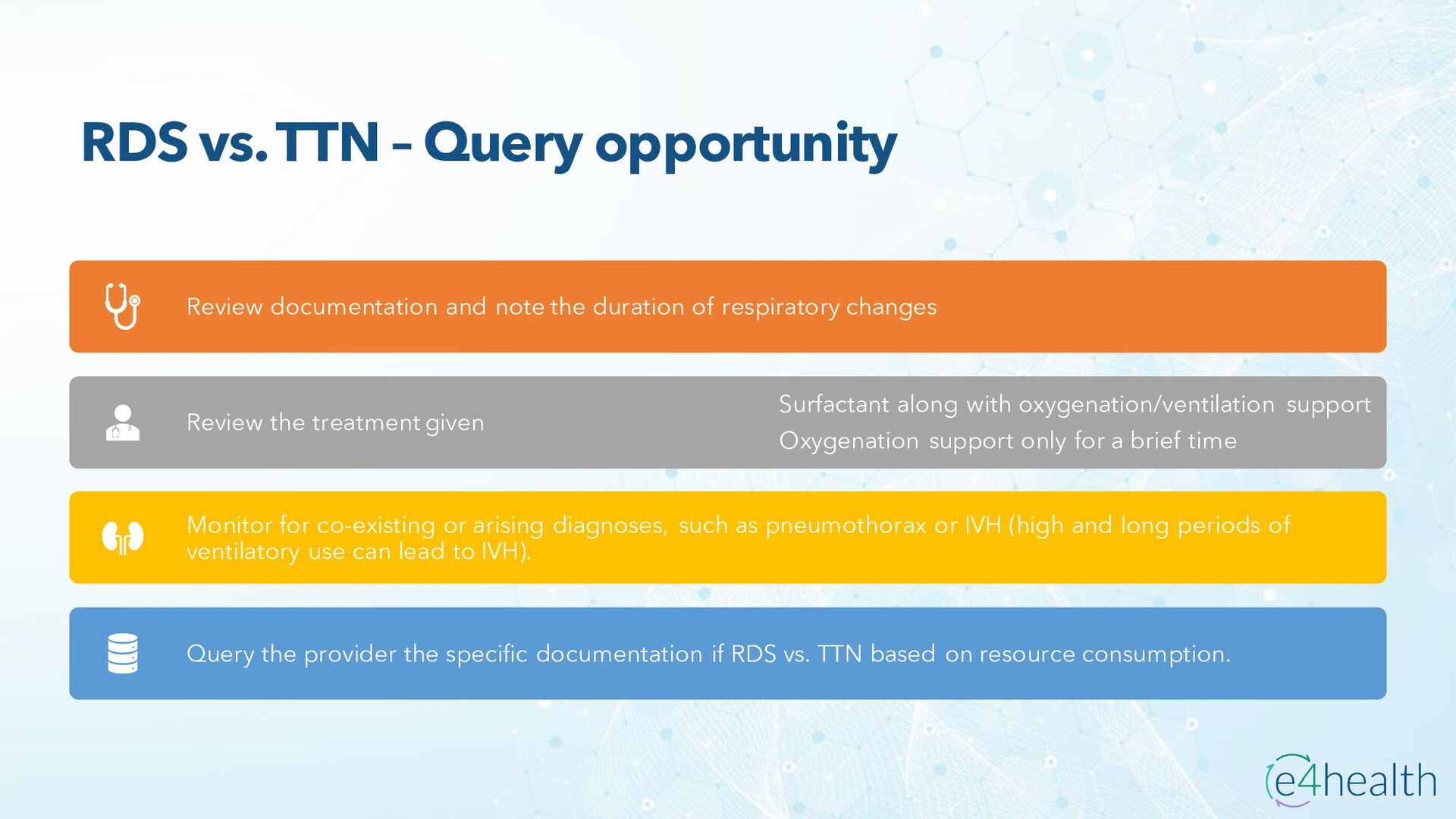
  30. RDS vs. TTN – Query opportunity Review documentation and note

    the duration of respiratory changes Review the treatment given Surfactant along with oxygenation/ventilation support Oxygenation support only for a brief time Monitor for co-existing or arising diagnoses, such as pneumothorax or IVH (high and long periods of ventilatory use can lead to IVH). Query the provider the specific documentation if RDS vs. TTN based on resource consumption.
  31. Congenital Anomalies • Range from a variety of body systems,

    i.e., heart, eye, GI tract, musculoskeletal, etc. • Through the lifespan of a newborn, there may be partial or completed repairs to these congenital anomalies depending on the newborn's status • Many congenital anomalies, although present at birth may not manifest until later in life. In addition, some conditions may not be correctible and can persist. • Provider documentation may state "history of" in these newborns
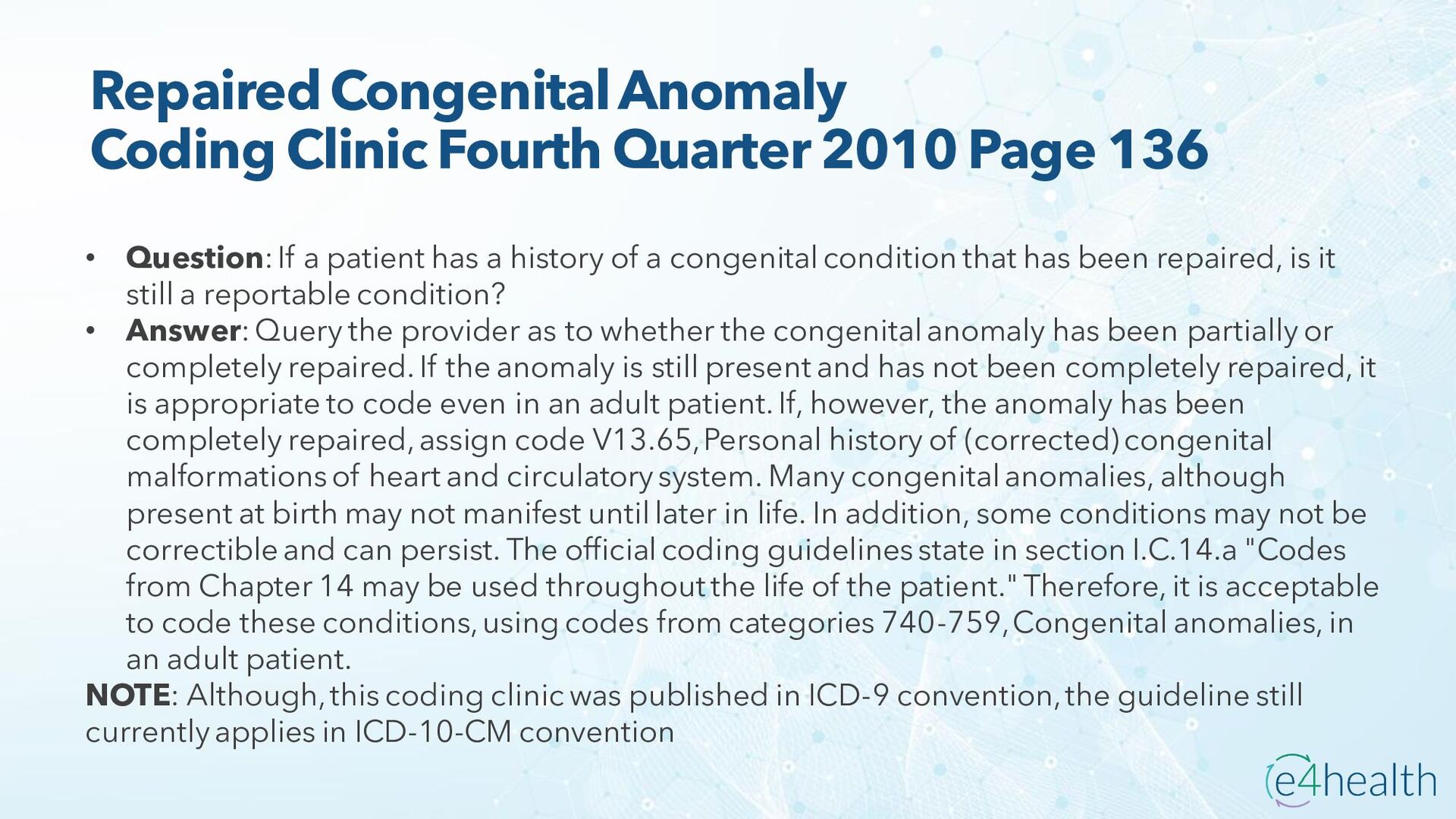
  32. Repaired Congenital Anomaly Coding Clinic Fourth Quarter 2010 Page 136

    • Question:If a patient has a history of a congenital condition that has been repaired, is it still a reportable condition? • Answer:Query the provider as to whether the congenital anomaly has been partially or completely repaired. If the anomaly is still present and has not been completely repaired, it is appropriate to code even in an adult patient. If, however, the anomaly has been completely repaired, assign code V13.65, Personal history of (corrected) congenital malformations of heart and circulatory system. Many congenital anomalies, although present at birth may not manifest until later in life. In addition, some conditions may not be correctible and can persist. The official coding guidelines state in section I.C.14.a "Codes from Chapter 14 may be used throughout the life of the patient." Therefore, it is acceptable to code these conditions, using codes from categories 740-759, Congenital anomalies, in an adult patient. NOTE: Although, this coding clinic was published in ICD-9 convention, the guideline still currently applies in ICD-10-CM convention

  33. Congenital Anomalies – Query opportunity • Review documentation to see

    if the congenital anomaly has received repair • If it has not been completely repaired, it is appropriate to code as a current congenital anomaly • If documentation is unclear, query the provider if the congenital anomaly is a "history of" vs. a current condition • Additionally, review documentation for query opportunities of: • Laterality, if applicable • Complications of repaired congenital anomalies
  34. General Documentation Query opportunities Malnutrition – typically neonates are not

    screened as malnourished •However, with long length of stay from prematurity growth, certain facilities' nutritional department can deem a neonate malnourished after a certain age (usually beyond 6 months). •Watch for documentation in the chart for "failure to thrive" and see if nutrition has seen the patient to meet standards of pediatric malnutrition to query the provider. Respiratory failure – there is no set criteria for providers in deeming neonate respiratory failure •Typically depends on provider's viewpoint and/or if a facility or hospital unit/service line has a clinical over-arching policy on respiratory failure in neonates. •Review documentation for "clues" on respiratory failure and resource consumption: •Hypoxia, cyanosis, apnea and its documentation repetitiveness •Resource consumption of escalating use of oxygenation/ventilation vs. ABG/VBG lab work •Steroid consumption use, escalating respiratory therapist documentation, pulmonary consultation Complications of devices •Newborns, especially pre-mature ones, are susceptible to infection or other complications. •Review documentation to see if devices can be linked to a diagnosis, such as: •Infection due Indwelling foley in a long length of stay newborn •Infection or pressure ulcers due to lines, such as IV tubing, PICC lines, or peripheral lines
  35. Circumcision • One code: 0VTTXZZ Resection of Prepuce, External Approach

    • Do not assign code Z41.2, Encounter for routine and ritual circumcision, during the birth admission for newborns undergoing circumcision. • Circumcision is a routine part of the newborn's hospital care and is captured with the ICD- 10-PCS procedure code. (Coding Clinic Third Quarter 2018 Page 15)
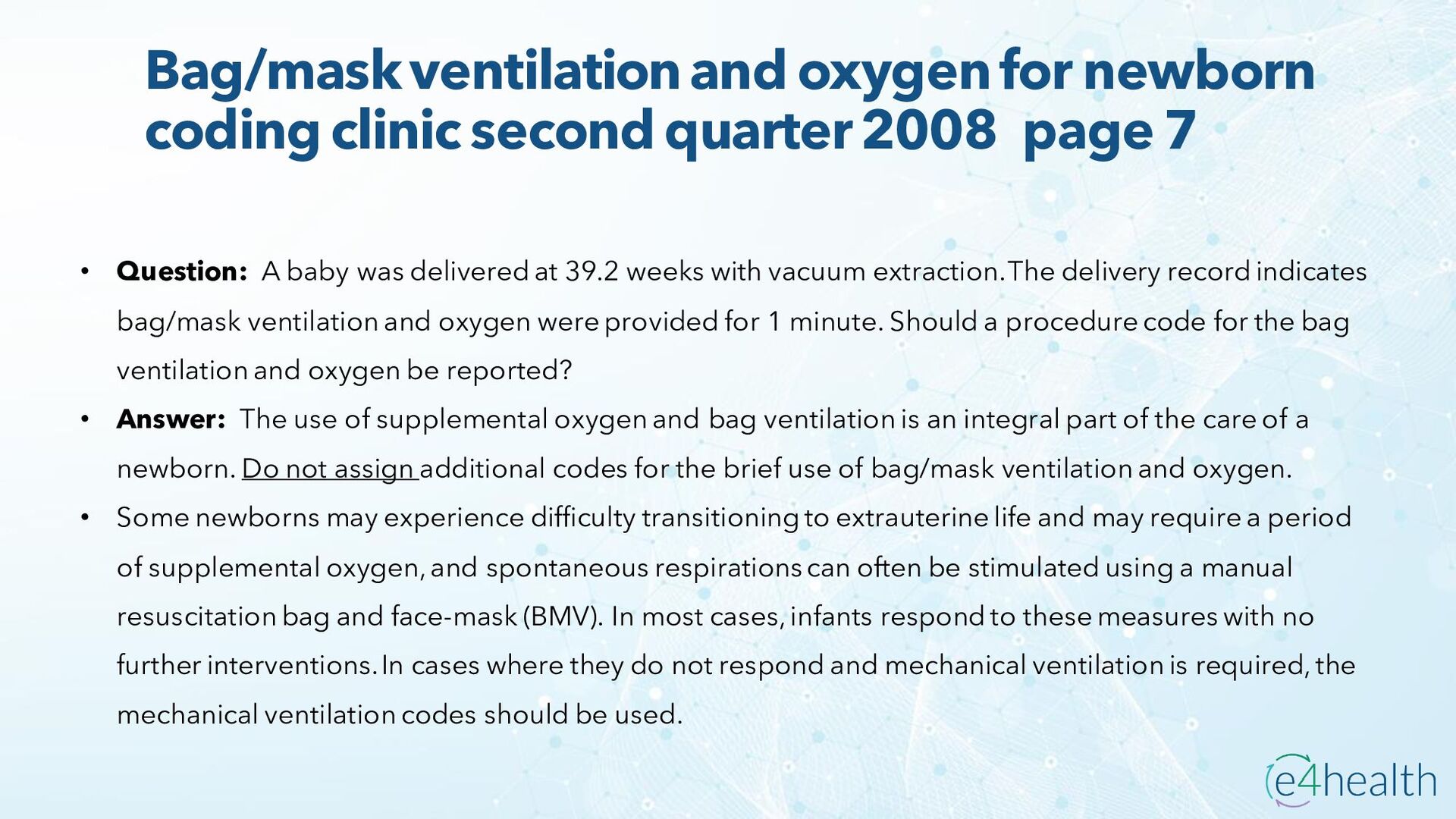
  36. Bag/mask ventilation and oxygen for newborn coding clinic second quarter

    2008 page 7 • Question: A baby was delivered at 39.2 weeks with vacuum extraction. The delivery record indicates bag/mask ventilation and oxygen were provided for 1 minute. Should a procedure code for the bag ventilation and oxygen be reported? • Answer: The use of supplemental oxygen and bag ventilation is an integral part of the care of a newborn. Do not assign additional codes for the brief use of bag/mask ventilation and oxygen. • Some newborns may experience difficulty transitioning to extrauterine life and may require a period of supplemental oxygen, and spontaneous respirations can often be stimulated using a manual resuscitation bag and face-mask (BMV). In most cases, infants respond to these measures with no further interventions. In cases where they do not respond and mechanical ventilation is required, the mechanical ventilation codes should be used.
  37. References • ICD-10-CM Guidelines April 1, 2023, FY23 (cms.gov) •

    Respiratory Distress Syndrome in Neonates - Pediatrics - Merck Manuals Professional Edition • Necrotizing Enterocolitis (NEC) | NICHD - Eunice Kennedy Shriver National Institute of Child Health and Human Development (nih.gov) • Birth Injuries - Pediatrics - Merck Manuals Professional Edition • Gunn AJ, Thoresen M. Neonatal encephalopathy and hypoxic-ischemic encephalopathy. Handb Clin Neurol. 2019;162:217-237. doi: 10.1016/B978-0-444-64029-1.00010-2. PMID: 31324312. • AHA ICD-10-CM and ICD-10-PCS Coding Handbook • ICD-10-PCS: An Applied Approach 2023 • Cengage: 3-2-1 CODE IT!