Upgrade to PRO for Only $50/Year—Limited-Time Offer! 🔥

FY 2024: MDC 17 - Neoplasms

Avatar for e4health e4health PRO
April 04, 2024
160

FY 2024: MDC 17 - Neoplasms

Avatar for e4health

e4health PRO

April 04, 2024
Tweet

Transcript

  1. H I M | C O D I N G

    & C D I | H E A LT H I T | R E V C Y C L E Empowering Better Health e4health tackles healthcare’s data, quality and revenue challenges empowering your providers to focus on better care.
  2. Objectives • Review MDC 17- Myeloproliferative diseases and disorders, poorly

    differentiated neoplasms with a focus on selected diagnoses and procedures • Learner will acquire a basic understanding of the diagnoses and procedures included in MDC-17 • Discuss Query opportunities in MDC-17 • Review coding clinics relevant to the chosen topics in each DRG
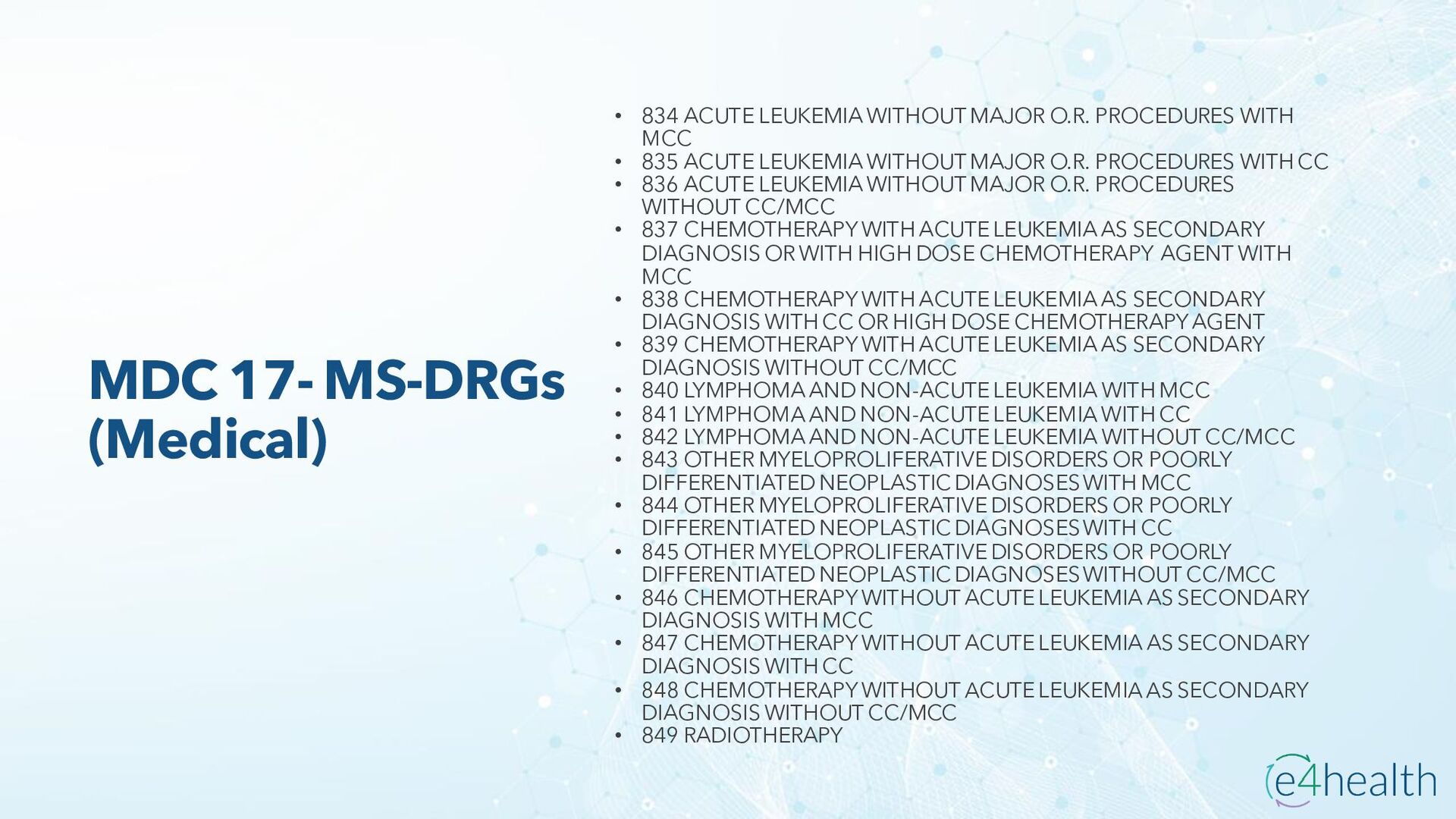
  3. MDC 17- MS-DRGs (Medical) • 834 ACUTE LEUKEMIA WITHOUT MAJOR

    O.R. PROCEDURES WITH MCC • 835 ACUTE LEUKEMIA WITHOUT MAJOR O.R. PROCEDURES WITH CC • 836 ACUTE LEUKEMIA WITHOUT MAJOR O.R. PROCEDURES WITHOUT CC/MCC • 837 CHEMOTHERAPY WITH ACUTE LEUKEMIA AS SECONDARY DIAGNOSIS OR WITH HIGH DOSE CHEMOTHERAPY AGENT WITH MCC • 838 CHEMOTHERAPY WITH ACUTE LEUKEMIA AS SECONDARY DIAGNOSIS WITH CC OR HIGH DOSE CHEMOTHERAPY AGENT • 839 CHEMOTHERAPY WITH ACUTE LEUKEMIA AS SECONDARY DIAGNOSIS WITHOUT CC/MCC • 840 LYMPHOMA AND NON-ACUTE LEUKEMIA WITH MCC • 841 LYMPHOMA AND NON-ACUTE LEUKEMIA WITH CC • 842 LYMPHOMA AND NON-ACUTE LEUKEMIA WITHOUT CC/MCC • 843 OTHER MYELOPROLIFERATIVE DISORDERS OR POORLY DIFFERENTIATED NEOPLASTIC DIAGNOSES WITH MCC • 844 OTHER MYELOPROLIFERATIVE DISORDERS OR POORLY DIFFERENTIATED NEOPLASTIC DIAGNOSES WITH CC • 845 OTHER MYELOPROLIFERATIVE DISORDERS OR POORLY DIFFERENTIATED NEOPLASTIC DIAGNOSES WITHOUT CC/MCC • 846 CHEMOTHERAPY WITHOUT ACUTE LEUKEMIA AS SECONDARY DIAGNOSIS WITH MCC • 847 CHEMOTHERAPY WITHOUT ACUTE LEUKEMIA AS SECONDARY DIAGNOSIS WITH CC • 848 CHEMOTHERAPY WITHOUT ACUTE LEUKEMIA AS SECONDARY DIAGNOSIS WITHOUT CC/MCC • 849 RADIOTHERAPY
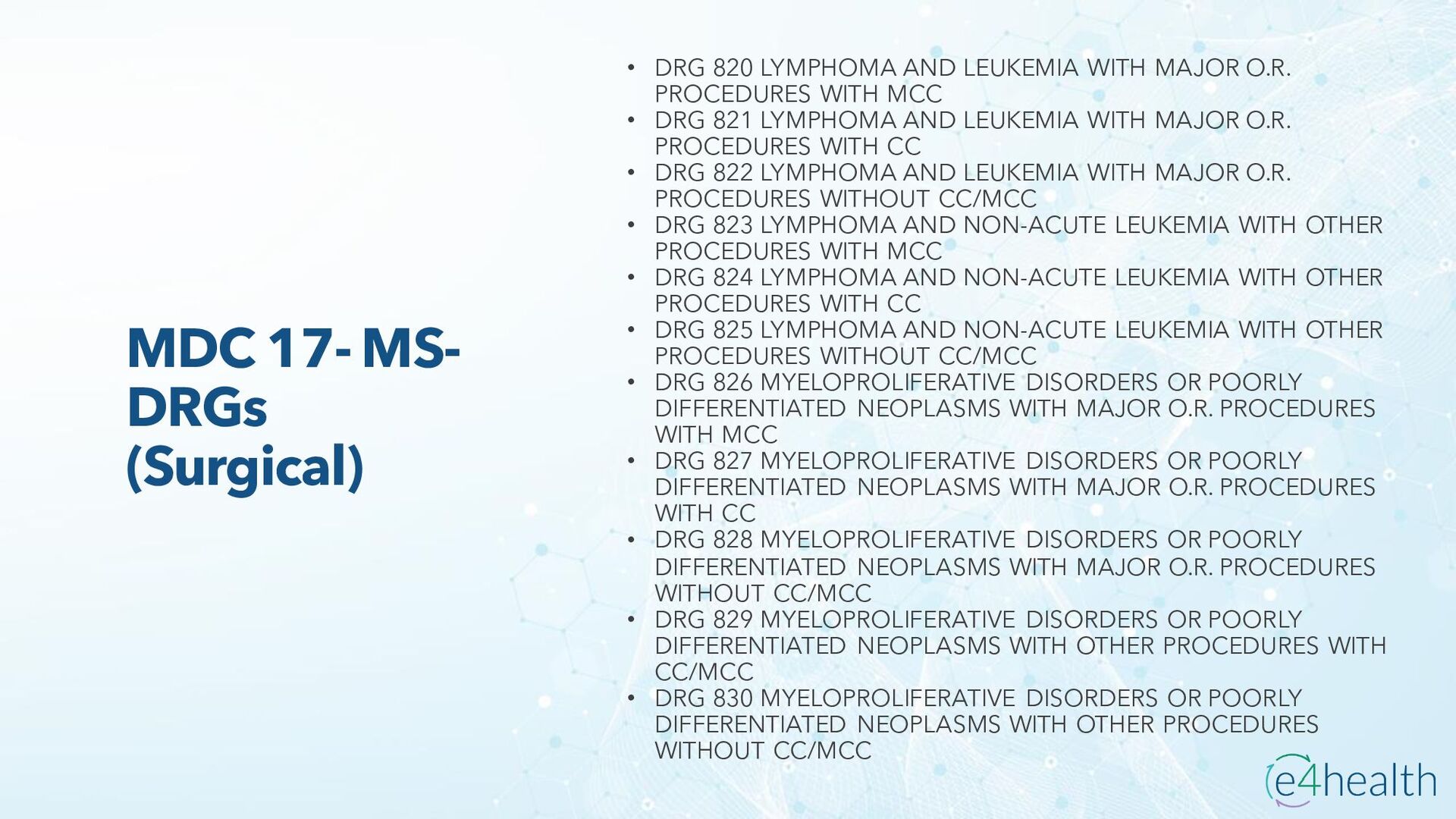
  4. MDC 17- MS- DRGs (Surgical) • DRG 820 LYMPHOMA AND

    LEUKEMIA WITH MAJOR O.R. PROCEDURES WITH MCC • DRG 821 LYMPHOMA AND LEUKEMIA WITH MAJOR O.R. PROCEDURES WITH CC • DRG 822 LYMPHOMA AND LEUKEMIA WITH MAJOR O.R. PROCEDURES WITHOUT CC/MCC • DRG 823 LYMPHOMA AND NON-ACUTE LEUKEMIA WITH OTHER PROCEDURES WITH MCC • DRG 824 LYMPHOMA AND NON-ACUTE LEUKEMIA WITH OTHER PROCEDURES WITH CC • DRG 825 LYMPHOMA AND NON-ACUTE LEUKEMIA WITH OTHER PROCEDURES WITHOUT CC/MCC • DRG 826 MYELOPROLIFERATIVE DISORDERS OR POORLY DIFFERENTIATED NEOPLASMS WITH MAJOR O.R. PROCEDURES WITH MCC • DRG 827 MYELOPROLIFERATIVE DISORDERS OR POORLY DIFFERENTIATED NEOPLASMS WITH MAJOR O.R. PROCEDURES WITH CC • DRG 828 MYELOPROLIFERATIVE DISORDERS OR POORLY DIFFERENTIATED NEOPLASMS WITH MAJOR O.R. PROCEDURES WITHOUT CC/MCC • DRG 829 MYELOPROLIFERATIVE DISORDERS OR POORLY DIFFERENTIATED NEOPLASMS WITH OTHER PROCEDURES WITH CC/MCC • DRG 830 MYELOPROLIFERATIVE DISORDERS OR POORLY DIFFERENTIATED NEOPLASMS WITH OTHER PROCEDURES WITHOUT CC/MCC
  5. General Guidelines • Certain benign neoplasms, such as prostatic adenomas,

    may be found in the specific body system chapters. • To properly code a neoplasm, it is necessary to determine from the record if the neoplasm is benign, in-situ, malignant, or of uncertain histologic behavior. • If malignant, any secondary (metastatic) sites should also be determined.
  6. General Guidelines • The Neoplasm Table in the Alphabetic Index

    should be referenced first. However, if the histological term is documented, that term should be referenced first, rather than going immediately to the neoplasm table, in order to determine which column in the neoplasm table is appropriate. • A primary malignant neoplasm overlapping two or more contiguous (next to each other) sites should be classified to the subcategory/code .8 (overlapping lesion), unless the combination is specifically indexed elsewhere. • For multiple neoplasms of the same site that are not contiguous, such as tumors in different quadrants of the same breast, codes for each site will be assigned.
  7. General Guidelines (cont’d) • Treatment directed at the malignancy •

    If the treatment is directed at the malignancy, designate the malignancy as the principal diagnosis. • If the admission is for the administration of chemotherapy, immunotherapy or radiation therapy, assign the appropriate Z51 (Encounter for…) as the first-listed or principal diagnosis, and the diagnosis or problem for which the service is being performed as a secondary diagnosis. • Treatment of secondary site • When a patient is admitted because of a primary neoplasm with metastasis and treatment is directed toward the secondary site only, the secondary neoplasm is designated as the principal diagnosis even though the primary malignancy is still present. • Primary malignancy previously excised • When a primary malignancy has been previously excised or eradicated and there is no further treatment directed to that site and there is no evidence of any existing primary malignancy, a code from category Z85, Personal history of malignant neoplasm, should be used to indicate the former site of the malignancy. Any mention of extension, invasion, or metastasis to another site is coded as a secondary malignant neoplasm to that site. The secondary site may be the principal or first-listed with the Z85 code used as a secondary code.
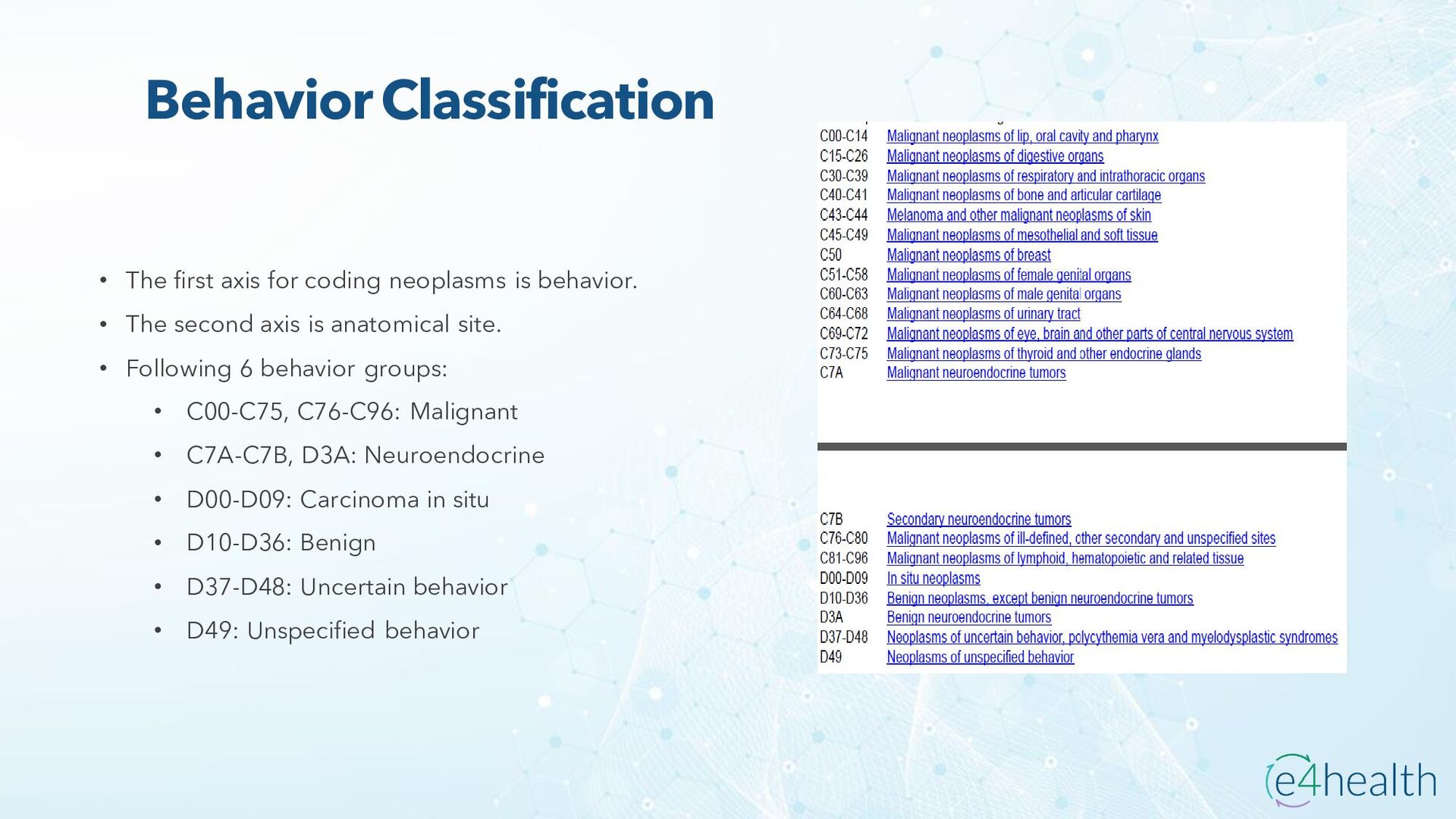
  8. Behavior Classification • The first axis for coding neoplasms is

    behavior. • The second axis is anatomical site. • Following 6 behavior groups: • C00-C75, C76-C96: Malignant • C7A-C7B, D3A: Neuroendocrine • D00-D09: Carcinoma in situ • D10-D36: Benign • D37-D48: Uncertain behavior • D49: Unspecified behavior
  9. Behavior Classification Uncertain behavior – defined as neoplasms whose histologic

    confirmation as to whether the neoplasm is malignant or benign cannot be made. Unspecified behavior – includes terms such as “growth” NOS, neoplasm NOS, new growth NOS, or tumor NOS. The term “mass”, unless otherwise stated, is not to be regarded as a neoplastic growth.
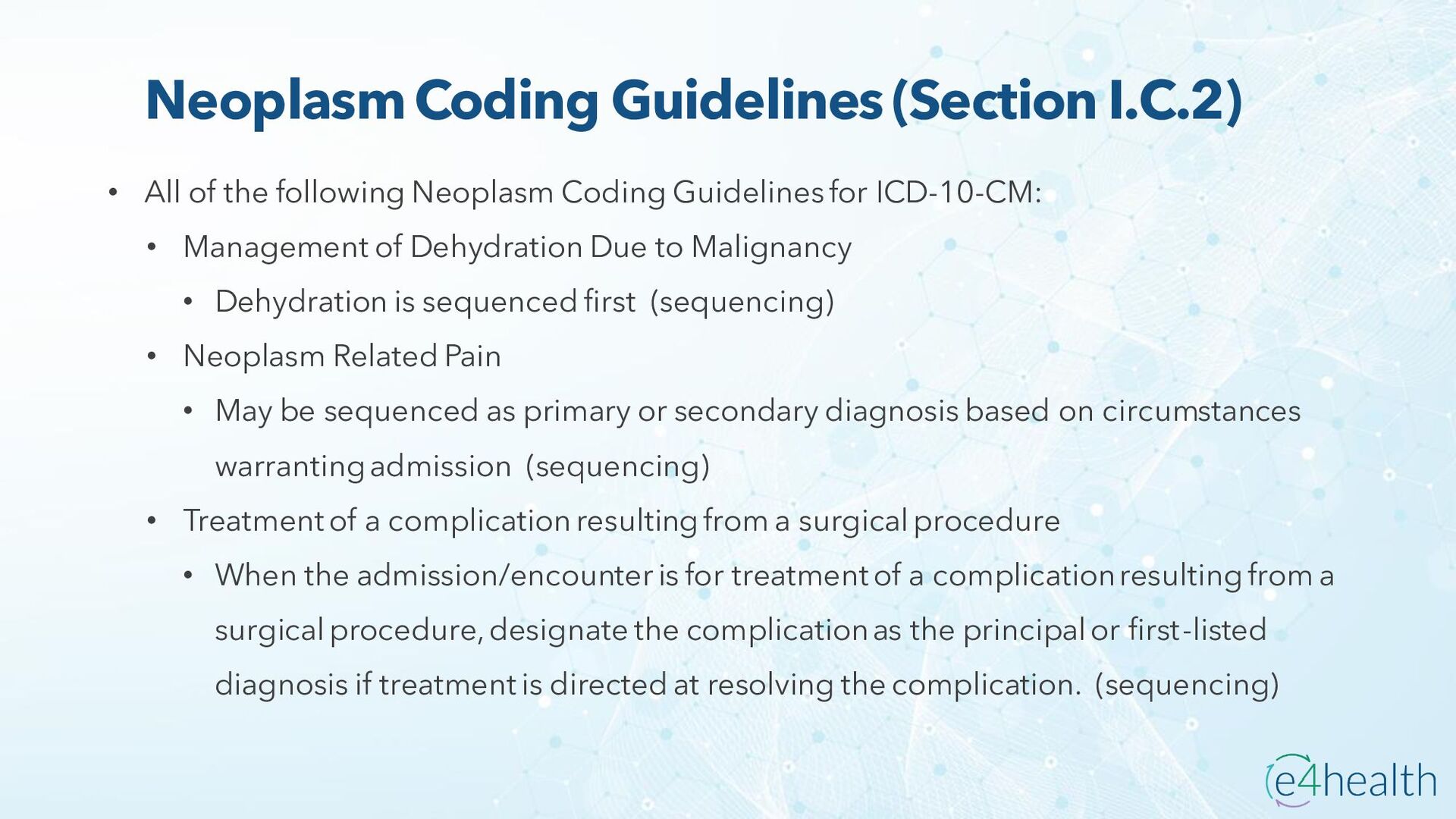
  10. Neoplasm Coding Guidelines (Section I.C.2) • All of the following

    Neoplasm Coding Guidelines for ICD-10-CM: • Management of Dehydration Due to Malignancy • Dehydration is sequenced first (sequencing) • Neoplasm Related Pain • May be sequenced as primary or secondary diagnosis based on circumstances warranting admission (sequencing) • Treatment of a complication resulting from a surgical procedure • When the admission/encounter is for treatment of a complication resulting from a surgical procedure, designate the complication as the principal or first-listed diagnosis if treatment is directed at resolving the complication. (sequencing)
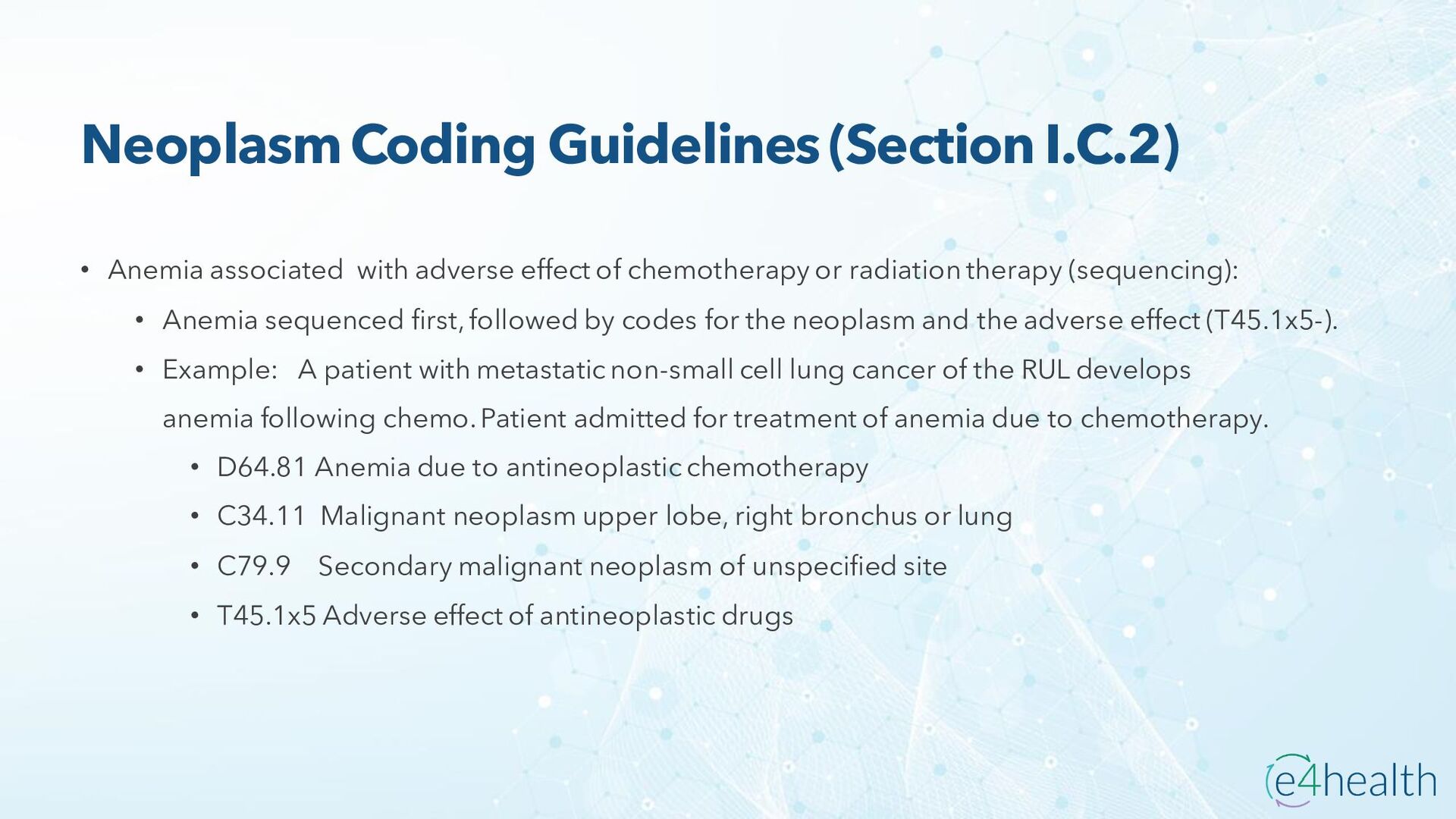
  11. Neoplasm Coding Guidelines(Section I.C.2) • Anemia associated with adverse effect

    of chemotherapy or radiation therapy (sequencing): • Anemia sequenced first, followed by codes for the neoplasm and the adverse effect (T45.1x5-). • Example: A patient with metastatic non-small cell lung cancer of the RUL develops anemia following chemo. Patient admitted for treatment of anemia due to chemotherapy. • D64.81 Anemia due to antineoplastic chemotherapy • C34.11 Malignant neoplasm upper lobe, right bronchus or lung • C79.9 Secondary malignant neoplasm of unspecified site • T45.1x5 Adverse effect of antineoplastic drugs
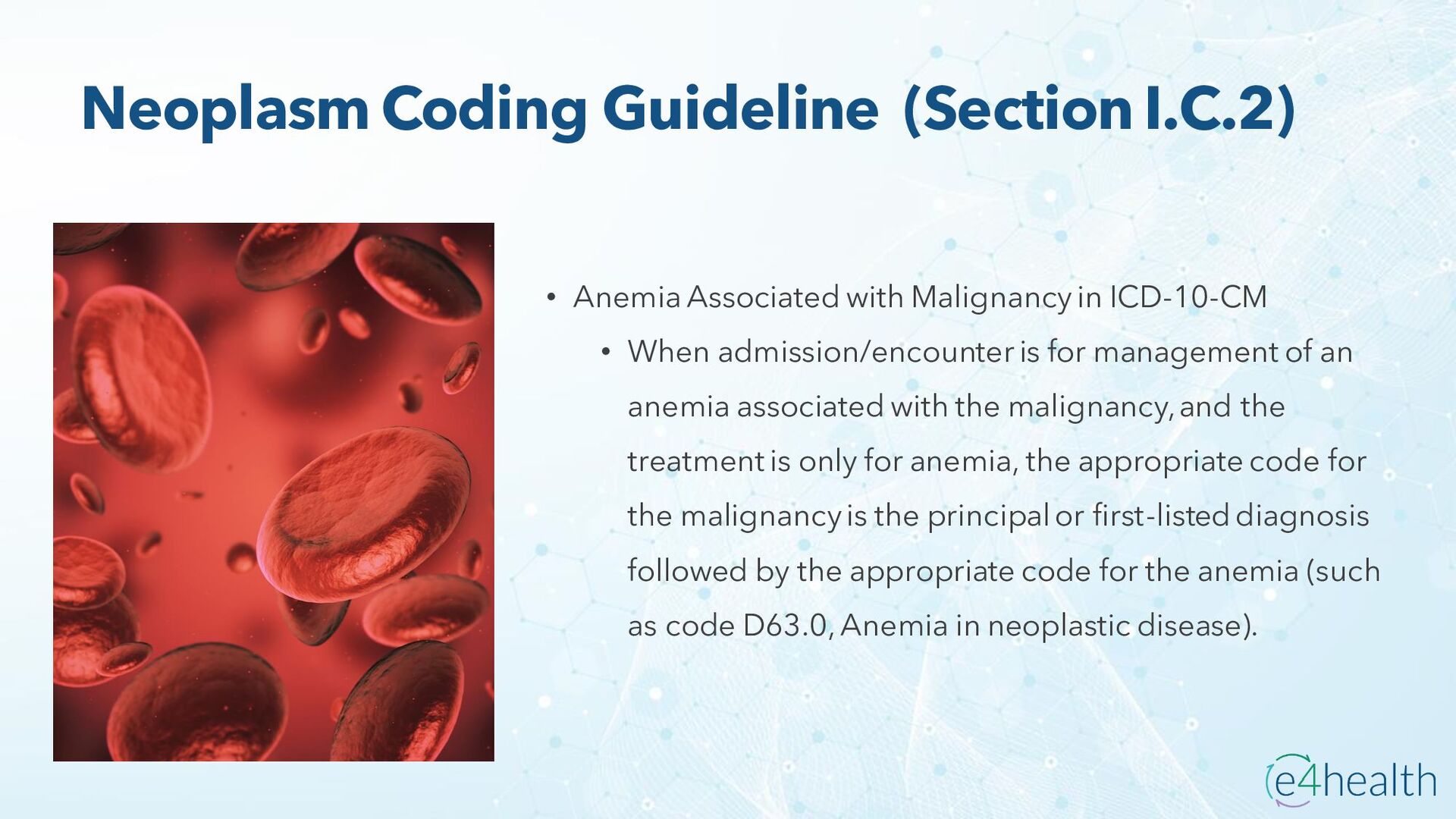
  12. Neoplasm Coding Guideline (Section I.C.2) • Anemia Associated with Malignancy

    in ICD-10-CM • When admission/encounter is for management of an anemia associated with the malignancy, and the treatment is only for anemia, the appropriate code for the malignancy is the principal or first-listed diagnosis followed by the appropriate code for the anemia (such as code D63.0, Anemia in neoplastic disease).
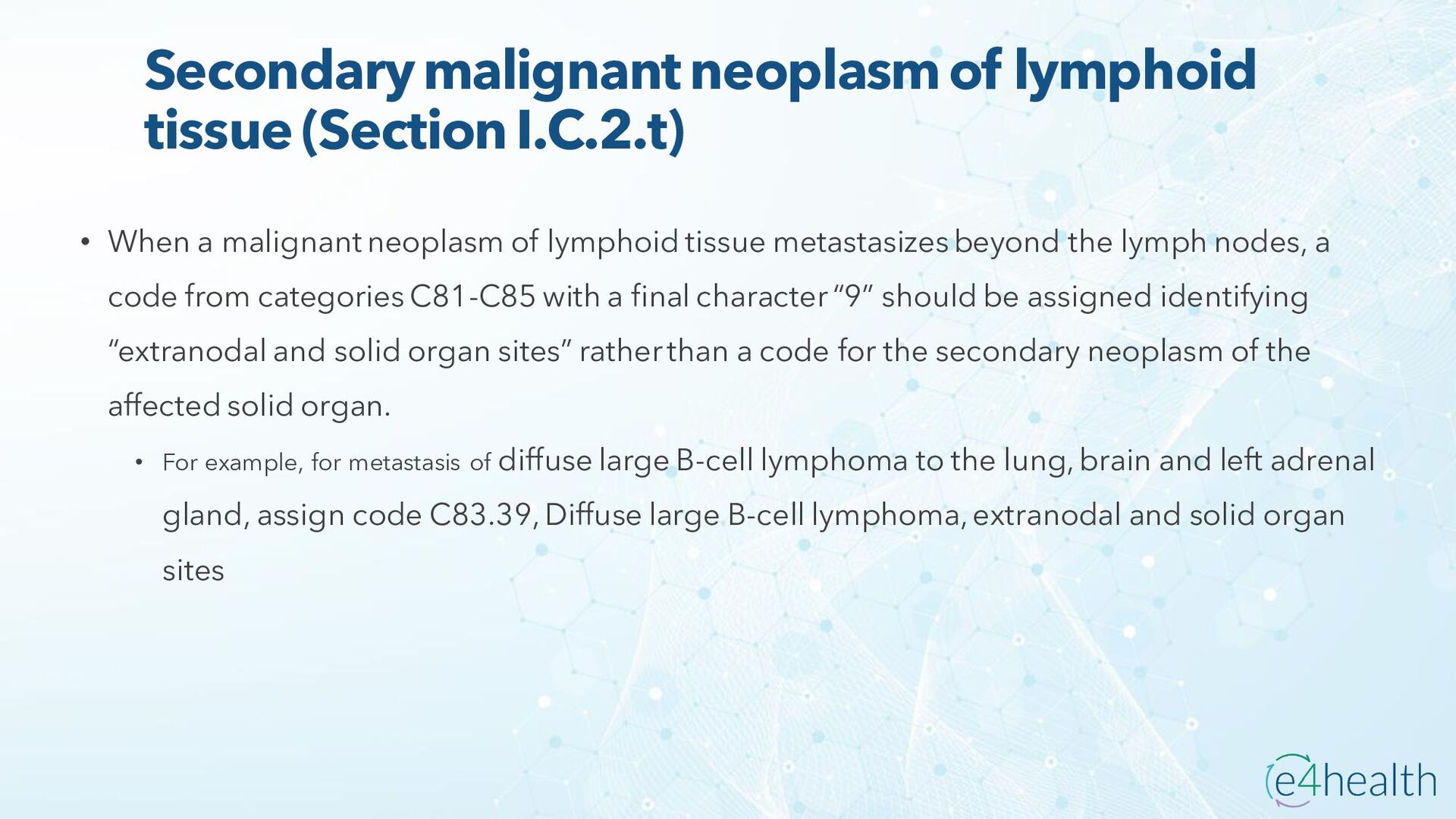
  13. Secondary malignant neoplasm of lymphoid tissue (Section I.C.2.t) • When

    a malignant neoplasm of lymphoid tissue metastasizes beyond the lymph nodes, a code from categories C81-C85 with a final character “9” should be assigned identifying “extranodal and solid organ sites” rather than a code for the secondary neoplasm of the affected solid organ. • For example, for metastasis of diffuse large B-cell lymphoma to the lung, brain and left adrenal gland, assign code C83.39, Diffuse large B-cell lymphoma, extranodal and solid organ sites
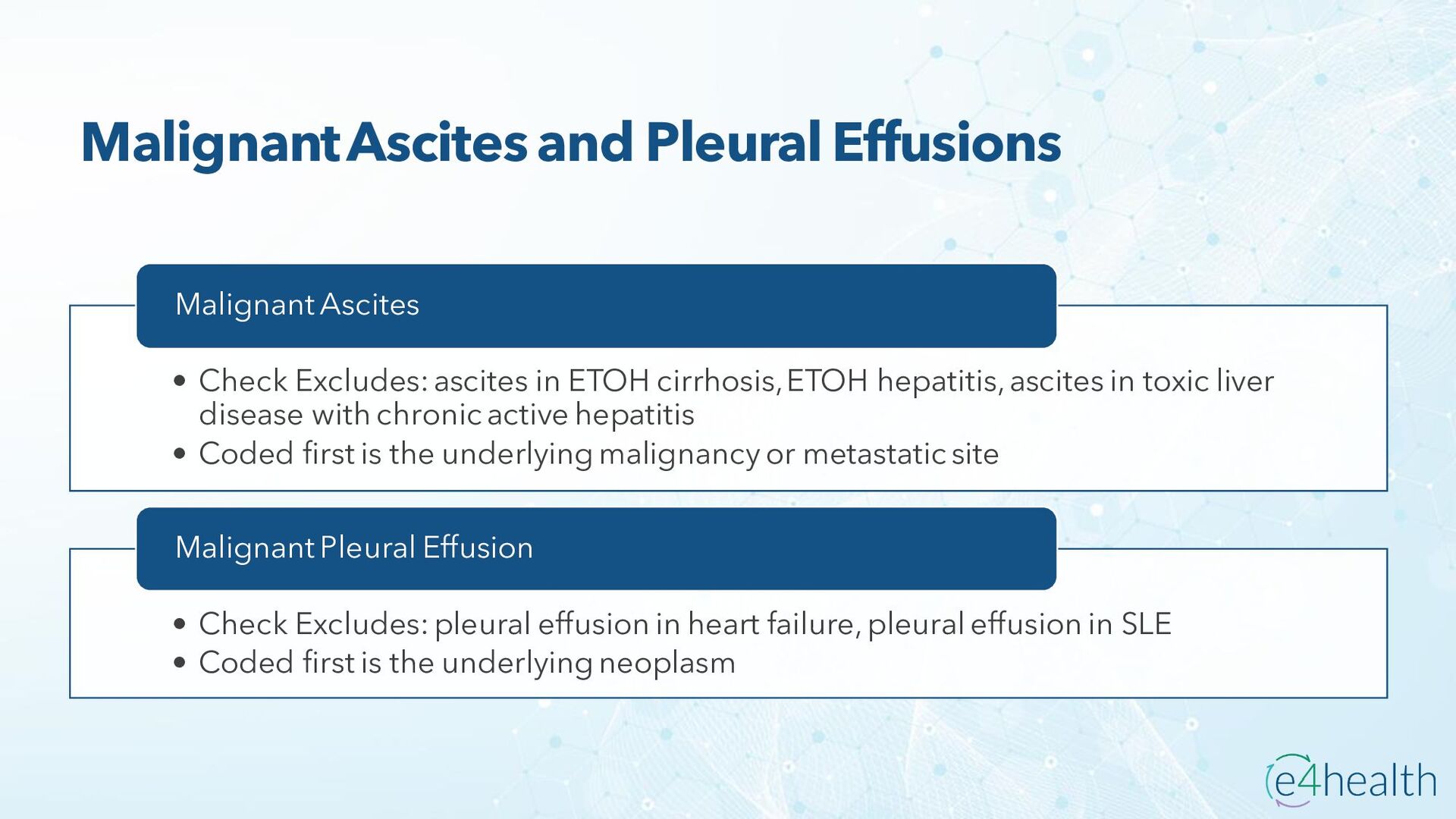
  14. Malignant Ascites and Pleural Effusions • Check Excludes: ascites in

    ETOH cirrhosis, ETOH hepatitis, ascites in toxic liver disease with chronic active hepatitis • Coded first is the underlying malignancy or metastatic site Malignant Ascites • Check Excludes: pleural effusion in heart failure, pleural effusion in SLE • Coded first is the underlying neoplasm Malignant Pleural Effusion
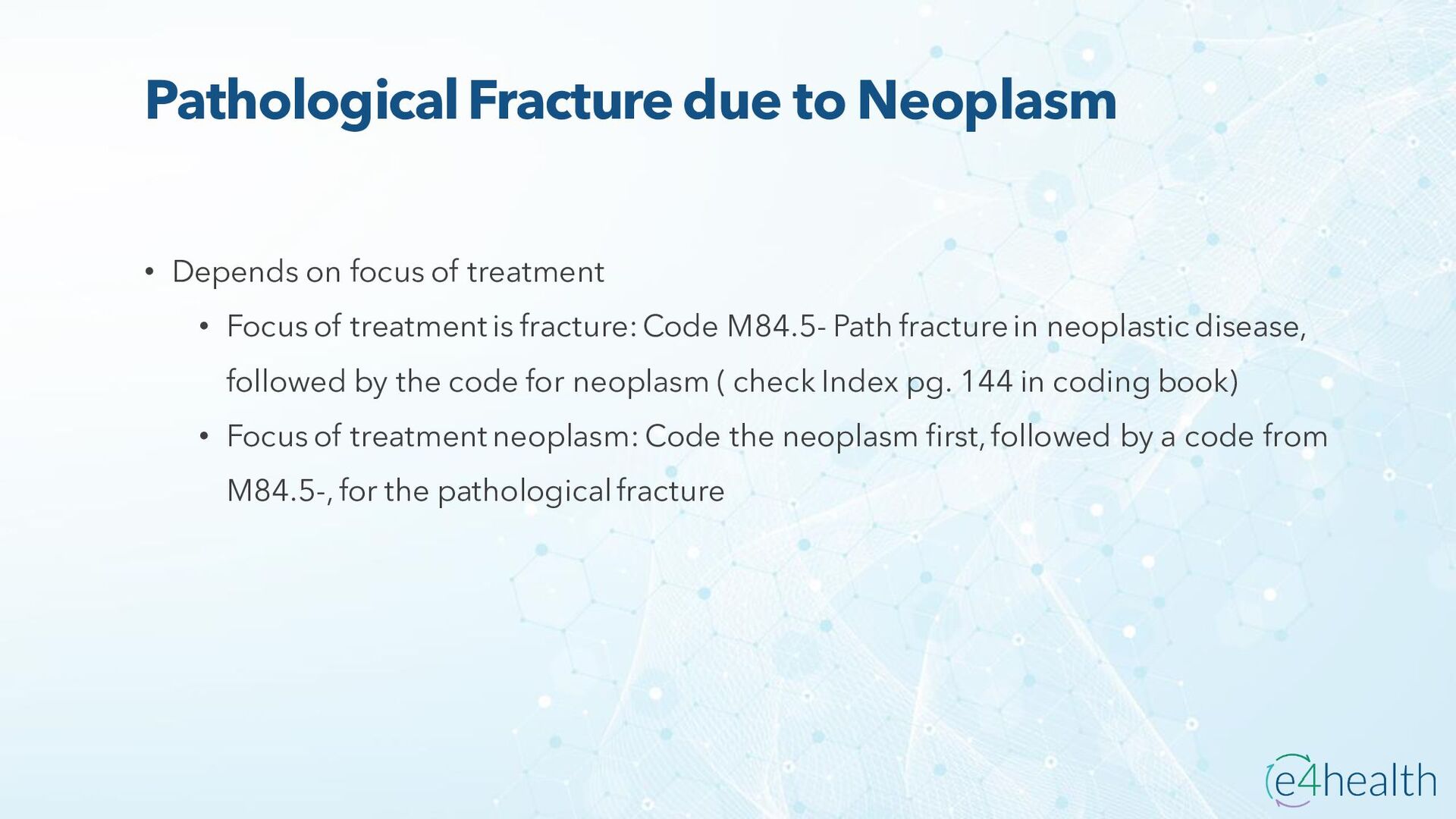
  15. Pathological Fracture due to Neoplasm • Depends on focus of

    treatment • Focus of treatment is fracture: Code M84.5- Path fracturein neoplastic disease, followed by the code for neoplasm ( check Index pg. 144 in coding book) • Focus of treatment neoplasm: Code the neoplasm first, followed by a code from M84.5-, for the pathological fracture
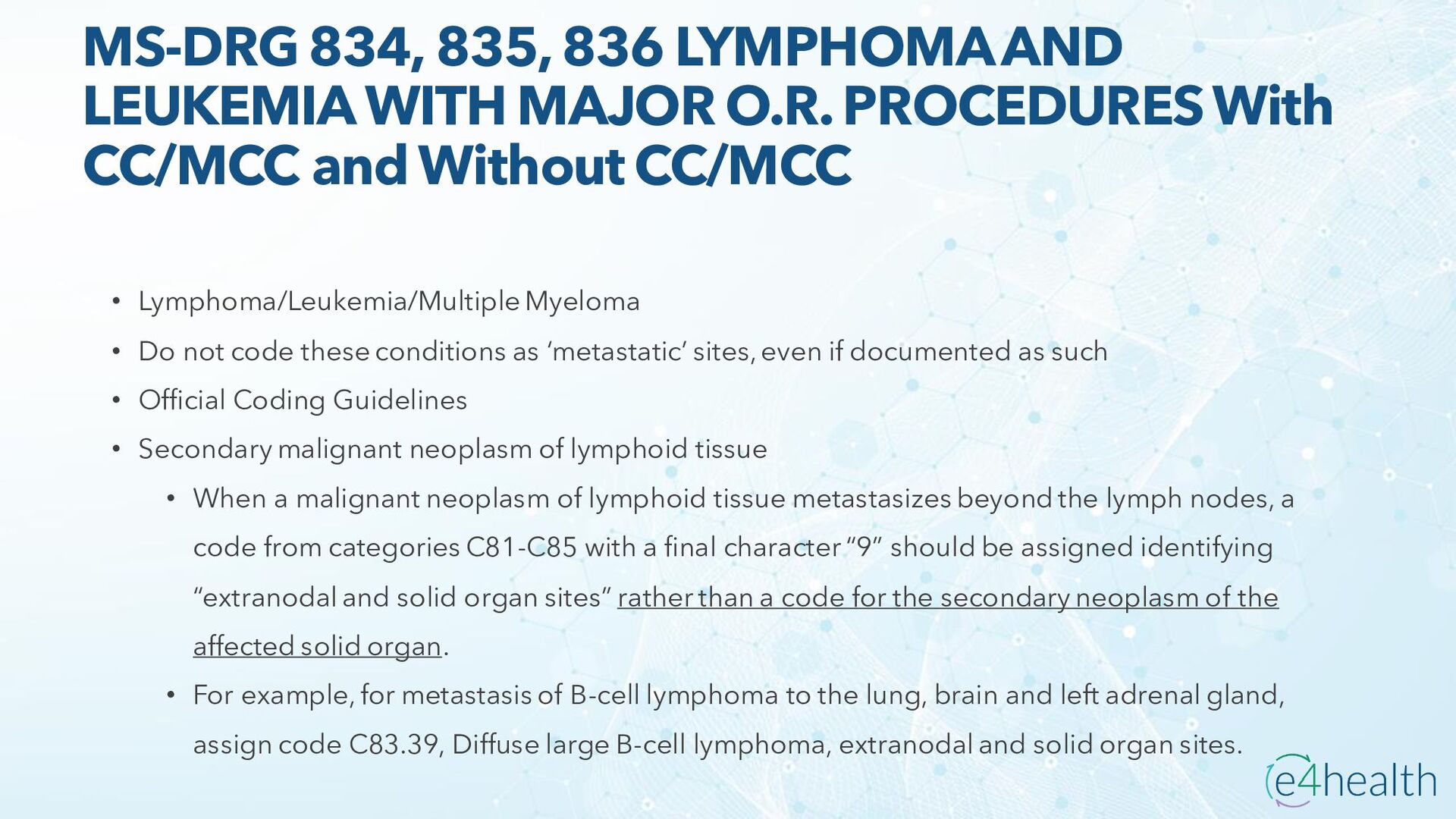
  16. MS-DRG 834, 835, 836 LYMPHOMA AND LEUKEMIA WITH MAJOR O.R.

    PROCEDURES With CC/MCC and Without CC/MCC • Lymphoma/Leukemia/Multiple Myeloma • Do not code these conditions as ‘metastatic’ sites, even if documented as such • Official Coding Guidelines • Secondary malignant neoplasm of lymphoid tissue • When a malignant neoplasm of lymphoid tissue metastasizes beyond the lymph nodes, a code from categories C81-C85 with a final character “9” should be assigned identifying “extranodal and solid organ sites” rather than a code for the secondary neoplasm of the affected solid organ. • For example, for metastasis of B-cell lymphoma to the lung, brain and left adrenal gland, assign code C83.39, Diffuse large B-cell lymphoma, extranodal and solid organ sites.
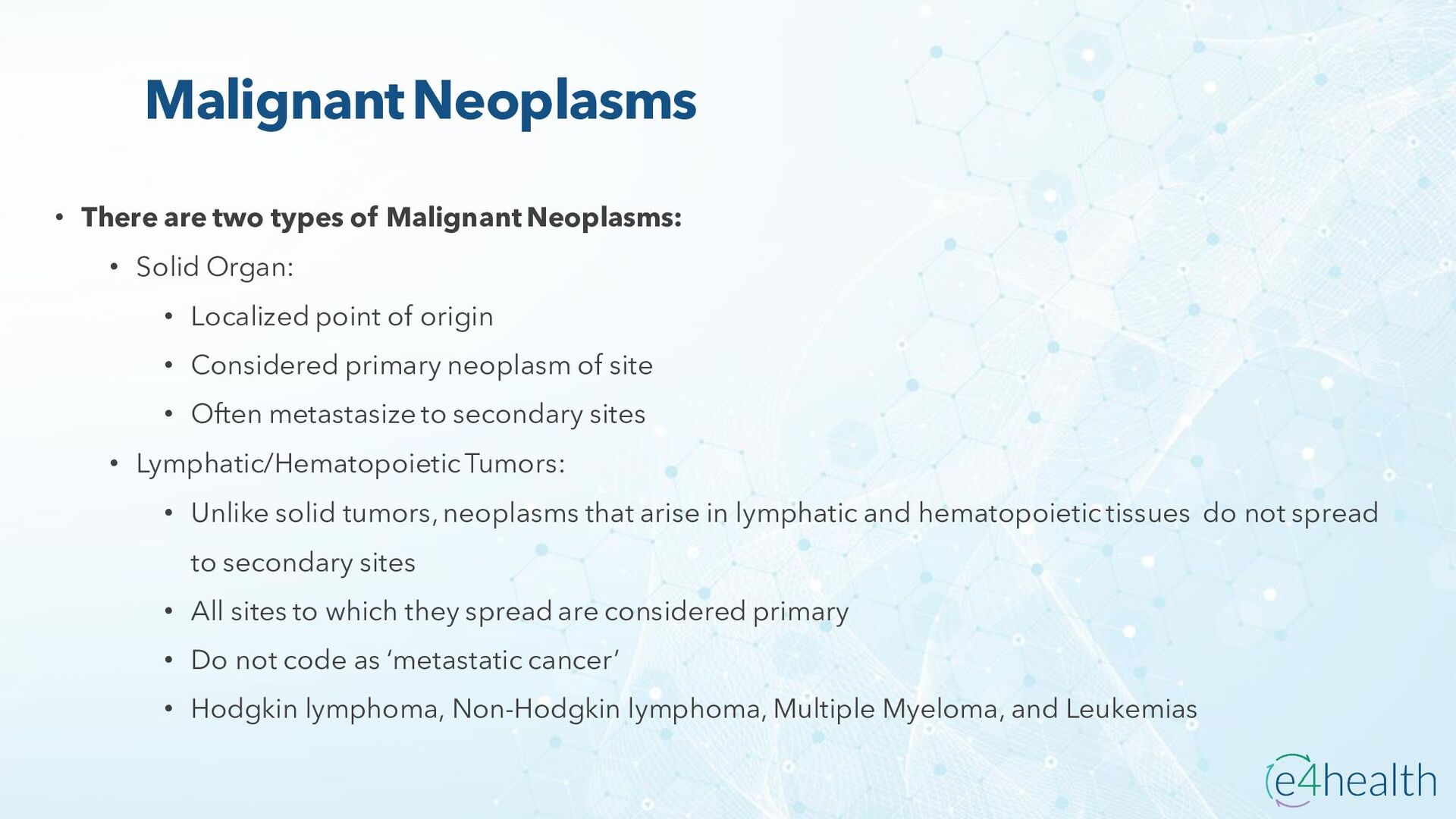
  17. Malignant Neoplasms • There are two types of Malignant Neoplasms:

    • Solid Organ: • Localized point of origin • Considered primary neoplasm of site • Often metastasize to secondary sites • Lymphatic/Hematopoietic Tumors: • Unlike solid tumors, neoplasms that arise in lymphatic and hematopoietic tissues do not spread to secondary sites • All sites to which they spread are considered primary • Do not code as ‘metastatic cancer’ • Hodgkin lymphoma, Non-Hodgkin lymphoma, Multiple Myeloma, and Leukemias
  18. Neuroendocrine Tumors • NET or neuroendocrine tumors, are neoplasms that

    arise from cells of the endocrine (hormonal) and nervous systems. They can be benign or malignant. • Most commonly appear in the intestine, where they are often called carcinoid tumors, but can also be found in the lung and the rest of the body. • Carcinoid syndrome, E34.0, is a set of symptoms that may occur in patients who have carcinoid tumors. Not all people with carcinoid tumors have carcinoid syndrome. • Index: Carcinoid (tumor) see Tumor, carcinoid • Index: Tumor, carcinoid • Malignant vs. benign
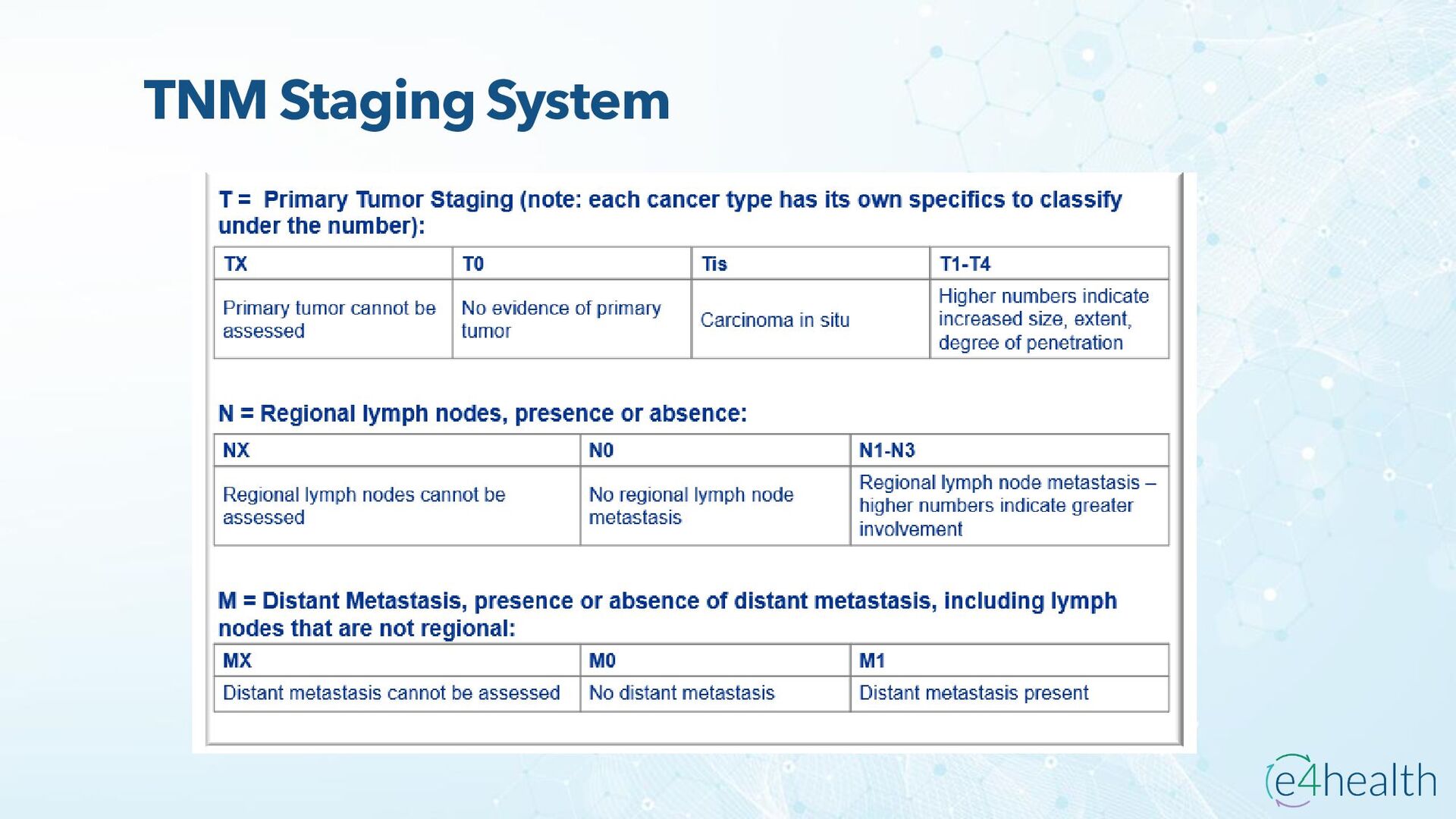
  19. Tumor, Nodes and Metastases • TNM is a worldwide classification

    system used to identify solid tumors, associated lymphatic involvement, and metastases • T Tumor: The size/extent of the primary tumor • N Nodes: The number of regional lymph nodes affected • M Metastases: The presence or absence of metastases to other body sites/organs • T, N, and M describe a different area of cancer growth • Not used for blood-borne cancers such as leukemia or lymphomas • Higher values represent a greater extent of the cancer (i.e. Stage 1 represents the cancer has not spread; Stage 4 represents the cancer has spread to distant sites)
  20. TMN staging system • Codes can be assigned based on

    documentation using the TMN staging system when authenticated by the attending. Coding Clinic, Second Quarter 2012 Page: 9 Question: A patient was admitted for Fletcher application. The diagnosis is documented as squamous cell carcinoma of the cervix with staging T4N1. Can a secondary code be assigned for lymph node metastasis based on the documentation provided? Answer: Based on the numerical/alphabetic designation (T4N1), assign code 196.6, Secondary and unspecified malignant neoplasm of lymph nodes, Intrapelvic lymph nodes. Coding Clinic, May-June 1985, page 6, states "if staging classes are being documented in the hospital medical record, the coding staff should obtain copies of the current classifications for use in decoding the numerical/alphabetic designations. The information obtained can be of assistance in the selection of ICD-9-CM codes relative to the presence of any secondary neoplasm." Refer to Coding Clinic, Second Quarter 2010, pages 7-8, for additional information on the use of the cancer staging form for assigning ICD-9-CM codes.
  21. TMN staging system • Codes can be assigned based on

    documentation using the TMN staging system when authenticated by the attending. Coding Clinic, Second Quarter 2012 Page: 9 Question: A patient was admitted for Fletcher application. The diagnosis is documented as squamous cell carcinoma of the cervix with staging T4N1. Can a secondary code be assigned for lymph node metastasis based on the documentation provided? Answer: Based on the numerical/alphabetic designation (T4N1), assign code 196.6, Secondary and unspecified malignant neoplasm of lymph nodes, Intrapelvic lymph nodes. Coding Clinic, May-June 1985, page 6, states "if staging classes are being documented in the hospital medical record, the coding staff should obtain copies of the current classifications for use in decoding the numerical/alphabetic designations. The information obtained can be of assistance in the selection of ICD-9-CM codes relative to the presence of any secondary neoplasm." Refer to Coding Clinic, Second Quarter 2010, pages 7-8, for additional information on the use of the cancer staging form for assigning ICD-9-CM codes. Note: Although this is in ICD-9 convention, the coding clinic still currently applies in ICD-10-CM convention.
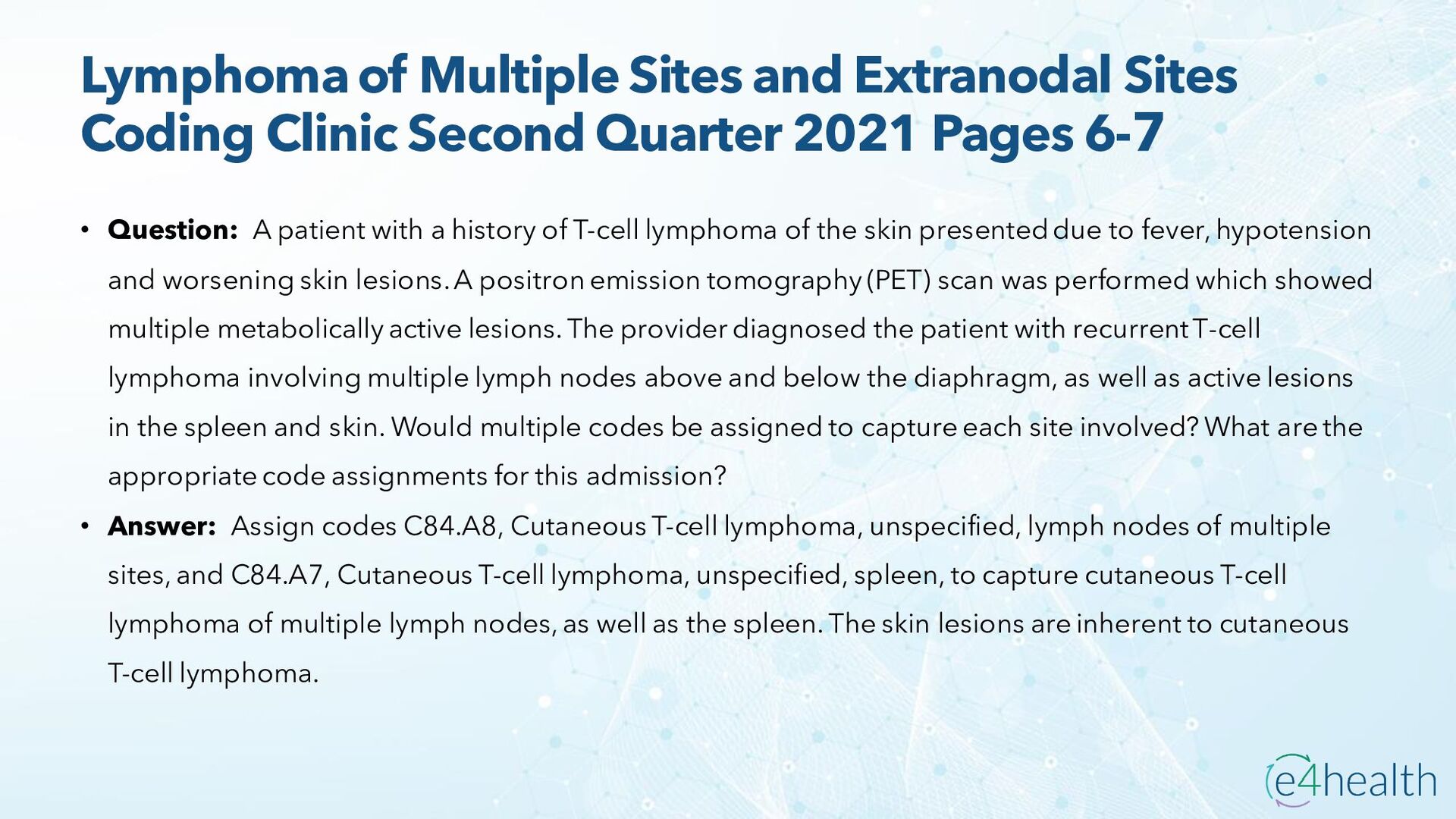
  22. Lymphoma of Multiple Sites and Extranodal Sites Coding Clinic Second

    Quarter 2021 Pages 6-7 • Question: A patient with a history of T-cell lymphoma of the skin presented due to fever, hypotension and worsening skin lesions. A positron emission tomography (PET) scan was performed which showed multiple metabolically active lesions. The provider diagnosed the patient with recurrent T-cell lymphoma involving multiple lymph nodes above and below the diaphragm, as well as active lesions in the spleen and skin. Would multiple codes be assigned to capture each site involved? What are the appropriate code assignments for this admission? • Answer: Assign codes C84.A8, Cutaneous T-cell lymphoma, unspecified, lymph nodes of multiple sites, and C84.A7, Cutaneous T-cell lymphoma, unspecified, spleen, to capture cutaneous T-cell lymphoma of multiple lymph nodes, as well as the spleen. The skin lesions are inherent to cutaneous T-cell lymphoma.
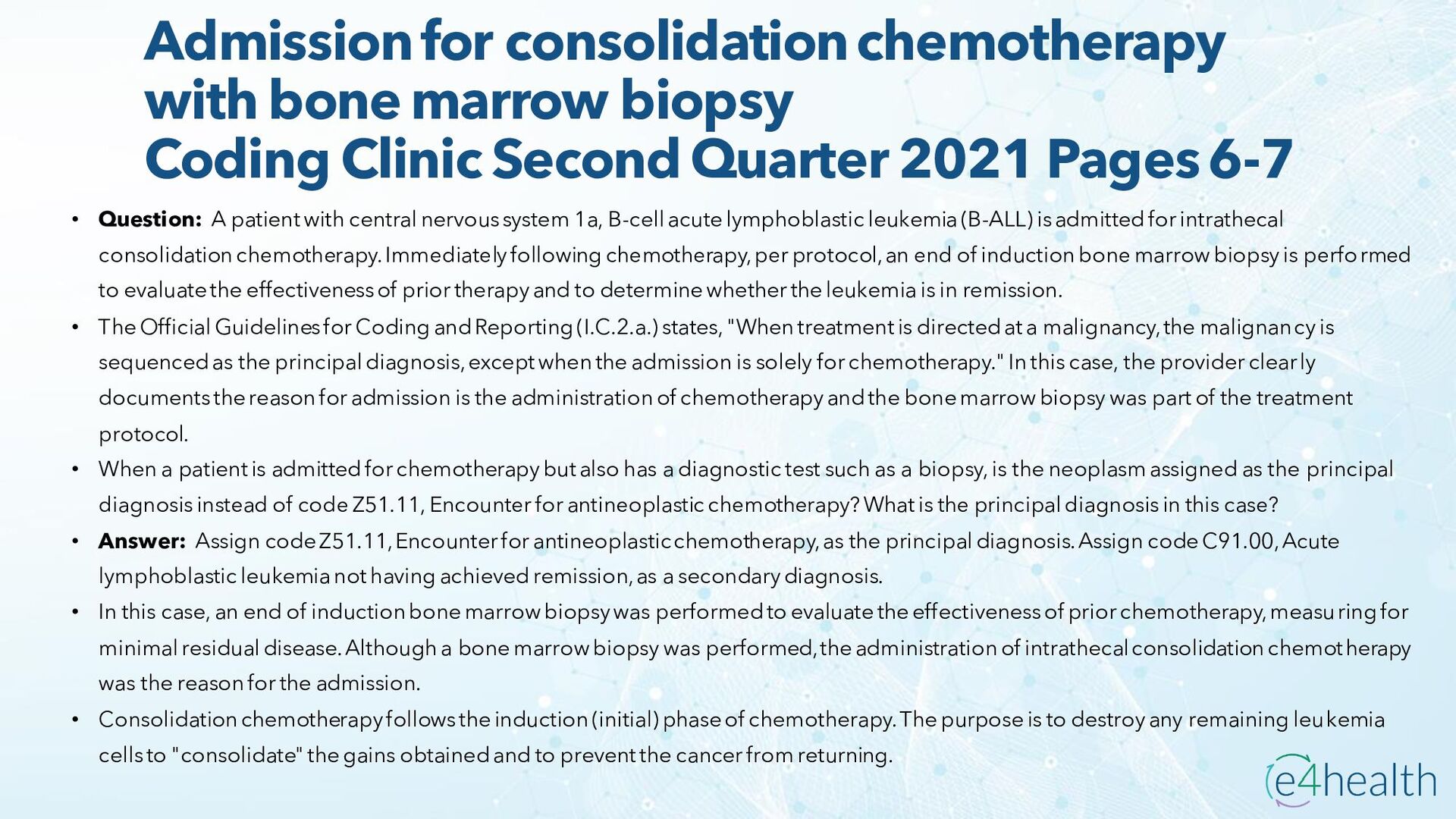
  23. Admission for consolidation chemotherapy with bone marrow biopsy Coding Clinic

    Second Quarter 2021 Pages 6-7 • Question: A patient with central nervous system 1a, B-cell acute lymphoblastic leukemia (B-ALL) is admitted for intrathecal consolidation chemotherapy. Immediately following chemotherapy, per protocol, an end of induction bone marrow biopsy is performed to evaluate the effectiveness of prior therapy and to determine whether the leukemia is in remission. • The Official Guidelines for Coding and Reporting (I.C.2.a.) states, "When treatment is directed at a malignancy, the malignancy is sequenced as the principal diagnosis, except when the admission is solely for chemotherapy." In this case, the provider clearly documents the reason for admission is the administration of chemotherapy and the bone marrow biopsy was part of the treatment protocol. • When a patient is admitted for chemotherapy but also has a diagnostic test such as a biopsy, is the neoplasm assigned as the principal diagnosis instead of code Z51.11, Encounter for antineoplastic chemotherapy? What is the principal diagnosis in this case? • Answer: Assign code Z51.11, Encounter for antineoplastic chemotherapy, as the principal diagnosis. Assign code C91.00, Acute lymphoblastic leukemia not having achieved remission, as a secondary diagnosis. • In this case, an end of induction bone marrow biopsy was performed to evaluate the effectiveness of prior chemotherapy, measuring for minimal residual disease. Although a bone marrow biopsy was performed, the administration of intrathecal consolidation chemotherapy was the reason for the admission. • Consolidation chemotherapy follows the induction (initial) phase of chemotherapy. The purpose is to destroy any remaining leukemia cells to "consolidate" the gains obtained and to prevent the cancer from returning.
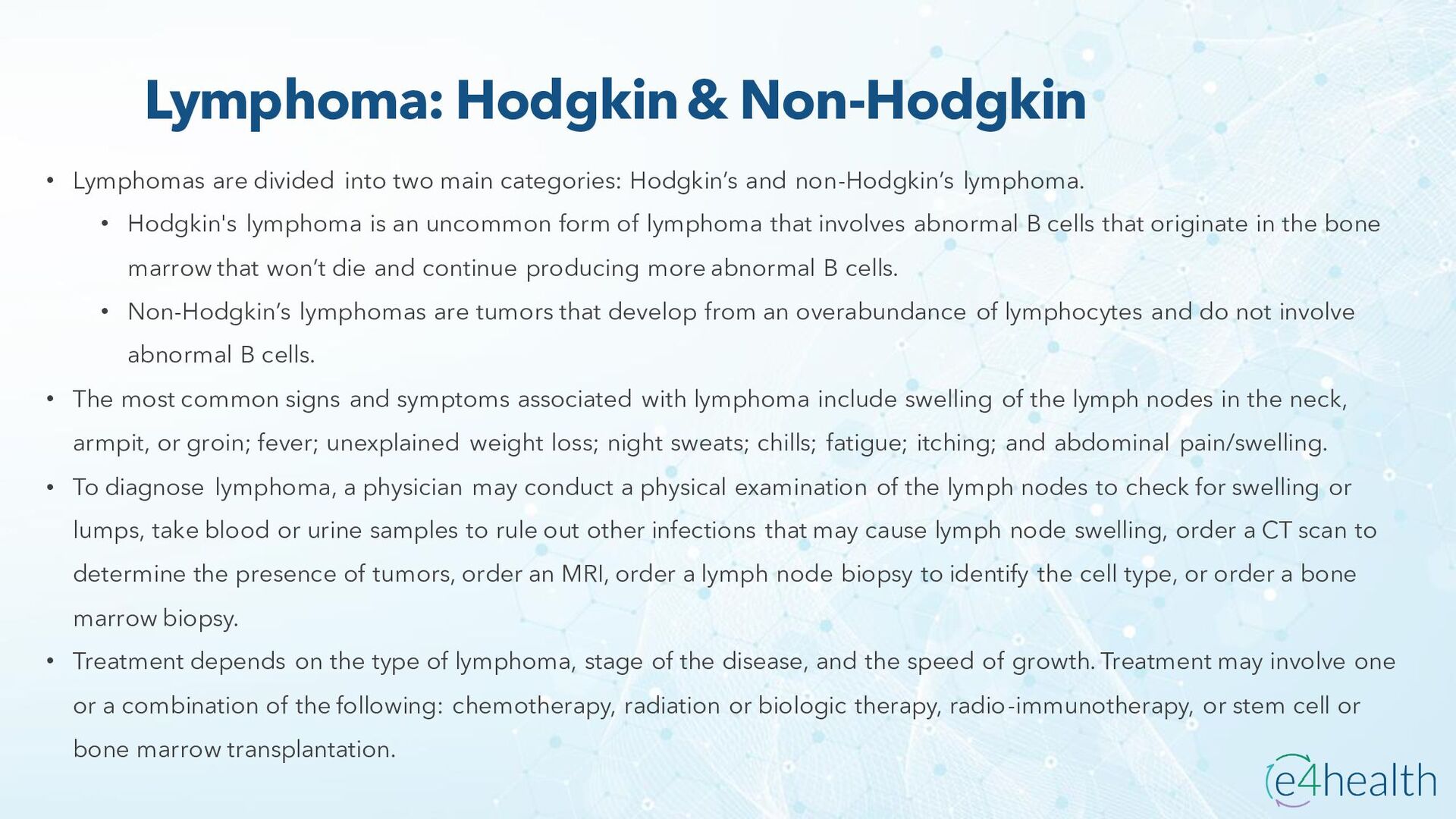
  24. Lymphoma: Hodgkin & Non-Hodgkin • Lymphomas are divided into two

    main categories: Hodgkin’s and non-Hodgkin’s lymphoma. • Hodgkin's lymphoma is an uncommon form of lymphoma that involves abnormal B cells that originate in the bone marrow that won’t die and continue producing more abnormal B cells. • Non-Hodgkin’s lymphomas are tumors that develop from an overabundance of lymphocytes and do not involve abnormal B cells. • The most common signs and symptoms associated with lymphoma include swelling of the lymph nodes in the neck, armpit, or groin; fever; unexplained weight loss; night sweats; chills; fatigue; itching; and abdominal pain/swelling. • To diagnose lymphoma, a physician may conduct a physical examination of the lymph nodes to check for swelling or lumps, take blood or urine samples to rule out other infections that may cause lymph node swelling, order a CT scan to determine the presence of tumors, order an MRI, order a lymph node biopsy to identify the cell type, or order a bone marrow biopsy. • Treatment depends on the type of lymphoma, stage of the disease, and the speed of growth. Treatment may involve one or a combination of the following: chemotherapy, radiation or biologic therapy, radio-immunotherapy, or stem cell or bone marrow transplantation.
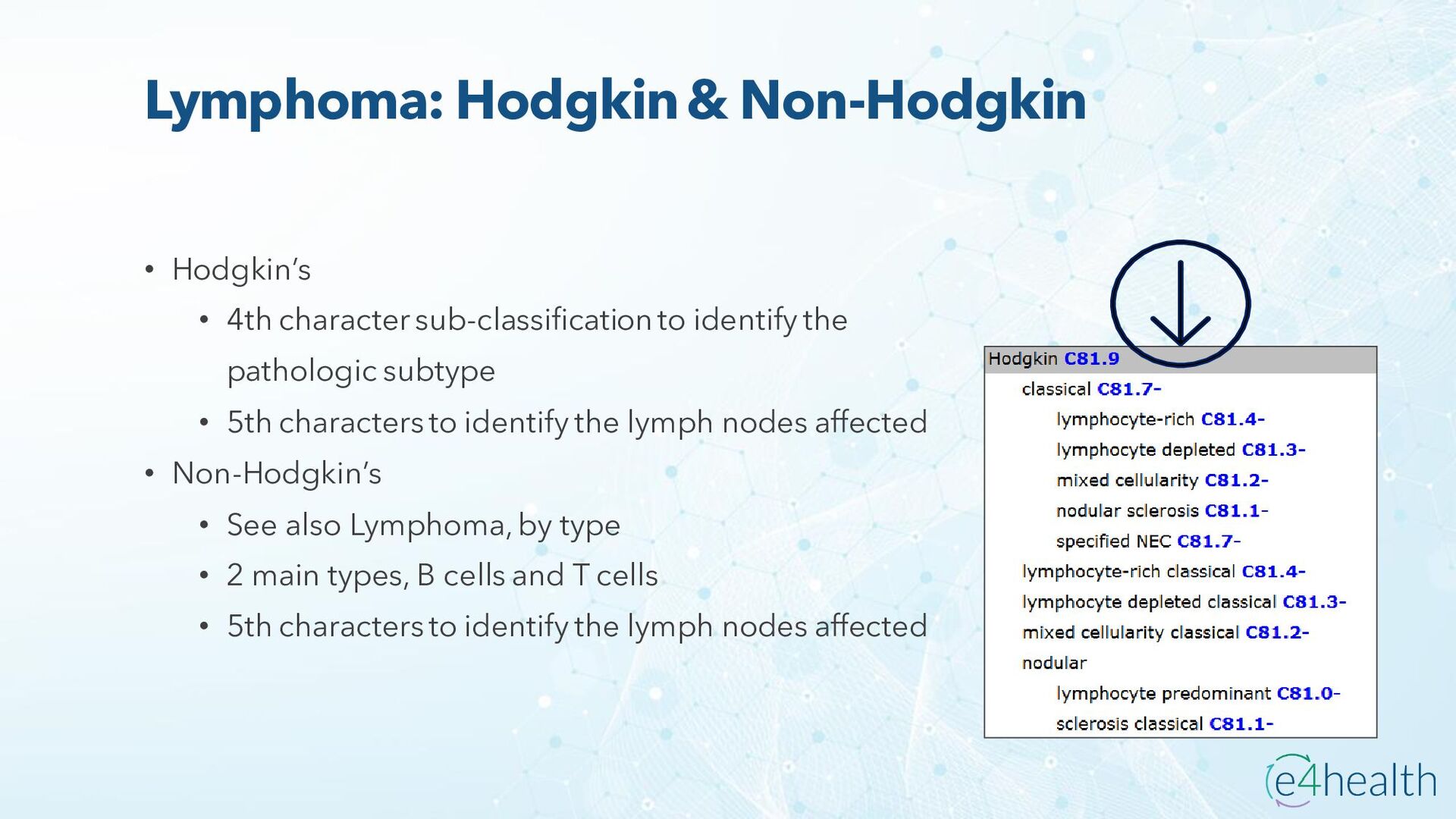
  25. Lymphoma: Hodgkin & Non-Hodgkin • Hodgkin’s • 4th character sub-classification

    to identify the pathologic subtype • 5th characters to identify the lymph nodes affected • Non-Hodgkin’s • See also Lymphoma, by type • 2 main types, B cells and T cells • 5th characters to identify the lymph nodes affected
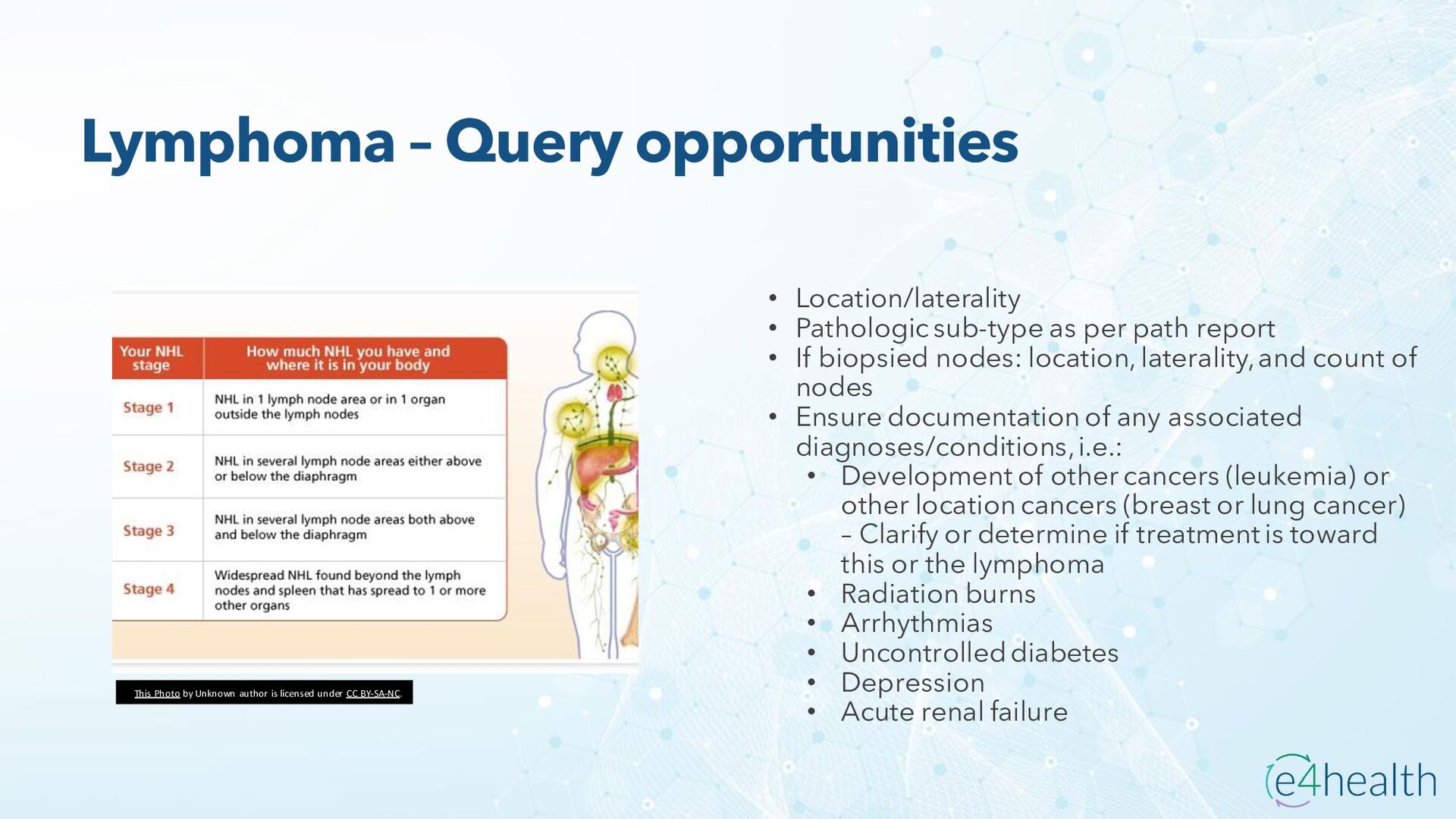
  26. Lymphoma – Query opportunities • Location/laterality • Pathologic sub-type as

    per path report • If biopsied nodes: location, laterality, and count of nodes • Ensure documentation of any associated diagnoses/conditions, i.e.: • Development of other cancers (leukemia) or other location cancers (breast or lung cancer) – Clarify or determine if treatment is toward this or the lymphoma • Radiation burns • Arrhythmias • Uncontrolled diabetes • Depression • Acute renal failure This Photo by Unknown author is licensed under CC BY-SA-NC.
  27. Multiple Myeloma and Leukemia • 4th character indicating type of

    neoplasm, stage of disease, or the type of leukemia • 5th character to indicate status • 0 Not having achieved remission (failed remission) • 1 In remission • 2 In relapse • Leukemia is not coded from the Neoplasm Table, but rather indexed under the term Leukemia
  28. Multiple Myeloma and Leukemia – Query Opportunity Documentation of type

    as consistent with pathology Documentation of status: failed remission in remission in relapse Documentation of active vs. personal history Don’t confuse “in remission” with personal history, Z85.6, Z85.79 (condition no longer exists, not receiving treatment)
  29. Malignant Neoplasm Associated with Transplanted Organ • Principal diagnosis will

    be a transplant complication • Followed by a code for malignant neoplasm associated with transplanted organ • An additional code is assigned for the specific malignancy
  30. Malignant Neoplasms in Transplanted Organs – Query opportunity • If

    documentation is unclear, clarify If neoplasm being treated is related to the transplanted organ • If more than one transplanted organ, need to clarify which organ • Documentation of active vs. personal history • Don’t confuse “in remission” with personal history, Z85.6, Z85.79 (condition no longer exists, not receiving treatment) • “-mias” in relation to transplanted organ vs. malignancy vs. treatment • Acute kidney injury with or without ATN: look at chemistry and UA • Look for transplant: • Failure: transplanted organ function is decreasing OR Rejection: tissue is rejected by recipient’s immune system • Pain or swelling in organ area, organ function decreased, flu-like symptoms • CT scan, CXR, ultrasound, biopsy • Look for medical noncompliance or graft vs host disease • Infection • Need documentation of suspected organism being treated, if present
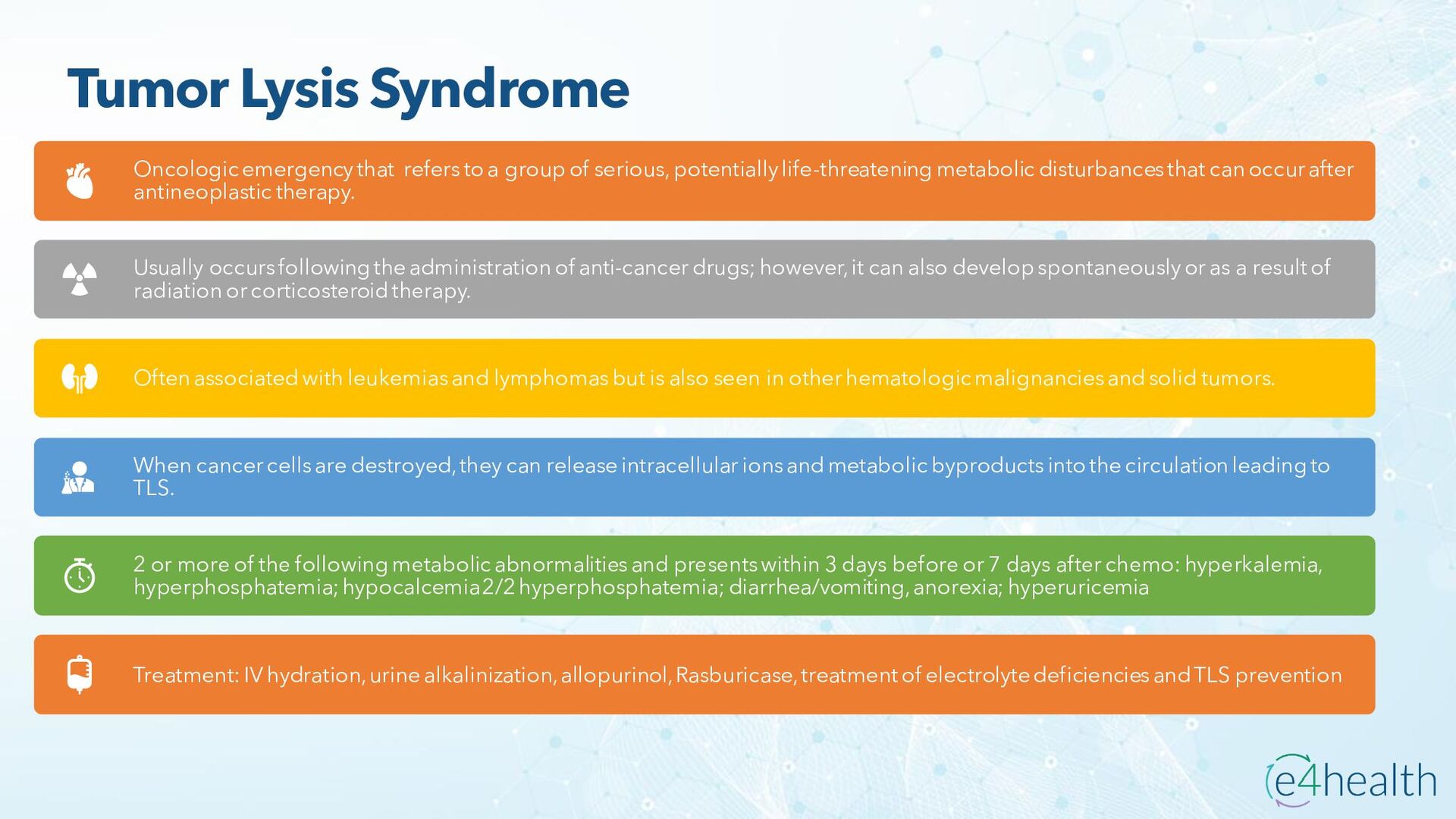
  31. Tumor Lysis Syndrome Oncologic emergency that refers to a group

    of serious, potentially life-threatening metabolic disturbances that can occur after antineoplastic therapy. Usually occurs following the administration of anti-cancer drugs; however, it can also develop spontaneously or as a result of radiation or corticosteroid therapy. Often associated with leukemias and lymphomas but is also seen in other hematologic malignancies and solid tumors. When cancer cells are destroyed, they can release intracellular ions and metabolic byproducts into the circulation leading to TLS. 2 or more of the following metabolic abnormalities and presents within 3 days before or 7 days after chemo: hyperkalemia, hyperphosphatemia; hypocalcemia 2/2 hyperphosphatemia; diarrhea/vomiting, anorexia; hyperuricemia Treatment: IV hydration, urine alkalinization, allopurinol, Rasburicase, treatment of electrolyte deficiencies and TLS prevention
  32. Aplastic Anemia • Body’s bone marrow doesn’t make enough new

    blood: red blood, WBC and platelets cells • Can be referred to as bone marrow failure • Can be caused by: • radiation, • Chemotherapy and certain medications • infectious process (parvovirus, HIV, EBV, Hepatitis, CMV), • autoimmune (i.e. lupus, rheumatoid arthritis) • Clinical signs • Signs of anemia: fatigue, pallor • Thrombocytopenia • Leukopenia • Low retic counts • Treatment include: • Blood transfusions • Blood and marrow stem cells transplant • Immunosuppressant (i.e. Cyclosporine, steroids) • Bone marrow stimulants (Neupogen, Epogen, Neulasta)
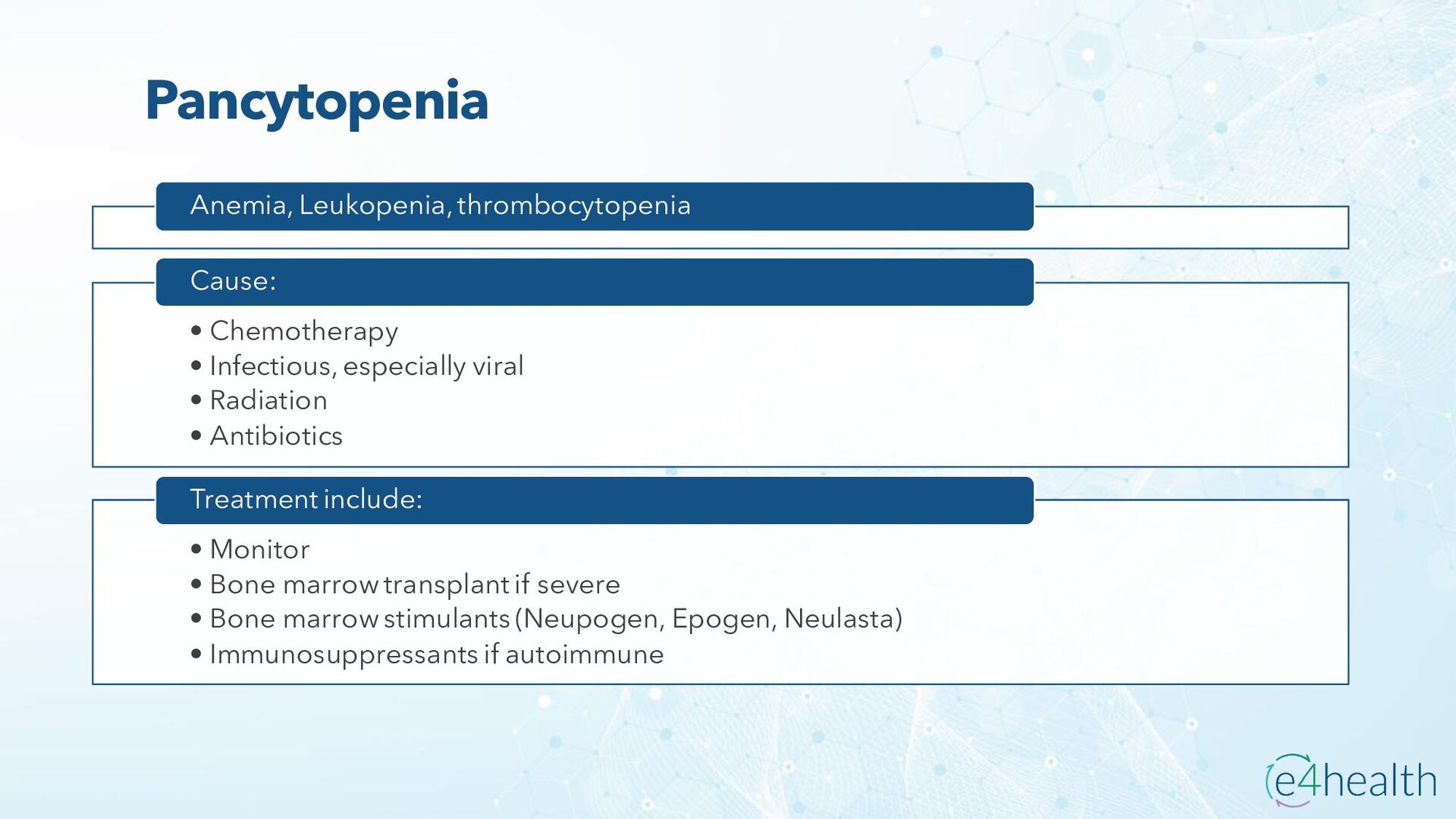
  33. Pancytopenia Anemia, Leukopenia, thrombocytopenia • Chemotherapy • Infectious, especially viral

    • Radiation • Antibiotics Cause: • Monitor • Bone marrow transplant if severe • Bone marrow stimulants (Neupogen, Epogen, Neulasta) • Immunosuppressants if autoimmune Treatment include:
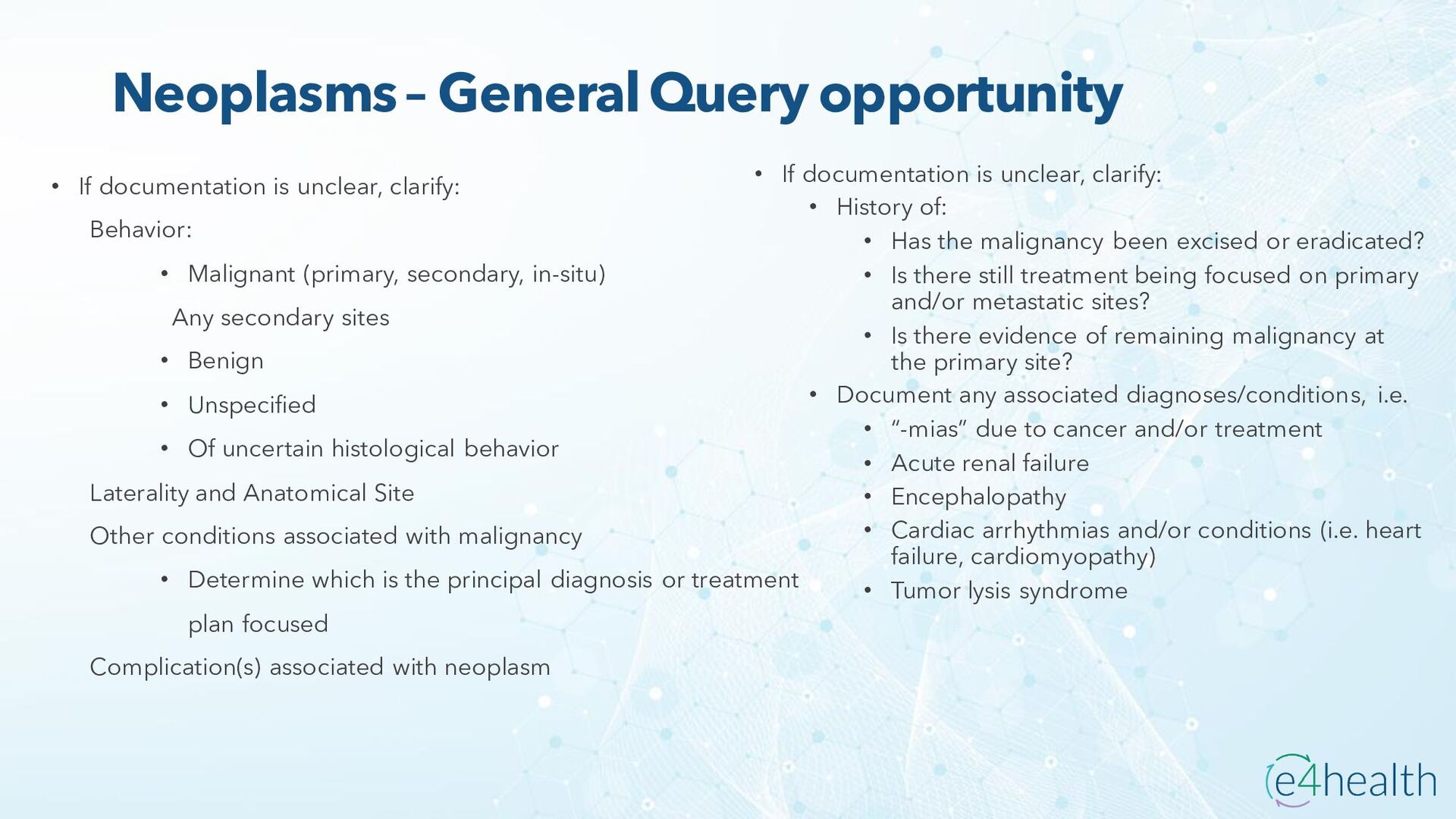
  34. Neoplasms – General Query opportunity • If documentation is unclear,

    clarify: Behavior: • Malignant (primary, secondary, in-situ) Any secondary sites • Benign • Unspecified • Of uncertain histological behavior Laterality and Anatomical Site Other conditions associated with malignancy • Determine which is the principal diagnosis or treatment plan focused Complication(s) associated with neoplasm • If documentation is unclear, clarify: • History of: • Has the malignancy been excised or eradicated? • Is there still treatment being focused on primary and/or metastatic sites? • Is there evidence of remaining malignancy at the primary site? • Document any associated diagnoses/conditions, i.e. • “-mias” due to cancer and/or treatment • Acute renal failure • Encephalopathy • Cardiac arrhythmias and/or conditions (i.e. heart failure, cardiomyopathy) • Tumor lysis syndrome
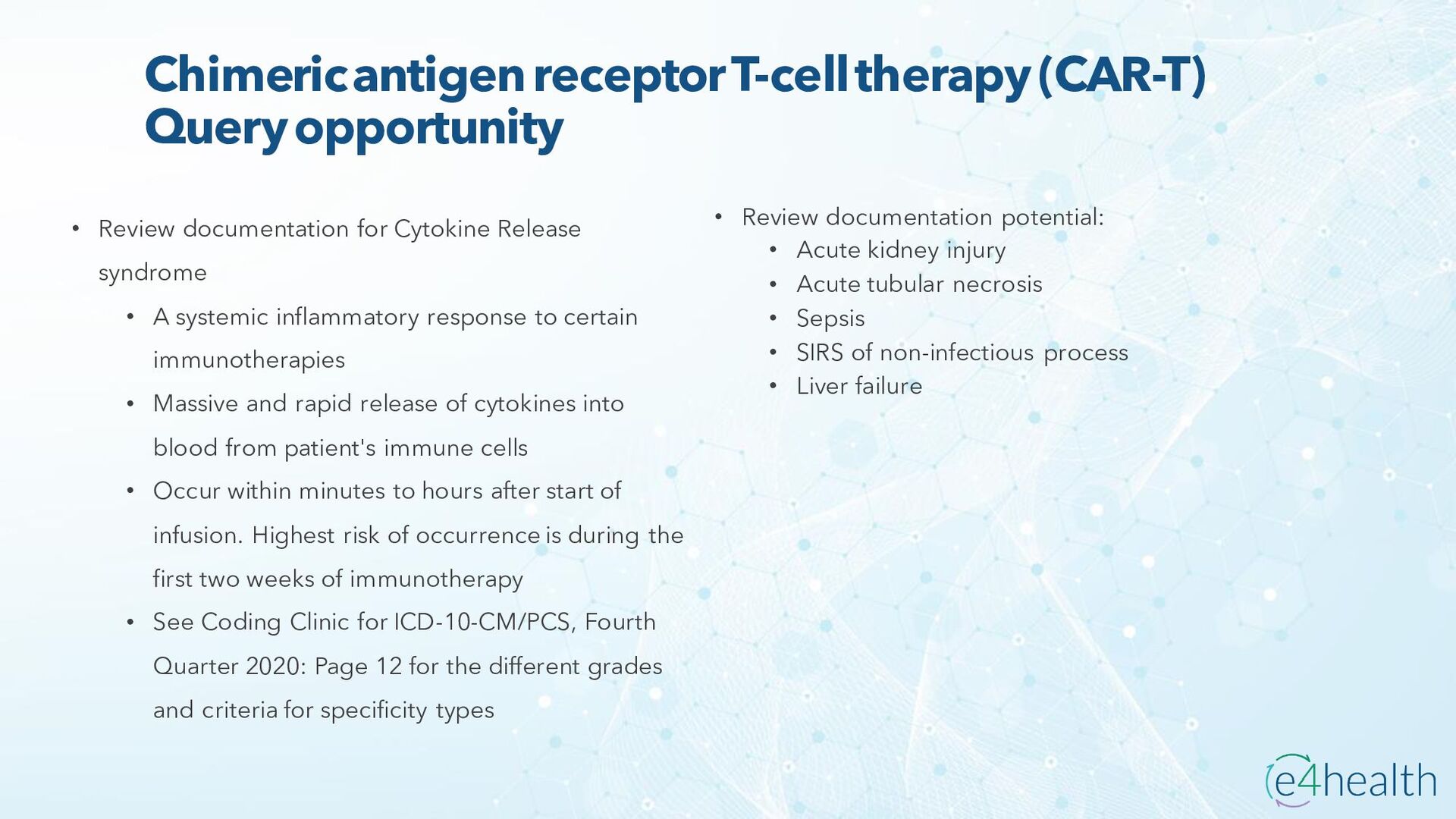
  35. Chimeric antigen receptor T-cell therapy (CAR-T) Query opportunity • Review

    documentation for Cytokine Release syndrome • A systemic inflammatory response to certain immunotherapies • Massive and rapid release of cytokines into blood from patient's immune cells • Occur within minutes to hours after start of infusion. Highest risk of occurrence is during the first two weeks of immunotherapy • See Coding Clinic for ICD-10-CM/PCS, Fourth Quarter 2020: Page 12 for the different grades and criteria for specificity types • Review documentation potential: • Acute kidney injury • Acute tubular necrosis • Sepsis • SIRS of non-infectious process • Liver failure
  36. Treatment of Neoplasms • Consists of: • Surgery • Generally,

    involves removal of the neoplasm • Examples include: Resection, Excision, Destruction • Chemotherapy • Radiation therapy • Other cancer treatment methods
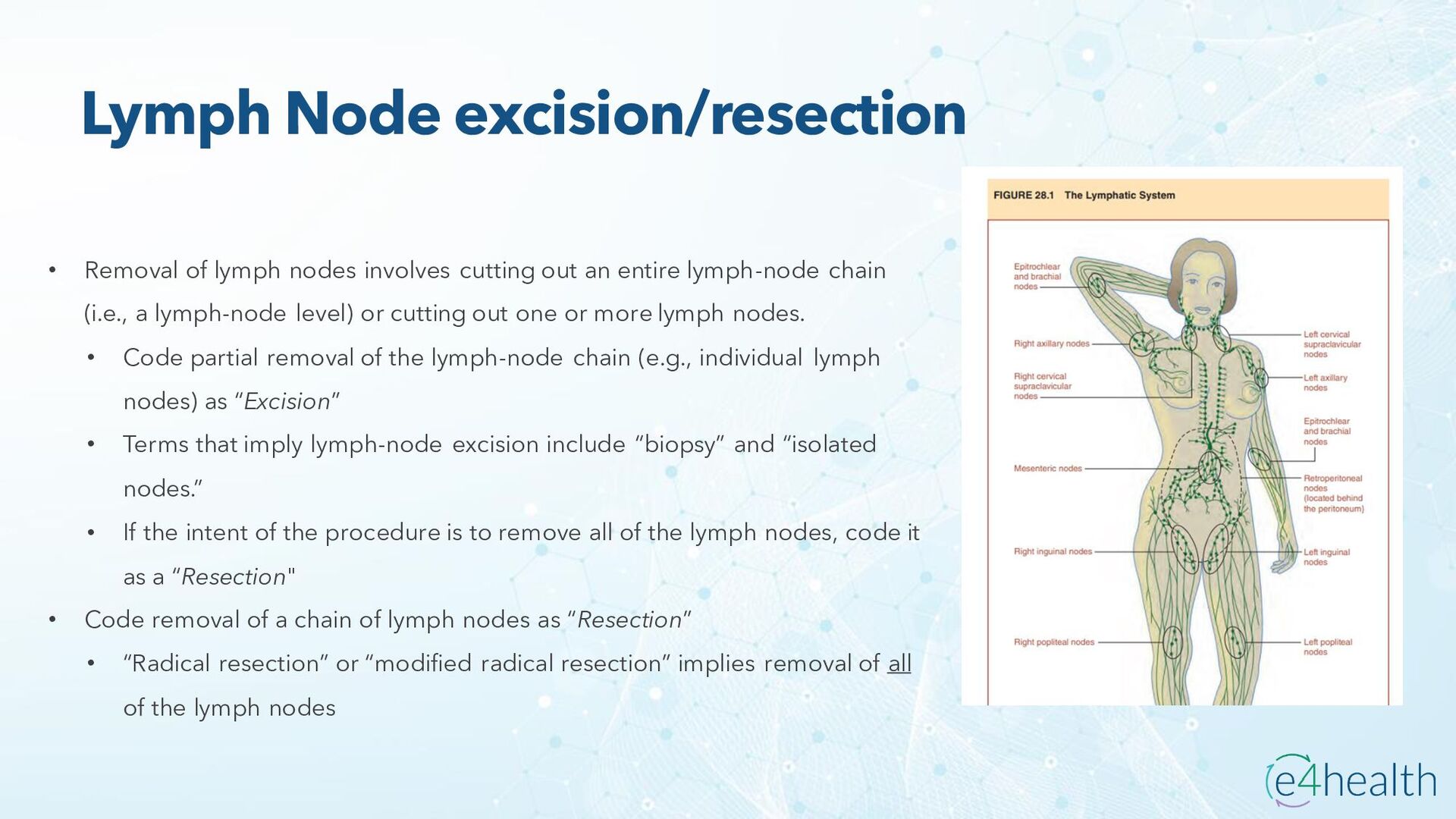
  37. Lymph Node excision/resection • Removal of lymph nodes involves cutting

    out an entire lymph-node chain (i.e., a lymph-node level) or cutting out one or more lymph nodes. • Code partial removal of the lymph-node chain (e.g., individual lymph nodes) as “Excision” • Terms that imply lymph-node excision include “biopsy” and “isolated nodes.” • If the intent of the procedure is to remove all of the lymph nodes, code it as a “Resection" • Code removal of a chain of lymph nodes as “Resection” • “Radical resection” or “modified radical resection” implies removal of all of the lymph nodes
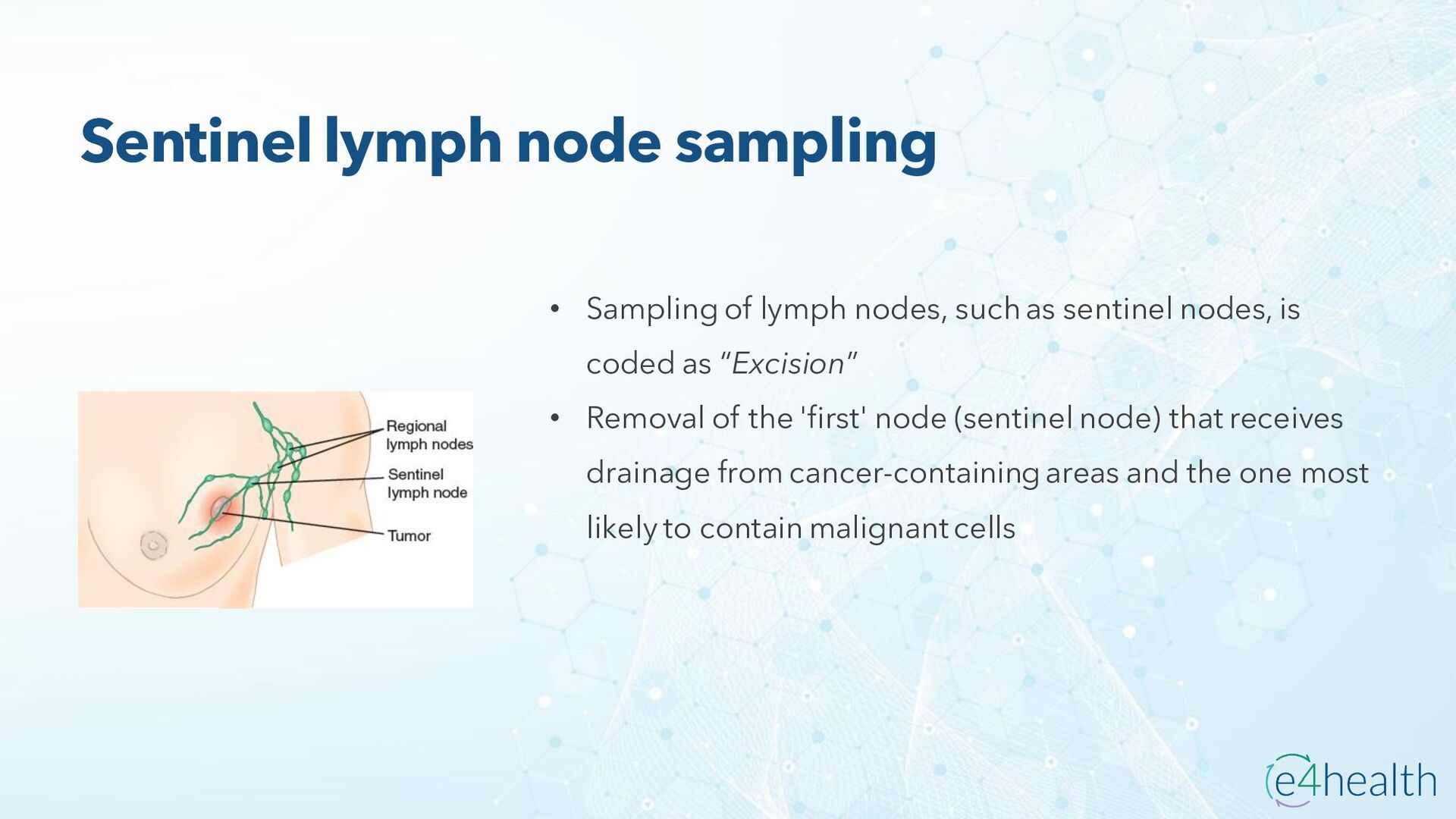
  38. Sentinel lymph node sampling • Sampling of lymph nodes, such

    as sentinel nodes, is coded as “Excision” • Removal of the 'first' node (sentinel node) that receives drainage from cancer-containing areas and the one most likely to contain malignant cells
  39. LYMPHOMA AND NON-ACUTE LEUKEMIA WITH OTHER PROCEDURES WITHOUT CC/MCC, With

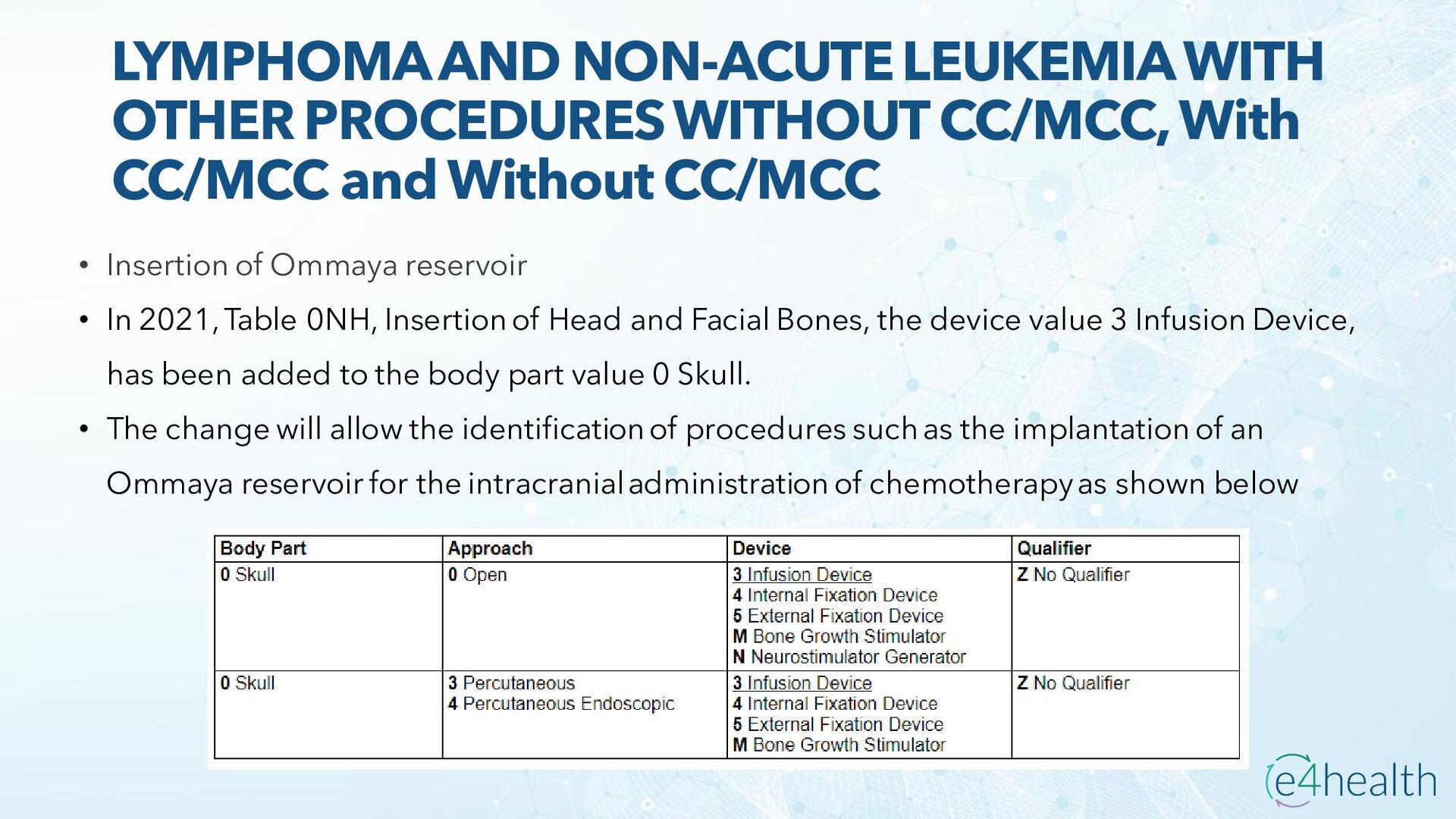
    CC/MCC and Without CC/MCC • Insertion of Ommaya reservoir • In 2021, Table 0NH, Insertion of Head and Facial Bones, the device value 3 Infusion Device, has been added to the body part value 0 Skull. • The change will allow the identification of procedures such as the implantation of an Ommaya reservoir for the intracranial administration of chemotherapy as shown below
  40. References • ICD-10-CM Guidelines April 1 2023 FY23 (cms.gov) •

    Management of Adverse Effects of Cancer Therapy - Hematology and Oncology - Merck Manuals Professional Edition • Overview of Lymphoma - Hematology and Oncology - Merck Manuals Professional Edition • Multiple Myeloma - Hematology and Oncology - Merck Manuals Professional Edition • Overview of Leukemia - Hematology and Oncology - Merck Manuals Professional Edition • What is CAR T-cell therapy? | Let’s Chat CAR T (letschatcart.com) • AHA ICD-10-CM and ICD-10-PCS Coding Handbook • ICD-10-PCS: An Applied Approach 2023 • Cengage: 3-2-1 CODE IT!
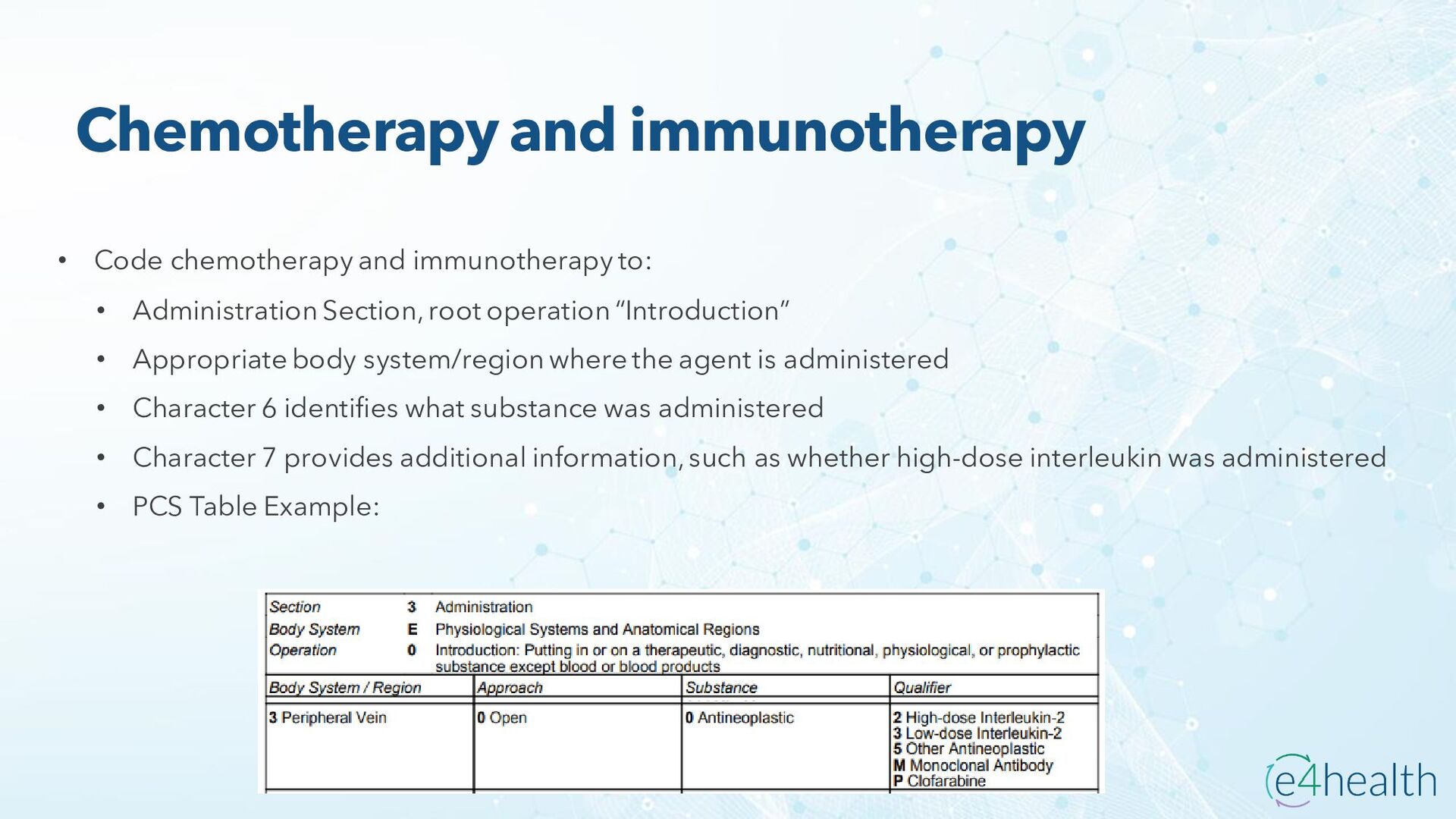
  41. Chemotherapy and immunotherapy • Code chemotherapy and immunotherapy to: •

    Administration Section, root operation “Introduction” • Appropriate body system/region where the agent is administered • Character 6 identifies what substance was administered • Character 7 provides additional information, such as whether high-dose interleukin was administered • PCS Table Example:
  42. Chimeric antigen receptor T-cell therapy (CAR-T) • Type of immunotherapy

    is a cell-based gene therapy for certain hematologic malignancies • B-cell ALL • B-cell lymphoma • Multiple myeloma • Autologous therapy where it involves collecting, processing, and administration to the patient • Code Z92.850, Personal history of Chimeric Antigen Receptor T-cell therapy, was created to track patients who have received Chimeric Antigen Receptor T-Cell Therapy (CAR-T). • Tracking encounters for these patients is important for the long-term impact and benefits of CAR-T therapy, assessment of costs and other issues presented by this evolving therapy
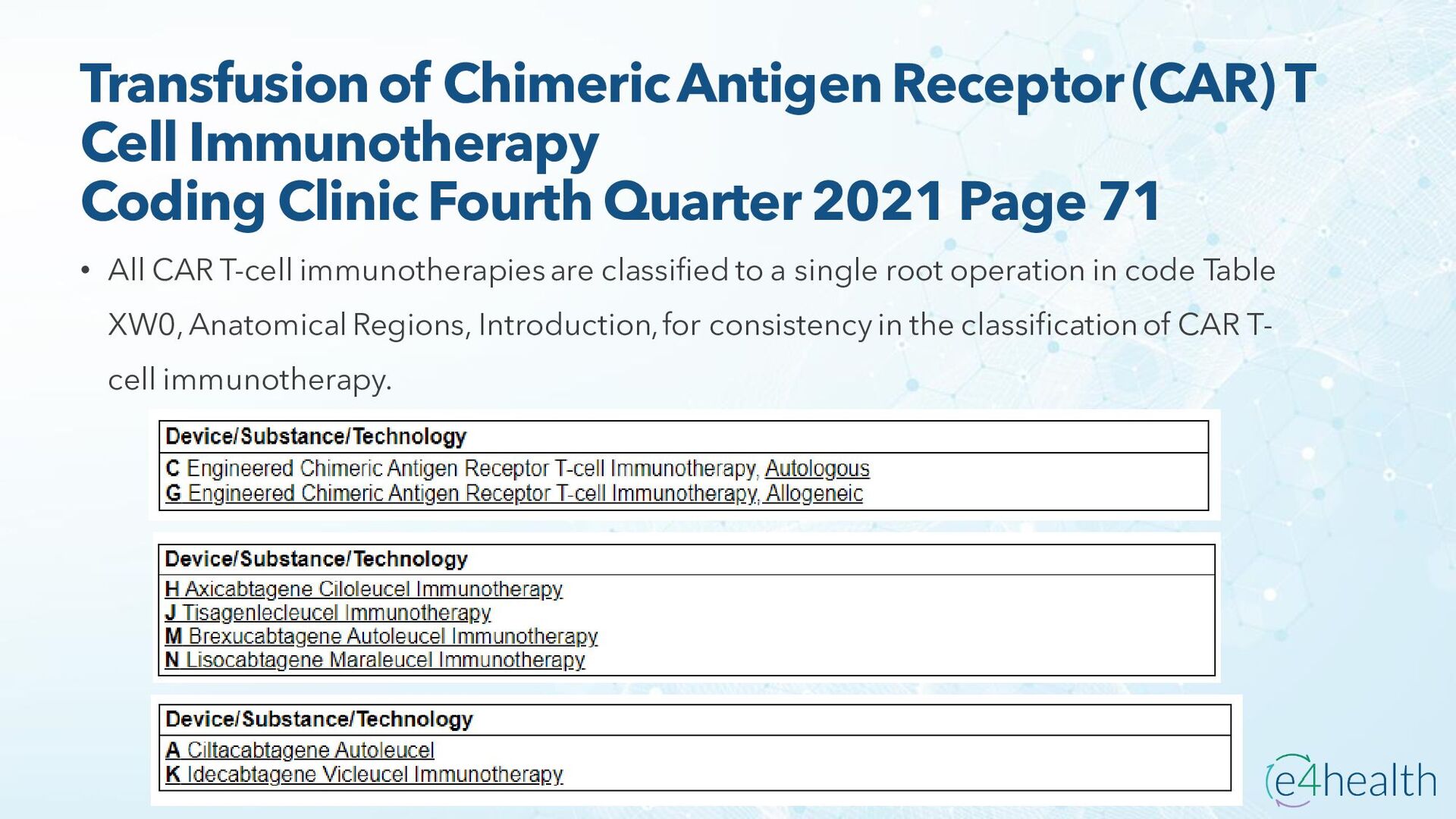
  43. Transfusion of Chimeric Antigen Receptor (CAR) T Cell Immunotherapy Coding

    Clinic Fourth Quarter 2021 Page 71 • All CAR T-cell immunotherapies are classified to a single root operation in code Table XW0, Anatomical Regions, Introduction, for consistency in the classification of CAR T- cell immunotherapy.