$30 off During Our Annual Pro Sale. View Details »

FY 2024: MDC 16 - Diseases of the Blood Forming...

Avatar for e4health e4health PRO
April 04, 2024
170

FY 2024: MDC 16 - Diseases of the Blood Forming Organs

Avatar for e4health

e4health PRO

April 04, 2024
Tweet

Transcript

  1. H I M | C O D I N G

    & C D I | H E A LT H I T | R E V C Y C L E Empowering Better Health e4health tackles healthcare’s data, quality and revenue challenges empowering your providers to focus on better care.
  2. Objectives • Review MDC 16- Diseases of the Blood and

    Blood Forming Organs with a focus on selected diagnoses and procedures • Learner will acquire a basic understanding of the diagnoses and procedures included in MDC-16 • Discuss Query opportunities in MDC-16 • Review coding clinics relevant to the chosen topics in each DRG
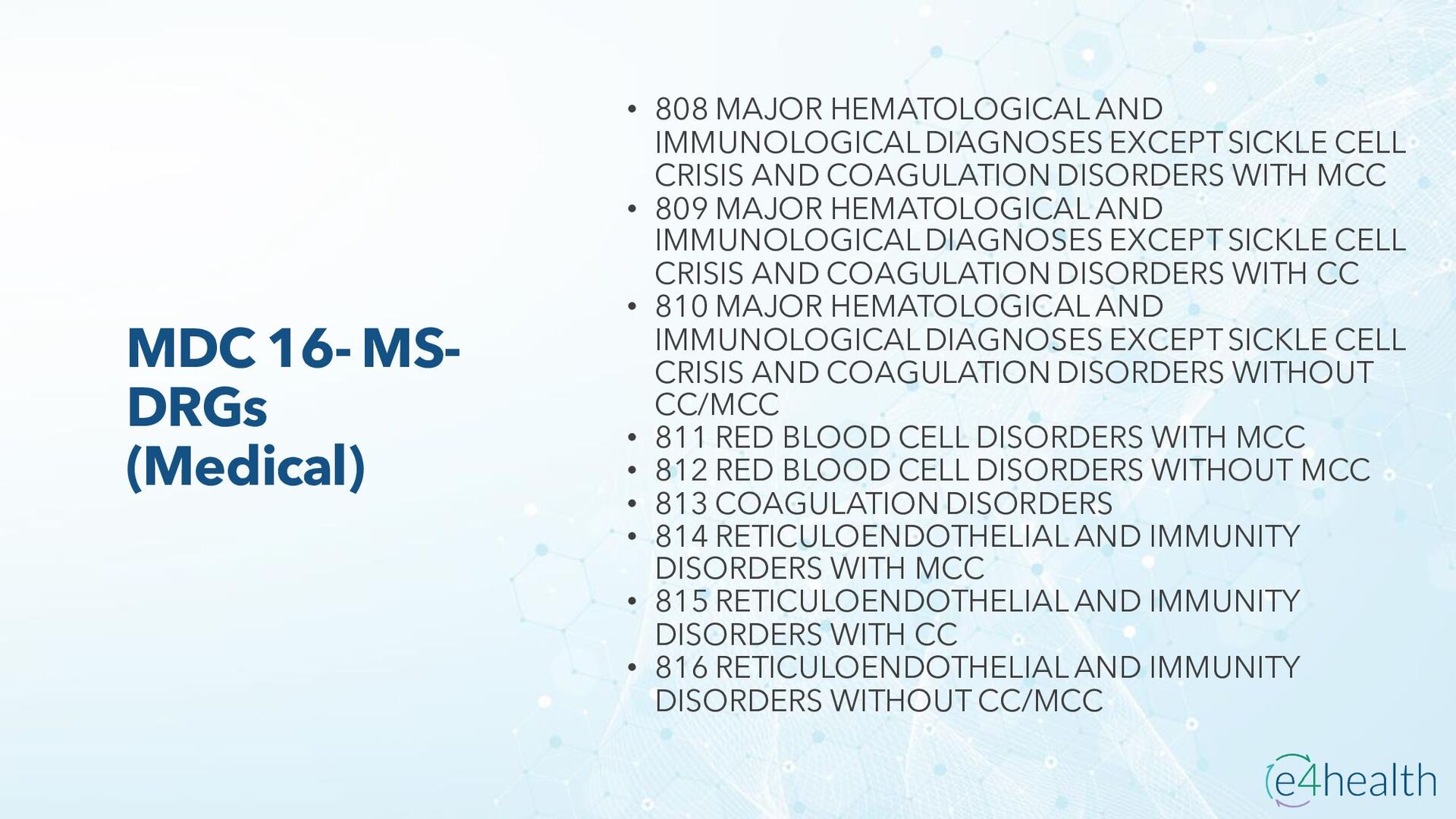
  3. MDC 16- MS- DRGs (Medical) • 808 MAJOR HEMATOLOGICAL AND

    IMMUNOLOGICAL DIAGNOSES EXCEPT SICKLE CELL CRISIS AND COAGULATION DISORDERS WITH MCC • 809 MAJOR HEMATOLOGICAL AND IMMUNOLOGICAL DIAGNOSES EXCEPT SICKLE CELL CRISIS AND COAGULATION DISORDERS WITH CC • 810 MAJOR HEMATOLOGICAL AND IMMUNOLOGICAL DIAGNOSES EXCEPT SICKLE CELL CRISIS AND COAGULATION DISORDERS WITHOUT CC/MCC • 811 RED BLOOD CELL DISORDERS WITH MCC • 812 RED BLOOD CELL DISORDERS WITHOUT MCC • 813 COAGULATION DISORDERS • 814 RETICULOENDOTHELIAL AND IMMUNITY DISORDERS WITH MCC • 815 RETICULOENDOTHELIAL AND IMMUNITY DISORDERS WITH CC • 816 RETICULOENDOTHELIAL AND IMMUNITY DISORDERS WITHOUT CC/MCC
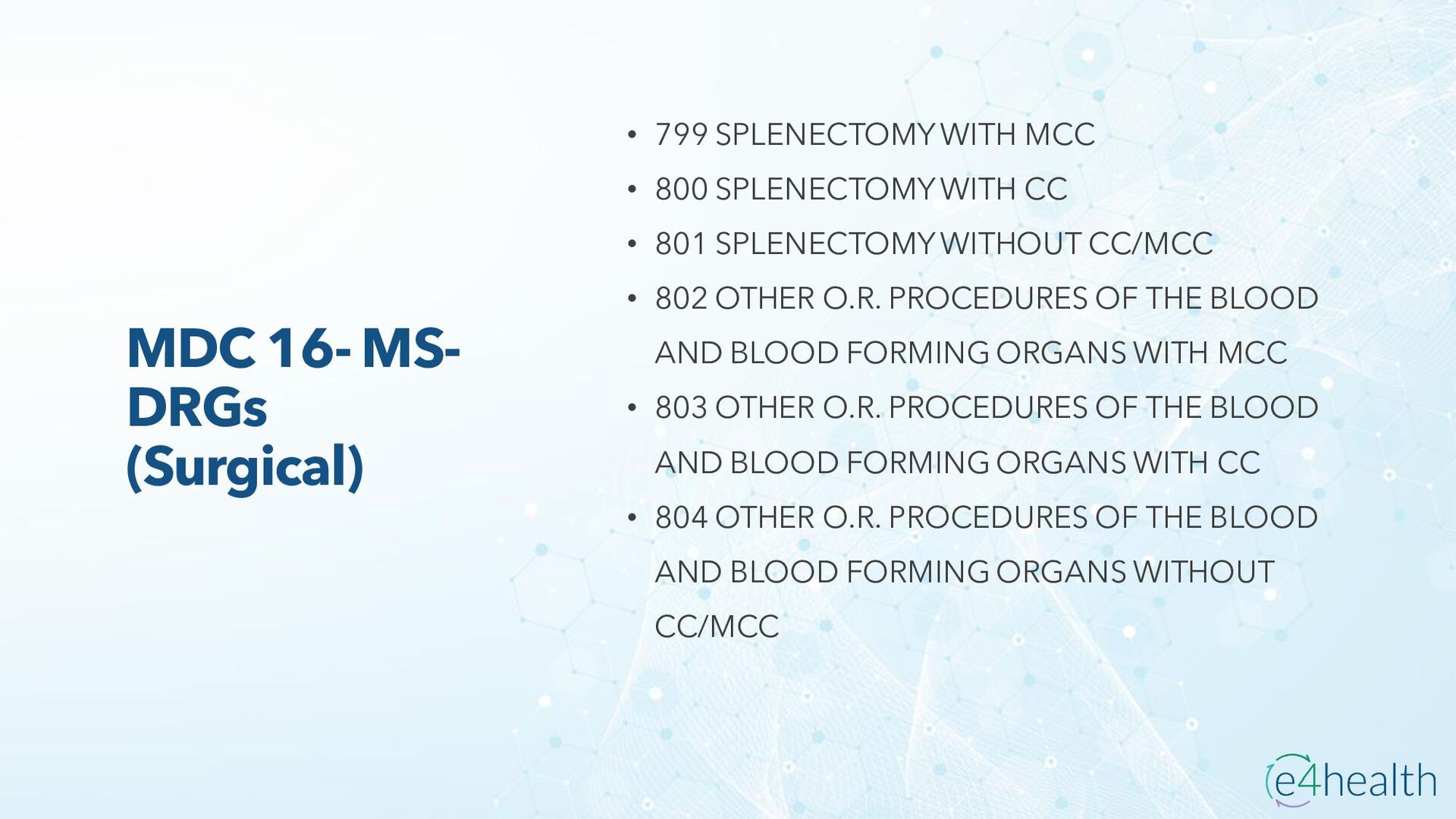
  4. MDC 16- MS- DRGs (Surgical) • 799 SPLENECTOMY WITH MCC

    • 800 SPLENECTOMY WITH CC • 801 SPLENECTOMY WITHOUT CC/MCC • 802 OTHER O.R. PROCEDURES OF THE BLOOD AND BLOOD FORMING ORGANS WITH MCC • 803 OTHER O.R. PROCEDURES OF THE BLOOD AND BLOOD FORMING ORGANS WITH CC • 804 OTHER O.R. PROCEDURES OF THE BLOOD AND BLOOD FORMING ORGANS WITHOUT CC/MCC
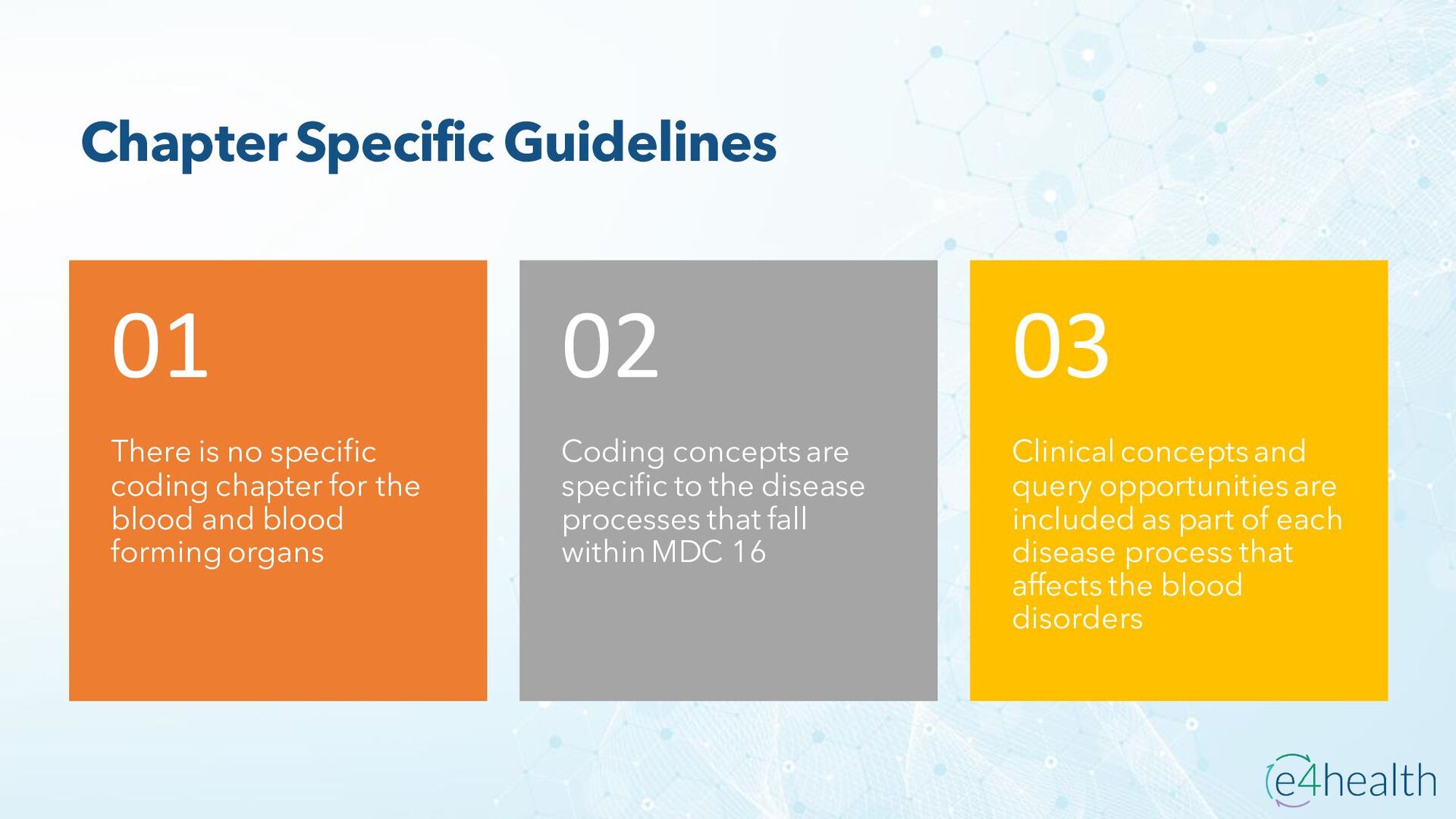
  5. Chapter Specific Guidelines There is no specific coding chapter for

    the blood and blood forming organs 01 Coding concepts are specific to the disease processes that fall within MDC 16 02 Clinical concepts and query opportunities are included as part of each disease process that affects the blood disorders 03
  6. Anemia Terms • Anemia - a condition in which blood

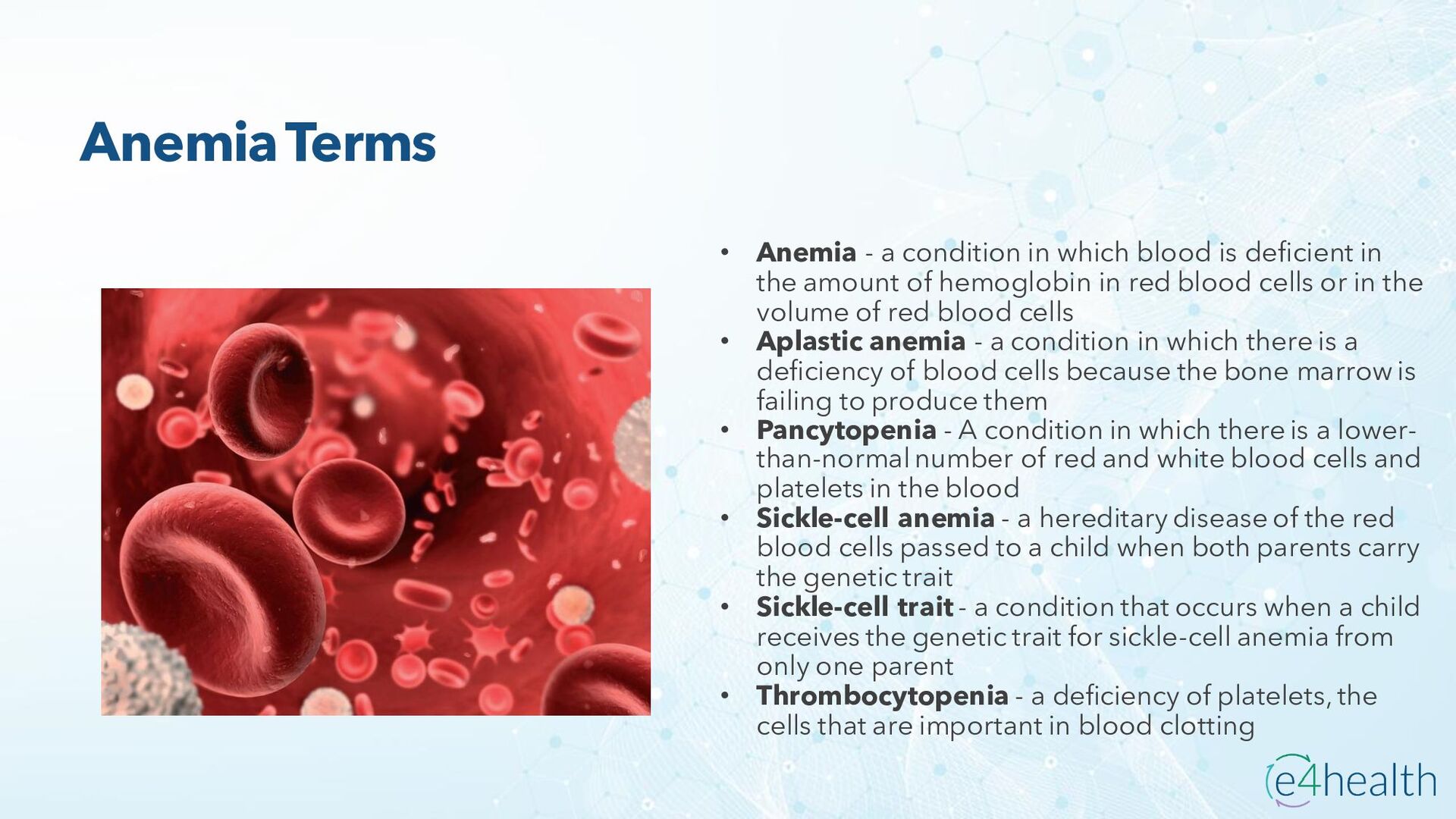
    is deficient in the amount of hemoglobin in red blood cells or in the volume of red blood cells • Aplastic anemia - a condition in which there is a deficiency of blood cells because the bone marrow is failing to produce them • Pancytopenia - A condition in which there is a lower- than-normal number of red and white blood cells and platelets in the blood • Sickle-cell anemia - a hereditary disease of the red blood cells passed to a child when both parents carry the genetic trait • Sickle-cell trait - a condition that occurs when a child receives the genetic trait for sickle-cell anemia from only one parent • Thrombocytopenia - a deficiency of platelets, the cells that are important in blood clotting
  7. Anemia Deficiencies • chronic blood loss, D50.0 • inadequate dietary

    iron intake, D50.8 • Unspecified cause of iron deficiency codes to D50.9 • If iron deficiency is due to acute blood loss anemia, it is coded to D62, acute posthemorrhagic anemia Iron deficiency can be due to • B12 anemia – category D51 • Folate anemia – category D52 • 4th character indicating the specific type of deficiency Other deficiency anemias are coded to the type of deficiency
  8. Nutritional Anemia and Anemia Unspecified coding Clinic Fourth Quarter 2018

    Page 88 • Question: Both code D53.9, Nutritional anemia, unspecified, and code D64.9, Anemia, unspecified, are nonspecific codes. Code D53.9 has an Excludes1 note in the Tabular List for "anemia NOS (D64.9)." How should the Excludes1 notes be interpreted, and when both conditions are documented in the medical record, which condition should be coded? • Answer: If provider documentation indicates both nutritional anemia and anemia, assign only code D53.9, Nutritional anemia, unspecified. Code D53.9 indicates a type of anemia and code D64.9, Anemia, unspecified, does not provide any additional information about the patient. It would be contradictory to have a code for unspecified and another specified code for the same condition.
  9. Acute blood loss anemia • Due to sudden and significant

    blood loss over a brief period of time • Provider documentation needs to showcase that acute blood loss anemia is of clinical significance • In the event of a surgery, acute blood loss anemia is not necessarily a complication of the procedure • Many procedures have significant blood loss that may be inherent to the surgery and blood transfusions can be for preventative measures. • If documentation is unclear, may need to query the MD to see if the acute blood loss anemia is a complication of surgery • If “postoperative anemia” is documented without stating “acute blood loss”, code D64.9, Anemia unspecified should be coded • If the “blood loss anemia” is neither stated as acute or chronic, code D50.9, iron deficiency anemia secondary to chronic blood loss, is the default
  10. Facility-Specific Coding Guidelines Coding Clinic First Quarter 2014 Page 15

    • Question: We are considering developing internal coding guidelines and obtaining medical staff approval to code acute blood loss anemia. The guidelines would specify lab values pre- and post-surgery, as well as some clinical signs to allow coders to code acute blood loss anemia without the need to have physician documentation. Would this be acceptable? • Answer: No, it is not acceptable. The Official Coding Guideline Section III.B., states: "Abnormal findings (laboratory, x-ray, pathologic, and other diagnostic results) are not coded and reported unless the physician indicates their clinical significance. If the findings are outside the normal range and the physician has ordered other tests to evaluate the condition or prescribed treatment, it is appropriate to ask the physician whether the diagnosis should be added." Therefore, internal guidelines should not replace physician documentation. • Facilities can work together with their medical staff to develop facility specific coding guidelines, which promote complete documentation needed for consistent code assignment. Additionally, these guidelines can guide the coding professionals as to when they should query physicians for clarification of their documentation. Any guidelines developed must be applied consistently to all records coded. An internal facility guideline should not interpret abnormal findings to replace physician documentation or physician query. The guideline may provide assistance in determining when a physician query is appropriate, but it may not interpret abnormal test results. • These facility guidelines must not conflict with the "Official ICD-10-CM Guidelines for Coding and Reporting" developed by the Cooperating Parties and, additionally, they should not be developed to replace the physician documentation needed to support code assignment.
  11. Acute blood loss anemia due to gastrointestinalbleeding Coding clinic first

    quarter 2023 pages 15-16 • Question: A patient was admitted for treatment of acute blood loss anemia (ABLA) due to gastrointestinal (GI) bleeding, likely caused by chronic nonsteroidal anti-inflammatory drug (NSAID) use. Two units of packed red blood cells were transfused. An upper endoscopy revealed non-bleeding gastric ulcers. The provider's final diagnostic statement listed, "Acute blood loss anemia due to gastrointestinal bleeding." Since both anemia and GI bleeding were responsible for the admission, would they be considered interrelated and either condition selected as the principal diagnosis? • Answer: It would be appropriate to sequence either the anemia or the GI bleeding as principal diagnosis. When both anemia and GI bleeding are present on admission and meet the definition of principal diagnosis, either condition may be sequenced first. The Official Guidelines for Coding and Reporting, Section II. B., states, "When there are two or more interrelated conditions (such as diseases in the same ICD-10-CM chapter or manifestations characteristically associated with a certain disease) potentially meeting the definition of principal diagnosis, either condition may be sequenced first, unless the circumstances of the admission, the therapy provided, the Tabular List, or the Alphabetical Index indicate otherwise." If, however, one of the conditions is clearly documented as causing the admission, then that condition should be designated as the principal diagnosis."
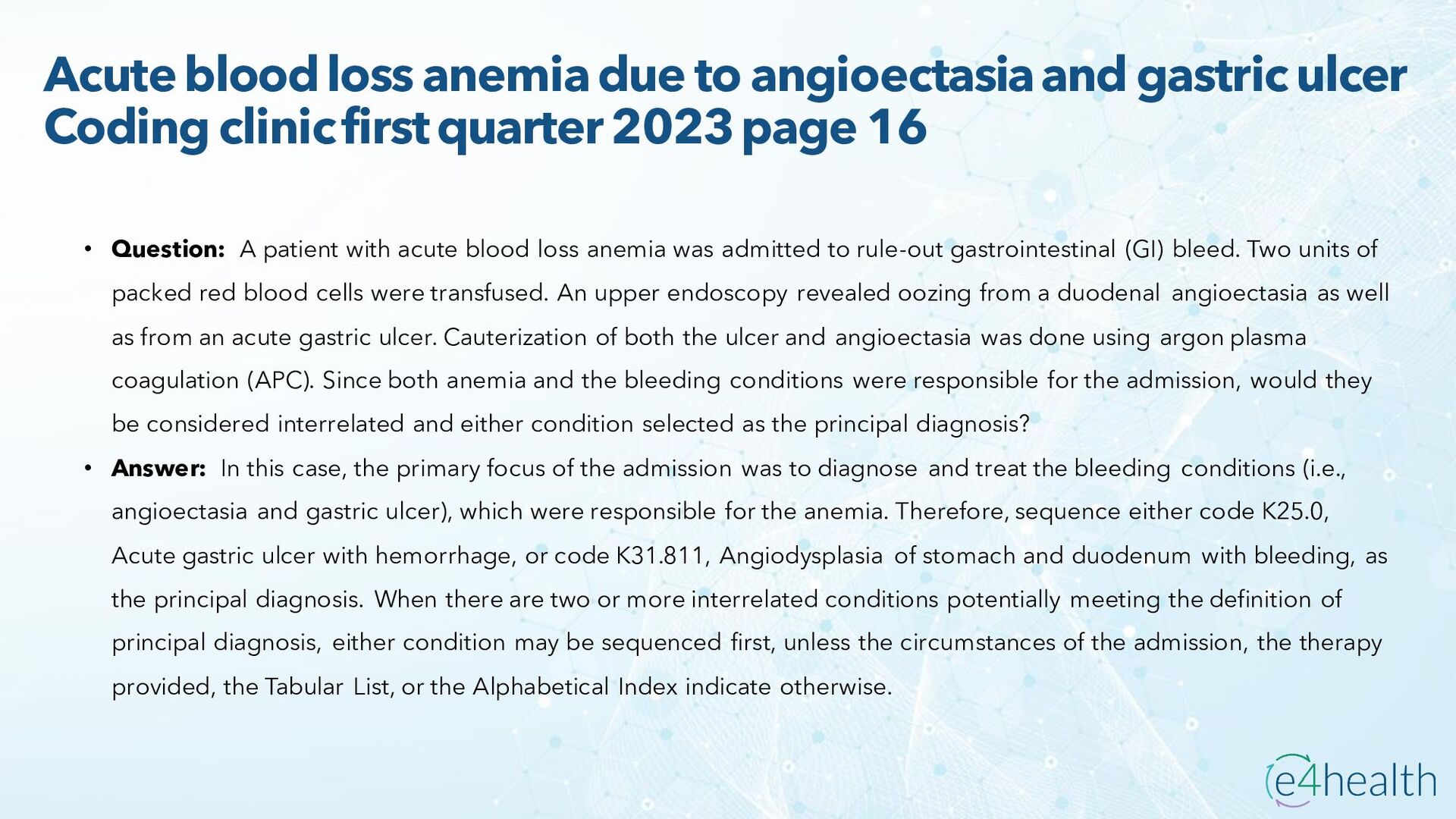
  12. Acute blood loss anemia due to angioectasia and gastric ulcer

    Coding clinic first quarter 2023 page 16 • Question: A patient with acute blood loss anemia was admitted to rule-out gastrointestinal (GI) bleed. Two units of packed red blood cells were transfused. An upper endoscopy revealed oozing from a duodenal angioectasia as well as from an acute gastric ulcer. Cauterization of both the ulcer and angioectasia was done using argon plasma coagulation (APC). Since both anemia and the bleeding conditions were responsible for the admission, would they be considered interrelated and either condition selected as the principal diagnosis? • Answer: In this case, the primary focus of the admission was to diagnose and treat the bleeding conditions (i.e., angioectasia and gastric ulcer), which were responsible for the anemia. Therefore, sequence either code K25.0, Acute gastric ulcer with hemorrhage, or code K31.811, Angiodysplasia of stomach and duodenum with bleeding, as the principal diagnosis. When there are two or more interrelated conditions potentially meeting the definition of principal diagnosis, either condition may be sequenced first, unless the circumstances of the admission, the therapy provided, the Tabular List, or the Alphabetical Index indicate otherwise.
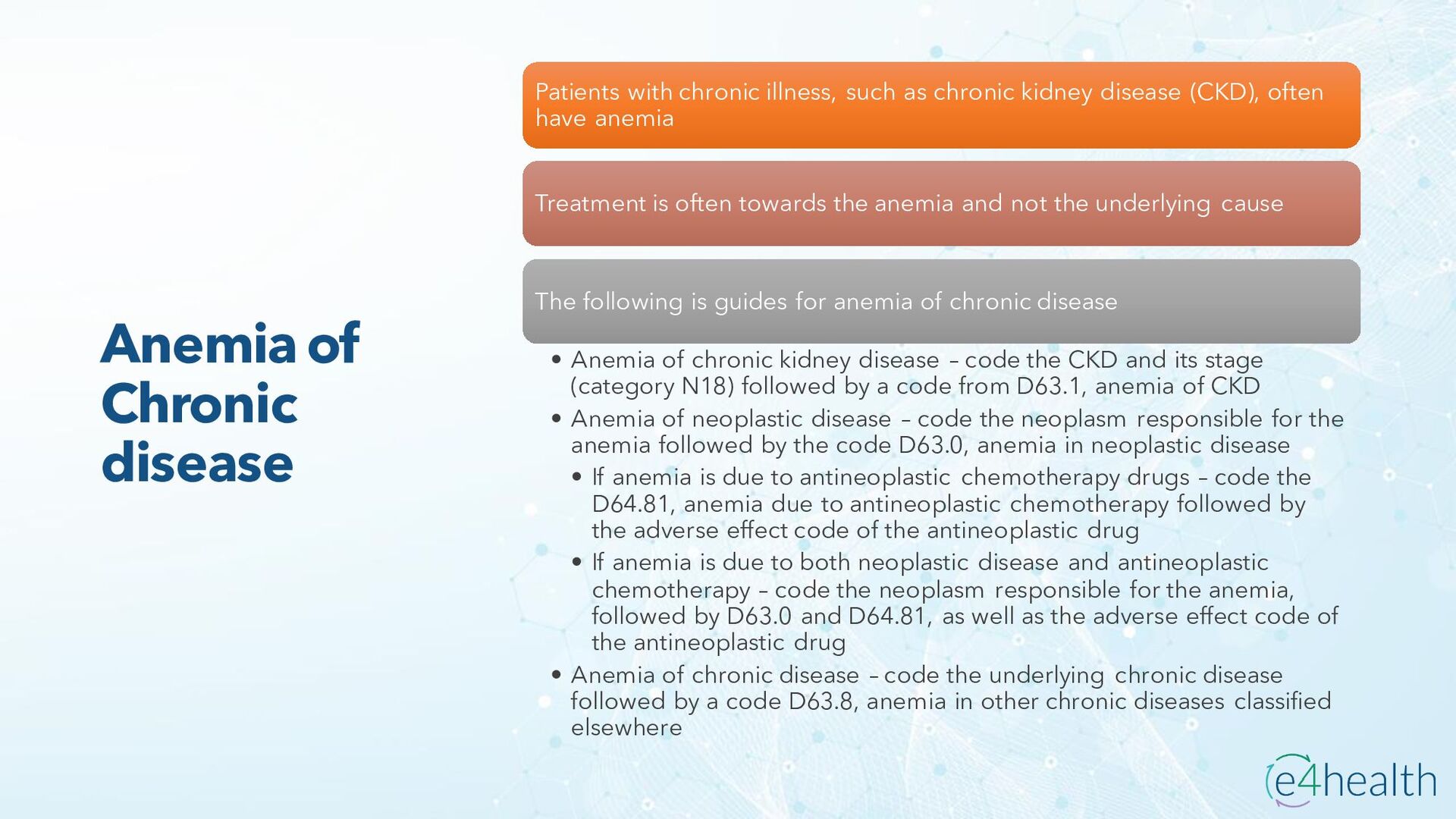
  13. Anemia of Chronic disease Patients with chronic illness, such as

    chronic kidney disease (CKD), often have anemia Treatment is often towards the anemia and not the underlying cause The following is guides for anemia of chronic disease • Anemia of chronic kidney disease – code the CKD and its stage (category N18) followed by a code from D63.1, anemia of CKD • Anemia of neoplastic disease – code the neoplasm responsible for the anemia followed by the code D63.0, anemia in neoplastic disease • If anemia is due to antineoplastic chemotherapy drugs – code the D64.81, anemia due to antineoplastic chemotherapy followed by the adverse effect code of the antineoplastic drug • If anemia is due to both neoplastic disease and antineoplastic chemotherapy – code the neoplasm responsible for the anemia, followed by D63.0 and D64.81, as well as the adverse effect code of the antineoplastic drug • Anemia of chronic disease – code the underlying chronic disease followed by a code D63.8, anemia in other chronic diseases classified elsewhere
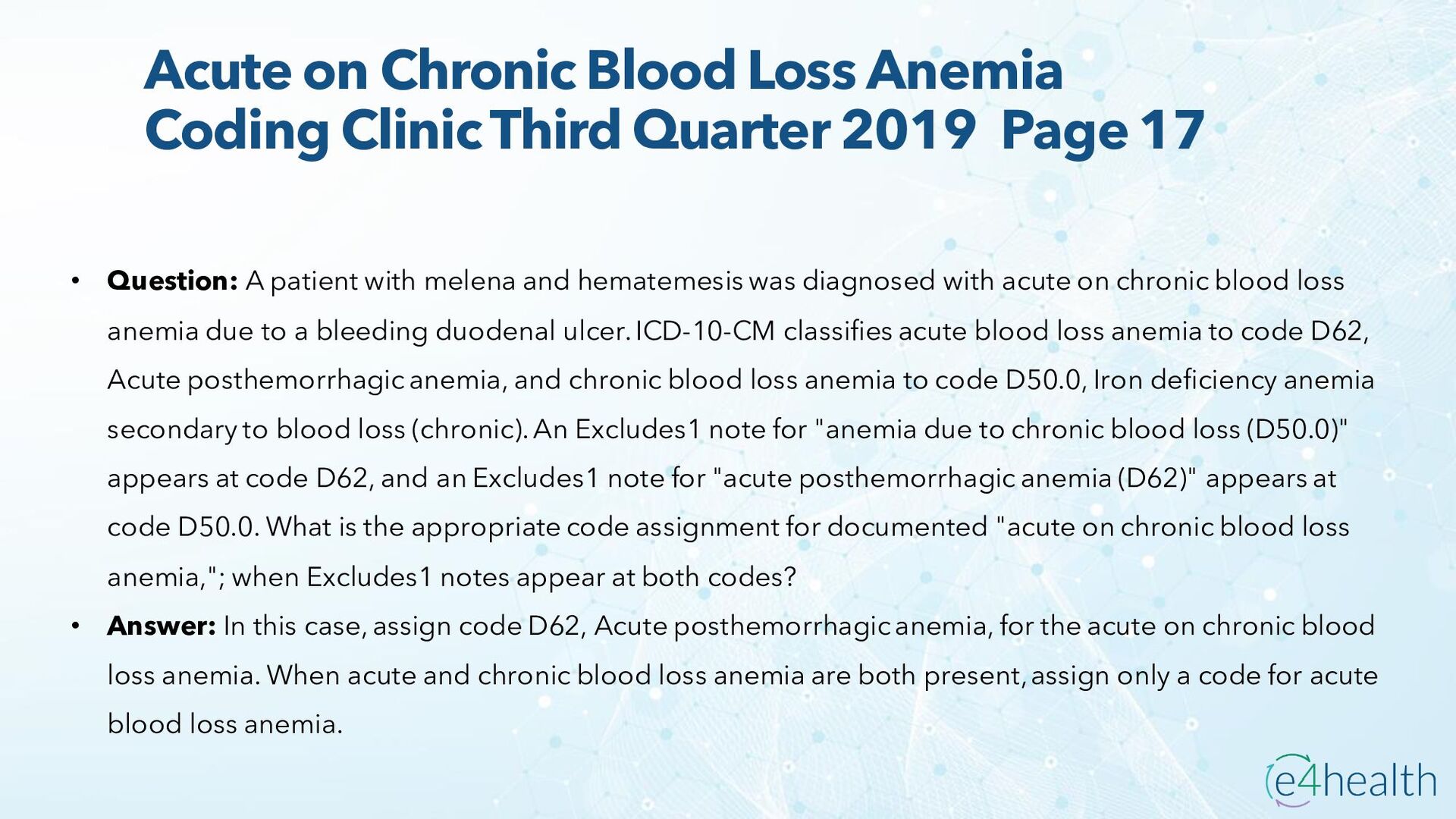
  14. Acute on Chronic Blood Loss Anemia Coding Clinic Third Quarter

    2019 Page 17 • Question: A patient with melena and hematemesis was diagnosed with acute on chronic blood loss anemia due to a bleeding duodenal ulcer. ICD-10-CM classifies acute blood loss anemia to code D62, Acute posthemorrhagic anemia, and chronic blood loss anemia to code D50.0, Iron deficiency anemia secondary to blood loss (chronic). An Excludes1 note for "anemia due to chronic blood loss (D50.0)" appears at code D62, and an Excludes1 note for "acute posthemorrhagic anemia (D62)" appears at code D50.0. What is the appropriate code assignment for documented "acute on chronic blood loss anemia,"; when Excludes1 notes appear at both codes? • Answer: In this case, assign code D62, Acute posthemorrhagic anemia, for the acute on chronic blood loss anemia. When acute and chronic blood loss anemia are both present, assign only a code for acute blood loss anemia.
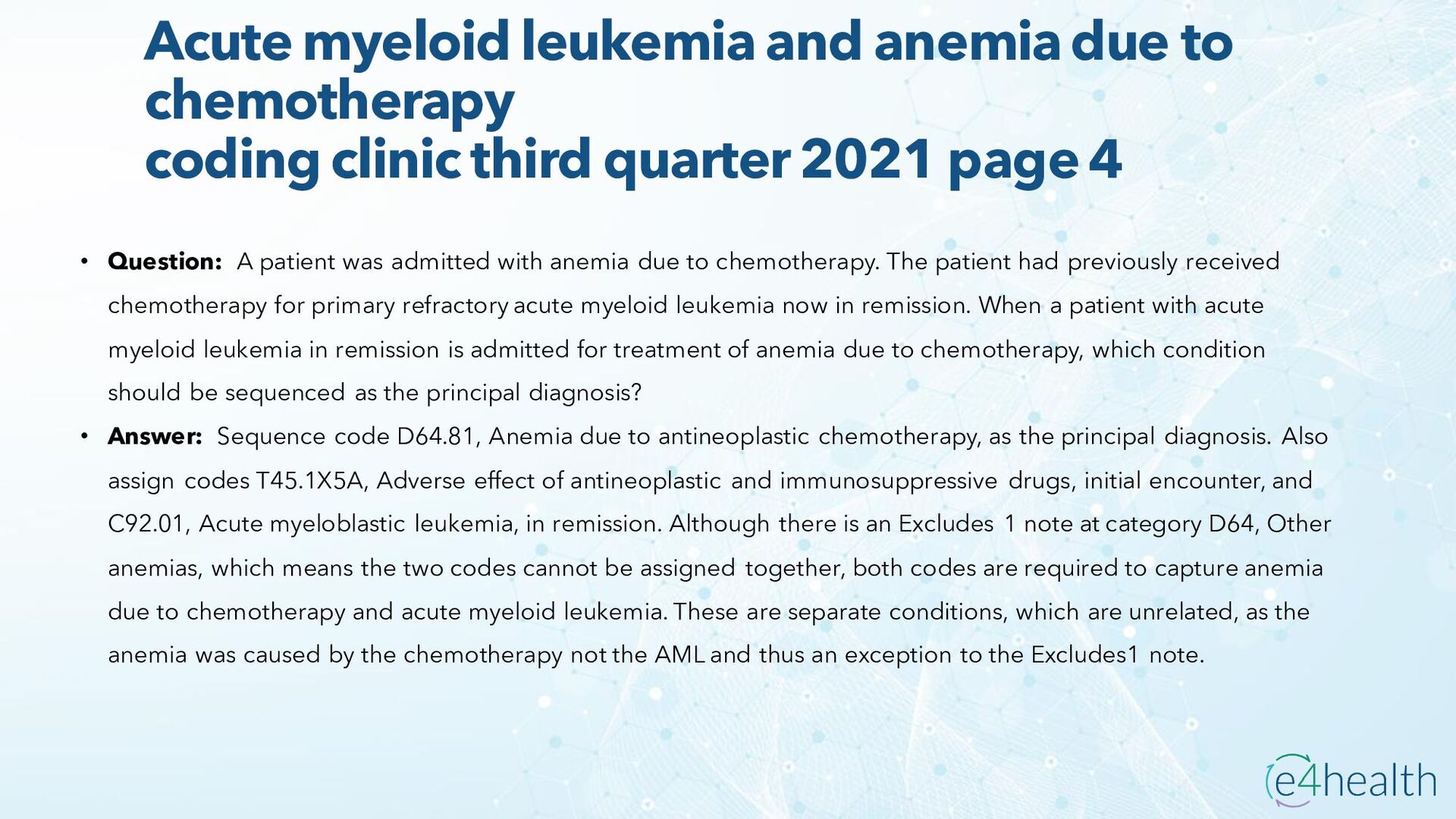
  15. Acute myeloid leukemia and anemia due to chemotherapy coding clinic

    third quarter 2021 page 4 • Question: A patient was admitted with anemia due to chemotherapy. The patient had previously received chemotherapy for primary refractory acute myeloid leukemia now in remission. When a patient with acute myeloid leukemia in remission is admitted for treatment of anemia due to chemotherapy, which condition should be sequenced as the principal diagnosis? • Answer: Sequence code D64.81, Anemia due to antineoplastic chemotherapy, as the principal diagnosis. Also assign codes T45.1X5A, Adverse effect of antineoplastic and immunosuppressive drugs, initial encounter, and C92.01, Acute myeloblastic leukemia, in remission. Although there is an Excludes 1 note at category D64, Other anemias, which means the two codes cannot be assigned together, both codes are required to capture anemia due to chemotherapy and acute myeloid leukemia. These are separate conditions, which are unrelated, as the anemia was caused by the chemotherapy not the AML and thus an exception to the Excludes1 note.
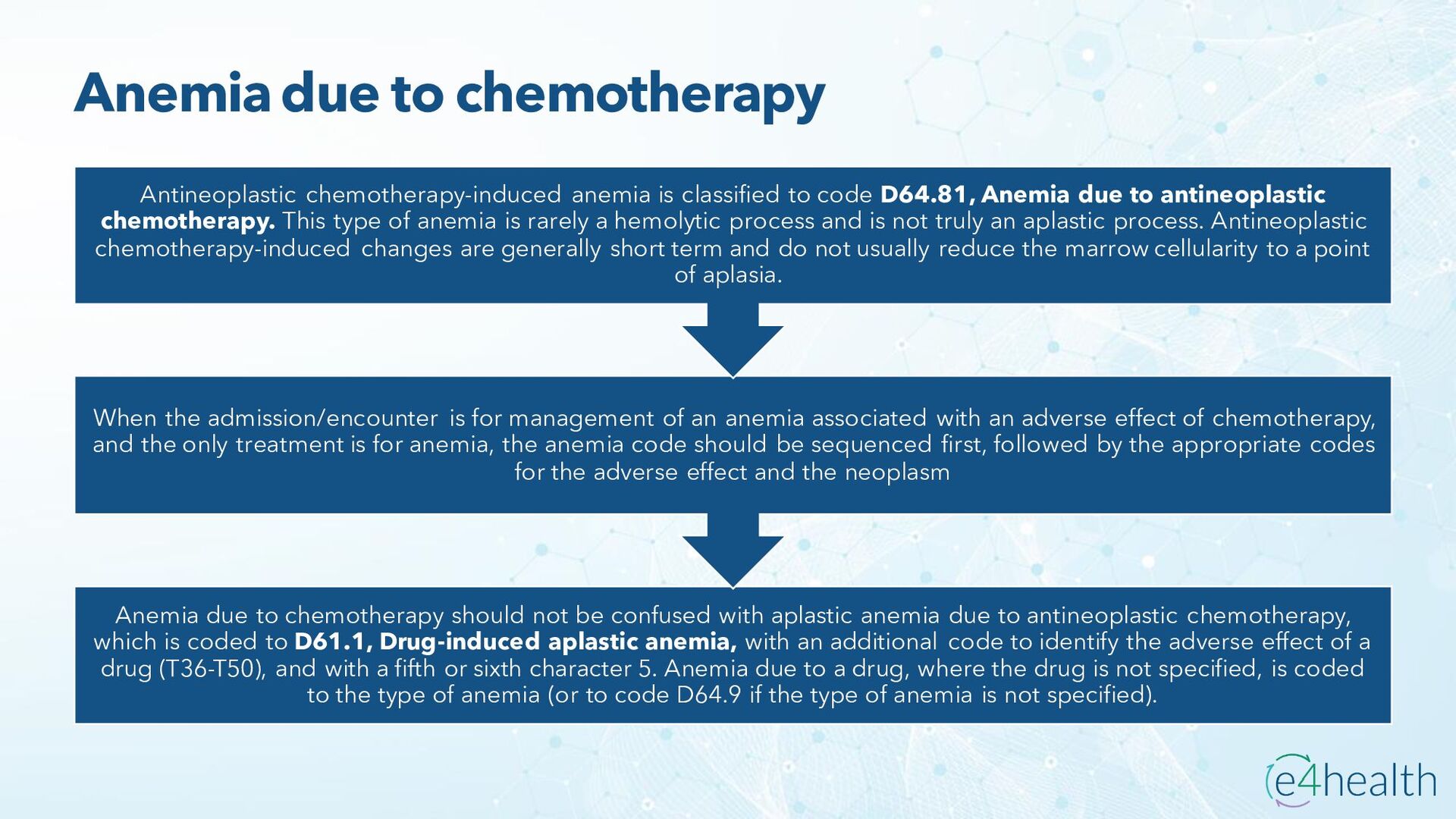
  16. Anemia due to chemotherapy Anemia due to chemotherapy should not

    be confused with aplastic anemia due to antineoplastic chemotherapy, which is coded to D61.1, Drug-induced aplastic anemia, with an additional code to identify the adverse effect of a drug (T36-T50), and with a fifth or sixth character 5. Anemia due to a drug, where the drug is not specified, is coded to the type of anemia (or to code D64.9 if the type of anemia is not specified). When the admission/encounter is for management of an anemia associated with an adverse effect of chemotherapy, and the only treatment is for anemia, the anemia code should be sequenced first, followed by the appropriate codes for the adverse effect and the neoplasm Antineoplastic chemotherapy-induced anemia is classified to code D64.81, Anemia due to antineoplastic chemotherapy. This type of anemia is rarely a hemolytic process and is not truly an aplastic process. Antineoplastic chemotherapy-induced changes are generally short term and do not usually reduce the marrow cellularity to a point of aplasia.
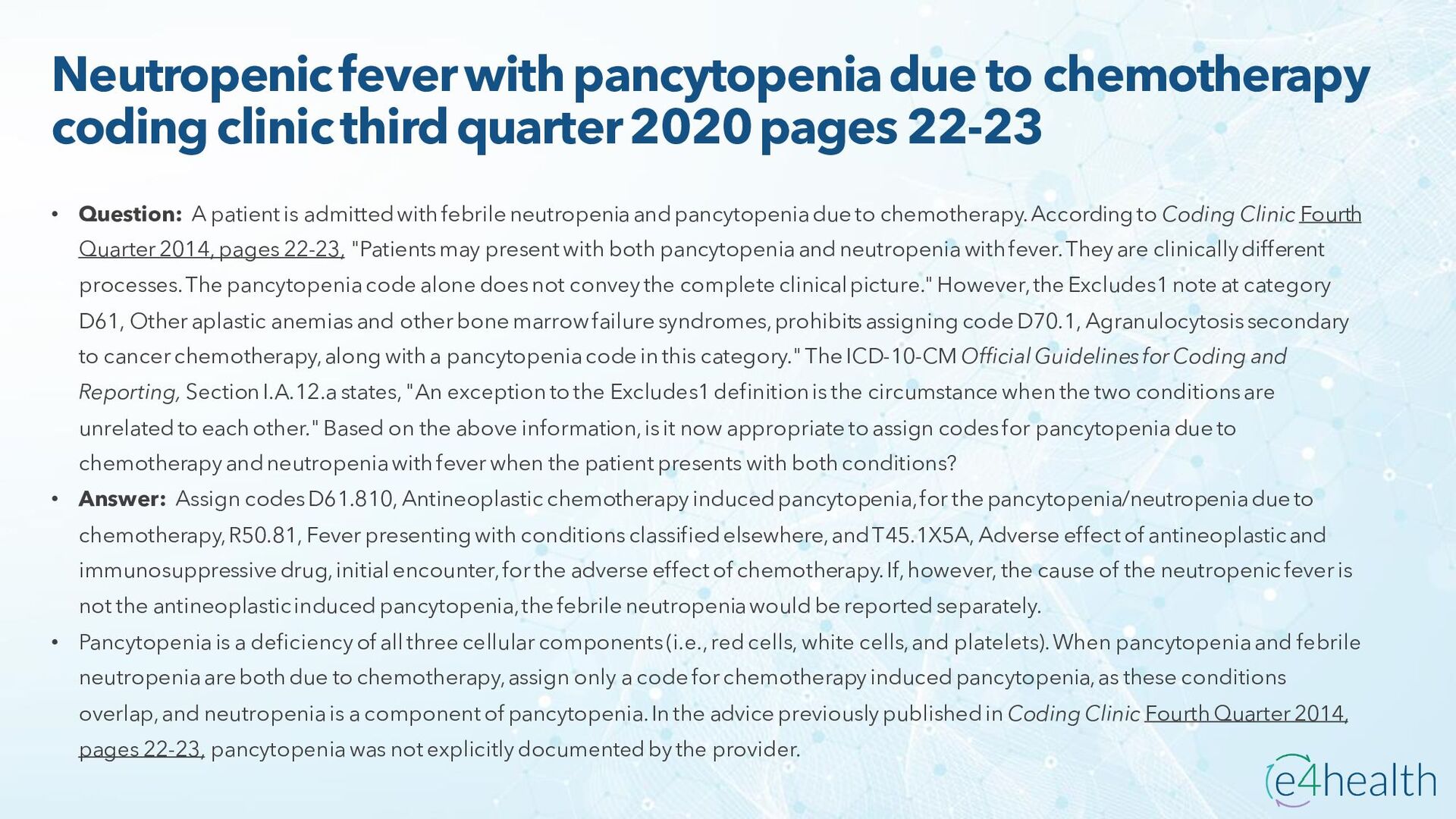
  17. Neutropenic fever with pancytopenia due to chemotherapy coding clinic third

    quarter 2020 pages 22-23 • Question: A patient is admitted with febrile neutropenia and pancytopenia due to chemotherapy. According to Coding Clinic Fourth Quarter 2014, pages 22-23, "Patients may present with both pancytopenia and neutropenia with fever. They are clinically different processes. The pancytopenia code alone does not convey the complete clinical picture." However, the Excludes1 note at category D61, Other aplastic anemias and other bone marrow failure syndromes, prohibits assigning code D70.1, Agranulocytosis secondary to cancer chemotherapy, along with a pancytopenia code in this category." The ICD-10-CM Official Guidelines for Coding and Reporting, Section I.A.12.a states, "An exception to the Excludes1 definition is the circumstance when the two conditions are unrelated to each other." Based on the above information, is it now appropriate to assign codes for pancytopenia due to chemotherapy and neutropenia with fever when the patient presents with both conditions? • Answer: Assign codes D61.810, Antineoplastic chemotherapy induced pancytopenia, for the pancytopenia/neutropenia due to chemotherapy, R50.81, Fever presenting with conditions classified elsewhere, and T45.1X5A, Adverse effect of antineoplastic and immunosuppressive drug, initial encounter, for the adverse effect of chemotherapy. If, however, the cause of the neutropenic fever is not the antineoplastic induced pancytopenia, the febrile neutropenia would be reported separately. • Pancytopenia is a deficiency of all three cellular components (i.e., red cells, white cells, and platelets). When pancytopenia and febrile neutropenia are both due to chemotherapy, assign only a code for chemotherapy induced pancytopenia, as these conditions overlap, and neutropenia is a component of pancytopenia. In the advice previously published in Coding Clinic Fourth Quarter 2014, pages 22-23, pancytopenia was not explicitly documented by the provider.
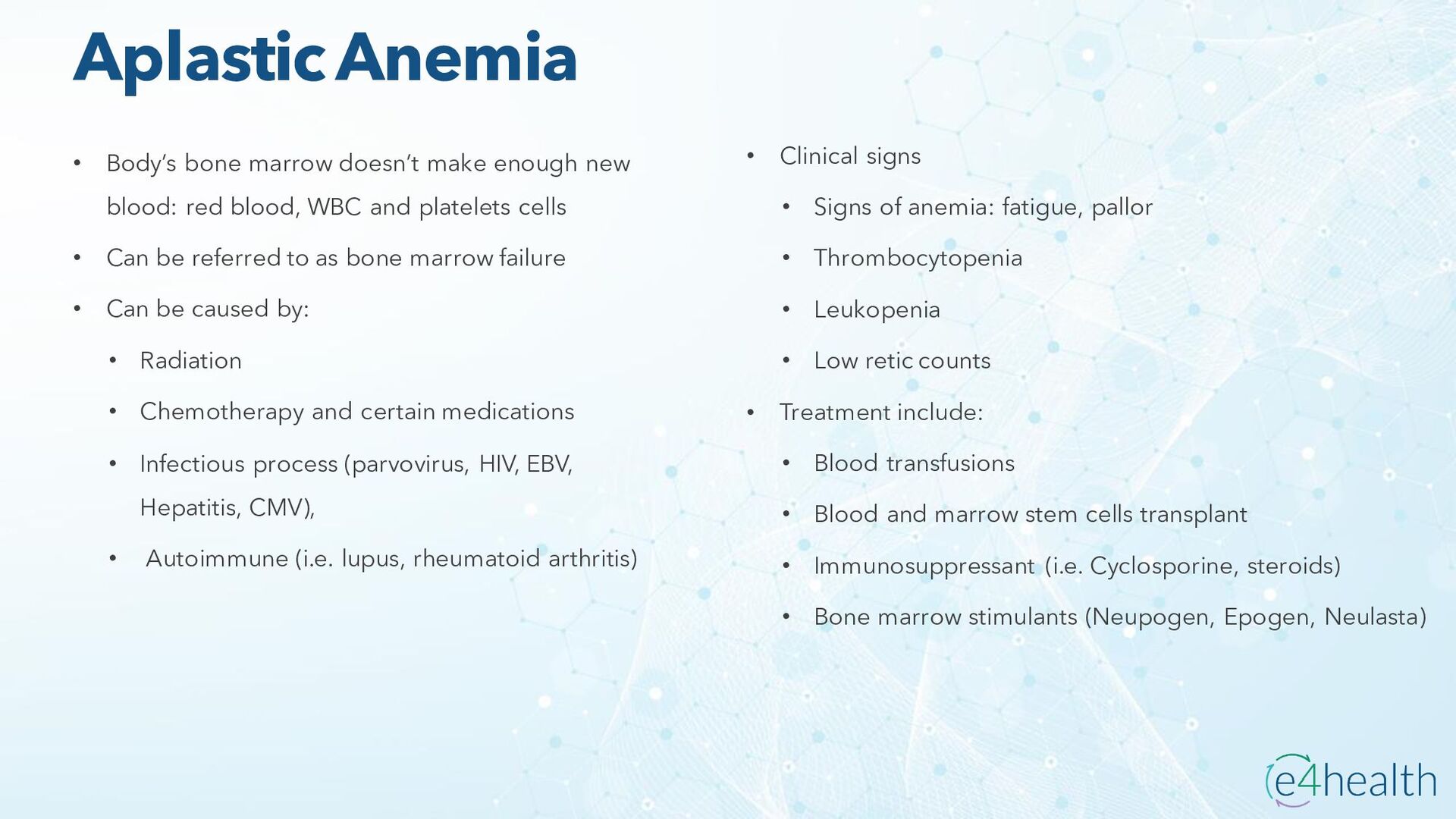
  18. Aplastic Anemia • Body’s bone marrow doesn’t make enough new

    blood: red blood, WBC and platelets cells • Can be referred to as bone marrow failure • Can be caused by: • Radiation • Chemotherapy and certain medications • Infectious process (parvovirus, HIV, EBV, Hepatitis, CMV), • Autoimmune (i.e. lupus, rheumatoid arthritis) • Clinical signs • Signs of anemia: fatigue, pallor • Thrombocytopenia • Leukopenia • Low retic counts • Treatment include: • Blood transfusions • Blood and marrow stem cells transplant • Immunosuppressant (i.e. Cyclosporine, steroids) • Bone marrow stimulants (Neupogen, Epogen, Neulasta)
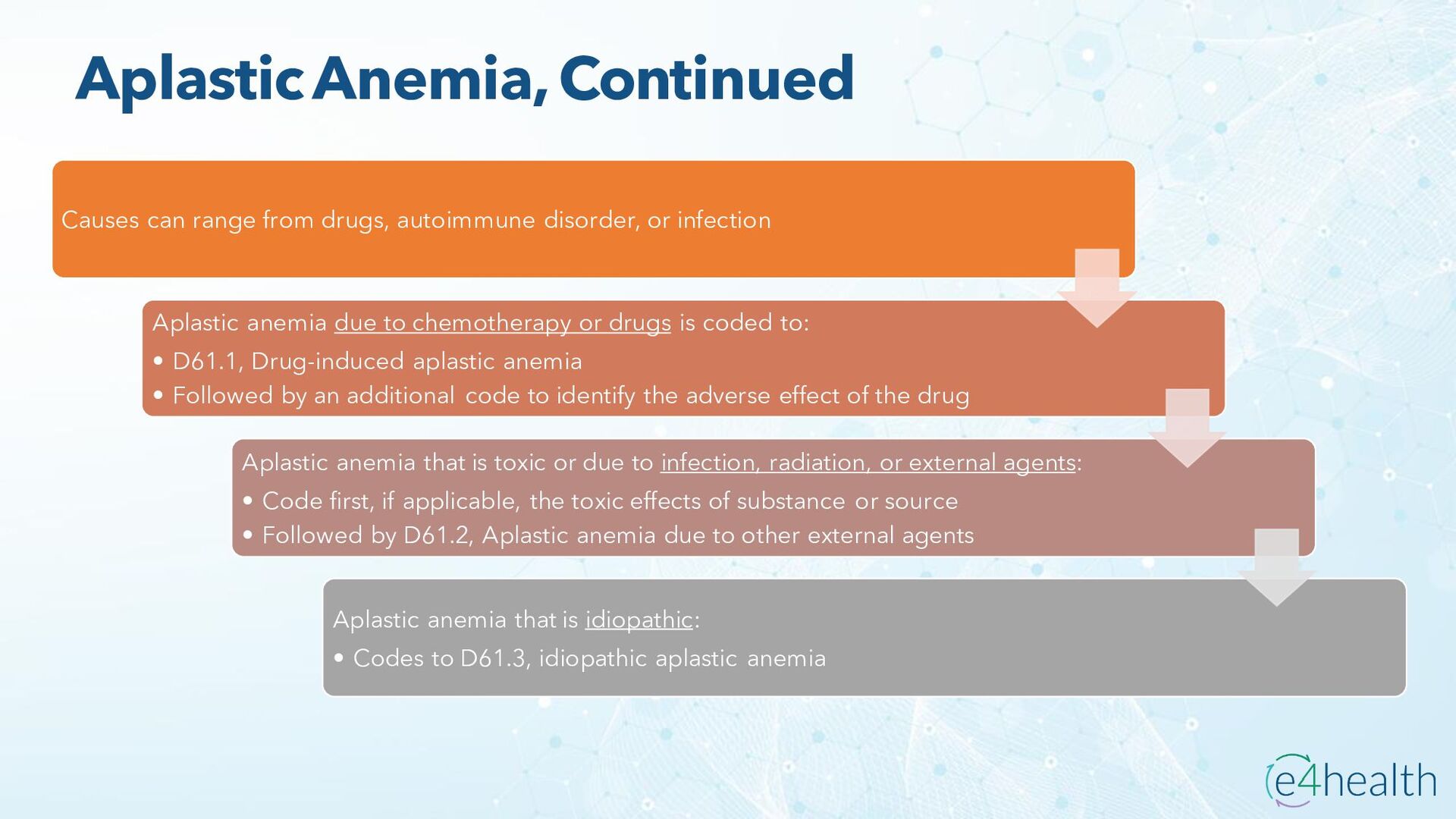
  19. Aplastic Anemia, Continued Causes can range from drugs, autoimmune disorder,

    or infection Aplastic anemia due to chemotherapy or drugs is coded to: • D61.1, Drug-induced aplastic anemia • Followed by an additional code to identify the adverse effect of the drug Aplastic anemia that is toxic or due to infection, radiation, or external agents: • Code first, if applicable, the toxic effects of substance or source • Followed by D61.2, Aplastic anemia due to other external agents Aplastic anemia that is idiopathic: • Codes to D61.3, idiopathic aplastic anemia
  20. Anemia – General Query opportunity • Review documentation for: •

    Type of anemia • Anemia acuity if applicable • Mineral deficits related to nutritional anemia • “cause and effect” relationship between intervention and the blood or immune disorder or due to drugs • Lab work if it escalates to the diagnosis of pancytopenia • Associated conditions such as: • Malnutrition and its severity • Neoplasms as underlying cause • GI bleed and its location
  21. Sickle-Cell Anemia • Sickle-cell trait (D57.3) - a condition that

    occurs when a child receives the genetic trait for sickle-cell anemia from only one parent • Sickle-cell anemia or disease - a hereditary disease of the red blood cells passed to a child when both parents carry the genetic trait • Subcategory D57.0-, denotes HB-SS disease with crisis with the 5th character indicating unspecified, with acute chest syndrome, with splenic sequestration, with cerebral vascular involvement (such as an embolism), or with other specified complication (such as cholelithiasis) • Subcategory D57.1, denotes HB-SS disease without crisis • Subcategory D57.2-, denotes HB-SC or HB-S/HB-C disease with the 5th character indicating with or without crisis and, if applicable, the 6th character indicating with acute chest syndrome, with splenic sequestration, with cerebral vascular involvement (such as an embolism), with other specified complication (such as cholelithiasis), or unspecified
  22. Sickle-cell disorders coding clinic fourth quarter 2020 pages 6-7 Codes

    were created in category D57, Sickle-cell disorders, to identify sickle-cell disease (Hb-SS disease, sickle-cell/Hb-C disease, sickle-cell thalassemia, and other sickle-cell disorders) with cerebral vascular involvement (D57.03, D57.213, D57.413, D57.813) and with crisis with other specified complication (D57.09, D57.218, D57.418, D57.818) Cerebral infarct and cerebral ischemia are major complications in patients with sickle- cell disease. Children are at risk for symptomatic stroke that can cause learning problems and lifelong disabilities. Treatment for stroke prevention includes regular blood transfusions and in selected cases, hematopoietic stem cell transplantation. Other specified complications of sickle-cell disease may include acute gallbladder involvement, priapism and fever
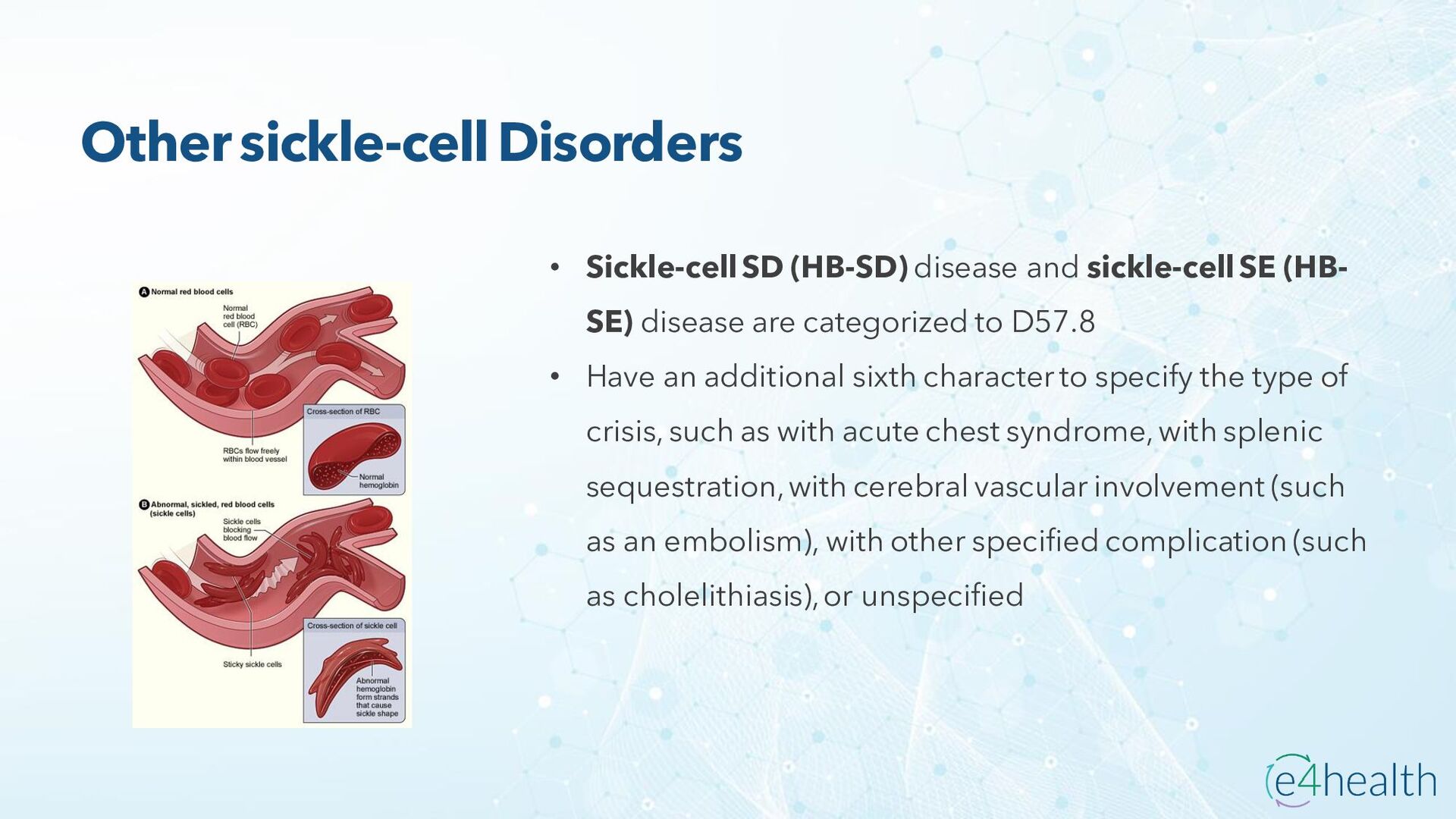
  23. Other sickle-cell Disorders • Sickle-cell SD (HB-SD) disease and sickle-cell

    SE (HB- SE) disease are categorized to D57.8 • Have an additional sixth character to specify the type of crisis, such as with acute chest syndrome, with splenic sequestration, with cerebral vascular involvement (such as an embolism), with other specified complication (such as cholelithiasis), or unspecified
  24. Sickle-Cell – General Query opportunity • Review documentation for: •

    Type of sickle-cell • Presence of with or without crisis as well as the type of crisis • Antibiotic treatment to query if patient has acute chest syndrome vs. a bacterial pneumonia • Associated diagnoses such as: • Pneumonia • DVT/PE • Hypoxia • Medication non-compliance
  25. Sickle-cell thalassemia • Thalassemia is a group of inherited microcytic,

    hemolytic anemia characterized by defective hemoglobin production • Sickle-cell thalassemia: • Sickle-cell beta zero – a complete gene loss of the beta globin function that completely impairs hemoglobin function • Sickle-cell beta plus – a partial gene loss of the beta globin function that partially impairs hemoglobin function • Specific codes are available for: • Unspecified sickle-cell thalassemia with crisis (D57.41-) or without crisis (D57.40) • sickle-cell thalassemia beta zero with crisis (D57.43-) or without crisis (D57.42) • sickle-cell thalassemia beta plus with crisis (D57.45-) or without crisis (D57.44) • Codes in subcategories D57.41, D57.43, and D57.45 have an additional sixth character to specify the type of crisis, such as with acute chest syndrome, with splenic sequestration, with cerebral vascular involvement (such as an embolism), with other specified complication (such as cholelithiasis)
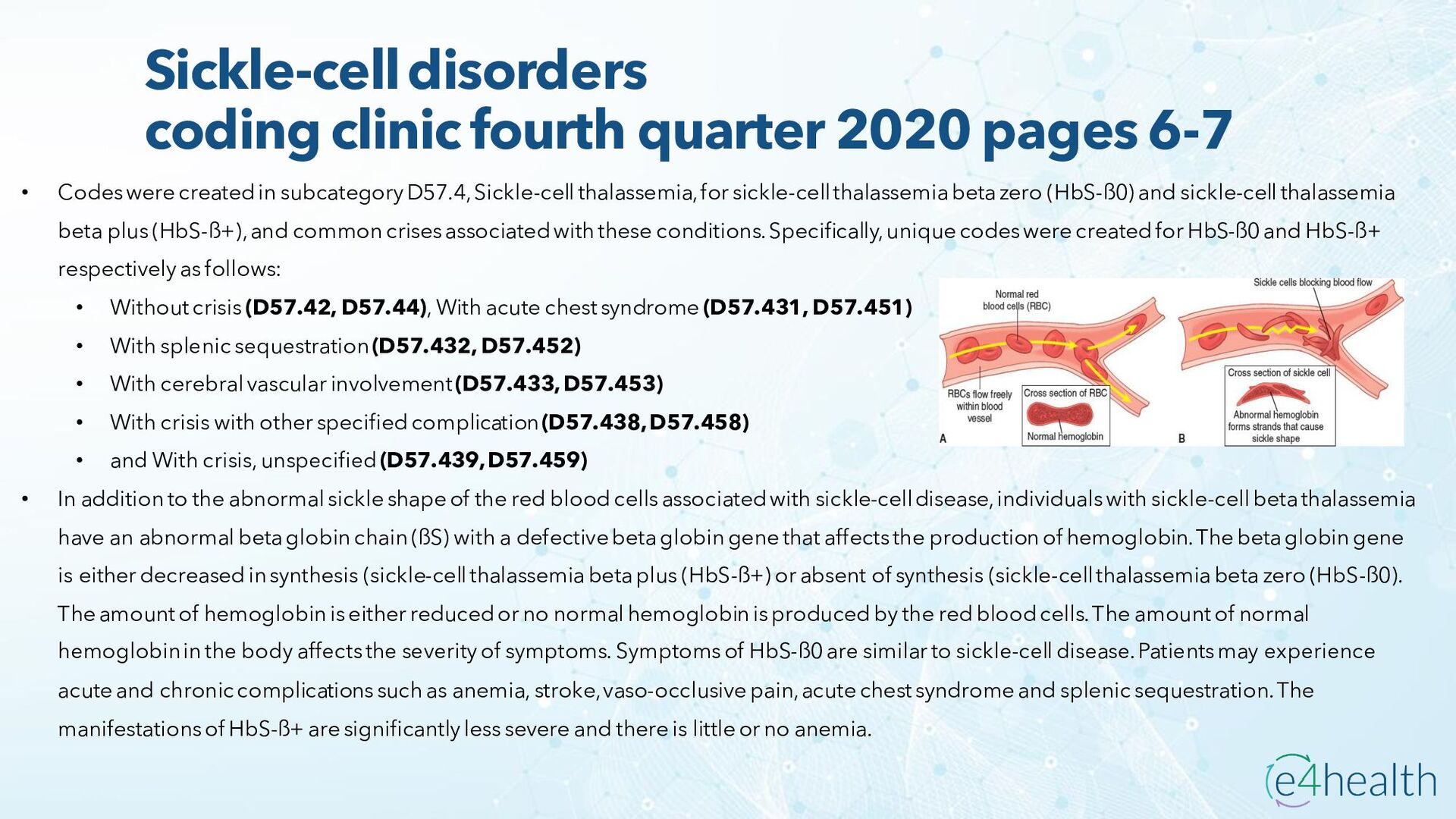
  26. Sickle-cell disorders coding clinic fourth quarter 2020 pages 6-7 •

    Codes were created in subcategory D57.4, Sickle-cell thalassemia, for sickle-cell thalassemia beta zero (HbS-ß0) and sickle-cell thalassemia beta plus (HbS-ß+), and common crises associated with these conditions. Specifically, unique codes were created for HbS-ß0 and HbS-ß+ respectively as follows: • Without crisis (D57.42, D57.44), With acute chest syndrome (D57.431, D57.451) • With splenic sequestration(D57.432, D57.452) • With cerebral vascular involvement(D57.433, D57.453) • With crisis with other specified complication(D57.438, D57.458) • and With crisis, unspecified(D57.439, D57.459) • In addition to the abnormal sickle shape of the red blood cells associated with sickle-cell disease, individuals with sickle-cell beta thalassemia have an abnormal beta globin chain (ßS) with a defective beta globin gene that affects the production of hemoglobin. The beta globin gene is either decreased in synthesis (sickle-cell thalassemia beta plus (HbS-ß+) or absent of synthesis (sickle-cell thalassemia beta zero (HbS-ß0). The amount of hemoglobin is either reduced or no normal hemoglobin is produced by the red blood cells. The amount of normal hemoglobin in the body affects the severity of symptoms. Symptoms of HbS-ß0 are similar to sickle-cell disease. Patients may experience acute and chronic complications such as anemia, stroke, vaso-occlusive pain, acute chest syndrome and splenic sequestration. The manifestations of HbS-ß+ are significantly less severe and there is little or no anemia.
  27. Other types of Thalassemia • Other than sickle-cell thalassemia, there

    are other types categorized to: • Alpha thalassemia (D56.0) • Beta thalassemia (D56.1) • Delta-beta thalassemia (D56.2) • Thalassemia minor (D56.3) – also utilized for thalassemia trait, NOS • Hemoglobin E-beta thalassemia (D56.5) • Other thalassemia (D56.8) • Thalassemia, unspecified (D56.9) • However, thalassemia trait, not otherwise specified, is assigned to code D56.3, Thalassemia minor
  28. Thalassemia – General Query opportunity • Review documentation for: •

    Type of thalassemia • If sickle-cell thalassemia: • Presence of with or without crisis as well as the type of crisis • Antibiotic treatment to query if patient has acute chest syndrome vs. a bacterial pneumonia • Associated diagnoses such as: • Pneumonia • DVT/PE • Hypoxia • Medication non-compliance
  29. Pancytopenia • Condition where the patient has all three of

    anemia (deficiency in red blood cells), leukopenia (deficiency of white blood cells), and thrombocytopenia (deficiency of platelets) • The single code of D61.81- , Pancytopenia, should be coded if all three conditions are present and the diagnosis of pancytopenia is documented • Additionally, the due to cause of pancytopenia should be linked and documented • If due to antineoplastic chemotherapy, code D61.810 • If due to drugs, code D61.811 • If due to congenital, code D61.09  If pancytopenia is due to or with:  Aplastic anemia, code D61.9,  Bone marrow infiltration, code D61.82  Congenital red cell aplasia, code D61.01  Hairy leukemia, code C91.4  HIV disease, code B20  Myelodysplastic syndromes, code D46.-  Myeloproliferative disease, code D47.1
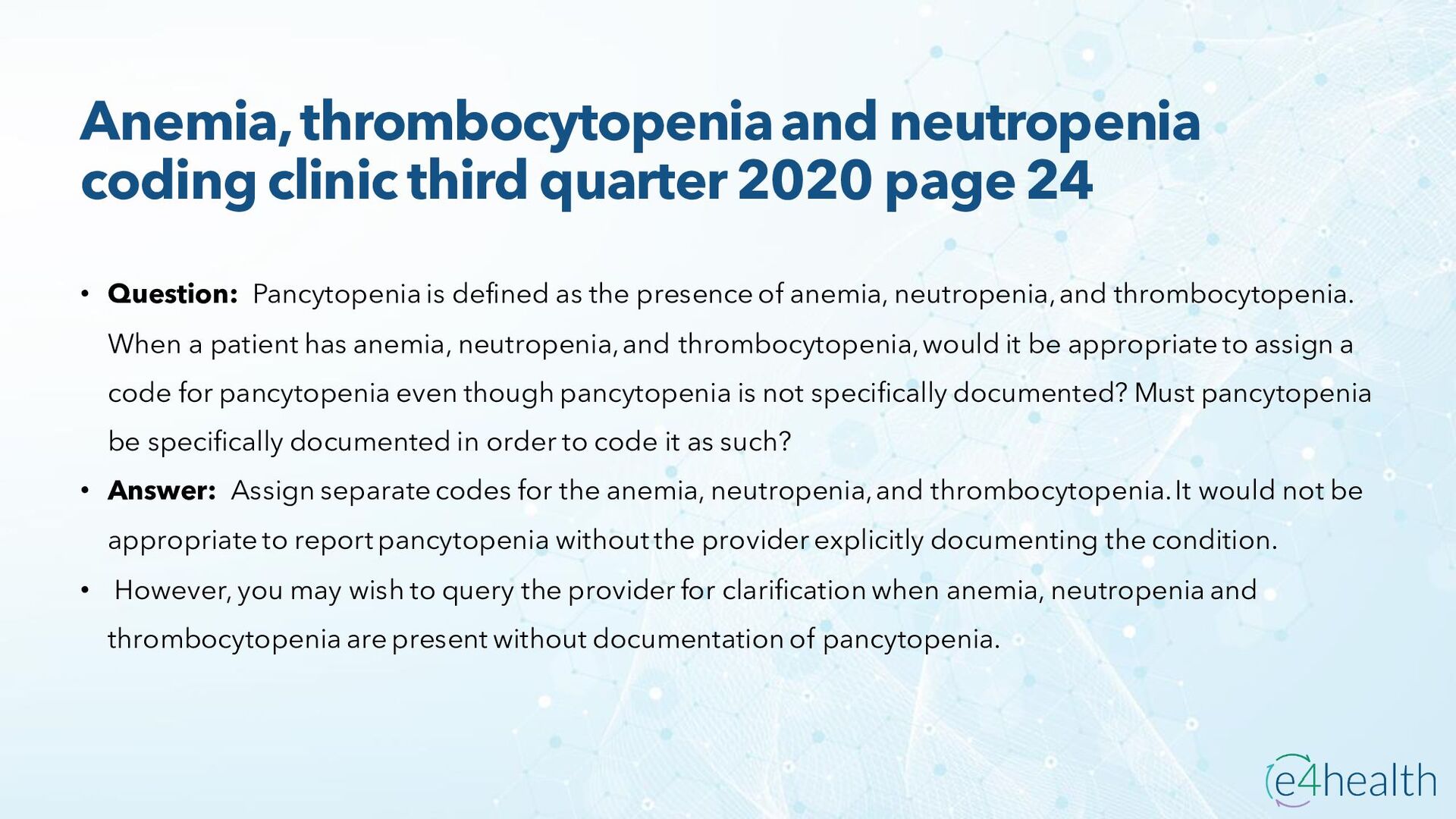
  30. Anemia, thrombocytopenia and neutropenia coding clinic third quarter 2020 page

    24 • Question: Pancytopenia is defined as the presence of anemia, neutropenia, and thrombocytopenia. When a patient has anemia, neutropenia, and thrombocytopenia, would it be appropriate to assign a code for pancytopenia even though pancytopenia is not specifically documented? Must pancytopenia be specifically documented in order to code it as such? • Answer: Assign separate codes for the anemia, neutropenia, and thrombocytopenia. It would not be appropriate to report pancytopenia without the provider explicitly documenting the condition. • However, you may wish to query the provider for clarification when anemia, neutropenia and thrombocytopenia are present without documentation of pancytopenia.
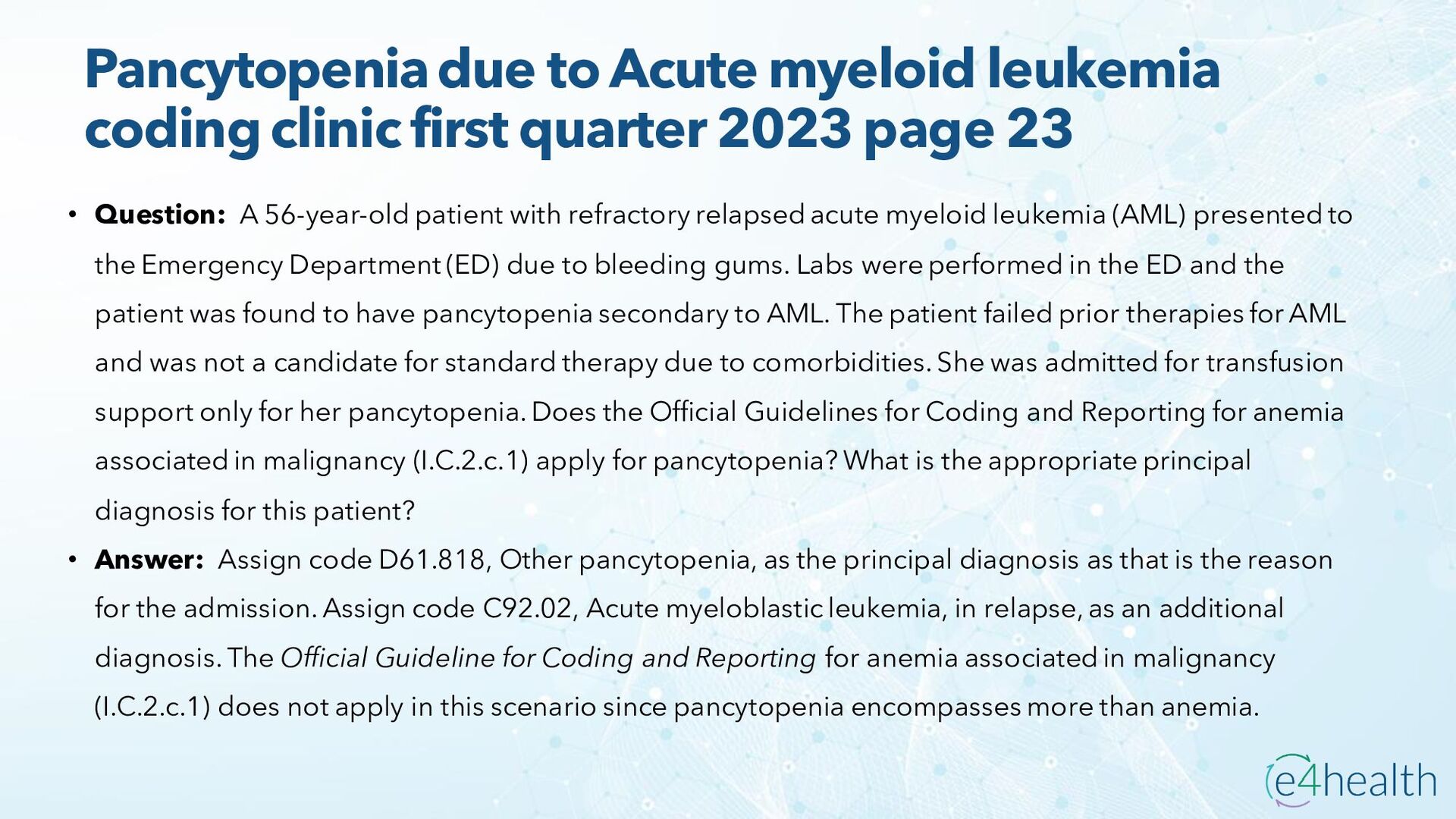
  31. Pancytopenia due to Acute myeloid leukemia coding clinic first quarter

    2023 page 23 • Question: A 56-year-old patient with refractory relapsed acute myeloid leukemia (AML) presented to the Emergency Department (ED) due to bleeding gums. Labs were performed in the ED and the patient was found to have pancytopenia secondary to AML. The patient failed prior therapies for AML and was not a candidate for standard therapy due to comorbidities. She was admitted for transfusion support only for her pancytopenia. Does the Official Guidelines for Coding and Reporting for anemia associated in malignancy (I.C.2.c.1) apply for pancytopenia? What is the appropriate principal diagnosis for this patient? • Answer: Assign code D61.818, Other pancytopenia, as the principal diagnosis as that is the reason for the admission. Assign code C92.02, Acute myeloblastic leukemia, in relapse, as an additional diagnosis. The Official Guideline for Coding and Reporting for anemia associated in malignancy (I.C.2.c.1) does not apply in this scenario since pancytopenia encompasses more than anemia.
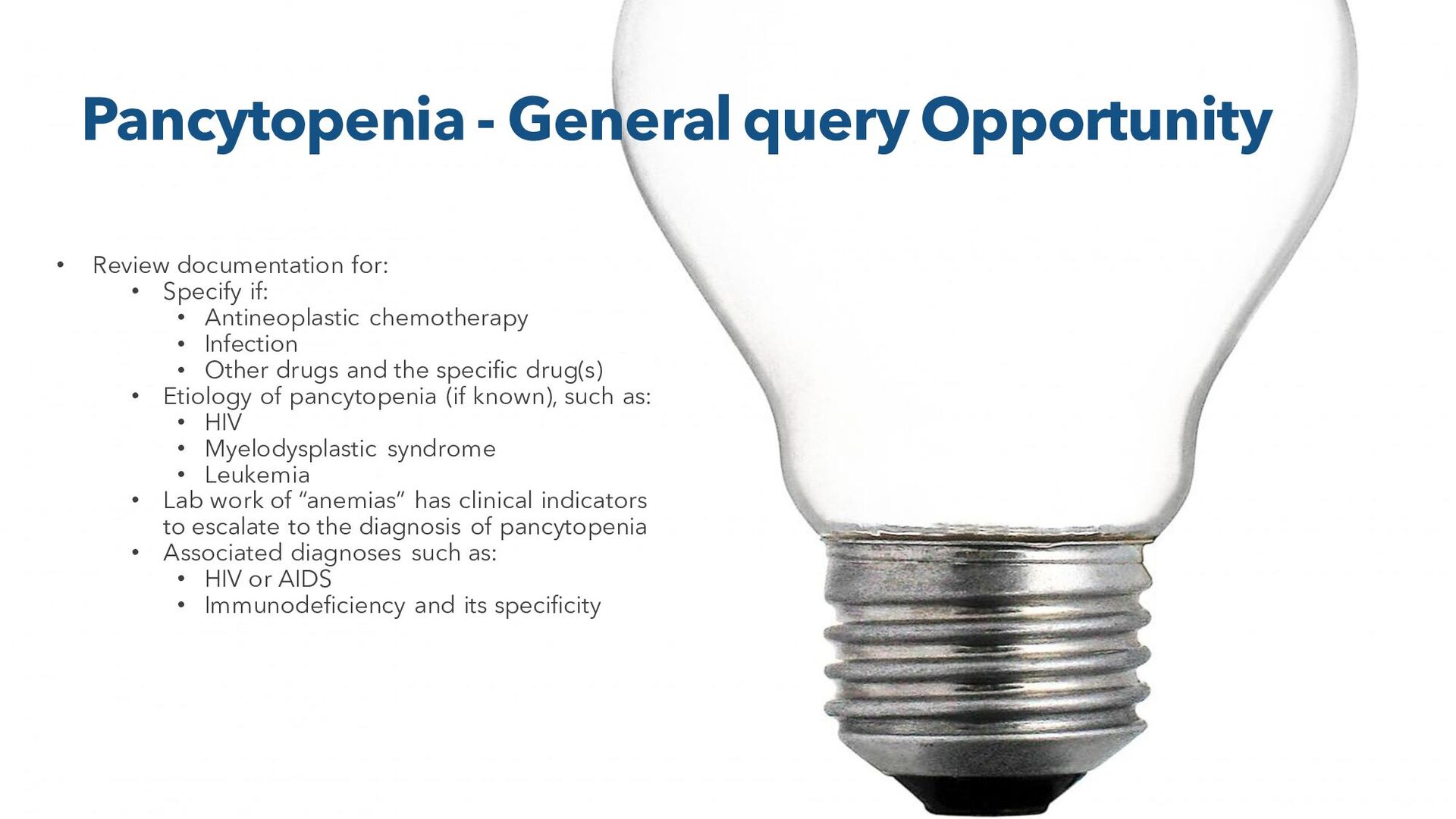
  32. Pancytopenia - General query Opportunity • Review documentation for: •

    Specify if: • Antineoplastic chemotherapy • Infection • Other drugs and the specific drug(s) • Etiology of pancytopenia (if known), such as: • HIV • Myelodysplastic syndrome • Leukemia • Lab work of “anemias” has clinical indicators to escalate to the diagnosis of pancytopenia • Associated diagnoses such as: • HIV or AIDS • Immunodeficiency and its specificity
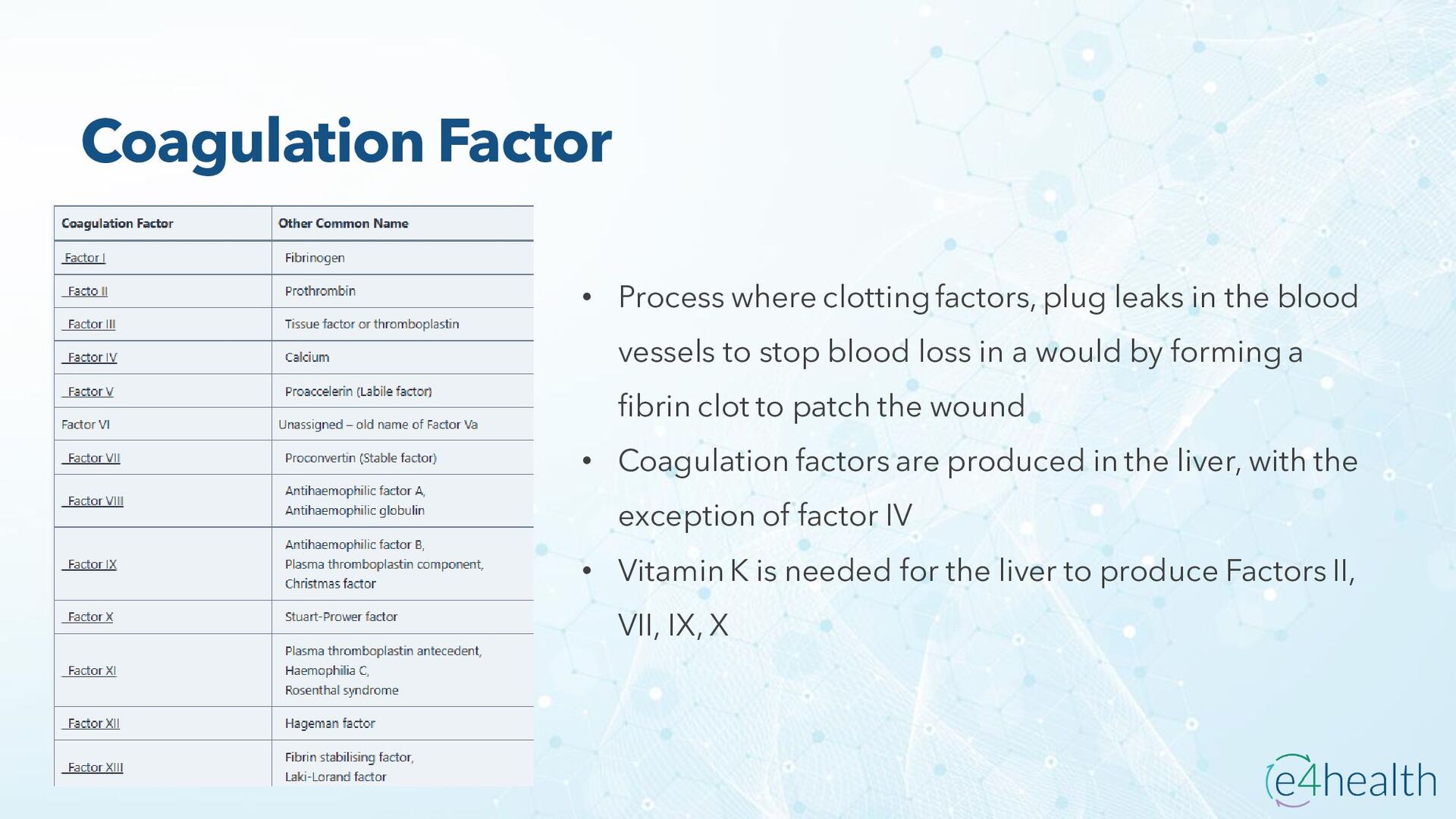
  33. Coagulation Factor • Process where clotting factors, plug leaks in

    the blood vessels to stop blood loss in a would by forming a fibrin clot to patch the wound • Coagulation factors are produced in the liver, with the exception of factor IV • Vitamin K is needed for the liver to produce Factors II, VII, IX, X
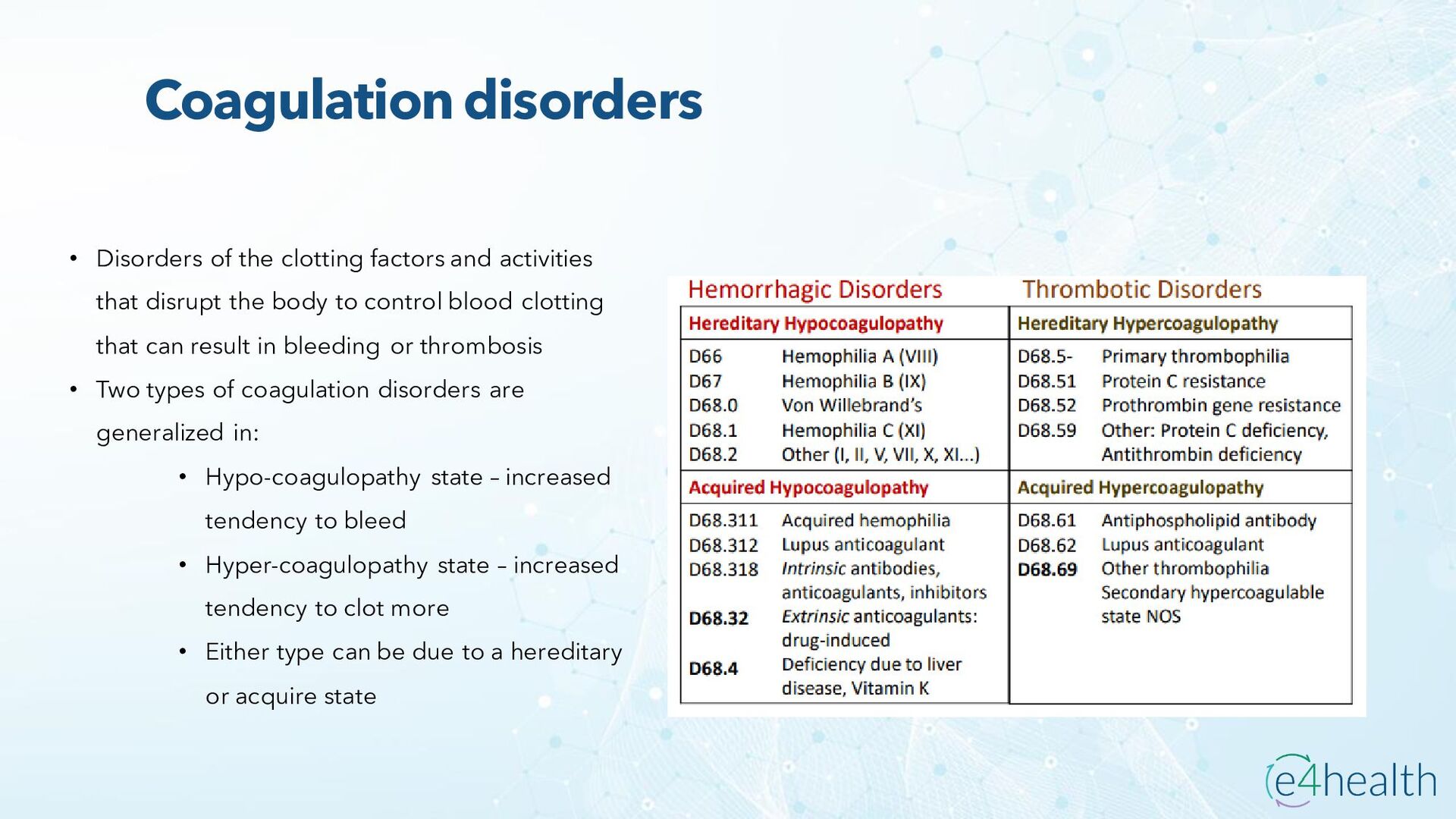
  34. Coagulation disorders • Disorders of the clotting factors and activities

    that disrupt the body to control blood clotting that can result in bleeding or thrombosis • Two types of coagulation disorders are generalized in: • Hypo-coagulopathy state – increased tendency to bleed • Hyper-coagulopathy state – increased tendency to clot more • Either type can be due to a hereditary or acquire state
  35. Paroxysmal Atrial Fibrillation, Anticoagulant Therapy and Acquired Hypercoagulable State Coding

    Clinic Second Quarter 2021 Page 8 • Question: A 76-year-old male with persistent atrial fibrillation (AF) on anticoagulant therapy presented for follow- up. The provider listed "Hypercoagulable state" in the diagnostic statement. However, he also noted, "No Hematological/Immunologic disorder," in the History and Physical Exam. Code D68.59, Other primary thrombophilia, is the default code assignment for hypercoagulable state. However, code D68.59 identifies an inherited coagulation abnormality. In researching the condition, we found out that patients with AF on anticoagulant therapy might develop a secondary hypercoagulable state. How should a hypercoagulable state be coded when the provider does not indicate whether it is an acquired or inherited condition? • Answer: Query the provider for clarification as to whether the patient has an acquired hypercoagulable state. Code D68.59, Other primary thrombophilia, is used for primary/ inherited hypercoagulable state, and the documentation does not appear to support this diagnosis. • Atrial fibrillation treated with anticoagulants may be associated with an increased incidence of acquired hypercoagulable state. However, if the documentation is unclear, query the provider for clarification, so the appropriate code can be reported.
  36. Persistent Atrial Fibrillation, Anticoagulant Therapy and Acquired versus Inherited Hypercoagulable

    State Coding Clinic Second Quarter 2021 Page 8 • Question: A 79-year-old patient is diagnosed with secondary hypercoagulable state and has a history of paroxysmal atrial fibrillation (AF) on anticoagulant maintenance. Does the provider need to link the secondary hypercoagulable state with the atrial fibrillation? What is the appropriate ICD-10-CM code assignment for secondary hypercoagulable state in this scenario? • Answer: Assign code D68.69, Other thrombophilia, for secondary hypercoagulable state. Secondary hypercoagulable state is specifically indexed to this code and includes secondary hypercoagulable state NOS. • Secondary hypercoagulable states are acquired disorders of thrombosis due to complex and multifactorial mechanisms. Patients with AF on chronic anticoagulant therapy may have an increased incidence of acquired hypercoagulable state. However, unless specifically documented by the provider, coding professionals should not assume the presence of a secondary (acquired) hypercoagulable state, in patients with atrial fibrillation. In this case, although the provider did not link the hypercoagulable state to the atrial fibrillation, secondary hypercoagulable state was documented by the provider.
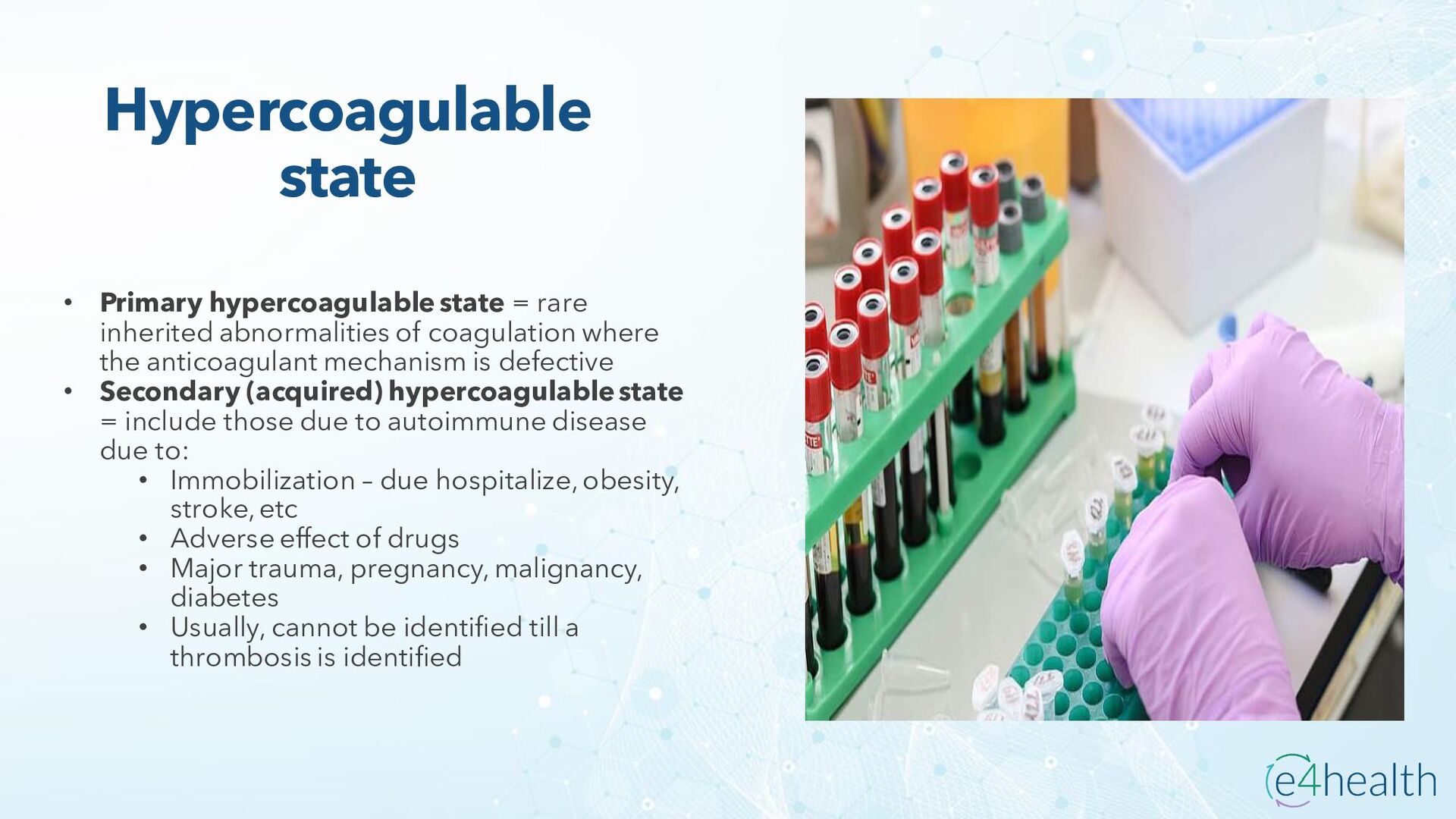
  37. Hypercoagulable state • Primary hypercoagulable state = rare inherited abnormalities

    of coagulation where the anticoagulant mechanism is defective • Secondary (acquired) hypercoagulable state = include those due to autoimmune disease due to: • Immobilization – due hospitalize, obesity, stroke, etc • Adverse effect of drugs • Major trauma, pregnancy, malignancy, diabetes • Usually, cannot be identified till a thrombosis is identified
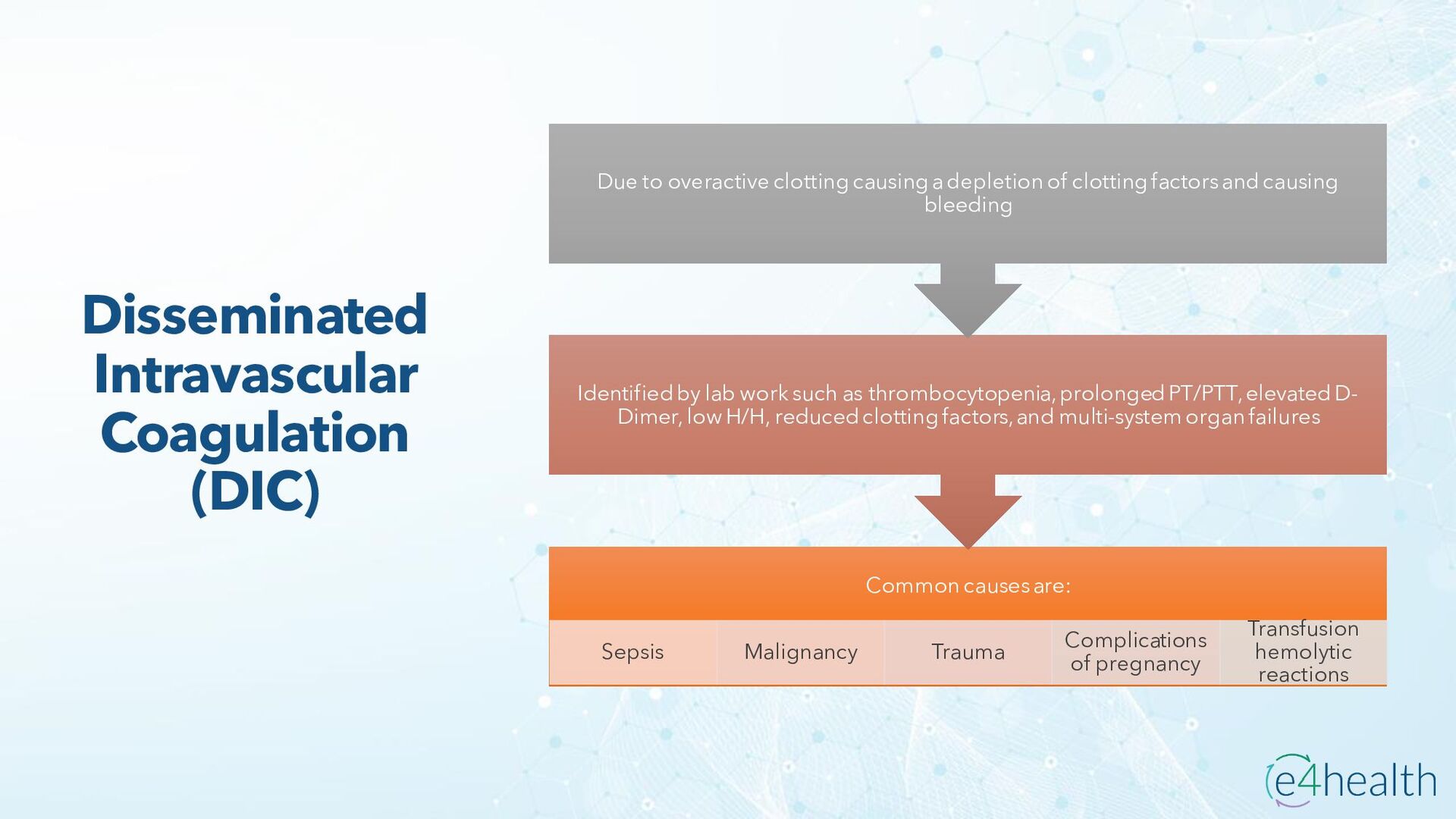
  38. Disseminated Intravascular Coagulation (DIC) Common causes are: Sepsis Malignancy Trauma

    Complications of pregnancy Transfusion hemolytic reactions Identified by lab work such as thrombocytopenia, prolonged PT/PTT, elevated D- Dimer, low H/H, reduced clotting factors, and multi-system organ failures Due to overactive clotting causing a depletion of clotting factors and causing bleeding
  39. Coagulation Defects – General Query opportunity • Review documentation for:

    • Due to cause of coagulation defects, such as: • Factor deficiency • Malignancy • Sepsis • Drugs or chemotherapy • Surgical complications • Associated conditions: • Acute Liver failure • Acute kidney failure • GI Bleeding • Pancytopenia or Anemia and its types • Encephalopathy or acute delirium
  40. Leukemia • 4th character indicating type of neoplasm, stage of

    disease, or the type of leukemia • 5th character to indicate status • 0 Not having achieved remission (failed remission) • 1 In remission • 2 In relapse • Leukemia is not coded from the Neoplasm Table, but rather indexed under the term Leukemia
  41. Leukemia – Query Opportunity Documentation of type as consistent with

    pathology Documentation of status: failed remission in remission in relapse Documentation of active vs. personal history Don’t confuse “in remission” with personal history, Z85.6, Z85.79 (condition no longer exists, not receiving treatment)
  42. Leukemia – Query Opportunity, Continued • Document any associated diagnoses/conditions,

    i.e. • “-mias” due to neoplasm and/or treatment • Acute renal failure • Encephalopathy • Cardiac arrhythmias and/or conditions (i.e. heart failure, cardiomyopathy) • Tumor Lysis Syndrome
  43. Cytokine release syndrome • Cytokine release syndrome (CRS) is a

    widespread inflammatory response caused by a large and rapid release of cytokines into the blood from immune cells that have been affected by immunotherapy treatment. • CRS is the most common reaction after chimeric antigen receptor T-cell (CAR-T) therapy, which is used to treat relapsed or refractory acute lymphoblastic leukemia. When cytokines are released, symptoms range from low- grade constitutional symptoms to high-grade syndrome associated with life-threatening organ dysfunction. Mild to moderate symptoms include fever, weakness, headache, rash, rapid heartbeat, low blood pressure, and respiratory distress. Severe reactions include fluid overload and renal insufficiency. • Subcategory D89.83, Cytokine release syndrome, is assigned for CRS with a sixth character to identify the grade of the condition, when documented by the provider. There are several different, slightly varying systems to grade CRS, including a consensus definition developed by the American Society for Transplantation and Cellular Therapy in 2018. For ICD-10-CM coding purposes, the code for the specific CRS grade should be assigned on the basis of explicit provider documentation of the grade; otherwise, the code for unspecified grade (D89.839) should be assigned.
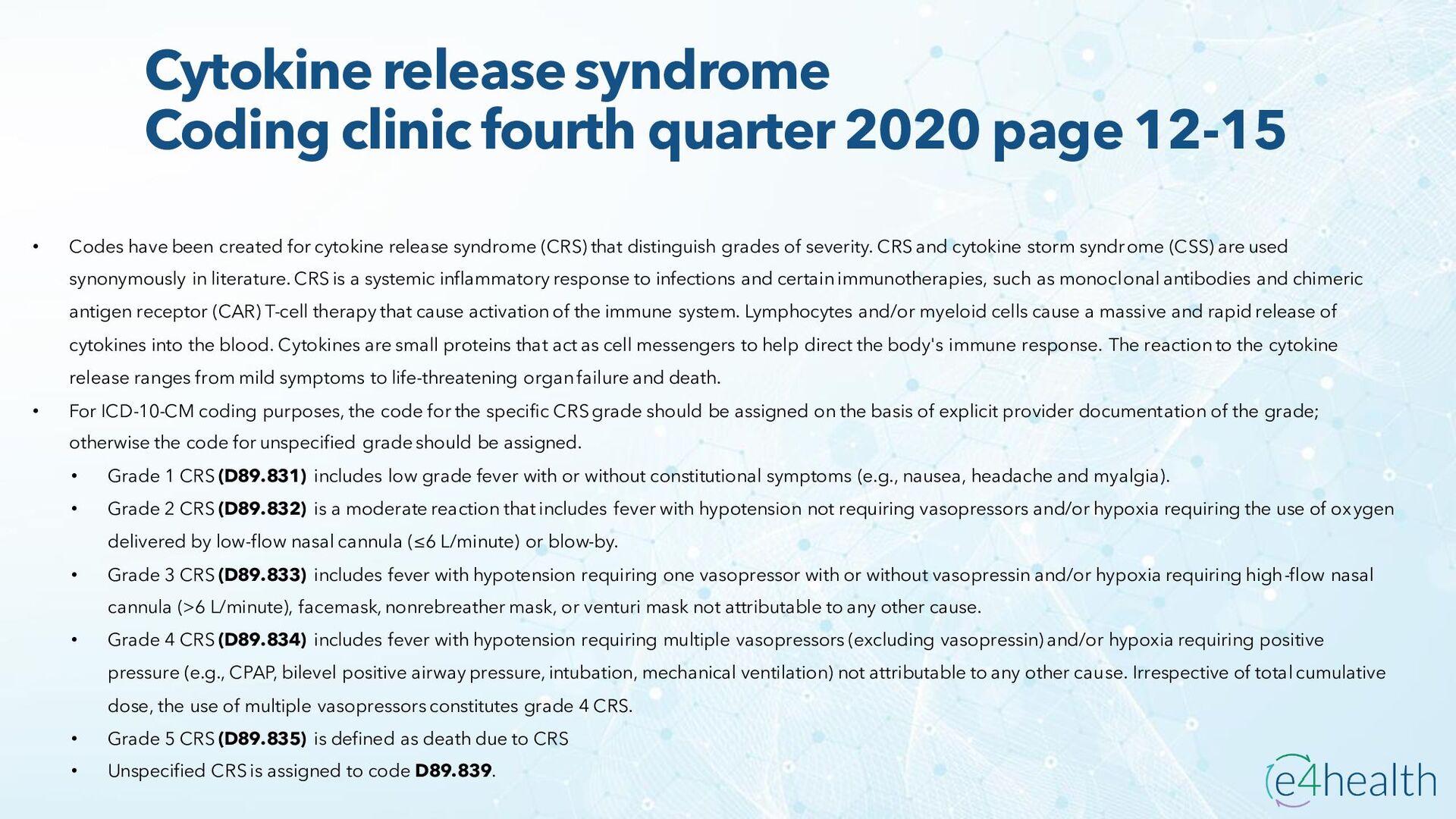
  44. Cytokine release syndrome Coding clinic fourth quarter 2020 page 12-15

    • Codes have been created for cytokine release syndrome (CRS) that distinguish grades of severity. CRS and cytokine storm syndrome (CSS) are used synonymously in literature. CRS is a systemic inflammatory response to infections and certain immunotherapies, such as monoclonal antibodies and chimeric antigen receptor (CAR) T-cell therapy that cause activation of the immune system. Lymphocytes and/or myeloid cells cause a massive and rapid release of cytokines into the blood. Cytokines are small proteins that act as cell messengers to help direct the body's immune response. The reaction to the cytokine release ranges from mild symptoms to life-threatening organ failure and death. • For ICD-10-CM coding purposes, the code for the specific CRS grade should be assigned on the basis of explicit provider documentation of the grade; otherwise the code for unspecified grade should be assigned. • Grade 1 CRS (D89.831) includes low grade fever with or without constitutional symptoms (e.g., nausea, headache and myalgia). • Grade 2 CRS (D89.832) is a moderate reaction that includes fever with hypotension not requiring vasopressors and/or hypoxia requiring the use of oxygen delivered by low-flow nasal cannula (≤6 L/minute) or blow-by. • Grade 3 CRS (D89.833) includes fever with hypotension requiring one vasopressor with or without vasopressin and/or hypoxia requiring high-flow nasal cannula (>6 L/minute), facemask, nonrebreather mask, or venturi mask not attributable to any other cause. • Grade 4 CRS (D89.834) includes fever with hypotension requiring multiple vasopressors (excluding vasopressin) and/or hypoxia requiring positive pressure (e.g., CPAP, bilevel positive airway pressure, intubation, mechanical ventilation) not attributable to any other cause. Irrespective of total cumulative dose, the use of multiple vasopressors constitutes grade 4 CRS. • Grade 5 CRS (D89.835) is defined as death due to CRS • Unspecified CRS is assigned to code D89.839.
  45. Cytokine release syndrome Coding clinic fourth quarter 2020 page 12-15,

    continued • The risk for CRS is highest in the first two weeks after immunotherapy. It can occur within minutes to hours after the start of infusion. Factors such as the underlying disease, whether immunotherapy was administered for the first time (first-dose effect), drug dosage, and the magnitude of immune cell activation, influence the severity of CRS. The most severe symptoms occur after the first administered dose and may not recur after subsequent administrations. • Additionally, at the time of publication, more and more clinical data suggest evidence of mild or severe CRS in severe COVID-19 patients. Therefore, treatment of the cytokine storm has become an important part of rescuing severe COVID-19 patients.
  46. Cytokine release syndrome Coding clinic fourth quarter 2020 page 12-15,

    continued • Question: A patient with known refractory multiple myeloma and recent stem cell transplant was admitted with fever and feeling very drowsy. Further examination revealed tachycardia, leukocytosis and hypotension. The provider diagnosed CRS, grade 2, and toxic encephalopathy due to stem cell transplant. What are the appropriate diagnosis code assignments for the admission? • Answer: Assign code T86.5, Complications of stem cell transplant, as principal diagnosis for the stem cell transplant complications. Assign codes G92, Toxic encephalopathy, and D89.832, CRS, grade 2, for the conditions caused by the stem cell transplant. Code C90.00, Multiple myeloma not having achieved remission, is assigned for the multiple myeloma. • Question: The patient was admitted for treatment of CRS, grade 3, due to COVID-19. What is the appropriate sequencing for this admission? • Answer: Assign code U07.1, COVID-19, as the principal diagnosis. Assign code D89.833, CRS, grade 3, as an additional diagnosis. This sequencing is supported by the instructional note at subcategory D89.83, Cytokine release syndrome, to code first the underlying cause. • Question: A patient with refractory B cell acute lymphoblastic leukemia underwent chimeric antigen receptor (CAR) T-cell therapy and subsequently developed CRS, grade 2. What are the appropriate codes for this admission/encounter? • Answer: Assign code T80.89XA, Other complications following infusion, transfusion and therapeutic injection, initial encounter; followed by code D89.832, Cytokine release syndrome, grade 2, for CRS grade 2 due to CAR T-cell administration. In addition, assign code C91.00, Acute lymphoblastic leukemia not having achieved remission, for the refractory B cell acute lymphoblastic leukemia.
  47. Complication of Antineoplastic therapy Tumor Lysis Syndrome Oncologic emergency that

    refers to a group of serious, potentially life-threatening metabolic disturbances that can occur after antineoplastic therapy Usually occurs following the administration of anti-cancer drugs; however, it can also develop spontaneously or as a result of radiation or corticosteroid therapy Often associated with leukemias and lymphomas but is also seen in other hematologic malignancies and solid tumors When cancer cells are destroyed, they can release intracellular ions and metabolic byproducts into the circulation leading to TLS 2 or more of the following metabolic abnormalities and presents within 3 days before or 7 days after chemo: hyperkalemia, hyperphosphatemia; hypocalcemia 2/2 hyperphosphatemia; diarrhea/vomiting, anorexia; hyperuricemia Treatment: IV hydration, urine alkalinization, allopurinol, Rasburicase, treatment of electrolyte deficiencies and TLS prevention
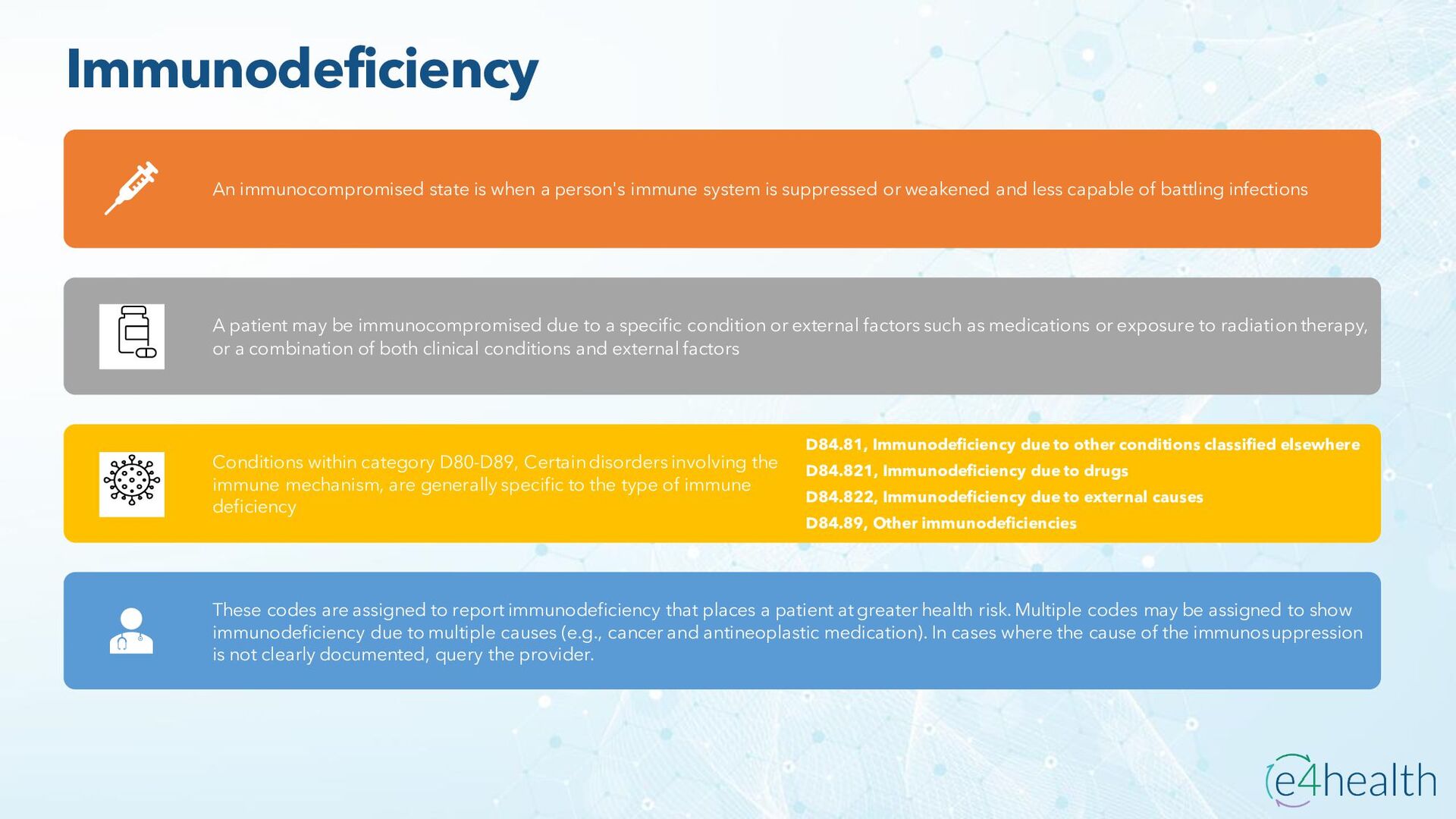
  48. Immunodeficiency An immunocompromised state is when a person's immune system

    is suppressed or weakened and less capable of battling infections A patient may be immunocompromised due to a specific condition or external factors such as medications or exposure to radiation therapy, or a combination of both clinical conditions and external factors Conditions within category D80-D89, Certain disorders involving the immune mechanism, are generally specific to the type of immune deficiency D84.81, Immunodeficiency due to other conditions classified elsewhere D84.821, Immunodeficiency due to drugs D84.822, Immunodeficiency due to external causes D84.89, Other immunodeficiencies These codes are assigned to report immunodeficiency that places a patient at greater health risk. Multiple codes may be assigned to show immunodeficiency due to multiple causes (e.g., cancer and antineoplastic medication). In cases where the cause of the immunosuppression is not clearly documented, query the provider.
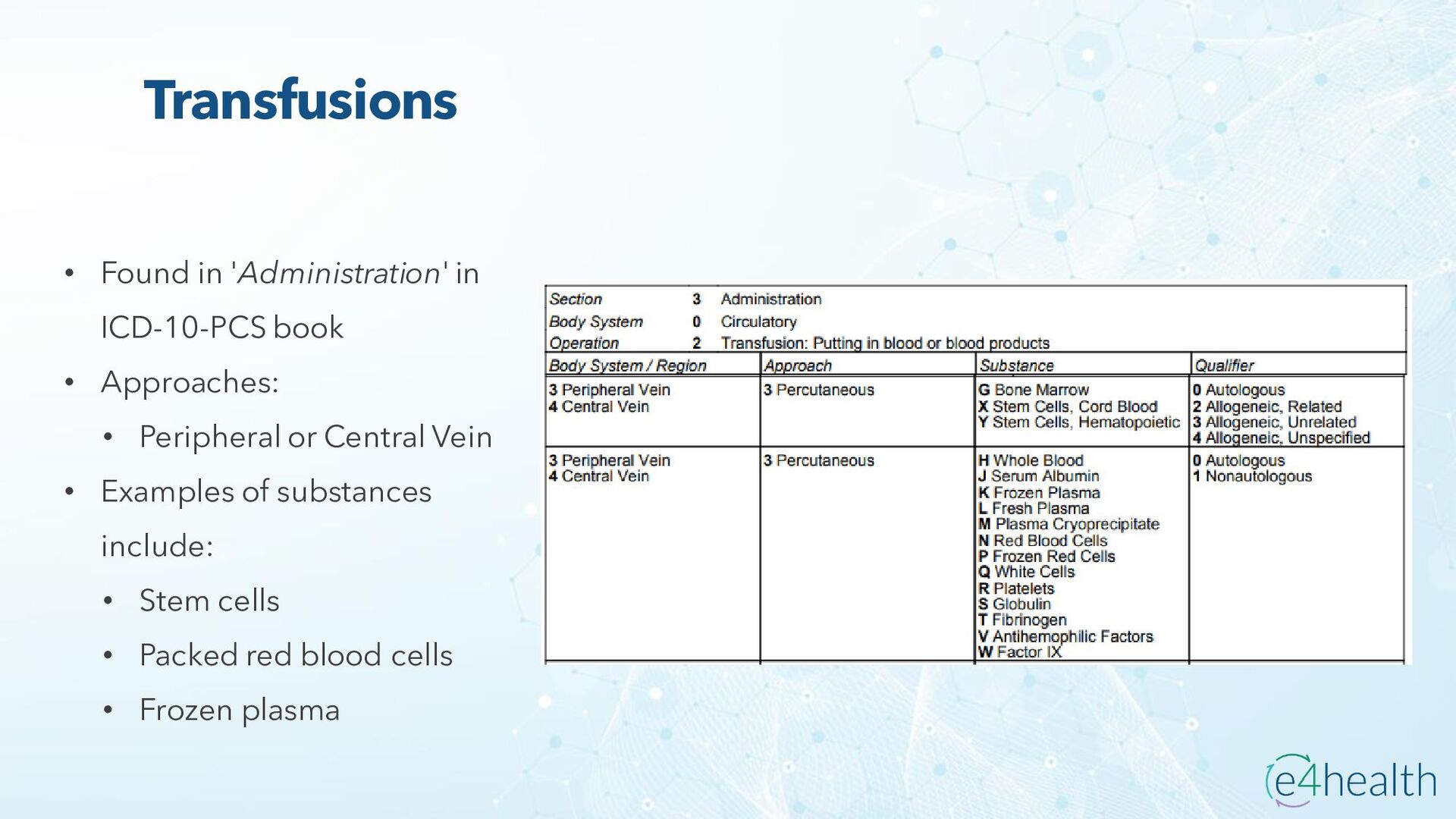
  49. Transfusions • Found in 'Administration' in ICD-10-PCS book • Approaches:

    • Peripheral or Central Vein • Examples of substances include: • Stem cells • Packed red blood cells • Frozen plasma
  50. Excision • Includes partial splenectomy, which is the removal of

    the spleen but attempt to preserve the splenic function • Per ICD-10-PCS Official Coding Guidelines, Section B4.1b (Body Part, General Guidelines) • If the prefix "peri" is combined with a body part to identify the site of the procedure, and the site of the procedure is not further specified, then the procedure is coded to the body part named. This guideline applies only when a more specific body part value is not available. • "Perirenal" procedure site = coded to the kidney body part when site is not further specified • Additional procedure code if lymph nodes were removed (excision or resection), if applicable
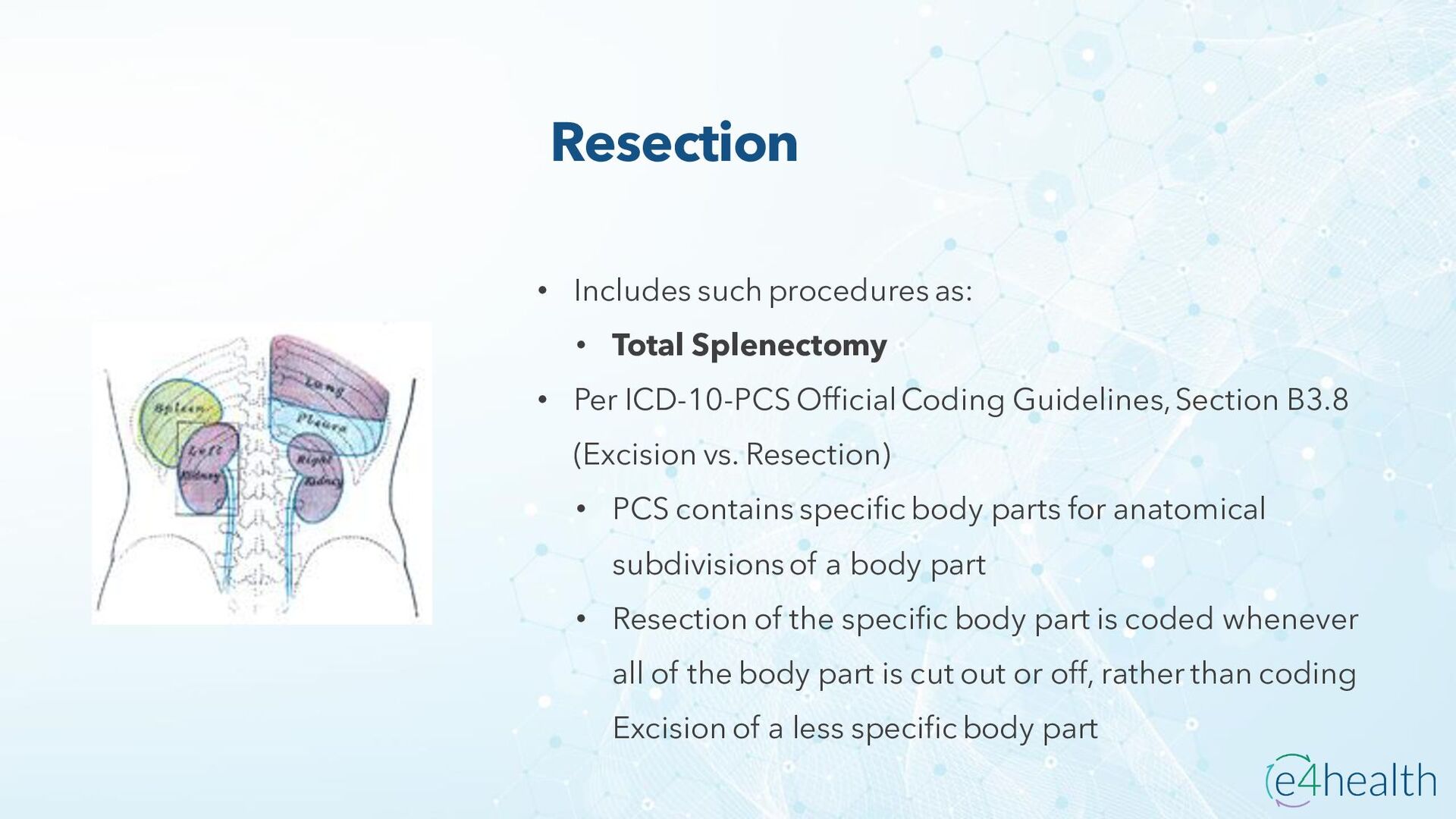
  51. Resection • Includes such procedures as: • Total Splenectomy •

    Per ICD-10-PCS Official Coding Guidelines, Section B3.8 (Excision vs. Resection) • PCS contains specific body parts for anatomical subdivisions of a body part • Resection of the specific body part is coded whenever all of the body part is cut out or off, rather than coding Excision of a less specific body part
  52. Postoperative complication of Splenectomy - Splenosis Benign condition that can

    occur after splenectomy Is a result of spleen tissue breaking off the main organ and implanting at another site, usually in the abdominal and pelvic cavities Can be confused with diagnoses such as neoplasm, peritoneal carcinomatosis, or endometriosis Assessment with a biopsy of the “implants” or tissue nodules would need to be sent to pathology for confirmation
  53. Splenosis Coding Clinic First Quarter 2014 Page 11 • Question:

    The patient with history of splenectomy was admitted with abdominal pain. Multiple abdominal densities were seen on CT of the abdomen. Exploratory laparotomy showed implants of the omentum and the anterior parietal abdominal wall. The implants were excised and sent to pathology. Pathology report was negative for malignancy and dysplasia but consistent with splenosis. What is the diagnosis code assignment for splenosis? • Answer: Assign code 289.59, Other diseases of spleen, other, for splenosis. Splenosis involves implantation and subsequent growth of splenic tissue in an ectopic location. Note: Although this is in ICD-9 convention, the coding clinic still currently applies in ICD-10-CM convention. • The ICD-10 code for Splenosis is D73.89, Other disease of spleen
  54. Excision & Resection – Query opportunity • Definition: • Excision:

    Cutting out or off (with a sharp instrument), without replacement, a portion of a body part • Resection: Cutting out or off, without replacement, all of a body part • Query opportunity: • Review pathology and documentation of all metastatic sites • Review documentation for the clarity of the intent of excision or resection • If intent is the removal of the whole genitourinary organ, it is Resection • If intent is the removal of only part of the genitourinary organ, it is Excision
  55. Excision & Resection – query opportunity, Continued • Review for

    documentation of other associated diagnoses: • Sepsis • Acute Renal failure • Intraoperative complication of: • anemia and acuity/type • Accidental puncture vs. Inherent due to extensive adhesions • Postoperative complication of: • Anemia and acuity/type • Immunodeficiency • Pancytopenia/neutropenia • Pneumonia • Meningitis • Splenosis
  56. Repair Definition: Restoring, to the extent possible, a body part

    to its normal anatomic structure and function Includes such procedures as: • Laceration suture A procedure code for repair would be assigned for each body part repair (e.g., one for bladder and one for colon) Repair is used only when the method to accomplish the repair (intent) is not one of the other root operations • Functions as the "not elsewhere classified (NEC)" root operation when the procedure does not meet the definition of the other root operations
  57. Repair • Query opportunity • Review if more than one

    body part fits the definition for the root operation of Repair • Review documentation for the clarity of the intent of the genitourinary repair • If intent is to move the body part from an abnormal location or a location where it is not functioning correctly to a more suitable location, it is Reposition • If intent is to put in a device (biological or synthetic material) that physically reinforces and/or augments the function of a body part, it is Supplement
  58. Repair • Query opportunity • Review documentation for adhesions •

    Adhesiolysis, with root operation of Release, potentially can be either queried or be an added procedure if the removal of adhesions was documented as extensive and was required to be done before the definitive genitourinary procedure • Review for documentation of other associated diagnoses: • Accidental puncture vs. Inherent due to extensive adhesions • Acute blood loss anemia • Acute renal failure
  59. Chimeric antigen receptor T-cell therapy (CAR-T) • Type of immunotherapy

    is a cell-based gene therapy for certain hematologic malignancies • B-cell ALL • B-cell lymphoma • Multiple myeloma • Autologous therapy where it involves collecting, processing, and administration to the patient • Code Z92.850, Personal history of Chimeric Antigen Receptor T-cell therapy, was created to track patients who have received Chimeric Antigen Receptor T-Cell Therapy (CAR-T) • Tracking encounters for these patients is important for the long-term impact and benefits of CAR-T therapy, assessment of costs and other issues presented by this evolving therapy
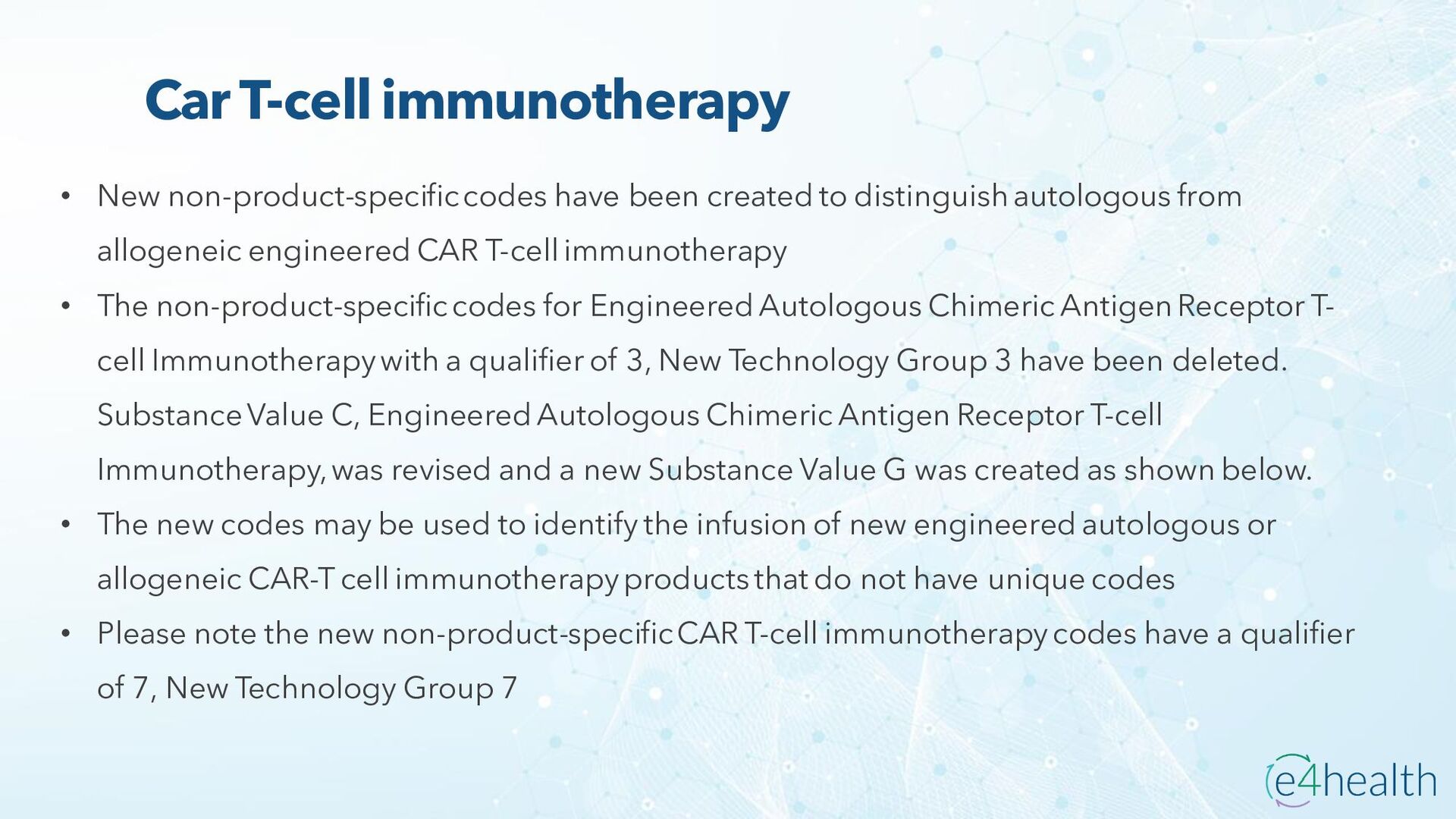
  60. Car T-cell immunotherapy • New non-product-specific codes have been created

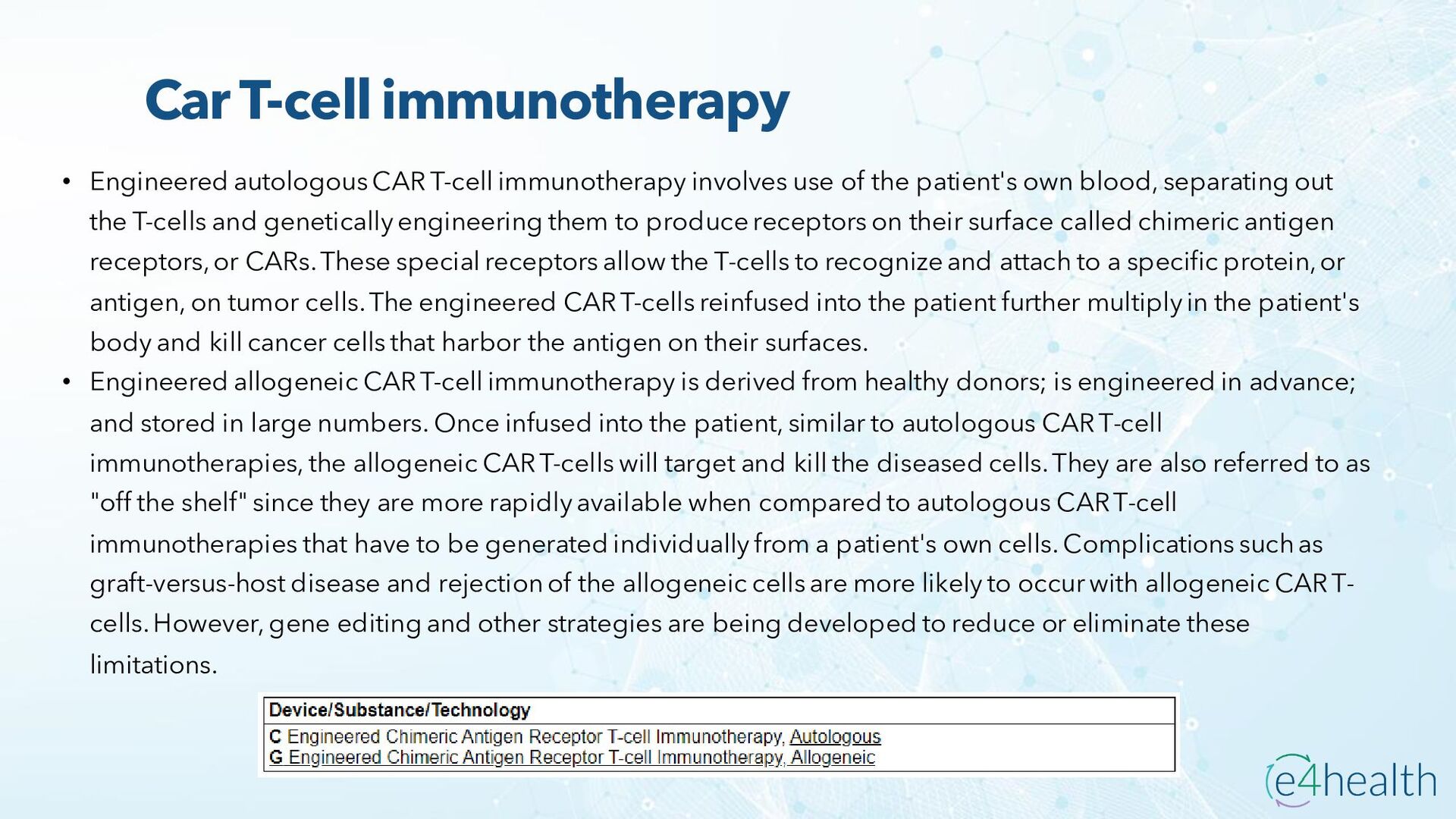
    to distinguish autologous from allogeneic engineered CAR T-cell immunotherapy • The non-product-specific codes for Engineered Autologous Chimeric Antigen Receptor T- cell Immunotherapy with a qualifier of 3, New Technology Group 3 have been deleted. Substance Value C, Engineered Autologous Chimeric Antigen Receptor T-cell Immunotherapy, was revised and a new Substance Value G was created as shown below. • The new codes may be used to identify the infusion of new engineered autologous or allogeneic CAR-T cell immunotherapy products that do not have unique codes • Please note the new non-product-specific CAR T-cell immunotherapy codes have a qualifier of 7, New Technology Group 7
  61. Car T-cell immunotherapy • Engineered autologous CAR T-cell immunotherapy involves

    use of the patient's own blood, separating out the T-cells and genetically engineering them to produce receptors on their surface called chimeric antigen receptors, or CARs. These special receptors allow the T-cells to recognize and attach to a specific protein, or antigen, on tumor cells. The engineered CAR T-cells reinfused into the patient further multiply in the patient's body and kill cancer cells that harbor the antigen on their surfaces. • Engineered allogeneic CAR T-cell immunotherapy is derived from healthy donors; is engineered in advance; and stored in large numbers. Once infused into the patient, similar to autologous CAR T-cell immunotherapies, the allogeneic CAR T-cells will target and kill the diseased cells. They are also referred to as "off the shelf" since they are more rapidly available when compared to autologous CAR T-cell immunotherapies that have to be generated individually from a patient's own cells. Complications such as graft-versus-host disease and rejection of the allogeneic cells are more likely to occur with allogeneic CAR T- cells. However, gene editing and other strategies are being developed to reduce or eliminate these limitations.
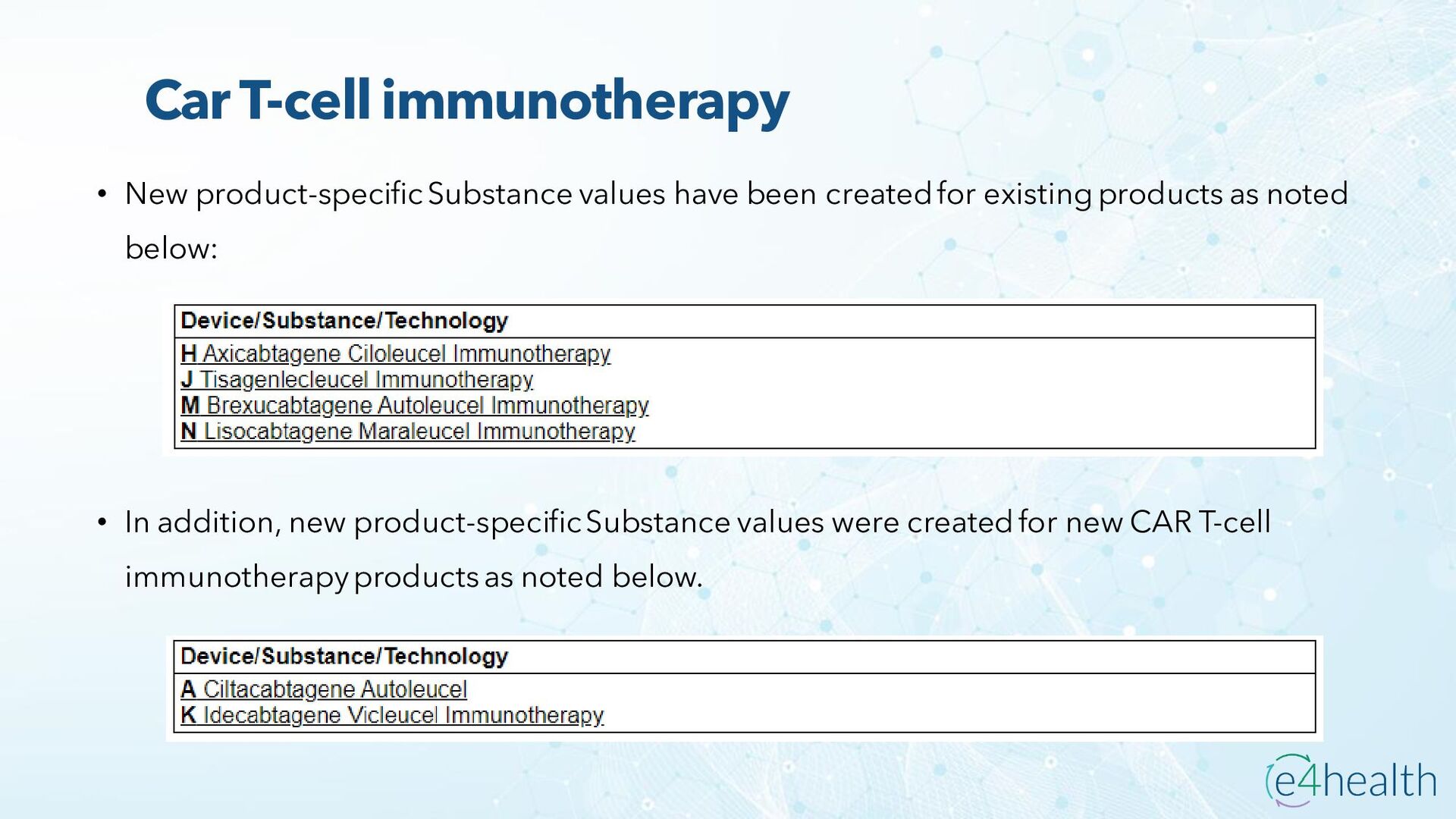
  62. Car T-cell immunotherapy • New product-specific Substance values have been

    created for existing products as noted below: • In addition, new product-specific Substance values were created for new CAR T-cell immunotherapy products as noted below.
  63. References • 3M Clinical Documentation Improvement System Reference • Microsoft

    PowerPoint - Coagulation Disorders Webinar - FINAL1 (pinsonandtang.com) • Medical complications following splenectomy - ScienceDirect • https://www.saintlukeskc.org/health-library/understanding-blood-and-blood- components • https://www.drpapoulas.com/condition-procedure/splenic-diseases/ • Splenosis: a great mimicker of neoplastic disease | SpringerLink • AHA ICD-10-CM and ICD-10-PCS Coding Handbook • ICD-10-PCS: An Applied Approach 2023 • Cengage: 3-2-1 CODE IT!