Upgrade to PRO for Only $50/Year—Limited-Time Offer! 🔥

FY 2024: MDC 13 - Female Reproductive

Avatar for e4health e4health PRO
April 04, 2024
230

FY 2024: MDC 13 - Female Reproductive

Avatar for e4health

e4health PRO

April 04, 2024
Tweet

Transcript

  1. H I M | C O D I N G

    & C D I | H E A LT H I T | R E V C Y C L E Empowering Better Health e4health tackles healthcare’s data, quality and revenue challenges empowering your providers to focus on better care.
  2. Objectives • Review MDC 13- Diseases and disorders of the

    female reproductive system with a focus on selected diagnoses and procedures • Learner will acquire a basic understanding of the diagnoses and procedures included in MDC-13 • Discuss Query opportunities in MDC-13 • Review coding clinics relevant to the chosen topics in each DRG
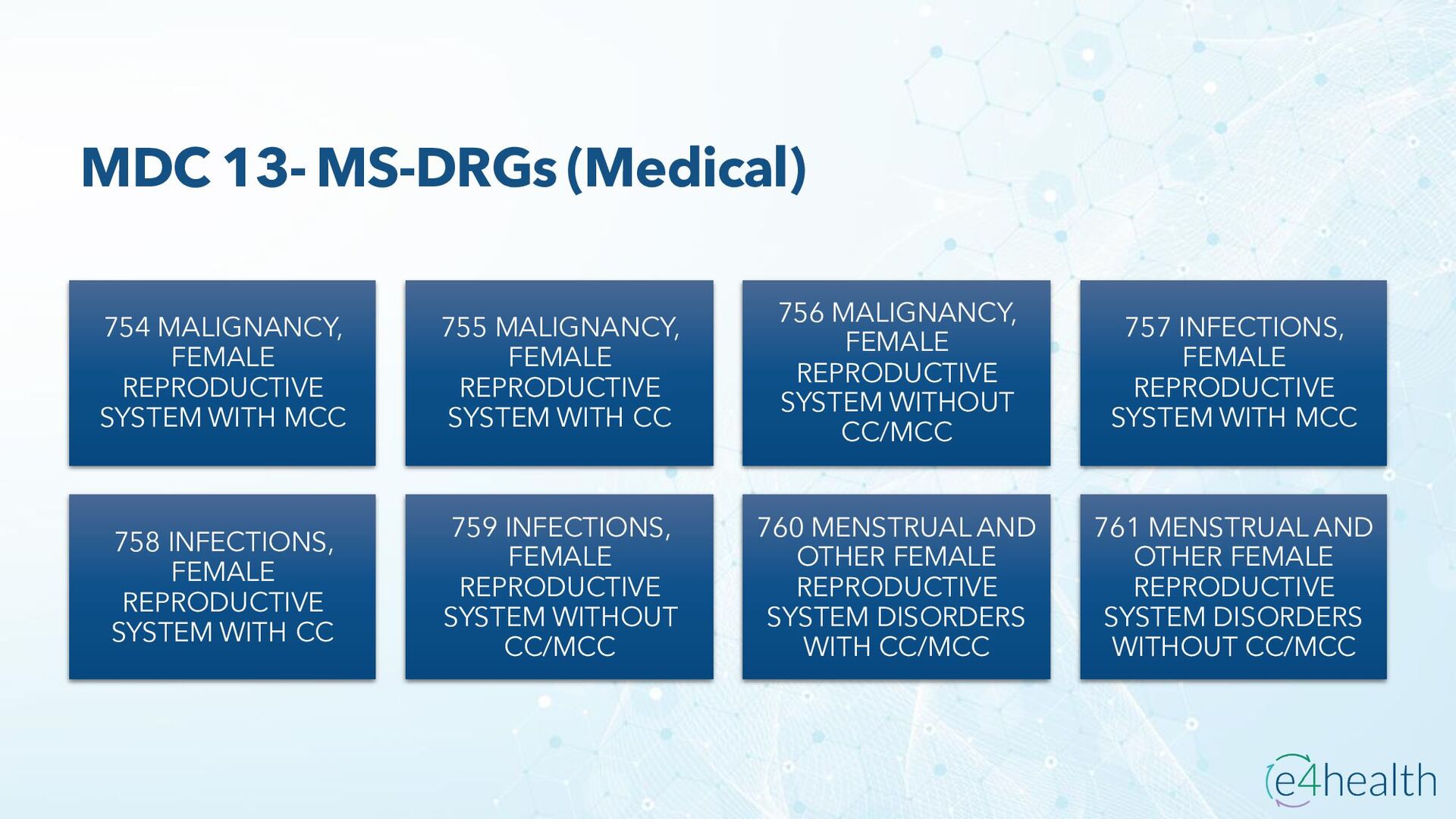
  3. MDC 13- MS-DRGs (Medical) 754 MALIGNANCY, FEMALE REPRODUCTIVE SYSTEM WITH

    MCC 755 MALIGNANCY, FEMALE REPRODUCTIVE SYSTEM WITH CC 756 MALIGNANCY, FEMALE REPRODUCTIVE SYSTEM WITHOUT CC/MCC 757 INFECTIONS, FEMALE REPRODUCTIVE SYSTEM WITH MCC 758 INFECTIONS, FEMALE REPRODUCTIVE SYSTEM WITH CC 759 INFECTIONS, FEMALE REPRODUCTIVE SYSTEM WITHOUT CC/MCC 760 MENSTRUAL AND OTHER FEMALE REPRODUCTIVE SYSTEM DISORDERS WITH CC/MCC 761 MENSTRUAL AND OTHER FEMALE REPRODUCTIVE SYSTEM DISORDERS WITHOUT CC/MCC
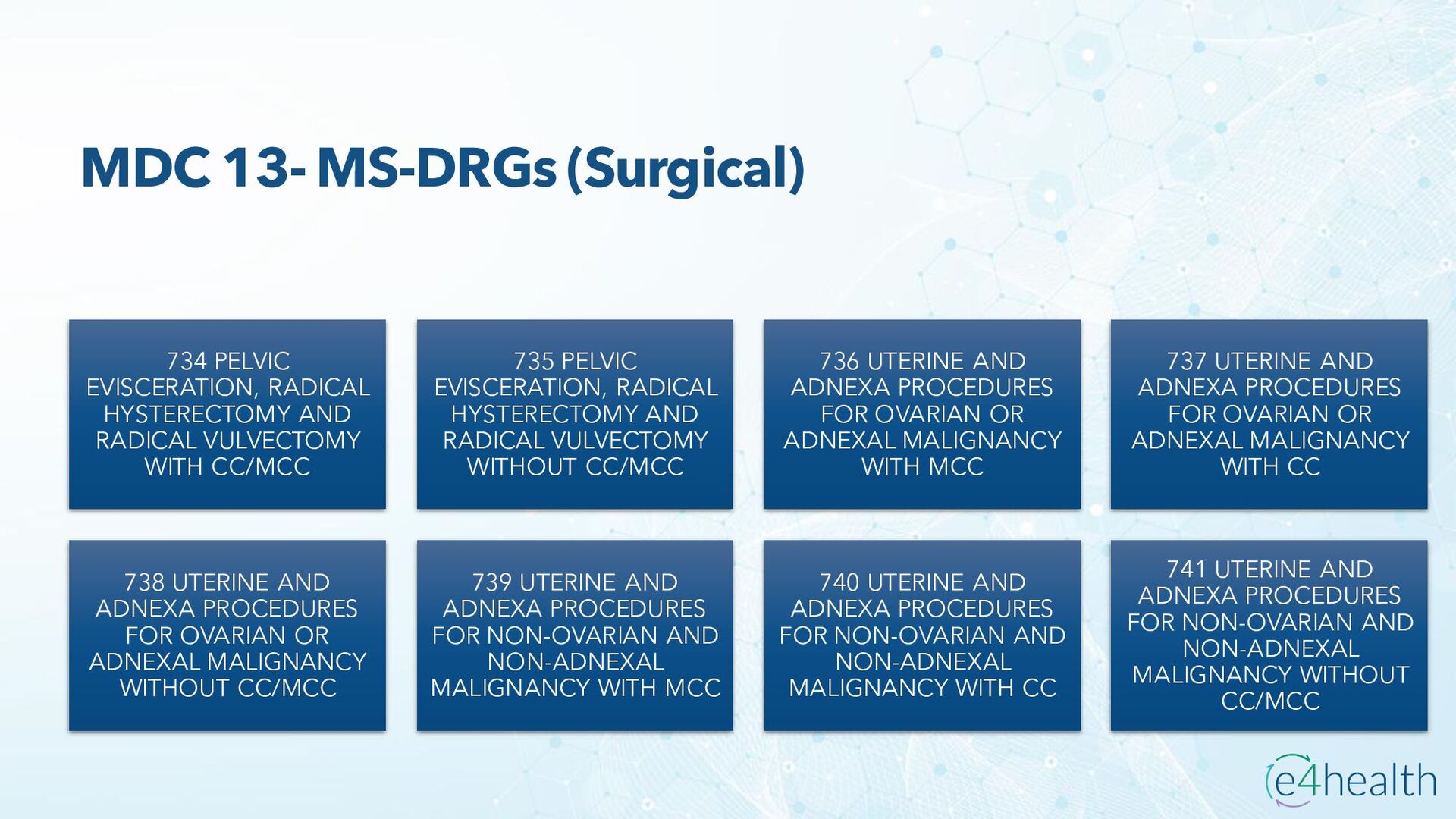
  4. MDC 13- MS-DRGs (Surgical) 734 PELVIC EVISCERATION, RADICAL HYSTERECTOMY AND

    RADICAL VULVECTOMY WITH CC/MCC 735 PELVIC EVISCERATION, RADICAL HYSTERECTOMY AND RADICAL VULVECTOMY WITHOUT CC/MCC 736 UTERINE AND ADNEXA PROCEDURES FOR OVARIAN OR ADNEXAL MALIGNANCY WITH MCC 737 UTERINE AND ADNEXA PROCEDURES FOR OVARIAN OR ADNEXAL MALIGNANCY WITH CC 738 UTERINE AND ADNEXA PROCEDURES FOR OVARIAN OR ADNEXAL MALIGNANCY WITHOUT CC/MCC 739 UTERINE AND ADNEXA PROCEDURES FOR NON-OVARIAN AND NON-ADNEXAL MALIGNANCY WITH MCC 740 UTERINE AND ADNEXA PROCEDURES FOR NON-OVARIAN AND NON-ADNEXAL MALIGNANCY WITH CC 741 UTERINE AND ADNEXA PROCEDURES FOR NON-OVARIAN AND NON-ADNEXAL MALIGNANCY WITHOUT CC/MCC
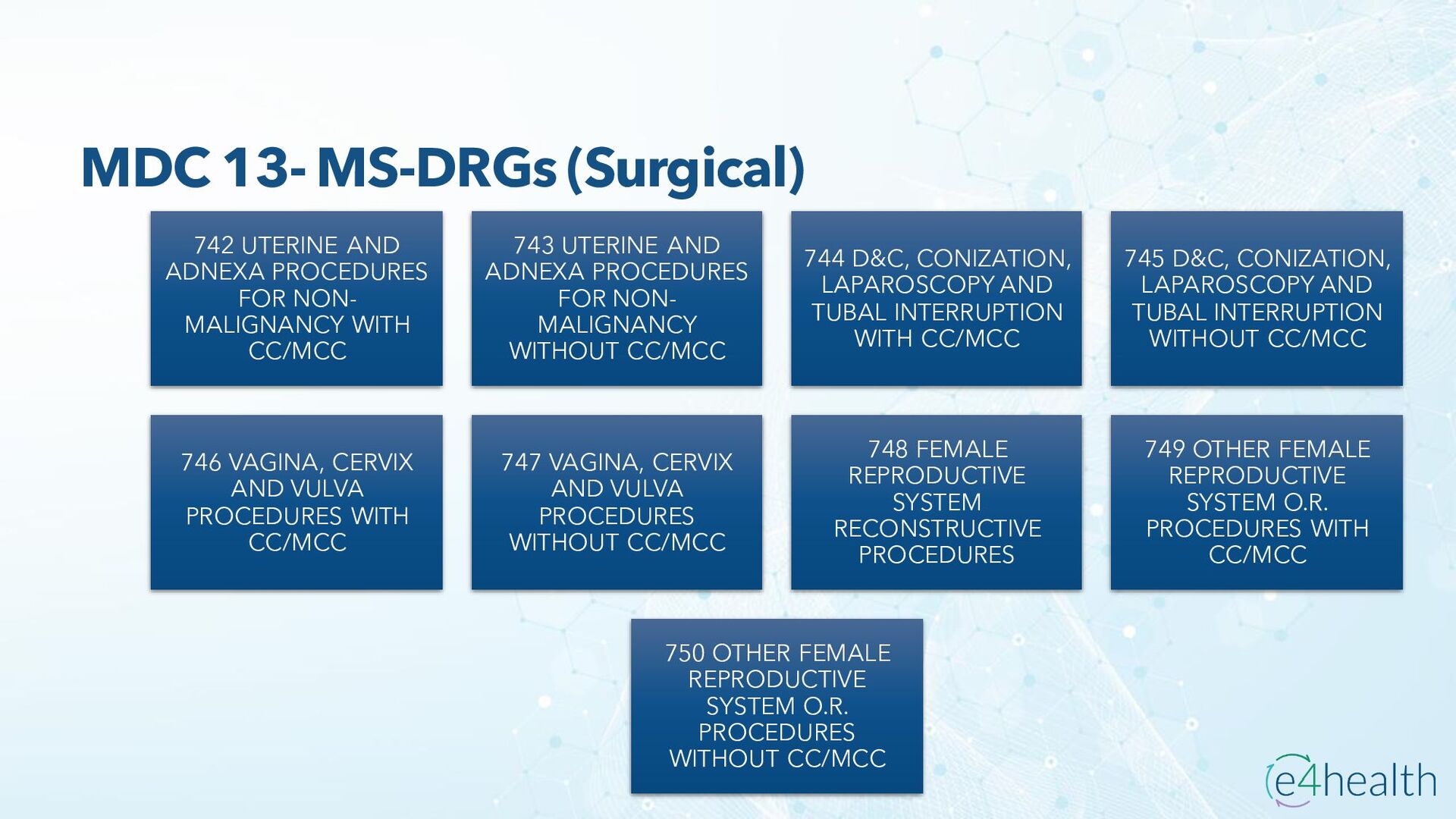
  5. MDC 13- MS-DRGs (Surgical) 742 UTERINE AND ADNEXA PROCEDURES FOR

    NON- MALIGNANCY WITH CC/MCC 743 UTERINE AND ADNEXA PROCEDURES FOR NON- MALIGNANCY WITHOUT CC/MCC 744 D&C, CONIZATION, LAPAROSCOPY AND TUBAL INTERRUPTION WITH CC/MCC 745 D&C, CONIZATION, LAPAROSCOPY AND TUBAL INTERRUPTION WITHOUT CC/MCC 746 VAGINA, CERVIX AND VULVA PROCEDURES WITH CC/MCC 747 VAGINA, CERVIX AND VULVA PROCEDURES WITHOUT CC/MCC 748 FEMALE REPRODUCTIVE SYSTEM RECONSTRUCTIVE PROCEDURES 749 OTHER FEMALE REPRODUCTIVE SYSTEM O.R. PROCEDURES WITH CC/MCC 750 OTHER FEMALE REPRODUCTIVE SYSTEM O.R. PROCEDURES WITHOUT CC/MCC
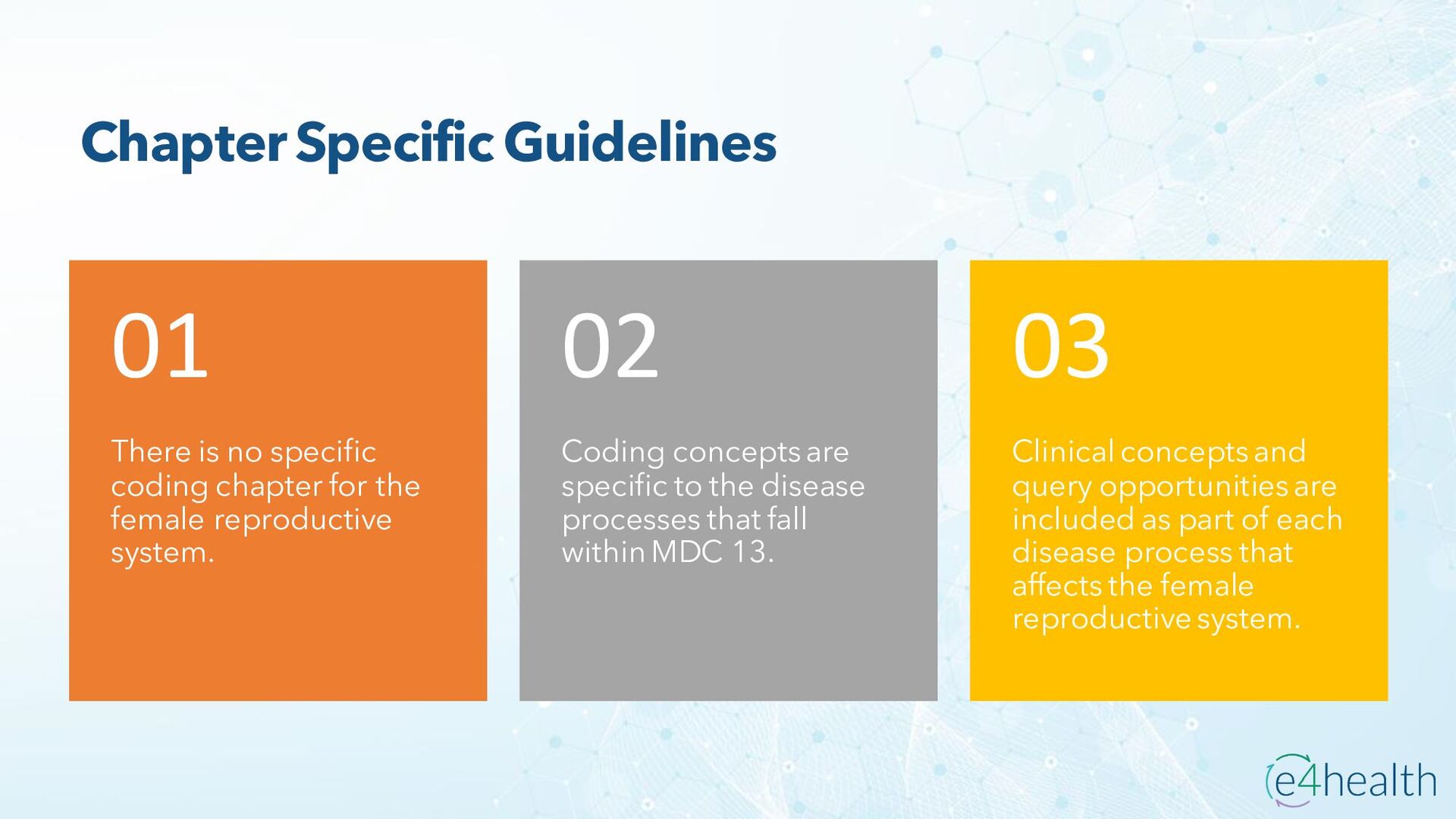
  6. Chapter Specific Guidelines There is no specific coding chapter for

    the female reproductive system. 01 Coding concepts are specific to the disease processes that fall within MDC 13. 02 Clinical concepts and query opportunities are included as part of each disease process that affects the female reproductive system. 03
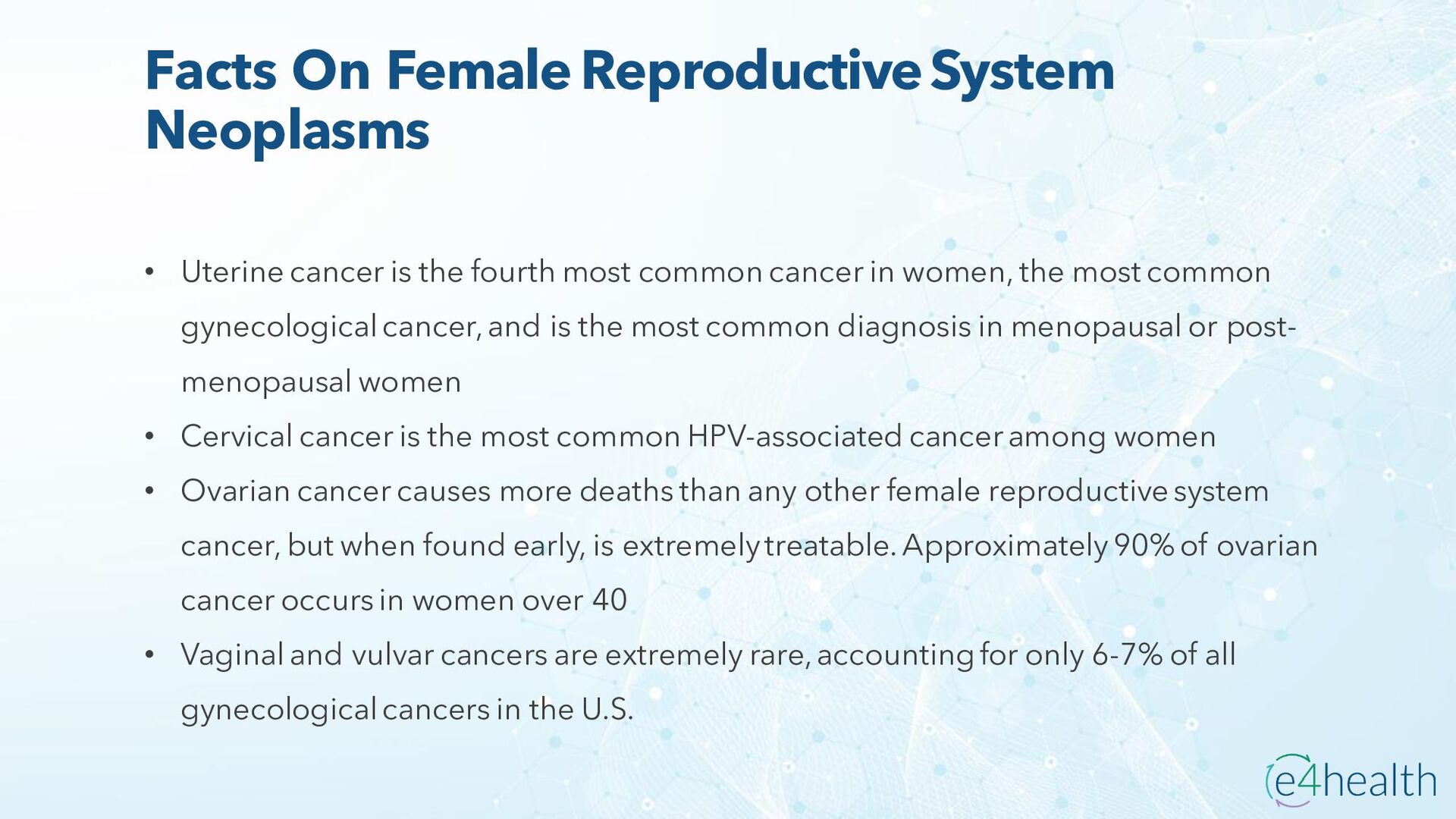
  7. Facts On Female Reproductive System Neoplasms • Uterine cancer is

    the fourth most common cancer in women, the most common gynecological cancer, and is the most common diagnosis in menopausal or post- menopausal women • Cervical cancer is the most common HPV-associated cancer among women • Ovarian cancer causes more deaths than any other female reproductive system cancer, but when found early, is extremely treatable. Approximately 90% of ovarian cancer occurs in women over 40 • Vaginal and vulvar cancers are extremely rare, accounting for only 6-7% of all gynecological cancers in the U.S.
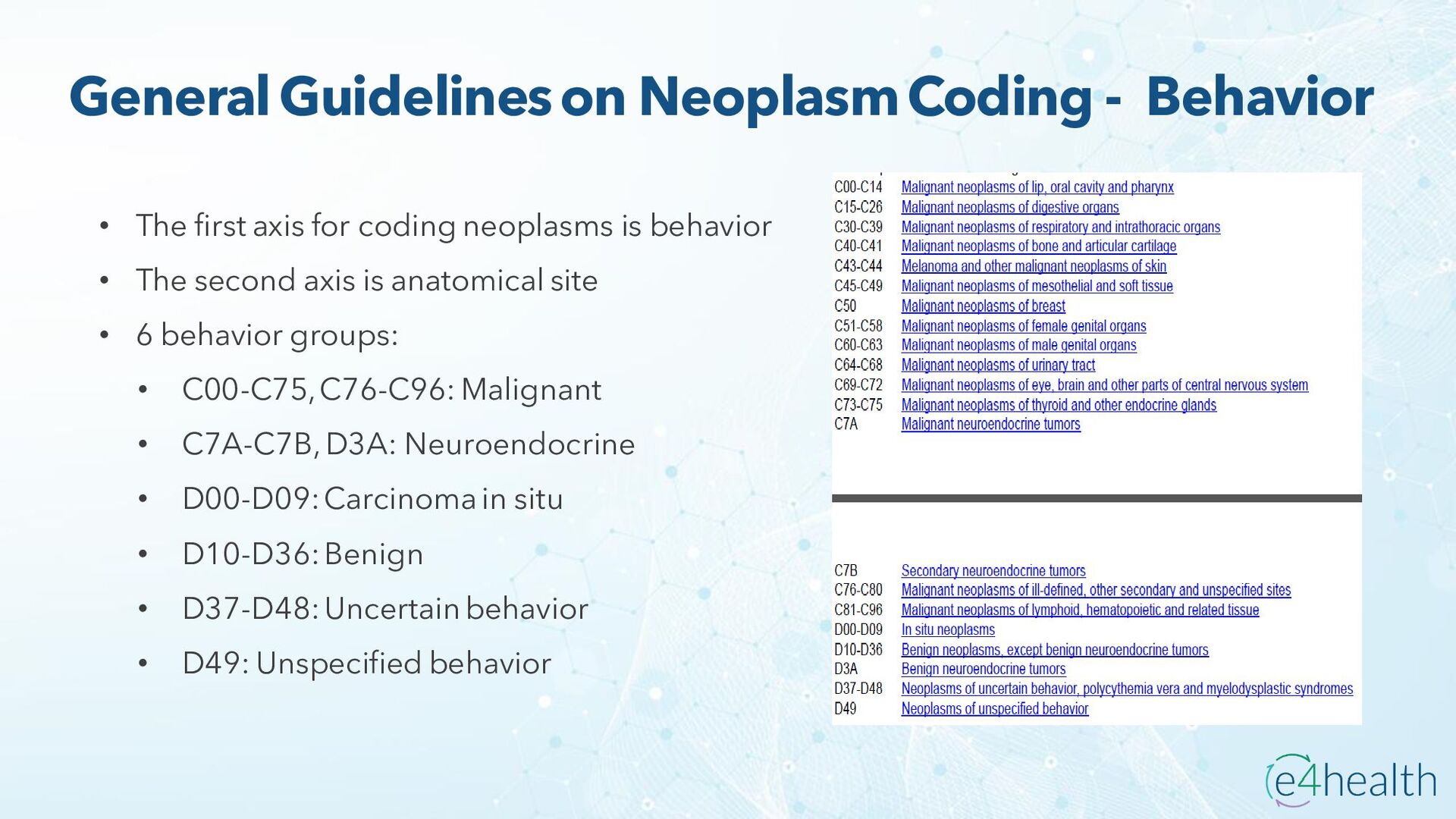
  8. General Guidelines on Neoplasm Coding - Behavior • The first

    axis for coding neoplasms is behavior • The second axis is anatomical site • 6 behavior groups: • C00-C75, C76-C96: Malignant • C7A-C7B, D3A: Neuroendocrine • D00-D09: Carcinoma in situ • D10-D36: Benign • D37-D48: Uncertain behavior • D49: Unspecified behavior
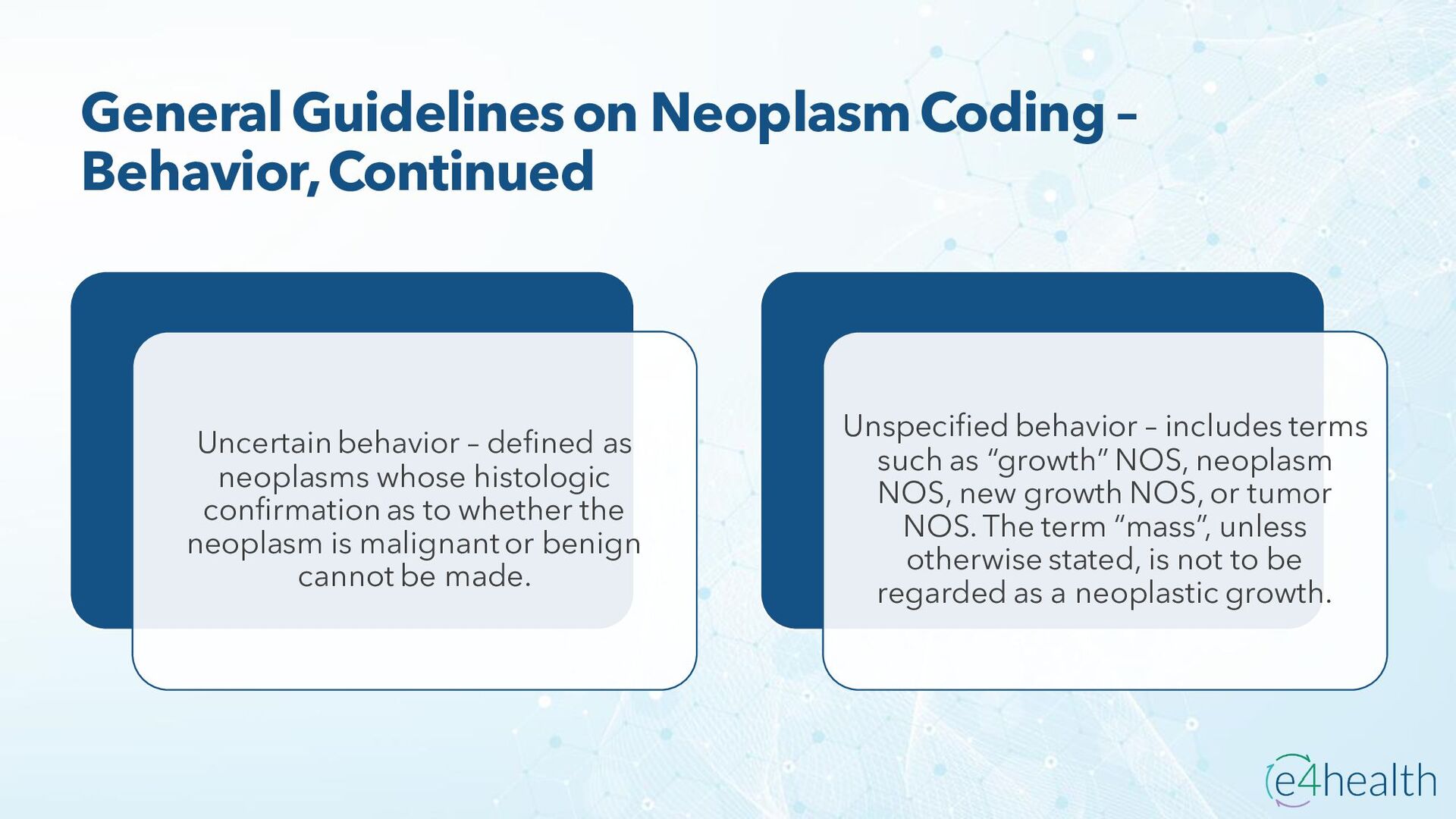
  9. General Guidelines on Neoplasm Coding – Behavior, Continued Uncertain behavior

    – defined as neoplasms whose histologic confirmation as to whether the neoplasm is malignant or benign cannot be made. Unspecified behavior – includes terms such as “growth” NOS, neoplasm NOS, new growth NOS, or tumor NOS. The term “mass”, unless otherwise stated, is not to be regarded as a neoplastic growth.
  10. General Guidelines on Neoplasm Coding • The neoplasms listed in

    this ICD-10-CM Index and Tabular are malignant, carcinoma-in-situ, benign, of uncertain behavior, or unspecified behavior. Typically, a principal diagnosis in this MS-DRG will also have a surgical procedure, which will result in assignment of an MS-DRG on the surgical side. • Primary malignant neoplasms overlapping site boundaries • A primary malignant neoplasm that overlaps two or more contiguous (next to each other) sites should be classified to the subcategory/code .8 ('overlapping lesion'), unless the combination is specifically indexed elsewhere. • Malignant neoplasm of ectopic tissue • Malignant neoplasms of ectopic tissue are to be coded to the site of origin mentioned, e.g., ectopic uterine malignant neoplasms involving the peritoneum are coded to malignant neoplasm of pancreas, unspecified (C25.9). • If malignant, any secondary (metastatic) sites should also be determined, if applicable
  11. General Guidelines on Neoplasm Coding, Continued • Treatment directed at

    the malignancy • If the treatment is directed at the malignancy, designate the malignancy as the principal diagnosis. • If the admission is for the administration of chemotherapy, immunotherapy or radiation therapy, assign the appropriate Z51 (Encounter for…) as the first-listed or principal diagnosis, and the diagnosis or problem for which the service is being performed as a secondary diagnosis. • Treatment of secondary site • When a patient is admitted because of a primary neoplasm with metastasis and treatment is directed toward the secondary site only, the secondary neoplasm is designated as the principal diagnosis even though the primary malignancy is still present.
  12. General Guidelines on Neoplasm Coding, Continued • Primary malignancy previously

    excised • When a primary malignancy has been previously excised or eradicated and there is no further treatment directed to that site and there is no evidence of any existing primary malignancy, a code from category Z85, Personal history of malignant neoplasm, should be used to indicate the former site of the malignancy. Any mention of extension, invasion, or metastasis to another site is coded as a secondary malignant neoplasm to that site. The secondary site may be the principal or first-listed with the Z85 code used as a secondary code. • Management of Dehydration Due to Malignancy • Dehydration is sequenced first (sequencing) • Neoplasm Related Pain • May be sequenced as primary or secondary diagnosis based on circumstances warranting admission (sequencing) • Treatment of a complication resulting from a surgical procedure • When the admission/encounter is for treatment of a complication resulting from a surgical procedure, designate the complication as the principal or first-listed diagnosis if treatment is directed at resolving the complication. (sequencing)
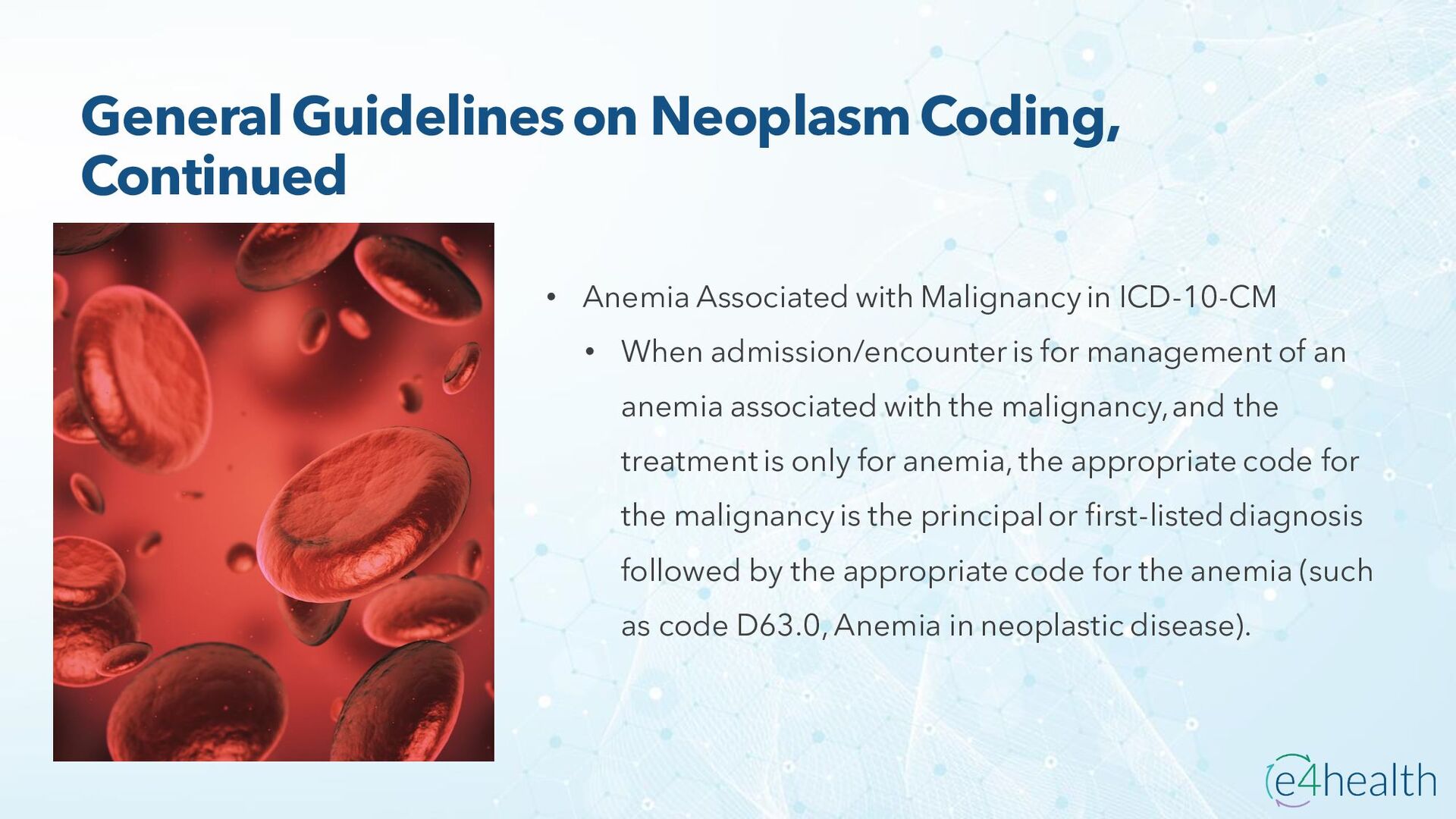
  13. General Guidelines on Neoplasm Coding, Continued • Anemia Associated with

    Malignancy in ICD-10-CM • When admission/encounter is for management of an anemia associated with the malignancy, and the treatment is only for anemia, the appropriate code for the malignancy is the principal or first-listed diagnosis followed by the appropriate code for the anemia (such as code D63.0, Anemia in neoplastic disease).
  14. General Guidelines on Neoplasm Coding, Continued • Anemia associated with

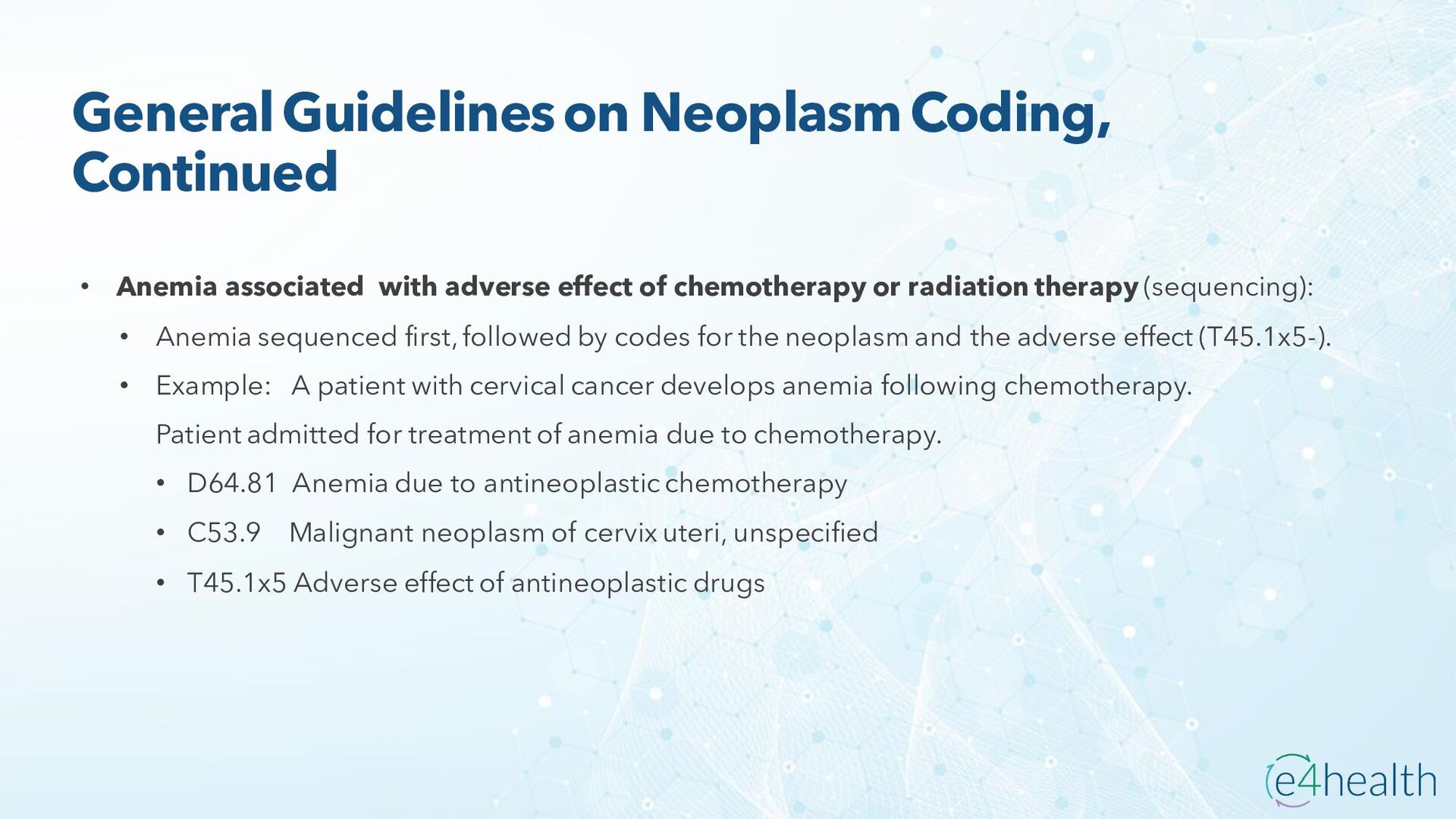
    adverse effect of chemotherapy or radiation therapy (sequencing): • Anemia sequenced first, followed by codes for the neoplasm and the adverse effect (T45.1x5-). • Example: A patient with cervical cancer develops anemia following chemotherapy. Patient admitted for treatment of anemia due to chemotherapy. • D64.81 Anemia due to antineoplastic chemotherapy • C53.9 Malignant neoplasm of cervix uteri, unspecified • T45.1x5 Adverse effect of antineoplastic drugs
  15. Coding Malignant Ascites and Pleural Effusions • Check Excludes: ascites

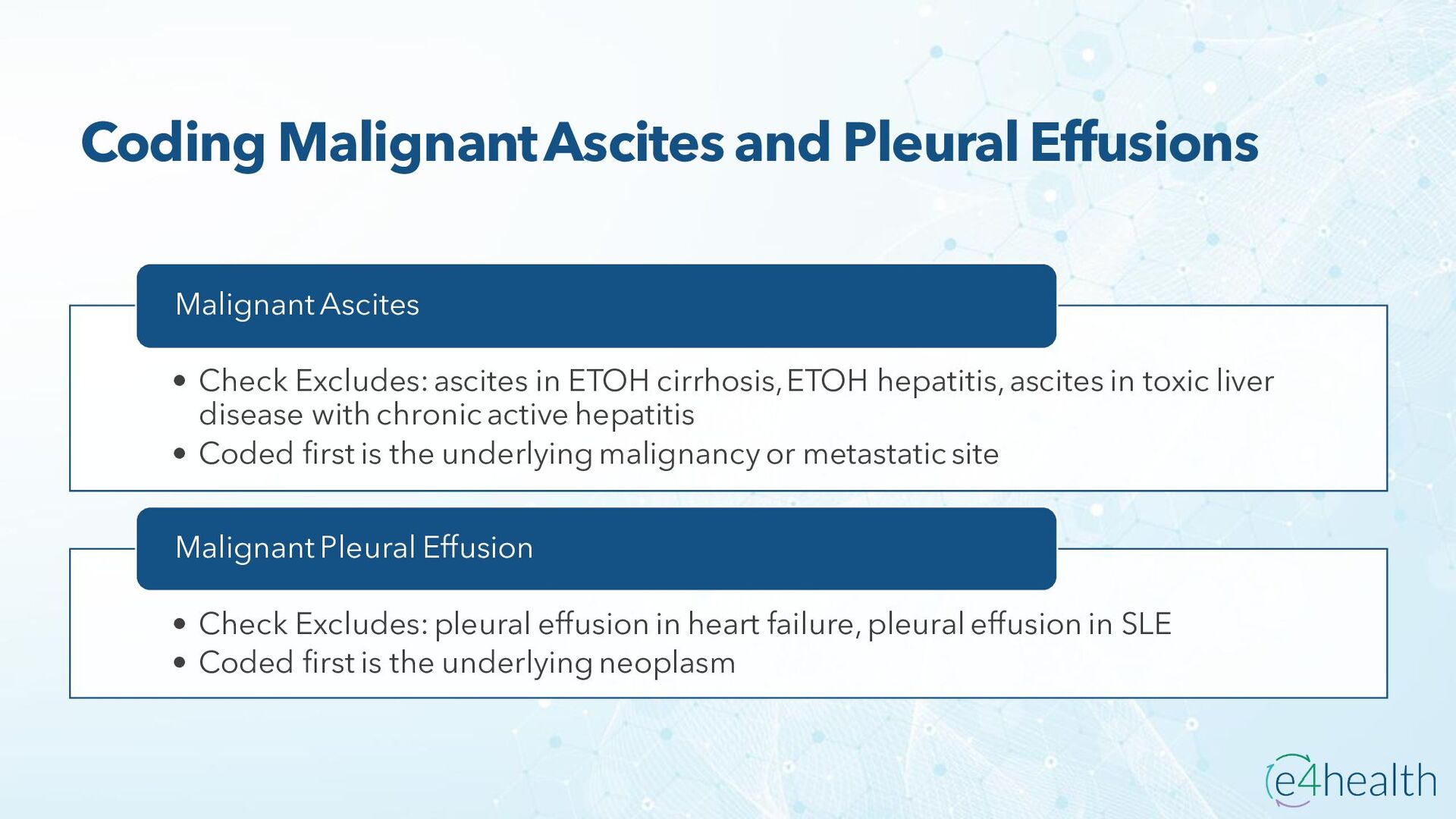
    in ETOH cirrhosis, ETOH hepatitis, ascites in toxic liver disease with chronic active hepatitis • Coded first is the underlying malignancy or metastatic site Malignant Ascites • Check Excludes: pleural effusion in heart failure, pleural effusion in SLE • Coded first is the underlying neoplasm Malignant Pleural Effusion
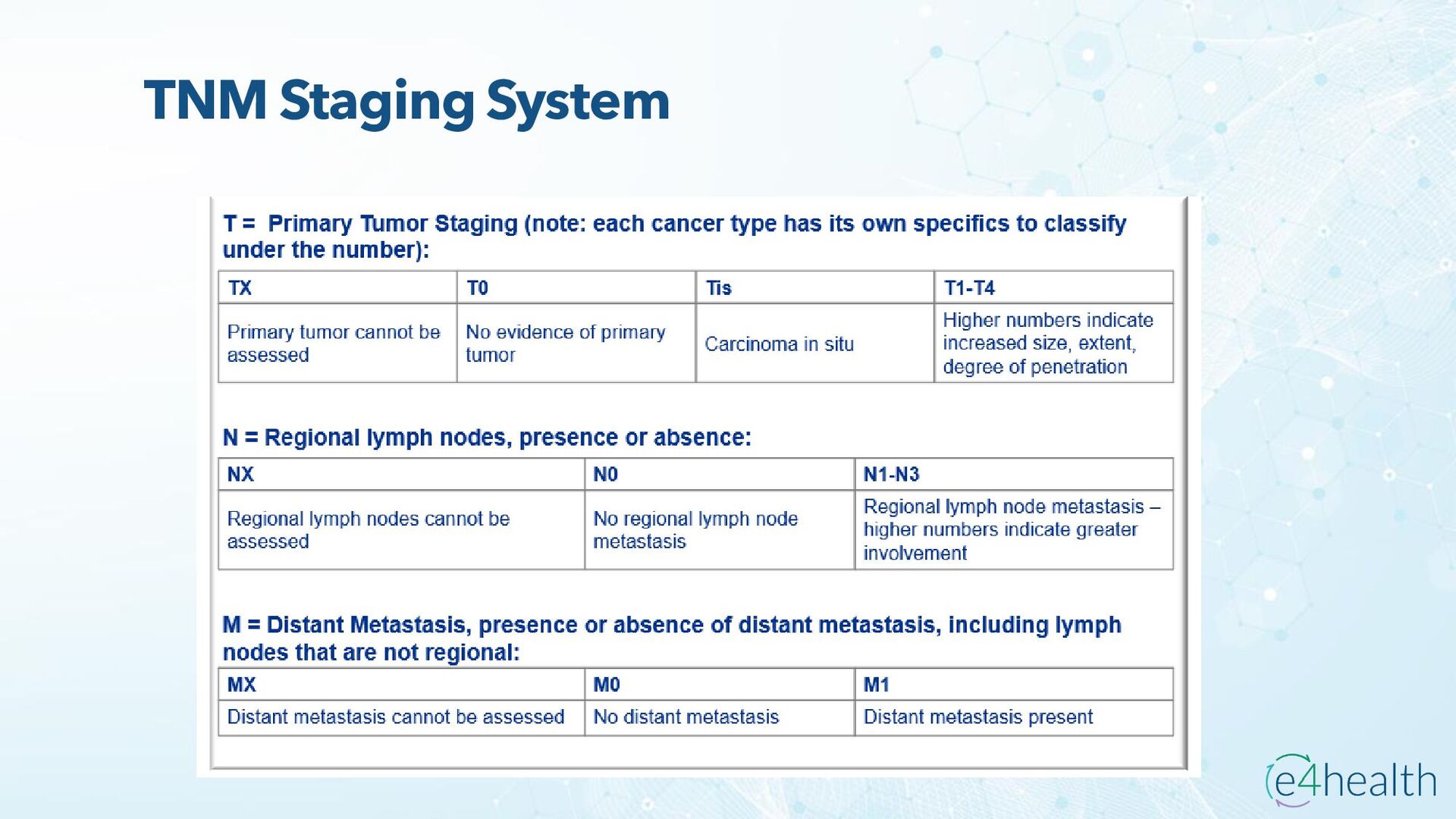
  16. Tumor, Nodes and Metastases • TNM is a worldwide classification

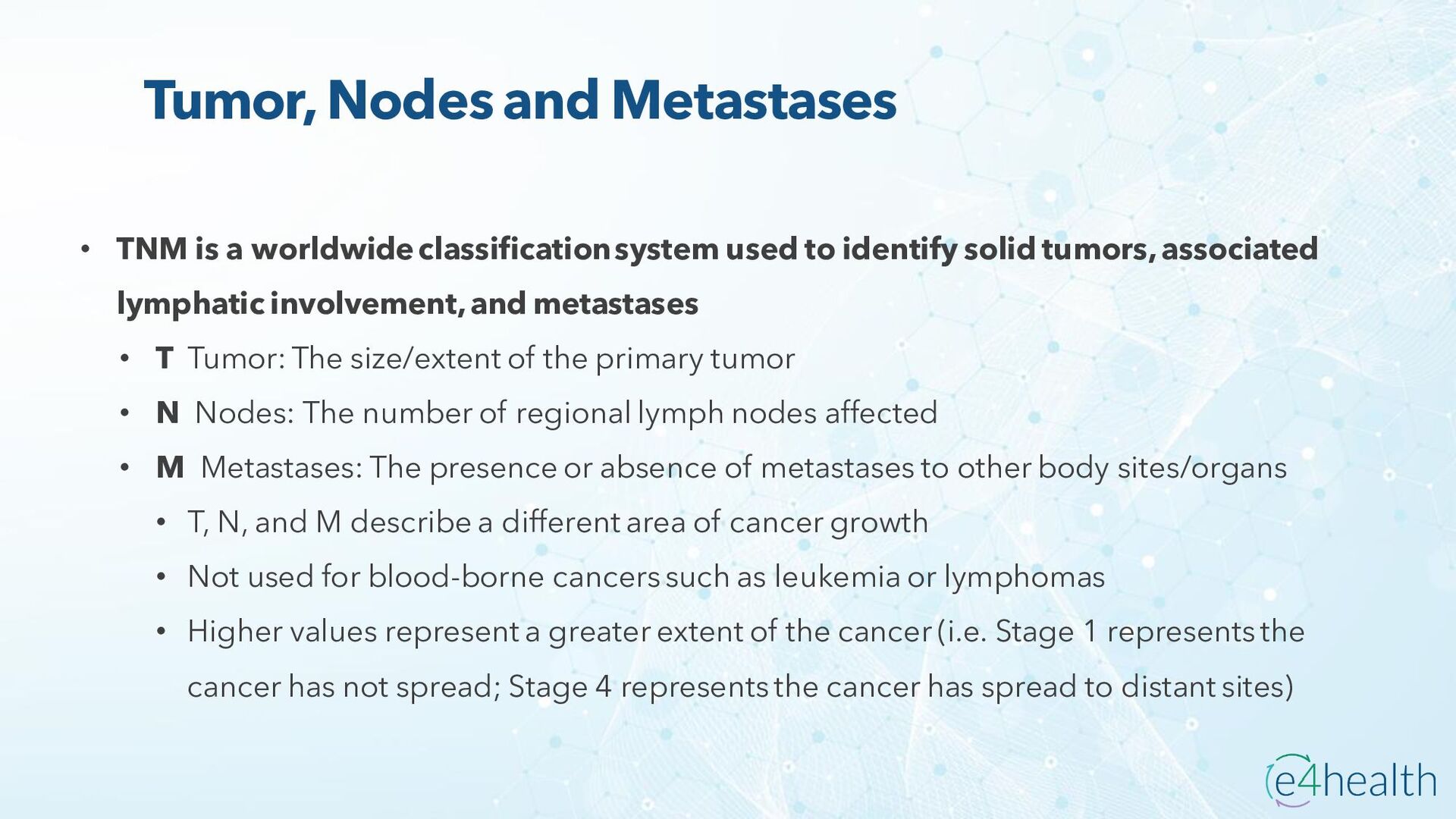
    system used to identify solid tumors, associated lymphatic involvement, and metastases • T Tumor: The size/extent of the primary tumor • N Nodes: The number of regional lymph nodes affected • M Metastases: The presence or absence of metastases to other body sites/organs • T, N, and M describe a different area of cancer growth • Not used for blood-borne cancers such as leukemia or lymphomas • Higher values represent a greater extent of the cancer (i.e. Stage 1 represents the cancer has not spread; Stage 4 represents the cancer has spread to distant sites)
  17. Decoding Cancer Staging Information Coding Clinic Second Quarter 2012 Page

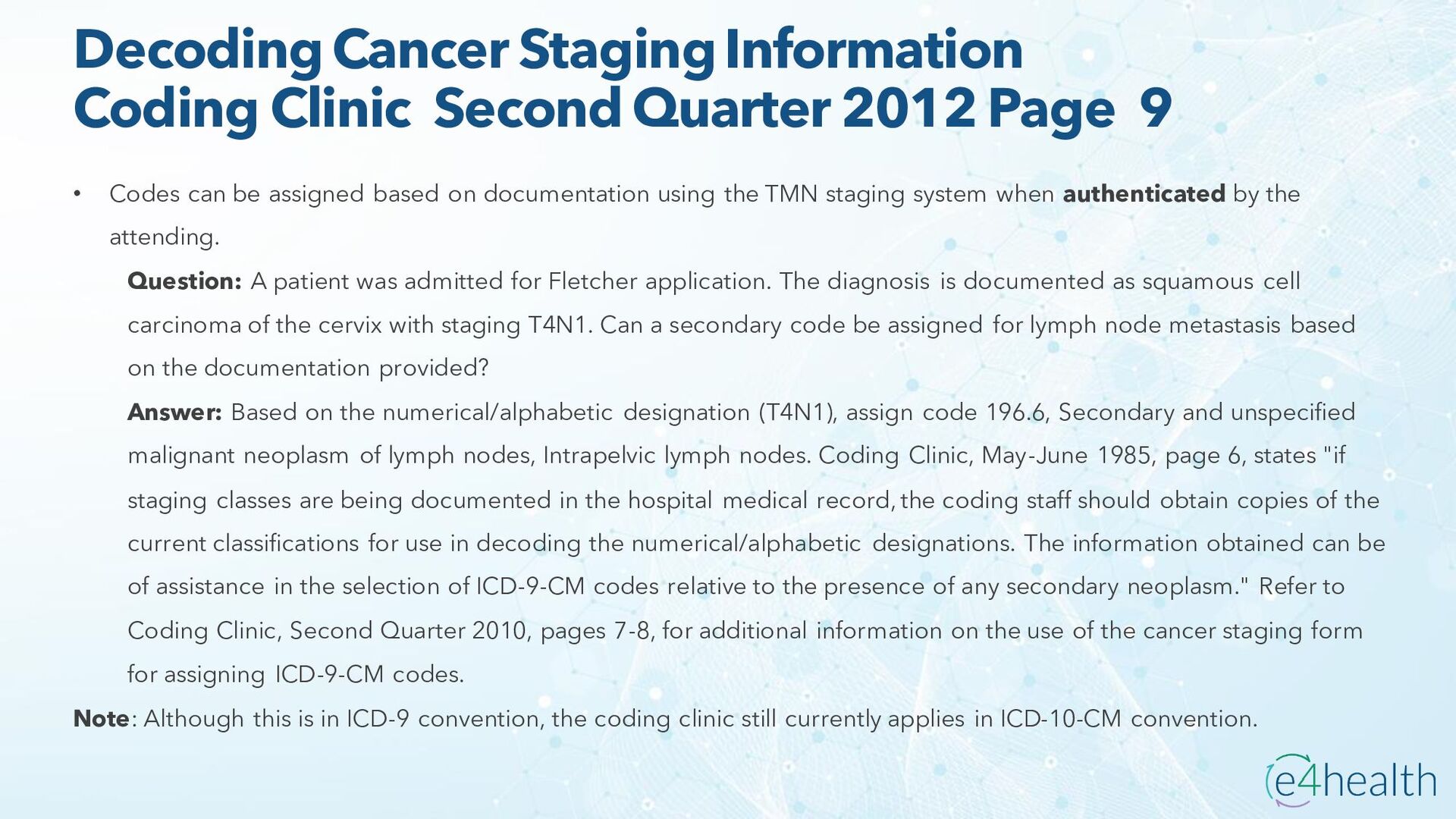
    9 • Codes can be assigned based on documentation using the TMN staging system when authenticated by the attending. Question: A patient was admitted for Fletcher application. The diagnosis is documented as squamous cell carcinoma of the cervix with staging T4N1. Can a secondary code be assigned for lymph node metastasis based on the documentation provided? Answer: Based on the numerical/alphabetic designation (T4N1), assign code 196.6, Secondary and unspecified malignant neoplasm of lymph nodes, Intrapelvic lymph nodes. Coding Clinic, May-June 1985, page 6, states "if staging classes are being documented in the hospital medical record, the coding staff should obtain copies of the current classifications for use in decoding the numerical/alphabetic designations. The information obtained can be of assistance in the selection of ICD-9-CM codes relative to the presence of any secondary neoplasm." Refer to Coding Clinic, Second Quarter 2010, pages 7-8, for additional information on the use of the cancer staging form for assigning ICD-9-CM codes. Note: Although this is in ICD-9 convention, the coding clinic still currently applies in ICD-10-CM convention.
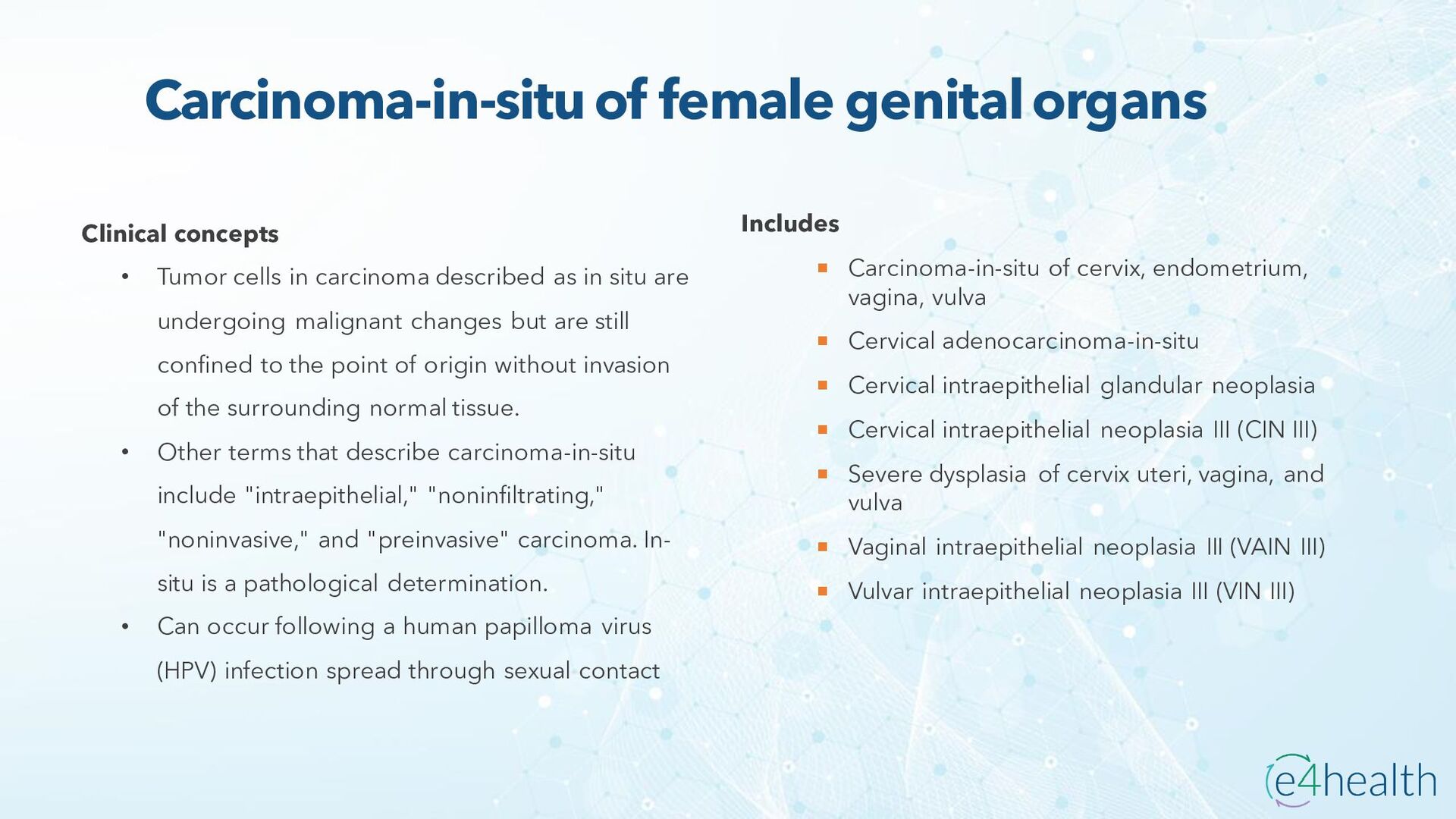
  18. Carcinoma-in-situ of female genital organs Clinical concepts • Tumor cells

    in carcinoma described as in situ are undergoing malignant changes but are still confined to the point of origin without invasion of the surrounding normal tissue. • Other terms that describe carcinoma-in-situ include "intraepithelial," "noninfiltrating," "noninvasive," and "preinvasive" carcinoma. In- situ is a pathological determination. • Can occur following a human papilloma virus (HPV) infection spread through sexual contact Includes  Carcinoma-in-situ of cervix, endometrium, vagina, vulva  Cervical adenocarcinoma-in-situ  Cervical intraepithelial glandular neoplasia  Cervical intraepithelial neoplasia III (CIN III)  Severe dysplasia of cervix uteri, vagina, and vulva  Vaginal intraepithelial neoplasia III (VAIN III)  Vulvar intraepithelial neoplasia III (VIN III)
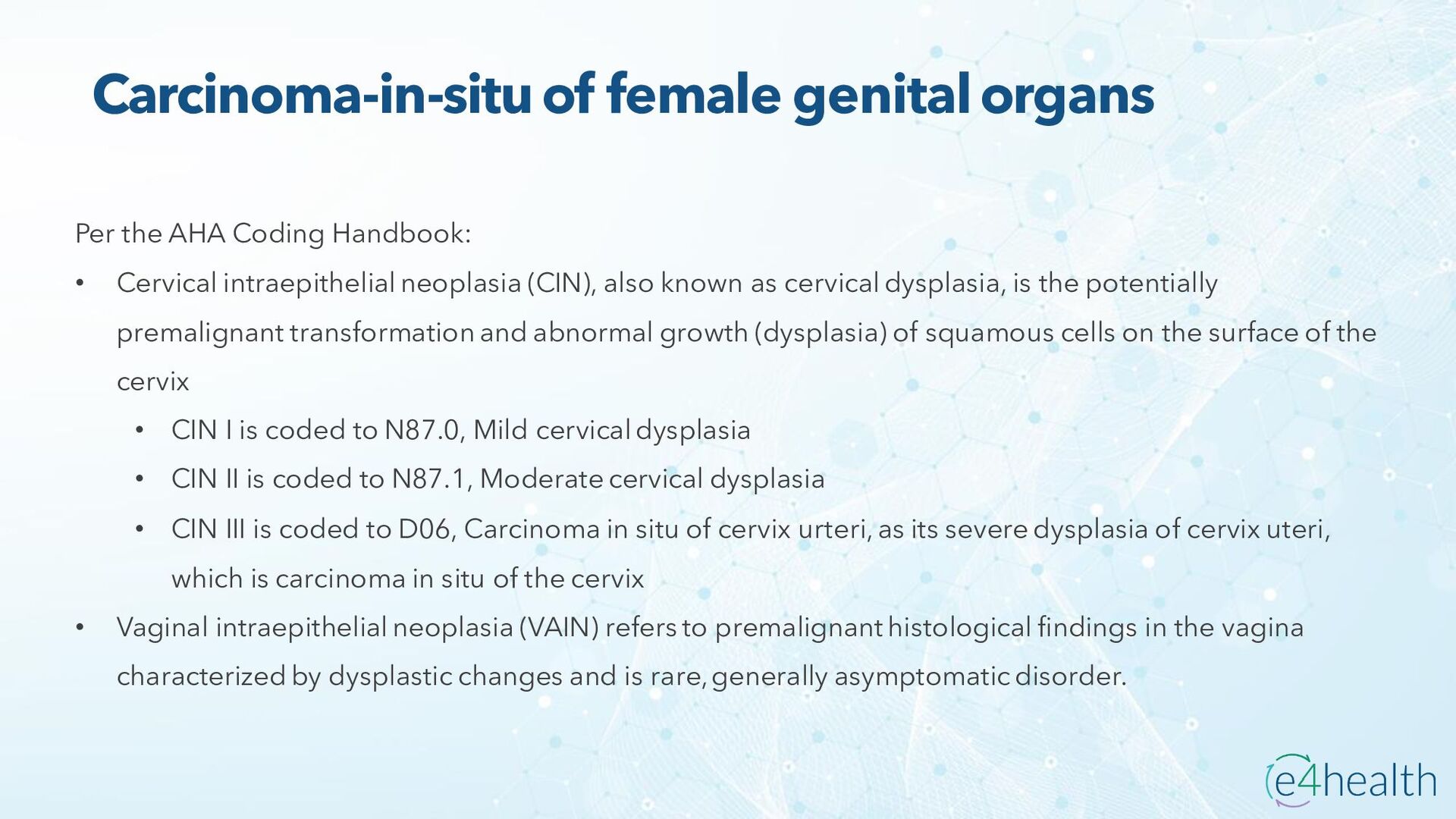
  19. Carcinoma-in-situ of female genital organs Per the AHA Coding Handbook:

    • Cervical intraepithelial neoplasia (CIN), also known as cervical dysplasia, is the potentially premalignant transformation and abnormal growth (dysplasia) of squamous cells on the surface of the cervix • CIN I is coded to N87.0, Mild cervical dysplasia • CIN II is coded to N87.1, Moderate cervical dysplasia • CIN III is coded to D06, Carcinoma in situ of cervix urteri, as its severe dysplasia of cervix uteri, which is carcinoma in situ of the cervix • Vaginal intraepithelial neoplasia (VAIN) refers to premalignant histological findings in the vagina characterized by dysplastic changes and is rare, generally asymptomatic disorder.
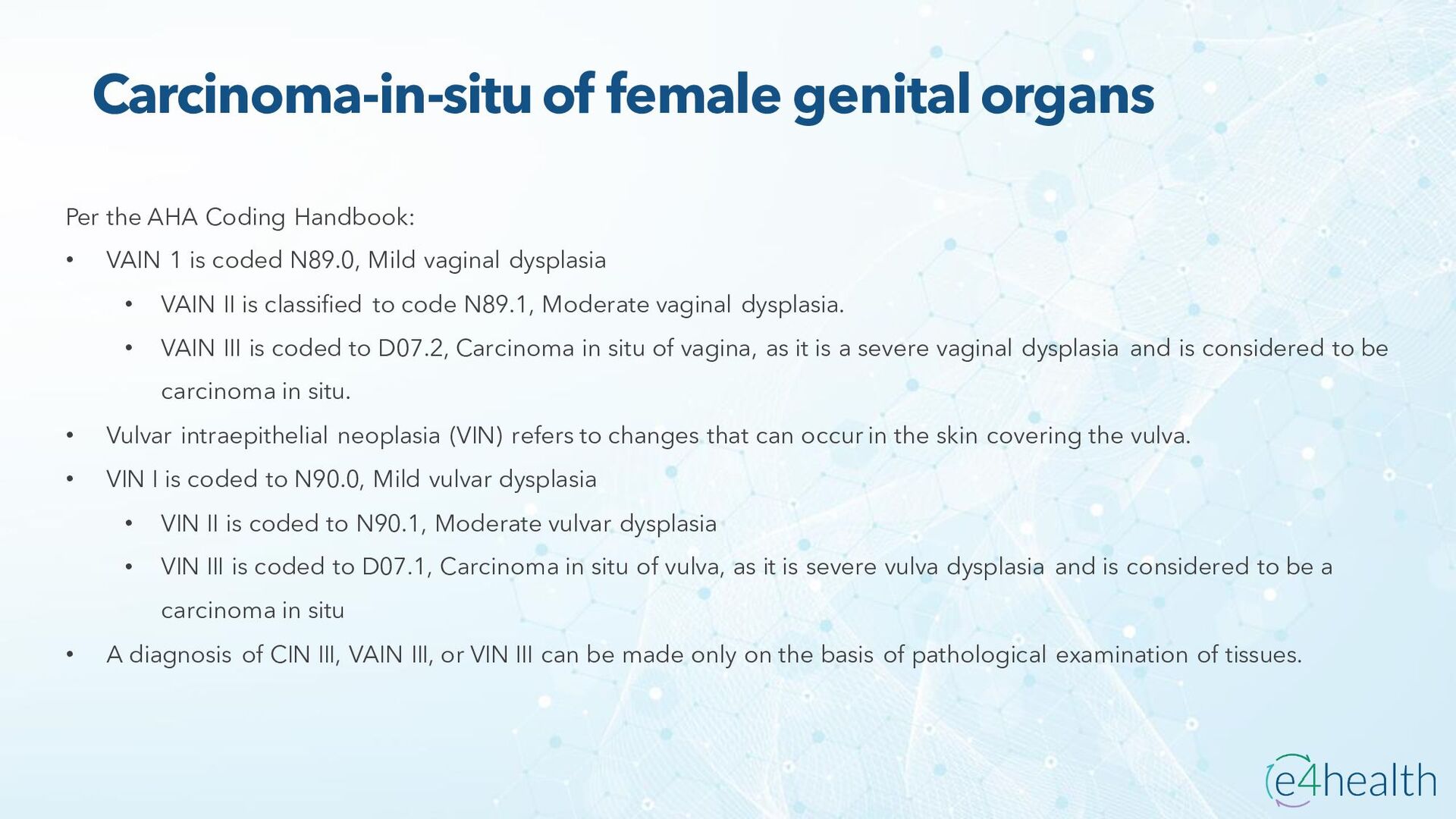
  20. Carcinoma-in-situ of female genital organs Per the AHA Coding Handbook:

    • VAIN 1 is coded N89.0, Mild vaginal dysplasia • VAIN II is classified to code N89.1, Moderate vaginal dysplasia. • VAIN III is coded to D07.2, Carcinoma in situ of vagina, as it is a severe vaginal dysplasia and is considered to be carcinoma in situ. • Vulvar intraepithelial neoplasia (VIN) refers to changes that can occur in the skin covering the vulva. • VIN I is coded to N90.0, Mild vulvar dysplasia • VIN II is coded to N90.1, Moderate vulvar dysplasia • VIN III is coded to D07.1, Carcinoma in situ of vulva, as it is severe vulva dysplasia and is considered to be a carcinoma in situ • A diagnosis of CIN III, VAIN III, or VIN III can be made only on the basis of pathological examination of tissues.
  21. Carcinoma-in-situ of female genital organs Per the AHA Coding Handbook:

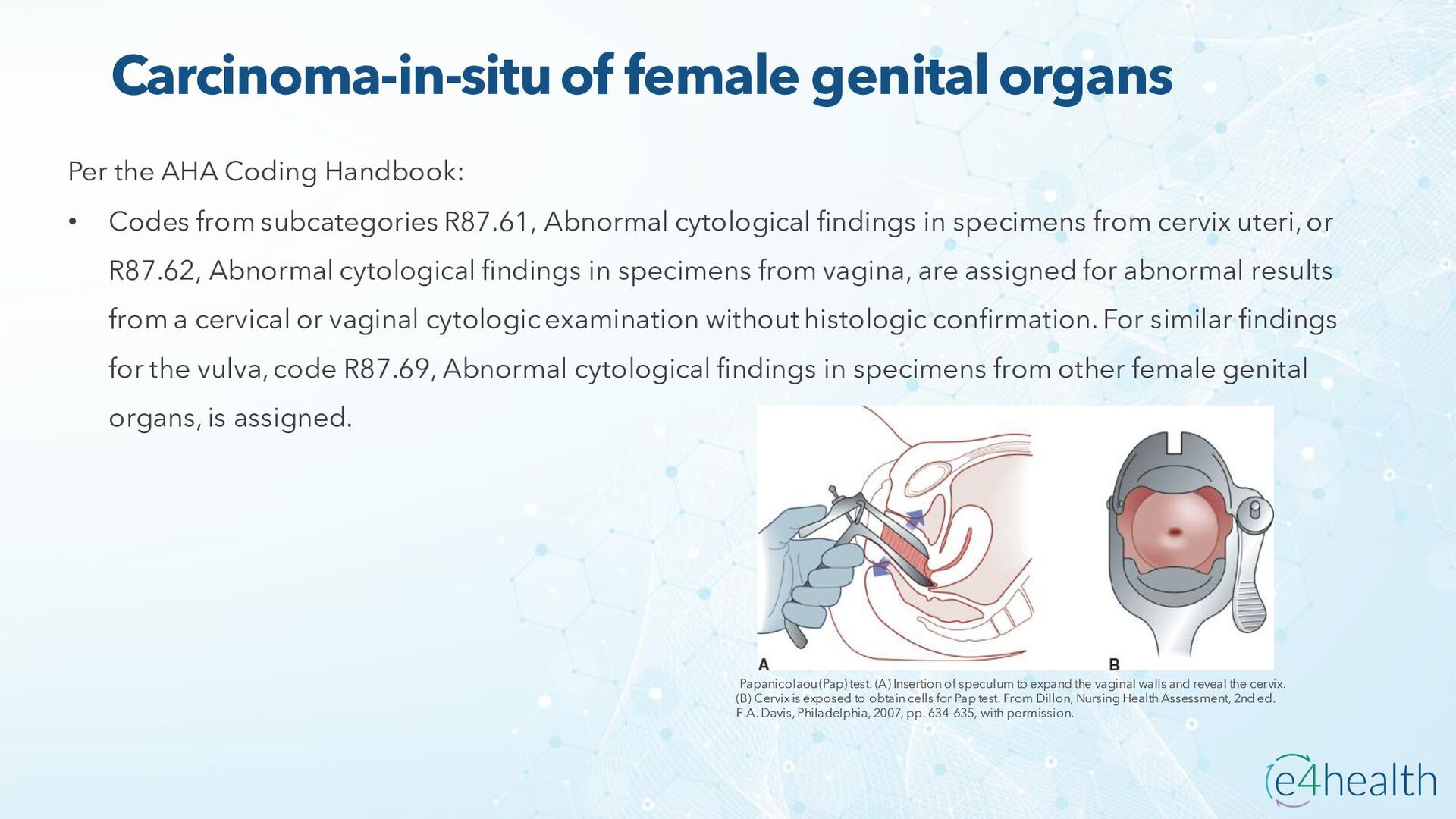
    • Codes from subcategories R87.61, Abnormal cytological findings in specimens from cervix uteri, or R87.62, Abnormal cytological findings in specimens from vagina, are assigned for abnormal results from a cervical or vaginal cytologic examination without histologic confirmation. For similar findings for the vulva, code R87.69, Abnormal cytological findings in specimens from other female genital organs, is assigned. Papanicolaou (Pap) test. (A) Insertion of speculum to expand the vaginal walls and reveal the cervix. (B) Cervix is exposed to obtain cells for Pap test. From Dillon, Nursing Health Assessment, 2nd ed. F.A. Davis, Philadelphia, 2007, pp. 634–635, with permission.
  22. Cervical dysplasia with CA in situ of cervix Coding Clinic

    Third Quarter 1992 Page 8 • Question: A patient with known cervical dysplasia is admitted for a conization of the cervix. The pathology report reveals carcinoma in situ of the cervix. What is the principal diagnosis? • Answer: The principal diagnosis should be the carcinoma in situ of the cervix, code 233.1. Cervical dysplasia is known to be a precursor condition of carcinoma in situ of the cervix. The cervical dysplasia should not be coded. NOTE: Although this is in ICD-9-CM coding clinic convention, at current date, this coding clinic is applicable in ICD-10-CM convention
  23. Carcinoma-in-situ of female genital organs – Query opportunity Documentation requirements/

    query opportunity • Review record to find specific site of cervical carcinoma-in-situ (e.g., endocervix, exocervix) • This DRG includes CIN III, VAIN III and VIN III. Review record for specificity of cervical dysplasia (mild, moderate, severe, CIN I, CIN II, CIN III) • Review documentation for additional diagnoses: • Anemias • Presence of HPV • Complications of surgery
  24. Malignant neoplasm of cervix uteri • Endocervix – opening that

    leads to the uterus; covered with glandular cells • Exocervix – outer part of cervix; covered with squamous cells Made of two parts and covered with two different types of cells • Within this area, normal cells can change to pre-cancerous • HPV can increase the risk of the change to pre-cancerous Two different types of cells called the “transformation zone” • Review documentation for metastases to other organs: ovaries, peritoneum, vagina, uterus, fallopian • Review for documentation of ascites and pleural effusion and if due to malignancy • NOTE: If both malignant ascites and/or malignant effusion are the focus of treatment, per the FY23 ICD-10-CM Diagnosis Tabular, the malignancy is coded first followed by malignant ascites and/or effusion are reported as secondary diagnoses. Query opportunity:
  25. Malignant neoplasm of ovary and other uterine adnexa Includes cancer

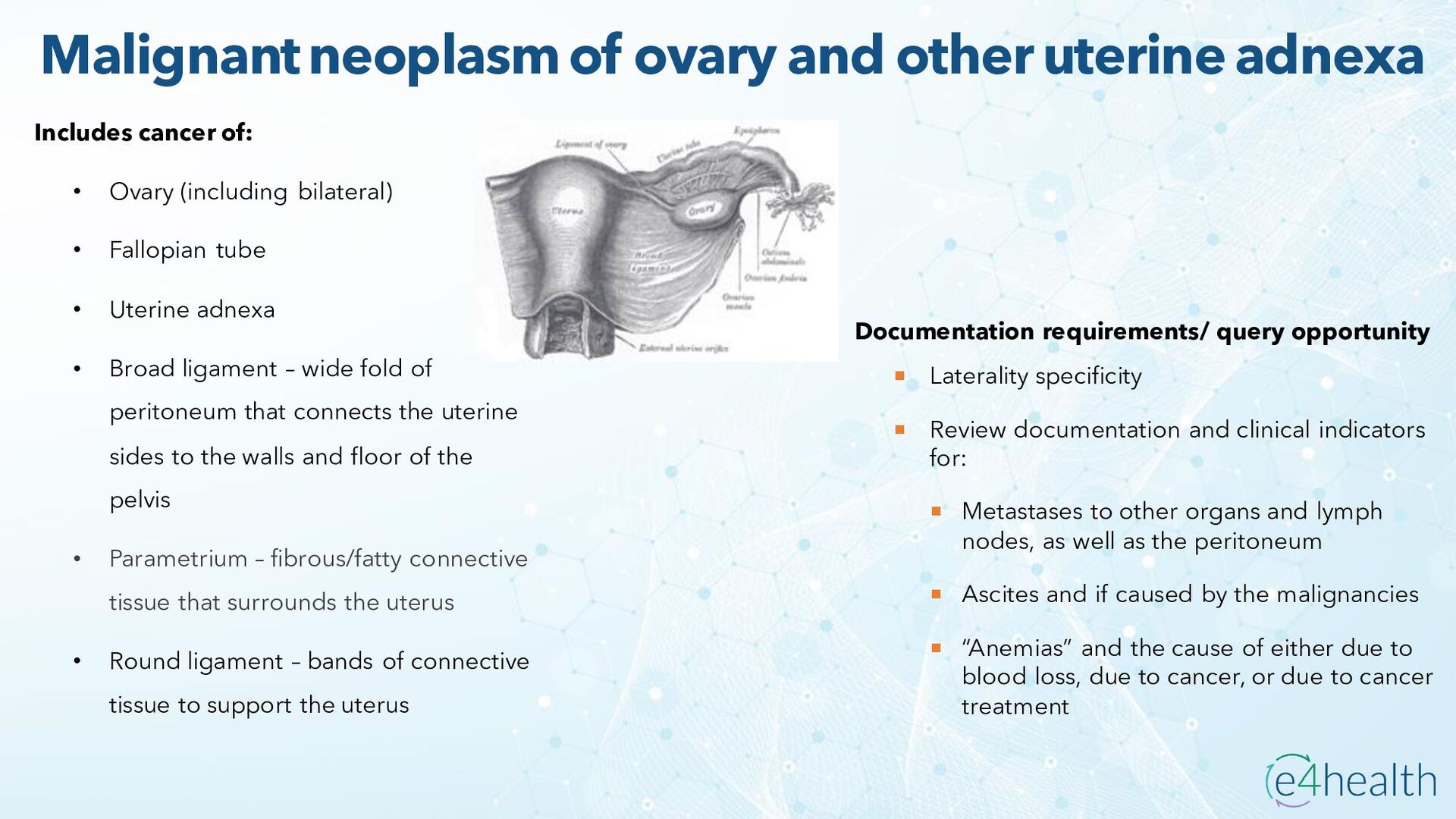
    of: • Ovary (including bilateral) • Fallopian tube • Uterine adnexa • Broad ligament – wide fold of peritoneum that connects the uterine sides to the walls and floor of the pelvis • Parametrium – fibrous/fatty connective tissue that surrounds the uterus • Round ligament – bands of connective tissue to support the uterus Documentation requirements/ query opportunity  Laterality specificity  Review documentation and clinical indicators for:  Metastases to other organs and lymph nodes, as well as the peritoneum  Ascites and if caused by the malignancies  “Anemias” and the cause of either due to blood loss, due to cancer, or due to cancer treatment
  26. Malignant Neoplasm of Bilateral Ovaries Coding Clinic Fourth Quarter 2021

    Page 6 Code C56.3, Malignant neoplasm of bilateral ovaries, was created to identify a malignancy in both ovaries. This concept was repeated for a secondary malignant neoplasm of both ovaries, with the creation of code C79.63, Secondary malignant neoplasm of bilateral ovaries.
  27. Malignant neoplasm of uterus Includes cancer of: • Corpus uteri

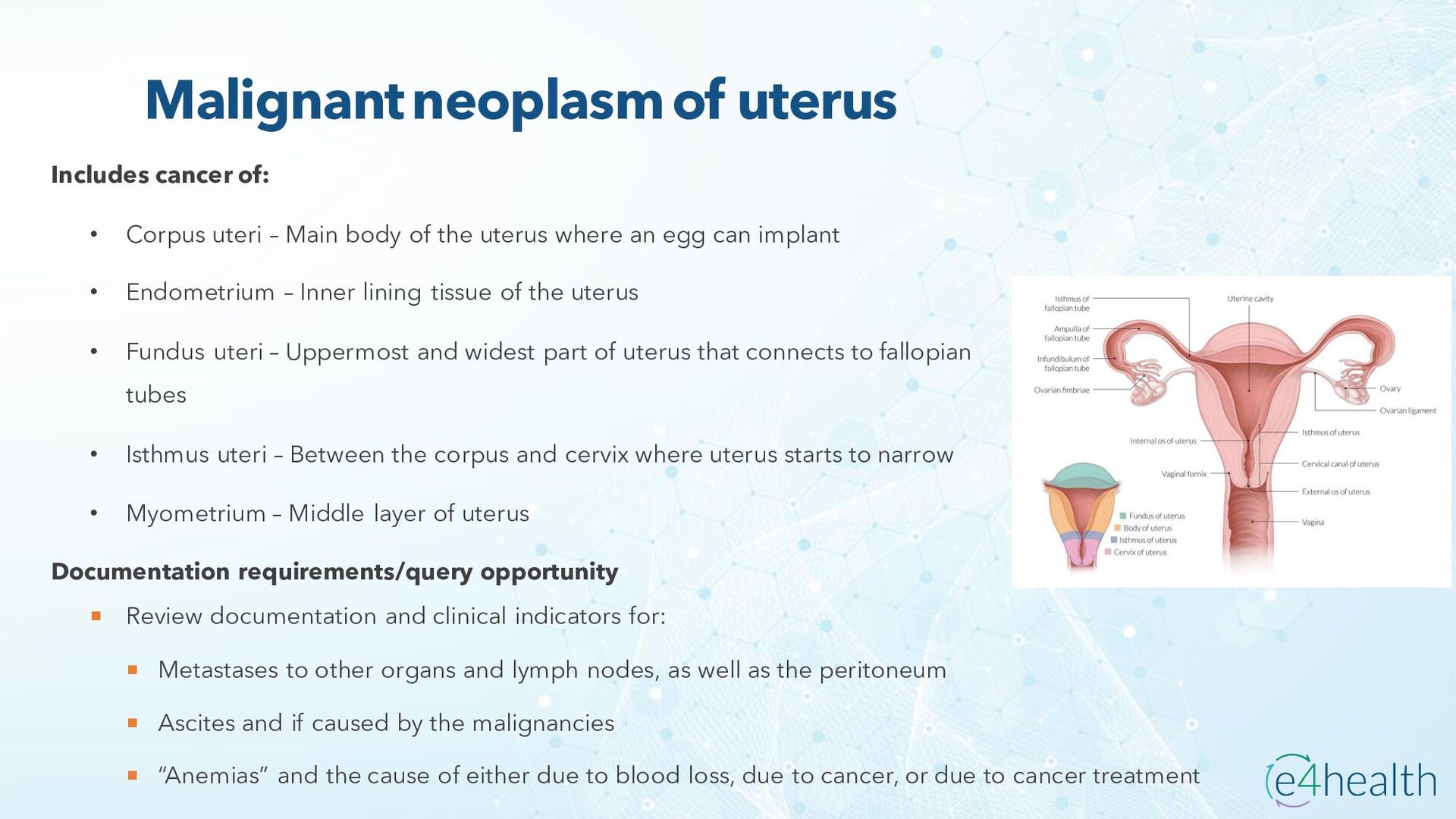
    – Main body of the uterus where an egg can implant • Endometrium – Inner lining tissue of the uterus • Fundus uteri – Uppermost and widest part of uterus that connects to fallopian tubes • Isthmus uteri – Between the corpus and cervix where uterus starts to narrow • Myometrium – Middle layer of uterus Documentation requirements/query opportunity  Review documentation and clinical indicators for:  Metastases to other organs and lymph nodes, as well as the peritoneum  Ascites and if caused by the malignancies  “Anemias” and the cause of either due to blood loss, due to cancer, or due to cancer treatment
  28. Malignant neoplasm of vagina and vulva • Vulvar Intraepithelial neoplasia

    (VIN) are precursor to the vulvar epithelium Includes cancer of: • Clitoris • Labia majora – most frequent occurance • Labia minor • Vagina • Vulva Documentation requirements/Query opportunity  Review documentation and clinical indicators for:  Human papillomavirus (HPV) infection  Metastasis to other organs and lymph nodes as well as peritoneum  “Anemias” and the cause of either due to blood loss, due to cancer, or due to cancer treatment
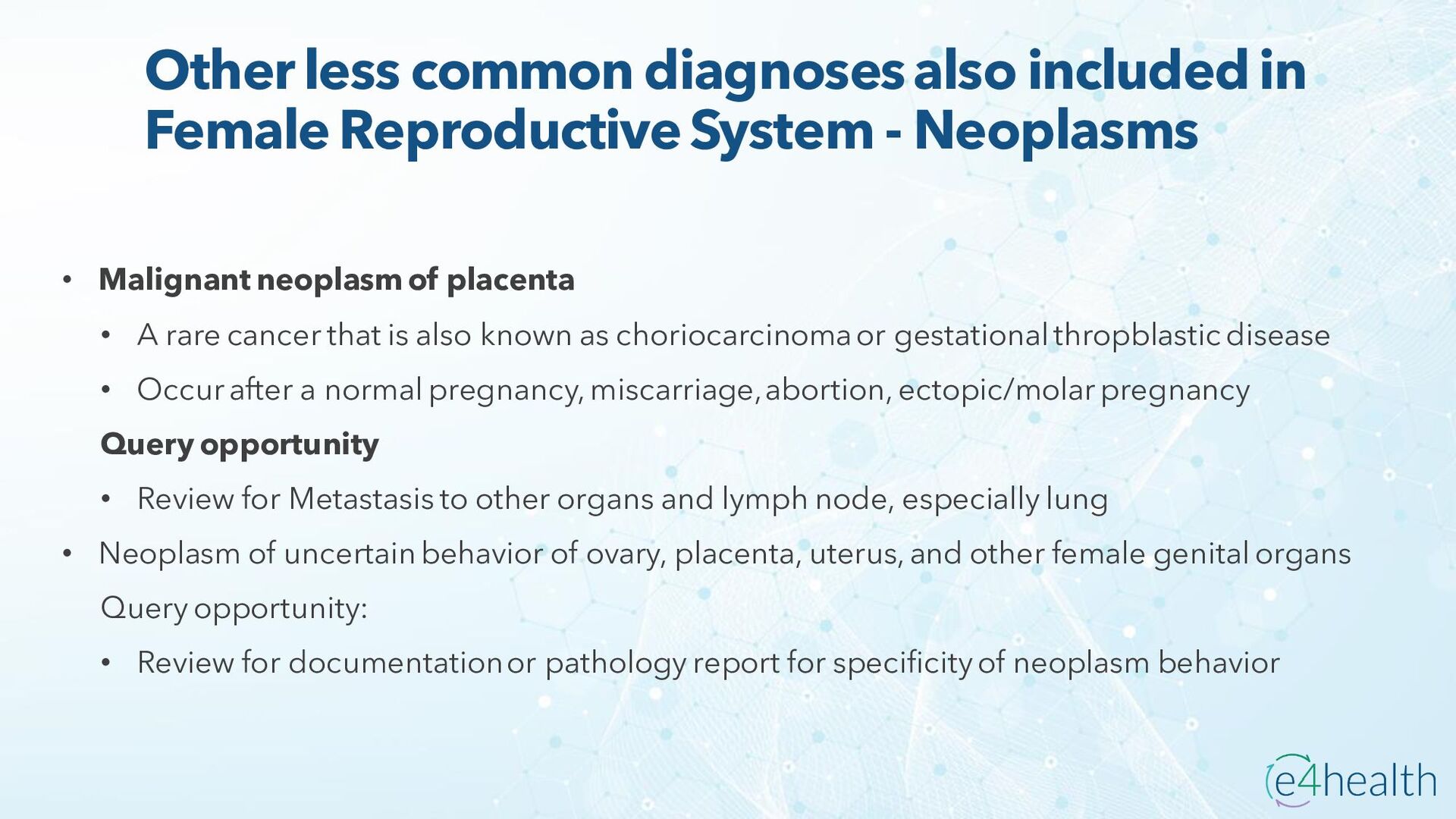
  29. Other less common diagnoses also included in Female Reproductive System

    - Neoplasms • Malignant neoplasm of placenta • A rare cancer that is also known as choriocarcinoma or gestational thropblastic disease • Occur after a normal pregnancy, miscarriage, abortion, ectopic/molar pregnancy Query opportunity • Review for Metastasis to other organs and lymph node, especially lung • Neoplasm of uncertain behavior of ovary, placenta, uterus, and other female genital organs Query opportunity: • Review for documentation or pathology report for specificity of neoplasm behavior
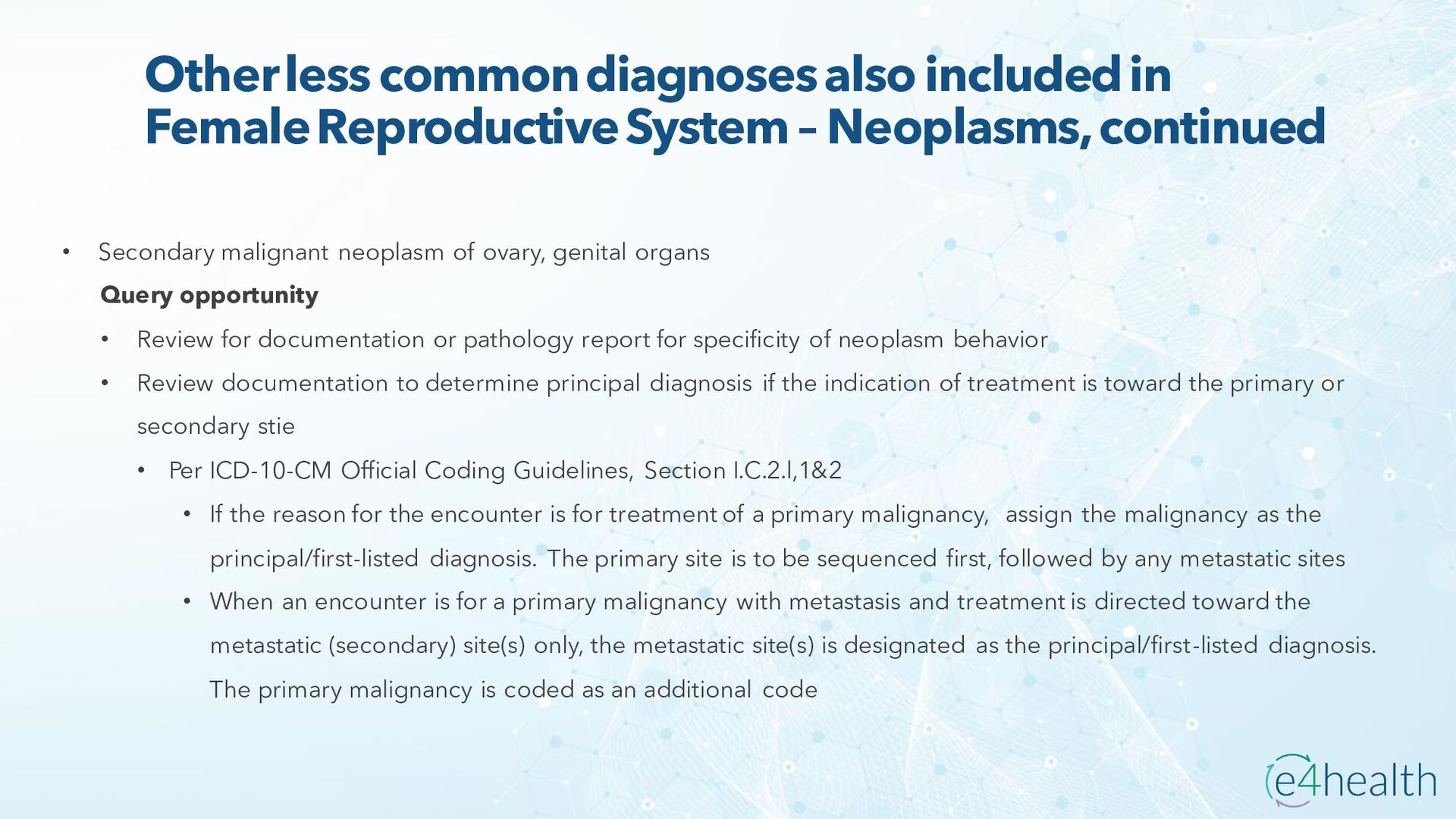
  30. Other less common diagnoses also included in Female Reproductive System

    – Neoplasms, continued • Secondary malignant neoplasm of ovary, genital organs Query opportunity • Review for documentation or pathology report for specificity of neoplasm behavior • Review documentation to determine principal diagnosis if the indication of treatment is toward the primary or secondary stie • Per ICD-10-CM Official Coding Guidelines, Section I.C.2.l,1&2 • If the reason for the encounter is for treatment of a primary malignancy, assign the malignancy as the principal/first-listed diagnosis. The primary site is to be sequenced first, followed by any metastatic sites • When an encounter is for a primary malignancy with metastasis and treatment is directed toward the metastatic (secondary) site(s) only, the metastatic site(s) is designated as the principal/first-listed diagnosis. The primary malignancy is coded as an additional code
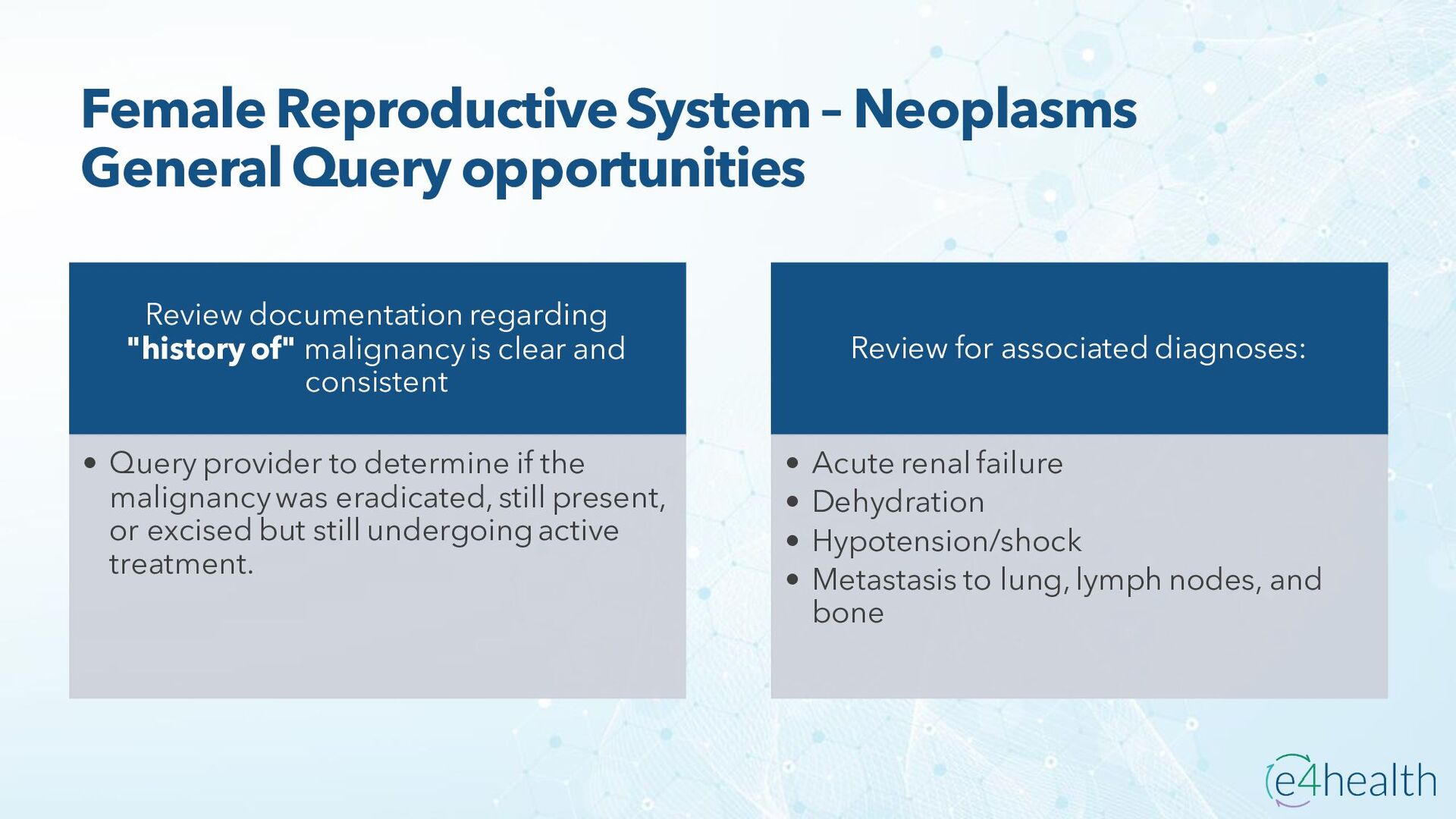
  31. Female Reproductive System – Neoplasms General Query opportunities Review documentation

    regarding "history of" malignancy is clear and consistent • Query provider to determine if the malignancy was eradicated, still present, or excised but still undergoing active treatment. Review for associated diagnoses: • Acute renal failure • Dehydration • Hypotension/shock • Metastasis to lung, lymph nodes, and bone
  32. Female Reproductive System – Neoplasms General Query opportunities, continued •

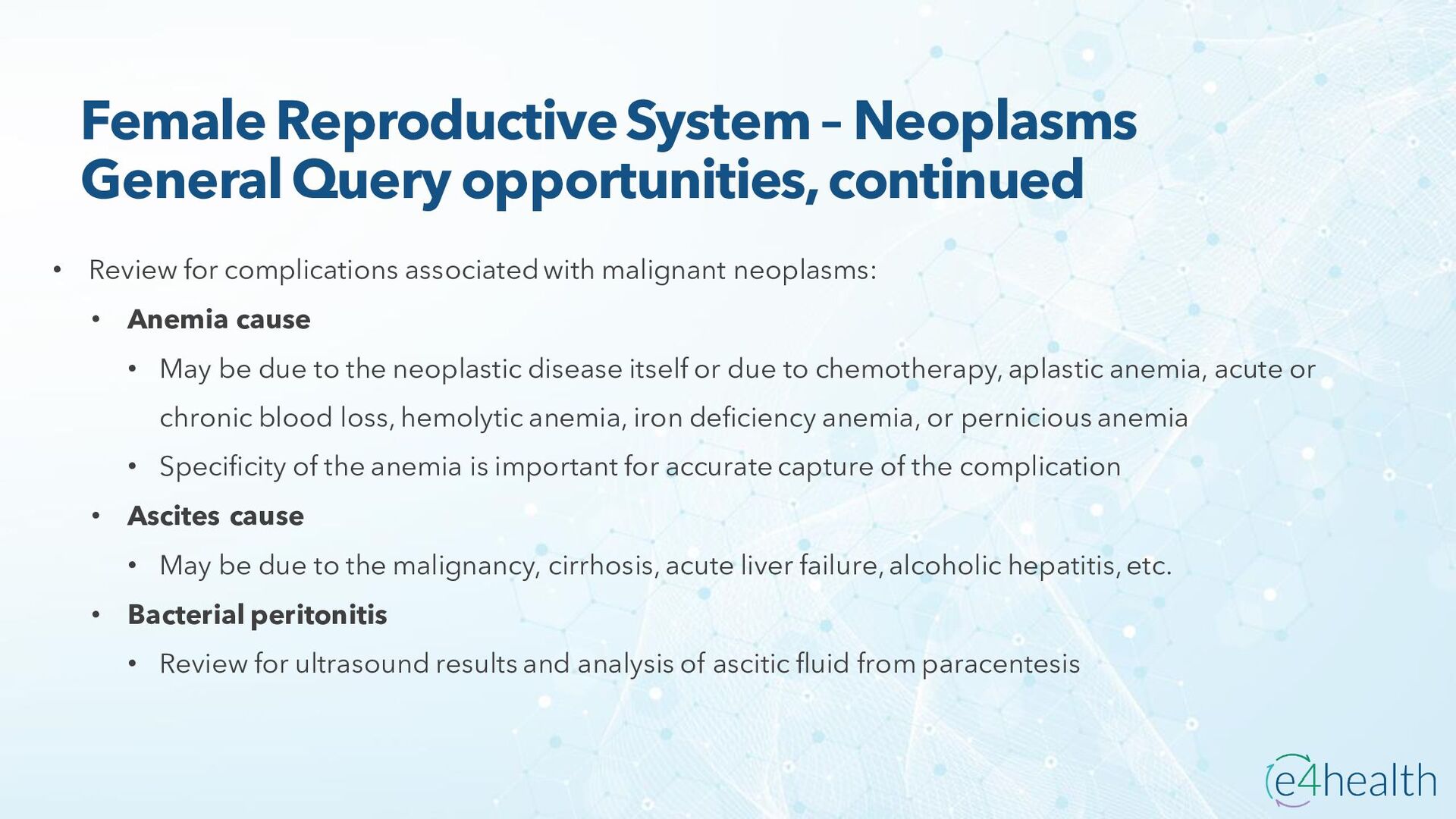
    Review for complications associated with malignant neoplasms: • Anemia cause • May be due to the neoplastic disease itself or due to chemotherapy, aplastic anemia, acute or chronic blood loss, hemolytic anemia, iron deficiency anemia, or pernicious anemia • Specificity of the anemia is important for accurate capture of the complication • Ascites cause • May be due to the malignancy, cirrhosis, acute liver failure, alcoholic hepatitis, etc. • Bacterial peritonitis • Review for ultrasound results and analysis of ascitic fluid from paracentesis
  33. Female Reproductive System – Neoplasms General Query opportunities, continued •

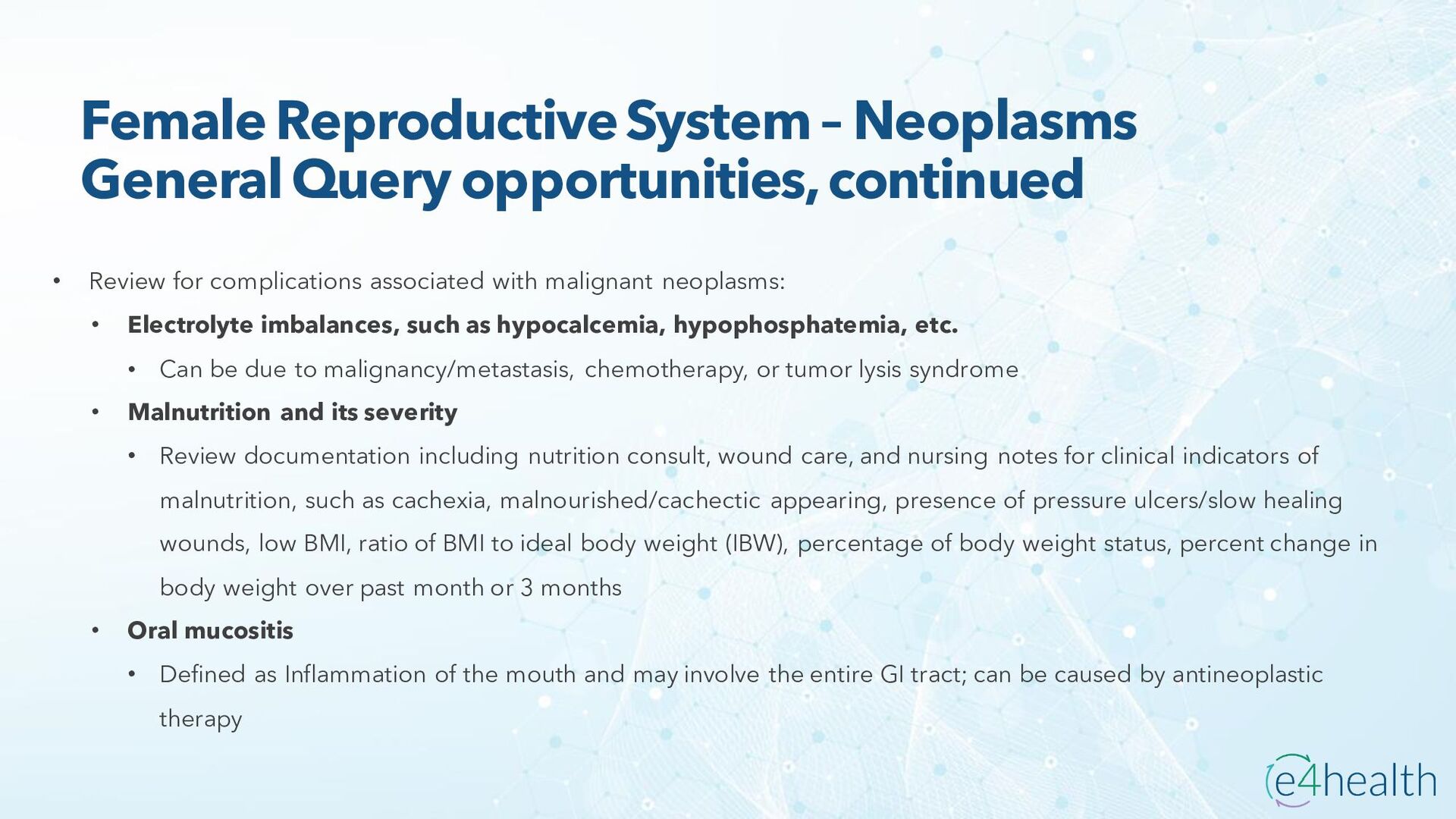
    Review for complications associated with malignant neoplasms: • Electrolyte imbalances, such as hypocalcemia, hypophosphatemia, etc. • Can be due to malignancy/metastasis, chemotherapy, or tumor lysis syndrome • Malnutrition and its severity • Review documentation including nutrition consult, wound care, and nursing notes for clinical indicators of malnutrition, such as cachexia, malnourished/cachectic appearing, presence of pressure ulcers/slow healing wounds, low BMI, ratio of BMI to ideal body weight (IBW), percentage of body weight status, percent change in body weight over past month or 3 months • Oral mucositis • Defined as Inflammation of the mouth and may involve the entire GI tract; can be caused by antineoplastic therapy
  34. Female Reproductive System – Neoplasms General Query opportunities, continued •

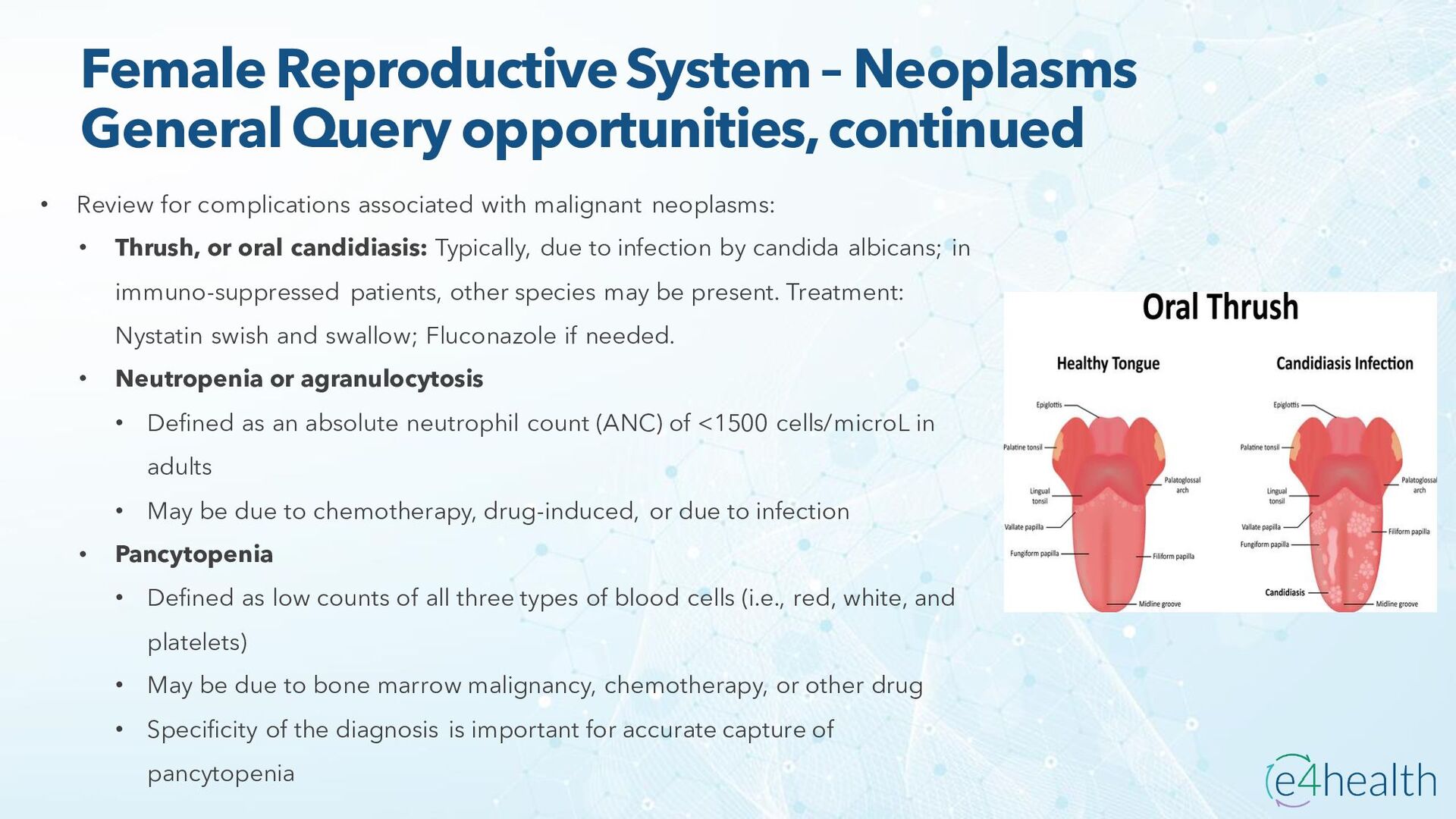
    Review for complications associated with malignant neoplasms: • Thrush, or oral candidiasis: Typically, due to infection by candida albicans; in immuno-suppressed patients, other species may be present. Treatment: Nystatin swish and swallow; Fluconazole if needed. • Neutropenia or agranulocytosis • Defined as an absolute neutrophil count (ANC) of <1500 cells/microL in adults • May be due to chemotherapy, drug-induced, or due to infection • Pancytopenia • Defined as low counts of all three types of blood cells (i.e., red, white, and platelets) • May be due to bone marrow malignancy, chemotherapy, or other drug • Specificity of the diagnosis is important for accurate capture of pancytopenia
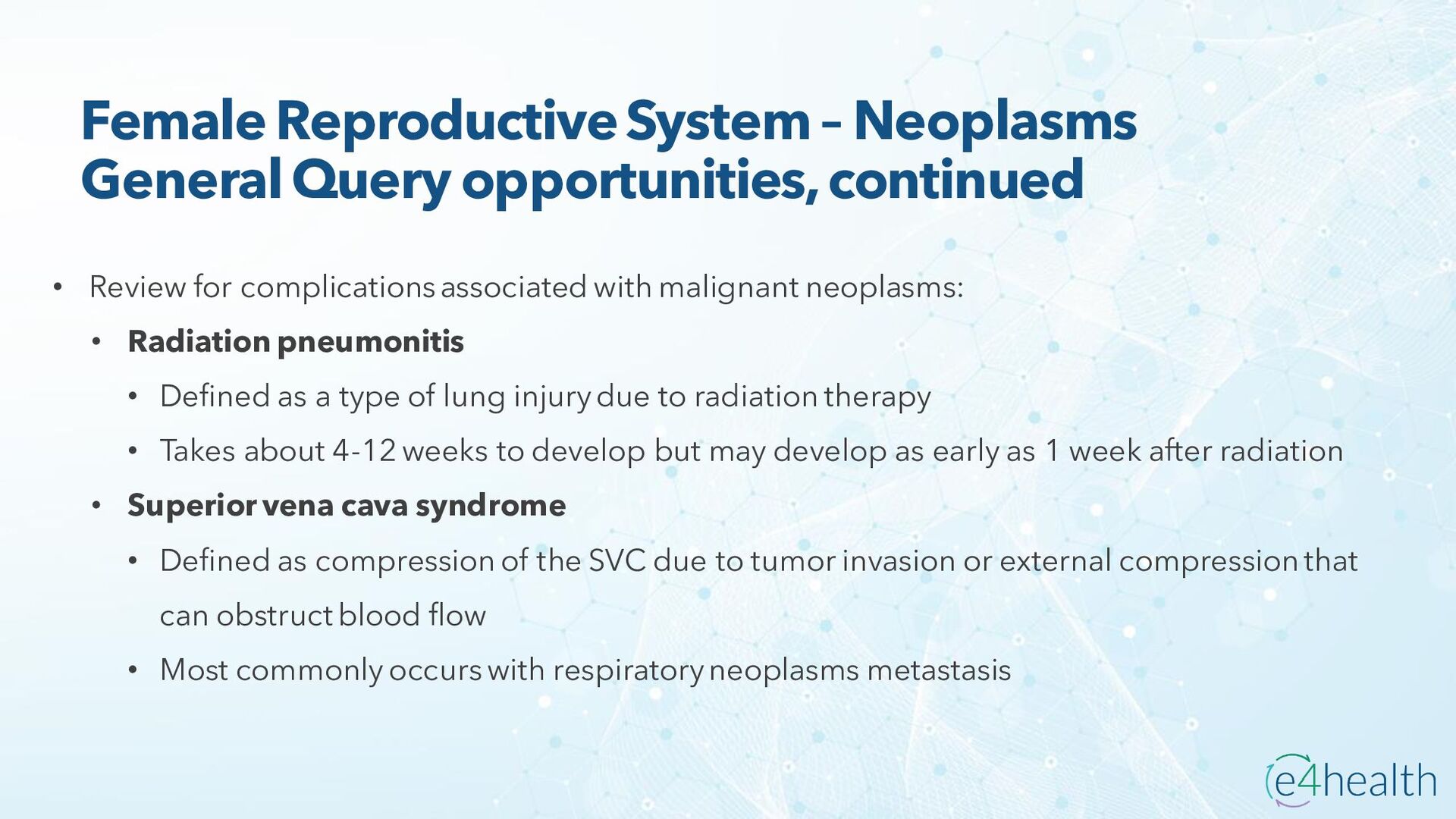
  35. Female Reproductive System – Neoplasms General Query opportunities, continued •

    Review for complications associated with malignant neoplasms: • Radiation pneumonitis • Defined as a type of lung injury due to radiation therapy • Takes about 4-12 weeks to develop but may develop as early as 1 week after radiation • Superior vena cava syndrome • Defined as compression of the SVC due to tumor invasion or external compression that can obstruct blood flow • Most commonly occurs with respiratory neoplasms metastasis
  36. Candidiasis of other Female urogenital sites Includes: • Candidal cystitis

    and urethritis • Candidal pyelonephritis • Candidal UTI Query opportunity Query for specific location of urological infection • Review for clinical indicators of sepsis due to female candidiasis infection • Review for presence of genitourinary devices such as Foley catheter, nephrostomy tube, stents, or artificial openings and query for relationship between the device/artificial opening and the urinary tract infection
  37. Candidiasis of vulva and vagina Includes: • Candidal vulvovaginitis •

    Monilial vulvovaginitis • Vaginal thrush Query opportunity • Query for specificity of acuity candidiasis of vulva and vagina to indicate acute or chronic in nature • Review for signs and symptoms of AIDS is present. Clarify if documentation is not clear • Review for clinical indicators of candidal sepsis inpatients with localized candidal infections
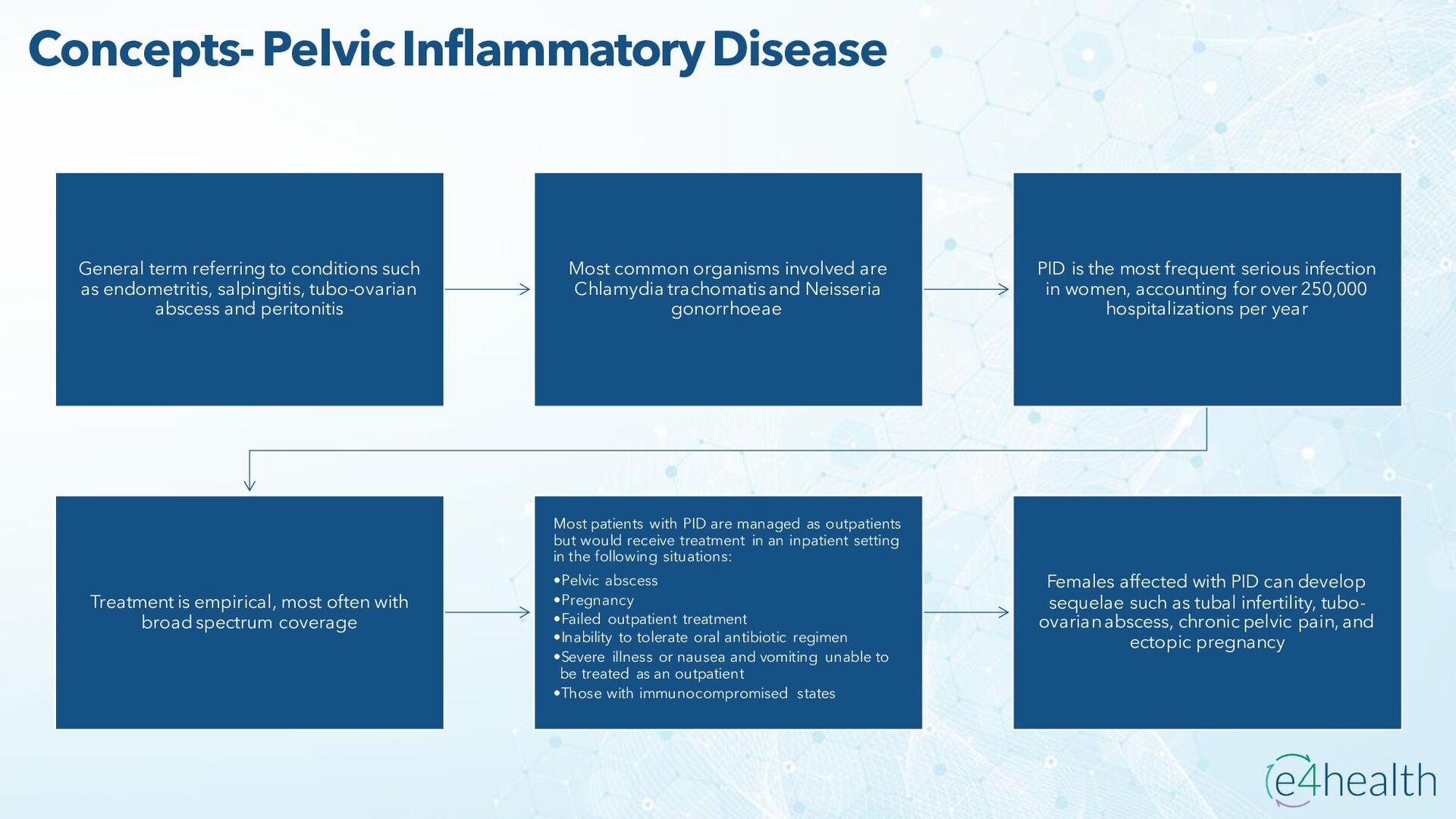
  38. Concepts- Pelvic Inflammatory Disease General term referring to conditions such

    as endometritis, salpingitis, tubo-ovarian abscess and peritonitis Most common organisms involved are Chlamydia trachomatis and Neisseria gonorrhoeae PID is the most frequent serious infection in women, accounting for over 250,000 hospitalizations per year Treatment is empirical, most often with broad spectrum coverage Most patients with PID are managed as outpatients but would receive treatment in an inpatient setting in the following situations: •Pelvic abscess •Pregnancy •Failed outpatient treatment •Inability to tolerate oral antibiotic regimen •Severe illness or nausea and vomiting unable to be treated as an outpatient •Those with immunocompromised states Females affected with PID can develop sequelae such as tubal infertility, tubo- ovarian abscess, chronic pelvic pain, and ectopic pregnancy
  39. Other female pelvic inflammatory diseases Includes: • Abscess of broad

    ligament and parametrium • Parametritis and pelvic cellulitis (acute and chronic) • Pelvic inflammatory disease (PID) • PID generally refers to endometritis, salpingitis, tubo-ovarian abscess and peritonitis • Pelvic peritonitis (acute and chronic) Query opportunity  Query for acuity of these diagnoses as the chronic form may not meet medical necessity for admission  Query for specific site of PID as PID is a non-specific condition  Query for culprit infective organism  Review documentation if pelvic adhesions are present due to:  Other female reproductive organ inflammation, such as endometritis, adenexitis, etc.  Surgical interventions, such as cesarean section, appendectomy, etc.  Ectopic pregnancies  Endometriosis
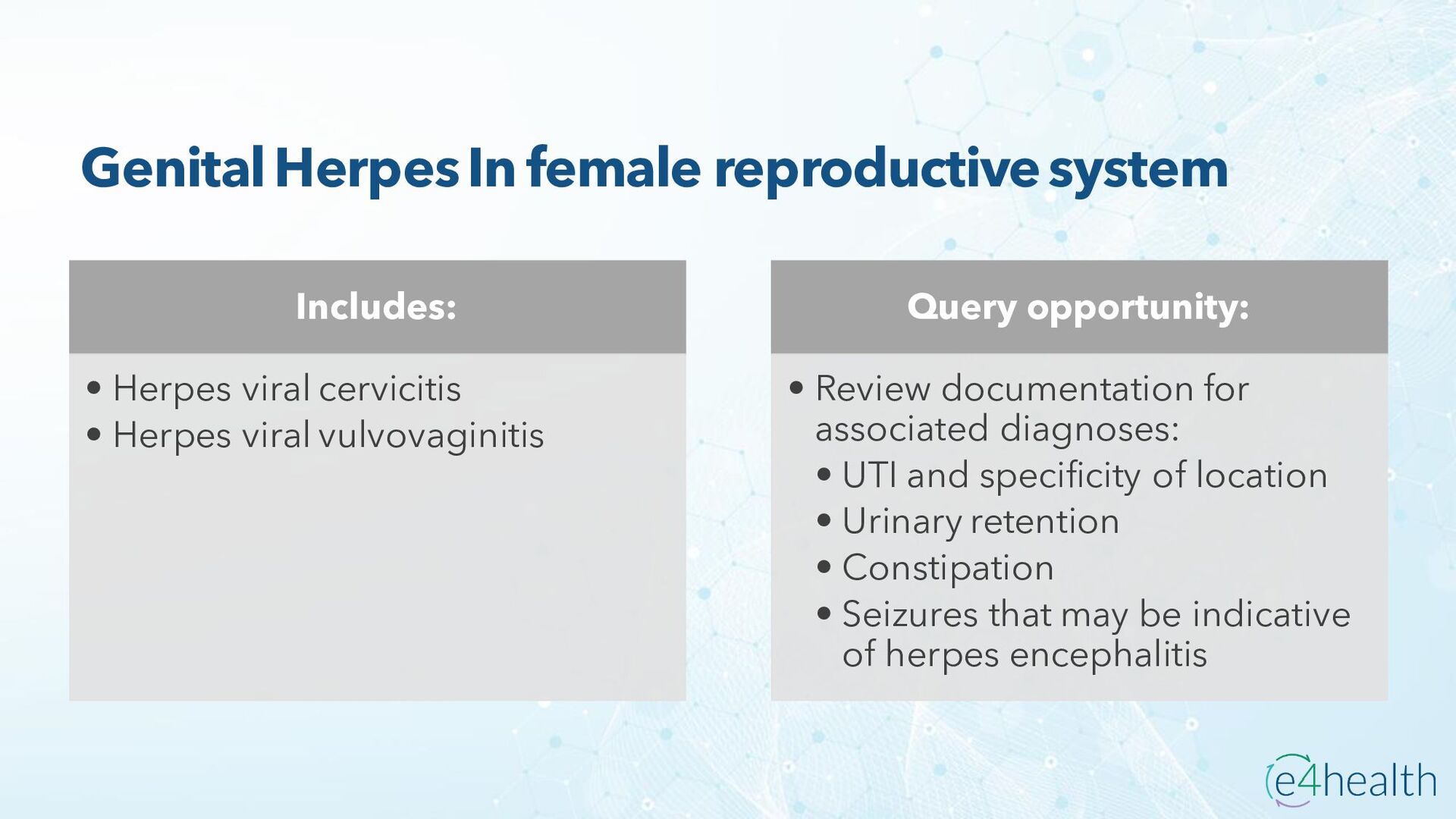
  40. Genital Herpes In female reproductive system Includes: • Herpes viral

    cervicitis • Herpes viral vulvovaginitis Query opportunity: • Review documentation for associated diagnoses: • UTI and specificity of location • Urinary retention • Constipation • Seizures that may be indicative of herpes encephalitis
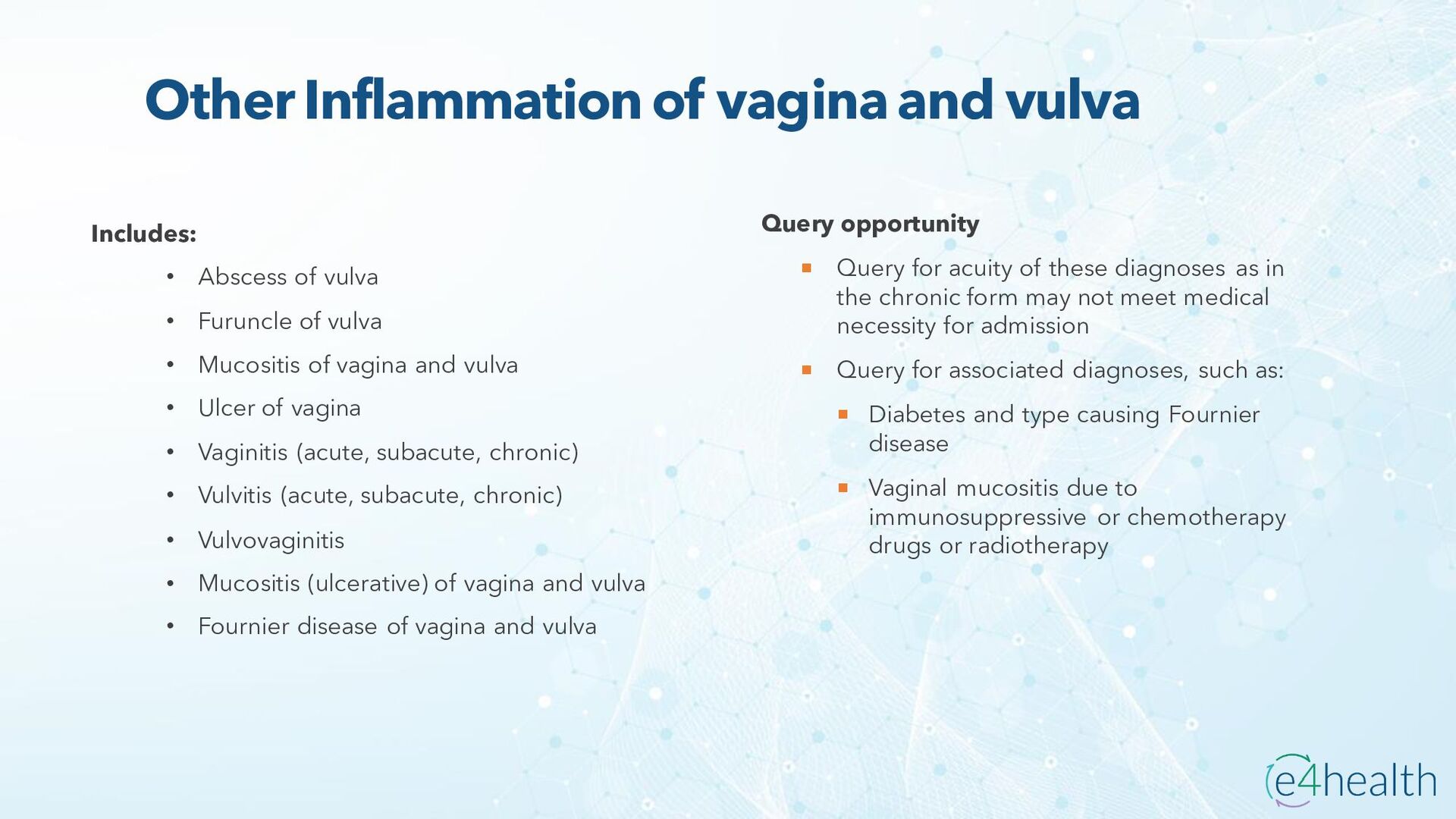
  41. Other Inflammation of vagina and vulva Includes: • Abscess of

    vulva • Furuncle of vulva • Mucositis of vagina and vulva • Ulcer of vagina • Vaginitis (acute, subacute, chronic) • Vulvitis (acute, subacute, chronic) • Vulvovaginitis • Mucositis (ulcerative) of vagina and vulva • Fournier disease of vagina and vulva Query opportunity  Query for acuity of these diagnoses as in the chronic form may not meet medical necessity for admission  Query for associated diagnoses, such as:  Diabetes and type causing Fournier disease  Vaginal mucositis due to immunosuppressive or chemotherapy drugs or radiotherapy
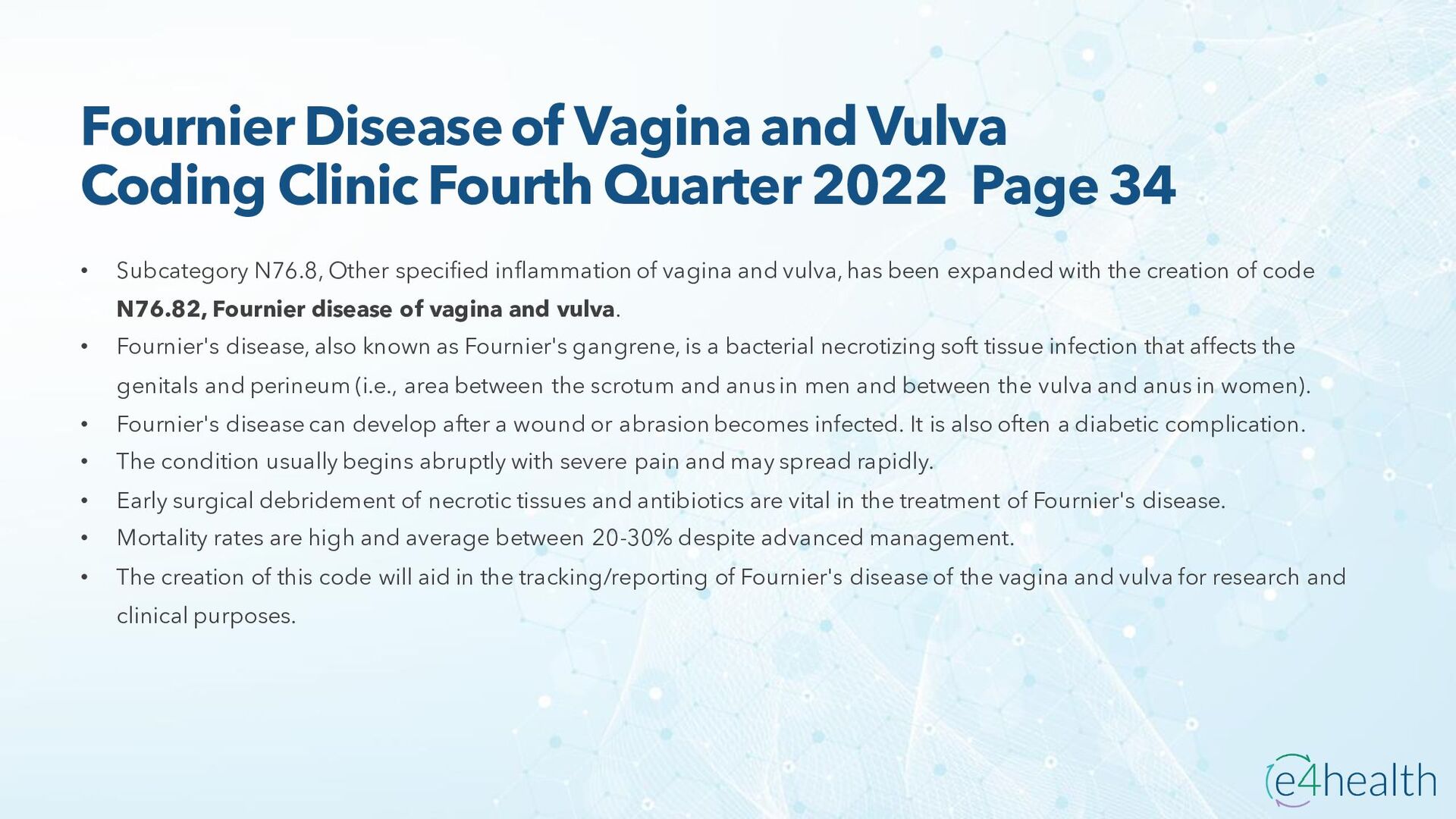
  42. Fournier Disease of Vagina and Vulva Coding Clinic Fourth Quarter

    2022 Page 34 • Subcategory N76.8, Other specified inflammation of vagina and vulva, has been expanded with the creation of code N76.82, Fournier disease of vagina and vulva. • Fournier's disease, also known as Fournier's gangrene, is a bacterial necrotizing soft tissue infection that affects the genitals and perineum (i.e., area between the scrotum and anus in men and between the vulva and anus in women). • Fournier's disease can develop after a wound or abrasion becomes infected. It is also often a diabetic complication. • The condition usually begins abruptly with severe pain and may spread rapidly. • Early surgical debridement of necrotic tissues and antibiotics are vital in the treatment of Fournier's disease. • Mortality rates are high and average between 20-30% despite advanced management. • The creation of this code will aid in the tracking/reporting of Fournier's disease of the vagina and vulva for research and clinical purposes.
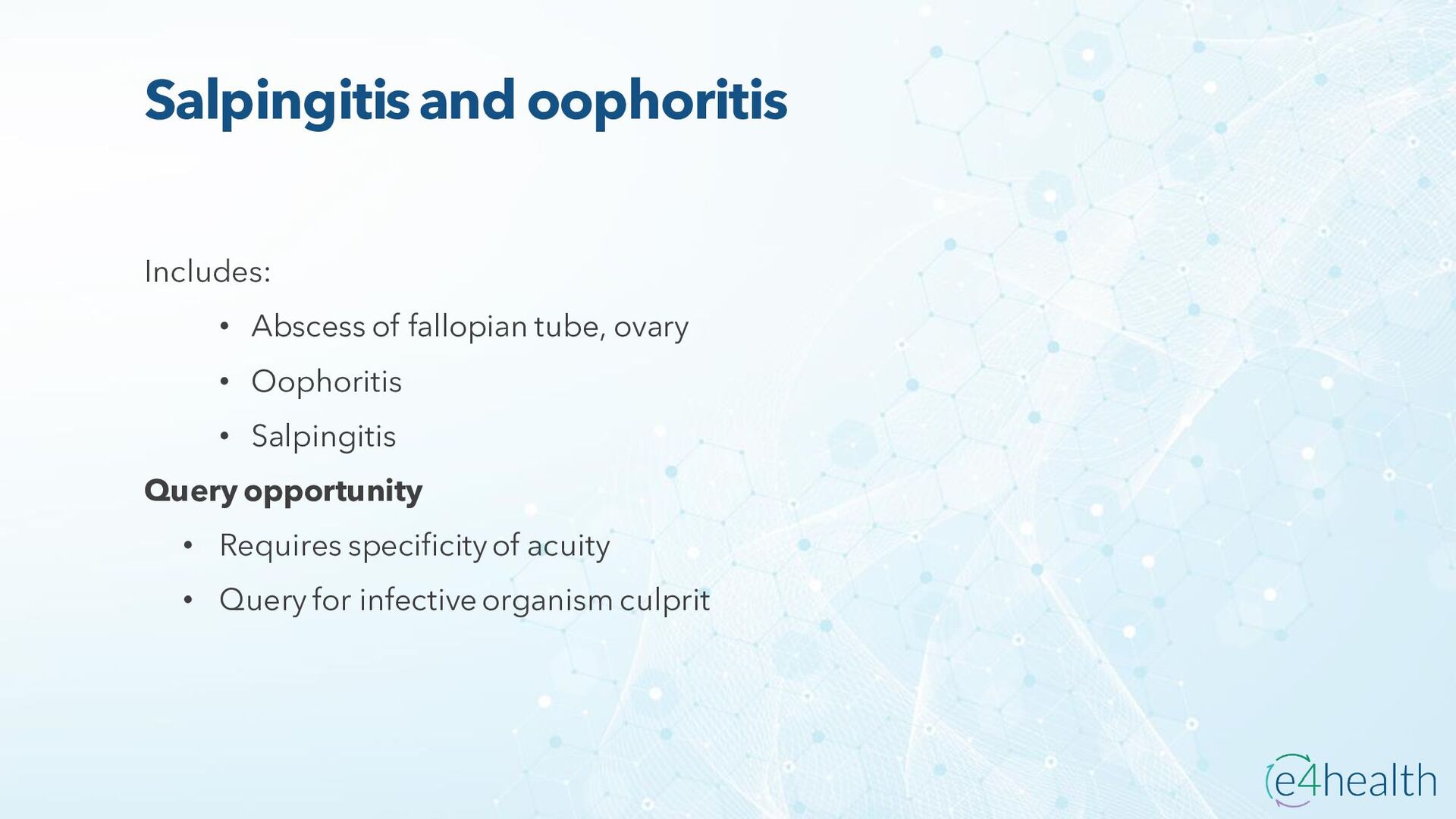
  43. Salpingitis and oophoritis Includes: • Abscess of fallopian tube, ovary

    • Oophoritis • Salpingitis Query opportunity • Requires specificity of acuity • Query for infective organism culprit
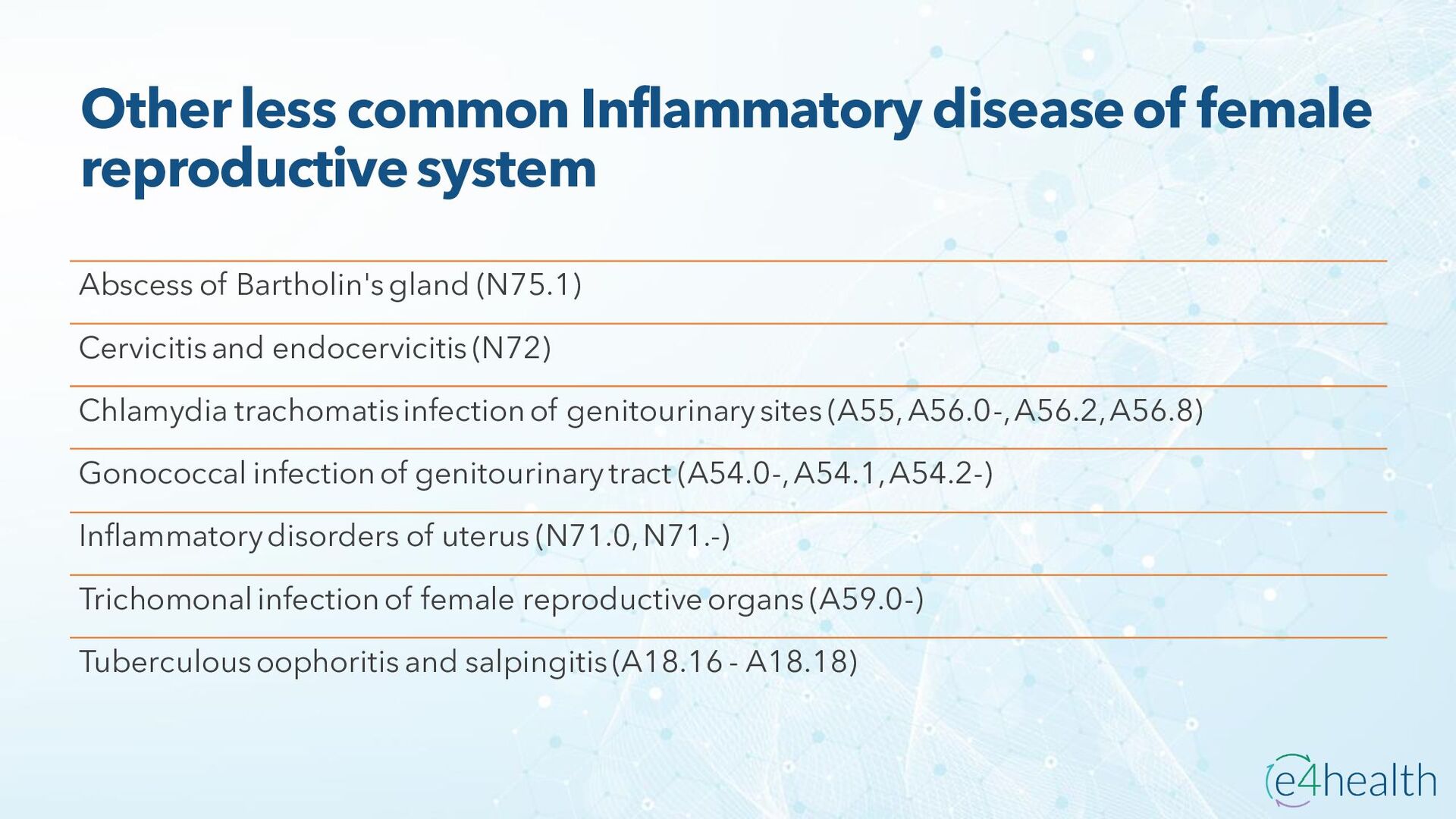
  44. Other less common Inflammatory disease of female reproductive system Abscess

    of Bartholin's gland (N75.1) Cervicitis and endocervicitis (N72) Chlamydia trachomatis infection of genitourinary sites (A55, A56.0-, A56.2, A56.8) Gonococcal infection of genitourinary tract (A54.0-, A54.1, A54.2-) Inflammatory disorders of uterus (N71.0, N71.-) Trichomonal infection of female reproductive organs (A59.0-) Tuberculous oophoritis and salpingitis (A18.16 - A18.18)
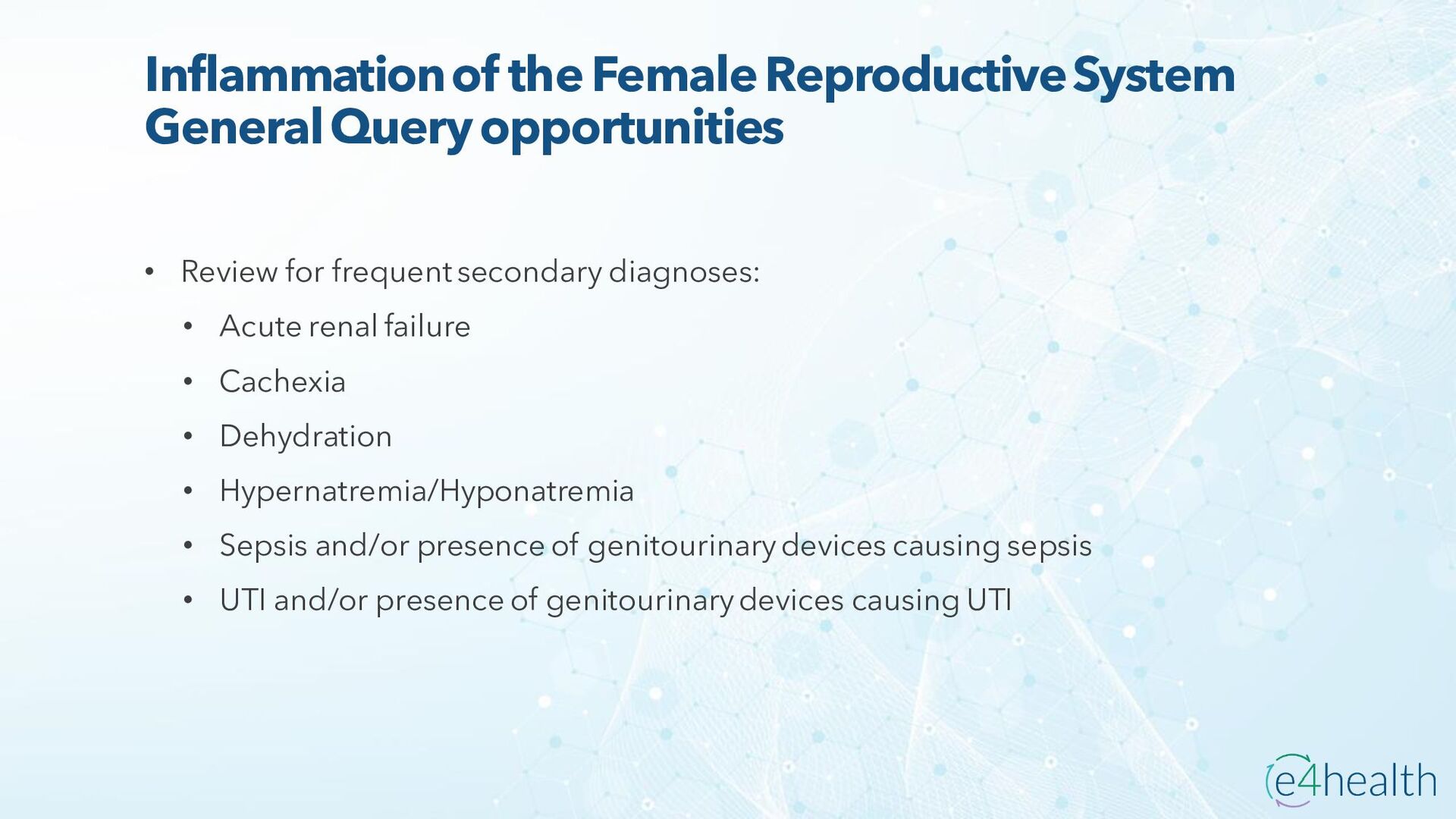
  45. Inflammation of the Female Reproductive System General Query opportunities •

    Review for frequent secondary diagnoses: • Acute renal failure • Cachexia • Dehydration • Hypernatremia/Hyponatremia • Sepsis and/or presence of genitourinary devices causing sepsis • UTI and/or presence of genitourinary devices causing UTI
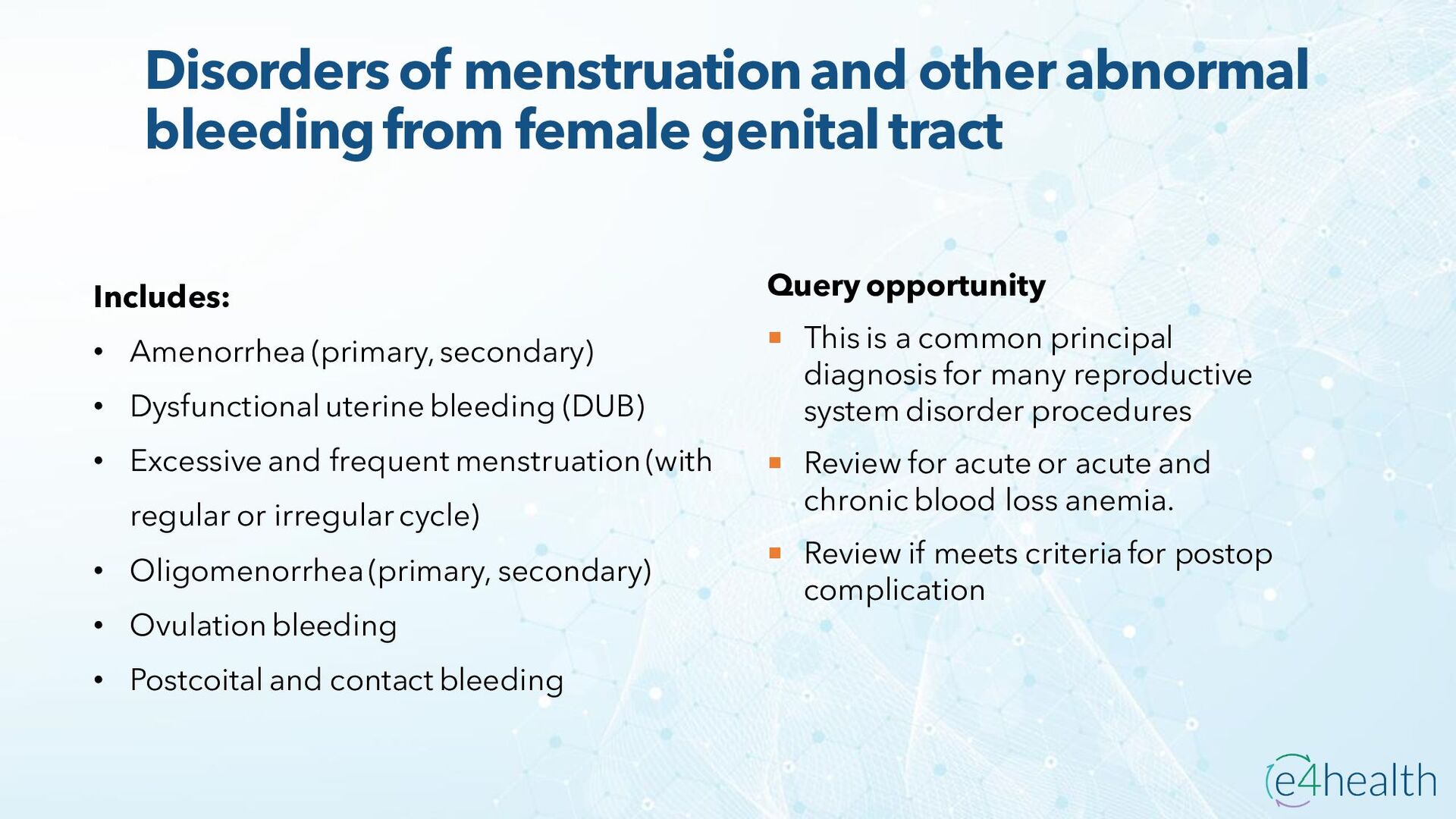
  46. Disorders of menstruation and other abnormal bleeding from female genital

    tract Includes: • Amenorrhea (primary, secondary) • Dysfunctional uterine bleeding (DUB) • Excessive and frequent menstruation (with regular or irregular cycle) • Oligomenorrhea (primary, secondary) • Ovulation bleeding • Postcoital and contact bleeding Query opportunity  This is a common principal diagnosis for many reproductive system disorder procedures  Review for acute or acute and chronic blood loss anemia.  Review if meets criteria for postop complication
  47. Disorders of Female reproductive organs, noninflammatory Includes female reproductive organs

    documented as: • Atrophy • Cyst or Polyp • Fibrosis • Pain • Rupture • Torsion • Hyperplastic/Hypertrophy • Inversion • Malposition Query opportunity  Specificity of location and/or laterality of female reproductive organ, if applicable  Review for blood loss anemia and acuity
  48. Uterine Leiomyoma • Non-cancerous growths of benign smooth muscle tumor

    that is also known as uterine fibroids or myoma • Can lead to excessive menstrual bleeding causing anemia or infertility Query opportunity • Review for blood loss anemia and acuity • Review record for uterine artery embolization, which more likely occurs in interventional radiology
  49. Female Genital Prolapse Includes: • Cystocele • Prolapse uterus •

    Rectocele • Uterine/Vaginal prolapse Query opportunity  Review for documentation of uterovaginal prolapse as:  in-complete (first or second degree in which the uterus prolapses into the vagina but does not protrude from the vagina)  complete (third degree in which the uterus descends far enough that some tissue protrudes from the vagina)  Review documentation for additional specificity of cystocele/vaginal wall prolapse such as midline, lateral, or paravaginal
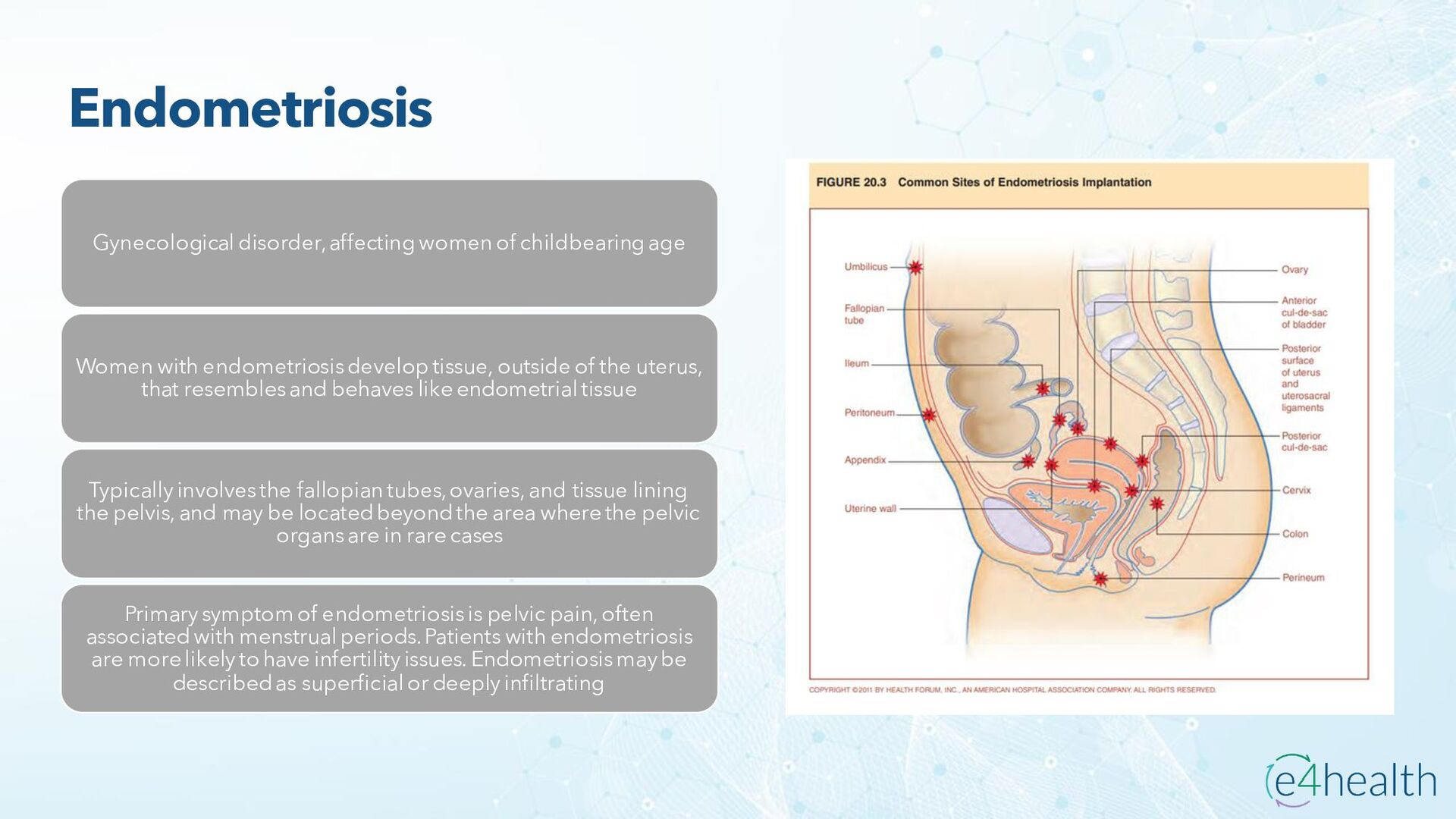
  50. Endometriosis Gynecological disorder, affecting women of childbearing age Women with

    endometriosis develop tissue, outside of the uterus, that resembles and behaves like endometrial tissue Typically involves the fallopian tubes, ovaries, and tissue lining the pelvis, and may be located beyond the area where the pelvic organs are in rare cases Primary symptom of endometriosis is pelvic pain, often associated with menstrual periods. Patients with endometriosis are more likely to have infertility issues. Endometriosis may be described as superficial or deeply infiltrating
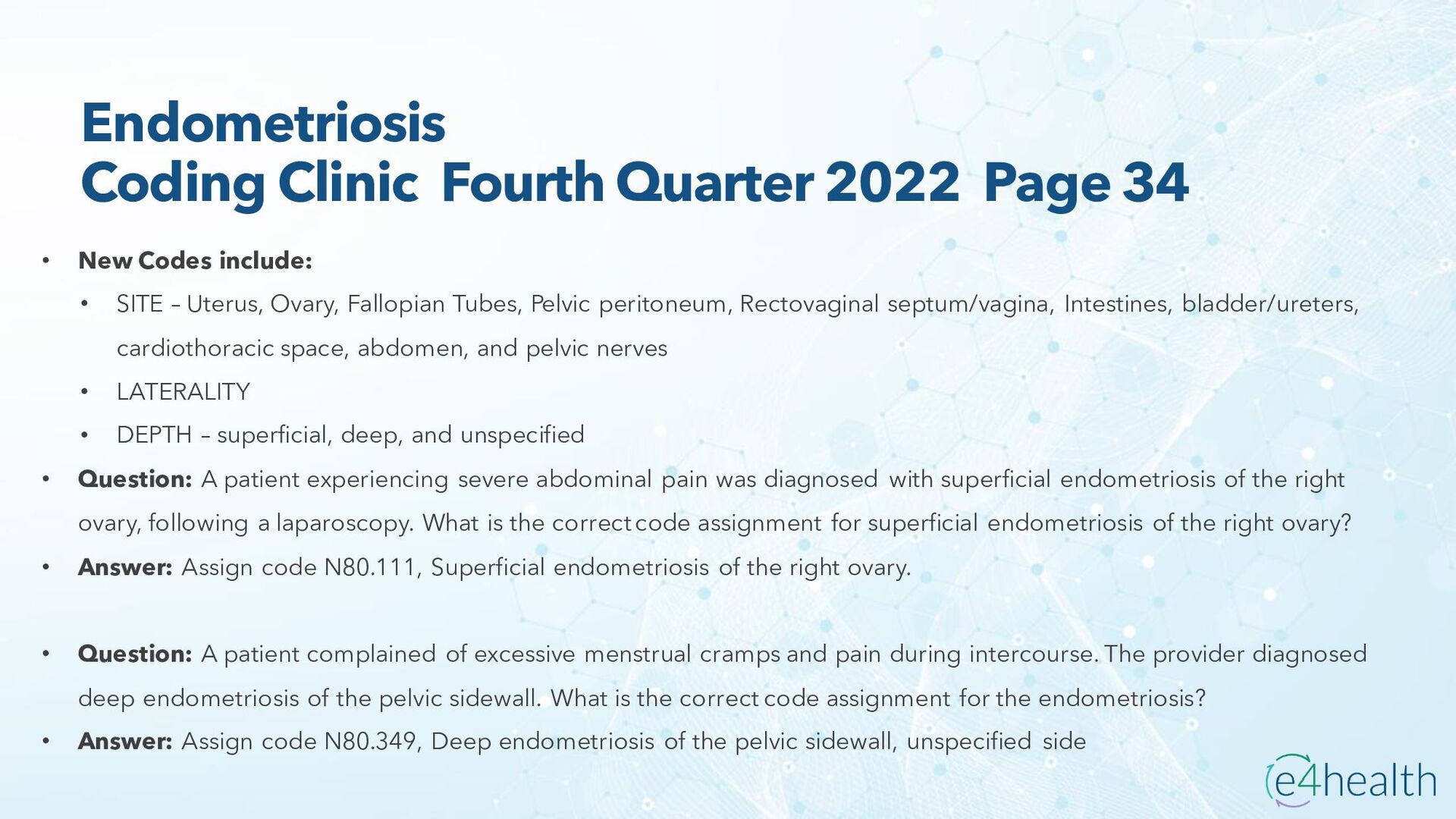
  51. Endometriosis Coding Clinic Fourth Quarter 2022 Page 34 • New

    Codes include: • SITE – Uterus, Ovary, Fallopian Tubes, Pelvic peritoneum, Rectovaginal septum/vagina, Intestines, bladder/ureters, cardiothoracic space, abdomen, and pelvic nerves • LATERALITY • DEPTH – superficial, deep, and unspecified • Question: A patient experiencing severe abdominal pain was diagnosed with superficial endometriosis of the right ovary, following a laparoscopy. What is the correct code assignment for superficial endometriosis of the right ovary? • Answer: Assign code N80.111, Superficial endometriosis of the right ovary. • Question: A patient complained of excessive menstrual cramps and pain during intercourse. The provider diagnosed deep endometriosis of the pelvic sidewall. What is the correct code assignment for the endometriosis? • Answer: Assign code N80.349, Deep endometriosis of the pelvic sidewall, unspecified side
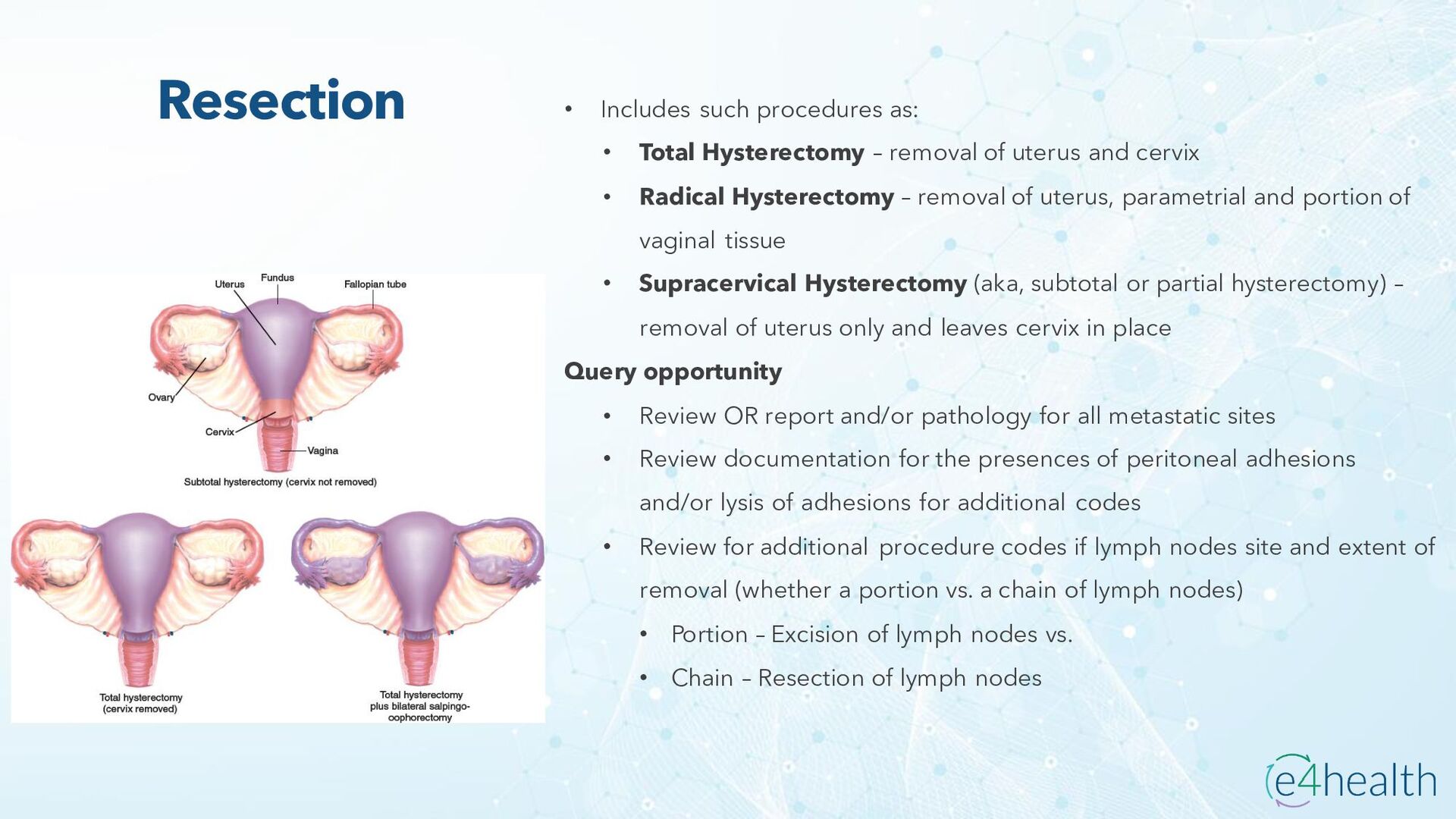
  52. Resection • Includes such procedures as: • Total Hysterectomy –

    removal of uterus and cervix • Radical Hysterectomy – removal of uterus, parametrial and portion of vaginal tissue • Supracervical Hysterectomy (aka, subtotal or partial hysterectomy) – removal of uterus only and leaves cervix in place Query opportunity • Review OR report and/or pathology for all metastatic sites • Review documentation for the presences of peritoneal adhesions and/or lysis of adhesions for additional codes • Review for additional procedure codes if lymph nodes site and extent of removal (whether a portion vs. a chain of lymph nodes) • Portion – Excision of lymph nodes vs. • Chain – Resection of lymph nodes
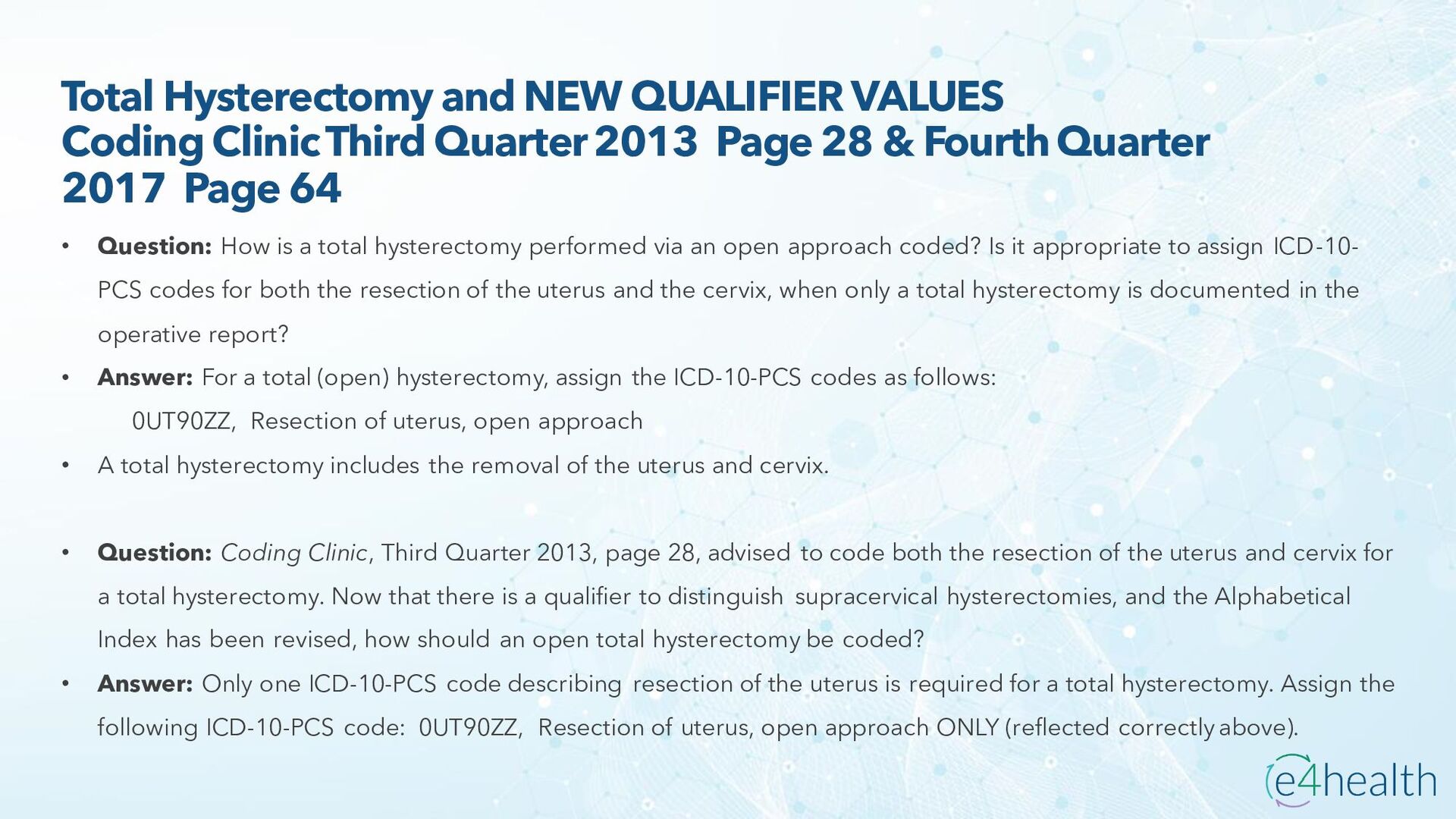
  53. Total Hysterectomy and NEW QUALIFIER VALUES Coding Clinic Third Quarter

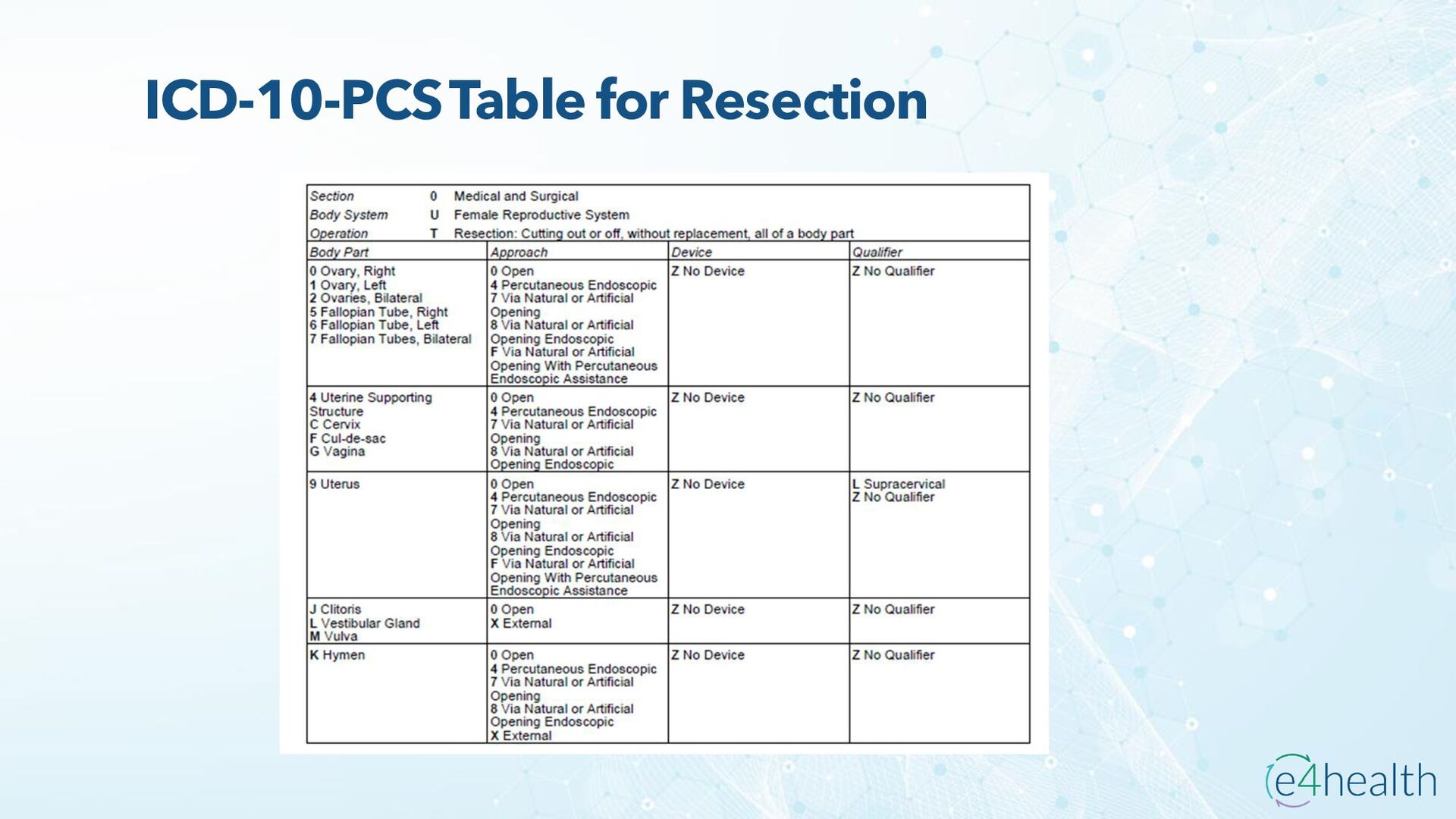
    2013 Page 28 & Fourth Quarter 2017 Page 64 • Question: How is a total hysterectomy performed via an open approach coded? Is it appropriate to assign ICD-10- PCS codes for both the resection of the uterus and the cervix, when only a total hysterectomy is documented in the operative report? • Answer: For a total (open) hysterectomy, assign the ICD-10-PCS codes as follows: 0UT90ZZ, Resection of uterus, open approach • A total hysterectomy includes the removal of the uterus and cervix. • Question: Coding Clinic, Third Quarter 2013, page 28, advised to code both the resection of the uterus and cervix for a total hysterectomy. Now that there is a qualifier to distinguish supracervical hysterectomies, and the Alphabetical Index has been revised, how should an open total hysterectomy be coded? • Answer: Only one ICD-10-PCS code describing resection of the uterus is required for a total hysterectomy. Assign the following ICD-10-PCS code: 0UT90ZZ, Resection of uterus, open approach ONLY (reflected correctly above).
  54. Root Operation, Discontinued or Incomplete Procedures - ICD-10-PCS Official Guidelines

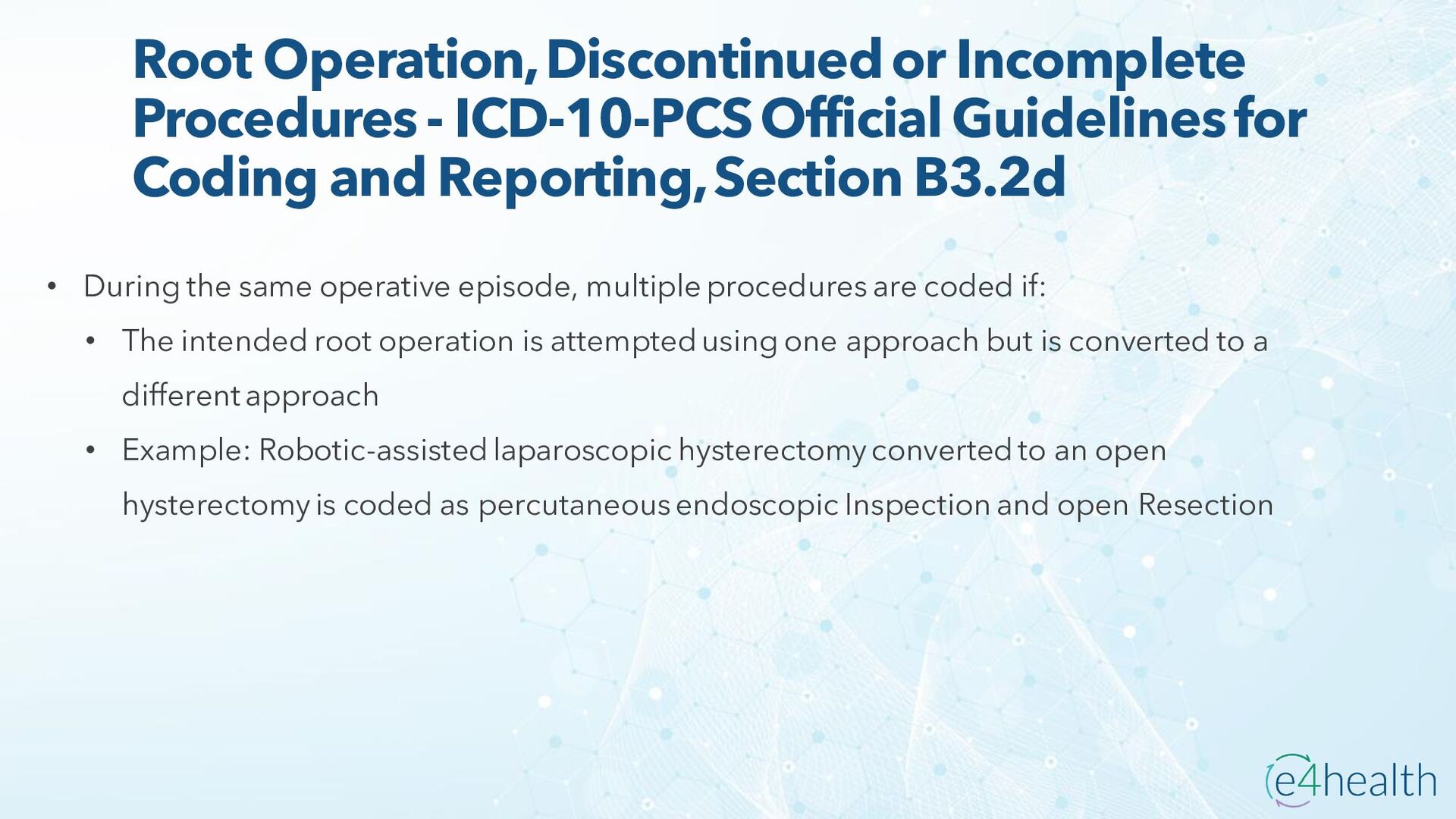
    for Coding and Reporting, Section B3.2d • During the same operative episode, multiple procedures are coded if: • The intended root operation is attempted using one approach but is converted to a different approach • Example: Robotic-assisted laparoscopic hysterectomy converted to an open hysterectomy is coded as percutaneous endoscopic Inspection and open Resection
  55. Coding Guidance on Surgical approaches for hysterectomy • Abdominal (approach

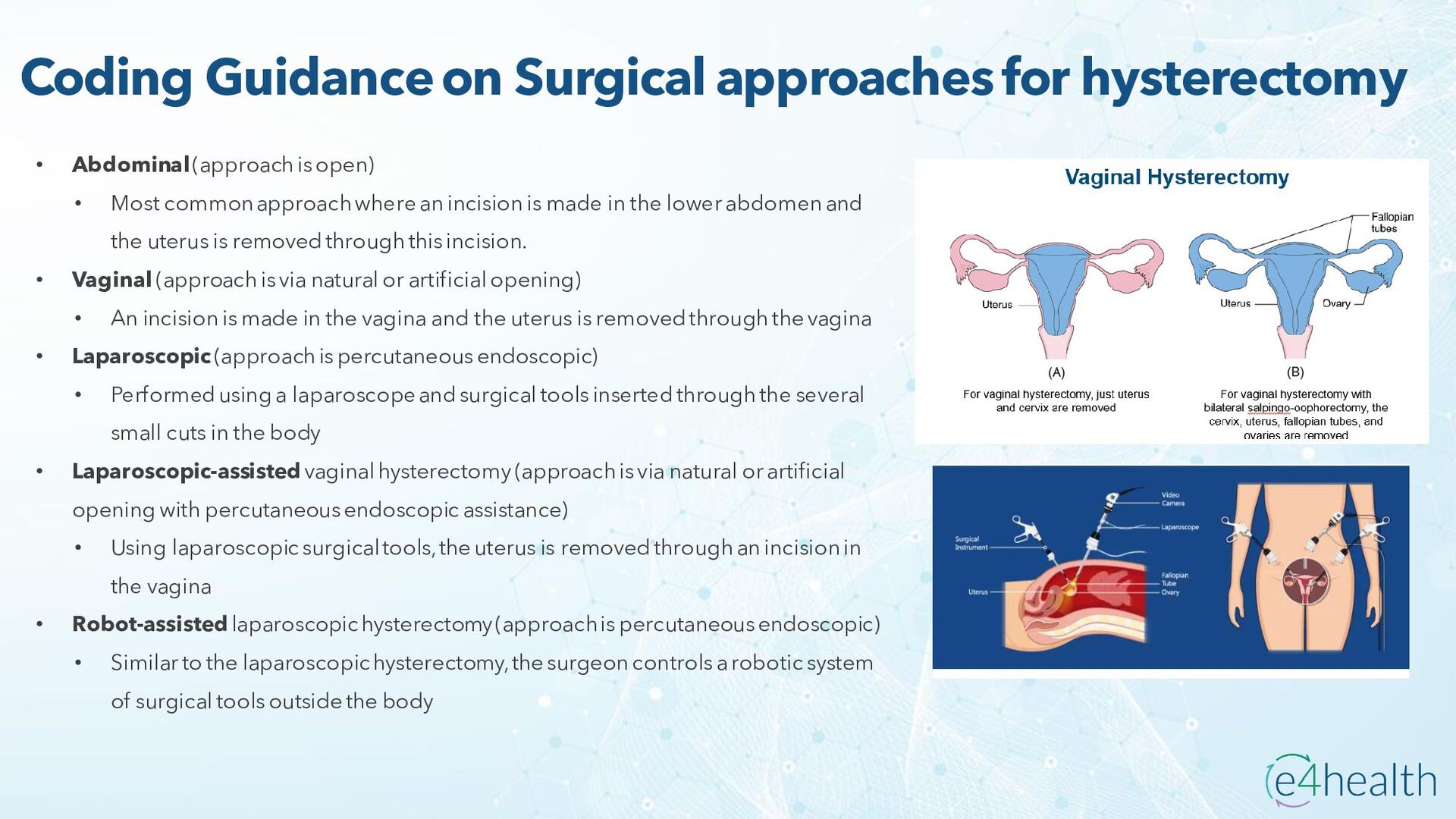
    is open) • Most common approach where an incision is made in the lower abdomen and the uterus is removed through this incision. • Vaginal (approach is via natural or artificial opening) • An incision is made in the vagina and the uterus is removed through the vagina • Laparoscopic (approach is percutaneous endoscopic) • Performed using a laparoscope and surgical tools inserted through the several small cuts in the body • Laparoscopic-assisted vaginal hysterectomy (approach is via natural or artificial opening with percutaneous endoscopic assistance) • Using laparoscopic surgical tools, the uterus is removed through an incision in the vagina • Robot-assisted laparoscopic hysterectomy (approach is percutaneous endoscopic) • Similar to the laparoscopic hysterectomy, the surgeon controls a robotic system of surgical tools outside the body
  56. Robotic-Assisted Laparoscopic Hysterectomy Converted to Open Procedure& New Qualifier Values

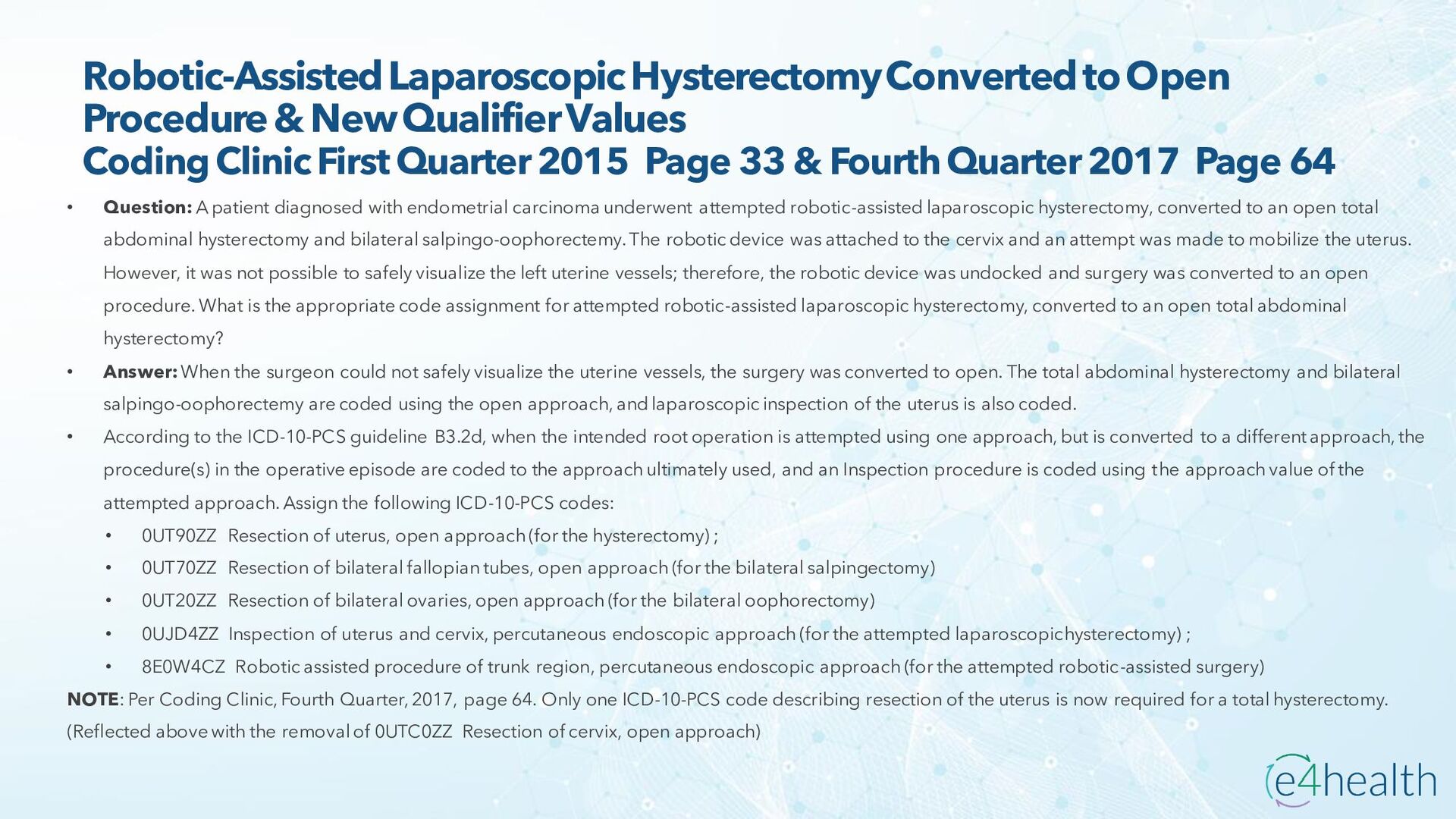
    Coding Clinic First Quarter 2015 Page 33 & Fourth Quarter 2017 Page 64 • Question: A patient diagnosed with endometrial carcinoma underwent attempted robotic-assisted laparoscopic hysterectomy, converted to an open total abdominal hysterectomy and bilateral salpingo-oophorectemy. The robotic device was attached to the cervix and an attempt was made to mobilize the uterus. However, it was not possible to safely visualize the left uterine vessels; therefore, the robotic device was undocked and surgery was converted to an open procedure. What is the appropriate code assignment for attempted robotic-assisted laparoscopic hysterectomy, converted to an open total abdominal hysterectomy? • Answer: When the surgeon could not safely visualize the uterine vessels, the surgery was converted to open. The total abdominal hysterectomy and bilateral salpingo-oophorectemy are coded using the open approach, and laparoscopic inspection of the uterus is also coded. • According to the ICD-10-PCS guideline B3.2d, when the intended root operation is attempted using one approach, but is converted to a different approach, the procedure(s) in the operative episode are coded to the approach ultimately used, and an Inspection procedure is coded using the approach value of the attempted approach. Assign the following ICD-10-PCS codes: • 0UT90ZZ Resection of uterus, open approach (for the hysterectomy) ; • 0UT70ZZ Resection of bilateral fallopian tubes, open approach (for the bilateral salpingectomy) • 0UT20ZZ Resection of bilateral ovaries, open approach (for the bilateral oophorectomy) • 0UJD4ZZ Inspection of uterus and cervix, percutaneous endoscopic approach (for the attempted laparoscopic hysterectomy) ; • 8E0W4CZ Robotic assisted procedure of trunk region, percutaneous endoscopic approach (for the attempted robotic-assisted surgery) NOTE: Per Coding Clinic, Fourth Quarter, 2017, page 64. Only one ICD-10-PCS code describing resection of the uterus is now required for a total hysterectomy. (Reflected above with the removal of 0UTC0ZZ Resection of cervix, open approach)
  57. Resection • Also includes: • Pelvic evisceration • Radical surgical

    treatment for advanced or recurrent cancers • Removal of pelvic internal organs: ovaries, tubes, vagina, sigmoid colon, rectum, bladder, and urethra • Procedure leaves a permanent colostomy and urinary diversion Query opportunity • Review OR report and/or pathology for all metastatic sites • Review documentation for the presences of peritoneal adhesions and/or lysis of adhesions for additional codes • Review for additional procedure codes if lymph nodes site and extent of removal (whether a portion vs. a chain of lymph nodes) • Portion – Excision of lymph nodes vs. • Chain – Resection of lymph nodes
  58. Excision • Includes such procedures as: • Uterine myomectomy –

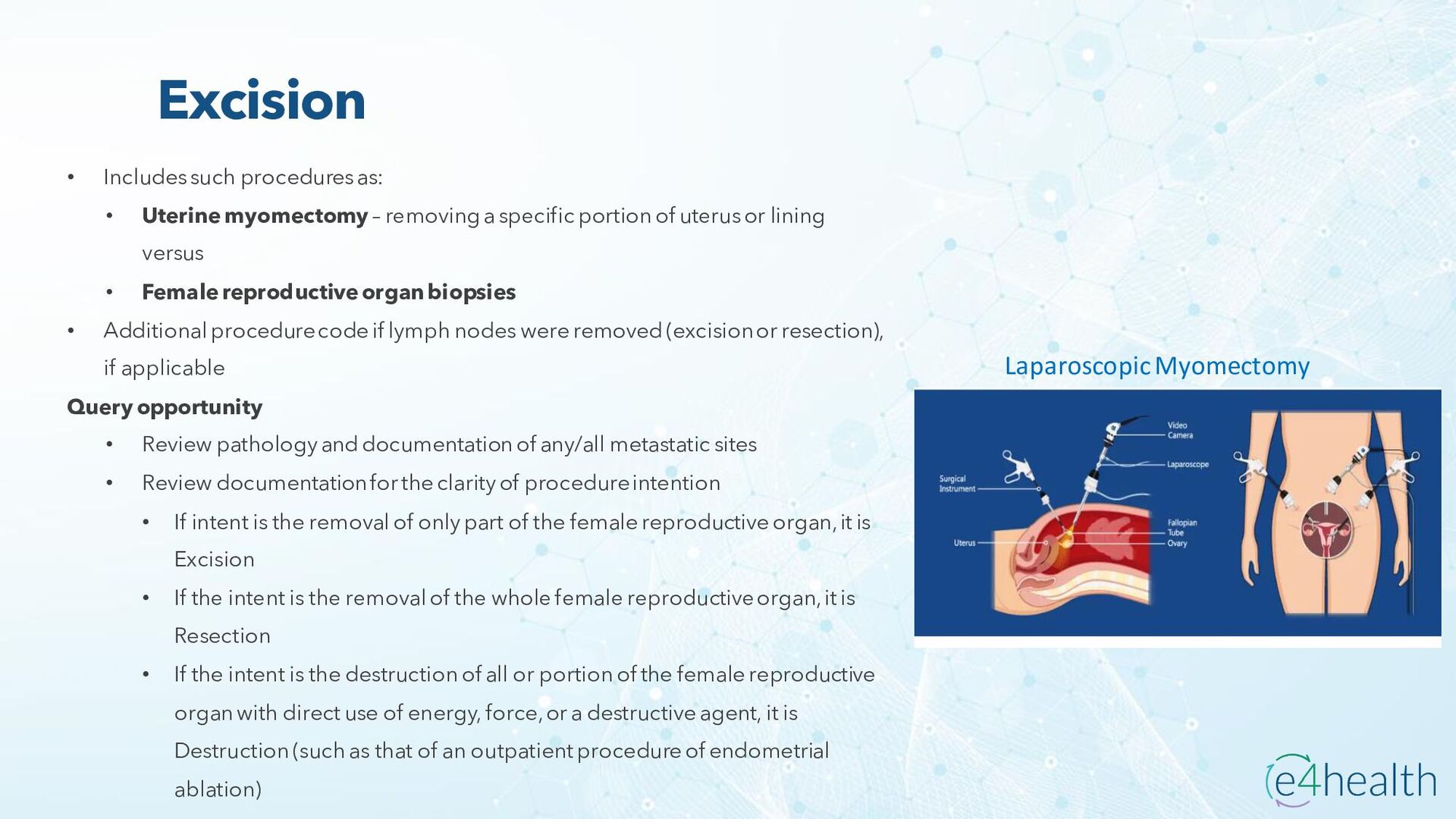
    removing a specific portion of uterus or lining versus • Female reproductive organ biopsies • Additional procedurecode if lymph nodes were removed (excision or resection), if applicable Query opportunity • Review pathology and documentation of any/all metastatic sites • Review documentation for the clarity of procedure intention • If intent is the removal of only part of the female reproductive organ, it is Excision • If the intent is the removal of the whole female reproductive organ, it is Resection • If the intent is the destruction of all or portion of the female reproductive organ with direct use of energy, force, or a destructive agent, it is Destruction (such as that of an outpatient procedure of endometrial ablation) Laparoscopic Myomectomy
  59. Excision • Also includes: • Excisional Debridement of skin, subcutaneous

    tissue • The surgical removal or cutting away of devitalized tissue, necrosis or slough. • When multiple layers of tissue are debrided at the same site, only the deepest layer of tissue debridement is listed and the MS-DRG assignment may be affected. • Skin is a separate body system from subcutaneous tissue. So, an excisional debridement of the skin and subcutaneous tissue is coded to the subcutaneous tissue body part. Query opportunity • Review/query for documentation for depth of debridement • Review/query for documentation for method, technique, or instrumentation utilized
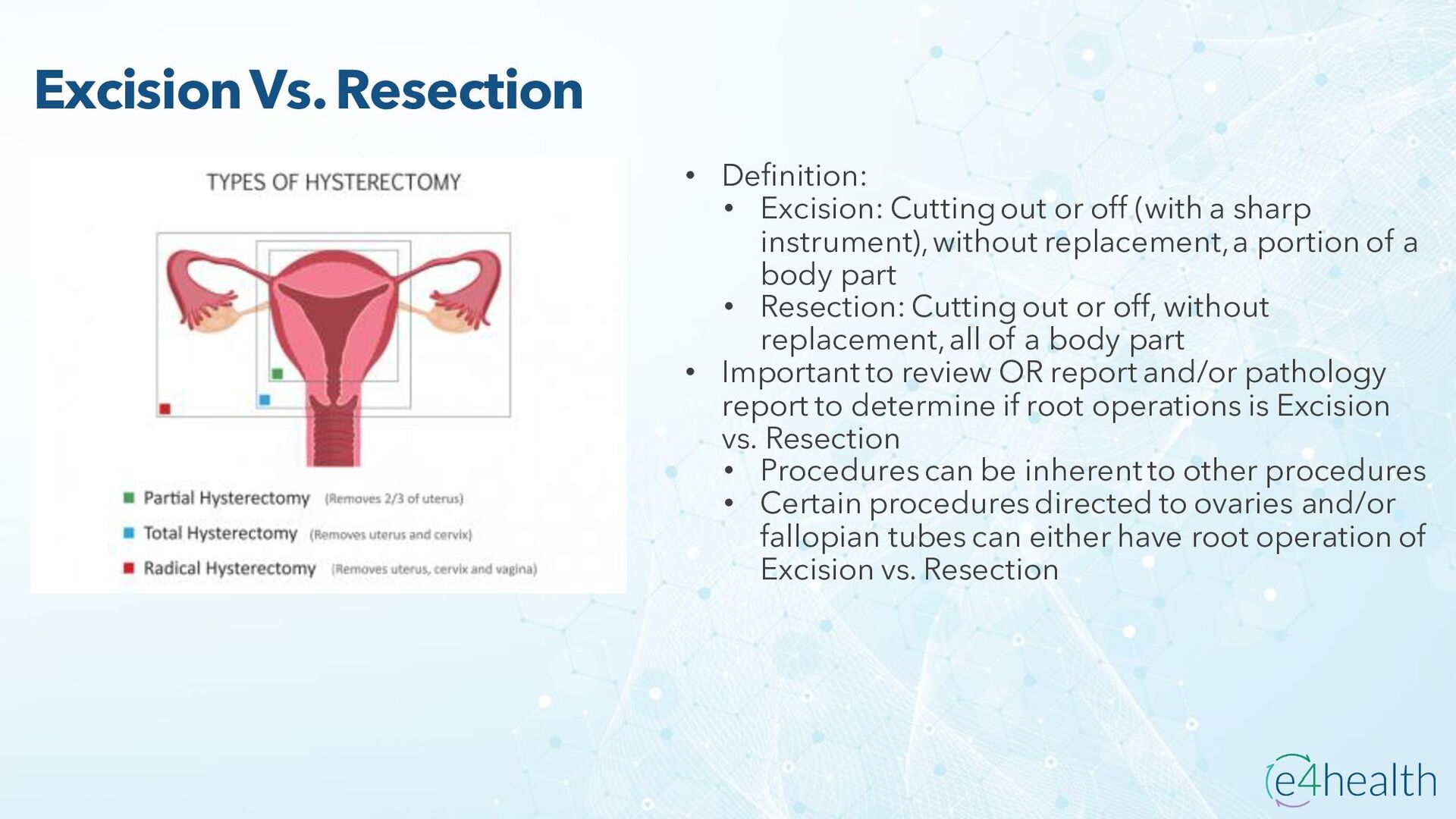
  60. Excision Vs. Resection • Definition: • Excision: Cutting out or

    off (with a sharp instrument), without replacement, a portion of a body part • Resection: Cutting out or off, without replacement, all of a body part • Important to review OR report and/or pathology report to determine if root operations is Excision vs. Resection • Procedures can be inherent to other procedures • Certain procedures directed to ovaries and/or fallopian tubes can either have root operation of Excision vs. Resection
  61. Excision Vs. Resection – Query opportunity • Definition: • Excision:

    Cutting out or off (with a sharp instrument), without replacement, a portion of a body part • Resection: Cutting out or off, without replacement, all of a body part • Query opportunity • Review laterality, if applicable • Review documentation for the presences of peritoneal adhesions and/or lysis of adhesions for additional codes • Review for additional procedure codes if lymph nodes site and extent of removal (whether a portion vs. a chain of lymph nodes) • Review documentation for the clarity of the intent of excision or resection • If intent is the removal of the whole female reproductive organ, it is Resection • If intent is the removal of only part of the female reproductive organ, it is Excision
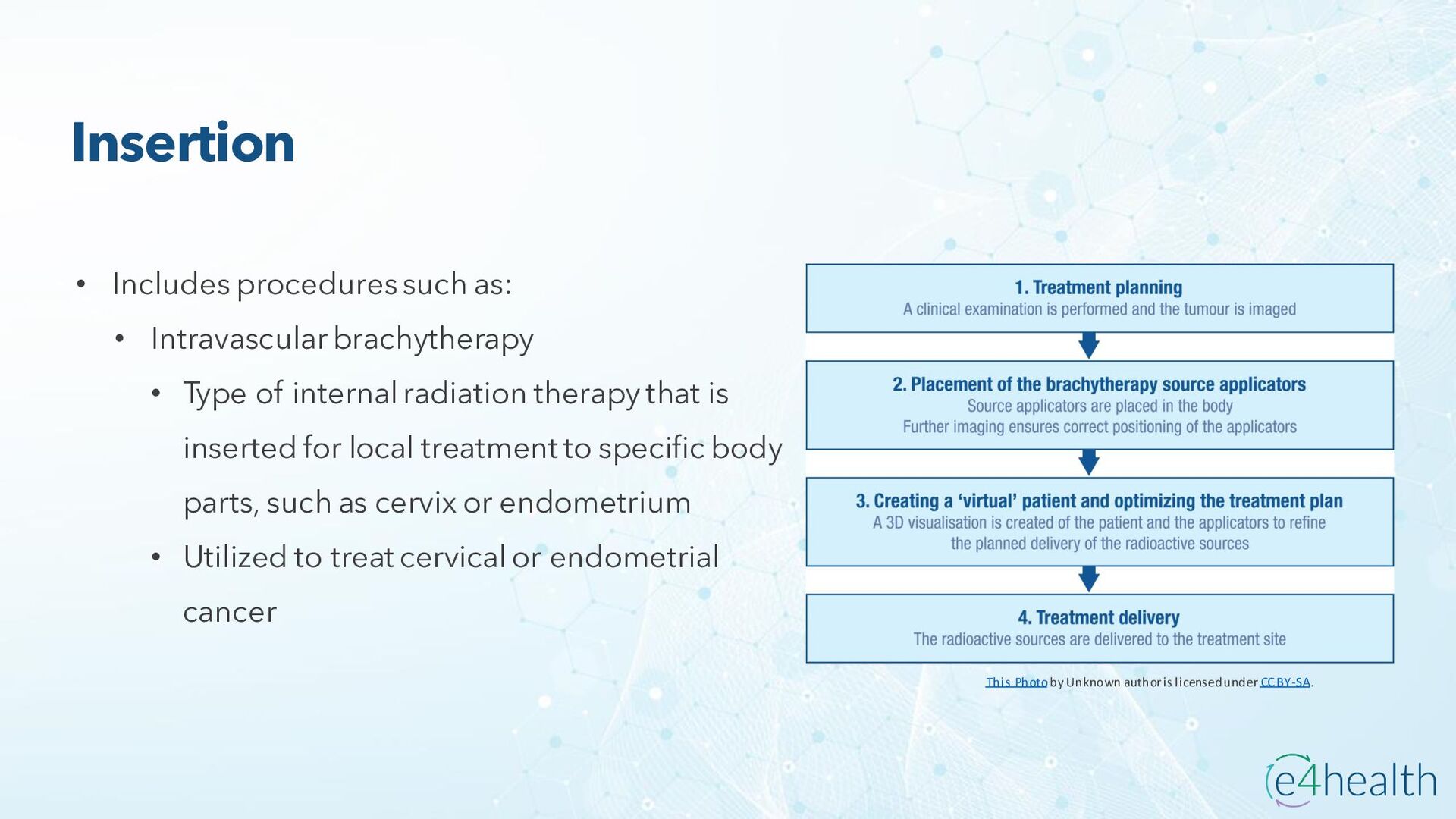
  62. Insertion • Includes procedures such as: • Intravascular brachytherapy •

    Type of internal radiation therapy that is inserted for local treatment to specific body parts, such as cervix or endometrium • Utilized to treat cervical or endometrial cancer This Photo by Unknown author is licensed under CC BY-SA.
  63. Insertion: Brachytherapy • D1.a Brachytherapy is coded to the modality

    Brachytherapy in the Radiation Therapy section. • When a radioactive brachytherapy source is left in the body at the end of the procedure, it is coded separately to the root operation Insertion with the device value Radioactive Element • The brachytherapy is coded separately using the modality Brachytherapy in the Radiation Therapy section. • Example: Brachytherapy with implantation of a low dose rate brachytherapy source left in the body at the end of the procedure is coded to the applicable treatment site in section D, Radiation Therapy, with the modality Brachytherapy, the modality qualifier value Low Dose Rate, and the applicable isotope value and qualifier value. • The implantation of the brachytherapy source is coded separately to the device value Radioactive Element in the appropriate Insertion table of the Medical and Surgical section. • The Radiation Therapy section code identifies the specific modality and isotope of the brachytherapy, and the root operation Insertion code identifies the implantation of the brachytherapy source that remains in the body at the end of the procedure.
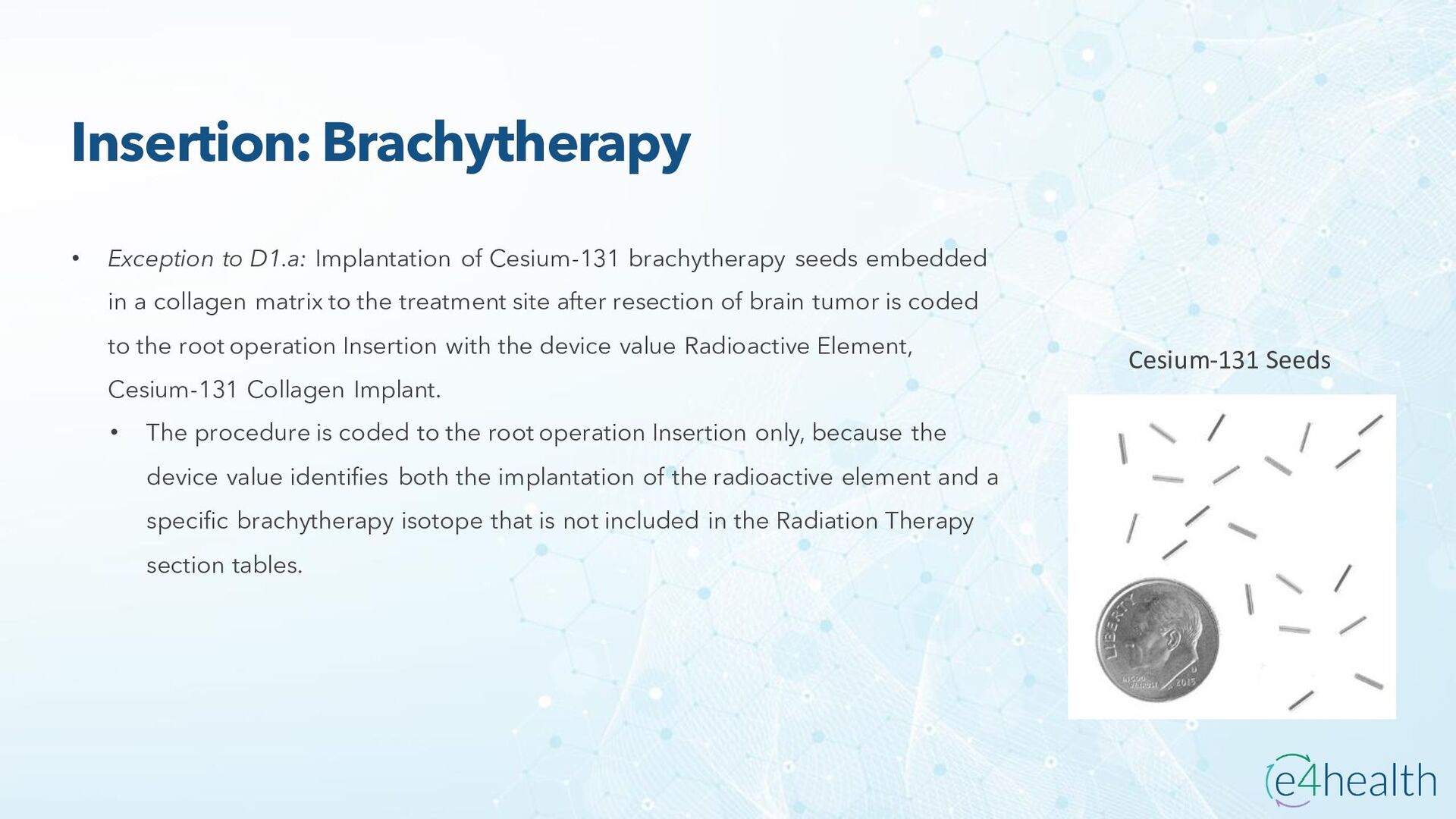
  64. Insertion: Brachytherapy • Exception to D1.a: Implantation of Cesium-131 brachytherapy

    seeds embedded in a collagen matrix to the treatment site after resection of brain tumor is coded to the root operation Insertion with the device value Radioactive Element, Cesium-131 Collagen Implant. • The procedure is coded to the root operation Insertion only, because the device value identifies both the implantation of the radioactive element and a specific brachytherapy isotope that is not included in the Radiation Therapy section tables. Cesium-131 Seeds
  65. Insertion: Brachytherapy • D1.b A separate procedure to place a

    temporary applicator for delivering the brachytherapy is coded to the root operation Insertion and the device value Other Device. • Examples: • Intrauterine brachytherapy applicator placed as a separate procedure from the brachytherapy procedure is coded to Insertion of Other Device, • The brachytherapy is coded separately using the modality Brachytherapy in the Radiation Therapy section. • Intrauterine brachytherapy applicator placed concomitantly with delivery of the brachytherapy dose is coded with a single code using the modality Brachytherapy in the Radiation Therapy section.
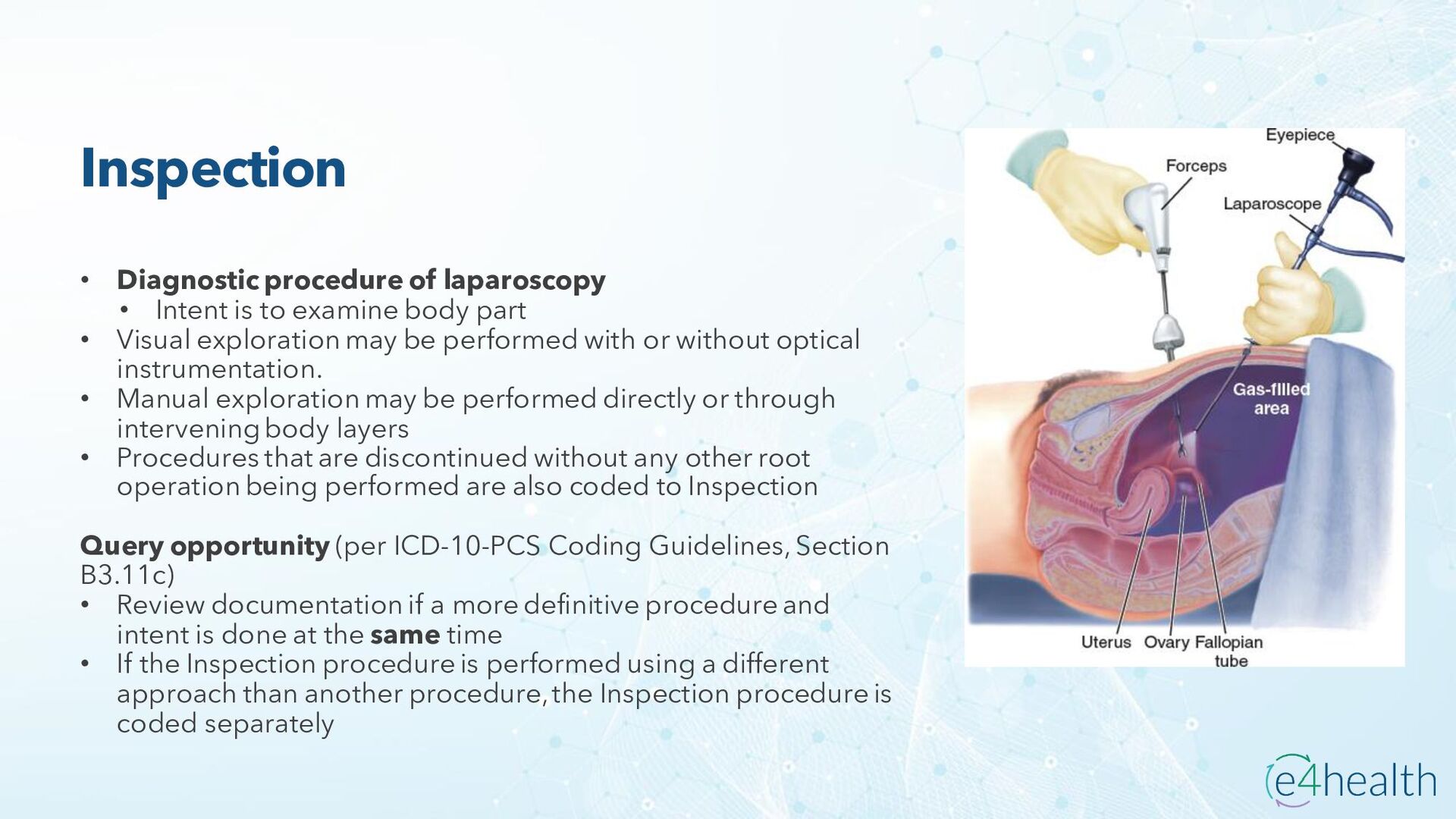
  66. Inspection • Diagnostic procedure of laparoscopy • Intent is to

    examine body part • Visual exploration may be performed with or without optical instrumentation. • Manual exploration may be performed directly or through intervening body layers • Procedures that are discontinued without any other root operation being performed are also coded to Inspection Query opportunity (per ICD-10-PCS Coding Guidelines, Section B3.11c) • Review documentation if a more definitive procedure and intent is done at the same time • If the Inspection procedure is performed using a different approach than another procedure, the Inspection procedure is coded separately
  67. Repair • Includes such procedures as: • Repair of cystocele

    and rectocele without graft or prosthesis • Repair of fistula between bladder and cervix, intestine,colon, urethra, uterus, or vagina • Laceration suture • A procedure code for repair would be assigned for each body part repair (e.g., one for bladder and one for colon) • Repair is used only when the method to accomplish the repair (intent) is not one of the other root operations • Functions as the "not elsewhere classified (NEC)" root operation when the procedure does not meet the definition of the other root operations
  68. Repair – Query opportunity • Query opportunity • Review if

    more than one body part fits the definition for the root operation of Repair • Review documentation for the clarity of the intent of the female reproductive repair • If intent is to move the body part from an abnormal location or a location where it is not functioning correctly to a more suitable location, it is Reposition • If intent is to put in a device, such as a graft or prosthesis, (biological or synthetic material) that physically reinforces and/or augments the function of a body part, it is Supplement
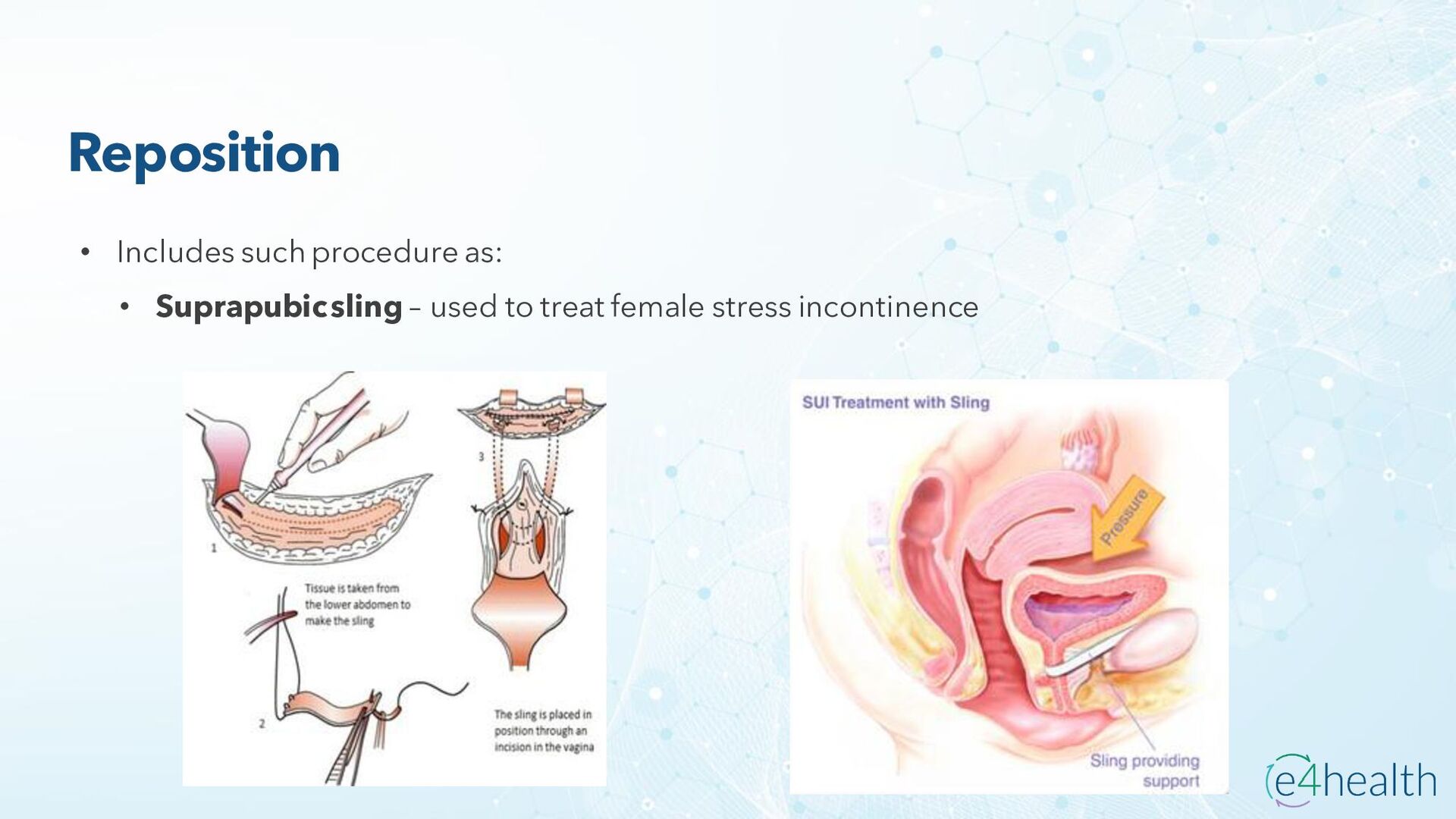
  69. Pubovaginal Sling Placement Coding Clinic First Quarter 2016 Page 15

    • Question: A patient with a history of stress urinary incontinence presents for pubovaginal sling placement. What is the appropriate ICD-10-PCS code for this procedure? Specifically, we are not sure what the appropriate approach value would be for this procedure. • Answer: For the pubovaginal sling placement, assign the following ICD-10-PCS procedure code: 0TSD0ZZ Reposition urethra, open approach • The purpose of the procedure is to reposition the angle of the urethra so that it is not hypermobile, and the goal is to move the urethra into proper position. Structurally the sling is holding the urethra in place, and changing the angle so that it does not leak. The urethra is not deficient; it's in the wrong place. The tape helps to keep it in the correct position, but is not performing the function of the urethra. Therefore, "Reposition" is the appropriate root operation. • Reposition is defined as putting in or putting back or moving some or all of a body part to its normal or other suitable location. Additionally, the approach is open, because the operative report states that flaps were raised on either side of the groin through two small incisions in order to perform the procedure. This means that the site of the procedure was exposed to direct visualization and therefore the approach is open.
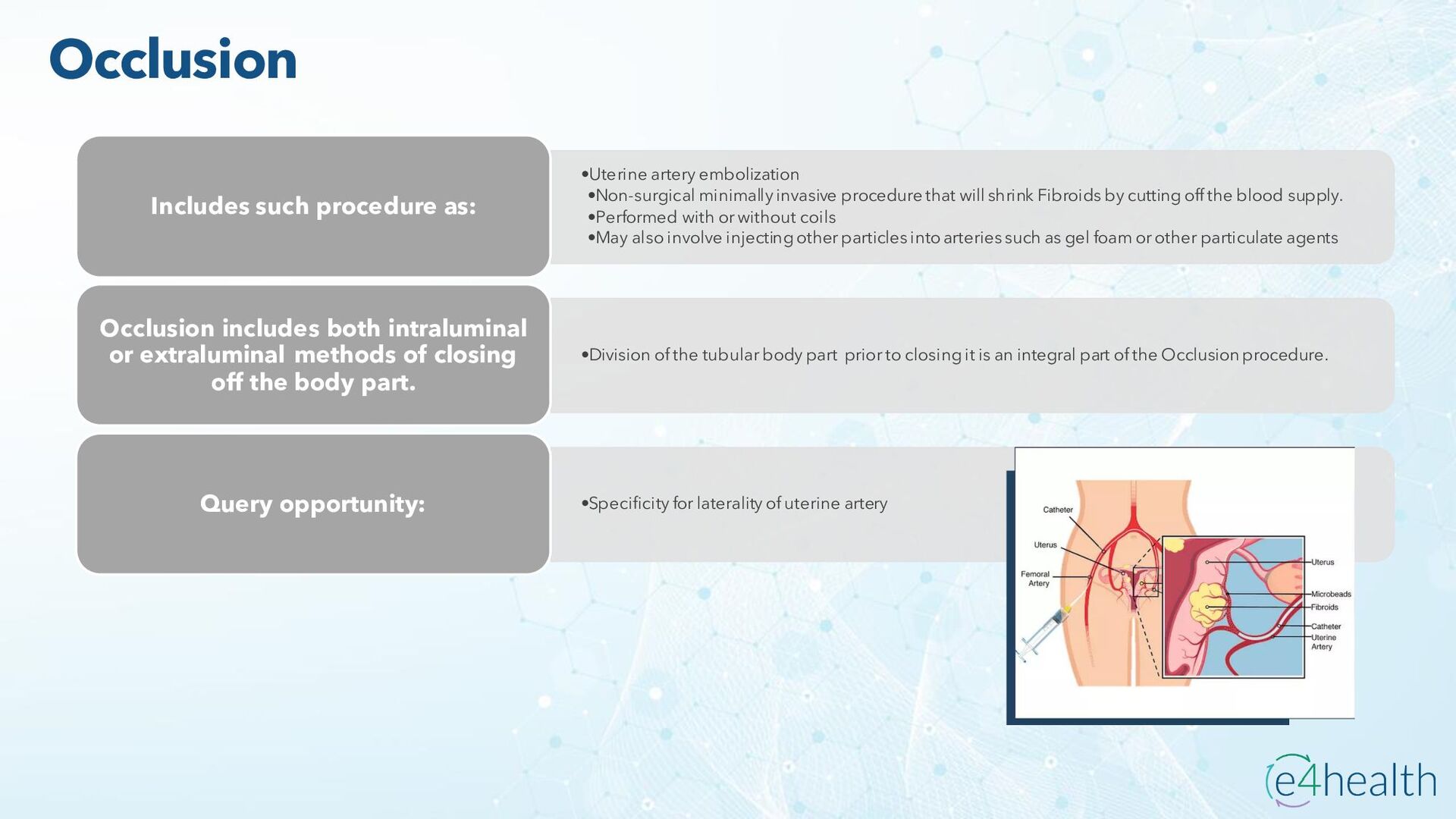
  70. Occlusion •Uterine artery embolization •Non-surgical minimally invasive procedure that will

    shrink Fibroids by cutting off the blood supply. •Performed with or without coils •May also involve injecting other particles into arteries such as gel foam or other particulate agents Includes such procedure as: •Division of the tubular body part prior to closing it is an integral part of the Occlusion procedure. Occlusion includes both intraluminal or extraluminal methods of closing off the body part. •Specificity for laterality of uterine artery Query opportunity:
  71. Uterine Artery Embolization Using Gelfoam Coding Clinic Second Quarter 2015

    Page 27 • Question: A patient is undergoing right uterine artery embolization due to concern for placenta accreta. The catheter was placed in the right internal iliac artery and the uterine artery was embolized using Gelfoam. Is Gelfoam considered a device? • Answer: Gelfoam is used intraluminally to embolize the uterine artery, and is typically cut into pledgets, inserted in a syringe, and injected into the vessel to occlude it. When used in this way, Gelfoam is coded as an intraluminal device. Assign the following ICD-10-PCS code, for the uterine artery embolization using Gelfoam: 04LE3DT Occlusion of right uterine artery with intraluminal device, percutaneous approach
  72. Release • Includes such procedure as: • Lysis of adhesions

    • Most frequently an integral part of the surgical procedure, in which case, the diagnosis of adhesions or the procedure of lysis of adhesions would not be coded • If the adhesions prevent the surgeon from access to the organ being operated on and are documented as a strong band of adhesions requiring lysis before the operation can proceed, then it is appropriate to assign a code for the diagnosis and procedure • Intent is to free a body part from abnormal constraint by cutting or by use of force • Some of the restraining tissue may be taken out but none of the body part is taken out • Can be performed on the area around a body part, on the attachments to a body part, or between subdivisions of a body part that are causing the abnormal constraint Query opportunity • Review documentation, if unclear, the clinical significance of adhesions
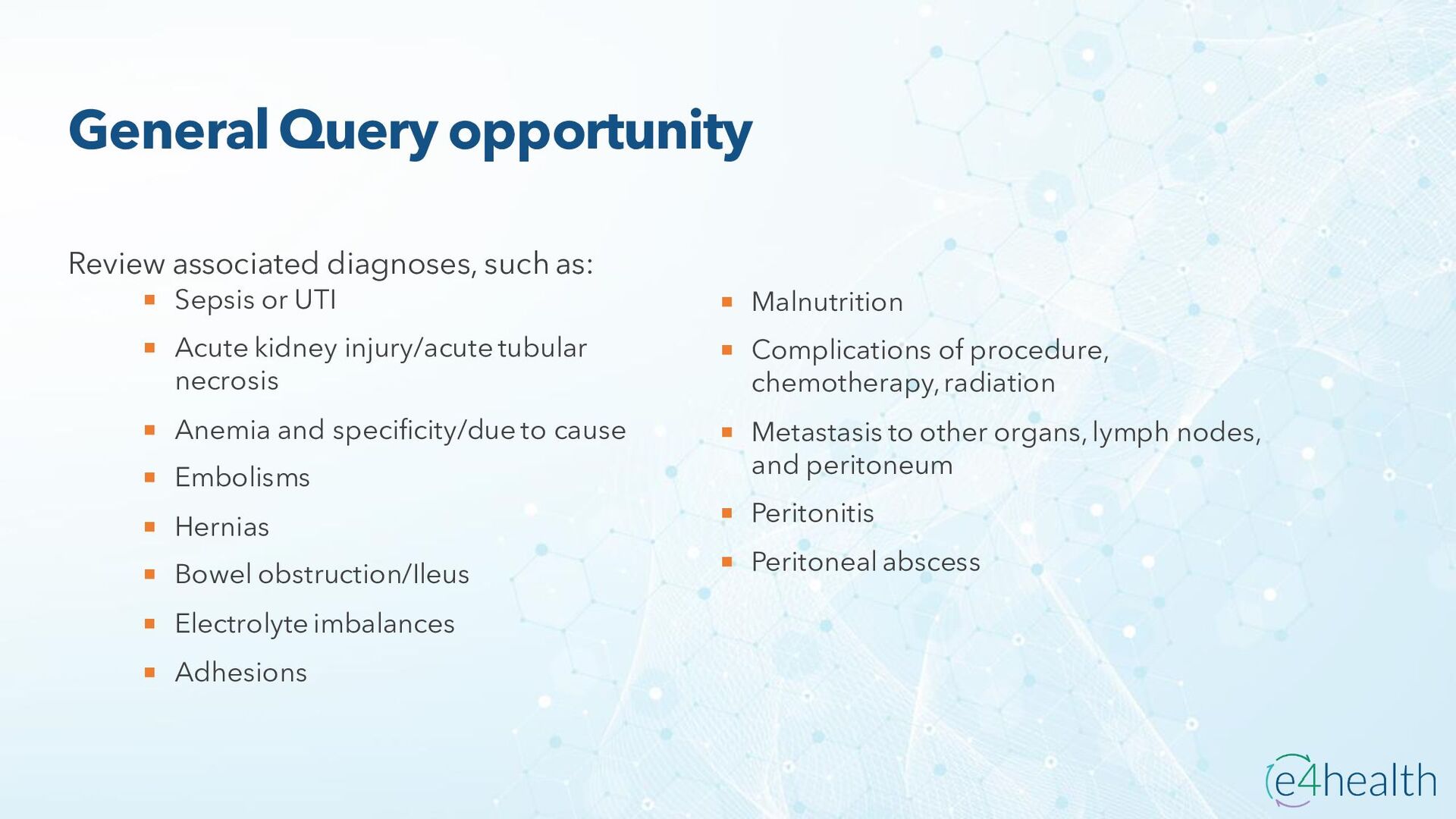
  73. General Query opportunity Review associated diagnoses, such as:  Malnutrition

     Complications of procedure, chemotherapy, radiation  Metastasis to other organs, lymph nodes, and peritoneum  Peritonitis  Peritoneal abscess  Sepsis or UTI  Acute kidney injury/acute tubular necrosis  Anemia and specificity/due to cause  Embolisms  Hernias  Bowel obstruction/Ileus  Electrolyte imbalances  Adhesions
  74. References • 3M Clinical Documentation Improvement System Reference • Basic

    Information About Gynecologic Cancers | CDC • Pelvic Inflammatory Disease Empiric Therapy: Empiric Therapy Regimens (medscape.com) • Pelvic Exenteration: Surgical Approaches - PMC (nih.gov) • https://activebeat.com/your-health/oral-thrush-symptoms-causes-and-treatment/ • https://www.aapc.com/blog/44170-correct-coding-for-laparoscopically-assisted-vaginal-hysterectomy/ • https://www.advancedgynaecologymelbourne.com.au/myomectomy • https://www.urology.co.nz/info/pubovaginal-sling • https://profibroidmd.com/uterine-artery-embolization/ • https://en.wikipedia.org/wiki/Broad_ligament_of_the_uterus • https://www.amboss.com/us/knowledge/Female_reproductive_organs • https://perspectivetherapeutics.com/cesium-131/products/ • AHA ICD-10-CM and ICD-10-PCS Coding Handbook • ICD-10-PCS: An Applied Approach 2023 • Cengage: 3-2-1 CODE IT!