$30 off During Our Annual Pro Sale. View Details »

FY 2024: MDC 12 - Male Reproductive

Avatar for e4health e4health PRO
April 04, 2024
260

FY 2024: MDC 12 - Male Reproductive

Avatar for e4health

e4health PRO

April 04, 2024
Tweet

Transcript

  1. H I M | C O D I N G

    & C D I | H E A LT H I T | R E V C Y C L E Empowering Better Health e4health tackles healthcare’s data, quality and revenue challenges empowering your providers to focus on better care.
  2. Objectives • Review MDC 12- Diseases and disorders of the

    male reproductive system with a focus on selected diagnoses and procedures • Learner will acquire a basic understanding of the diagnoses and procedures included in MDC-12 • Discuss Query opportunities in MDC-12 • Review coding clinics relevant to the chosen topics in each DRG
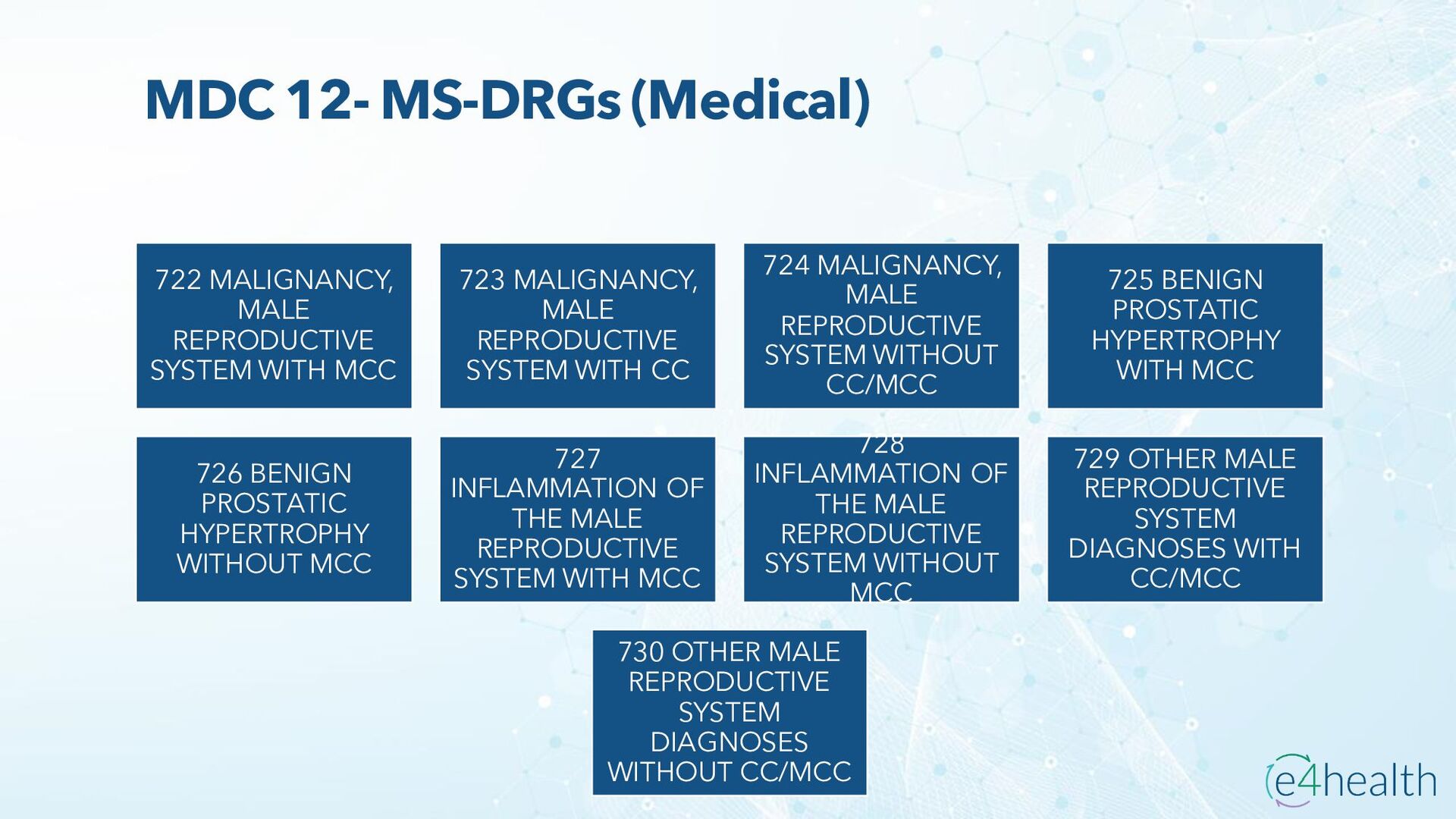
  3. MDC 12- MS-DRGs (Medical) 722 MALIGNANCY, MALE REPRODUCTIVE SYSTEM WITH

    MCC 723 MALIGNANCY, MALE REPRODUCTIVE SYSTEM WITH CC 724 MALIGNANCY, MALE REPRODUCTIVE SYSTEM WITHOUT CC/MCC 725 BENIGN PROSTATIC HYPERTROPHY WITH MCC 726 BENIGN PROSTATIC HYPERTROPHY WITHOUT MCC 727 INFLAMMATION OF THE MALE REPRODUCTIVE SYSTEM WITH MCC 728 INFLAMMATION OF THE MALE REPRODUCTIVE SYSTEM WITHOUT MCC 729 OTHER MALE REPRODUCTIVE SYSTEM DIAGNOSES WITH CC/MCC 730 OTHER MALE REPRODUCTIVE SYSTEM DIAGNOSES WITHOUT CC/MCC
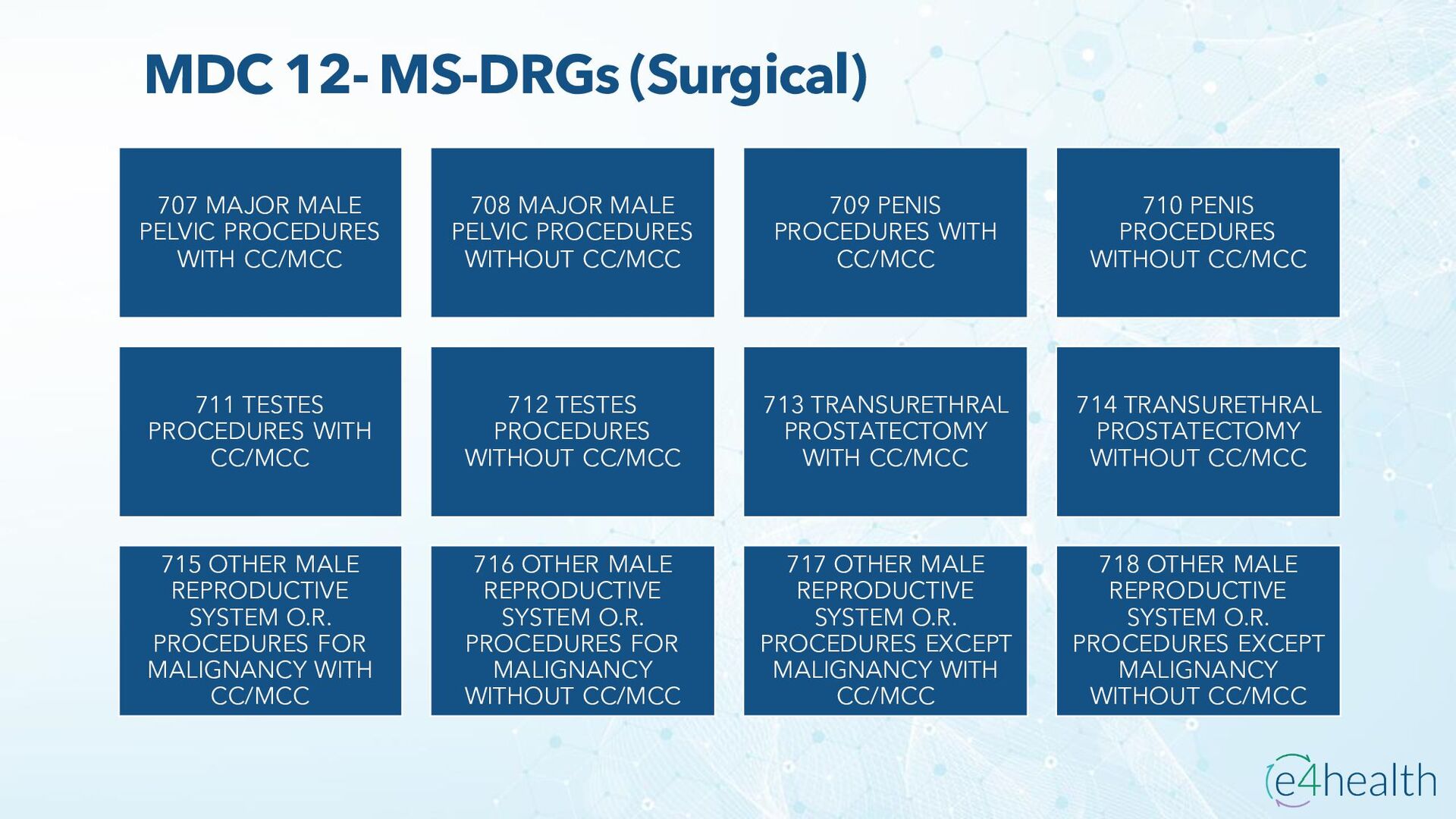
  4. MDC 12- MS-DRGs (Surgical) 707 MAJOR MALE PELVIC PROCEDURES WITH

    CC/MCC 708 MAJOR MALE PELVIC PROCEDURES WITHOUT CC/MCC 709 PENIS PROCEDURES WITH CC/MCC 710 PENIS PROCEDURES WITHOUT CC/MCC 711 TESTES PROCEDURES WITH CC/MCC 712 TESTES PROCEDURES WITHOUT CC/MCC 713 TRANSURETHRAL PROSTATECTOMY WITH CC/MCC 714 TRANSURETHRAL PROSTATECTOMY WITHOUT CC/MCC 715 OTHER MALE REPRODUCTIVE SYSTEM O.R. PROCEDURES FOR MALIGNANCY WITH CC/MCC 716 OTHER MALE REPRODUCTIVE SYSTEM O.R. PROCEDURES FOR MALIGNANCY WITHOUT CC/MCC 717 OTHER MALE REPRODUCTIVE SYSTEM O.R. PROCEDURES EXCEPT MALIGNANCY WITH CC/MCC 718 OTHER MALE REPRODUCTIVE SYSTEM O.R. PROCEDURES EXCEPT MALIGNANCY WITHOUT CC/MCC
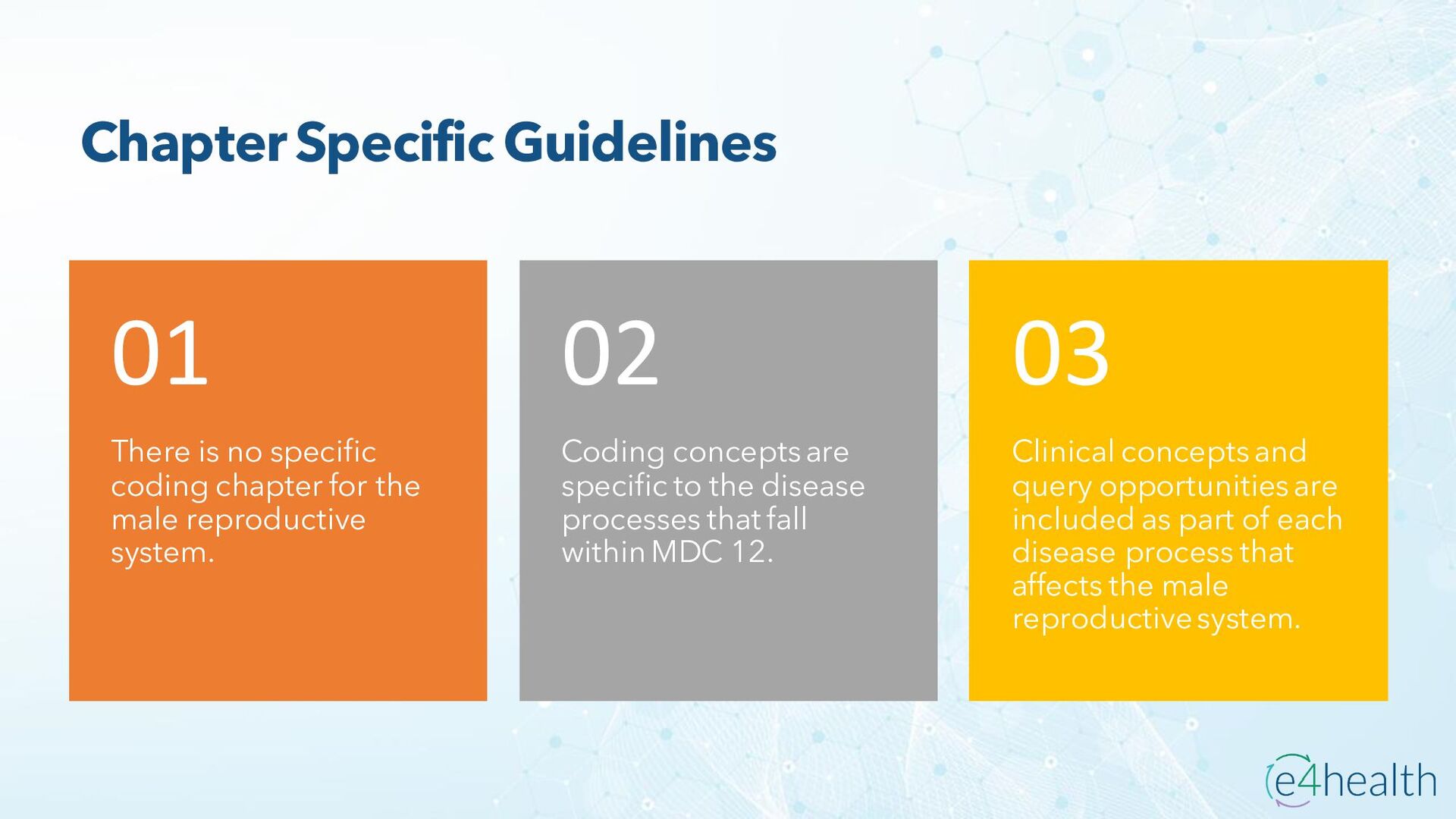
  5. Chapter Specific Guidelines There is no specific coding chapter for

    the male reproductive system. 01 Coding concepts are specific to the disease processes that fall within MDC 12. 02 Clinical concepts and query opportunities are included as part of each disease process that affects the male reproductive system. 03
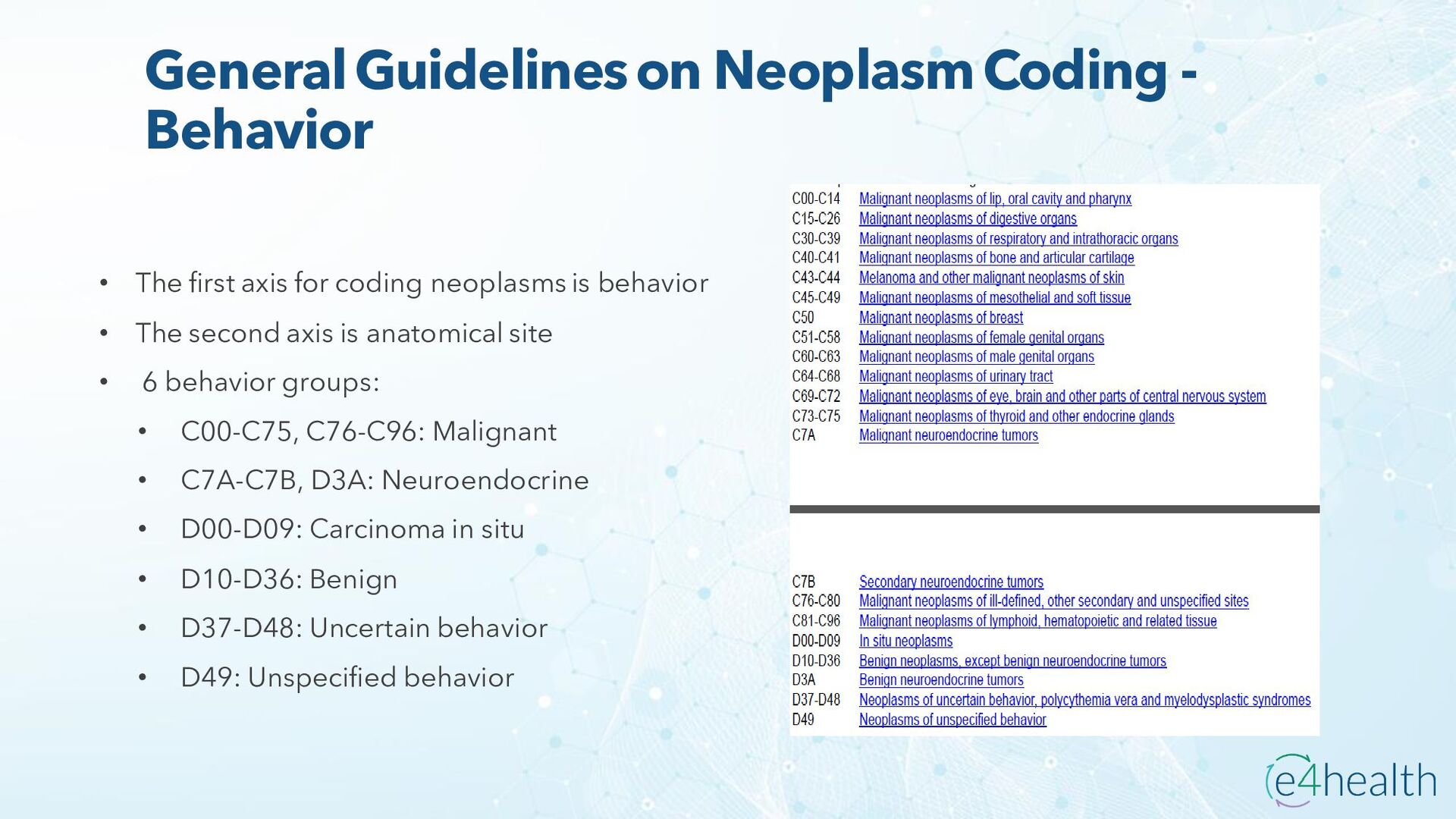
  6. General Guidelines on Neoplasm Coding - Behavior • The first

    axis for coding neoplasms is behavior • The second axis is anatomical site • 6 behavior groups: • C00-C75, C76-C96: Malignant • C7A-C7B, D3A: Neuroendocrine • D00-D09: Carcinoma in situ • D10-D36: Benign • D37-D48: Uncertain behavior • D49: Unspecified behavior
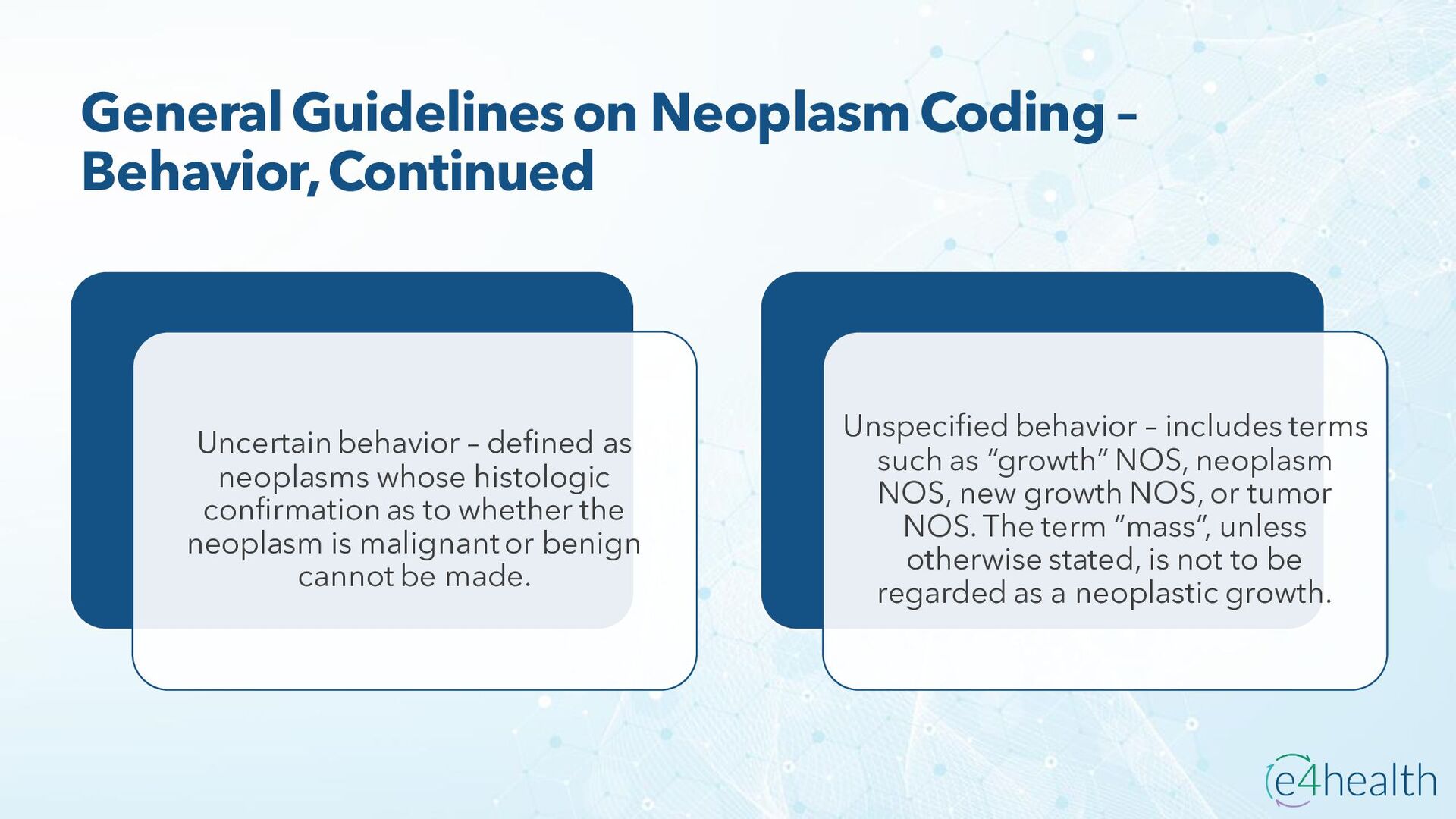
  7. General Guidelines on Neoplasm Coding – Behavior, Continued Uncertain behavior

    – defined as neoplasms whose histologic confirmation as to whether the neoplasm is malignant or benign cannot be made. Unspecified behavior – includes terms such as “growth” NOS, neoplasm NOS, new growth NOS, or tumor NOS. The term “mass”, unless otherwise stated, is not to be regarded as a neoplastic growth.
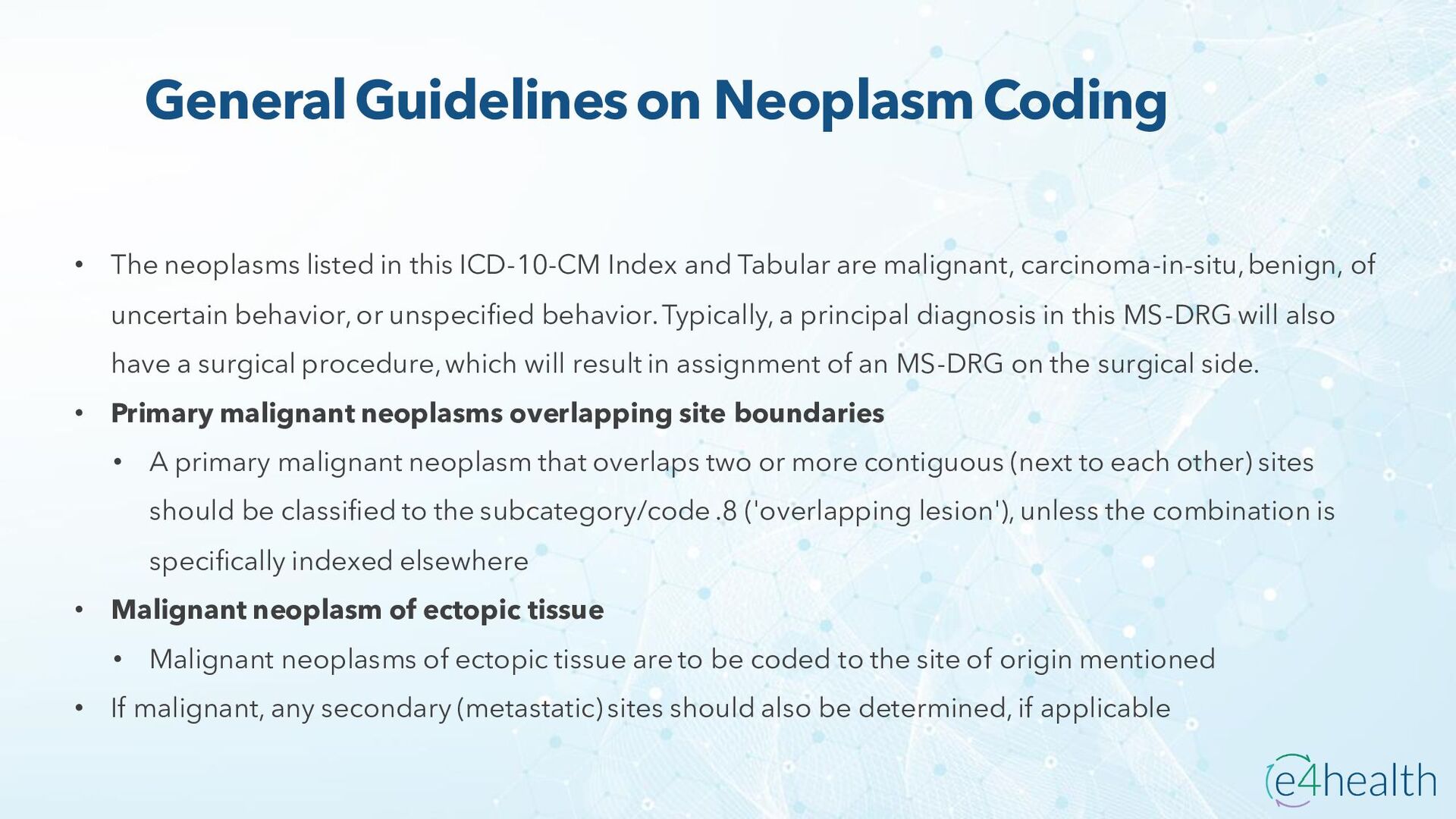
  8. General Guidelines on Neoplasm Coding • The neoplasms listed in

    this ICD-10-CM Index and Tabular are malignant, carcinoma-in-situ, benign, of uncertain behavior, or unspecified behavior. Typically, a principal diagnosis in this MS-DRG will also have a surgical procedure, which will result in assignment of an MS-DRG on the surgical side. • Primary malignant neoplasms overlapping site boundaries • A primary malignant neoplasm that overlaps two or more contiguous (next to each other) sites should be classified to the subcategory/code .8 ('overlapping lesion'), unless the combination is specifically indexed elsewhere • Malignant neoplasm of ectopic tissue • Malignant neoplasms of ectopic tissue are to be coded to the site of origin mentioned • If malignant, any secondary (metastatic) sites should also be determined, if applicable
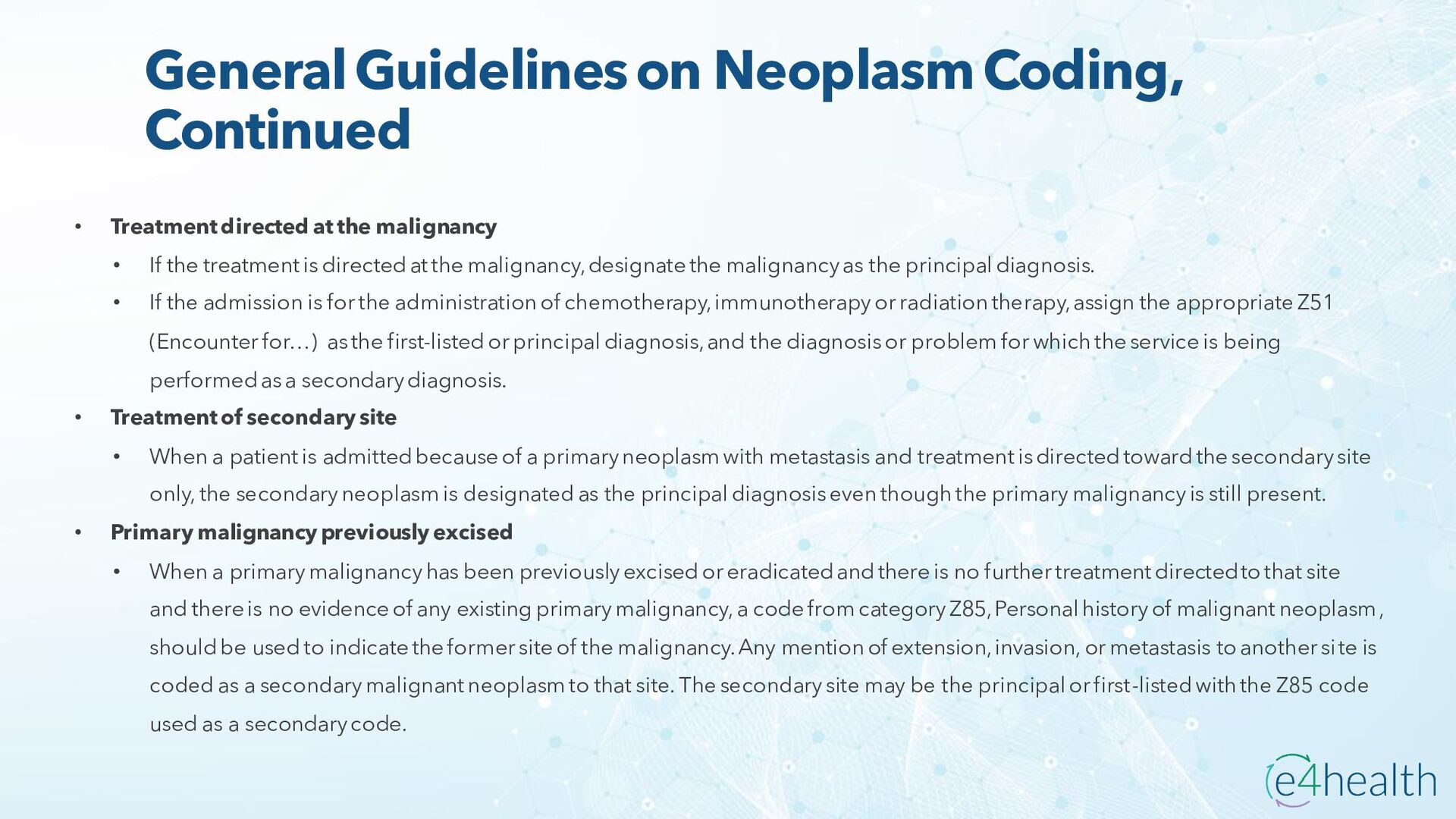
  9. General Guidelines on Neoplasm Coding, Continued • Treatment directed at

    the malignancy • If the treatment is directed at the malignancy, designate the malignancy as the principal diagnosis. • If the admission is for the administration of chemotherapy, immunotherapy or radiation therapy, assign the appropriate Z51 (Encounter for…) as the first-listed or principal diagnosis, and the diagnosis or problem for which the service is being performed as a secondary diagnosis. • Treatment of secondary site • When a patient is admitted because of a primary neoplasm with metastasis and treatment is directed toward the secondary site only, the secondary neoplasm is designated as the principal diagnosis even though the primary malignancy is still present. • Primary malignancy previously excised • When a primary malignancy has been previously excised or eradicated and there is no further treatment directed to that site and there is no evidence of any existing primary malignancy, a code from category Z85, Personal history of malignant neoplasm, should be used to indicate the former site of the malignancy. Any mention of extension, invasion, or metastasis to another site is coded as a secondary malignant neoplasm to that site. The secondary site may be the principal or first-listed with the Z85 code used as a secondary code.
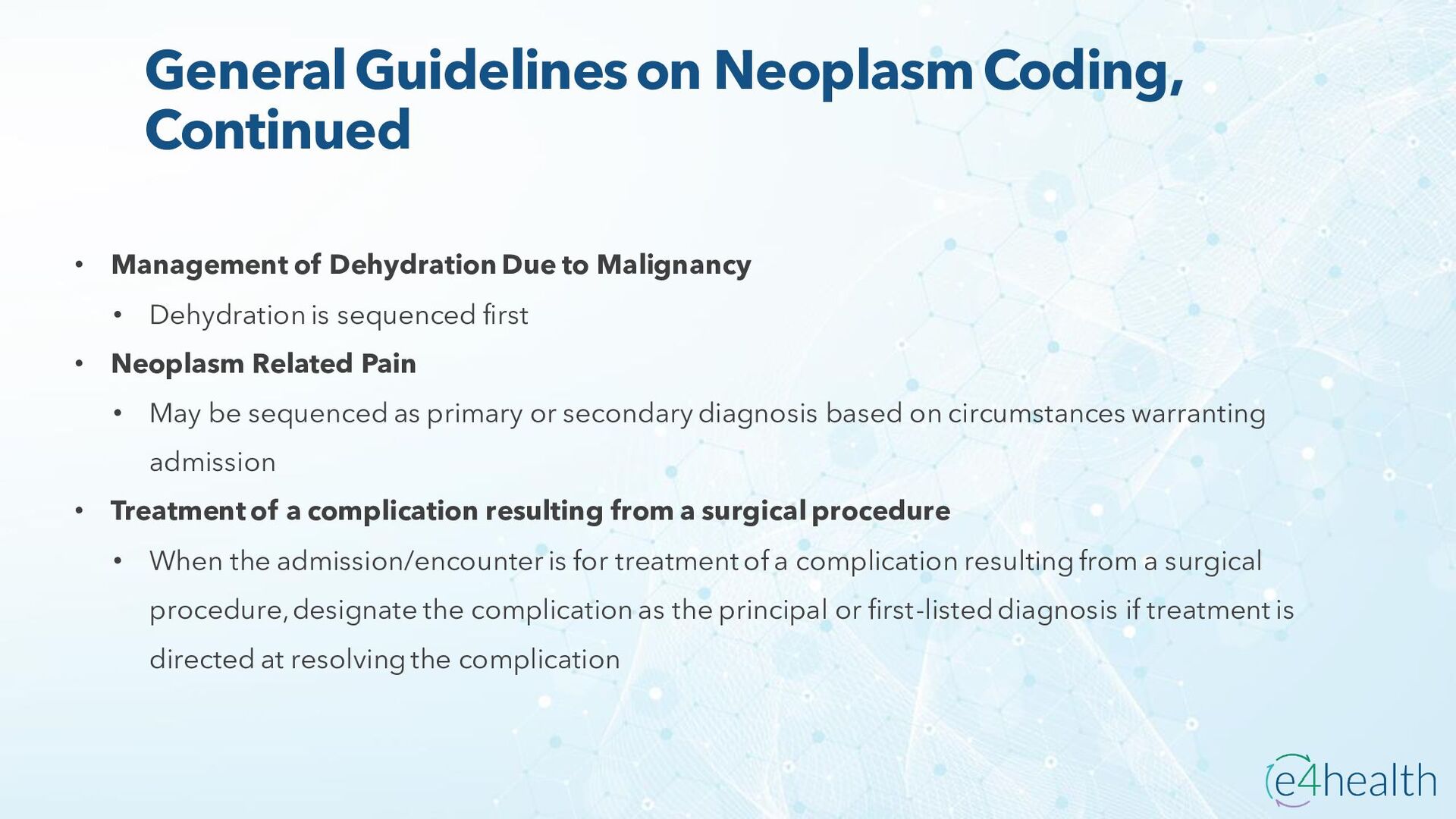
  10. General Guidelines on Neoplasm Coding, Continued • Management of Dehydration

    Due to Malignancy • Dehydration is sequenced first • Neoplasm Related Pain • May be sequenced as primary or secondary diagnosis based on circumstances warranting admission • Treatment of a complication resulting from a surgical procedure • When the admission/encounter is for treatment of a complication resulting from a surgical procedure, designate the complication as the principal or first-listed diagnosis if treatment is directed at resolving the complication
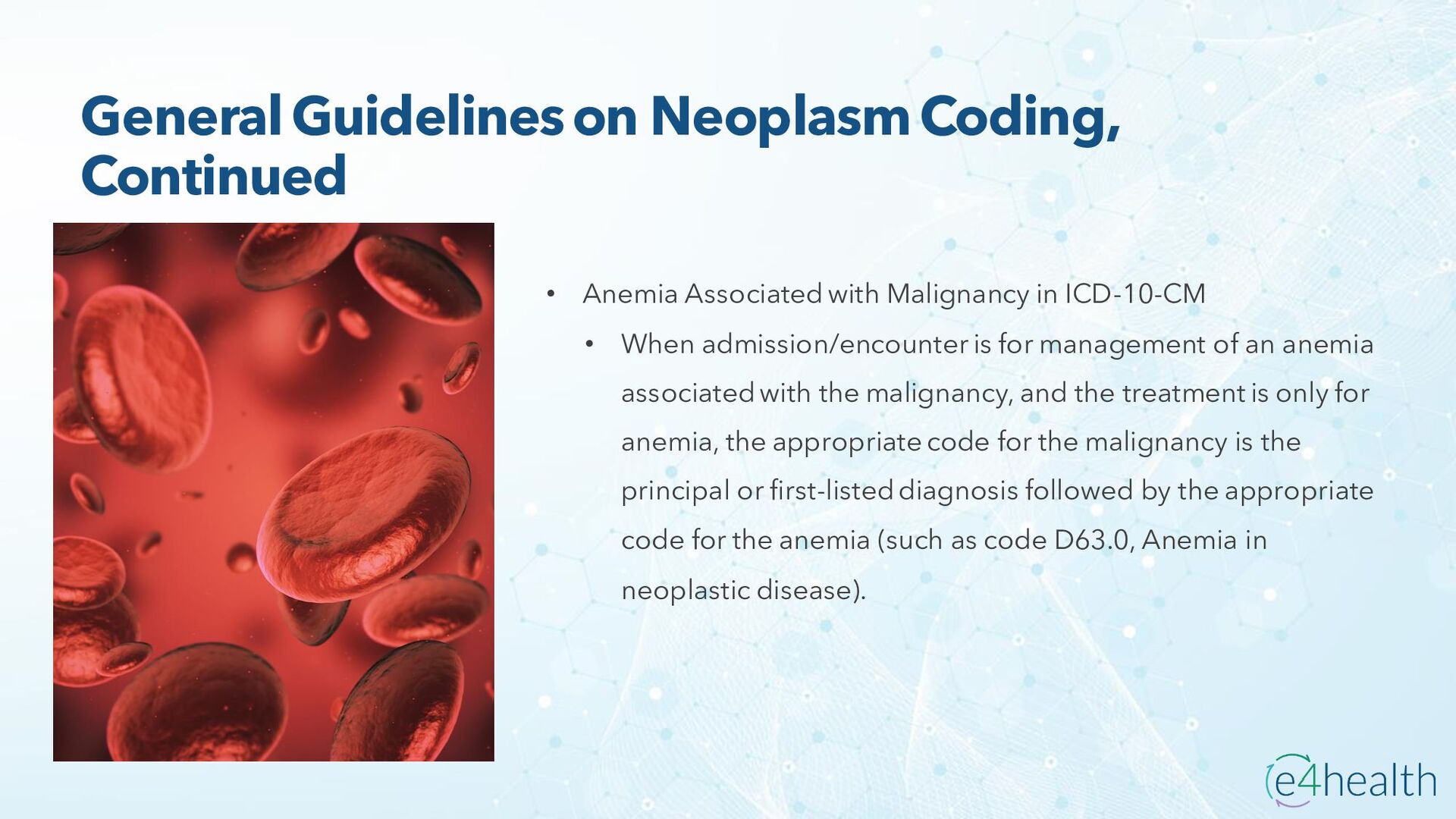
  11. General Guidelines on Neoplasm Coding, Continued • Anemia Associated with

    Malignancy in ICD-10-CM • When admission/encounter is for management of an anemia associated with the malignancy, and the treatment is only for anemia, the appropriate code for the malignancy is the principal or first-listed diagnosis followed by the appropriate code for the anemia (such as code D63.0, Anemia in neoplastic disease).
  12. General Guidelines on Neoplasm Coding, Continued • Anemia associated with

    adverse effect of chemotherapy or radiation therapy (sequencing): • Anemia sequenced first, followed by codes for the neoplasm and the adverse effect (T45.1x5-). • Example: A patient with prostate develops anemia following chemotherapy. Patient admitted for treatment of anemia due to chemotherapy • D64.81 Anemia due to antineoplastic chemotherapy • C61 Malignant neoplasm of prostate • T45.1x5 Adverse effect of antineoplastic drugs
  13. Coding Malignant Ascites and Pleural Effusions • Check Excludes: ascites

    in ETOH cirrhosis, ETOH hepatitis, ascites in toxic liver disease with chronic active hepatitis • Coded first is the underlying malignancy or metastatic site Malignant Ascites • Check Excludes: pleural effusion in heart failure, pleural effusion in SLE • Coded first is the underlying neoplasm Malignant Pleural Effusion
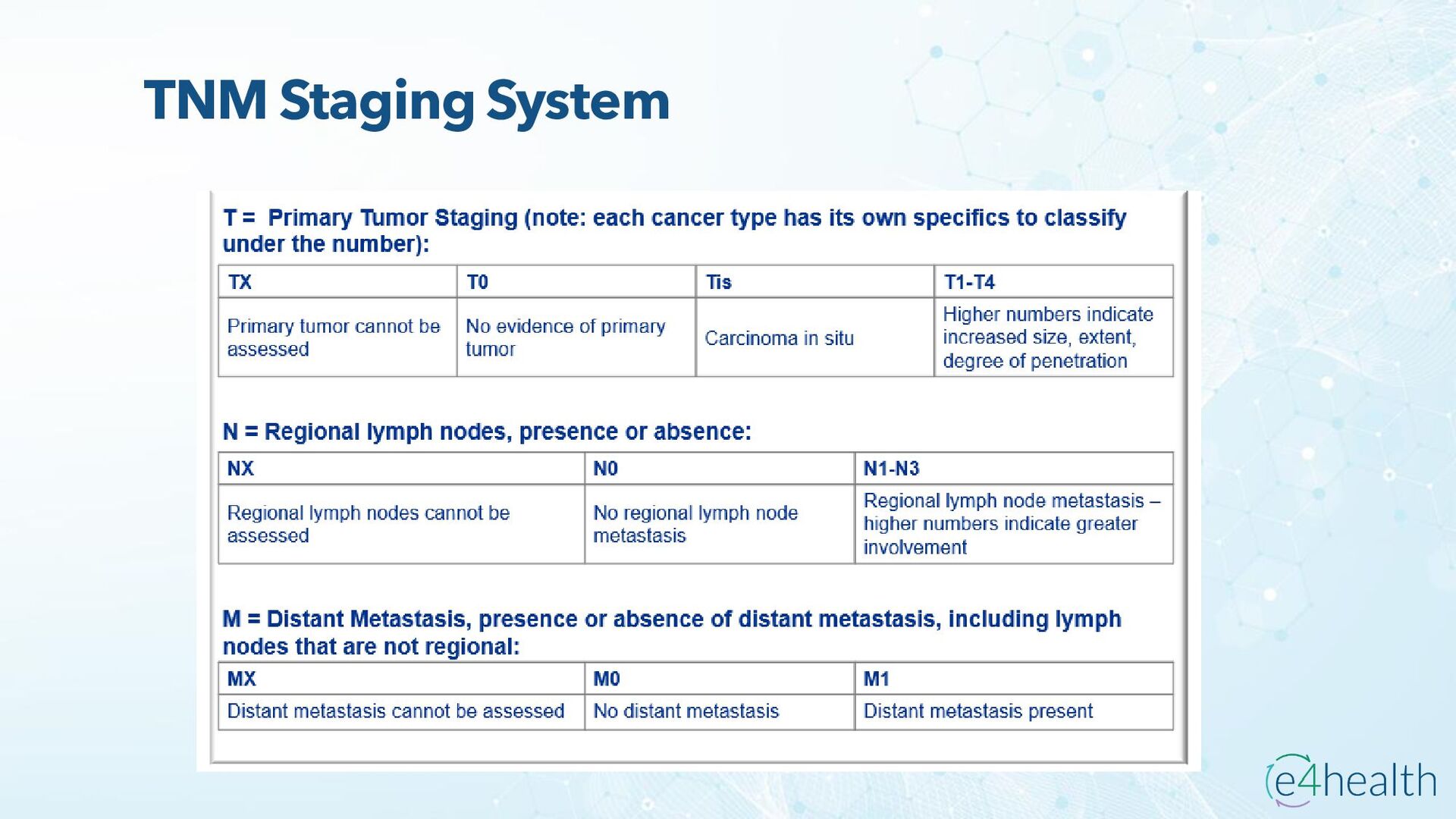
  14. Tumor, Nodes and Metastases • TNM is a worldwide classification

    system used to identify solid tumors, associated lymphatic involvement, and metastases • T Tumor: The size/extent of the primary tumor • N Nodes: The number of regional lymph nodes affected • M Metastases: The presence or absence of metastases to other body sites/organs • T, N, and M describe a different area of cancer growth • Not used for blood-borne cancers such as leukemia or lymphomas • Higher values represent a greater extent of the cancer (i.e. Stage 1 represents the cancer has not spread; Stage 4 represents the cancer has spread to distant sites)
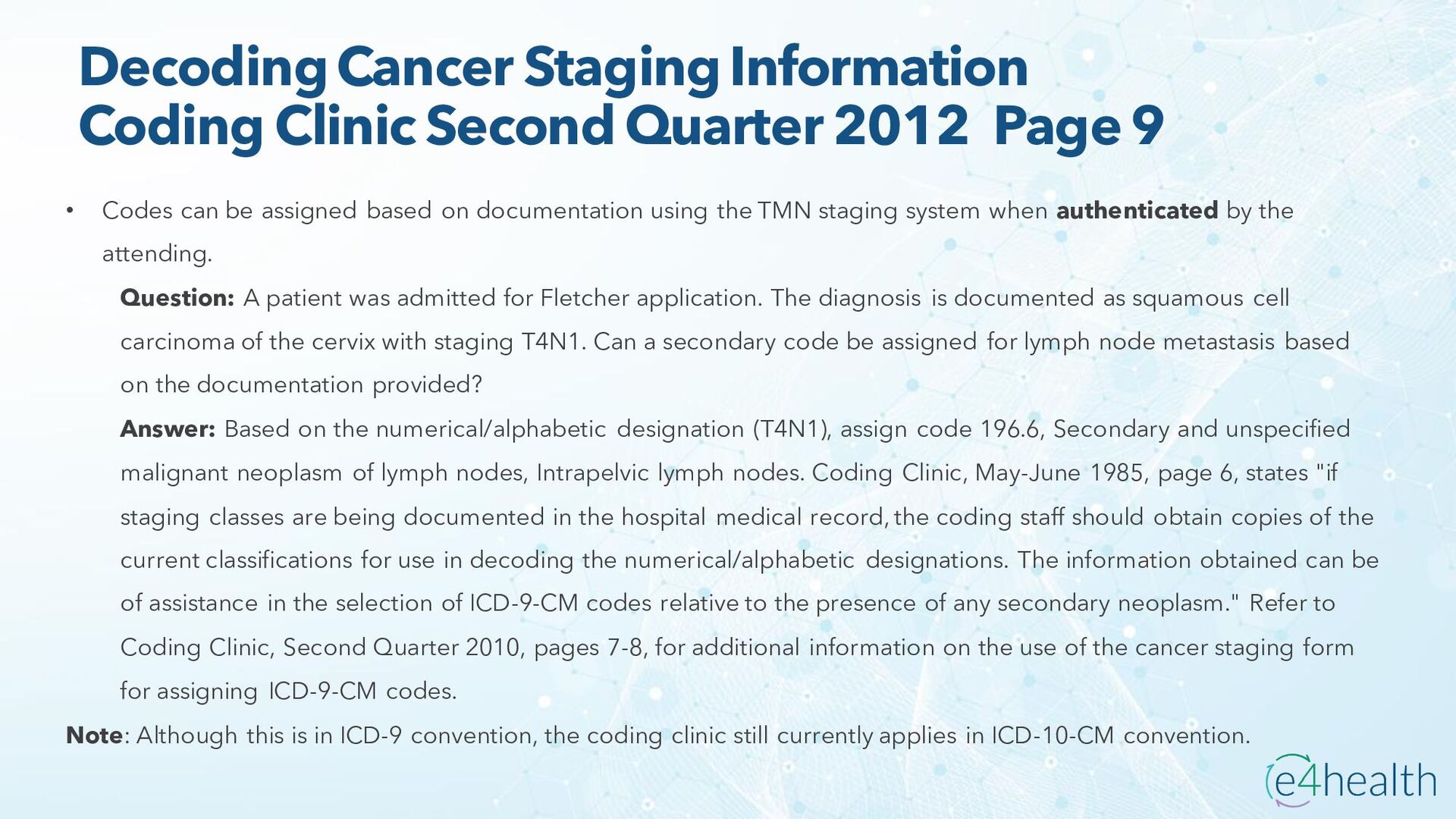
  15. Decoding Cancer Staging Information Coding Clinic Second Quarter 2012 Page

    9 • Codes can be assigned based on documentation using the TMN staging system when authenticated by the attending. Question: A patient was admitted for Fletcher application. The diagnosis is documented as squamous cell carcinoma of the cervix with staging T4N1. Can a secondary code be assigned for lymph node metastasis based on the documentation provided? Answer: Based on the numerical/alphabetic designation (T4N1), assign code 196.6, Secondary and unspecified malignant neoplasm of lymph nodes, Intrapelvic lymph nodes. Coding Clinic, May-June 1985, page 6, states "if staging classes are being documented in the hospital medical record, the coding staff should obtain copies of the current classifications for use in decoding the numerical/alphabetic designations. The information obtained can be of assistance in the selection of ICD-9-CM codes relative to the presence of any secondary neoplasm." Refer to Coding Clinic, Second Quarter 2010, pages 7-8, for additional information on the use of the cancer staging form for assigning ICD-9-CM codes. Note: Although this is in ICD-9 convention, the coding clinic still currently applies in ICD-10-CM convention.
  16. Neoplasms of the Male reproductive system • Prostate carcinoma •

    Malignant neoplasm of the prostate • Malignant neoplasm of the testes
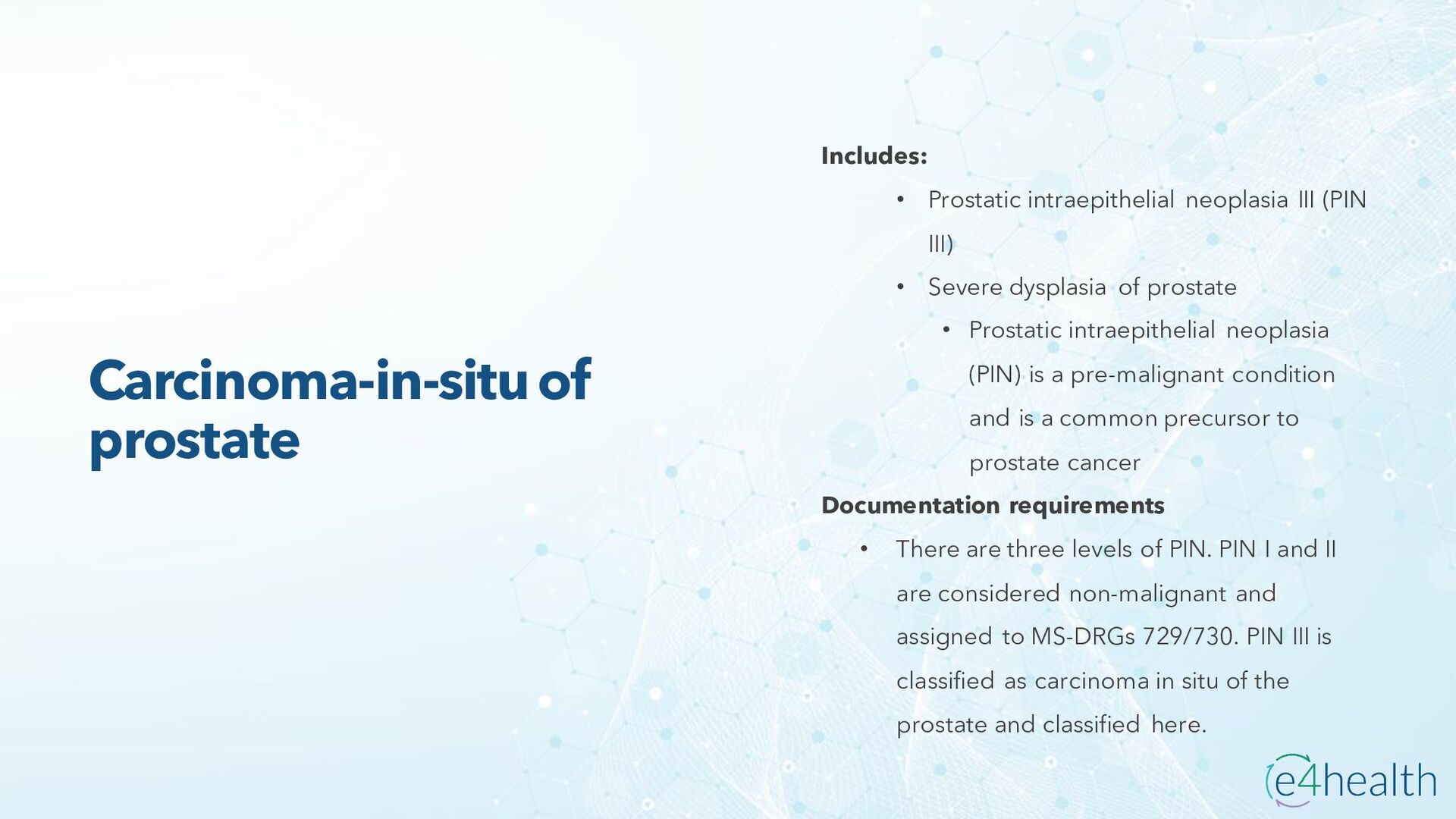
  17. Carcinoma-in-situ of prostate Includes: • Prostatic intraepithelial neoplasia III (PIN

    III) • Severe dysplasia of prostate • Prostatic intraepithelial neoplasia (PIN) is a pre-malignant condition and is a common precursor to prostate cancer Documentation requirements • There are three levels of PIN. PIN I and II are considered non-malignant and assigned to MS-DRGs 729/730. PIN III is classified as carcinoma in situ of the prostate and classified here.
  18. Malignant neoplasm of prostate Clinical concepts • Prostate cancer occurs

    when cells within the prostate grow uncontrollably, creating small tumors. Adenocarcinoma is the most common type (85%) and arises from the glandular tissue within the prostate. Initially it is confined to the prostate gland but can metastasize. It can grow slowly, requiring minimal to no treatment, or can grow fast and require extensive treatment. Documentation requirements/ query opportunity • For prostatic carcinoma staging, review the path report as well as diagnostic studies to determine presence of metastatic sites.
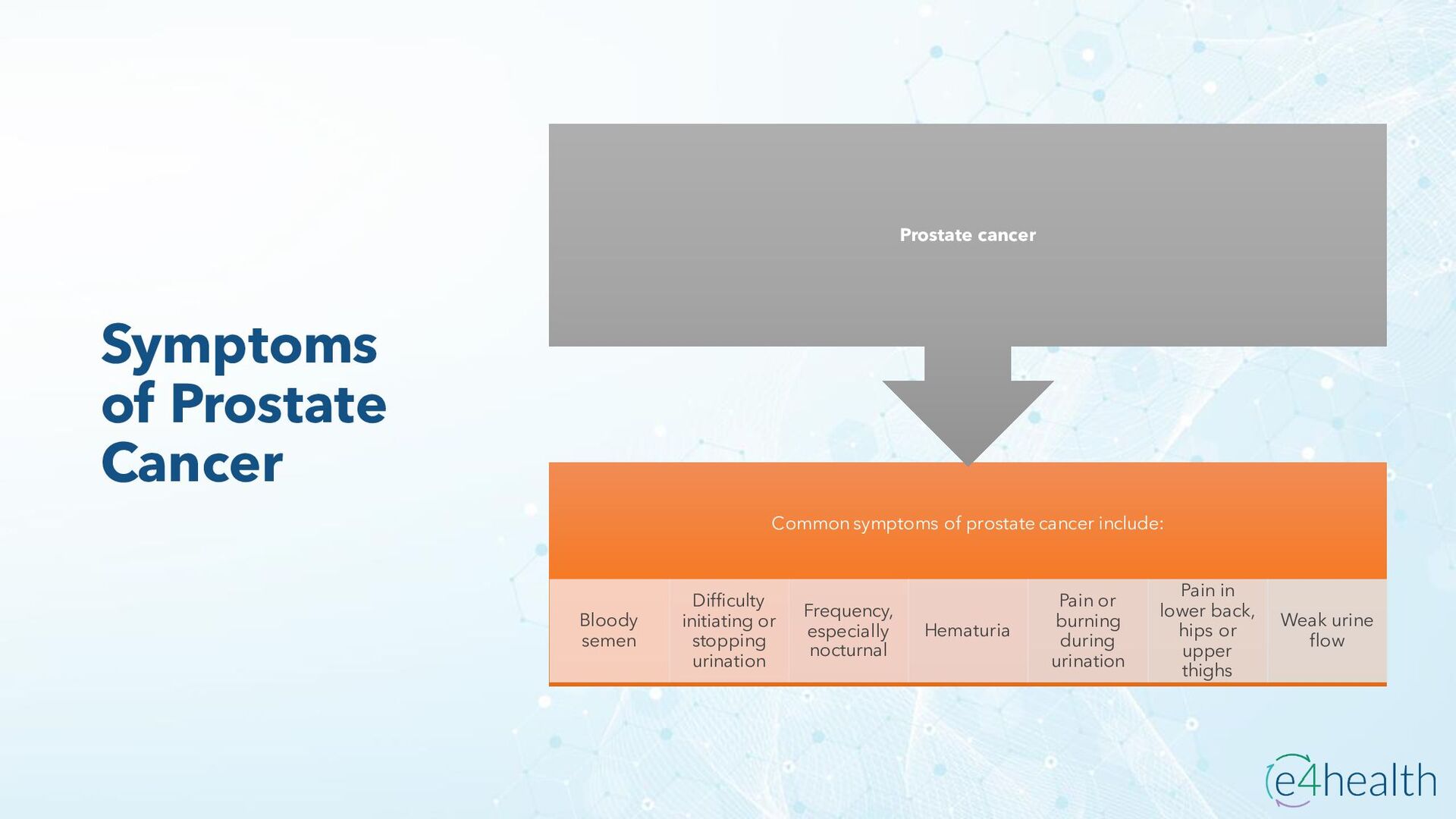
  19. Symptoms of Prostate Cancer Common symptoms of prostate cancer include:

    Bloody semen Difficulty initiating or stopping urination Frequency, especially nocturnal Hematuria Pain or burning during urination Pain in lower back, hips or upper thighs Weak urine flow Prostate cancer
  20. Prostate Cancer, Continued • Most cases of prostate cancer are

    detected during routine screening including prostate- specific antigen (PSA) or digital rectal exam (DRE). PSA is secreted exclusively by prostatic epithelial cells • PSA levels can be helpful in detecting prostate cancer, but the PSA level may be elevated due to other conditions such as BPH, infection (including prostatitis), or inflammation • Normal PSA levels are dependent upon age and race, but broad ranges by age are: • 40-49 less than 2.5 ng/ml • 0-59 less than 4.0 ng/ml • 60-69 less than 4.5 ng/ml • 70-79 less than 6.5 ng/ml
  21. Prostate Cancer Grading • Grading is used to describe what

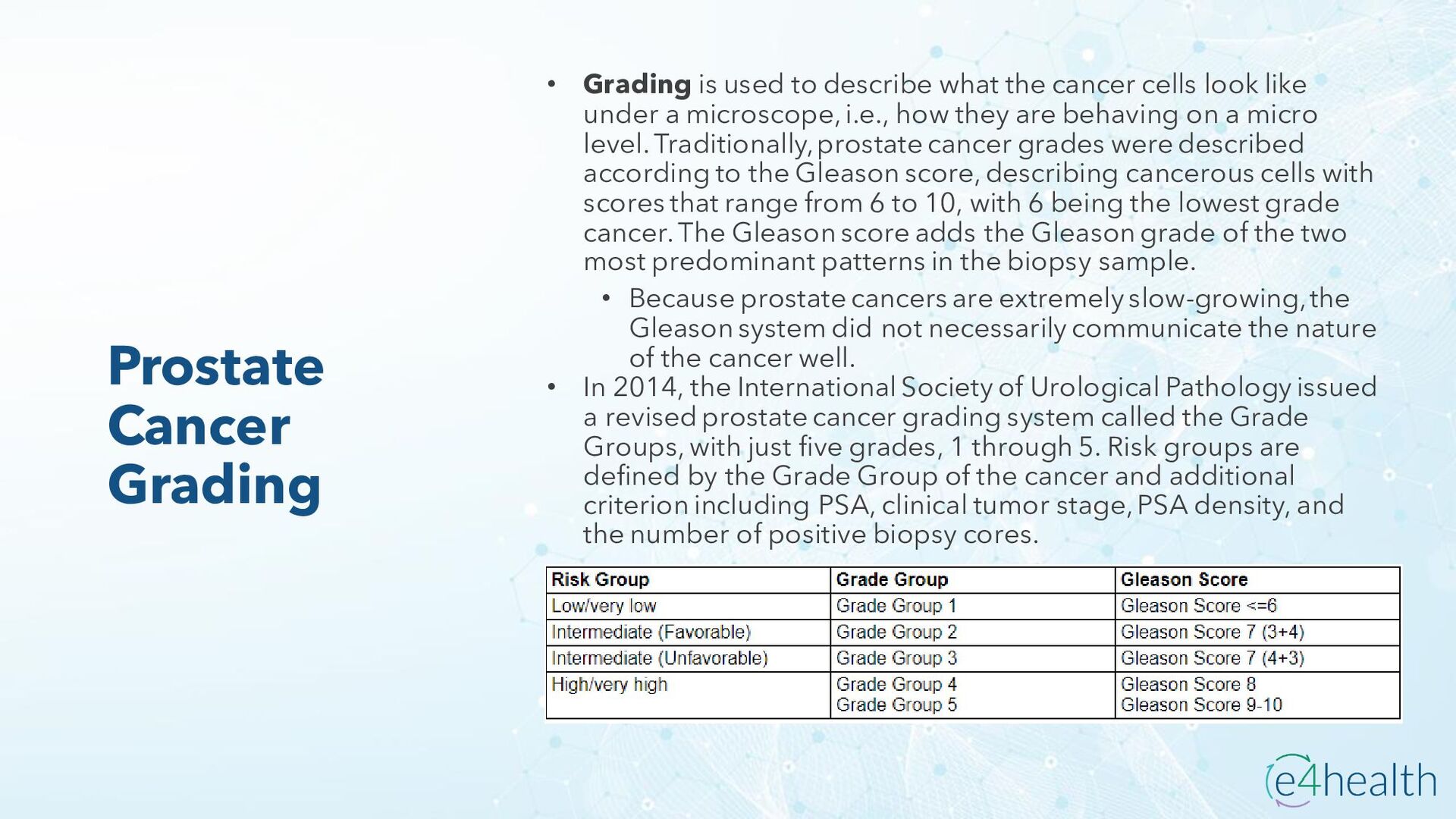
    the cancer cells look like under a microscope, i.e., how they are behaving on a micro level. Traditionally, prostate cancer grades were described according to the Gleason score, describing cancerous cells with scores that range from 6 to 10, with 6 being the lowest grade cancer. The Gleason score adds the Gleason grade of the two most predominant patterns in the biopsy sample. • Because prostate cancers are extremely slow-growing, the Gleason system did not necessarily communicate the nature of the cancer well. • In 2014, the International Society of Urological Pathology issued a revised prostate cancer grading system called the Grade Groups, with just five grades, 1 through 5. Risk groups are defined by the Grade Group of the cancer and additional criterion including PSA, clinical tumor stage, PSA density, and the number of positive biopsy cores.
  22. Prostate Cancer Staging • An additional determination of prostate cancer

    is the stage, an assessment of the cancer's location, whether it has metastasized, and the degree of interference with normal body processes. The National Cancer Institute published the following information about prostate cancer stages: • Stage I: Early cancer confined to a microscopic area; unable to be palpated by a provider by digital rectal exam (DRE) or may be felt during a DRE and found in one- half or less of one side of the prostate. The PSA level is lower than 10 and the Grade Group is 1. • Stage II: Tumor can be palpated but is still confined to prostate (in situ). Stage II is divided into stages IIA, IIB and IIC. The PSA level is all stage II cases is at least 10 but lower than 20, and the Grade Groups increase from 1 in stage IIA to 2 in stage IIB to 3 or 4 in stage IIC.
  23. Prostate Cancer Staging • Prostate cancer is the stage, continued:

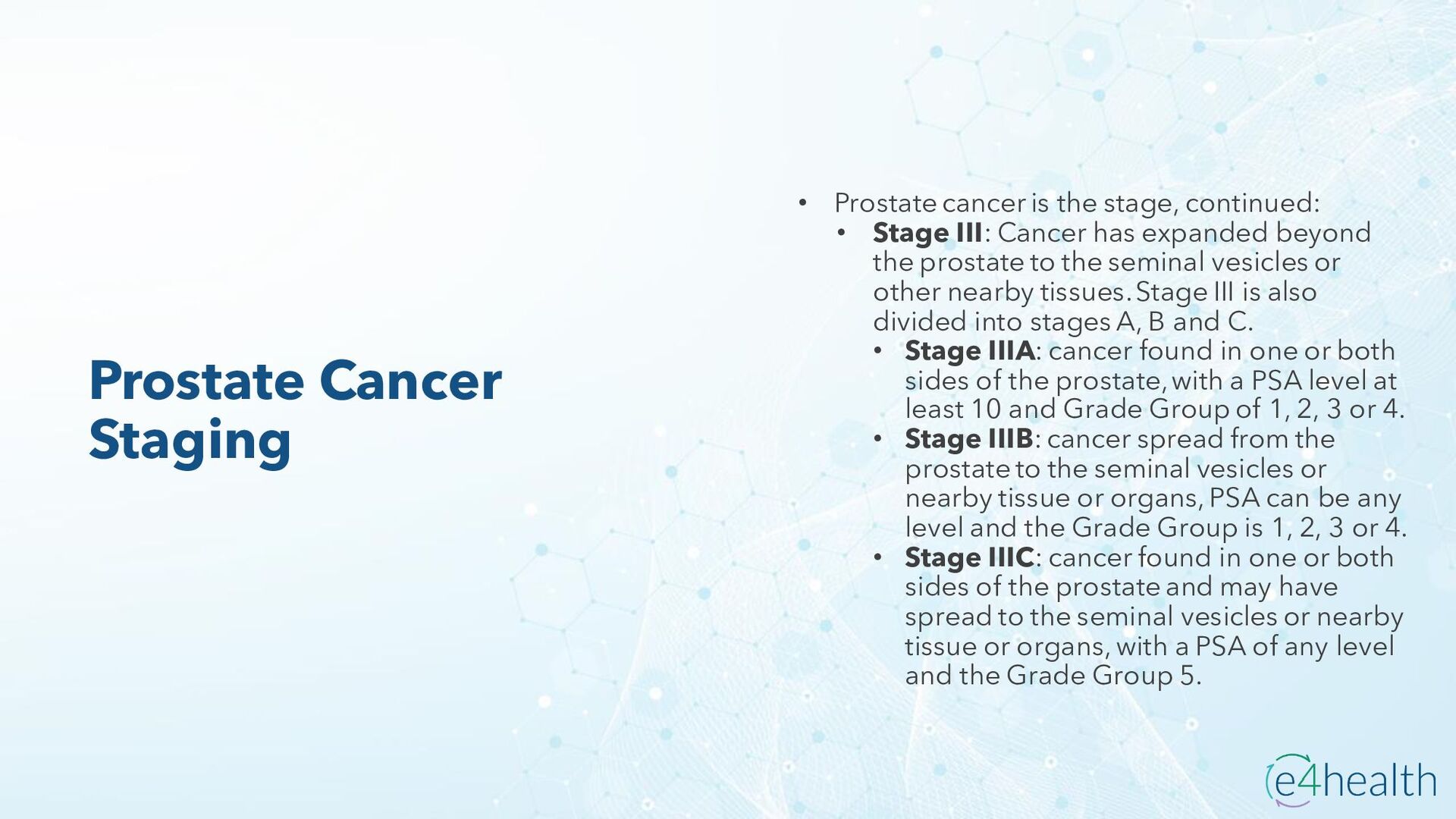
    • Stage III: Cancer has expanded beyond the prostate to the seminal vesicles or other nearby tissues. Stage III is also divided into stages A, B and C. • Stage IIIA: cancer found in one or both sides of the prostate, with a PSA level at least 10 and Grade Group of 1, 2, 3 or 4. • Stage IIIB: cancer spread from the prostate to the seminal vesicles or nearby tissue or organs, PSA can be any level and the Grade Group is 1, 2, 3 or 4. • Stage IIIC: cancer found in one or both sides of the prostate and may have spread to the seminal vesicles or nearby tissue or organs, with a PSA of any level and the Grade Group 5.
  24. Prostate Cancer Staging • Prostate cancer is the stage, continued:

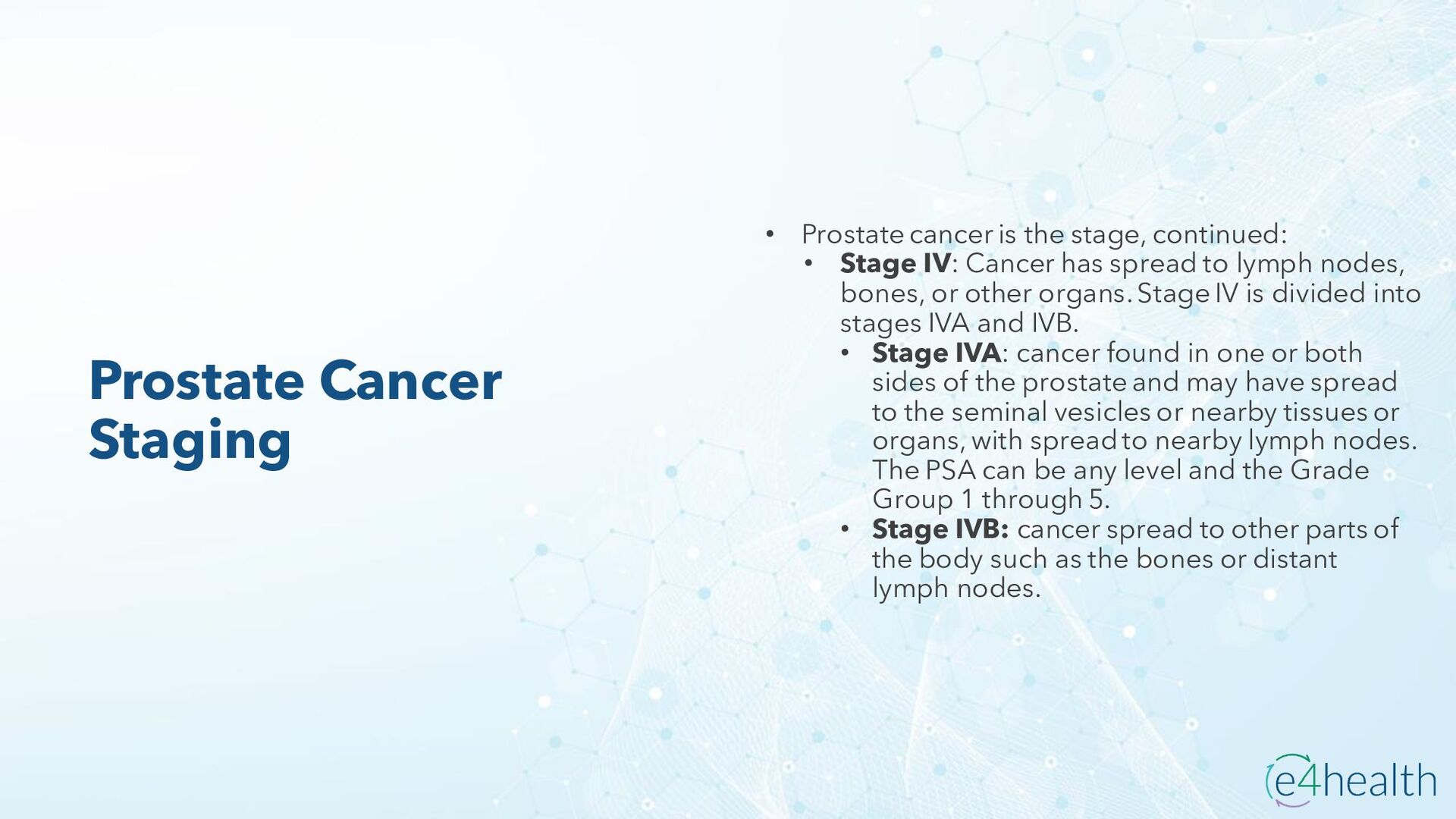
    • Stage IV: Cancer has spread to lymph nodes, bones, or other organs. Stage IV is divided into stages IVA and IVB. • Stage IVA: cancer found in one or both sides of the prostate and may have spread to the seminal vesicles or nearby tissues or organs, with spread to nearby lymph nodes. The PSA can be any level and the Grade Group 1 through 5. • Stage IVB: cancer spread to other parts of the body such as the bones or distant lymph nodes.
  25. PROSTATE CANCER • Query Opportunities • Watch imaging, and documentation

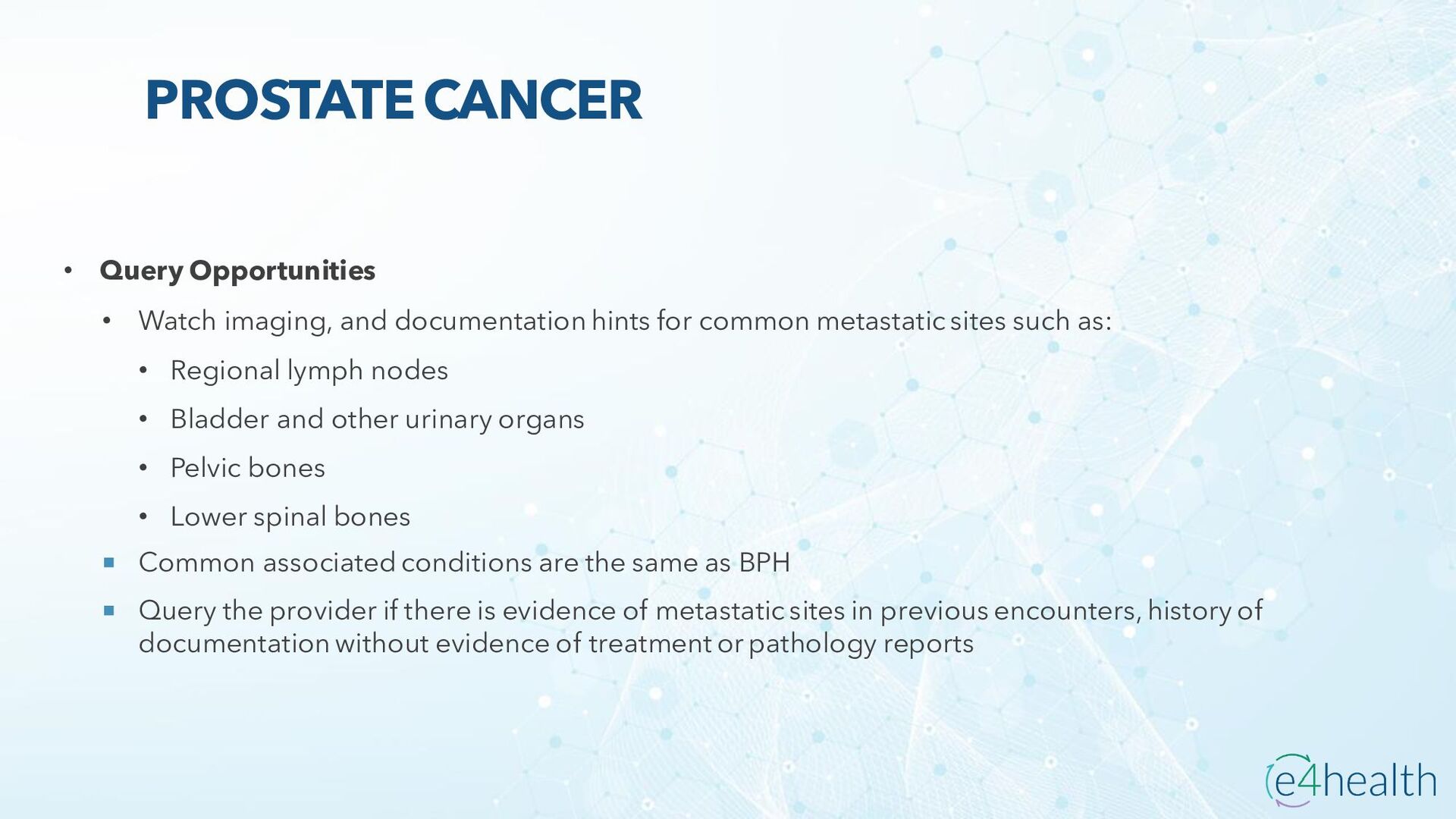
    hints for common metastatic sites such as: • Regional lymph nodes • Bladder and other urinary organs • Pelvic bones • Lower spinal bones  Common associated conditions are the same as BPH  Query the provider if there is evidence of metastatic sites in previous encounters, history of documentation without evidence of treatment or pathology reports
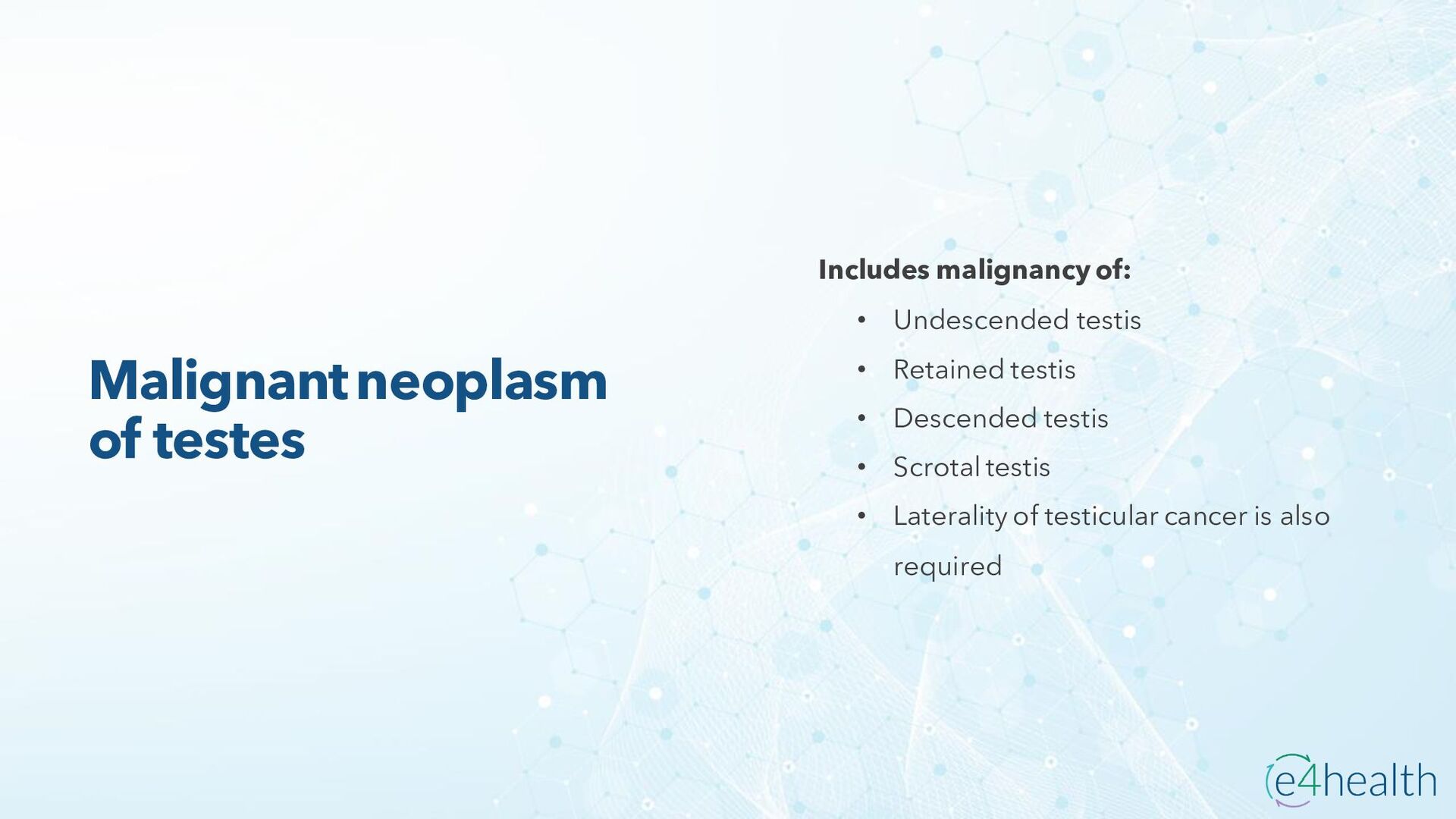
  26. Malignant neoplasm of testes Includes malignancy of: • Undescended testis

    • Retained testis • Descended testis • Scrotal testis • Laterality of testicular cancer is also required
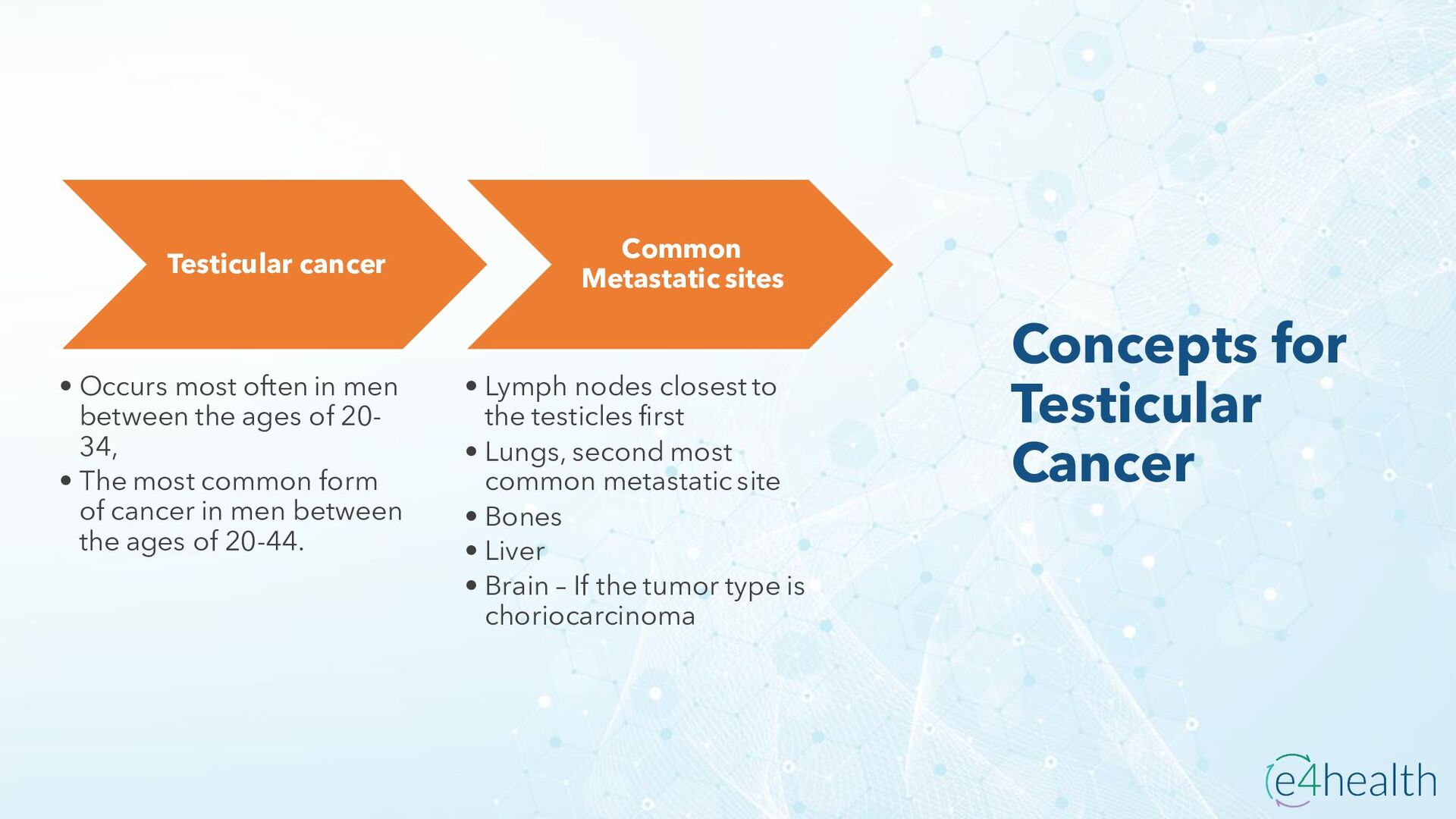
  27. Concepts for Testicular Cancer Testicular cancer • Occurs most often

    in men between the ages of 20- 34, • The most common form of cancer in men between the ages of 20-44. Common Metastatic sites • Lymph nodes closest to the testicles first • Lungs, second most common metastatic site • Bones • Liver • Brain – If the tumor type is choriocarcinoma
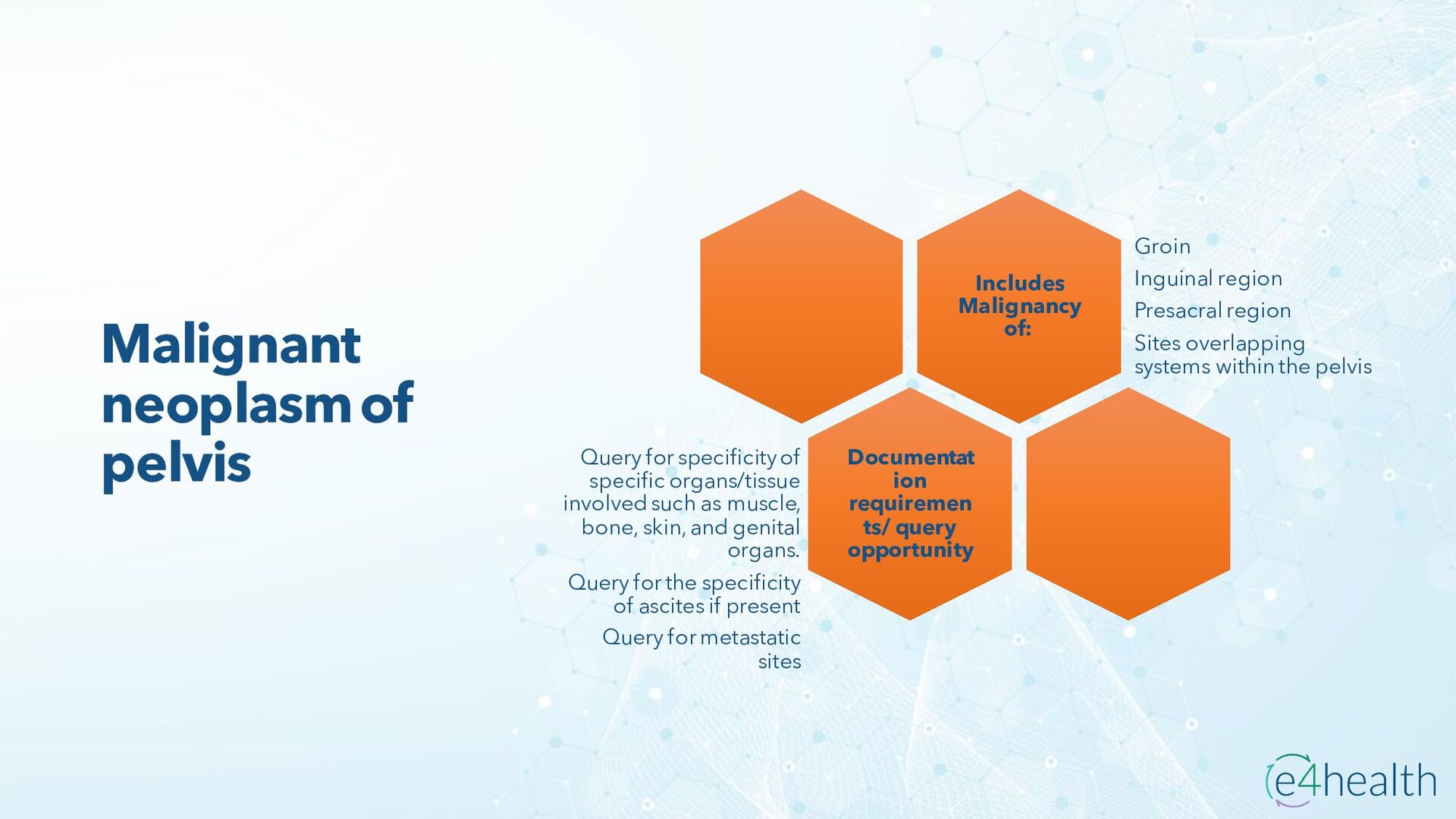
  28. Malignant neoplasm of pelvis Includes Malignancy of: Groin Inguinal region

    Presacral region Sites overlapping systems within the pelvis Documentat ion requiremen ts/ query opportunity Query for specificity of specific organs/tissue involved such as muscle, bone, skin, and genital organs. Query for the specificity of ascites if present Query for metastatic sites
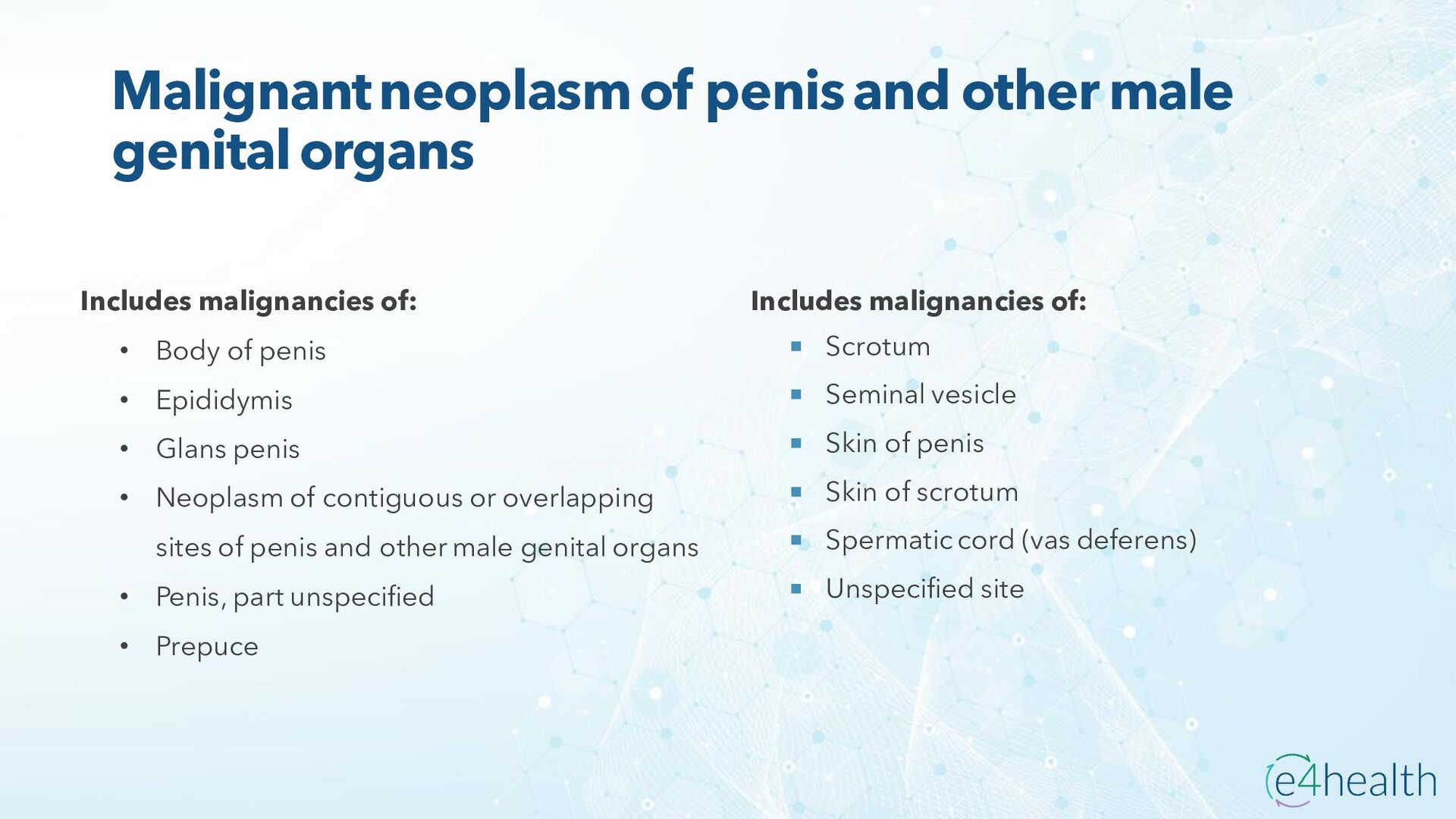
  29. Malignant neoplasm of penis and other male genital organs Includes

    malignancies of: • Body of penis • Epididymis • Glans penis • Neoplasm of contiguous or overlapping sites of penis and other male genital organs • Penis, part unspecified • Prepuce Includes malignancies of:  Scrotum  Seminal vesicle  Skin of penis  Skin of scrotum  Spermatic cord (vas deferens)  Unspecified site
  30. Concept for Hematuria in Cancer • Hematuria is not considered

    integral to male reproductive system malignancies and may be captured as a secondary diagnosis • Review and/or query for clear documentation of cause of hematuria when patient has multiple malignant sites.
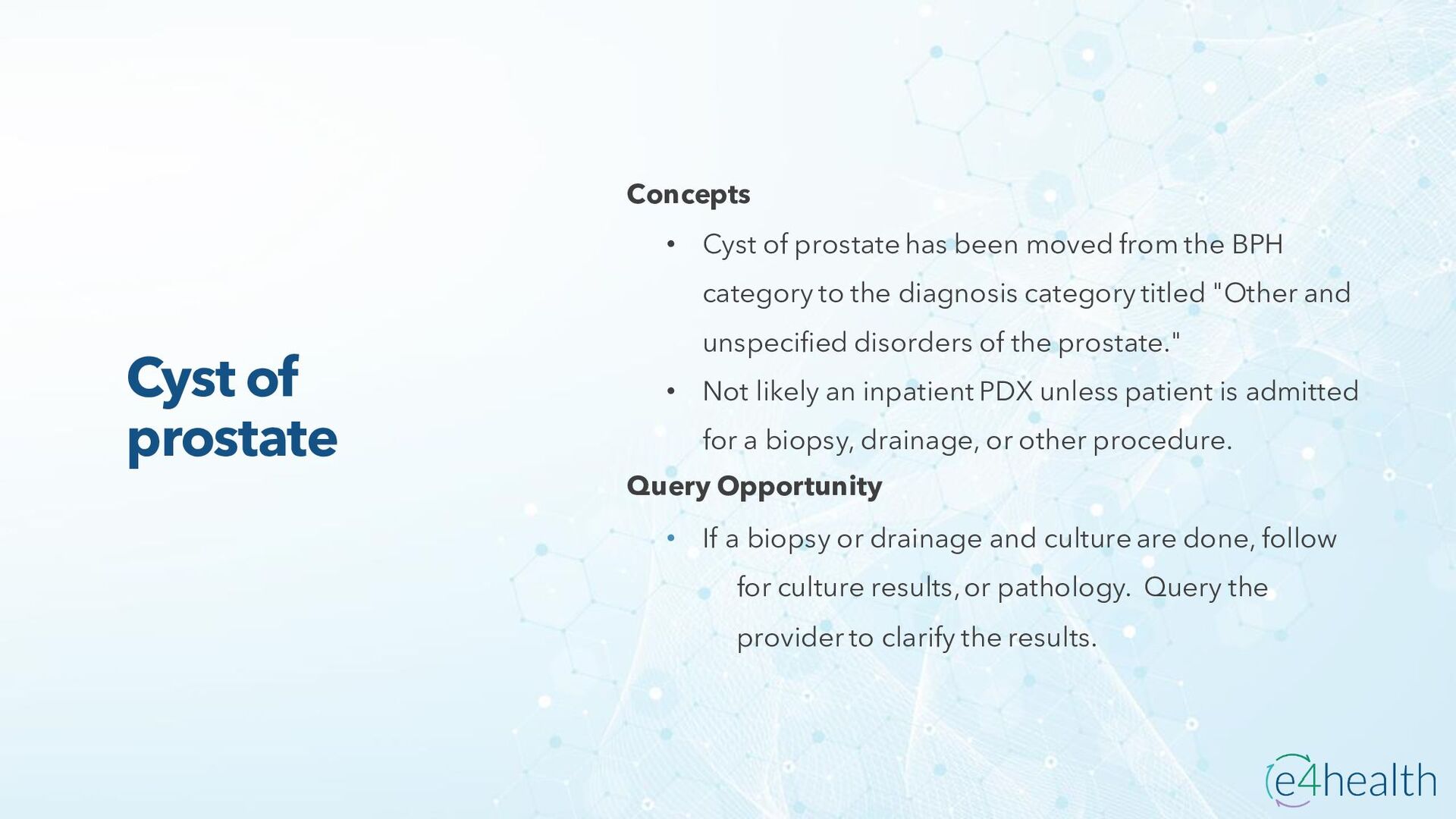
  31. Cyst of prostate Concepts • Cyst of prostate has been

    moved from the BPH category to the diagnosis category titled "Other and unspecified disorders of the prostate." • Not likely an inpatient PDX unless patient is admitted for a biopsy, drainage, or other procedure. Query Opportunity • If a biopsy or drainage and culture are done, follow for culture results, or pathology. Query the provider to clarify the results.
  32. Enlarged prostate Includes: • Benign prostatic hypertrophy (BPH) • Enlargement

    of prostate • Hyperplasia of prostate • Polyp of prostate • The symptoms of BPH may involve problems with emptying the bladder or bladder storage • Code assignment is dependent on presence of urinary retention or obstruction and other associated lower urinary tract symptoms (LUTS). Per instructional notes use additional code for associated LUTS
  33. Enlarged prostate Documentation requirements/ query opportunity • Review for these

    lower urinary tract symptoms (LUTS) and add as secondary diagnoses when documented or query if indicated but not documented: • Frequency, urgency • Incontinence • Nocturia • Obstruction • Retention • Straining on urination • Weak urinary stream
  34. Disorders of prostate, other and unspecified Includes • Calculus •

    Congestion and hemorrhage • Dysplasia (PIN I and PIN II) • Prostatodyniasyndrome • Prostatosis syndrome
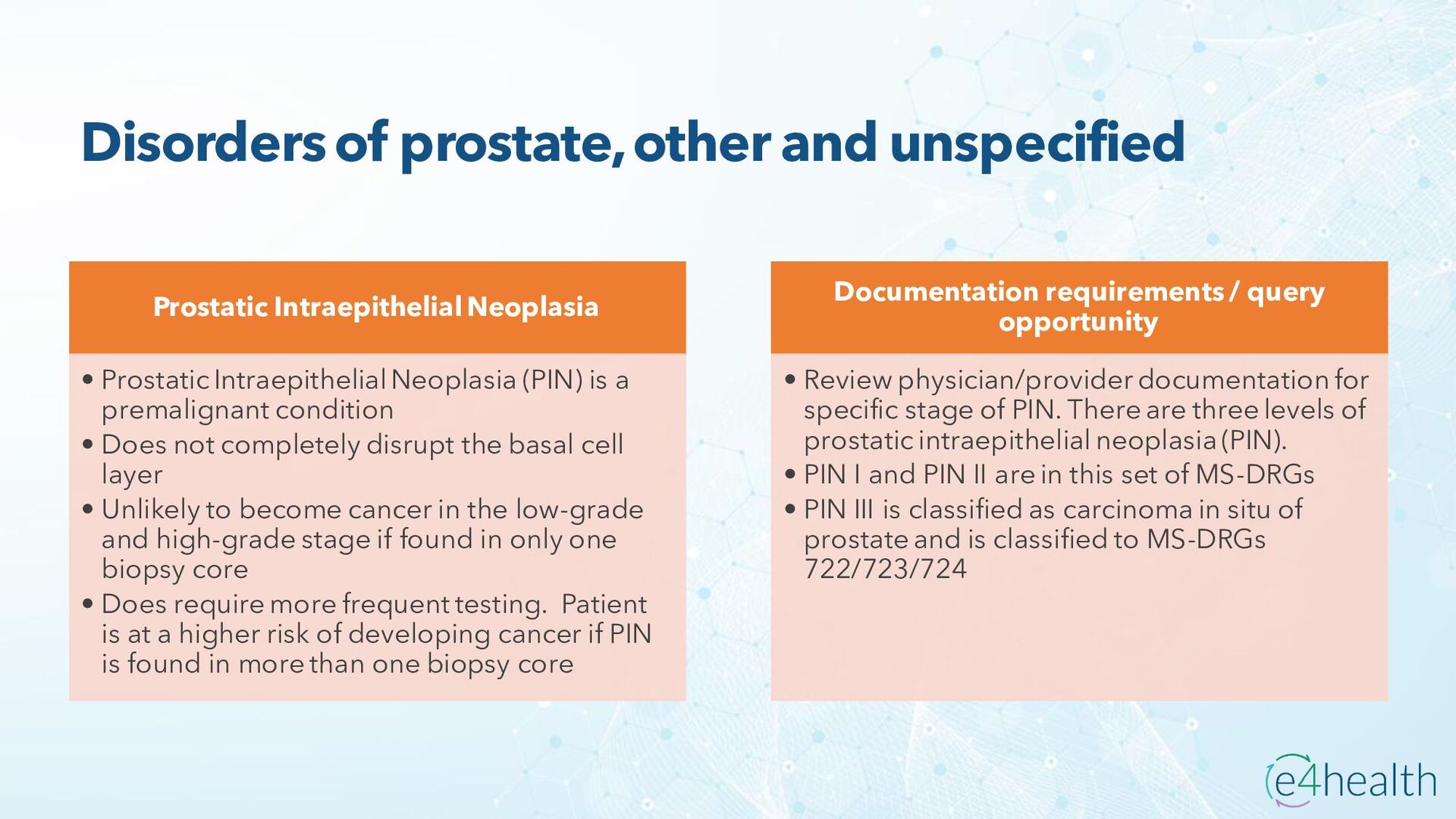
  35. Disorders of prostate, other and unspecified Prostatic Intraepithelial Neoplasia •

    Prostatic Intraepithelial Neoplasia (PIN) is a premalignant condition • Does not completely disrupt the basal cell layer • Unlikely to become cancer in the low-grade and high-grade stage if found in only one biopsy core • Does require more frequent testing. Patient is at a higher risk of developing cancer if PIN is found in more than one biopsy core Documentation requirements / query opportunity • Review physician/provider documentation for specific stage of PIN. There are three levels of prostatic intraepithelial neoplasia (PIN). • PIN I and PIN II are in this set of MS-DRGs • PIN III is classified as carcinoma in situ of prostate and is classified to MS-DRGs 722/723/724
  36. Candidiasis of other urogenital sites Includes:  Candidial balanitis 

    Candidial cystitis and urethritis  Candidial pyelonephritis  Candidial UTI Query opportunity: ▪ Review for signs and symptoms of sepsis. ▪ Candidal infections have a high incidence of becoming systemic and leading to sepsis.
  37. Inflammatory diseases of the prostate Includes: • Abscess of prostate

    • Acute prostatitis • Chronic prostatitis • Granulomatous prostatitis • Prostatitis
  38. OTHER INFLAMMATORYDISORDERS OF MALE GENITALORGANS • Includes: • Abscess, boil,

    carbuncle and cellulitis of male genital organs • Also includes: • Fournier gangrene
  39. OTHER INFLAMMATORYDISORDERS OF MALE GENITALORGANS – QUERY OPPORTUNITIES • Documentation

    and query opportunities ▪ Incision and drainage requires documentation of the depth of the incision. Skin, skin and subcutaneous tissue, fascia, muscle, tendon or bone ▪ Can not use the term “down to”. If the provider documents “down to”, query for tissue included in the incision. ▪ If a culture is done, follow for results, and query the provider if a relationship between the infectingorganism and the abscess, boil, carbuncle or cellulitis is not documented
  40. Congenital anomalies of the male genitourinary system • Aplasia •

    Atresia • Chromosome abnormalities • Cryptorchism • Hypoplasia • Hypospadias • Klinefelter syndrome • Undescended and ectopic testicle Includes • Documentation must clarify • If a repair was performed • Was the repair complete or incomplete? • Cryptorchism must be documented as unilateral or bilateral as appropriate Documentation and query opportunities
  41. Benign neoplasm of male genital organs Includes • All organs

    of male genitourinary tract and skin of scrotum Documentation and query opportunities • Review pathology reports for specificity of type of neoplasm. • Query the physician/provider for confirmation of diagnosis if the results of the pathology report are not included in the body of the medical record.
  42. Other Specified Disorders of male genital organs  Includes the

    following disorders of scrotum, seminal vesicle, spermatic cord, testis, tunica vaginalis and vas deferens: • Thrombosis • Ulcer • Urethroscrotal fistula • Hematospermia • Ejaculatory dysfunction • Atrophy  Chylocele  Edema  Hematocele  Hemorrhage  Hypertrophy  Stricture
  43. Injury to pelvic organs (Code varies on type and site

    of injury) • Contusion or Laceration • Open bite or wound • Crushing • Puncture wound Includes traumatic injury to the penis, prostate, scrotum, testes, and other external genital, urinary and pelvic organs • Review for signs and symptoms of rhabdomyolysis with crush injury • Review imaging for additional fractures to pelvis, or injuries to other body sites that would move the DRG to multiple significant trauma • Review for clinical indicators of hemorrhage, acute blood loss anemia Query opportunity
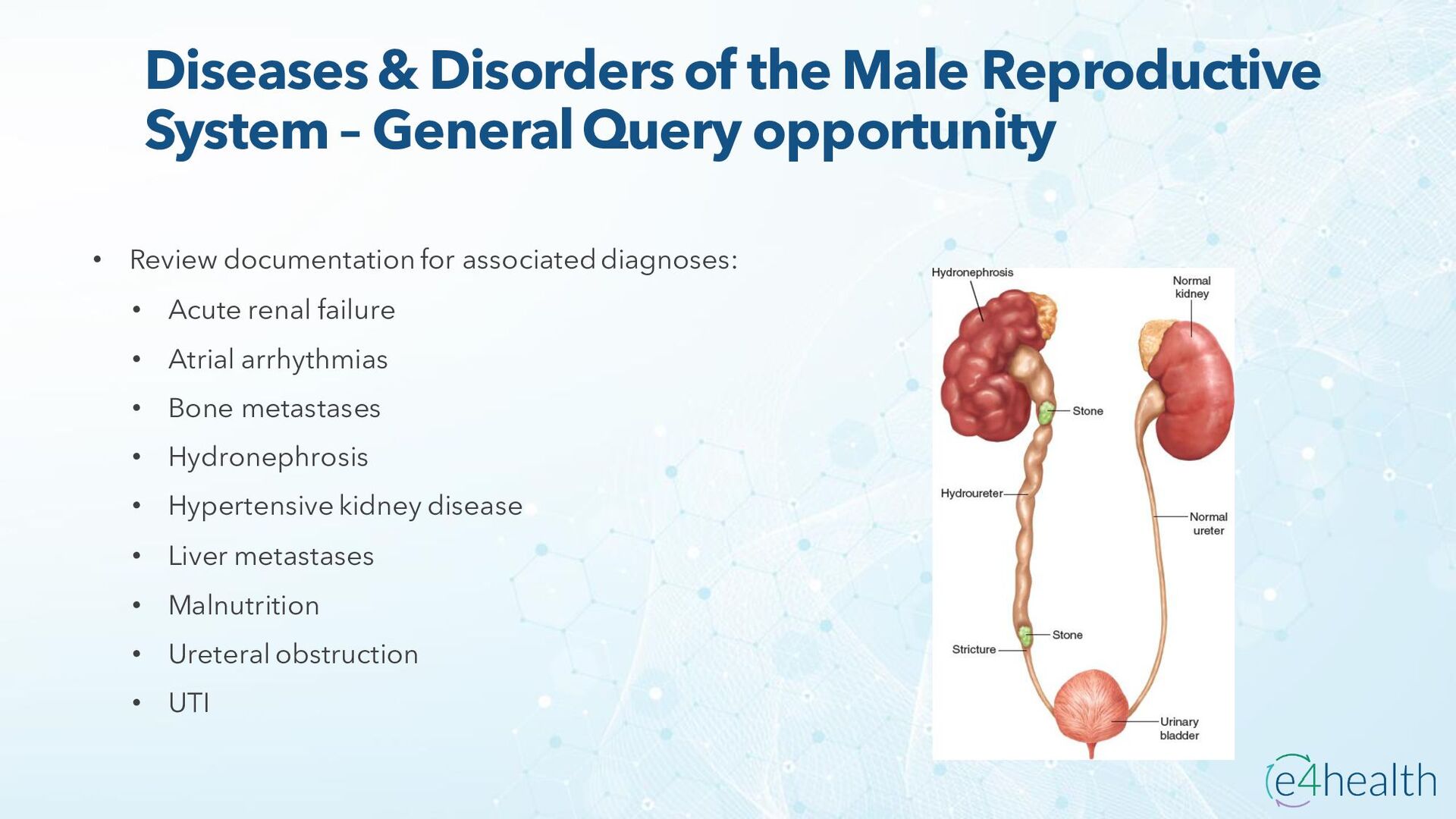
  44. Diseases & Disorders of the Male Reproductive System – General

    Query opportunity • Review documentation for associated diagnoses: • Acute renal failure • Atrial arrhythmias • Bone metastases • Hydronephrosis • Hypertensive kidney disease • Liver metastases • Malnutrition • Ureteral obstruction • UTI
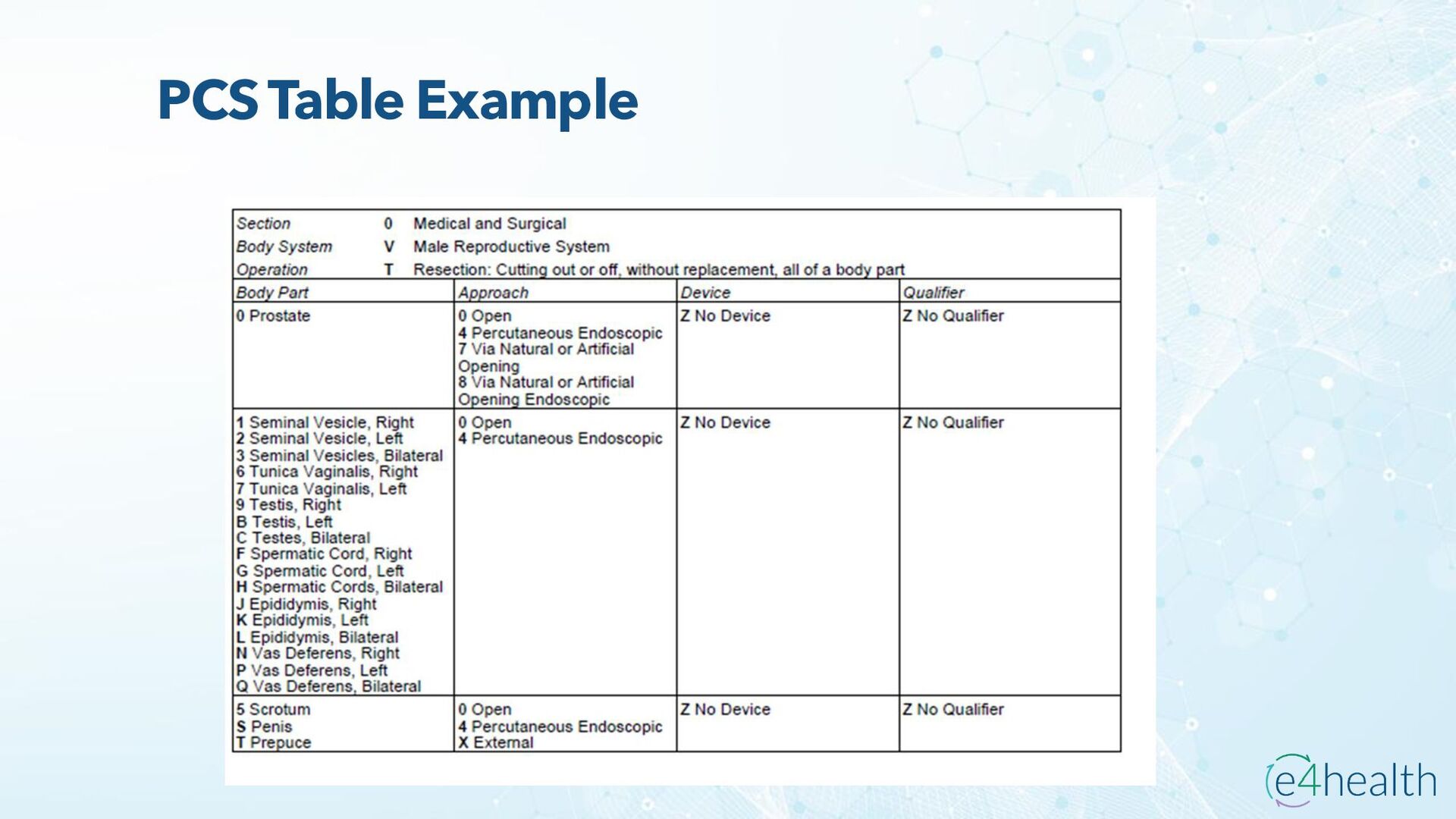
  45. Common Procedures • Prostatectomy generally = Resection • TURP -

    in most cases = Excision • Laser Prostatectomy = Destruction • Laser Interstitial Thermal Therapy (LITT) • Qualifier value 3 in Destruction • Testes Replacement = Replacement, with removal of native testes included
  46. Approach examples • 0—Open • Perineal, suprapubic, retropubic • All

    involve cutting through body layers • 8—Prostatectomy via cystoscope • X—External male genitalia
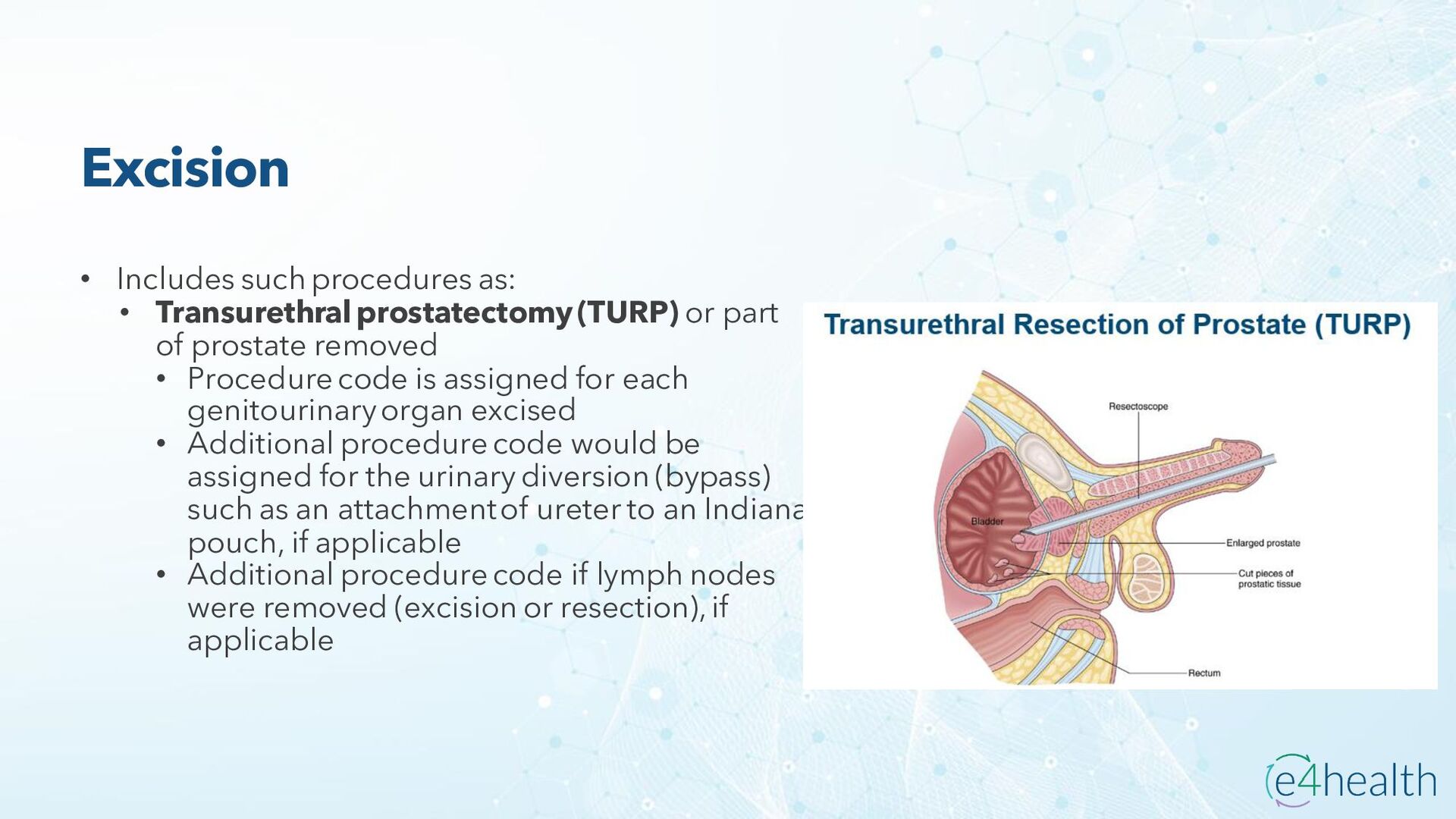
  47. Excision • Includes such procedures as: • Transurethral prostatectomy (TURP)

    or part of prostate removed • Procedure code is assigned for each genitourinary organ excised • Additional procedure code would be assigned for the urinary diversion (bypass) such as an attachment of ureter to an Indiana pouch, if applicable • Additional procedurecode if lymph nodes were removed (excision or resection), if applicable
  48. Excision • Per ICD-10-PCS Official Coding Guidelines, Section B3.4b (Biopsy

    followed by More Definitive Treatment) • If a diagnostic excision (biopsy) is followed by a therapeutic excision at the same procedure site, or by resection of the body part during the same operative episode, code only the therapeutic excision • Per ICD-10-PCS Official Coding Guidelines, Section B4.1b (Body Part, General Guidelines) • If the prefix "peri" is combined with a body part to identify the site of the procedure, and the site of the procedure is not further specified, then the procedure is coded to the body part named. This guideline applies only when a more specific body part value is not available. • "Perirenal" procedure site = coded to the kidney body part when site is not further specified
  49. Resection • Includes such procedures as: • Total or Radical

    Prostatectomy • Per ICD-10-PCS Official Coding Guidelines, Section B3.8 (Excision vs. Resection) • PCS contains specific body parts for anatomical subdivisions of a body part • Resection of the specific body part is coded whenever all of the body part is cut out or off, rather than coding Excision of a less specific body part • Per ICD-10-PCS Official Coding Guidelines, Section B3.18 (Excision/Resection followed by Replacement) • If an excision or resection of a body part is followed by a replacement procedure, code both procedures to identify each distinct objective, except when the excision or resection is considered integral and preparatory for the replacement procedure
  50. Excision & Resection – Query opportunity • Excision: Cutting out

    or off (with a sharp instrument), without replacement, a portion of a body part • Resection: Cutting out or off, without replacement, all of a body part • Query opportunity • Review pathology and documentation of all metastatic sites • Review documentation for the clarity of the intent of excision or resection • If intent is the removal of the whole genitourinary organ, it is Resection • If intent is the removal of only part of the genitourinary organ, it is Excision • If intent is the destruction of all or portion of the genitourinary organ with direct use of energy, force, or a destructive agent, it is Destruction
  51. Excision & Resection – query opportunity • Query opportunity •

    Review for documentation of other associated diagnoses: • Acute blood loss anemia • Acute renal failure • Electrolyte imbalances • Hypertension • Adhesions • Sepsis
  52. Radical Prostatectomy Coding Clinic Fourth Quarter 2014 Page 33 •

    Question: A patient presents for robotic-assisted laparoscopic radical prostatectomy. During the procedure partial removal of the bilateral vas deferens was accomplished and the bilateral seminal vesicles were removed. Does a radical prostatectomy include resection of the vas deferens and seminal vesicles, or should these procedures be coded separately? What are the appropriate code assignments for robotic-assisted laparoscopic radical prostatectomy? • Answer: Radical procedures can have different meanings depending on the procedure, and the term "radical" is not always reliable information for coding the procedure. The coder should instead be guided by the information in the operative report. In ICD-10-PCS, code separately the organs or structures that were actually removed and for which there is a distinctly defined body part. The ICD-10-PCS guideline B3.2a states if during the same operative session, the same root operation is repeated at different body sites that are defined by distinct values of the body part character, multiple procedures should be coded.
  53. Radical Prostatectomy Coding Clinic Fourth Quarter 2014 Page 33, continued

    • The robotic assistance may be coded if desired. For this case, based on the documentation in the submitted operative report, assign ICD-10-PCS codes as follows: • 0VT04ZZ Resection of prostate, percutaneous endoscopic approach, for the resection of the prostate • 0VT34ZZ Resection of bilateral seminal vesicles, percutaneous endoscopic approach, for the resection of the bilateral seminal vesicles • 0VBQ4ZZ Excision of bilateral vas deferens, percutaneous endoscopic approach, for the partial removal of the bilateral vas deferens • 8E0W4CZ Robotic assisted procedure of trunk region, percutaneous endoscopic approach • This advice is specific to this case and should not be interpreted that all radical prostatectomies have these component procedures done.
  54. ROBOTIC-ASSISTEDLAPAROSCOPICPROSTATECTOMY CODING CLINICFOURTHQUARTER 2020 PAGE 99-100 • Question: A patient

    with prostate cancer presents for a robotic-assisted laparoscopic prostatectomy. Pneumoperitoneum was established and the abdomen was insufflated. The robotic trocars were then placed in the standard configuration, and the robot was docked. The dissection was carried bluntly around to the anterior prostate and bladder neck. The bladder neck was divided sharply. The apex of the prostate was freed sharply and the urethra divided. The robot was then undocked. All laparoscopic ports were removed under direct vision. The midline incision was lengthened to allow extraction of the specimen. What is the appropriate ICD-10- PCS approach value when the prostate was detached from surrounding structures using a percutaneous endoscopic approach, however an incision was made to remove the specimen from the patient's body? • Answer: Assign the approach value "4, percutaneous endoscopic" for the robotic-assisted laparoscopic prostatectomy. In this case, surgery was performed laparoscopically; at the end of the procedure, the midline incision was extended to assist in removing the specimen (prostate). • According to the new ICD-10-PCS guideline B5.2b, "Procedures performed using the percutaneous endoscopic approach, with incision or extension of an incision to assist in the removal of all or a portion of a body part or to anastomose a tubular body part to complete the procedure, are coded to the approach value Percutaneous Endoscopic." • An important factor in assigning the correct approach value in ICD-10-PCS is to determine what structures were detached and how they were detached based on the medical record documentation. The focus should be on the surgical technique or approach used for the detachment of those structures. Code assignment should not be based on the location or approach of where the structures were physically removed from the patient's body.
  55. RADICALPROSTATECTOMYAND LYMPH NODE DISSECTIONWITH BIOPSYOF NEUROVASCULAR BUNDLE CODINGCLINIC THIRD QUARTER

    2019 PAGE 18 • Question: A patient with prostate cancer presented for a robotic radical prostatectomy and pelvic lymph node dissection. After removal of the prostate, it was noted that it appeared a bit raw near the right base/mid bundle and an additional tiny sliver of the prostatic neurovascular bundle was removed for biopsy and sent to pathology. There does not appear to be a body part value to capture the neurovascular bundle. What is the code for a biopsy of the prostatic neurovascular bundle? • Answer: The removal of a portion of the prostatic neurovascular bundle for biopsy during radical prostatectomy is integral to the total procedure; therefore, a separate ICD-10-PCS code would not be assigned. The prostatic neurovascular bundle consists of prostate tissue, so anatomically it is not a separate structure. In this case, the patient had a known malignancy; the radical prostatectomy was planned; and a sample of the prostatic neurovascular bundle was sent to pathology at the time the prostate was removed. This was not a diagnostic excision followed by further excision or resection. Therefore, the guideline (B3.4b) pertaining to biopsy followed by more definitive treatment would not apply.
  56. Prostate Cancer Treatment • Prostate Cancer Treatment • Treatment depends

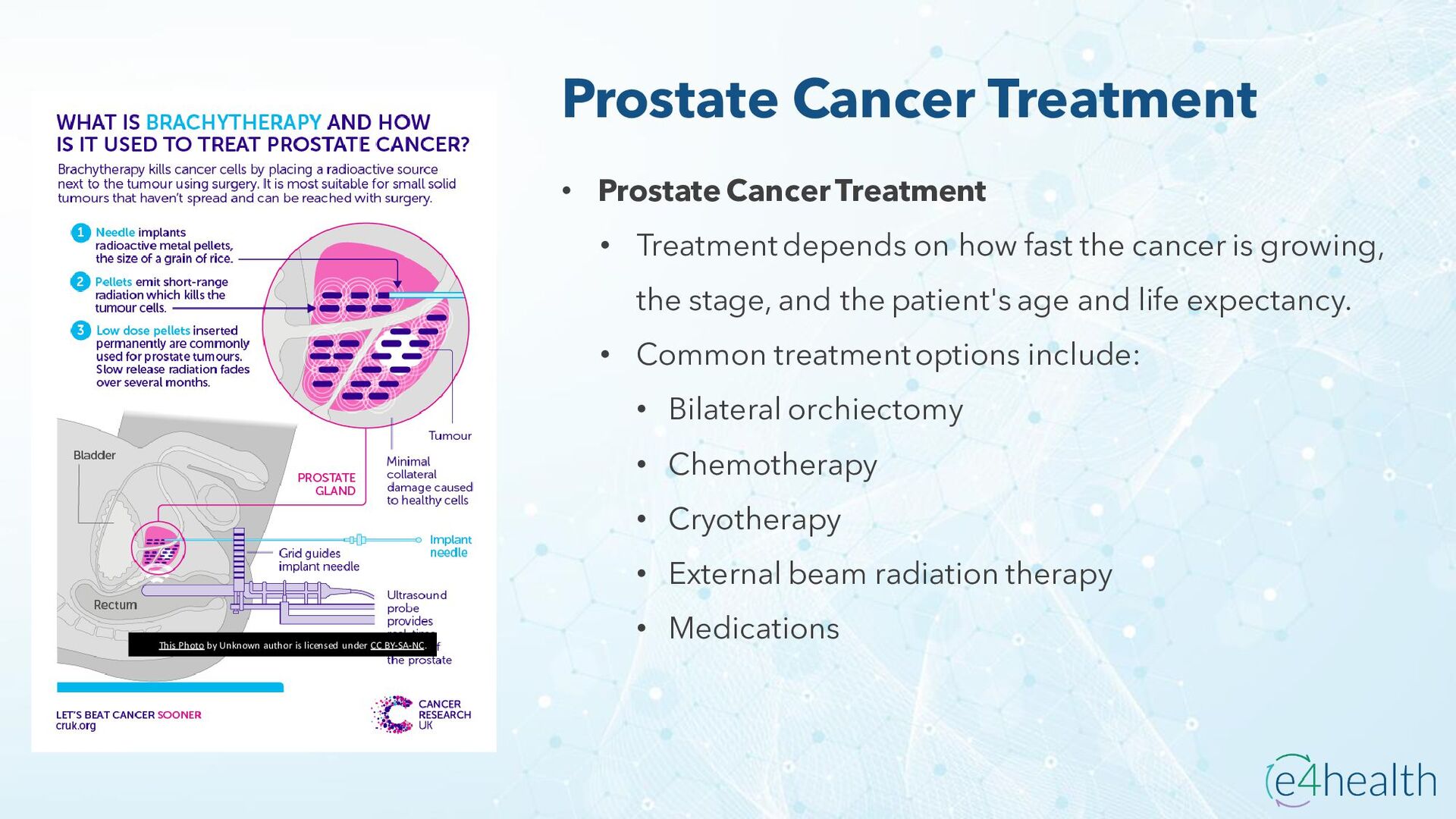
    on how fast the cancer is growing, the stage, and the patient's age and life expectancy. • Common treatment options include: • Bilateral orchiectomy • Chemotherapy • Cryotherapy • External beam radiation therapy • Medications This Photo by Unknown author is licensed under CC BY-SA-NC.
  57. PROSTATE CANCER TREATMENT Prostate Cancer Treatment • Common treatment options

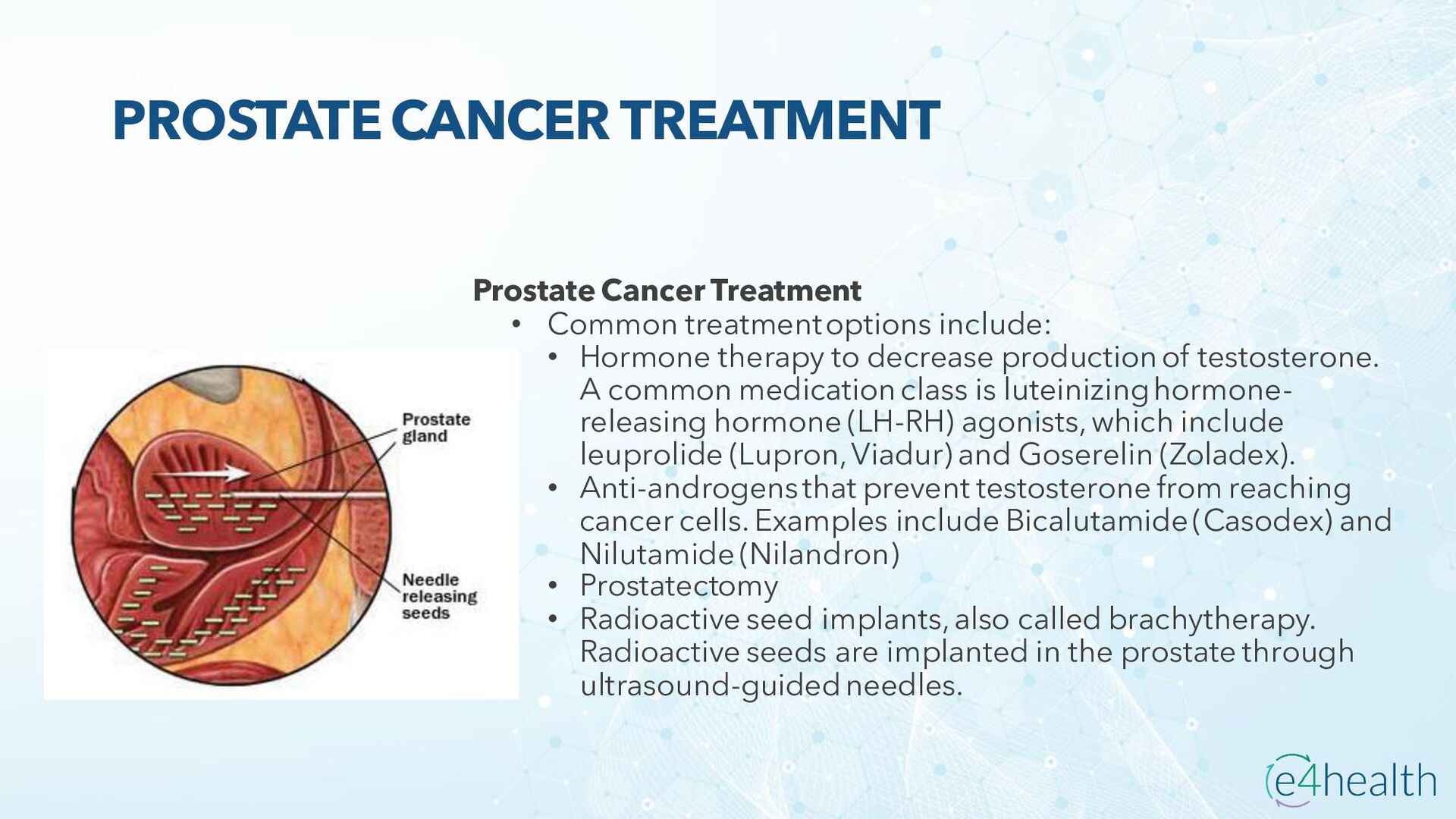
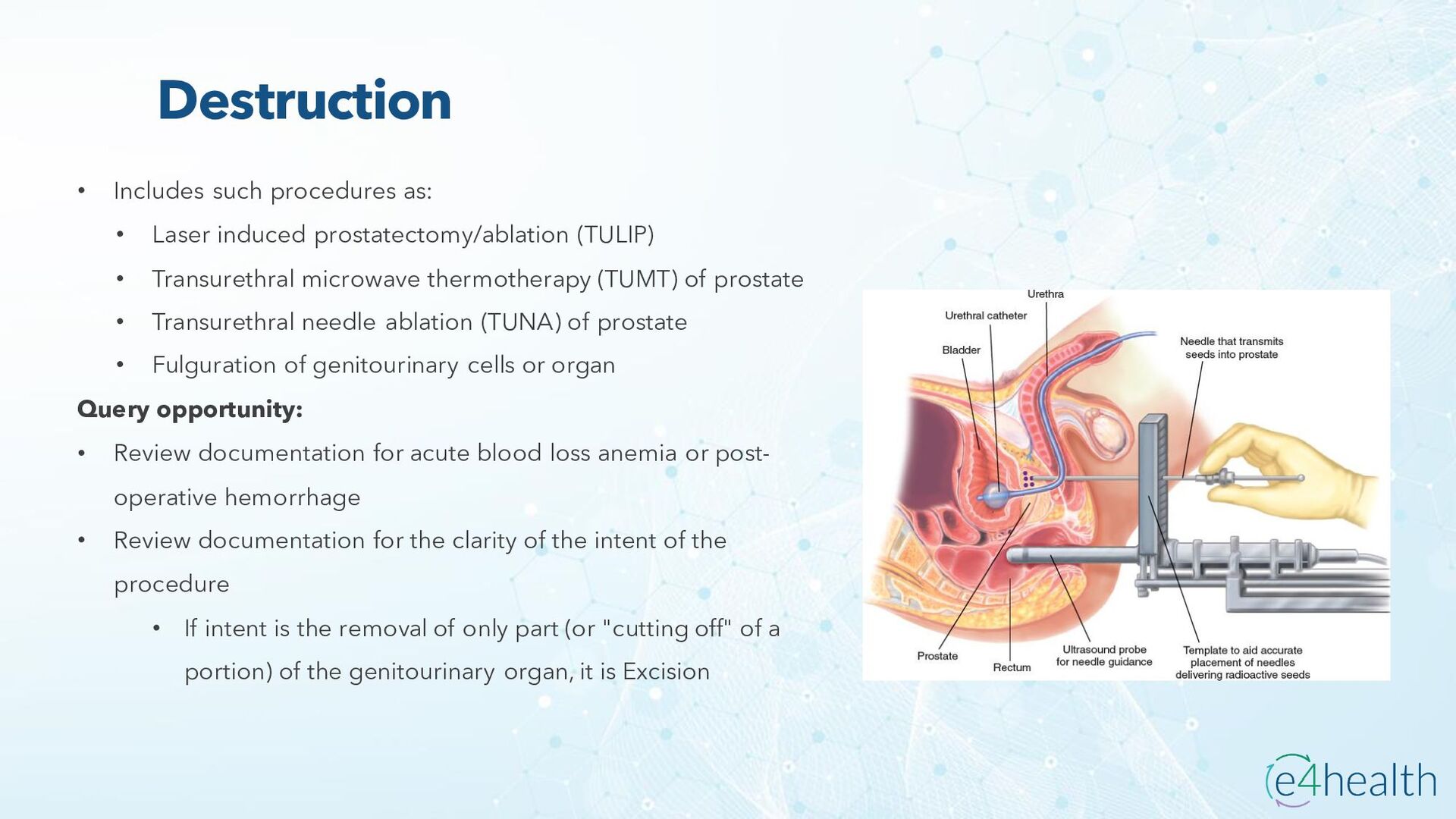
    include: • Hormone therapy to decrease production of testosterone. A common medication class is luteinizing hormone- releasing hormone (LH-RH) agonists, which include leuprolide (Lupron, Viadur) and Goserelin (Zoladex). • Anti-androgens that prevent testosterone from reaching cancer cells. Examples include Bicalutamide (Casodex) and Nilutamide (Nilandron) • Prostatectomy • Radioactive seed implants, also called brachytherapy. Radioactive seeds are implanted in the prostate through ultrasound-guided needles.
  58. Destruction • Includes such procedures as: • Laser induced prostatectomy/ablation

    (TULIP) • Transurethral microwave thermotherapy (TUMT) of prostate • Transurethral needle ablation (TUNA) of prostate • Fulguration of genitourinary cells or organ Query opportunity: • Review documentation for acute blood loss anemia or post- operative hemorrhage • Review documentation for the clarity of the intent of the procedure • If intent is the removal of only part (or "cutting off" of a portion) of the genitourinary organ, it is Excision
  59. Repair • Includes such procedures as: • Laceration suture •

    A procedure code for repair would be assigned for each body part repair (e.g., one for bladder and one for colon) • Repair is used only when the method to accomplish the repair (intent) is not one of the other root operations • Functions as the "not elsewhere classified (NEC)" root operation when the procedure does not meet the definition of the other root operations
  60. Repair – Query opportunity • Query opportunity • Review if

    more than one body part fits the definition for the root operation of Repair • Review documentation for the clarity of the intent of the genitourinary repair • If intent is to move the body part from an abnormal location or a location where it is not functioning correctly to a more suitable location, it is Reposition • If intent is to put in a device (biological or synthetic material) that physically reinforces and/or augments the function of a body part, it is Supplement
  61. Repair – Query opportunity • Query opportunity • Review documentation

    for adhesions • Adhesiolysis, with root operation of Release, potentially can be either queried or be an added procedure if the removal of adhesions was documented as extensive and was required to be done before the definitive genitourinary procedure • Review for documentation of other associated diagnoses: • Accidental puncture vs. Inherent due to extensive adhesions • Acute blood loss anemia • Acute renal failure
  62. Occlusion Includes such procedures as: • Prostate artery embolization •

    Root operation Occlusion is coded when the objective of the procedure is to close off a tubular body part or orifice • Includes both intraluminal or extraluminal methods of closing off the body part • Division (Separating, without taking out, a body part) of a tubular body part prior to closing is integral part of root operation Occlusion
  63. Occlusion • Per ICD-10-PCS Official Coding Guidelines, Section B3.12: •

    If the objective of an embolization procedure is to completely close a vessel, the root operation Occlusion is coded • If the objective of an embolization procedure is to narrow the lumen of a vessel, the root operation Restriction is coded • Examples: • Tumor embolization is coded to the root operation Occlusion, because the objective of the procedure is to cut off the blood supply to the vessel • Embolization of a cerebral aneurysm is coded to the root operation Restriction, because the objective of the procedure is not to close off the vessel
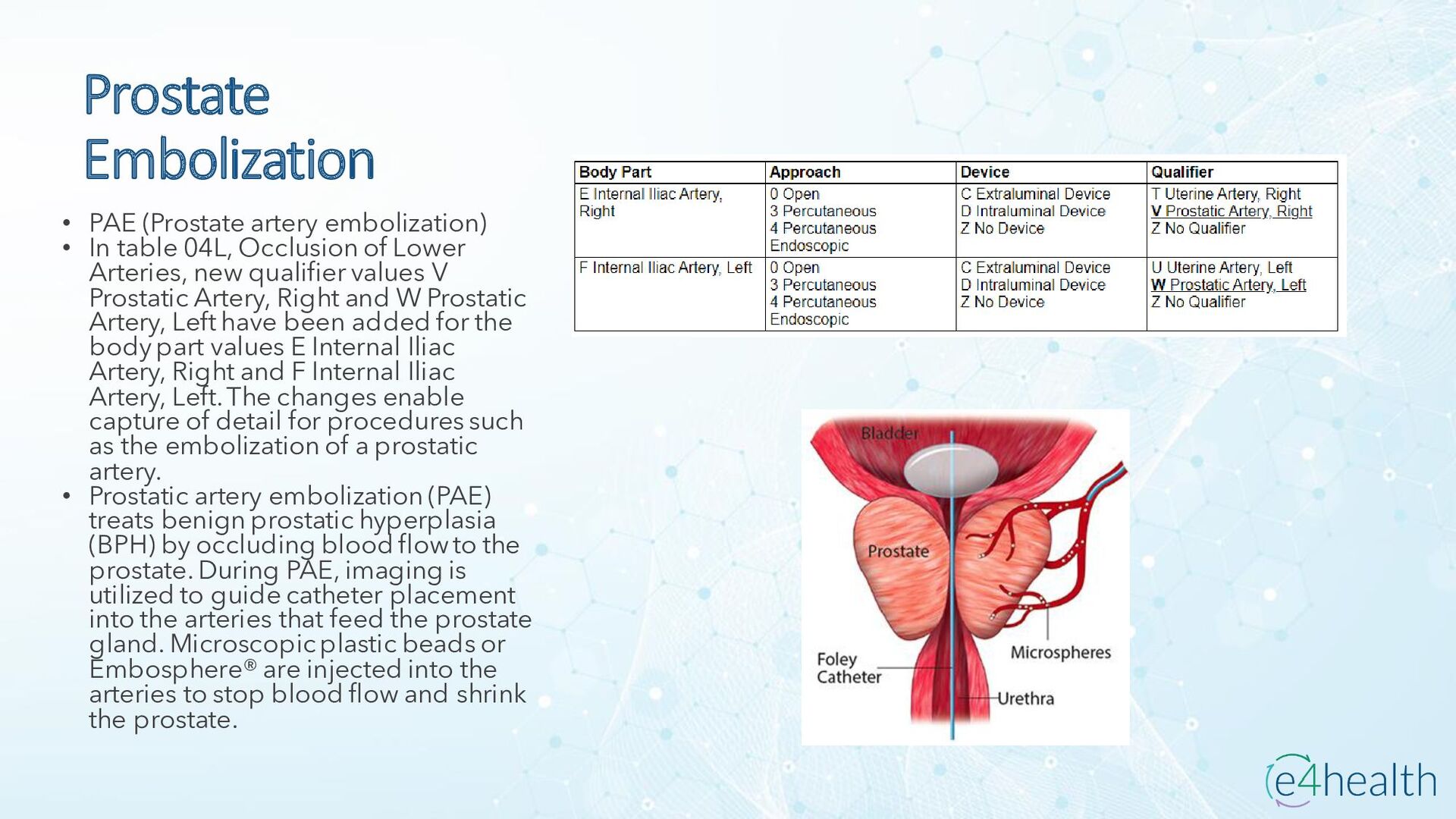
  64. Prostate Embolization • PAE (Prostate artery embolization) • In table

    04L, Occlusion of Lower Arteries, new qualifier values V Prostatic Artery, Right and W Prostatic Artery, Left have been added for the body part values E Internal Iliac Artery, Right and F Internal Iliac Artery, Left. The changes enable capture of detail for procedures such as the embolization of a prostatic artery. • Prostatic artery embolization (PAE) treats benign prostatic hyperplasia (BPH) by occluding blood flow to the prostate. During PAE, imaging is utilized to guide catheter placement into the arteries that feed the prostate gland. Microscopic plastic beads or Embosphere® are injected into the arteries to stop blood flow and shrink the prostate.
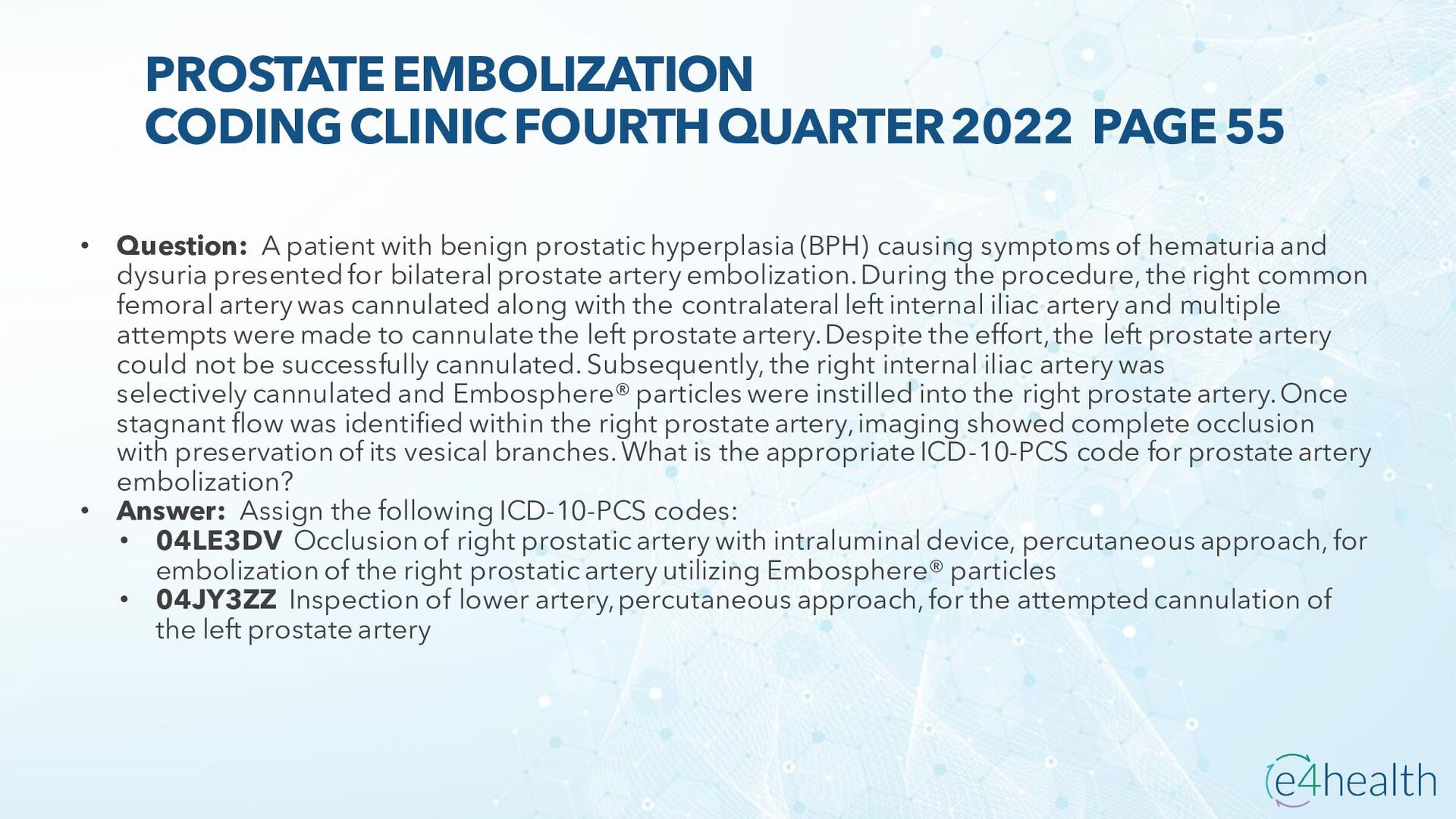
  65. PROSTATEEMBOLIZATION CODINGCLINICFOURTHQUARTER 2022 PAGE 55 • Question: A patient with

    benign prostatic hyperplasia (BPH) causing symptoms of hematuria and dysuria presented for bilateral prostate artery embolization. During the procedure, the right common femoral artery was cannulated along with the contralateral left internal iliac artery and multiple attempts were made to cannulate the left prostate artery. Despite the effort, the left prostate artery could not be successfully cannulated. Subsequently, the right internal iliac artery was selectively cannulated and Embosphere® particles were instilled into the right prostate artery. Once stagnant flow was identified within the right prostate artery, imaging showed complete occlusion with preservation of its vesical branches. What is the appropriate ICD-10-PCS code for prostate artery embolization? • Answer: Assign the following ICD-10-PCS codes: • 04LE3DV Occlusion of right prostatic artery with intraluminal device, percutaneous approach, for embolization of the right prostatic artery utilizing Embosphere® particles • 04JY3ZZ Inspection of lower artery, percutaneous approach,for the attempted cannulation of the left prostate artery
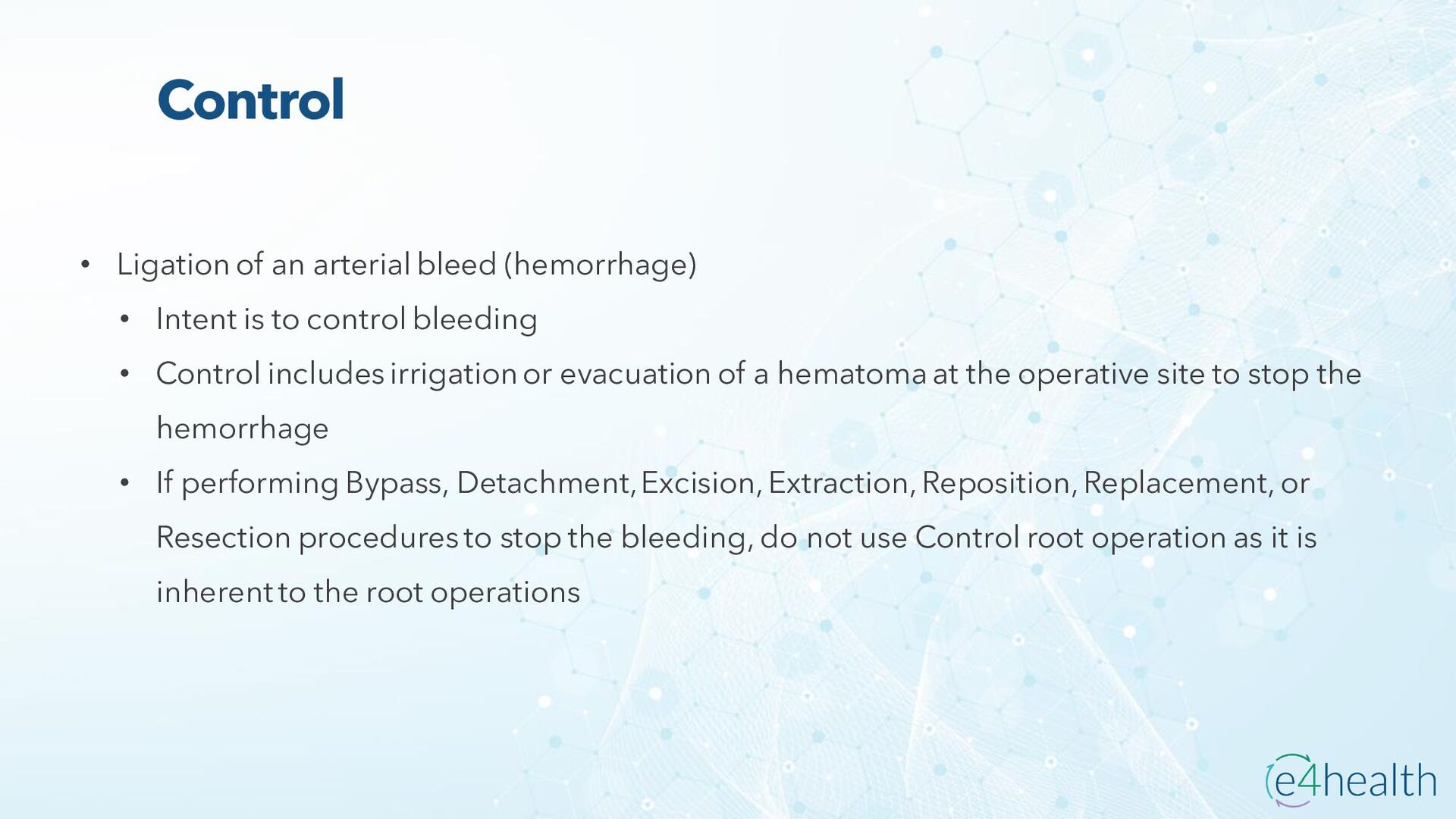
  66. Control • Ligation of an arterial bleed (hemorrhage) • Intent

    is to control bleeding • Control includes irrigation or evacuation of a hematoma at the operative site to stop the hemorrhage • If performing Bypass, Detachment, Excision, Extraction,Reposition,Replacement, or Resection procedures to stop the bleeding, do not use Control root operation as it is inherent to the root operations
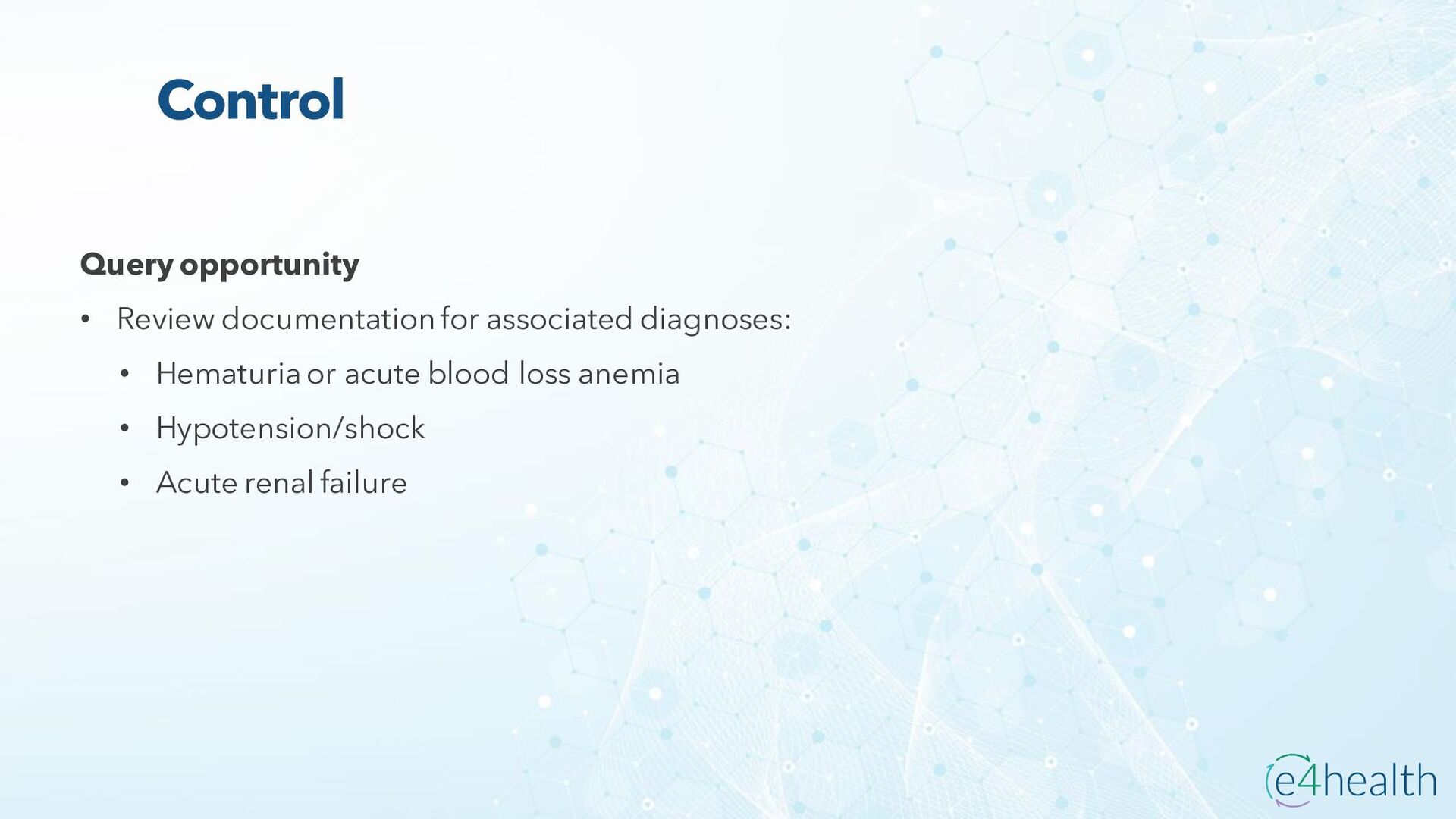
  67. Control Query opportunity • Review documentation for associated diagnoses: •

    Hematuria or acute blood loss anemia • Hypotension/shock • Acute renal failure
  68. Post-operative hematuria or acute blood loss anemia • When treated

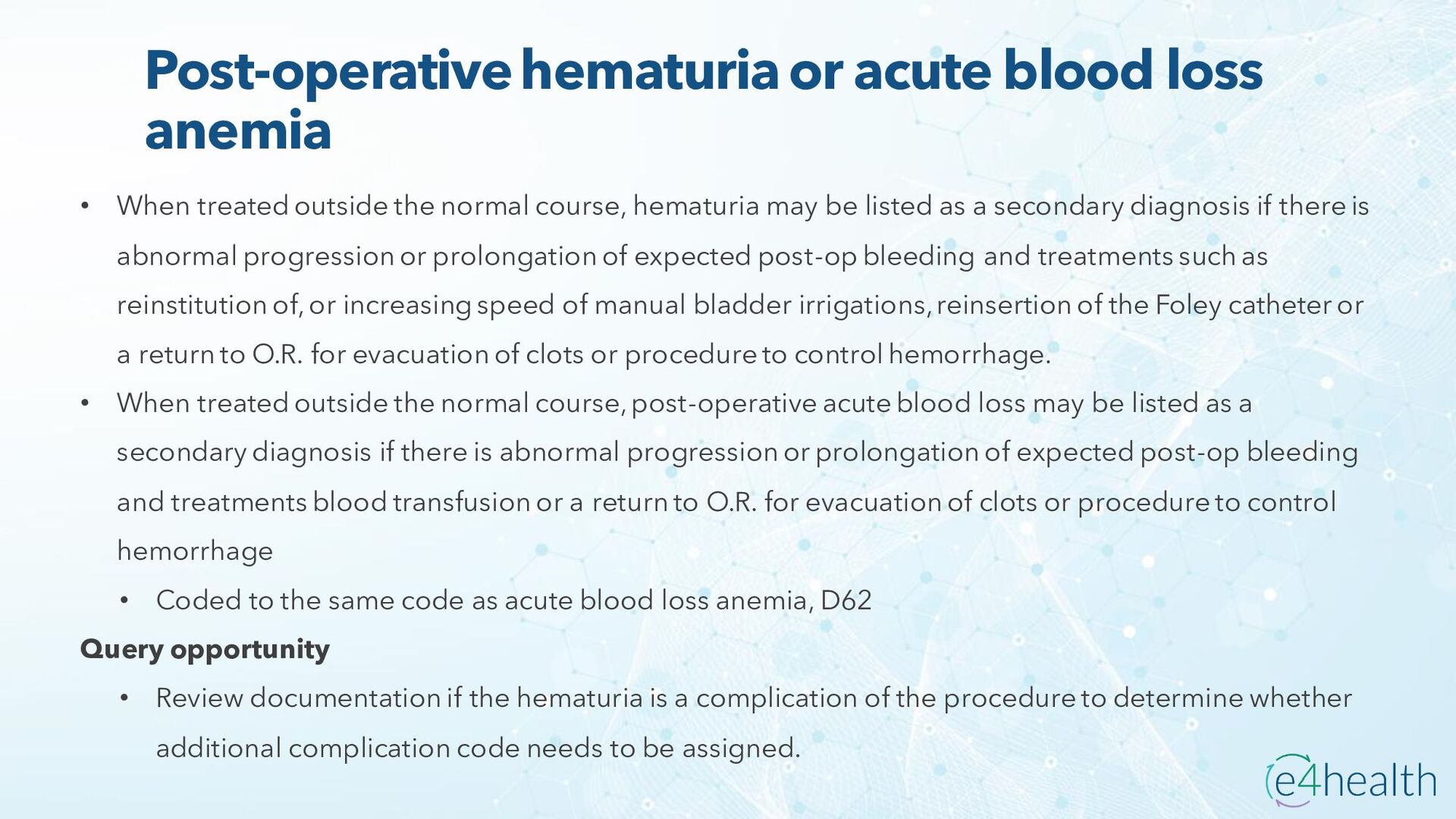
    outside the normal course, hematuria may be listed as a secondary diagnosis if there is abnormal progression or prolongation of expected post-op bleeding and treatments such as reinstitution of, or increasing speed of manual bladder irrigations, reinsertion of the Foley catheter or a return to O.R. for evacuation of clots or procedure to control hemorrhage. • When treated outside the normal course, post-operative acute blood loss may be listed as a secondary diagnosis if there is abnormal progression or prolongation of expected post-op bleeding and treatments blood transfusion or a return to O.R. for evacuation of clots or procedure to control hemorrhage • Coded to the same code as acute blood loss anemia, D62 Query opportunity • Review documentation if the hematuria is a complication of the procedure to determine whether additional complication code needs to be assigned.
  69. Explanation of the Revised Guideline for Control Coding ClinicFourth Quarter

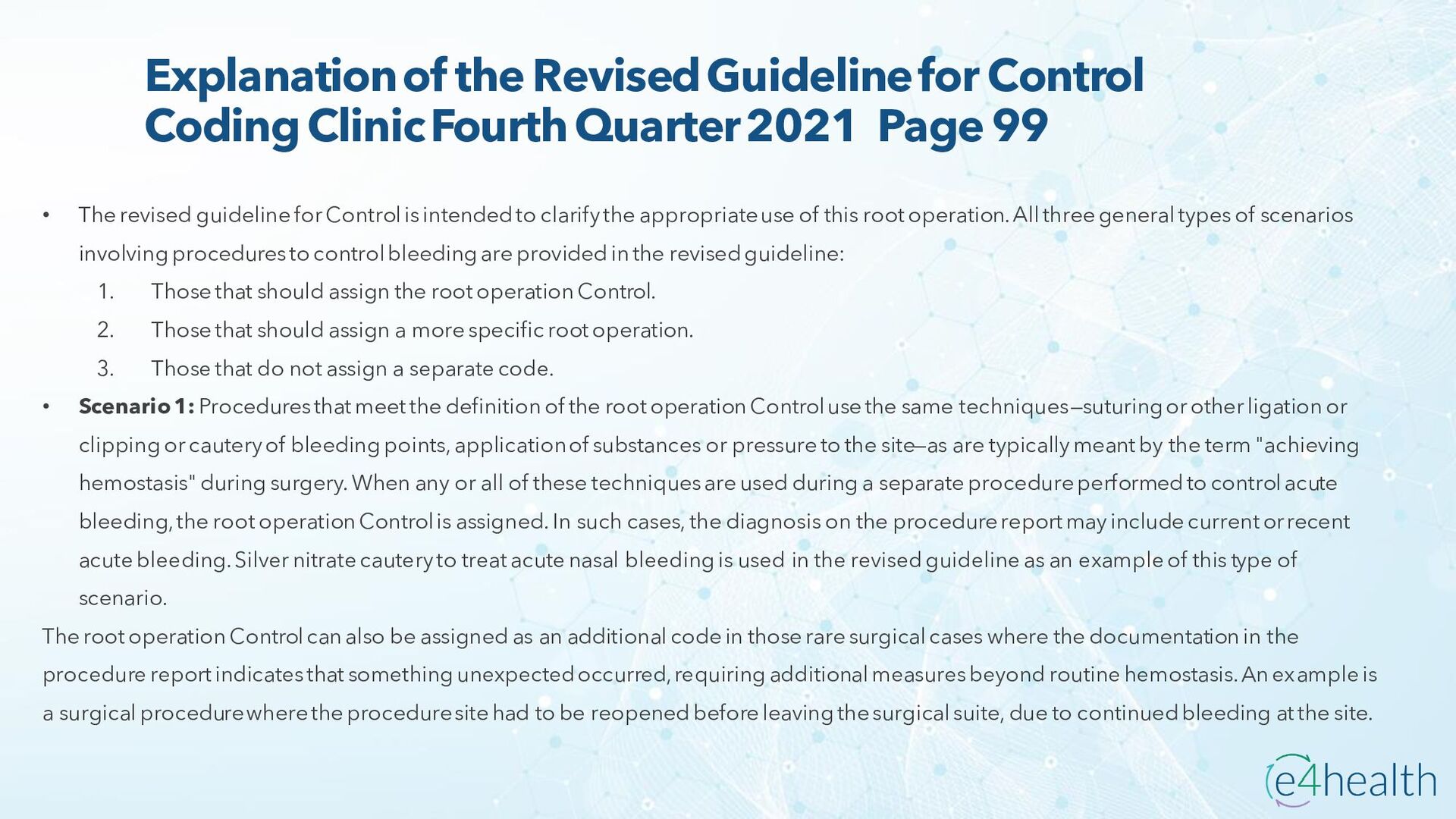
    2021 Page 99 • The revised guideline for Control is intended to clarify the appropriate use of this root operation. All three general types of scenarios involving procedures to control bleeding are provided in the revised guideline: 1. Those that should assign the root operation Control. 2. Those that should assign a more specific root operation. 3. Those that do not assign a separate code. • Scenario 1: Procedures that meet the definition of the root operation Control use the same techniques—suturing or other ligation or clipping or cautery of bleeding points, application of substances or pressure to the site—as are typically meant by the term "achieving hemostasis" during surgery. When any or all of these techniques are used during a separate procedure performed to control acute bleeding, the root operation Control is assigned. In such cases, the diagnosis on the procedure report may include current or recent acute bleeding. Silver nitrate cautery to treat acute nasal bleeding is used in the revised guideline as an example of this type of scenario. The root operation Control can also be assigned as an additional code in those rare surgical cases where the documentation in the procedure report indicates that something unexpected occurred, requiring additional measures beyond routine hemostasis. An example is a surgical procedure where the procedure site had to be reopened before leaving the surgical suite, due to continued bleeding at the site.
  70. Explanation of the Revised Guideline for Control Coding Clinic Fourth

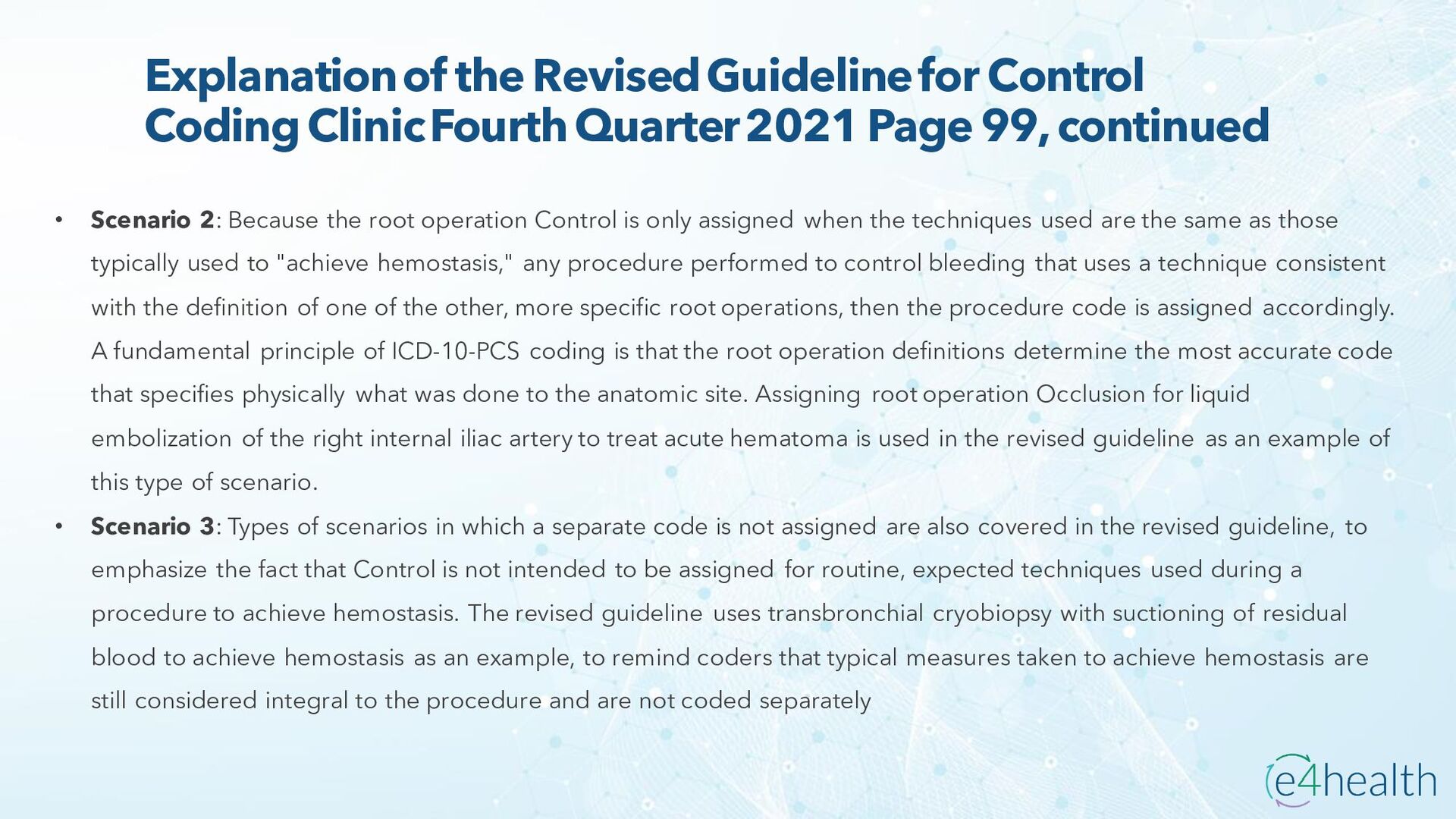
    Quarter 2021 Page 99, continued • Scenario 2: Because the root operation Control is only assigned when the techniques used are the same as those typically used to "achieve hemostasis," any procedure performed to control bleeding that uses a technique consistent with the definition of one of the other, more specific root operations, then the procedure code is assigned accordingly. A fundamental principle of ICD-10-PCS coding is that the root operation definitions determine the most accurate code that specifies physically what was done to the anatomic site. Assigning root operation Occlusion for liquid embolization of the right internal iliac artery to treat acute hematoma is used in the revised guideline as an example of this type of scenario. • Scenario 3: Types of scenarios in which a separate code is not assigned are also covered in the revised guideline, to emphasize the fact that Control is not intended to be assigned for routine, expected techniques used during a procedure to achieve hemostasis. The revised guideline uses transbronchial cryobiopsy with suctioning of residual blood to achieve hemostasis as an example, to remind coders that typical measures taken to achieve hemostasis are still considered integral to the procedure and are not coded separately
  71. References • 3M Clinical Documentation Improvement System Reference • Understanding

    Your Pathology Report: Prostatic Intraepithelial Neoplasia (PIN) and Intraductal Carcinoma. (n.d.). https://www.cancer.org/cancer/diagnosis-staging/tests/understanding-your-pathology-report/prostate- pathology/high-grade-prostatic-intraepithelial-neoplasia.html • Where Does Testicular Cancer Spread To? (n.d.). Moffitt Cancer Center. https://moffitt.org/cancers/testicular- cancer/faqs/where-does-testicular-cancer-spread-to/ • Prostate Cancer - Genitourinary Disorders - Merck Manuals Professional Edition • https://www.cedars-sinai.org/programs/imaging-center/exams/interventional-radiology/prostate-artery- embolization.html • AHA ICD-10-CM and ICD-10-PCS Coding Handbook • ICD-10-PCS: An Applied Approach 2023 • Cengage: 3-2-1 CODE IT!