work. • To update your local working branch. • To split a commit into two. • To squash multiple commits into one. $ git rebase -i edit $ git rebase -i squash $ git rebase <branch_name>
of tiny commits into one: $ git rebase --interactive • Bring your local, working branch up-to-date $ git pull master $ git checkout my_local_branch $ git rebase master
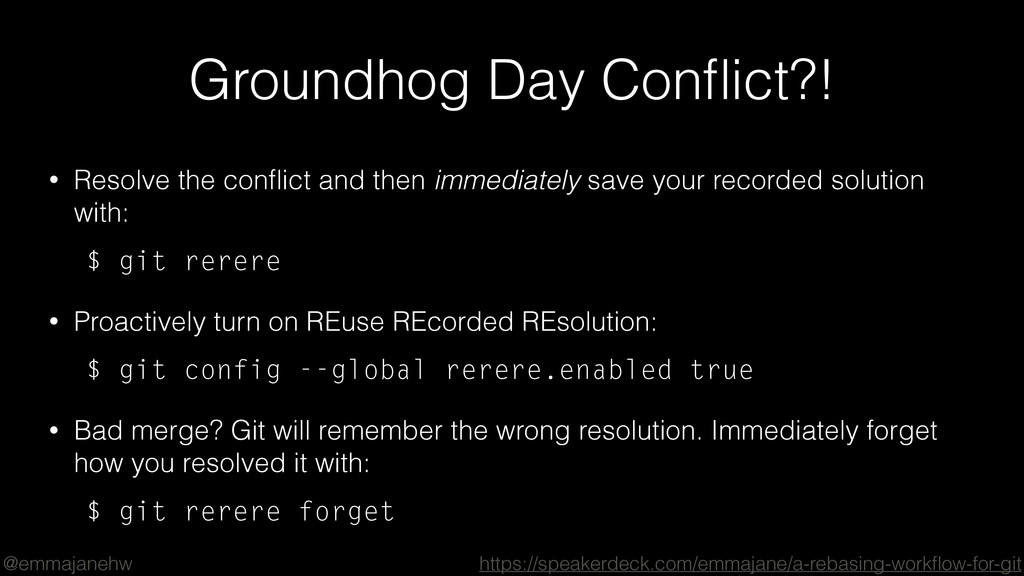
then immediately save your recorded solution with: $ git rerere • Proactively turn on REuse REcorded REsolution: $ git config --global rerere.enabled true • Bad merge? Git will remember the wrong resolution. Immediately forget how you resolved it with: $ git rerere forget
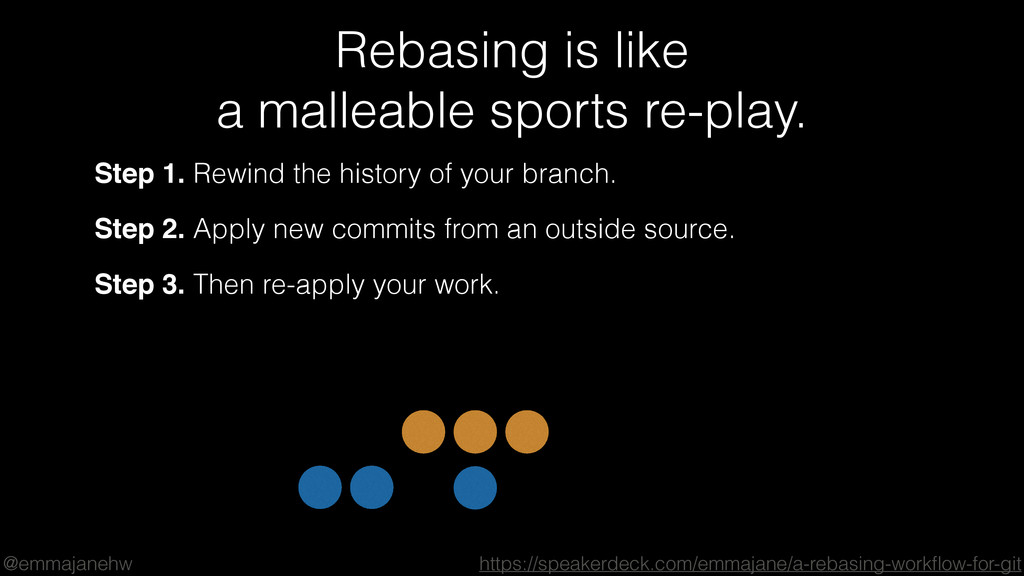
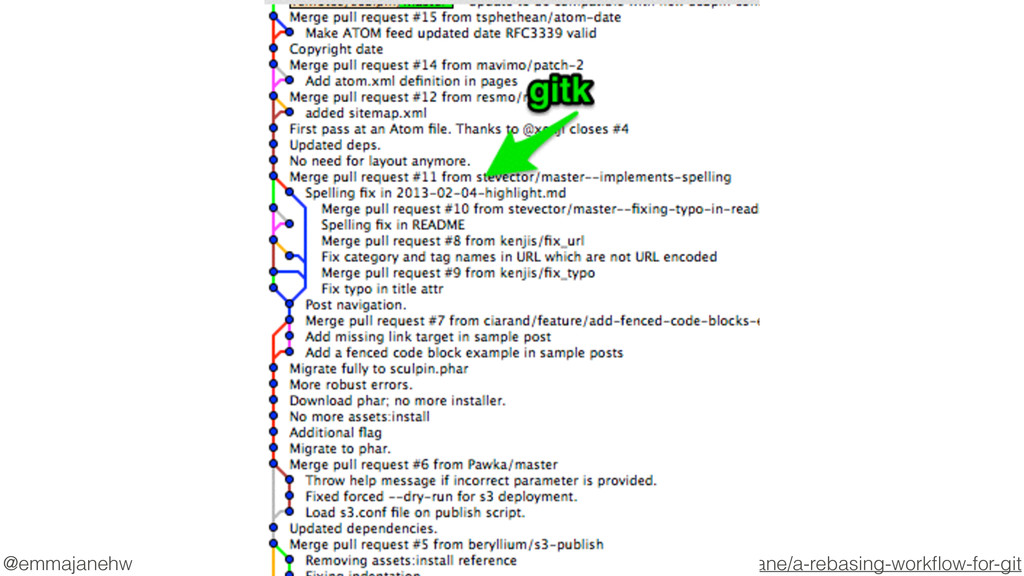
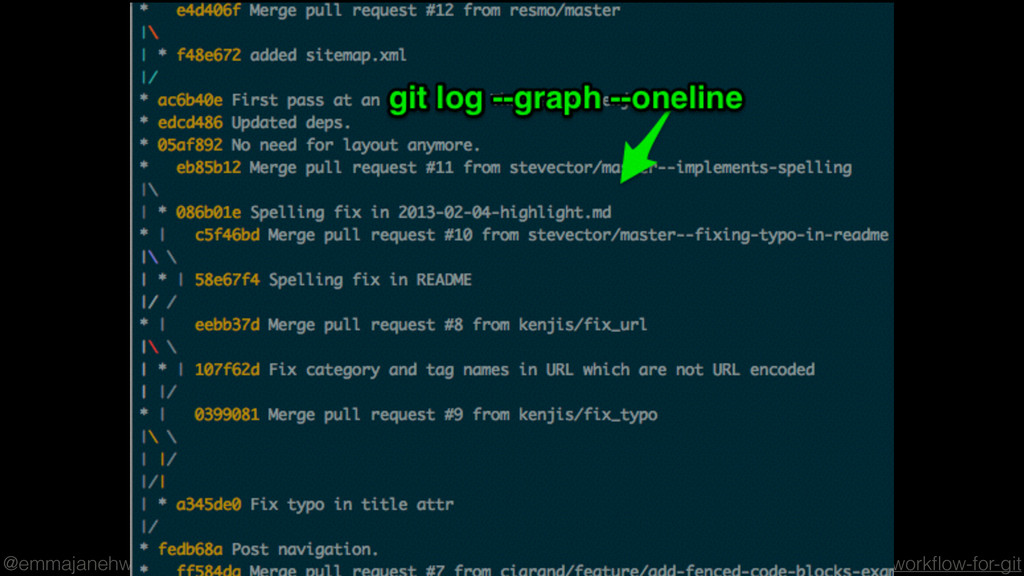
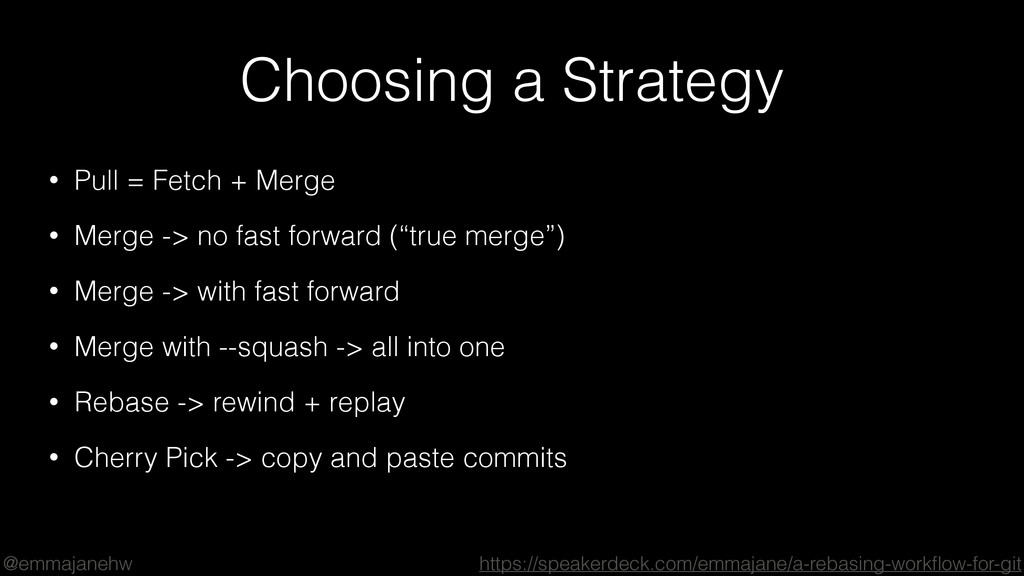
Merge • Merge -> no fast forward (“true merge”) • Merge -> with fast forward • Merge with --squash -> all into one • Rebase -> rewind + replay • Cherry Pick -> copy and paste commits
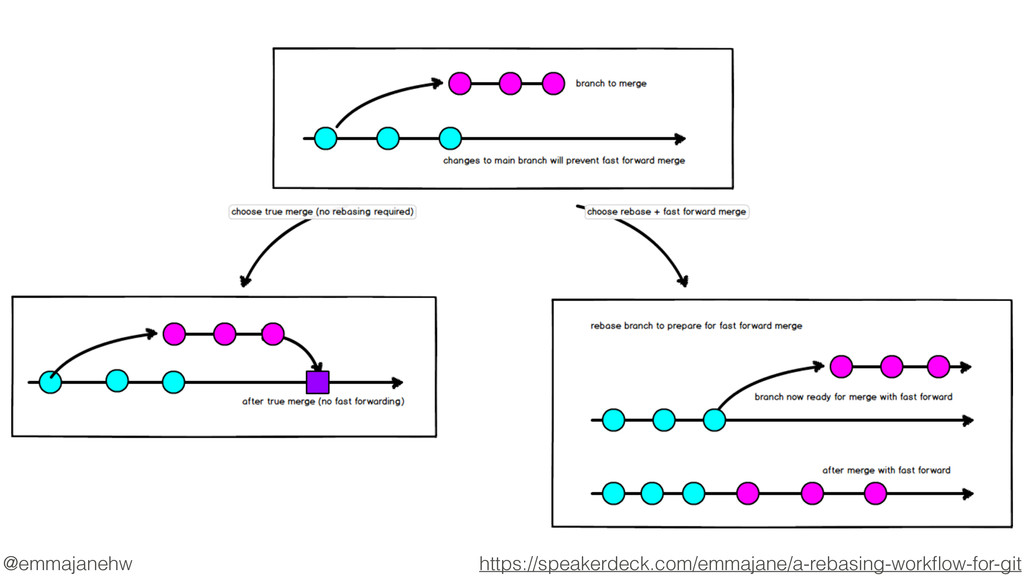
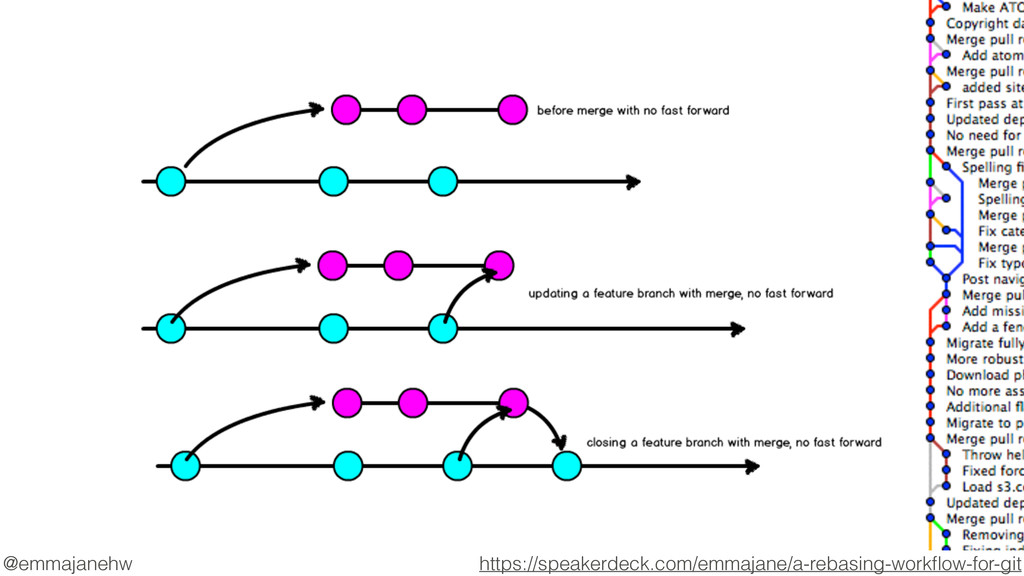
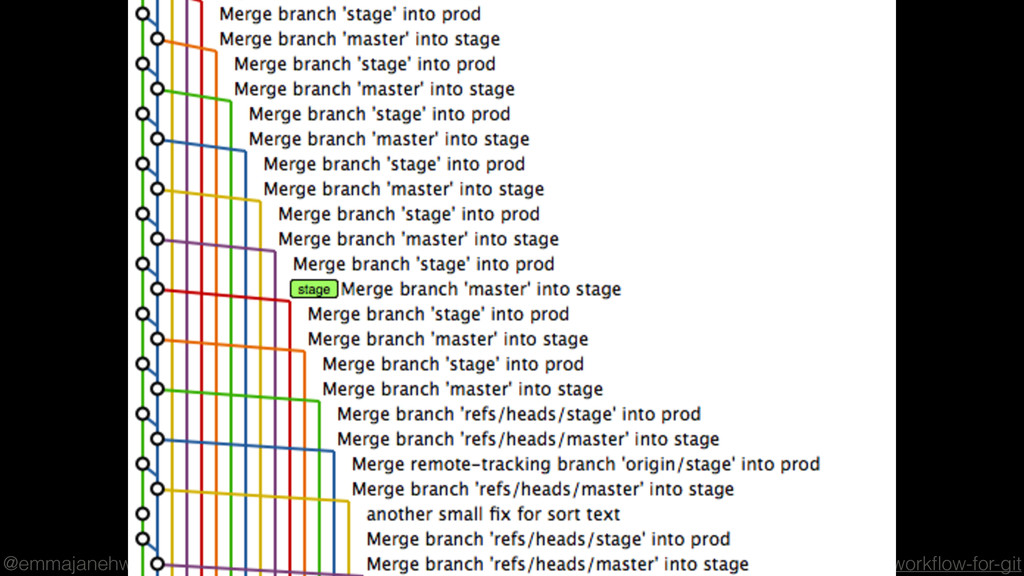
most apparent to projects with multiple branches and multiple committers. • Rebasing allows you to reshape commit history so that you are storing conclusions, not conversations. • Rebasing can be used in place of merge to update a branch and results in a simplified graph of your repository history. • Rebasing can be used interactively to reshape a series of commits.


 emmajane
 kairim0
 yakumo
 colopl
 husengs7
 masakiokuda
 ufried
 tsukuboshi
 takanorip
 mtpooh
 vivion
 recruitengineers
 ymotongpoo
 denniskardys
 tammyeverts
.png) helenjbeal
helenjbeal
 chrisshort
 smashingmag
 techseoconnect
 chriscoyier
 inesmontani
 destraynor
 seathinner
 caitiem20
 carmenintech