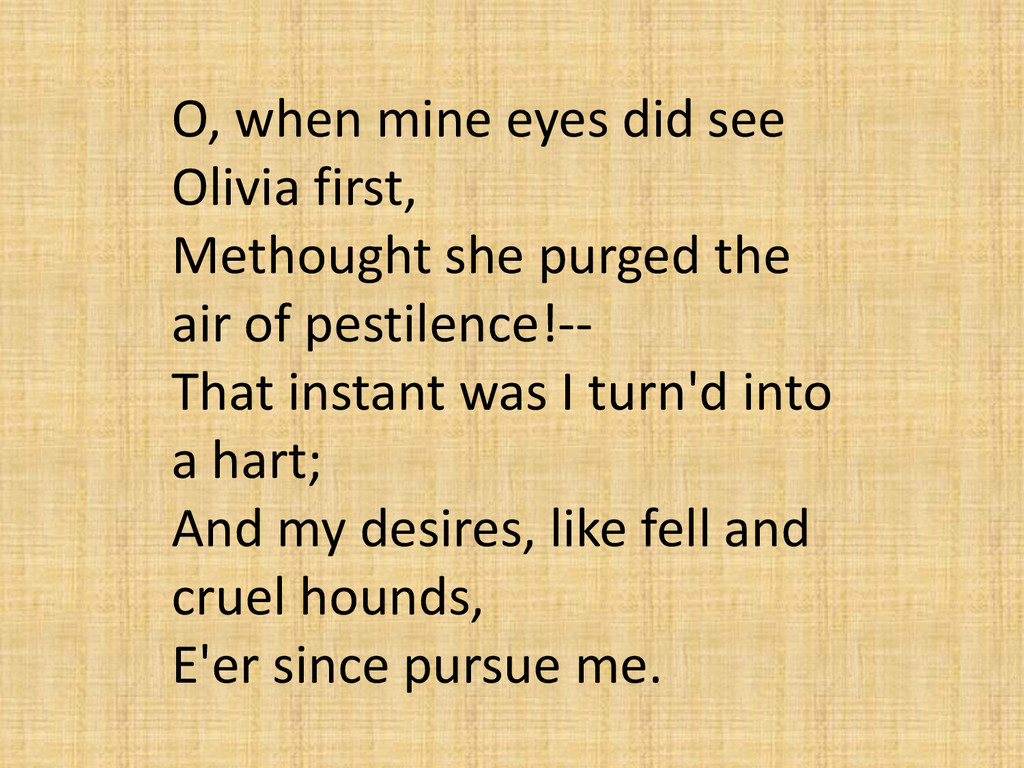
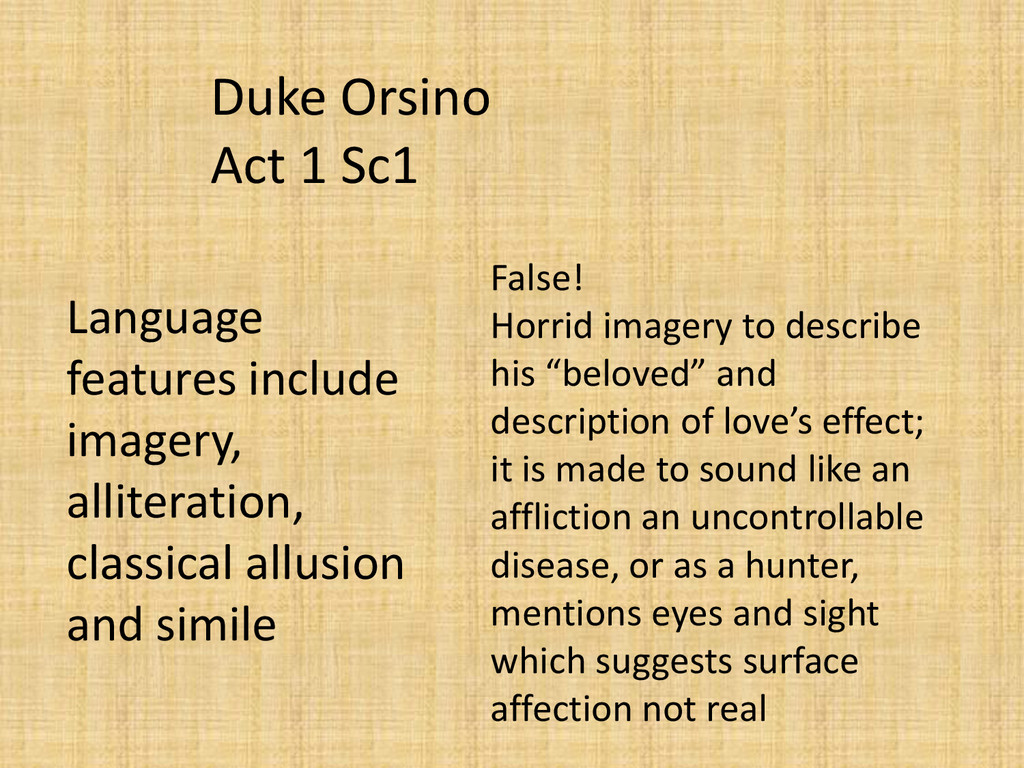
his “beloved” and description of love’s effect; it is made to sound like an affliction an uncontrollable disease, or as a hunter, mentions eyes and sight which suggests surface affection not real Language features include imagery, alliteration, classical allusion and simile
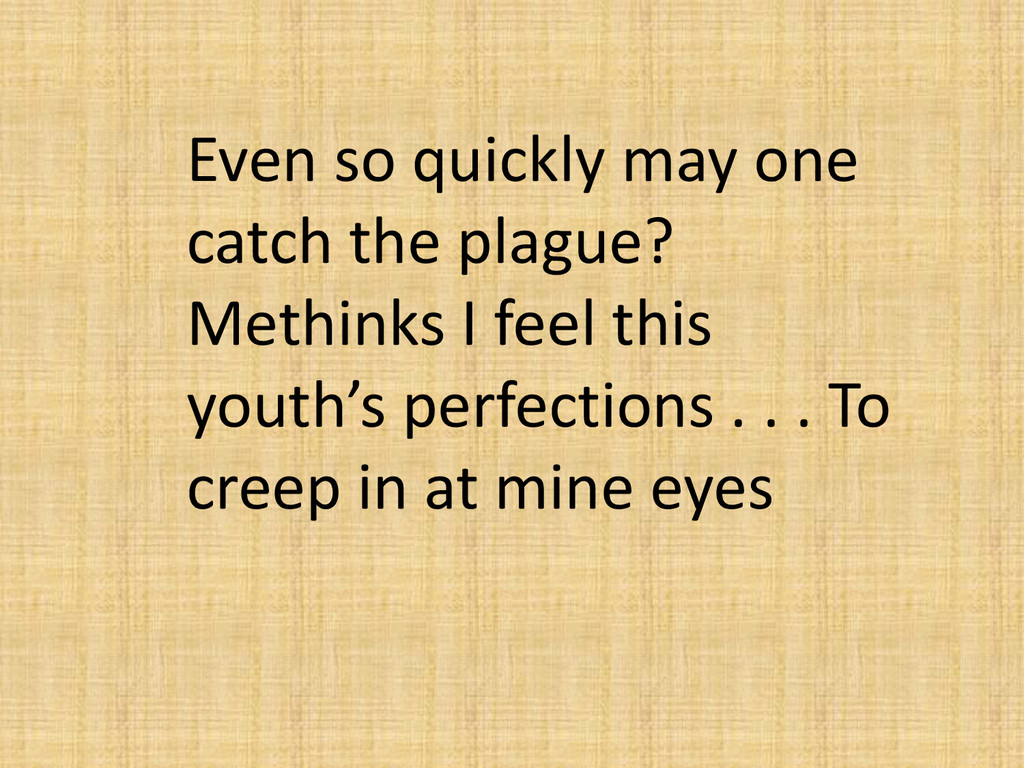
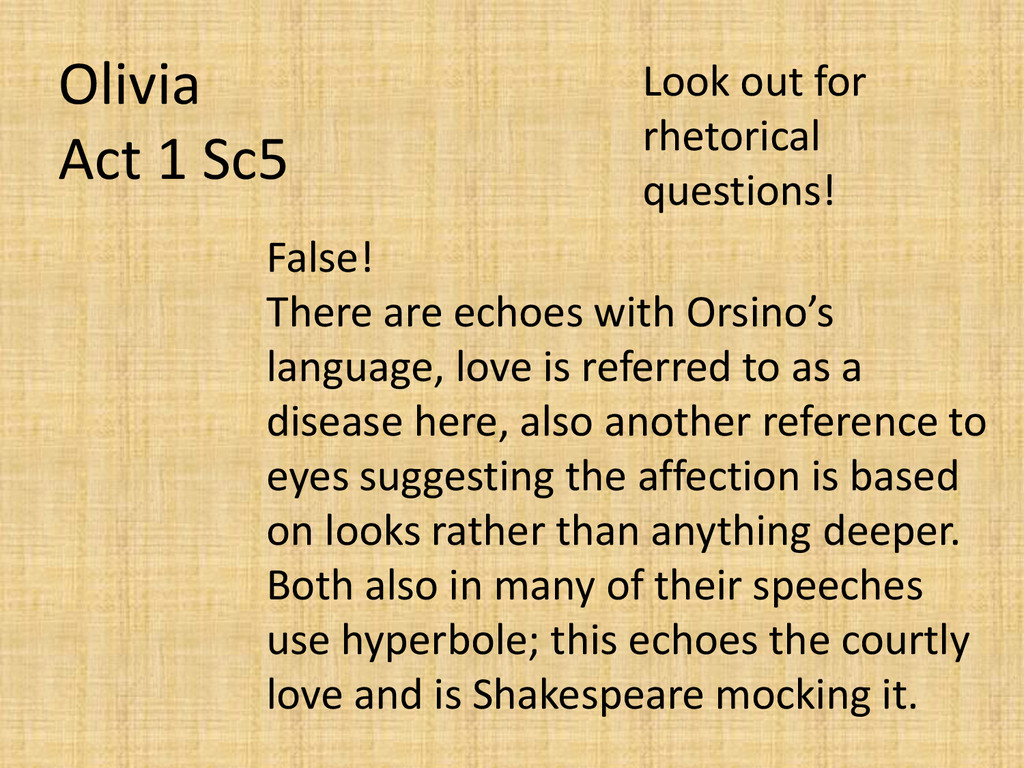
language, love is referred to as a disease here, also another reference to eyes suggesting the affection is based on looks rather than anything deeper. Both also in many of their speeches use hyperbole; this echoes the courtly love and is Shakespeare mocking it. Look out for rhetorical questions!
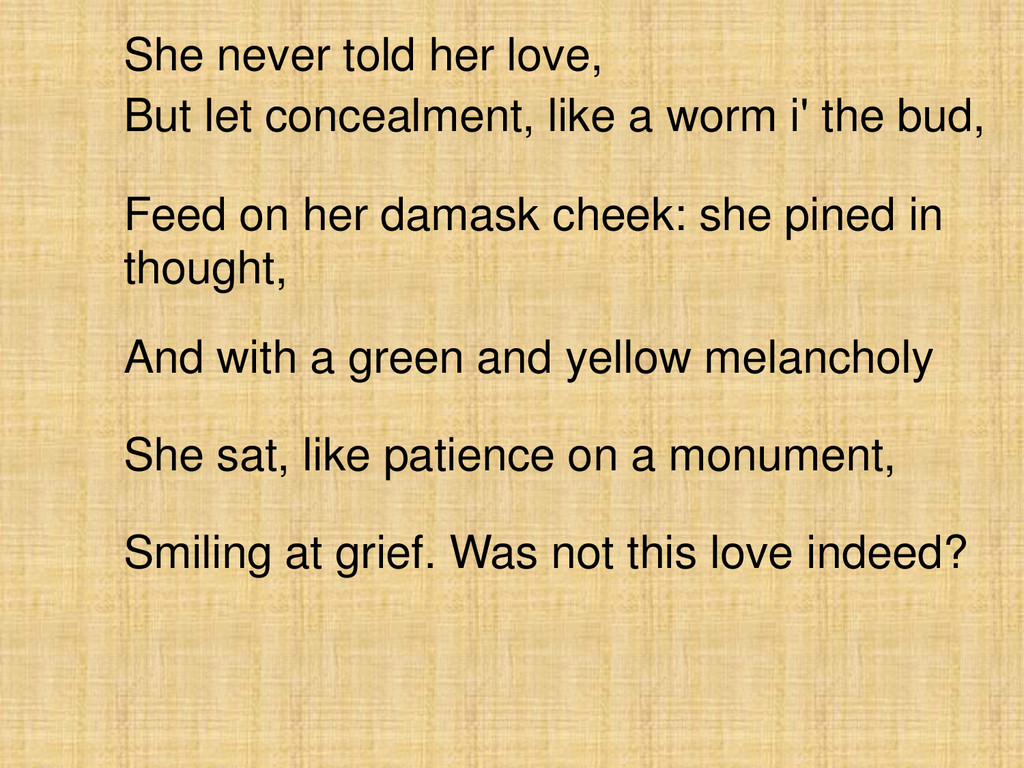
worm i' the bud, Feed on her damask cheek: she pined in thought, And with a green and yellow melancholy She sat, like patience on a monument, Smiling at grief. Was not this love indeed?
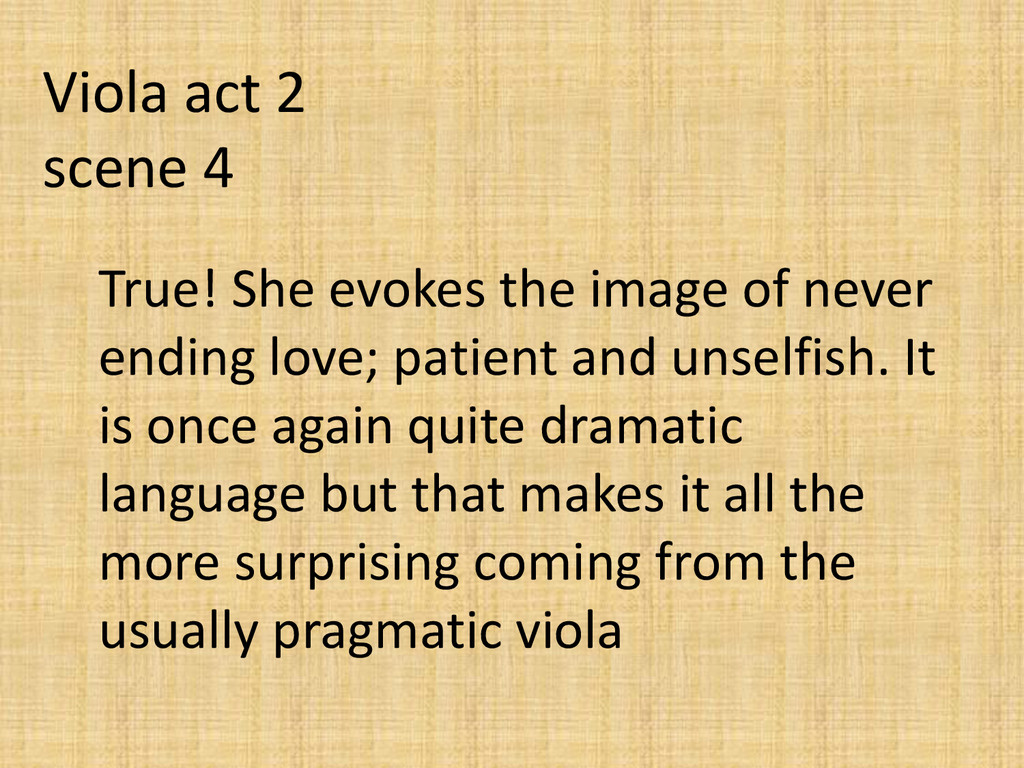
of never ending love; patient and unselfish. It is once again quite dramatic language but that makes it all the more surprising coming from the usually pragmatic viola
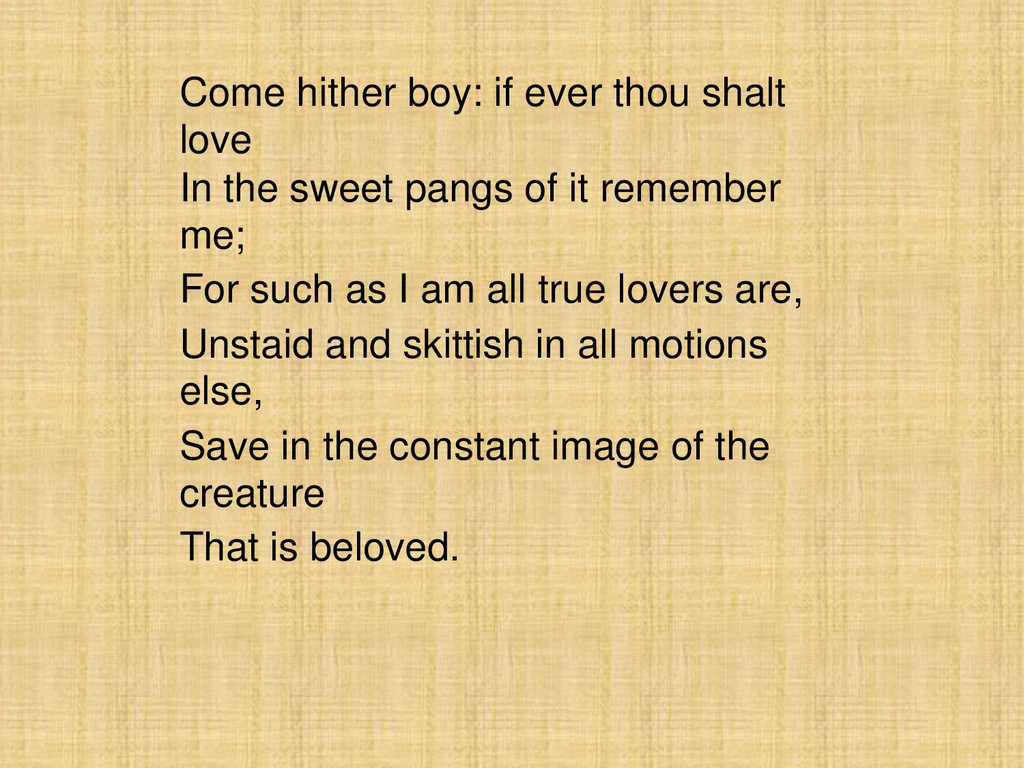
sweet pangs of it remember me; For such as I am all true lovers are, Unstaid and skittish in all motions else, Save in the constant image of the creature That is beloved.
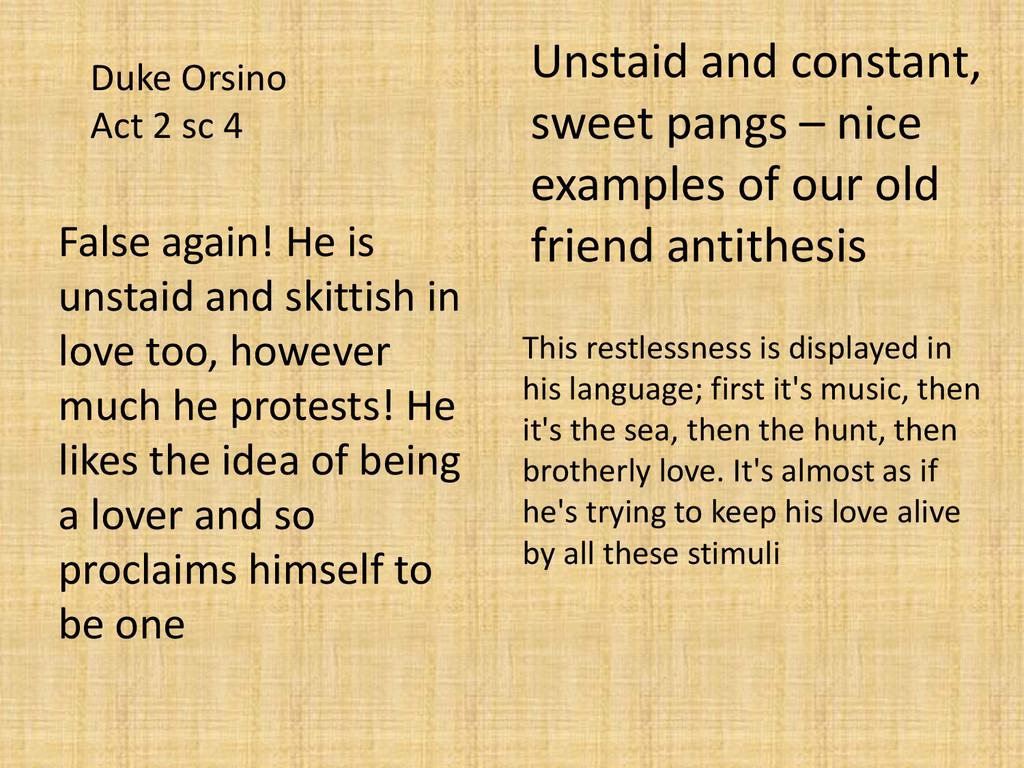
unstaid and skittish in love too, however much he protests! He likes the idea of being a lover and so proclaims himself to be one Unstaid and constant, sweet pangs – nice examples of our old friend antithesis This restlessness is displayed in his language; first it's music, then it's the sea, then the hunt, then brotherly love. It's almost as if he's trying to keep his love alive by all these stimuli
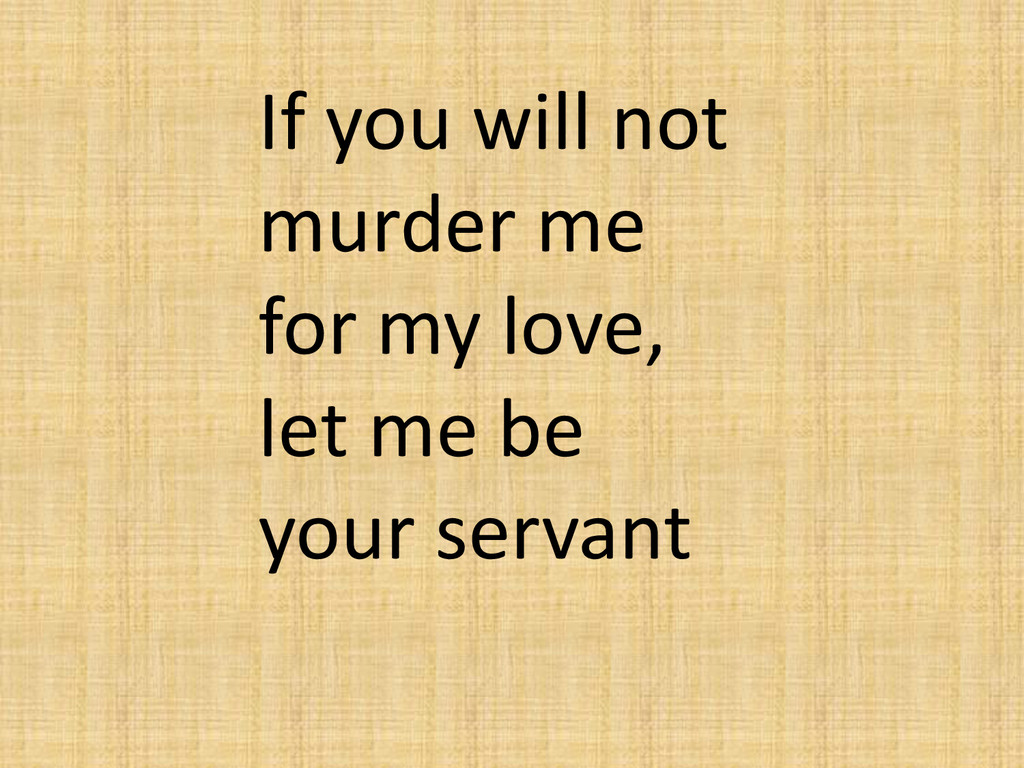
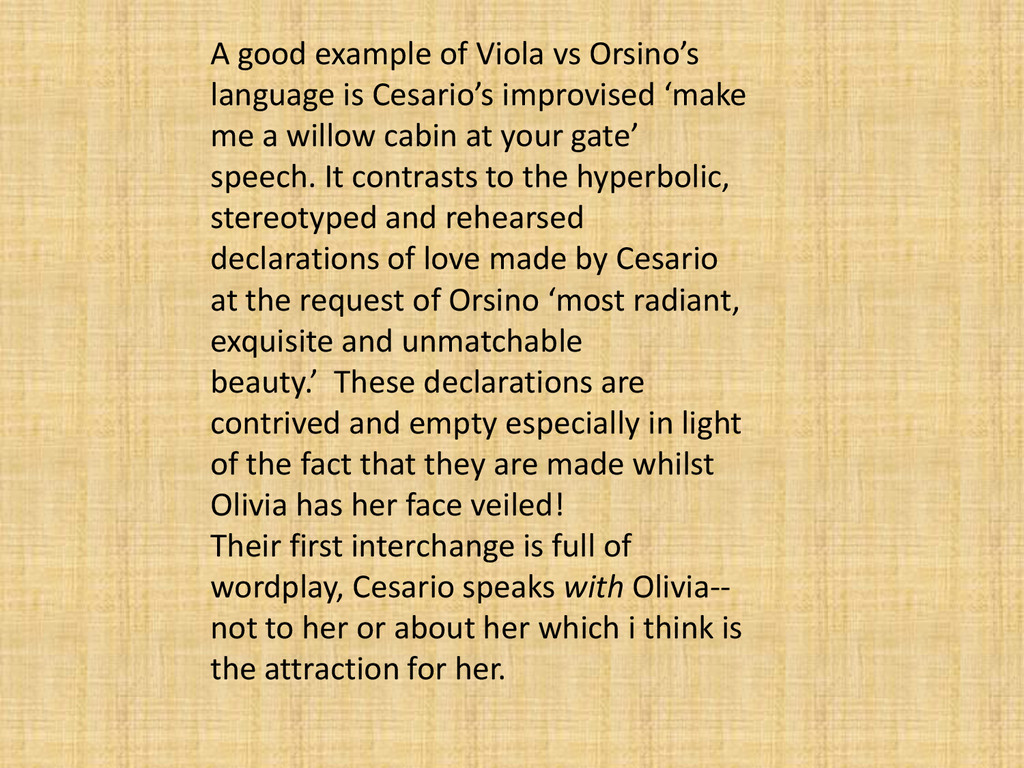
improvised ‘make me a willow cabin at your gate’ speech. It contrasts to the hyperbolic, stereotyped and rehearsed declarations of love made by Cesario at the request of Orsino ‘most radiant, exquisite and unmatchable beauty.’ These declarations are contrived and empty especially in light of the fact that they are made whilst Olivia has her face veiled! Their first interchange is full of wordplay, Cesario speaks with Olivia-- not to her or about her which i think is the attraction for her.


 ep93
 akiraasano
 matleenalaakso
 signer
 terazawa
 bvr7352
 mariooc
 arnoknobbe
 aokiplayer
 pawan_pharm
 hiola
 jonoalderson
 palkan
 marcduiker
 tammyeverts
 mongodb
 sstephenson
 cassininazir
 bryan
 uxyall
 tomoyanonymous
 livdayseo
 lara