Upgrade to Pro — share decks privately, control downloads, hide ads and more …

How to Acquire and Retain Clients as a New SEO ...

Sponsored · SiteGround - Reliable hosting with speed, security, and support you can count on. →

How to Acquire and Retain Clients as a New SEO Agency

Are you tired of treating client acquisition like a numbers game?

What if there’s a way to land high-value clients and keep them long-term — without sending yet another cold pitch?

In this 35-minute episode of the Agency Growth Series, Liam Quirk explains a more sustainable and zero-spam approach to lead generation and client acquisition for SEO agencies.

This isn’t theory. Liam is sharing the exact process he used to scale Quirky Digital to seven figures in only five years.

You’ll walk away with:

- Early lead generation strategies to help you land your first client quickly

- When and how to change your client acquisition strategy to support your agency’s growth

-How to turn one-time business into recurring revenue.

If you’re tired of throwing spaghetti at the wall or working with clients who undervalue your expertise, this is the lead generation playbook you’ve been waiting for.

Watch Now: https://www.youtube.com/watch?v=GGpFYyrMV9w/

Avatar for Faith Uzuegbu

Faith Uzuegbu

April 14, 2025

Other Decks in Marketing & SEO

Transcript

  1. 01 Build Your Network Early I built my LinkedIn while

    working for other people. I posted consistently, connected with people I met at events and past jobs, and built a real network. So when I launched my own agency, I wasn’t starting from zero. Those same people saw my updates, shared my content, and helped spread the word.
  2. 02 Do Word-of-Mouth Marketing When I started my business, I

    told everyone. I posted all over social media and messaged people on WhatsApp — pretty much anyone I had a strong relationship with heard about it. And that opened a lot of doors. It wasn’t always the people I knew directly, but their friends, clients, or coworkers. That word- of-mouth is what really got me off the ground.
  3. 03 Create Your Own Case Studies When I started on

    my own, the hardest thing was not having any of my own case studies. I’d always been doing the work for other people. But I had a few of my own lead gen sites in specific industries, so I used those as case studies. And honestly, that’s the best kind of social proof: showing you can rank your own websites.
  4. 04 Market Your Team’s Expertise Over the past year or

    so, I’ve focused more on marketing the agency itself. When we send proposals, it’s not about me; it’s about the team. I’m a good way to get people through the door, but I’m not the only one delivering the results. So I shout about the team’s expertise just as much as my own.
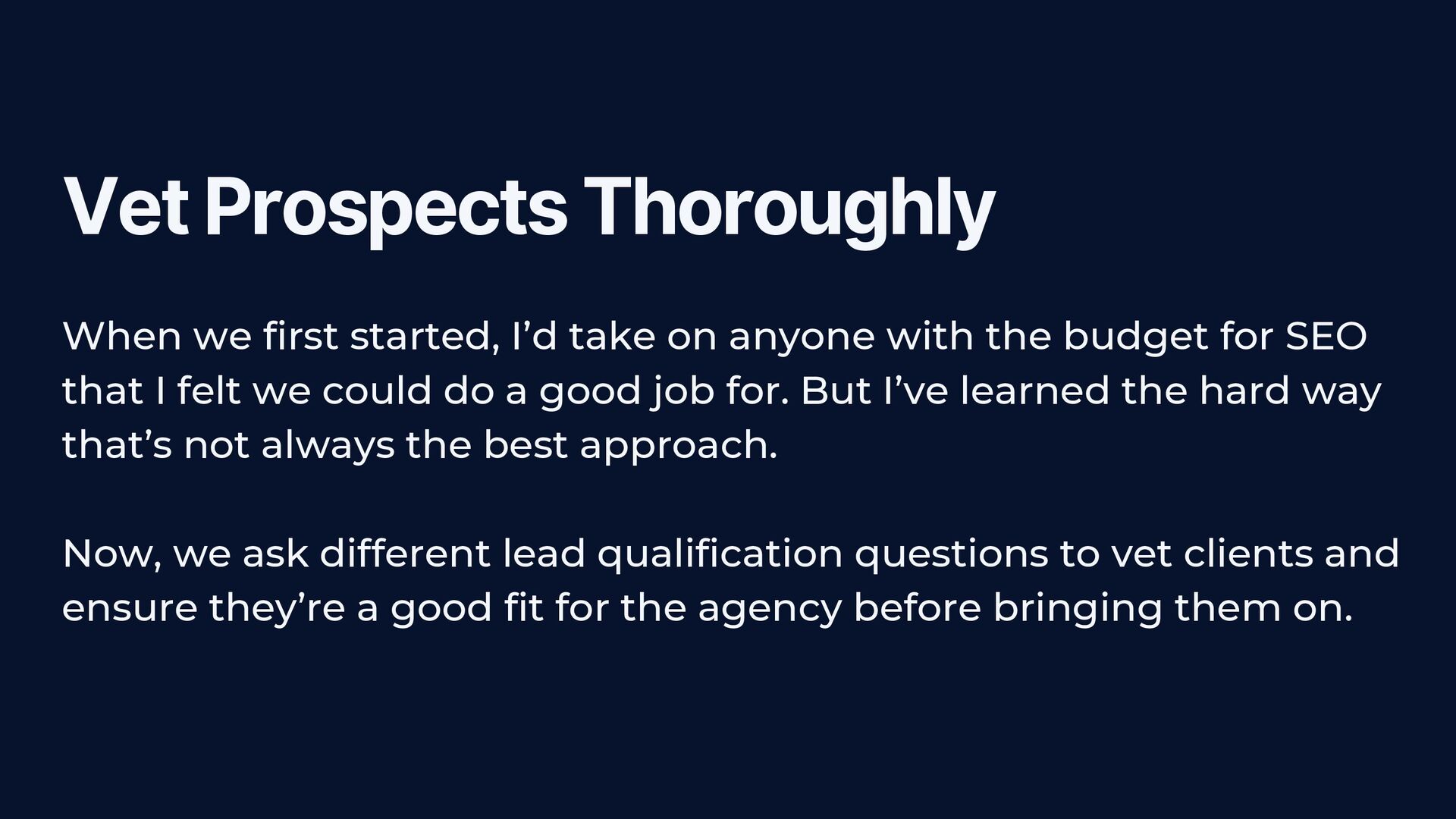
  5. 05 Vet Prospects Thoroughly When we first started, I’d take

    on anyone with the budget for SEO that I felt we could do a good job for. But I’ve learned the hard way that’s not always the best approach. Now, we ask different lead qualification questions to vet clients and ensure they’re a good fit for the agency before bringing them on.
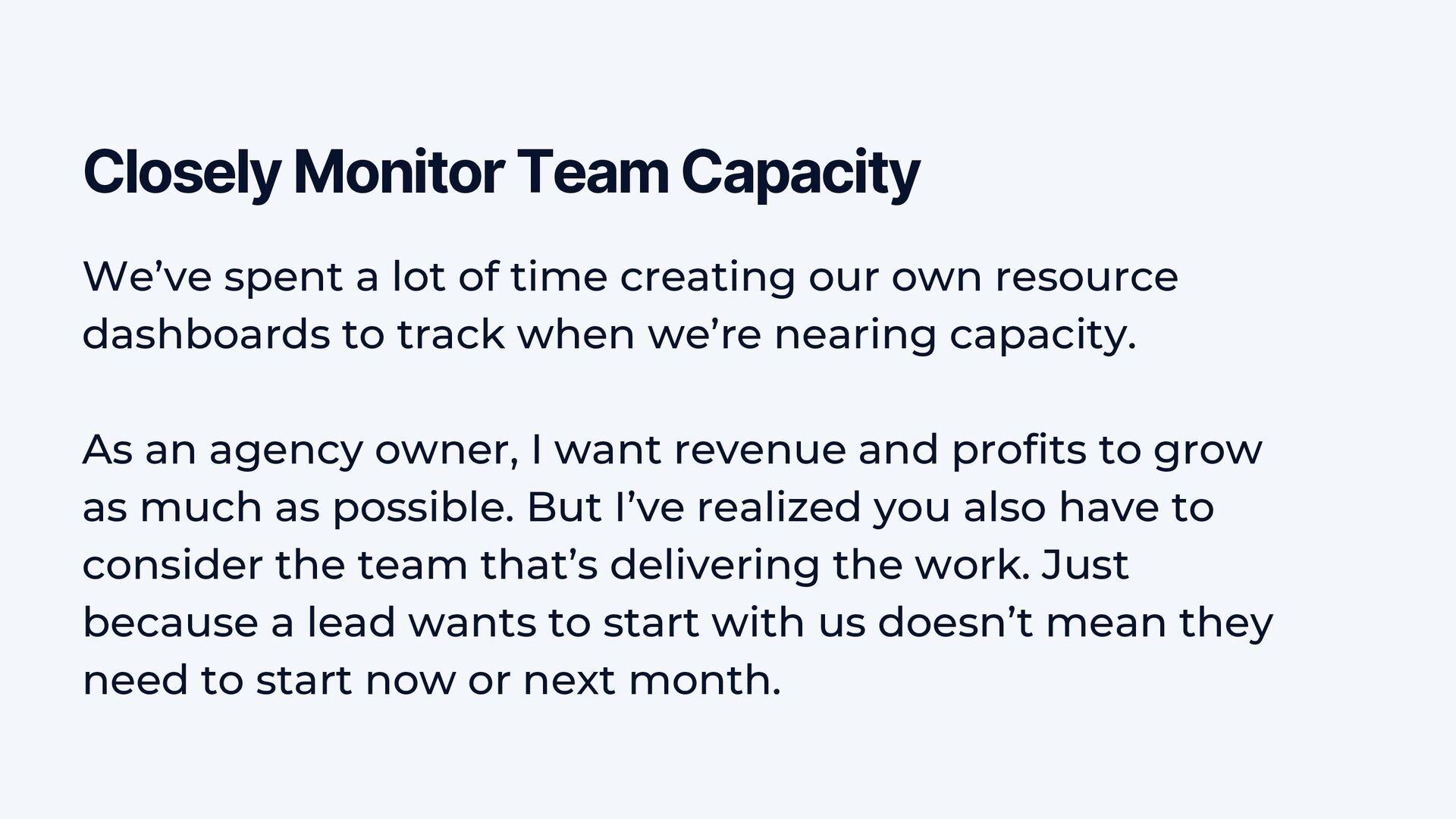
  6. 06 Closely Monitor Team Capacity We’ve spent a lot of

    time creating our own resource dashboards to track when we’re nearing capacity. As an agency owner, I want revenue and profits to grow as much as possible. But I’ve realized you also have to consider the team that’s delivering the work. Just because a lead wants to start with us doesn’t mean they need to start now or next month.
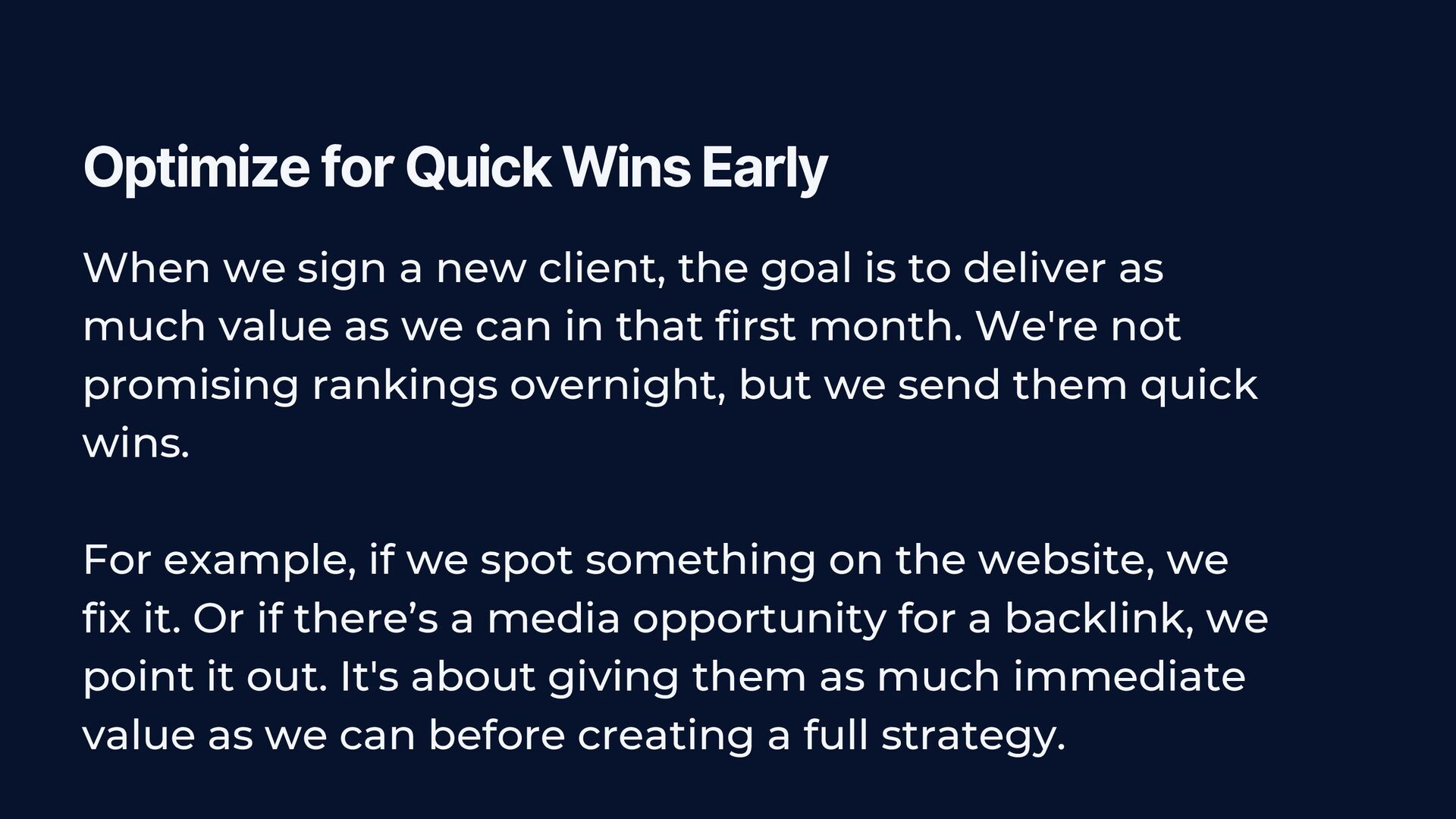
  7. 07 Optimize for Quick Wins Early When we sign a

    new client, the goal is to deliver as much value as we can in that first month. We're not promising rankings overnight, but we send them quick wins. For example, if we spot something on the website, we fix it. Or if there’s a media opportunity for a backlink, we point it out. It's about giving them as much immediate value as we can before creating a full strategy.
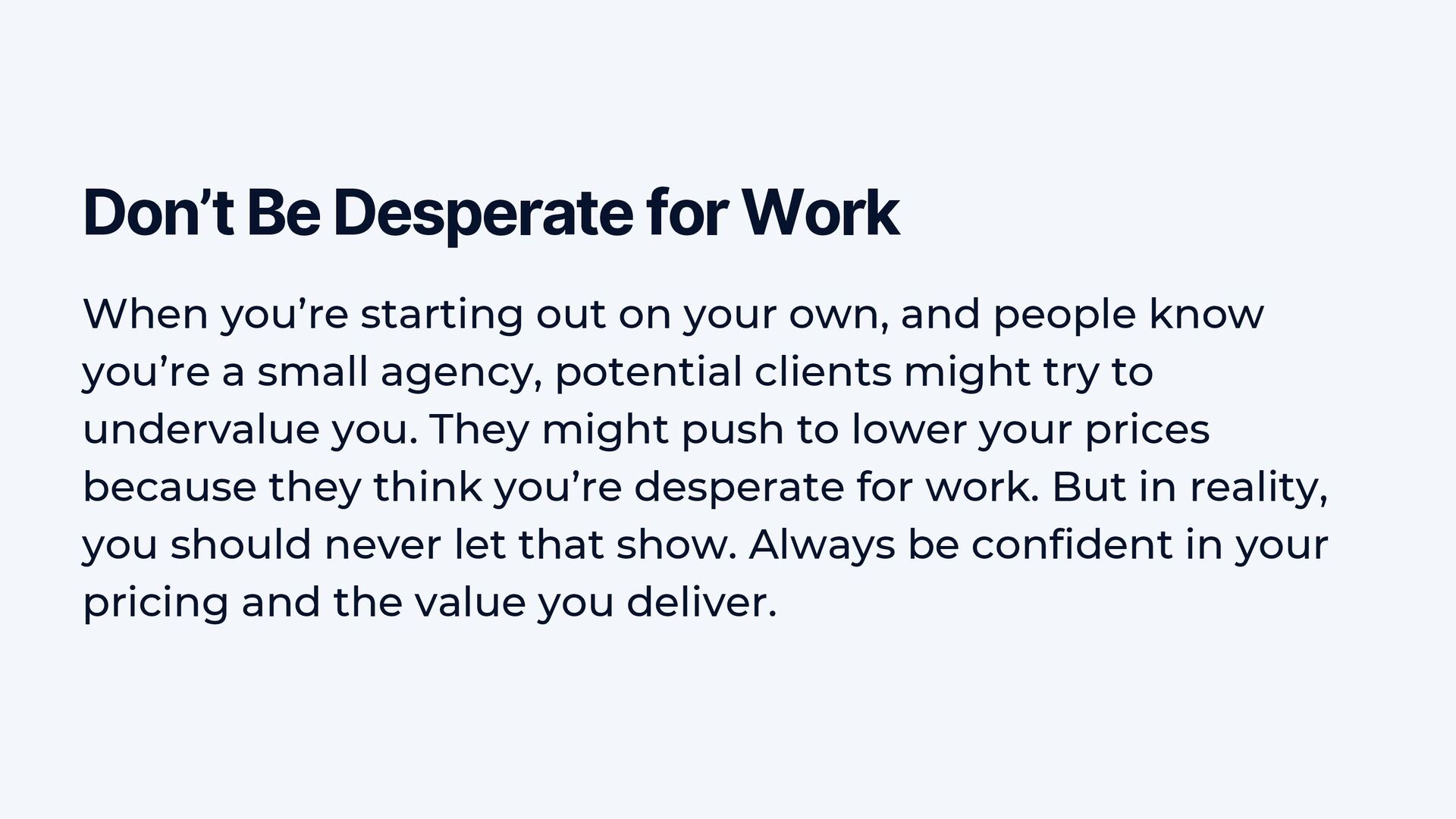
  8. 08 Don’t Be Desperate for Work When you’re starting out

    on your own, and people know you’re a small agency, potential clients might try to undervalue you. They might push to lower your prices because they think you’re desperate for work. But in reality, you should never let that show. Always be confident in your pricing and the value you deliver.