Upgrade to Pro — share decks privately, control downloads, hide ads and more …

FARA's role in Agricultural Research and Innov...

FARA's role in Agricultural Research and Innovation

The Forum for Agricultural Research in Africa (FARA) was created in 1997 and evolved by 2000 into Africa’s apex organization for agricultural research and innovation. Its establishment responded to the fragmentation of Africa’s national research systems and the need for a continental mechanism to coordinate research, strengthen capacities, facilitate partnerships and knowledge exchange, advocate for supportive policies, and represent African agricultural research internationally, including within GFAiR. FARA’s strategic role is to connect science with agriculture at scale by improving access to regional and global knowledge, facilitating innovation-to-impact partnerships, strengthening institutional and human capacities, and supporting collective action across countries and sub-regions.

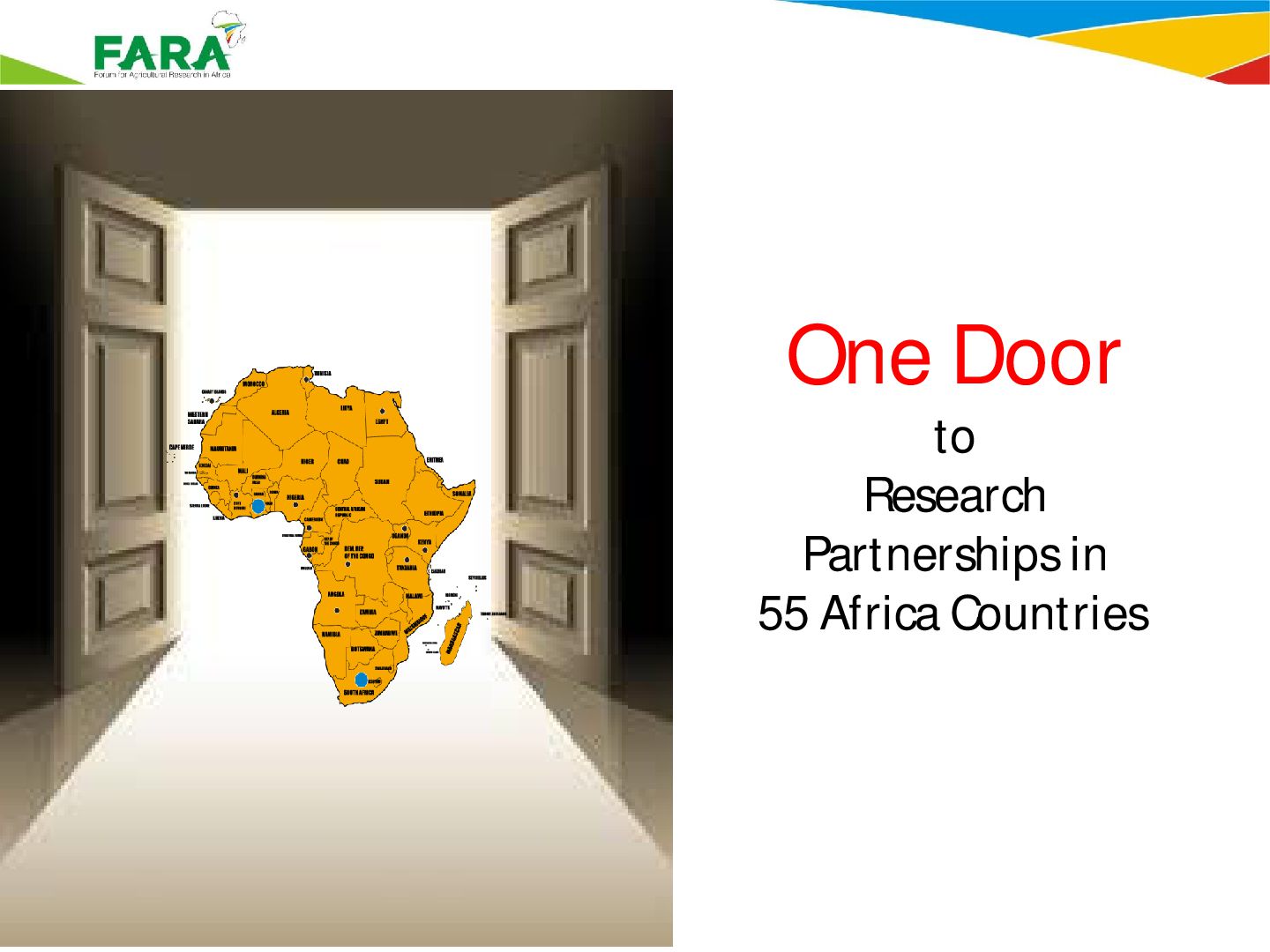
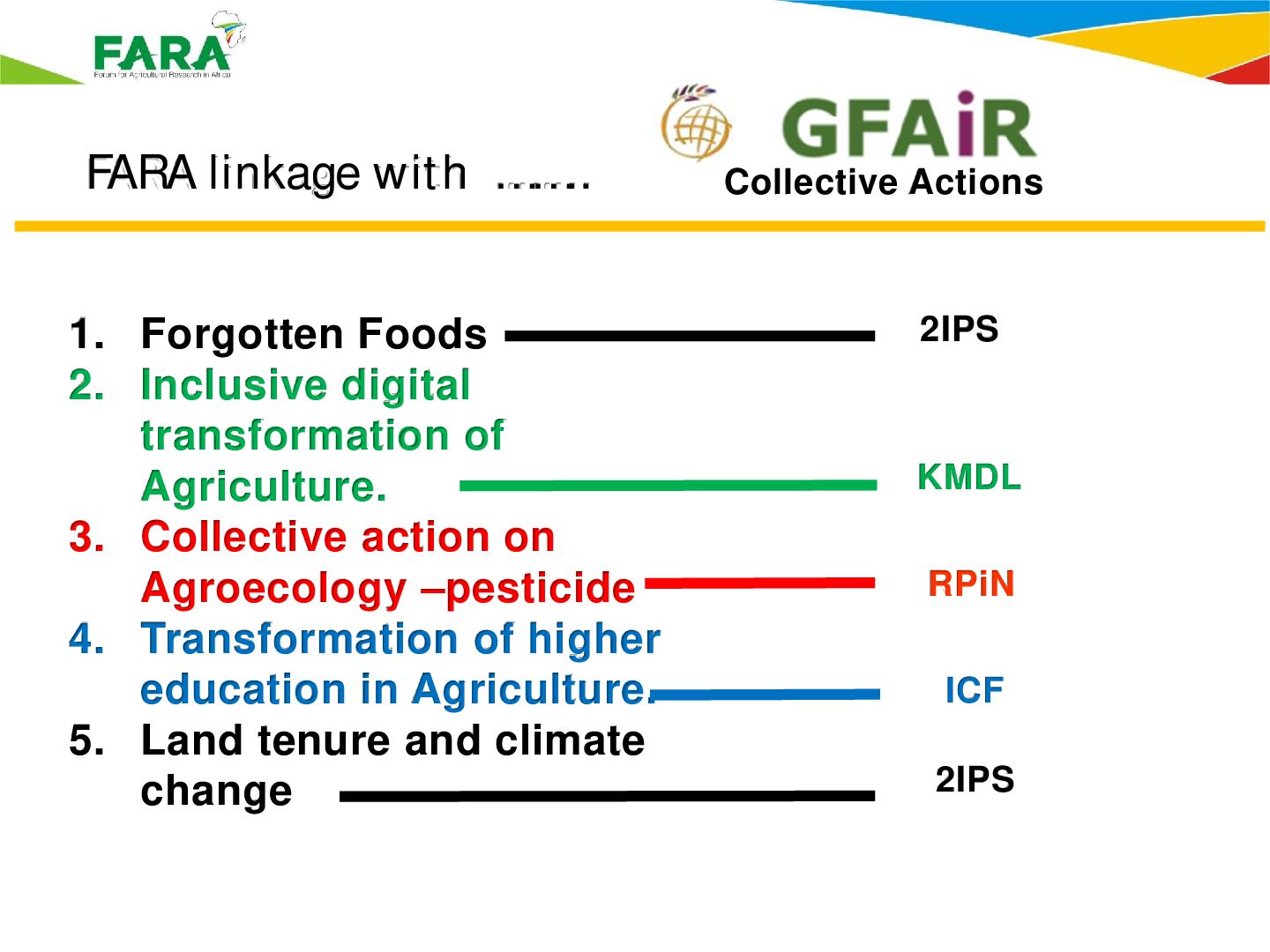
The presentation highlights an evolving African agricultural research agenda shaped by digitalization, climate change, agroecology and regenerative agriculture, gender and social inclusion, a rapidly growing youth population, and the vulnerability of African food systems. FARA positions itself as “one door” to research partnerships across 55 African countries and as a key African partner for GFAiR. The final slide identifies concrete areas of FARA–GFAiR Collective Action collaboration: Forgotten Foods, inclusive digital transformation of agriculture, agroecology/pesticides, transformation of higher education in agriculture, and land tenure and climate change.

More Decks by GFAiR - The Global Forum on Agricultural Research and Innovation

Other Decks in Research

Transcript

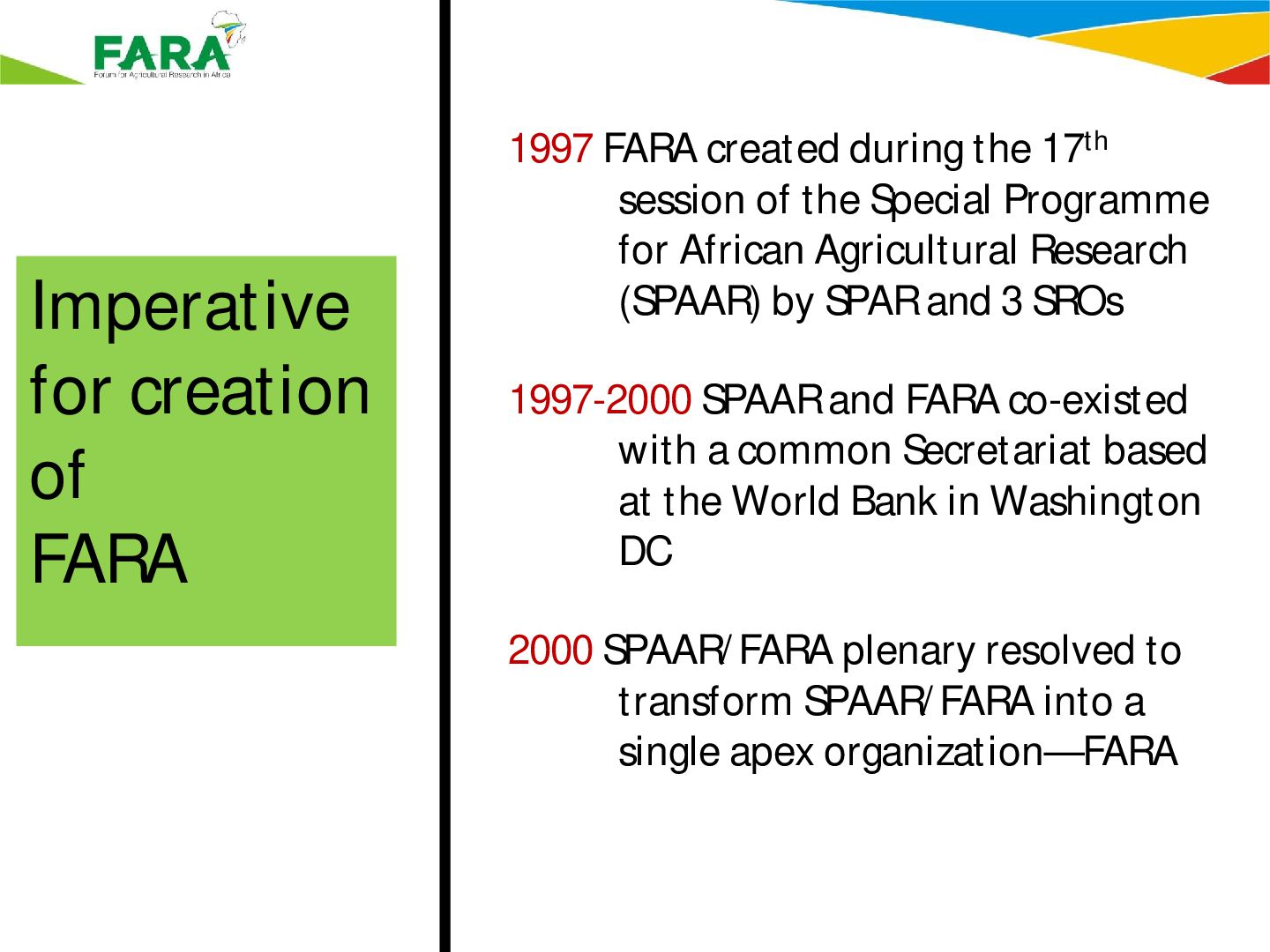
  1. Imperative for creation of FARA 1997 FARA created during the

    17th session of the Special Programme for African Agricultural Research (SPAAR) by SPAR and 3 SROs 1997-2000 SPAAR and FARA co-existed with a common Secretariat based at the World Bank in Washington DC 2000 SPAAR/FARA plenary resolved to transform SPAAR/FARA into a single apex organization—FARA
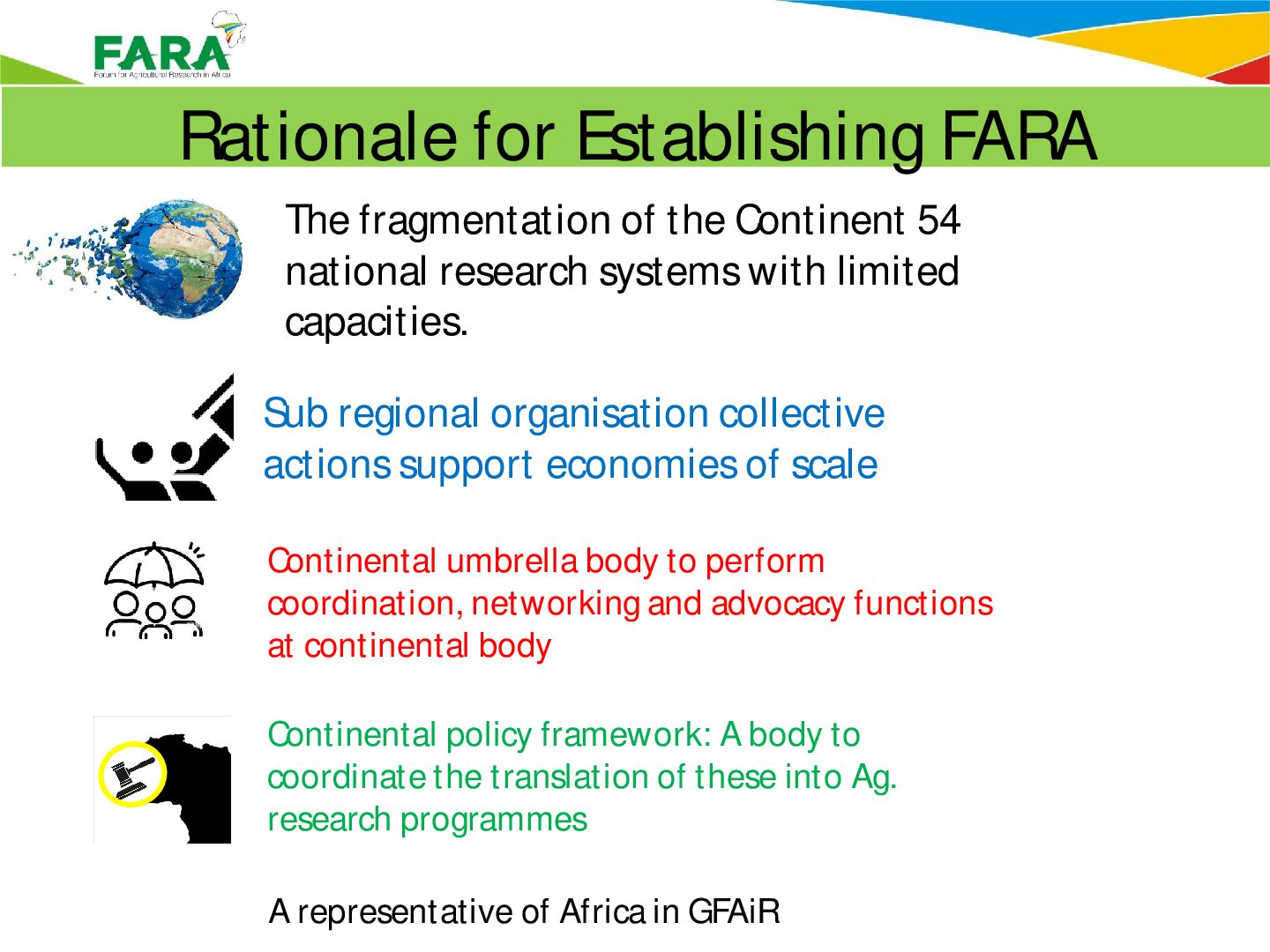
  2. Rationale for Establishing FARA The fragmentation of the Continent 54

    national research systems with limited capacities. Sub regional organisation collective actions support economies of scale Continental umbrella body to perform coordination, networking and advocacy functions at continental body Continental policy framework: A body to coordinate the translation of these into Ag. research programmes A representative of Africa in GFAiR
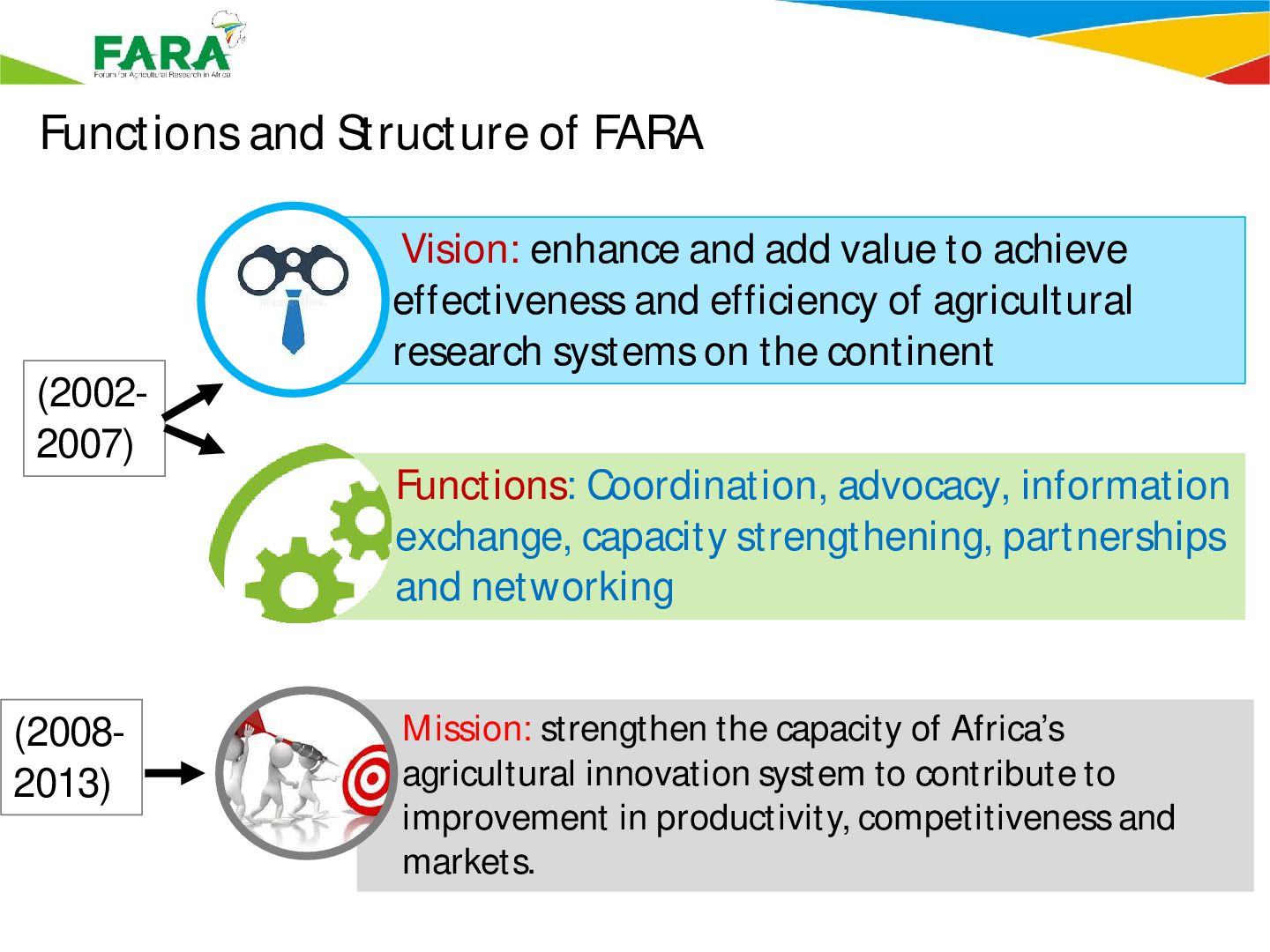
  3. Functions and Structure of FARA (20022007) (20082013) Vision: enhance and

    add value to achieve effectiveness and efficiency of agricultural research systems on the continent Functions: Coordination, advocacy, information exchange, capacity strengthening, partnerships and networking Mission: strengthen the capacity of Africa’s agricultural innovation system to contribute to improvement in productivity, competitiveness and markets.
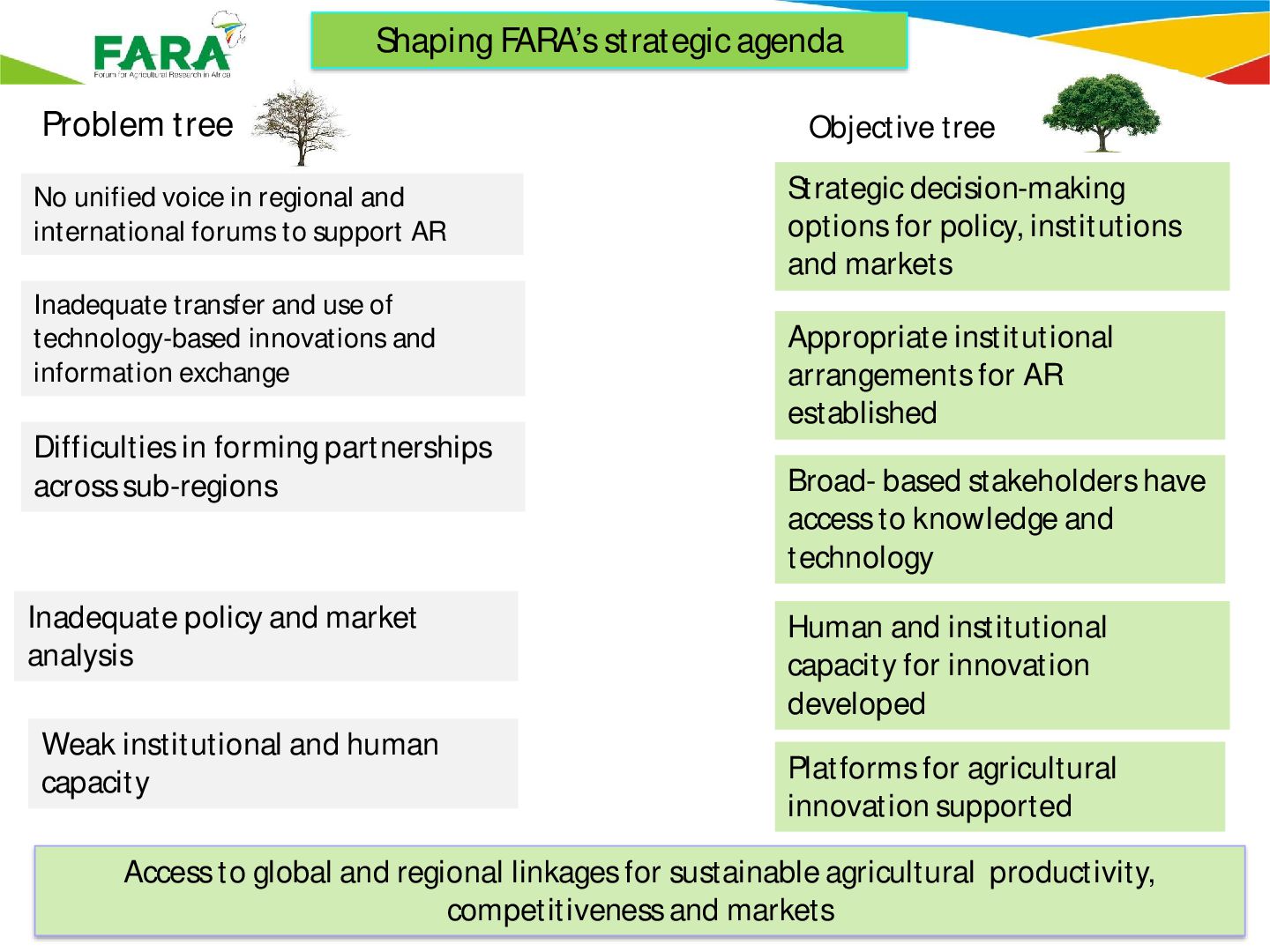
  4. Shaping FARA’s strategic agenda Problem tree No unified voice in

    regional and international forums to support AR Inadequate transfer and use of technology-based innovations and information exchange Difficulties in forming partnerships across sub-regions Inadequate policy and market analysis Weak institutional and human capacity Objective tree Strategic decision-making options for policy, institutions and markets Appropriate institutional arrangements for AR established Broad- based stakeholders have access to knowledge and technology Human and institutional capacity for innovation developed Platforms for agricultural innovation supported Access to global and regional linkages for sustainable agricultural productivity, competitiveness and markets
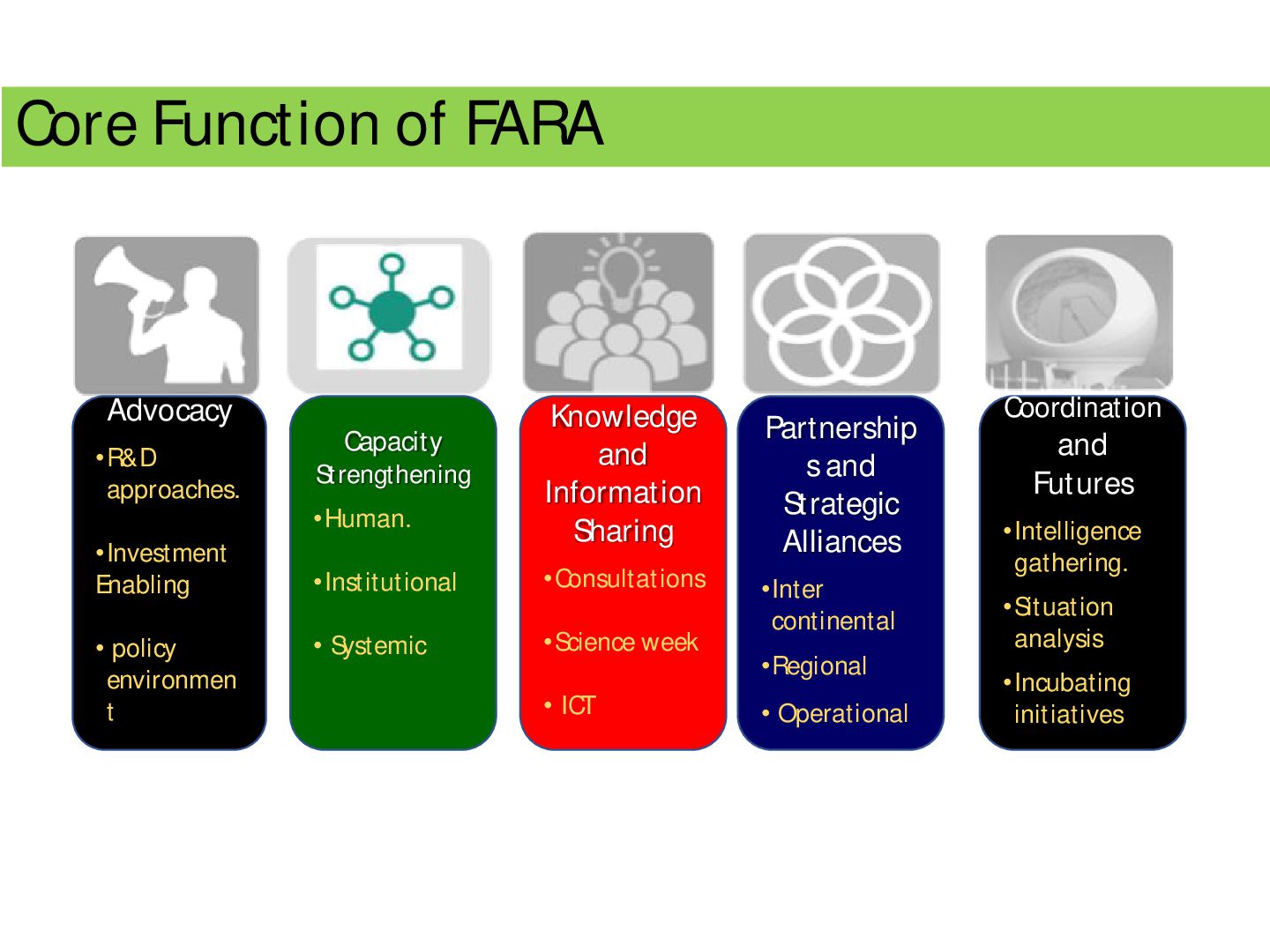
  5. Core Function of FARA Advocacy •R&D approaches. Capacity Strengthening •Human.

    •Investment Enabling • policy environmen t •Institutional • Systemic Knowledge and Information Sharing Partnership s and Strategic Alliances •Consultations •Inter continental •Science week • ICT •Regional • Operational Coordination and Futures •Intelligence gathering. •Situation analysis •Incubating initiatives
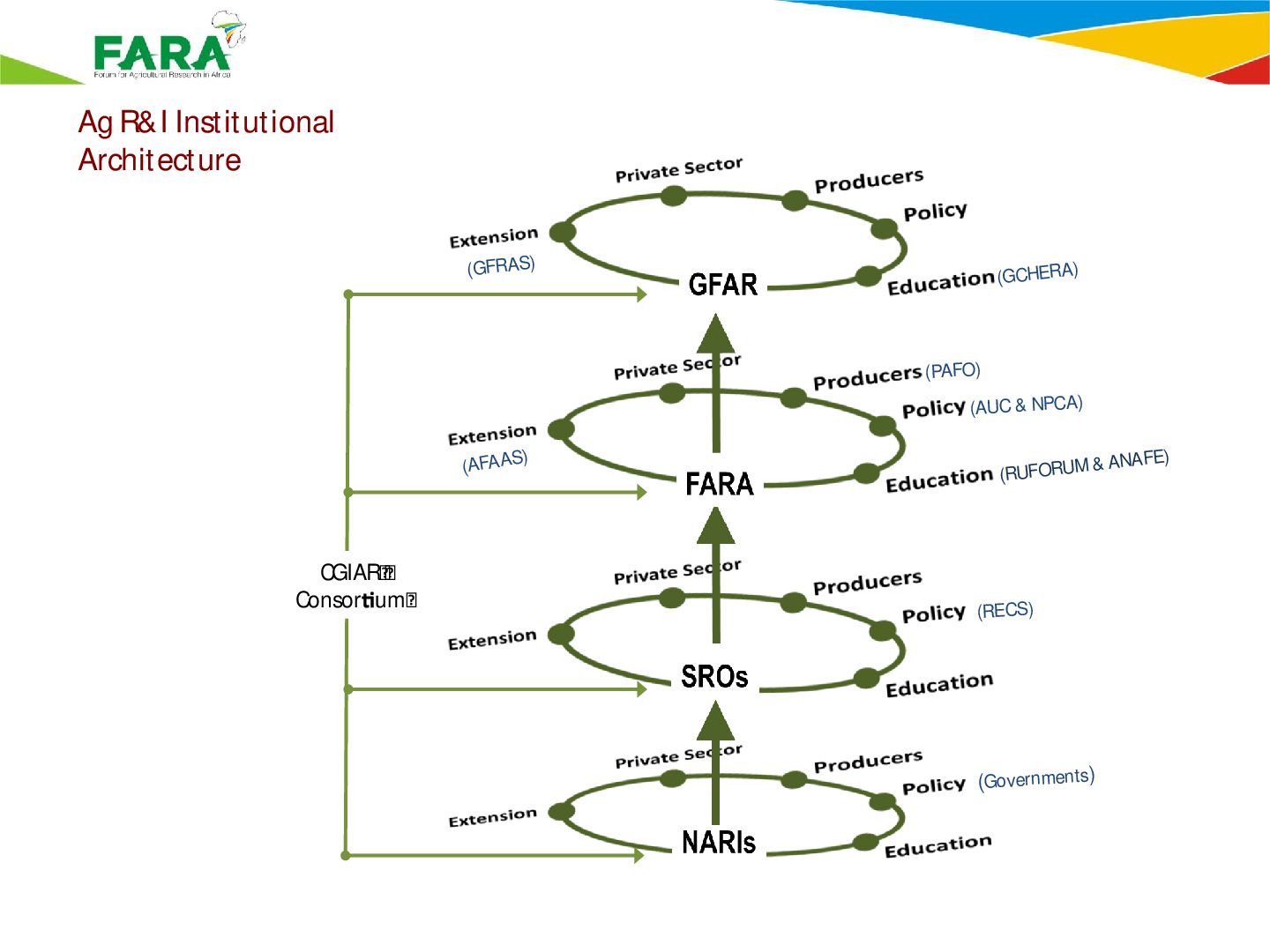
  6. Ag R&I Institutional Architecture OPTION 1 r (GFRAS) (GCHERA) (PAFO)

    (AUC & NPCA) (AFAAS) CGIAR Consor um (RUFORUM & AN A F E ) (RECS) (Governments)
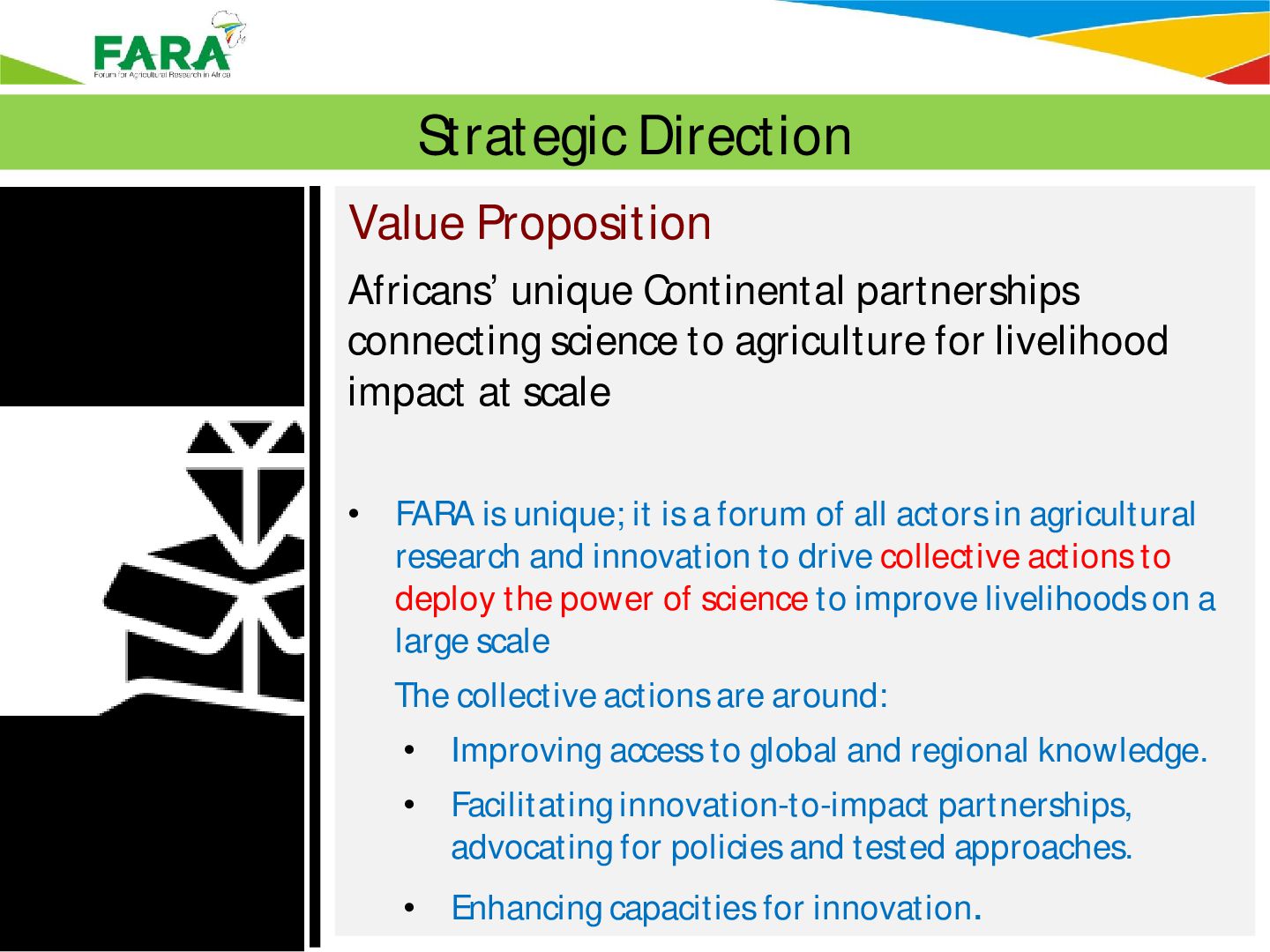
  7. Strategic Direction Value Proposition Africans’ unique Continental partnerships connecting science

    to agriculture for livelihood impact at scale • FARA is unique; it is a forum of all actors in agricultural research and innovation to drive collective actions to deploy the power of science to improve livelihoods on a large scale The collective actions are around: • Improving access to global and regional knowledge. • Facilitating innovation-to-impact partnerships, advocating for policies and tested approaches. • Enhancing capacities for innovation.
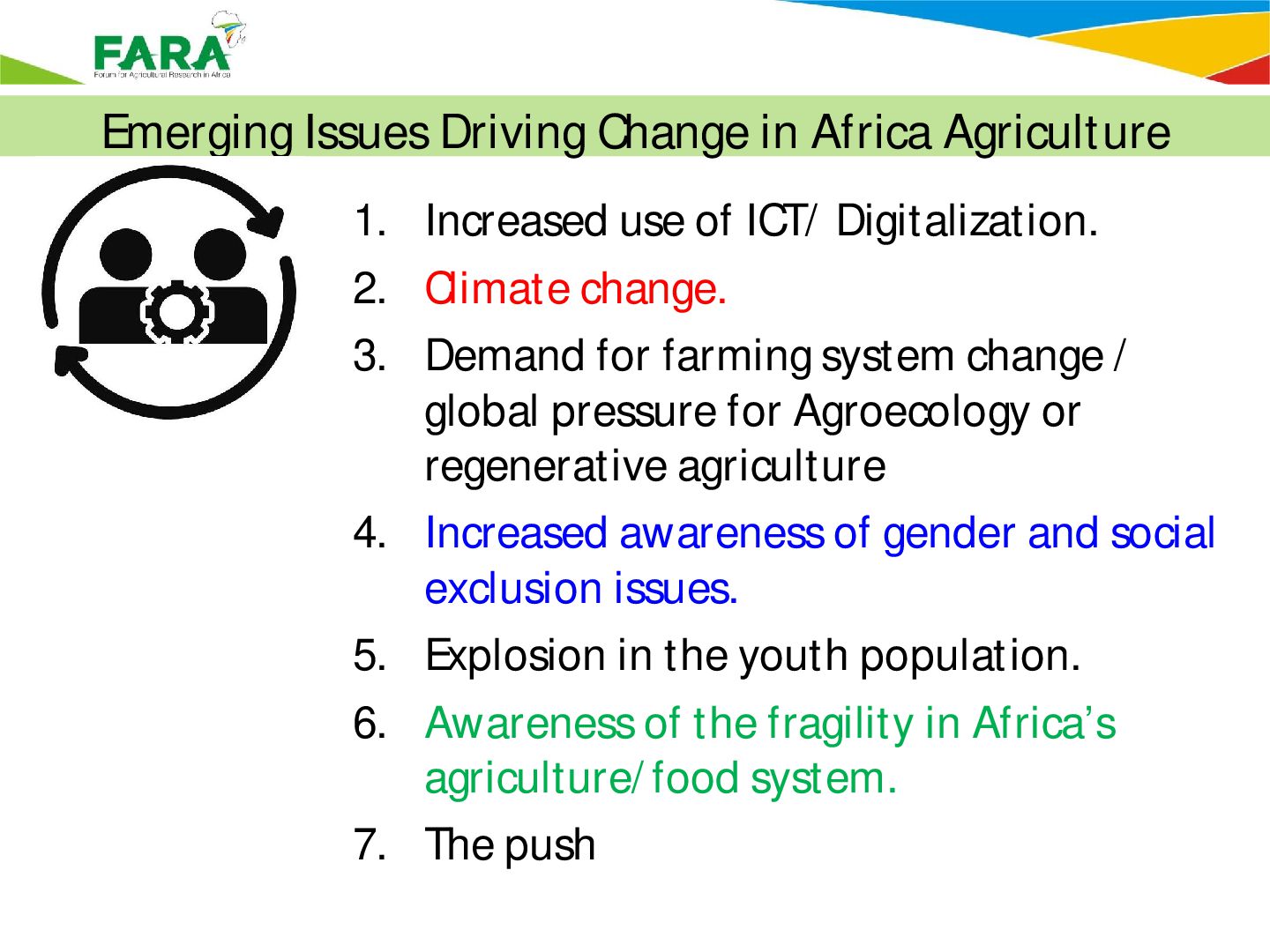
  8. Emerging Issues Driving Change in Africa Agriculture 1. Increased use

    of ICT/ Digitalization. 2. Climate change. 3. Demand for farming system change / global pressure for Agroecology or regenerative agriculture 4. Increased awareness of gender and social exclusion issues. 5. Explosion in the youth population. 6. Awareness of the fragility in Africa’s agriculture/food system. 7. The push
  9. FARA linkage with …….. 1. Forgotten Foods 2. Inclusive digital

    transformation of Agriculture. 3. Collective action on Agroecology –pesticide 4. Transformation of higher education in Agriculture. 5. Land tenure and climate change Collective Actions 2IPS KMDL RPiN ICF 2IPS