Upgrade to Pro
— share decks privately, control downloads, hide ads and more …
Speaker Deck
Sign up for free
Menu
Search
Features
All features
Private URLs
Password Protection
Custom URLS
Scheduled publishing
Remove Branding
Restrict embedding
Deck Collections
Notes
Features
All features
Private URLs
Password Protection
Custom URLS
Scheduled publishing
Remove Branding
Restrict embedding
Deck Collections
Notes
Explore
Featured decks
Featured speakers
Programming
Technology
Storyboards
Explore
Featured decks
Featured speakers
Programming
Technology
Storyboards
Pricing
Search
Sign in
Sign up for free
Summary for Computational Genomics with R chapt...
Search
Sponsored
·
Your Podcast. Everywhere. Effortlessly.
Share. Educate. Inspire. Entertain. You do you. We'll handle the rest.
→
Funakoshi
December 05, 2020
Technology
290
0
Share
Embed
Copy iframe code
Copy JS code
Copy link
Start on current slide
Summary for Computational Genomics with R chapter 6
Funakoshi
December 05, 2020
Other Decks in Technology
See All in Technology
ブラウザとサーバーから考えるAI時代のフロントエンド監視
shogo4131
3
940
DevelopersIO 2026 知識の地図を描く ─ オントロジーとは何か?
ishikawa_satoru
1
1.7k
パッチ更新でterraform initが落ちた日
grimoh
1
140
Rust で関数型ドメインモデリング
takonda
0
140
AIカンパニーへの転換を支えた、エンジニアの仕事の再定義
kworkdev
PRO
2
1.2k
hackers_champloo_2026_tidb
makocchi
0
160
スプシの手作業からの解脱 ~更新はClaude Codeに、見せ方と使い方はGASアプリに任せる~
kentarofujii
0
150
Active Record Connection Adaptersにおける長年の課題に再び取り組む
yahonda
0
150
go-sqletch
moznion
0
140
Claude の新機能を、 出た日に触って社内に届けるまで
rfdnxbro
1
170
SAENM ~Jupyterで残すPoCの試行錯誤、未来の自分と仲間を助ける記録!~
terapyon
0
110
OptunaHub: ブラックボックス最適化のためのプラットフォーム
pfn
PRO
0
140
Featured
See All Featured
Fashionably flexible responsive web design (full day workshop)
malarkey
409
67k
A designer walks into a library…
pauljervisheath
211
25k
Hiding What from Whom? A Critical Review of the History of Programming languages for Music
tomoyanonymous
3
1.3k
Learning to Love Humans: Emotional Interface Design
aarron
275
41k
Fireside Chat
paigeccino
43
4.1k
The State of eCommerce SEO: How to Win in Today's Products SERPs - #SEOweek
aleyda
2
12k
The Spectacular Lies of Maps
axbom
PRO
1
1.1k
How to Grow Your eCommerce with AI & Automation
katarinadahlin
PRO
2
330
How to Get Subject Matter Experts Bought In and Actively Contributing to SEO & PR Initiatives.
livdayseo
0
220
The #1 spot is gone: here's how to win anyway
tamaranovitovic
4
1.2k
The AI Revolution Will Not Be Monopolized: How open-source beats economies of scale, even for LLMs
inesmontani
PRO
3
3.8k
AI in Enterprises - Java and Open Source to the Rescue
ivargrimstad
0
1.5k
Transcript
Chapter 6 Operations on Genomic Intervals and Genome Arithmetic Masafumi
Funakoshi
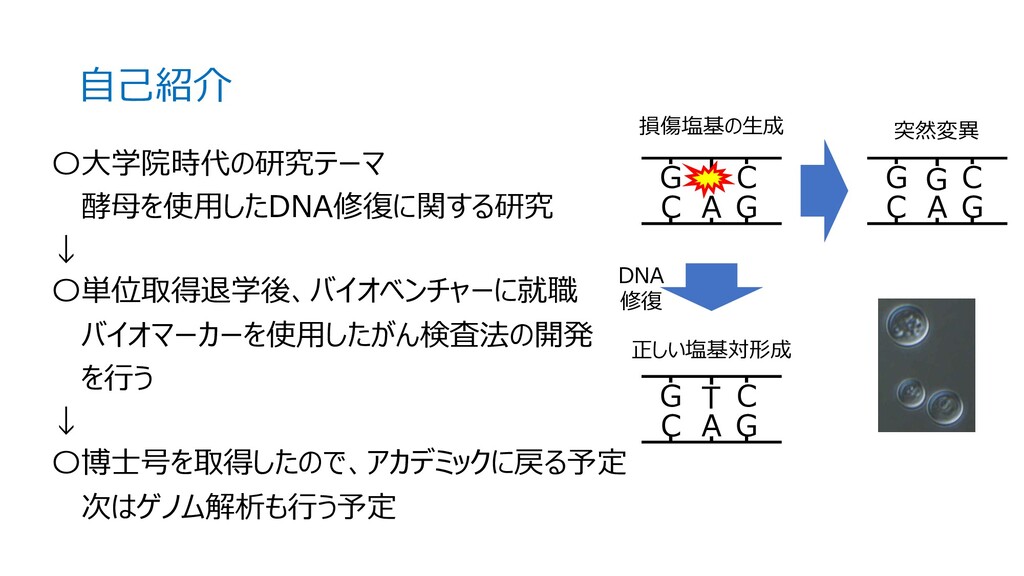
自己紹介 〇大学院時代の研究テーマ 酵母を使用したDNA修復に関する研究 ↓ 〇単位取得退学後、バイオベンチャーに就職 バイオマーカーを使用したがん検査法の開発 を行う ↓ 〇博士号を取得したので、アカデミックに戻る予定 次はゲノム解析も行う予定
A C G C G A C G C G T A C G C G G 損傷塩基の生成 突然変異 正しい塩基対形成 DNA 修復
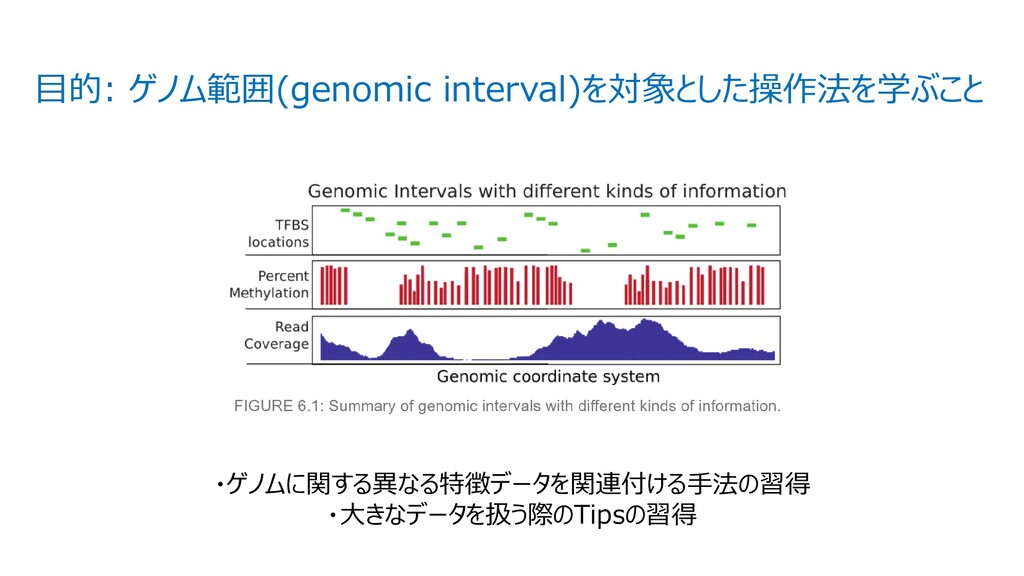
目的: ゲノム範囲(genomic interval)を対象とした操作法を学ぶこと ・ゲノムに関する異なる特徴データを関連付ける手法の習得 ・大きなデータを扱う際のTipsの習得
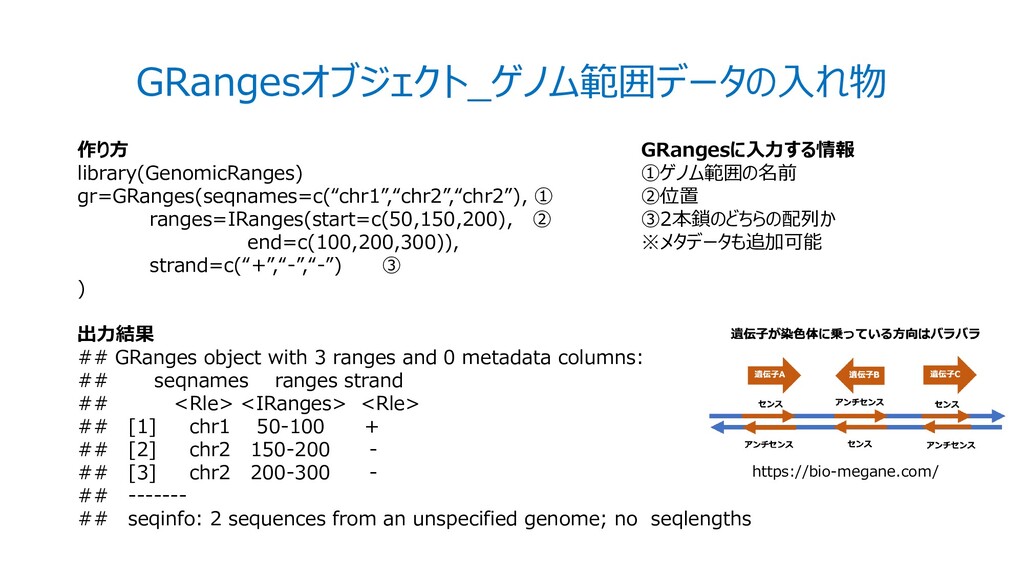
GRangesオブジェクト_ゲノム範囲データの入れ物 作り方 library(GenomicRanges) gr=GRanges(seqnames=c(“chr1”,“chr2”,“chr2”), ① ranges=IRanges(start=c(50,150,200), ➁ end=c(100,200,300)), strand=c(“+”,“-”,“-”) ➂
) 出力結果 ## GRanges object with 3 ranges and 0 metadata columns: ## seqnames ranges strand ## <Rle> <IRanges> <Rle> ## [1] chr1 50-100 + ## [2] chr2 150-200 - ## [3] chr2 200-300 - ## ------- ## seqinfo: 2 sequences from an unspecified genome; no seqlengths GRangesに入力する情報 ①ゲノム範囲の名前 ➁位置 ➂2本鎖のどちらの配列か ※メタデータも追加可能 https://bio-megane.com/
GRangesオブジェクトの使用に関して ①表データに近い扱いが可能 →gr[1:2,], gr$name1といった 特定のデータへのアクセスが可能 ➁基本のデータ以外にメタデータを追加可能 mcols(gr)=DataFrame(name1=c("pax6","meis1","zic4"), score2=c(1,2,3)) Rstudioの操作画面
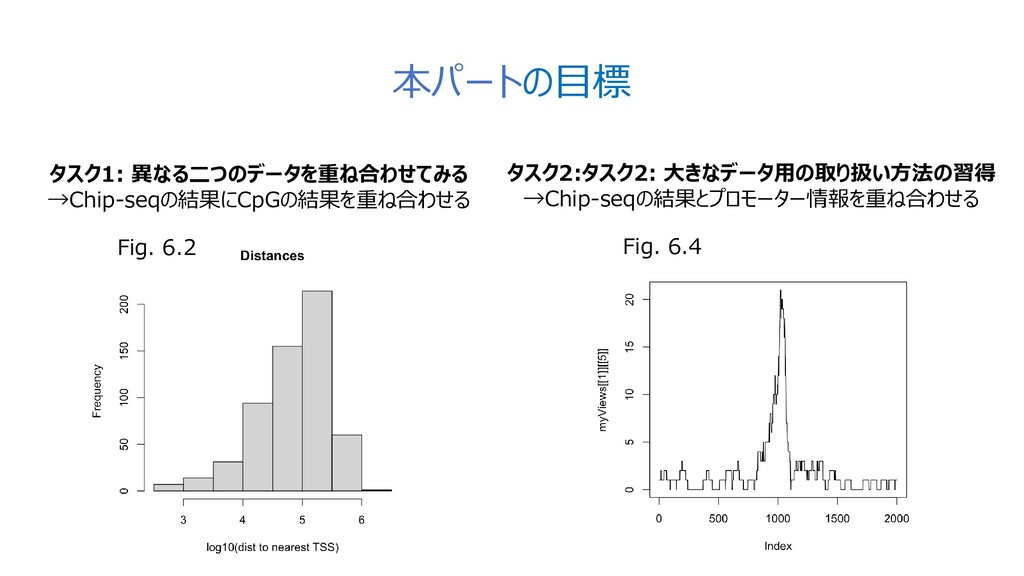
本パートの目標 タスク1: 異なる二つのデータを重ね合わせてみる →Chip-seqの結果にCpGの結果を重ね合わせる Fig. 6.2 タスク2:タスク2: 大きなデータ用の取り扱い方法の習得 →Chip-seqの結果とプロモーター情報を重ね合わせる Fig.
6.4
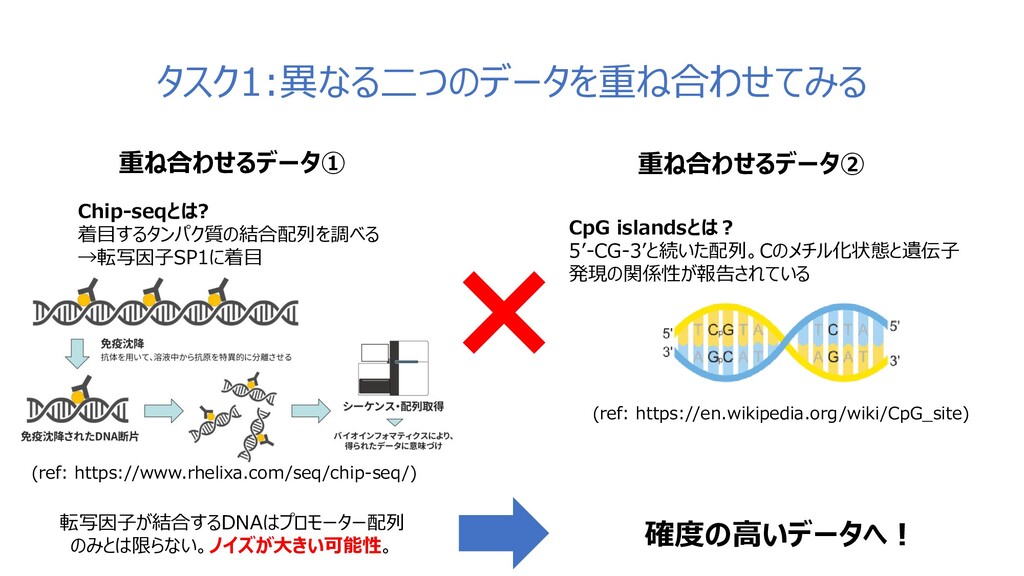
タスク1:異なる二つのデータを重ね合わせてみる Chip-seqとは? 着目するタンパク質の結合配列を調べる →転写因子SP1に着目 (ref: https://www.rhelixa.com/seq/chip-seq/) 重ね合わせるデータ① 重ね合わせるデータ➁ CpG islandsとは?
5’-CG-3’と続いた配列。Cのメチル化状態と遺伝子 発現の関係性が報告されている (ref: https://en.wikipedia.org/wiki/CpG_site) 転写因子が結合するDNAはプロモーター配列 のみとは限らない。ノイズが大きい可能性。 確度の高いデータへ!
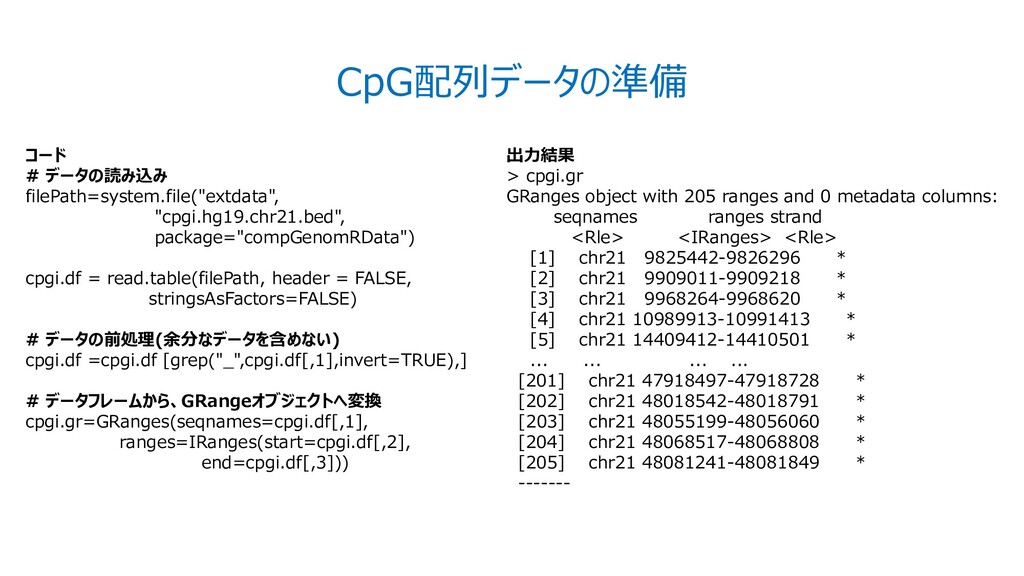
CpG配列データの準備 コード # データの読み込み filePath=system.file("extdata", "cpgi.hg19.chr21.bed", package="compGenomRData") cpgi.df = read.table(filePath,
header = FALSE, stringsAsFactors=FALSE) # データの前処理(余分なデータを含めない) cpgi.df =cpgi.df [grep("_",cpgi.df[,1],invert=TRUE),] # データフレームから、GRangeオブジェクトへ変換 cpgi.gr=GRanges(seqnames=cpgi.df[,1], ranges=IRanges(start=cpgi.df[,2], end=cpgi.df[,3])) 出力結果 > cpgi.gr GRanges object with 205 ranges and 0 metadata columns: seqnames ranges strand <Rle> <IRanges> <Rle> [1] chr21 9825442-9826296 * [2] chr21 9909011-9909218 * [3] chr21 9968264-9968620 * [4] chr21 10989913-10991413 * [5] chr21 14409412-14410501 * ... ... ... ... [201] chr21 47918497-47918728 * [202] chr21 48018542-48018791 * [203] chr21 48055199-48056060 * [204] chr21 48068517-48068808 * [205] chr21 48081241-48081849 * -------
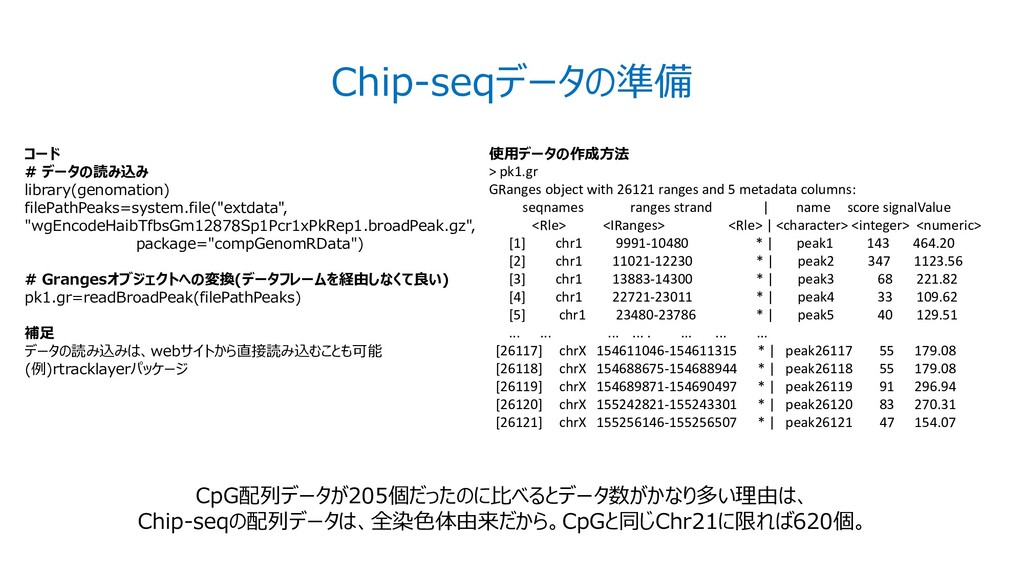
Chip-seqデータの準備 コード # データの読み込み library(genomation) filePathPeaks=system.file("extdata", "wgEncodeHaibTfbsGm12878Sp1Pcr1xPkRep1.broadPeak.gz", package="compGenomRData") # Grangesオブジェクトへの変換(データフレームを経由しなくて良い)
pk1.gr=readBroadPeak(filePathPeaks) 補足 データの読み込みは、webサイトから直接読み込むことも可能 (例)rtracklayerパッケージ CpG配列データが205個だったのに比べるとデータ数がかなり多い理由は、 Chip-seqの配列データは、全染色体由来だから。CpGと同じChr21に限れば620個。 使用データの作成方法 > pk1.gr GRanges object with 26121 ranges and 5 metadata columns: seqnames ranges strand | name score signalValue <Rle> <IRanges> <Rle> | <character> <integer> <numeric> [1] chr1 9991-10480 * | peak1 143 464.20 [2] chr1 11021-12230 * | peak2 347 1123.56 [3] chr1 13883-14300 * | peak3 68 221.82 [4] chr1 22721-23011 * | peak4 33 109.62 [5] chr1 23480-23786 * | peak5 40 129.51 ... ... ... ... . ... ... ... [26117] chrX 154611046-154611315 * | peak26117 55 179.08 [26118] chrX 154688675-154688944 * | peak26118 55 179.08 [26119] chrX 154689871-154690497 * | peak26119 91 296.94 [26120] chrX 155242821-155243301 * | peak26120 83 270.31 [26121] chrX 155256146-155256507 * | peak26121 47 154.07
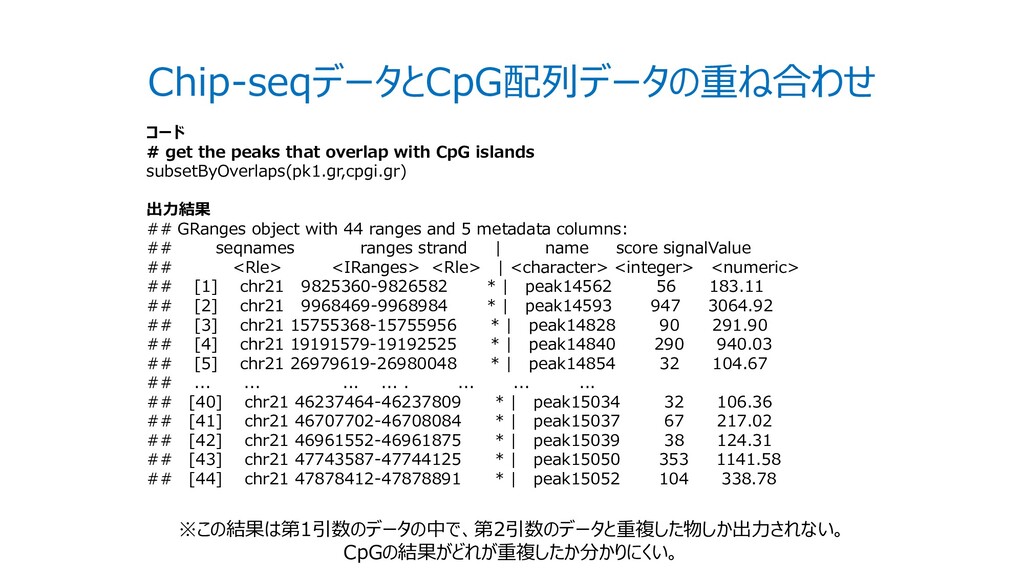
Chip-seqデータとCpG配列データの重ね合わせ コード # get the peaks that overlap with CpG
islands subsetByOverlaps(pk1.gr,cpgi.gr) 出力結果 ## GRanges object with 44 ranges and 5 metadata columns: ## seqnames ranges strand | name score signalValue ## <Rle> <IRanges> <Rle> | <character> <integer> <numeric> ## [1] chr21 9825360-9826582 * | peak14562 56 183.11 ## [2] chr21 9968469-9968984 * | peak14593 947 3064.92 ## [3] chr21 15755368-15755956 * | peak14828 90 291.90 ## [4] chr21 19191579-19192525 * | peak14840 290 940.03 ## [5] chr21 26979619-26980048 * | peak14854 32 104.67 ## ... ... ... ... . ... ... ... ## [40] chr21 46237464-46237809 * | peak15034 32 106.36 ## [41] chr21 46707702-46708084 * | peak15037 67 217.02 ## [42] chr21 46961552-46961875 * | peak15039 38 124.31 ## [43] chr21 47743587-47744125 * | peak15050 353 1141.58 ## [44] chr21 47878412-47878891 * | peak15052 104 338.78 ※この結果は第1引数のデータの中で、第2引数のデータと重複した物しか出力されない。 CpGの結果がどれが重複したか分かりにくい。
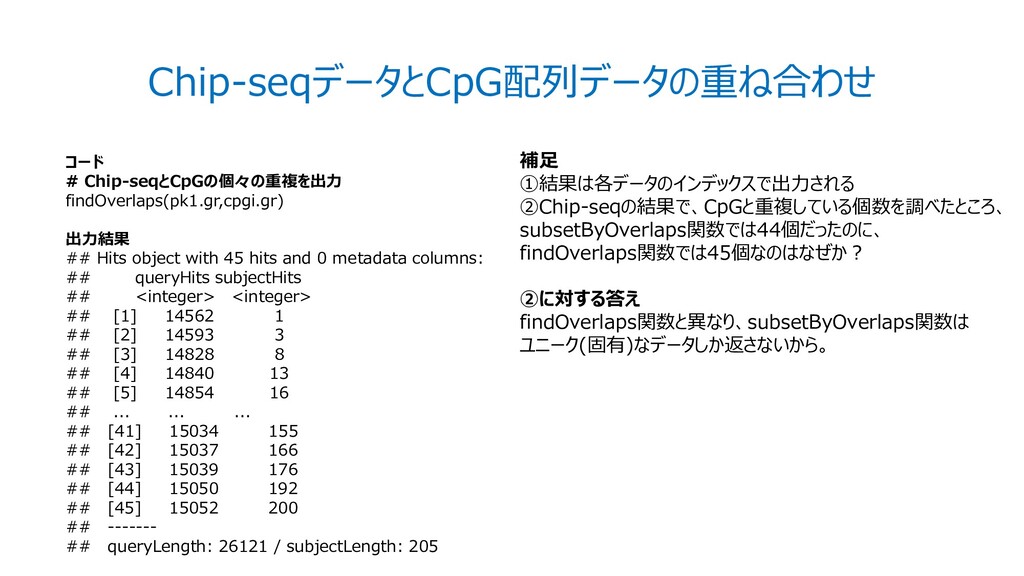
Chip-seqデータとCpG配列データの重ね合わせ コード # Chip-seqとCpGの個々の重複を出力 findOverlaps(pk1.gr,cpgi.gr) 出力結果 ## Hits object with
45 hits and 0 metadata columns: ## queryHits subjectHits ## <integer> <integer> ## [1] 14562 1 ## [2] 14593 3 ## [3] 14828 8 ## [4] 14840 13 ## [5] 14854 16 ## ... ... ... ## [41] 15034 155 ## [42] 15037 166 ## [43] 15039 176 ## [44] 15050 192 ## [45] 15052 200 ## ------- ## queryLength: 26121 / subjectLength: 205 補足 ①結果は各データのインデックスで出力される ➁Chip-seqの結果で、CpGと重複している個数を調べたところ、 subsetByOverlaps関数では44個だったのに、 findOverlaps関数では45個なのはなぜか? ➁に対する答え findOverlaps関数と異なり、subsetByOverlaps関数は ユニーク(固有)なデータしか返さないから。
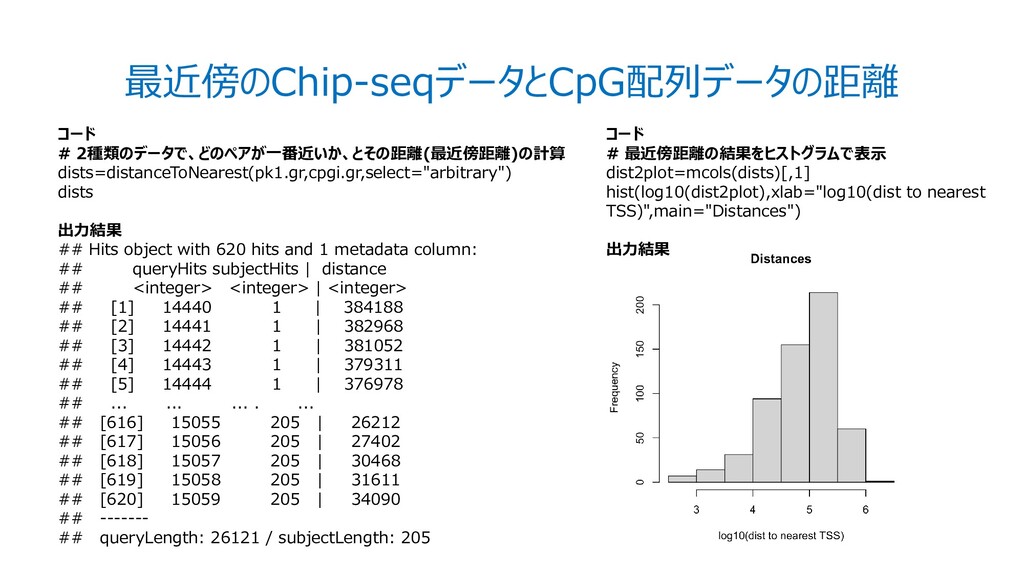
最近傍のChip-seqデータとCpG配列データの距離 コード # 2種類のデータで、どのペアが一番近いか、とその距離(最近傍距離)の計算 dists=distanceToNearest(pk1.gr,cpgi.gr,select="arbitrary") dists 出力結果 ## Hits object
with 620 hits and 1 metadata column: ## queryHits subjectHits | distance ## <integer> <integer> | <integer> ## [1] 14440 1 | 384188 ## [2] 14441 1 | 382968 ## [3] 14442 1 | 381052 ## [4] 14443 1 | 379311 ## [5] 14444 1 | 376978 ## ... ... ... . ... ## [616] 15055 205 | 26212 ## [617] 15056 205 | 27402 ## [618] 15057 205 | 30468 ## [619] 15058 205 | 31611 ## [620] 15059 205 | 34090 ## ------- ## queryLength: 26121 / subjectLength: 205 コード # 最近傍距離の結果をヒストグラムで表示 dist2plot=mcols(dists)[,1] hist(log10(dist2plot),xlab="log10(dist to nearest TSS)",main="Distances") 出力結果
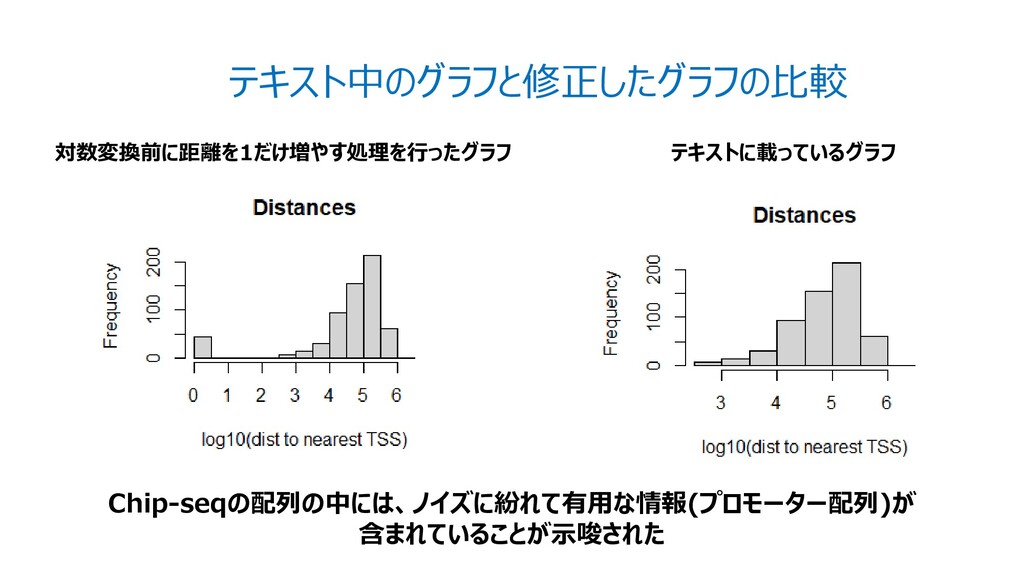
テキスト中では距離をそのまま対数変換している #対数変換前のChip-seqとCpGデータの距離データ SP1_CpGDist=dists@elementMetadata@listData[["distance"]] > SP1_CpGDist [1] 384188 382968 381052 379311
376978 374944 374145 [8] 373317 372647 371220 370004 369582 367584 366264 [15] 365610 358845 339002 338427 337502 336888 257422 [22] 253151 250232 243192 240688 240311 239926 238821 …… [582] 20641 25538 49421 50280 43945 32914 0 [589] 555 5001 0 0 13507 2372 0 [596] 11905 34066 0 7656 0 7713 72171 [603] 99759 164844 59426 2383 1065 1323 18214 [610] 23869 0 17058 0 9697 22640 26212 [617] 27402 30468 31611 34090 #対数変換後のChip-seqとCpGデータの距離データ log10(SP1_CpGDist) [1] 5.584544 5.583162 5.580984 5.578995 5.576316 5.573966 [7] 5.573040 5.572078 5.571298 5.569631 5.568206 5.567711 [13] 5.565357 5.563794 5.563018 5.554907 5.530202 5.529465 [19] 5.528276 5.527486 5.410646 5.403380 5.398343 5.385949 …… [583] 4.407187 4.693912 4.701395 4.642909 4.517381 -Inf [589] 2.744293 3.699057 -Inf -Inf 4.130559 3.375115 [595] -Inf 4.075729 4.532321 -Inf 3.884002 -Inf [601] 3.887223 4.858363 4.998952 5.217073 4.773976 3.377124 [607] 3.027350 3.121560 4.260405 4.377834 -Inf 4.231928 [613] -Inf 3.986637 4.354876 4.418500 4.437782 4.483844 [619] 4.499838 4.532627 対数変換により、Chip-seqとCpGデータで一致している配列は 距離が本来0のところを無限にすり替えられてしまった。
テキスト中のグラフと修正したグラフの比較 Chip-seqの配列の中には、ノイズに紛れて有用な情報(プロモーター配列)が 含まれていることが示唆された 対数変換前に距離を1だけ増やす処理を行ったグラフ テキストに載っているグラフ
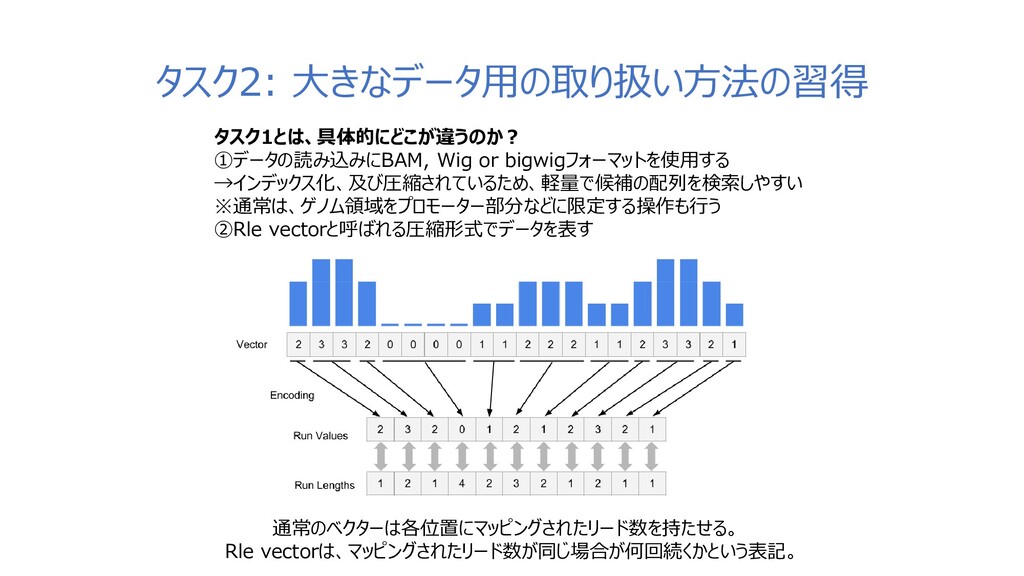
タスク2: 大きなデータ用の取り扱い方法の習得 タスク1とは、具体的にどこが違うのか? ①データの読み込みにBAM, Wig or bigwigフォーマットを使用する →インデックス化、及び圧縮されているため、軽量で候補の配列を検索しやすい ※通常は、ゲノム領域をプロモーター部分などに限定する操作も行う ➁Rle
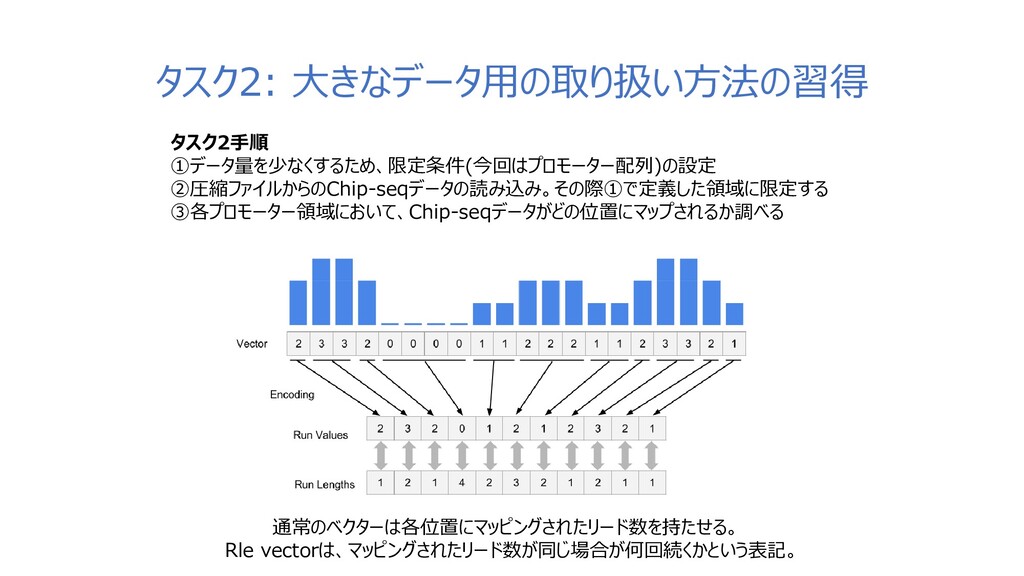
vectorと呼ばれる圧縮形式でデータを表す 通常のベクターは各位置にマッピングされたリード数を持たせる。 Rle vectorは、マッピングされたリード数が同じ場合が何回続くかという表記。
タスク2: 大きなデータ用の取り扱い方法の習得 タスク2手順 ①データ量を少なくするため、限定条件(今回はプロモーター配列)の設定 ➁圧縮ファイルからのChip-seqデータの読み込み。その際①で定義した領域に限定する ➂各プロモーター領域において、Chip-seqデータがどの位置にマップされるか調べる 通常のベクターは各位置にマッピングされたリード数を持たせる。 Rle vectorは、マッピングされたリード数が同じ場合が何回続くかという表記。
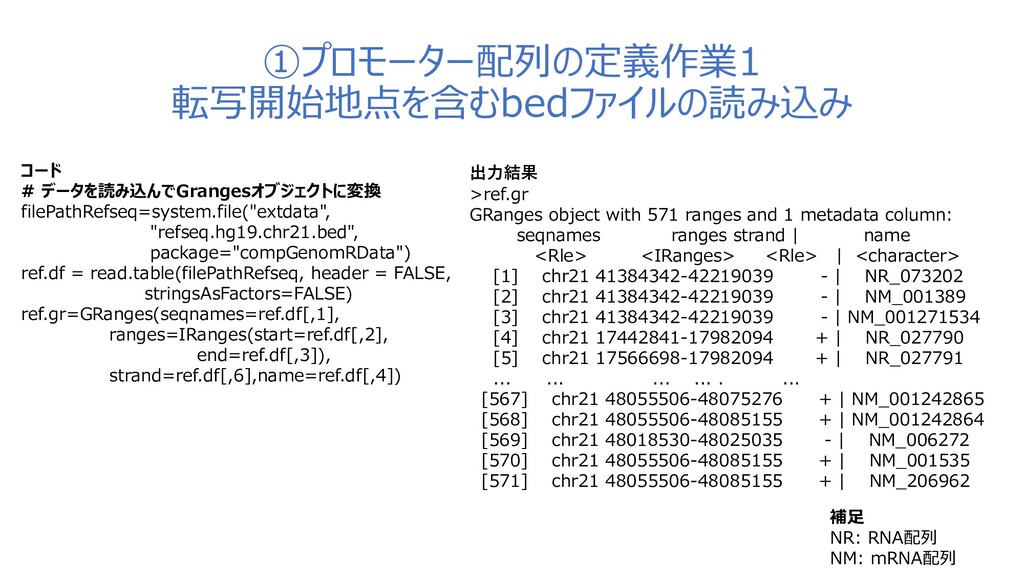
①プロモーター配列の定義作業1 転写開始地点を含むbedファイルの読み込み コード # データを読み込んでGrangesオブジェクトに変換 filePathRefseq=system.file("extdata", "refseq.hg19.chr21.bed", package="compGenomRData") ref.df =
read.table(filePathRefseq, header = FALSE, stringsAsFactors=FALSE) ref.gr=GRanges(seqnames=ref.df[,1], ranges=IRanges(start=ref.df[,2], end=ref.df[,3]), strand=ref.df[,6],name=ref.df[,4]) 補足 NR: RNA配列 NM: mRNA配列 出力結果 >ref.gr GRanges object with 571 ranges and 1 metadata column: seqnames ranges strand | name <Rle> <IRanges> <Rle> | <character> [1] chr21 41384342-42219039 - | NR_073202 [2] chr21 41384342-42219039 - | NM_001389 [3] chr21 41384342-42219039 - | NM_001271534 [4] chr21 17442841-17982094 + | NR_027790 [5] chr21 17566698-17982094 + | NR_027791 ... ... ... ... . ... [567] chr21 48055506-48075276 + | NM_001242865 [568] chr21 48055506-48085155 + | NM_001242864 [569] chr21 48018530-48025035 - | NM_006272 [570] chr21 48055506-48085155 + | NM_001535 [571] chr21 48055506-48085155 + | NM_206962
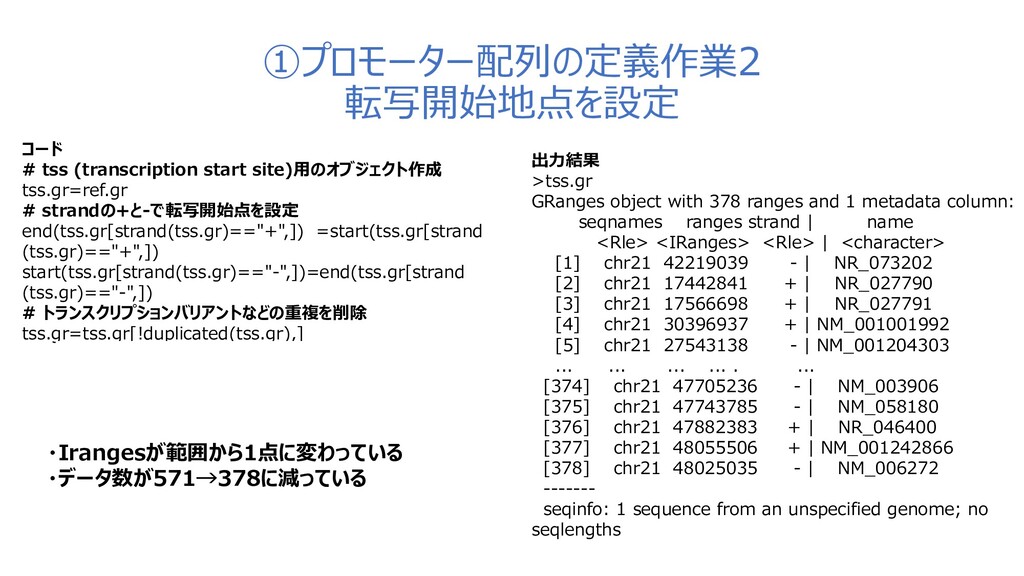
①プロモーター配列の定義作業2 転写開始地点を設定 コード # tss (transcription start site)用のオブジェクト作成 tss.gr=ref.gr #
strandの+と-で転写開始点を設定 end(tss.gr[strand(tss.gr)=="+",]) =start(tss.gr[strand (tss.gr)=="+",]) start(tss.gr[strand(tss.gr)=="-",])=end(tss.gr[strand (tss.gr)=="-",]) # トランスクリプションバリアントなどの重複を削除 tss.gr=tss.gr[!duplicated(tss.gr),] 出力結果 >tss.gr GRanges object with 378 ranges and 1 metadata column: seqnames ranges strand | name <Rle> <IRanges> <Rle> | <character> [1] chr21 42219039 - | NR_073202 [2] chr21 17442841 + | NR_027790 [3] chr21 17566698 + | NR_027791 [4] chr21 30396937 + | NM_001001992 [5] chr21 27543138 - | NM_001204303 ... ... ... ... . ... [374] chr21 47705236 - | NM_003906 [375] chr21 47743785 - | NM_058180 [376] chr21 47882383 + | NR_046400 [377] chr21 48055506 + | NM_001242866 [378] chr21 48025035 - | NM_006272 ------- seqinfo: 1 sequence from an unspecified genome; no seqlengths https://bio-megane.com/ http://www.seibutsushi.net/blog/2008/08/535.html ・Irangesが範囲から1点に変わっている ・データ数が571→378に減っている
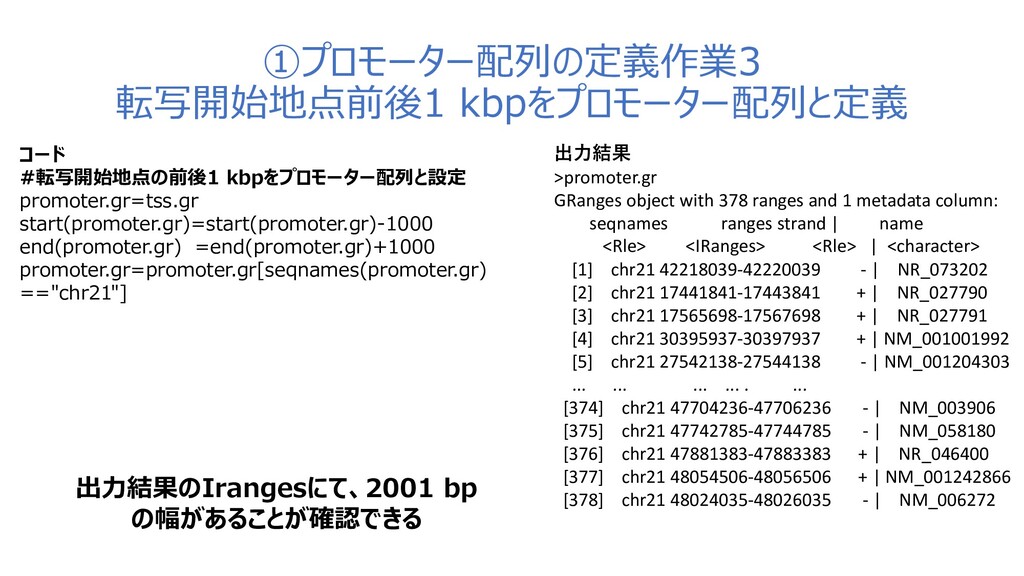
①プロモーター配列の定義作業3 転写開始地点前後1 kbpをプロモーター配列と定義 コード #転写開始地点の前後1 kbpをプロモーター配列と設定 promoter.gr=tss.gr start(promoter.gr)=start(promoter.gr)-1000 end(promoter.gr) =end(promoter.gr)+1000
promoter.gr=promoter.gr[seqnames(promoter.gr) =="chr21"] 出力結果 >promoter.gr GRanges object with 378 ranges and 1 metadata column: seqnames ranges strand | name <Rle> <IRanges> <Rle> | <character> [1] chr21 42218039-42220039 - | NR_073202 [2] chr21 17441841-17443841 + | NR_027790 [3] chr21 17565698-17567698 + | NR_027791 [4] chr21 30395937-30397937 + | NM_001001992 [5] chr21 27542138-27544138 - | NM_001204303 ... ... ... ... . ... [374] chr21 47704236-47706236 - | NM_003906 [375] chr21 47742785-47744785 - | NM_058180 [376] chr21 47881383-47883383 + | NR_046400 [377] chr21 48054506-48056506 + | NM_001242866 [378] chr21 48024035-48026035 - | NM_006272 出力結果のIrangesにて、2001 bp の幅があることが確認できる
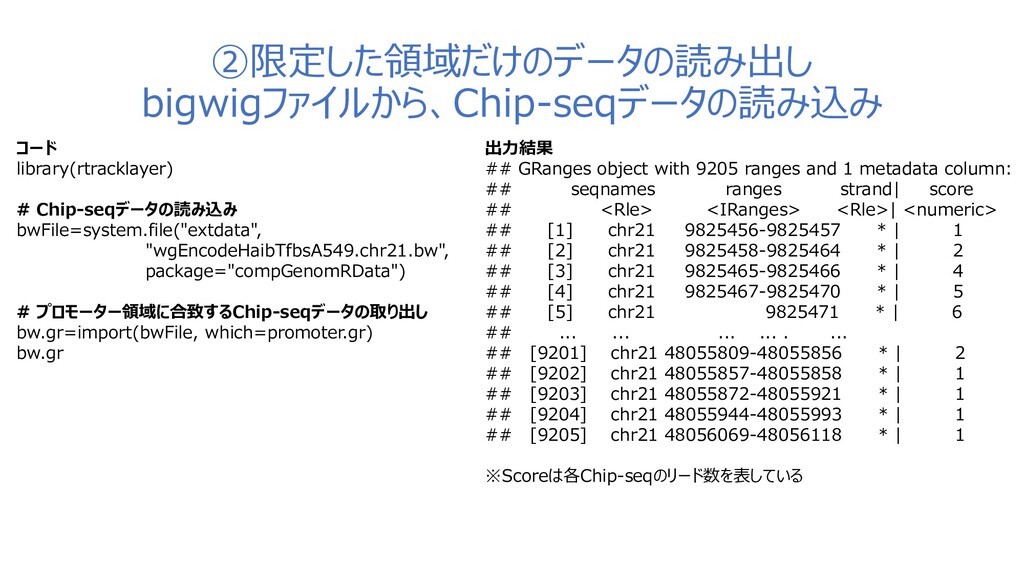
➁限定した領域だけのデータの読み出し bigwigファイルから、Chip-seqデータの読み込み コード library(rtracklayer) # Chip-seqデータの読み込み bwFile=system.file("extdata", "wgEncodeHaibTfbsA549.chr21.bw", package="compGenomRData") #
プロモーター領域に合致するChip-seqデータの取り出し bw.gr=import(bwFile, which=promoter.gr) bw.gr 出力結果 ## GRanges object with 9205 ranges and 1 metadata column: ## seqnames ranges strand| score ## <Rle> <IRanges> <Rle>| <numeric> ## [1] chr21 9825456-9825457 * | 1 ## [2] chr21 9825458-9825464 * | 2 ## [3] chr21 9825465-9825466 * | 4 ## [4] chr21 9825467-9825470 * | 5 ## [5] chr21 9825471 * | 6 ## ... ... ... ... . ... ## [9201] chr21 48055809-48055856 * | 2 ## [9202] chr21 48055857-48055858 * | 1 ## [9203] chr21 48055872-48055921 * | 1 ## [9204] chr21 48055944-48055993 * | 1 ## [9205] chr21 48056069-48056118 * | 1 ※Scoreは各Chip-seqのリード数を表している
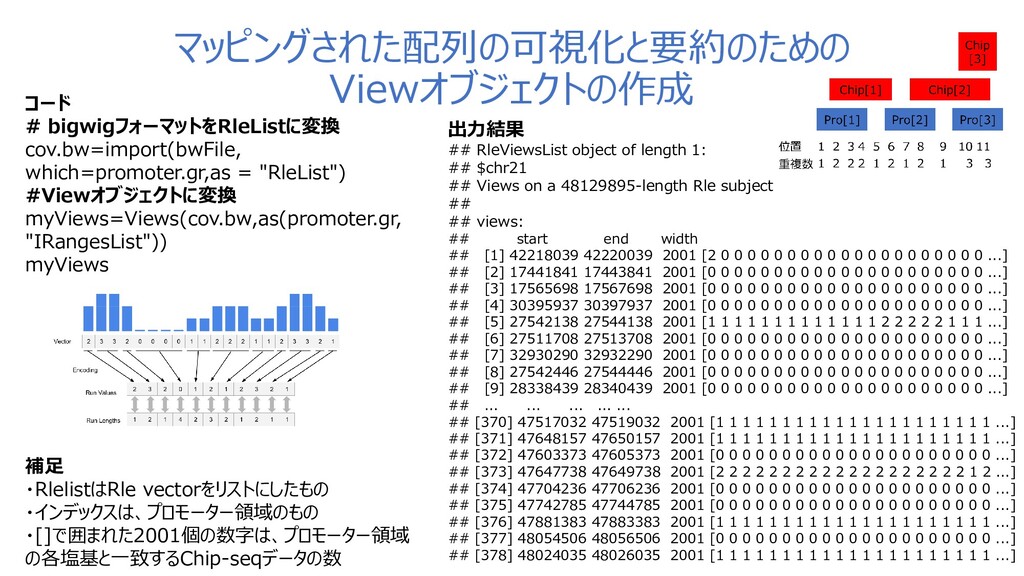
マッピングされた配列の可視化と要約のための Viewオブジェクトの作成 出力結果 ## RleViewsList object of length 1: ##
$chr21 ## Views on a 48129895-length Rle subject ## ## views: ## start end width ## [1] 42218039 42220039 2001 [2 0 0 0 0 0 0 0 0 0 0 0 0 0 0 0 0 0 0 0 0 ...] ## [2] 17441841 17443841 2001 [0 0 0 0 0 0 0 0 0 0 0 0 0 0 0 0 0 0 0 0 0 ...] ## [3] 17565698 17567698 2001 [0 0 0 0 0 0 0 0 0 0 0 0 0 0 0 0 0 0 0 0 0 ...] ## [4] 30395937 30397937 2001 [0 0 0 0 0 0 0 0 0 0 0 0 0 0 0 0 0 0 0 0 0 ...] ## [5] 27542138 27544138 2001 [1 1 1 1 1 1 1 1 1 1 1 1 1 2 2 2 2 2 1 1 1 ...] ## [6] 27511708 27513708 2001 [0 0 0 0 0 0 0 0 0 0 0 0 0 0 0 0 0 0 0 0 0 ...] ## [7] 32930290 32932290 2001 [0 0 0 0 0 0 0 0 0 0 0 0 0 0 0 0 0 0 0 0 0 ...] ## [8] 27542446 27544446 2001 [0 0 0 0 0 0 0 0 0 0 0 0 0 0 0 0 0 0 0 0 0 ...] ## [9] 28338439 28340439 2001 [0 0 0 0 0 0 0 0 0 0 0 0 0 0 0 0 0 0 0 0 0 ...] ## ... ... ... ... ... ## [370] 47517032 47519032 2001 [1 1 1 1 1 1 1 1 1 1 1 1 1 1 1 1 1 1 1 1 1 ...] ## [371] 47648157 47650157 2001 [1 1 1 1 1 1 1 1 1 1 1 1 1 1 1 1 1 1 1 1 1 ...] ## [372] 47603373 47605373 2001 [0 0 0 0 0 0 0 0 0 0 0 0 0 0 0 0 0 0 0 0 0 ...] ## [373] 47647738 47649738 2001 [2 2 2 2 2 2 2 2 2 2 2 2 2 2 2 2 2 2 2 1 2 ...] ## [374] 47704236 47706236 2001 [0 0 0 0 0 0 0 0 0 0 0 0 0 0 0 0 0 0 0 0 0 ...] ## [375] 47742785 47744785 2001 [0 0 0 0 0 0 0 0 0 0 0 0 0 0 0 0 0 0 0 0 0 ...] ## [376] 47881383 47883383 2001 [1 1 1 1 1 1 1 1 1 1 1 1 1 1 1 1 1 1 1 1 1 ...] ## [377] 48054506 48056506 2001 [0 0 0 0 0 0 0 0 0 0 0 0 0 0 0 0 0 0 0 0 0 ...] ## [378] 48024035 48026035 2001 [1 1 1 1 1 1 1 1 1 1 1 1 1 1 1 1 1 1 1 1 1 ...] コード # bigwigフォーマットをRleListに変換 cov.bw=import(bwFile, which=promoter.gr,as = "RleList") #Viewオブジェクトに変換 myViews=Views(cov.bw,as(promoter.gr, "IRangesList")) myViews 補足 ・RlelistはRle vectorをリストにしたもの ・インデックスは、プロモーター領域のもの ・[]で囲まれた2001個の数字は、プロモーター領域 の各塩基と一致するChip-seqデータの数
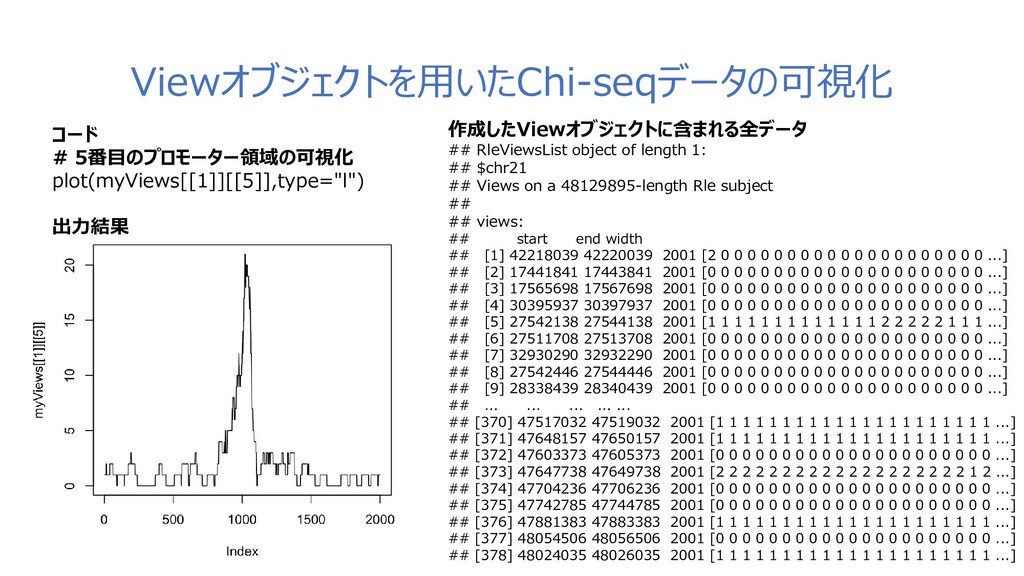
Viewオブジェクトを用いたChi-seqデータの可視化 作成したViewオブジェクトに含まれる全データ ## RleViewsList object of length 1: ## $chr21
## Views on a 48129895-length Rle subject ## ## views: ## start end width ## [1] 42218039 42220039 2001 [2 0 0 0 0 0 0 0 0 0 0 0 0 0 0 0 0 0 0 0 0 ...] ## [2] 17441841 17443841 2001 [0 0 0 0 0 0 0 0 0 0 0 0 0 0 0 0 0 0 0 0 0 ...] ## [3] 17565698 17567698 2001 [0 0 0 0 0 0 0 0 0 0 0 0 0 0 0 0 0 0 0 0 0 ...] ## [4] 30395937 30397937 2001 [0 0 0 0 0 0 0 0 0 0 0 0 0 0 0 0 0 0 0 0 0 ...] ## [5] 27542138 27544138 2001 [1 1 1 1 1 1 1 1 1 1 1 1 1 2 2 2 2 2 1 1 1 ...] ## [6] 27511708 27513708 2001 [0 0 0 0 0 0 0 0 0 0 0 0 0 0 0 0 0 0 0 0 0 ...] ## [7] 32930290 32932290 2001 [0 0 0 0 0 0 0 0 0 0 0 0 0 0 0 0 0 0 0 0 0 ...] ## [8] 27542446 27544446 2001 [0 0 0 0 0 0 0 0 0 0 0 0 0 0 0 0 0 0 0 0 0 ...] ## [9] 28338439 28340439 2001 [0 0 0 0 0 0 0 0 0 0 0 0 0 0 0 0 0 0 0 0 0 ...] ## ... ... ... ... ... ## [370] 47517032 47519032 2001 [1 1 1 1 1 1 1 1 1 1 1 1 1 1 1 1 1 1 1 1 1 ...] ## [371] 47648157 47650157 2001 [1 1 1 1 1 1 1 1 1 1 1 1 1 1 1 1 1 1 1 1 1 ...] ## [372] 47603373 47605373 2001 [0 0 0 0 0 0 0 0 0 0 0 0 0 0 0 0 0 0 0 0 0 ...] ## [373] 47647738 47649738 2001 [2 2 2 2 2 2 2 2 2 2 2 2 2 2 2 2 2 2 2 1 2 ...] ## [374] 47704236 47706236 2001 [0 0 0 0 0 0 0 0 0 0 0 0 0 0 0 0 0 0 0 0 0 ...] ## [375] 47742785 47744785 2001 [0 0 0 0 0 0 0 0 0 0 0 0 0 0 0 0 0 0 0 0 0 ...] ## [376] 47881383 47883383 2001 [1 1 1 1 1 1 1 1 1 1 1 1 1 1 1 1 1 1 1 1 1 ...] ## [377] 48054506 48056506 2001 [0 0 0 0 0 0 0 0 0 0 0 0 0 0 0 0 0 0 0 0 0 ...] ## [378] 48024035 48026035 2001 [1 1 1 1 1 1 1 1 1 1 1 1 1 1 1 1 1 1 1 1 1 ...] コード # 5番目のプロモーター領域の可視化 plot(myViews[[1]][[5]],type="l") 出力結果
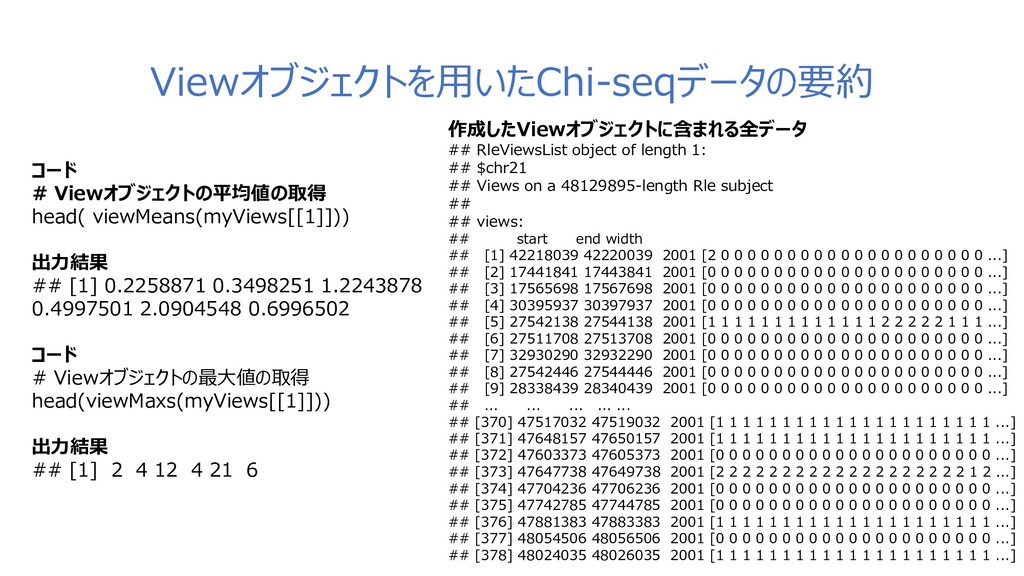
Viewオブジェクトを用いたChi-seqデータの要約 作成したViewオブジェクトに含まれる全データ ## RleViewsList object of length 1: ## $chr21
## Views on a 48129895-length Rle subject ## ## views: ## start end width ## [1] 42218039 42220039 2001 [2 0 0 0 0 0 0 0 0 0 0 0 0 0 0 0 0 0 0 0 0 ...] ## [2] 17441841 17443841 2001 [0 0 0 0 0 0 0 0 0 0 0 0 0 0 0 0 0 0 0 0 0 ...] ## [3] 17565698 17567698 2001 [0 0 0 0 0 0 0 0 0 0 0 0 0 0 0 0 0 0 0 0 0 ...] ## [4] 30395937 30397937 2001 [0 0 0 0 0 0 0 0 0 0 0 0 0 0 0 0 0 0 0 0 0 ...] ## [5] 27542138 27544138 2001 [1 1 1 1 1 1 1 1 1 1 1 1 1 2 2 2 2 2 1 1 1 ...] ## [6] 27511708 27513708 2001 [0 0 0 0 0 0 0 0 0 0 0 0 0 0 0 0 0 0 0 0 0 ...] ## [7] 32930290 32932290 2001 [0 0 0 0 0 0 0 0 0 0 0 0 0 0 0 0 0 0 0 0 0 ...] ## [8] 27542446 27544446 2001 [0 0 0 0 0 0 0 0 0 0 0 0 0 0 0 0 0 0 0 0 0 ...] ## [9] 28338439 28340439 2001 [0 0 0 0 0 0 0 0 0 0 0 0 0 0 0 0 0 0 0 0 0 ...] ## ... ... ... ... ... ## [370] 47517032 47519032 2001 [1 1 1 1 1 1 1 1 1 1 1 1 1 1 1 1 1 1 1 1 1 ...] ## [371] 47648157 47650157 2001 [1 1 1 1 1 1 1 1 1 1 1 1 1 1 1 1 1 1 1 1 1 ...] ## [372] 47603373 47605373 2001 [0 0 0 0 0 0 0 0 0 0 0 0 0 0 0 0 0 0 0 0 0 ...] ## [373] 47647738 47649738 2001 [2 2 2 2 2 2 2 2 2 2 2 2 2 2 2 2 2 2 2 1 2 ...] ## [374] 47704236 47706236 2001 [0 0 0 0 0 0 0 0 0 0 0 0 0 0 0 0 0 0 0 0 0 ...] ## [375] 47742785 47744785 2001 [0 0 0 0 0 0 0 0 0 0 0 0 0 0 0 0 0 0 0 0 0 ...] ## [376] 47881383 47883383 2001 [1 1 1 1 1 1 1 1 1 1 1 1 1 1 1 1 1 1 1 1 1 ...] ## [377] 48054506 48056506 2001 [0 0 0 0 0 0 0 0 0 0 0 0 0 0 0 0 0 0 0 0 0 ...] ## [378] 48024035 48026035 2001 [1 1 1 1 1 1 1 1 1 1 1 1 1 1 1 1 1 1 1 1 1 ...] コード # Viewオブジェクトの平均値の取得 head( viewMeans(myViews[[1]])) 出力結果 ## [1] 0.2258871 0.3498251 1.2243878 0.4997501 2.0904548 0.6996502 コード # Viewオブジェクトの最大値の取得 head(viewMaxs(myViews[[1]])) 出力結果 ## [1] 2 4 12 4 21 6


 shogo4131
 ishikawa_satoru
 grimoh
 takonda
 kworkdev
 makocchi
 kentarofujii
 yahonda
 moznion
 rfdnxbro
 terapyon
 pfn
pfn
 malarkey
 pauljervisheath
 tomoyanonymous
 aarron
 paigeccino
 aleyda
 axbom
axbom
 katarinadahlin
 livdayseo
 tamaranovitovic
 inesmontani
 ivargrimstad
![GRangesオブジェクトの使用に関して ①表データに近い扱いが可能 →gr[1:2,], gr$name1といった 特定のデータへのアクセスが可能 ➁基本のデータ以外にメタデータを追加可能 mcols(gr)=DataFrame(name1=c("pax6","meis1","zic4"), score2=c(1,2,3)) Rstudioの操作画面](https://files.speakerdeck.com/presentations/e71edbd834594ec1850588bca7d4ee38/slide_4.jpg)
![テキスト中では距離をそのまま対数変換している #対数変換前のChip-seqとCpGデータの距離データ SP1_CpGDist=dists@elementMetadata@listData[["distance"]] > SP1_CpGDist [1] 384188 382968 381052 379311](https://files.speakerdeck.com/presentations/e71edbd834594ec1850588bca7d4ee38/slide_12.jpg)