Share
Embed
Best practices for animations in Android
Как найти идеальный баланс между фантазией дизайнеров и симпатией пользователей при создании анимации в Android? Как выбрать правильный инструмент и когда стоит его использовать, а когда — нет? Понятно и интересно в докладе “Рецепты анимаций в Android”
GDG SPb
September 30, 2017
Transcript
63 slides
-
Why? › There are almost no talks about animations in
Android › It’s complicated › It’s necessary › And here I’m https://material.io/guidelines/motion/material-motion.html 2 -
Animations in Android › Animation › Animator › LayoutTransition ›
Ripple › Shared Element Transition › Circular Reveal › Spring Animation, Lottie, Animated Vector, Canvas, Open GL, … 12 -
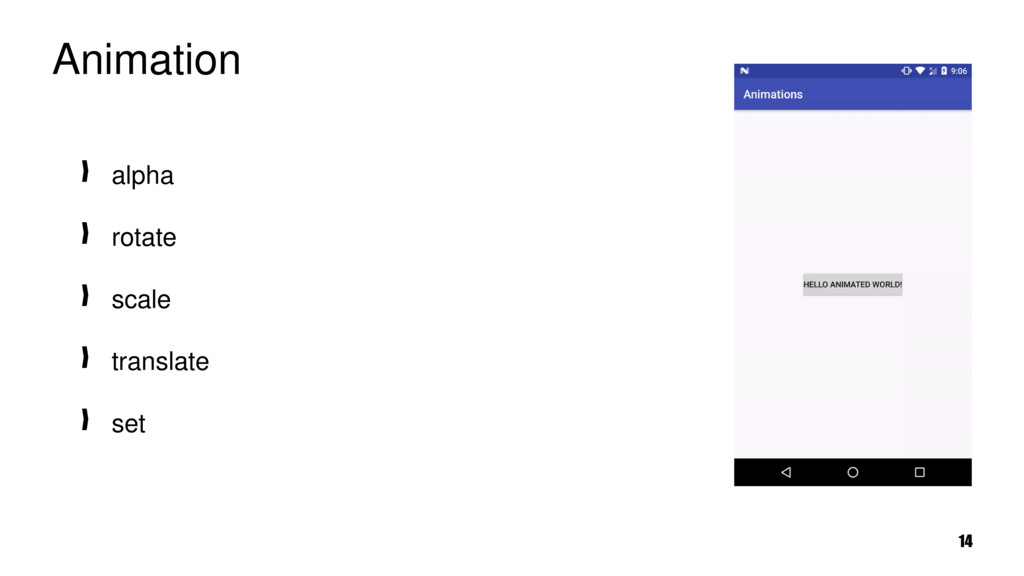
Animation <set xmlns:android="http://schemas.android.com/apk/res/android"> <scale android:duration="300" android:fillAfter="true" android:fromXScale="1.0" android:fromYScale="1.0" android:interpolator="@android:anim/accelerate_decelerate_interpolator" android:toXScale="2.0"
android:pivotX="50%" android:pivotY="50%" android:toYScale="2.0"/> </set> -
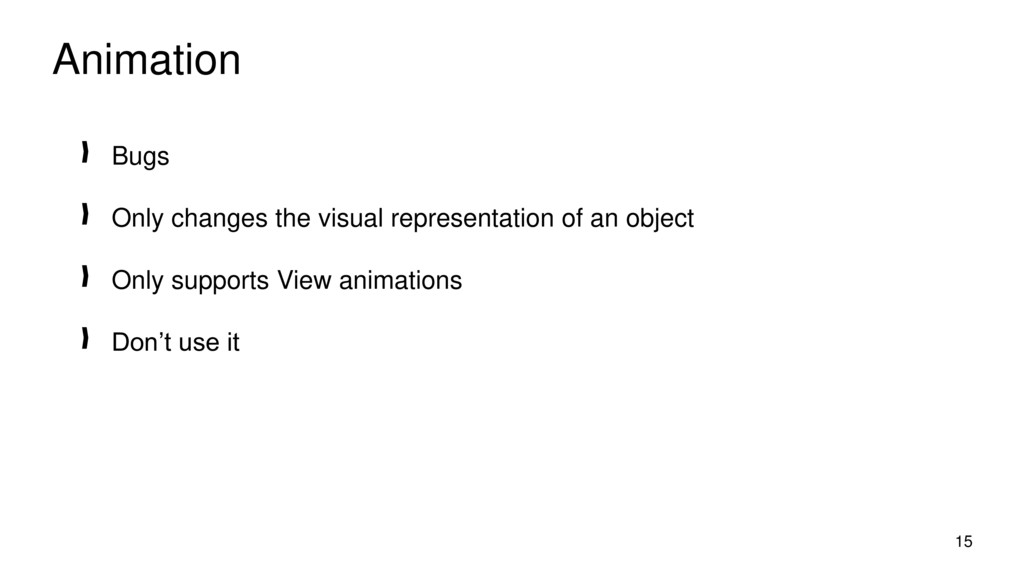
Animation › Bugs › Only changes the visual representation of
an object › Only supports View animations › Don’t use it 15 -
Animator ValueAnimator animator = ValueAnimator.ofFloat(1f, 2f); animator.setDuration(300); animator.setInterpolator(new BounceInterpolator()); animator.addUpdateListener(valueAnimator
-> { float value = (float) valueAnimator.getAnimatedValue(); button.setScaleX(value); button.setScaleY(value); }); animator.start(); -
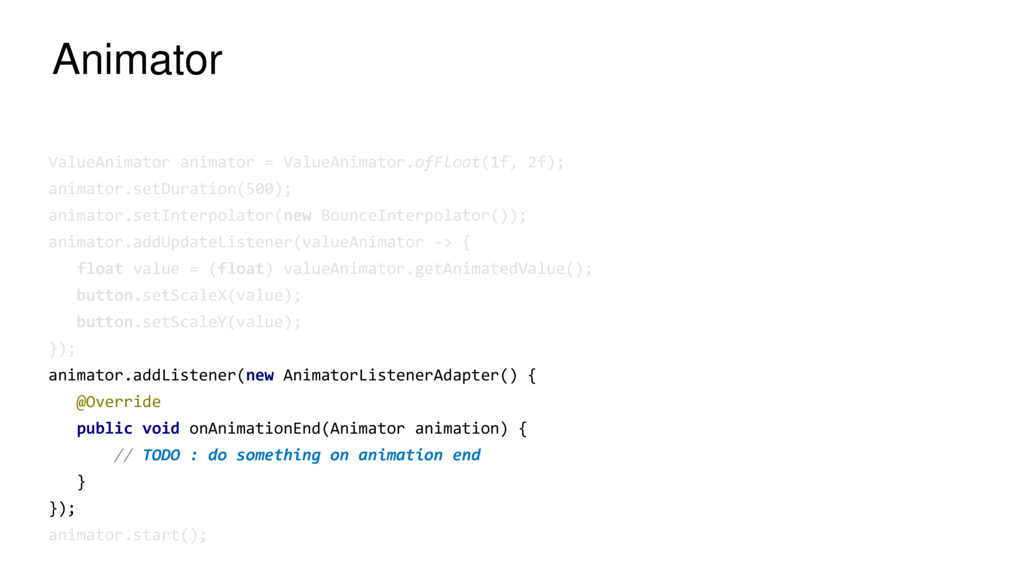
Animator ValueAnimator animator = ValueAnimator.ofFloat(1f, 2f); animator.setDuration(500); animator.setInterpolator(new BounceInterpolator()); animator.addUpdateListener(valueAnimator
-> { float value = (float) valueAnimator.getAnimatedValue(); button.setScaleX(value); button.setScaleY(value); }); animator.addListener(new AnimatorListenerAdapter() { @Override public void onAnimationEnd(Animator animation) { // TODO : do something on animation end } }); animator.start(); -
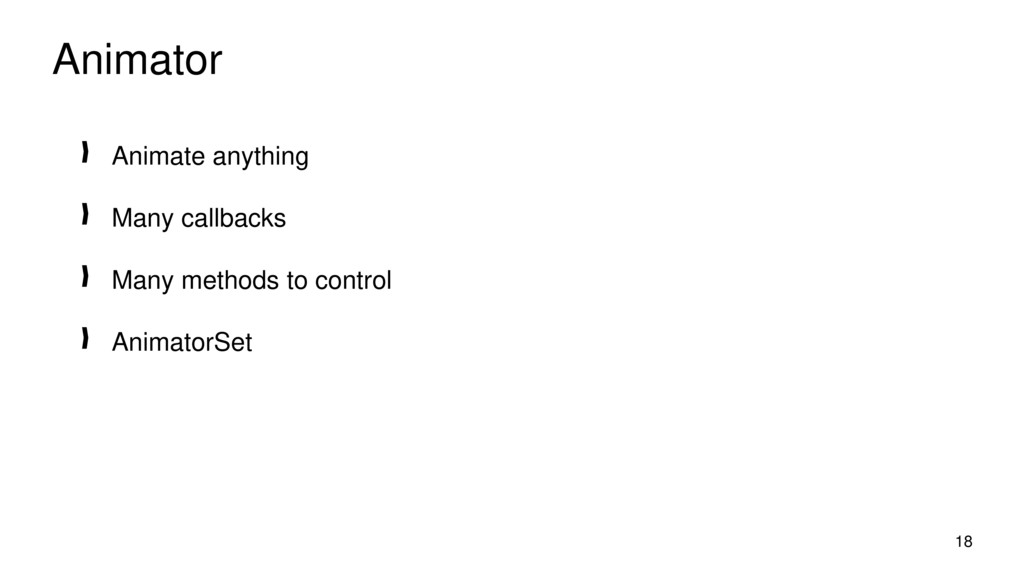
Animator › Animate anything › Many callbacks › Many methods
to control › AnimatorSet 18 -
Interpolator public interface TimeInterpolator { /** * Maps a value
representing the elapsed fraction of an animation to a value that * represents the interpolated fraction. This interpolated value is then multiplied * by the change in value of an animation to derive the animated value at the current * elapsed animation time. */ float getInterpolation(float input); } -
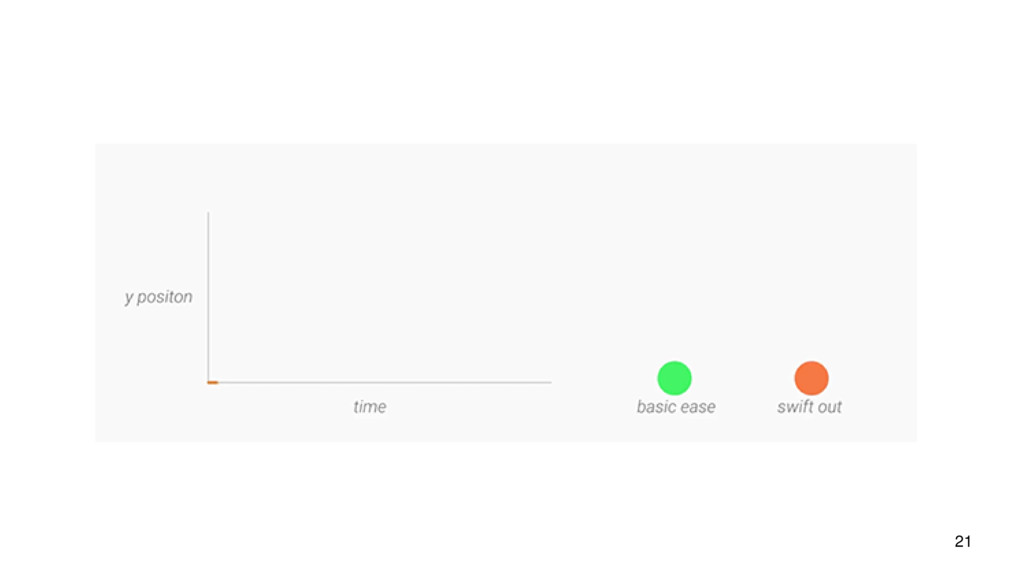
Interpolator › LinearInterpolator › AccelerateInterpolator › AccelerateDecelerateInterpolator › BounceInterpolator ›
PathInterpolator › … › Custom 20 -
Evaluator public interface TypeEvaluator<T> { /** * This function returns
the result of linearly interpolating the start and end * values, with fraction representing the proportion between the start and end * values. The calculation is a simple parametric calculation: * result = x0 + t * (x1 - x0), where x0 is startValue, x1 is endValue, * and t is fraction. */ public T evaluate(float fraction, T startValue, T endValue); } -
Color animation ValueAnimator animator = ValueAnimator.ofInt(colorFrom, colorTo); animator.setDuration(duration); animator.setStartDelay(startDelay); animator.addUpdateListener(animation
-> { target.setBackgroundColor((int) animation.getAnimatedValue()) }); animator.start(); -
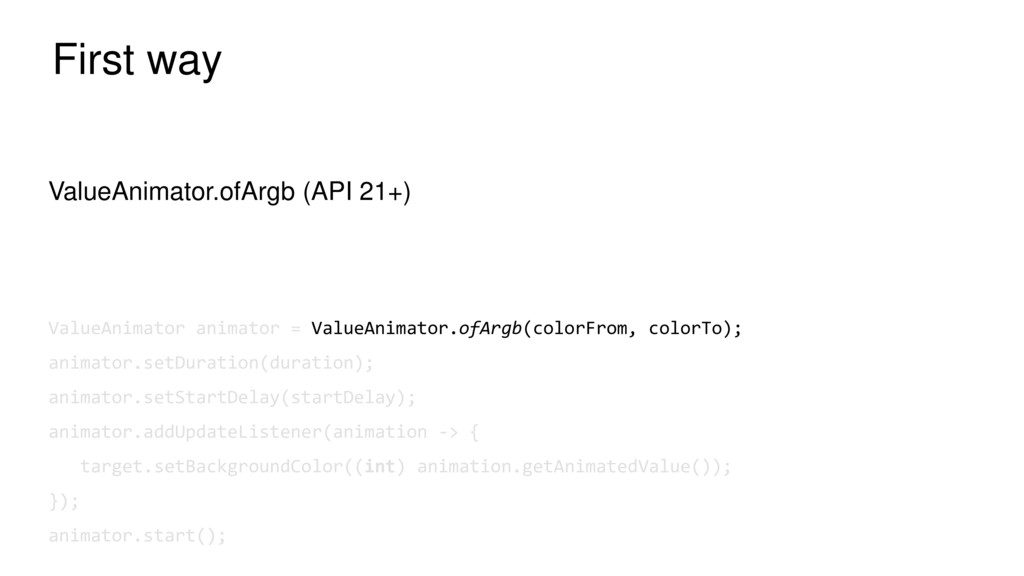
First way ValueAnimator.ofArgb (API 21+) ValueAnimator animator = ValueAnimator.ofArgb(colorFrom, colorTo);
animator.setDuration(duration); animator.setStartDelay(startDelay); animator.addUpdateListener(animation -> { target.setBackgroundColor((int) animation.getAnimatedValue()); }); animator.start(); Синий цвет не правильный -
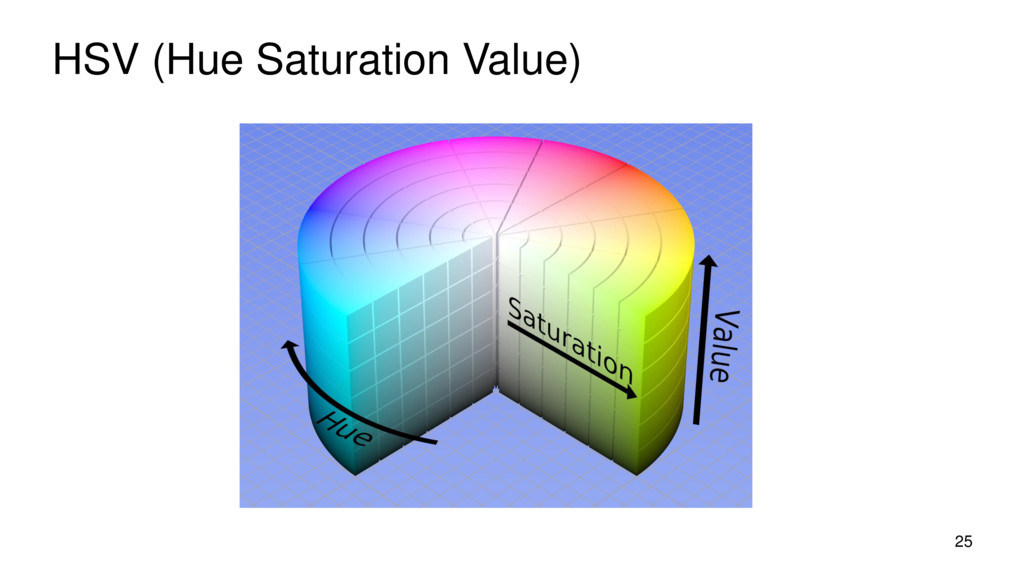
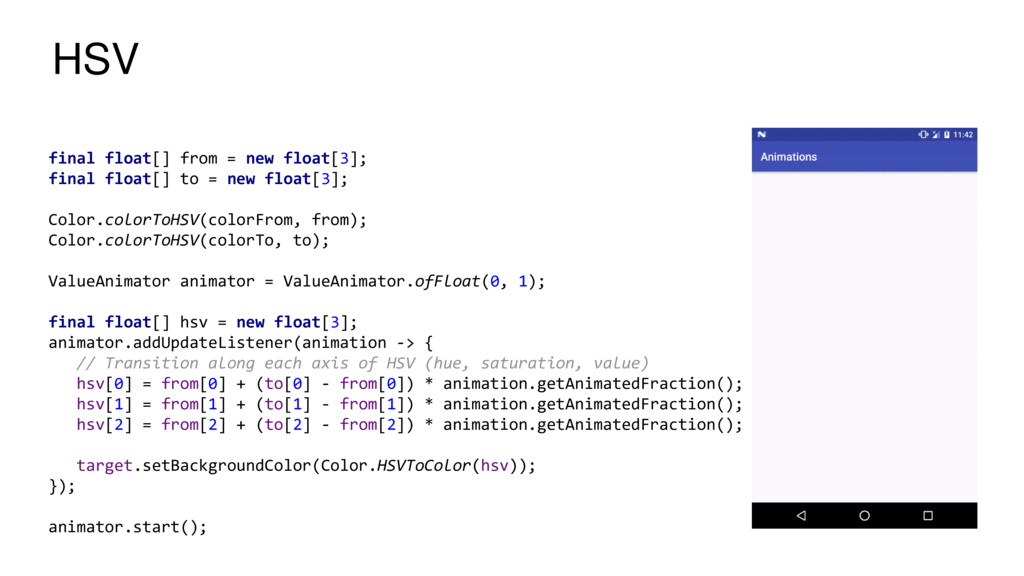
HSV final float[] from = new float[3]; final float[] to
= new float[3]; Color.colorToHSV(colorFrom, from); Color.colorToHSV(colorTo, to); ValueAnimator animator = ValueAnimator.ofFloat(0, 1); final float[] hsv = new float[3]; animator.addUpdateListener(animation -> { // Transition along each axis of HSV (hue, saturation, value) hsv[0] = from[0] + (to[0] - from[0]) * animation.getAnimatedFraction(); hsv[1] = from[1] + (to[1] - from[1]) * animation.getAnimatedFraction(); hsv[2] = from[2] + (to[2] - from[2]) * animation.getAnimatedFraction(); target.setBackgroundColor(Color.HSVToColor(hsv)); }); animator.start(); -
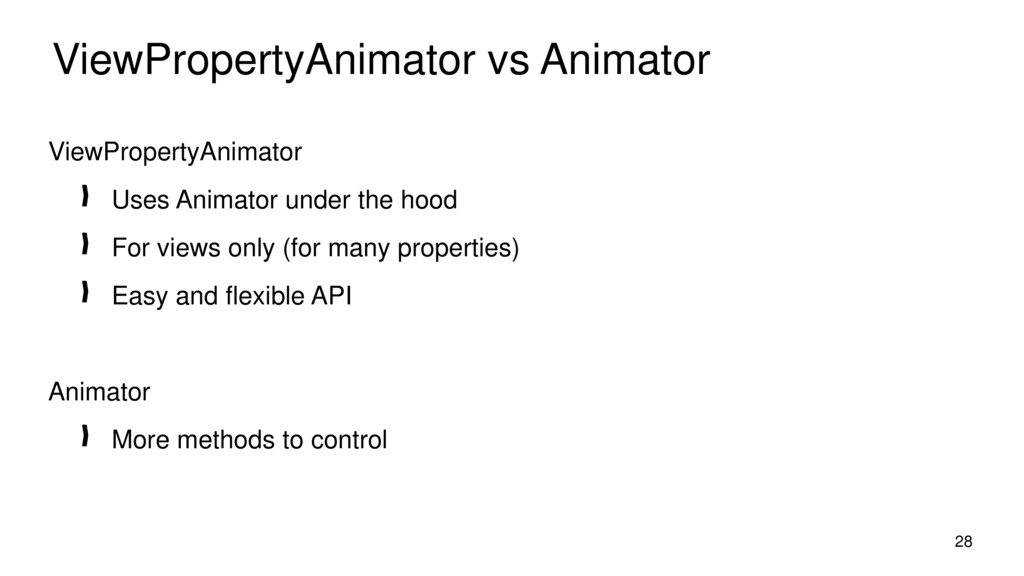
ViewPropertyAnimator vs Animator ViewPropertyAnimator › Uses Animator under the hood
› For views only (for many properties) › Easy and flexible API Animator › More methods to control 28 -
Animator vs Animation Use Animator since Animation: › Bugs ›
Only changes the visual representation of an object › Only supports View animations 29 -
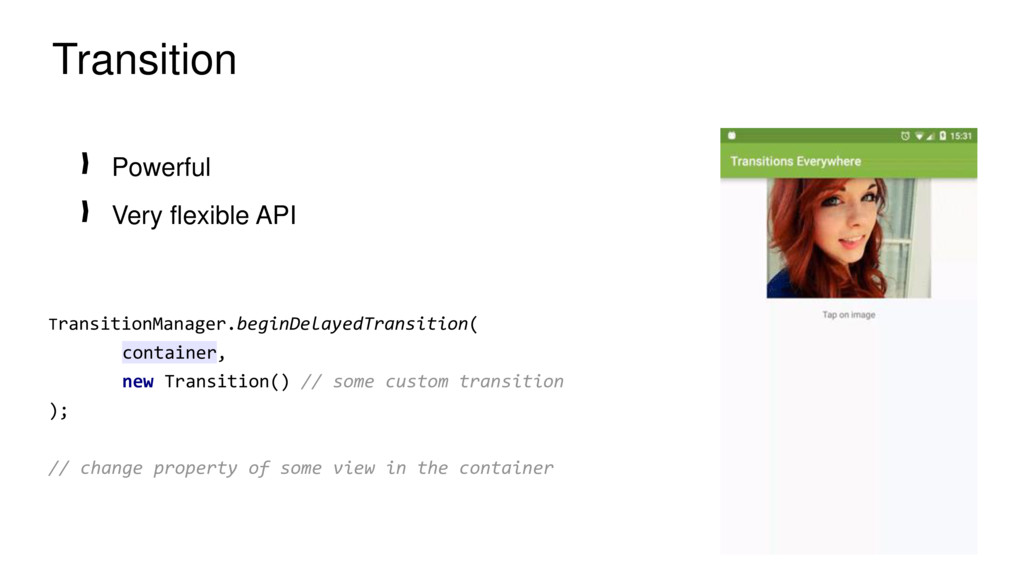
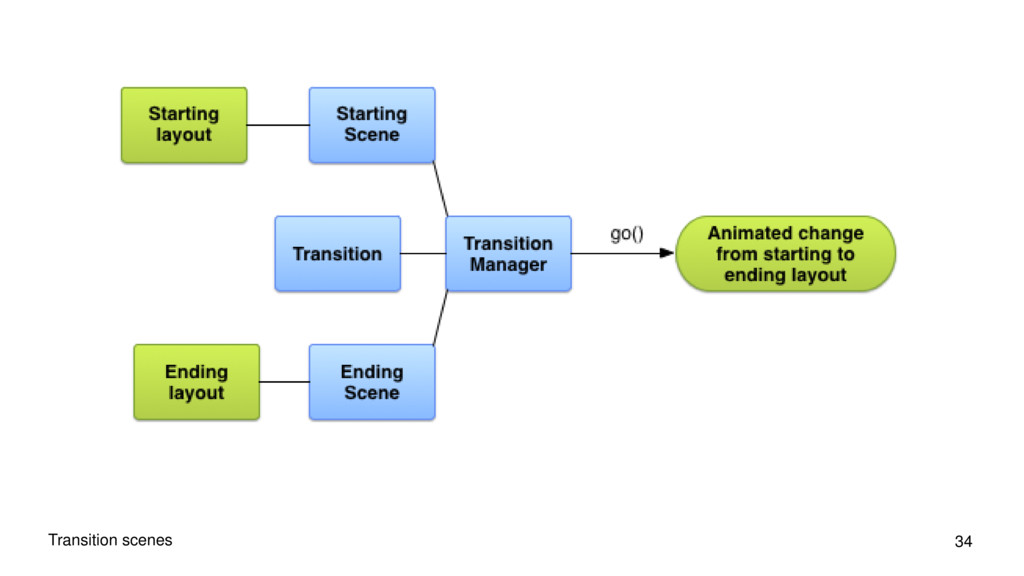
Transition › Powerful › Very flexible API TransitionManager.beginDelayedTransition( container, new
Transition() // some custom transition ); // change property of some view in the container Синий цвет не правильный -
More about transitions Backport › https://github.com/andkulikov/Transitions-Everywhere › Support library Articles
› https://medium.com/@andkulikov/animate-all-the-things- transitions-in-android-914af5477d50 › https://medium.com/@andkulikov/support-library-for-transitions- overview-and-comparison-c41be713cf8c 35 -
Ripple effect API <21 <selector xmlns:android="http://schemas.android.com/apk/res/android"> <item android:drawable="@color/white_dark" android:state_pressed="true"/> <item
android:drawable="@color/white"/> </selector> Синий цвет не правильный -
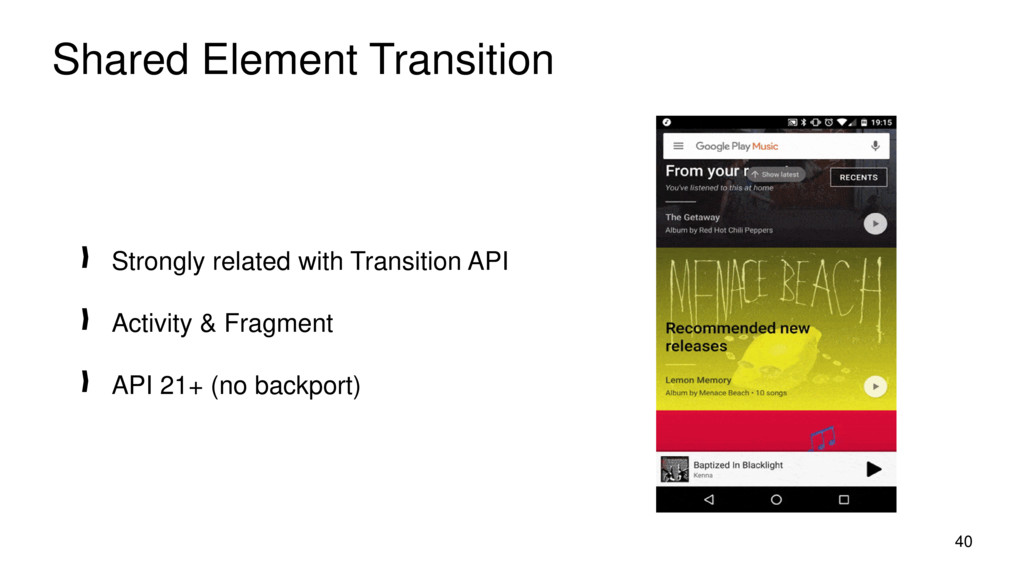
Shared Element Transition › Strongly related with Transition API ›
Activity & Fragment › API 21+ (no backport) 40 -
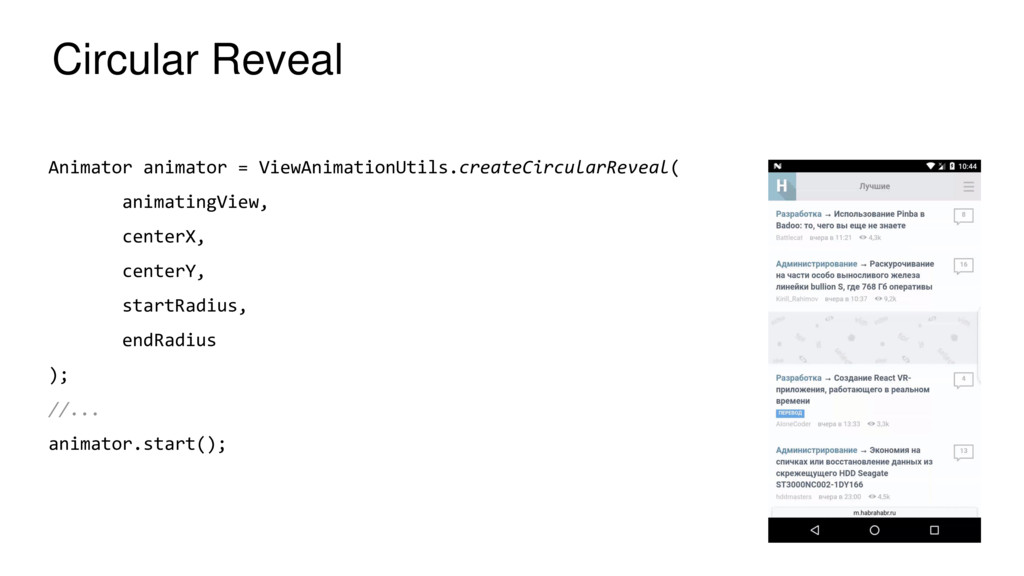
Circular Reveal Animator animator = ViewAnimationUtils.createCircularReveal( animatingView, centerX, centerY, startRadius,
endRadius ); //... animator.start(); -
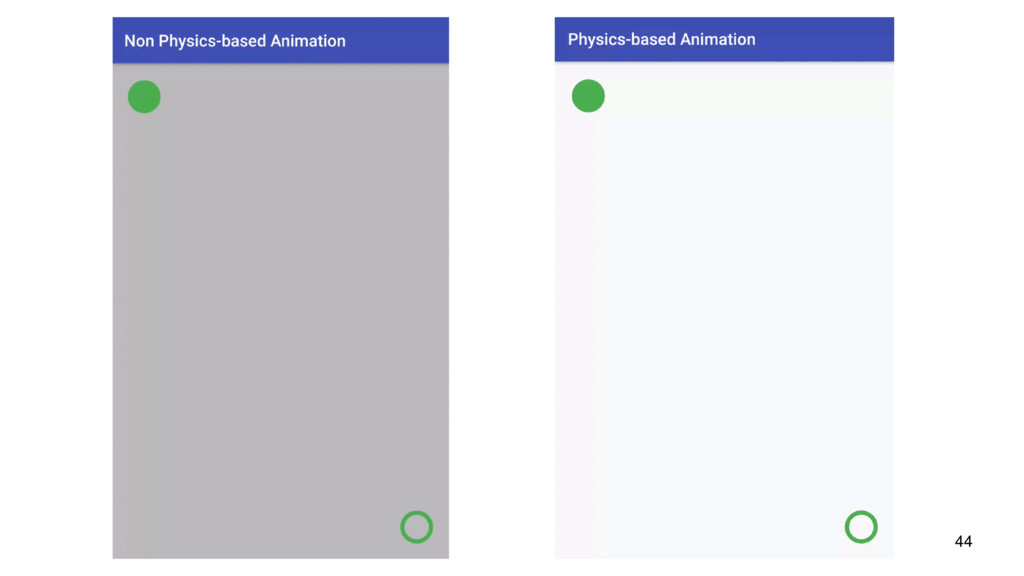
SpringForce SpringAnimation springAnimation = new SpringAnimation( button, DynamicAnimation.TRANSLATION_Y, 500 );
SpringForce springForce = springAnimation.getSpring(); springForce.setDampingRatio(0.5f); springForce.setStiffness(1000f); springAnimation.start(); -
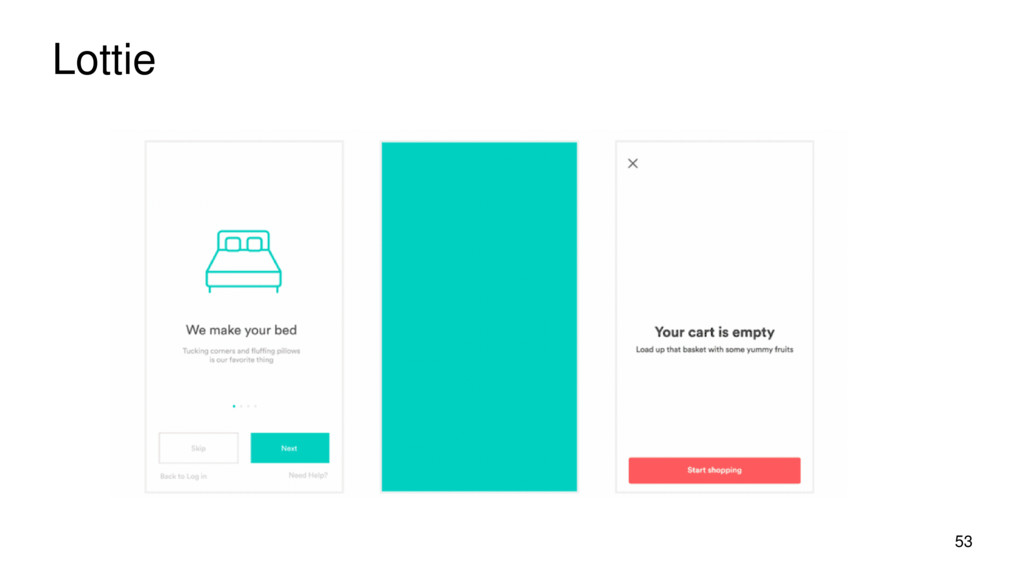
Lottie › Adobe after effects › Only with Android API
(no native libraries) › Extremely simple › May be used for onboarding or splash › Complex animations are slow › Has almost all support libraries in dependency list (19k+ methods) 54 -
RecyclerView.ItemAnimator recyclerView.setItemAnimator(new DefaultItemAnimator() { @Override public boolean animateAdd(RecyclerView.ViewHolder holder) {
return super.animateAdd(holder); } }); -
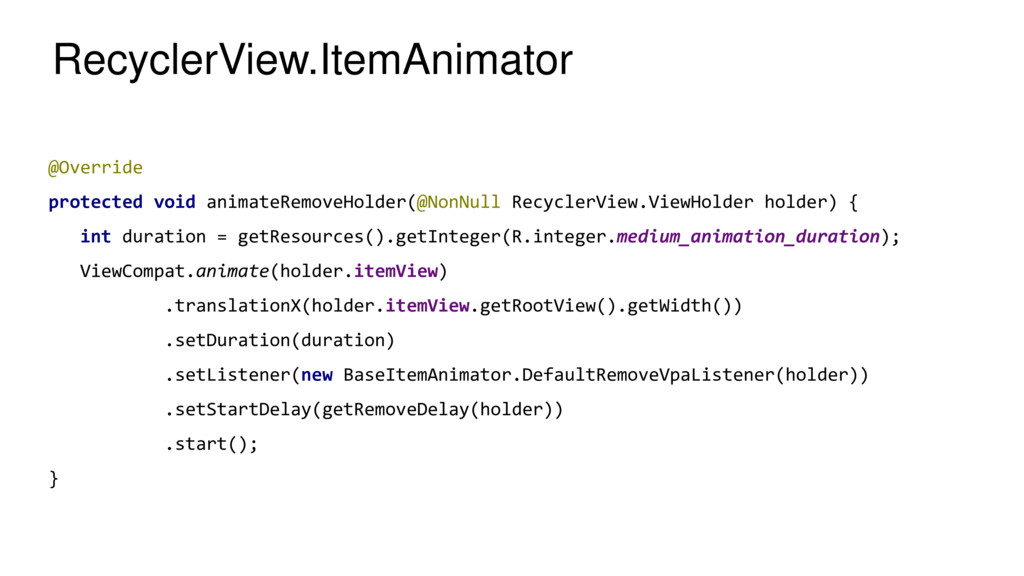
RecyclerView.ItemAnimator @Override protected void animateRemoveHolder(@NonNull RecyclerView.ViewHolder holder) { int duration
= getResources().getInteger(R.integer.medium_animation_duration); ViewCompat.animate(holder.itemView) .translationX(holder.itemView.getRootView().getWidth()) .setDuration(duration) .setListener(new BaseItemAnimator.DefaultRemoveVpaListener(holder)) .setStartDelay(getRemoveDelay(holder)) .start(); } -
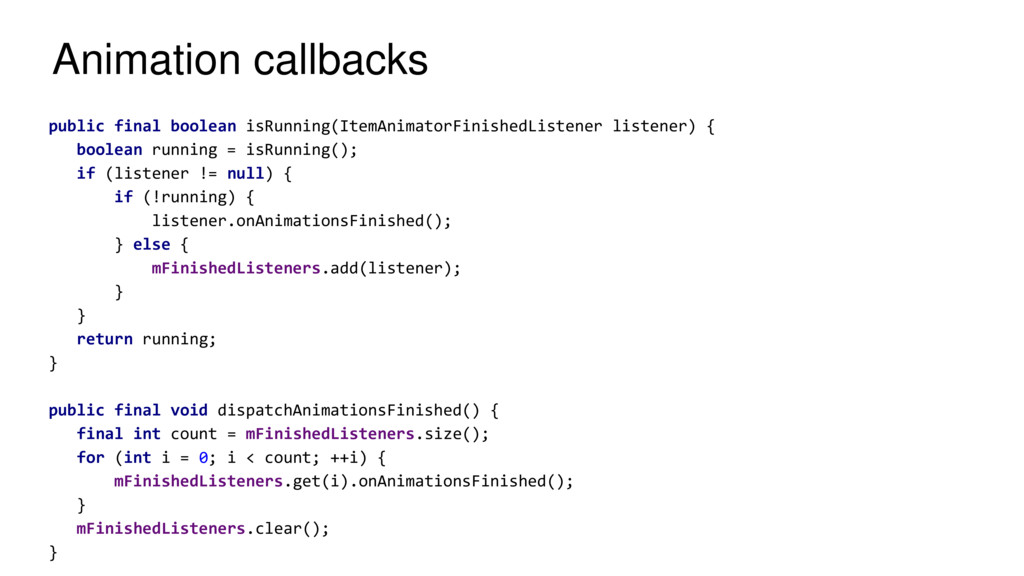
Animation callbacks public final boolean isRunning(ItemAnimatorFinishedListener listener) { boolean running
= isRunning(); if (listener != null) { if (!running) { listener.onAnimationsFinished(); } else { mFinishedListeners.add(listener); } } return running; } public final void dispatchAnimationsFinished() { final int count = mFinishedListeners.size(); for (int i = 0; i < count; ++i) { mFinishedListeners.get(i).onAnimationsFinished(); } mFinishedListeners.clear(); } -
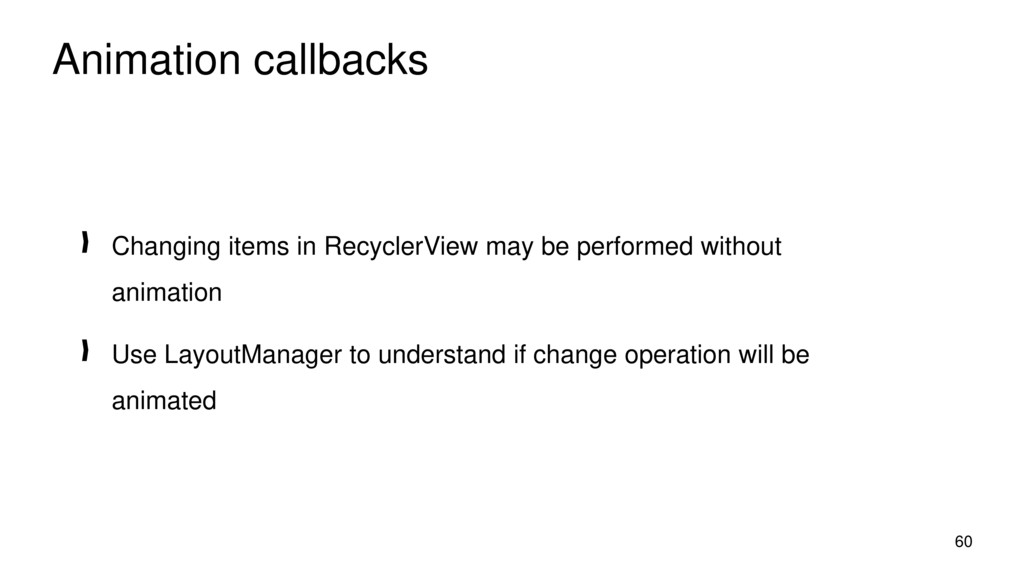
Animation callbacks › Changing items in RecyclerView may be performed
without animation › Use LayoutManager to understand if change operation will be animated 60 -
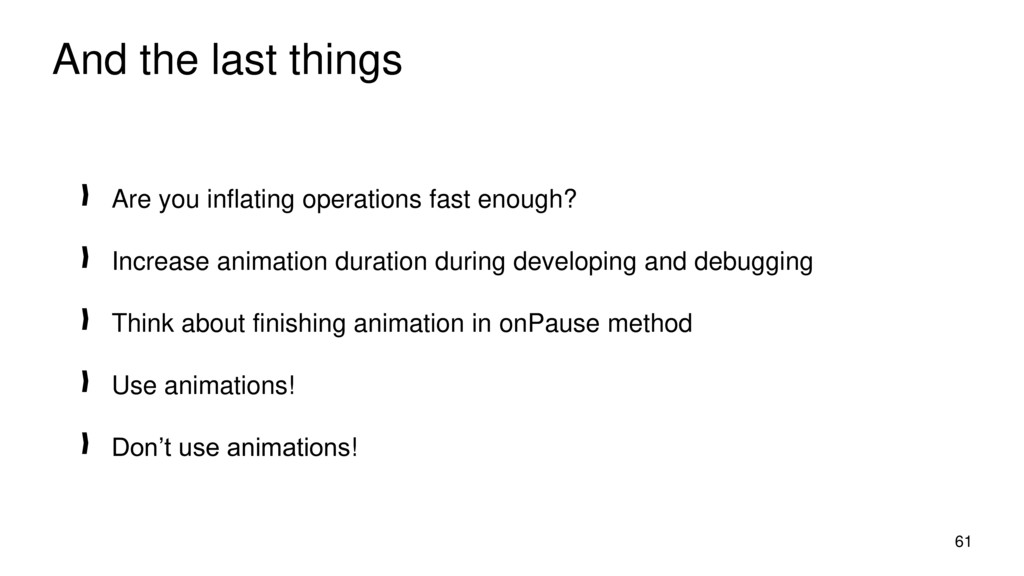
And the last things › Are you inflating operations fast
enough? › Increase animation duration during developing and debugging › Think about finishing animation in onPause method › Use animations! › Don’t use animations! 61 -
[email protected] Best practices for animations in Android Artur Vasilov Android
developer ArturVasilov ArturVasilov VasilovArtur