
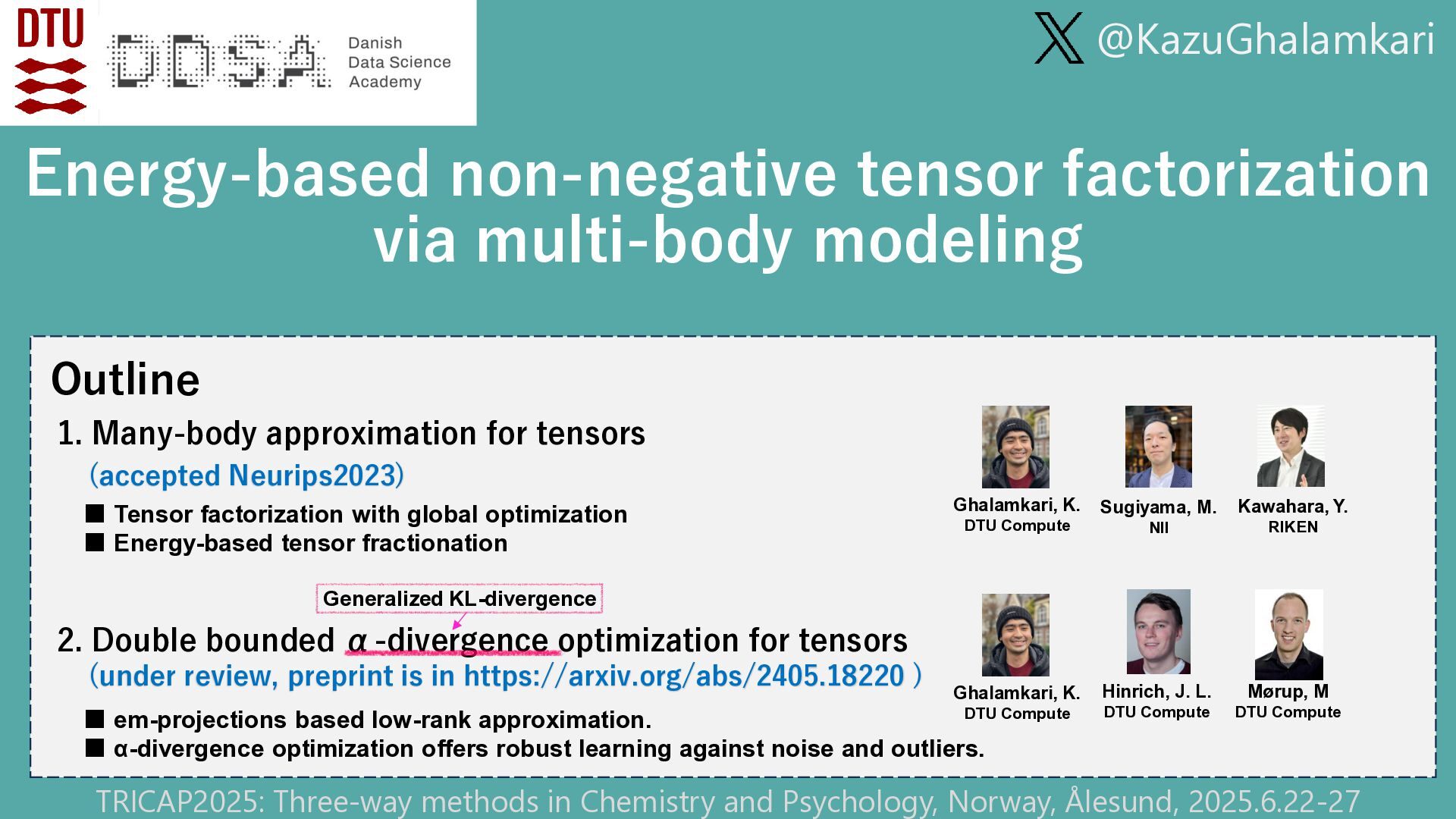
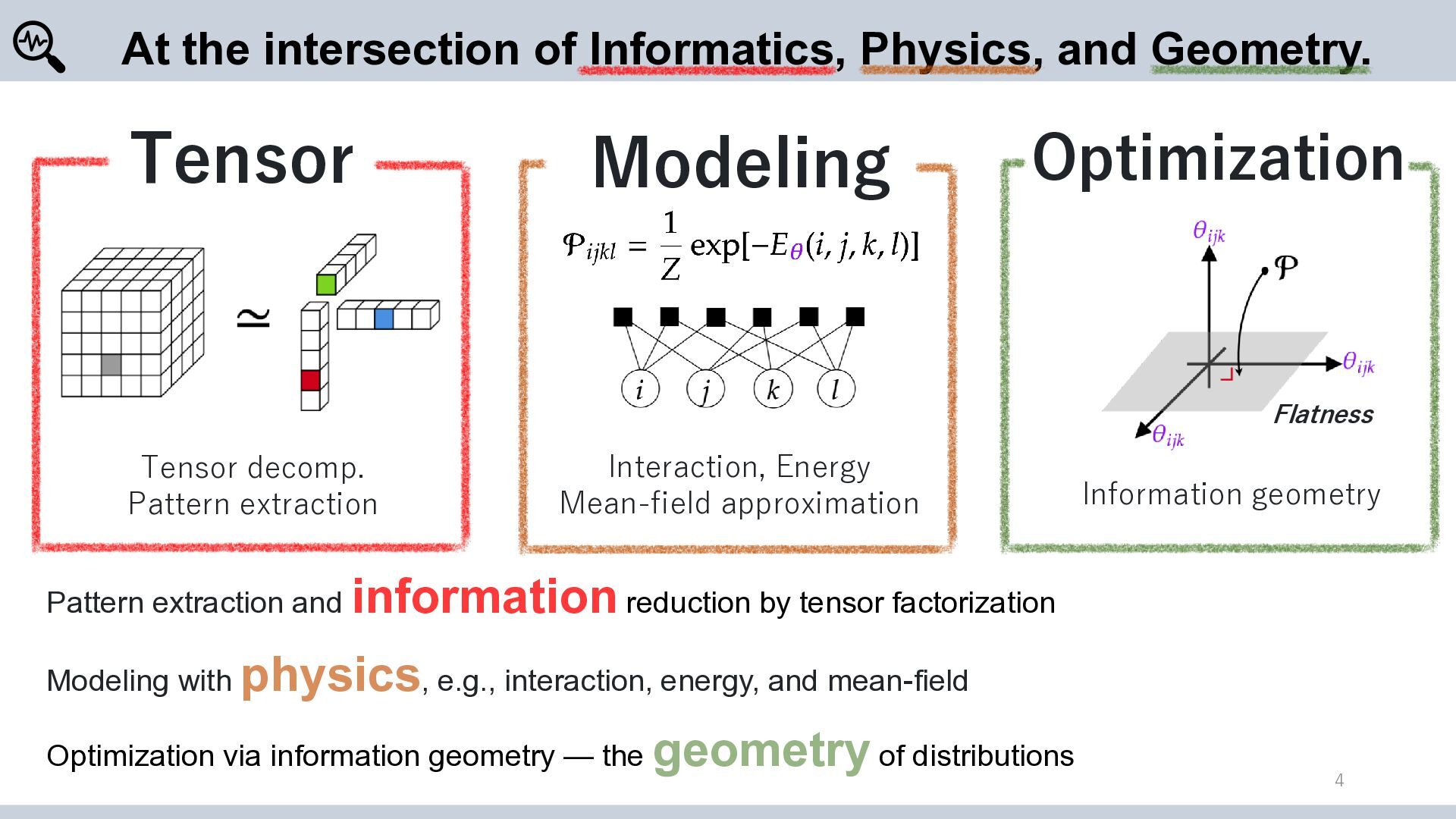
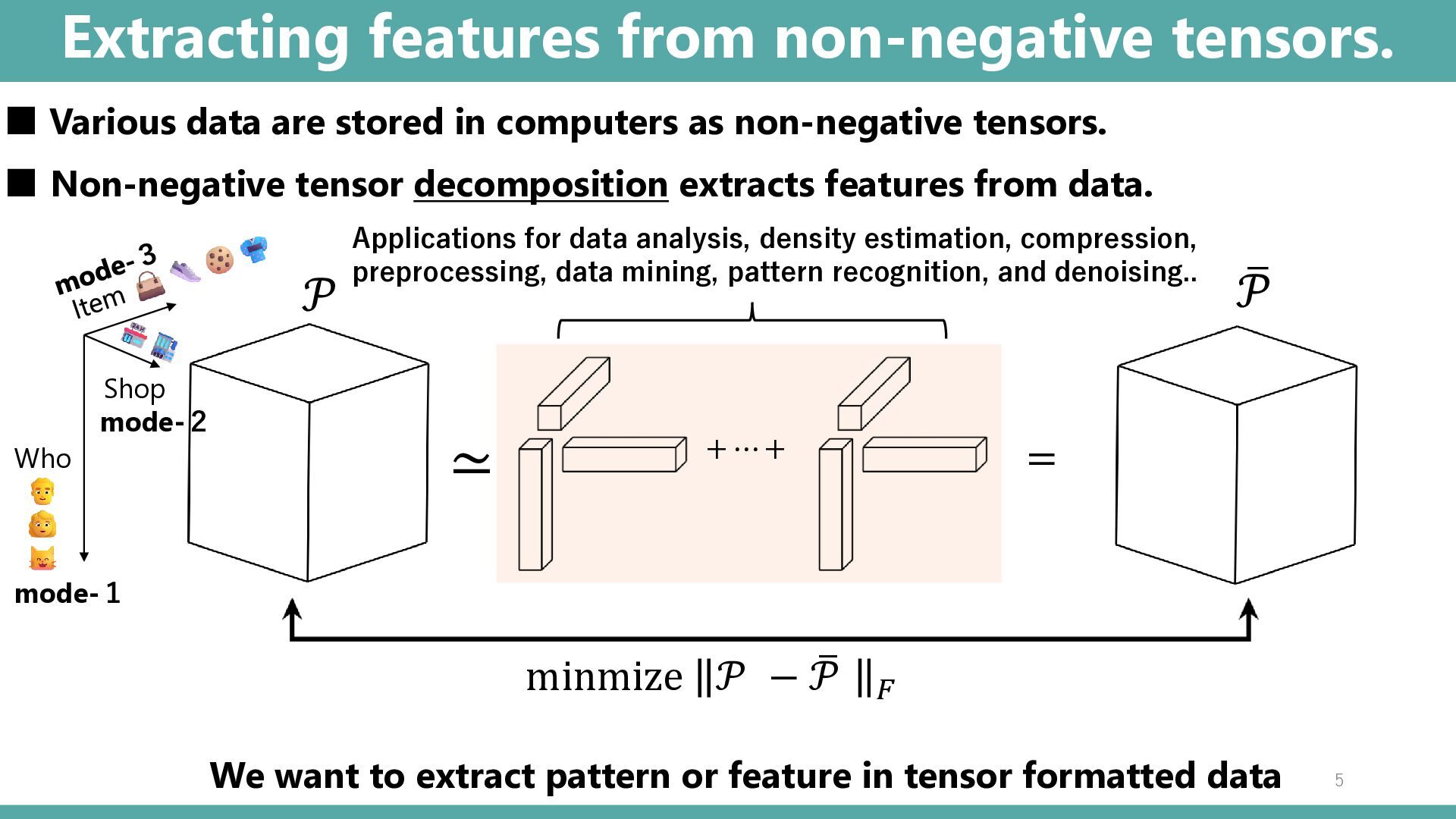
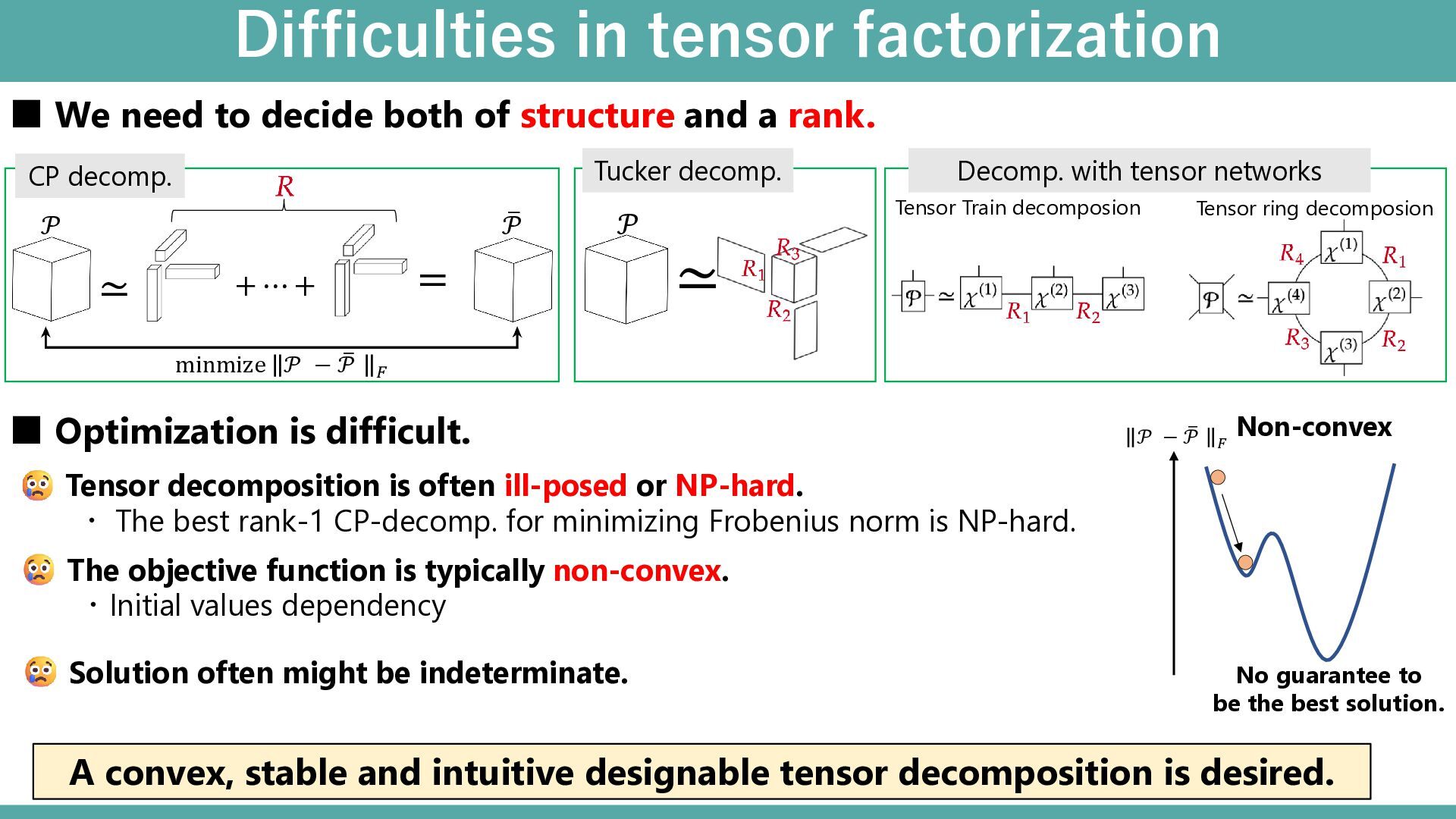
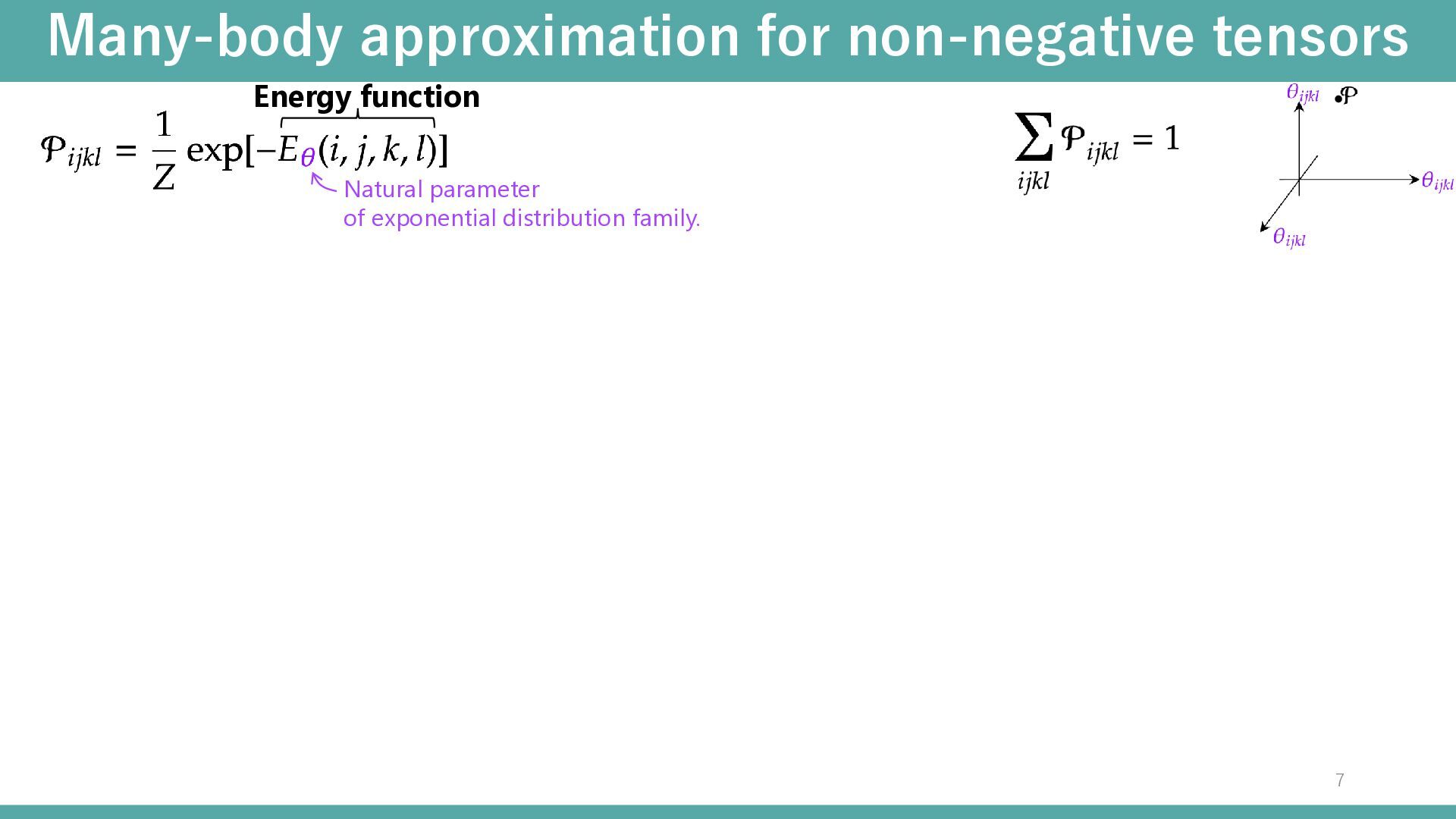
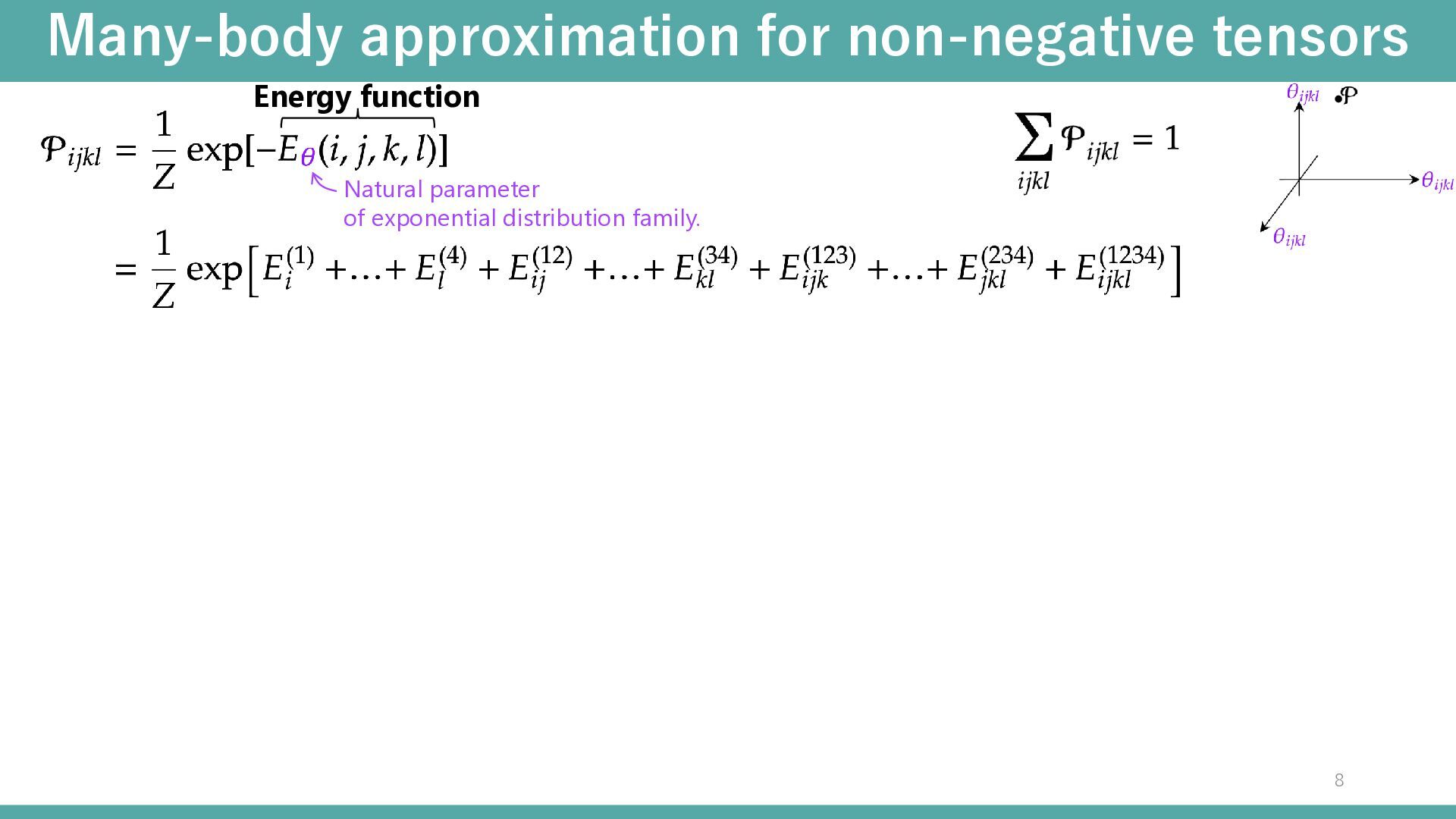
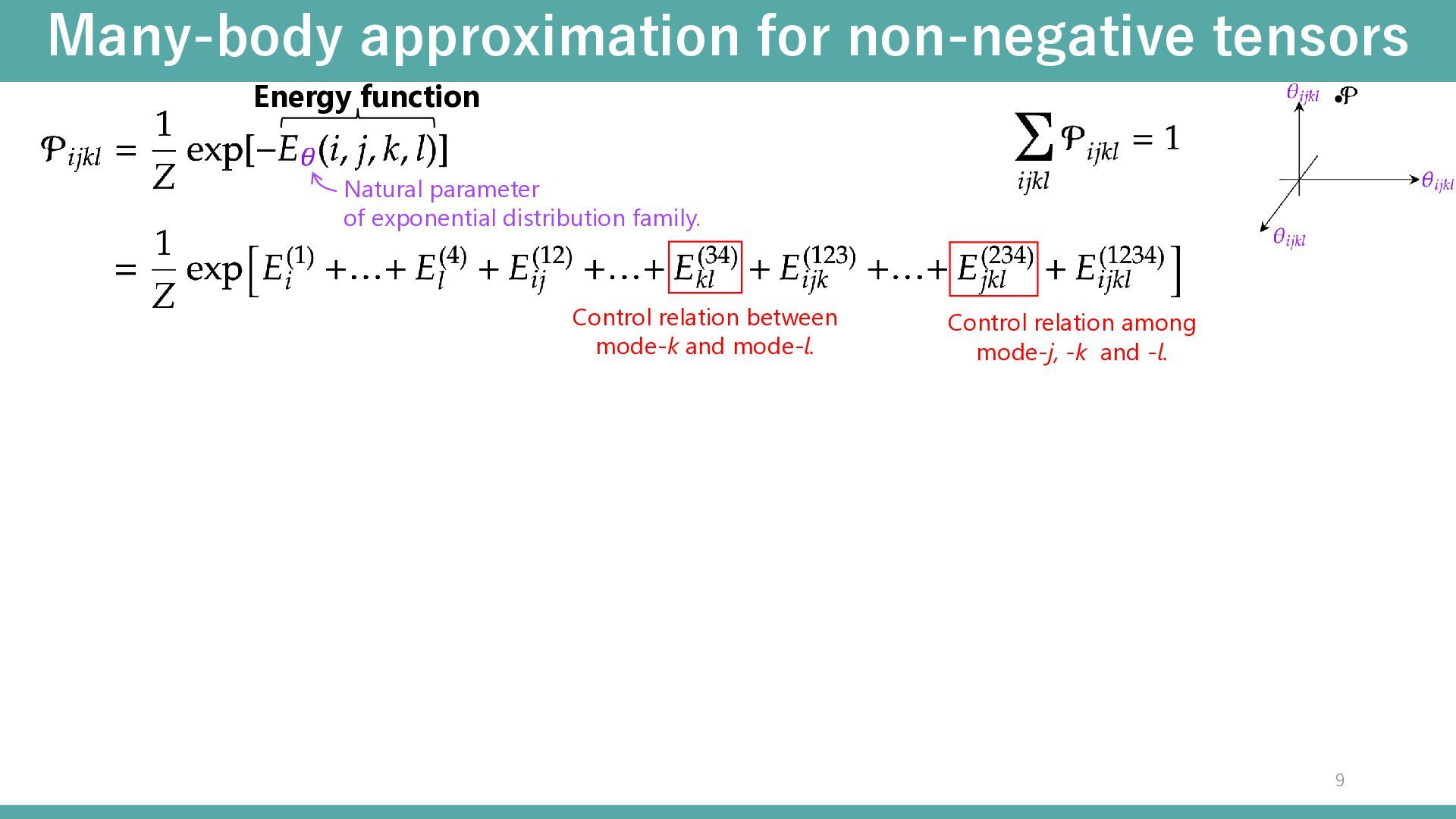
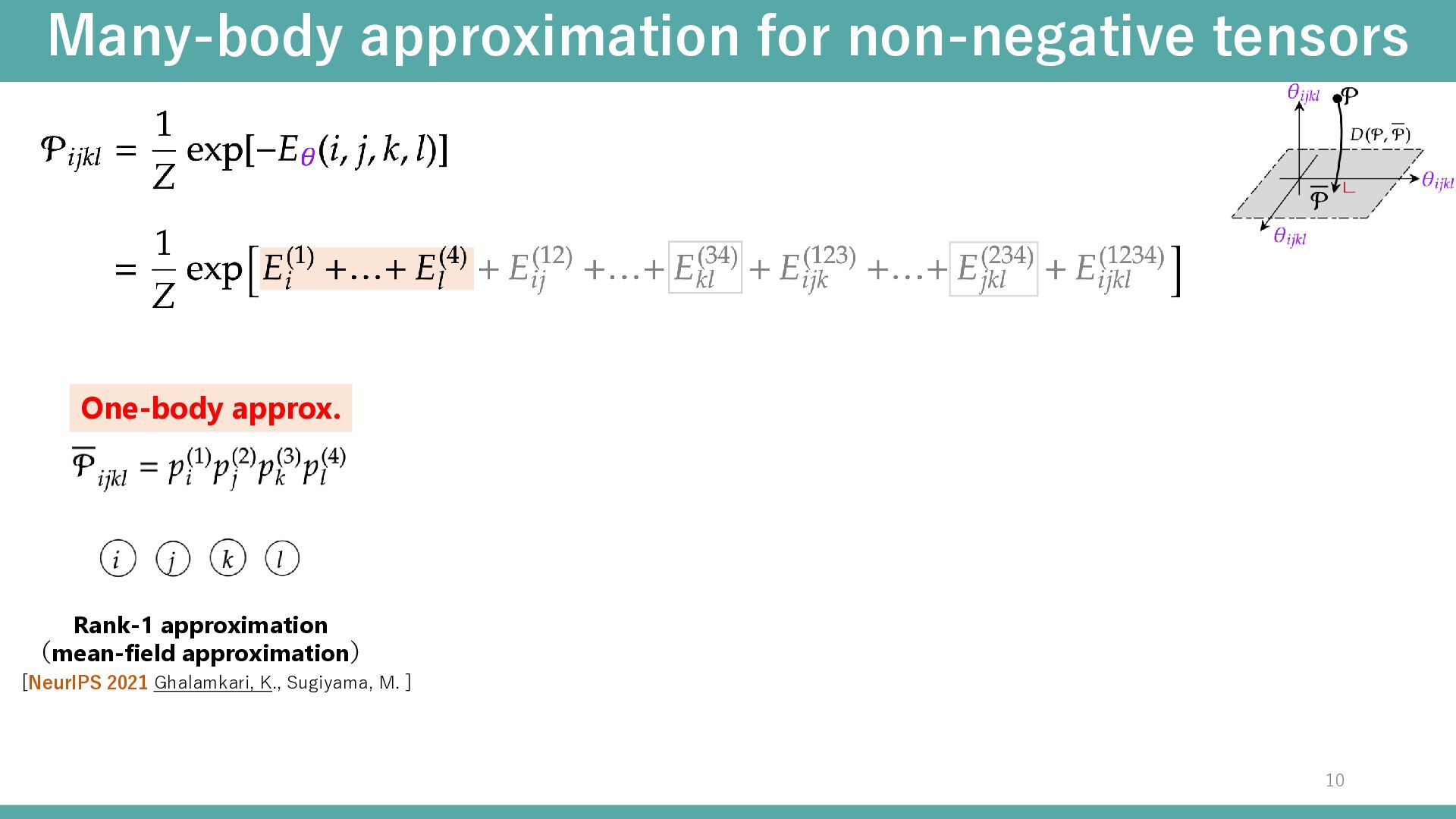
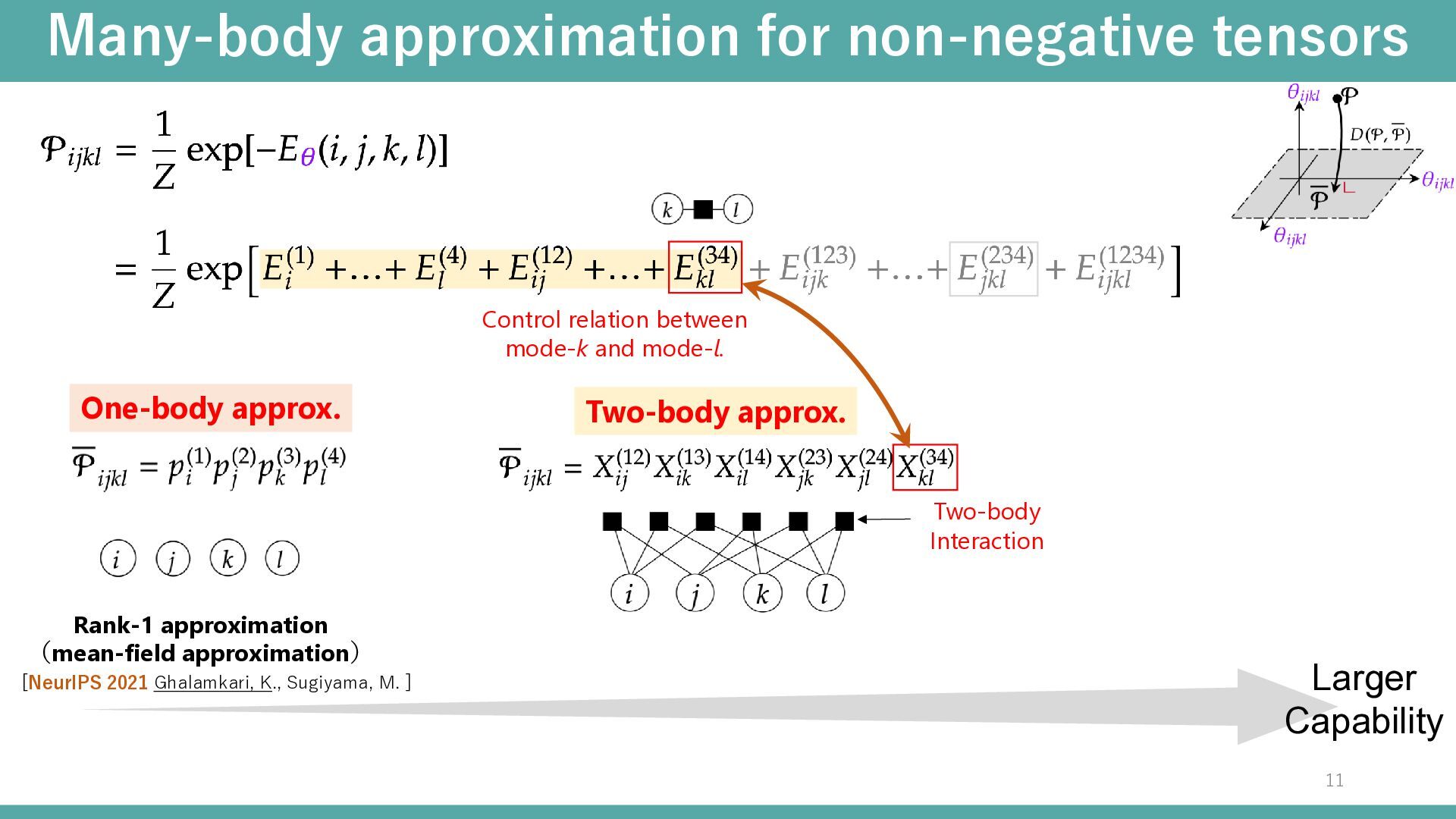
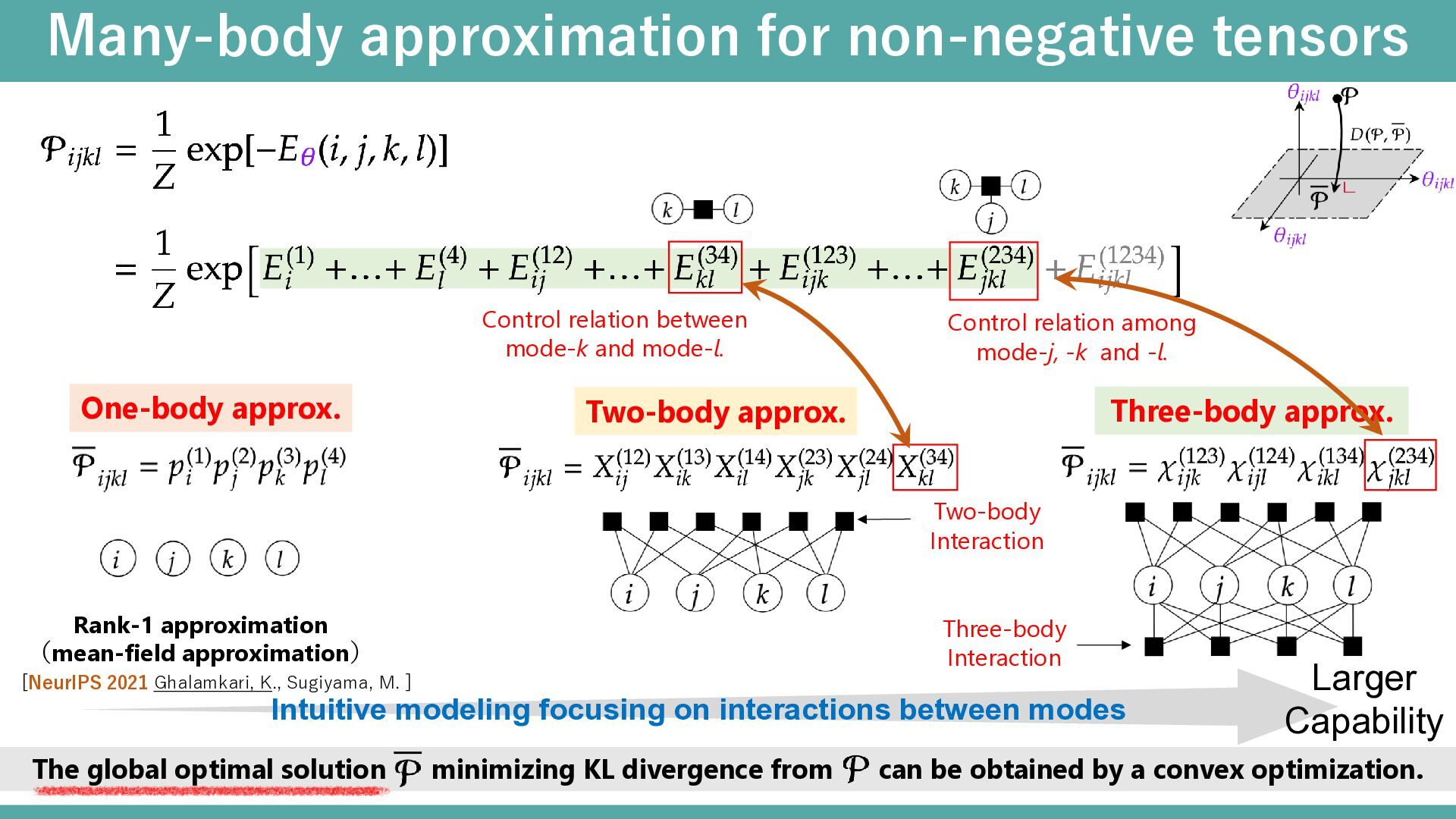
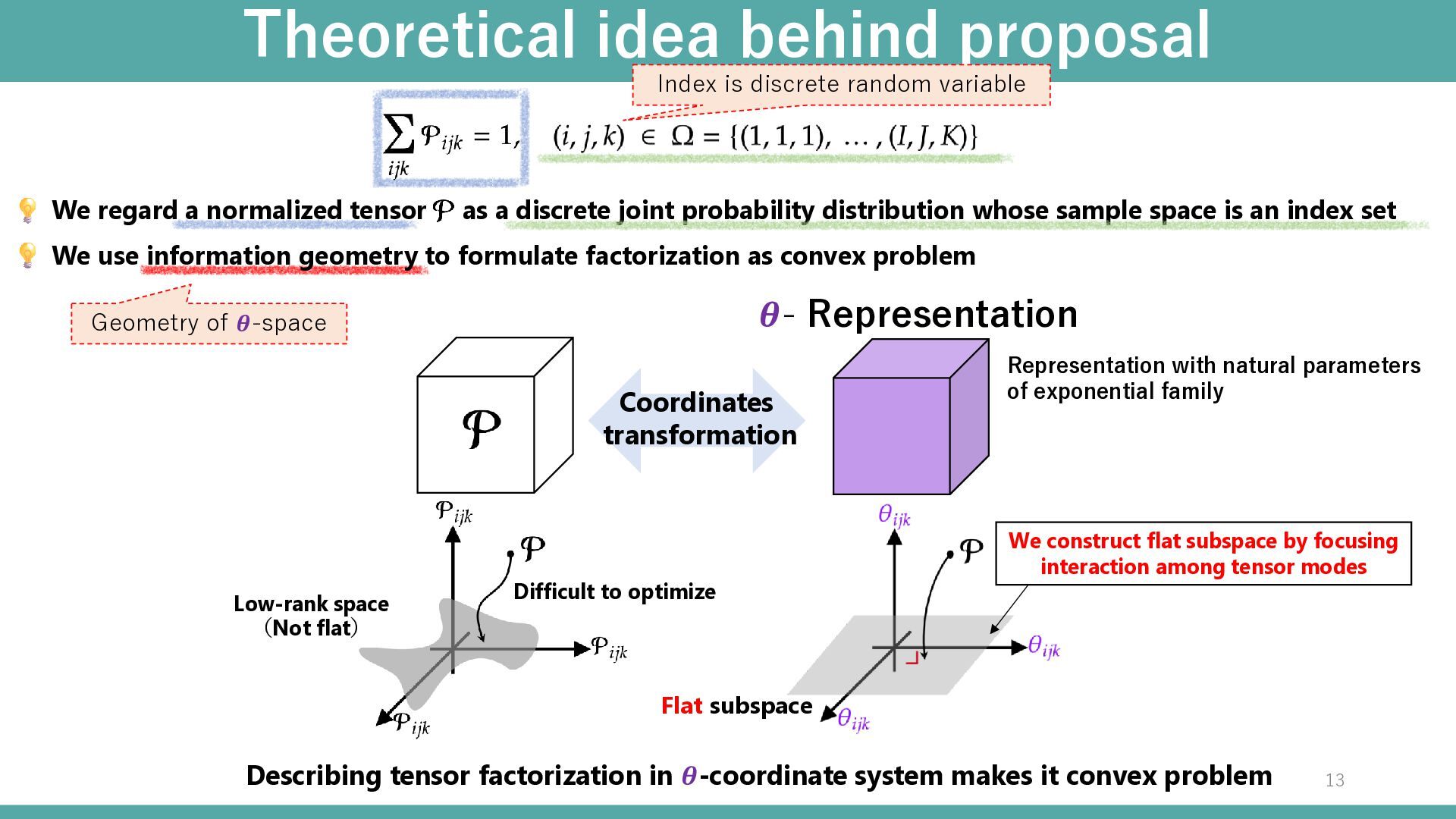
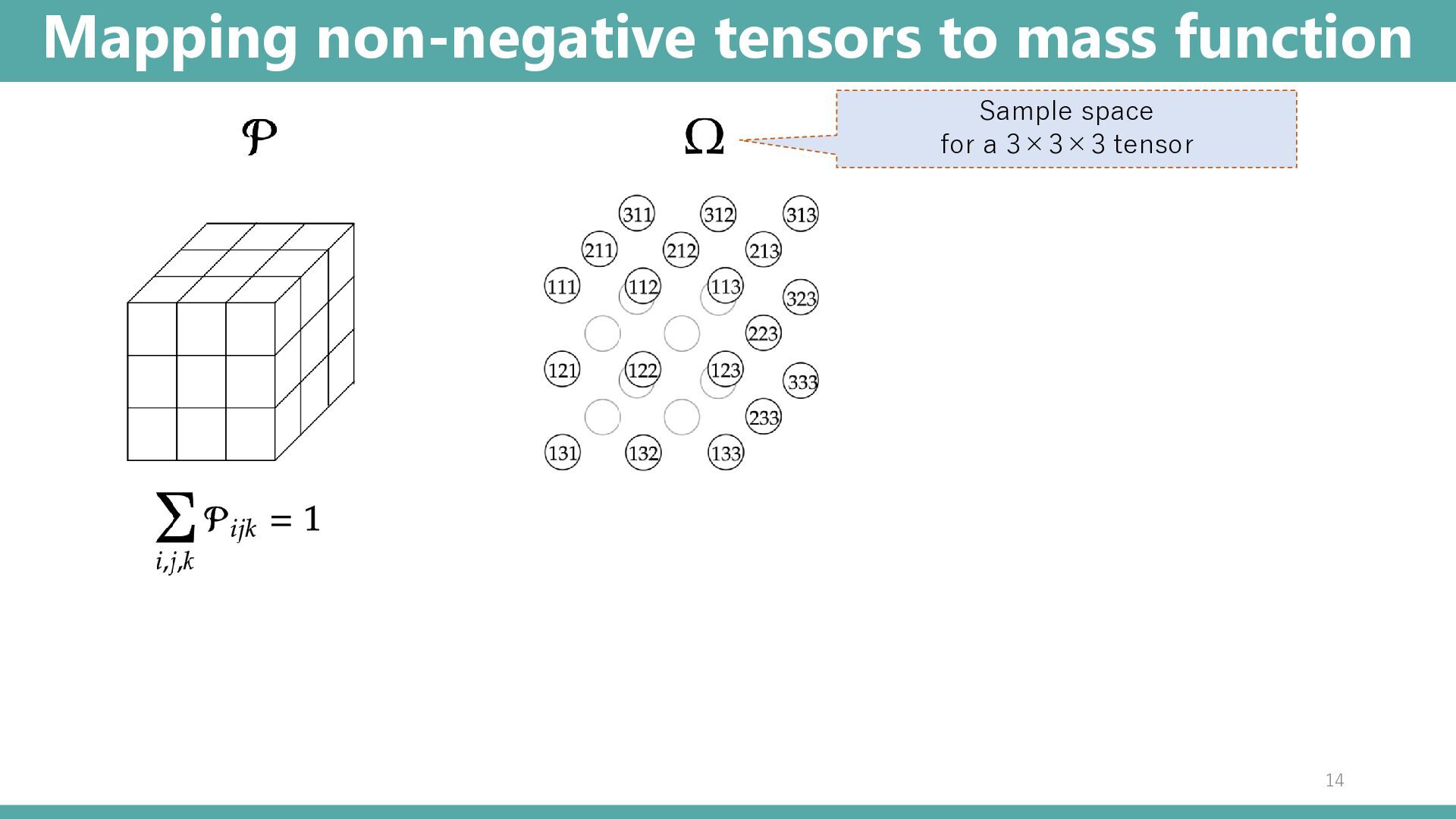
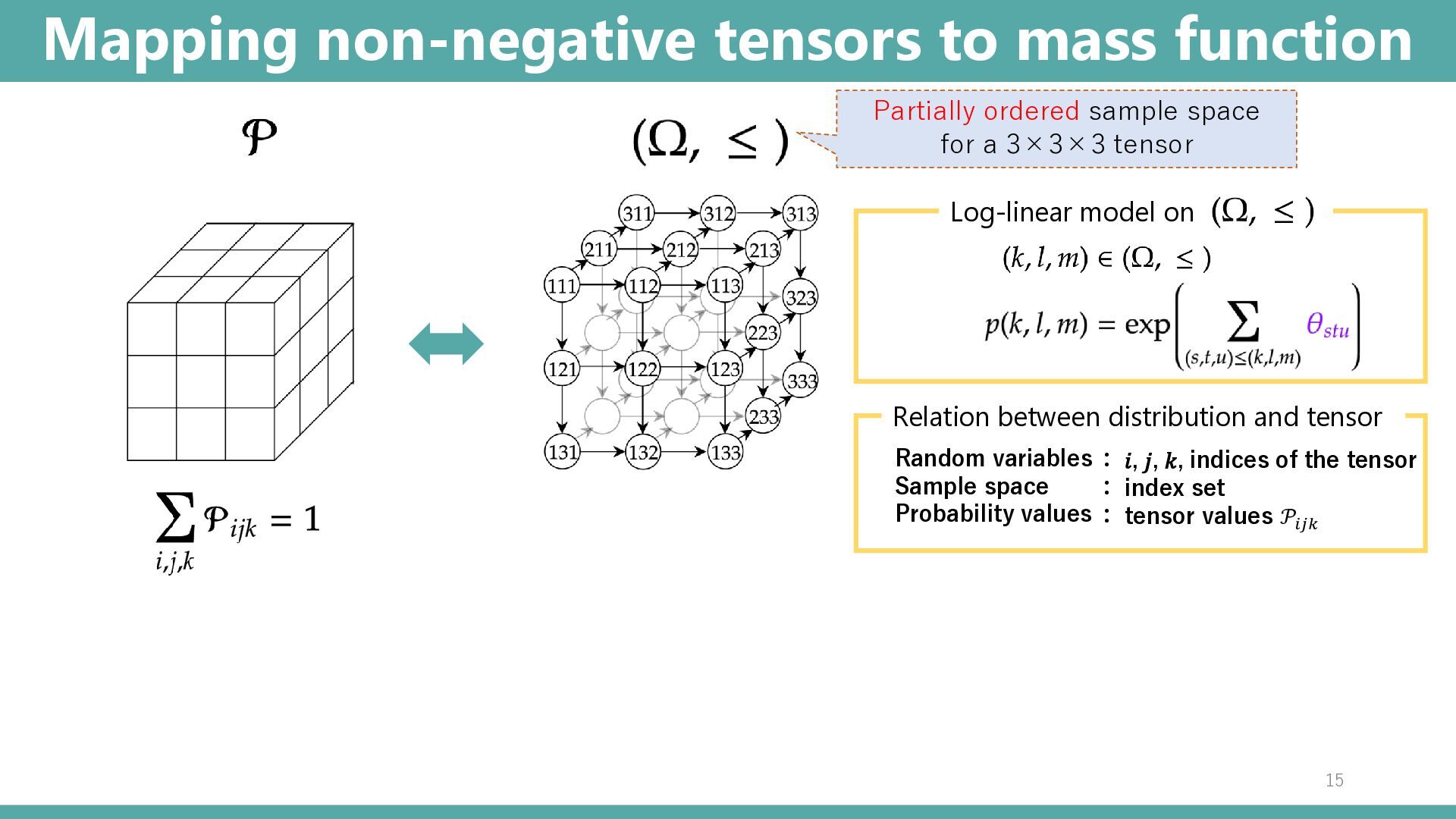
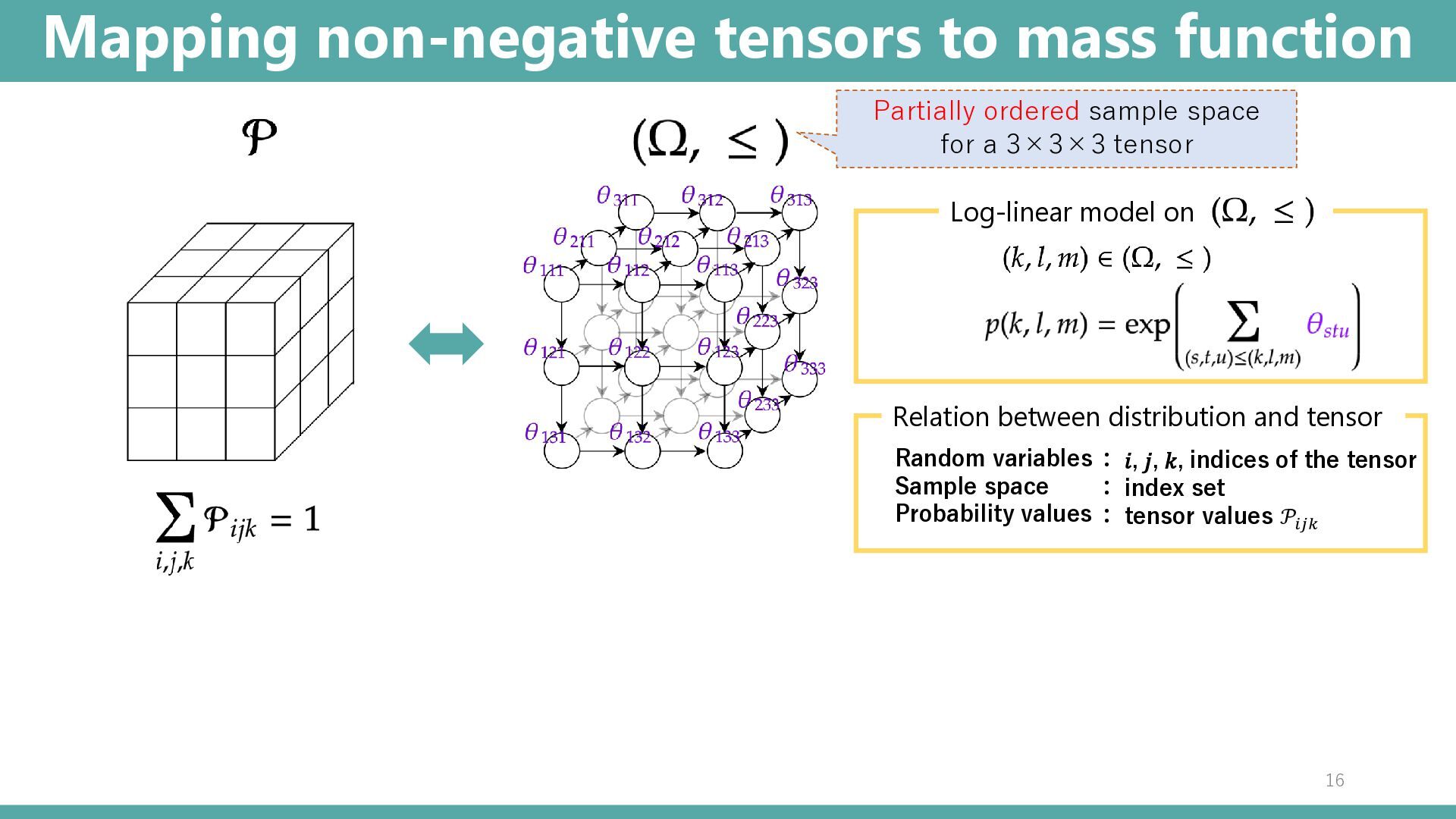
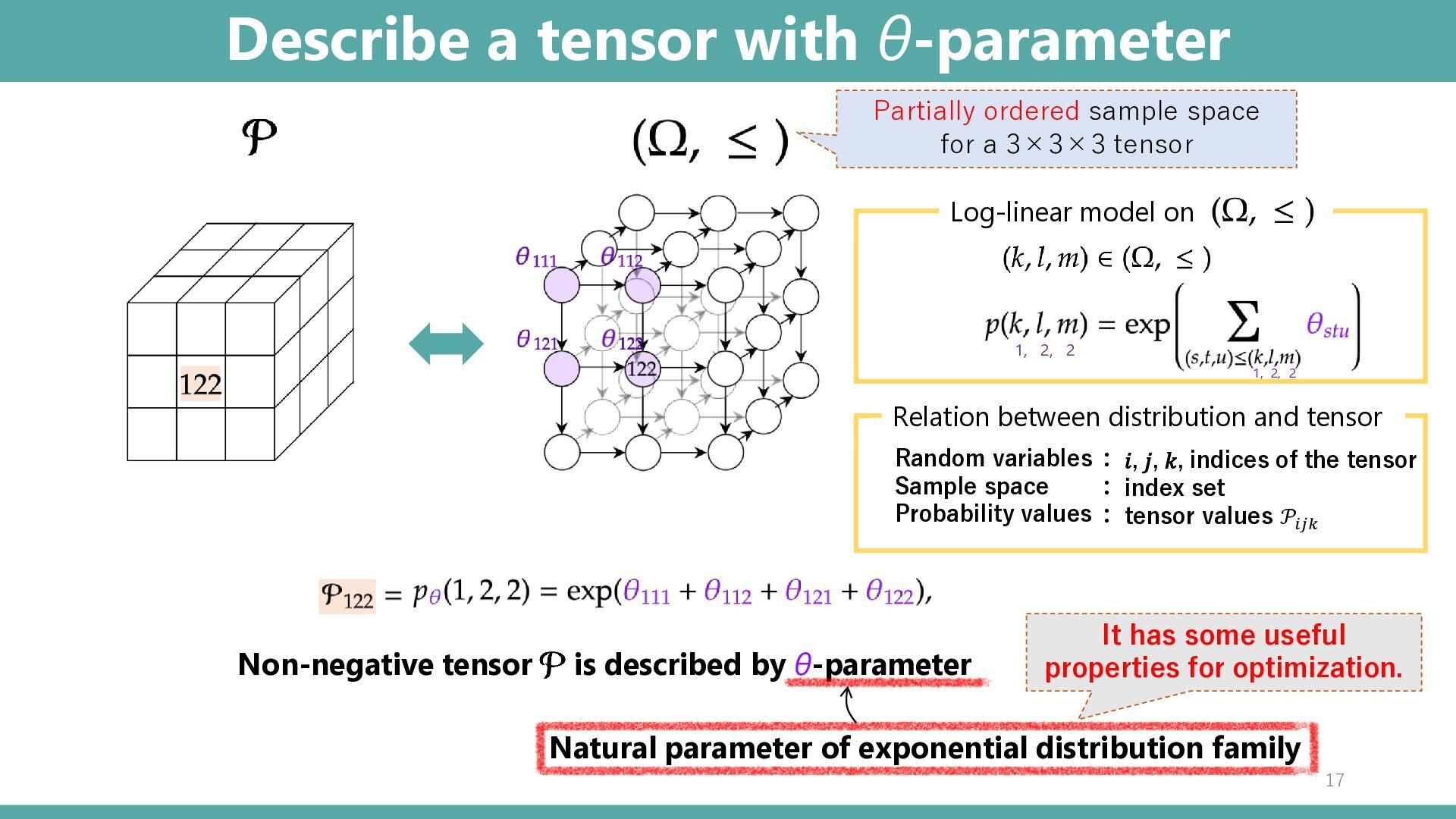
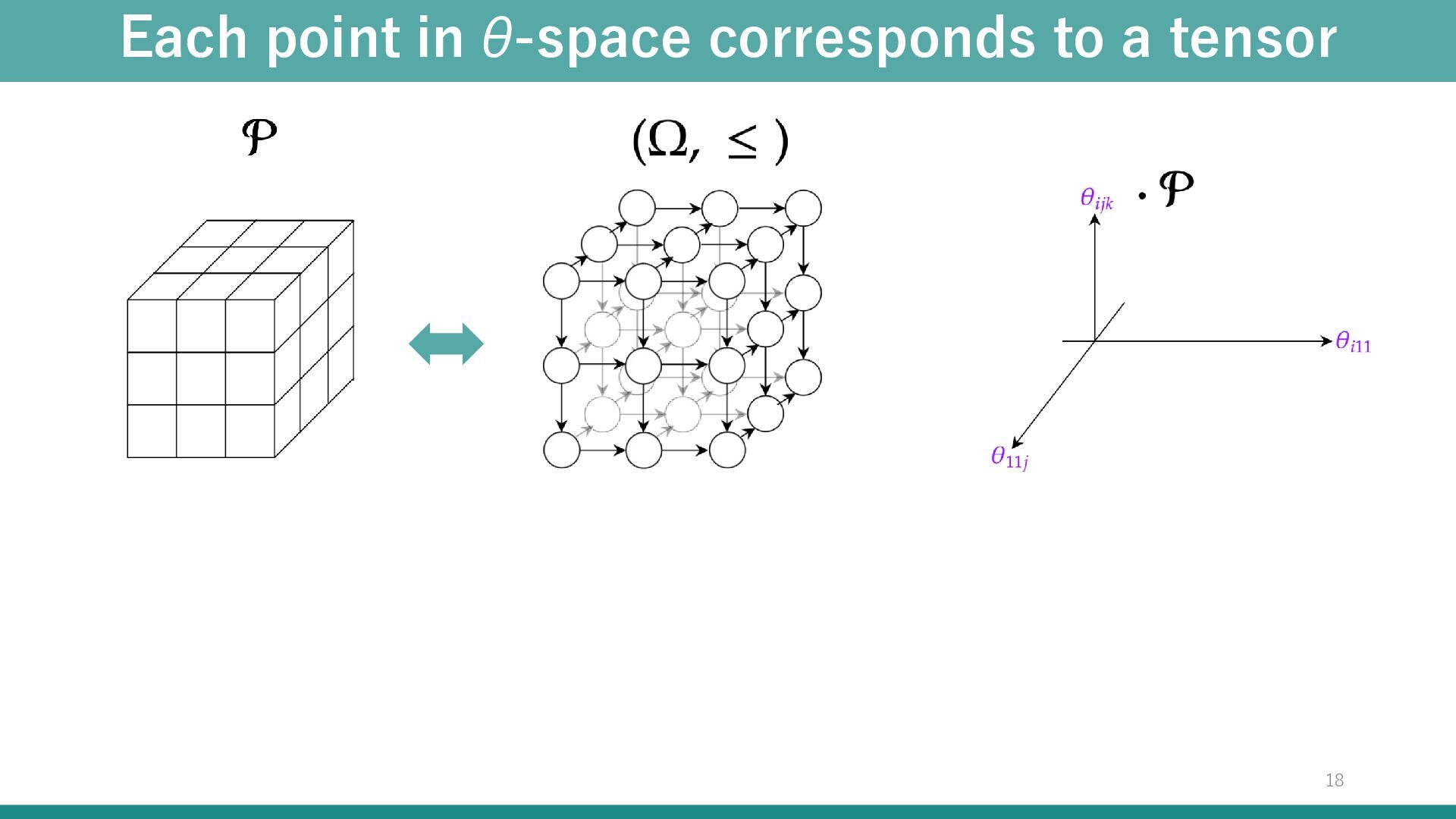
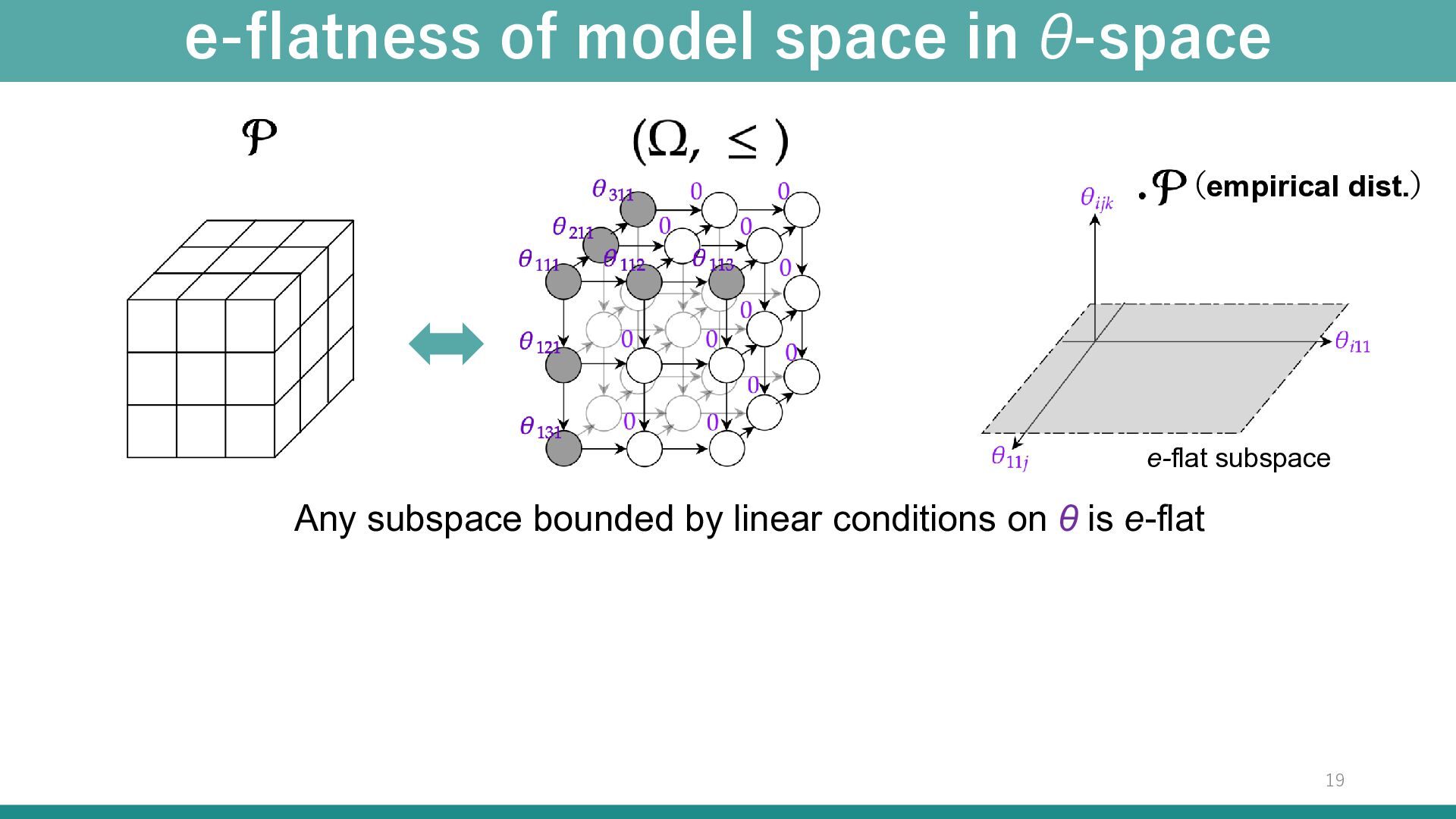
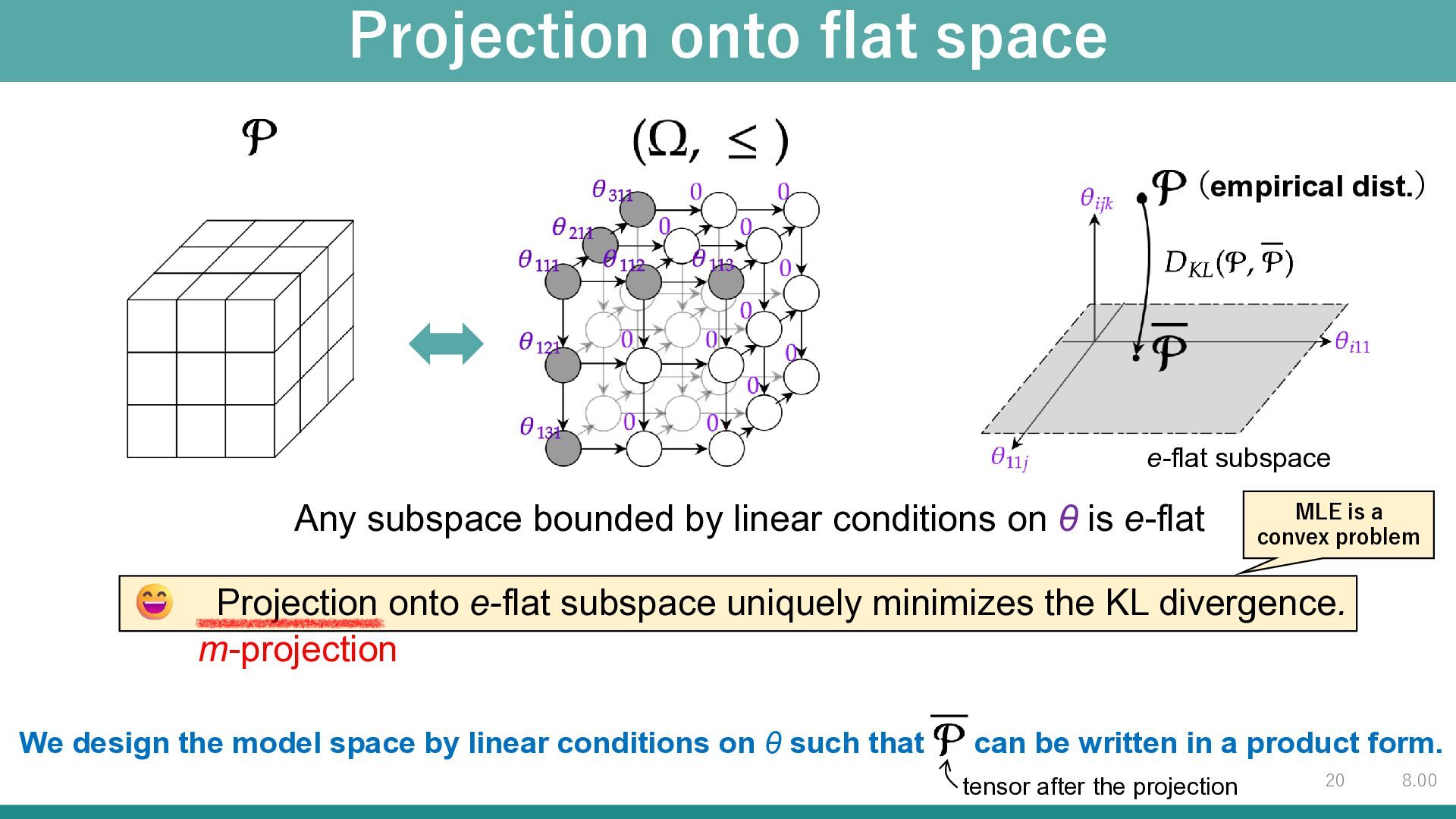
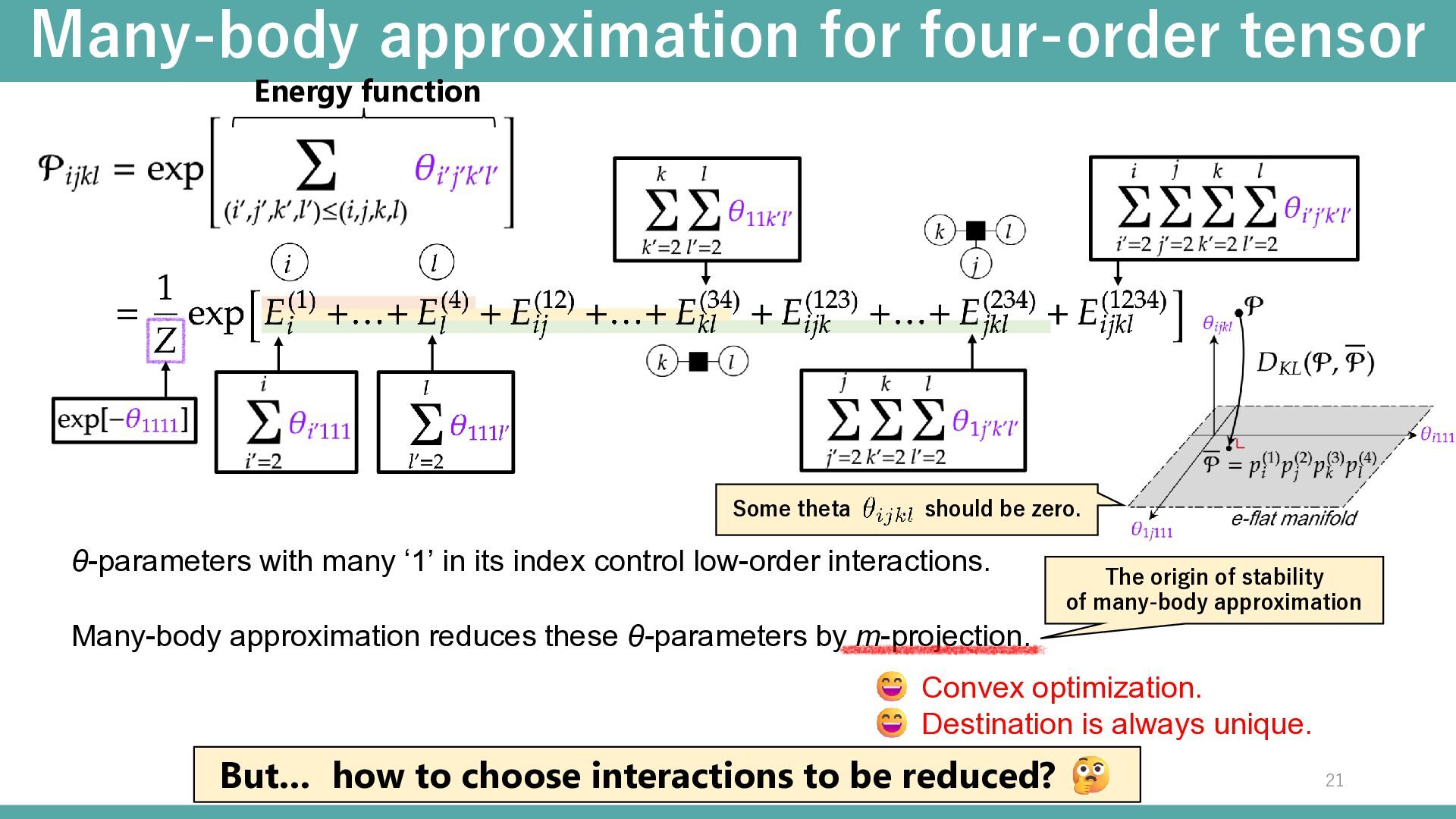
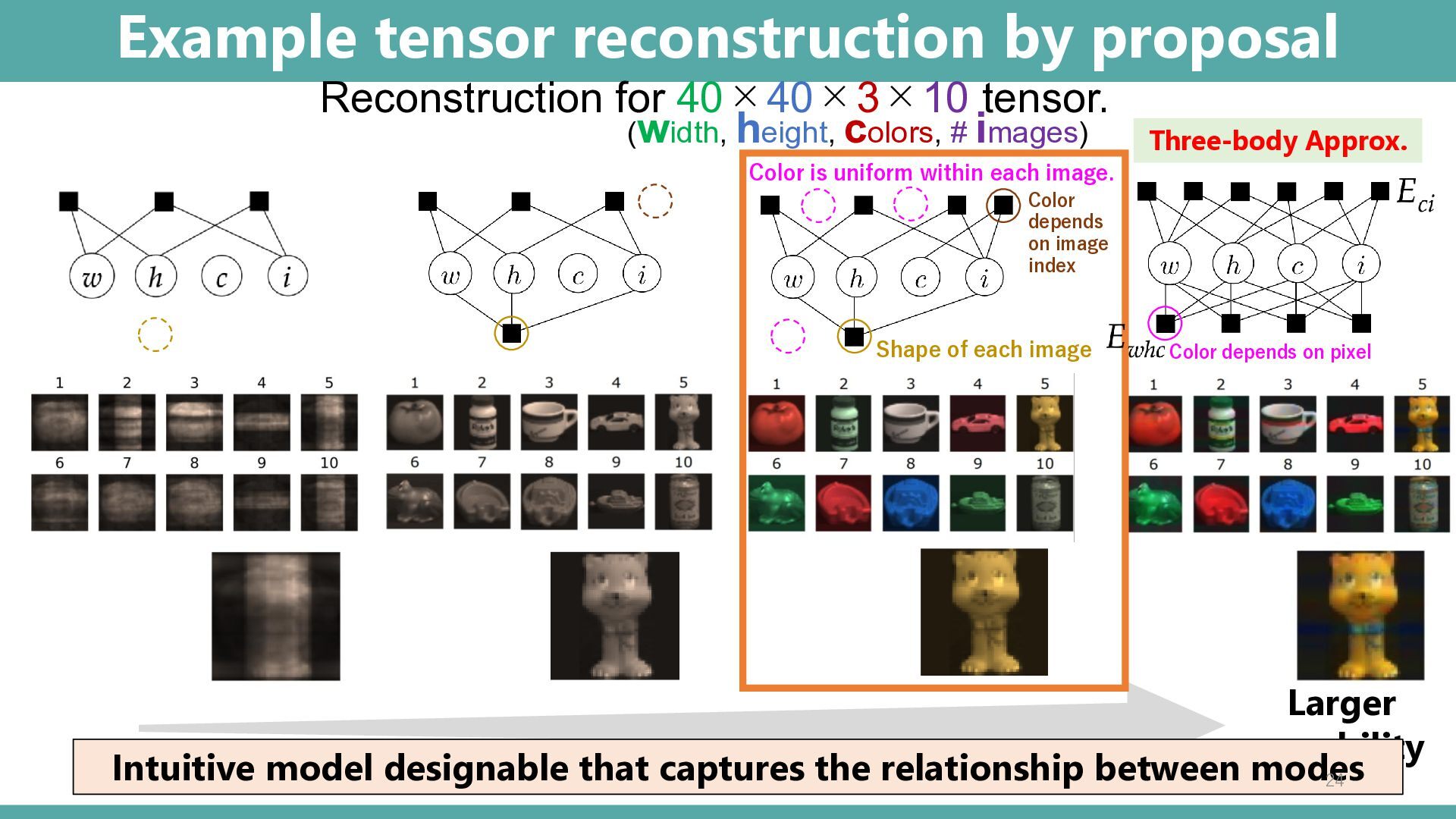
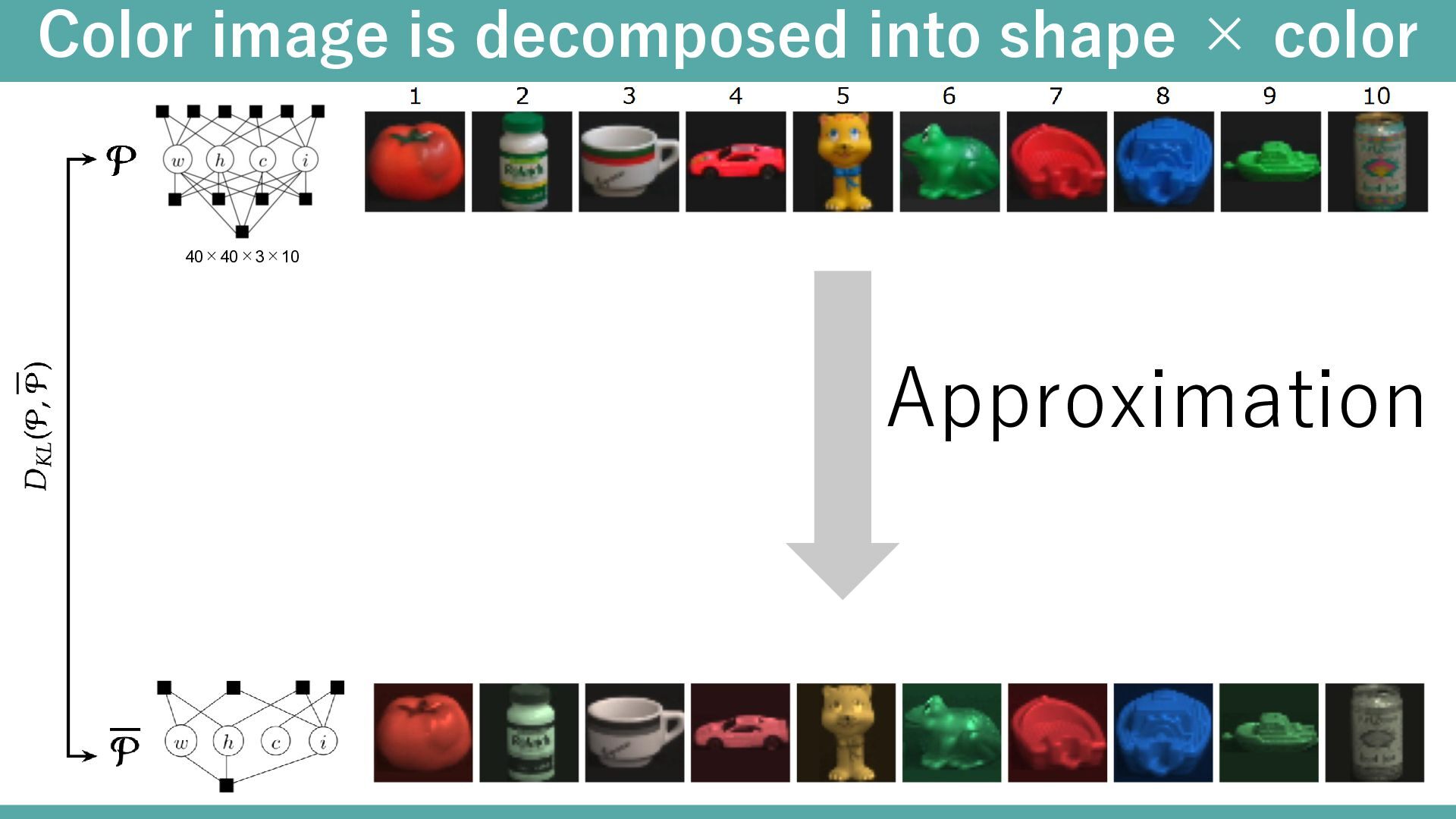
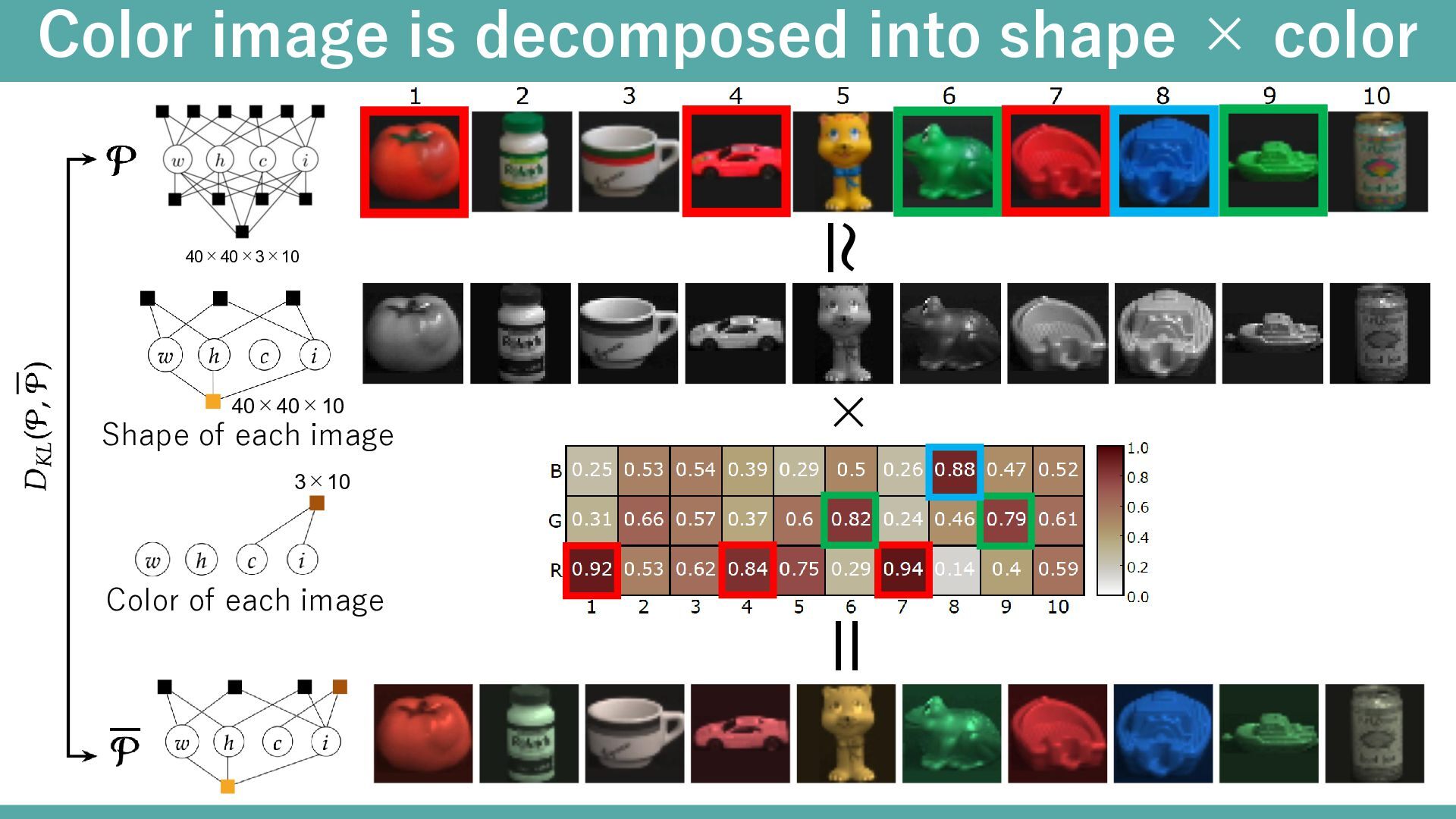
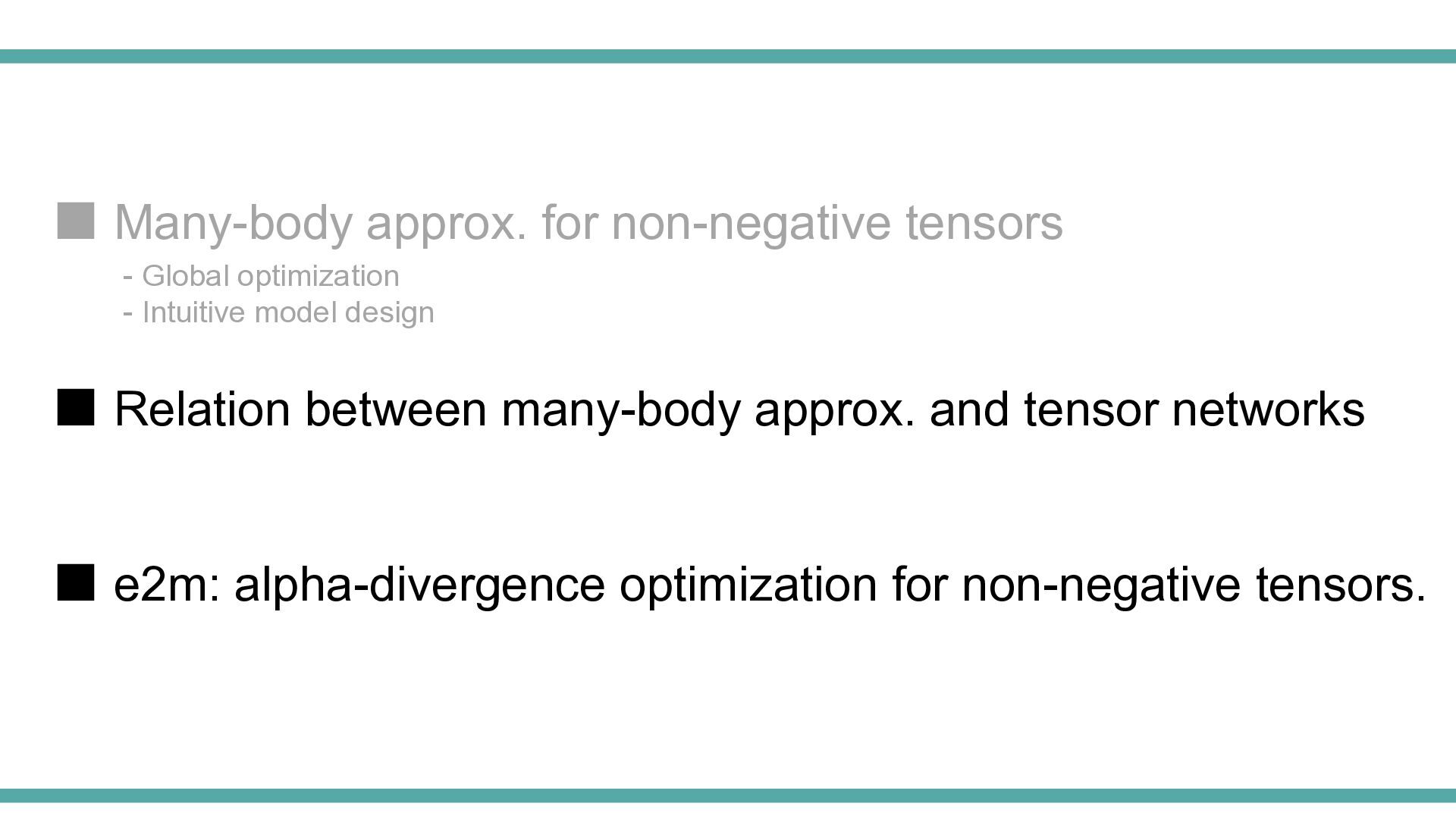
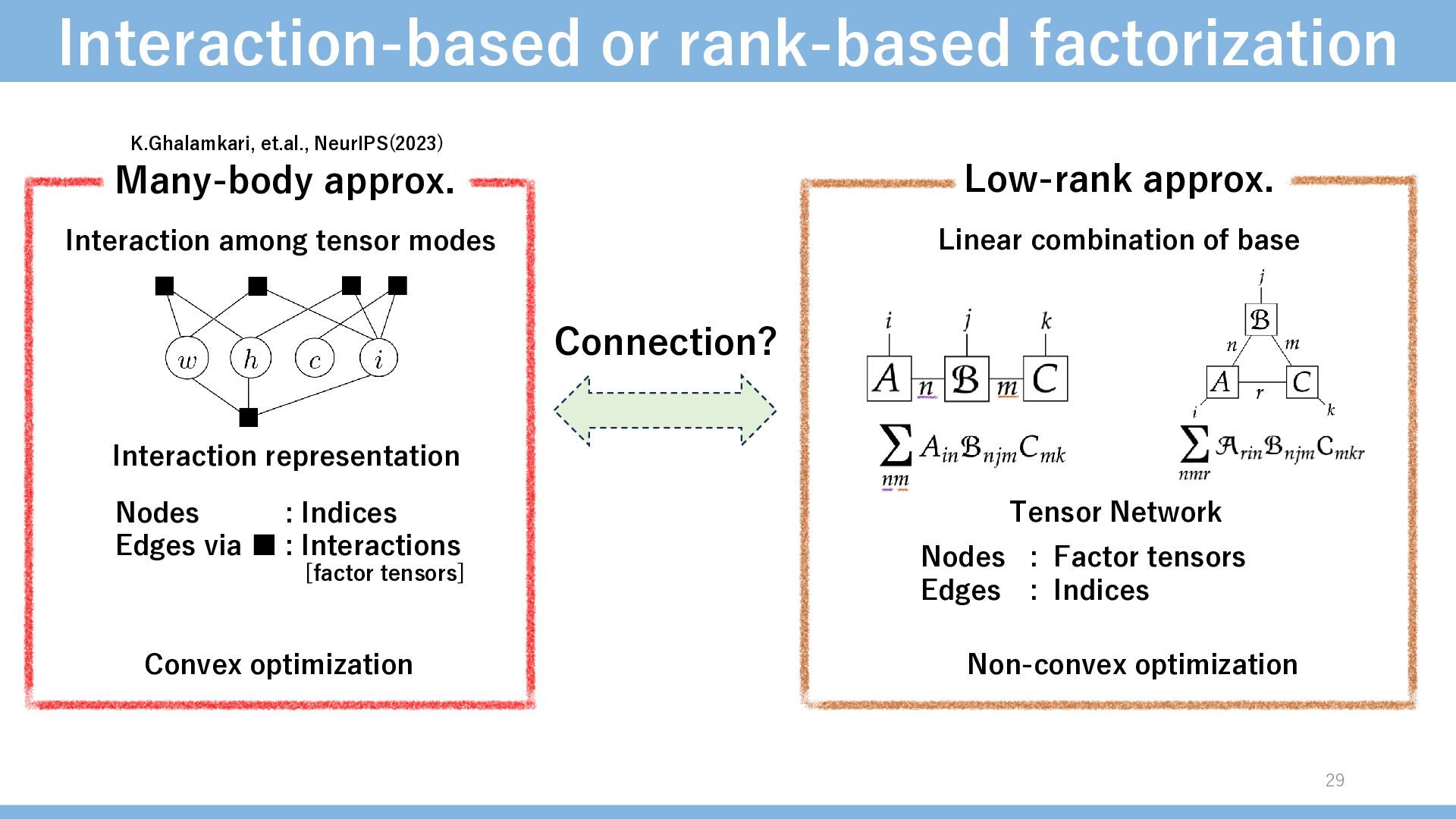
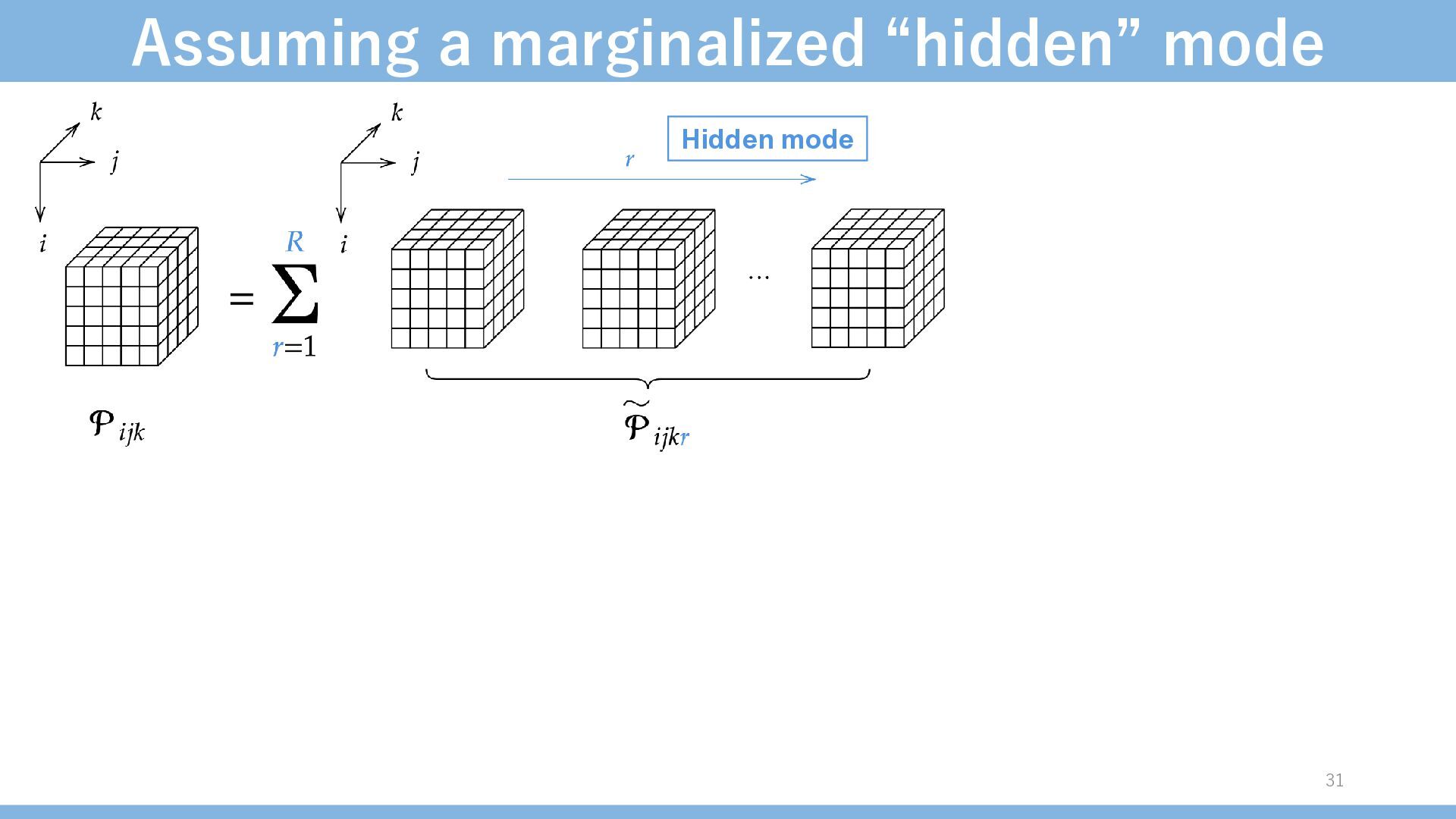
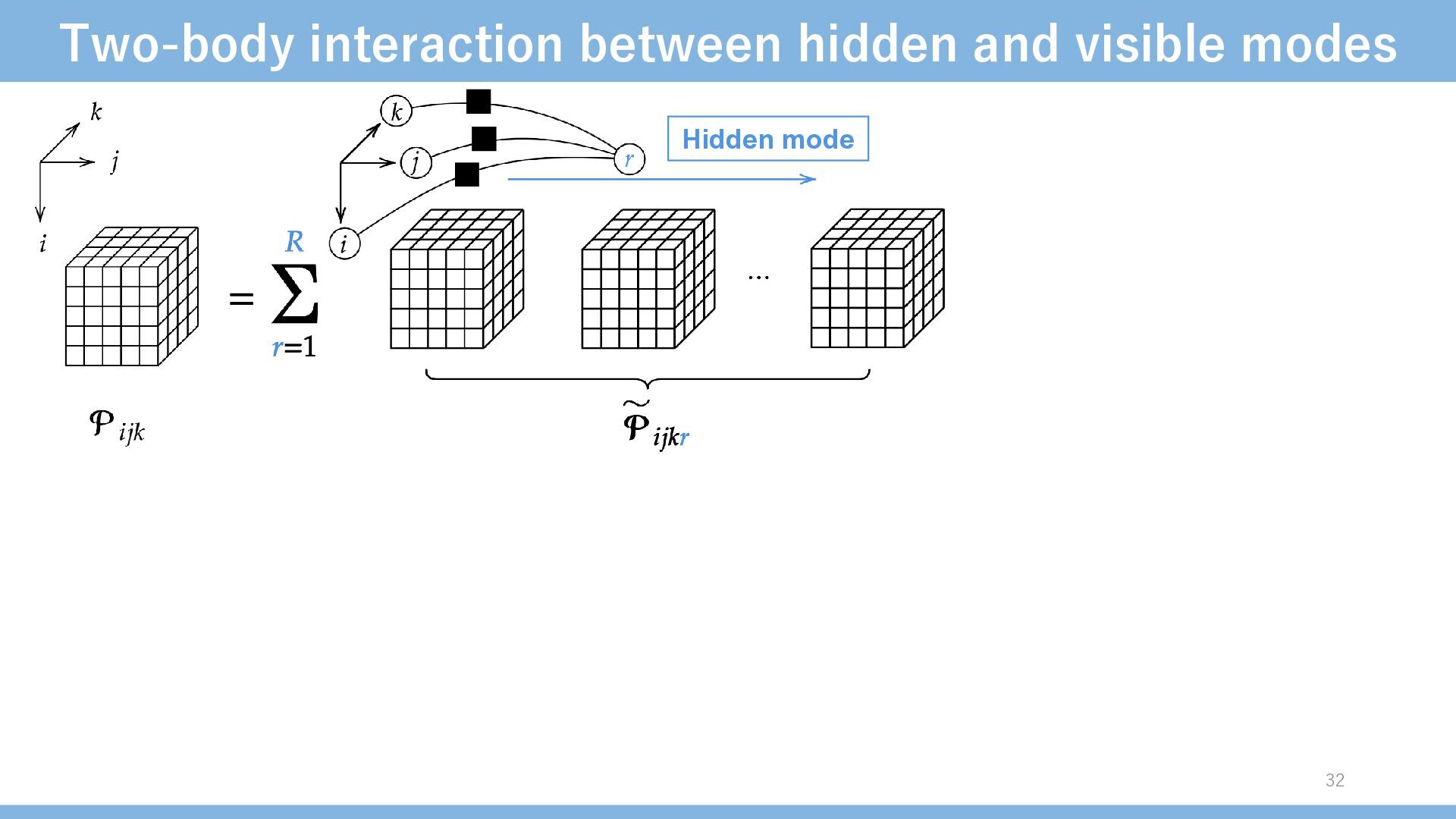
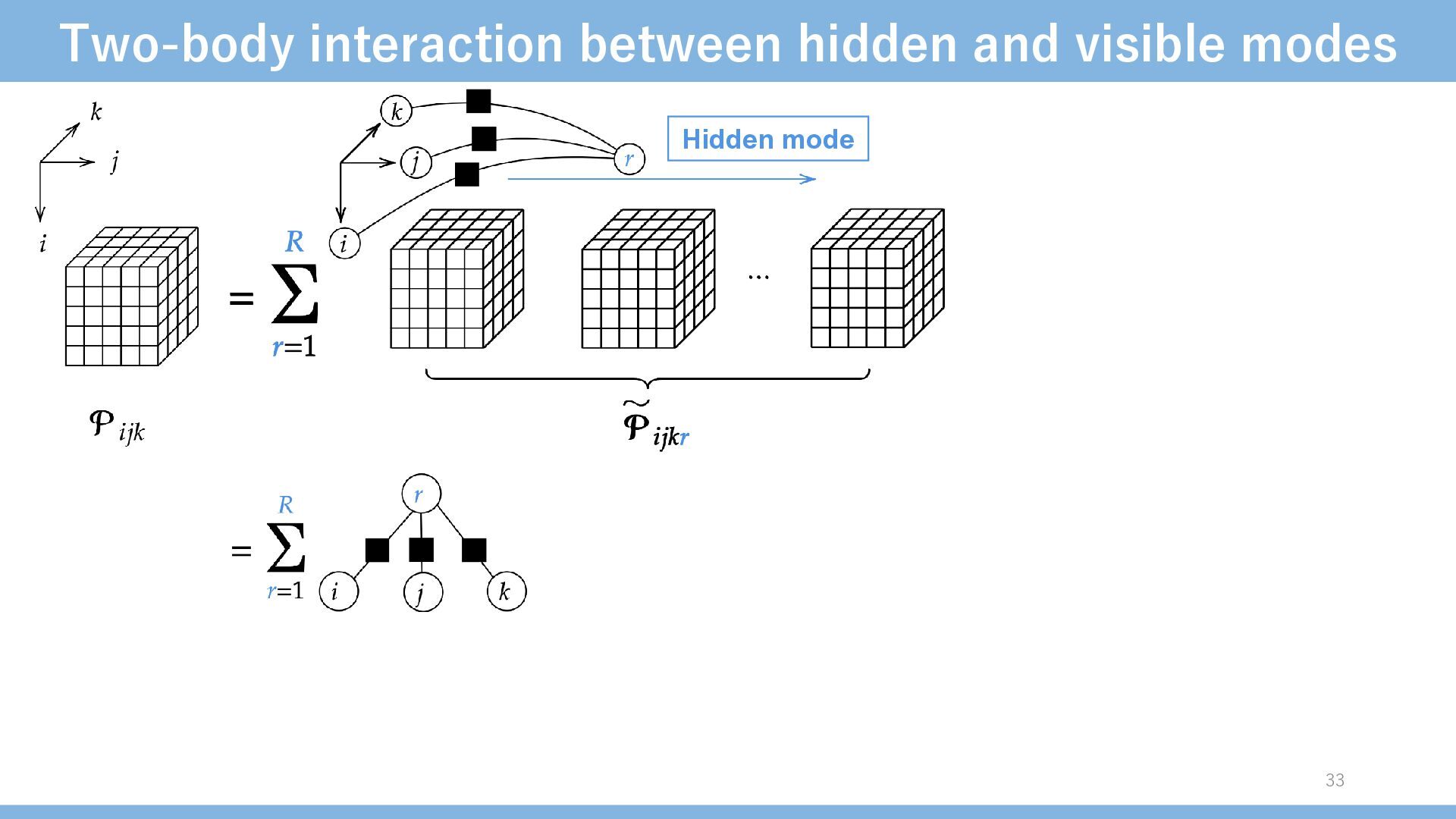
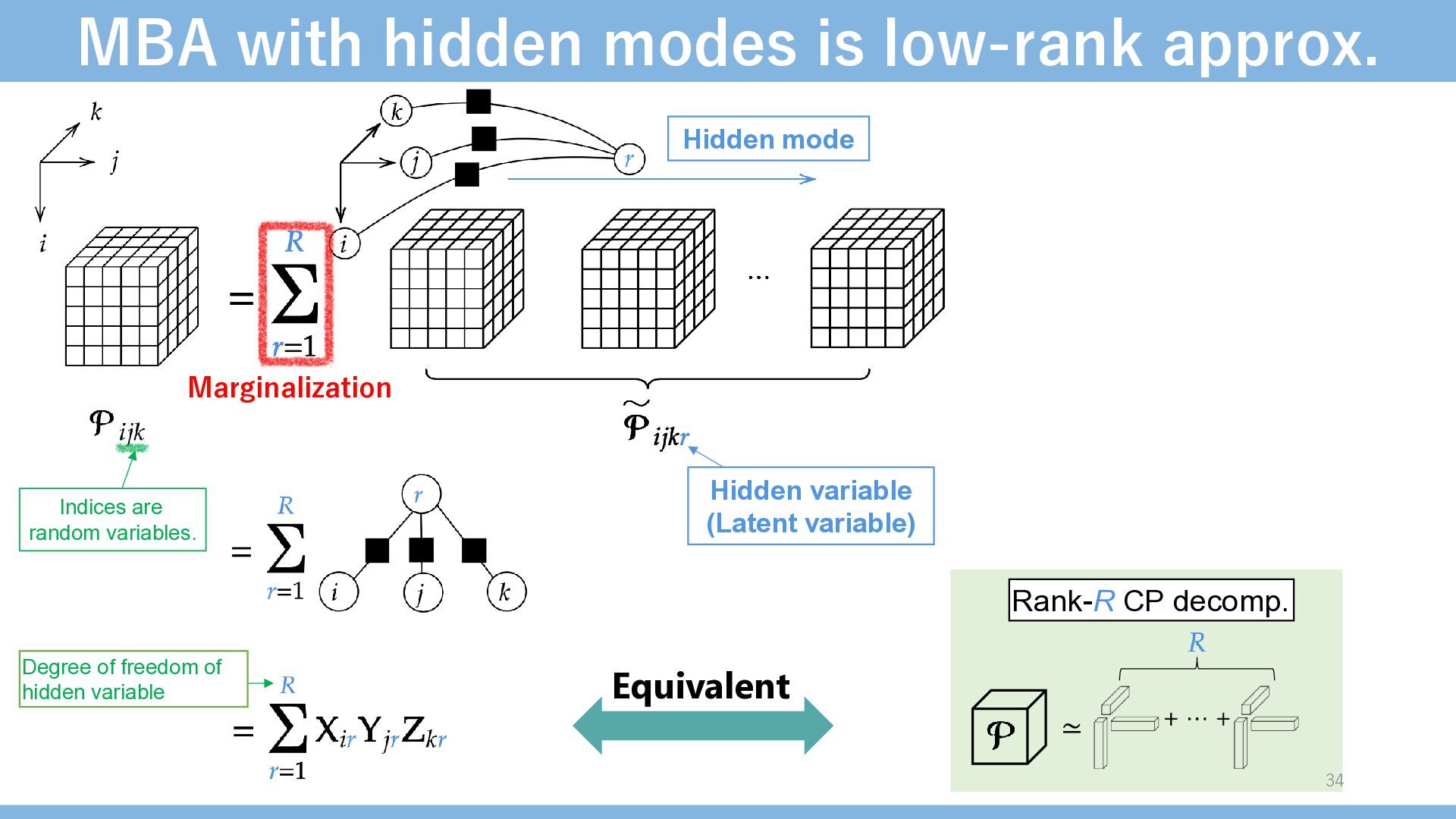
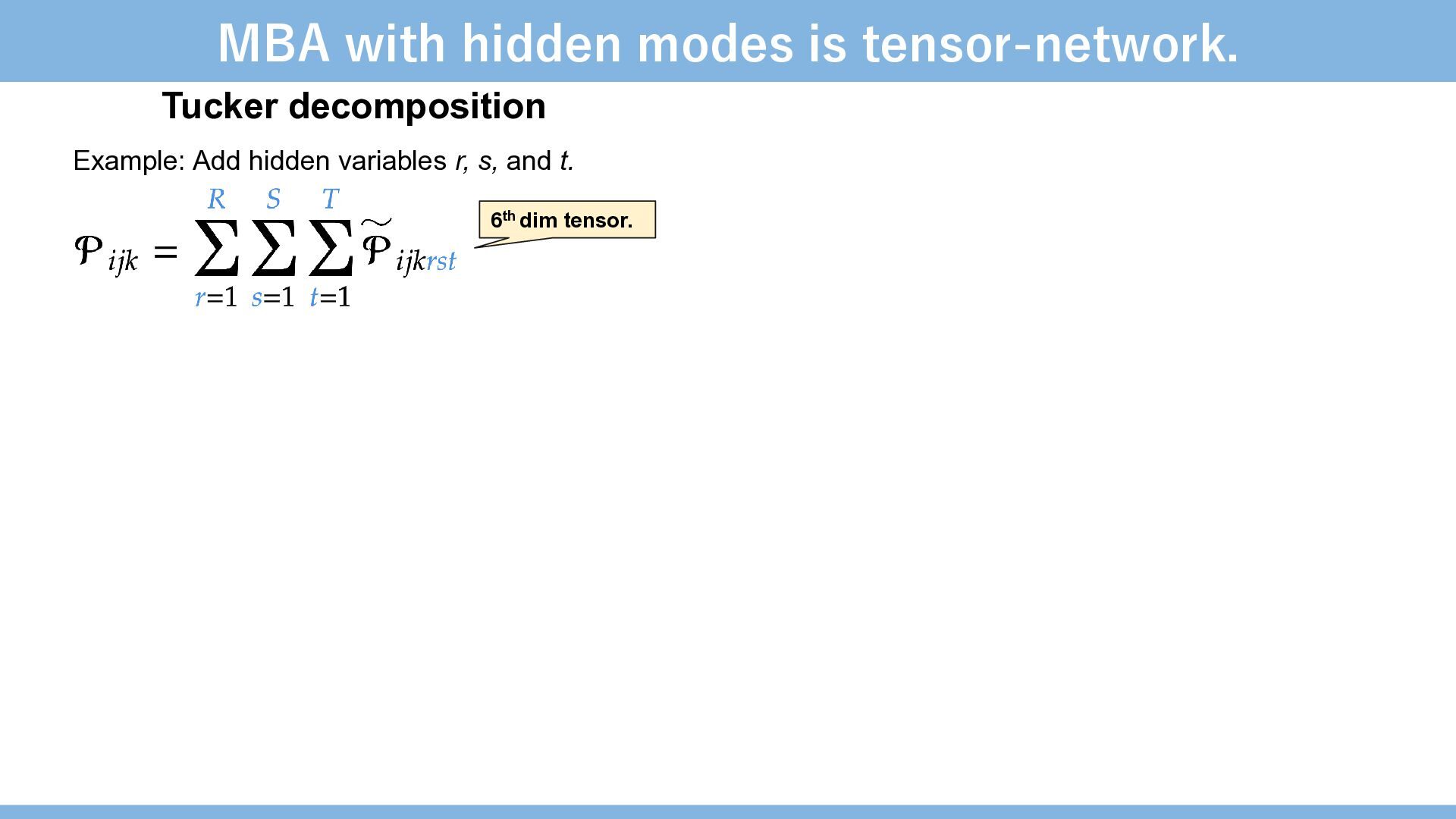
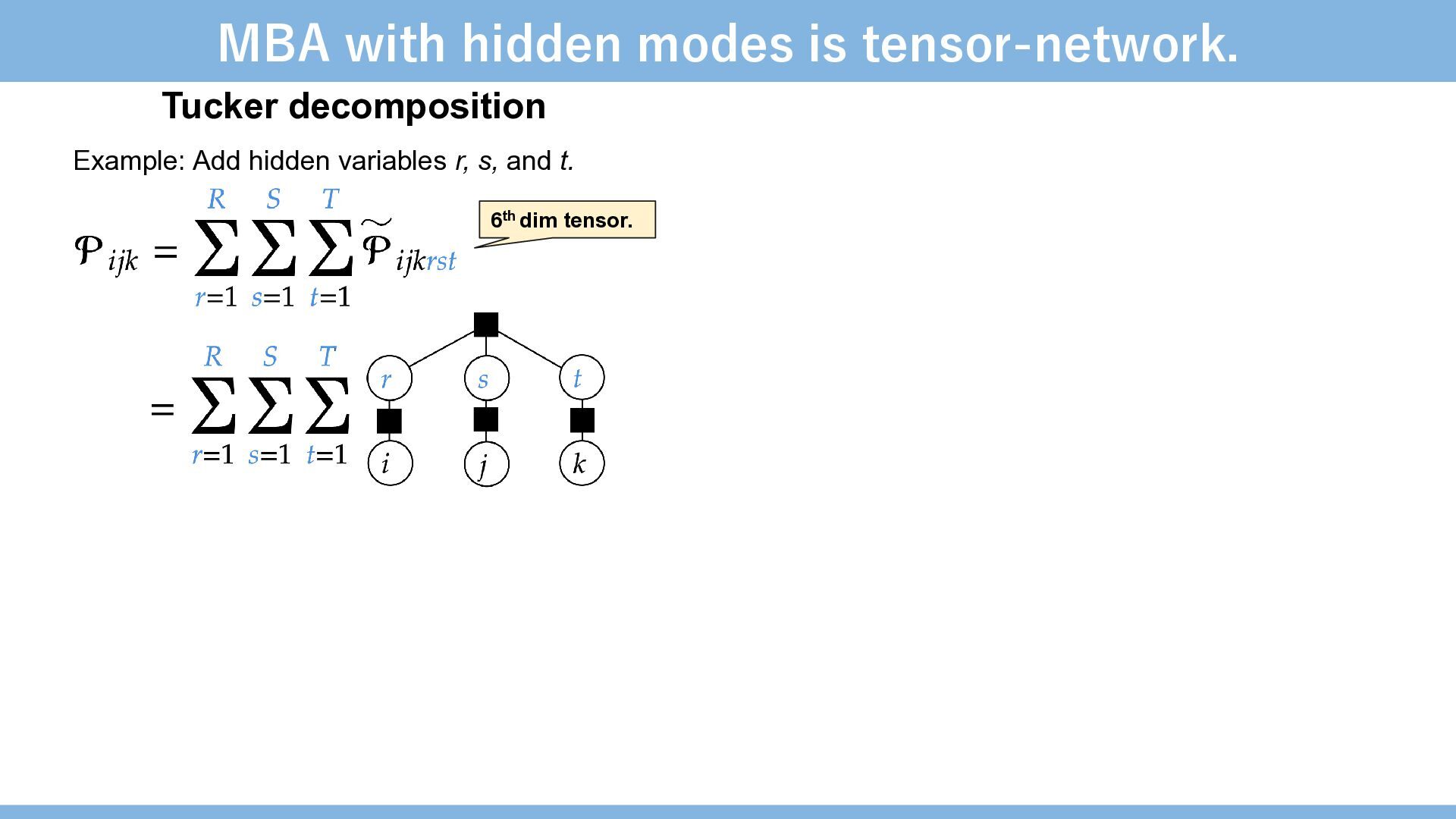
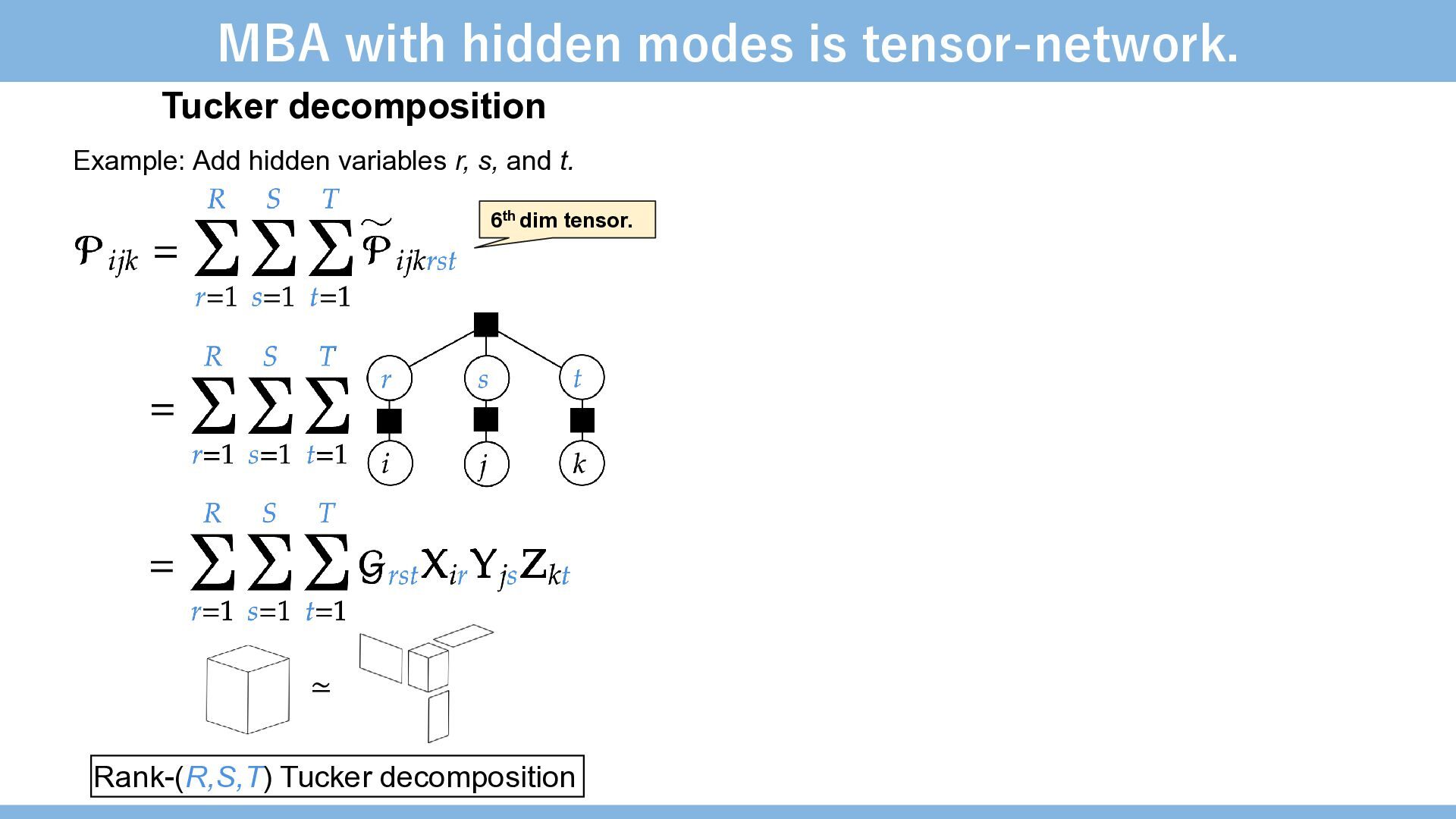
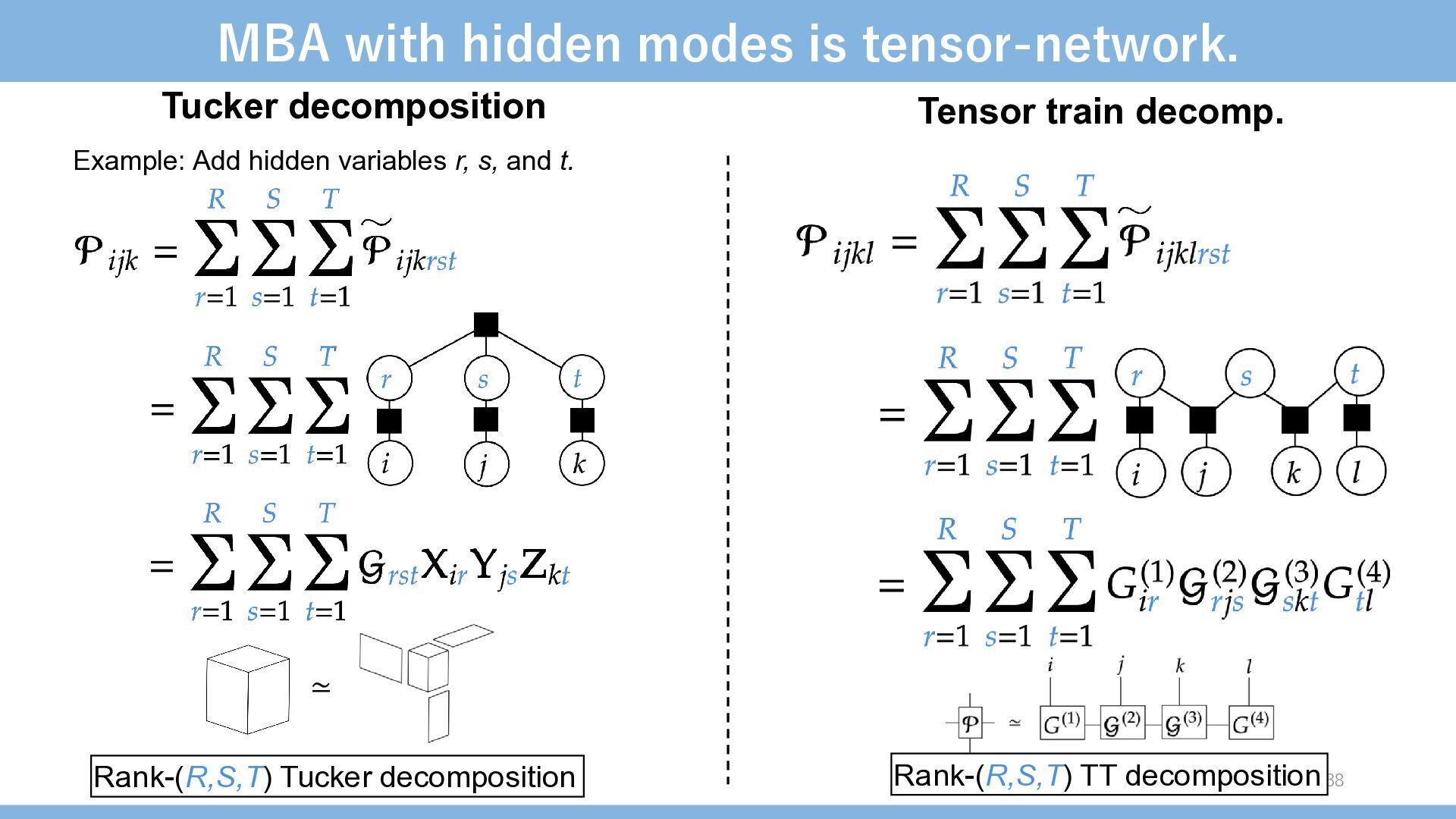
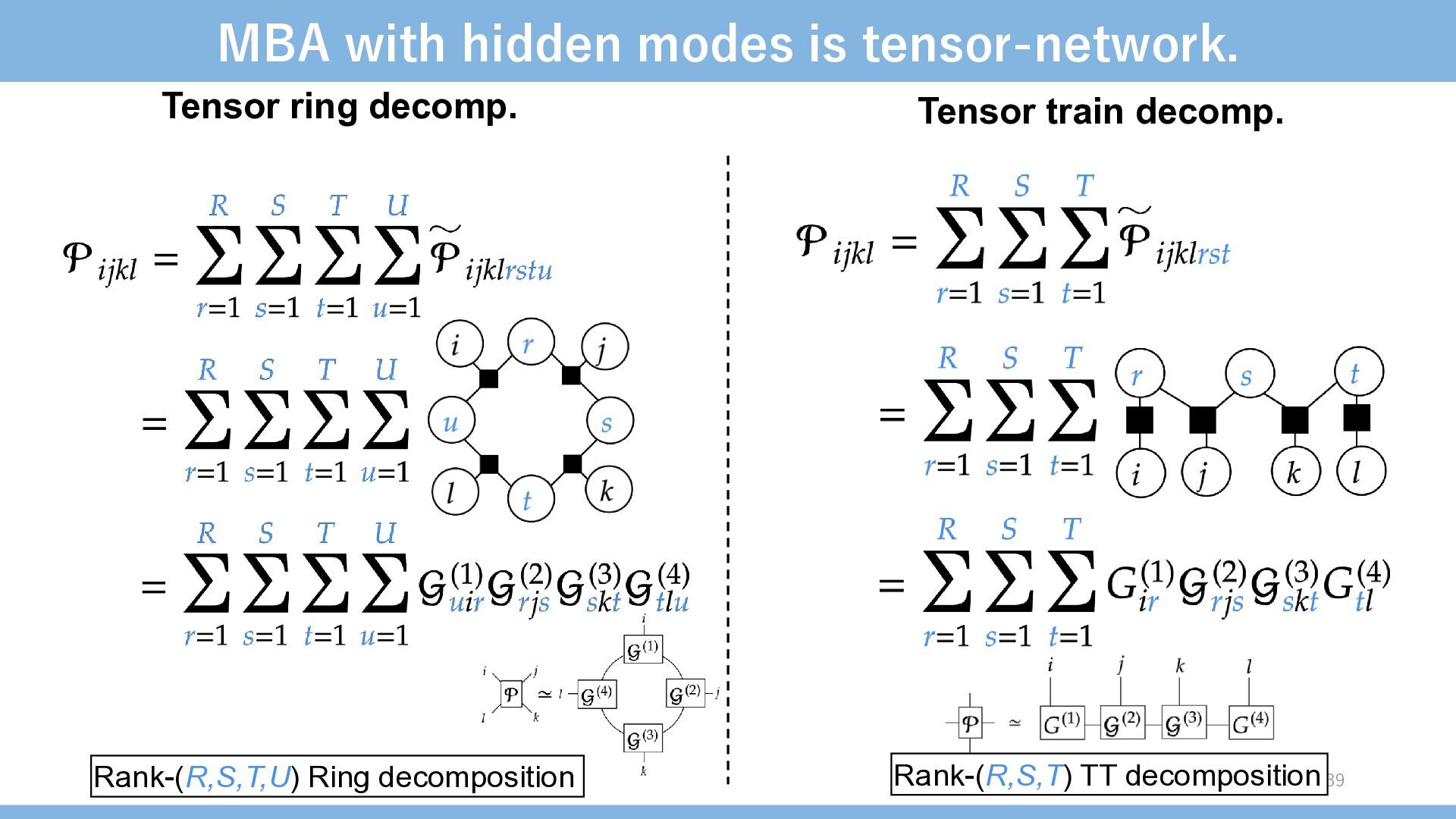
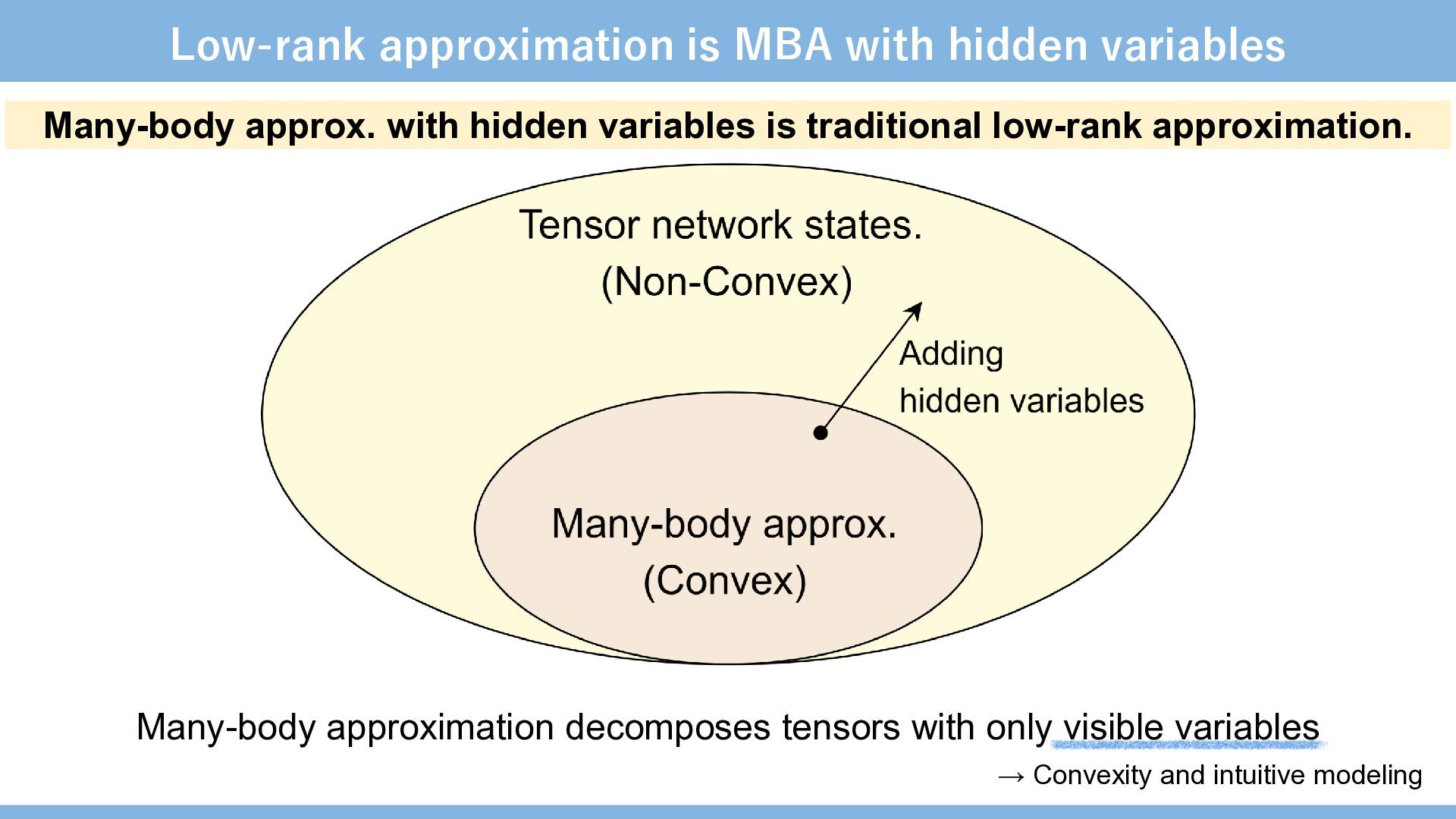
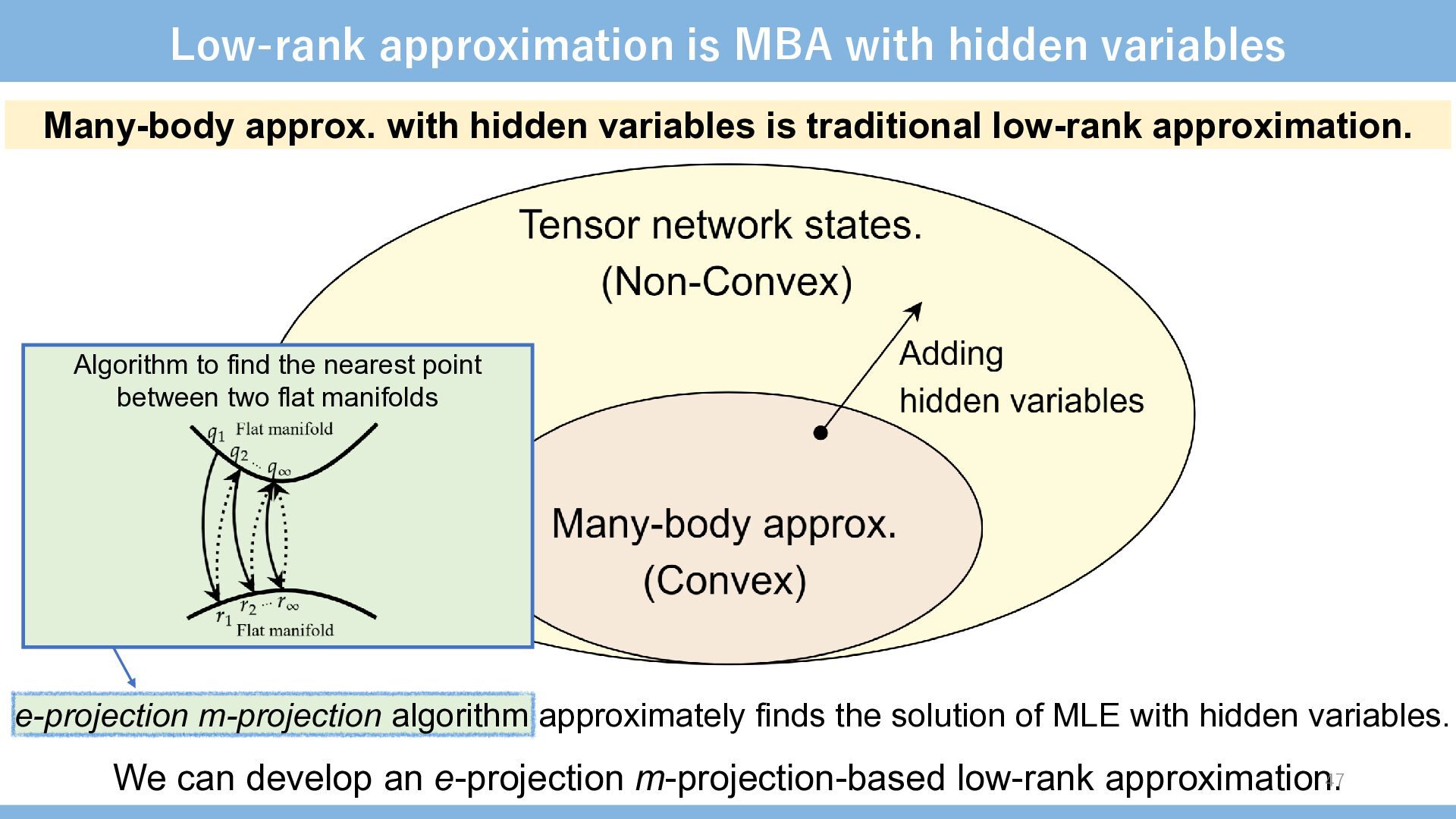
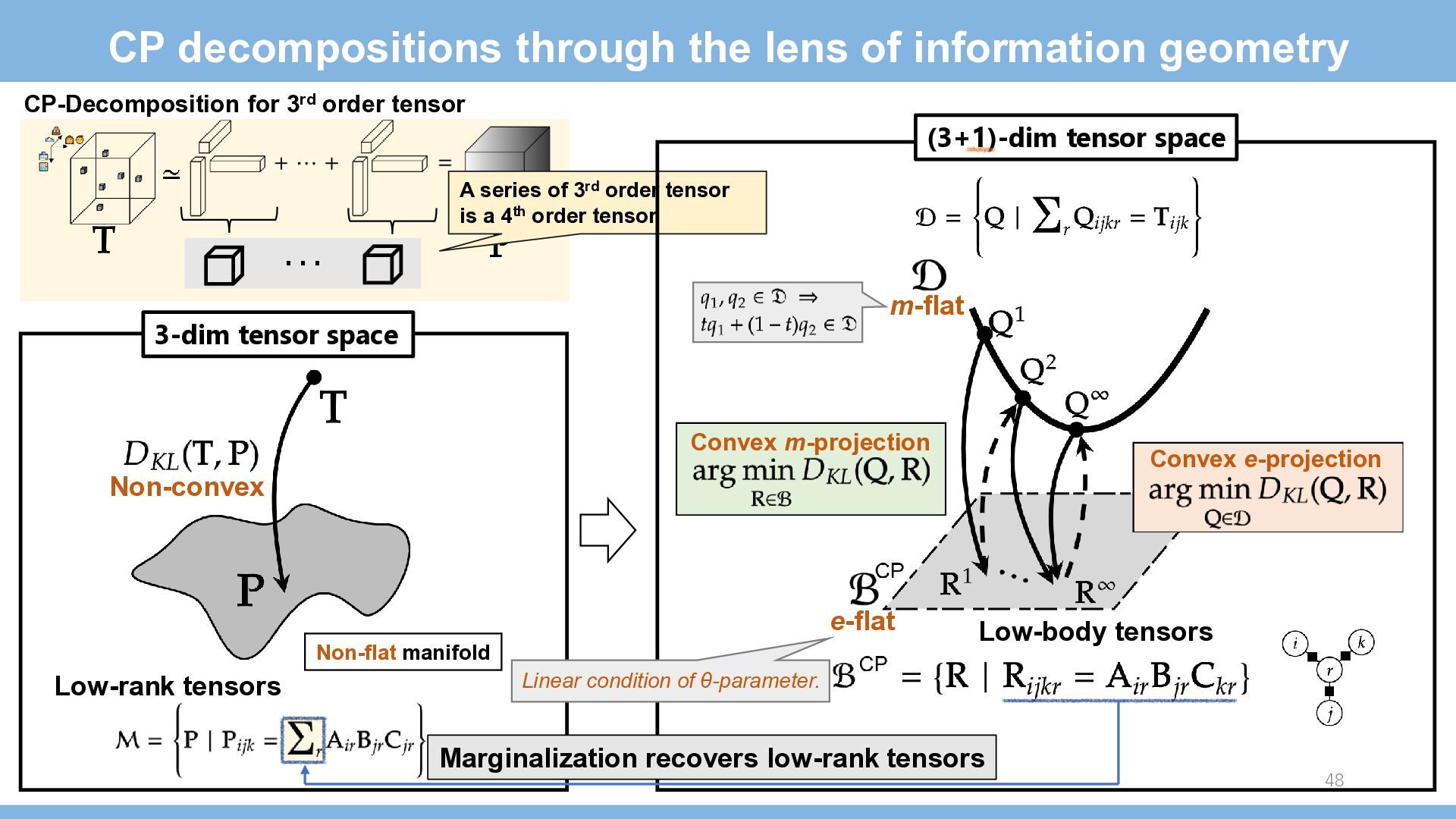
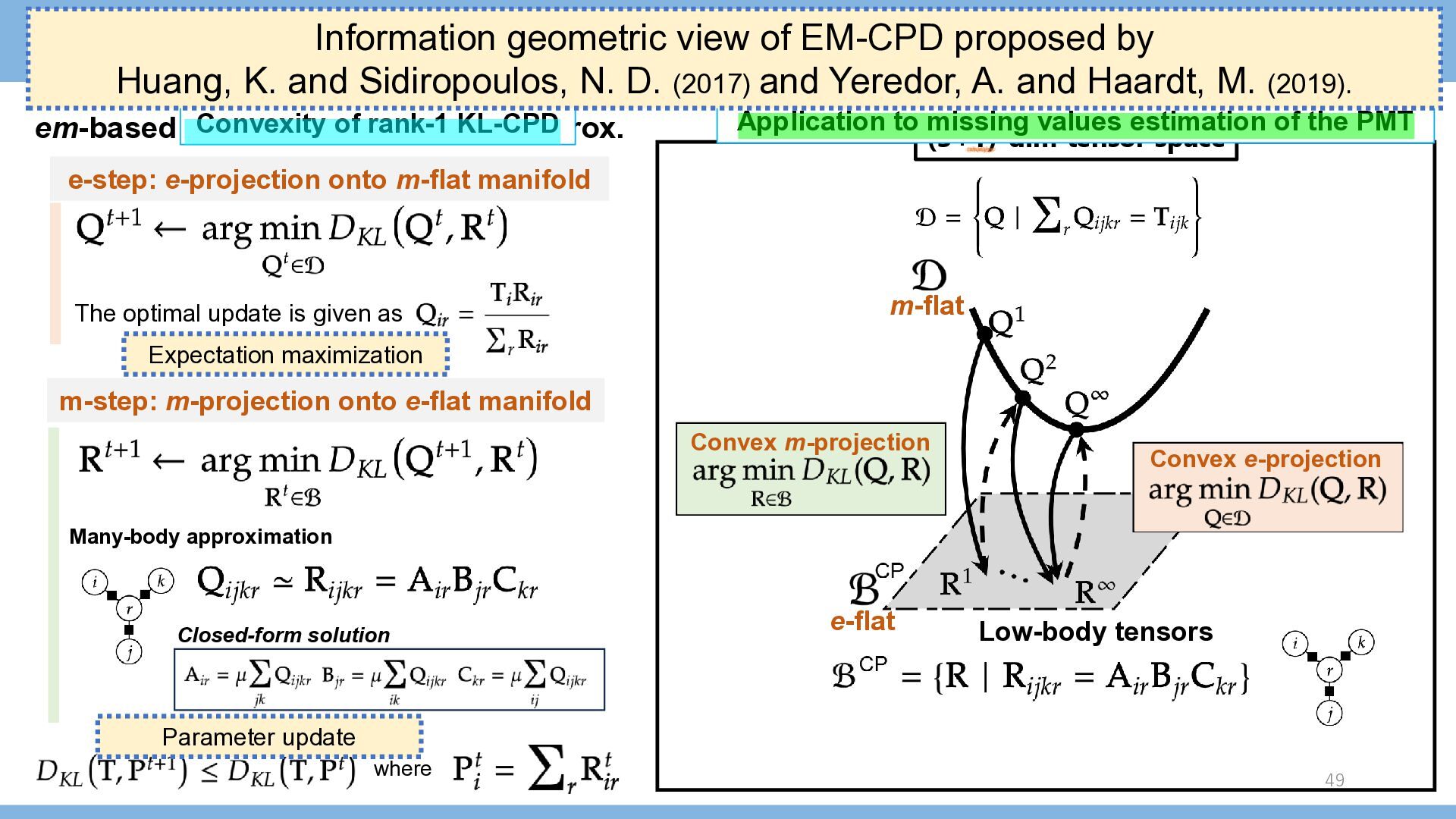
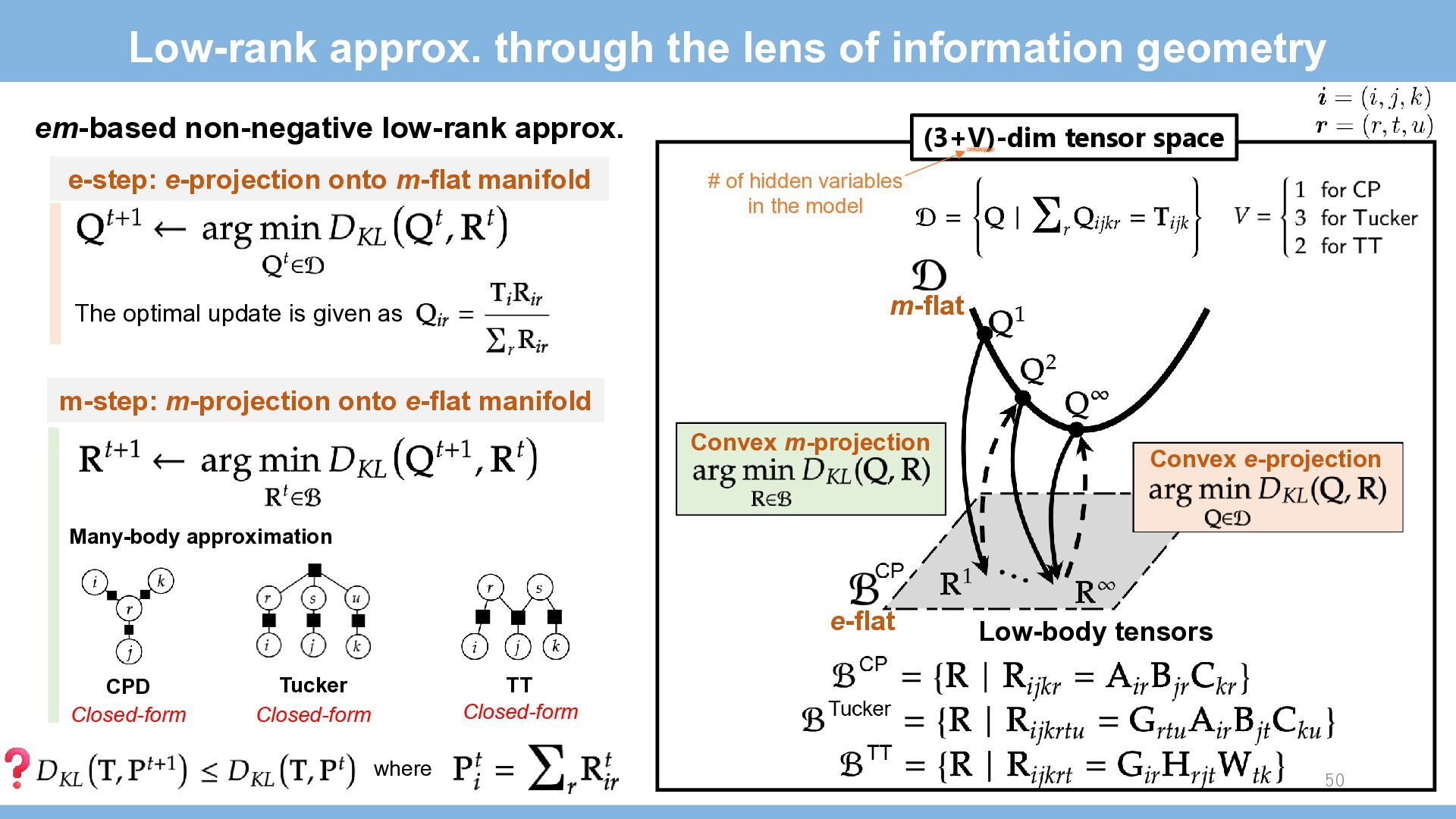
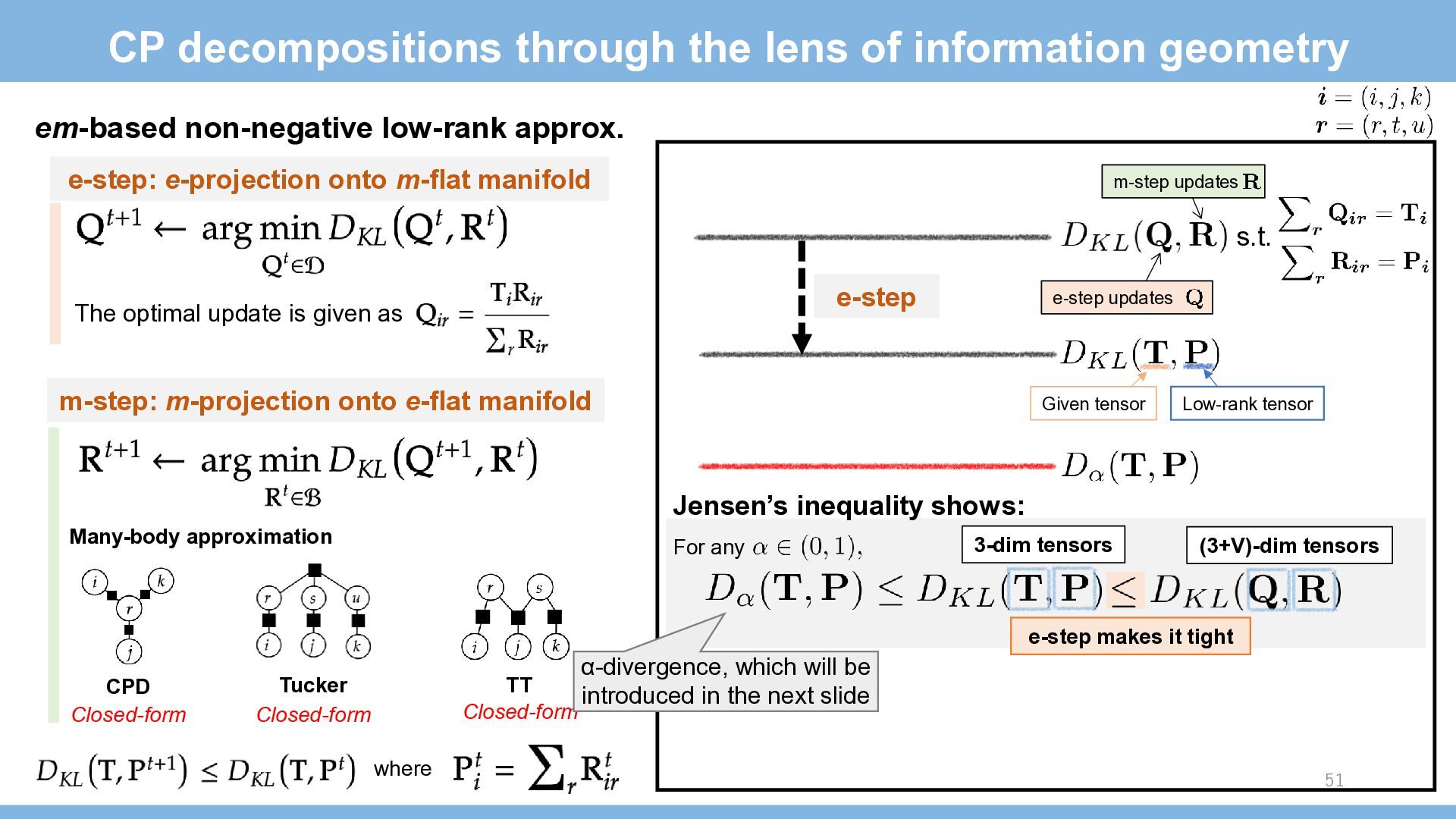
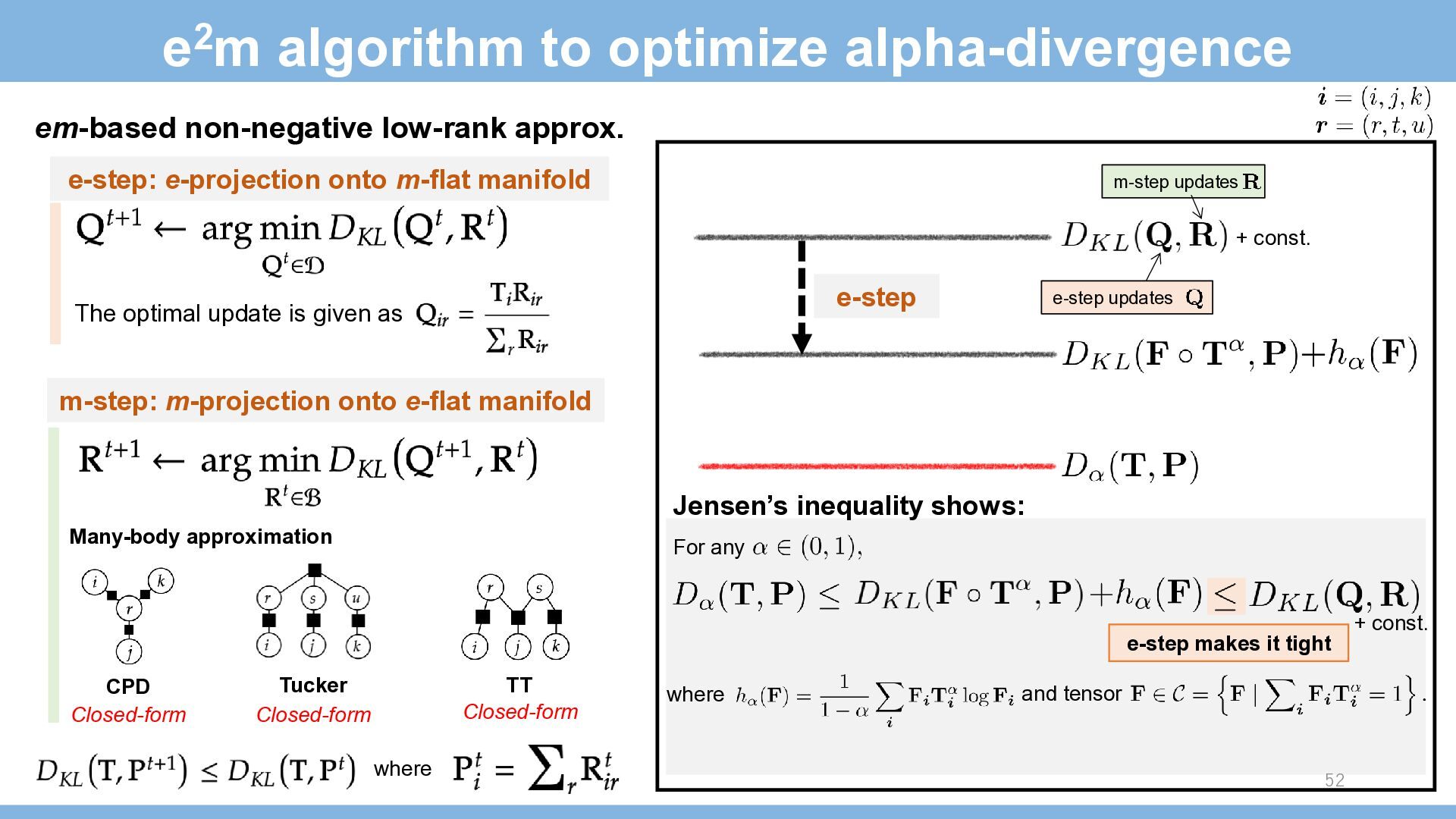
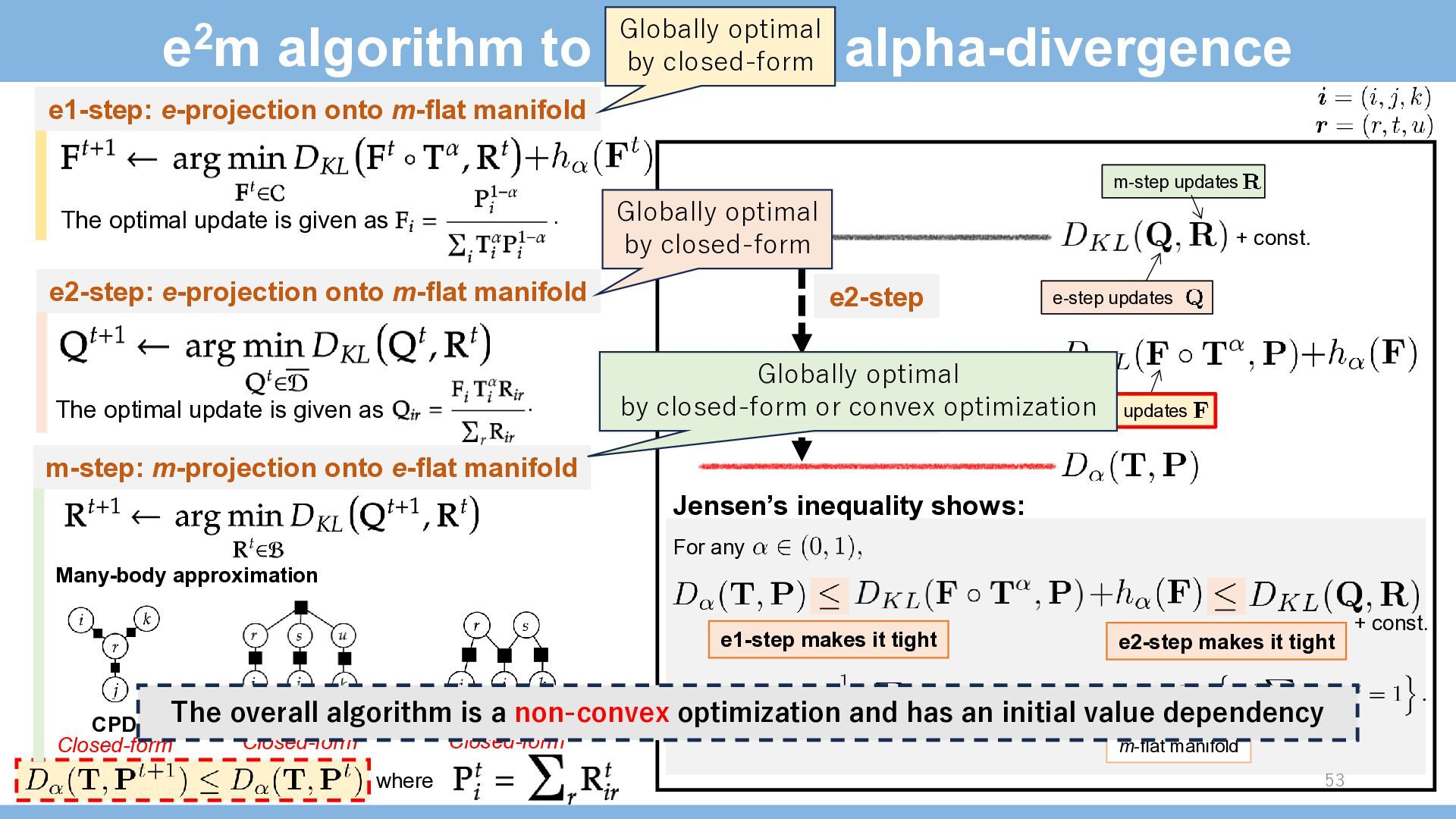
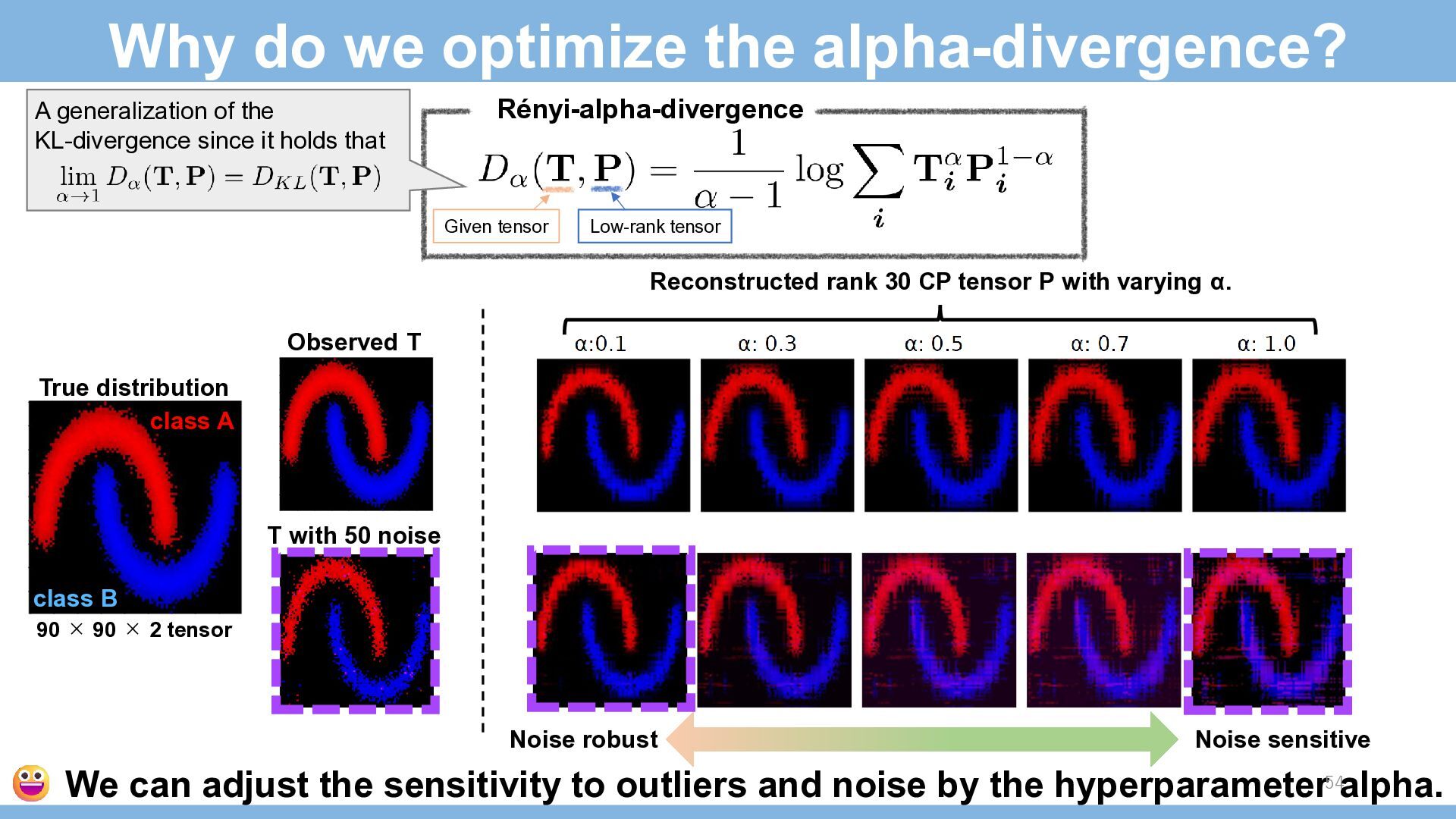
We can extract features or patterns from tensor-formatted data by approximating a given tensor with a low-rank tensor, represented as a linear combination of a small number of bases components. However, traditional low-rank approximation methods have well-known challenges, such as initial value dependency, ill-posedness, and the non-trivial rank tuning. To address these issues, this presentation introduces an alternative approach, called many-body approximation, which reduces higher-order interactions among tensor modes. Specifically, we describe the interactions among tensor modes using an energy function, and approximate the tensor by restricting the model to dominant low-order interactions. Our information geometrical analysis guarantees that our approach always finds the globally optimal solution that minimizes the KL divergence from the given tensor, regardless of initial values. The proposed method also facilitates intuitive model design by representing interactions among modes using a factor graph. This talk further shows how to convert the factor graph representation into a traditional tensor network, and illustrates the mathematical relationship between conventional low-rank approximations and the proposed approach. We demonstrate the effectiveness of the proposed method through numerical experiments on representation learning and missing value imputation.
TRICAP 2025: Three-way methods in Chemistry and Psychology, Norway, Ålesund, 2025.6.22-27


 gkazunii
 lcolladotor
 lemiorhan
 cassininazir
 katiecoart
 chriscoyier
 jacobtomlinson
 michielstock
 uxyall
 elsirapls
 minecr
![Summary □ Many-body approximation for non-negative tensors [NeurIPS2023, K.Ghalamkari, et.al]](https://files.speakerdeck.com/presentations/8c3835c1151b4e2aa9714a1e6ff30fb0/slide_47.jpg)