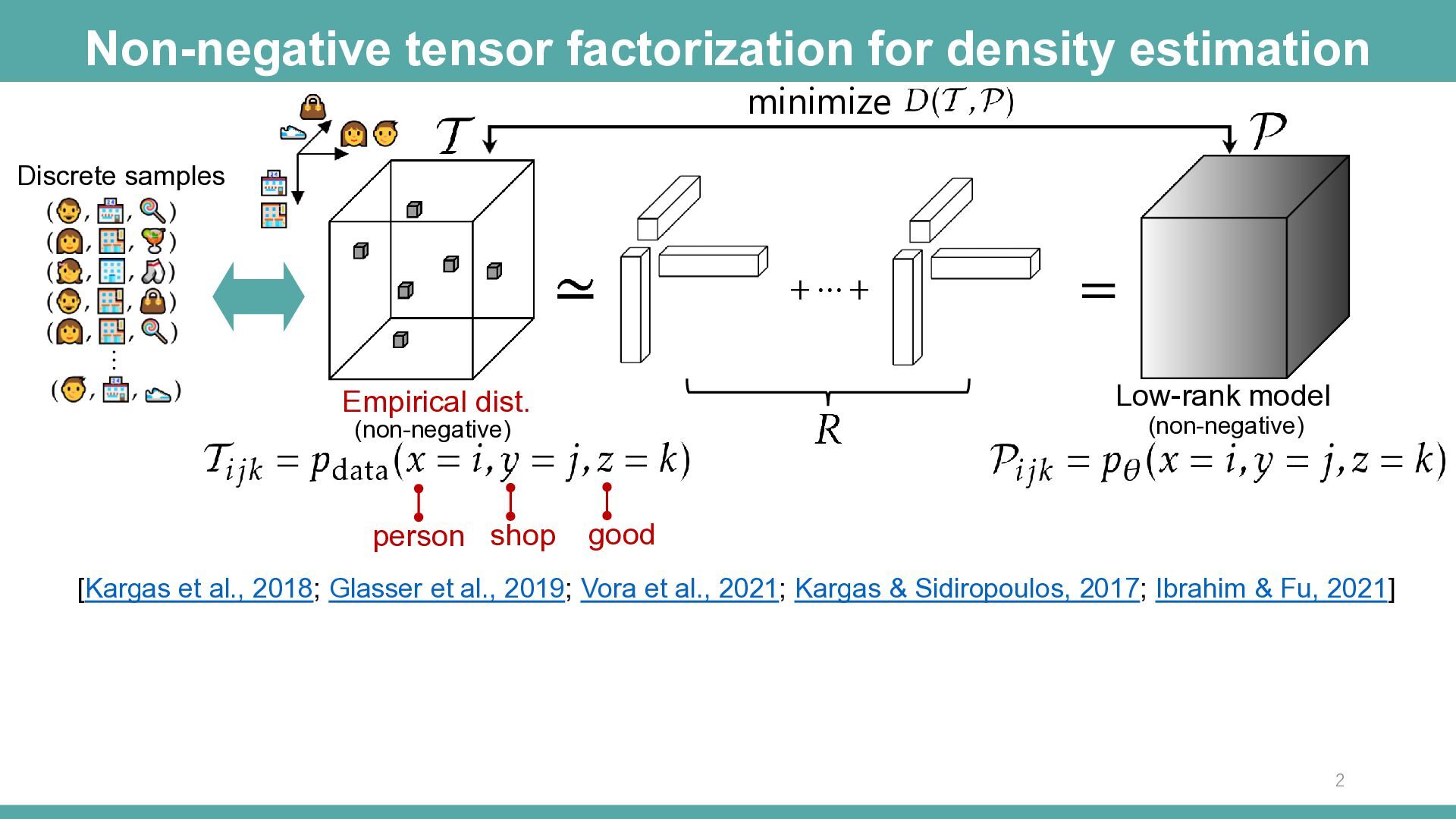
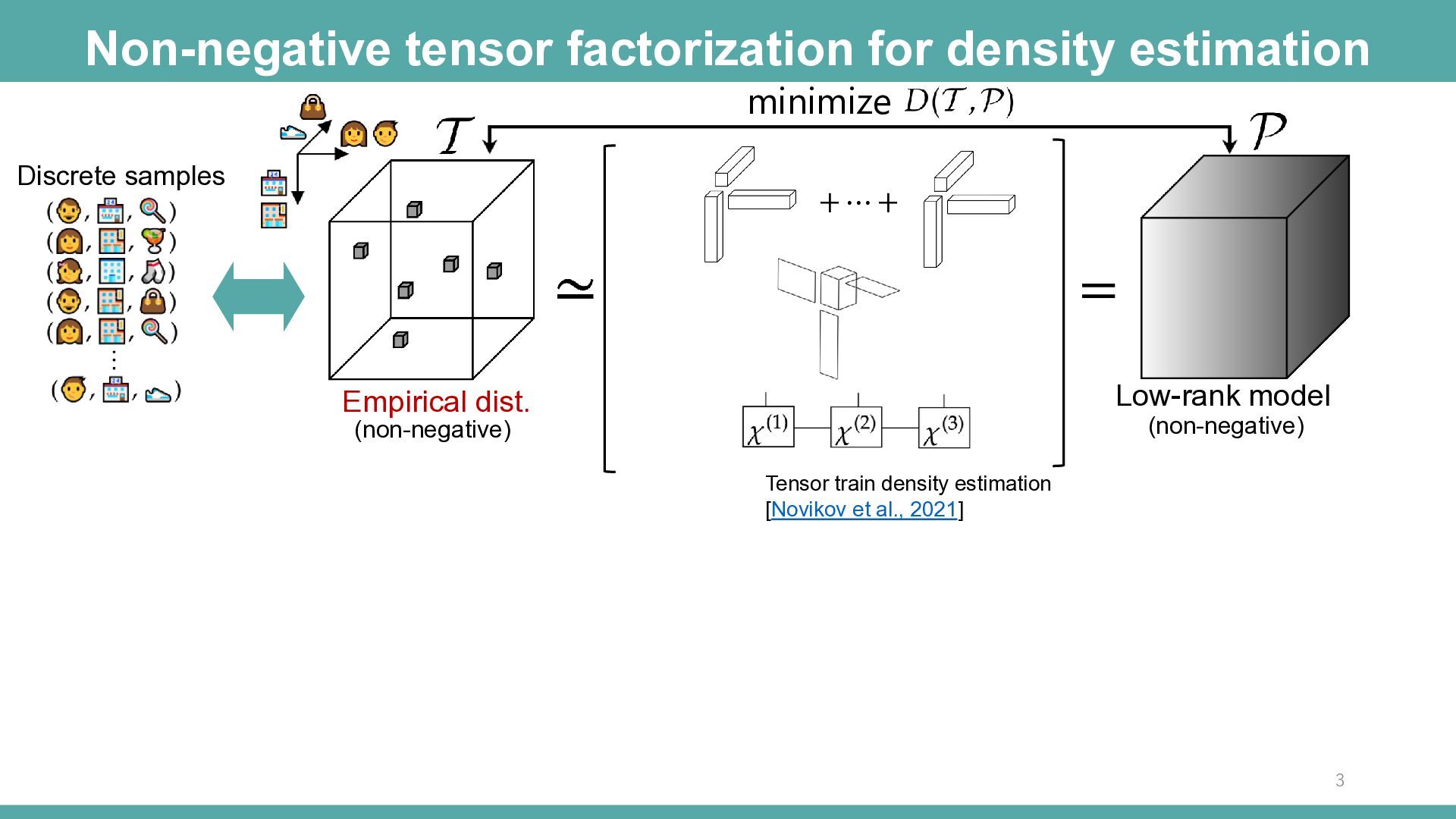
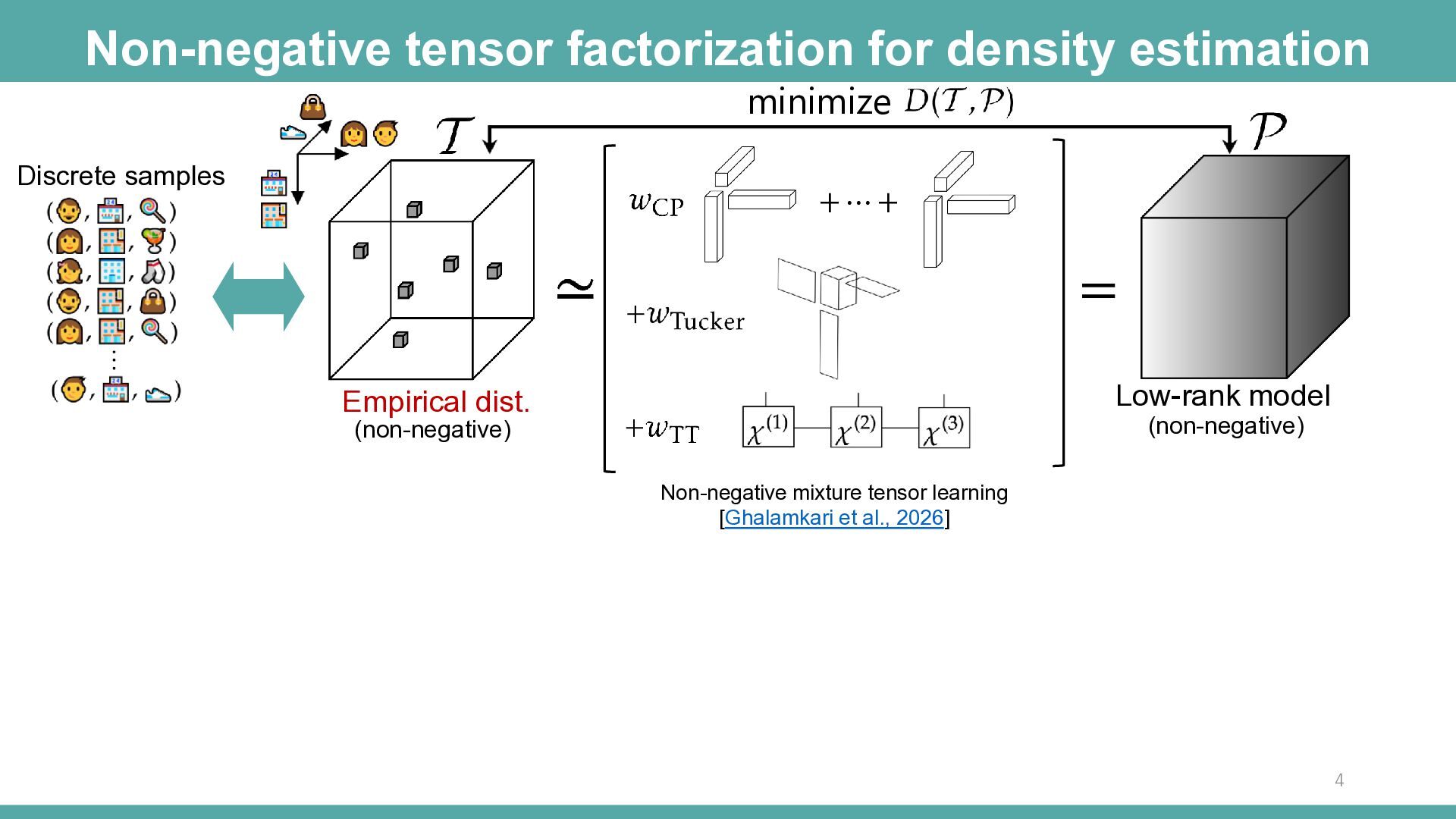
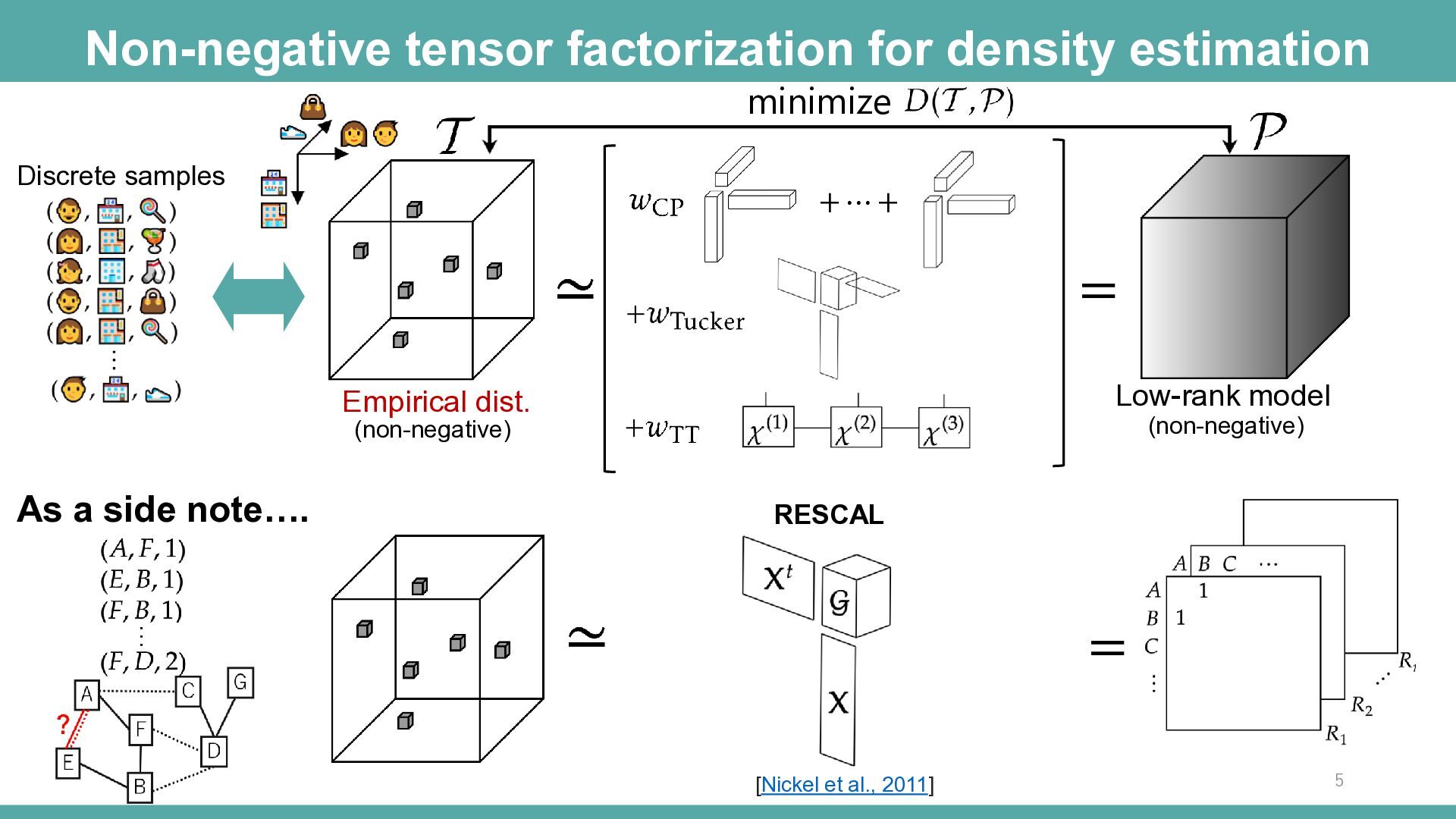
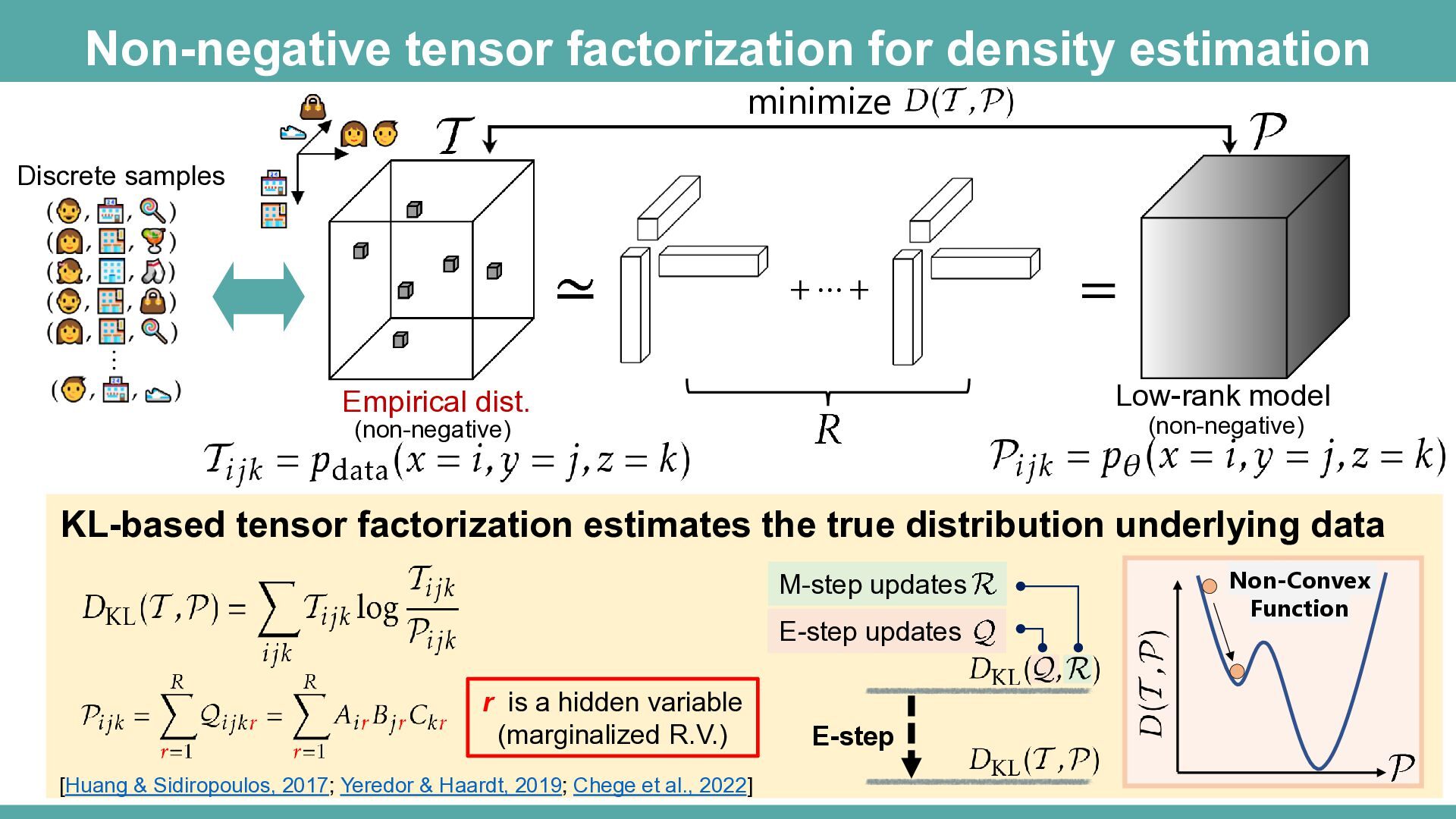
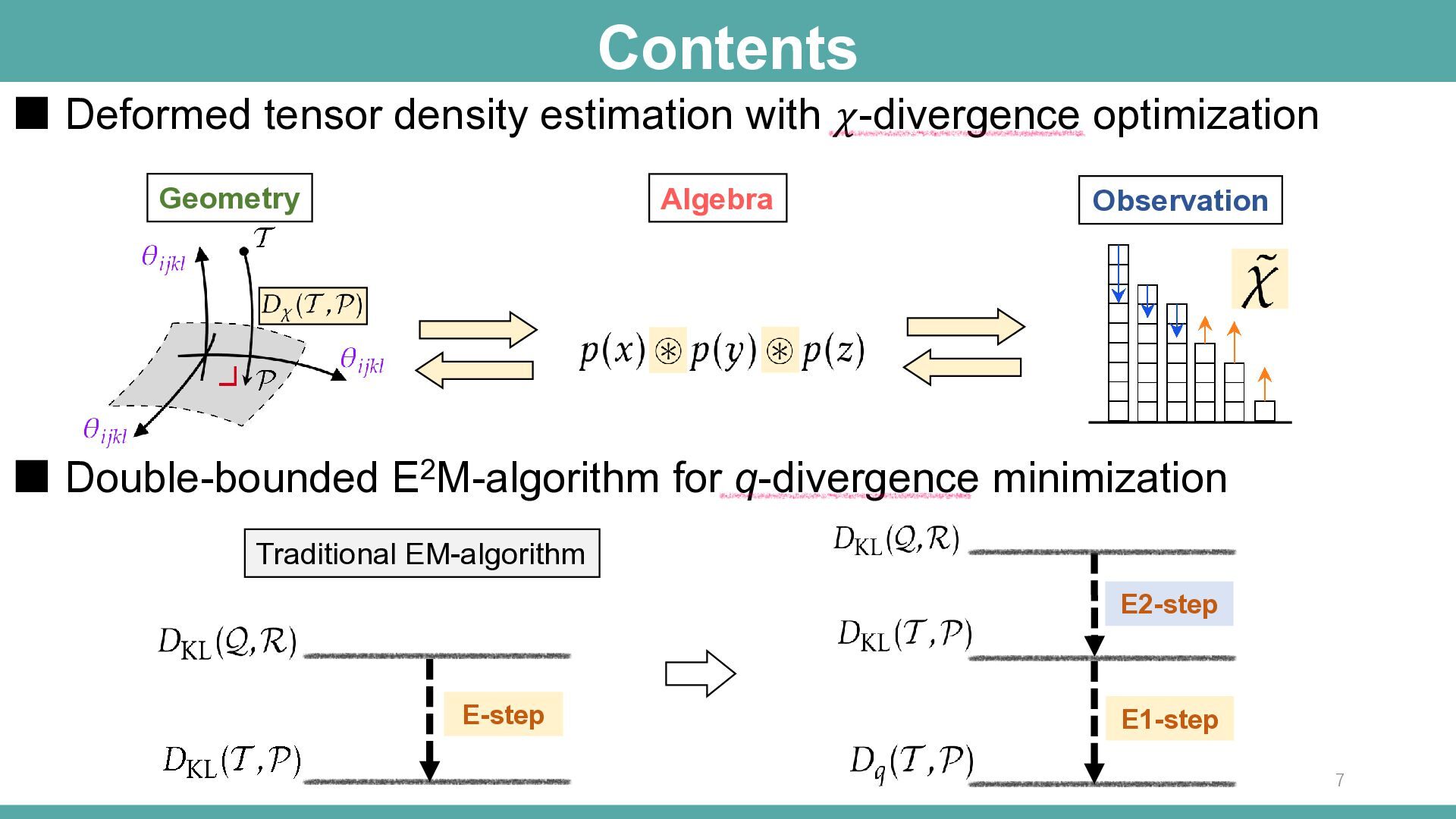
How can we estimate the true distribution underlying the given data? This is one of the fundamental questions in machine learning. With the current advances in GPU accelerators, the community relies heavily on deep learning-based density estimation, which offers great success in expressivity and scalability; however, theoretical intractability, the need for costly hyper-parameter tuning, weaker optimization guarantees, and the non-trivial extension to the discrete settings remain important challenges. Recently, alternative approaches for density estimation, centered on the use of tensor networks, are garnering attention as they can overcome these difficulties. In addition, their connections have also recently been established to other fields such as probabilistic circuits, information geometry, logic programming, and relational learning, forming a rich community in which tensors play a role of shared language, as seen in recent tensor-related workshops, Connecting Low-Rank Representations in AI at AAAI’25 and ICML’26, and a tutorial, Foundations of Tensor/Low-Rank Computations for AI at Neurips 2025. Given the current situation, we presently provide a tutorial on tensor-based density estimation where its exact marginalization, natural Bayesian extension, and convergence guarantees directly match the interests of the UAI community. Aiming to welcome newcomers as well as bridging various fields, this tutorial covers the following topics: i) How tensors are useful for density estimation, ii) how tensor-based density estimation connects diverse fields, and iii) what are important future directions of tensor networks for the UAI community.
The first part of this tutorial can be found in
https://drive.google.com/file/d/1kmZvOst4s7CkI3lNpewZ0tMnpmChU57u/view?usp=drive_link


 gkazunii
 yukiar
 shibuiwilliam
 youten622
 resolutionfoundation
 institutdelelevage
 kohlerjohannes
 ayatokanada
 recsyslab
 analokmaus
 watany
 lynnandtonic
 panda_program
 wjessup
 inesmontani
 ianozsvald
 techseoconnect
 tammyeverts
 sergeychernyshev
 katarinadahlin
 destraynor
 codingconduct
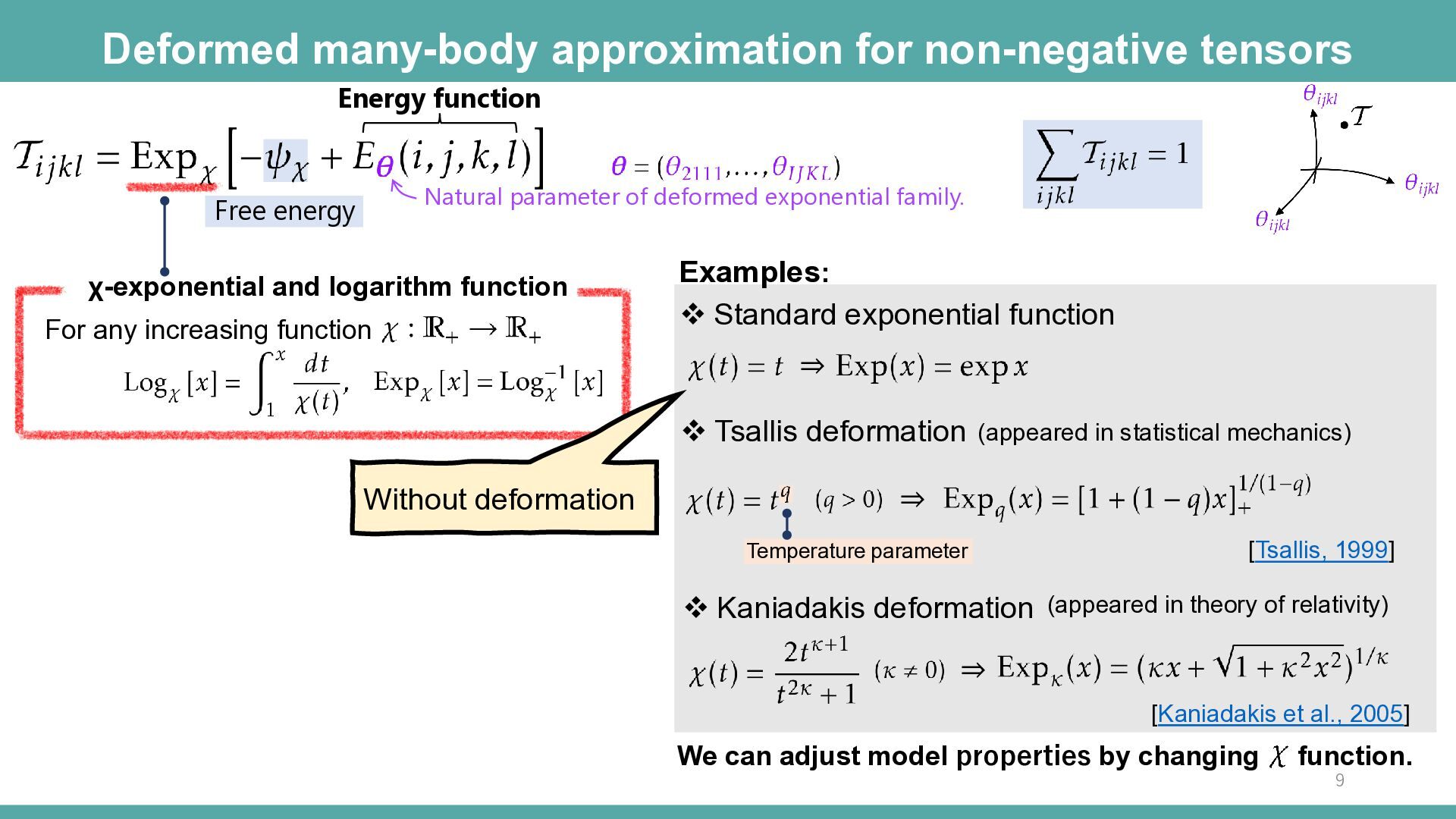
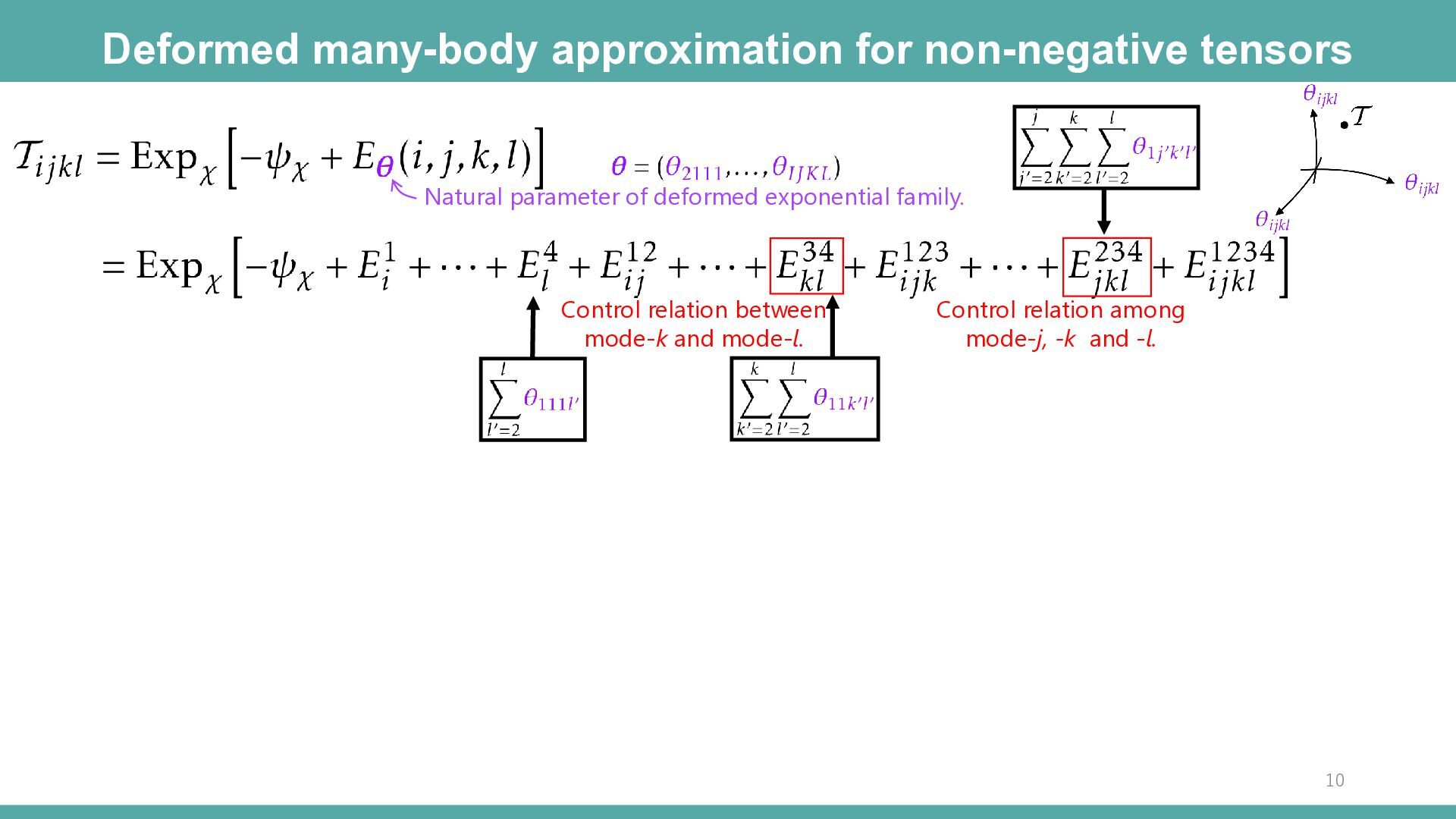
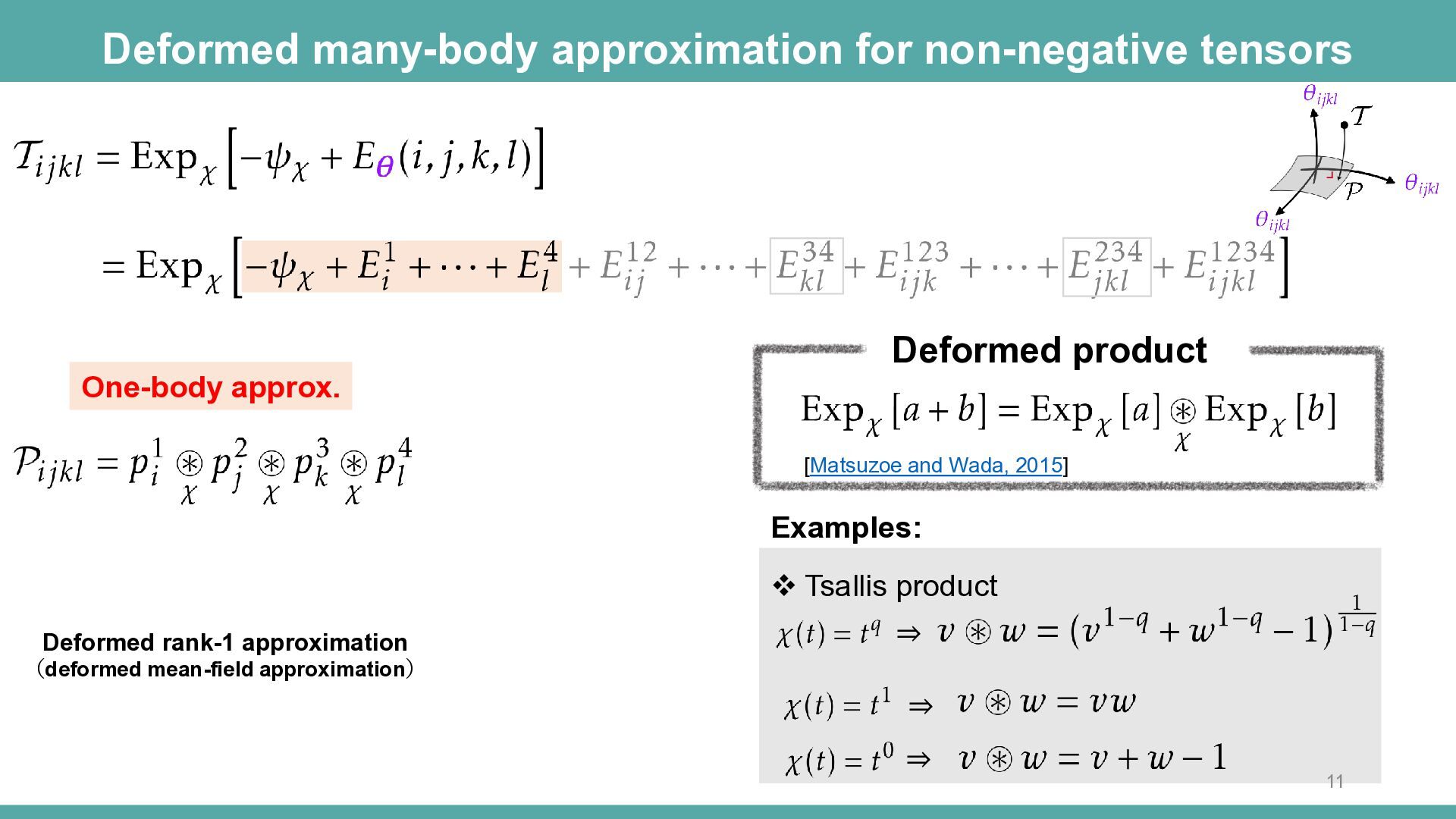
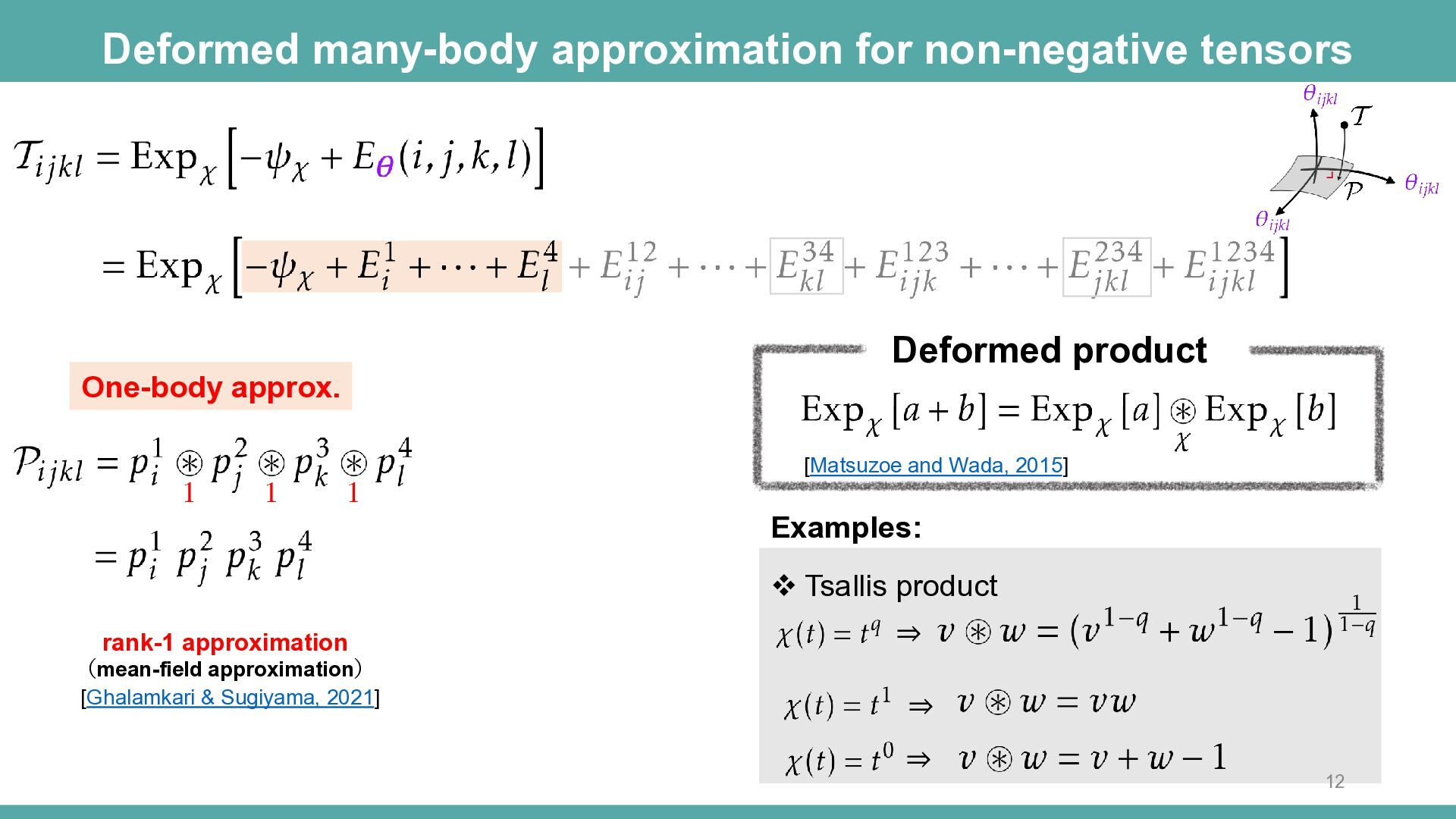
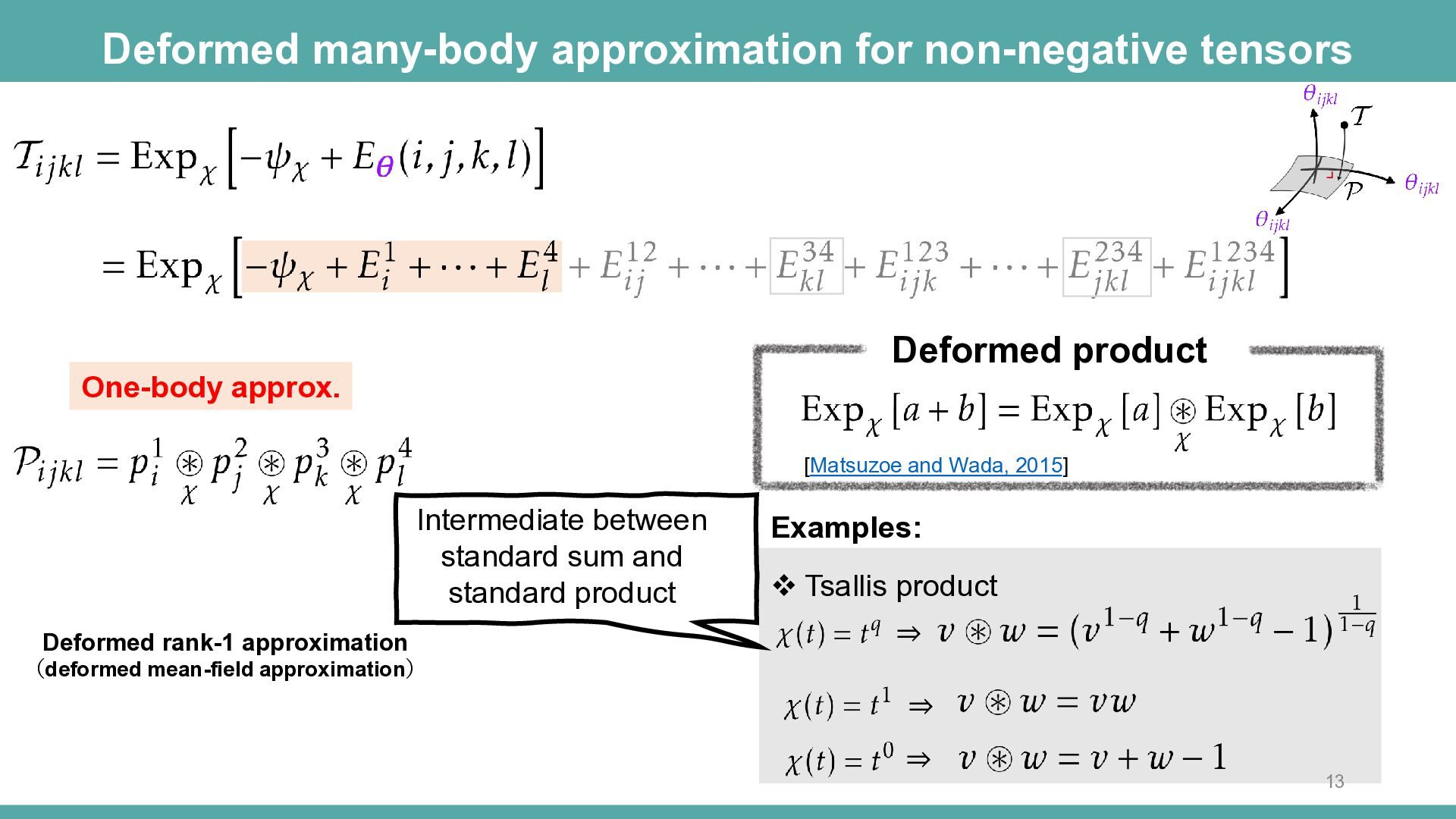
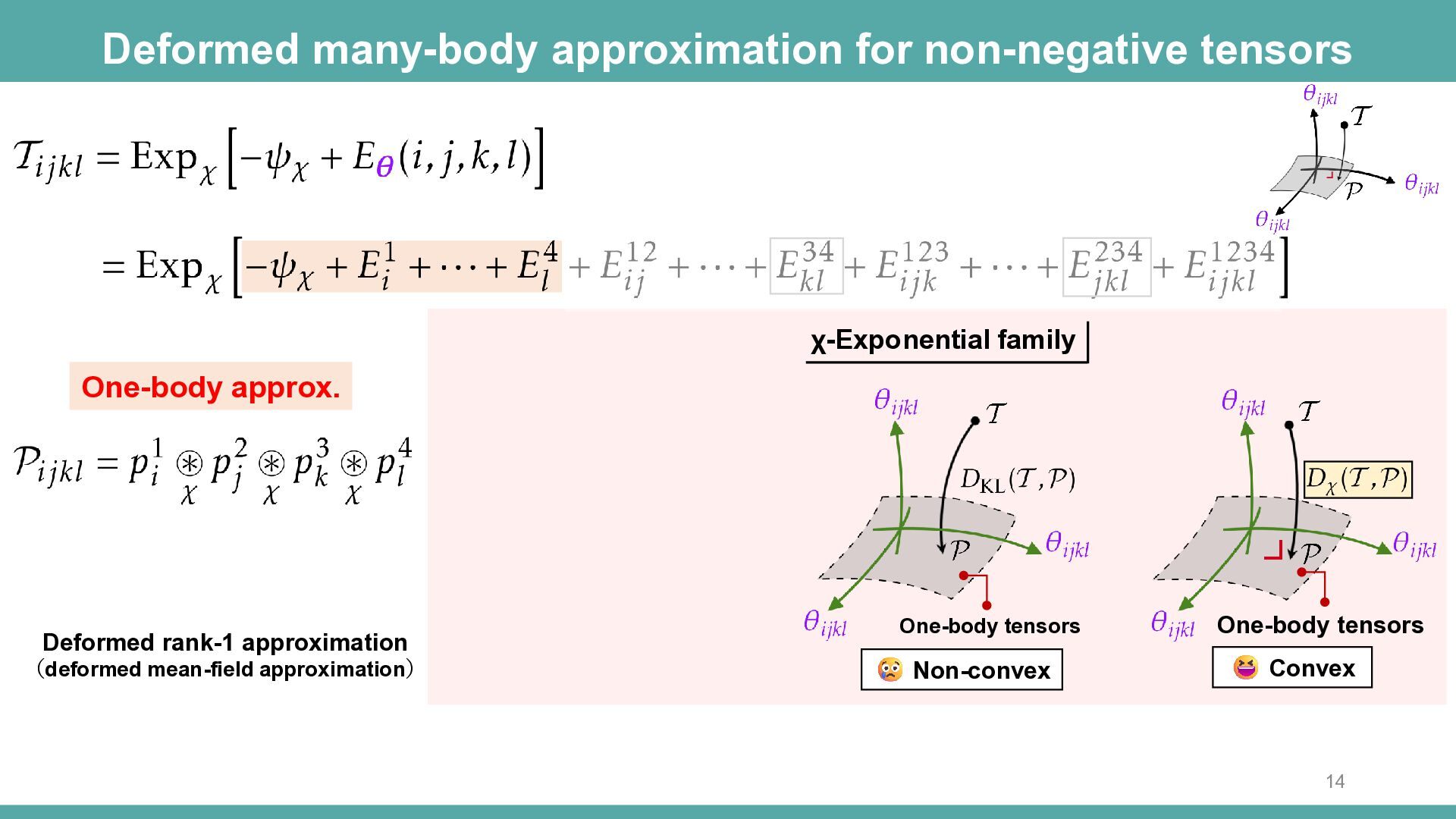
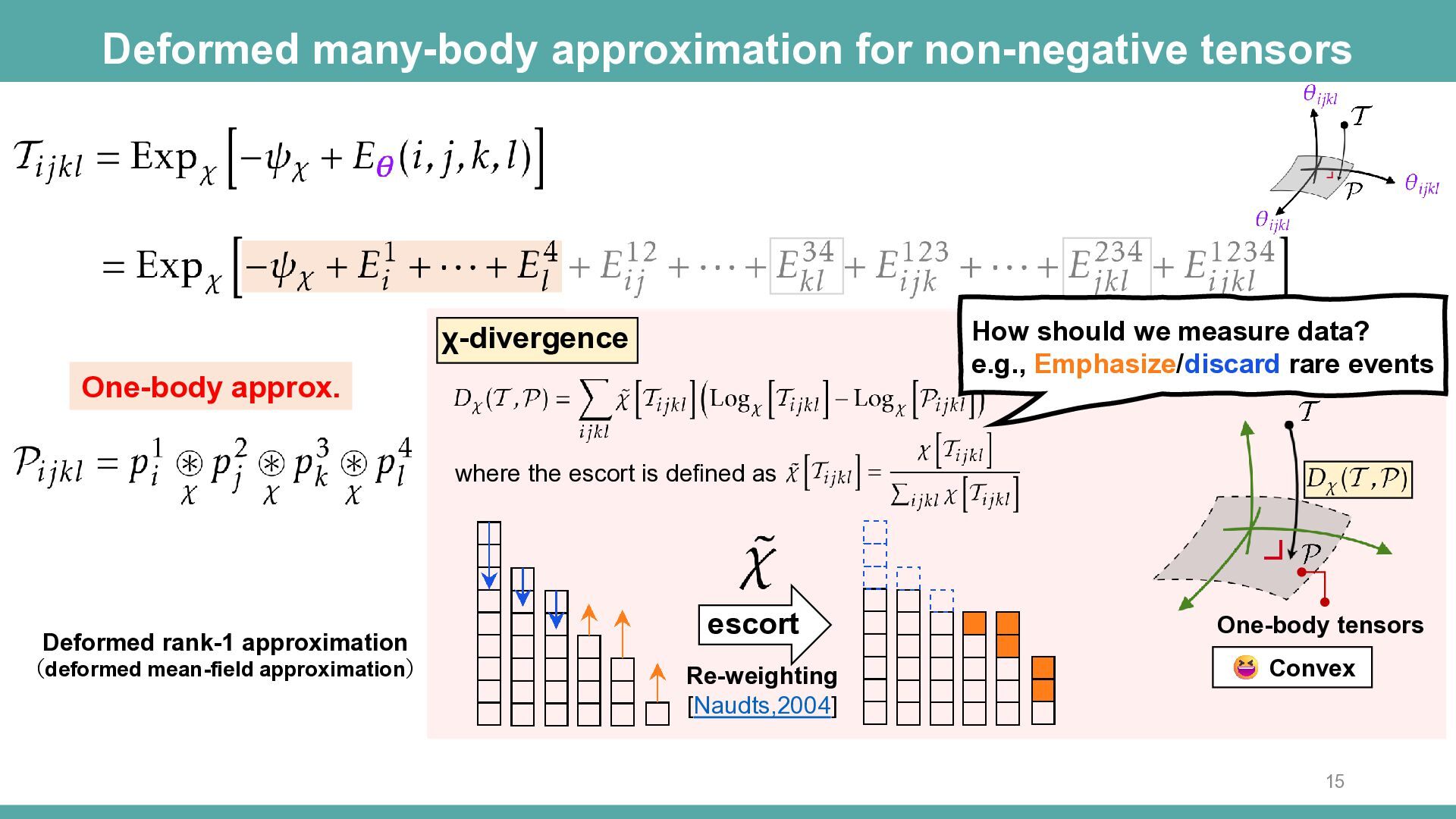
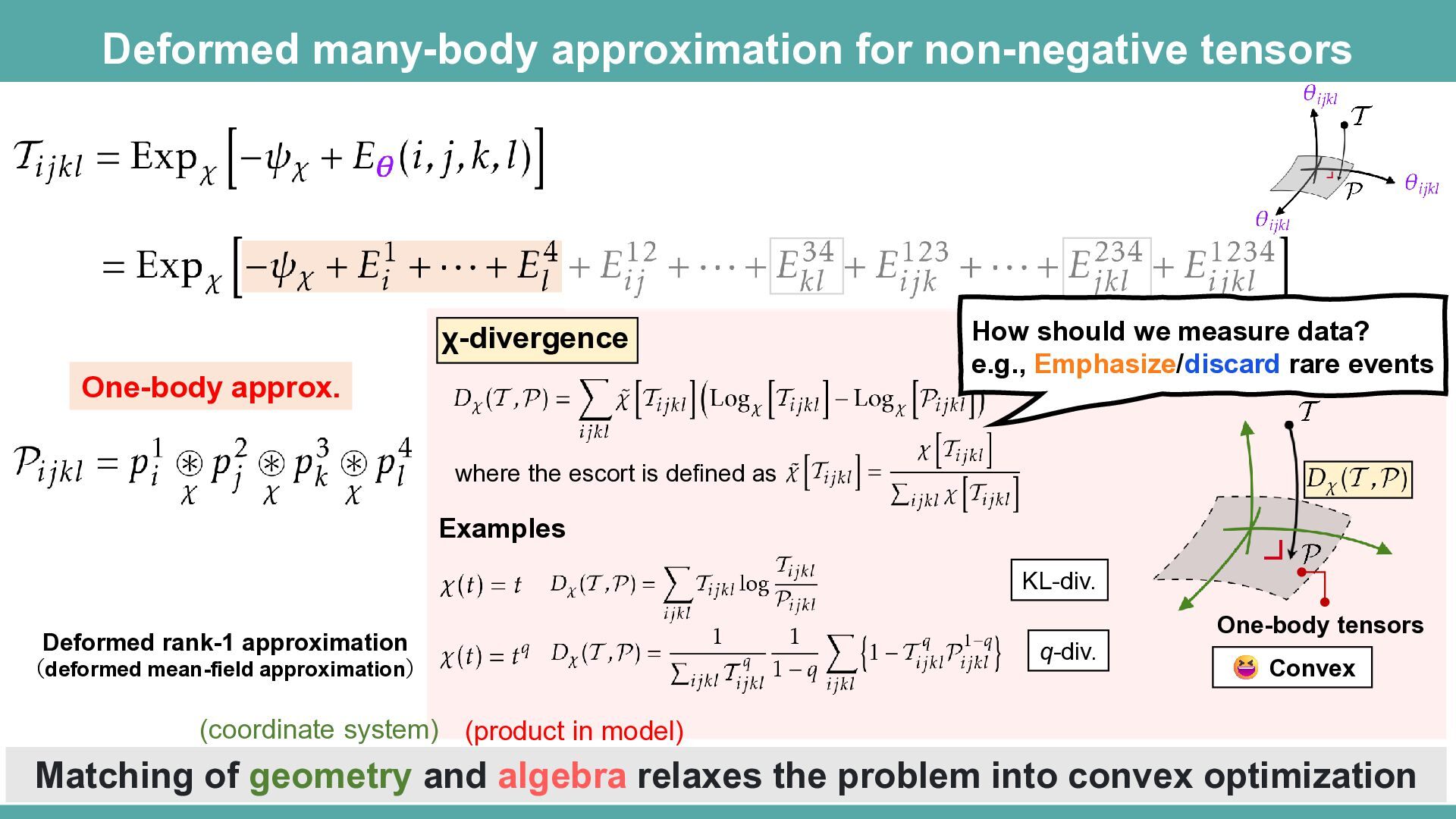
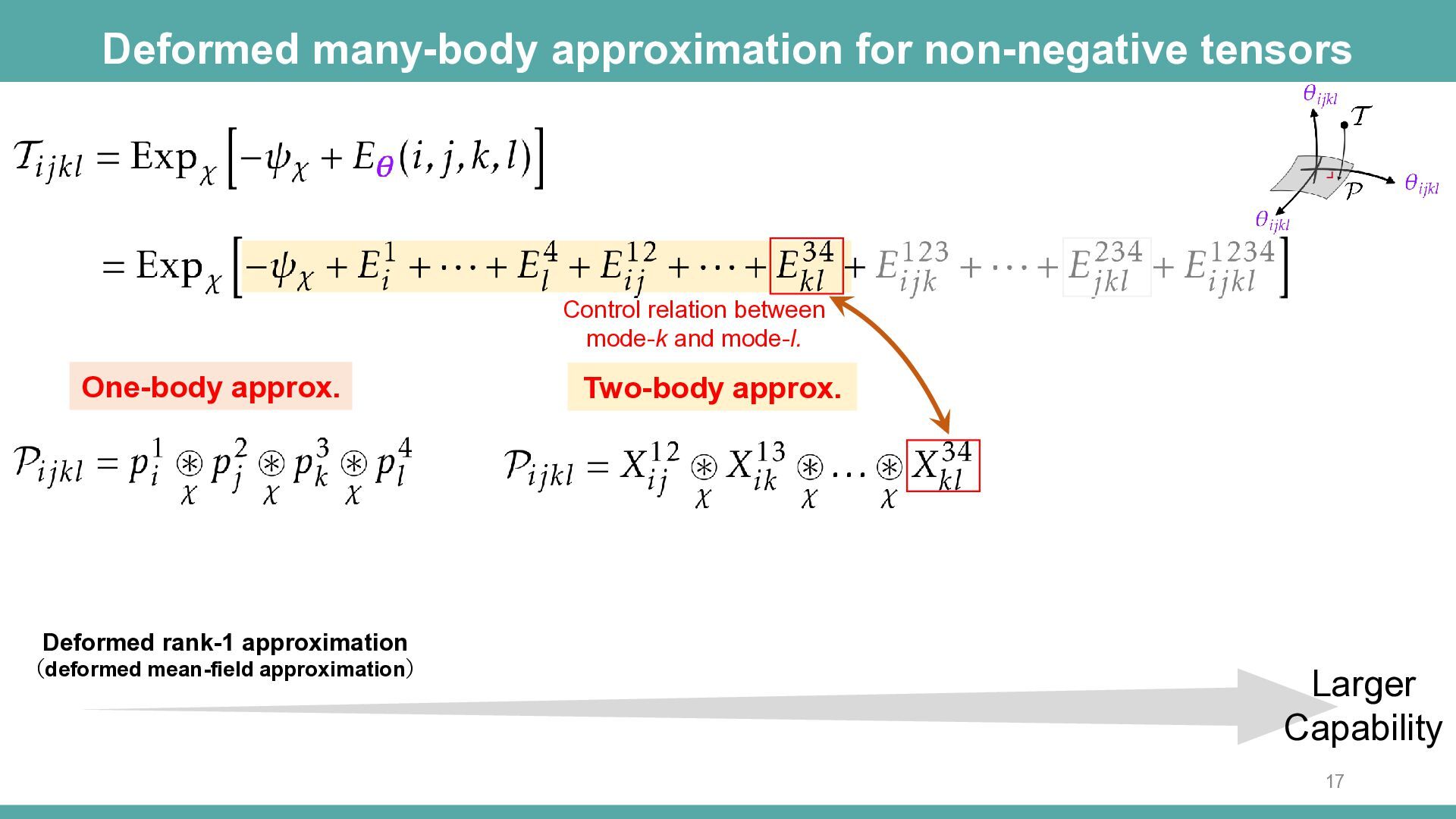
![Deformed many-body approximation for non-negative tensors [Ghalamkari et. al, 2026]](https://files.speakerdeck.com/presentations/57e94b3dfd7a4159b58527d02f092302/slide_17.jpg)
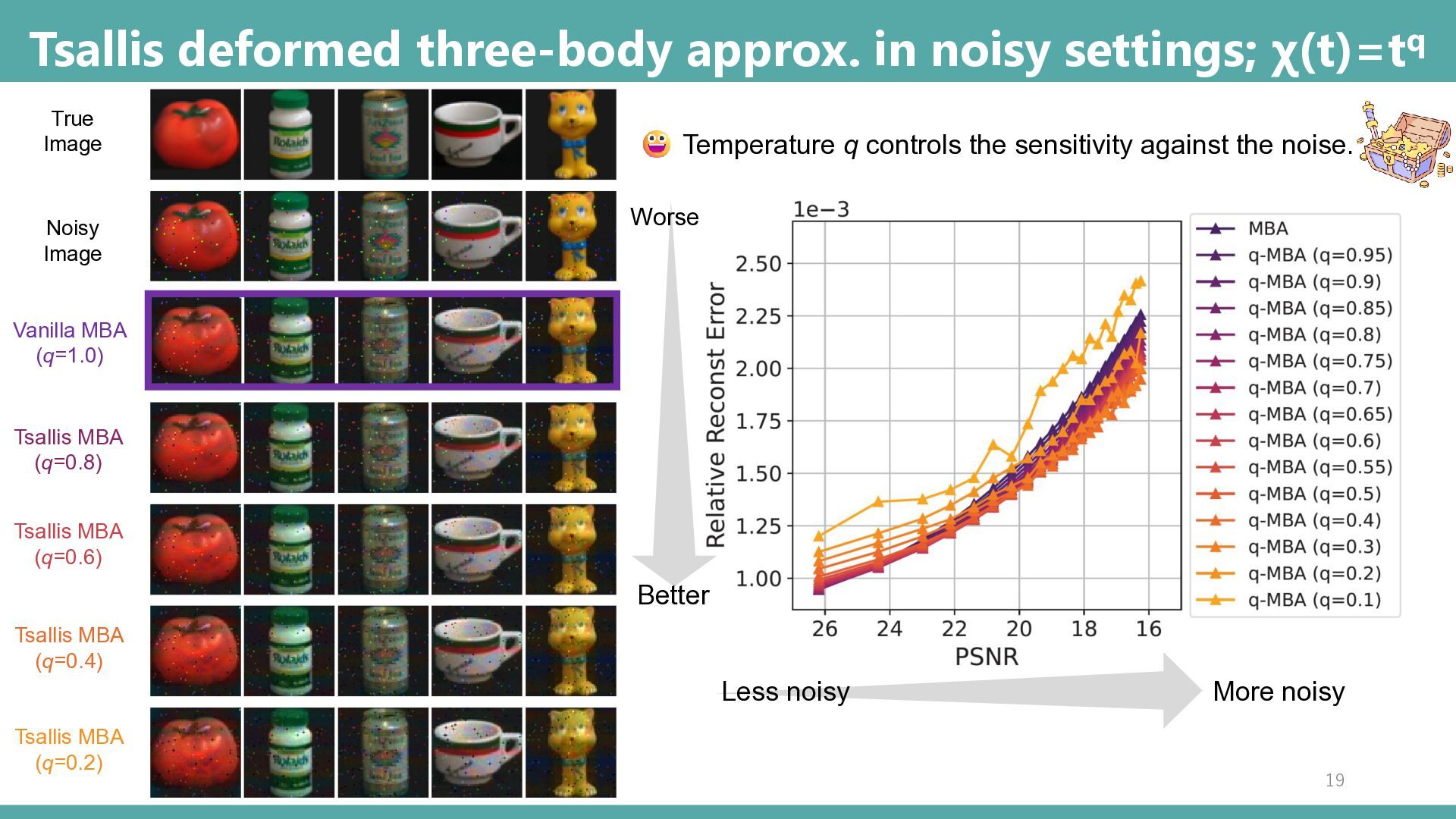
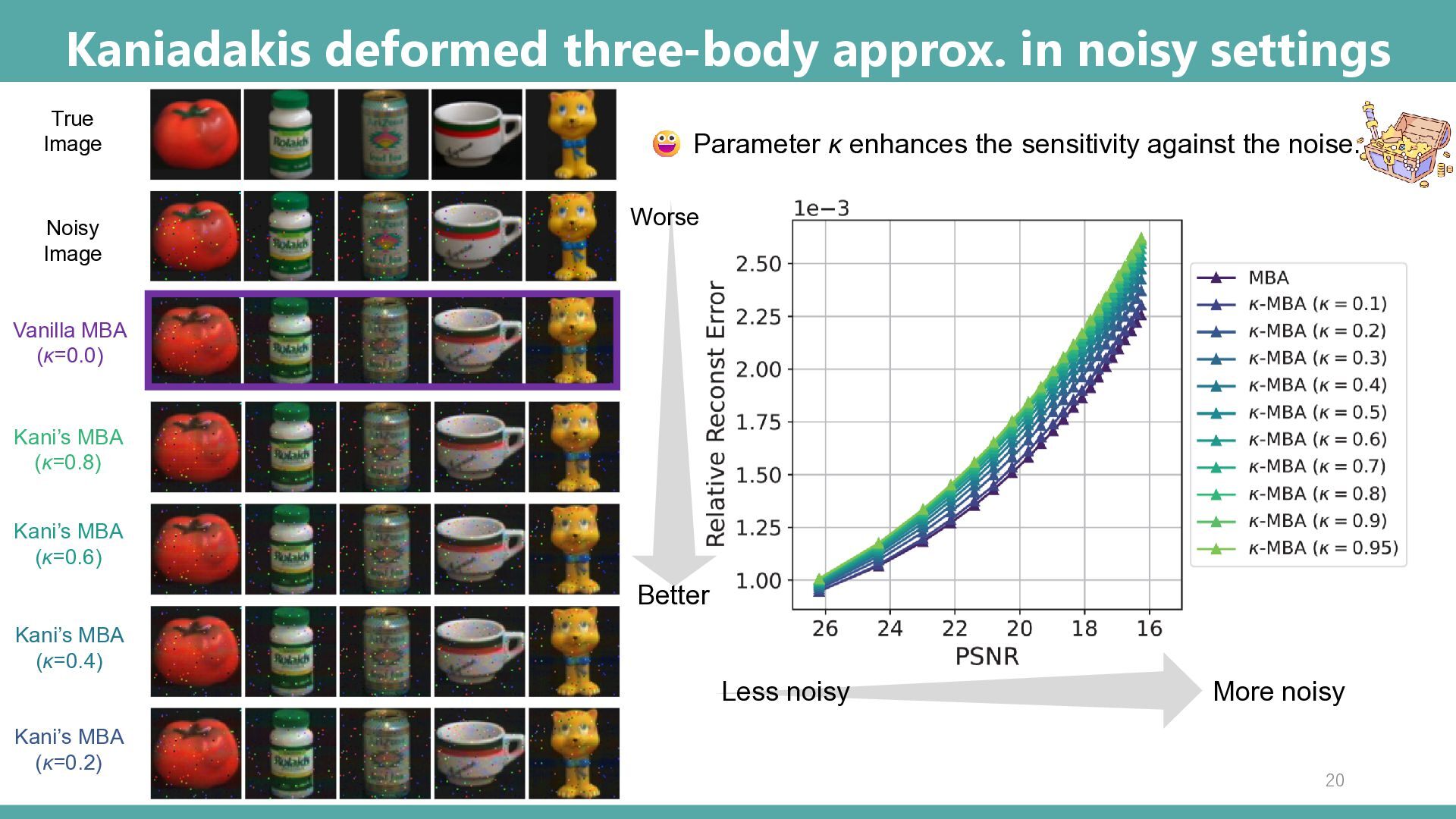
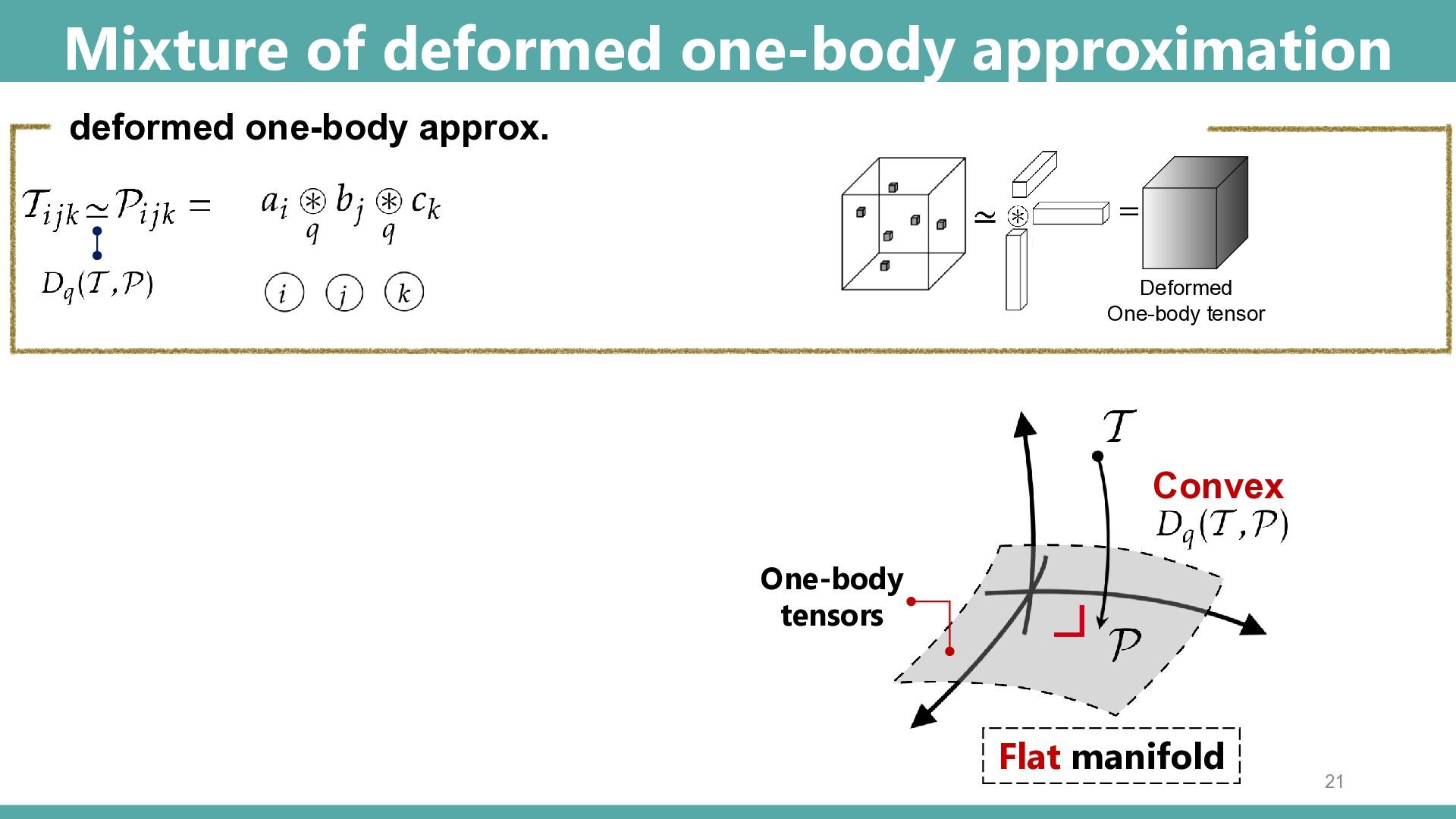
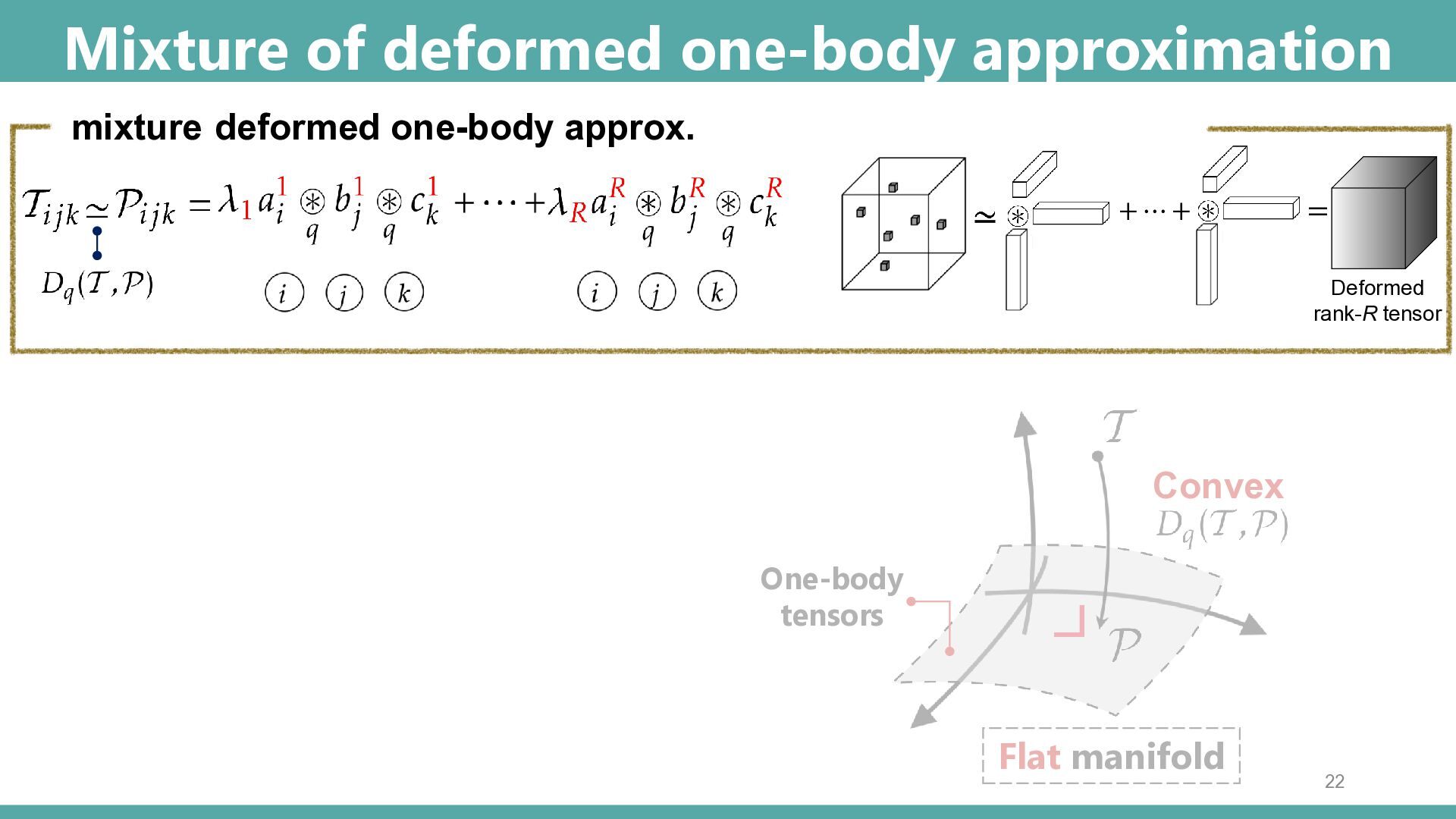
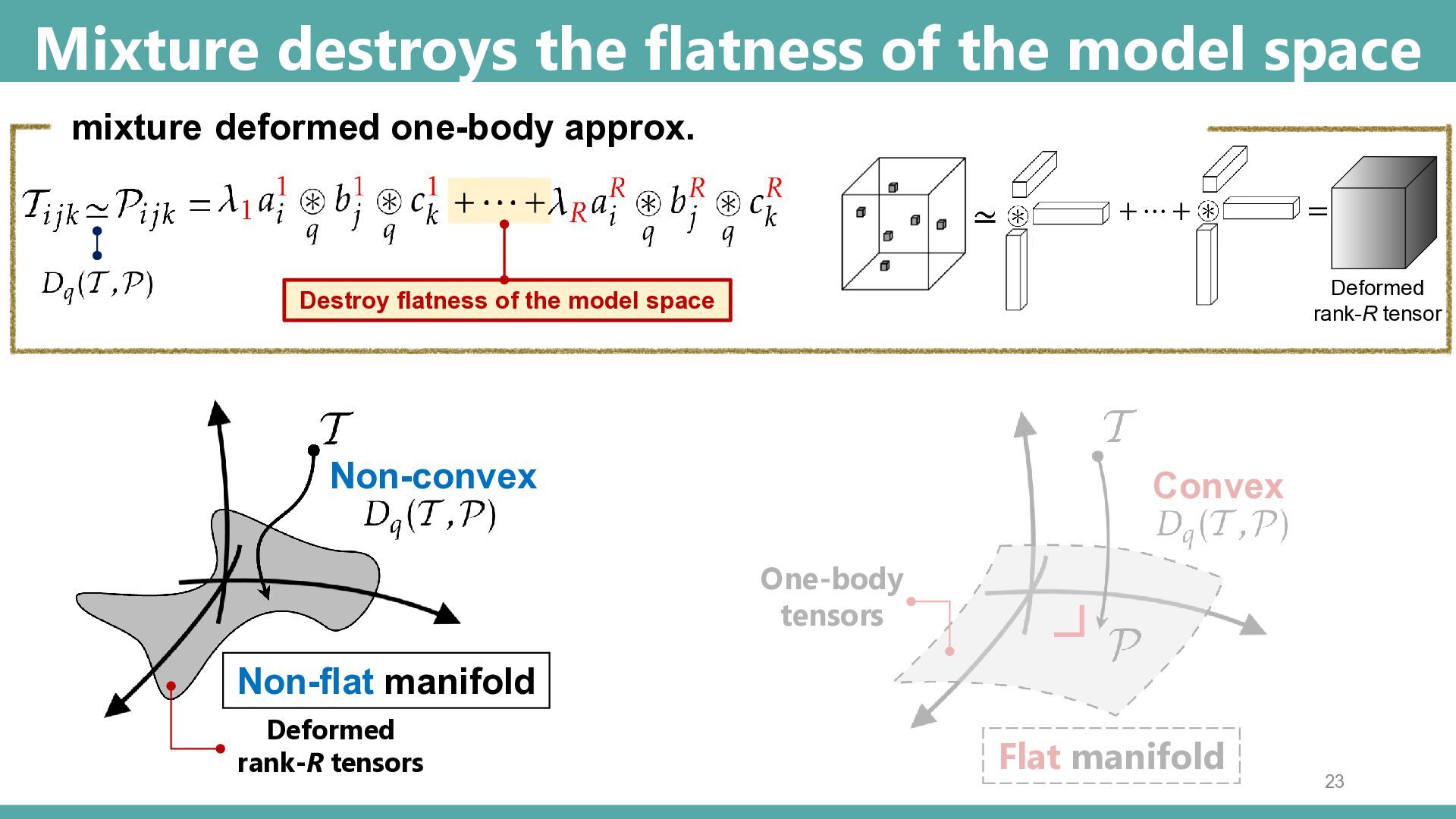
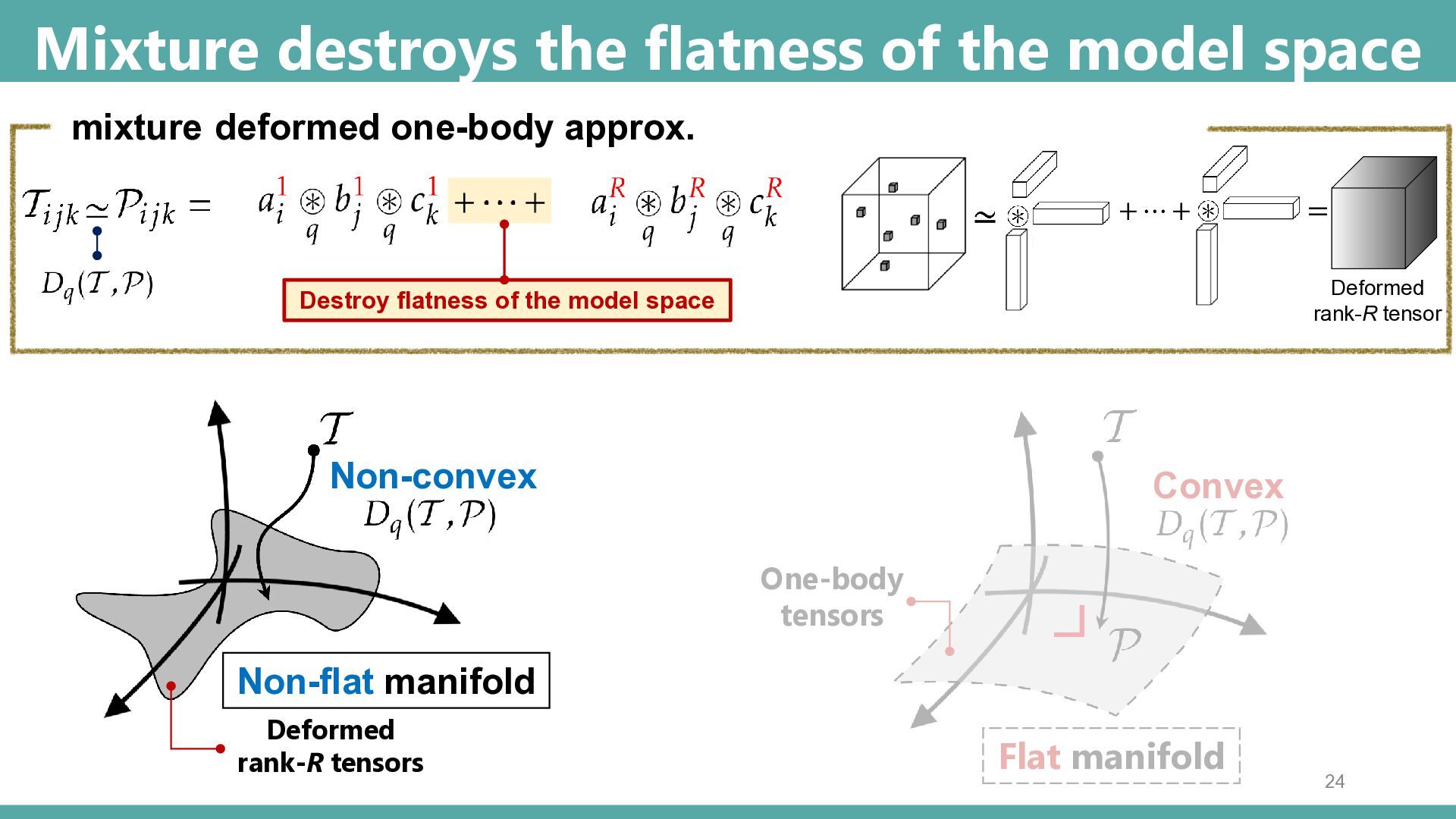
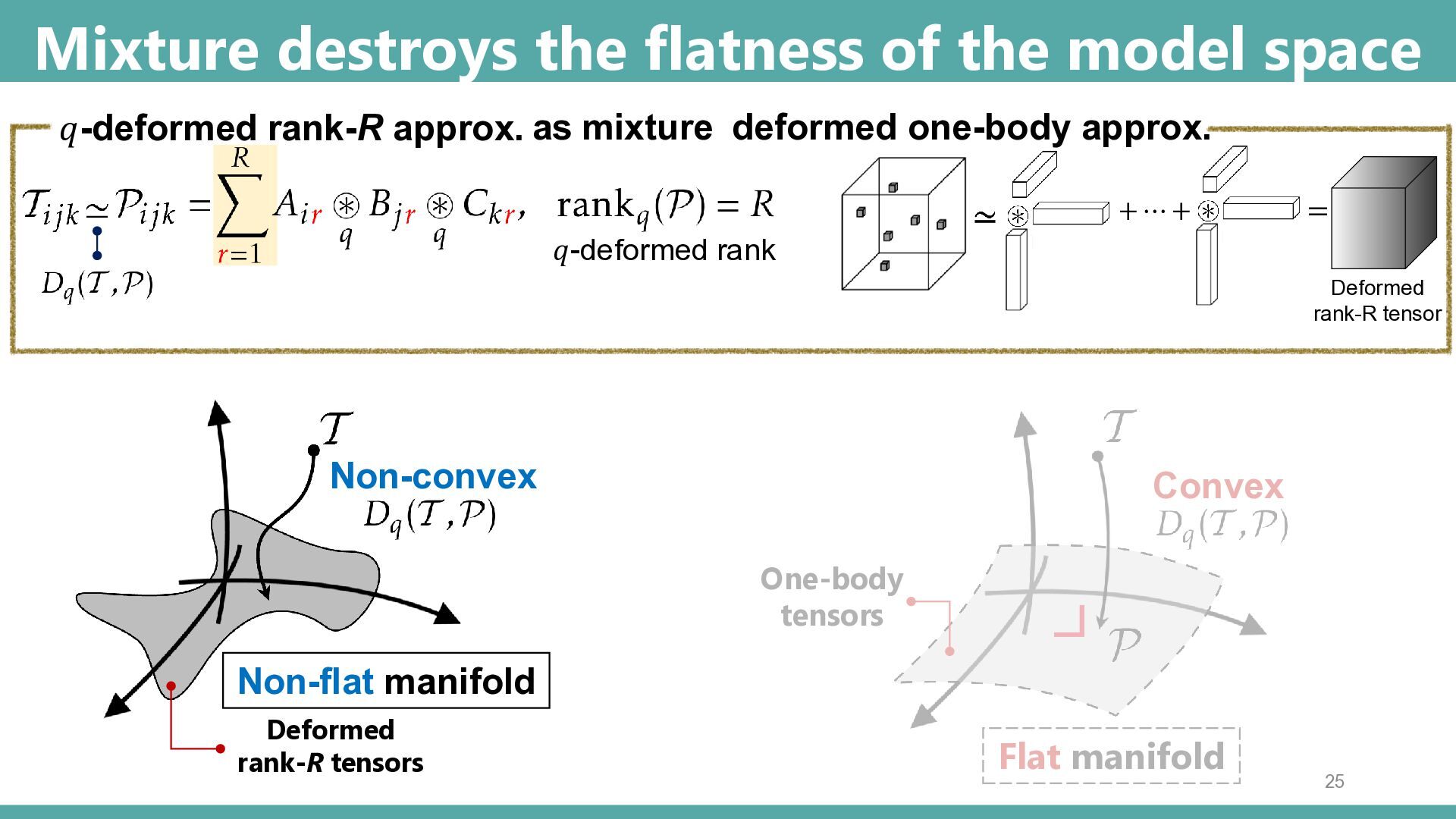
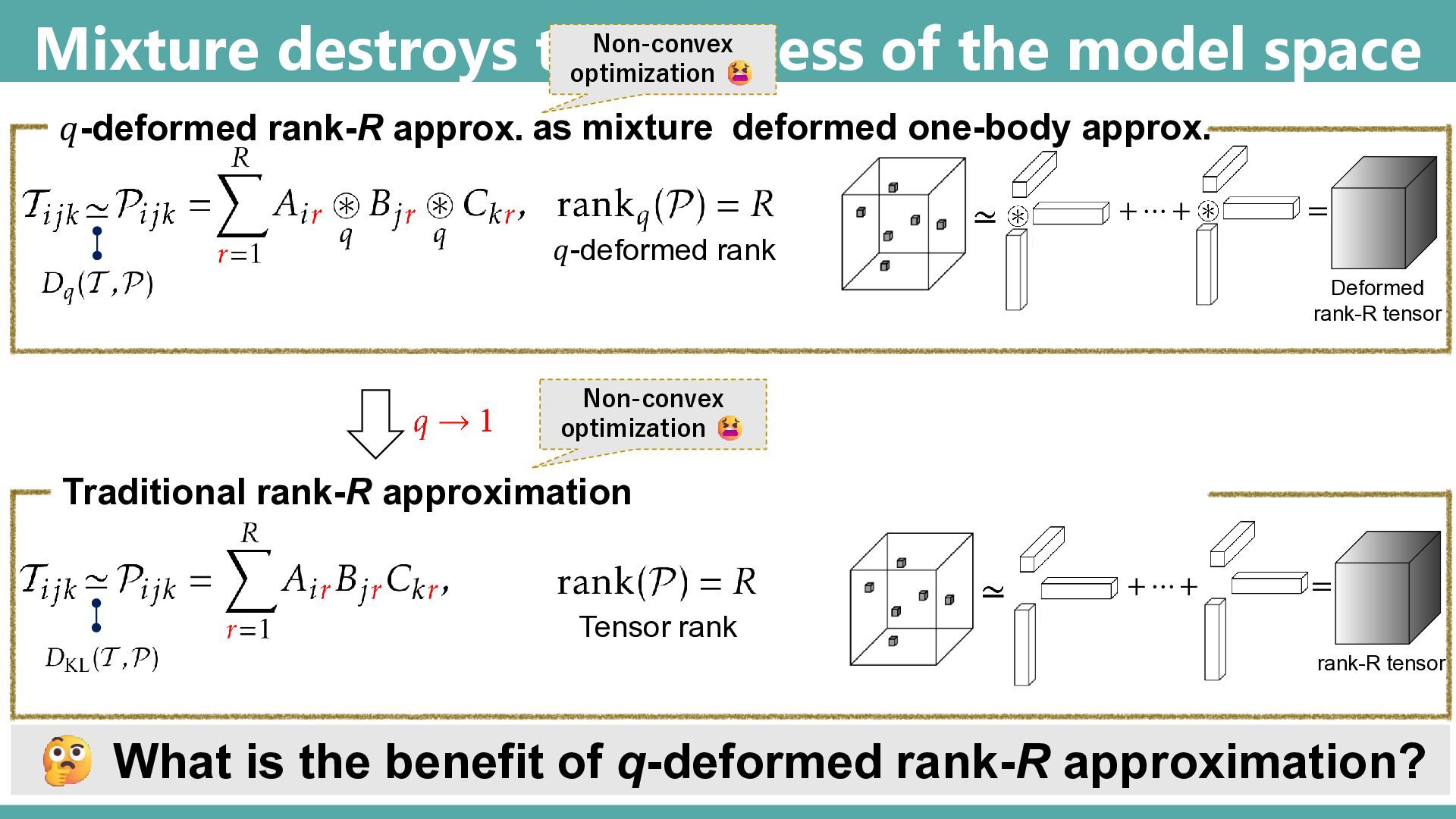
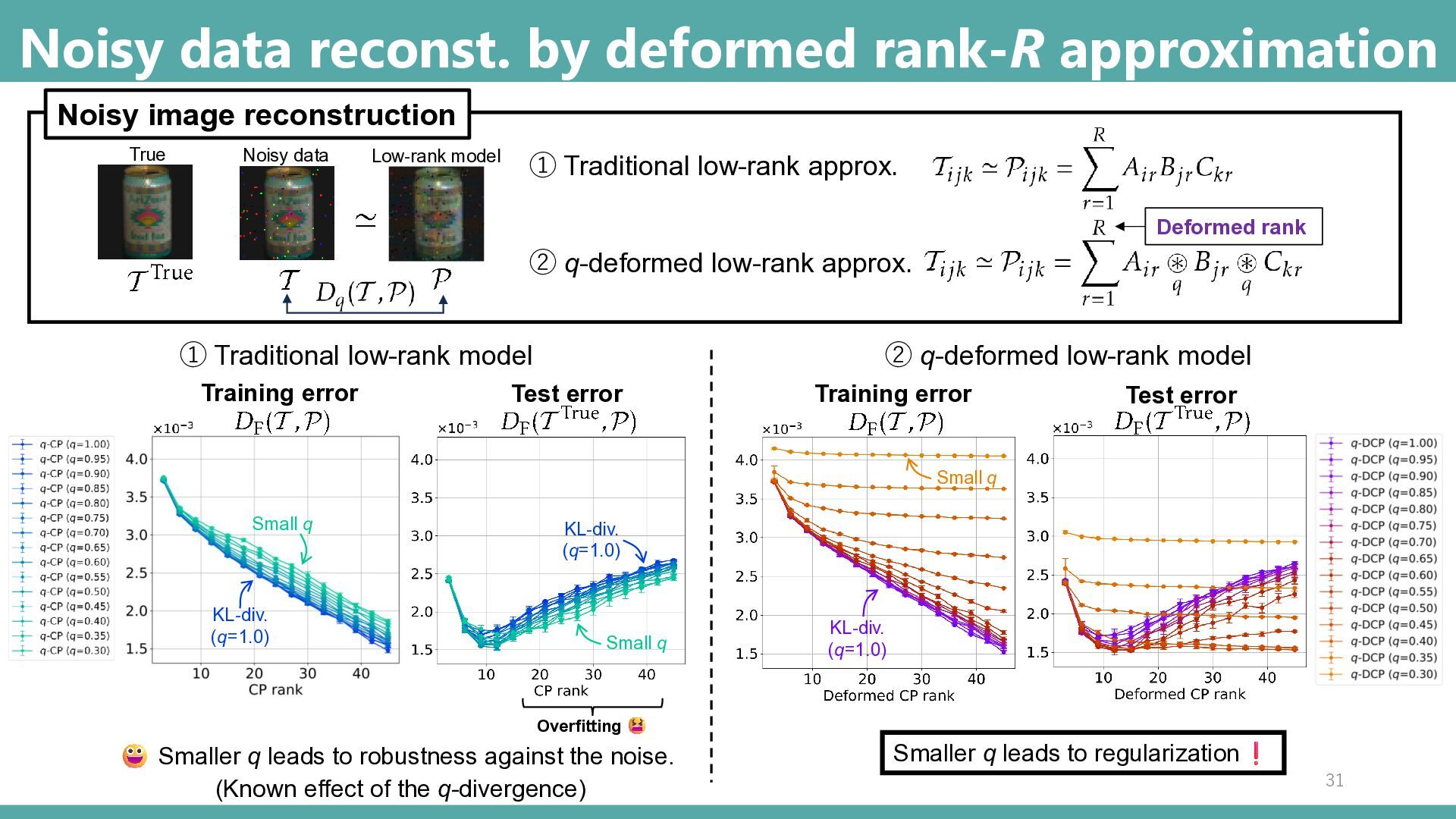
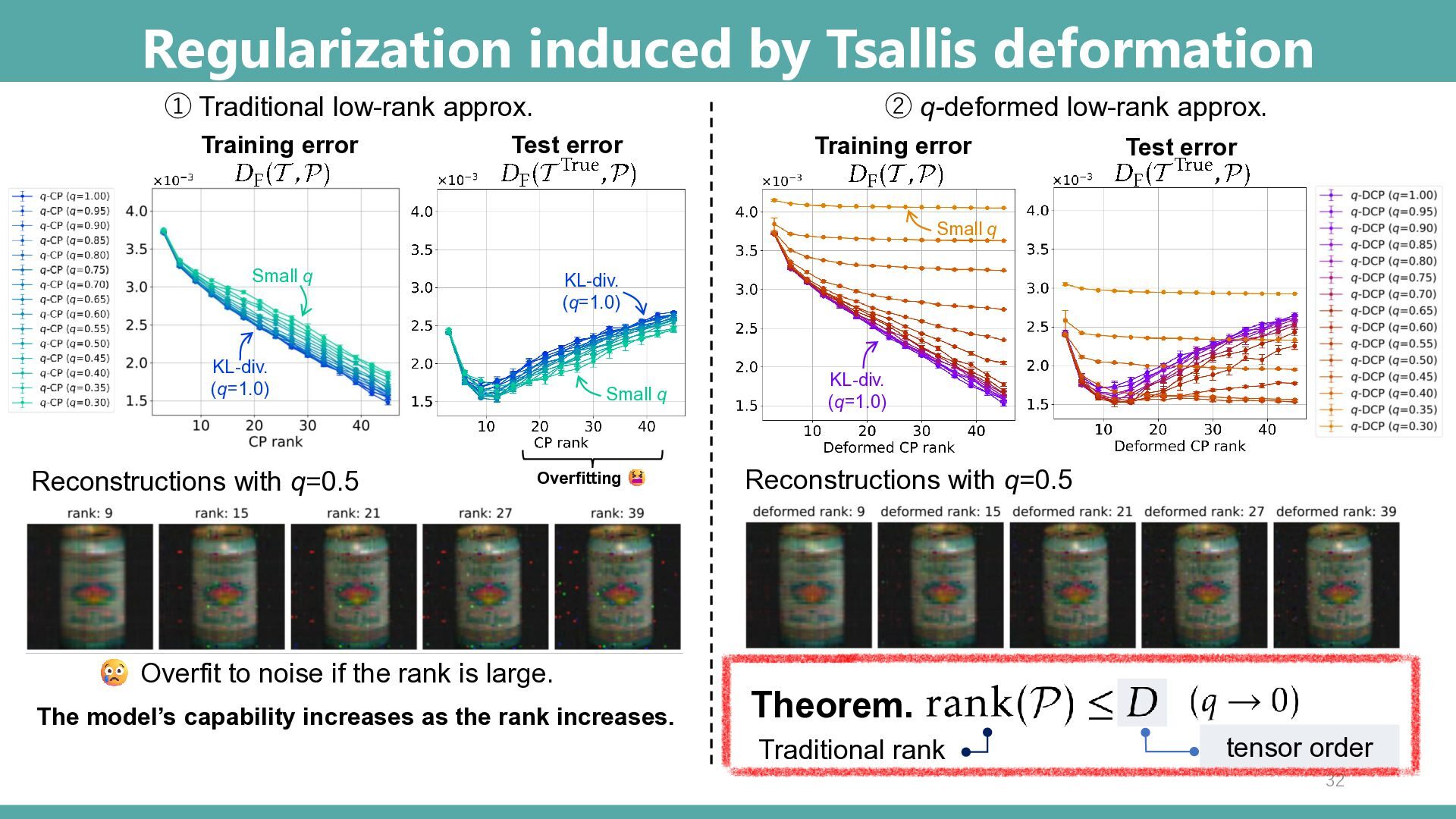
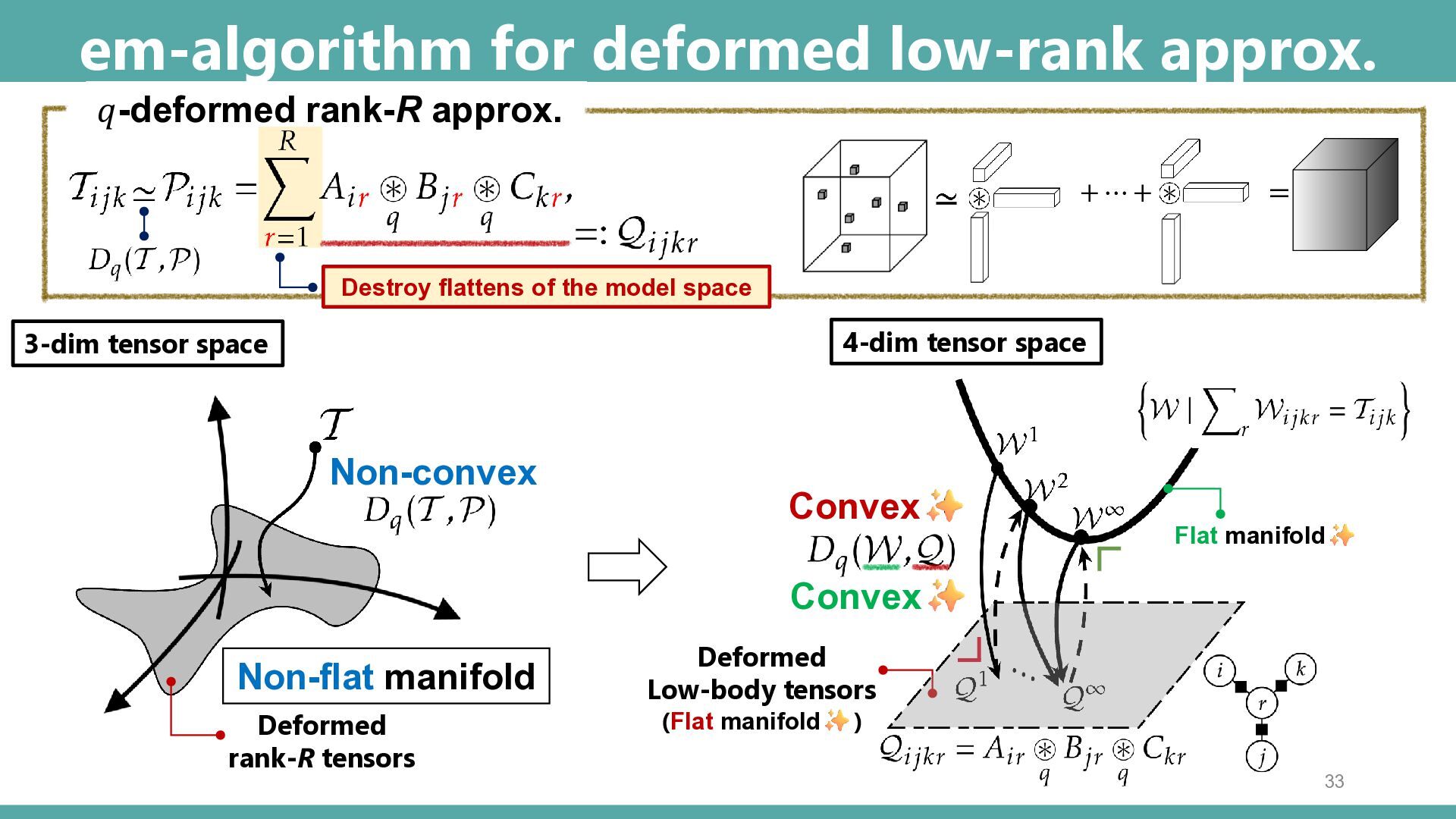
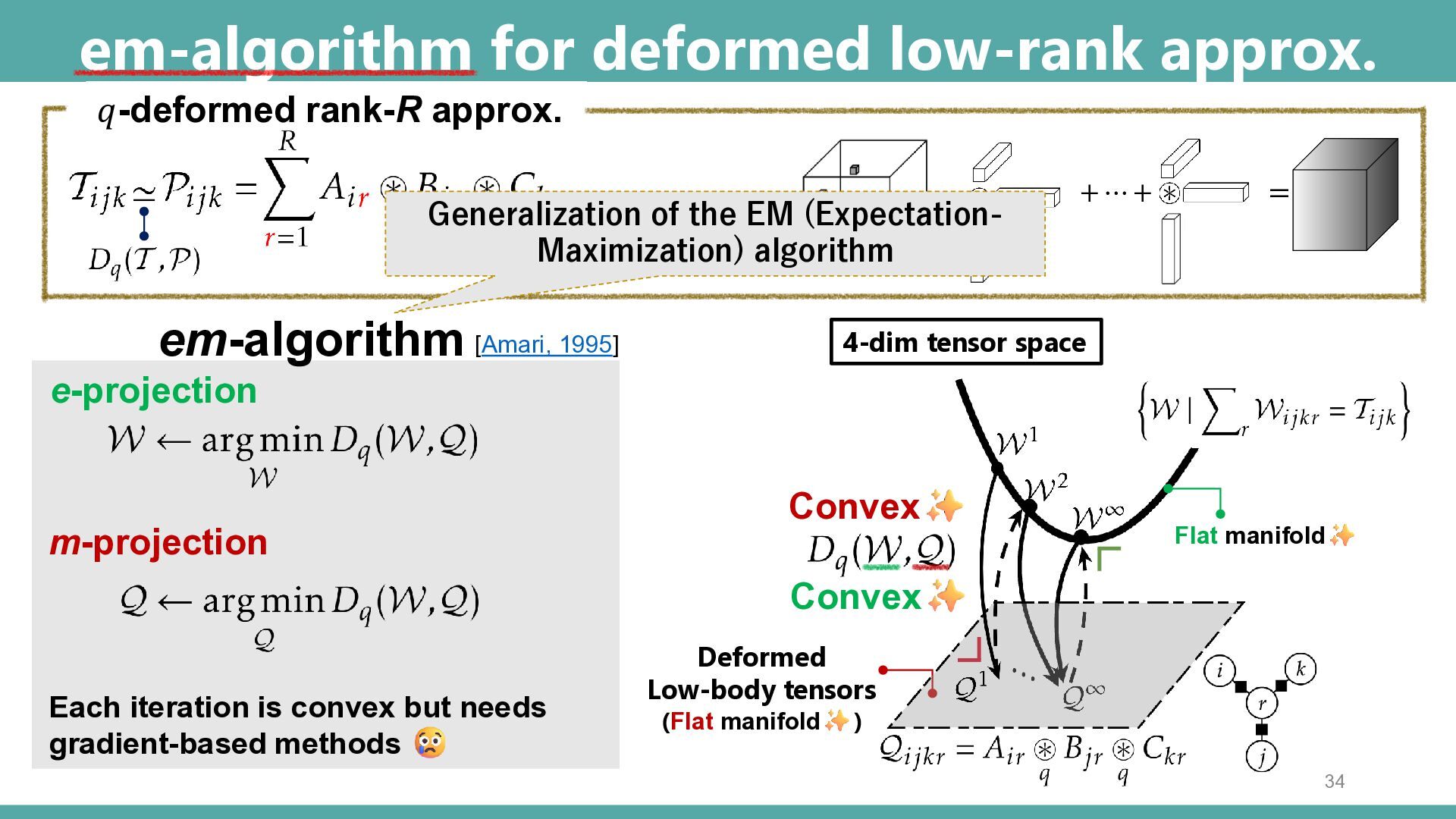
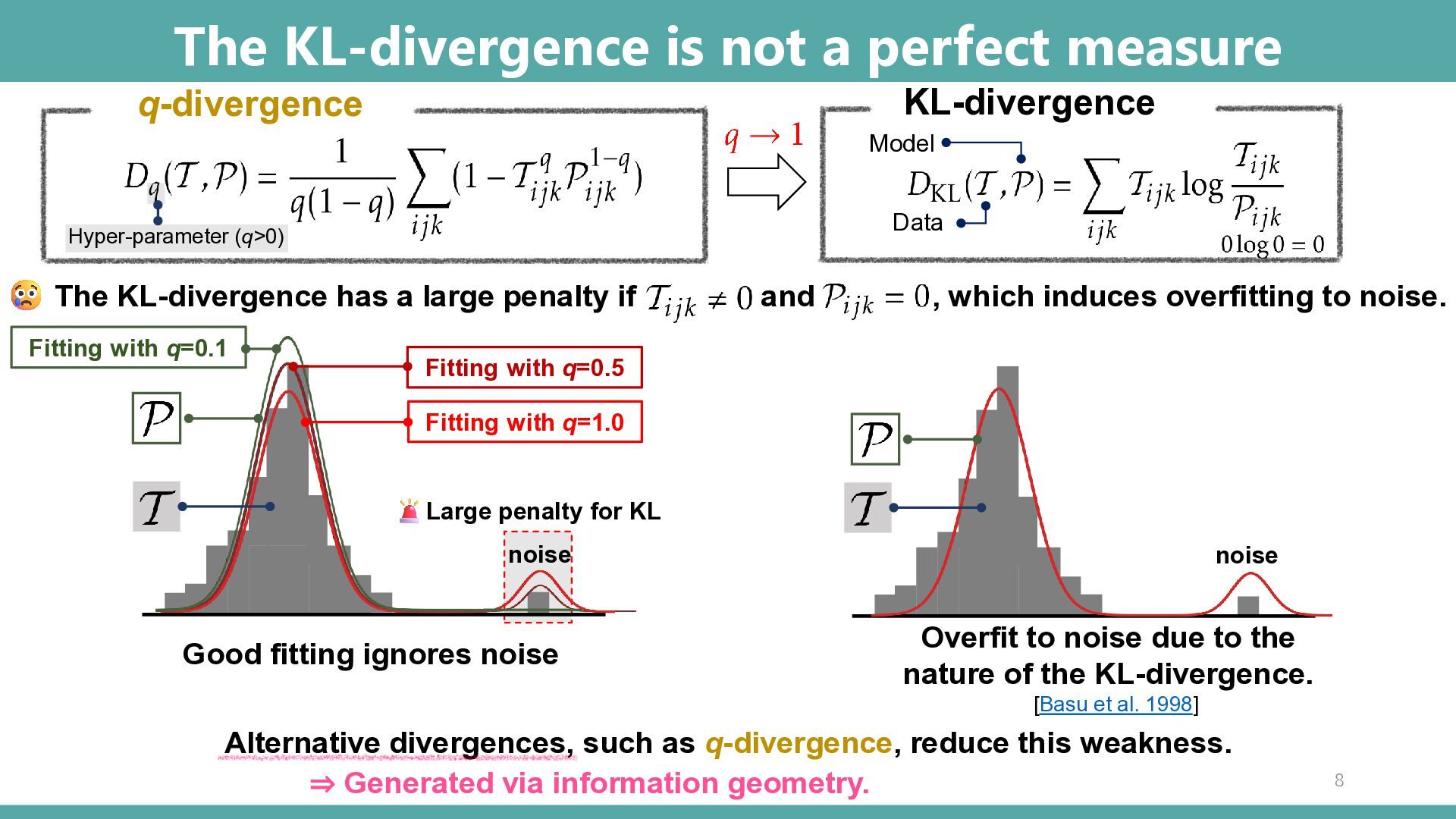
![Noise-robustness of the alpha-divergence q-divergence [Ghalamkari et al, 2026] Hyper-parameter](https://files.speakerdeck.com/presentations/57e94b3dfd7a4159b58527d02f092302/slide_36.jpg)
![Noise-robustness of the alpha-divergence q-divergence [Ghalamkari et al, 2026] Hyper-parameter](https://files.speakerdeck.com/presentations/57e94b3dfd7a4159b58527d02f092302/slide_37.jpg)
![Noise-robustness of the alpha-divergence q-divergence [Ghalamkari et al, 2026] Hyper-parameter](https://files.speakerdeck.com/presentations/57e94b3dfd7a4159b58527d02f092302/slide_38.jpg)