Share
Embed
understanding AI
The PDF explains how Artificial Intelligence is transforming cybersecurity by improving threat detection, prevention, and response. It highlights key areas like network security, threat hunting, traffic analysis, and vulnerability scanning, showing how AI helps identify risks faster and more accurately. Overall, it presents AI as a powerful tool for building smarter, more proactive security systems. https://offensoacademy.com/
Seo
March 25, 2026
Transcript
10 slides
-
Understanding Advanced Persistent Threats Advanced Persistent Threats (APTs) represent sophisticated,
long-termcyber attacks designed to infiltrate systems and steal sensitive data without detection. These stealthy operations can persist formonthsor even years, making them one of the most dangerous cybersecurity challenges today. Master APT defense and become a cybersecurity expert through our comprehensive Cyber Security Course in Kerala. -
What Makes an APT? Advanced Uses sophisticated malware, zero-day exploits,
and custom tools to bypass security measures Persistent Maintains continuous access to systems over extended periods, adapting to security changes Threat Targets specific organizations to steal data, disrupt operations, or gain competitive advantage These three elements combine to create silent, continuous attacks that evade traditional security defenses. Learn comprehensive APT defense strategies in our Cyber Security Course in Kerala. -
Key Characteristics of APTs There was an error generating this
image Long-Term Access Establishes footholds in networks that persist for months or years, maintaining access through multiple entry points Stealth Mode Operations Uses legitimate credentials, hides in normal traffic, and carefully covers tracks to avoid detection Advanced Tools & Techniques Custom malware, encrypted channels, and evasion techniques that bypass firewalls and antivirus software These sophisticated capabilities make APTs particularly challenging to detect and neutralize. Comprehensive training available in our Cyber Security Course in Kerala. -
Who Are APT Targets? Government Agencies National security secrets, defense
plans, and classified intelligence are prime targets for state- sponsored attackers Corporations Intellectual property, trade secrets, strategic plans, and competitive intelligence drive corporate espionage campaigns Financial Sectors Banking credentials, transaction data, and customer information enable fraud and financial theft High-value targets with sensitive data face constant APT threats. Learn defense strategies in our Cyber Security Course in Kerala. -
How APTs Gain Entry Phishing Emails Spear-phishing with personalized messages
tricks employees into opening malicious attachments or clicking infected links Malware Installation Downloads trojans, backdoors, and remote access tools that establish initial foothold in the network Weak Credentials Exploits weak passwords, unpatched software, and poor security hygiene to escalate privileges Understanding these entry vectors is critical for preventing APT compromise. Master prevention techniques in our Cyber Security Course in Kerala. -
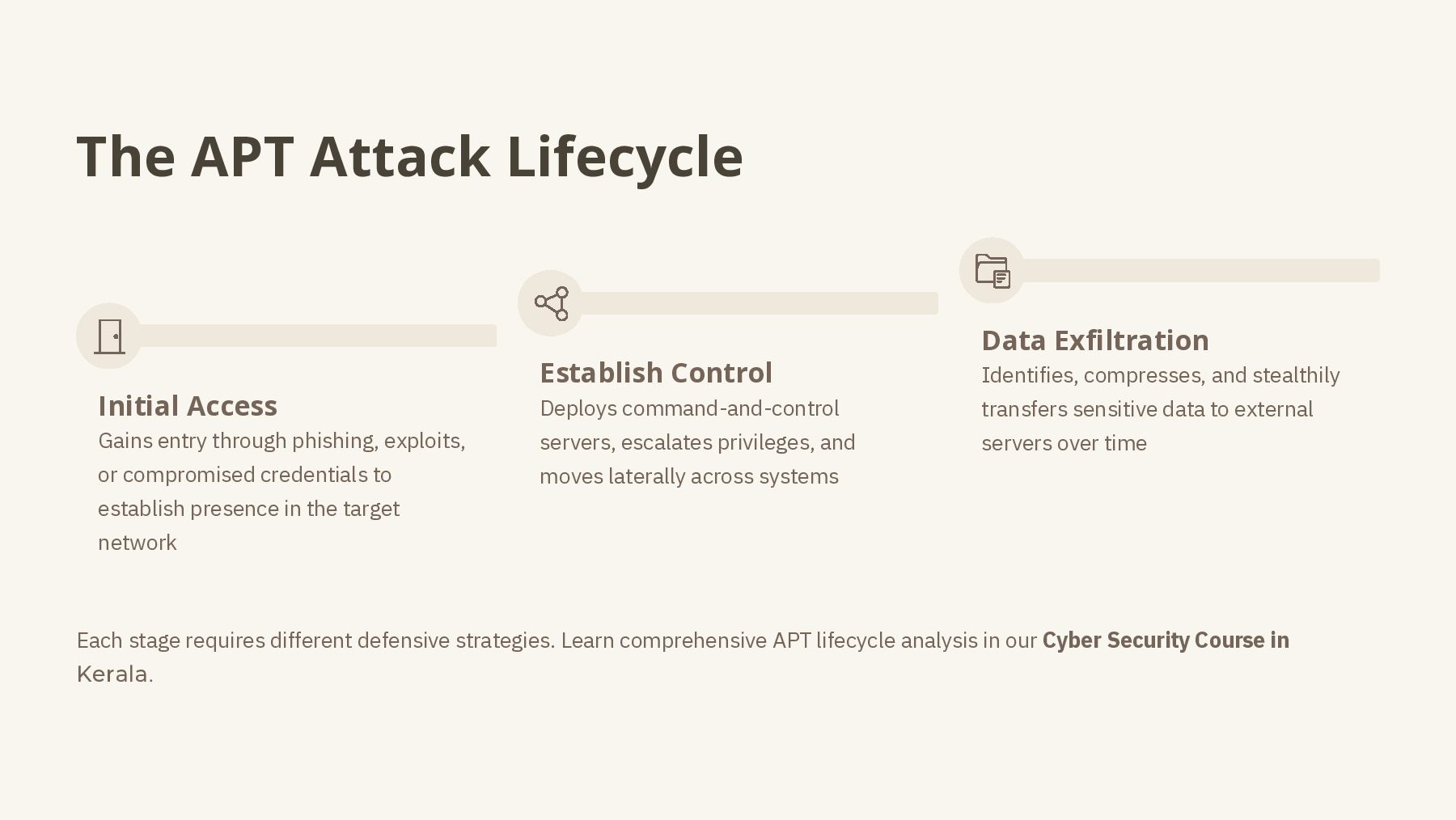
The APT Attack Lifecycle Initial Access Gains entry through phishing,
exploits, or compromised credentials to establish presence in the target network Establish Control Deploys command-and-control servers, escalates privileges, and moves laterally across systems Data Exfiltration Identifies, compresses, and stealthily transfers sensitive data to external servers over time Each stage requires different defensive strategies. Learn comprehensive APT lifecycle analysis in our Cyber Security Course in Kerala. -
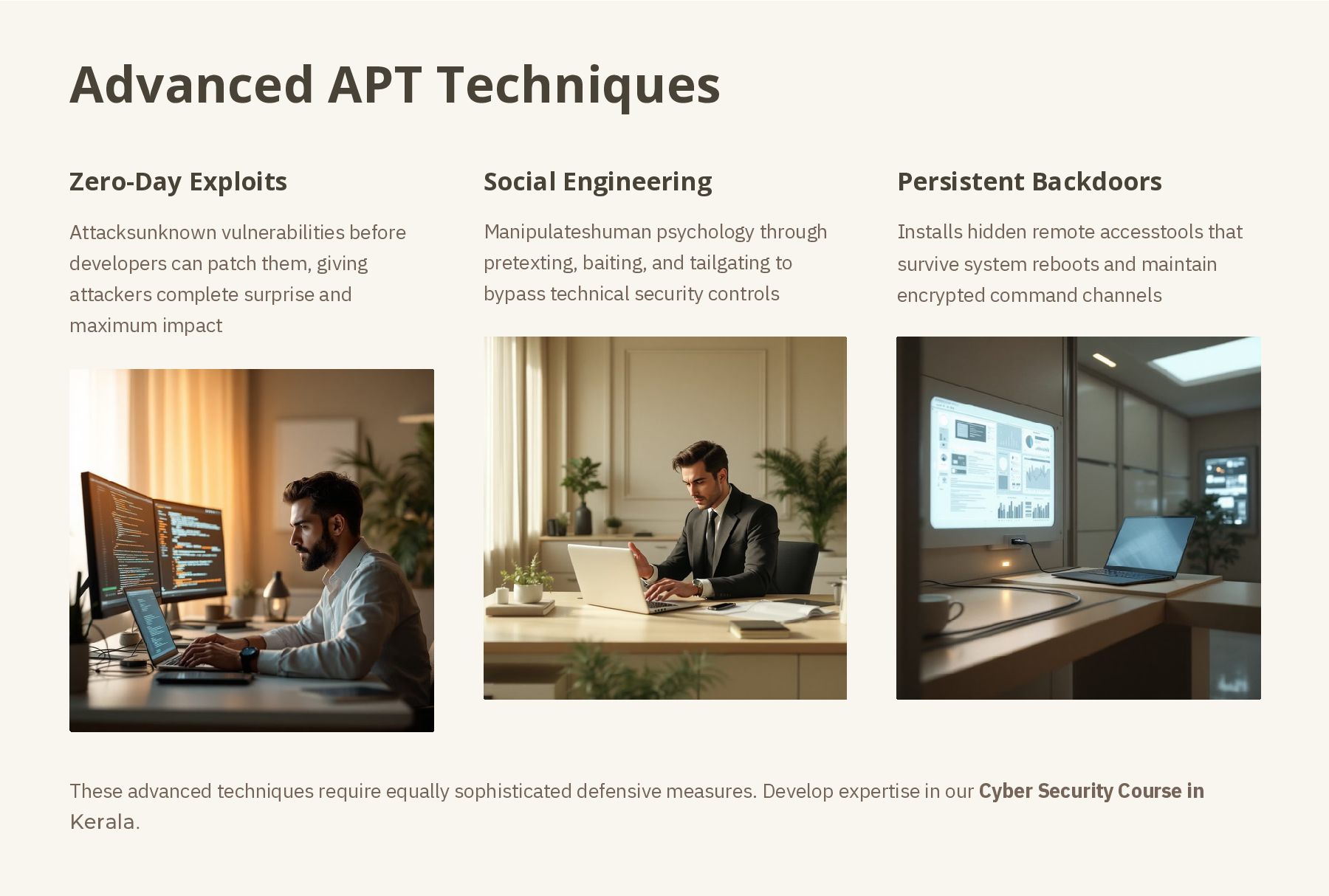
Advanced APT Techniques Zero-Day Exploits Social Engineering Persistent Backdoors Attacksunknown
vulnerabilities before developers can patch them, giving attackers complete surprise and maximum impact Manipulateshuman psychology through pretexting, baiting, and tailgating to bypass technical security controls These advanced techniques require equally sophisticated defensive measures. Develop expertise in our Cyber Security Course in Kerala. Installs hidden remote accesstools that survive system reboots and maintain encrypted command channels -
Real-World APT Case Studies Stuxnet Worm A state-sponsored APT that
infected Iranian nuclear facilities in 2010, causing physical damage to centrifuges while appearing normal to operators. It spread via USB drives and exploited four zero-day vulnerabilities. SolarWinds Attack In 2020, attackers compromised software updates to infiltrate thousands of organizations including U.S. government agencies. The backdoor remained undetected for nine months, exfiltrating sensitive data from multiple high- value targets. Analyze real APT case studies and learn from actual breaches in our Cyber Security Course in Kerala. -
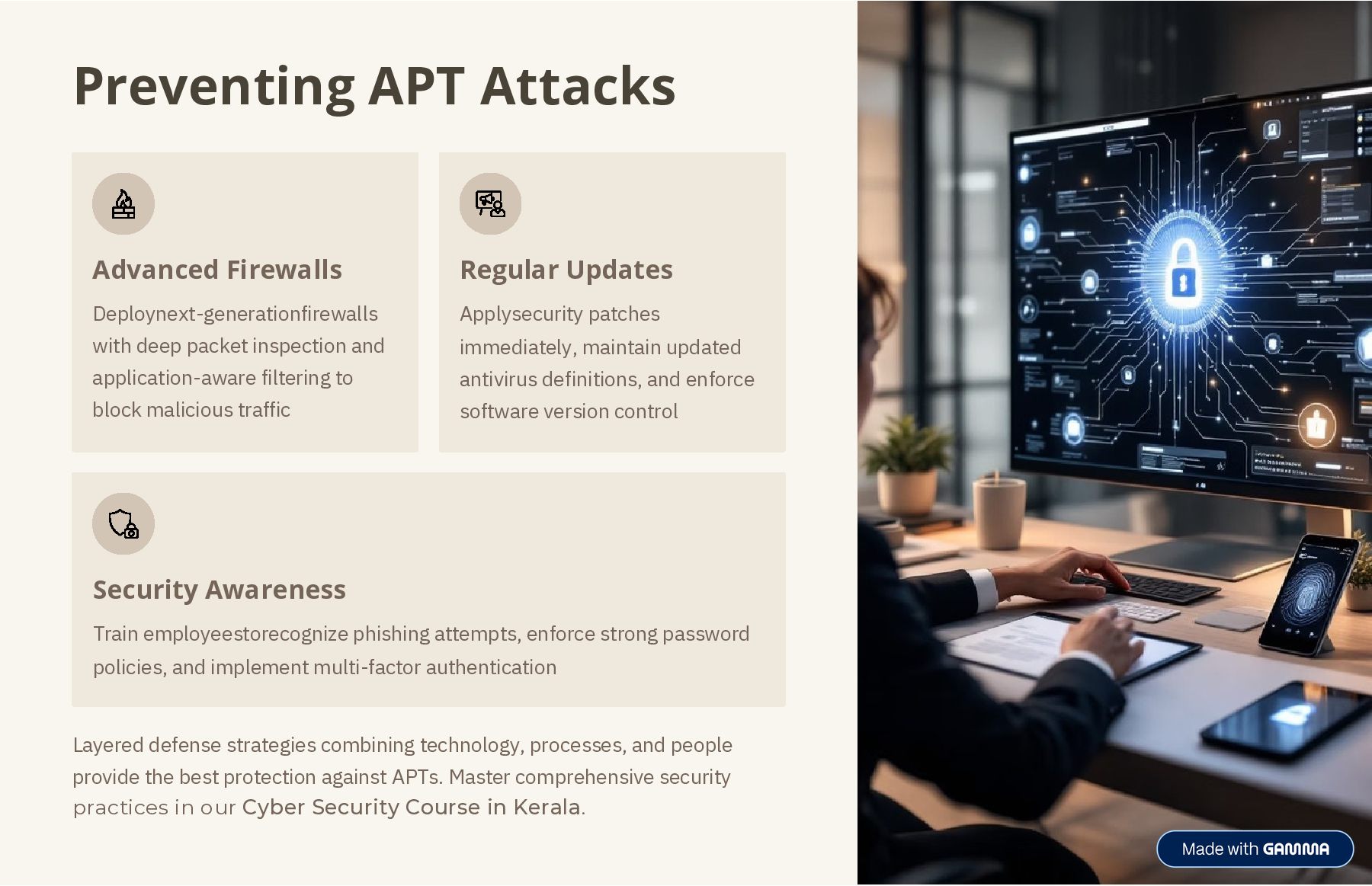
Preventing APT Attacks Advanced Firewalls Security Awareness Regular Updates Deploynext-generationfirewalls
with deep packet inspection and application-aware filtering to block malicious traffic Train employeestorecognize phishing attempts, enforce strong password policies, and implement multi-factor authentication Layered defense strategies combining technology, processes, and people provide the best protection against APTs. Master comprehensive security practices in our Cyber Security Course in Kerala. Applysecurity patches immediately, maintain updated antivirus definitions, and enforce software version control -
Master APT Defense Today Critical Threat APTsrepresentone of themost sophisticated
and persistent cybersecurity threats facing organizations today Professional Training ExpertiseRequired Defending againstAPTs demands specialized knowledge of attack techniques, detection methods, and response protocols Our comprehensive CyberSecurity Course in Kerala provides hands- on APT defense skills for cybersecurity careers Protect organizations from sophisticated cyber threats. Enroll today and become an APT defense expert through our Cyber Security Course in Kerala.