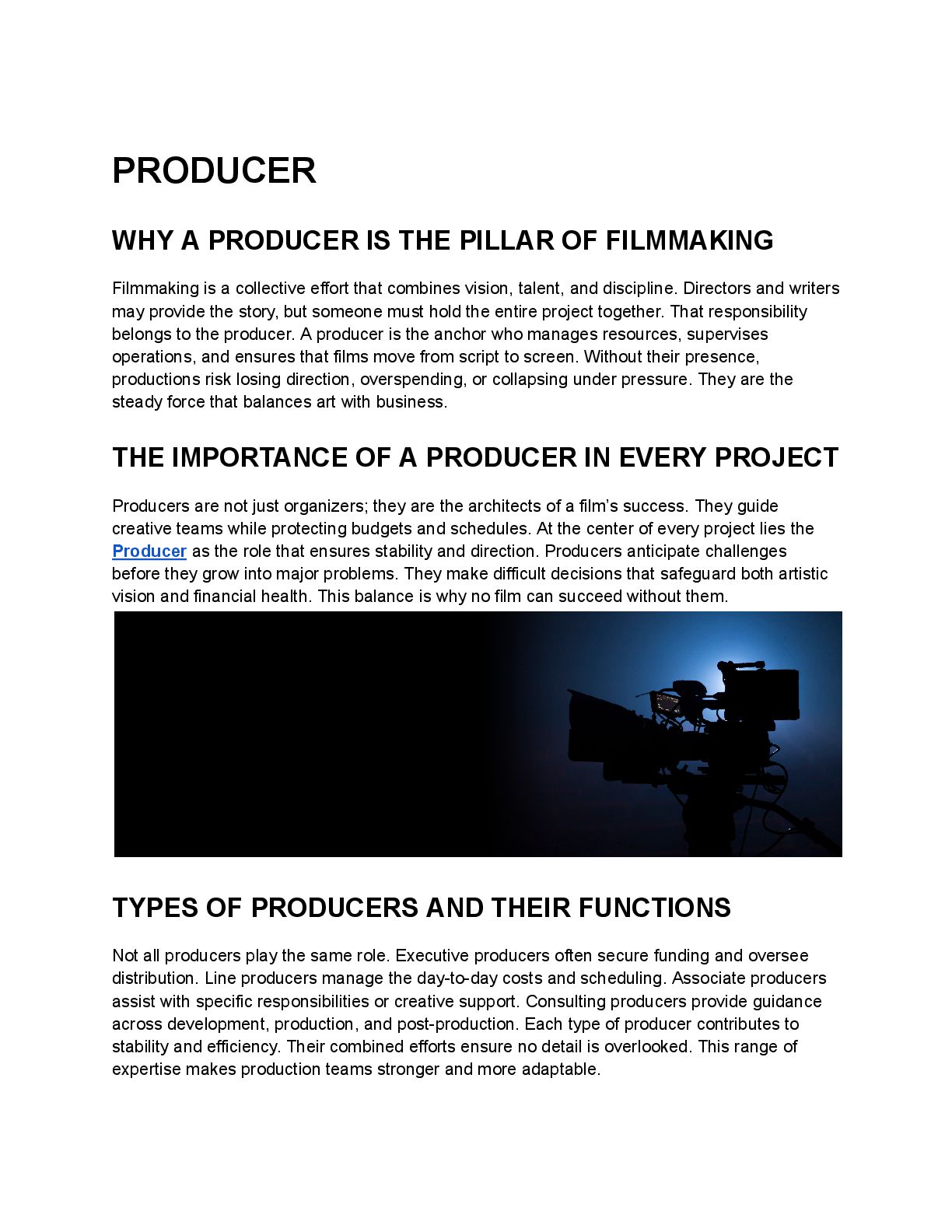
is a collective effort that combines vision, talent, and discipline. Directors and writers may provide the story, but someone must hold the entire project together. That responsibility belongs to the producer. A producer is the anchor who manages resources, supervises operations, and ensures that films move from script to screen. Without their presence, productions risk losing direction, overspending, or collapsing under pressure. They are the steady force that balances art with business. THE IMPORTANCE OF A PRODUCER IN EVERY PROJECT Producers are not just organizers; they are the architects of a film’s success. They guide creative teams while protecting budgets and schedules. At the center of every project lies the Producer as the role that ensures stability and direction. Producers anticipate challenges before they grow into major problems. They make difficult decisions that safeguard both artistic vision and financial health. This balance is why no film can succeed without them. TYPES OF PRODUCERS AND THEIR FUNCTIONS Not all producers play the same role. Executive producers often secure funding and oversee distribution. Line producers manage the day-to-day costs and scheduling. Associate producers assist with specific responsibilities or creative support. Consulting producers provide guidance across development, production, and post-production. Each type of producer contributes to stability and efficiency. Their combined efforts ensure no detail is overlooked. This range of expertise makes production teams stronger and more adaptable.
ideas that must be structured. Producers shape these ideas into workable plans. They guide script refinement, budgeting, and scheduling during development. By offering feedback, they help transform raw creativity into professional proposals. Producers also assist in crafting pitch decks and presentations for investors. Their role here is crucial in securing financial support. Strong development ensures that projects enter production with clarity and confidence. HOW PRODUCERS GUIDE PRE-PRODUCTION Pre-production is where planning turns into action. Producers finalize budgets, negotiate contracts, and hire crew members. They arrange locations, coordinate schedules, and manage vendor deals. Their oversight ensures that resources are used efficiently. Without producers, pre-production becomes disorganized and stressful. They also communicate across departments to avoid conflicts. Their preparation creates a stable foundation for filming. Pre-production led by skilled producers sets the stage for smoother production days. PRODUCERS DURING PRODUCTION DAYS Filming days test the strength of any team. Producers keep everything aligned by monitoring expenses and enforcing schedules. They ensure that departments work together seamlessly. Producers also address unforeseen challenges such as weather delays or technical issues. Their leadership keeps the focus on storytelling while managing the pressure of daily operations. Without this oversight, productions risk chaos and wasted resources. Producers bring order and stability to the most demanding stage of filmmaking. THEIR ROLE IN POST-PRODUCTION Once filming ends, producers continue their critical role. They supervise editing, sound design, and visual effects timelines. Producers also monitor costs during post-production to prevent overruns. They coordinate between directors, editors, and supervisors to maintain consistency. Their involvement ensures films are delivered on time and within budget. This phase requires both patience and precision. Producers guarantee that the final product reflects both creative vision and professional standards. DISTRIBUTION AND MARKETING RESPONSIBILITIES A film’s journey does not stop at completion. Producers guide distribution strategies that bring projects to audiences. They secure festival placements, streaming opportunities, and theatrical releases. Producers also oversee marketing campaigns that create awareness and excitement.
alone. Successful distribution is often the direct result of a producer’s planning and persistence. Their role extends far beyond the set into the business of film. WHY PRODUCERS ARE MENTORS AND LEADERS Beyond logistics, producers act as mentors for filmmakers. They provide honest feedback and encourage growth. Many independent filmmakers credit producers for helping them develop professional habits. Producers also advocate for diverse voices and new talent. Their guidance builds stronger projects and stronger creators. By fostering trust, they create long-lasting partnerships in the industry. Producers are not only managers but also teachers who shape careers. PRODUCERS IN INDEPENDENT FILMMAKING Independent filmmaking often faces limited budgets and resources. Producers in this space must be resourceful and adaptable. They negotiate deals, stretch funds, and build creative solutions. Their efforts allow smaller projects to achieve professional results. Independent filmmakers rely heavily on producers for guidance and stability. Without them, many independent projects would never reach completion. Producers are the bridge that connects ambition with achievable outcomes. HOW PRODUCERS BUILD NETWORKS Networking is another strength of producers. They introduce filmmakers to investors, collaborators, and distributors. These relationships often extend beyond one project. A producer’s network becomes a valuable resource for everyone involved. Connections created through producers can lead to future opportunities. This role makes them indispensable partners in a filmmaker’s long-term success. Networking is a skill that producers bring to every project. CONCLUSION: WHY PRODUCERS ARE ESSENTIAL Filmmaking is a journey that requires vision, structure, and leadership. Producers provide all three while keeping projects balanced and professional. They manage every stage, from development to distribution. Without them, films risk failure before reaching audiences. At the center of every completed story is the Producer who makes sure ambition becomes reality. Their influence shapes not only films but the future of filmmakers themselves.


 ggfs
 kazumakitao
 so_kotani
 tsogo817421
 hrm
 kawanotron
 yasslab
 kaonavi
 takemura_yuto
 mediphone
 thomaspeham
 addyosmani
 chriscoyier
 soudai
 destraynor
 eileencodes
 oripsolob
 tammyeverts
 apolaine
 trishagee
 ryanjones
 seathinner
 irinanazarova